The International Criminal Police Organization (INTERPOL) has issued a Silver Notice to trace and recover criminal assets, marking the first expansion of its color-coded notices to specifically target the finances of organized crime networks.
What is Silver Notice?
It is an INTERPOL initiative aimed at tracing, locating, and recovering criminal assets linked to crimes such as fraud, corruption, drug trafficking, and environmental offenses.
Objective: It targets assets like properties, vehicles, financial accounts, and businesses that are connected to criminal activities.
It was launched in 2023 as part of a pilot phase involving 52 countries, and this phase will run until November 2025.
How does it work?
Member countries can request INTERPOL to issue a Silver Notice for assistance in gathering information about criminal assets.
The Notice is shared globally with all 196 INTERPOL member countries, while Diffusions can be directed to specific countries for more targeted cooperation.
All Silver Notices and Diffusions are reviewed by INTERPOL’s General Secretariat to ensure compliance with its rules, including prohibitions on political misuse as outlined in Article 3 of the INTERPOL Constitution.
The first-ever Silver Notice was requested by Italy to trace assets linked to a senior mafia member, showcasing its potential to combat organized crime.
About INTERPOL
Structural Mandate and Implementation
Establishment: Founded in 1923 in Vienna, now headquartered in Lyon, France, with 195 member countries.
Mandate: Supports cross-border police cooperation, helping agencies combat international crime.
India became a member of INTERPOL in June 1956.
Structural Mandate:
Secretary General: Oversees daily operations.
General Secretariat (Lyon): Manages global databases and police communication systems.
Global Complex for Innovation (Singapore): Research, training, and cybercrime initiatives.
Regional Bureaus: Satellite offices worldwide.
National Central Bureaus (NCBs): Each member country, such as India’s CBI, serves as its national focal point for INTERPOL.
I-24/7 Service: A secure global police communication system enabling real-time sharing of urgent and sensitive information.
Powers and Functions
Data Sharing: Manages 19 police databases on crimes and criminals, accessible in real-time by member countries.
Notices and Diffusions: Issues color-coded notices (e.g., Red, Yellow, Blue, Silver) to locate fugitives, missing persons, or criminal assets; not legally binding but widely used by law enforcement.
Operational Support:
– Investigative Assistance: Provides forensics, analysis, and fugitive-tracking support.
– Coordination: Enables law enforcement agencies to handle transnational crime efficiently.
Indonesia has officially joined BRICS (Brazil, Russia, India, China, South Africa) as a full member. This move was unanimously approved during the 2023 BRICS Summit in Johannesburg and announced by Brazil, which holds the presidency of BRICS in 2025.
What is BRICS?
BRICS represents a coalition of nations committed to fostering economic growth, development cooperation, and global governance reform.
BRICS focuses on collaboration across 3 key pillars:
Political and Security Cooperation: Ensuring peace, global stability, and governance reform.
Economic and Financial Cooperation: Promoting trade, investment, and economic resilience.
Cultural and People-to-People Cooperation: Enhancing mutual understanding and societal linkages.
Present Members of BRICS
Original Members: Brazil, Russia, India, China, and South Africa.
Recent Additions: Indonesia, Egypt, Ethiopia, Iran, and the UAE.
Evolution of BRICS:
2001: The term “BRIC” was coined by Jim O’Neill, an economist at Goldman Sachs, in a report highlighting Brazil, Russia, India, and China as fast-growing economies.
2006: BRIC leaders held their first meeting during the G8 Outreach Summit in St. Petersburg, Russia.
2009: The first BRIC Summit was held in Yekaterinburg, Russia, to formalize the grouping.
2010: South Africa joined, transforming BRIC into BRICS.
2014 Fortaleza Declaration: The establishment of the New Development Bank (NDB) and Contingent Reserve Arrangement (CRA) marked significant steps toward financial collaboration.
Recent Expansion: In 2023 Egypt, Ethiopia, Iran, and the UAE joined, reflecting BRICS’ expanding influence in the Global South.
2025: Indonesia officially joins.
Significance of BRICS:
Economic Growth: Acts as a significant driver of global economic growth, contributing 24% of global GDP and over 16% of global trade.
Multipolar World Advocacy: Promotes a multipolar world order, challenging Western dominance in global governance.
South-South Cooperation: Strengthens collaboration among developing nations, addressing shared issues like poverty and climate change.
Alternative Financial Systems: Explores mechanisms like the New Development Bank (NDB) and Contingent Reserve Arrangement (CRA) to reduce reliance on Western financial institutions and the US dollar.
Challenges Faced by BRICS:
Diverging Interests: Members have differing priorities, such as India-China tensions and varying stances on global issues.
Economic Disparities: Wide differences in economic size and capacity, with China dominating BRICS GDP.
Institutional Weakness: Absence of a formal structure and binding agreements limits the bloc’s effectiveness.
Geopolitical Pressures: External challenges like Western sanctions on Russia and US-China tensions test BRICS’ cohesion and neutrality.
PYQ:
[2014] With reference to a grouping of countries known as BRICS, consider the following statements:
1. The First Summit of BRICS was held in Rio de Janeiro in 2009.
2. South Africa was the last to join the BRICS grouping.
Which of the statements given above is / are correct?
Q) The proposed withdrawal of International Security Assistance Force (ISAF) from Afghanistan in 2014 is fraught with major security implications for the countries of the region. Examine in light of the fact that India is faced with a plethora of challenges and needs to safeguard its own strategic interests. (UPSC CSE 2014)
Mentor’s Comment: UPSC mains have always focused on Afghanistan (2014), and ‘Increasing cross-border terrorist attacks ’ (2016).
On December 27, 2024, Pakistan’s Inter-Services Public Relations (ISPR) Director-General reported that 383 Pakistani security personnel were killed in counter-terrorism operations during the year. He stated that around 60,000 intelligence-based operations led to the elimination of 925 terrorists, including TTP members. While highlighting Pakistan’s support for Afghanistan, he firmly declared that TTP attacks on Pakistani citizens would not be tolerated, criticising Afghanistan for allegedly sheltering the group.
Today’s editorial talk about the issues related to Afghanistan and Pakistan and how India can take benefits from it. This content can be used in Mains GSII paper to substantiate the regional issues which affect India.
_
Let’s learn!
Why in the News?
The Taliban’s return to power has turned Afghanistan into a serious problem for Pakistan’s security.
What are the implications of Pakistan’s recent military actions in Afghanistan?
Casualties and Escalation: The Director-General of Pakistan’s ISPR reported that 383 Pakistani security personnel lost their lives in counter-terrorism operations in 2024, while 925 terrorists, including TTP members, were eliminated in about 60,000 operations. This indicates a significant escalation in military engagement, which may lead to further retaliatory actions from Afghanistan.
Retaliatory Strikes: Following an attack by the TTP that killed 16 Pakistani soldiers, Pakistan conducted air strikes in eastern Paktika province, reportedly killing 46 individuals. This tit-for-tat response has exacerbated tensions and risks deepening the conflict between the two nations.
Diplomatic Failure: The timing of military actions during diplomatic talks with Taliban leaders suggests a failure in Pakistan’s strategy to de-escalate tensions. This could undermine future diplomatic efforts and solidify hostilities between the two countries.
How is Pakistan’s historical strategy of supporting certain factions in Afghanistan affecting its current diplomatic relations?
Support for Extremist Groups: Pakistan’s long-standing support for the Afghan Taliban and Haqqani network has backfired, as these groups now pose a threat to Pakistan’s own security through affiliations with the TTP. This creates a perception that both groups are intertwined, complicating diplomatic relations.
Strategic Depth vs. Strategic Ditch: Initially viewed as a means to gain strategic depth against India, the return of the Taliban has turned Afghanistan into a “strategic ditch” for Pakistan.
This shift reflects the unintended consequences of Pakistan’s historical policies and its inability to control former proxies.
Border Disputes: The Afghan Taliban’s rejection of the Durand Line as a legitimate border complicates relations further. Kabul’s claims over Pakistani territories exacerbate tensions and highlight the fragility of diplomatic ties rooted in historical grievances.
How can India take benefit from this situation?
• Enhanced Regional Influence: India can leverage Pakistan-Afghanistan tensions to deepen its engagement with Afghanistan through developmental assistance and economic ties. • Counter-Terrorism Cooperation: Pakistan’s focus on its western border provides India an opportunity to strengthen its counter-terrorism initiatives along the LoC and its own western borders. • Strategic Regional Partnerships: India can position itself as a stabilizing force by fostering regional initiatives that exclude Pakistan, such as through expanded ties with Central Asia and Afghanistan.
What are the potential pathways for reconciliation between Pakistan and Afghanistan amid escalating violence? (Way forward)
Dialogue and Diplomacy: Continued dialogue is essential, as evidenced by Muhammad Sadiq Khan’s visit to Kabul. However, for effective reconciliation, both sides must prioritize genuine engagement over military actions that undermine trust.
Addressing Core Issues: To move forward, both nations need to address underlying issues such as border disputes and mutual security concerns. Acknowledging and resolving these contentious points could pave the way for more stable relations.
International Mediation: Given the complexities involved, seeking mediation from international actors could help facilitate discussions and provide neutral ground for negotiations. This approach might alleviate some pressures from both sides while addressing broader security concerns.
US National Security Advisor Jake Sullivan announced that the US is working to remove long-standing rules that have hindered nuclear cooperation between India’s top nuclear entities and American companies.
What are the legal barriers hindering India’s participation in nuclear manufacturing?
10CFR810 Authorization: This regulation, part of the US Atomic Energy Act of 1954, restricts US nuclear vendors from manufacturing nuclear equipment or conducting nuclear design work in India.
While it allows for the export of equipment under strict safeguards, it prevents India from engaging in the manufacturing value chain and co-producing nuclear components for atomic power projects.
Civil Liability for Nuclear Damage Act, 2010: This Indian legislation establishes a framework for compensating victims of nuclear accidents and allocates liability to equipment suppliers. This provision raises concerns among foreign companies, such as GE-Hitachi and Westinghouse, regarding potential financial exposure and liability risks, which deters investment in India’s nuclear sector.
How does Indian liability law impact the Indo-US nuclear deal?
Liability Allocation: The Civil Liability for Nuclear Damage Act, 2010, establishes a framework that assigns strict liability to nuclear operators for damages resulting from nuclear incidents.
This means that operators are primarily responsible for compensation, which is capped at ₹500 crore (approximately USD 60 million), with the central government liable for additional amounts up to 300 million Special Drawing Rights (SDRs) in case of higher damages.
Right of Recourse: The Act provides operators with a right of recourse against suppliers, which means that operators can seek compensation from suppliers if they incur costs due to an accident.
However, this right is not mandatory and is seen as an enabling clause, leading to concerns among suppliers about their financial exposure in the event of an incident.
Insurance Challenges: The liability law’s structure creates significant challenges for foreign suppliers in obtaining insurance coverage. Many suppliers require a clear legal cap on liability to insure themselves against potential accidents.
The open-ended nature of liability and the potential for significant financial exposure deter investment from companies like GE-Hitachi and Westinghouse, who are wary of entering a market where they could face unpredictable liabilities.
International Standards Compliance: The Indian liability framework is viewed as an outlier compared to international norms, which typically channel all liabilities to operators rather than suppliers. This divergence complicates foreign participation in India’s nuclear sector and hinders the operationalization of agreements like the Indo-US nuclear deal.
What steps are being taken to enhance Indo-US cooperation in the nuclear sector?
Removal of Regulatory Barriers: The US is finalizing steps to ease restrictions that have hindered nuclear collaboration since the 2005 deal, enabling closer ties between Indian entities and US private sector players.
Facilitating Technology Transfer: The regulatory changes will support the transfer of US nuclear technology to India, boosting India’s clean energy expansion efforts.
Strengthening the iCET Framework: Emphasis on the US-India Initiative on Critical and Emerging Technologies (iCET) to foster collaboration in nuclear technology and other high-tech sectors like AI and quantum computing.
Addressing Liability Concerns: Discussions to resolve issues related to India’s nuclear liability laws aim to attract foreign suppliers and enhance investment opportunities in India’s nuclear energy sector.
Way forward:
Policy Reforms for Liability Clarity: Amend India’s Civil Liability for Nuclear Damage Act to align with international norms by channelling liability solely to operators, reducing suppliers’ financial risks and encouraging foreign investment.
Promote Joint Ventures and Technology Transfer: Facilitate joint manufacturing and R&D collaborations under the iCET framework, leveraging US expertise in light water reactor technology and India’s manufacturing capabilities to achieve shared clean energy goals.
Mains PYQ:
Q What is the significance of Indo-US defence deals over Indo-Russian defence deals? Discuss with reference to stability in the Indo-Pacific region. (UPSC IAS/2020)
Q) South China Sea has assumed great geopolitical significance in the present context. Comment. (UPSC CSE 2016) Q) Clean energy is the order of the day.’ Describe briefly India’s changing policy towards climate change in various international fora in the context of geopolitics. (UPSC CSE 2022)
Mentor’s Comment: UPSC Mains has always focused on RegionalGeopolitical Issues (2024) and India’s Development and Growth on the International stage (2018, 2022, & 2023).
Global Economists predict that India’s GDP growth will average around 6.5% to 7% in 2025, despite a slowdown observed in late 2024. As India steps into 2025, the economic landscape presents a mix of optimism and challenges.
Today’s editorial outlines the key aspects shaping India’s outlook for the coming year, focusing on growth projections, inflation management, and geopolitical influences. This comprehensive content can be used in your Mains answer writing while discussing the Global uncertainties and changing geopolitics, where India’s Growth trajectory is affected.
_
Let’s learn!
Why in the News?
The year 2024 was characterized as a “global elections supercycle,” with over 70 countries, including major economies, scheduled to hold elections.
This political climate is expected to generate significant regulatory and policy uncertainty in 2025, impacting international relations and economic strategies across the globe.
What is the projected Outlook for India’s economy in 2025?
• Various economists project India’s GDP growth to range between 6.3% and 7.2% for 2025, with a consensus around 6.5% to 6.9%, despite a slowdown observed in late 2024. • The Reserve Bank of India (RBI) anticipates real GDP growth to recover in the latter half of the fiscal year, with estimates of 6.6% to 6.9% for FY25, supported by public consumption and investment. • The International Monetary Fund (IMF) has upgraded its forecast for India’s growth to 7% for FY25, citing strong domestic demand and a rising working-age population.
What are the new Economic and Political uncertainties in the World?
Economic Landscape: India is recognized as one of the leading nations in terms of economic growth and political stability, that demands an atmosphere of peace amidst global turmoil.
Inflation Issues: Inflation remains a crucial concern, impacting consumption and overall economic stability. Policymakers must navigate these pressures while encouraging investment.
Migration and Unemployment Issues: Addressing structural challenges such as job creation is critical, especially given the need to generate millions of jobs annually until 2030.
Political Landscape: The year 2024 witnessed significant political uncertainty worldwide, with ongoing conflicts in regions like Europe and West Asia, notably the Gaza crisis and the Ukraine conflict.
Global Major Powers: India’s democratic and globalized trajectory will be influenced by the changing political stability, with increase in right-wing policies and frameworks in western world from the new US administration to the European Union.
Geopolitical Tensions with China: Recent border negotiations with China have led to some disengagement at the Line of Actual Control, but the underlying border dispute remains unresolved.
In September 2024, China and African nations jointly agreed to progress the China-sponsored Global Security Initiative (GSI) and deepen cooperation in areas. (steps to outmaneuver India in international forums)
China also managed to steal a march over India during the Shanghai Cooperation Organisation Summit held in Pakistan in October.
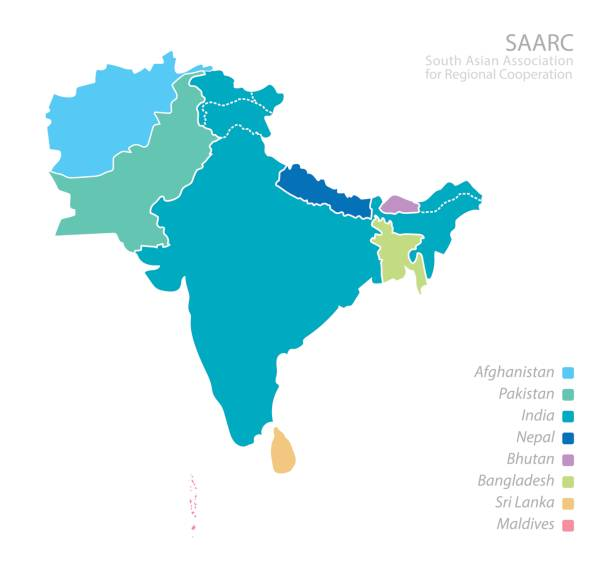
How will South and West Asia make a major eclipse in regional Geopolitics for India? Current Situation in South Asia: India faces increasing isolation in South Asia, particularly after the ousting of Sheikh Hasina in Bangladesh, leading to questions about India’s neighborhood policy. • Nepal and Sri Lanka are perceived as “fair weather friends,” while relations with the Maldives remain uncertain. Pakistan continues to be antagonistic, and Afghanistan is not a priority for India. • Bhutan appears to be balancing its relations with India and China under its current leadership.
Challenges in West Asia: • Impact of Syrian Developments: The ouster of the Assad regime in Syria is expected to have significant repercussions for the region, including implications for India. • Rise of Sunni Groups: The takeover by the Sunni group Hayat Tahrir al-Sham (HTS) may shift regional dynamics, especially as it aligns with the Sunni majority in Syria.
Regional Implications • Dismantling of Alliances: The changing power dynamics could weaken the so-called “axis of resistance,” affecting Iran’s influence and potentially diminishing support for groups like Hezbollah.• Israel’s Position: Israel may emerge stronger amid these changes, while the pro-Palestine movement could face setbacks.
What are the further strands on Technological challenges?
The digital threat landscape is expected to escalate significantly in 2025, necessitating urgent attention and warnings about potential dangers.
In late 2024, India experienced a notable increase in cyber attacks, including denial of service and ransomware incidents targeting major companies and government institutions.
This trend is projected to grow exponentially, posing unprecedented risks to national infrastructure due to the convergence of various technologies.
Conclusion: India must navigate this complex geopolitical landscape carefully, as both Political as well as Technological issues undergo significant transformations that could affect its regional influence and security.
The government of Trinidad and Tobago declared a state of emergency on December 30, 2024, in response to escalating violence in the Caribbean nation.
About Trinidad and Tobago
Geography:
Located in the southern Caribbean, near Venezuela.
A dual-island nation consisting of Trinidad (4,768 sq. km) and Tobago (300 sq. km).
Total land area: 5,128 sq. km.
Climate: Tropical, with a dry season from January to May and a rainy season from June to December.
Population:
Approximately 1.5 million people.
Ethnic Composition: African (36.3%), Indian (35.4%), Mixed (22.8%), European, Chinese, and others.
Religions: Christianity (64%), Hinduism (18%), Islam (5%), and others.
Capital and Cities:
Capital: Port of Spain (Trinidad).
Other key cities: San Fernando, Chaguanas, and Scarborough (Tobago).
Political System:
Government Type: Parliamentary democracy under a constitutional republic.
Member of the Commonwealth of Nations.
Gained independence from the UK on August 31, 1962, and became a republic in 1976.
Infrastructure:
Ports: Port of Spain, Point Lisas, and Scarborough are critical for trade.
Airports: Piarco International Airport (Trinidad) and A.N.R. Robinson International Airport (Tobago).
Culture and Heritage:
Known for the Carnival, one of the world’s largest pre-Lenten celebrations.
Birthplace of Calypso music, Soca, and the Steelpan (the only acoustic musical instrument invented in the 20th century).
Geo-Political Significance
T&T is a major exporter of liquefied natural gas (LNG) and petrochemicals (methanol and ammonia), supplying markets in the U.S., Europe, and Latin America.
It is positioned at the crossroads of the Caribbean Sea and Atlantic Ocean, serving as a gateway between North and South America.
It is a founding member of the Caribbean Community (CARICOM) advocating for regional economic integration, disaster response, and collective security.
It is a active member of the Commonwealth and the United Nations, pushing for climate change resilience and sustainable development initiatives.
Q) Hatred is destructive of a person’s wisdom and conscience that can poison a nation’s spirit. Do you agree with this view? Justify your answer. (UPSC CSE 2020)
Mentor’s Comment: UPSC mains have always focused on ‘tolerance, assimilation and pluralism’ (2022) and ‘spirit and tolerance’ (2017).
In the book Polarization: What Everyone Needs to Know (2019) by Nolan McCarty examines the social, economic, and geographic causes of political divides in America due to polarisation. After Trump’s 2024 re-election, the U.S. seemed deeply divided politically and culturally. Reflecting this, Merriam-Webster named “polarization” its 2024 word of the year.
Today’s editorial critically examines the polarisation USA’s election and how would impact India and the world. This content can be used in Mains’s answer to substantiate the polarization in elections.
_
Let’s learn!
Why in the News?
Donald Trump’s win in the 2016 U.S. presidential election made people think about a “divided” America, with growing political and social differences made worse by fake news in a time when facts often take a back seat.
How does polarization affect global governance and cooperation?
Erosion of Social Fabric: Political polarization in the U.S. has escalated into a divisive force that threatens the fundamental social fabric of democracy. This ideological rift has become an existential clash over national identity and governance, complicating international cooperation and consensus-building efforts.
Fragmented Political Landscape: The increasing divide has made it challenging for political leaders to engage in collaborative governance, as parties become more entrenched in their views, leading to gridlock in policymaking.
The polarization is not just limited to domestic issues but affects how the U.S. interacts with other nations, as differing ideologies can hinder diplomatic relations and cooperative agreements.
What role does misinformation play in exacerbating polarization?
Amplification through Social Media: Misinformation plays a critical role in deepening political polarization by creating echo chambers where individuals are exposed only to viewpoints that reinforce their beliefs.
This phenomenon is exacerbated by social media platforms that prioritize sensational content over factual accuracy, leading to distorted perceptions of reality and increased tribalism among users.
Erosion of Trust: The spread of fake news contributes to a significant decline in trust towards democratic institutions and experts. As misinformation proliferates, individuals become more sceptical of credible sources, which further polarizes public opinion and complicates consensus on key issues such as health care and governance.
How would it impact India?
Shifts in U.S.-India Relations: The outcome of polarized elections in the U.S. directly impacts diplomatic and strategic relations with India. For instance, a Trump administration may adopt a more transactional approach to U.S.-India relations, focusing on trade and immigration policies that could challenge India’s interests.
Domestic Political Ramifications: The polarization seen in the U.S. can resonate within India, potentially exacerbating existing social and political divides.
As Indian political parties observe the strategies employed by their American counterparts, there is a risk of adopting similar divisive tactics that could deepen polarization in Indian society, affecting governance and social cohesion.
How we can navigate the complexities of a fragmented political landscape? (Way forward)
Promoting Dialogue and Understanding: To address the challenges posed by polarization, fostering open dialogue between opposing sides is essential. Initiatives that encourage cross-party discussions can help bridge divides and promote understanding of differing perspectives.
Educational Outreach: Increasing public awareness about the effects of misinformation and the importance of critical thinking can empower citizens to discern credible information from false narratives. Educational programs aimed at enhancing media literacy are crucial in navigating today’s complex political environment.
Encouraging Bipartisan Solutions: Focusing on common goals rather than partisan differences can facilitate collaboration on pressing issues. Policymakers should seek bipartisan support for initiatives that benefit the broader population, thereby reducing the perception of an “us vs. them” mentality.
For over 40 years, Russian gas has been transported to Europe through Ukraine, but these supplies are set to cease on January 1, following Ukraine’s Naftogaz decision not to renew its most recent five-year transit agreement with Russia’s Gazprom.
Note:Student you can use this content in Prelims for facts related to map and mains exam for substantiate the argument related to geopolitical tension in Europe.
Do you know about the Urengoy-Pomary-Uzhgorod pipeline?
The Urengoy-Pomary-Uzhgorod pipeline, also known as the Brotherhood pipeline, is a significant natural gas export route from Russia to Europe, primarily traversing Ukraine. The pipeline starts at the Urengoy gas field in northwest Siberia and extends southwest to Uzhhorod, Ukraine, near the Slovakian border.
It spans approximately 4,500 kilometers (2,800 miles), with about 1,160 kilometers (720 miles) located in Ukraine.
The pipeline was commissioned in 1984 and has been a crucial part of Russia’s gas export strategy to Europe.
What is the volume of gas supplied through Ukraine?
Historical Context: At its peak, the pipeline system, including the Urengoy-Pomary-Uzhgorod pipeline, delivered approximately 201 billion cubic meters (bcm) of gas to Europe in 2018. However, this volume has drastically decreased over the years due to geopolitical tensions and the ongoing conflict in Ukraine.
Recent Figures: In 2023, only about 15 bcm of gas was shipped through Ukraine, a significant drop from 65 bcm when the last five-year contract began in 2020.
What are the Possible Impacts?
Economic Consequences for Ukraine: Ukraine is expected to lose up to $1 billion annually in transit fees due to the cessation of gas flows. To mitigate this loss, it plans to quadruple gas transmission tariffs for domestic consumers, which could burden its industry with additional costs exceeding $38.2 million per year.
Impact on Gazprom: Russia’s Gazprom is projected to lose around $5 billion in gas sales as a result of this halted transit.
European Energy Security: The European Union has prepared for this transition and does not anticipate immediate impacts on consumer prices.
Countries like Slovakia and Austria have secured alternative gas supplies from sources such as Norway and LNG imports from the U.S. and Qatar.
Hungary will continue receiving Russian gas through the TurkStream pipeline under the Black Sea.
TurkStream pipeline
Energy Crisis in Moldova: The cessation has led to an energy emergency in Transdniestria, a breakaway region of Moldova that relies on these transit flows, resulting in cutoffs of heating and hot water supplies for residents
Way forward:
Enhanced Energy Diversification: Europe and Ukraine should continue to strengthen alternative energy supply routes, including LNG imports and renewable energy projects, to reduce reliance on Russian gas and ensure long-term energy security.
Support for Affected Regions: Provide immediate humanitarian and financial assistance to regions like Transdniestria and Moldova for energy infrastructure upgrades, while encouraging energy-efficient solutions to mitigate the crisis.
Mains PYQ:
Q What is the significance of Indo-US defence deals over Indo-Russian defence deals? Discuss with reference to stability in the Indo-Pacific region. (UPSC IAS/2020)