💥Join UPSC 2027,2028 Mentorship (July Batch) + XFactor Notes & Microthemes PDF

Subject: International Relations

  • India extends $900 mn aid to Sri Lanka

    India has confirmed a $400 million currency swap with Sri Lanka while deferring another $500 million due for settlement to the Asian Clearing Union (ACU).

    What is the news?

    • Sri Lanka is facing a severe dollar crunch that economists say might lead to a default on external debt and create a food shortage in the imports-reliant island nation.
    • In this regard, the Reserve Bank of India has extended currency swap facilities of $900 million to Sri Lanka.

    What are Currency Swaps?

    • A currency swap, also known as a cross-currency swap, is an off-balance sheet transaction in which two parties exchange principal and interest in different currencies.
    • Currency swaps are used to obtain foreign currency loans at a better interest rate than could be got by borrowing directly in a foreign market.

    Practice question for mains:

    Q. What are Currency Swaps? Discuss the efficacy of Currency Swap Agreements for enhancing bilateral cooperation in Indian context.

    How does it work?

    • In a swap arrangement, RBI would provide dollars to a Lankan central bank, which, at the same time, provides the equivalent funds in its currency to the RBI, based on the market exchange rate at the time of the transaction.
    • The parties agree to swap back these quantities of their two currencies at a specified date in the future, which could be the next day or even three months later, using the same exchange rate as in the first transaction.
    • These swap operations carry no exchange rate or other market risks, as transaction terms are set in advance.

    Why does one need dollars?

    • FPIs investors look for safer investments but the current global uncertainty over COVID outbreak has led to a shortfall everywhere in the global markets.
    • This has pulled down foreign exchange reserves of many small and developing countries.
    • This means that the government and the RBI cannot lower their guard on the management of the economy and the external account.

    Benefits of currency swap

    • The absence of an exchange rate risk is the major benefit of such a facility.
    • This facility provides the flexibility to use these reserves at any time in order to maintain an appropriate level of balance of payments or short-term liquidity.
    • Swaps agreements between governments also have supplementary objectives like the promotion of bilateral trade, maintaining the value of foreign exchange reserves with the central bank and ensuring financial stability (protecting the health of the banking system).

    Back2Basics: Asian Clearing Union (ACU)

    • The ACU with headquarters in Tehran, Iran, was established on December 9, 1974, at the initiative of the United Nations Economic and Social Commission for Asia and the Pacific (ESCAP).
    • The primary objective of ACU was to secure regional co-operation as regards the settlement of eligible monetary transactions among the members of the Union/
    • It now aims to provide a system for clearing payments among the member countries on a multilateral basis.
    • The unit of settlement of ACU transactions is a common unit of account of ACU, and the unit is equivalent to one USD, and the Asian Monetary Unit may be denominated as ACU dollars and Euro.

    Must read:

    [Burning Issue] India – Sri Lanka relations in recent times


    UPSC 2022 countdown has begun! Get your personal guidance plan now! (Click here)

  • Pakistan’s New Security Policy

    Peace with India and its immediate neighbors is set to be the central theme of Pakistan’s first-ever National Security Policy.

    Why has this news made headlines?

    • Pakistan’s (official) policy now leaves the door open for trade with India even without the settlement of the Kashmir issue – provided there is headway in bilateral talks.
    • Earlier, Kashmir used to be at the centre-stage of all Pakistani outcry.

    New Security Policy

    • The country’s new policy would act as an umbrella document, to be used as a guideline for Pakistan`s foreign, international and defence related policies.
    • The five-year-policy document, which will span 2022-26, is being touted by the Pakistan government as the country’s first-ever strategy paper of its kind.

    Key highlights

    • Focus on trade: The 100-page policy document has also put out elaborate plans to open trade and business ties with India.
    • Silent on Kashmir: Kashmir issue with India has been identified as a ‘vital national policy’ issue for Pakistan.
    • No public discussion: Only a part of the national security policy will be made public.
    • Defying hostility with India: The document states that Pakistan is not seeking hostility with India for the next 100 years.
    • Curbing militancy: The new policy also deals with the issue of militant and dissident groups and advocates dialogue with ‘reconcilable elements.’
    • No re-conciliation with India: There are no prospects of rapprochement with India under the current government.
    • Others: On the internal front, the new policy identifies five key areas of population/migration, health, climate and water, food security and gender mainstreaming.

    Significance of such policy

    • Pakistan and India have mostly been at loggerheads with each other throughout history.
    • During the first term of Narendra Modi in 2014, the relations took a positive turn when he announced his intentions to have cordial relations with Pakistan.
    • He had also visited Islamabad in 2015 unannounced to attend a marriage ceremony in Ex-PMs family.
    • However, the relations deteriorated following the horrific 2016 Uri attacks.

    Way ahead

    • Pivotal equations between India and Pakistan will continue to be dominated by Kashmir, the ongoing proxy war and terrorism.
    • It is unlikely that this prevailing equilibrium is likely to be reset by this classified policy document. That too overnight.
    • The India-centric security obsession will remain the core of this policy.


    UPSC 2022 countdown has begun! Get your personal guidance plan now! (Click here)

  • Chinese scramble for Africa

    Chinese Foreign Minister has visited Eritrea, Kenya, and Comoros in the first week of January as part of a five-nation tour.

    Why in news?

    • Chinese FM was observing a 32-year-old Beijing ritual of visiting Africa at the beginning of every year.
    • In fact, China’s links with the continent go back farther than the last three decades.

    China-Africa Ties: A backgrounder

    • In the Cold War years, as the US and Soviet Union jousted for influence over Africa, China maintained an ideological presence on the continent.
    • In 1966, after Kwame Nkrumah was ousted in a coup while he was in Beijing, the Chinese put up the Ghananian independence leader for a few days before he decided to leave for Guinea.
    • Since the 1990s, China has successfully used its old ties with several African countries to remodel the relationship, using the abundant natural resources of the continent to service its own massive growth.

    [A] Strategic gestures

    • Diplomatic establishments: China has a special envoy to the Horn of Africa where Eritrea, Ethiopia, Somalia, Djibouti and Kenya are located. It shows the strategic importance of this Indian Ocean region for China.
    • Military bases: Since 2017, Beijing has had a military base in Djibouti with 400 soldiers of the PLA, in close proximity to French and an American base.
    • Railway lines: A Chinese-built railway line connects Djibouti to the Ethiopian capital Addis Ababa.

    [B] Infrastructure Projects

    • Tanzania: The first Chinese infrastructure project on the continent was the 1,860-km Tanzania-Zambia railway in the 1970s — the first transnational railway in Africa.
    • Zambia: In addition to carrying passengers, it transported ore from Zambian copper mines to the port city of Dar-es-Salam in Tanzania.
    • Kenya: China has undertaken major Belt and Road initiatives in Kenya. Recently, there was held completion ceremony of the Chinese-built oil terminal at the port city of Mombasa.
    • Comoros Islands: In the Comoros Islands, off Mozambique, China has made many development assistance.

    [C] Loans and trade

    • For a dozen years, China has been Africa’s biggest trading partner. Undoubtedly, the balance of trade is heavily in favour of China.
    • Two-way trade in 2020 was $ 187 billion, according to the ‘China-Africa Annual Economic and Trade Relationship Report 2021’.
    • The top five African recipients of Chinese investments are South Africa, the Democratic Republic of Congo, Angola, Ethiopia, and Zambia.
    • While the main investments in countries across Africa are in infrastructure construction projects and mining, China is also investing in transport, scientific research, and the services sector.

    [D] Others

    • China has huge demand for African ivory, abalone, rhinoceros tusk and materials from other endangered species.
    • This has taken a significant toll on conservation efforts.

    Major Chinese accomplishments

    • The question of Taiwan has been a key political issue for China these days.
    • In 1971, the support of African nations was crucial in China’s joining the United Nations (UN), taking over the seat on Taiwan.
    • Many African countries, such as Algeria, Egypt, Ethiopia, and Zambia have stressed their support for a “one-China policy”.

    Criticisms of Chinese Scramble in Africa: A neo-colonialism in making

    • There are a variety of critical perspectives scrutinizing the balance of power relationship between China and Africa, and China’s role concerning human rights in Africa.
    • Increasingly, concerns have been raised by Africans and outside observers that China’s relationship with Africa is neocolonialist in nature.


    UPSC 2022 countdown has begun! Get your personal guidance plan now! (Click here)

  • India appeals against WTO order on Sugar

    India has appealed against a ruling of the World Trade Organisation’s (WTO) trade dispute settlement panel on domestic sugar subsidies, stating that the panel had committed “certain errors of law” in its report.

    What is the case?

    • India’s Minimum Selling Price system for Sugarcane was brought to notice to the WTO by Brazil, Australia and Guatemala.

    What was the complaint against India?

    Australia, Brazil, and Guatemala said India’s domestic support and export subsidy measures appeared to be inconsistent with various articles against WTO’s:

    1. Agreement on Agriculture
    2. Agreement on Subsidies and Countervailing Measures (SCM)
    3. Article XVI (which concerns subsidies) of the General Agreement on Trade and Tariffs (GATT)
    • Domestic Support: All three countries complained that India provides domestic support to sugarcane producers that exceed the de minimis level of 10% of the total value of sugarcane production.
    • Various subsidies: They also raised the issue of India’s alleged export subsidies, subsidies under the production assistance and buffer stock schemes, and the marketing and transportation scheme.
    • Notifying support: Australia accused India of “failing” to notify its annual domestic support for sugarcane and sugar subsequent to 1995-96, and its export subsidies since 2009-10.

    India’s reply to WTO panel

    • India rejected the panel’s findings as “erroneous”, “unreasoned”, and “not supported by the WTO rules”.
    • It argued that the requirements of Article 3 of the SCM Agreement are not yet applicable to India.
    • It has a phase-out period of 8 years to eliminate export subsidies under the agreement.
    • India also argued that its mandatory minimum prices are not paid by the governments but by sugar mills, and hence do not constitute market price support.

    Backgrounder: Sugarcane Pricing in India

    Who determines Sugarcane prices?

    Sugarcane prices are determined by the Centre as well as States.

    1. The Centre announces Fair and Remunerative Prices which are determined on the recommendation of the Commission for Agricultural Costs and Prices (CACP) and are announced by the Cabinet Committee on Economic Affairs, which is chaired by Prime Minister.
    2. The State Advised Prices (SAP) are announced by key sugarcane producing states which are generally higher than FRP.

    Minimum Selling Price (MSP) for Sugar

    • The price of sugar is market-driven & depends on the demand & supply of sugar.
    • However, with a view to protecting the interests of farmers, the concept of MSP of sugar has been introduced since 2018.
    • MSP of sugar has been fixed taking into account the components of Fair & Remunerative Price (FRP) of sugarcane and minimum conversion cost of the most efficient mills.

    Basis of price determination

    • With the amendment of the Sugarcane (Control) Order, 1966, the concept of Statutory Minimum Price (SMP) of sugarcane was replaced with the Fair and Remunerative Price (FRP)’ of sugarcane in 2009-10.
    • The cane price announced by the Central Government is decided on the basis of the recommendations of the Commission for Agricultural Costs and Prices (CACP).
    • This is done in consultation with the State Governments and after taking feedback from associations of the sugar industry.

    What is FRP?

    • FRP is fixed under a sugarcane control order, 1966.
    • It is the minimum price that sugar mills are supposed to pay to the farmers.
    • However, states determine their own State Agreed Price (SAP) which is generally higher than the FRP.

    Factors considered for FRP:

    • The amended provisions of the Sugarcane (Control) Order, 1966 provides for fixation of FRP of sugarcane having regard to the following factors:

    a) cost of production of sugarcane;

    b) return to the growers from alternative crops and the general trend of prices of agricultural commodities;

    c) availability of sugar to consumers at a fair price;

    d) price at which sugar produced from sugarcane is sold by sugar producers;

    e) recovery of sugar from sugarcane;

    f) the realization made from the sale of by-products viz. molasses, bagasse, and press mud or their imputed value;

    g) reasonable margins for the growers of sugarcane on account of risk and profits.


    UPSC 2022 countdown has begun! Get your personal guidance plan now! (Click here)
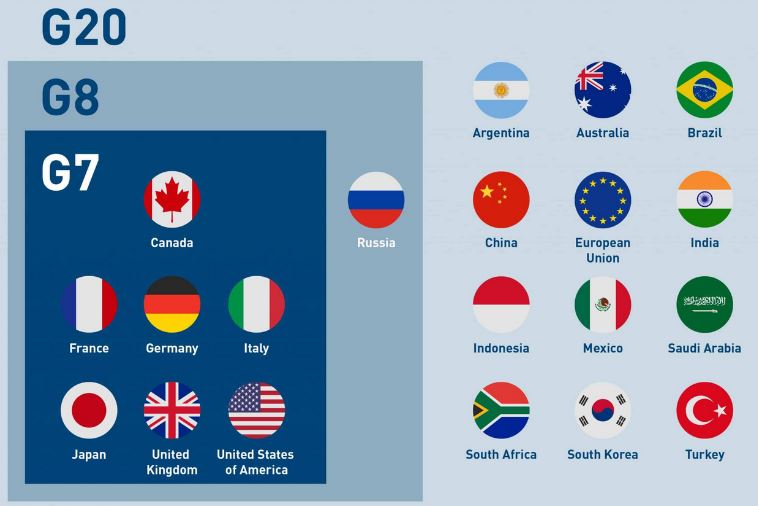
  • China’s disputed ‘Developing’ Country Status at WTO

    China’s status as a ‘developing country’ at the World Trade Organization (WTO) has become a contentious issue with a number of countries raising concerns.

    Defining a country’s ‘Development’

    • There are no WTO definitions of “developed” or “developing” countries.
    • Developing countries in the WTO are designated on the basis of self-selection although this is not necessarily automatically accepted in all WTO bodies.
    • The WTO however recognizes as least-developed countries (LDCs) those countries which have been designated as such by the United Nations.

    Benefits of ‘Developing Country’ tag

    • Special and differential treatment: Certain WTO agreements give developing countries special rights through ‘special and differential treatment’ (S&DT) provisions.
    • Preferential treatment: The classification also allows other countries to offer preferential treatment.
    • Longer timeframe for pacts: WTO can grant developing countries longer timeframes to implement the agreements and even commitments to raise trading opportunities for such countries.

    Issues with Chinese ‘Developing Country’ status

    • China has become an upper-middle-income country according to the World Bank.
    • It involves in unfair trade practices such as preferential treatment for state enterprises, data restrictions and inadequate enforcement of intellectual property rights.

    How has China responded?

    • China has consistently maintained that it is the “world’s largest developing economy”.
    • It has recently indicated that it may be willing to forego many benefits of being a developing country.

    What are the benefits of LDC classification?

    • The WTO recognizes LDCs relying on a classification by the UN based on criteria that is reviewed every three years. LDCs are often exempted from certain provisions of WTO pacts.
    • Bangladesh, currently classified as an LDC, receives zero duty, zero quota access for almost all exports to the EU.
    • It is, however, set to graduate from the LDC status in 2026 as its per capita GDP has risen sharply surpassing that of India in FY21.

    Try this question from CS Mains 2018:


    Q.What are the key areas of reform if the WTO has to survive in the present context of ‘Trade War’, especially keeping in mind the interest of India?


    Reference: https://www.civilsdaily.com/sansad-tv-perspective-wto-reforms/

    (Aspirants need not write whole answers. Just a quick summary with keywords would suffice.)


    [wpdiscuz-feedback id=”49mr6oddi2″ question=”Post your answers here.” opened=”1″] [/wpdiscuz-feedback]


    UPSC 2022 countdown has begun! Get your personal guidance plan now! (Click here)

  • New prominence of the Central Asian region

    Context

    When Prime Minister Narendra Modi hosts the five Central Asia leaders at the Republic Day Parade on January 26, it will send a strong signal — of the new prominence of the Central Asian region in India’s security calculations.

    Why India needs effective continental policy

    • Factors intensifying geopolitical competition: China’s assertive rise, withdrawal of forces of the United States/North Atlantic Treaty Organization (NATO) from Afghanistan, the rise of Islamic fundamentalist forces, the changing dynamics of the historic stabilising role of Russia (most recently in Kazakhstan) and related multilateral mechanisms — the Shanghai Cooperation Organization (SCO), the Collective Security Treaty Organisation, and the Eurasian Economic Union — have all set the stage for a sharpening of the geopolitical competition on the Eurasian landmass.
    • Progress in ties: India’s continental strategy, in which the Central Asian region is an indispensable link, has progressed intermittently over the past two decades — promoting connectivity, incipient defence and security cooperation, enhancing India’s soft power and boosting trade and investment.
    • It is laudable, but as is now apparent, it is insufficient to address the broader geopolitical challenges engulfing the region.
    • To meet this challenge, evolving an effective continental strategy for India will be a complex and long-term exercise.

    Leveraging maritime power

    • India’s maritime vision and ambitions have grown dramatically during the past decade, symbolised by its National Maritime Strategy, the Security and Growth for All in the Region (SAGAR) and major initiatives relating to the Indo-Pacific and the Quad, in which maritime security figures prominently.
    •  It was also a response to the dramatic rise of China as a military power.
    • Importance: Maritime security is important to keeping sea lanes open for trade, commerce and freedom of navigation, resisting Chinese territorial aggrandisement in the South China Sea and elsewhere, and helping littoral states resist Chinese bullying tactics in interstate relations.
    • However, maritime security and associated dimensions of naval power are not sufficient instruments of statecraft as India seeks diplomatic and security constructs to strengthen deterrence against Chinese unilateral actions and the emergence of a unipolar Asia.
    • Bulwarks against Chinese maritime expansionist gains are relatively easier to build and its gains easier to reverse than the long-term strategic gains that China hopes to secure on continental Eurasia.
    • Centrality of Central Asia: Like Association of Southeast Asian Nations (ASEAN) centrality is key to the Indo-Pacific, centrality of the Central Asian states should be key for Eurasia.

    Challenges for India

    1] Connectivity challenge

    • Connectivity means nothing when access is denied through persistent neighbouring state hostility contrary to the canons of international law.
    • India has been subject for over five decades to a land embargo by Pakistan that has few parallels in relations between two states that are technically not at war.
    • Lack of alternative route: Difficulties have arisen in operationalising an alternative route — the International North-South Transport Corridor on account of the U.S.’s hostile attitude towards Iran.
    • With the recent Afghan developments, India’s physical connectivity challenges with Eurasia have only become harder.
    • The marginalisation of India on the Eurasian continent in terms of connectivity must be reversed.

    2] India must be aware of the limitations of the US

    • The ongoing U.S.-Russia confrontation relating to Ukraine, Russian opposition to future NATO expansion and the broader questions of European security including on the issue of new deployment of intermediate-range missiles, following the demise of the Intermediate-Range Nuclear Forces (INF) treaty will have profound consequences for Eurasian security.
    • The U.S. would be severely stretched if it wanted to simultaneously increase its force levels in Europe and the Indo-Pacific.
    • A major conflict — if it erupts in Central Europe, pitting Russia, Ukraine and some European states — will stall any hopes of a substantial U.S. military pivot to the Indo-Pacific. 
    • India should be cognisant of the limitations of geography, obvious gaps between strategic ambition and capacity but also the inherently different standpoints of how major maritime powers view critical questions of continental security.
    • India is unique as no other peer country has the same severity of challenges on both the continental and maritime dimensions.

    Way forward for India

    • India would need to acquire strategic vision and deploy the necessary resources to pursue our continental interests without ignoring our interests in the maritime domain.
    • This will require a more assertive push for our continental rights — namely that of transit and access, working with our partners in Central Asia, with Iran and Russia, and a more proactive engagement with economic and security agendas ranging from the SCO, Eurasian Economic Union (EAEU) and the Collective Security Treaty Organization (CSTO).
    • Striking the right balance between continental and maritime security would be the best guarantor of our long-term security interests.

    Conclusion

    India will need to define its own parameters of continental and maritime security consistent with its own interests. In doing so, at a time of major geopolitical change, maintaining our capacity for independent thought and action will help our diplomacy and statecraft navigate the difficult landscape and the choppy waters that lie ahead.

    UPSC 2022 countdown has begun! Get your personal guidance plan now! (Click here)

  • The Chinese challenge

    Context

    Nearly 20 months after the border crisis began in Ladakh, China has pressed on with aggressive diplomatic and military gestures against India.

    Recent anti- India moves by China

    • Beijing recently renamed 15 places in Arunachal Pradesh, following the six it had done in 2017.
    • China justifies the renaming as being done on the basis of its historical, cultural and administrative jurisdiction over the area — these old names existed since ancient times which had been changed by India with its “illegal occupation”.
    • On January 1, 2022, Beijing’s new land border law came into force, which provides the People’s Liberation Army (PLA) with full responsibility to take steps against “invasion, encroachment, infiltration, provocation” and safeguard Chinese territory.

    India’s response

    • Delhi has run out of proactive options against Beijing that will force the Chinese leadership to change course on its India policy.
    • The two countries have an increasingly lopsided trade relationship driven by Indian dependency on Chinese manufacturing, a situation further worsened by the Government’s mishandling of the novel coronavirus pandemic.
    • To restore the status quo ante on the LAC as of April 2020, India undertook internal balancing of its military from the Pakistan border to the China border and external rebalancing through a closer partnership with the United States in the Indo-Pacific.
    • Because of the China factor, the U.S. is currently looking away even as India mistreats its minorities and its democracy stands diminished.
    •  India’s difficult diplomatic and military engagement with China is going to leave it more dependent on U.S. support, rendering India more vulnerable to American pressure on ‘shared values’.
    • With a rising China as its neighbour and a more self-centred U.S. – which is uncomfortable with India’s reliable partner, Russia — as its friend, Delhi continues to face difficult choices.

    Conclusion

    Put under the harsh glare, India has been found wanting in its ability to deal with future challenges. The immediate challenge, however, remains China. It cannot be wished away and must be tackled.

    UPSC 2022 countdown has begun! Get your personal guidance plan now! (Click here)

  • China’s new land boundary law fits in with its expansionism

    Context

    The latest in the series of aggressive Chinese actions is the use of lawfare through the passing of the “Land Boundary Law” on October 21 which became effective this week.

    Background of the Chinese approach

    • The last residue of the Qing dynasty was wiped out in the 1911 revolution when China was established as a republic.
    • The republic was again overthrown in 1949 by the Chinese Communist Party.
    • Three successive Chinese governments in China refused to delineate or demarcate the boundary with either Tibet or India.
    • British archival records, many declassified points to attempts made by Imperial Britain to formally formulate a boundary with China.
    • Yet, all three regimes were united in their refusal to accept a formal limiting of China’s territorial expanse and kept their response ambiguous.
    • Even during the Simla Convention of 1913-14, when the Republic was ascendant in China, there was a vehement refusal to recognise any demarcation of boundaries between Tibet and China.

    Strong-arm tactics against India

    • Having operated from a maximalist position to settle its borders with 12 of its 14 neighbours so far, China has attempted to use the same strong-arm tactics with both India and Bhutan.
    • It has offered to forgo its claims in the larger parts of North Bhutan in lieu of gaining a relatively smaller area in West Bhutan.
    • Threat to Siliguri corridor: This seeming magnanimity is calculated to expand into the Chumbi Valley in the South, threatening the narrow and strategic Siliguri corridor in India.
    • In its latest move, China has made a new claim on Sakteng sanctuary in Bhutan which may form a launchpad for future operations against Tawang in Arunachal Pradesh.
    • China has also strengthened its collusion with Pakistan.
    • There is a deliberate attempt by China to physically link with Pakistan in the Northern Areas by removing the Indian wedge of DBO, the doorway to the Karakoram Pass.
    • A Training Mobilisation Order (TMO) issued by Xi Jinping in January 2020 called for “confrontational training” for its troops and officers to assess their preparedness, especially in light of the new reforms undertaken by the PLA.
    • These factors seem to be the tactical beginnings of China’s grand strategy which also saw China flexing in the South China Sea and Taiwan, almost simultaneously.

    China making use of lawfare and implications for India

    • The latest in the series of aggressive Chinese actions is the use of lawfare through the passing of the “Land Boundary Law”.
    • Formalises and legalises land Chinese grab: The law formalises and legalises China’s geographic creep towards Tawang, Arunachal Pradesh and parts of eastern Ladakh and creates conditions for using newly-constructed border villages close to the LAC for claiming sovereignty over disputed areas.
    • The import of the law is most critical for India but will affect China’s disputes with other countries too.
    • What China has done, therefore, is convert a territory dispute over borders into a sovereignty dispute which precludes any give or take of territory.
    • China will attempt to settle its Han population in the Tibetan regions, reversing established demographic patterns and at the same time.
    •  Future negotiations over territory, if they occur, will then refer to the Border Defence Cooperation Agreements of 2005 and 2012 which call for border settlements to be done keeping in mind the local population in the border regions.

    Way forward

    • A deliberate thought process needs to be evolved to offset our disadvantages as purely military actions may not solve the situation in the long term.

    Conclusion

    What emerges clearly is that by adopting the Land Boundary Law, in conjunction with its physical actions on the LAC, China has consolidated its position in eastern Ladakh and kept possibilities open in Arunachal Pradesh.

    UPSC 2022 countdown has begun! Get your personal guidance plan now! (Click here)

  • [Burning Issue] Economically Weaker Sections (EWS) Quota

    UPSC 2022 countdown has begun! Get your personal guidance plan now! (Click here)

    The Union government has approved reservations for the OBC and EWS (Economically Weaker Section) categories within the All India Quota (AIQ) for National Eligibility-cum-Entrance Test (NEET), the uniform entrance examination for medical and dental colleges across the country.

    What is NEET?

    • The National Eligibility-cum-Entrance Test (NEET) is the entrance examination for entry to all undergraduate (NEET-UG) and postgraduate (NEET-PG) medical and dental courses in the country.
    • On April 13, 2016, the Supreme Court upheld the newly inserted section 10-D of the Indian Medical Council Act.
    • This provided for a uniform entrance examination to all medical educational institutions at the undergraduate level and postgraduate level in Hindi, English and various other languages.

    What is the All-India Quota?

    • Although the same examination is held across the country, a chunk of the seats in state medical/dental colleges is reserved for students domiciled in their respective states.
    • The remaining seats —15% in UG and 50% in PG — are surrendered by the states to the All India Quota.
    • The AIQ scheme was introduced in 1986 under the directions of the Supreme Court to provide for domicile-free, merit-based opportunities to students from any state to study in a good medical college in any other state.
    • In deemed/central universities, ESIC, and Armed Forces Medical College (AFMC), 100% seats are reserved under the AIQ.

    What was the reservation policy followed so far?

    • Until 2007, no reservation was implemented within the All-India Quota for medical admission.
    • On January 31, 2007, in Abhay Nath v University of Delhi and Others, the Supreme Court directed that reservation of 15% for Scheduled Castes and 7.5% for Scheduled Tribes be introduced in the AIQ.
    • The same year, the government passed the Central Educational Institutions (Reservation in Admission) Act, 2007 providing for 27% reservation to OBC students in central government institutions.
    • While state government medical and dental colleges provide reservations to OBCs in seats outside the All India Quota, this benefit was so far not extended to seats allocated under the AIQ in these state colleges.
    • The 10% EWS quota under the Constitution (One Hundred And Third Amendment) Act, 2019, too, has been implemented in central educational institutions, but not in the NEET AIQ for state institutions.

    What led to the decision?

    • The denial of OBC and EWS reservations has been the subject of protests for years.
    • In July last year, the Madras High Court ruled that OBC students too can avail reservation in the AIQ.
    • It held that the reservation could not be implemented for the then academic year for want of time, and can be implemented from 2021-22.

    Let us look at the EWS quota and related information in detail.

    EWS Quota: A Backgrounder

    • The 10% reservation was introduced through the 103rd Constitution Amendment and enforced in January 2019.
    • It added Clause (6) to Article 15 to empower the Government to introduce special provisions for the EWS among citizens except those in the classes that already enjoy reservation.
    • It allows reservation in educational institutions, both public and private, whether aided or unaided, excluding those run by minority institutions, up to a maximum of 10%.
    • It also added Clause (6) to Article 16 to facilitate reservation in employment.
    • The new clauses make it clear that the EWS reservation will be in addition to the existing reservation.

    Inception of EWS Quota

    • EWS reservation was granted based on the recommendations of a commission headed by Major General (retd) S R Sinho.
    • The Commission for Economically Backward Classes was constituted by the then UPA government in 2005, and submitted its report in July 2010.
    • Based on this, the Cabinet in January 2019 decided to amend the Constitution (103rd Amendment) to provide reservation to EWS.

    Why was the new committee constituted?

    • The committee aimed to revisit the criteria for determining the economically weaker sections in terms of the provisions of the explanation to Article 15 of the Constitution.
    • It followed the Supreme Court’s observation that the income criterion for determining EWS was “arbitrary”.

    Significance of the quota

    • Empowering economically weaker sections: The 10% quota is progressive and could address the issues of educational and income inequality in India since the economically weaker sections of citizens have remained excluded from attending higher educational institutions and public employment due to their financial incapacity.
    • Constitutional recognition of the Economic Backwards: There are many people or classes other than backward classes who are living under hunger and poverty-stricken conditions.
      • The proposed reservation through a constitutional amendment would give constitutional recognition to the poor from the upper castes.
    • Reduction of Caste Based Discrimination: It will gradually remove the stigma associated with reservation because reservation has historically been related with caste and most often the upper caste look down upon those who come through the reservation.
    • In Ram Singh v. Union of India (2015), SC asserted that social deficiencies may exist beyond the concept of caste (e.g. economic status/gender identity as in transgenders).

    What are the criteria to identify the section?

    • The main criterion is that those above an annual income limit of ₹8 lakh are excluded.
    • It accounts income from all sources such as salary, business, agriculture and profession for the financial year prior to the application of the family, applicants, their parents, siblings and minor children.
    • Possession of any of these assets, too, can take a person outside the EWS pool:
      1. Five or more acres of agricultural land
      2. A residential flat of 1,000 sq.ft. and above
      3. A residential plot of 100 square yards and above in notified municipalities, and
      4. A residential plot of 200 square yards and above in other areas

    What are the court’s questions about the criteria?

    • Reduction within general category: The EWS quota remains a controversy as its critics say it reduces the size of the open category, besides breaching the 50% limit on the total reservation.
    • Arbitrariness over income limit: The court has been intrigued by the income limit being fixed at ₹8 lakh per year. It is the same figure for excluding the ‘creamy layer’ from OBC reservation benefits.
    • Socio-economic backwardness: A crucial difference is that those in the general category, to whom the EWS quota is applicable, do not suffer from social or educational backwardness, unlike those classified as the OBC.
    • Metropolitan criteria: There are other questions as to whether any exercise was undertaken to derive the exceptions such as why the flat criterion does not differentiate between metropolitan and non-metropolitan areas.
    • OBC like criteria: The question the court has raised is that when the OBC category is socially and educationally backward and, therefore, has additional impediments to overcome.
    • Not based on relevant data: In line with the Supreme Court’s known position that any reservation or norms for exclusion should be based on relevant data.
    • Breaches reservation cap: There is a cap of 50% on reservation as ruled in the Indira Sawhney Case. The principle of balancing equality ordains reservation.

    What is the current status of the EWS quota?

    • The reservation for the EWS is being implemented by the Union Government for the second year now.
    • Recruitment test results show that the category has a lower cut-off mark than the OBC, a point that has upset the traditional beneficiaries of reservation based on caste.
    • The explanation is that only a small number of people are currently applying under the EWS category — one has to get an income certificate from the revenue authorities — and therefore the cut-off is low.
    • However, when the number picks up over time, the cut-off marks are expected to rise.

    Practical issues with EWS Quota

    The EWS quota will come in for judicial scrutiny soon. But it’s not only a matter for the judiciary, India’s Parliament should revisit the law too.

    • Hasty legislation: This law was passed in haste. It was passed in both the houses within 48 hours, and got presidential approval the next day.
    • Minority appeasement: It is widely argued that the law was passed to appease a certain section of upper-caste society and to suppress the demands for minority reservations.
    • Morality put to question: Imagine! A constitutional amendment has been made with few hours of deliberation and without consultation of the targeted group. This is certainly against constitutional morality and propriety.
    • Substantial backing is missing: This amendment is based on a wrong or unverified premise. This is at best a wild guess or a supposition because the government has not produced any data to back this point.
    • Under-reservation of Backward Classes: The assertion is based on the fact that we have different data to prove the under-representation of SC, ST, OBCs. That implies that ‘upper’ castes are over-represented (with 100 minus reservation).
    • Rationale of 10%: There is one more problem in this regard. The SC and ST quota is based on their total population. But the rationale for the 10 per cent quota was never discussed.
    • Principle of Equality: Economic backwardness is quite a fluid identity. It has nothing to do with historic wrongdoings and liabilities caused to the Backward Classes.

    Should India need reservation?

    • Duty of the state to provide equality of status and opportunity: Reservation is one of the tools against social oppression and injustice against certain classes. Otherwise known as affirmative action, reservation helps in uplifting backward classes.
    • Reservation is just one of the methods for social upliftment: There are many other methods like providing scholarships, funds, coachings, and other welfare schemes.
    • Vote bank politics: Indian Constitution allowed reservation only for socially and educationally backward classes. However, in India, it became caste-based reservation instead of class-based reservation.
    • Mandal Commission Report: Initially, the reservation was intended only for SC/ST communities – that too for a period of 10 years (1951-1961). However, it got extended ever since.
      • After the implementation of Mandal Commission report in 1990, the scope of the reservation was widened to include Other Backward Communities (OBCs).
    • The benefits of the reservation were successively enjoyed only by a few communities (or families), excluding the truly deserving ones. Even 70 years after independence, the demand for reservation has only increased.
      • Now, with the introduction of economic criteria for reservation, in addition to the caste-criteria which already existed, things have become more complicated.

    Way forward

    • Preserving the merit: We cannot rule out the sorry state of economic backwardness hampering merit in our country.
    • Rational critera: There has to be collective wisdom to define and measure the economic weakness of certain sections of the society in order to shape the concept of economic justice.
    • Judicial guidance: Judicial interpretation will pave the wave forward for deciding the criterion for EWS Quota.
    • Targetted beneficiaries. The centre needs to resort to more rational criteria for deciding the targeted beneficiary of this reservation system. Caste Census data can be useful in this regard.
    • Income study: The per capita income or GDP or the difference in purchasing power in the rural and urban areas, should be taken into account while a single income limit was formulated for the whole country.

    Conclusion

    • Reservation is a constitutional scheme to ensure the participation of backward classes shoulder to shoulder with all citizens in the nation-building process.
    • The EWS quota with above discussed ambiguities is the subversion of the constitutional scheme for reservation.

    UPSC 2022 countdown has begun! Get your personal guidance plan now! (Click here)

  • CSTO troops deployed in Kazakhstan

    A Moscow-led military alliance called Collective Security Treaty Organization (CSTO) dispatched troops to help quell mounting unrest in Kazakhstan.

    Ongoing situation in Kazakhstan

    • Long seen as one the most stable of the ex-Soviet republics of Central Asia, energy-rich Kazakhstan is facing its biggest crisis.
    • There are ongoing protests over rising fuel prices escalated into widespread unrest.
    • The nationwide protests are also signifying a wider, region-wide longing for political change.
    • Under increasing pressure, Kazakh President appealed to the Russia for CSTO army to be deployed in Kazakhstan.

    Concerns over CTSO troop’s deployment

    • It is argued that domestic turmoil could be utilized by Russian nationalists for asserting their claims in Northern Kazakhstan.

    What is CSTO?

    • The CSTO is a Russia-led military alliance of seven former Soviet states that was created in 2002.
    • Current CSTO members are Armenia, Belarus, Kazakhstan, Kyrgyzstan, the Russian Federation and Tajikistan.
    • Afghanistan and Serbia hold observer status in the CSTO.
    • Its purpose is to ensure the collective defence of any member that faces external aggression.

    Outlined functions of CSTO

    • Version of NATO: It has been described by political scientists as the Eurasian counterpart of NATO, which has 29 member states, while the CSTO has just six.
    • Arms trade and mutual defense: CSTO supports arms sales and manufacturing as well as military training and exercises, making the CSTO the most important multilateral defence organization in the former Soviet Union.
    • Non- proliferation of weapons:  CSTO also coordinates efforts in fighting the illegal circulation of weapons among member states and has developed law enforcement training for its members in pursuit of these aims.

    What does CSTO membership provide?

    • Barring relations with NATO: While CSTO membership means that member states are barred from joining other military alliances, limiting, for example, their relationship with NATO.
    • Benefits in arms import from Russia: Its members receive discounts, subsidies, and other incentives to buy Russian arms, facilitating military cooperation.
    • Assurance against military conquest: In the CSTO, aggression against one signatory is perceived as aggression against all. It however remains unclear whether this feature works in practice.


    UPSC 2022 countdown has begun! Get your personal guidance plan now! (Click here)