💥Join UPSC 2027,2028 Mentorship (July Batch) + XFactor Notes & Microthemes PDF

Subject: International Relations

  • India’s challenge in European geopolitics

    Context

    For India, an important strategic priority today is to rebalance the Indo-Pacific. Delhi, however, recognises that this expansive challenge can’t be met by any one power, including the US. A larger European role in securing Asia therefore becomes critical.

    Importance of Russia in balancing China

    • Peace with Russia in Europe might be necessary for America to focus on Asia has been the key motivation behind President Joe Biden’s decision to intensify engagement with Vladimir Putin in the last few months.
    • On the question of Ukraine’s membership of NATO, the US and its European allies have suggested that membership is certainly not imminent; but they are unwilling to say Ukraine will “never” be admitted.

    Contradiction in Europe

    • 1] Europe remains geopolitically unstable: None of the three European settlements of the 20th century — in 1919 after the First World War, in 1945 after the Second World War, and in 1991 after the Cold War — has endured.
    • 2] The difficulty of integrating Russia into a European order: Russia was part of the great power system in Europe through the 18th and 19th centuries.
    • If the 1917 Bolshevik Revolution put Russia and the West at odds with each other, the collapse of the Soviet Union has not resolved the contradiction.
    • 3] Growing tension between the US and Europe: Since the Second World War, Europe has relied on the US for its security.
    • However, Europe has never stopped resenting the American dominance over its geopolitics.
    • The EU’s foreign policy chief, Josep Borrell, has repeatedly objected to the US and Russia deciding the future of Ukraine over European heads.
    • But Russia does not take the EU seriously and is betting on negotiations with the US.
    • 4] Europe still remains a weak security actor:  While the EU has become a powerful economic entity (with its $17 trillion GDP), it remains a weak security actor.
    • Whatever might be the outcome from the gathering conflict over Ukraine, these European contradictions are not going to disappear any time soon.

    Why Europe remains a weak security actor?

    • Dominance of the US and Russia: The ambition to construct a strong geopolitical personality for the EU is hobbled by divisions over the role of Russia and the US in the region.
    • Mutual suspicions: The historically rooted mutual suspicions among European states also plays role.
    • Reluctance to spend on defence: This is compounded by the reluctance to spend more on defence and the inability to develop collective defence arrangements outside of NATO led by the US.

    Suggestions for India

    • The contradictions in Europe demand that Delhi discard its tendency to view the region through the “East versus West” binary.
    • Delhi today could profitably take a leaf out of the book of the Indian national movement.
    • In the late 18th century, as European powers competed for influence in the subcontinent, many Indian princes sought to take advantage of the contradictions between Britain and France.
    • Imperial Germany supported the formation of a nationalist government of India in Kabul in 1915 headed by Raja Mahendra Pratap Singh.
    • Eager to accelerate Indian independence during the Second World War, Netaji turned to Germany and Japan, the world’s newest great power.
    • The sharpening struggle for Indian independence, and more broadly the liberation of Asia between the two World Wars, inevitably involved exploiting the contradictions between different imperial powers.
    •  This was complicated, however, by rapid realignment among the major powers —friends became adversaries and enemies became allies.
    • The Indian and Asian national movements were deeply divided in coping with the shifting great power dynamic.
    • The world enters a similar moment today that could rearrange relations between the US, UK, Europe, Russia, China and Japan.

    Consider the question “What are the contradictions in Europe today? How these contradiction can play role in India’s international relations with the European countries?”

    Conclusion

    Greater engagement with Europe and dealing with its multiple contradictions must necessarily be important elements of India’s international relations today.

    UPSC 2022 countdown has begun! Get your personal guidance plan now! (Click here)

  • What Russia really wants

    Context

    Vladimir Putin, who annexed Crimea in 2014 has now mobilised some 100,000 troops on the Ukraine border.

    How insecurity and history plays role in Russia’s actions

    • Russia, the world’s largest country by land mass, lacks natural borders except the Arctic Ocean in the north and the Pacific in the far east.
    • Its vast land borders stretch from northern Europe to Central and north east Asia.
    • The country’s heartland that runs from St. Petersburg through Moscow to the Volga region lies on plains and is vulnerable to attacks.
    • In the last two centuries, Russia saw two devastating invasions from the west — the 1812 attack by Napoleonic France and the 1941 attack by Nazi Germany. 
    • After the Second World War, Russia re-established its control over the rim land in Eastern Europe and Central Asia, which it hoped would protect its heartland.
    • But the disintegration of the Soviet Union threw its security calculations into disarray, deepening its historical insecurity.

    NATO’s expansion after disintegration of the Soviet Union

    • When the Soviet Union collapsed, Russia lost over three million square kilometres of sovereign territory.
    •  In the last months of the Soviet Union, the West promised that the North Atlantic Treaty Organization (NATO) would not “expand an inch to the east”.
    • The United States and the United Kingdom repeated the pledge after the collapse of the Soviet Union.
    • But despite the promises, NATO continued expansion.
    • In March 1999, in the first enlargement since the end of the Cold War, the Czech Republic, Hungary and Poland (all were members of the Soviet-led Warsaw Pact) joined NATO.
    • Five years later, seven more countries — including the three Baltic countries of Estonia, Latvia and Lithuania, all of which share borders with Russia — were taken into the alliance.
    • Russia felt threatened but was not able to respond.
    • But in 2008, when the U.S. promised membership to Georgia and Ukraine in the Bucharest summit, Russia, which was coming out of the post-Soviet retreat, responded forcefully.

    How Russia see NATO expansion as threat to its dominance on Black Sea

    • Turkey, Bulgaria and Romania, all Black Sea basin countries, are NATO members.
    • Ukraine and Georgia are the other countries that share the Black Sea coast, besides Russia.
    • Russia was already feeling squeezed on the Black Sea front, its gateway to the Mediterranean Sea.
    • If Ukraine and Georgia also join NATO, Russia fears that its dominance over the Black Sea would come to an end.
    • So, in 2008, Mr. Putin sent troops to Georgia over the separatist conflict in South Ossetia and Abkhazia.
    • In 2014, when the Kremlin-friendly regime of Ukraine was toppled by pro-western protesters, he moved to annex the Crimean peninsula, expanding Russia’s Black Sea coast, thereby protecting its fleet based in Sevastopol in Crimea.

    Restoring the rim land

    • In recent years, Mr. Putin has tried to turn every crisis in the former Soviet region into a geopolitical opportunity.
    • South Ossetia and Abkhazia, the self-proclaimed republics that broke away from Georgia, are controlled by Russia-backed forces.
    •  In 2020, when protests erupted in Belarus after a controversial presidential election, Mr. Putin sent assistance to the country to restore order.
    • In the same year, Russia sent thousands of “peacekeepers” to end the war between Armenia and Azerbaijan.
    • Earlier this year, Belarus leader Alexander Lukashenko, with Mr. Putin’s backing, manufactured a migrant crisis on the Polish border of the European Union.
    • This month, when violent unrest broke out in Kazakhstan, the largest and wealthiest country in Central Asia, its leader turned to Russia for help.

    How do geopolitical circumstances favour Russia?

    • The U.S.’s ignominious withdrawal from Afghanistan has left the Central Asian republics deeper in the Russian embrace.
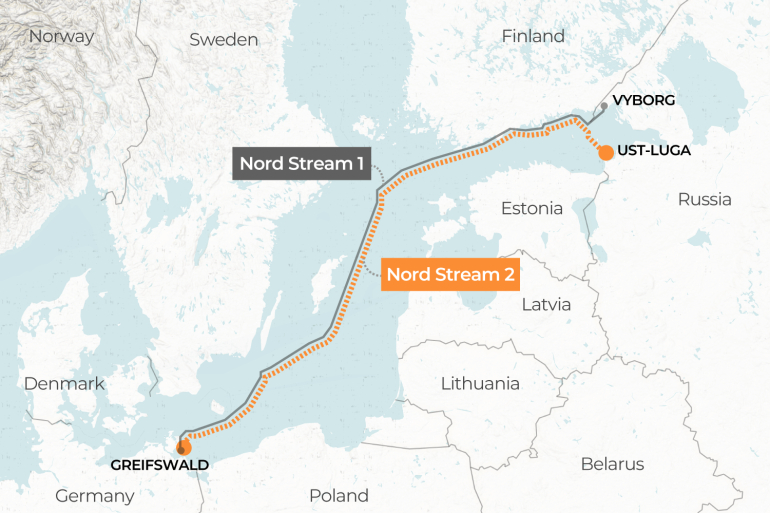
    • Europe is very much dependent on Russian gas, which limits its response.
    • For years, the West, the winner of the Cold War, discounted Mr. Putin.
    • Having failed to defeat the Taliban in Afghanistan, NATO is unlikely to pick a war with Russia over Ukraine.

    Conclusion

    By destabilising Georgia and Ukraine and re-establishing Russia’s hold in Belarus, Caucasus and Central Asia, Moscow has effectively stalled NATO’s further expansion into its backyard.

    UPSC 2022 countdown has begun! Get your personal guidance plan now! (Click here)

  • Preventing genocide

    Context

    Incendiary speeches at a religious assembly include calls for the genocide of Muslims in India and can be seen as part of an ongoing pattern of targeting minorities.

    Background of the convention against genocide

    • India’s role: India has signed and ratified the Convention on the Prevention and Punishment of the Crime of Genocide of 1948.
    • In 1946, Cuba, India and Panama co-sponsored General Assembly Resolution 96(I), which affirmed genocide as a ‘crime under international law’.
    • As a result of this resolution, a convention on the prohibition of genocide was drafted, which was passed by the General Assembly in 1948 and came into effect in 1951, with more than 150 states party to the convention presently.
    • Legal obligation: Legal obligations on states that are party to the convention include:
    • the obligation not to commit genocide,
    • to prevent genocide, and to punish genocide(Article I),
    • to enact legislation to give effect to the provisions of the convention (Article V);
    • to provide for effective penalties for those found guilty of criminal conduct (Article V); and
    • the obligation to try those charged with genocide in a competent tribunal (Article VI).

    No legislation enacted by India

    • Since signing the Genocide Convention and ratifying it, to date India has not enacted any legislation in accordance with Article VI of the Genocide Convention.
    • At the outset, India is in violation of its international obligation to criminalise genocide within its domestic law per Articles V, VI and VII, and to take all means to ensure the prevention of genocide.
    •  Indian domestic law shows that there are no comparable provisions for the prosecution of any mass crimes, least of all genocide.
    • Indian Penal Code provisions relating to rioting, unlawful assembly and ‘promoting enmity between different groups’ do not embody the basic elements of the crime of genocide, which is against a collectivity or a group, with the specific intent to cause its destruction.
    • These also do not pertain to another key aspect of the Genocide Convention – that of prevention, and creating the conditions in which such hate speech and other associated acts are not allowed to flourish.

    Significance of the Gambia’s proceedings before the ICJ against Myanmar

    •  The Gambia has initiated proceedings before the International Court of Justice (ICJ) against Myanmar on the basis of the Convention.
    • The ICJ, relying on a previous case of Belgium v. Senegal, stated, “It follows that any State party to the Genocide Convention, and not only a specially affected State, may invoke the responsibility of another State party with a view to ascertaining the alleged failure to comply with its obligations erga omnes partes, and to bring that failure to an end.”

    Conclusion

    It is more imperative than ever that international legal protections against genocide are incorporated in domestic legislation. Furthermore, the fact that India has international legal obligations under the Genocide Convention which it is not adhering to must be rectified.

    UPSC 2022 countdown has begun! Get your personal guidance plan now! (Click here)

  • Making sense of Pakistan’s new national security policy

    Context

    The national security policy statement issued last week by the government of Pakistan acknowledges the need for change.

    Why does it matter for India?

    • India’s stakes in a stable Pakistan are higher than anyone else in the world.
    • Therefore, Delhi must pay close attention to the internal debates within Islamabad on the imperatives of major change in Pakistan’s national direction.
    • But as critics in Pakistan insist, the policy offers no clues on how to go about it.
    • The classified version probably has a clear strategy on how to accelerate economic growth, build national cohesion, and revitalise its foreign and security policies.

    Overview of India’s transformation after 1990s

    • The crises that Pakistan confronts today are quite similar to those Delhi faced at the turn of the 1990s.
    • Economic challenge: India’s post-Independence old economic model was on the verge of collapse.
    • Political instability: The era of massive domestic political mandates was over and weak coalitions government were in place.
    • Challenges in International relations: The Soviet Union, India’s best friend in the Cold War, fell off the map and the Russian successor was more interested in integrating with the West.
    • India found that its political ties with all other major powers — the US, Europe, China and Japan — were underdeveloped at the end of the Cold War.
    • Pakistan, meanwhile, was running proxy wars in India even as it mobilised international pressures against Delhi on Kashmir.
    • Within a decade, though, India was on a different trajectory.
    • . Its reformed economy was on a high growth path.
    • India was hailed as an emerging power that would eventually become the third-largest economy in the world and a military power to reckon with.
    • Delhi also cut a deal with Washington to become a part of the global nuclear order on reasonable terms.
    • This involved a series of structural economic reforms, the recasting of foreign policy, and developing a new culture of power-sharing within coalitions and between the Centre and the states.

    The economic transformation of Bangladesh

    • The economic transformation of Bangladesh has been equally impressive.
    • Since Sheikh Hasina returned to power in 2009, Bangladesh focused on economic development, stopped support to terrorism, and improved ties with the larger of its two neighbours — India. 
    • As a result, Bangladesh’s economy in 2021 (GDP at $350 billion) is well ahead of Pakistan ($280 billion).

    How Pakistan missed the opportunity

    • Pakistan chose a different path.
    • Having ousted the Soviet superpower from Afghanistan in the late 1980s, Pakistan was ready to apply the model of cross-border terrorism to shake Kashmir loose from India and turn Afghanistan into a protectorate.
    • Supporting jihadi groups was seen as a low-cost strategy to achieve Pakistan’s long-standing strategic objectives in the neighbourhood.
    • These grand geopolitical obsessions left little bandwidth for the much-needed economic modernisation of Pakistan.
    • Islamabad, which relentlessly pursued parity with Delhi, now finds that the Indian economy at $3.1 trillion is more than 10 times larger than that of Pakistan.

    Factors that explain change in Pakistan’s policy

    • Diminishing role in geopolitics: In the past, Pakistan had much success in pursuing a foreign policy that not only balanced India with the support of the West, but also carved out a large role for itself in the Middle East and more broadly the Muslim world.
    • Today, barring the United Kingdom, Pakistan’s equities in the West have steadily diminished.
    • Weakened ties in the Middle East: Meanwhile, it has weakened its traditionally strong ties in the Middle East with Saudi Arabia and the United Arab Emirates.
    • Weakened ties with the US: Although its all-weather ties with China have gone from strength to strength, the unfolding conflict between Washington and Beijing has put Pakistan in an uncomfortable strategic situation.
    • Pakistan’s support for violent religious extremism has also begun to backfire.
    • A permissive environment for terrorism has now attracted severe financial penalties from the international system.

    India’s changed approach towards Pakistan

    • Delhi, which was prepared to make concessions on Kashmir in the 1990s and 2000s, has taken Kashmir off the table and is ready to use military force in response to major terror attacks.
    • Delhi’s attitude towards Islamabad now oscillates between insouciance and aggression.
    • Unlike in the past, the West is no longer pressuring India to accommodate Pakistan on Kashmir.
    • The US is eager for India’s support in balancing China in the Indo-Pacific.

    Conclusion

    All these shifts together have compelled Pakistan to rethink its policies.  There is no guarantee that the change will be definitive and for the good. But if it is, Delhi should be prepared to respond positively.

    UPSC 2022 countdown has begun! Get your personal guidance plan now! (Click here)

  • Domestic and geopolitical risks India faces in 2022

    Context

    Risks in 2022 could be both domestic and geopolitical, with many precepts that the world has been accustomed to being at risk. Democracy itself could face serious headwinds this year.

     Challenges to democracy

    • The world has recently seen the rise of authoritarian rulers in many countries.
    • What is worrisome is that democratic tenets which have been under attack in recent years appear set to face more onslaughts this year.
    • The United States, which was widely viewed as a major bulwark for democracy, appears to have developed certain pathological infirmities.

    Geopolitical challenges and risks

    [1] Disruption by China

    • The role of China is possibly the most disrupting one, given the challenge it poses to the existing international order.
    • Militarily, China is openly challenging U.S. supremacy in many areas, including ‘state-of-the-art weaponry’ such as hyper-sonic technology.
    • China is now threatening Taiwan, which could well become one of the flashpoints of conflict in 2022.
    • The dip in China’s economic profile in the past year and more could also lead to new tensions in the Asia-Pacific region in 2022.

    [2] Russia-Ukraine conflict

    • The other major risk of a war in 2022, stems from the ongoing conflict between Russia and Ukraine — the latter being backed by the U.S. and North Atlantic Treaty Organization (NATO) forces.
    • During the past three decades, NATO has expanded its reach almost a 1,000 miles to the east in violation of an earlier tacit understanding.
    • Russia appears determined that Ukraine should be the ‘last frontier’ and, if need be, ensure this through military force.
    • The situation has grave possibilities and could result in a series of cyclical outcomes with considerable damage potential.

    [3] Instability in the vast region

    • Unrest in Kazakhstan: The current unrest in Kazakhstan, which till recently was one of the more stable Central Asian nations, is perhaps symptomatic of what is in store.
    • Recent events in Kazakhstan demonstrates a sharper cleavage between the U.S.-led West and its principal opponents, Russia and China.
    • This is not a good sign for the world already wracked by a series of coups or internecine strife as in Ethiopia, Libya and certain regions of West Asia and North Africa.

    [4] Return of Taliban and security implications for India

    • Shift in balance of power: Of particular significance to India is that the Taliban’s return to power in Afghanistan has led to a material shift in the balance of power in India’s periphery.
    • Developments in Afghanistan have fuelled the ambitions of quite a few ‘anti-state militant groups’ across the region.
    • Even in Pakistan, the Tehrik-e-Taliban Pakistan (TTP) has become energised and is enlarging its sphere of action to other parts of Asia, notably Kazakhstan.
    • This will have an unsettling effect across large parts of Asia.
    • New evidence suggests that on India’s eastern flank, viz. Indonesia, a resurgence of radical Islamist activities is taking place.
    • The Jemaah Islamiyah has reportedly become more active in Indonesia.

    [5] India’s border issue with China

    • The most serious issue that India confronts today is how to deal with a China that has become more confrontational.
    • India’s membership of the Quad still rankles as far as China’s psyche is concerned, and during 2022, may well result in China embarking on new adventurist actions at many more points on the Sino-Indian border compelling India to react.
    • Additionally, India will need to determine how best to respond to China’s provocations.
    • Strengthen military posture: India would need to strengthen its military posture, both as a means to deter China and also to convince India’s neighbours that it can stand up to China.

    Challenges ahead for India

    • Challenge in Central Asia: Diplomatically, in 2022, India may find itself vulnerable in dealing with the turmoils which have occurred in two areas of strategic interest to it, viz. Central Asia and West Asia.
    • Challenge in West Asia: In West Asia, the challenge for India is how to manage its membership of the Second Quad (India, Israel, the United Arab Emirates and the U.S.) with the conflicting interests of different players in the region.
    • Limits to balancing: There is a limit to the kind of balancing act that India can perform, whether it be with regard to buying S-400 missile systems from Russia, risking potential sanctions from Washington under Countering America’s Adversaries Through Sanctions Act (CAATSA) or manoeuvering between the Arab States, Israel, Iran and the U.S. in West Asia.

    Conclusion

    Facing a host of unprecedented challenges, India’s leaders and diplomats must not only take stock of the dangers that exist but also be ready on how to manage the risks that are well evident.

    UPSC 2022 countdown has begun! Get your personal guidance plan now! (Click here)

  • India-Japan friendship can help global peace, prosperity

    Context

    The year 2022 marks the 70th anniversary of the establishment of diplomatic relations between Japan and India.

    Historical background of India-Japan relationship

    • We have a long history of people-to-people exchanges that can be traced back to the sixth century.
    • Buddhism was brought to Japan and, in 752.
    • During Meiji Restoration in the late 19th Century — Japan needed natural resources to modernise its industry.
    • Many Japanese travelled to India to purchase cotton, iron ore, etc.
    • Formal relations between Japan and India began in 1952.
    • After the Second World War, instead of signing the multilateral San Francisco Peace Treaty, India opted for concluding a bilateral peace treaty with Japan, considering that honour and equality should be ensured for Japan to rejoin the international community.
    • But even before the establishment of diplomatic relations, the goodwill between the people of the two countries was deeply rooted through business, academic and cultural exchanges.
    • After 70 years of multi-layered exchanges, the relationship between our two countries grew into a “Special Strategic and Global Partnership”. 

    Future possibilities

    [1] As democratic countries, contribute to global peace and prosperity

    • As democratic countries in Asia, India and Japan can cooperate to contribute to global peace and prosperity.
    • We share political, economic and strategic interests based on the firm foundations of common values and traditions.
    • We are continuing our efforts to build a rules-based free and open international order.

    [2] Cooperation in security

    • There are a plethora of fields that we can cooperate in security issues including cyber security, outer space and economic security.

    [3] Augmenting economic relations

    •  For long, Japan has been the largest ODA (Official Development Assistance) donor to India.
    • One of the most recent and ongoing examples of our collaboration is the Mumbai-Ahmedabad High-Speed Rail project.
    • Japan is also one of the largest investors in India.
    • Both countries have also promoted economic cooperation in other countries to enhance social infrastructure and connectivity.
    • Our economic partnership can further strengthen the economy of the Indo-Pacific, as well as the world economy.

    [4] Cultural exchange

    • Cultural exchanges including literature, movies, music, sports and academics are essential for our relations, enabling a better understanding.

    Consider the question “The year 2022 marks the 70th anniversary of the establishment of diplomatic relations between Japan and India. The future offers enormous possibilities for the partnership. In context of this, examine the future possibilities the two countries can explore.” 

    Conclusion

    India-Japan ties will continue to flourish. Our long history substantiates that.

    UPSC 2022 countdown has begun! Get your personal guidance plan now! (Click here)


    Meiji Restoration in Japan

    • In Japanese history, the political revolution in 1868 that brought about the final demise of the Tokugawa shogunate (military government)—thus ending the Edo (Tokugawa) period (1603–1867)—and, at least nominally, returned control of the country to direct imperial rule under Mutsuhito (the emperor Meiji).
    • In a wider context, however, the Meiji Restoration of 1868 came to be identified with the subsequent era of major political, economic, and social change—the Meiji period (1868–1912)—that brought about the modernization and Westernization of the country.
  • India to seal a Free Trade Agreement (FTA) with UK

    India and the United Kingdom have launched formal Free Trade Agreement (FTA) negotiations with the aim of concluding an early harvest trade agreement over the next few months.

    What is a Free Trade Agreement (FTA)?

    • A FTA is a pact between two or more nations to reduce barriers to imports and exports among them.
    • Under a free trade policy, goods and services can be bought and sold across international borders with little or no government tariffs, quotas, subsidies, or prohibitions to inhibit their exchange.
    • The concept of free trade is the opposite of trade protectionism or economic isolationism.

    Key benefits offered by FTA

    • Reduction or elimination of tariffs on qualified: For example, a country that normally charges a tariff of 12% of the value of the incoming product will rationalize or eliminate that tariff.
    • Intellectual Property Protection: Protection and enforcement of intellectual property rights in the FTA partner country is upheld.
    • Product Standards: FTA enhances the ability for domestic exporters to participate in the development of product standards in the FTA partner country.
    • Fair treatment for investors: FTA provides treatment as favourably as the FTA partner country gives equal treatment for investments from the partner country.
    • Elimination of monopolies: With FTAs, global monopolies are eliminated due to increased competition.

    How many FTAs does India have?

    • India has signed it’s first Free Trade Agreement (FTA) with Sri Lanka in 1998.
    • Likewise, India had FTAs with: Nepal, Bhutan, Thailand, Singapore, ASEAN, Japan and Malaysia.
    • The discussion is going for an FTA with Australia.
    • India has signed Preferential Trade Agreements such as:
    1. Asia Pacific Trade Agreement (APTA) with Bangladesh, China, India, Lao PDR, Republic of Korea, and Sri Lanka
    2. Global System of Trade Preferences (GSTP)
    3. India – MERCOSUR PTA etc. with South American countries

    Back2Basics: Types of Trade Agreements

    (1) Free Trade Agreement – discussed above

    (2) Preferential Trade Agreement

    • In this type of agreement, two or more partners give preferential right of entry to certain products.
    • This is done by reducing duties on an agreed number of tariff lines.
    • Here a positive list is maintained i.e. the list of the products on which the two partners have agreed to provide preferential access.
    • Tariff may even be reduced to zero for some products even in a PTA.
    • India signed a PTA with Afghanistan.

    (3) Comprehensive Economic Partnership Agreement

    • Partnership agreement or cooperation agreement are more comprehensive than an FTA.
    • CECA/CEPA also looks into the regulatory aspect of trade and encompasses and agreement covering the regulatory issues.
    • CECA has the widest coverage. CEPA covers negotiation on the trade in services and investment, and other areas of economic partnership.
    • It may even consider negotiation on areas such as trade facilitation and customs cooperation, competition, and IPR.
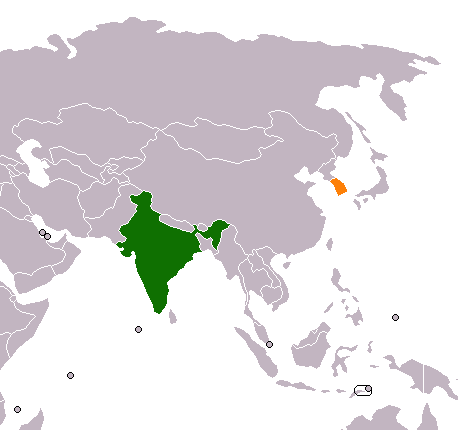
    • India has signed CEPAs with South Korea and Japan.

    (4) Comprehensive Economic Cooperation Agreement

    • CECA generally cover negotiation on trade tariff and Tariff rate quotas (TRQs) rates only.
    • It is not as comprehensive as CEPA.
    • India has signed CECA with Malaysia.

    (5) Framework Agreement

    • Framework agreement primarily defines the scope and provisions of orientation of the potential agreement between the trading partners.
    • It provides for some new area of discussions and set the period for future liberalisation.
    • India has previously signed framework agreements with the ASEAN, Japan etc.

    (6) Early Harvest Scheme

    • An Early Harvest Scheme (EHS) is a precursor to an FTA/CECA/CEPA between two trading partners. For example, early harvest scheme of RCEP has been rolled out.
    • At this stage, the negotiating countries identify certain products for tariff liberalization pending the conclusion of actual FTA negotiations.
    • An Early Harvest Scheme is thus a step towards enhanced engagement and confidence building.


    UPSC 2022 countdown has begun! Get your personal guidance plan now! (Click here)

  • Philippines approves deal for BrahMos Missile

    In the first export order for the BrahMos supersonic cruise missile system, the Philippines has approved a $374.96 mn contract for the purchase of a shore-based anti-ship variant of the missile from India.

    About BrahMos Missile

    • BrahMos missile derives its name from the combination of the names of Brahmaputra and Moskva Rivers.
    •  They are designed, developed and produced by BrahMos Aerospace, a joint venture company set up by DRDO and Mashinostroyenia of Russia.
    • It is a two-stage missile with a solid propellant booster as the first stage and liquid ramjet as the second stage.
    • The cruise missiles like BrahMos are a type of system known as the ‘standoff range weapons’ which are fired from a range sufficient to allow the attacker to evade defensive fire from the adversary.
    • Such weapons are in the arsenal of most major militaries in the world.

    Its capability

    • BrahMos missile flies at a speed of 2.8 Mach or almost three times the speed of sound.
    • It is the main weapon system of the Indian Navy warships and has been deployed on almost all of its surface platforms.
    • An underwater version is also being developed which will not only be used by the submarines of India but will also be offered for export to friendly foreign nations.

    Various versions

    • The versions of the BrahMos that are being tested have an extended range of around 400 km, as compared to its initial range of 290 km, with more versions of higher ranges currently under development.
    • Various versions including those which can be fired from land, warships, submarines and Sukhoi-30 fighter jets have already been developed and successfully tested in the past.
    • The earliest versions of the ship launched BrahMos and land-based system are in service of the Indian Navy and the Indian Army since 2005 and 2007 respectively.

    UPSC 2022 countdown has begun! Get your personal guidance plan now! (Click here)


    Back2Basics:

    Explained: India’s Missile Capability


  • The Indo-Pacific opportunity

    Context

    The geopolitics of the Indo-Pacific, which is changing fast. As it moves into 2022, the region will carry the imprint of the past five years, and will have to chart a course through inter-state tensions and crises, using both diplomacy and military preparedness.

    What will shape the geopolitics and geoeconomics of the Indo-Pacific?

    • Key players in the region: The region is central to world economy and peace, and nine countries are key players: the US, China, Japan, India, Germany, the UK, Russia, Australia and France.
    • The geopolitics and geo-economics of the Indo-Pacific will be largely shaped by the interplay of relations among these nations.
    • US-China relations: Of paramount importance is the US-China equation.
    • Expect this relationship to be marked by continually adversarial, competitive and cooperative traits.
    • Beijing’s south/east China policy, aggressive postures towards Taiwan, human rights violations in Xinjiang, the subjugation of Hong Kong’s citizenry and assertive economic outreach in the Indo-Pacific — these will weigh heavily on US-China relations.

    A significant role of groupings and individual nations

    • In this standoff, the role of new groupings and individual nations is significant.
    • Role of Quad: Foremost are the Quad, a strategic partnership between the US, India, Japan and Australia and the militaristic AUKUS (Australia, UK, US). 
    • India-Australia ties: Meanwhile, India and Australia are on track to deepen ties, not only bilaterally but also with the other two Quad powers.
    • The next Quad summit, probably hosted by Japan, will cement the grouping.
    • EU’s role: The EU’s Indo-Pacific strategy, announced last September, aims at increasing its economic and security profile in, and linkages with, the region.
    • UK’s role: Only by being more strategic and less mercantilist, more candid and assertive with China, and more cooperative with partners such as India, can the EU — and its former member the UK — hope to become vital players in the Indo-Pacific.
    • ASEAN, located in the middle of the Indo-Pacific waters, faces the heat of China’s aggression and the sharpening great power rivalry.
    •  It must enhance its realism and shed its tendency of wishing away problems.

    Suggestions for India

    • 1]Strengthen the Quad – especially by ensuring that the grouping fulfils its commitment to deliver at least one billion vaccine doses to Indo-Pacific nations by December 2022.
    • India must protect its established relationship with Russia, and show some resilience in dialogue with Beijing.
    • 2] Enhance relations with ASEAN nations: It must enhance cooperation with key Southeast Asian partners —Indonesia, Vietnam, Philippines and Thailand — while humouring ASEAN as a grouping.
    • 3] Give attention to African and Indian Ocean island states: The eastern and southern planks of Africa and the Indian Ocean island states need continued high policy attention and financial resources.
    • A clear economic and trade agenda to follow the flag in this vital region, is certain to yield long-term dividends.

    Consider the question “Indo-Pacific will present India strategic and economic opportunities that India must not miss. However, the region will have to chart a course through inter-state tensions and crises. Comment.”

    Conclusion

    India has done well by fulfilling its humanitarian duties during the pandemic. Learning how to convert them smartly into economic and strategic opportunities in its periphery is the focused task for the nation in 2022.

    UPSC 2022 countdown has begun! Get your personal guidance plan now! (Click here)

  • China does not have it all its way in the South China Sea

    Context

    South-East Asian countries are increasingly wary of their giant neighbour.

    Background of dispute

    • Disputes in the South China Sea go back decades.
    • But it was only ten years ago that China, which makes maritime claims for nearly the whole sea, greatly upped the ante.
    • Countries involved: They involve Brunei, China, Malaysia, the Philippines, Taiwan and Vietnam, all with contesting claims.
    • China provoked a stand-off that left it in control of an uninhabited atoll, Scarborough Shoal, which under un maritime law clearly belongs to the Philippines.
    • Then China launched a massive terraforming exercise, turning reefs and rocks into artificial islands hosting airstrips and bases.

    China’s strong-arm tactics

    • China’s long-term aim is to project Chinese power deep into the South China Sea and beyond, and to hold the Americans away during any conflict.
    • The immediate aim, though, is to dominate politically and economically as much as militarily.
    • China has challenged oil-and-gas activity by both Indonesia and Malaysia, and sent drilling rigs to both countries’ eezs and continental shelves.
    • It has bullied foreign energy companies into dropping joint development with Vietnam and others.

    Implications

    • China has paid a diplomatic price.
    • Impact on relations with ASEAN: Had Mr Xi engaged in none of the terraforming and bullying, China would be better admired among members of the ten-country Association of South-East Asian Nations (ASEAN).
    • Naval presence of the US: The United States and its Western allies have upped their naval presence in the sea, welcomed by most ASEAN members.

    Negotiation on Code of conduct on South China Sea

    • For years China dragged its feet on agreeing with ASEAN a code of conduct on the South China Sea, a principle agreed on 20 years ago in order to promote co-operation and reduce tensions.
    • These days, China likes to play willing.
    • China is demanding, in effect, the right of veto over ASEAN members’ naval exercises with foreign powers.
    • It also wants to keep out foreigners from joint oil-and-gas development.
    • Such demands are unacceptable to members.

    Conclusion

    Despite China’s efforts to establish its wild claims of sovereignty, China has been facing sustained resistance from the ASEAN countries.

    UPSC 2022 countdown has begun! Get your personal guidance plan now! (Click here)