💥Mains Ready By December. Smash Mains & Smash PYQ Admissions Open

Subject: International Stories of Key Importance

  • Russia withdraws from Open Skies Treaty

    Russia has announced that it was pulling out of the Open Skies Treaty, saying that the pact had been seriously compromised by the withdrawal of the United States.

    The New START, INF and now the OST …. Be clear about the differences of these treaties. For example- to check if their inception was during cold war era etc.

    Open Skies Treaty (OST)

    • OST is an agreement that allows countries to monitor signatories’ arms development by conducting surveillance flights over each other’s territories.
    • The idea behind the OST was first proposed in the early years of the Cold War by former U.S. President Dwight Eisenhower.
    • It came to existence decades later and was signed in 1992, during the George H.W. Bush presidency and after the Soviet Union had collapsed.
    • The OST came into effect in 2002 under the George W. Bush administration and it allows its 34 signatories to conduct unarmed reconnaissance flights over the territory of treaty countries.

    Issues with the OST

    • The U.S. has used the treaty more intensively than Russia.
    • Between 2002 and 2016, the U.S. flew 196 flights over Russia (in addition to having imagery from other countries) compared to the 71 flights flown by Russia.
  • The ‘Difficult Four’ Countries

    A UK think-tank ‘Royal Institute of International Affairs’ has listed India in ‘Difficult 4’; clubs India with China, Saudi Arabia, and Turkey.

    This newscard helps analyse the Western esp. that of the EU’s perception of India and its global image under the present regime.

    What is the news?

    • A report called ‘Global Britain, Global Broker’ has warned the UK government to consider India as more of a rival that a cooperative partner.
    • It accepts the fact that India is set to be the largest country in the world by population very soon and will have the third-largest economy and defence budget at some point in this decade.
    • But it cautions that gaining direct national benefit from the relationship, whether economically or diplomatically, will be difficult for the UK government.
    • The report also accepts India’s importance to the UK as being “inescapable”.

    The ‘Difficult Four’

    • Clubbing India with China, Saudi Arabia and Turkey as the “difficult four”, the report says the Johnson government should be more realistic about developing deeper ties with India.
    • They may be important to the UK’s commercial interests, but they will be rivals or, at best, awkward counterparts on many of its global goals, the report warns.
    • India is now classed as a country, destined to count among the UK’s “rivals” or “awkward counterparts” as it pursues its global goals.

    India has had bitter (colonial) past

    • The think-tank strikes a note of caution over the two countries’ shared colonial history proving a stumbling block to the promise of a deeper relationship.
    • India has a long and consistent record of resisting being corralled into a ‘Western’ camp.
    • As a result, India is always on the list of countries with which a new UK government commits to engage.
    • But it should be obvious by now that the idea of a deeper relationship with India always promises more than it can deliver.
    • The legacy of British colonial rule consistently curdles the relationship.

    Indian flaws

    • The report points to India’s “complex, fragmented domestic politics”, which make it one of the countries resistant to open trade and foreign investment.
    • It highlights concerns raised by domestic groups as well as the UN over a “crackdown on human rights activists and civil society groups” not being actively challenged by the judiciary.
    • It raises concern over India’s pursuance of extreme right-winged policies. Indian domestic politics also has entered a more ethnic-nationalist phase, the report argues.
    • Against this backdrop, the report reflects on the prospect of including India within any new Democratic 10 or D10 coalition of 10 leading democracies.

    Try this question from 2019 CS Mains:


    Q.What are the challenges to our cultural practices in the name of secularism? (150W)

    UK’s resentment

    • In a critique of India’s diplomatic behaviour, the report points out that despite border clashes with China, “India did not join the group of countries that criticized China at the UN in July 2019 over HR violations in Xinjiang.
    • India has also been muted in its criticism of the passage of the new national security law in Hong Kong.
  • Europe’s China gambit will fall short of its stated goals

    Thought the article is not directly related to India, the conclusion of the investment treaty between the EU and China serves as the prelude to the post-pandemic world order which surely matters for India. The article explains the implications of the agreement.

    Investment agreement between EU and China

    • Recently, the EU and China announced the completion of a Comprehensive Agreement on Investment (CAI) between the two.
    • The CAI gives European firms enhanced access to the Chinese market, removes (or relaxes) Chinese government requirements on joint ventures and technology transfer in some sectors.
    • The European Commission has claimed that the CAI allows the EU to maintain its “policy space”, especially in “sensitive” sectors such as energy, infrastructure, agriculture, and public services
    • The deal also promises equal treatment with state enterprises and greater regulatory transparency in China.
    • Moreover, the Chinese government has undertaken some obligations on environmental sustainability and labour rights, notably by agreeing to make “continued and sustained efforts” to ratify the Forced Labour Convention.

    Reaction to the agreement

    • The US reaction ranged from disappointment to outright hostility.
    • The incoming Biden administration would have preferred a unified front against China, by striking an economic deal with Europe first.
    • For others, it was the EU’s apparent misjudgement on China’s human rights promises.

    Post-pandemic world order and role of democracies

    • The Europe-China agreement underscores a fundamental question of the post-pandemic world order: Can democracies remain true to their values while engaging in trade and investment with China?
    • To answer that, we must recognize two facts.
    • First, it is impossible to decouple the economies of the West from the Chinese economy without causing an economic catastrophe.
    • Second, there is little that Western countries can do to reshape China’s state-driven economic model or repressive human- and labour-rights regime.

    What should be the approach in dealing with China

    • The West should pursue more limited, more attainable, and ultimately more defensible goals.
    • Two goals are paramount.
    • First, trade and investment rules should be such that Western firms and consumers are not directly complicit in human-rights abuses in China.
    • Second, such rules should safeguard democratic countries against Chinese practices that could undermine their domestic institutional arrangements on labour, environment, technology, and national security.

    Lack of clarity over arbitration mechanism

    • The agreement contains an arbitration scheme that enables the parties to bring violation complaints against each other.
    • Arbitration scheme could serve as a means for the Chinese government to challenge specific entry barriers against Chinese firms.
    • How much this mechanism will be sensitive towards the issues such as treatment given to workers or the environmental protection is not clear.
    • Similarly, how much deference will panels show to exceptions to market access based on “national security” considerations is not clear.

    Conclusion

    We should not judge the CAI by whether it enables Europe to export its system and values. We should judge it by whether it allows Europe to remain true to its own.

  • Grand Ethiopian Renaissance Dam

    Ethiopia, Sudan and Egypt have agreed on to resume negotiations to resolve their decade-long complex dispute over the Grand Renaissance Dam hydropower project in the Horn of Africa.

    Note: You never know when UPSC might switch map based questions away from the Middle East and SE Asia.

    Considering this news, the UPSC may ask a prelim question based on the countries swept by River Nile/ various dams constructed/ landlocked countries in the African continent etc.

    Also read

    [Burning Issue] Ethiopian Crisis and the Geopolitics

    Grand Ethiopian Renaissance Dam

    • Spearheaded by Ethiopia, the 145-meter-tall (475-foot-tall) Grand Renaissance Dam hydropower project, when completed, will be Africa’s largest.
    • Its construction was initiated in 2011 on the Blue Nile tributary of the river that runs across one part of Ethiopia.
    • The Nile is a necessary water source in the region and Egypt has consistently objected to the dam’s construction, saying it will impact water flow.
    • The long-standing dispute has been a cause of concern for international observers who fear that it may increase conflict between the two nations and spill out into other countries in the Horn of Africa.

    What is the dispute about?

    • The Nile, Africa’s longest river, has been at the centre of a decade-long complex dispute involving several countries that are dependent on the river’s waters.
    • At the forefront of this dispute are Ethiopia and Egypt, with Sudan having found itself dragged into the issue.
    • The main waterways of the Nile run through Uganda, South Sudan, Sudan and Egypt, and its drainage basin runs through several countries in East Africa, including Ethiopia.

    Concerns over the dam

    • Given the dam’s location on the Blue Nile tributary, it would potentially allow Ethiopia to gain control of the flow of the river’s waters.
    • Egypt lies further downstream and is concerned that Ethiopia’s control over the water could result in lower water levels within its own borders.
    • In addition, Egypt proposed a longer timeline for the project over concerns that the water level of the Nile could dramatically drop as the reservoir fills with water in the initial stages.
    • Sudan’s location between Egypt up north and Ethiopia down south has caused it to become an inadvertent party to this dispute.
    • But that isn’t all; Sudan to is concerned that if Ethiopia were to gain control over the river, it would affect the water levels Sudan receives.

    Why does Ethiopia want this dam?

    • Ethiopia’s goal is to secure electricity for its population and to sustain and develop its growing manufacturing industry.
    • Addis Ababa anticipates that this dam will generate approximately 6,000 megawatts of electricity when it is completed, that can be distributed for the needs of its population and industries.
    • In addition to its domestic requirements, Ethiopia may sell surplus electricity to neighbouring nations like Kenya, Sudan, Eritrea and South Sudan, that also suffer from electricity shortages, to generate some revenue.

    What lies ahead?

    • Despite previous talks, the point of contention hasn’t changed: Egypt and Sudan are concerned about the filling and the operation of the dam.
    • Ethiopia continues to insist that the dam is required to meet the needs of its population and has said that downstream water supplies will not be adversely affected.
    • Cairo insists that the dam would cut its water supplies — concerning for a country that depends on the Nile for approximately 97% of its drinking water and irrigation supplies.
    • Sudan believes that the dam will reduce flooding, but is concerned about the path forward if the negotiations end at a stalemate.
  • Iran steps up Uranium Enrichment

    Iran has begun enriching uranium up to 20% at an underground facility and seized a South Korean-flagged oil tanker in the crucial Strait of Hormuz, further escalating tensions in West Asia between Tehran and the West.

    Scratch your school basics to answer this PYQ:

    Q.The known forces of nature can be divided into four classes, viz, gravity, electromagnetism, weak nuclear force and strong nuclear force.

    With reference to them, which one of the following statements is not correct? (CSP 2012)

    (a) Gravity is the strongest of the four

    (b) Electromagnetism act only on particles with an electric charge

    (c) Weak nuclear force causes radioactivity

    (d) Strong nuclear force holds protons and neutrons inside the nuclear of an atom.

    What is Uranium Enrichment?

    • Uranium enrichment is a process that is necessary to create an effective nuclear fuel out of mined uranium by increasing the percentage of uranium-235 which undergoes fission with thermal neutrons.
    • Nuclear fuel is mined from naturally occurring uranium ore deposits and then isolated through chemical reactions and separation processes.
    • These chemical processes used to separate the uranium from the ore are not to be confused with the physical and chemical processes used to enrich the uranium.
    • Naturally occurring uranium does not have a high enough concentration of Uranium-235 at only about 0.72% with the remainder being Uranium-238.
    • Due to the fact that uranium-238 is fissionable and not fissile, the concentration of uranium-235 must be increased before it can be effectively used as a nuclear fuel.

    Why is the West concerned?

    • Iran’s decision to begin enriching to 20% purity a decade ago nearly triggered an Israeli strike targeting its nuclear facilities, tensions that only abated with the 2015 atomic deal.
    • A resumption of 20% enrichment could see that brinksmanship return as that level of purity is only a technical step away from weapons-grade levels of 90%.
  • Melting of the Arctic ice and its geopolitical footprints

    Melting of the ice in the Arctic region has as much impact on the geopolitics as it has on the environment. The article explains in detail the geopolitics involved.

    Melting of Arctic ice and its impact on climate

    • Arctic region is warming up twice as fast as the global average.
    • The ice cap is shrinking fast — since 1980, the volume of Arctic sea ice has declined by as much as 75 percent.
    • The loss of ice and the warming waters will affect sea levels, salinity levels, and current and precipitation patterns.
    • The Tundra is returning to the swamp, the permafrost is thawing, sudden storms are ravaging coastlines and wildfires are devastating interior Canada and Russia.
    • The rich biodiversity of the Arctic region is under serious threat.
    • These changes are making the survival of Arctic marine life, plants, and birds difficult while encouraging species from lower latitudes to move north.
    • The Arctic is also home to about 40 different indigenous groups, whose culture, economy, and way of life are in danger of being swept away.

    Opportunities in the melting of the Arctic

    • The Northern Sea Route (NSR) which connects the North Atlantic to the North Pacific through a short polar arc was once not open for navigation.
    • The melting ice has now made it a reality and a trickle of commercial cargo vessels have been going through every summer since the last decade.
    • The opening of the Arctic presents huge commercial and economic opportunities, particularly in shipping, energy, fisheries, and mineral resources.
    • Oil and natural gas deposits, estimated to be 22 percent of the world’s unexplored resources, mostly in the Arctic ocean, will be open to access along with mineral deposits.

    Challenges in exploiting opportunities

    • Navigation conditions are dangerous and restricted to the summer.
    • There is a lack of deep-water ports, a need for ice-breakers, a shortage of workers trained for polar conditions, and high insurance costs.
    • Mining and deep-sea drilling carry massive costs and environmental risks.
    • Unlike Antarctica, the Arctic is not a global common and there is no overarching treaty that governs it, only the UN Convention of Law of the Sea (UNCLOS).
    • Large parts of it are under the sovereignty of the five littoral states — Russia, Canada, Norway, Denmark (Greenland) and the US — and exploitation of the new resources is well within their rights.

    Geopolitics of the Arctic

    • Russia, Canada, Norway, and Denmark have put in overlapping claims for extended continental shelves.
    • The US, not a party to UNCLOS, is unable to put in a formal claim but is under pressure to strengthen its Arctic presence.
    • For the present, Russia is the dominant power, with the longest Arctic coastline, half the Arctic population, and a full-fledged strategic policy.
    • Russia anticipates huge dividends from commercial traffic including through the use of its ports, pilots, and ice-breakers.
    • China, playing for economic advantage, has moved in fast, projecting the Polar Silk Road as an extension of the BRI, and has invested heavily in ports, energy, undersea infrastructure, and mining projects.

    What are the concerns for India

    • India’s extensive coastline makes it vulnerable to the impact of Arctic warming on ocean currents, weather patterns, fisheries, and most importantly, our monsoon.
    • Scientific research in Arctic developments, in which India has a good record, will contribute to our understanding of climatic changes in the Third Pole — the Himalayas.
    • The strategic implications of an active China in the Arctic and it’s growing economic and strategic relationship with Russia are self-evident and need close monitoring.

    Way forward

    • India has observer status in the Arctic Council, which is the predominant inter-governmental forum for cooperation on the environment and development (though not the security) aspects of the Arctic.
    • India should leverage its presence in Arctic Council for a strategic policy that encompassed economic, environmental, scientific, and political aspects.

    Consider the question “Melting of the Arctic opens the door for geopolitical game in the region and India cannot be immune to its implications. In the context of this, examine the developments in the region and how it impacts India’s interests?”

    Conclusion

    India must strive to protect its interest and strive for strategic policy for the region.

  • Dealing with the challenges India faces

    The article deals with the challeges India has to deal with in 2021 on the various front like foreign policy and economy.

    Major challenge of 2020

    • The COVID-19 pandemic, which embraced every segment of Indian society was the most insidious threat.
    • Since April, India has confronted an unprecedented situation on the border with China in eastern Ladakh.
    • Ever since, the border has remained live; as of now there is no end in sight.
    • Chinese behaviour at the border has led to a grave hiatus in India-China relations.
    • Internal problems such as Naxalite violence and Jammu and Kashmir endured during much of 2020.
    • The economy is in recession. India has slipped further down the scale in the Human Development Index.
    • Slippages have occurred in the Global Economic Freedom Index.

    How India should deal with the challenges ahead

    1) China challenge and foreign policy

    • In foreign policy India must not remain content or satisfied with the current stand-off with China in the Ladakh sector.
    • The conflict with China is enabling many of its neighbours to play China against India.
    • So, India should think of what better options are available to it to resolve that conflict
    • To tackle China, India must come up with a whole new paradigm of ideas on which further actions can be formulated.

    2) State of the economy

    • India must seek to enhance its competitive advantage vis-a-vis other nations.
    • India should focus on export-oriented economic strategy instead of looking inward to enlarge its economy.
    • India should enhance its export capacity.
    • India’s strength lies in its diversity, and its ability to utilise all available opportunities.
    • The other pressing challenge in 2021 would be job creation for the youth, who are India’s most abiding asset.
    • The government must take urgent steps to set right the disruptions in the labour market caused by the pandemic.
    • Creating new jobs in new industries should be a critical requirement.
    • Stimulating demand would ensure growth in job opportunities, and this should go hand in hand with this task.
    • The importance of such measures must not be underestimated.

    3) Restoring confidence in constitutional practices

    • The government to restore confidence in constitutional proprieties, practices and principles.
    • There is a crisis of confidence which is affecting the body politic.
    • The starting point would be effecting an improvement in Centre-State relations, particularly between Centre and States.
    • As digital technology advances, concerns that an unduly centralised Central government could use this to further reduce the independent authority of States will again need to be dispelled.
    • Effective cooperation between the Centre and the States must be restored as early as possible to instil confidence about India’s democratic future.

    Consider the question “What are the challenges ahead for Indian economy in the wake of economic disruption caused by the pandemic? Suggest the way to deal with these challenges.”

    Conclusion

    As 2020 comes to a close, it might be worthwhile to take a hard look at these issues to ensure that 2021 does not become another wasted year.

  • The new League of Nations

    Despite China’s rise, the world will remain committed to multi-polar order. The article highlights the emerging trends in the global order against the backdrop of a pandemic and explains how there could be an opportunity for India.

    Changing geopolitical landscape and choices India face

    • As the world is slowly recovering from the disruption caused by the pandemic, there are worrying intimations of other crises looming round the corner.
    • Geopolitics has been transformed and power equations are being altered.
    • There are a new set of winners and losers in the economic changes.
    • Technological advancement will magnify these changes.
    • India will need to make difficult judgements about the world that is taking shape and find its place in a more complex and shifting geopolitical landscape.
    • As the pandemic recedes, the world could draw the right lessons and proceed on a more hopeful trajectory.

    Unlearnt lessons: lack of international cooperation

    • Most challenges the world faces are global, like the pandemic.
    • However, international cooperation in either developing an effective vaccine or responding to its health impacts has been minimal.
    • The pre-existing trend towards nationalist urgings, the weakening of international institutions and multilateral processes continues.
    • Even in the distribution of vaccines, we are witnessing a cornering of supplies by a handful of rich nations.

    Need for a collaborative solution

    • Global challenges such as climate change, cybersecurity, space security, terrorism, drug trafficking, money laundering and ocean and terrestrial pollution demand collaborative, not competitive solutions.
    • The challenges require some display of statesman-like leadership to mobilise action on a global scale.
    • The nation-state will endure but its conduct will need to be tempered by a spirit of internationalism and a sense of common humanity.

    Role of China and Asia

    • The pre-pandemic shift in the centre of gravity of the global economy and political power and influence, from the trans-Atlantic to the trans-Pacific, has been reinforced under the impact of the crisis.
    • East Asian and South-East Asian countries are the first to register the green shoots of recovery.
    • China has been the first large economy to witness a significant rebound in its growth rate.
    • The regional supply chains centred on China have been reinforced rather than disrupted.
    • China will emerge in pole position in the geopolitical sweepstakes commencing in 2021.
    • The power gap with its main rival, the US, will shrink further.

    Why should India prefer multi-polar world order

    • As the power gap between India and China is expanding, the threat from China will intensify and demand asymmetrical coping strategies.
    • Despite China emerging a relative gainer from the pandemic the trend towards multi-polarity is here to stay.
    • Neither the US nor China can singly or as a duopoly manage a much more diffused distribution of economic and military capabilities across the globe.
    • This is only possible through multilateral approaches and adherence to the principle of equitable burden-sharing.
    • But a multipolar order can only be stable and keep the peace with a consensus set of norms, managed through empowered institutions of international governance and multilateral processes.
    • India’s instinctive preference has been for a multipolar order as the best assurance of its security and as most conducive to its own social and economic development.
    • India now has the opportunity to make multipolar order as its foreign policy priority as this aligns with the interests of a large majority of middle and emerging powers.
    • This will be an important component of a strategy to meet the China challenge.

    The favourable geopolitical moment for India

    • Due to China’s aggressive posture across the board and its unilateral assertions of power, there is a significant push-back even from smaller countries, for example, in South-East Asia and Africa.
    • China’s blatant “weaponisation of economic interdependence” such as action against Australia, has made its economic partners increasingly wary.
    • In this context, India is seen as a potential and credible countervailing power to resist Chinese ambitions.
    • The world wants India to succeed because it is regarded as a benign power wedded to a rule-based order.
    • India can leverage this propitious moment to encourage a significant flow of capital, technology and knowledge to accelerate its own modernisation.

    Consider the question “Though it may sound counterintuitive, India which is dealing with pessimism about its economic prospect in the wake of the pandemic, may be located at favourable geopolitical moment” Comment.

    Conclusion

    India should seize the opportunity and make multi-polar world order a pillar of its foreign policy to counter China threat while trying to leverage the moment to attract the flow of capital, technology and knowledge to accelerate its own modernisation.

  • Tibetan Policy and Support Act (TPSA)

    The US and China sparred over Tibet and the South China Sea over the passing of the Tibetan Policy and Support Act (TPSA).

    Do you think that India’s support for the Tibetan cause is the root cause of all irritants in India-China relations?

    About TPSA

    • The TPSA once signed into law would make it the official policy of the US Government to oppose any effort by the govt. of the People’s Republic of China to select, educate, and venerate Tibetan Buddhist religious leaders in a manner inconsistent with Tibetan Buddhism.
    • The proposed legislation will empower the US Government to impose sanctions on China who might try to interfere in the process of selecting the next incarnation of the Dalai Lama.

    Why such a law?

    • Tibetans were concerned over the possibility of the Chinese Government making an attempt to install someone loyal to it as the 15th Dalai Lama after the death of the incumbent.
    • The PRC could use him as a puppet to fizzle out the global campaign against its occupation of Tibet.
    • The incumbent and the 14th Dalai Lama have been living in exile in India ever since his 1959 escape from Tibet, which had been occupied by the Chinese People’s Liberation Army (PLA) in 1950-51.
    • He has been leading the movement for “genuine autonomy” for Tibet and the Tibetans.

    Significance of TPSA

    • The TPSA acknowledged the legitimacy of the Tibetan Parliament in Exile elected by the exiled community as well as the CTA.
    • It seeks to introduce key provisions aimed at protecting the environment and water resources on the Tibetan Plateau.
    • In an aggressive move, the PRC government has forced resettlement of the nomads from grasslands.
    • TPSA recognizes the importance of traditional Tibetan grassland stewardship in mitigating the negative effects of climate change in the region.
    • In addition, it calls for greater international cooperation to monitor the environment on the Tibetan plateau.
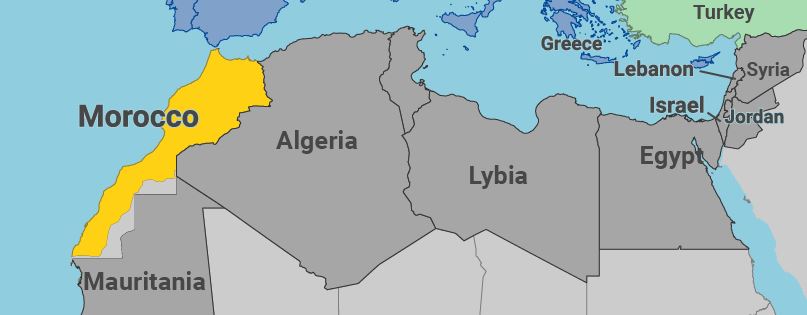
  • Morocco to normalize ties with Israel

    Morocco has become the fourth Arab nation this year to recognise Israel after interventions by the US.

    Must read:

    Israel and Morocco

    • After the United Arab Emirates, Bahrain and Sudan, Morocco is the fourth Arab State since August to commit to establishing diplomatic relations with the Jewish State.
    • Morocco and Israel had respectively maintained liaison offices in Tel Aviv and Rabat in the 1990s, before closing them in 2000.
    • Israeli PM Netanyahu anticipated direct flights between the two countries soon.
    • Palestinian officials condemned the agreement, saying it encouraged Israel’s denial of their rights.

    For the sake of Western Sahara

    • The White House said the US would recognise Morocco’s claim over Western Sahara as part of the deal with Israel.
    • The US recognised Moroccan sovereignty over the entire Western Sahara territory.
    • A former Spanish colony, it was annexed by Morocco in 1975.
    • Since then it has been the subject of a long-running territorial dispute between Morocco and its indigenous Saharawi people.
    • Morocco says it has always been part of its territory, while the African Union recognizes it as an independent state.
    • A 16-year-long insurgency ended with an UN-brokered truce in 1991 and the promise of a referendum on independence, which has yet to take place.

    Ground realities

    • The latest move by the Trump administration will not necessarily have an immediate impact on the ground because the dispute is seen as greater than the whims of the American president.
    • However, Trump’s backing of Morocco’s claim to sovereignty over Western Sahara is a big deal because it diminishes the hope of a people who have aspired for the independence of that territory for decades.
    • The UN is still mandated to oversee a referendum for the independence of Western Sahara – although this hasn’t materialized since 1991.

    Why Arab countries are normalizing their ties with Israel?

    • Economics: The Gulf States see opportunities for trade and more. The deal helps the ambitious gulf, who has built themselves into military power as well as a place to do business.
    • Common enemy: The UAE has used its already well-equipped armed forces in Libya and Yemen. But its most serious potential enemy is Iran, just on the other side of the Gulf.
    • For the Iron wall: Normalizing its relations with gulf is a genuine achievement for the Israelis who is a believer in the strategy first described in the 1920s of an “Iron Wall” between the Jewish state and the Arabs.