💥Join UPSC 2027,2028 Mentorship (July Batch) + XFactor Notes & Microthemes PDF

Subject: Internal Security

  • Joint Military Exercise ‘Ekuverin’

    Why in the News?

    The 13th edition of Exercise Ekuverin, the bilateral joint military exercise between India and the Maldives, commenced in the Maldives on February 4, 2025.

    About Exercise Ekuverin

    • The word “Ekuverin” means ‘Friends’ in the Dhivehi language, signifying the close ties between India and the Maldives.
    • The exercise was first conducted in 2009 as part of an annual bilateral military engagement.
    • It is held alternatively in India and the Maldives, promoting military cooperation between the two nations.
    • In 2023, the exercise was conducted at Chaubatia, Uttarakhand, from June 11 to 24.
    • In 2025, the exercise is being conducted in the Maldives, further strengthening defence relations.

    Features and Significance:

    • The exercise aims to enhance military interoperability.
    • It focuses on joint counter-insurgency and counter-terrorism operations, improving the preparedness of both nations.
    • The training includes humanitarian assistance and disaster relief (HADR) operations, equipping both forces to respond effectively to crises.
    • It seeks to strengthen defence cooperation and regional security in the Indian Ocean Region (IOR).

    India’s Defence Exercises with Southeast Asian Neighbours

    India actively participates in joint military exercises with its Southeast Asian partners to bolster regional security and defence cooperation.

    Key Bilateral and Multilateral Exercises:

    • Garuda Shakti: Special Forces exercise with Indonesia, conducted in November 2022 at the Sangga Buana Training Area, Indonesia.
    • Mitra Shakti: Annual military exercise between India and Sri Lanka, last conducted in 2022.
    • VINBAX: Joint military exercise with Vietnam, with the 3rd edition held in 2022.
    • IMBEX: Bilateral exercise between India-Myanmar, with its last known edition in 2017-18.
    • Maitree: Annual India-Thailand military exercise, conducted since 2006.
    • CORPAT: Coordinated Patrol (CORPAT) exercises with Indonesia, Thailand, and Malaysia to ensure maritime security.
    • AIME 2023: The first ASEAN-India Maritime Exercise (AIME) held in May 2023, involving navies from India and ASEAN nations (Brunei, Indonesia, Malaysia, the Philippines, Singapore, Thailand, and Vietnam).
  • Pinaka Rocket Systems

    Why in the News?

    The Indian Army is bolstering its artillery strength with a significant ₹10,200 crore order for ammunition associated with the Pinaka Multi-Launch Rocket System (MLRS).

    About the Pinaka Rocket System

    Details
    • A multi-barrel rocket launcher developed by DRDO and manufactured by Indian defence firms.
    • Named after the legendary bow of Lord Shiva, symbolizing power and precision.
    Key Features  
    • Multiple Launch Capability: Fires 12 rockets in just 44 seconds, delivering overwhelming firepower.
    • Mobility: Mounted on 8×8 or 6×6 trucks, allowing rapid deployment in diverse terrains.

    Range:
    – Pinaka Mk-I: 40 km.
    – Pinaka Mk-II and Enhanced Versions: 60–75 km.
    – Guided Variant: 90 km, with improved accuracy and reduced collateral damage.

    • Guidance and Precision: Equipped with satellite-based guidance for precision targeting.
    • Payload Options: Carries multiple warheads, including high explosives, incendiaries, anti-personnel, and anti-tank bomblets.
    • Quick Deployment and Reloading: Rapid deployment enables swift counter-strikes.
    • Modularity and Expandability: Modular design supports advanced technology integration for network-centric warfare.
    Operational Use
    • Proven effectiveness in mountainous and rugged terrains.
    • Played a critical role in Indian Army operations, showcasing its adaptability and firepower.
    Significance  
    • Boost to Artillery Strength: Enhances the Indian Army’s firepower with new regiments and extended-range rockets.
    • Cornerstone of Modernization: Central to India’s artillery modernization for precision and operational flexibility.
    • Border Security and Deterrence: Secures borders and acts as a strategic deterrent against adversaries.
    • Global Success: Strengthens India’s defense export market and contributes to defense diplomacy.


    PYQ:

    [2014] Which reference to Agni-IV Missile, which of the following statements is/are correct?

    1. It is a surface-to-surface missile.

    2. It is fuelled by liquid propellant only.

    3. It can deliver one-tonne nuclear warheads about 7500 km away.

    Select the correct answer using the code given below.

    (a) 1 only

    (b) 2 and 3 only

    (c) 1 and 3 only

    (d) 1, 2 and 3

  • What is Central Suspect Registry?

    Why in the News?

    In just three months since its launch, the Central Suspect Registry (CSR) has successfully declined over 6 lakh fraudulent transactions, saving ₹1,800 crore, according to the Ministry of Home Affairs (MHA).

    About the Central Suspect Registry (CSR)

    • The CSR aims to strengthen fraud risk management by maintaining a comprehensive registry of cybercrime suspects.
    • It contains data on 1.4 million cybercriminals linked to financial fraud and other cybercrimes.
    • The registry was created by the Indian Cyber Crime Coordination Centre (I4C) under the Ministry of Home Affairs.
    • The registry is accessible to states, Union Territories, central investigation agencies, intelligence agencies, and financial institutions.
    • Developed with inputs from banks and financial institutions, the CSR serves as a central database consolidating cybercrime-related data.

    Significance of the CSR:

    • Integration with NCRP: Uses data from the National Cybercrime Reporting Portal to identify potential cybercriminals.
    • Fraud Detection and Prevention: Helps financial institutions and law enforcement agencies identify and block fraudulent activities.
    • Support from Financial Entities: The RBI has directed all banks to integrate the registry into their systems for fraud prevention.
    • Impact:
      • Over 6.10 lakh fraudulent transactions blocked, saving ₹1,800 crore as of December 1, 2024.
      • 8.67 lakh mule accounts frozen by banks and financial intermediaries.
      • 7 lakh SIM cards and 1.4 lakh mobile devices blocked.
      • Financial fraud transactions amounting to ₹3,850 crore saved since 2021 through the Citizen Financial Cyber Frauds Reporting and Management System.
      • 1,03,151 suspicious online content items blocked under the powers conferred by the Information Technology Act, 2000.

    PYQ:

    [2020] In India, under cyber insurance for individuals, which of the following benefits are generally covered, in addition to payment for the loss of funds and other benefits?

    1. Cost of restoration of the computer system in case of malware disrupting access to one’s computer
    2. Cost of a new computer if some miscreant wilfully damages it, if proved so
    3. Cost of hiring a specialised consultant to minimise the loss in case of cyber extortion
    4. Cost of defence in the Court of Law if any third party files a suit

    Select the correct answer using the code given below:

    (a) 1, 2 and 4 only
    (b) 1, 3 and 4 only
    (c) 2 and 3 only
    (d) 1, 2, 3 and 4

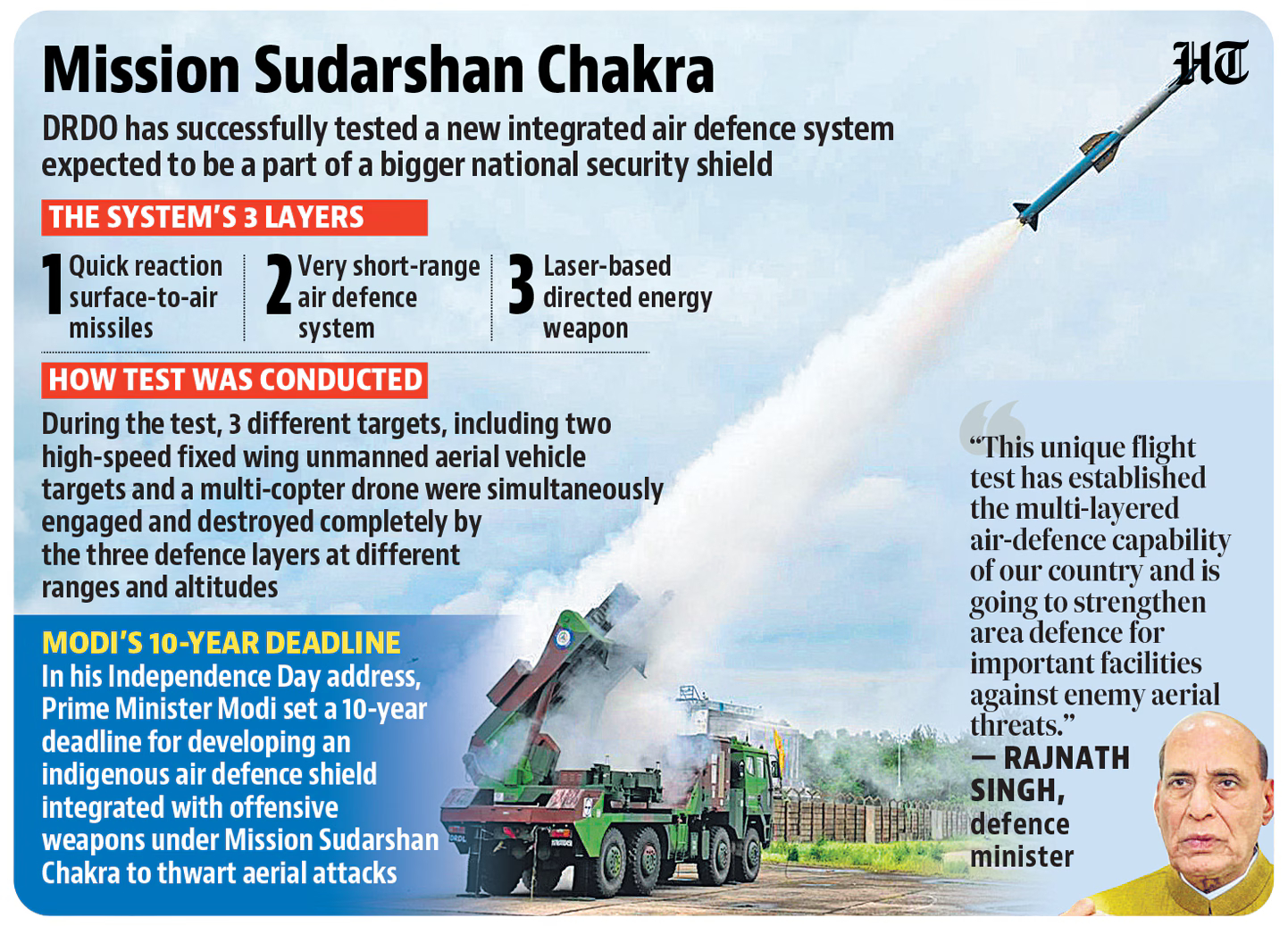
  • India successfully tests Indian Army’s first ‘Bhargavastra’ counter-drone micro missiles

    Why in the News?

    India has achieved a significant milestone in defense technology by successfully testing its first domestically developed Bhargavastra micro-missile system, designed to counter swarm drone threats.

    'Bhargavastra'

    What is Bhargavastra?

    • Bhargavastra is India’s first micro-missile-based counter-drone system, developed to address the increasing threat posed by swarm drones.
    • It is capable of detecting and neutralizing small aerial vehicles at ranges exceeding 6 km.
    • Developed by Economic Explosives Ltd, the system is designed for the Indian Army, with interest also expressed by the Indian Air Force.
    • The system is tailored to provide a cost-effective solution for countering drone threats while preserving advanced air defense systems for larger challenges.

    Features of the Bhargavastra Missile System

    • Detection Range: Can detect small aerial vehicles at distances greater than 6 km.
    • Neutralization Capability: Employs guided micro munitions to engage and destroy drone targets.
    • Simultaneous Launches: Capable of launching over 64 micro missiles simultaneously, enabling effective countermeasures against swarm formations.
    • Mobile Platform: Mounted on a mobile platform for rapid deployment in diverse terrains, including high-altitude regions.
    • Versatile Design: Engineered to operate across varied terrains, meeting the specific requirements of the Indian military.

    PYQ:

    [2014] With reference to Agni-IV Missile, which of the following statements is/are correct?

    1. It is a surface-to-surface missile.
    2. It is fuelled by liquid propellant only.
    3. It can deliver one-tonne nuclear warheads about 7500 km away.

    Select the correct answer using the code given below:

    (a) 1 only
    (b) 2 and 3 only
    (c) 1 and 3 only
    (d) 1, 2 and 3

  • Commissioning of INS Nilgiri, INS Surat, and INS Vaghsheer

    Commissioning of INS Nilgiri, INS Surat, and INS Vaghsheer

    Why in the News?

    Three frontline combatants—INS Nilgiri, INS Surat, and INS Vaghsheer—were commissioned into the Indian Navy at the Naval Dockyard in Mumbai.

    About the Ships/Vessels

    Details
    INS Nilgiri
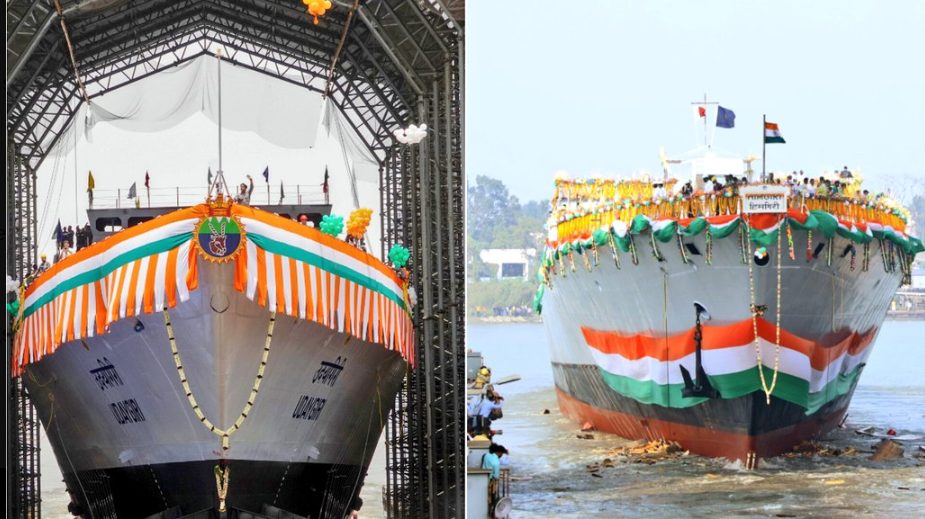
    • Type: First Ship of Project 17A (Nilgiri-class stealth frigates)
    • Role: Multi-mission operations in deep-sea environments
    • Builders: Mazagon Dock Shipbuilders Limited (MDL), Mumbai, and GRSE, Kolkata
    • Features: Integrated construction, supersonic missiles, MRSAMs, advanced weaponry
    • Timeline: Keel laid Dec 28, 2017; Launched Sep 28, 2019; Delivered Dec 20, 2024
    • Significance: Enhances anti-surface, anti-air, and anti-submarine warfare capabilities
    INS Surat
    • Type: Last Ship of Project 15B (stealth guided missile destroyers)
    • Role: Advanced stealth destroyer for offensive and network-centric warfare
    • Builders: MDL
    • Features: AI-enabled systems, advanced weaponry (surface-to-air missiles, torpedoes), COGAG propulsion
    • Timeline: Commissioned in 2024; follows Visakhapatnam, Mormugao, and Imphal
    • Significance: India’s first AI-enabled warship with advanced IT tools
    INS Vaghsheer
    • Type: Last Submarine of Project 75 (Scorpene-class submarines)
    • Role: Stealthy, multi-role operations (anti-surface, anti-submarine warfare)
    • Builders: Collaboration with French Naval Group
    • Features: Diesel-electric propulsion, wire-guided torpedoes, modular design for future AIP upgrades
    • Timeline: Sixth and final Scorpene-class submarine; follows Kalvari, Khanderi, Karanj, Vela, and Vagir
    • Significance: Enhances India’s underwater warfare capabilities

    PYQ:

    [2016] Which one of the following is the best description of ‘INS Astradharini’, that was in the news recently?

    (a) Amphibious warfare ship
    (b) Nuclear-powered submarine
    (c) Torpedo launch and recovery vessel
    (d) Nuclear-powered aircraft carrier

  • India’s journey so far on the AI military bandwagon

    Why in the News?

    India has started leveraging AI to bolster its defence ecosystem, but significant challenges remain.

    What are the strategic implications of AI integration in India’s defence?

    • Enhanced Military Capabilities: The integration of AI is expected to revolutionize military operations through improved predictive analytics, autonomous decision-making systems, and advanced operational efficiency.
    • Modernization Focus: With a defence budget of ₹6.21 lakh crore ($75 billion) for 2023-24, India is prioritizing modernization efforts, including the development of innovative products like the Indrajaal autonomous drone security system.
    • Global Competitiveness: To keep pace with countries like Israel and China that have rapidly advanced their military AI capabilities, India recognises the need for a clear vision and strategy for AI deployment in defence.

    How does India plan to overcome challenges in implementing AI in military operations?

    • Funding and Infrastructure: A significant barrier to effective AI integration is the high cost of data centres and the infrastructure necessary for running advanced AI systems. The military’s focus on replacing outdated legacy systems adds to financial pressures.
    • Fragmented Policies: India’s current policies regarding AI deployment are often fragmented, lacking comprehensive guidelines specifically tailored for military applications. Existing frameworks do not adequately address accountability and transparency in military AI use.
    • Inter-Service Silos: The historically siloed nature of the Indian Armed Forces—where the Army, Navy, and Air Force operate independently—hinders interoperability and complicates joint operations.

    What role does collaboration between the public and private sectors play in advancing AI in defence?

    • Public-Private Partnerships (PPPs): To enhance technological advancements in defence, India needs to foster collaboration between public sector units (PSUs) and private entities. This approach can leverage the innovation capabilities of startups and private companies.
    • Knowledge Sharing: Collaborations with foreign tech giants like Microsoft, which has committed approximately $3 billion to develop data centres in India, can facilitate knowledge transfer and resource sharing essential for building a robust AI ecosystem.
    • Accelerating Innovation: Engaging private sector expertise can lead to faster development cycles and more effective deployment of AI technologies within the military framework.

    Way forward: 

    • Strengthen Policy Frameworks and Coordination: Develop cohesive and actionable policies for AI deployment in defence, focusing on inter-service interoperability, accountability, and transparency while operationalizing bodies like DAIC and DAIPA effectively.
    • Promote Public-Private Collaboration: Enhance public-private partnerships (PPPs) to leverage private innovation and attract foreign investments, ensuring resource optimization and accelerated AI adoption in military operations.

    Mains PYQ:

    Q Discuss different types of cyber crimes and measures required to be taken to fight the menace. (UPSC IAS/2020)

  • Ministry of Defence declares 2025 as ‘Year of Reforms’

    Why in the News?

    The Ministry of Defence (MoD) has declared 2025 as the ‘Year of Reforms’, marking a significant step in modernizing India’s Armed Forces.

    Nine Broad Areas Listed for the ‘Year of Reforms’

    • Integrated Theatre Commands (ITCs): Enhance jointness and resolve inter-service disagreements for effective ITC implementation.
    • Emerging Domains and Technologies: Prioritize cybersecurity, AI, ML, hypersonics, and robotics, and develop tactics for future warfare.
    • Operational Collaboration: Strengthen inter-service cooperation through shared training and joint operational capabilities.
    • Acquisition Reforms: Simplify procedures to expedite procurement and facilitate technology transfers via public-private partnerships.
    • Public-Private Partnerships: Encourage collaboration between the defence sector and industries to foster innovation.
    • Civil-Military Coordination: Break silos to eliminate inefficiencies and optimize resources.
    • Defence Exports: Position India as a global defence exporter, promoting R&D and partnerships with foreign OEMs.
    • Veterans’ Welfare: Optimize welfare measures for veterans and leverage their expertise.
    • Cultural Pride: Promote indigenous capabilities and instil pride in Indian culture alongside adopting modern military practices.

    Key Initiatives for Defence Modernization in India

    • Acquisition of Advanced Weaponry: Rafale jets (36 inducted, 26 more planned) enhance air power; S-400 air defence systems provide long-range protection; Arjun Mk-1A tanks boost indigenous capability and firepower.
    • Indigenous Development: LCA Tejas replaces ageing fighter jets and supports air-to-air refuelling; INS Arihant, India’s first nuclear-powered ballistic missile submarine, strengthens underwater deterrence.
    • Technological Advancements: Network-centric warfare improves situational awareness (e.g., Project Sanjay, E-Sitrep); AI and robotics enhance intelligence, surveillance, and reconnaissance; cyber warfare capabilities grow under the National Cyber Security Policy.
    • Defence Production and Export: Domestic production reached a record ₹1.27 lakh crore in 2023–24, emphasizing indigenisation; exports hit $2.63 billion, supplying markets like Vietnam and the Philippines.
    • Strategic Infrastructure: Border security efforts include the Comprehensive Integrated Border Management System and Border Infrastructure Management, improving troop mobility and safeguarding boundaries.

    PYQ:

    [2014] Foreign Direct Investment (FDI) in the defence sector is now set to be liberalized: What influence this is expected to have on Indian defence and economy in the short and long run?

  • Home Minister launches ‘Bharatpol’ for international police assistance

    bharatpol

    Why in the News?

    Union Home Minister Amit Shah launched Bharatpol, a groundbreaking portal developed by the Central Bureau of Investigation (CBI).

    What is Bharatpol?

    • Bharatpol is a unified digital platform designed to enhance collaboration between Indian law enforcement agencies and Interpol, which connects police forces across 195 member countries.
    • It simplifies international police cooperation, replacing outdated modes of communication like letters and faxes with real-time digital tools.
    • Goal: Equip Indian law enforcement agencies with modern technology and techniques to track fugitives and address global crime challenges.
    • Why was it developed?
      • Rising transnational crimes necessitate real-time international assistance.
      • Facilitates faster investigations into crimes such as cybercrime, drug trafficking, organized crime, and online radicalization.
    • Features of Bharatpol:
      • Integrates CBI’s role as Interpol’s National Central Bureau (NCB-New Delhi)
      • Simplified Request Mechanism
      • Rapid Information Dissemination
      • Utilization of Interpol Notices
      • Capacity Building and Training

    Modules of Bharatpol:

    1. Connect: Acts as a digital extension of Interpol’s NCB-New Delhi, ensuring seamless and secure communication between Indian agencies and Interpol.
    2. INTERPOL Notices: Simplifies the process of issuing and managing Interpol Notices, ensuring swift action on international alerts.
    3. References: Streamlines the use of global criminal data, enabling faster investigations.
    4. Broadcast: Allows real-time sharing of requests and updates from Interpol’s 195 member countries.
    5. Resources: Facilitates the exchange of documents, training materials, and capacity-building resources.

    How does Bharatpol enhance Interpol’s functionality?

    • Bharatpol extends Interpol’s reach in India, connecting local police to global law enforcement networks.
    • It allows instant transmission of critical information, enhancing the efficiency of investigations and international cooperation.
    • It simplifies the process for Indian agencies to access Interpol’s 19 databases on crimes, criminals, and stolen assets.
    • It ensures a structured approach to tracking fugitives and resolving international cases.
  • What is Coastal Security Scheme (CSS)?

    Why in the News?

    Non-operational patrolling boats, insufficient funds for training, and manpower shortages are among the challenges highlighted by 13 coastal states and Union Territories during a review of the Coastal Security Scheme (CSS) phases I and II.

    What is the Coastal Security Scheme?

    • CSS was launched to strengthen security across India’s 7,516.6 km coastline, including 1,382 offshore islands, in order to prevent unauthorized entry, smuggling, and infiltration.
    • It is overseen by the Department of Border Management, Ministry of Home Affairs (MHA), in collaboration with coastal States/UTs and the Indian Coast Guard (ICG).
    • Core Objective: Bolster coastal security by enhancing infrastructure, resources, and coordination among central and state agencies, ensuring effective maritime surveillance and prompt emergency response.

    Implementation Phases

    • Phase I (2005–2011)
      • Budget: ₹646 crore
      • Established 73 coastal police stations, 97 check-posts, 58 outposts, 30 barracks, 204 interceptor boats, 153 jeeps, and 312 motorcycles.
    • Phase II (2011–2020)
      • Budget: ₹1,579.91 crore
      • Added 131 coastal police stations, 60 jetties, 10 marine operational centers, 225 boats, 131 four-wheelers, and 242 motorcycles.

    Key Features

    • Infrastructure Development: Construction of coastal police stations, jetties, outposts, barracks, and marine operation centers.
    • Marine Patrolling: Deployment of interceptor boats for rapid response and improved surveillance.
    • Manpower & Training: Specialized marine police personnel trained at the National Academy of Coastal Policing (Gujarat).
    • Technological Integration: Collaboration with the Coastal Surveillance Network (CSN) for real-time monitoring and swift threat detection.

    Current Status

    • Phase III Plans:
      • Upgraded Boats & Equipment: Introducing larger, more stable vessels and better maintenance.
      • More Manpower: Focused recruitment and specialized training for marine police.
      • Infrastructure Expansion: Building new jetties and operational centers, backed by adequate funding.
      • Insurance Coverage: Proposals to protect marine police personnel operating in high-risk conditions.
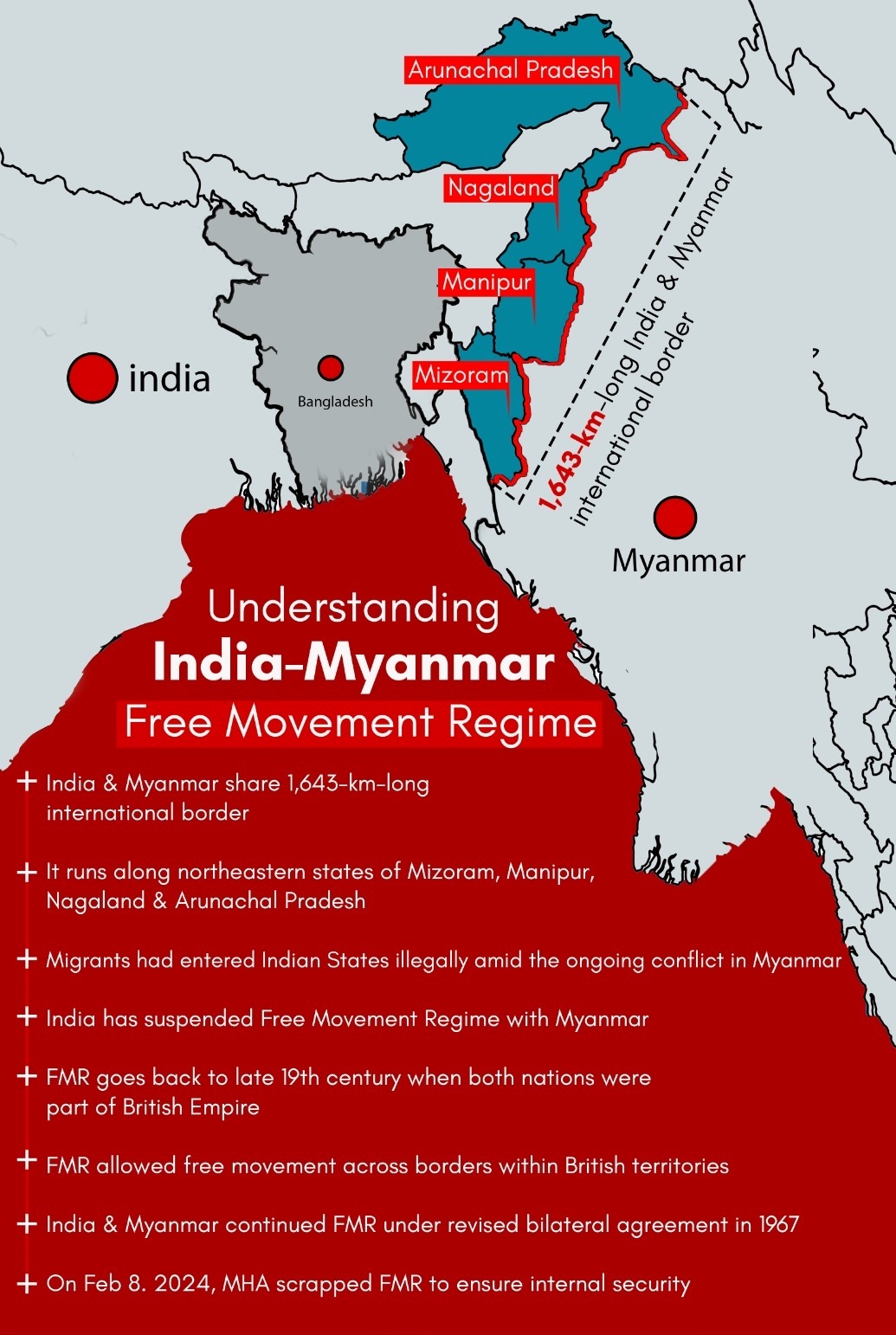
  • On India’s obligations towards the Rohingya

    Why in the News?

    A recent study by The Azadi Project and Refugees International has found that Rohingya refugees detained in India face serious violations of their basic rights. It also criticizes India for not meeting its responsibilities under international human rights agreements.

    What has a recent report said about India’s refugee policy for the Rohingya people?

    • Human Rights Violations: The report indicates that Rohingya refugees are subjected to “gross violations of constitutional and human rights,” including arbitrary detention without charges and inhumane living conditions in detention centres.
    • Call for Legal Revisions: It urges India to clarify the legal status of Rohingya refugees and revise outdated laws like the Foreigners Act of 1946 to align with international refugee standards.
    • Recommendations for Action: The report advocates for the immediate release of vulnerable detainees and calls on international actors, including the U.S. and UNHCR, to engage with India on these issues.

    What does the 1951 Refugee Convention state?

    The 1951 Refugee Convention and its 1967 Protocol establish fundamental principles for the protection of refugees, including:

    • Non-refoulement: This principle prohibits states from returning individuals to countries where they may face persecution or serious harm. It is a cornerstone of international refugee law and is considered customary international law, binding even on states not party to the Convention.
    • Rights of Refugees: The Convention outlines various rights that refugees are entitled to, such as access to legal assistance, work, education, and social services, ensuring their dignity and protection from discrimination.

    Note: India is not a signatory to the 1951 United Nations Refugee Convention.

    What is India’s stand?

    • Non-signatory Status: India is not a signatory to the 1951 Refugee Convention or its Protocol, which it argues absolves it from legal obligations to provide asylum or adhere to non-refoulement principles.
    • Detention Practices: The Indian government continues to detain Rohingya refugees under domestic laws that classify them as illegal migrants. Recent court rulings have reinforced this stance, stating that while they have a right to life under Article 21 of the Constitution, they lack right to reside or settle in India.
    • Judicial Interpretation: Despite India’s non-signatory status, some High Courts have interpreted international norms as applicable under Article 21, suggesting a potential pathway for legal protections for refugees.

    What are India’s international obligations?

    • International Treaties: India is a party to several international human rights treaties that imply obligations related to the treatment of individuals at risk of torture or inhumane treatment. For instance:
      • The International Covenant on Civil and Political Rights (ICCPR) includes provisions against refoulement (forcible return of refugees) under Article 7.
      • Other treaties like the Convention Against Torture also emphasise non-refoulement principles, even if India’s ratification status complicates direct enforcement.
    • Constitutional Mandates: Article 51(c) of the Indian Constitution encourages respect for international law and treaty obligations. Landmark Supreme Court rulings have indicated that international conventions should guide domestic law when local legislation is lacking

    Way forward: 

    • Establish a Comprehensive Refugee Policy: India should enact a uniform refugee law aligning with international principles, ensuring legal clarity and protection for all refugees, including the Rohingya, while upholding the constitutional mandate under Article 21.
    • Strengthen Collaboration with UNHCR and Civil Society: Engage with international agencies and local organizations to improve refugee support systems, focusing on humane detention practices, legal aid, and sustainable resettlement initiatives.

    Mains PYQ:

    Q “Refugees should not be turned back to the country where they would face persecution or human right violation”. Examine the statement with reference to ethical dimension being violated by the nation claiming to be democratic with open society. (UPSC IAS/2021)