💥Join UPSC 2027,2028 Mentorship (August Batch) + XFactor Notes & Microthemes PDF

Subject: Space Technology

  • [pib] Vainu Bappu Observatory

    vainu

    The several stellar discoveries of the 40-inch telescope at the Vainu Bappu Observatory in Kavalur, Tamil Nadu, were highlighted at the celebration of its 50 years of its operation.

    Vainu Bappu Observatory

    • The Vainu Bappu Observatory is an astronomical observatory owned and operated by the Indian Institute of Astrophysics.
    • It is located at Kavalur in the Javadi Hills, near Vaniyambadi in Tirupathur district in Tamil Nadu.
    • The 40-inch telescope was installed in 1972 and started producing important astronomical discoveries soon after.
    • More than a generation of astronomers were trained at this telescope as well.

    Significant feats achieved by VBO

    The telescope set up by Professor Vainu Bappu has played a significant role in astronomy with major discoveries like-

    1. Presence of rings around the planet Uranus,
    2. New satellite of Uranus,
    3. Presence of an atmosphere around Ganymede which is a satellite of Jupiter
    4. Discovery and study of many ‘Be stars’, Lithium depletion in giant stars, optical variability in Blazars, the dynamics of the famous supernova SN 1987A and so on.


    Click and get your FREE Copy of CURRENT AFFAIRS Micro Notes

    (Click) FREE 1-to-1 on-call Mentorship by IAS-IPS officers | Discuss doubts, strategy, sources, and more

  • In news: Geminids meteor shower

    geminids

    Bengalurians are all set to witness the annual Geminids meteor shower.

    What are meteor showers?

    • Meteors are usually fragments of comets.
    • As they enter the Earth’s atmosphere at high speed, they burn up, creating a spectacular “shower”.
    • Meteors come from leftover comet particles and bits from asteroids.
    • When these objects come around the Sun, they leave a dusty trail behind them.
    • Every year Earth passes through these debris trails, which allows the bits to collide with our atmosphere where they disintegrate to create fiery and colorful streaks in the sky.

    What makes the Geminids unique?

    • Geminids is one of the brightest and most reliable annual meteor showers.
    • They are unique because unlike most meteor showers, they originate not from a comet, but from an asteroid, the 3200 Phaethon.
    • The 3200 Phaethon was discovered on October 11, 1983.
    • It is named after the Greek mythology character Phaethon, son of the Sun God Helios.
    • It takes 1.4 years to complete one round of the Sun.
    • As the 3200 Phaethon moves close to the Sun while orbiting it, the rocks on its surface heat up and break off.
    • When the Earth passes through the trail of this debris, the Geminids are caused.

    Why are they called Geminids?

    • That comes from the constellation Gemini, from whose location in the sky the meteor shower appears to originate.
    • The constellation for which a meteor shower is named only serves to aid viewers in determining which shower they are viewing on a given night.
    • The constellation is not the source of the meteors.

    Back2Basics:

    gemenids


  • ISRO successfully conducts test of Scramjet Engine

    jet

    The ISRO successfully conducted test for credible next-generation air-breathing scramjet engines, in order to launch satellites in a predetermined orbit at a low cost.

    What is a jet engine?

    • A jet engine is a machine that converts energy-rich, liquid fuel into a powerful pushing force called thrust.
    • The thrust from one or more engines pushes a plane forward, forcing air past its scientifically shaped wings to create an upward force called lift that powers it into the sky.

    Ramjet vs. Scramjet Engine

    • Both scramjet and Ramjet are types of jet engines.
    • A ramjet is an air breathing jet engine which is usually associated with supersonic transport.
    • Ramjets can start at supersonic speeds only, so as a result they cannot be started at zero velocity and cannot produce thrust as there is a lack of airspeed.
    • Hence assisted take off flights or rockets are needed to or accelerate it to a supersonic speed from which it starts producing thrust.
    • This makes ramjet engine to be efficient only at supersonic speeds as it can accelerate to speeds of about Mach 6.
    • Ramjet has revolutionized Rocket Propulsion and Missile Technology over the years.

    How different is Scramjet?

    • The Scramjet or the Supersonic Combustion Ramjet is a further complex model and is efficient at hypersonic speeds, usually upwards of Mach 6.
    • They do not have any moving parts to compress the air as the air entering is already at high pressure.
    • Scramjets have a very similar working to that of the ramjet except the fact that combustion also takes place at supersonic speed.
    • This means that the air being compressed does not slow down as it enters the combustion chamber.


    Click and get your FREE Copy of CURRENT AFFAIRS Micro Notes

    (Click) FREE 1-to-1 on-call Mentorship by IAS-IPS officers | Discuss doubts, strategy, sources, and more

  • What is a Trisonic Wind Tunnel?

    tunnel

    The new trisonic wind tunnel at the Vikram Sarabhai Space Centre (VSSC) was inaugurated by conducting the first blow-down test successfully.

    What is a Wind Tunnel?

    • Wind tunnels are large tubes with air moving inside.
    • The tunnels are used to copy the actions of an object in flight.
    • Researchers use wind tunnels to learn more about how an aircraft will fly.
    • Space agencies uses wind tunnels to test scale models of aircraft and spacecraft. Some wind tunnels are big enough to hold full-size versions of vehicles.
    • The wind tunnel moves air around an object, making it seem like the object is really flying.

    How do Wind Tunnels work?

    • Most of the time, powerful fans move air through the tube.
    • The object to be tested is fastened in the tunnel so that it will not move.
    • The object can be a small model of a vehicle. It can be just a piece of a vehicle.
    • It can be a full-size aircraft or spacecraft. It can even be a common object like a tennis ball.
    • Smoke or dye can be placed in the air and can be seen as it moves. Threads can be attached to the object to show how the air is moving.
    • Special instruments are often used to measure the force of the air on the object.

    About Trisonic Wind Tunnel at VSCC

    • ‘Trisonic’ refers to the tunnel’s capability to test in three speed regimes—below the speed of sound (subsonic), at the speed of sound (transonic), and above the speed of sound (supersonic).
    • Its parts include air storage vessels, a settling chamber where the airflow is ‘smoothened’ out, and nozzles for releasing the air into the test section.
    • It is about 160 metres long and measures 5.4 metres at its widest part.
    • In a ‘blow down test’, stored gases are released and blown through the tunnel’s test section, simulating flight conditions.
    • The tunnel can simulate flight conditions from 0.2 times the speed of sound (68 metres per second) to four times the speed of sound (1,360 metres per second), according to the space agency.
    • Commissioned in 2017, this tunnel can simulate flow speeds up to Mach 12.


    Click and get your FREE Copy of CURRENT AFFAIRS Micro Notes

    (Click) FREE 1-to-1 on-call Mentorship by IAS-IPS officers | Discuss doubts, strategy, sources, and more

  • ISRO to establish SpaceTech Innovation Network (SpIN)

    spin

    The Indian Space Research Organisation (ISRO) has signed a MoU with Social Alpha, a multistage innovation curation and venture development platform, to launch SpaceTech Innovation Network (SpIN).

    SpaceTech Innovation Network (SpIN)

    • SpIN is India’s first dedicated platform for innovation, curation, and venture development for the burgeoning space entrepreneurial ecosystem.
    • SpIN will primarily focus on facilitating space tech entrepreneurs in three distinct innovation categories:
    1. Geospatial Technologies and Downstream Applications;
    2. Enabling Technologies for Space & Mobility; and
    3. Aerospace Materials, Sensors, and Avionics.

    Key initiative

    • SpIN has launched its first innovation challenge for developing solutions in areas of maritime and land transportation, urbanization, mapping, and surveying.
    • The selected start-ups and innovators will be able to access both Social Alpha’s and ISRO’s infrastructure and resources as per the prevailing guidelines.
    • They will be provided active hand-holding in critical areas, including access to product design, testing and validation infrastructure, and intellectual property management.


    Click and get your FREE Copy of CURRENT AFFAIRS Micro Notes

    (Click) FREE 1-to-1 on-call Mentorship by IAS-IPS officers | Discuss doubts, strategy, sources, and more

  • SARAS 3 Telescope gives clues to first stars, galaxies of universe

    saras

    India’s SARAS radio telescope has helped scientists determine the properties of the earliest radio luminous galaxies formed 200 million years after the Big Bang, a period known as the Cosmic Dawn.

    SARAS 3 Telescope

    • SARAS stands for Shaped Antenna measurement of the background Radio Spectrum 3 (SARAS) telescope.
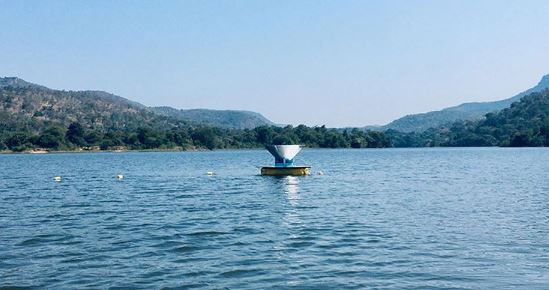
    • It is an indigenously designed and built at Raman Research Institute and was deployed over Dandiganahalli Lake and Sharavati backwaters, located in Northern Karnataka, in early 2020.

    What have the researchers found?

    • Researchers have been able to determine properties of radio luminous galaxies formed just 200 million years post the Big Bang, a period known as the Cosmic Dawn.
    • These are the masses of the first generation of galaxies that are bright in radio wavelengths.
    • This helps provide an insight into the properties of the earliest radio loud galaxies that are usually powered by supermassive black holes.

    What is Cosmic Dawn?

    • The ignition of the first stars marks the end of the Dark Ages and the beginning of our “Cosmic Dawn,” some 100 million years after the Big Bang.
    • For the first time, our universe began shining with a light other than the afterglow of the Big Bang.
    • SARAS 3 had improved the understanding of astrophysics of Cosmic Dawn by telling astronomers that less than 3% of the gaseous matter within early galaxies was converted into stars.
    • It found that the earliest galaxies that were bright in radio emission were also strong in X-rays, which heated the cosmic gas in and around the early galaxies.


    Click and get your FREE Copy of CURRENT AFFAIRS Micro Notes

    (Click) FREE1-to-1 on-call Mentorship by IAS-IPS officers | Discuss doubts, strategy, sources, and more

  • Role of private sector in India’s Space programmes

    private

    Click and get your FREE Copy of CURRENT AFFAIRS Micro Notes

    Context

    • The launch of the Vikram S (Mission Prarambh) rocket last week has been rightly hailed as an important milestone in India’s outer space journey. It is the first privately built Indian rocket to make it to space.

    Private players in space sector

    • Lack of Enabling policy: The country’s private sector has the talent and experience to shorten that distance if Delhi creates the enabling policy environment.
    • Monopoly of Government: When space emerged as an important endeavour in the second half of the 20th century, governments were in the lead. The cost, complexity and research-intensity of the space effort meant the space programmes everywhere became a government monopoly.
    • Government can no longer ignore private players: But in the 21st century, the role of the private sector has dramatically expanded. Satellites were once owned only by governments but today private companies lead the satellite business.

    private

    Major private players and their space endeavor

    • Starlink satellite system: Elon Musk’s Starlink satellite system is now a major player with more than 2,300 satellites in low earth orbit they deliver a variety of space services including useful military information to the armed forces of Ukraine in their fight against Russian forces.
    • Amazon’s Project Kuiper: Plans to launch more than 3,000 satellites in the coming years to offer a range of services, including broadband internet. This will involve making at least three satellites a day.
    • One-web cooperation: Airtel in India is a partner in the One-Web corporation that offers connectivity through its system of nearly 500 satellites.
    • Breaking the monopoly of Government: The business of launch vehicles the most demanding of space activities remained a state monopoly until recently. Elon Musk’s SpaceX has broken through that launch monopoly and Amazon’s Blue Origin rocket will soon be in the market too.

    History of India’s space programme

    • Space for national development only: Delhi’s main objective was to leverage outer space to accelerate national development. Eventually, military and commercial dimensions began to envelop the Indian space programme.
    • Cooperation with Soviet Union: India’s space programme began with intensive cooperation with the Western countries and later with the Soviet Union. Delhi also offered space cooperation to other developing countries within the rubric of engagement with friendly governments.
    • Sanctions halted India’s progress: The non-proliferation sanctions on India after its first nuclear test in 1974 severely constricted the space for the country in international space cooperation. It was only after the historic civil nuclear initiative that the sanctions regime began to ease.

    private

    What should be India’s future approach in space domain?

    • Commercially leveraging the space using MTCR: India is now part of the Missile Technology Control Regime that regulates commerce in space related commodities and technologies.
    • Dual use technology under Wassenaar Arrangement: India is also part of the Wassenaar Arrangement that controls trade in dual use technologies that can be used for both civilian and military purposes.
    • The growing range of new space possibilities: From using satellites for delivering broadband internet to the mining of the Moon and from space manufacturing to deep space exploration. Put simply, the scale of the global economy is rapidly growing its value is expected to more than double from about $450 billion in 2022 to nearly one trillion dollars within a decade.
    • It must be about business and economy: For India, outer space can no longer be about narrowly framed ideas of “development” and “national prestige”. It must be about business and economy. The current Indian share of the global space economy is barely 2 per cent. PM Modi has been demanding that India rapidly increase its share to 8 per cent in the coming years.
    • The private sector companies for larger role: Raising the Indian share of the global space economy can only be done by drawing in the private sector companies to play a larger role. Consider, for example, The Artemis 1 rocket was launched last week and the programme involves a number of leading aerospace companies like Boeing, Lockheed, Northrop Grumman, Airbus and Space X.
    • International cooperation in national space programmes: If Apollo was a purely national project of the United States, the Artemis programme is a multinational endeavor between the US and its partners, including France, Canada, and Japan. Meanwhile Russia and China are coming together to collaborate not only on their space programmes, but also on building a joint base on the Moon that will establish long term human presence there.
    • Capital support for space programme: India has just about embarked on a programme to enhance the contribution of its private sector in outer space. India is also drawing on foreign capital to support its start-ups. Singapore’s sovereign wealth fund GIC, for example, is a major investor in Skyroot Aerospace that launched the Vikram S rocket.

    Conclusion

    • Many Western aerospace companies will be eager to invest in India’s space programme as it begins to open up. India is also coming to terms with the fact that international cooperation is not just an “add-on” to the national space programme, but must be an integral part of India’s space strategy.

    Mains Question

    Q. 20th century was dominated by monopoly of government in space domain. Elaborate. How India can commercialize the space sector with help of private players?

    (Click) FREE1-to-1 on-call Mentorship by IAS-IPS officers | Discuss doubts, strategy, sources, and more

  • ISRO to attempt 200th consecutively successful launch of RH-200 sounding rocket

    rh-200

    The Indian Space Research Organisation (ISRO) has attempted the 200th consecutively successful launch of the Rohini RH-200 sounding rocket from Thumba.

    RH-200 (Rohini )

    • RH-200 is a two-stage rocket capable of climbing to a height of 70 km bearing scientific payloads.
    • The first and second stages of RH-200 are powered by solid motors. The ‘200’ in the name denotes the diameter of the rocket in mm.
    • Other operational Rohini variants are RH-300 Mk-II and RH-560 Mk-III.
    • For years, the RH-200 rocket had used a polyvinyl chloride (PVC)-based propellant.
    • The first RH-200 to use a new propellant based on hydroxyl-terminated Polybutadiene (HTPB) was successfully flown from the TERLS in September 2020.
    • The first and second stages of RH200 rocket are powered by solid motors.
    • Since inception of RH200 rocket, both solid stages are processed using polyvinyl chloride (PVC) based propellant.
    • As compared to PVC based propellants, HTPB based propellant is more energetic, higher mechanical & interface properties and has less defects due to lower processing temperature.

    What basically is a Sounding Rocket?

    • A sounding rocket is an instrument-carrying rocket designed to take measurements and perform scientific experiments during its sub-orbital flight.
    • The rockets are used to launch instruments from 48 to 145 km above the surface of the Earth, the altitude generally between weather balloons and satellites.
    • The maximum altitude for balloons is about 40 km and the minimum for satellites is approximately 121 km.

    History of sounding rockets in India

    • Sounding rockets have an important place in the ISRO story.
    • The first sounding rocket to be launched from Thumba was the American Nike-Apache — on November 21, 1963.
    • After that, two-stage rockets imported from Russia (M-100) and France (Centaure) were flown. The ISRO launched its own version — Rohini RH-75 — in 1967.
    • The ISRO has launched more than 1,600 RH-200 rockets so far.
    • Currently, the RH200, RH300 MkII and RH560 Mk-III rockets are operational which were developed during the early phase of our journey in rocketry.


    Click and get your FREE Copy of CURRENT AFFAIRS Micro Notes

    (Click) FREE1-to-1 on-call Mentorship by IAS-IPS officers | Discuss doubts, strategy, sources, and more

  • Vikram-S: India’s first private sector rocket  

    vikram

    India’s first privately developed rocket, Vikram-S, is set for launch between November 12 and 16.

    Vikram-S

    • Vikram-S is India’s first privately developed rocket and is all set to be launched as part of the Prarambh space mission.
    • It is a single-stage sub-orbital launch vehicle which would carry three customer payloads and help test and validate the majority of the technologies in the Vikram series of space launch vehicles.
    • It was developed by the Hyderabad-based Skyroot Aerospace.
    • The Prarambh mission is aimed at carrying three payloads into space, including a 2.5-kilogram payload that has been developed by students from several countries.
    • Skyroot’s launch vehicles are named ‘Vikram’ as a tribute to the founder of the Indian space program and renowned scientist Vikram Sarabhai.

    Significance of the mission

    • With this mission, Skyroot is set to become the first private space company in India to launch a rocket into space.
    • It is heralding a new era for the space sector which was opened up in 2020 to facilitate private sector participation.
    • The Prarambh mission was extensively supported from ISRO and IN-SPACe (Indian National Space Promotion and Authorisation Centre).

    Back2Basics: IN-SPACE

    • The establishment of IN-SPACe was announced in June 2020.
    • It is an autonomous and single window nodal agency in the Department of Space for the promotion, encouragement and regulation of space activities of both government and private entities.
    • It also facilitates the usage of ISRO facilities by private entities.
    • It comprises technical experts for space activities along with safety expert, academic experts and legal and strategic experts from other departments.
    • It also comprises members from PMO and MEA of Government of India.

    Roles and Responsibilities

    • Space activities including building of launch vehicles and satellites and providing space based services as per the definition of space activities.
    • Sharing of space infrastructure and premises under the control of ISRO with due considerations to on-going activities.
    • Establishment of temporary facilities within premises under ISRO control based on safety norms and feasibility assessment

    How is it different from ANTRIX?

    • Antrix Corporation Limited (ACL), Bengaluru is a wholly-owned Government of India Company under the administrative control of the Department of Space.
    • It is as a marketing arm of ISRO for promotion and commercial exploitation of space products, technical consultancy services and transfer of technologies developed by ISRO.
    • Antrix is engaged in providing Space products and services to international customers worldwide.

    What about New Space India Limited (NSIL)?

    • It functions under the administrative control of the Department of Space (DOS).
    • It aims to commercially exploit the research and development work of ISRO Centres and constituent units of DOS.
    • The NSIL would enable Indian Industries to scale up high-technology manufacturing and production base for meeting the growing needs of the Indian space program.
    • It would further spur the growth of Indian Industries in the space sector.


    Click and get your FREE Copy of CURRENT AFFAIRS Micro Notes

  • 2022 AP7: the Planet Killer Asteroid

    asteroid

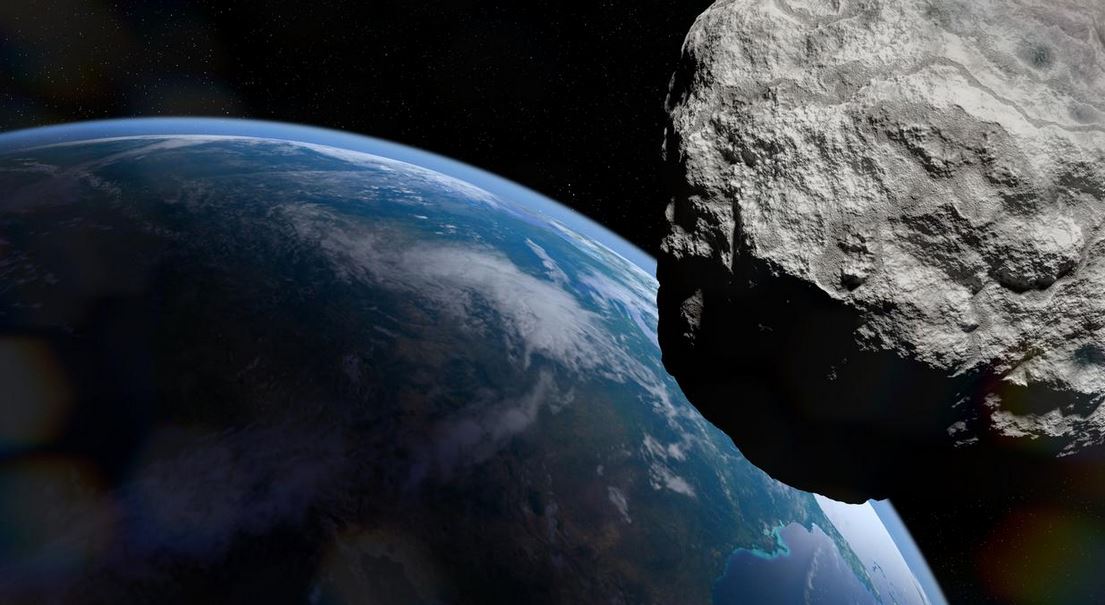
    A team of astronomers have spotted a massive near-Earth asteroid called 2022 AP7 believed to be the largest planet killer-sized asteroid to be spotted in nearly a decade.

    2022 AP7 Asteroid

    • An asteroid is a relatively small chunk of rocky minerals that orbits the Sun, often described as a minor planet.
    • 2022 AP7 is among the three asteroids hiding in the glare of the Sun.
    • It is 1.5-kilometre-wide and has an orbit that may someday put it on a collision course with our planet.
    • At present, researchers have little information about the asteroid, including further details on its possible trajectory and its composition.
    • It was found using the Dark Energy Camera at the Cerro Tololo Inter-American Observatory in Chile.

    What about the other two?

    • The two — 2021 LJ4 and 2021 PH27 — have orbits that are safely constrained inside the limits of Earth’s orbit.
    • At less than a kilometer in diameter, 2021 LJ4 is the smallest in size.
    • The asteroid, 2021 PH27, is the closest known asteroid to the Sun.
    • Due to this, its surface gets hot enough to melt lead.

    Is there an immediate threat to Earth?

    • At present, the asteroid only crosses the Earth’s orbit while it is on the opposite side of the Sun i.e., when the Sun comes between the Earth and the asteroid.
    • This will continue for several centuries as it takes the asteroid about five years to orbit the sun.
    • If impacted, Earth’s atmosphere would be inundated with dust and pollutants for years, preventing sunlight from entering.


    Click and get your FREE copy of Current Affairs micro notes