💥Join UPSC 2027,2028 Mentorship (August Batch) + XFactor Notes & Microthemes PDF

Subject: Space Technology

  • Clearest Black Hole Merger signal allows probe of Hawking’s Law

    Why in the News?

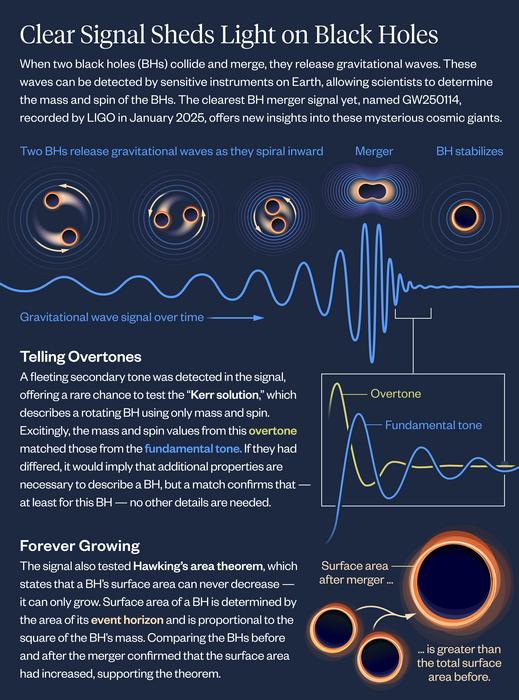
    Researchers have detected the clearest gravitational wave signal, GW250114, from merging black holes, confirming Stephen Hawking’s 1971 Black Hole Area Theorem.
    Clearest Black Hole Merger signal allows probe of Hawking’s Law

    About GW250114:

    • Overview: GW250114 is the clearest gravitational wave signal ever detected, observed on January 14, 2025, by LIGO (US), Virgo (Italy), and KAGRA (Japan).
    • What Happened: It came from the collision of two black holes, each about 30 times the Sun’s mass, located 1.3 billion light-years away.
    • Importance: Published in Physical Review Letters (Sept 2025), it gave the strongest proof of Stephen Hawking’s Black Hole Area Theorem (1971) and confirmed Einstein’s General Theory of Relativity.

    Back2Bascis: Black Holes

    • Overview: A black hole is a region in space where gravity is so strong that even light cannot escape.
    • Formation: Created when a massive star collapses after using up its fuel.
    • Types:
    1. Stellar Black Holes – formed from dead stars.
    2. Supermassive Black Holes – at the centre of galaxies.
    3. Intermediate or Primordial – smaller or early-universe types.
    • Properties: Defined by mass, spin, and charge; grow by absorbing matter or merging with other black holes.

    What is a Black Hole Merger?

    • Process: Two black holes orbit each other, come closer, and finally collide to form a bigger black hole.
    • Phases:
    1. Inspiral – they lose energy and move inward.
    2. Merger – they collide, sending out gravitational waves.
    3. Ringdown – the new black hole settles down.
    • Observation: These mergers create powerful ripples in spacetime called gravitational waves, first detected by LIGO in 2015.

    What is the Hawking’s Black Hole Area Theorem (1971)?

    • Idea: The total surface area of black holes never decreases — it can only stay the same or increase.
    • Analogy: Similar to the Second Law of Thermodynamics, where disorder (entropy) always increases.
    • Meaning: When two black holes merge, the new black hole’s surface area is greater than or equal to the combined areas of the originals.
    • Proof: The GW250114 event (2025) confirmed this by showing that the total area increased, just as Hawking predicted.
    [UPSC 2019] Recently, scientists observed the merger of giant ‘blackholes’ billions of light-years away from the Earth. What is the significance of this observation?

    Options: (a) Higgs boson particles’ were detected.

    (b) Gravitational waves’ were detected. *

    (c) Possibility of inter-galactic space travel through ‘wormhole’ was confirmed.

    (d) It enabled the scientists to understand ‘singularity’.


  • Gamma-Ray Bursts from Black Hole ‘Morsels’ could expose Quantum Gravity

    Why in the News?

    A recent theoretical study (accepted in Nuclear Physics B, August 2025) introduces the idea of “black hole morsels”, tiny, asteroid-mass micro-black holes possibly formed during black hole mergers.

    What are Gamma-Ray Bursts (GRBs)?

    • Overview: They are extremely energetic cosmic explosions that emit intense bursts of gamma radiation, the highest-energy form of electromagnetic waves.
    • Discovery: First detected in the late 1960s by U.S. Vela satellites, initially built to monitor nuclear tests.
    • Duration-Based Classification:
      • Short GRBs: Lasting <2 seconds, typically formed by merging neutron stars or neutron stars–black hole collisions.
      • Long GRBs: Lasting 2–1000 seconds, arising from supernova collapses of massive stars (collapsars).
    • Energy Output: A single GRB can release as much energy in seconds as the Sun emits over its entire lifetime (~10⁵¹–10⁵⁴ ergs).
    • Afterglow: Follows the main burst in X-ray, optical, and radio wavelengths, allowing astronomers to study host galaxies and distances.

    Hypothesis about Black Hole ‘Morsels’:

    • Study Context: Research proposes the existence of “black hole morsels”, tiny remnants formed during black hole mergers.
    • Formation Mechanism: During merger, spacetime “pinches off” into ultra-dense pockets, creating micro-black holes or morsels that may later evaporate.
    • Emissions: These morsels are predicted to release gamma rays and high-energy particles via Hawking radiation, providing a possible observational signature of quantum gravity.
    • Scientific Goal: The hypothesis aims to bridge general relativity and quantum mechanics, offering a natural test case for quantum spacetime dynamics.

    What are Black Hole Morsels?

    • Overview: Hypothetical micro–black holes formed as fragments during black hole mergers under extreme gravitational stress.
    • Origin: Result from pinched-off regions of spacetime during coalescence of two black holes.
    • Mass & Size: Much smaller than parent black holes, roughly asteroid-scale mass but with extreme density.
    • Temperature & Radiation: Extremely hot, emitting intense Hawking radiation– photons, neutrinos, and high-energy particles.
    • Lifetime: Short-lived — ranging from milliseconds to years, depending on initial mass.
    • Detectability: Expected to produce isotropic gamma-ray bursts, unlike directional jets of typical GRBs.
    • Observation Instruments: Potential detection via HESS (Namibia), HAWC (Mexico), LHAASO (China), and Fermi Space Telescope (USA).

    Scientific Significance:

    • Quantum Gravity Evidence: Detection would confirm that gravity behaves quantum mechanically at microscopic scales.
    • Spacetime Structure: Provides direct insight into the quantum texture of spacetime near black hole singularities.
    • Cosmic Accelerator Analogy: Morsels could probe energy scales far beyond the LHC, acting as natural high-energy laboratories.
    • Current Status: None observed yet, but existing gamma-ray data are being analysed to set upper mass limits and refine the model.
    [UPSC 2019] Recently, scientists observed the merger of giant ‘Blackholes’ billions of light-years away from the Earth. What is the significance of this observation?

    Options: (a) Higgs boson particles were detected.

    (b) Gravitational waves were detected.*

    (c) Possibility of inter-galactic space travel through ‘wormhole’ was confirmed.

    (d) It enabled the scientists to understand ‘singularity’.


  • ISRO’s LVM3 Rocket launches GSAT-7R

    Why in the News?

    The Indian Space Research Organisation (ISRO) has successfully launched the GSAT-7R (CMS-03) communication satellite for the Indian Navy from the Satish Dhawan Space Centre, Sriharikota.

    Back2Basics: Launch Vehicle Mark-3 (LVM3) Rocket  

    • Overview: LVM3 formerly GSLV Mk-III, is ISRO’s heaviest and most powerful launch vehicle, built to lift 4-tonne GTO and 8-tonne LEO payloads.
    • Configuration: A 3-stage system – (1) S200 solid boosters, (2) L110 liquid core (UH25 + NO), and (2) C25 cryogenic upper stage (LH + LOX) providing high thrust and precision.
    • Payload Capacity: Delivers ~4,000 kg to GTO and ~8,000 kg to LEO; GSAT-7R demonstrated >4,400 kg capability, setting a new record.
    • Mission Legacy: Successfully launched Chandrayaan-2, Chandrayaan-3, OneWeb satellites, and Gaganyaan crew module tests.
    • Cryogenic Stage: The C25 engine produces ~20 tonnes thrust; the upgraded C32 stage (22 tonnes thrust) is under development.
    • Future Upgrade: Plans to replace L110 with a semi-cryogenic kerosene–liquid oxygen stage for higher efficiency and lower cost.
    • Reliability & Role: With seven consecutive successes, LVM3 is India’s most dependable heavy launcher and baseline vehicle for Gaganyaan and Bharatiya Antariksh Station missions.
    • Strategic Significance: Establishes India’s complete autonomy in heavy launch capability, strengthening its position in the global space economy.

    About GSAT-7R (CMS-03):

    • Overview: An advanced multiband communication satellite developed to strengthen the Indian Navy’s secure communications and maritime domain awareness across the Indian Ocean Region (IOR).
    • Developer & Design: Indigenously designed by ISRO under Aatmanirbhar Bharat, advancing self-reliance in defence space infrastructure.
    • Mass & Orbit: Weighs ~4,410 kg, the heaviest communication satellite launched from Indian soil; inserted into Geosynchronous Transfer Orbit (GTO) before shifting to Geostationary Orbit (~36,000 km).
    • Technical Features: Equipped with secure, high-throughput multiband transponders supporting voice, data, and video links across ships, submarines, and aircraft.
    • Coverage & Capability: Provides pan-Indian Ocean coverage, enabling real-time encrypted communication and Blue Water operational readiness.
    • Strategic Role: Functions as a key node in the Defence Communication Network (DCN), enhancing situational awareness and naval coordination.
    • Predecessor: Succeeds GSAT-7 (Rukmini, 2013) with expanded range, bandwidth, and capacity.
    • Significance: Symbolises India’s move toward indigenous defence satellites, merging space technology and national security.
    [UPSC 2018] With reference to India’s satellite launch vehicles, consider the following statements :

    1. PSLVs launch the satellites useful for Earth resources monitoring whereas GSLVs are designed mainly to launch communication satellites.

    2. Satellites launched by PSLV appear to remain permanently fixed in the same position in the sky, as viewed from a particular location on Earth.

    3. GSLV Mk III is a four-stage launch vehicle with the first and third stages using solid rocket motors, and the second and fourth stages using liquid rocket engines.

    Which of the statements given above is/are correct?

    Options: (a) 1 only * (b) 2 and 3 (c) 1 and 2 (d) 3 only


  • 3I/ATLAS: A Possible 7-Billion-Year-Old Interstellar Comet Discovered

    Why in the News?

    Astronomers discovered 3I/ATLAS, a 7-billion-year-old interstellar comet, using the NASA-funded ATLAS telescope in Chile. It is now nearing its closest approach to the Sun.

    About 3I/ATLAS:

    • Discovery: It was detected on July 1, 2025, by the ATLAS telescope in Río Hurtado, Chile; confirmed interstellar due to its hyperbolic orbit and high speed (57–68 km/s).
    • Significance: It is likely the oldest comet ever observed, possibly 7.6–14 billion years old, older than our 4.5-billion-year-old solar system.
    • Nature: It appeared like an interstellar comet, showing signs of activity, including a coma (cloud of dust/ice) and likely a tail as it nears the Sun.
    • Composition: Rich in water ice and complex organic compounds; has a reddish hue indicating ancient, primordial material.
    • Size: Estimated nucleus diameter is 10–30 km, larger than previous interstellar objects like 1I/ʻOumuamua and 2I/Borisov.
    • Trajectory:
      • Closest to Earth: ~270 million km (no threat).
      • Closest to Sun: ~210 million km (Oct 29–30, 2025).
      • Will exit the solar system permanently after perihelion.
    • Scientific Importance:
      • It offers rare opportunity to study materials from another star system.
      • It can reveal clues about the formation of the Milky Way, other solar systems, and early star formation processes.

    Back2Basics: ATLAS Telescope

    • ATLAS (Asteroid Terrestrial-impact Last Alert System) is a NASA-funded early warning project for detecting small near-Earth objects (NEOs).
    • It is developed and operated by the University of Hawaii’s Institute for Astronomy.
    • As of 2025, ATLAS operates five telescopes in Hawaii, South Africa, Chile, and the Canary Islands.
    • Each telescope has a 0.5-meter Wright-Schmidt design, a 1-meter focal length, and a 110 MP CCD detector with a 7.4° field of view.
    • The system scans 20,000 square degrees of sky three times per night and provides 1–3 week warnings for asteroids 45–120 meters wide.
    • In addition to asteroids, ATLAS also discovers supernovae, comets, dwarf planets, and variable stars.

    What are Interstellar Objects?

    • Overview: Celestial bodies that originate outside the solar system and travel through it on open-ended (hyperbolic) orbits.
    • Key Characteristics:
      • Not gravitationally bound to the Sun.
      • Travel at very high speeds, often unaffected by solar gravity.
      • Do not return once they pass through the inner solar system.
    • Known Interstellar Visitors:
      1. 1I/ʻOumuamua (2017) – Asteroid-like, no coma or tail.
      2. 2I/Borisov (2019) – Active comet with typical cometary features.
    • 3I/ATLAS (2025) – Discussed above.
    • How are they Identified:
      • Hyperbolic trajectory confirmed via orbital calculations.
      • Speed at great distances exceeds gravitational escape velocity.
    • Scientific Value:
      • Provide direct clues about planetary formation beyond our solar system.
      • Can reveal chemical signatures from other star systems.
      • Allow us to study primordial matter from distant parts of the galaxy.
      • Act as natural probes from unknown regions of the Milky Way.

    How is 3I/ATLAS different from ordinary Comets?

    3I/ATLAS

    Ordinary Comets

    Origin Formed outside the Solar System; interstellar in nature Formed within the Solar System — Kuiper Belt or Oort Cloud
    Orbital Type Hyperbolic (eccentricity ≈ 6); unbound from the Sun Elliptical or parabolic; bound by the Sun’s gravity
    Velocity Very high,~57 km/s (too fast to be captured by Sun) Moderate, typically 10–40 km/s within solar orbit
    Trajectory Enters and exits Solar System once; non-repeating Periodic or long-period; returns after fixed intervals
    Tail Direction Exhibited a rare sunward (anti-tail) due to CO₂-driven ice scattering Always points away from the Sun due to radiation pressure and solar wind
    Composition High CO₂/H₂O ratio, nickel-rich, iron-poor, chemically distinct Dominated by H₂O, CO, CO, silicates, and dust in solar proportions
    Activity Pattern Displays phase shift: anti-tail → normal tail as it nears the Sun Predictable increase in activity and sublimation near perihelion
    Spectral Signature Strong CO₂ emission lines; unusual metallic features Typical cometary spectra, OH, CN, C₂, CO, NH₂ bands
    Size of Nucleus Estimated 0.44–5.6 km in diameter Varies widely; many are a few kilometres across
    Scientific Significance Provides insight into exoplanetary system composition and interstellar chemistry Preserves a record of early Solar System formation and evolution
    Speculative Aspects Some hypotheses suggest a possible artificial or exotic origin (no evidence) Fully natural and well-understood in origin and dynamics
    [UPSC 2011] What is the difference between asteroids and comets?

    1. Asteroids are small rocky planetoids, while comets are formed of frozen gases held together by rocky and metallic material. 2. Asteroids are found mostly between the orbits of Jupiter and Mars, while comets are found mostly between Venus and mercury. 3. Comets show a perceptible glowing tail, while asteroids do not.

    Which of the statements given above is/are correct?

    Options: (a) 1 and 2 only (b) 1 and 3 only* (c) 3 only (d) 1, 2 and 3


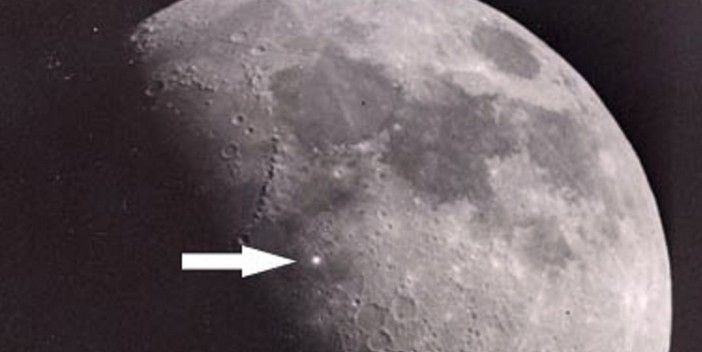
  • What are Transient Lunar Phenomena (TLP)?

    Why in the News?

    For centuries, astronomers and observers have recorded strange, short-lived visual events on the Moon’s surface, known as Transient Lunar Phenomena (TLPs).

    Transient Lunar Phenomena (TLPs)

    About Transient Lunar Phenomena (TLPs):

    • What is it: Short-lived flashes, glows, or hazy patches observed on the Moon’s surface, lasting seconds to several hours before fading.
    • Observation History: Reported for over a thousand years, including Apollo 11 astronauts (1969) who noted a luminous lunar glow.
    • Appearance Types: Include reddish glows, star-like flashes, and mist-like obscurations.
    • Active Regions: Concentrated around Aristarchus and Plato craters, considered the most dynamic lunar zones.
    • Scientific Implication: Suggests that the Moon remains geologically active, contradicting earlier assumptions of total dormancy.
    • Theories on Origin: Scientists propose several explanations for TLPs:
      1. Lunar Outgassing: Trapped gases such as radon or argon may escape through fissures, triggered by gravitational stresses or surface heating, causing dust or gas to glow or reflect sunlight.
      2. Meteoroid Impacts: Frequent meteoroid collisions on the Moon’s airless surface produce brief, intense flashes, accounting for many observed TLPs.
      3. Electrostatic Dust Levitation: Charged lunar dust particles, activated by solar radiation, may levitate and scatter light, producing transient luminous effects.
      4. Atmospheric Distortion on Earth: Some TLPs may be optical artifacts, caused by turbulence or refraction in Earth’s atmosphere altering the Moon’s apparent brightness or colour.

    Recent Research and Monitoring:

    • Observation Technology: Use of automated telescopes and CCD (charge-coupled device) imaging systems for real-time detection.
    • Space Missions: NASA’s Lunar Reconnaissance Orbiter (LRO) and ISRO’s Chandrayaan series monitor gas release and new impact craters.
    • Spectroscopic Evidence: Studies of Aristarchus Plateau show episodic radon emissions, supporting the outgassing theory.
    • Integrated Monitoring: Global programs combine optical, seismic, and spectrometric data to validate events.
    • Scientific Aim: To understand lunar surface dynamics, internal processes, and signs of ongoing geological activity.
  • Mission Drishti: World’s First Multi-sensor EO Satellite

    Why in the News?

    Indian space-tech start-up GalaxEye, based in Bengaluru, has announced the upcoming launch of Mission Drishti, the world’s first multi-sensor Earth Observation (EO) satellite, in the first quarter of 2026.

    About Mission Drishti:

    • Objective: To provide high-resolution, real-time geospatial intelligence for governments, defence, and industries across critical domains such as disaster management, infrastructure, agriculture, and national security.
    • Developer: Conceived by Bengaluru-based GalaxEye Space, an Indian space-tech start-up founded by IIT Madras alumni.
    • Nature: World’s first multi-sensor Earth Observation (EO) satellite, capable of integrating multiple imaging technologies on a single platform.
    • Launch Timeline: Scheduled for first quarter of 2026, serving as the first step in GalaxEye’s plan to deploy a constellation of 8–12 satellites by 2029.
    • Innovation: Combines Synthetic Aperture Radar (SAR) and optical sensors for multi-dimensional imaging across all weather and lighting conditions.
    • Significance: Marks India’s largest privately built satellite and establishes India’s position in the global EO market with indigenous, high-precision imaging technology.

    Key Features:

    • Multi-Sensor Payload: Integrates SAR and optical imaging systems on one platform, a first in global satellite technology.
    • Resolution and Capacity: Offers 1.5-metre resolution, providing ultra-clear imagery for tactical and analytical applications.
    • All-Weather Operation: SAR enables imaging day and night, through cloud cover and adverse weather, ensuring continuous monitoring capability.
    • Satellite Specifications: Weighs 160 kg, making it India’s heaviest privately developed EO satellite, designed for spatial, spectral, and temporal precision.
    • Constellation Vision: Part of GalaxEye’s long-term plan to deploy 8–12 satellites by 2029 for near-real-time global coverage.
    • Applications: Defence surveillance, disaster management, infrastructure auditing, agriculture analytics, and environmental monitoring.
    [UPSC 2019] For the measurement/estimation of which of the following are satellite images/remote sensing data used?

    1. Chlorophyll content in the vegetation of a specific location 2. Greenhouse gas emissions from rice paddies of a specific location 3. Land surface temperatures of a specific location

    Select the correct answer using the code given below.

    Options: (a) 1 only (b) 2 and 3 only (c) 3 only (d) 1, 2 and 3*


  • Crew Escape System (CES) in the Gaganyaan Mission

    Why in the News?

    The Crew Escape System is ISRO’s most critical safety innovation for Gaganyaan. This newscard is an excerpt from the original article published in The Hindu.

    Back2Basics: Gaganyaan Mission:

    • Overview: India’s first human spaceflight mission, initiated in 2007, to send 3 astronauts into Low Earth Orbit (400 km) for 3 days, followed by Arabian Sea splashdown.
    • Rocket: Human-Rated LVM3 (HLVM3), adapted from GSLV Mk3, certified in 2025 for safe human use.
    • Significance: India to become the 4th nation (after US, Russia, China) with crewed spaceflight capability.
    • Latest Timeline (as of Sept 2025):
      • Dec 2025: First uncrewed mission (G1) with humanoid Vyommitra.
      • 2026: Two more uncrewed flights for life-support, avionics, and escape tests.
      • Early 2027: First crewed mission – 3 astronauts in orbit for 3 days.
    • Progress so far:
      • 80–85% development complete: avionics, parachutes, crew safety systems validated.
      • Integrated Air Drop Test (Aug 2025): Confirmed crew module deceleration.
      • Crew Escape System: Multiple ground and flight tests successful.
      • Recovery: Indian Navy and Australian Space Agency conducting splashdown drills.
      • Four IAF test pilots shortlisted: Shubhanshu Shukla, Prasanth Balakrishnan Nair, Angad Pratap, Ajit Krishnan.
      • All trained in Russia, now in advanced Indian training. Final crew of three will be chosen for maiden flight.

    What is Crew Escape System (CES)?

    • Purpose: A critical safety mechanism in ISRO’s Gaganyaan Mission, enabling astronaut rescue in case of launch vehicle failure during the atmospheric ascent phase.
    • Placement & Function: Mounted atop the Human-Rated LVM3 (HLVM3) rocket; rapidly separates the crew module and propels it to safety using high-thrust solid motors.
    • Performance: Escape motors generate acceleration up to 10 g, using high burn-rate propellants for faster thrust than the launcher. Astronauts withstand this briefly in a “child-in-cradle” posture.
    • Safety Systems: Incorporates redundant subsystems, heritage-based design, and real-time health monitoring through the Integrated Vehicle Health Management (IVHM) network for millisecond-level response.
    • Types of CES:
      1. Puller-Type: Used in Gaganyaan; solid-fuel motors pull the crew module away. Also adopted by Russia’s Soyuz, China’s Long March, and US Saturn V missions.
      2. Pusher-Type: Used in SpaceX Crew Dragon (Falcon 9); liquid-fuel thrusters push the capsule away.
    • Comparison: Puller systems suit high-thrust, short-duration extractions; pusher systems integrate better with reusable modules.

    Operational Sequence & Recovery:

    1. Automatic Activation: On anomaly detection, IVHM triggers CES instantly; escape motors fire, propelling the crew module clear of the rocket.
    2. Separation & Descent: After reaching safe distance, CES detaches and the module descends under multistage parachutes, drogue, main, and reserve, ensuring controlled speed and stability.
    3. Splashdown & Safety: The module lands in the sea, impact forces within safe physiological limits, allowing quick recovery.
    4. Significance: Serves as the core life-saving system of India’s human spaceflight programme, ensuring crew survival during catastrophic launch failures.
    [UPSC 2025] Consider the following space missions:

    I. Axiom-4 II. SpaDeX III. Gaganyaan

    How many of the space missions given above encourage and support microgravity research?

    (a) Only one (b) Only two (c) All three* (d) None


  • NASA’s Interstellar Mapping and Acceleration Probe (IMAP)

    Why in the News?

    NASA has recently launched the Interstellar Mapping and Acceleration Probe (IMAP) aboard a SpaceX Falcon 9 rocket from Kennedy Space Centre, Florida.

    About IMAP Mission:

    • Context: Operates under NASA’s Solar Terrestrial Probes Program, following missions like STEREO and IBEX.
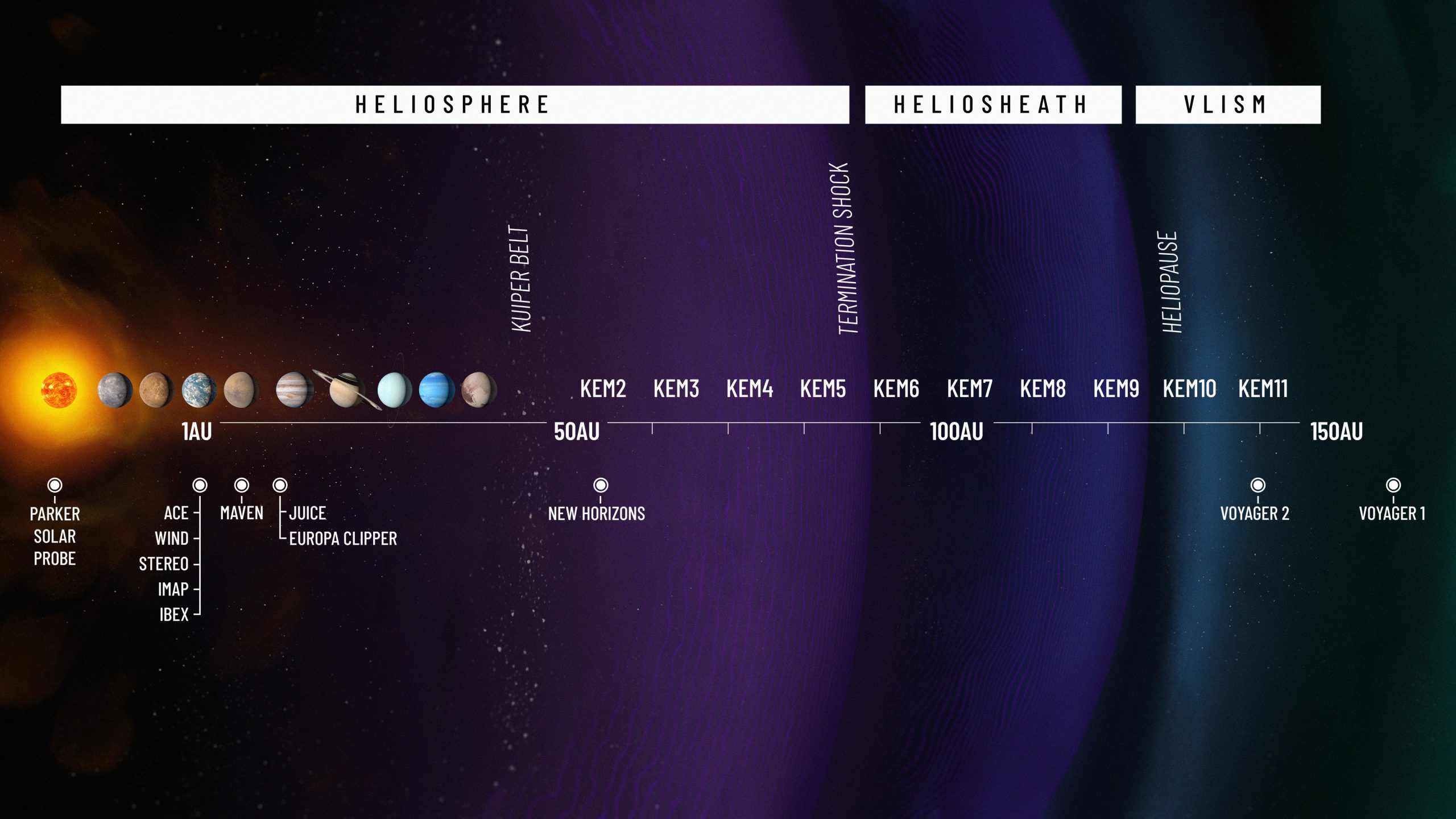
    • Objective: To map the heliosphere boundary, study energetic particle acceleration, and understand how the solar wind interacts with the interstellar medium.
    • Location: Positioned at Sun–Earth Lagrange Point 1 (L1), ~1.5 million km from Earth, ensuring continuous solar observation.

    NASA’s Interstellar Mapping and Acceleration Probe (IMAP)

    Back2Basics: Heliosphere

    • The heliosphere is a vast bubble-like region around the Sun created by the flow of solar wind (charged particles emitted by the Sun).
    • It extends well beyond Pluto and acts as a shield, protecting the solar system from much of the harmful cosmic radiation from interstellar space.
    • Its outer boundary, called the heliopause, marks where solar wind pressure balances with interstellar medium pressure.

    Key Features:

    • Scientific Payload: 10 instruments including- Energetic Neutral Atom Detectors; Charged Particle Detectors and Magnetic & Dust Sensors.
    • Real-Time Alerts: Equipped with I-ALiRT (Active Link for Real-Time) to broadcast space weather data and provide ~30 minutes’ warning of harmful solar radiation.
    • Spacecraft Design: Spin-stabilized, in a Lissajous orbit around L1, ensuring Sun-facing stability.
    • Enhanced Sensitivity: Higher resolution compared to ACE and IBEX, enabling detection of faint cosmic signals.

    Significance:

    • Scientific: Creates the most detailed maps of the heliosphere boundary, improves understanding of solar wind, cosmic rays, and space weather.
    • Technological: Strengthens space weather forecasting, safeguarding satellites, GPS systems, and power grids.
    • Human Spaceflight: Critical for Artemis and future deep-space missions, informing radiation shielding and safe travel routes.
    • Global Collaboration: Complements missions like NASAESA’s Solar Orbiter and the upcoming LISA mission, boosting multi-messenger space science.
    • Habitability Research: Provides insights into how heliospheres shield planets, vital for studying Earth’s resilience and exoplanet habitability.
    [UPSC 2016] What is ‘Greased Lightning-10 (GL-10)’, recently in the news?

    Options: (a) Electric plane tested by NASA *

    (b) Solar-powered two-seater aircraft designed by Japan

    (c) Space observatory launched by China

    (d) Reusable rocket designed by ISRO


  • Laser Interferometer Lunar Antenna (LILA) Project

    Why in the News?

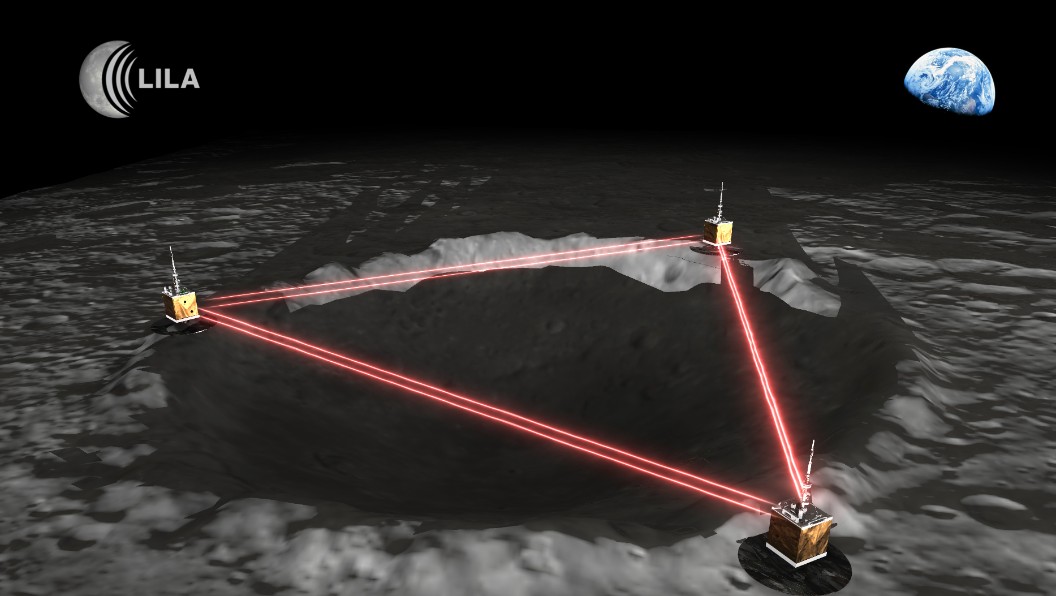
    Scientists are planning the Laser Interferometer Lunar Antenna (LILA) Project on the Moon to bypass seismic noise, atmosphere, and frequency limits faced by Earth-based detectors like Laser Interferometer Gravitational-wave Observatory (LIGO).

    What are Gravitational Waves?

    • Overview: Gravitational waves are ripples in the spacetime continuum created when massive objects such as black holes or neutron stars collide.
    • Speed & Effect: They travel at the speed of light, subtly stretching and compressing spacetime. On small scales, effects are extremely weak (e.g., Earth–Moon distance altered by less than an atom’s diameter).
    • Prediction: Proposed by Albert Einstein (1916) in his General Theory of Relativity.
    • First Detection: In 2015, LIGO recorded the first gravitational waves from two colliding black holes 1.3 billion light-years away, confirming their existence.

    Detection on Earth and Challenges:

    • Ground Observatories: LIGO (USA), Virgo (Italy), KAGRA (Japan), GEO600 (Germany) use laser interferometers to detect minuscule delays in light caused by waves.
    • Working of LIGO: Two L-shaped detectors (Louisiana, Washington), each with 4 km arms; differences in reflections signal gravitational waves.
    • Detection Range: Sensitive to events up to 7 billion light years away; frequency range ~100–1,000 Hz.
    • Challenges: Seismic noise, atmosphere, and human activity mask weaker signals.
    • Future Space Missions:
      • LISA (Laser Interferometer Space Antenna, 2030s): Three satellites in triangular formation, sensitive to 0.1 millihertz–0.1 hertz.
      • SKA (Square Kilometre Array, Australia & South Africa): Monitors pulsars for nanohertz waves.
      • Decihertz Gap: Frequencies 0.1–10 Hz remain unexplored, which LILA aims to study.

    About Laser Interferometer Lunar Antenna (LILA) Project

    • Overview: Proposed by Vanderbilt Lunar Labs, USA, to build a gravitational-wave detector on the Moon.
    • Ideal Conditions: The Moon’s polar shadow zones provide ultra-low seismic activity, natural vacuum, and no atmospheric or radio interference.
    • Focus: Sub-hertz gravitational waves, vital for studying intermediate-mass black holes and the early universe.
    • Phases:
      • LILA Pioneer: Can be deployed within this decade using American lunar landers (Blue Origin, Intuitive Machines) and possibly India’s Chandrayaan programme.
      • LILA Horizon: Advanced phase requiring astronauts for setup.
    • Cosmic Symphony Analogy:
      • SKA: Captures low-frequency “bass notes.”
      • LIGO (and future LIGO-India): Detects high-pitched bursts from stellar collisions.
      • LILA: Covers missing middle frequencies, completing the “cosmic raag.”
    • Historical Note: Since Apollo, retro-reflectors on the Moon track Earth–Moon distance. Some scientists suggest the Earth–Moon system itself acts as a natural detector.

    Significance:

    • Scientific Advancement: Opens the decihertz frontier, inaccessible so far.
    • Global Collaboration: Complements LIGO-India (IndIGO project), operational by 2030.
    • Research Potential: Helps study intermediate-mass black holes, cosmic mergers, and universe origins.
    • Lunar Astronomy: Marks the start of using the Moon as a laboratory for space science.
    • Holistic Coverage: With LISA, SKA, and Earth detectors, LILA would map the entire gravitational-wave spectrum, giving a complete picture of the universe.
    [UPSC 2020] The experiment will employ a trio of spacecraft flying in formation in the shape of an equilateral triangle that has sides one million kilometres long, with lasers shining between the craft.”  The experiment in question refers to

    Options: (a) Voyager-2 (b) New Horizons (c) LISA Pathfinder (d) Evolved LISA*


  • India’s first space observatory AstroSat completes 10 years

    Why in the News?

    AstroSat, India’s first multi-wavelength space observatory has completed 10 years on September 28, 2025, boosting India’s role in multi-messenger astronomy.

    What is Multi-Messenger Astronomy?

    • Overview:  A modern approach that uses different cosmic messengers to study the universe, not just light.
    • Messengers:
      • Light (photons): Radio, visible, UV, X-ray, gamma rays.
      • Gravitational waves: From black hole/neutron star mergers.
      • Neutrinos: From nuclear reactions in stars.
      • Cosmic rays: Charged particles from space.
    • Insights: Light shows stellar surfaces; Gravitational waves show collisions; Neutrinos probe stellar interiors.
    • Example: 2017 neutron star collision observed with both light and gravitational waves, proving origin of heavy elements like gold.
    • AstroSat’s Role: Enabled simultaneous UV, optical, and X-ray observations, tracking flares, black holes, and neutron stars.

    What is AstroSat?

    • Overview: India’s first dedicated multi-wavelength space observatory, launched on September 28, 2015 by PSLV-C30 from Sriharikota.
    • Objective: To study celestial sources simultaneously in X-ray, ultraviolet (UV), and optical bands, unlike most single-band missions.
    • Management: Controlled by the Mission Operations Complex (MOX), ISTRAC, Bengaluru.
    • Mission Life: Designed for 5 years but operational even after 10 years.
    • Payloads:
      • UVIT (Ultra Violet Imaging Telescope).
      • LAXPC (Large Area X-ray Proportional Counter).
      • CZTI (Cadmium-Zinc-Telluride Imager).
      • SXT (Soft X-ray Telescope).
      • SSM (Scanning Sky Monitor).

    Its Accomplishments:

    • Extended Life: Surpassed design life; still generating data.
    • Black Hole Studies: Captured 500+ black hole births, advancing high-energy astrophysics.
    • Galaxy Detection: Tracked extreme UV light from a galaxy 9.3 billion light-years away, aiding early universe studies.
    • Gamma-Ray Bursts: 500+ bursts studied by CZTI.
    • Discoveries: Identified rare UV-bright Milky Way stars, thousands of times brighter than the Sun.
    [UPSC 2016] With reference to ‘Astrosat’,’ the astronomical observatory launched by India, which of the following statements is/are correct?

    1. Other than USA and Russia, India is the only country to have launched a similar observatory into space.

    2. Astrosat is a 2000 kg satellite placed in an orbit at 1650 km above the surface of the Earth.

    Select the correct answer using the code given below.

    (a) 1 only (b) 2 only (c) Both 1 and 2 (d) Neither 1 nor 2*