💥UPSC 2027,2028 Mentorship (April Batch) + Access XFactor Notes & Microthemes PDF

Type: Prelims Only

  • Trade Sector Updates – Falling Exports, TIES, MEIS, Foreign Trade Policy, etc.

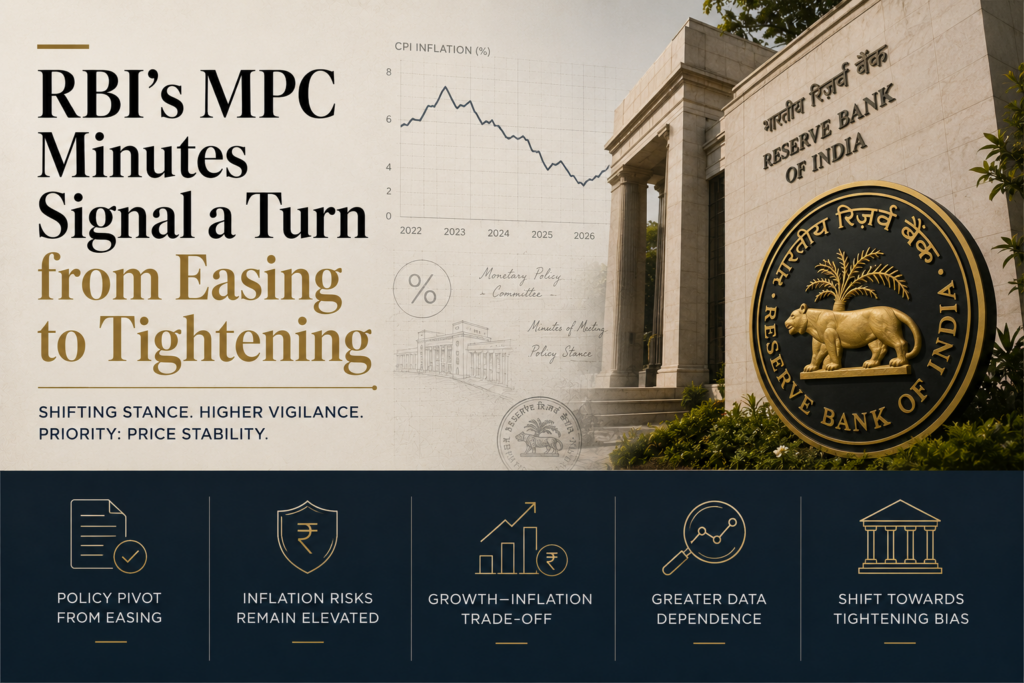
    RBI Extends Export Realisation Timeline Amid Global Disruptions

    Why in the News?

    The Reserve Bank of India (RBI) has extended export realisation timelines and credit facilities due to geopolitical tensions in West Asia and global supply chain disruptions affecting Indian exporters.

    What is Export Realisation?

    Export realisation refers to:

    • Receiving payment for exported goods/services
    • Exporters must bring foreign currency earnings back to India within RBI timeline

    Export Realisation Timeline Extended

    • Earlier timeline: 9 months
    • Extended to: 15 months
    • Applies to:
      • Goods exports
      • Software exports
      • Services exports
    • This relaxation continues due to ongoing global disruptions.

    Export Credit Period Extended

    • Export credit period: 450 days
    • Earlier validity: Up to March 31, 2026
    • Now extended to: June 30, 2026
    • Applies to: Pre-shipment credit and Post-shipment credit
    [2019] Which one of the following is not the most likely measure the Government/ RBI takes to stop the slide of Indian rupee? (a) Curbing imports of non-essential goods and promoting exports. (b) Encouraging Indian borrowers to issue rupee denominated Masala Bonds. (c) Easing conditions relating to external commercial borrowing. (d) Following an expansionary monetary policy.
  • Mother and Child Health – Immunization Program, BPBB, PMJSY, PMMSY, etc.

    India Faces Challenge in Meeting 2030 Maternal Mortality Target

    Why in the News?

    A recent study published in The Lancet Obstetrics, Gynaecology and Women’s Health highlights that India may struggle to meet the SDG target of reducing Maternal Mortality Ratio (MMR) below 70 per 1 lakh live births by 2030.

    Key Findings of the Study

    India’s Progress in Maternal Mortality

    • 1990: 1.19 lakh maternal deaths
    • 2015: 36,900 deaths
    • 2023: 24,700 deaths

    Maternal Mortality Ratio (MMR):

    • 1990: 508 deaths per lakh live births
    • 2023: 116 deaths per lakh live births

    India has made significant progress, but rate of improvement has slowed.

    Global Scenario

    • Global maternal deaths (2023): 2.4 lakh
    • India accounts for ~10% of global maternal deaths
    • Out of 204 countries:
      • 100 countries achieved SDG target (<70 MMR)
      • 104 countries yet to achieve
    • Countries struggling like India: Democratic Republic of Congo, Ethiopia, Nigeria, and Pakistan

    India’s Position

    • India falls in MMR range: 100–140
      (SDG target: Below 70)
    • However, India remains among countries with largest improvement since 1990, along with: Bangladesh, Ethiopia, Morocco, Nepal, and Rwanda

    State-wise Disparity 

    States pulling India’s MMR down: Assam and Uttar Pradesh

    SRS Data:

    • India: 122 (2015-17) → 88 (2021-23)
    • Assam: 215 → 110
    • Uttar Pradesh: 197 → 141
    • Southern states are closer to achieving SDG target.
    [2023] Consider the following statements in relation to Janani Suraksha Yojna: 1 It is a safe motherhood intervention of the State Health Departments. 2 Its objective is to reduce maternal and neonatal mortality among poor pregnant women. 3 It aims to promote institutional delivery among poor pregnant women. 4 Its objective includes providing public health facilities to sick infants up to one year of age. How many of the statements given above are correct? (a) Only one (b) Only two (c) Only three (d) All four
  • Foreign Policy Watch: India-Japan

    Japan Deploys First Long-Range Missile  

    Why in the News?

    Japan has deployed its first long-range upgraded Type-12 missile at Camp Kengun, Kumamoto Prefecture to strengthen its counter-strike capability amid rising regional tensions, particularly involving China and North Korea.

    Type-12 Missile

    • Developed by Mitsubishi Heavy Industries
    • Type: Land-to-Ship / Land-Attack Missile
    • Range:
      • Earlier: 200 km
      • Upgraded: ~1,000 km
    • Platform: Truck-mounted mobile launcher
    • Capability:
      • Can strike enemy bases
      • Enhances counter-strike capability

    Why Japan is Expanding Military Capability

    Japan cites:

    • Rising China military activity
    • North Korea missile tests
    • Tensions over Taiwan Strait
    • Regional security uncertainty
    [2023] Consider the following statements: 
    1 Ballistic missiles are jet-propelled at subsonic speeds throughout their flights, while cruise missiles are rocket-powered only in the initial phase of flight. 
    2 Agni-V is a medium-range supersonic cruise missile, while BrahMos is a solid-fuelled intercontinental ballistic missile. 
    Which of the statements given above is/are correct? 
    (a) 1 only (b) 2 only (c) Both 1 and 2 (d) Neither 1 nor 2

  • WTO and India

    WTO E Commerce Moratorium

    Why in News?

    The WTO e commerce moratorium is set to expire at the 14th WTO Ministerial Conference in Yaounde, Cameroon, leading to debate between developed and developing countries including India.

    What Is WTO E Commerce Moratorium?

    • Global agreement among WTO members
    Prohibits customs duties on electronic transmissions
    • Promotes digital trade growth

    Coverage

    Includes: Software downloads, E books, Music and video streaming, Video games, and Digital services

    Background

    • First adopted 1998 Geneva
    • Initially temporary
    • Renewed every two years
    • Last extended 2024 WTO Ministerial Conference

    Debate Over Extension

    Developed Countries Support

    • United States, European Union, Japan, and Canada

    Reasons

    • Predictable digital trade environment
    • Support global digital economy
    • Protect Big Tech companies

    India and Developing Countries Oppose

    Concerns

    • Loss of tariff revenue
    • Weak domestic digital industries
    • Big Tech dominance

    Studies

    UNCTAD estimated $10 billion revenue loss
    OECD says loss can be offset via GST or VAT

    [2015] The terms ‘Agreement on Agriculture’, ‘Agreement on the application of Sanitary and Phytosanitary Measures’ and ‘Peace Clause’ appear in the news frequently in the context of the affairs of the (a) Food and Agricultural Organization (b) United Nations Framework Conference on Climate Change (c) World Trade Organization (d) United Nations Environment Programme
  • Modern Indian History-Events and Personalities

    Shyamji Krishna Varma

    Why in News?

    The Prime Minister of India paid homage to Shyamji Krishna Varma on his death anniversary, recalling his role in promoting Indian nationalism abroad.

    About Shyamji Krishna Varma

    • Born 4 October 1857 in Mandvi, Kachchh district, Gujarat
    Freedom fighter, lawyer and journalist
    • First President of Bombay Arya Samaj
    • Strongly influenced by Swami Dayanand Saraswati
    • Played a key role in revolutionary nationalism outside India

    Major Contributions

    Indian Home Rule Society (1905)

    • Founded in London
    • Supported by Bhikaji Cama, Dadabhai Naoroji, S.R. Rana
    • Aim: Promote self rule for India

    India House

    • Established in London in 1905
    • Residence for Indian students in Britain
    • Became hub of revolutionary nationalism

    Indian Sociologist

    • Monthly journal started in London
    • Spread nationalist ideas
    • Criticised British colonial rule

    Importance

    • Promoted freedom struggle internationally
    • Inspired revolutionary leaders
    • Strengthened Indian independence movement abroad

    [2018] Which among the following events happened earliest? (a) Swami Dayanand established Arya Samaj. (b) Dinabandhu Mitra wrote Neeldarpan. (c) Bankim Chandra Chattopadhyay wrote Anandmath. (d) Satyendranath Tagore became the first Indian to succeed in the ICS.
  • ISRO Missions and Discoveries

    Indian Scientists Crack the Solar Radio Burst Mystery

    Why in the news?

    Researchers from the Indian Institute of Astrophysics IIA solved a long standing mystery of solar radio bursts, a breakthrough that could improve space weather forecasting and protect satellites, communication and navigation systems.

    What Are Type II Solar Radio Bursts?

    • Generated by Solar Flares and Coronal Mass Ejections CME
    • Produced by Shock waves in Sun’s Corona
    • Travel at Nearly 1000 km per second
    • Important for Space Weather Forecasting

    What Was the Long Standing Mystery?

    Scientists observed two radio emissions

    Fundamental Emission
    Harmonic Emission

    Earlier Expectation: Fundamental emission should be stronger

    But Observations Showed

    • Sometimes Harmonic emission stronger
    • This puzzled scientists for decades

    What Did Indian Scientists Discover?

    Researchers found

    • Strength depends on Location of Solar Activity
    Higher Solar Longitudes beyond 75 degree. Harmonic emission stronger

    Near centre of solar disk Fundamental emission stronger

    Why Does This Happen?

    Scientists identified two main reasons

    • Refraction in Solar Corona
    • Viewing Angle from Earth

    How Was the Study Conducted?

    • Analysed 58 Solar Events
    • Used Global CALLISTO Network
    • Used Gauribidanur Radio Observatory Karnataka
    • Published in Solar Physics Journal

    What Is CALLISTO Network?

    Global solar radio monitoring network
    • Tracks Solar radio bursts
    • Used for Space weather prediction

    [2022] If a major solar storm (solar flare) reaches the Earth, which of the following are the possible effects on the Earth? 1 GPS and navigation systems could fail. 2 Tsunamis could occur at equatorial regions. 3 Power grids could be damaged. 4 Intense auroras could occur over much of the Earth. 5 Forest fires could take place over much of the planet. 6 Orbits of the satellites could be disturbed. 7 Shortwave radio communication of the aircraft flying over polar regions could be interrupted. Select the correct answer using the code given below: (a) 1, 2, 4 and 5 only (b) 2, 3, 5, 6 and 7 only (c) 1, 3, 4, 6 and 7 only (d) 1, 2, 3, 4, 5, 6 and 7
  • Wildlife Conservation Efforts

    Why Was a Sloth Bear Captured Near Shivamogga Airport in Karnataka?

    Why in News?

    The Karnataka Forest Department captured a female sloth bear near Shivamogga airport after it entered nearby villages and airport premises, raising concerns about human wildlife conflict.

    What Is Sloth Bear?

    Scientific Name Melursus ursinus
    • Found in Indian Subcontinent
    • Habitat: Dry forests, Grasslands, Scrub forests
    • Known for Insect feeding, Strong claws, and Human conflict incidents

    Conservation Status

    IUCN Status Vulnerable
    Wildlife Protection Act 1972
    • Listed under Schedule I protection

    [2022] With reference to Indian laws about wildlife protection, consider the following statements: 
    1 Wild animals are the sole property of the government. 
    2 When a wild animal is declared protected, such animal is entitled for equal protection whether it is found in protected areas or outside. 
    3 Apprehension of a protected wild animal becoming a danger to human life is sufficient ground for its capture or killing. 
    Which of the statements given above is/are correct? 
    (a) 1 and 2 (b) 2 only (c) 1 and 3 (d) 3 only
  • Industrial Sector Updates – Industrial Policy, Ease of Doing Business, etc.

    Why Did India’s IIP Growth Rise to 5.2 Percent in February 2026?

    Why in News?

    India’s Index of Industrial Production IIP grew 5.2 percent in February 2026, driven mainly by manufacturing and capital goods sectors, indicating investment led industrial recovery.

    What Is Index of Industrial Production IIP?

    Index of Industrial Production

    • Measures industrial activity in India
    • Released by Ministry of Statistics and Programme Implementation MOSPI
    • Covers three sectors: Manufacturing, Mining, and Electricity

    What Are the Latest IIP Growth Numbers?

    February 2026 IIP Growth 5.2 percent
    January 2026 Revised Growth 5.1 percent
    January earlier estimate 4.8 percent

    Which Sectors Drove Growth?

    Manufacturing Sector

    Growth increased to 6 percent
    • Previous month 5.3 percent
    • February 2025 growth 2.8 percent
    • Key drivers: Basic metals, Automobiles, and Machinery

    Capital Goods Sector

    Growth surged to 12.5 percent
    Nine month high
    • Previous month 4.1 percent
    • Indicates Investment and Capex growth

    [2012] In India, in the overall Index of Industrial Production, the Indices of Eight Core Industries have a combined weight of 37.90%. Which of the following are among those Eight Core Industries? 1 Cement 2 Fertilizers 3 Natural 4 Gas 5 Refinery products 6 Textiles Select the correct answer using the code given below: (a) 1 and 5 only (b) 2, 3 and 4 only (c) 1, 2, 3 and 4 only (d) 1, 2, 3, 4 and 5
  • Defence Sector – DPP, Missions, Schemes, Security Forces, etc.

    The Drone Revolution in Modern Warfare

    Why in the News?

    On March 29, 2026, reports highlighted the profound impact of Iran’s Shahed drones in the ongoing conflicts in West Asia. These “kamikaze” drones have challenged the supremacy of multi-million dollar air defense systems, signaling a paradigm shift where the economics of attrition are becoming as important as traditional firepower.

    What Makes Drone Warfare a “Game Changer”?

    The rise of Unmanned Aerial Vehicles (UAVs) like the Shahed-136 represents a shift toward Asymmetric Warfare.

    • Cost Imbalance: A Shahed drone costs between $20,000 and $50,000, while the missiles used to intercept them (like the Patriot) cost nearly $4 million each.
    • Swarm Tactics: Drones are often deployed in large numbers to overwhelm sophisticated radar and interceptor batteries.
    • Sustainability: Maintaining an F-16 fighter jet costs roughly $25,000 per hour, nearly the total cost of the drone it is trying to shoot down.
    • Attrition: If a drone is lost, it is merely a financial loss; if a fighter jet is downed, the military loses a high-value asset and a highly trained pilot.

    How Does the Shahed-136 “Kamikaze” Drone Operate?

    The Shahed-136 (and its Russian variant, the Geran) is a “one-way” attack UAV with the following technical specifications:

    • Stealth: It flies at low altitudes (20–30 meters) to stay below traditional radar detection.
    • Navigation: Uses a push-propeller engine (noted for its “lawnmower” sound) and carries explosives in its nose.
    • Range: Capable of traveling up to 3,000 km.
    • Mechanism: It does not fire missiles; it is the missile, detonating upon impact with the target.

    What are the Modern Counter-Drone Solutions?

    To combat the high cost of traditional interceptors (Patriot, THAAD), militaries are moving toward Directed Energy Weapons (DEW) and low-cost interceptors:

    1. Laser Weapons: Systems like the HELIOS Laser (used by the US Navy) destroy targets using concentrated heat. They are extremely cost-effective per shot but can be hindered by bad weather (fog/rain).
    2. Acoustic Detection: Using technology to recognize the specific engine sounds of drones.
    3. Low-Cost Interceptors: * Sting: A $2,000–$4,000 interceptor drone used by Ukraine.
      • Merops: A specialized American anti-drone system being rapidly deployed to West Asia.
      • LUCAS: The US-made “Low-cost Uncrewed Combat Attack System” ($35,000).
    [2025] With reference to Unmanned Aerial Vehicles (UAVs), consider the following statements: 
    1 All types of UAVs can do vertical landing. 
    2 All types of UAVs can do automated hovering. 
    3 All types of UAVs can use battery only as a source of power supply. 
    Which of the statements given above are correct? 
    (a) Only one (b) Only two (c) All the three (d) None
  • Roads, Highways, Cargo, Air-Cargo and Logistics infrastructure – Bharatmala, LEEP, SetuBharatam, etc.

    New NHAI Toll Guidelines 

    Why in the News?

    On March 17, 2026, the Ministry of Road Transport and Highways (MoRTH) implemented a new framework for the Multi-Lane Free Flow (MLFF) tolling system. These rules address unpaid user fees resulting from faulty FASTags or low balances, moving India closer to a barrierless (no boom barriers) highway experience.

    Key Features of the New Toll Rules

    • Penalty Structure: If a toll is missed, the user is charged double the applicable fee.
      • 72-Hour Grace Period: If the original fee is paid within 72 hours of the electronic notice (e-notice), the penalty is waived, and only the original amount is due.
    • Enforcement via VAHAN: If the fee remains unpaid after 15 days, the vehicle is flagged on the National Vehicle Registry (VAHAN). This leads to restrictions on vehicle-related services (like fitness certificates or ownership transfers) until dues are cleared.
    • Digital Integration: The system uses high-performance RFID readers and Automatic Number Plate Recognition (ANPR) cameras to record passages without requiring vehicles to stop.
    [2022] Consider the following communication technologies: 
    1 Closed-circuit Television 
    2 Radio Frequency Identification Wireless 
    3 Local Area Network 
    Which of the above are considered Short-Range devices/technologies? 
    (a) 1 and 2 only (b) 2 and 3 only (c) 1 and 3 only (d) 1, 2 and 3