💥Join UPSC 2027,2028 Mentorship (July Batch) + XFactor Notes & Microthemes PDF

Author: Explains

  • 19 Aug 2017 | GS 3 | Discuss the impact of change in repo rate on common man? why it is said that RBI should be more aggressive in cutting the repo rate?

    GS paper 3- Indian Economy

    Q.3) Discuss the impact of change in repo rate on common man? why it is said that RBI should be more aggressive in cutting the repo rate?

    source: https://www.civilsdaily.com/op-ed-snap-economic-graffiti-dont-be-cautious-rbi/


  • 19 Aug 2017 | GS 1 | While Globalization has destroyed many traditional practices and Industries in India it has also given new lease of life to some of them who were on the ventilator. Examine.

    GS Paper 1- Indian society

    Q.1) While Globalization has destroyed many traditional practices and Industries in India it has also given new lease of life to some of them who were on the ventilator. Examine.

  • 18 Aug 2017 | Target Mains: GS Questions With Official Answers

    GS Paper 1: Geography

    Q.1) What do you understand by the phenomenon of temperature inversion in meteorology? How does it affect the weather and the habitants of the place?

    Temperature inversion, is a reversal of the normal behavior of temperature in the troposphere, in which a layer of cool air at the surface is overlain by a layer of warmer air. (Under normal conditions, temperature usually decreases with height).

    Ideal Conditions For Temperature Inversion:

    • Long nights, so that the outgoing radiation is greater than the incoming radiation.
    • Clear skies, which allow unobstructed escape of radiation.
    • Calm and stable air, so that there is no vertical mixing at lower levels.

    Effects:

    • Inversions play an important role in determining cloud forms, precipitation, and visibility.
    • An inversion acts as a cap on the upward movement of air from the layers below. As a result, convection produced by the heating of air from below is limited to levels below the inversion. Diffusion of dust, smoke, and other air pollutants is likewise limited.
    • In regions where a pronounced low-level inversion is present, convective clouds cannot grow high enough to produce showers.
    • Visibility may be greatly reduced below the inversion due to the accumulation of dust and smoke particles. Because air near the base of an inversion tends to be cool, fog is frequently present there.
    • Inversions also affect diurnal variations in temperature. Diurnal variations tend to be very small.

    GS paper 2: Polity & Governance

    Q.2) In the light of recent Gorakhpur tragedy, Discuss the Key problems faced by the rural health sector in India. Also suggest measures for improvement.

    Source: https://www.civilsdaily.com/op-ed-snap-on-rural-indias-health-systems-the-health-checklist/

    Introduction:

    • Health is of utmost importance for individual growth, community growth which contributes ultimately to the growth of the nation. Since Independence, India has achieved several milestones in health sector. However, rapidly increasing population and event of new diseases being discovered is shattering our health care sector. The most vulnerabilities are being faced in Rural areas where the facilities are less or not at all available.

    Below discussed are some problems which our health sector is facing (Mostly Rural):

    • The rural healthcare infrastructure is three-tiered and includes a sub-center, primary health centre (PHC) and CHC. PHCs are short of more than 3,000 doctors, with the shortage up by 200 per cent over the last 10 years to 27,421.
    • While the private sector dominates healthcare delivery across the country, a majority of the population living below the poverty line (BPL) — the ability to spend Rs 47 per day in urban areas, Rs 32 per day in rural areas — continues to rely on the under-financed and short-staffed public sector for its healthcare needs, as a result of which these remain unmet.
    • India’s existing infrastructure is just not enough to cater to the growing demand. Only 31.5% of hospitals and 16% of hospital beds are situated in rural areas where 75% of total population resides.
    • Moreover, the majority of healthcare professionals happen to be concentrated in urban areas where consumers have higher paying power, leaving rural areas underserved.
    • The tribal community is fighting hard against the health problems. The Under-5 mortality among the tribals is more than any other community in India.
    • The health system of India depends almost on imported western models. It has no roots in the culture and tradition of the people. It is mostly service based on urban hospitals. This has been at the cost of providing comprehensive primary health care to all. Otherwise speaking, it has completely neglected preventive, pro-motive, rehabilitative and public health measures.
    • In India shortage of medical personnel like doctors, a nurse etc. is a basic problem in the health sector. In 1999-2000, while there were only 5.5 doctors per 10,000 population in India, the same is 25 in the USA and 20 in China. Similarly the number of hospitals and dispensaries is insufficient in comparison to our vast population.
    • The lowest budgetary allocations as a proportion of Gross Domestic Product (1.6%) are a serious concern on the part of the government.


    There are, however, potential catalysts to improve the quality of healthcare in India which are as follows:

    • Budgetary allocation should be increased with effective implementation of programs and policies and special focus should be given to rural areas for improving healthcare infrastructure.
    • Watchdog machinery should be strengthened to have a strict vigilance on the implementation of programmes and policies and also to make health workers responsible and accountable to the people.
    • Better infrastructure, modern equipments and facilities should be made available at rural hospitals. Doctors and Medical Personals should be given incentives for working in rural areas. At least two or three years timing should be made mandatory for Doctors to serve in rural areas.
    • Medical research in the country needs to be focused on drugs and vaccines for tropical diseases which are normally neglected by international pharmaceutical companies on account of their limited profitability potential.
    • Integrated approach with the help of AYUSH health outlets should be established at each hospital to tackle the diseases.
    • Periodic study of epidemics and high level of facilities should be brought specially in rural areas to deal with the repeated illness and new invented diseases.

    Conclusion:

    • Use of Information Technologies can be promoted with effective communication with the rural areas.
    • Recently launched ICT initiatives are good on this ground such as computer and mobile-phone based e-health and m-health initiatives: Swastha Bharat mobile application for information on diseases, symptoms, treatment, health alerts and tips; ANMOL-ANM online tablet application for health workers, e-RaktKosh (a blood-bank management information system) and India Fights Dengue.
    • The government’s National Innovation Council, which is mandated to provide a platform for collaboration amongst healthcare domain experts, stakeholders and key participants, should encourage a culture of innovation in India and help develop policy on innovations that will focus on an Indian model for inclusive growth.


    GS Paper 3: Indian Economy

    Q.3) Critically examine the key features of the recently released New metro policy?

    Source:

    http://indianexpress.com/article/what-is/what-is-the-new-metro-policy-4801052/

    http://indianexpress.com/article/opinion/editorials/going-off-track-ppp-delhi-metro-rail-projects-4801809/

    http://indianexpress.com/article/india/nowhere-in-the-world-has-ppp-in-metro-rail-fully-succeeded-says-e-sreedharan-4799989/

    A good, reliable transportation system is a must to make a city livable and for its economic growth.  Metro rail is one of the most reliable urban transport systems today. China is galloping way ahead at 300 km of metro rail every year. But in India, all 12 such projects put together, only 20-25 km of new Metro rail is opened every year. In the backdrop of the above, the new Metro Rail Policy focuses on giving clarity on development of projects, collaborations, participation, standardizing norms, financing and creating a procurement mechanism so that the projects can be implemented effectively.

    The important features of the new Metro Policy are:

    • Metro rail projects will be approved and aided by the Central government only if there is private participation and the projects ensures last-mile connectivity for commuters.
    • The policy allows respective states to formulate rules and regulations and it empowers them to establish permanent fare fixation authorities.
    • The projects will now be cleared on the basis of best practice of economic internal rate of return of 14%, as contrary to current financial internal rate of return of 8%.
    • The three models outlined in the policy are PPP with Central assistance, grant by Centre (whereby 10% of metro project cost by the Central government) and 50-50% equity sharing model taken between the Centre and state.

    Apprehensions about the new Metro policy:

    • The PPP model for metro rail:  The construct and maintain PPP model with mandatory private investment for metro rail has been a failure across the globe as remarked by E Sreedharan.
    • The capital-intensive nature of such projects does not allow private players to get a return on their investments unless they hike their fares steeply. PPP in India was tried out in Mumbai, Hyderabad, and the Airport line of Delhi. All three are a failure.
    • The Centre is trying to reduce its role in financing and put the entire burden on the state governments through the new policy.
    • This entails that the states will now have to come up with innovative ways to raise funds through means like value capture finance tools.
    • They will also have to issue corporate bonds for metro projects for enabling low-cost debt capital.
    • One of the key aspects of the policy is the last mile connectivity which requires the government to provide feeder services like feeders, walkways, pathways and para- transport means.

    As Indian cities expand, the metro will be an important constituent of the transport mix. The government will do well to learn from past successes and failures in planning for this mode of transport. The JV model, with funding from the Centre and states, has worked very well so far. Metro is way more capital-intensive as it requires everything from land acquisition to civil works, signaling, and rolling stock. The government has to ensure affordable public transport and hence it must invest in it.


    GS Paper 4: Ethics & integrity

    Q.4) India is a country of traditions and festivals having their roots in religion. The District Magistrate along with the Superintendent of Police of the district is supposed to take care of law and order, safety and security of large number of people assembling at such occasions to celebrate. In such a gathering people throng on the river banks for holy bath, competitive burning of the crackers and approaching the deities in a temple from close proximity which often leads to confusion and chaos and sometimes big accidents.

    A festival is being organized on a large scale in a big temple in your area. After hearing cases of stampede at religious places and the increasing number of casualities in such cases you are worried about the situation. So you decide to make a prehanded preparedness in order to come out of the situation.

    Present a brief map of action and programmes which must be put in place before the day of celebration so that celebration is managed without any obstruction and untoward event.

    Answer Structure:

    Today, the religious places have been important areas which witness a large crowd on various occasions. So maintaining law and order and ensuring safety and security of people is important. The organisers of such events should be more responsible and accountable. Tradition or not, they must be made to follow the rules and make fool-proof arrangement for every festive gathering which draws huge crowds. Preparation cannot simply be perfunctory; it involves human lives. The devotees and visitors should also be made aware of basic precautions.

    Those involved in administration must also ensure that pre-hand preparedness is carried out. There must be proper planning to ensure the safety of people. The preparations which must be put into place to manage the celebration without any untoward happening can be discussed as:

    1. Every civil servant in bigger responsibility must learn fast about the demography, culture and tradition of the particular region where s/he is posted.
    2. S/he should keep a ready reference to calendar of events that may be happening according to according to the culture and tradition of the area.

    iii.                Before any event takes place with high mass turn out, the civil servant should prepare a plan for (a) law and order (b) transport and communication (c ) shelter and stay (d) safety and security (e) preparedness for accident, disaster or any other untoward event.

    1. Coordination between different government departments that may be involved for smooth celebration of cultural or traditional event.
    2. To understand the events or celebration being organized and make preparations better for them the civil servant in charge should involve the stake holders in advance and develop a system where the government agencies and civil society work in tandem for success of the events.
    3. Last but not the least; nothing should be permitted in the name of culture and tradition which causes a big threat to life and property of the people.
  • 18 Aug 2017 | GS 4 | India is a country of traditions and festivals having their roots in religion. The District Magistrate along with the Superintendent of Police of the district is supposed to take care of law and order, safety and security of large number of people assembling at such occasions to celebrate. In such a gathering people throng on the river banks for holy bath, competitive burning of the crackers and approaching the deities in a temple from close proximity which often leads to confusion and chaos and sometimes big accidents. A festival is being organized on a large scale in a big temple in your area. After hearing cases of stampede at religious places and the increasing number of casualities in such cases you are worried about the situation. So you decide to make a prehanded preparedness in order to come out of the situation. Present a brief map of action and programmes which must be put in place before the day of celebration so that celebration is managed without any obstruction and untoward event.

    GS Paper 4: Ethics & integrity

    Q.4) India is a country of traditions and festivals having their roots in religion. The District Magistrate along with the Superintendent of Police of the district is supposed to take care of law and order, safety and security of large number of people assembling at such occasions to celebrate. In such a gathering people throng on the river banks for holy bath, competitive burning of the crackers and approaching the deities in a temple from close proximity which often leads to confusion and chaos and sometimes big accidents.

    A festival is being organized on a large scale in a big temple in your area. After hearing cases of stampede at religious places and the increasing number of casualities in such cases you are worried about the situation. So you decide to make a prehanded preparedness in order to come out of the situation.

    Present a brief map of action and programmes which must be put in place before the day of celebration so that celebration is managed without any obstruction and untoward event.

  • 18 Aug 2017 | GS 2 | In the light of recent Gorakhpur tragedy, Discuss the Key problems faced by the rural health sector in India. Also suggest measures for improvement.

    GS paper 2: Polity & Governance

    Q.2) In the light of recent Gorakhpur tragedy, Discuss the key problems faced by the rural health sector in India. Also suggest measures for improvement.

    Source: https://www.civilsdaily.com/op-ed-snap-on-rural-indias-health-systems-the-health-checklist/

  • 18 Aug 2017 | GS 1 | What do you understand by the phenomenon of temperature inversion in meteorology? How does it affect the weather and the habitants of the place?

    GS Paper 1: Geography

    Q.1) What do you understand by the phenomenon of temperature inversion in meteorology? How does it affect the weather and the habitants of the place?

  • Chah Bahar, Its significance and the impediments in taking it ahead

    Introduction

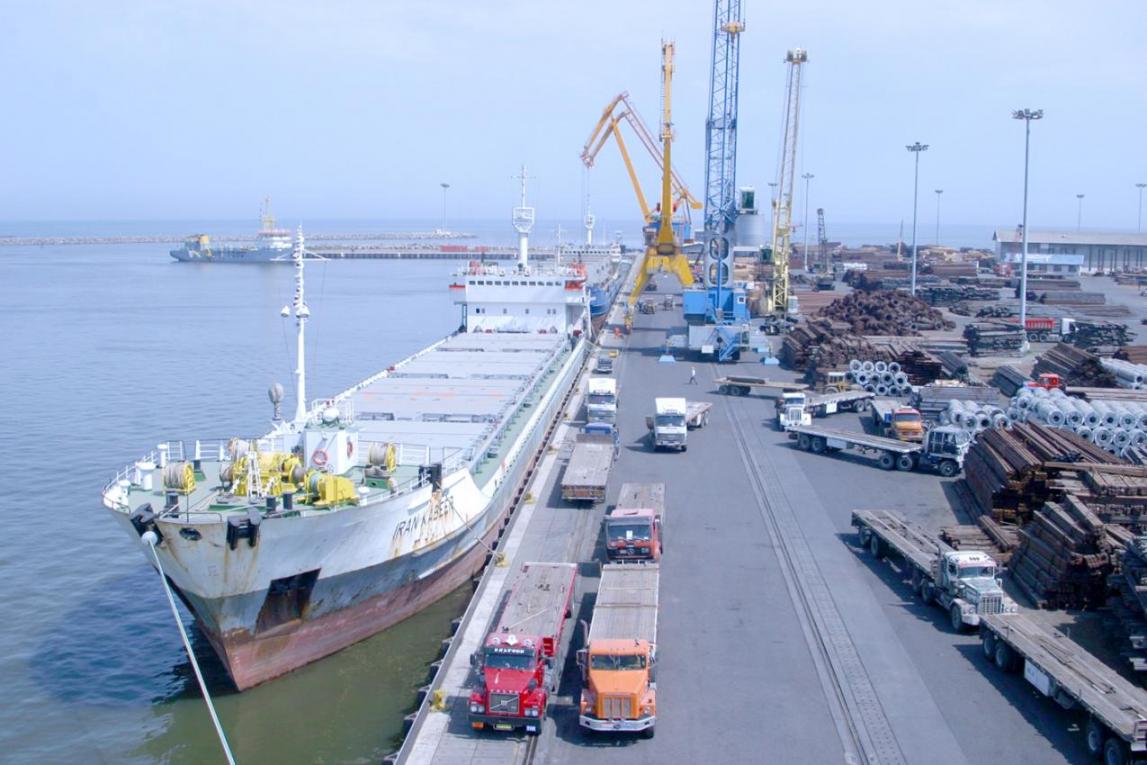
    07-chabahar-1056-abAn India-operated port in Iran’s Chabahar would open a gateway for the country to Afghanistan and Central Asia. The port is of strategic importance.

    The decision to ink MoU with Iran for expansion of Chabahar Port, after a long delay, opens up major commercial and strategic opportunities for India

    Why Chabahar is Crucial?

    1. Sits at mouth of Strait of Hormuz area. It is at the Junction of shipping, oil trade routes About 100,000 ships sail by yearly
    2. It Connects three regions: Central Asia, South Asia and West Asia
    3. ChahBahar will foster Closer ties with Iran will allow Delhi to secure cheaper energy imports. ChahBahar hashold on two-thirds of world oil reserves. Chabahar Port route helps connect India with energy-rich Azerbaijan, Turkmenistan & other central Asian nations.Anestimated 17 billion barrels of crude oil passes this way daily.
    4. It Gives India strategic heft in region; helps it bypass Pakistan & build closer ties with Iran and Afghanistan
    5. This route is 40% shorter, 30% less expensive than trade via the Red Sea-Suez Canal-Mediterranean route
    6. In the absence of transit through Pakistan, Iran is India’s gateway to Afghanistan, Central Asia, and Russia and beyond and the Chabahar port is the key element in that
    7. The location of the port is significant asIt is located barely 72 km away from the deep-sea Gwadar port. Thus Once functional, Chabaharwill Offset China’s growing influence and reach in the region. will further undermine Gwadar.
    8. While the Chabahar port is essentially meant for commercial purposes and provides transit route to Afghanistan, India Can use the facility to monitor Pakistani & Chinese activities in the India Ocean Region as well as Gulf. It could be convenient location for India to monitor activities of Pakistani Navy
    9. Indian investment in the port would serve as a link to Delaram-zaranj road that India built in Afghanistan. Chabahar port would give New Delhi a base to position itself after international troops withdraw from Afghanistan
    10. India-built Zaranj-Delaram road in Afghanistan will connect to the Chabahar port via Milak. Iran with financial aid from India is upgrading the Chabahar-Milakroad
    11. The Chabahar-Milak-Zaranj-Delaram highway will open up the Indian market to Afghan farm products and other exports. It will also help combat the scourge of illicit drugs production and export and assist the trade, transport and transit network of Iran

    Significance of the deal for Afghanistan

    1. Unhindered access to the Indian Ocean
    2. India-built highway will link country to Chabahar port, further trade
    3. Afghanistan hopes to exploit $ltrillion of untapped mineral wealth to earn revenue

    Run-Up To The Deal

    In 2009, India built a 218 kin long (@$100m) link road from Delaram in western Afghanistan to Zaranj on the Iran-Afghan border to link up with Chabahar port

    ZaranjDelaram highway connects with the 2,200 km two-lane metalled road network, known as the Garland Road that connects major cities in ‘the country

    Rational for indian Investment in Chabahar

    An Indian JV company will lease two berths in Chahbahar’s Phase-I for 10 years, which could be renewed by “mutual pact”. The JV will invest $85.21 m for equipping the two berths further within 12 months.

    • India will invest $85m to build a container terminal & a multi-purpose cargo terminal
    • On May 6, 2015, Union minister NitinGadkari signed MoU with Iran to complete this by Dee 2016
    • Iran wants Chabahar to be the third major hub for its petrochemical industries
    • Indian private & public sector entities projected investment worth $22b in the free trade zone area
    • Chemicals, petrochem, steel, fertilizer are major sectors, besides Indian railways likely to invest
    • India was offered the project to develop Chabahar port in 2003 by Iran, intended to be a critical access-point to landlocked Afghanistan
    • For Afghanistan, an operational Chabahar route was a better alternative. It would reduce its dependence on Pakistan – the sole nation providing it access to the sea
    • Pakistan has been reluctant to allow Indian goods to pass overland through its territory
    • The project did not take off over US sanctions against Iran, but India has gone ahead now follwing lifting of the sanctions

    Factors that will obstruct  Chabahar in its full development.

    Chahbahar has the potential to alter the entire strategic relations of Afghanistan and Iran with India and oil geopolitics of Central Asia. But the path is not going to be easy.

    1. The fate of the Chabahar project will depend on successive governments showing sustained resolve in the face of geopolitical hurdles. The potential spoilers are several.
      • For one, relations between Tehran and the West, though vastly improved, remain fraught, with many hardliners in Iran believing the country was short-changed in the nuclear deal that paved the way for an end to sanctions. That, potentially, could lead to tensions
      • There could be differences over Iran’s role in Syria and Afghanistan.
      • Indian governments will also have to incentivise private corporations for using the Iranian route to transit goods to Central Asia, rather than the fast, cheap networks they now use through Singapore and China.
      • Finally, the project can only be successful if Indian manufacturing is globally competitive.

    With inputs from K Siddhartha Sir

  • [Official Review] 17 Aug 2017 | Target Mains: GS Questions With Official Answers

    GS Paper 1

    Q.1)  Along with economic factor it was the misrule and inefficiency of CZAR Nicholas II which sowed the seeds of Russian Revolution. Comment.

    NCERT

    Answer Structure:

    • The Russian Revolution was 1 of the most significant event in Modern World History.The Russian revolution not only transformed Russia but its effect was felt far and wide.
    • The Weaknesses of Russian economy and the economic difficulties faced by the masses  played most important role in igniting the revolution of 1917.
    • Even during the opening decade of 20th century there was no trace of industrial revolution in Russia and the industries were in backward conditions. The production remained very low and because of this Russia was facing immense difficulties.
    • The Russian agriculture was also in backward condition. Most of the land was controlled by feudal lords and there was no trace of Agriculture revolution as well. The agriculture technology was still medieval in outlook and Czarist regime of Russia made no effort to reform the agriculture.The peasants were exploited by land-lords.
    • The problem of hunger and poverty remained in Russia.
    • However the misrule of CZAR II  has aggravated these problems further. The CZARIST Regime was weak , inefficient and corrupt. It was also characterized by the presence of feudal elements and class privileges.
    • The aristocracy dominated the administration and misused the state authority for their own benefits.
    • This corrupt and inefficient regime was resulting in the exploitation and harassment  of masses because of this the common masses were facing immense difficulties in Russia during the opening decade of 20th century.
    • Russian involvement in the number of wars & battles had exposed the inherent weaknesses of czarist regime and this popular dissatisfaction was also responsible for the revolution.

    • GS Paper 2

    Q.2) The proposed wage code Bill, which incorporates a universal minimum wage, will lead to higher unemployment and informalization of the economy. In the light of the above statement critically Discuss the key features of proposed wage code bill?

    Source: http://www.livemint.com/Opinion/WgZM9HZxouo9qiByArRETP/Having-a-minimum-wage-law-is-a-mistake.html

    Introduction:

    • The proposed wage code bill recognizes a statutory right of monthly minimum wage for all citizens to be set across India, which will be binding on all the states to follow and set wages higher than the proposed.
    • The Bill is aimed at reducing disparity in minimum wages across geographical regions and sectors by subsuming four extant Acts: the minimum Wages Act of 1948, the Payment of Wages Act of 1936, the Payment of Bonus Act of 1965 and the Equal Remuneration Act of 1976.

    Criticism:

    • Though, the Bill signals a formal start of the process of consolidating 44 labour laws into four codes, which is welcomed by some and also seen by some as a redline for its diminishing effects on economy.
    • The new wage rate certainly will be higher than the current wage rate however, the actual minimum wage is yet to be set by the Central government. This increase in the cost for employer will invariably result in either retrenchment of employees or a significant slowdown in new hiring or both.
    • It will also result in decreasing number of hours of work in order to compensate the increased price. A minimum wage does not satisfy its original intentions i.e. elimination of poverty and will tend to increase unemployment and reduce family income.
    • There is a possibility that the Act (when passed and implemented) will contain migration but loss of job and reduced income will further add on the migration and vulnerability to adopt informal jobs as hiring will be less or totally stopped.
    • There is also the possibility that when implemented it will increase the use of automated machines in jobs as machines are one time investment, more efficient and good for long term in cost savings.
    • The Bill seeks to assume a single national floor for wages for entire country as diverse as India, with so many variations to costs of living. This will increase in disparity of facilities as the cost of living differs across various states.
    • The Bill increases the government interventions in non-formal jobs as it seeks to expand the reach of minimum wage regulation to non-formal organisations also.
    • At a time when India is facing only job losses and the rate of creation of new jobs is a serious concern, a higher minimum wage will only worsen the situation.
    • The applicability of current Act is restricted to scheduled establishments due to which a sizeable number of workers are left out. If Parliament approves the code, the minimum wage will be applicable to all classes of workers. This will certainly make it more difficult for smaller companies to function efficiently.
    • The unorganized sector will eventually find ways around to bypass the law if economics tells them that they can’t afford it.

    Conclusion:

    • The good news is that the Indian Government is in full swing to bring in reforms with the aim of creating a more effective, rationalized, transparent and user-friendly Labour law system in the country. But the need of the hour demands government’s sole focus on easing labour laws, facilitating formalization of the economy by providing more job security and focus on reducing regulatory hurdles for businesses.
    • Hence, the Government should bring a balanced approach concerning the highest number of working population to sort out the current demand of the country and a step ahead towards ease of doing business.

     GS Paper 3

     Q.3) What do you understand by sex semen technology. Discuss the usefulness of sex semen technology for our dairy sector?

    Source: https://www.civilsdaily.com/op-ed-snap-how-technology-can-deliver-freedom-from-male-calf/


    Though India is the largest producer and consumer of milk, dairy industry needs new technologies that ensure high milk producing cattle. As a step in that direction, the National Dairy Research Institute (NDRI) has launched a project called semen sex technology.

    Sex semen technology is a pre-selection breeding technology that can be used to produce a calf of a desired sex. This technology is about pre-selecting the sex of offspring by sorting or separating the X-sperms from Y-sperms. The aim is to deliver freedom from male calves, by ensuring that cows are inseminated by semen containing only X-chromosome-bearing sperms. Sperm are sorted by identifying differences between the X- and Y- bearing sperm.

    Advantages of Sexed Semen technology:

    • Producing only female calves helps the farmers to save resources that would have been shared with unwanted males.
    • An economic way to increase herd strength with no risk of introducing diseases by purchasing heifers from outside (improves bio-security)
    • By increasing efficiency of embryo transfer and IVF program.
    • Indian farmers will not have to import sexed semen of Sahiwal, Gir, Red Sindhi bulls and Murrah buffaloes and now produce it indigenously processed domestically at half the cost.
    • Sexed semen’s usefulness is obvious, particularly in a country where even male calves cannot be sent freely to the slaughterhouse.
    • Sperm-sorting technology has an accuracy of 93% i.e. if used will ensure that the calf produced will be female. With ordinary semen used in artificial insemination (AI), that probability is just 50%.

    Challenges/ Issues associated with SST:

    • Artificial Insemination using conventional semen is just over Rs 50 per insemination dose whereas comparable cost of sexed semen will be anywhere between Rs 1,200 and Rs 2,600 per straw.
    • Require highly skilled person to operate sex sorting machines
    • High cost of the product which include the cost of the intellectual property right.
    • The lower sperm count (machine sorting speeds and efficiency aren’t high enough) and possibility of damage to the cells during the sorting process is another concern. So, managing lower sperm concentration will be a challenge in the field under Indian condition.
    • There is no standard operating procedure to perform insemination with sexed semen cumbersome.
    • The conception rate i.e. is the chance of the animal getting pregnant from sexed semen is 10-20% lower compared to conventional semen.

    But for all its drawbacks, this is a technology still evolving and destined for improvement. The new product is gentler on the sperm cells, with lower processing pressures. The technique also helps in preventing cross breeding and promoting pure breeds. At a time when we are striving for doubling farmer’s income, the sexed semen technology will immensely help and accentuate the Indian dairy farmer undoubtedly.


    GS Paper 4 

    Q.4) What in meant by ‘environmental ethics? Why is it important to study? Discuss any one environmental issue from the viewpoint of environmental ethics.

    Environmental ethics is a branch of ethics that studies the relation of human beings and the environment and how ethics play a role in this. Environmental ethics believe that humans are a part of society as well as other living creatures, which includes plants and animals. These items are a very important part of the world and are considered to be a functional part of human life. Thus, it is essential that every human being respect and honor this and use morals and ethics when dealing with these creatures.

    Why is it Imp.

    1.To understand the essential features of moral or ethical thinking;

    2.To learn about the important and distinguishing characteristics in environmental ethics;

    3.To develop the skills to recognize and deploy moral discourse for leadership in environmental fields etc.

    In the most general sense, environmental ethics invites us to consider three key propositions:

    1.The Earth and its creatures have moral status, in other words, are worthy of our ethical concern;

    2.The Earth and its creatures have intrinsic value, meaning that they have moral value merely because they exist, not only because they meet human needs;

    3.Drawing from the idea of an ecosystem, human beings should consider “wholes” that include other forms of life and the environment.

    The relationship between environmental ethics and the environmental sciences, however, is a complex and often contested one. For example, debates over whether ecologists and conservation biologists should also be advocates for environmental protection — a role that goes beyond the traditional profile of the “objective” scientist — have received much attention in these fields. Likewise, we will see that issues such as the place of animal welfare concerns in wildlife management, the valuation and control of non-native species, and the adoption of a more interventionist approach to conservation and ecological protection frequently divide environmental scientists and conservationists.