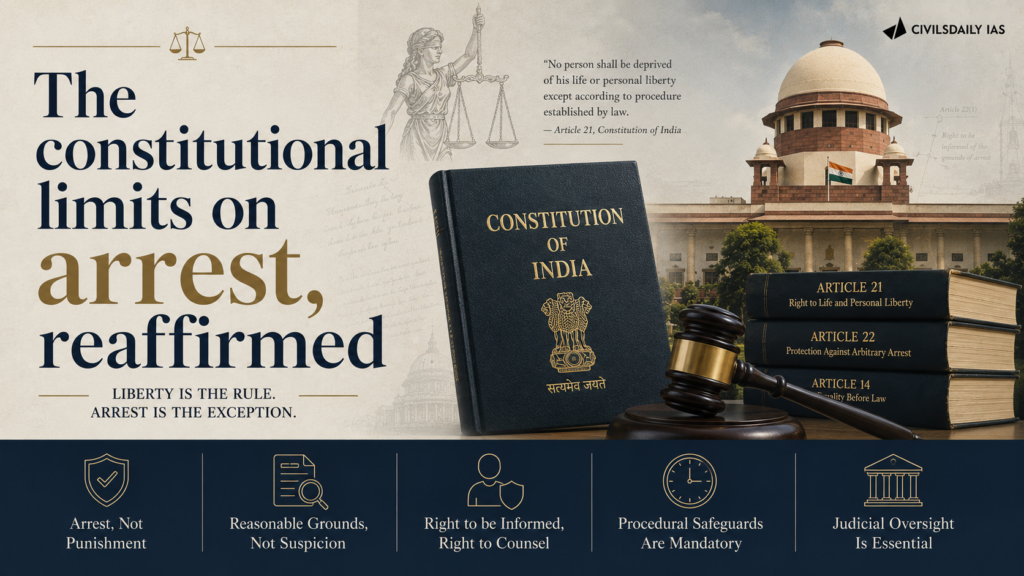
An explainer revisits the constitutional limits on arrest after a 2025 Supreme Court ruling. It reaffirms that an arrested person must be meaningfully informed of the grounds of arrest.
What does Article 22 guarantee on arrest?
Grounds of arrest:Article 22(1) requires that grounds be communicated meaningfully, not as a formality.
Legal counsel: The arrested person has the right to consult a lawyer of choice.
Production before magistrate:Article 22(2) requires production within 24 hours of arrest.
No prolonged custody: Continued detention beyond 24 hours requires Magistrate’s authorisation.
Exception: These safeguards under Article 22(1) and 22(2) do not apply to enemy aliens and persons detained under preventive detention laws under Article 22(3).
What did the recent ruling and precedents establish?
Vihaan Kumar (2025): The Court held that failure to communicate grounds vitiates the arrest.
Arnesh Kumar (2014): Arrest must be the exception for offences carrying up to seven years, not routine.
D.K. Basu (1997): The Court prescribed safeguards including an arrest memo, informing relatives and medical examination to prevent custodial abuse.
Arrest memo: Procedural safeguards require a documented arrest memo.
What did the Supreme Court Rule in Vihaan Kumar Case?
The judgment of the Supreme Court of India (Supreme Court) in the case of Vihan Kumar vs. State of Haryana (2025) marked a crucial milestone in protecting the fundamental rights of arrested persons.
Mandatory information about the reasons for arrest: The Supreme Court has made it clear that the person arrested must be informed of the reasons for his arrest immediately. This is a fundamental right guaranteed under Article 22(1) of the Constitution.
Arrest is invalid: If the accused is not informed of the reasons for the arrest, the arrest becomes illegal and unconstitutional.
Cancellation of further proceedings: If fundamental rights are violated during the arrest process itself, subsequent remand orders issued by the courts or charge sheets filed by the police cannot rectify that mistake (Vitiated).
Language awareness: The reasons for the arrest should be communicated in a language that the accused understands, and should not be a mere formality.
Human rights and dignity (Article 21)
Ban on shackles in hospitals: The Supreme Court has strongly condemned the practice of shackles and chains on Vihan Kumar when he was admitted to the hospital due to medical reasons.
Right to Life: The court held that the right to live with dignity is part of Article 21 , and chaining the accused to a hospital bed falls under the category of human rights violation.
How is preventive detention different?
Without trial: Preventive detention permits custody without a charge to prevent an anticipated act.
Advisory Board: Detention beyond three months requires review by an Advisory Board.
Narrow safeguards: Several ordinary arrest protections under Article 22 do not apply to preventive detention.
Preventive: Unlike ordinary detention, it is not punitive. It is intended to prevent an anticipated act prejudicial to specified interests.
No 24-hour Magistrate requirement under Article 22(3).
Grounds of detention must generally be communicated, subject to non-disclosure in public interest.
What is the “Golden Triangle”?
Articles 14, 19, 21: Together they form the core of personal liberty jurisprudence.
Maneka Gandhi (1978): Established that a law depriving personal liberty must prescribe a procedure that is just, fair and reasonable.
Article 22: Provides specific procedural safeguards against arbitrary arrest and detention, complementing the broader protection under Article 21.
Conclusion
The ruling restates settled safeguards and closes an enforcement gap on communicating arrest grounds. It sharpens the line between lawful arrest and arbitrary detention.
PYQ Relevance
[UPSC 2023] “The Constitution of India is a living instrument with capabilities of enormous dynamism. It is a constitution made for a progressive society.” Illustrate with special reference to the expanding horizons of the right to life and personal liberty.
Linkage: The PYQ examines the expanding scope of the right to life and personal liberty under Article 21. Arrest safeguards and preventive-detention limits show how judicial interpretation strengthens protection against arbitrary deprivation of liberty.
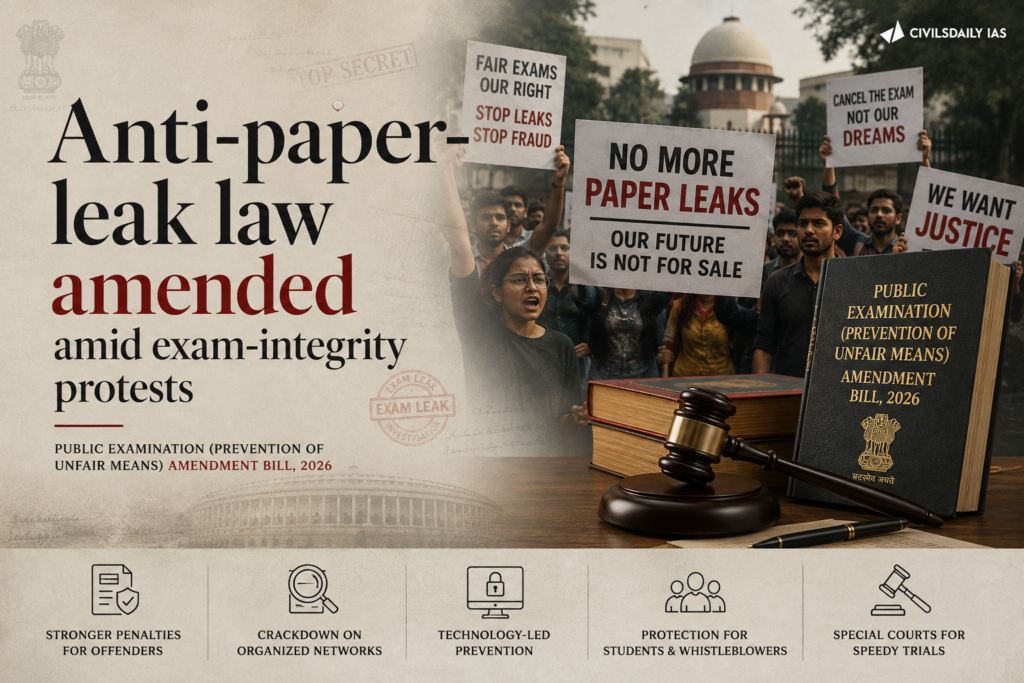
The Public Examination (Prevention of Unfair Means) Amendment Bill, 2026 seeks to strengthen the 2024 law against organised cheating and examination paper leaks amid concerns over NEET and recruitment examination irregularities.
What is the Public Examination Act, 2024?
Objective: Criminalises organised cheating, paper leaks, impersonation and other unfair means.
Coverage: Applies to major public examinations conducted by bodies such as UPSC, SSC and NTA.
Penalties: Provides imprisonment and heavy fines for organised examination malpractice.
Focus: Targets organised networks rather than genuine candidate errors.
Why was it amended?
Exam-leak crisis: Repeated paper leaks and irregularities exposed weaknesses in examination governance.
Enforcement gaps: Strengthening was considered necessary after experience with the 2024 framework.
Public trust: Fair examinations are essential for merit-based recruitment and equal opportunity.
What does the crisis reveal?
Aspiration-opportunity gap: Large numbers of candidates compete for limited government jobs.
Institutional trust deficit: Repeated leaks undermine confidence in recruitment institutions.
Governance challenge: Legal punishment alone cannot ensure examination integrity without secure technology, accountable agencies and speedy investigation.
Prelims Pointers
Act: Public Examinations (Prevention of Unfair Means) Act, 2024
Ministry/Department: Department of Personnel and Training
Targets: Organised cheating, paper leaks and impersonation
Important distinction: The Act does not automatically cover all university or State board examinations unless the concerned government adopts the framework.
“[2024, GS2, 15] What are the aims and objects of the recently passed and enforced, The Public Examination (Prevention of Unfair Means) Act, 2024? Whether University/State Education Board examinations, too, are covered under the Act?”
[2021] With reference to the Union Government, consider the following statements: 1. N. Gopalaswamy Iyengar Committee suggested that a minister and a secretary be designated solely for pursuing the subject of administrative reform and promoting it. 2. In 1970, the Department of Personnel was constituted on the recommendation of the Administrative Reforms Commission, 1966, and this was placed under the Prime Minister’s charge. Which of the statements given above is/are correct?
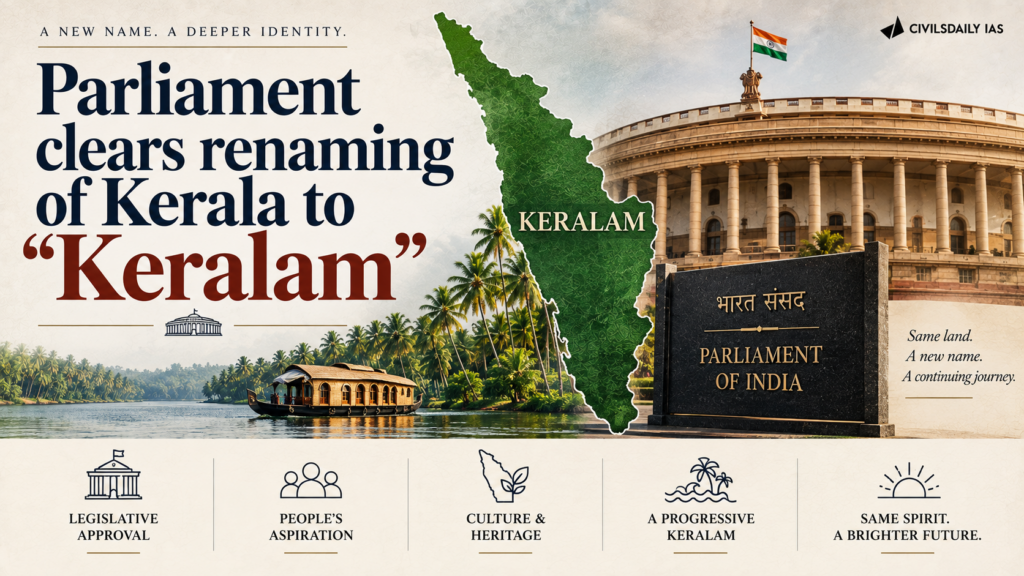
Both Houses passed a Bill to rename Kerala as “Keralam”, its name in Malayalam. The change follows two resolutions of the Kerala Assembly and routes through the constitutional process for altering a state’s name.
How is a state renamed under the Constitution?
Parliament’s power: Under Article 3, Parliament can alter the name of a state by law.
Presidential referral: Such a Bill needs the President’s recommendation and the views of the affected state legislature.
Simple majority: The change is passed by ordinary legislative majority, not a constitutional amendment.
Why “Keralam”?
Linguistic identity: “Keralam” is the state’s name in Malayalam, and the change aligns official usage with local usage.
Assembly resolutions: The Kerala Assembly twice sought the change unanimously.
Why does the process matter?
Union primacy: Only Parliament, not the state, can effect the legal renaming.
Federal courtesy: The state legislature’s view is sought, but its resolution is not binding.
Back2Basics: Article 3 of the Constitution
Scope: Formation of new states and alteration of areas, boundaries, or names of existing states.
Initiation: Only on the President’s recommendation, after seeking the state legislature’s views.
Nature: Treated as an ordinary law, reflecting the “indestructible states” feature of Indian federalism.
“[2022, GS1, 15] The political and administrative reorganization of states and territories has been a continuous ongoing process since the mid-nineteenth century. Discuss with examples.”
[2025] Consider the following pairs : State:Description 1. Arunachal Pradesh: The capital is named after a fort, and the state has two National Parks 2. Nagaland: The State came into Existence on the basis of a Constitutional Amendment Act. 3. Tripura: Initially a Part ‘C’ State, it became a centrally administered territory with the reorganization of State in 1956 and later attained the status of a full-fledged State How many of the above pairs are correctly matched?
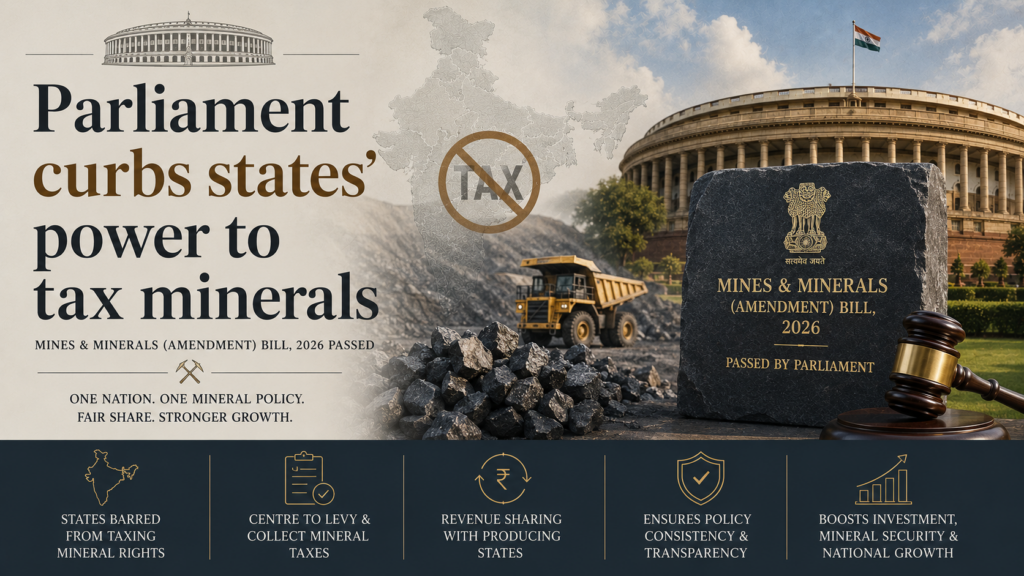
Parliament passed the Mines and Minerals (Development and Regulation) Amendment Bill, 2026. It bars states from imposing specified levies on mineral rights except on terms set by the Centre, reopening a fiscal federalism dispute.
What does the Mines and Minerals (Development and Regulation) Amendment Bill, 2026 do?
Levy restriction: States cannot impose specified taxes on mineral rights or mineral-bearing land except as the Centre prescribes.
Dues extinguished: Pre-amendment dues estimated near 2 lakh crore rupees stand extinguished.
Scope: The Bill applies to major minerals such as iron ore, coal, bauxite, manganese, and copper.
Why is this a fiscal federalism flashpoint?
2024 ruling reversed in effect: The Supreme Court in 2024 upheld states’ power to tax mineral rights, which the Bill now constrains.
Revenue dependence: Mining was 84.9% of Jharkhand’s non-tax revenue in 2024-25.
Mineral-rich states hit: States holding large mineral reserves lose an expected revenue stream.
What is the Centre’s justification?
Uniform rates: The government argues uniform mineral rates prevent a patchwork of state levies.
No revenue loss claim: The Centre states that states retain powers over minor minerals.
Investment climate: Predictable levies are framed as protecting mining-sector investment.
What are the major debates surrounding it?
Tax versus royalty: The dispute turns on whether a levy on minerals is a tax or a royalty, which the 2024 ruling addressed.
Tribal concerns: Mineral belts overlap with Scheduled Areas, raising questions of local benefit-sharing.
Divisible resource control: Centralising mineral levies shifts fiscal power toward the Union.
Conclusion
The amendment centralises control over mineral taxation soon after the Supreme Court affirmed states’ taxing power. The immediate stage is enactment, with a likely constitutional challenge the next development.
Back2Basics
Constitutional Framework Governing mineral taxation
Entry 50, State List: Taxes on mineral rights, subject to Parliament’s limitations relating to mineral development.
Entry 54, Union List: Regulation of mines and mineral development declared expedient in public interest.
Article 246: Distributes legislative power between Union and states via the Seventh Schedule.
What did the Supreme Court hold in 2024?
The Mineral Area Development Authority v. SAIL judgment is the constitutional backdrop to the 2026 amendment. The 9-judge Constitution Bench, by 8:1 majority, held that royalty is not a tax and that States have legislative competence to tax mineral rights under Entry 50, State List. It also recognised the States’ power to tax mineral-bearing land under Entry 49, State List.
Royalty ≠ Tax: Royalty paid under the MMDR Act is consideration for the right to extract minerals and is distinct from a tax.
State Taxing Power: States can impose taxes on mineral rights under Entry 50, List II, subject to limitations imposed by Parliament.
Mineral-Bearing Land: States can also levy taxes on land under Entry 49, List II.
MMDR Limitation: The Court held that the MMDR Act, as it then stood, did not impose a limitation on the States’ taxing power.
Why is the 2026 Amendment significant?
The 2026 amendment seeks to alter this position prospectively by restricting State taxation of mineral rights and mineral-bearing lands, except in accordance with conditions or restrictions prescribed by the Centre
PYQ Relevance
[UPSC 2025] Examine the evolving pattern of Centre-State financial relations in the context of planned development in India. How far have the recent reforms impacted the fiscal federalism in India?
Linkage: The 2025 PYQ examines the evolution of Centre–State financial relations and their impact on fiscal federalism. The Bill raises fresh concerns over the Union’s role in restricting States’ mineral revenue powers and fiscal autonomy.
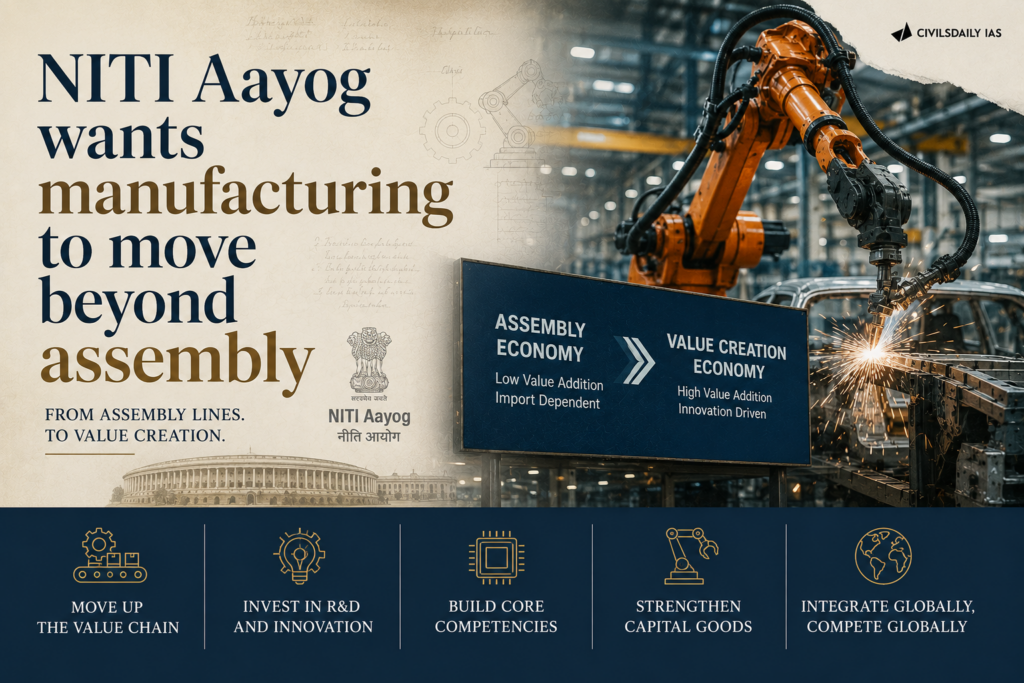
A NITI Aayog report titled Key Sectors to Position India as a Global Manufacturing Hub calls for deeper localisation and value addition across four sectors. It argues that India’s manufacturing remains stuck at assembly, with high import dependence for inputs.
What does the report cover?
Four focus sectors: Chemicals, telecom and networking equipment, textiles, and solar photovoltaic (PV).
Central diagnosis: India assembles finished goods but imports the high-value inputs, capping domestic value addition.
What are the sector-specific findings?
Chemicals: The industry stood at $200-220 billion in FY25, roughly 3% to 3.5% of the global market, growing 6% to 8%.
Textiles: About 80% of textile and apparel producers are MSMEs, limiting scale and technology adoption.
Import reliance: Around 35% of mono-ethylene glycol, a key textile input, is imported.
Solar PV: Domestic capacity depends on imported cells and wafers.
Why does deeper localisation matter?
Value capture: Assembly adds little domestic value, so moving up the chain raises incomes and jobs.
Strategic resilience: Import dependence for inputs exposes India to supply shocks and price volatility.
Trade balance: Substituting imported inputs narrows the manufacturing trade deficit.
What are the challenges to a manufacturing hub strategy
Scale deficit: An MSME-heavy base struggles to achieve globally competitive scale.
Technology gap: Weak research and development limits movement into complex components.
Logistics cost: High freight and power costs erode cost competitiveness.
Skilling shortfall: A shortage of trained industrial labour slows productivity gains.
Input ecosystem: Absence of a domestic supplier base for critical inputs keeps assembly dependent on imports.
Conclusion
The report reframes the manufacturing goal from output volume to domestic value addition. Its recommendations depend on building an input-supplier ecosystem, which the Production Linked Incentive (PLI) scheme alone has not delivered.
Back2Basics
Government Initiatives for manufacturing
Make in India: Umbrella programme to raise manufacturing’s share of GDP.
Production Linked Incentive (PLI) scheme: Output-linked incentives across 14 sectors.
National Manufacturing Mission: Announced to coordinate sectoral manufacturing push.
MUDRA & Credit Guarantee Scheme: Improve access to institutional credit for MSMEs, supporting investment, expansion and employment generation.
Semicon India Programme: Supports semiconductor fabrication, packaging and related ecosystems to build strategic manufacturing capabilities and reduce import dependence.
Key Concepts
Assembly vs. Value Addition
Assembly-led model: Importing components and assembling finished products in India.
Value-added manufacturing: Domestic production of components, intermediate goods, technology and final products.
Key concern: High domestic output does not necessarily mean high domestic value capture.
China+1 Strategy
Global firms are diversifying supply chains beyond China.
India can leverage this opportunity, but competitive costs, reliable infrastructure and deeper localisation are essential.
PYQ Relevance
[UPSC 2025] Discuss the rationale of the Production Linked Incentive (PLI) scheme. What are its achievements? In what way can the functioning and outcomes of the scheme be improved?
Linkage: The 2025 PYQ examines the role and effectiveness of the PLI scheme in strengthening India’s manufacturing sector. The report highlights the need to move beyond assembly towards deeper localisation, domestic value addition and stronger supplier ecosystems.
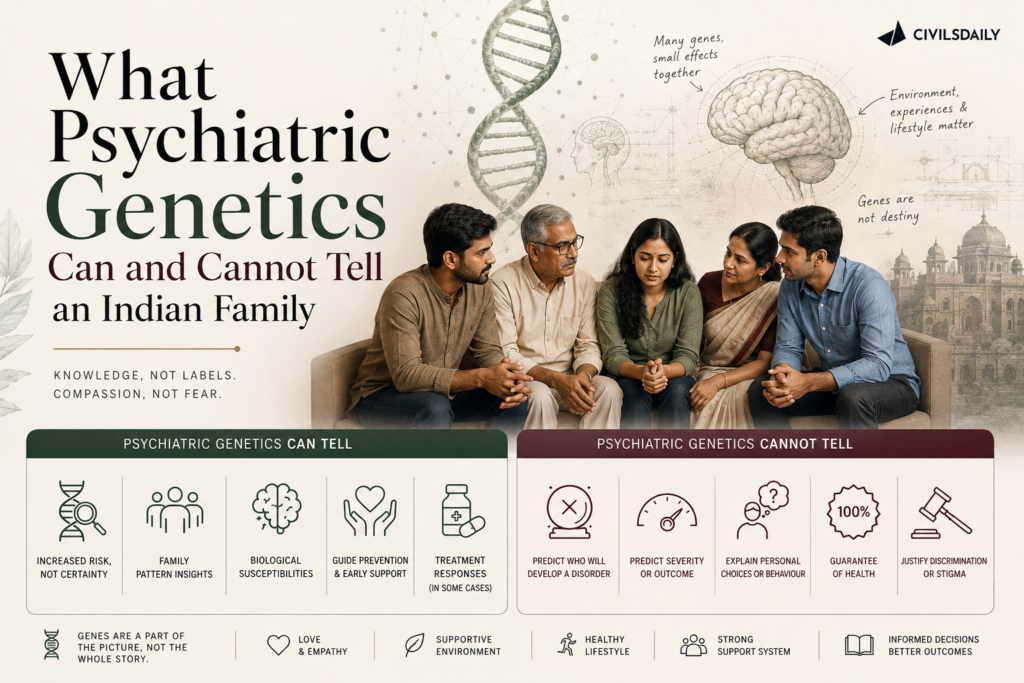
Families of patients with psychiatric illness increasingly ask whether the condition is in their blood and whether a genetic test can settle their child’s future. There is a tension between the real progress of psychiatric genetics and its limited power to predict individual outcomes, especially for Indian populations underrepresented in genomic databases. The central point is that genes load the dice but do not determine destiny.
What is a genome-wide association study (GWAS)?
About: A GWAS compares millions of common genetic variants across very large groups of people with and without a condition, to find variants that appear more often in one group. . It compares DNA markers, most often single-nucleotide polymorphisms (SNPs, between individuals with a condition and healthy control groups.
What it yields: It behaves like a satellite map highlighting genomic areas of interest, showing where to look for biological mechanisms rather than pinpointing a cause.
What does polygenic risk mean?
About: In common psychiatric disorders no single gene variant has a large effect, unlike single-gene diseases such as Tay-Sachs disease or Duchenne muscular dystrophy.
Mechanism: Risk is polygenic, emerging from the combined influence of thousands of variants together with rare genetic changes, development, environment, and chance.
What is a polygenic risk score?
About: A polygenic risk score (PRS) compresses many small genetic effects into a single number meant to estimate a person’s inherited susceptibility.
Limits: It cannot say whether a person will become ill, at what age, how severe it will be, or which medicine will work, because it captures only part of genetic liability.
How Polygenic Risk Works
Many small changes: Instead of one major gene causing an illness (like in cystic fibrosis), polygenic conditions involve hundreds or thousands of tiny DNA changes called single nucleotide polymorphisms
Adding it up: Each individual variant adds or subtracts a tiny amount of risk; a PRS totals these up to estimate your overall genetic predisposition.
Common conditions: It applies to complex diseases like heart disease, type 2 diabetes, schizophrenia, and certain common cancers
What have the major GWAS findings shown?
Schizophrenia: A 2022 landmark study identified associations at 287 genomic regions and pointed to genes active in neurons and synapses.
Bipolar disorder: A large 2021 study identified 64 associated regions.
Regulatory signals: Many signals lie in DNA that regulates when and where genes switch on, not in stretches that directly encode a protein.
Shared risk: A December 2025 study in Nature reported that some inherited risk is shared across schizophrenia and bipolar disorder.
Why is prediction unreliable, especially in India?
Score does not contain life: A person with a higher score may remain well while a person with a lower score may fall ill, because the score does not contain childhood adversity, sleep disruption, substance use, medical illness, or access to care.
Expert caution: The International Society of Psychiatric Genetics has cautioned that current scores for schizophrenia, bipolar disorder, and depression are not accurate enough for routine clinical prediction.
Ancestry bias: Genomic databases have drawn disproportionately from people of European ancestry, so scores are often less accurate in other populations.
Indian diversity: The GenomeIndia project generated whole-genome data from 10,000 healthy, unrelated Indians across 83 population groups and documented extraordinary genetic diversity, so a score developed elsewhere cannot simply be imported.
What can genetics usefully change in the clinic today?
Reduces blame: A mother did not cause schizophrenia by being too strict and a father did not transmit bipolar disorder through a moral failing, and biology matters.
Avoids fatalism: Genetic vulnerability should not be converted into a verdict, and no test can declare a person safe or doomed.
Focus on modifiable risk: The useful approach is to track early warning signs, avoid intoxicants, sleep well, seek help promptly, and focus on recovery.
Visible risks: Many risks are visible without sequencing, such as lost sleep before a manic episode, escalating cannabis use, treatment stopped due to stigma, and distance from specialist care.
Conclusion
The central idea is that psychiatric genetics will not identify people before they fall ill, but it can replace superstition and blame with a more accurate account of vulnerability. Prediction will remain probabilistic even as datasets grow larger and more representative. The task is to keep probabilities from being misunderstood, stigmatised, or commercialised, and to involve diverse populations while protecting privacy.
Back2Basics:
GenomeIndia Project
Convening body: Funded by the Department of Biotechnology (DBT), Government of India.
Aim: To build a catalogue of the genetic diversity of the Indian population.
Scale: Generated whole-genome data from 10,000 healthy, unrelated Indians across 83 population groups.
Significance: Provides an India-specific reference against which imported genetic risk scores can be tested rather than assumed to apply.
Genomics in India: About
Definition: Genomics studies the complete set of an organism’s DNA, including how variants relate to disease.
Diversity: India’s population carries extraordinary genetic diversity across many groups, making a single national reference essential.
Clinical caution: Risk scores derived from European-ancestry datasets can mislead when applied to Indian populations.
Challenges in Psychiatric Genetics
Weak prediction: Scores cannot forecast onset, severity, or treatment response for an individual.
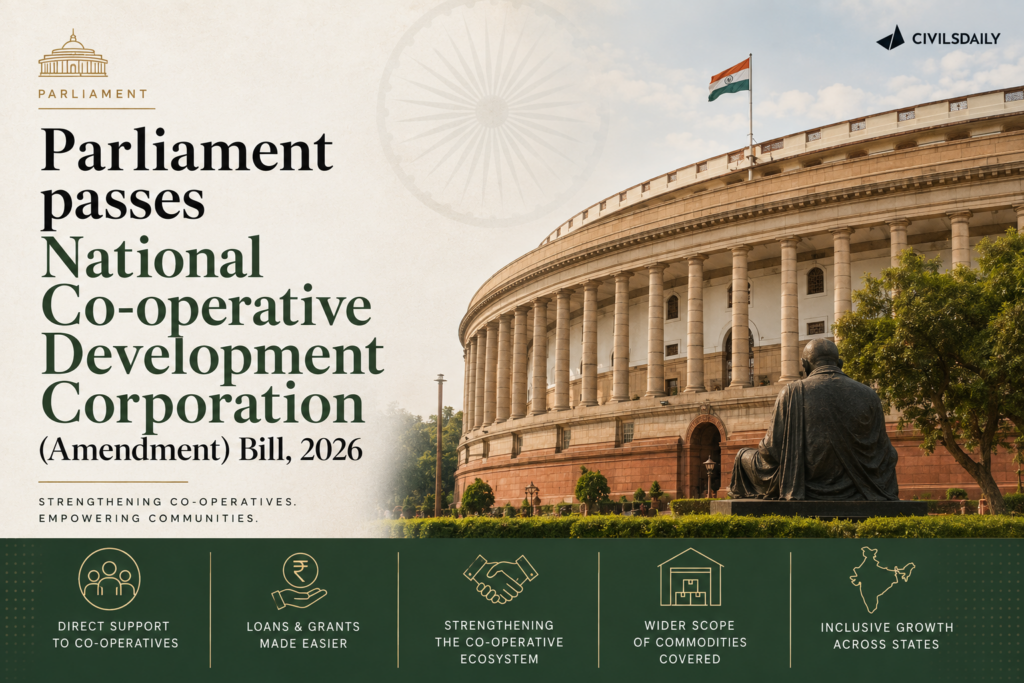
Parliament passed the National Cooperative Development Corporation (Amendment) Bill, 2026, enabling the NCDC to provide loans and grants directly to cooperative societies.
What is NCDC?
NCDC (National Cooperative Development Corporation) is a statutory corporation established under the National Cooperative Development Corporation Act, 1962.
Functions under the Ministry of Cooperation.
Promotes and finances cooperatives involved in production, processing, marketing, storage and trade of agricultural and allied produce.
What does the Amendment Change?
Direct lending: NCDC can directly provide loans and grants to cooperative societies.
Wider coverage: Definition of foodstuffs expanded to include processed food and other food items notified by the Centre.
No additional budgetary outlay: The Bill does not provide for additional government financial assistance.
Why is it Needed?
Faster flow of credit by removing intermediary delays.
Supports over 8 lakh cooperatives with more than 30 crore members.
Extends cooperative financing into value added food chains.
Why are States Concerned?
Cooperation is largely a State subject.
Direct central lending may bypass State governments and registrars.
Raises concerns about cooperative federalism and centralisation.
Key Challenges
Financial weakness and poor governance of PACS (Primary Agricultural Credit Societies).
Dual regulatory control.
Regional concentration of cooperatives.
Delayed elections and audits.
Limited professional management.
Centre State friction.
Constitutional Framework
Entry 32, State List: Incorporation and regulation of cooperative societies within a State.
Article 43B: Promotes voluntary formation and autonomous functioning of cooperatives.
Part IXB, Articles 243ZH to 243ZT: Constitutional provisions on cooperatives.
Multi State Cooperative Societies Act, 2002: Governs cooperatives operating across multiple States.
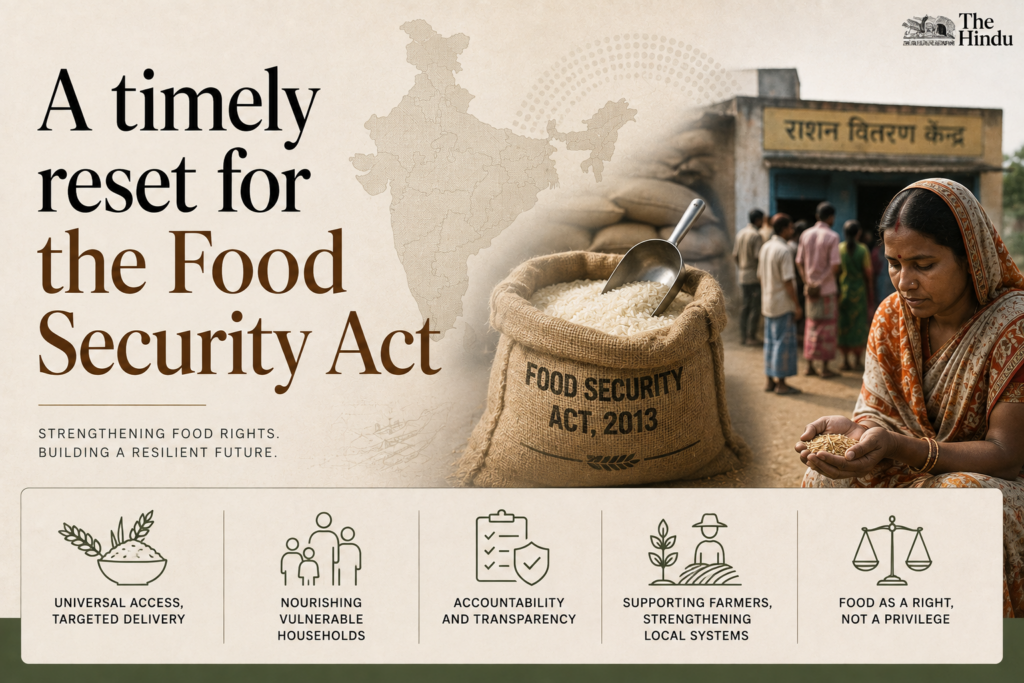
The draft National Food Security (Amendment) Bill, 2026 proposes to link Antyodaya Anna Yojana (AAY) entitlements to household size, opening a new phase in India’s food security debate. The reset exposes a triple tension: correcting the inequity of a flat household ration without reducing existing foodgrain access, while building a pathway from cereal security toward nutrition security amid a rising burden of diabetes and other non-communicable diseases.
What is the National Food Security Act, 2013?
Definition: The National Food Security Act, 2013 (NFSA) legally guarantees subsidised foodgrains to a large share of the population through the Public Distribution System, treating food as a legal entitlement rather than welfare.
Coverage design: It allows coverage of up to 75% of the rural and 50% of the urban population, split into Priority Households and Antyodaya Anna Yojana households.
What is the Antyodaya Anna Yojana (AAY) category?
Definition: AAY covers the poorest of the poor households and provides a flat 35 kg of foodgrains per household per month, regardless of household size.
Contrast: Priority Households instead receive 5 kg of foodgrains per person per month, a per-head rather than per-household entitlement.
Why does the flat AAY entitlement create inequity?
Small households protected: The flat 35 kg shields smaller and highly vulnerable families, such as a widow or an older person living alone.
Large households squeezed: A seven-member AAY household receives only 5 kg per person and an eight-member household about 4.4 kg, below the Priority Household entitlement.
The distortion: Support per person falls as household size rises, inverting the intended pro-poor design.
What does the draft amendment propose?
Per-person formula: The draft proposes 7 kg of foodgrains per person, capped at 35 kg per household.
Winners and losers: It would reduce support for households with one to four members by 20% to 80%, leave those with five or more members unchanged, and give no AAY household any additional foodgrain.
The design flaw: By reducing rather than raising any allocation, it corrects inequity by levelling down.
Why does the proposal risk reducing existing access?
Tamil Nadu illustration: The State reports that 15.75 lakh of its 18.64 lakh AAY households, or 84.5%, have fewer than five members.
Allocation cut: The proposal would reduce the State’s monthly AAY allocation from 65,261 tonnes to 42,040 tonnes, a fall of about 35.6%.
Composition matters: A smaller household may include a person with a disability, a widow or an older person living alone, so headcount alone is a poor proxy for need.
Why must coverage, not just the formula, be reformed?
Outdated ceiling: The NFSA’s 81.35-crore beneficiary ceiling remains based on Census 2011, though about 80 crore people currently receive free foodgrains.
Coverage erosion: Against an estimated population of 146.4 crore in 2025, the ceiling covers only 55.6% of people.
Recalculation needed: The ceiling should be recalculated when Census 2027 figures become available, with accessible inclusion and appeal mechanisms in the interim.
Why is grain alone not nutrition security?
Uneven child nutrition: NFHS-6 (2023-24) found stunting among under-fives fell from 35.5% to 29.3%, but wasting barely moved from 19.3% to 19.0% and underweight from 32.1% to 31.8%.
Diet inadequacy: Only about 15% of children aged six to 23 months receive a minimally adequate diet.
Double burden: The ICMR-India Diabetes study estimated 101 million Indians had diabetes and 136 million had prediabetes in 2021.
Life-course risk: Maternal undernutrition and low birth weight raise the risk of non-communicable diseases later in life.
Should the PDS cereal basket be blamed for diabetes risk?
Not a direct cause: Foodgrain entitlement should not itself be equated with diabetes risk.
The real concern: A predominantly cereal-based basket, combined with diets already high in carbohydrates and low in protein, can reinforce dietary imbalance.
Evidence: A 2025 ICMR-INDIAB study of 18,090 adults found carbohydrates supplied 62.3% of daily energy and protein 12%, with the highest carbohydrate intake carrying 30% higher odds of newly diagnosed type 2 diabetes.
Millets caution: Replacing refined cereals with whole-wheat or millet flour was not linked to lower risk when the carbohydrate share stayed high, so more grain or millets alone is not a complete nutrition policy.
How can diets be diversified without cutting cereals?
Balanced target: The ICMR-NIN 2024 guidelines recommend cereals and millets provide at most 45% of energy, with more from pulses, milk, nuts, vegetables and fruits.
What the PDS can do: The PDS can best supply affordable, shelf-stable foods, with States supported to offer pulses, local rice, wheat, millet choices and healthy edible oils.
Procurement link: Local production and consumption should guide supply chains and effective Minimum Support Price procurement for pulse, millet and oilseed growers.
Programme convergence: Sustained investment should link the PDS, Anganwadi services and Pradhan Mantri Poshan Shakti Nirman (PM POSHAN), providing eggs, milk or suitable alternatives where feasible.
Separate budgeting: Dietary diversification must be separately budgeted, not financed by reducing cereal entitlements, against a food subsidy allocation of Rs 2,27,629 crore in the 2026-27 Union Budget.
Phased pilots: Additions should be tested through State pilots assessing consumption, dietary diversity, anaemia, glycaemic risk, wastage and exclusion.
How does the delivery network enable this reform?
Digitised last mile: By the end of 2025, 5.50 lakh of 5.51 lakh fair price shops used electronic point-of-sale devices.
Portability: One Nation One Ration Card covered nearly all NFSA beneficiaries, supporting portability and monitoring.
Safeguards needed: Systems must include reliable offline alternatives, assisted or doorstep access for people with limited mobility, and a guarantee that authentication failure will not deny entitled foodgrains.
Nutrition referral: Fair price shops could carry multilingual receipts and messages and, where feasible, link willing adults to diabetes and hypertension services, with over 1.86 lakh Ayushman Arogya Mandirs and 41.3 crore diabetes screenings recorded by June 2026.
What three safeguards should anchor the reform?
No-loss guarantee: Any per-person formula should preserve the existing 35 kg monthly entitlement for every AAY household.
Periodic review: The adequacy of the 35 kg ceiling should be reviewed for larger and high-dependency households using consumption, nutritional and fiscal evidence.
Separately financed diversification: Dietary diversification must be separately financed and progressively implemented without reducing existing cereal entitlements.
Conclusion
The proposed amendment is an opportunity to correct the inequity of a flat AAY ration, but only if it preserves the 35 kg entitlement, assesses the needs of larger households, and finances a gradual transition toward more diverse and nutritious diets. India’s next food security reform must protect people from hunger while addressing the dietary drivers of diabetes, judged not by tonnes of grain moved but by whether vulnerable families can eat enough, eat healthier and obtain their entitlements with dignity.
Food Security in India (Foundational Context)
About: Food security means physical, economic and social access to sufficient, safe and nutritious food for an active, healthy life.
Scale: The NFSA covers about 80 crore people through the world’s largest food-based safety net.
Progress: The share of households unable to afford the ICMR-NIN recommended diet fell from about 52% in 2011-12 to about 25% in 2023-24, at 25% rural and 21% urban.
Back2Basics: National Food Security Act, 2013
Coverage: Up to 75% of rural and 50% of urban population.
Entitlement: 5 kg per person per month for Priority Households; 35 kg per household for AAY households.
Woman as head: The eldest woman aged 18 or above is the head of household for ration card issuance.
Maternity and child benefits: Entitlements for pregnant and lactating women and for children through supplementary nutrition programmes.
Grievance redress: State and district-level redress and vigilance mechanisms.
Statutory Framework Governing Food Security
Article 21: The right to life, read to include the right to food.
Article 47 (DPSP): Duty of the State to raise nutrition levels and the standard of living.
National Food Security Act, 2013: Legal entitlement to subsidised foodgrains.
Essential Commodities Act, 1955: Regulation of production, supply and distribution of essential commodities.
Government Initiatives for Food and Nutrition Security
Public Distribution System: Distribution of subsidised foodgrains through fair price shops.
PM POSHAN: Hot cooked meals for schoolchildren.
Anganwadi and ICDS: Supplementary nutrition for young children and pregnant or lactating women.
One Nation One Ration Card: Portable ration access across States.
Pradhan Mantri Garib Kalyan Anna Yojana: Free foodgrains scheme scaling the NFSA entitlement.
Key Facts about Food Security
PoS coverage: 5.50 lakh of 5.51 lakh fair price shops digitised by end 2025.
Diabetes burden: 101 million diabetics and 136 million prediabetics estimated in 2021.
Guideline: ICMR-NIN 2024 caps cereals and millets at 45% of dietary energy.
Challenges in Food and Nutrition Security
Cereal-heavy basket: High carbohydrate share crowding out protein and micronutrients.
Double burden: Coexistence of undernutrition and rising non-communicable diseases.
Outdated coverage: Beneficiary ceiling frozen at Census 2011.
Exclusion errors: Authentication failures and mobility barriers at the last mile.
Fiscal pressure: Large and rising food subsidy bill.
Procurement skew: MSP concentrated in rice and wheat over pulses and oilseeds.
Way Forward
No-loss safeguard: Legally protect the 35 kg AAY entitlement in any new formula.
Update coverage: Recalculate the ceiling on Census 2027 with accessible appeals.
Diversify diets: Separately fund pulses, millets and healthy oils in the PDS.
Converge programmes: Link PDS, Anganwadi and PM POSHAN for nutrition delivery.
Pilot before scale: Test additions through phased State pilots measuring nutrition and fiscal outcomes.
Previous Year Question
[2018] With reference to the provisions made under the National Food Security Act, 2013, consider the following statements:
1. The families coming under the category of ‘below poverty line (BPL)’ only are eligible to receive subsidised food grains.
2. The eldest woman in a household, of age 18 years or above, shall be the head of the household for the purpose of issuance of a ration card.
3. Pregnant women and lactating mothers are entitled to a ‘take-home ration’ of 1600 calories per day during pregnancy and for six months thereafter.
Which of the statements given above is/are correct?
(a) 1 and 2
(b) 2 only
(c) 1 and 3
(d) 3 only
[2021 GS3 15m] What are the salient features of the National Food Security Act, 2013? How has the Food Security Bill helped in eliminating hunger and malnutrition in India?”
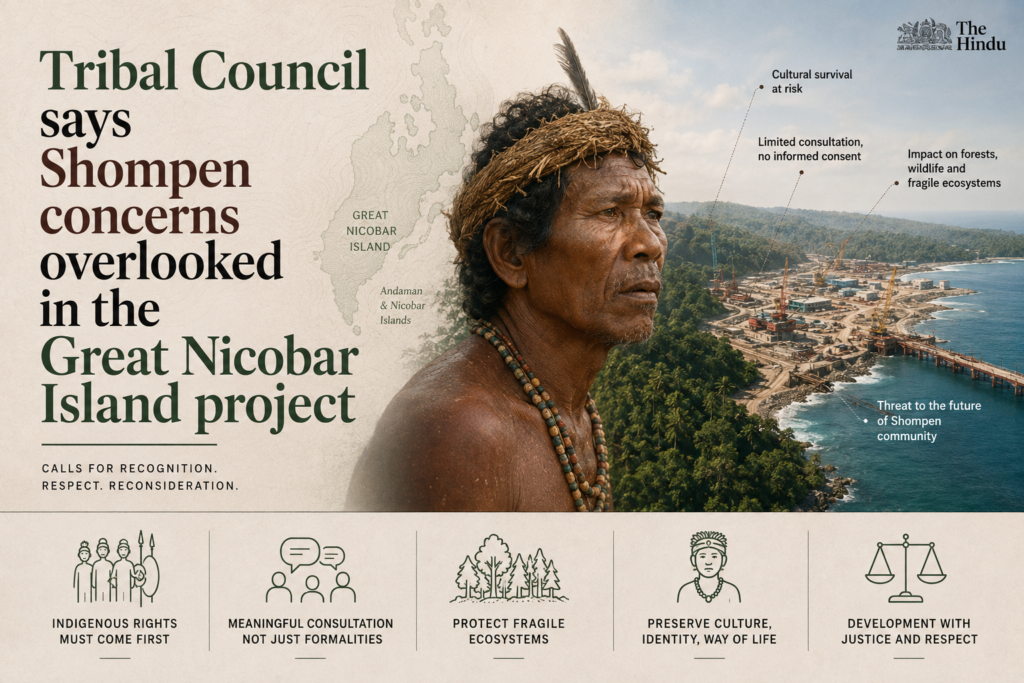
The Tribal Council of Great and Little Nicobar has raised concerns that the Great Nicobar Island (GNI) Project could lead to assimilation and disturbance of the Shompen, a Particularly Vulnerable Tribal Group (PVTG).
What is the GNI Project?
Large infrastructure and township project in Great Nicobar.
Estimated cost: around ₹91,000 crore.
Includes a proposed power plant at Galathea, near Shompen settlements.
Who are the Shompen?
Hunter-gatherer indigenous community.
Fewer than 300 members.
Recognised as a PVTG.
Their isolation makes contact, displacement and forced assimilation particularly sensitive.
What are PVTGs?
PVTG = Particularly Vulnerable Tribal Group: Identified based on characteristics such as:
Pre-agricultural technology
Low literacy
Stagnant or declining population
Economic backwardness
India recognises 75 PVTGs.
Key Concerns
Assimilation: Proposal to shift the Shompen towards a modern lifestyle.
Displacement: Concern over possible settlement and relocation.
Consent: Questions regarding consultation over wildlife reserves and project decisions.
Health risks: Contact with isolated communities can expose them to diseases and other risks.
Assurance gap: Earlier assurance stated that the project would not disturb or displace the Shompen.
Laws Protecting Tribal Rights
Forest Rights Act, 2006: Recognises individual and community forest rights.
PESA, 1996: Provides self-governance and consent provisions in Scheduled Areas.
Andaman and Nicobar Islands (Protection of Aboriginal Tribes) Regulation, 1956: Restricts entry into tribal reserves.
Government Initiatives
PM-JANMAN: Development of PVTG households and habitations.
Development of PVTGs Scheme: Habitat-specific support for 75 PVTGs.
“[2009] In which one of the following places is the Shompen tribe found?
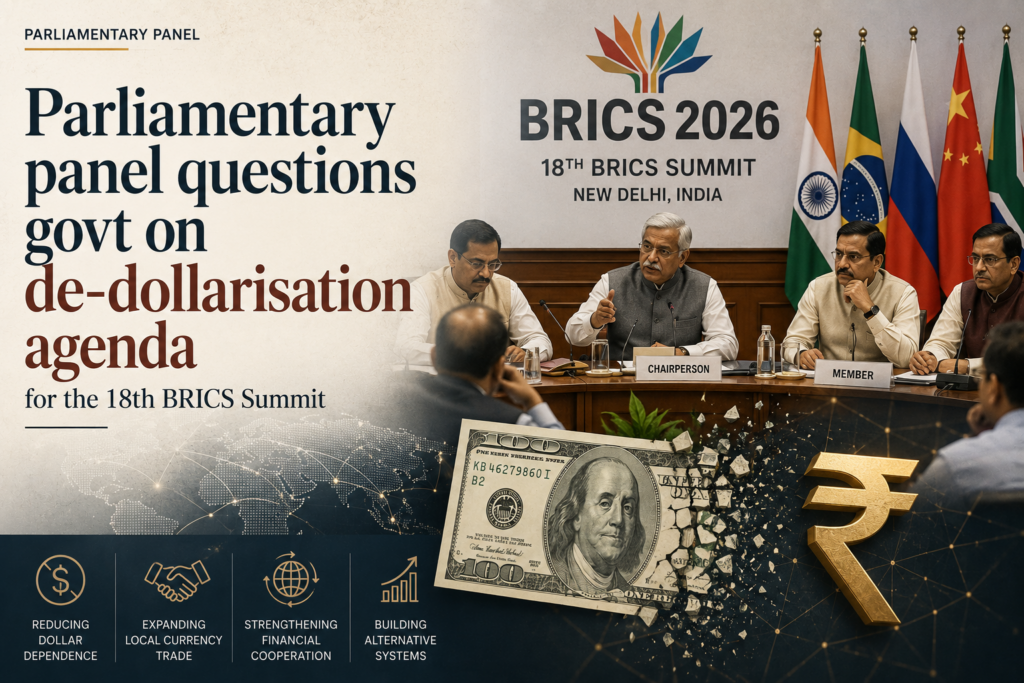
Members of the Parliamentary Standing Committee on External Affairs have asked the government whether it will push a de-dollarisation agenda at the 18th BRICS Summit, which New Delhi hosts in September 2026. The question exposes a tension between the pursuit of greater financial sovereignty and the risk of provoking US retaliation. India holds the rotating chairship of BRICS through 2026, which makes the host nation’s posture on the dollar a live diplomatic choice rather than an abstract one.
What is de-dollarisation?
About: De-dollarisation is a deliberate reduction in the use of the US dollar for international trade invoicing, cross-border settlement, and foreign exchange reserves.
Mechanism: Countries settle bilateral trade in their own national currencies or through a shared settlement arrangement, bypassing dollar clearing and dollar-denominated payment channels.
What is BRICS?
About: BRICS is an intergovernmental grouping originally of Brazil, Russia, India, China, and South Africa, later expanded to admit new members, that coordinates positions on trade, finance, and reform of global governance.
Chairship: The chairship rotates annually among members, and India assumed it on 1 January 2026 and leads the bloc until the end of the year.
What is a Central Bank Digital Currency (CBDC)?
About: A CBDC is a digital form of a country’s sovereign currency issued and backed by its central bank, distinct from private cryptocurrencies.
Relevance here: The Reserve Bank of India (RBI) has repeatedly advocated linking the official digital currencies of BRICS countries to facilitate cross-border trade and tourism payments.
Why is the parliamentary panel pressing the government?
Direct question posed: The panel asked whether the government plans to push a de-dollarisation agenda at the summit New Delhi hosts in September.
Financial sovereignty framing: Members questioned why the government was not pursuing greater financial sovereignty that could help countries bypass US sanctions.
Host-nation leverage: They sought to know whether India, as the host nation, would push a BRICS-led de-dollarisation agenda.
Stalled precedent cited: Members noted that India’s effort to establish a local currency trade mechanism with Russia had not taken off.
What is the case for reducing dollar reliance?
RBI framework: The central bank has argued that linking BRICS digital currencies could reduce reliance on the US dollar amid rising geopolitical tensions.
Sanctions insulation: A shared settlement mechanism would let member economies transact even when cut off from dollar clearing systems.
Payment efficiency: Direct local currency settlement lowers conversion costs in cross-border trade and tourism payments.
Why does a de-dollarisation push carry risks?
US retaliation threat: The US President has repeatedly warned BRICS countries against creating an alternative currency or challenging the dollar’s dominance, threatening punitive tariffs.
Weak internal record: India’s own local currency trade mechanism with Russia has not taken off, exposing the practical difficulty of moving away from the dollar.
Host-nation exposure: As chair and host, a visible Indian push would identify New Delhi with the agenda and concentrate any retaliatory response on it.
Conclusion
The panel has flagged the gap between the RBI’s advocacy for a BRICS payments architecture and the government’s caution on committing to de-dollarisation. The immediate status is that the government has not confirmed whether it will table the agenda. The next milestone is the 18th BRICS Summit in New Delhi in September 2026, where India’s posture as chair will become clear.
About BRICS
Origin: The term BRIC was coined in 2001, the first leaders’ summit was held in 2009, and South Africa joined in 2010 to make it BRICS.
Expansion: The bloc admitted new members from 2024 onward, widening its economic and geographic weight.
Institutions: BRICS created the New Development Bank (NDB), headquartered in Shanghai, and the Contingent Reserve Arrangement (CRA) to provide financing and liquidity support.
Weight: The grouping represents a large share of the world’s population and a substantial share of global output, giving it standing in debates over multilateral reform.
Back2Basics: New Development Bank (NDB)
Convening body: Established by BRICS members to fund infrastructure and sustainable development projects.
Headquarters: Shanghai, China.
Function: Lends to member and partner economies, part of the bloc’s push to build financial institutions parallel to the World Bank and the International Monetary Fund (IMF).
“[2025] Consider the following statements with regard to BRICS:
I. The 16th BRICS Summit was held under the Chairship of Russia in Kazan.
II. Indonesia has become a full member of BRICS.
III. The theme of the 16th BRICS Summit was Strengthening Multilateralism for Just Global Development and Security.
Which of the statements given above is/are correct?