💥Join UPSC 2027,2028 Mentorship (August Batch) + XFactor Notes & Microthemes PDF

Distribution: weekly

  • Human Rights Council rejects debate on Xinjiang Abuses

    xinjiang

    The UN Human Rights Council has voted against holding a debate on alleged abuses in China’s Xinjiang region after intense lobbying by Beijing, in a major setback for Western nations.

    What is the news?

    • India and 10 other nations abstained.

    Who are the Uighurs?

    xinjiang

    • There are about 12 million Uighurs, mostly Muslim, living in north-western China in the region of Xinjiang, officially known as the Xinjiang Uyghur Autonomous Region (XUAR).
    • The Uighurs speak their own language, similar to Turkish, and see themselves as culturally and ethnically close to Central Asian nations.
    • They make up less than half of the Xinjiang population.
    • In recent decades, there’s been a mass migration of Han Chinese (China’s ethnic majority) to Xinjiang, and the Uighurs feel their culture and livelihoods are under threat.
    • In the early 20th Century, the Uighurs briefly declared independence, but the region was brought under complete control of mainland China’s new Communist government in 1949.

    Where is Xinjiang?

    • Xinjiang lies in the north-west of China and is the country’s biggest region.
    • Like Tibet, it is autonomous, meaning – in theory – it has some powers of self-governance. But in practice, both face major restrictions by the central government.
    • It is a mostly desert region, producing about a fifth of the world’s cotton.
    • It is also rich in oil and natural gas and because of its proximity to Central Asia and Europe is seen by Beijing as an important trade link.

    What was the build-up to the Uighur crackdown?

    • Anti-Han and separatist sentiment rose in Xinjiang from the 1990s, flaring into violence on occasion.
    • In 2009 some 200 people died in clashes in Xinjiang, which the Chinese blamed on Uighurs who want their own state.
    • Xinjiang is now covered by a pervasive network of surveillance, including police, checkpoints, and cameras that scan everything from number plates to individual faces.
    • According to Human Rights Watch, police are also using a mobile app to monitor peoples’ behaviour, such as how much electricity they are using and how often they use their front door.
    • Since 2017 when President Xi Jinping issued an order saying all religions in China should be Chinese in orientation, there have been further crackdowns.

    Chinese narrative

    • China says the crackdown is necessary to prevent terrorism and root out Islamist extremism and the camps are an effective tool for re-educating inmates in its fight against terrorism.
    • It insists that Uighur militants are waging a violent campaign for an independent state by plotting bombings, sabotage and civic unrest.
    • China has dismissed claims it is trying to reduce the Uighur population through mass sterilizations as “baseless”, and says allegations of forced labor are “completely fabricated”.

    Why did India abstain from voting against China?

    • India has traditionally voted against or abstained from such country-specific resolutions at the UNHRC.
    • It is understood that China’s presence within the UNHRC was a factor in the decision since any backing for the Xinjiang issue could have led to similar moves by China on other issues in India.
    • This is particularly in the context of the Kashmir issue.

    Try this PYQ:

    Q.Very recently, in which of the following countries have lakhs of people either suffered from severe famine/acute malnutrition or died due to starvation caused by war/ethnic conflicts?
    (a) Angola and Zambia
    (b) Morocco and Tunisia
    (c) Venezuela and Colombia
    (d) Yemen and South Sudan


    [wpdiscuz-feedback id=”j7gai3srqk” question=”Please leave a feedback on this” opened=”1″]Post your answers here.[/wpdiscuz-feedback]


    UPSC 2023 countdown has begun! Get your personal guidance plan now! (Click here)

  • NOPEC: the US bill to pressure the OPEC+ oil group

    nopec

    US legislation NOPEC which could open members of oil producing group OPEC+ to antitrust lawsuits has emerged as a possible tool to tackle high fuel prices.

    What is NOPEC?

    • NOPEC stands for No Oil Producing and Exporting Cartels (NOPEC).
    • It is a bill to protect US consumers and businesses from engineered oil spikes.
    • But some analysts warn that implementing it could also have some dangerous unintended consequences.

    Why such a move by the US?

    • OPEC+, which groups the Organization of the Petroleum Exporting Countries (OPEC) and allies including Russia, agreed to steep production cuts, curbing supply in an already tight market.
    • After the decision, the US decided to reduce the group’s control over energy prices.

    Key feature of the NOPEC bill

    • The bipartisan NOPEC bill would tweak US antitrust law to revoke the sovereign immunity that has protected OPEC+ members and their national oil companies from lawsuits.
    • If signed into law, the US attorney general would gain the option to sue the oil cartel or its members, such as Saudi Arabia, in federal court.
    • It is unclear exactly how a federal court could enforce judicial antitrust decisions against a foreign nation.

    Is such bill effective?

    • Previous versions of the NOPEC bill have failed amid resistance by oil industry groups, including the top US oil lobby groups.
    • Saudi Arabia has rebuffed repeated lobbying during visits by Biden officials not to cut production.
    • Instead, OPEC+ has agreed to cut output by the most since the start of the COVID-19 pandemic.

    Implications of NOPEC

    • NOPEC more or less is a knee-jerk reaction from the US against oil hegemony of the OPEC+.
    • If passed into law, it could lead to unintended blowback.
    • In 2019, for example, Saudi Arabia threatened to sell its oil in currencies other than the dollar if Washington passed a version of the NOPEC bill.
    • There is a possibility that other countries could take similar action on the US for withholding agricultural output to support domestic farming, for example.


    UPSC 2023 countdown has begun! Get your personal guidance plan now! (Click here)

  • Vyommitra Humanoid to undergo pre-flight tests

    vyommitra

    Vyommitra, the humanoid designed and developed by the ISRO to fly aboard unmanned test missions ahead of the Gaganyaan human space-flight mission, is undergoing pre-flight ground tests at the ISRO Inertial Systems Unit (IISU).

    Vyommitra

    • The AI-based robotic system is developed at a robotics lab at the Vikram Sarabhai Space Centre (VSSC) at Thumba, Thiruvananthapuram.
    • Vyommitra will be used for an unmanned flight of ISRO’s GSLV III rocket in December 2020, which, along with a second unmanned flight in July 2021.
    • This will serve as the test of ISRO’s preparedness for its maiden manned space mission, Gaganyaan, being targeted for 2022 to mark 75 years of India’s independence.

    Functions of the humanoid

    • Vyommitra, equipped with a head, two arms and a torso, is built to mimic crew activity inside the crew module of Gaganyaan.
    • Attaining launch and orbital postures, responding to the environment, generating warnings, replacing carbon dioxide canisters, and operating switches, monitoring of the crew module, receiving voice commands, and responding via speech (bilingual) are among the functions listed.
    • It will have a human-like face, with lips synchronized for movement to mimic speech.
    • Once it is fully developed, Vyommitra will be able to use the equipment on board the spacecraft’s crew module, like safety mechanisms and switches, as well as receive and act on commands sent from ground stations.

    What is the recent development?

    • The IISU has successfully integrated it with a computer “brain”, which enables it to “read” control panels aboard the unmanned test flights and communicate with the ISRO ground stations.
    • It has a certain level of intelligence.
    • It is intended to operate and read the display panels and communicate back to ground station using its own voice.

    Back2Basics: Gaganyaan Mission

    • Gaganyaan is crewed orbital spacecraft intended to be the formative spacecraft of the Indian Human Spaceflight Programme (IHSP).
    • The IHSP was initiated in 2007 by ISRO to develop the technology needed to launch crewed orbital spacecraft into low Earth orbit.
    • ISRO had been working on related technologies and it performed a Crew Module Atmospheric Re-entry Experiment and a Pad Abort Test for the mission.
    • If completed in meantime, India will become the fourth nation to conduct independent human spaceflight after Russia, US, and China.


    UPSC 2023 countdown has begun! Get your personal guidance plan now! (Click here)

  • Governor: 1st essential part of State Legislature

    GovernorContext

    • In Tamil Nadu, the Governor forwarded the Bill for exemptio from the National Eligibility cum Entrance Test (NEET) to the President after considerable delay.
    • In Kerala the situation has become a bit curious with the Governor publicly announcing that he would not give assent to the Lokayukta Amendment Bill and the Kerala University Amendment Bill. Such actions by Governors throw the legislative programmes of governments out of gear because of the uncertainty surrounding the assent.

    What is Role of Governor in Legislature?

    • Integral part: A Bill passed by the State Assembly becomes law only after it is assented to by the Governor.The Governor being a part of the State legislature, the process of law making is complete only when he signs it, signifying his assent.
    • Established practice: In all democratic countries, similar provision exists in their constitutions.

    Governor What is the Power of Governor Vis-e-vis legislature?

    • What Article 200 says: The Constitution provides certain options for the Governor to exercise when a Bill reaches him from the Assembly.
    • There are four possible scenarios:
    1. Assent: He may give assent.
    2. Reconsider: He can send it back to the Assembly requesting it to reconsider some provisions of the Bill, or the Bill itself. In this case, if the Assembly passes the Bill without making any change and sends it back to the Governor, he will have to give assent to it.
    3. Reserve: The third option is to reserve the Bill for the consideration of the President.
    4. Withhold: The fourth option, of course, is to withhold the assent.

    What are the Legislative practice in other democracies ?

    • UK: The royal assent is necessary for a Bill to be passed by Parliament to become law and the crown has the power to withhold assent. But it is a dead letter.
    • No power of veto: By practice and usage there is no power of veto exercised by the crown in England now. Moreover, refusal of royal assent on the ground that the monarchy strongly disapproves of the Bill or that the Bill is very controversial is treated as unconstitutional.
    • USA: In the United States, the President is empowered by the Constitution to refuse assent and return a Bill to the House but if the Houses again pass it with two thirds of each House the Bill becomes law.

    GovernorWhy there is an ambiguity over the role of governors in India?

    • Role of the governor: The question of whether a Governor is permitted by the Constitution to cause uncertainty in the matter of giving assent to the Bills passed by State legislatures assumes great importance.
    • Presidential Assent: The provision concerned makes it clear that a Bill can be reserved for the consideration of the President only if the Governor forms an opinion that the Bill would endanger the position of the High Court by whittling away its powers. The Constitution does not mention any other type of Bill which is required to be reserved for the consideration of the President. Nevertheless, the courts have conceded a certain discretion to the Governors in the matter of sending Bills to the President.
    • Constitution is silent: the Constitution does not mention the grounds on which a Governor may withhold assent to a Bill.
    • No remedy: The Indian Constitution, however, does not provide any such remedy as that of USA or UK . The courts too have more or less accepted the position that if the Governor withholds assent, the Bill will go. Thus, the whole legislative exercise will become fruitless. It does not square with the best practices in old and mature democracies.

    What is the Court mandated legislative practice?

    • According to Article 361: The Constitution prohibits the court from initiating proceedings against a Governor or the President for any act done in exercise of their powers. They enjoy complete immunity from court proceedings. It is in fact a unique situation where a government is placed in a situation of having to challenge a Governor’s action of withholding assent to a Bill.
    • Reasons: Governor while declaring that he withholds assent will have to disclose the reason for such refusal.
    • No Arbitrary actions: Being a high constitutional authority, the Governor cannot act in an arbitrary manner
    • Unconstitutional: If the grounds for refusal disclose mala fide or extraneous considerations or ultravires, the Governor’s action of refusal could be struck down as unconstitutional.
    • Rameshwar Prasad and Others. vs Union of India case: The Court held: “the immunity granted by Article 361(1) does not, however, take away the power of the Court to examine the validity of the action including on the ground of malafides”.
    • Pocket veto: since the Constitution does not fix any timeline for the Governor to decide the question of assent, he can wait for any length of time without doing anything. This is illogical and militates against the constitutional scheme in respect of law making by the legislatures.

    GovernorConclusion

    • The legislature reflects the will of the people and is the constitutionally designated body to make laws. If the Governor who does not reflect in any way the aspirations of the people of the State refuses assent, and thereby defeats the legislative programme of the elected government, it would be against the spirit of the Constitution.

    Mains Question

    Q.Governor is the connecting link between state and central executive. Discuss the duties of Governor with respect to state legislature? Why Governor tilt more towards centre than state?

    UPSC 2023 countdown has begun! Get your personal guidance plan now! (Click here)

  • Marital rape, MTP Act and the Society

    Marital rapeContext

    • The recent Supreme court judgment expands the definition of rape to marital rape for the MTP Act. Marital rape is still not criminalised. If society does not accept “marital rape” as even a moral offence, how will a woman convince doctors to terminate her pregnancy based on the exception provided by the SC’s verdict.

    Background

    • The Supreme Court has held that all women, irrespective of their marital status, are entitled to safe and legal abortion till 24 weeks of pregnancy under the Medical Termination of Pregnancy (MTP).

    What is Medical Termination of Pregnancy (MTP) Act?

    • Abortion in India has been a legal right under various circumstances for the last 50 years since the introduction of the Medical Termination of Pregnancy (MTP) Act in 1971
    • The Act was amended in 2003 to enable women’s access to safe and legal abortion services.

    Marital rapeWhat are the Changes in Medical Termination of Pregnancy (MTP) Act, 2021?

    • The gestation limit: The gestation limit for abortions has been raised from the earlier ceiling of 20 weeks to 24 weeks, but only for special categories of pregnant women such as rape or incest survivors. But this termination would need the approval of two registered doctors.
    • Doctor’s approval: All pregnancies up to 20 weeks require one doctor’s approval. The earlier law, the MTP Act 1971, required one doctor’s approval for pregnancies up to 12 weeks and two doctors’ for pregnancies between 12 and 20 weeks.
    • Contraceptive failure: Women can now terminate unwanted pregnancies caused by contraceptive failure, regardless of their marital status. Earlier the law specified that only a “married woman and her husband” could do this.
    • In case of fetal disability:  There is also no upper gestation limit for abortion in case of fetal disability if so decided by a medical board of specialist doctors, which state governments and union territories’ administrations would set up.

    What is marital rape?

    • Marital rape is the act of sexual intercourse with one’s spouse without her consent.
    • It is no different manifestation of domestic violence and sexual abuse.
    • It is often a chronic form of violence for the victim which takes place within abusive relations.

    Marital rapeStatistics on Marital rape in India

    • The NFHS-5 survey (2019-21):
    • The survey said that 32% of ever-married women have suffered spousal physical, sexual, or emotional violence, and 27% have suffered at least one form of violence.
    • Twenty-nine percent of ever- married women have experienced spousal physical violence and 14% have suffered emotional violence.
    • The form of sexual violence most commonly reported by women is that their husband used physical force to have sexual intercourse when they did not want to (5%).
    • Four per cent reported that their husband forced them with threats or in other ways to perform sexual acts they did not want to and 3% of them reported that their husband forced them to perform any sexual acts they did not want to.
    • Women in rural areas are more likely (34%) than women in urban areas (27%) to experience one or more forms of spousal violence.

    Why modern India still not accepting marital rape as a rape?

    • Definition: The definition of rape codified in Section 375 of the Indian Penal Code (IPC) includes all forms of sexual assault involving non-consensual intercourse with a woman.
    • Non-Criminalization: Non-Criminalization of marital rape in India emanates from Exception 2 to Section 375.
    • Exemption: Section 375 defines rape and lists seven notions of consent which, if vitiated, would constitute the offence of rape by a man. However, the provision contains a crucial exemption, Sexual intercourse or sexual acts by a man with his own wife, the wife not being under eighteen years of age, is not rape.
    • Marriage as perpetual consent: As per current law, a wife is presumed to deliver perpetual consent to have sex with her husband after entering marital relations. The concept of marital rape in India is the epitome of what we call an “implied consent”. Marriage between a man and a woman here implies that both have consented to sexual intercourse, and it cannot be otherwise.

    What is the link between marital rape and MTP Act?

    • The distinction and the cultural ethos: Married women have a different world attire, jewellery, rituals compared to widows or unmarried or deserted women .So is the right to sexual intercourse. In contrast, unmarried women do not have a right to sex. So what does the right to terminate pregnancy mean for them
    • Ownership of women’s sexuality: Unmarried women cannot have sex, married women cannot say no to sex because men own women’s sexuality. Husbands can use the legal remedy of restitution of conjugal rights against runaway wives. Ownership is integral here
    • Cause of Disharmony: An unmarried woman does not have an owner. It causes confusion and disorder. Women’s sexuality is seen as a cause of disharmony.

    Marital rapeWhy marital rape must be a crime?

    • Associated physical violence: Rape by a spouse, partner or ex-partner is more often associated with physical violence.
    • Mental harassment: There is research showing that marital rape can be more emotionally and physically damaging than rape by a stranger.
    • Compulsive relationship: Marital rape may occur as part of an abusive relationship.
    • Revengeful nature: Furthermore, marital rape is rarely a one-time event, but a repeated if not frequent occurrence.
    • Obligation on women: In the case of marital rape the victim often has no choice but to continue living with their spouse.

    Present regulations in India

    • Indian Penal Code criminalizes rape in most cases, although marital rape is not illegal when the woman is over the age of 18.
    • However, until 2017, men married to those between 15 and 18 could not be convicted of rape.
    • Marital rape of an adult wife, who is unofficially or officially separated, is a criminal offence punishable by 2 to 7 year in prison; it is not dealt by normal rape laws which stipulate the possibility of a death sentence.
    • According to the Protection of Women From Domestic Violence Act (2005), other married women subject to such crime by their husband may demand for financial compensation.
    • They also have the right to continue to live in their marital household if they wish, or may approach shelter or aid homes.

    Way forward

    • Sanctioning marital rape is an acknowledgment of the woman’s right to self-determination (i.e., control of all matters relating to her body.
    • The recent judgment on the MTP Act has extended the definition of rape to marital rape which is a big step in the right direction.
    • However in a society with strong social norms and value systems every stakeholder should have more than a legitimate motive. It has to play an important role.

    Mains Question

    Q.While abortion is available under legal regulations in the country, Discuss the relationship between the Medical Termination of Pregnancy Act and Marital Rape.

    UPSC 2023 countdown has begun! Get your personal guidance plan now! (Click here)

  • Nobel for work on Click Chemistry

    click

    Scientists Carolyn R. Bertozzi, Morten Meldal and K. Barry Sharpless won the 2022 Nobel Prize in Chemistry on for discovering reactions that let molecules snap together to create desired compounds and that offer insight into cell biology.

    What the scientists worked on?

    • Sharpless came up with the term ‘Click Chemistry’ and worked extensively on it,
    • Meldal came up with a special chemical structure called ‘Triazole’ which has many significant applications, and
    • Bertozzi took the next step of developing click reactions that could work inside living organisms — ‘bioorthogonal’ reactions take place living systems without interfering with native biochemical processes.

    What is Click Chemistry?

    • Chemists often try to recreate complex chemical molecules found in nature, and this has applications, among other things, in the field of medicine – how to target and block pathogens in cells.
    • However, this process can be complicated and time-consuming.
    • Instead of trying to wrangle reluctant carbon atoms into reacting with each other, Barry Sharpless encouraged his colleagues to start with smaller molecules that already had a complete carbon frame.
    • If chemists choose simple reactions – where there is a strong intrinsic drive for the molecules to bond together – they avoid many of the side reactions, with a minimal loss of material.

    Applications of click chemistry

    • Meldal through his experiments came up with the useful chemical structure called triazoles, whch are stable and are found in pharmaceuticals, dyes and agricultural chemicals.
    • He also found that the reaction he used could bind together numerous different molecules.
    • Bertozzi, using the work of Sharpless and Meldal, came up with an efficient and innovative method to map glycans, which are carbohydrate-based polymers made by all living organisms.


    UPSC 2023 countdown has begun! Get your personal guidance plan now! (Click here)

  • Centre raises credit limit under ECLGS

    The Ministry of Finance has raised the credit limit for airlines under the Emergency Credit Line Guarantee Scheme (ECLGS), making them eligible for a sum equivalent to 100% of their outstanding debt, up to a maximum of ₹1,500 crore.

    Boost for Aviation sector

    • Earlier, airlines were eligible to borrow up to 50% of their credit outstanding up to ₹400 crore.
    • This is the second time the government has liberalized the scheme for the aviation sector.
    • The scheme introduced for medium and small enterprises during the outbreak of the COVID-19 pandemic was extended till March 2023 and its guarantee cover expanded by ₹50,000 crore to ₹5 lakh crore.

    What is ECLGS?

    • Under the Scheme, 100% guarantee coverage to be provided by National Credit Guarantee Trustee Company Limited (NCGTC) for additional funding of up to Rs. 3 lakh crore to eligible MSMEs and interested MUDRA borrowers.
    • The credit will be provided in the form of a Guaranteed Emergency Credit Line (GECL) facility.
    • The Scheme would be applicable to all loans sanctioned under GECL Facility during the period from the date of announcement of the Scheme to 31.10.2020.

    Aims and objectives

    • The Scheme aims at mitigating the economic distress faced by MSMEs by providing them additional funding in the form of a fully guaranteed emergency credit line.
    • The main objective is to provide an incentive to Member Lending Institutions (MLIs), i.e., Banks, Financial Institutions (FIs) and NBFCs to increase access to, and enable the availability of additional funding facility to MSME borrowers.
    • It aims to provide a 100 per cent guarantee for any losses suffered by them due to non-repayment of the GECL funding by borrowers.

    Salient features of ECGLS

    • The entire funding provided under GECL shall be provided with a 100% credit guarantee by NCGTC to MLIs under ECLGS.
    • Tenor of the loan under Scheme shall be four years with a moratorium period of one year on the principal amount.
    • No Guarantee Fee shall be charged by NCGTC from the Member Lending Institutions (MLIs) under the Scheme.
    • Interest rates under the Scheme shall be capped at 9.25% for banks and FIs, and at 14% for NBFCs.


    UPSC 2023 countdown has begun! Get your personal guidance plan now! (Click here)

  • What is OPEC+?

    Oil prices rose about 1%, as OPEC+ members agreed to its deepest cuts to output since the 2020 COVID pandemic, despite a tight market and opposition to cuts from the United States and others.

    What is OPEC+?

    • The non-OPEC countries which export crude oil along with the 14 OPECs are termed as OPEC plus countries.
    • OPEC plus countries include Azerbaijan, Bahrain, Brunei, Kazakhstan, Malaysia, Mexico, Oman, Russia, South Sudan, and Sudan.
    • Saudi and Russia, both have been at the heart of a three-year alliance of oil producers known as OPEC Plus — which now includes 11 OPEC members and 10 non-OPEC nations — that aims to shore up oil prices with production cuts.

    Why is OPEC+ slashing production?

    • Oil prices skyrocketed after Russia’s invasion of Ukraine.
    • The cut made recently is the biggest of its kind since 2020 when OPEC+ members slashed outputs by 10 million bpd during the Covid-19 pandemic.
    • The reductions would boost prices and be extremely beneficial for the Middle Eastern member states, to whom Europe has turned for oil after levelling sanctions against Russia since it invaded Ukraine.
    • OPEC+ members are concerned that a faltering global economy would reduce the demand for oil, and the cuts are seen as a way to protect profits.

    Concerns for India

    • Even after importing cheap Russian oil, India has not seen any cut in fuel prices.
    • Rising oil prices are posing fiscal challenges for India, where heavily-taxed retail fuel prices have touched record highs, threatening the demand-driven recovery.
    • India imports about 84% of its oil and relies on West Asian supplies to meet over three-fifths of its demand.
    • As one of the largest crude-consuming countries, India is concerned that such actions by producing countries have the potential to undermine consumption-led recovery.
    • This would hurt consumers, especially in our price-sensitive market.


    UPSC 2023 countdown has begun! Get your personal guidance plan now! (Click here)

  • Quantum Technology : Next generation Computers are achievible

    QuantumContext

    • The Nobel Prize committee decided to honour three scientists Alain Aspect of France, John Clauser of the US, and Anton Zeilinger of Austria for their work in domain quantum physics.

    What is the contribution of these three scientists?

    • Together, these three have made seminal contributions to not just the foundations of quantum theory but also to efforts that have now enabled the possibility of a wide range of applications.
    • Their experiments have conclusively established that the ‘entanglement’ phenomenon observed in quantum particles was real, not a result of any ‘hidden’ or unknown forces.

    What is the Significance of this Discovery?

    • Wide applications: It could be utilised to make transformative technological advances in computing, hack-free communications, and science fiction-like concept of ‘teleportation’.

    Quantum What is Quantum Theory?

    • Subatomic level: Quantum theory is a fundamental theory in physics that provides a description of the physical properties of nature at the scale of atoms and subatomic particles.It is the foundation of all quantum physics including quantum chemistry, quantum field theory, quantum technology, and quantum information science.
    • Different from conventional physics: Quantum mechanics differs from classical physics in that energy, momentum, angular momentum.

    Development in Quantum Theory so far

    • Planck’s assumption: In 1900, Planck made the assumption that energy was made of individual units, or
    • Albert Einstein’s theory : In 1905, Albert Einstein theorized that not just the energy, but the radiation itself was quantized in the same manner.
    • Louis de Broglie theory: In 1924, Louis de Broglie proposed that there is no fundamental difference in the makeup and behaviour of energy and matter; on the atomic and subatomic level either may behave as if made of either particles or waves. This theory became known as the principle of wave-particle duality: elementary particles of both energy and matter behave, depending on the conditions, like either particles or waves (wave-particle duality).
    • Heisenberg proposed: In 1927, Werner Heisenberg proposed that precise, simultaneous measurement of two complementary values – such as the position and momentum of a subatomic particle – is impossible. Contrary to the principles of classical physics, their simultaneous measurement is inescapably flawed; the more precisely one value is measured, the more flawed will be the measurement of the other value. This theory became known as the uncertainty principle, which prompted Albert Einstein’s famous comment, “God does not play dice.”

    QuantumWhat is Entanglement?

    • Entanglement was another of several weird properties exhibited by these tiny particles. Two particles, having ‘interacted’ with each other at some stage, were found to have got ‘entangled’ in a way that the behaviour of one produced an instantaneous reaction in the other even if the two were no longer connected in any way and were separated by very large distances.
    • The entanglement property to open up new technological possibilities. first time that it was possible to ‘teleport’ the quantum states of a particle to another location without the particle moving anywhere and without a medium.

    What is Superposition?

    • It’s a phenomenon where, a particle exists simultaneously at multiple locations, known as superposition. The chance of finding the particle at any given place was dictated by probabilistic calculations, and once it was found, or observed, at one location, it ceased to exist at all other places.

    What was the Einstein’s assessment?

    • Special theory of relativity: Einstein’s Special Theory of Relativity prohibited any signal from travelling faster than the speed of light. The seemingly instantaneous communication due to entanglement had the danger of further unravelling the foundations of physics.
    • Spooky behaviour: Einstein describes the strange behaviour by quantum particles as ‘spooky’.
    • Speed of light: One major concern of Einstein, that entanglement allows for transmission of information at speeds faster than light, was not entirely accurate.When an operation is performed on one of the entangled particles, there is an instantaneous reaction in the other.
    • Communication problem: There is no way for the observer at the other end to know the reaction has happened. The observer has to be made aware of the operation having been performed, and this happens only through classical communication channels limited by the speed of light restriction.

    QuantumConclusion

    • The entanglement property is now being utilised to build the next generation of computers, called quantum computers, which exploit the quantum behaviour of particles to overcome challenges considered as unsurmountable. It is being used to create secure communication algorithms that would be immune to hacking.

    Mains Question

    Q.What is the quantum theory? How it is different from classical theory of physics? How entanglement property is used in various applications?

    UPSC 2023 countdown has begun! Get your personal guidance plan now! (Click here)

  • India-China Relations

    ChinaContext

    • The National Congress of the Chinese Communist Party (CCP), scheduled in October, promises to deliver important outcomes, which will impact not just China but affairs of other nations, neighbour and beyond. A look into India-china Relationship as china has always been hostile towards its neighbours.

    Background of Indo-China Relations

    • 1950
      • India and China established diplomatic relations on 1st April 1950.
      • India was the first non-socialist country to establish relations with the People’s Republic of China and the catchphrase ‘Hindi Chini Bhai Bhai’ became famous.
    • 1955
      • Both countries attended the Asian-African Conference in which 29 countries participated in Bandung, Indonesia and jointly advocated the Bandung Spirit of solidarity, friendship and cooperation.
      • It has led to the decolonisation of the whole of Asia and Africa and to the formation of a Non-Aligned Movement as the third Way between the Two Blocs of Superpowers.
      • The First NAM Summit Conference took place in Belgrade, Yugoslavia, in September 1961.
    • 1962
      • The border conflict led to a serious setback in bilateral relations.
    • 1976
      • China and India restored ambassadorial relations and bilateral ties improved gradually.
    • 1988
      • Indian Prime Minister Rajiv Gandhi visited China, initiating the process of normalization of bilateral relations.
      • The two sides agreed to look forward and develop bilateral relations actively in other fields while seeking a mutually acceptable solution to boundary questions.

    Areas of Cooperation between India and China

    1.Political Relations between India and China

    • In 1993, Agreement on the Maintenance of Peace and Tranquility along the Line of Actual Control (LAC) on the India-China Border Areas was signed to bring stability and substance in bilateral ties.
    • In 2008, two countries have also extended their strategic and military relations.
    • MoU was signed to open an additional route for Kailash Mansarovar Yatra through Nathu La.
    • India and China have also established a High Level Dialogue Mechanism on Counter Terrorism and Security
    • To facilitate exchanges between Indian states and Chinese provinces, States/Provincial Leaders Forum was established

     2.Commercial and Economic Relations between Indo-China

    • China will establish two Industrial Parks in India and expressed their intention to enhance Chinese investment in India
    • India extended e-visa facility to Chinese nationals
    • Trade and Economic Relationship are shaped through various dialogue mechanism
    • Joint Economic Group led by the Commerce Ministers of both sides
    • Strategic Economic Dialogues led by the Vice Chairman of NITI Aayog and the Chairman of National Development and Reform Commission of China

     3.Cultural Relations between India and China

    • India and China have entered into an agreement on co-production of movies
    • Yoga is becoming increasingly popular in China. China was one of the co-sponsors to the UN resolution designating June 21 as the International Day of Yoga

     4.Education Relations between India and China

    • India and China signed Education Exchange Programme (EEP), which is an umbrella agreement for educational cooperation between the two countries.
    • Chinese students are also annually awarded scholarships to study Hindi at Kendriya Hindi Sansthan, to learn Hindi

     5.Indian Community

    • Presently around 35,500 Indians are staying in China, students and working professional form a major part of it.
    • PICFA” Pondicherry India China friendship association is an NGO dedicated for developing people-to-people relation between India and China in areas of education, culture and tourism.

    What are the recent anti- India moves by China?

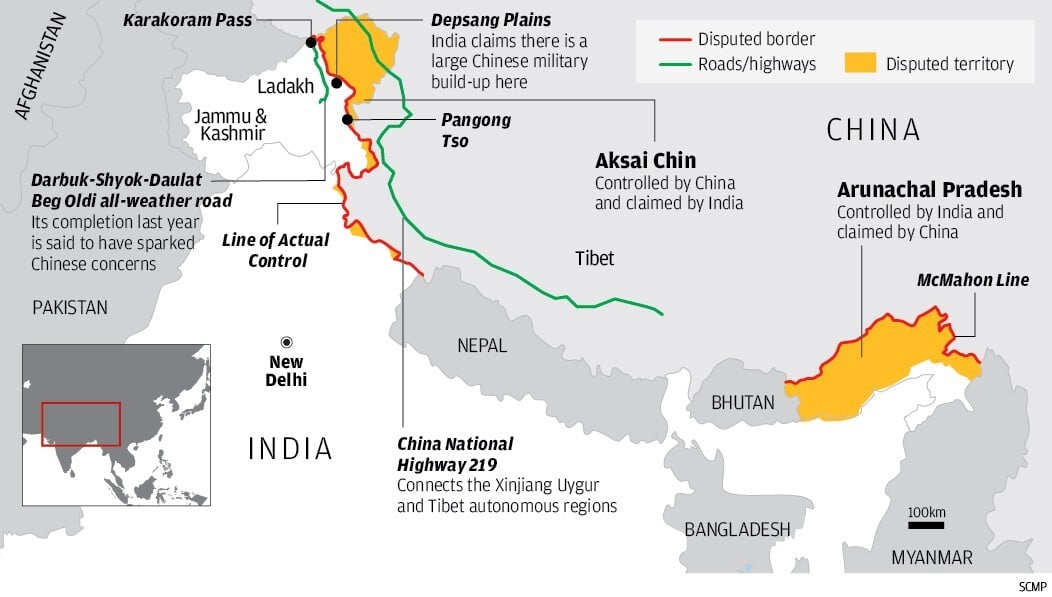
    • China continues to stake its claim to Arunachal Pradesh as Southern Tibet.
    • Beijing recently renamed 15 places in Arunachal Pradesh, following the six it had done in 2017.
    • China justifies the renaming as being done on the basis of its historical, cultural and administrative jurisdiction over the area — these old names existed since ancient times which had been changed by India with its “illegal occupation”.
    • On January 1, 2022, Beijing’s new land border law came into force, which provides the People’s Liberation Army (PLA) with full responsibility to take steps against “invasion, encroachment, infiltration, provocation” and safeguard Chinese territory

    China

    What is the present situation of Indo-China relations?

    • Troops in Ladakh: We have been on tenterhooks since the sanguinary Galwan clash of 2020, and borne a heavy cost for the “mirror-deployment” of 50,000-60,000 additional troops in Ladakh.
    • LAC negotiations: Sino-Indian diplomatic parleys having been suspended, the task of LAC negotiations has been foisted on local military commanders.
    • Truce for SCO: The 16th successive commanders’ meeting would have seen yet another futile conclusion, but for compulsions of the impending Shanghai Cooperative Organisation, which apparently led to a modest breakthrough. Consequently, the third round of troop disengagement and the creation of another buffer zone has taken place in Siachen, this time in the area of Gogra-Hot Springs.
    • Bilateral Trade: The India-China trade is on course to cross USD 100 billion for the second consecutive year as it has gone up to USD 67.08 billion in the first half of this year amid a big surge of Chinese exports.
    • “According to the statistics of Chinese competent authorities, bilateral trade volume between China and India stood at USD 125.66 billion in 2021.China remains the largest trade partner of India and for the first time the bilateral trade exceeded USD 100 billion in 2021.

    China

    Issue of concerns in India-China relations:

    China-India border dispute: history shows solution may lie with Xi Jinping and Narendra Modi | South China Morning Post

    • Belt Road Initiative: India has objected this, since its inception on grounds of violating its sovereignty pointing to China Pakistan Economic Corridor.
    • India’s support to China on global issues has not led to Beijing’s reciprocation for instances: China opposed India’s permanent membership to UN Security Council and entry into NSG.
    • India faces trade imbalance heavily in some favor of China. In 2017-18, trade deficit has gone wide to US$62.9 billion in China’s favor.
    • Two countries failed to resolve their border dispute and steadily established military infrastructure along border areas Indian media outlets have repeatedly reported Chinese military incursions into Indian territory
    • China has expressed concerns about Indian military and economic activities in the disputed South China Sea. Same way India is also concerned about rising Chinese activities in Indian Ocean.
    • China’s strong strategic bilateral relations with Pakistan and other neighboring countries like Nepal and Bhutan is cause of concern as these countries act as buffer states.

    China

    What are the options for India to learn from the past and see what lies ahead in India-China relations?

    • Inevitable Race: The prevailing tension on the China-India border is a symptom of the broader strategic competition between the two Asian neighbors.
    • Quad grouping: Immediately after the clashes, India leaned toward the Quad a grouping of the United States, Australia, Japan, and India with multiple summit meetings and other engagements. Until that point, India was unwilling to refer to the Quad as the Quad, instead using the cumbersome India-Australia-Japan-United States grouping.
    • Equal seriousness: Both sides should treat the military escalation in eastern Ladakh with equal seriousness.
    • Armed coexistence: Even after the resolution of the present standoff in eastern Ladakh, both sides may be in a prolonged period of armed coexistence as a new normal. As the forces on both sides are likely to be relatively balanced, it would be advantageous for both to return to the agreements and understandings from 1993 onward and improve upon them. Clarifying the LAC is a crucial step in this effort.
    • Address trade imbalance: India has flagged the unsustainable trade imbalance at the front and centre of the relationship, and this has gone unaddressed. China will need to work on resolving the trade deficit with India. At any rate, decoupling will happen selectively, in the same way and for the same reasons that China is choosing to decouple from the United States. A balanced trade and economic relationship might lay a solid foundation for future relations, given the size of both economies.
    • Dialogue is necessary: Better understanding of each other’s regional initiatives through open dialogue is important to build trust. The Indo-Pacific vision is as much a developmental necessity for India as the BRI may be to China. Part of building trust must be an open discussion on each other’s intentions in key regions South Asia and the northern Indian Ocean and East Asia and the western Pacific as well as respect for each other’s special positions in the western Pacific and northern Indian Oceans.
    • Protect the core interest: The two sides would need to accommodate the legitimate interests of the other side on key partnerships: China’s with Pakistan and India’s with the United States. These may not be desirable, but in the current circumstances neither will give up its partners, and both India and China could talk through a modus vivendi on the red lines of concern.

    Conclusion

    • The two countries are standing at a crossroads, and this might be the final chance to take the path to coexistence of cooperation and competition. If not, a new phase of antagonistic rivalry may be starting, with the countries sliding into possible confrontation as the strategic periphery of China collides with the strategic backyard of India in the Indian Ocean region.

    UPSC Mains Question

    Q.India and China are the two Asian giants aspiring for regional supremacy and global influence, clash is unavoidable. Discuss how India and china can coexist together.