💥Join UPSC 2027,2028 Mentorship (August Batch) + XFactor Notes & Microthemes PDF

Distribution: weekly

  • Global Hunger Index is out, India in ‘serious’ category at rank 107

    hunger

    India ranks 107 out of 121 countries on the Global Hunger Index in which it fares worse than all countries in South Asia barring war-torn Afghanistan.

    Global Hunger Index (GHI)

    • The Global Hunger Index is a peer-reviewed annual report, jointly published by Concern Worldwide and Welthungerhilfe.
    • It determines hunger on a 100-point scale, where 0 is the best possible score (no hunger) and 100 is the worst.
    • It is designed to comprehensively measure and track hunger at the global, regional, and country levels.
    • The aim of the GHI is to trigger action to reduce hunger around the world.

    For each country in the list, the GHI looks at four indicators:

    1. Undernourishment (which reflects inadequate food availability): calculated by the share of the population that is undernourished (that is, whose caloric intake is insufficient)
    2. Child Wasting (which reflects acute undernutrition): calculated by the share of children under the age of five who are wasted (that is, those who have low weight for their height)
    3. Child Stunting (which reflects chronic undernutrition): calculated by the share of children under the age of five who are stunted (that is, those who have low height for their age)
    4. Child Mortality (which reflects both inadequate nutrition and unhealthy environment): calculated by the mortality rate of children under the age of five

    India’s performance

    • India’s child wasting rate (low weight for height), at 19.3%, is worse than the levels recorded in 2014 (15.1%) and even 2000 (17.15),
    • It is the highest for any country in the world and drives up the region’s average owing to India’s large population.
    • Prevalence of undernourishment has also risen in the country from 14.6% in 2018-2020 to 16.3% in 2019-2021.
    • This translates into 224.3 million people in India considered undernourished.

    How India performs among its neighbours?

    • India’s score of 29.1 places it in the ‘serious’ category. India also ranks below Sri Lanka (64), Nepal (81), Bangladesh (84), and Pakistan (99).
    • Afghanistan (109) is the only country in South Asia that performs worse than India on the index.
    • China is among the countries collectively ranked between 1 and 17 having a score of less than five.

    Has India improved somewhere?

    • India has shown improvement in child stunting, which has declined from 38.7% to 35.5% between 2014 and 2022, as well as child mortality which has also dropped from 4.6% to 3.3% in the same comparative period.
    • On the whole, India has shown a slight worsening with its GHI score increasing from 28.2 in 2014 to 29.1 in 2022.

    Reasons for such poor performance

    • Poor maternal health: Mothers are too young, too short, too thin and too undernourished themselves, before they get pregnant, during pregnancy, and then after giving birth, during breast-feeding.
    • Poor sanitation: Poor sanitation, leading to diarrhoea, is another major cause of child wasting and stunting.
    • Food insecurity: Low dietary diversity in India is also a key factor in child malnutrition.
    • Poverty: Almost 50 million households in India are dependent on these small and marginal holdings.
    • Livelihood loss: The rural livelihoods loss after COVID and lack of income opportunities other than the farm sector have contributed heavily to the growing joblessness in rural areas.

    Issues over credibility of GHI

    • India has ranked among many African countries while it is among the top 10 food-producing countries in the world.
    • The GHI is largely children-oriented with a higher emphasis on under-nutrition than on hunger and its hidden forms, including micronutrient deficiencies.
    • The first component — calorie insufficiency — is problematic for many reasons.
    • The lower calorie intake, which does not necessarily mean deficiency, may also stem from reduced physical activity, better social infrastructure and access to energy-saving appliances at home, among others.
    • For a vast and diverse country like India, using a uniform calorie norm to arrive at deficiency prevalence means failing to recognise the huge regional imbalances in factors that may lead to differentiated calorie requirements at the State level.

    Conclusion

    • The low ranking does not mean that India fares uniformly poor in every aspect.
    • This ranking should prompt us to look at our policy focus and interventions and ensure that they can effectively address the concerns raised by the GHI, especially against pandemic-induced nutrition insecurity


    UPSC 2023 countdown has begun! Get your personal guidance plan now! (Click here)

  • What is Carbon Dating?

    carbon dating

    A Varanasi district court has rejected the plea to conduct carbon-dating of the disputed structure known to have been found inside the premises of the Gyanvapi mosque.

    What is Carbon Dating?

    • Carbon dating, also called radiocarbon dating is method of age determination that depends upon the decay to nitrogen of radiocarbon (Carbon-14).
    • This method was developed by the American physicist Willard F. Libby about 1946.
    • Carbon-14 is continually formed in nature by the interaction of neutrons with nitrogen-14 in the Earth’s atmosphere.
    • The neutrons required for this reaction are produced by cosmic rays interacting with the atmosphere.

    How it works?

    • Radiocarbon present in molecules of atmospheric carbon dioxide enters the biological carbon cycle: it is absorbed from the air by green plants and then passed on to animals through the food chain.
    • Radiocarbon decays slowly in a living organism, and the amount lost is continually replenished as long as the organism takes in air or food.
    • Once the organism dies, however, it ceases to absorb carbon-14, so that the amount of the radiocarbon in its tissues steadily decreases.

    The half-life concept

    • Carbon-14 has a half-life of 5,730 ± 40 years—i.e., half the amount of the radioisotope present at any given time will undergo spontaneous disintegration during the succeeding 5,730 years.
    • Because carbon-14 decays at this constant rate, an estimate of the date at which an organism died can be made by measuring the amount of its residual radiocarbon.

    Its uses

    • It has proved to be a versatile technique of dating fossils and archaeological specimens from 500 to 50,000 years old.
    • The method is widely used by geologists, anthropologists, archaeologists, and investigators in related fields.


    UPSC 2023 countdown has begun! Get your personal guidance plan now! (Click here)

  • Reality check on India’s Population policy

    population

    Context

    • Earlier this year, the United Nations published data to show that India would surpass China as the world’s most populous country by 2023.According to the 2018-19Economic Survey, India’s demographic dividend will peak around2041, when the share of the working age population is expected to hit 59%.

    What is the Present status of India’s population?

    • Declining Total fertility rate (TFR): The Total fertility rate (TFR) has declined from 2.2 (reported in 2015-16) to 2.0 at the all- India level, according to the latest National Family Health Survey of India OR NFHS- 5 (phase 2) released by Union Health Ministry.1.6 in urban areas2.1 in Rural area and 2.0 all India.
    • Sex ratio: There are 1,020 women per 1,000 men in India according to the recently released Fifth Edition (NFHS-5). Such a sex ratio has not been recorded in any of the previous four editions of the NFHS.

    population

    Need for population control measures

    • At present, India hosts 16% of the world’s population with only 2.45% of the global surface area and 4% of water resources.
    • The ecosystem assessments also pointed out the human population’s role in driving other species into extinction and precipitating a resource crunch.
    • So, the population explosion would irreversibly impact India’s environment and natural resource base and limit the next generation’s entitlement and progress. Therefore, the government should take measures to control the population.

    What will be the Impact of declining fertility?

    • Implications on Political economy: It’s not just the economic implications that we need to think about but also the implications of the political economy.
    • Spatial difference: India’s fertility fell below 2.1 births for certain States 10 years ago. In four other States, it’s just declining. So, not only is the fertility falling, the proportion of the population that will be living in various States is also changing.
    • North-south imbalance: The future of India lies in the youth living in U.P., Bihar, M.P. If we don’t support these States in ensuring that their young people are well educated, poised to enter the labour market and have sufficient skills, they will become an economic liability.

    population

    How India can take advantage of its demographic dividend?

    • Investing In literacy: If China hadn’t invested in literacy and good health systems, it would not have been able to lower its fertility rates. In any case, we have much to learn from China about what not to do.
    • Planning for elderly: Especially in the case of the elderly, where the estimates show that12% of India’s total population by 2025 is going to be the elderly. Every fifth Indian by 2050 will be over the age of 65. So, planning for this segment merits equal consideration.
    • Focusing on gendered dimension: India certainly has the capacity to invest in its youth population. But we don’t recognise the gender dimension of some of these challenges. Fertility decline has tremendous gender implications.
    • Lowering the Burdon on women: What it means is that women have lower burden on them. But it also has a flip side. Ageing is also a gender issue as two thirds of the elderly are women, because women tend to live longer than men do. Unless we recognise the gender dimension, it will be very difficult for us to tap into these changes.
    • Educating the young girls: So, what do we need to do? India has done a good job of ensuring educational opportunities to girls. Next, we need to improve employment opportunities for young women and increase the female employment rate. Elderly women need economic and social support networks.

    Do we really need the population policy?

    • Existing policy is right: India has a very good population policy, which was designed in 2000. And States also have their population policies. We just need to tweak these and add ageing to our population policy focus. But otherwise, the national population policy is the right policy.
    • Reproductive health is important: What we need is a policy that supports reproductive health for individuals. We also need to start focusing on other challenges that go along with enhancing reproductive health, which is not just the provision of family planning services.
    • Avoiding the stigma: We need to change our discourse around the population policy. Although we use the term population policy, population control still remains a part of our dialogue. We need to maybe call it a policy that enhances the population as resource for India’s development, and change the mindset to focus on ensuring that the population is happy, healthy, productive
    • Thinking beyond two child policy: Our arguments and discussions have not gone beyond the two-child norm. The two-child norm indicates a coercive approach to primarily one community. And there are too many myths and misconceptions around population issues, which lead to this discourse, which takes away attentions of from real issues.

    population

    Way forward

    • Family welfare approach: We need to move from a family planning approach to a family welfare approach. We should be focusing on empowering men and women in being able to make informed choices about their fertility, health and wellbeing.
    • Thinking about automation: As fertility drops and life spans rise globally, the world is ageing at a significant pace. Can increasing automation counteract the negative effects of an ageing population or will an ageing population inevitably end up causing a slowdown in economic growth? We need to look at all of that.
    • Changing the mindset: We are where we are, so let’s plan for the wellbeing of our population instead of hiding behind the excuse that we don’t have good schooling or health because there are too many people. That mindset is counterproductive.
    • Skill development and making population productive: It is not about whether the population is large or small; it is about whether it is healthy, skilled and productive. Thomas Malthus had said as the population grows, productivity will not be able to keep pace with this growth, and we will see famines, higher mortality, wars, etc. Luckily, he proved to be wrong.
    • Adhering to the Cairo consensus: Cairo International Conference on Population and Development in 1994 stressed population. The Cairo Consensus called for the promotion of reproductive rights, empowering women, universal education, maternal and infant health to untangle the knotty issue of poverty and high fertility. The consensus also demands an increase in the rate of modern contraceptive prevalence, male contraception. States instead of releasing population control measures can start to adhere to implementing the Cairo consensus.
    • Adopting Women-Centric Approach: Population stabilisation is not only about controlling population growth, but also entails gender parity. So, states need to incentivize later marriages and childbirth, promoting women’s labor force participation, etc.
    • Seeing Population as a Resource rather than Burden:
      • As the Economic Survey, 2018-19, points out that India is set to witness a sharp slowdown in population growth in the next two decades.
      • Further, population estimates also predict a generational divide between India’s north and south, Fifteen years from now.
      • So instead of population control policies at the state level, India needs a universal policy to utilize population in a better way.

    Conclusion

    • We have the capacity to tap into the potential of our youth population. There is a brief window of opportunity, which is only there for the next few decades. We need to invest in adolescent wellbeing right away, if we want to reap the benefits. Otherwise, our demographic dividend could turn easily into a demographic disaster.

    Mains Question

    Q.Why India’s fertility rate is declining? How India can convert its demography into opportunity by investing in gendered based population policy?


  • Regulating online speech

    Online Speech

    Context

    • The Ministry of Electronics and Information Technology (Meity) has mooted two proposals for governance of online speech government appointed grievance appellate committees (GAC) and the industry self-regulatory body (SRB) seek to preclude this contest in favour of a unilateral government and industry agenda.

    What is an online speech?

    • A recorded online speech is delivered, recorded, and then uploaded to the Internet for later viewing. Examples are TED Talks and presentations in online or blended speech classes.
    • Such speech are recorded or sometimes made in real time using various social media platforms.

    Online Speech

    How unregulated online speech is becoming dangerous day by day?

    • Gendered disinformation and harassment campaigns: Impacting the mental health, job performance, and if and how they engage with online spaces.
    • GLAAD’s 2021 Social Media Safety Index says: 64% of LGBTQ social media users reported experiencing harassment and hate speech, including on social media platforms such as Facebook, Twitter, YouTube, Instagram, and TikTok.
    • Contributing to communal violence: In countries like India and Sri Lanka, failure to remove and prevent the amplification of harmful content can contribute to profound offline consequences, including violence and death.

    What are the proposals for the regulation of online speech?

    • Setting up Grievance appellate committees (GAC): The GACs, as per the draft issued by the Ministry of Electronics and Information Technology (Meity), will be constituted by the central government and will serve as an appellate body against decisions of various social media platforms.
    • Appointing Self-regulatory body by social Media platforms(SRB)?: As the name suggests, industries such as twitter, meta etc will appoint their own personnel and constitute the self-regulatory body to hear the grievances against the social media posts.

    Online Speech

    What are the Criticism over GAC and SRB?

    • Lack of substantive framework: Not only has the government not laid down a substantive policy with objectively defined contours of forbidden speech, the government wants the right to apply this highly subjective criteria on individual pieces of content and/or users.
    • Unreasonable removal of content: It is notable that the government has already arrogated this right and routinely issues take down orders (without providing rationale) to social media platforms to take down or block content with minimal pushback from platforms.
    • Serving the Governments agenda: However, the national security, public order logic of takedowns does not apply to reinstatement of content/users proactively blocked by the platforms and it is likely that an additional purpose of the GACs is to provide an institutional avenue for the ruling government machinery to get a set of aligned accounts/content reinstated instead of just takedowns.
    • Such regulations are said to be Non-democratic: It is evident that the GAC doesn’t meet even minimal standards of democratic legitimacy and should be scrapped. The industry SRB proposal too lack democratic legitimacy.
    • Profit before public interest: Platforms have repeatedly shown themselves to be driven by profit motives, which are often at odds with public interest. It is thus likely that such a platform-led body will try and maximise the interests of the industry and individual platforms as opposed to the interests of the Indian people.
    • It will increase Government’s unrestrained powers: Notwithstanding Twitter’s plea in Karnataka High Court against Centre’s “disproportionate use of power” to issue “overbroad and arbitrary” content-blocking orders, the track record of platforms in India of resisting government pressure has been very poor.
    • For example recent Twitter episode: For instance, a former safety head with Twitter reportedly told US regulators that Twitter put a government agent on its payroll under duress.
    • High Chances of Government’s pressure: The SRB may act as a rubber stamp providing false legitimacy for covert government pressure while the binding nature of SRB orders will make it easier for the government to exercise pressure on a single lever to ensure compliance across all platforms.
    • Lack of consensus in SRB: The other real possibility is that such a body will be a non-starter, wracked by internal dissensions or non-compliance and thus pave the way for the government GAC. This possibility is indicated by the divergent views of the constituent platforms.

    Online Speech

    What are the Suggestions?

    • Relooking the proposals: It is evident that neither of the two proposals meet the minimum standards of democratic legitimacy and need to be rethought.
    • Follow the democratic way: Given the centrality of free speech in a democracy, no government or private body can have unmitigated right to make decisions regarding the contours of acceptable speech. The argument that an elected government has earned the executive right to determine standards of speech like other policy decisions is fallacious because speech is the only democratic way to contest the government itself.
    • Least government interference: The governance of speech, including setting standards and implementation, must thus sit squarely outside the ambit of government.
    • Independent body answerable to parliament: This can be achieved through a statutory regulator answerable to Parliament.
    • Standard operating procedure to remove content: In the meantime, there has to be transparency in the manner content moderation decisions are taken, including the takedown orders issued by the government.

    Conclusion

    • The current proposals are preoccupied with policing individual pieces of content whereas the impact of social media platforms on our information ecosystems is fundamental. Social media platforms now play an increasingly interventionist role in amplifying certain voices and our public debate must move forward to review structural issues affecting information ecosystems.

    Mains Question

    Q.What are the perils of unrestrained online speech? Critically analyse the recent proposals by government to regulate the free speech.

    UPSC 2023 countdown has begun! Get your personal guidance plan now! (Click here)

  • ISRO proposes Bharat Krishi Satellite Programme

    isro

    The Indian Space Research Organisation (ISRO) has proposed dedicated satellites for supporting the country’s agriculture sector.

    Bharat Krishi Satellite Programme

    • Minimum of two satellites are stipulated to guarantee adequate coverage of the entire agricultural area of the country.
    • They will aid a gamut of farm-related activities related to crop forecasting, pesticide application, irrigation, soil data, and generation of critical data related to drought.
    • The satellites will be owned by the Department of Agriculture and not by ISRO. The ISRO will provide the technical support.
    • An ‘Earth Observation Council’ be created for addressing the current deficiencies in earth observation capabilities and data utilisation.
    • Such a council can tackle shortcomings in this area in a centralised manner.

    Why need such program?

    Current deficiencies include:

    1. Discontinuity in earth observation missions
    2. Low utilisation of available remote sensing data
    3. Technology gaps and
    4. Absence of a streamlined mechanism for data processing and dissemination as required by the industry

    Applications of space for agriculture

    isro

    Satellites in use

    Satellite Type Satellite Objectives
    Multispectral imaging satellite Resourcesat-2 & Resourcesat-2A Multispectral imaging for crop production forecast, land, water and natural resource inventory and management, and disaster management support
    Cartography satellite Cartosat-1 High resolution cartographic mapping, digital elevation mapping – drainage and irrigation networks, topographic mapping and contouring
    Radar imaging RISAT-1 All weather imaging capability targeted for kharif crop (June to November) during south-west and north-east monsoon seasons. Flood and natural disaster management
    Meteorological forecasting Kalpana-1 Comprehensive weather status reporting and forecasting
    Meteorological observation INSAT-3D & INSAT-3DR Improved meteorological observations including vertical – temperature and humidity–atmosphere weather forecasting and disaster warning


    Issues in harmonizing space technology

    • India’s satellite data is sequestered within the government.
    • The private sector has limited access to it, even though it plays an increasing role in the country’s agriculture value chain.

    Various govt programs

    • Following are some of the programs that are functioning in full spirit-
    • In 2017, these insular projects were integrated into a single entity, the National Programme on use of Space Technology for Agriculture (NPSTA).
    NPSTA Constituent Programmes Goals of the constituent Programme
    National Programme on use of Space Technology for Agriculture (NPSTA) Forecasting Agricultural output using Space, Agro-meteorology and Land-based observations (FASAL) Crop Forecasting
    National Agricultural Drought Assessment and Monitoring Systems (NADAMS) Drought Assessment
    Coordinated programme on Horticulture Assessment and Management using Geoinformatics (CHAMAN) Horticulture assessment and development
    C(K)rop Insurance using Space technology and Geoinformatics (KISAN) now incorporated into Pradhan Mantri Fasal Bima Yojna Crop Insurance


    UPSC 2023 countdown has begun! Get your personal guidance plan now! (Click here)

  • Next-Gen Launch Vehicle- NGLV to assume PSLV’s role

    The Indian Space Research Organisation (ISRO) is developing a Next-Gen Launch Vehicle (NGLV), which will one day replace operational systems like the Polar Satellite Launch Vehicle (PSLV).

    What is the news?

    • PSLV, often dubbed the ‘trusted workhorse’, “will have to retire” one day, said ISRO chairman.

    What is NGLV?

    • NGLV will feature a simple, robust design that allows bulk manufacturing, modularity in systems, sub-systems and stages and minimal turnaround time.
    • Potential uses will be in the areas of launching communication satellites, deep space missions, future human spaceflight and cargo missions.

    What all modifications would be required?

    • In NGLV, ISRO is understood to be looking at a cost-efficient, three-stage, reusable heavy-lift vehicle with a payload capability of 10 tonnes to Geostationary Transfer Orbit (GTO).
    • NGLV will feature semi-cryogenic propulsion for the booster stages which is cheaper and efficient.
    • For that, at least 10 tonne capability to GTO is needed.
    • Correspondingly, the Low Earth Orbit (LEO) capability will be twice that.
    • However, payload capability will be lower when the rocket is reusable.

    Back2Basics: Various satellite launch vehicles in India

    nglv


    UPSC 2023 countdown has begun! Get your personal guidance plan now! (Click here)

  • What are Rythu Bharosa Kendras?

    rythu

    Ethiopian Agricultural Minister is in Andhra Pradesh (AP) to study the first-of-its-kind Rythu Bharosa Kendras (RBKs).

    What are Rythu Bharosa Kendras?

    • Set up for the first time in the country, the RBKs are unique seeds-to-sales, single-window service centres for farmers that have been set up across the state.
    • They are a one-stop solution to all farmers’ needs and grievances. RBKs sell pre-tested quality seeds, certified fertilisers and animal feed.
    • Farmers can purchase or hire farm equipment, and even sell their produce at the prevailing MSP in the RBKs.
    • The RBKs provide services like soil testing and make recommendations — on which crops to sow, and quantity and type of fertiliser to be used.
    • The state government also pays crop insurance, procures grains and makes payments to farmers through the RBKs.

    Have the RBKs proved to be helpful to farmers?

    • RBKs facilitate interaction between farmers, agriculture scientists, and agriculture extension officers right at the village level.
    • Apart from providing services and items for sale, RBK officials demonstrate new farm equipment and provide training to farmers.
    • Based on inputs provided by officials after soil testing and weather conditions, many farmers have changed their cropping patterns and benefited immensely.
    • The RBKs have been responsible for elimination of spurious seeds and uncertified and dangerous fertilisers, which can cause crop damage and failures.
    • The RBKs, staffed by agriculture and horticulture graduates, help farmers decide the crops they should cultivate in a scientific manner.

    How has it been received by the Centre?

    • The Centre has recently nominated the RBK concept for the Food and Agriculture Organisation’s “Champion’’ award.

    UPSC 2023 countdown has begun! Get your personal guidance plan now! (Click here)

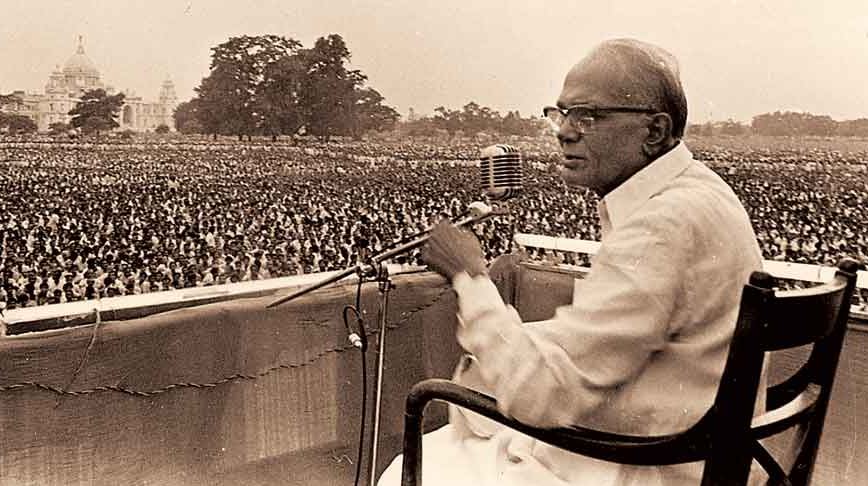
  • Person in news: Jayaprakash Narayan (JP)

    jp

    Union Home Minister unveiled a 15-foot statue of Jayaprakash Narayan or JP on his 120th birth anniversary at the socialist icon’s birthplace, Sitab Diara village in Bihar’s Saran district.

    Who was Jayaprakash Narayan?

    • JP was born in 1902 in Bihar’s Sitab Diara, a village prone to frequent-flooding, after which his family moved to a village in Uttar Pradesh’s Balia district.
    • He quit college to join the non-cooperation movement, before going to study at the University of California, Berkeley, where he was influenced by the ideas of Karl Marx.

    Political affiliations

    • JP returned to India in 1929 and joined the freedom struggle and the Indian National Congress, upon the invitation of Jawaharlal Nehru and drawn by a speech by Maulana Abul Kalam Azad.
    • He went on to become the founding members of the Congress Socialist Party (CSP).
    • However after independence took it out of the Congress and formed the Socialist Party, which was merged with J B Kripalani’s Kisan Mazdoor Praja Party to form the Praja Socialist Party.

    Dissociation from active politics

    • While Nehru was keen on JP joining the Union government, JP sought to distance himself from electoral politics, opting to focus on social causes instead.
    • He was disillusioned with political parties and called for communitarian democracy.
    • Parties, he believed, were centralized and susceptible to moral and financial corruption.

    The JP movement

    • Students in Gujarat began demonstrating in late 1973, in response to mounting mess bills.
    • The protests became widespread in the state, with workers, teachers and several other groups joining in the movement, calling for a change in government.
    • JP saw the youth of Gujarat that had been able to bring about political change as an alternative route from electoral.
    • The protests against corruption grew widespread, and students of Bihar began their movement in March 1974.
    • The students approached JP, who left his self-imposed political exile and led the movement. At a rally in Patna he called for Sampoorna Kranti (Total Revolution).

    Opposition to the Emergency

    • When Indira Gandhi imposed an Emergency on June 25, 1975, JP shifted his focus to opposing the authoritarian rule and opposition parties looked to him for leadership.
    • The Socialists were naturally drawn to him ideologically, while the RSS and its political front the Jana Sangh sought to return to the mainstream, and were happy to be dissolved into the Janata Party that JP had formed.
    • JP is celebrated for launching a popular, mass movement against the Indira Gandhi government, which led to the formation of the Janata Party government in the 1977 general election.
    • This was the first non-Congress government in the country.

    Try this PYQ:

    Who among the following were the founders of the “Hind Mazdoor Sabha” established in 1948?

    (a) B. Krishna Pillai, E.M.S. Namboodiripad and K.C. George

    (b) Jayaprakash Narayan, Deen Dayal Upadhyay and M.N. Roy

    (c) C.P. Ramaswamy Iyer, K. Kamaraj and Veeresalingam Pantulu

    (d) Ashok Mehata, T.S. Ramanujan and G.G. Mehta


    [wpdiscuz-feedback id=”z8t4wjbqux” question=”Please leave a feedback on this” opened=”1″]Post your answers here.[/wpdiscuz-feedback]


    UPSC 2023 countdown has begun! Get your personal guidance plan now! (Click here)

  • 3 Lakh RTI Pleas pile up across India

    rti

    A good 17 years after India got the Right to Information (RTI) Act, the transparency regime in the country remains a mirage with nearly 3.15 lakh complaints and appeals pending with 26 information commissions across India.

    RTI Pendency in India

    • According to a report by Satark Nagrik Sangathan, the backlog of appeals or complaints is increasing in commissions every year.
    • The number of appeals and complaints pending in 2021 was 2,86,325 with data from 26 commissions and in 2022, it was 3,14,323.
    • The highest number of pending cases was in Maharashtra at 99,722, followed by UP at 44,482, Karnataka at 30,358, the Central Information Commission at 26,724 and Bihar at 21,346.

    What is the Right to Information?

    • RTI is an act of the parliament that sets out the rules and procedures regarding citizens’ right to information.
    • It replaced the former Freedom of Information Act, 2002.
    • Under the provisions of RTI Act, any citizen of India may request information from a “public authority” (a body of Government or “instrumentality of State”) which is required to reply expeditiously or within 30.
    • In case of a matter involving a petitioner’s life and liberty, the information has to be provided within 48 hours.
    • The Act also requires every public authority to computerize their records for wide dissemination and to proactively publish certain categories of information so that the citizens need minimum recourse to request for information formally.

    What led to the introduction of RTI in India?

    There has been a variety of internal and external pressures on governments to adopt RTI.

    • Corruption and scandals: The crisis was brought into force due to a lack of transparency in the working of the government.
    • Modernization and the Information Society: The expansion of the Internet into everyday life has increased the demand for more information by the public, businesses and civil society groups.
    • International pressure: The World Bank, the IMF and others have pressed countries to adopt laws to reduce corruption and to make financial systems more accountable.
    • Wider recognition of Public Interest: Public interest is a nebulous concept, not defined in any freedom of information laws, understandably so, as it is a very subjective concept.

    Governing of the RTI

    The Right to information in India is governed by two major bodies:

    1. Central Information Commission (CIC) – Chief Information commissioner who heads all the central departments and ministries- with their own public information officers (PIO)s. CICs are directly under the President of India.
    2. State Information Commissions (SIC)– State Public Information Officers or SPIOs head over all the state department and ministries. The SPIO office is directly under the corresponding State Governor.

    State and CIC are independent bodies and CIC has no jurisdiction over the SIC.

    (1) Central Information Commission

    • The Commission consists of a Chief Information Commissioner and not more than ten Information Commissioners.
    • At present (2019), the Commission has six Information Commissioners apart from the Chief Information Commissioner.
    • They are appointed by the President on the recommendation of a committee consisting of the PM as Chairperson, the Leader of Opposition in the Lok Sabha and a Union Cabinet Minister nominated by the PM.
    • The CIC/IC shall hold office for such term as prescribed by the Central Government or until they attain the age of 65 years, whichever is earlier. They are not eligible for reappointment.

    Power and functions

    • It is the duty of the Commission to receive and inquire into a complaint from any person regarding information request under RTI, 2005.
    • The Commission can order an inquiry into any matter if there are reasonable grounds (suo-moto power).
    • While inquiring, the Commission has the powers of a civil court in respect of summoning, requiring documents etc.

    (2) State Information Commission

    • The Commission consists of a State Chief Information Commissioner and ten State Information Commissioners.
    • They are appointed by the Governor on the recommendation of the committee consisting of the CM as Chairperson, the Leader of the Opposition in the Legislative Assembly and a state Cabinet Minister nominated by the CM.
    • They should be a person of eminence in public life and should not hold any other office of profit or connected with any political party or carrying on any business or pursuing any profession.
    • Terms of service are similar to that of CIC.

    Constitutional backing of the RTI

    • The Indian constitution has an impressive array of basic and inalienable rights termed as fundamental rights contained in part-III.
    • These include the right to equal protection of the laws and the right to equality before the law, the right to freedom of speech and expression also the right to life and personal liberty.
    • Since RTI, is implicit in the Right to Freedom of Speech and Expression under Article 19 of the Indian Constitution, it is an implied FR.
    • These are backed by the right to constitutional remedies that is, the right to approach the supreme court and high court under Article 32 and 226 respectively in case of infringement of any of FRs.
    • The state is not only under an obligation to respect the FRs of the citizens but also equally under an obligation to ensure conditions under which the right can be exercised.
    • The objective of the right to information act is to protect these constitutional rights.

    Benefits of RTI

    • Greater accessibility of information: A person can seek information from any public authority in the form of copies, floppy disks, sample material etc under RTI.
    • Efficient governance: RTI Act helps us in knowing the efficiency of the government functioning.RTI has become a reality consistent with the objectives of having a stable, honest, transparent and efficient government.
    • Citizen’s participation: Information under RTI can be sought easily by requesting the public officer and assistant public officer in any public authority.
    • Government obligation: Obtaining information from any public authority is obligatory for them.
    • Maintenance of public record: Under RTI Act, it is the duty of public authorities to maintain records for easy access and to publish within 120 days the name of the particular officers who should give the information and in regard to the framing of the rules, regulations etc.
    • Empowerment of Citizens: Every citizen has been empowered to be informed about anything that affects their life directly or indirectly.

    Limitations to the RTI

    • Not an absolute right:  The RTI and Right to Privacy are not absolute rights, both the rights, one of which falls under Article 19(l)(a) and the other under Article 21 can obviously be regulated, restricted and curtailed in the larger public interest.
    • Subjected to restrictions: The RTI, being integral part of the right to freedom of speech, is subject to restrictions that can be imposed upon that right under Article 19 (2).
    • Limitations under the rules: Rule 4 of RTI Act puts word limit (No. of words needed in different language is different to express the same idea) as 250 words.  Word Limit, The Hidden power of Information Officer, is the cause of rejection of an application.
    • Only information already available on record is accessible: The RTI Act provides access only to that information that existent and is available in records of the public authorities.
    • Certain information may constitute contempt of court: Any information, the disclosure of which is expressly barred by any Court of law or tribunal or, which may constitute contempt of Court under the Contempt of Court Act, 1971, cannot be released.
    • Information causes a breach of privilege: The Constitution of India provides some privileges to the Parliament and the State Legislature, so it is clear that such information cannot be issued by the public authority.
    • Information relating to Intellectual Property and trade secrets: Any information, including commercial confidence, trade secrets or intellectual property cannot be disclosed.

    Challenges in exercising RTI

    • Information explosion: Different types of information is sought which has no public interest and sometimes can be used to misuse the law and harass the public authorities e.g. asking for desperate and voluminous information.
    • Popular (mis)use: Some chauvinists file RTI to attain publicity. It is often used as a vindictive tool to harass or pressurize the already burdened public authorities.
    • Rising cases of non-disclosure: Some provisions of Indian Evidence Act provide to hold the disclosure of documents.  Similar is the case with the Official Secrets Act, 1923.
    • Limited ambit of RTI: While the office of the CJI is now under the RTI’s ambit, the CBI is exempt.
    • Threats to whistleblowers: There are rising cases of intimidation, threat and murders of RTI activists. There are no safeguards against the victimisation of the person who makes the complaint.

    Significance of RTI

    • The RTI Act, 2005 did not create a new bureaucracy for implementing the law. Instead, it tasked and mandated officials in every office to change their attitude and duty from one of secrecy to one of sharing and openness.
    • RTI has been seen as the key to strengthening participatory democracy and ushering in people-centred governance.
    • Access to information has empowered the poor and the weaker sections of society to demand and get information about public policies and actions, thereby leading to their welfare.
    • It showed an early promise by exposing wrongdoings at high places, such as in the organisation of the Commonwealth Games, and the allocation of 2G spectrum and coal blocks.

    Way Forward

    It is well recognized that RTI is pathbreaking, but has not proved sufficient, to improve governance in its capacity due to various shortcomings.  We need to improvise a lot on various parameters as discussed under:

    • Speedy disposal: The increasing backlog of cases is exacerbated by the fact that most Commissions are functioning at reduced capacity. The government must ensure the timely appointment of chiefs and members of ICs.
    • Prioritization of cases: There should be a prioritization of cases dealing with information related to life and liberty. Information regarding matters like food distribution, social security, health and other priority issues should be proactively disclosed.
    • Digitalization: Governments should put in place a mechanism for online filing of RTI applications and bring all authorities under one platform.
    • Reducing technicalities: The technicalities of filing an RTI application should be more simplified. The literacy rate of rural India is quite low and thus they find it quite difficult to comply with the procedural.
    • Protecting whistleblowers: There is an urgent need to protect the whistle blowers who are targeted or attacked so easily. The impending bill should be passed or else an ancillary strict measure should be taken in this regard.


    UPSC 2023 countdown has begun! Get your personal guidance plan now! (Click here)

  • Israel and Lebanon reach an Agreement on Maritime Border

    israel

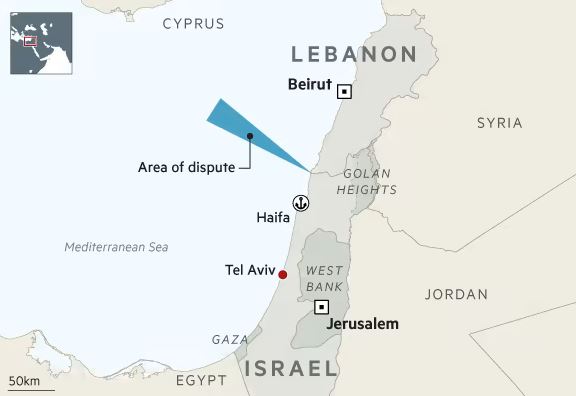
    Israel has reached a US-brokered agreement with Lebanon to settle their long-disputed maritime border. This has been seen as a historic deal.

    Israel-Lebanon Boundary Issue

    • The draft agreement aims to settle Israel and Lebanon’s competing claims over offshore gas fields in the region.
    • A major source of friction was the Karish gas field, which Israel insisted fell entirely within its waters and was not a subject of negotiation.
    • The issue is a little over a decade old, after the two countries declared overlapping boundaries in 2011 in the Mediterranean Sea.
    • Since both countries have been technically at war, the United Nations was asked to mediate.
    • The issue gained significance after Israel discovered two gas fields off its coast a decade ago, which experts had believed could help turn it into an energy exporter.

    Key terms of the Agreement

    • The agreement seeks to resolve a territorial dispute in the eastern Mediterranean Sea, in an area that Lebanon wants to explore for natural gas.
    • The gas field in question is located on the maritime boundary between the two countries and this agreement would allow both countries to get royalties from the gas.
    • It also sets a border between the maritime waters of Lebanon and Israel for the first time.

    Why is this agreement signed?

    • Averting terror threats: The agreement is expected to avert the immediate threat of conflict between Israel and Hezbollah militants in Lebanon, after fears of escalation if negotiations fell apart.
    • Energy exploitation: The agreement will create new sources of energy and income for both countries, particularly important for Lebanon, which is facing a crippling energy and financial crises.
    • Alternative energy for Europe: It could also have a potentially wider impact: it would likely provide Europe with a potential new source of gas amid energy shortages caused by the Russian invasion of Ukraine.

    What the agreement does not address?

    Ans. Blue Line Issue

    • The agreement does not touch on the shared land border between Israel and Lebanon, which is still disputed, but where both countries are committed to a ceasefire.
    • This border is also called the Blue Line, a boundary that was drawn up by the UN after Israel withdrew from southern Lebanon in 2000.
    • This land border is currently patrolled by the United Nations forces.


    UPSC 2023 countdown has begun! Get your personal guidance plan now! (Click here)