💥Join UPSC 2027,2028 Mentorship (August Batch) + XFactor Notes & Microthemes PDF

Distribution: weekly

  • A new architecture of economic growth is required

    The article highlights the factors to consider in framing the policies for the well being of the people.

    Increase in inequality

    • According to a report released by the World Bank, while India’s stock markets rose during the pandemic the number of people who are poor in India with incomes of $2 or less a day is estimated to have increased by 75 million.
    • This accounts for nearly 60% of the global increase in poverty, the report says.
    • The old global economy was very good for migrant capital, which could move around the world at will.
    • The pandemic has revealed that the old economy was not good for migrant workers, however.
    • Their “ease of living” was often sacrificed for capital’s “ease of doing business”.

    New strategy for growth

    • India urgently needs a new strategy for growth, founded on new pillars. One is broader progress measures.
    • GDP does not account for vital environmental and social conditions that contribute to human well-being and the sustainability of the planet.
    • According to global assessments, India ranks 120 out of 122 countries in water quality, and 179 out of 180 in air quality.
    • Several frameworks are being developed now to measure what really matters including the health of the environment, and the condition of societies: public services, equal access to opportunities, etc.

    Issues with the present frameworks for measurements

    • Most of these frameworks seek to define universally applicable scorecards.
    • The items measured are given the same weightages in all countries to arrive at a single overall number for each country.
    • This ‘scientific’ approach does enable objective rankings of countries.
    • However, as the Happiness Report explains, this ‘objective’ approach misses the point that happiness and well-being are always ‘subjective’.
    • Therefore, countries in which the spirit of community is high, such as the ‘socialist’ countries of Northern Europe, come on top of well-being rankings even when their per capita incomes are not the highest.

    Solutions for well being

    • The universal solution for improving well-being is for local communities to work together to find their own solutions.
    • Locals know which factors in the 17 Sustainable Development Goals matter the most to them.
    • Standard global solutions will neither make their conditions better nor make them happier.
    • Therefore, communities must be allowed to, and assisted to, find their own solutions to complex problems.
    • The philosopher Michael J. Sandel says that the ideology of ‘individualism’ justifies indifference to the conditions of those less well off.
    • It denies that societal conditions are responsible for the difficulties poor people have.
    • It also conveniently hides that societal conditions have contributed substantially to the wealth of those well-off.

    Consider the question “Rising income inequality in the aftermath of the pandemic points to the need for a new architecture of growth. Discuss.” 

    Conclusion

    When only some shine, India does not shine. Therefore, the government has to pursue the policies that result in the well being of the majority and not a few.
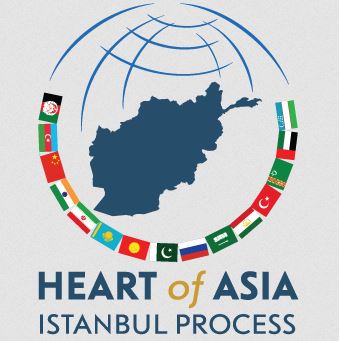
  • Heart of Asia – Istanbul Process (HoA-IP)

    External Affairs Minister S Jaishankar has attended the Heart of Asia Conference in Dushanbe, Tajikistan.

    The 9th Heart of Asia-Istanbul Process (HoA-IP) ministerial conference is part of the Istanbul Process – a regional initiative on security and cooperation for a stable and peaceful Afghanistan – that was launched on November 2, 2011, in Turkey.

    Note the participating countries from the logo itself.

    Heart of Asia – Istanbul Process

    • The Heart of Asia – Istanbul Process (HoA-IP) is an initiative of Afghanistan and Turkey, which was officially launched at a conference hosted by Turkey in Istanbul on 2 November 2011.
    • Since then, Afghanistan supported by fourteen participating countries and supporting countries beyond the region as well as 12 Regional and International Organizations is leading and coordinating this Process.

    Goals of the Process

    • The HoA-IP aims at promoting and strengthening peace, security, stability and prosperity in Afghanistan and in the region.
    • The HoA-IP has become one of the most interactive voluntary state-groupings in the HoA Region.
    • It brings Afghanistan’s immediate and extended neighbours as well as international supporters together through the following focus areas:
    1. Political Consultations
    2. Implementation of the Confidence Building Measures (CBMs)
    3. Cooperation with Regional Organizations

    Note: India too, has held the Ministerial Conferences of HoA-IP back on 4 December 2016 at Amritsar.

  • CJI’s remarks on Uniform Civil Code

    The Chief Justice of India (CJI) has lauded Goa’s Uniform Civil Code and encouraged “intellectuals” indulging in “academic talk” to visit the state to learn more about it.

    Again a controversial, conventional yet contested topic has come at our dispense! Save such articles for general idea esp. for essays.

    What is a Uniform Civil Code?

    • A Uniform Civil Code is one that would provide for one law for the entire country, applicable to all religious communities in their personal matters such as marriage, divorce, inheritance, adoption etc.
    • Article 44, one of the directive principles of the Constitution lays down that the state shall endeavour to secure a Uniform Civil Code for the citizens throughout the territory of India.
    • These, as defined in Article 37, are not justiciable (not enforceable by any court) but the principles laid down therein are fundamental in governance.

    Greater role for State

    • Fundamental rights are enforceable in a court of law.
    • While Article 44 uses the words “the state shall endeavour”, other Articles in the ‘Directive Principles’ chapter use words such as “in particular strive”; “shall, in particular, direct its policy”; “shall be the obligation of the state” etc.
    • Article 43 mentions “state shall endeavour by suitable legislation” while the phrase “by suitable legislation” is absent in Article 44.
    • All this implies that the duty of the state is greater in other directive principles than in Article 44.

    What are more important — fundamental rights or directive principles?

    • There is no doubt that fundamental rights are more important.
    • The Supreme Court held in Minerva Mills (1980): Indian Constitution is founded on the bedrock of the balance between Parts III (Fundamental Rights) and IV (Directive Principles).
    • To give absolute primacy to one over the other is to disturb the harmony of the Constitution.
    • Article 31C inserted by the 42nd Amendment in 1976, however, lays down that if a law is made to implement any directive principle, it cannot be challenged on the ground of being violative of the FRs under Articles 14 and 19.

    Does India not already have a uniform code in civil matters?

    • Indian laws do follow a uniform code in most civil matters – Indian Contract Act, Civil Procedure Code, Sale of Goods Act, Transfer of Property Act, Partnership Act, Evidence Act etc.
    • States, however, have made hundreds of amendments and therefore in certain matters, there is diversity even under these secular civil laws.
    • Recently, several states refused to be governed by the uniform Motor Vehicles Act, 2019.

    What about personal laws?

    • If the framers of the Constitution had intended to have a Uniform Civil Code, they would have given exclusive jurisdiction to Parliament in respect of personal laws, by including this subject in the Union List.
    • But “personal laws” are mentioned in the Concurrent List.
    • Last year, the Law Commission concluded that a Uniform Civil Code is neither feasible nor desirable.

    Is there one common personal law for any religious community governing all its members?

    • All Hindus of the country are not governed by one law, nor are all Muslims or all Christians.
    • Not only British legal traditions, even those of the Portuguese and the French remain operative in some parts.
    • In Jammu and Kashmir until August 5, 2019, local Hindu law statutes differed from central enactments.
    • The Shariat Act of 1937 was extended to J&K a few years ago but has now been repealed.

    Various customary laws

    • Muslims of Kashmir were governed by a customary law, which in many ways was at variance with Muslim Personal Law in the rest of the country and was, in fact, closer to Hindu law.
    • Even on the registration of marriage among Muslims, laws differ from place to place. It was compulsory in J&K (1981 Act), and is optional in Bengal, Bihar (both under 1876 Act), Assam (1935 Act) and Odisha (1949 Act).
    • In the Northeast, there are more than 200 tribes with their own varied customary laws.
    • The Constitution itself protects local customs in Nagaland. Similar protections are enjoyed by Meghalaya and Mizoram.
    • Even reformed Hindu law, in spite of codification, protects customary practices.

    How does the idea of a Uniform Civil Code relate to the fundamental right to religion?

    • Article 25 lays down an individual’s fundamental right to religion;
    • Article 26(b) upholds the right of each religious denomination or any section thereof to “manage its own affairs in matters of religion”;
    • Article 29 defines the right to conserve distinctive culture.
    • An individual’s freedom of religion under Article 25 is subject to “public order, health, morality” and other provisions relating to FRs, but a group’s freedom under Article 26 has not been subjected to other fundamental rights
    • In the Constituent Assembly, there was division on the issue of putting UCC in the fundamental rights chapter. The matter was settled by a vote.
    • By a 5:4 majority, the fundamental rights sub-committee headed by Sardar Patel held that the provision was outside the scope of FRs and therefore the UCC was made less important than freedom of religion.

    Minority opinion in the Constituent Assembly

    • Some members sought to immunize Muslim Personal Law from state regulation.
    • Mohammed Ismail, who thrice tried unsuccessfully to get Muslim Personal Law exempted from Article 44, said a secular state should not interfere with the personal law of people.
    • B Pocker Saheb said he had received representations against a common civil code from various organisations, including Hindu organisations.
    • Hussain Imam questioned whether there could ever be uniformity of personal laws in a diverse country like India.
    • B R Ambedkar said, “no government can use its provisions in a way that would force the Muslims to revolt”.
    • Alladi Krishnaswami, who was in favour of a UCC, conceded that it would be unwise to enact UCC ignoring strong opposition from any community.
    • Gender justice was never discussed in these debates.

    How did the debate on a common code for Hindus play out?

    • In June 1948, Rajendra Prasad, President of the Constituent Assembly, warned Nehru that to introduce “basic changes” in personal law was to impose “progressive ideas” of a “microscopic minority” on the Hindu community as a whole.
    • Others opposed to reforms in Hindu law included Sardar Patel, Pattabhi Sitaramayya, M A Ayyangar, M M Malaviya and Kailash Nath Katju.
    • When the debate on the Hindu Code Bill took place in December 1949, 23 of 28 speakers opposed it.
    • On September 15, 1951, President Prasad threatened to use his powers of returning the Bill to Parliament or vetoing it. Ambedkar eventually had to resign.
    • Nehru agreed to trifurcation of the Code into separate Acts and diluted several provisions.
  • What is Happiness Curriculum?

    The Delhi Deputy CM has said that during the pandemic, the Happiness Curriculum immensely helped them to apply life skills to deal with stressful situations.

    Try this question:

    Q.What is Happiness Curriculum? Discuss the scope of introducing happiness curriculum supplementary to the regular curriculum across the country.

    What is Delhi’s ‘happiness curriculum’?

    • The curriculum calls for schools in India to promote development in cognition, language, literacy, numeracy and the arts along with addressing the well-being and happiness of students.
    • It further says that future citizens need to be “mindful, aware, awakened, empathetic, firmly rooted in their identity…” based on the premise that education has a larger purpose, which cannot be in isolation from the “dire needs” of today’s society.
    • For the evaluation, no examinations are conducted, neither will marks be awarded.
    • The assessment under this curriculum is qualitative, focusing on the “process rather than the outcome” and noting that each student’s journey is unique and different.

    Objectives of the curriculum

    The objectives of this curriculum include:

    • developing self-awareness and mindfulness,
    • inculcating skills of critical thinking and inquiry,
    • enabling learners to communicate effectively and
    • helping learners to apply life skills to deal with stressful and conflicting situations around them

    Learning outcomes of this curriculum

    The learning outcomes of this curriculum are spread across four categories:

    • becoming mindful and attentive (developing increased levels of self-awareness, developing active listening, remaining in the present);
    • developing critical thinking and reflection (developing strong abilities to reflect on one’s own thoughts and behaviours, thinking beyond stereotypes and assumptions);
    • developing social-emotional skills (demonstrating empathy, coping with anxiety and stress, developing better communication skills) and
    • developing a confident and pleasant personality (developing a balanced outlook on daily life reflecting self-confidence, becoming responsible and reflecting awareness towards cleanliness, health and hygiene).

    How is the curriculum implemented?

    • The curriculum is designed for students of classes nursery through the eighth standard.
    • Group 1 consists of students in nursery and KG, who have bi-weekly classes (45 minutes each for one session, which is supervised by a teacher) involving mindfulness activities and exercise.
    • Children between classes 1-2 attend classes on weekdays, which involves mindfulness activities and exercises along with taking up reflective questions.
    • The second group comprises students from classes 3-5 and the third group is comprised of students from classes 6-8 who apart from the aforementioned activities, take part in self-expression and reflect on their behavioural changes.
  • [pib] PRISM Scheme

    The Ministry of Science & Technology has inaugurated an Alignment and Awareness Event for the publicity of the DSIR-PRISM Scheme.

    Crux lies in the acronym. Remember the primary aim and objectives. UPSC can also go with numbers esp. the grants.

    PRISM Scheme

    • PRISM stands for Promoting Innovations in Individuals, Start-ups and MSMEs.
    • It is an initiative of the Department of Scientific and Industrial Research (DSIR).
    • It is aimed at transforming an individual innovator into a successful technopreneur by promoting, supporting, and funding implementable and commercially viable innovations created for society.
    • Under the initiative, an Indian innovator- student, professional and common citizen – is provided technical, strategic, and financial assistance by DSIR for idea development, prototype development and pilot scaling, and patenting.
    • The programme is implemented across various sectors from energy to healthcare to waste management and others.

    Grants under the scheme

    The grant is given in two phases:

    1. Phase I and Phase II, catering to both the initial innovation stage and the advanced enterprise setup phase through DSIR outreach-cum-cluster innovation centres available throughout India.
    2. The grant amount in Phase I is around Rs. 2.0 lakhs to Rs. 20.00 lakhs and in Phase II maximum of Rs. 50.00 lakhs.

    Success of the scheme

    • The scheme has been instrumental in supporting individual innovators enabling inclusive development of India.
    • It has extended its support to any citizen through direct benefit transfer in the core technology areas such as-

    Affordable Healthcare, Water, Sewage Management, Green Technology, Clean Energy, Industrially Utilizable Smart Materials, Waste to Wealth aligned with our national objectives

  • Unique Land Parcel Identification Number (ULPIN) Scheme

    The Centre plans to roll out the Unique Land Parcel Identification Number (ULPIN) Scheme.

    ULPIN Scheme

    • The ULPIN scheme has been launched in ten States this year and will be rolled out across the country by March 2022, the Department of Land Resources told the Standing Committee on Rural Development.
    • It would allot a 14-digit identification number to every plot of land in the country within a year’s time.
    • It will subsequently integrate its land records database with revenue court records and bank records, as well as Aadhaar numbers on a voluntary basis.
    • The scheme will enhance the service deliveries to the citizen of the country and will also function as inputs to the schemes of the other sectors like Agriculture, Finance Disaster Management etc.

    “Aadhaar number” for Land

    • Officials described it as “the Aadhaar for land”, a number that would uniquely identify every surveyed parcel of land and prevent land fraud, especially in the hinterlands of rural India, where land records are outdated and often disputed.
    • The identification will be based on the longitude and latitude coordinates of the land parcel and is dependent on detailed surveys and geo-referenced cadastral maps, according to a presentation the Department made to States in September 2020.
    • This is the next step in the Digital India Land Records Modernization Programme (DILRMP), which began in 2008 and has been extended several times as its scope grew.

    Try this PYQ:

    Q.Consider the following statements:

    1. Aadhaar card can be used as proof of citizenship or domicile.
    2. Once issued, the Aadhaar number cannot be deactivated or omitted by the Issuing Authority.

    Which of the statements given above is/are correct?

    (a) 1 only

    (b) 2 only

    (c) Both 1 and 2

    (d) Neither 1 nor 2

    A cost-effective approach

    • Linking Aadhaar with land records through ULPIN would cost ₹3 per record while seeding and authentication of landowner Aadhaar data would cost ₹5 each.
    • It added that the integration of the Aadhaar numbers with the land record database would be done on a voluntary basis.
  • Election Commission’s new rule for polling agents

    The Election Commission’s recent decision to change the rules for appointing polling agents has sparked off a debate in West Bengal.

    Who is a Polling Agent?

    • A polling agent is a person appointed as a representative of a political party as it is not possible for a candidate to be physically present at every polling booth on the day of the elections.
    • Therefore, the Election Commission allows a candidate to appoint a polling agent who keeps an eye on the voting process.

    What is his/her role?

    • As per the EC’s rules, a polling agent should be familiar with the rules and procedures to conduct elections using EVMs and VVPATs, and with the working of these machines.
    • Towards this end, a polling agent attends the demonstrations arranged by the Returning Officer, where the functioning and operation of these machines are explained.

    How were they appointed earlier?

    • As per the earlier practice, polling agents had to be voters of the same polling stations or at least the neighbouring polling stations of the booth where she has been posted at.

    Try this PYQ from CSP 2017:

    Q.Consider the following statements:

    1. The Election Commission of India is a five member body.
    2. Union Ministry of Home Affairs decides the election schedule for the conduct of both general elections and bye-elections.
    3. Election Commission resolves the disputes relating to splits/mergers of recognized political parties.

    Which of the statements given above is/are correct?

    (a) 1 and 2 only

    (b) 2 only

    (c) 2 and 3 only

    (d) 3 only

    Answer: D

    What does the new rule say?

    • The ECI, revising the rule, has allowed a party to nominate a polling agent for any booth within the assembly segment where the person is an electorate of.
    • So, any voter from within an Assembly constituency can be a polling agent of any booth within that constituency.

    Issues with the rule

    • The political parties are opposing the change in rules, calling it “arbitrary, motivated and biased”.
    • They have also written to the Election Commission seeking withdrawal of the order.

    What is the EC’s stand?

    • The poll body has defended the change in a rule saying that the new norms have been formulated so that every political party gets to appoint polling agents.
    • It is difficult to convince people to sit at the booths amid the Covid-19 pandemic.

    Back2Basics: Election Commission of India (ECI)

    • ECI is an autonomous and permanent constitutional authority responsible for administering election processes in India at national and state level.
    • The body administers elections to the Lok Sabha, Rajya Sabha, State Legislative Assemblies, State Legislative Councils and the offices of the President and Vice President of the country.
    • It operates under the authority of the Constitution per Article 324 and subsequently enacted the Representation of the People Act.
    • The commission has the powers under the Constitution, to act in an appropriate manner when the enacted laws make insufficient provisions to deal with a given situation in the conduct of an election.
    • Being a constitutional authority, Election Commission is amongst the few institutions which function with both autonomy and freedom, along with the country’s higher judiciary, the UPSC and the CAG.
  • [pib] Exercise Desert Flag-VI

    Exercise Desert Flag –VI has successfully culminated with the de-induction of the Indian contingent from the UAE.

    Ex Desert Flag

    • It is an annual multi-lateral large force employment exercise hosted by UAE.
    • The sixth edition of the exercise was conducted at Air Force Base Al Dhafra, UAE.
    • IAF participated in the exercise for the first time, fielding Su-30MKI fighter aircraft.
    • Six countries; UAE, USA, France, Saudi Arabia and Bahrain apart from India participated with aerial assets. Jordan, Greece, Qatar, Egypt and South Korea participated as observer forces.

    Objective of the exercise

    • The aim for the participating crew and specialist observers was to expose them to operational environment in scenarios requiring multinational forces working together.
    • A multinational exercise in UAE with friendly forces afforded a unique opportunity to gain valuable learning to all the participating forces.

    Must read:

    [Prelims Spotlight] Defence Exercises

  • Teesta Water Sharing Deal

    PM while on his tour of Bangladesh assured his best to ink the long-awaited deal over the Teesta and other common rivers. On at least two occasions—2011 and 2017—Bangladesh and India came close to signing a deal on the Teesta.

    Teesta River

    • Teesta River is a 315 km long river that rises in the eastern Himalayas, flows through the Indian states of Sikkim and West Bengal through Bangladesh and enters the Bay of Bengal.
    • It is a tributary of the Brahmaputra (known as Jamuna in Bangladesh), flowing through India and Bangladesh.
    • It originates in the Himalayas near Chunthang, Sikkim and flows to the south through West Bengal before entering Bangladesh.
    • Originally, it continued southward to empty directly into the Padma River but around 1787 the river changed its course to flow eastward to join the Jamuna river.
    • The Teesta Barrage dam helps to provide irrigation for the plains between the upper Padma and the Jamuna.

    What is the dispute about?

    • The point of contention between India and Bangladesh is mainly the lean season flow in the Teesta draining into Bangladesh.
    • The river covers nearly the entire floodplains of Sikkim while draining 2,800 sq km of Bangladesh, governing the lives of hundreds of thousands of people.
    • For West Bengal, Teesta is equally important, considered the lifeline of half-a-dozen districts in North Bengal.
    • Bangladesh has sought an “equitable” distribution of Teesta waters from India, on the lines of the Ganga Water Treaty of 1996, but to no avail.
    • The failure to ink a deal had its fallout on the country’s politics, putting the ruling party of PM Sheikh Hasina in a spot.

    The hydrological linkages between India and Bangladesh are a product of geography and a matter of shared history. Discuss this statement in line with the Teesta water sharing dispute.

    The deal

    • Following a half-hearted deal in 1983, when a nearly equal division of water was proposed, the countries hit a roadblock. The transient agreement could not be implemented.
    • Talks resumed after the Awami League returned to power in 2008 and the former Indian PM Manmohan Singh visited Dhaka in 2011.
    • In 2015, PM Modi’s visit to Dhaka generated more ebullient lines: deliberations were underway involving all the stakeholders to conclude the agreement as soon as possible.

    Issues from the Indian side

    • It remains an unfinished project and one of the key stakeholders — West Bengal CM is yet to endorse the deal.
    • Her objection is connected to “global warming. Many of the glaciers on the Teesta basin have retreated.
    • The importance of the flow and the seasonal variation of this river is felt during the lean season (from October to April/May) as the average flow is about 500 million cubic metres (MCM) per month.
    • The CM opposed an arrangement in 2011, by which India would get 42.5% and Bangladesh 37.5% of the water during the lean season, and the plan was shelved.

    Why does it matter?

    • India witnessed a surge in the insurgency in the northeast during the rule of the Bangladesh Nationalist Party (BNP) from 2001 to 2005.
    • Bangladesh allegedly sheltered insurgents engaged in anti-India activities, and nearly all the Home Ministry-level talks ended without agreement, and India had to increase the security budget for the northeast.
    • In a couple of years of assuming office in 2008, the Awami League targeted insurgent camps and handed over the rebels to India.
    • As India’s security establishment heaved a sigh of relief, the relationship improved on multiple fronts.
  • N K Singh bats for moving Health Sector to Concurrent List

    Health should be shifted to the Concurrent list under the Constitution, and a developmental finance institution (DFI) dedicated to healthcare investments set up, Fifteenth Finance Commission Chairman N.K. Singh has said.

    Other key recommendations

    • Bringing health into the Concurrent list would give the Centre greater flexibility to enact regulatory changes and reinforce the obligation of all stakeholders towards providing better healthcare.
    • He has urged the government spending to enhance expenditure on health to 2.5% of GDP by 2025.
    • He said primary healthcare should be a fundamental commitment of all States in particular and should be allocated at least two-thirds of such spending.

    The Concurrent List or List-III (of Seventh Schedule) is a list of 52 items (though the last subjects are numbered 47) given in the Seventh Schedule to the Constitution of India.

    What is the Seventh Schedule?

    • This Schedule of the Indian Constitution deals with the division of powers between the Union government and State governments.
    • It defines and specifies the allocation of powers and functions between Union & States. It contains three lists; i.e. 1) Union List, 2) State List and 3) Concurrent List.

    The Union List

    • It is a list of 98 (Originally 97) numbered items as provided in the Seventh Schedule.
    • The Union Government or Parliament of India has exclusive power to legislate on matters relating to these items.

    The State List

    • It is a list of 59 (Originally 66) items.
    • The respective state governments have exclusive power to legislate on matters relating to these items.

    The Concurrent List

    • There are 52 (Originally 47) items currently in the list.
    • This includes items which are under the joint domain of the Union as well as the respective States.

    Must read

    [Burning Issue] India’s Ailing Health Sector and Coronavirus

    Healthcare in India

    • The Indian Constitution has incorporated the responsibility of the state in ensuring basic nutrition, basic standard of living, public health, protection of workers, special provisions for disabled persons, and other health standards, which were described under Articles 39, 41, 42, and 47 in the DPSP.
    • Article 21 of the Constitution of India provides for the right to life and personal liberty and is a fundamental right.
    • Public Health comes under the state list.
    • India’s expenditure on healthcare has shot up substantially in the past few years; it is still very low in comparison to the peer nations (at approx. 1.28% of GDP).