💥Join UPSC 2027,2028 Mentorship (August Batch) + XFactor Notes & Microthemes PDF

GS Paper: GS1

  • Festival in news: Bahuda Yatra

    The Bahuda Yatra, the return journey of the deities to the Puri Jagannath temple after the annual Rath Yatra, was recently concluded amid permitted restrictions.

    Bahuda Yatra

    • A/c to folk stories Lord Jagannath and his siblings, Goddess Shubhadra and Lord Balabhadra, returns from their aunt’s place at Gundicha Temple to Jagannath Temple.
    • This journey is known as Bahuda Yatra.
    • Nine days after the Rath Yatra, the yatra or the return journey takes place.

    About Jagannath Rath Yatra

    • Ratha Jatra, the Festival of Chariots of Lord Jagannatha is celebrated every year at Puri, the temple town in Orissa, on the east coast of India.
    • It involves a public procession with a chariot with deities Jagannath (Vishnu avatar), BalaBhadra (his brother), Subhadra (his sister) and Sudarshana Chakra (his weapon) on a ratha, a wooden deula-shaped chariot.
    • The huge, colourfully decorated chariots, are drawn by hundreds and thousands of devotees on the bada danda, the grand avenue to the Gundicha temple, some two miles away to the North.
    • It attracts over a million Hindu pilgrims who join the procession each year.

    Back2Basics: Puri Temple Architecture

    • Jagannath Temple is a very big temple and covers an area of 37000m2. The height of the outer wall is 6.1m.
    • It is surrounded by a high fortified wall 6.1 m high is known as Meghanada Pacheri.
    • The main portion of the temple is also surrounded by a wall known as Kurma Bheda.
    • The temple is built in Rekha Deula style and has four distinct sectional structures, namely –
    1. Deula, Vimana or Garba griha (Sanctum sanctorum) where the triad deities are lodged on the ratnavedi (Throne of Pearls)
    2. Mukhashala (Frontal porch)
    3. Nata mandir/Natamandapa, which is also known as the Jagamohan (Audience Hall/Dancing Hall), and
    4. Bhoga Mandapa (Offerings Hall)

    Try this question from CSP 2019:

    Q.Building ‘Kalyaana Mandapas’ was a notable feature in the temple construction in the kingdom of-

    (a) Chalukya (b) Chandela (c) Rashtrakuta (d) Vijayanagara

  • State of the World Population Report 2020

    The UNFPA has released the State of the World Population Report 2020.

    Highlights of the WPR

    I) Global prospects

    • According to estimates averaged over a five year period (2013-17), annually, there were 1.2 million missing female births, at a global level.
    • The same study shows that in Afghanistan, Bangladesh and Pakistan excess female mortality of girls below 5 years of age was under 3 per cent.
    • These skewed numbers translate into long-term shifts in the proportions of women and men in the population of some countries, the report points out.
    • In many countries, this results in a “marriage squeeze” as prospective grooms far outnumber prospective brides, which further results in human trafficking for marriage as well as child marriages.

    II) Data on India

    • India had about 4,60,000 girls ‘missing’ at birth each year.
    • The figure shows that the number of missing women has more than doubled over the past 50 years, who were at 61 million in 1970.
    • The report examines the issue of missing women by studying sex ratio imbalances at birth as a result of gender-biased sex selection as well as excess female mortality due to deliberate neglect of girls because of a culture of son preference.
    • Excess female mortality is the difference between observed and expected mortality of the girl child or avoidable death of girls during childhood.
    • The report cites a 2014 study to state that India has the highest rate of excess female deaths at 13.5 per 1,000 female births or one in nine deaths of females below the age of 5 due to postnatal sex selection.

    About UNFPA

    • The United Nations Population Fund (UNFPA), formerly the United Nations Fund for Population Activities, is a UN organization.
    • It is the lead UN agency for delivering a world where every pregnancy is wanted, every childbirth is safe and every young person’s potential is fulfilled.
    • Their work involves the improvement of reproductive health; including the creation of national strategies and protocols, and birth control by providing supplies and services.
    • The organization has recently been known for its worldwide campaign against child marriage, obstetric fistula and female genital mutilation.
  • Rapid Intensification of Cyclones

    Tropical cyclones remain the deadliest natural climate hazard that causes an unacceptably high loss of life, property and infrastructure.  Global warming has already resulted in a detectable increase in the number of higher intensity cyclones as well as their intensification.

    Also read:

    [Burning Issue] Tropical Cyclones and India

    Try this question:

    Q. The Marsupial Theory often seen in news is related to which of the climatic phenomena?

    a) Heatwaves b) Monsoon Variability c) Formation of Cyclones d) Thunderstorms

    What is Rapid Intensification of Cyclones?

    • RI is defined as an increase in maximum sustained winds by at least 55 km/hour in a 24-hour period.
    • Such acceleration can only come with a rapid drop in the pressure in the eye of the cyclone.
    • Rapid intensification (RI) is making cyclone forecasts harder and intense cyclones with RI are expected to grow in number.
    • The lack of understanding of the transition from a seedling of a cyclone, like a low-pressure system to a tropical storm, limits extending the forecast lead times.

    Factors causing RI

    The most important environmental factors for cyclone genesis are-

    • the rotation or vorticity of a low-pressure system at the surface;
    • sea surface temperatures or the volume of warm water available;
    • the vertical motion of air in this low-pressure system;
    • the amount of humidity available in the middle atmosphere and
    • the vertical shear or the change in winds from the surface to the upper atmosphere.

    MJO and Cyclones

    • Madden-Julian Oscillations as they are known, dominate the tropics during October-April by propagating from the western Indian Ocean into the eastern Indian Ocean, across the Indonesian seas into the Pacific Ocean.
    • Referred to as MJOs, these Madden-Julian Oscillations throw seeds of rotational low-pressure systems over the Indian and the Pacific Oceans.
    • And thus, MJOs show a strong association with cyclogenesis, especially for the post-monsoon season.

    Impacts of MISO

    • Monsoon Intraseasonal Oscillations (MISO) are alternating periods of heavy and minimal rainfall, each lasting for about a month or so and tending to follow a cyclical, northward shifting pattern from the equator to southern Asia.
    • While the strong vertical shear suppresses cyclones during the monsoon season, MISOs influence cyclone genesis during the pre-monsoon season.

    Other factors

    • At longer timescales, phenomena like the El Niño and La Niña influence not only the number of cyclone seeds but also the location and the expanse of warm water.
    • For example, during the pre-monsoon season of La Niña year, the region of warm water over the Bay of Bengal increases. This leads cyclones to travel longer and grow stronger than during an El Niño year.
    • Over the Pacific Ocean, on the other hand, it is the El Niño that provides a larger swath of warm water and more intense cyclones.
    • West Africa produces waves called easterly waves that propagate west from land onto the tropical Atlantic Ocean and sow the seeds for most hurricanes.
    • Extensive analysis has produced theories that are evocatively called the Marsupial Theory — a wave pouch that allows cyclones to grow, or waves interacting to produce a Kelvin cat’s eye, which is a ‘sweet-spot’ for the birth of a cyclone.
  • In news: Santhal Rebellion

    Covid-19 pandemic has led to the cancellation of annual public observance of Hul in Jharkhand.

    Try this question from CSP 2018:

    Q.After the Santhal uprising subsided, what was/ were the measure/measures taken by the colonial government?

    1. The territories called ‘Santhal Paraganas’ were created.
    2. It became illegal for a Santhal to transfer land to a non Santhal.

    Select the correct answer using the code given below:

    (a) 1 only

    (b) 2 only

    (c) Both 1 and 2

    (d) Neither 1 nor 2

    Hul Divas

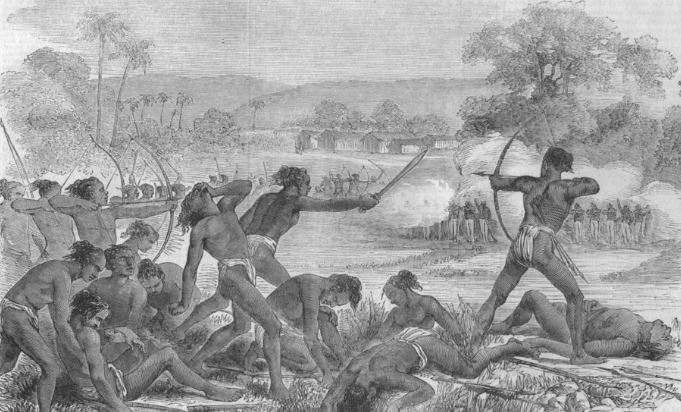
    • Hul Divas is observed annually on June 30 in memory of tribals — Sidho and Kanhu Murmu — who led the Santhal Hul (rebellion) on June 30, 1855, at Bhognadih in Sahebganj district.

    About Santhal Rebellion

    • The Santhals of Rajmahal Hills resented the oppression by revenue officials, police, money-lenders, and landlords—in general, by the “outsiders’ (whom they called diku).
    • The Santhals under Sido and Kanhu rose up against their oppressors, declared the end of the Company’s rule and asserted themselves independent in 1854.
    • It was only in 1856 after extensive military operations that the situation was brought under control. Sido died in 1855, while Kanhu was arrested in 1866.
    • A separate district of Santhal Parganas was created by the Government to pacify the Santhals.

    Must read:

    Tribal Issues | Part 2 | Pre Independence Tribal Revolts

  • The lost continent of Zealandia

    A new map has revealed the lost continent of Zealandia.

    The ocean relief can be divided into various parts such as Continental Shelf, Continental Slope, Continental Rise or Foot, Deep Ocean basins, Abyssal plains & Abyssal Hills, Oceanic Trenches, Seamounts and Guyots.

    Revise these ocean bottom relief features from your basic references.

    Also revise India’s Deep Ocean Mission.

    About Zealandia

    • Zealandia — or Te Riu-a-Māui, as it’s referred to in the indigenous Māori language — is a 2 million-square-mile (5 million square kilometres) continent east of Australia, beneath modern-day New Zealand.
    • Scientists discovered the sprawling underwater mass in the 1990s, then gave it formal continent status in 2017.
    • Still, the “lost continent” remains largely unknown and poorly studied due to its Atlantean geography.

    Its formation

    • It is a group of submerged pieces of crust that separated from the ancient supercontinent Gondwana about 85 million years ago.
    • Gondwana was formed when Earth’s ancient supercontinent, Pangea, split into two fragments.
    • Laurasia was transformed into North America, Asia, and Europe, while Gondwana became Africa, South America, Australia, and Antarctica.
    • But land masses continued to be rearranged afterwards, with Zealandia breaking off Gondwana.

    Data revealed by the new map

    • The new maps reveal Zealandia’s bathymetry (the shape of the ocean floor) as well as its tectonic history, showing how volcanism and tectonic motion have shaped the continent over millions of years.
    • Data for the bathymetric map was provided by the Seabed2030 project — a global effort to map the entire ocean floor by 2030.

    Why call it a continent?

    • Zealandia was classified as a “microcontinent,” as the island of Madagascar, until 2017.
    • But according to Mortimer, it has all the requirements to be classified as a continent.
    • It has defined boundaries; it occupies an area of over one million square kilometres and is elected above the ocean crust.

    Also read: https://www.civilsdaily.com/news/seabed-2030-project/

  • What is ‘Last Glacial Maximum’?

    Researchers analysed simulations of this past climate and predicted that the ongoing climate change could reawaken an ancient climate pattern of the Indian Ocean Region (IOR).

    Try this question from CSP 2017:

    Q.With reference to ‘Indian Ocean Dipole (IOD)’, sometimes mentioned in the news while forecasting Indian monsoon, which of the following statements is/are correct?

    1. IOD phenomenon is characterized by a difference in sea surface temperature between tropical Western Indian Ocean and tropical Eastern Pacific Ocean.

    2. An IOD phenomenon can influence El Nino’s impact on the monsoon.

    Select the correct Option using the code given below:

    (a) Only 1

    (b) Only 2

    (c) Both 1 and 2

    (d) Neither 1 nor 2

    The Last Glacial Maximum

    • The Last Glacial Maximum (LGM) was the most recent time during the Last Glacial Period that ice sheets were at their greatest extent.
    • Vast ice sheets covered much of North America, Northern Europe, and Asia and profoundly affected Earth’s climate by causing drought, desertification, and a large drop in sea levels.
    • Growth of ice sheets commenced 33,000 years ago and maximum coverage was between 26,500 years and 19–20,000 years ago, when deglaciation commenced in the Northern Hemisphere.
    • It caused an abrupt rise in sea level.

    Shells predict IOR climate variability

    • By studying microscopic zooplankton called foraminifera, the team had published a paper in 2019 which first found evidence from the past of an Indian Ocean El Niño.
    • Foraminifera builds a calcium carbonate shell, and studying these can tell us about the properties of the water in which they lived.
    • The team measured multiple individual shells of foraminifera from ocean sediment cores and was able to reconstruct the sea surface temperature conditions of the past.
    • The Indian Ocean has the capacity to harbour much larger climate variability than observed during the last few decades or a century.

    Lessons to learn

    • There are many lessons to be learnt from this cooler period about our warmer future.
    • As it is, under present-day conditions, changes in the Indian Ocean Dipole and the El Niño–Southern Oscillation strongly affect Indian Monsoon variability from year to year.
    • If the hypothesized ‘equatorial mode’ emerges in the near future, it will pose another source of uncertainty in rainfall prediction and will likely amplify swings in monsoon rainfall.
    • It could bring more frequent droughts to East Africa and southern India and increased rainfall over Indonesia.

    Back2Basics

    What is the Indian Ocean Dipole? Explain its connection with the Indian monsoons

  • What is the Anthropause Period?

    Researchers in the UK are set to study the “Anthropause”, a term they have coined to refer to the coronavirus-induced lockdown period and its impact on other species.

    Practice question for mains:

    Q. What is the significance of declaring Anthropocene epoch? Discuss how it is different from any geological events. Discuss the Anthropause Period.

    Anthropause Period

    • Researchers have suggested the lockdown period, which is also being referred to as the “Great Pause”, be referred to with a more precise term.
    • It is referred specifically to a considerable global slowing of modern human activities, notably travel.
    • The unprecedented curbs imposed on millions of people around the world, mainly due to restrictions in travel, led to reports of unusual animal behaviour.
    • For instance, there were pumas sighted in Chile’s Santiago, jackals in the parks of Tel Aviv in Israel, dolphins in the waters of Italy and even a monkey fight on the streets of Thailand.
    • The researchers believe studying this period will provide valuable insights into the relationship between human-wildlife interactions in the 21st century.

    What do the researchers hope to find?

    • As a result of the lockdown, nature appears to have changed, especially in urban environments, since not only are there now more animals, but also some “unexpected visitors.”
    • In their outline, researchers mention how the scientific community can use these “extraordinary circumstance” provided by global lockdowns to understand how human activity affects wildlife.
    • On the other hand, there are some animals for which the lockdown may have made things more challenging.
    • For instance, for various urban-dwelling animals, such as rats, gulls and monkeys who depend on food provided or discarded by humans, the lockdown would have made life more difficult.

    Why is studying the lockdown important?

    • Expanding human populations continue to transform their environments at unprecedented rates.
    • Further, because the reduction in human activity during the lockdown on both land and sea has been “unparalleled” in recent history, the effects have been “drastic, sudden and widespread”.
    • Essentially, this gives them a chance to study the extent to which modern human mobility affects wildlife.
    • The study can be linked can help provide insights that may be useful in preserving global biodiversity, maintaining the integrity of ecosystems and predicting global zoonoses and environmental changes.

    Back2Basics

    https://www.civilsdaily.com/news/anthropocene-as-earths-new-epoch/

  • The spirit of ‘Lal-Bal-Pal’ in Indian History

    To commemorate the death centenary of Tilak, a Pune based NGO is set to revive the Independence-era spirit of the ‘Lal-Bal-Pal’, named after nationalists Lala Lajpat Rai, ‘Lokmanya’ Bal Gangadhar Tilak and Bipin Chandra Pal.

    Try this PYQ from CSP 2010:

    Q. What was the immediate cause for the launch of the Swadeshi movement?

    (a) The partition of Bengal done by Lord Curzon.

    (b) A sentence of 18 months of rigorous imprisonment imposed on Lokmanya Tilak.

    (c) The arrest and deportation of Lala Lajpat Rai and Ajit Singh; and passing of the Punjab ColonizationBill.

    (d) Death sentence pronounced on the Chapekarbrothers.

    About Lal-Bal-Pal

    • Lal Bal Pal was a triumvirate of assertive nationalists in British-ruled India in the early 20th century, from 1906 to 1918.
    • They advocated the Swadeshi movement involving the boycott of all imported items and the use of Indian-made goods in 1907 during the anti-Partition agitation in Bengal which began in 1905.
    • The final years of the nineteenth century saw a radical sensibility emerge among some Indian intellectuals.
    • This position burst onto the national all-India scene in 1905 with the Swadeshi movement – the term is usually rendered as “self-reliance” or “self-sufficiency”.

    Their Legacy

    • Lal-Bal-Pal mobilized Indians across the country against the Bengal partition, and the demonstrations, strikes and boycotts of British goods that began in Bengal soon spread to other regions in a broader protest against the Raj.
    • The nationalist movement gradually faded with the arrest of its main leader Bal Gangadhar Tilak and retirement of Bipin Chandra Pal and Aurobindo Ghosh from active politics.
    • While Lala Lajpat Rai suffered from injuries, due to British police superintendent, James A. Scott, ordered the British Indian police to lathi charge and personally assaulted Rai; he died on 17 November 1928.

    Back2Basics:

    Lala Lajpat Rai

    • Born in undivided Punjab on 28 January 1865, Lala Lajpat Rai grew up in a family that allowed the freedom of faith.
    • Even before he focused his efforts towards a self-sufficient India, Rai believed in the principle.
    • In 1895, he started the Punjab National Bank—the first Indian bank to begin solely with Indian capital, and that continues to function till date.
    • Rai had travelled to America in 1907 and immediately caught up similarities between the ‘colour-caste’ practised there and the caste system prevalent in India.
    • In 1917, he even founded the Indian Home Rule League of America there.
    • His proactive, brave participation in the protest earned him the title of the Lion of Punjab or Punjab Kesari.

    Bal Gangadhar Tilak

    • Bal Gangadhar Tilak (23 July 1856 – 1 August 1920) was an Indian nationalist, teacher, and an independence activist
    • In 1884, he founded the Deccan Education Society in Pune, and under the banner, opened the New English School for primary studies and Fergusson College for higher education.
    • His involvement in the educational institutions was to emphasise on the cultural revival of young Indian minds.
    • For the British, Tilak was the “Father of the Indian Unrest.”
    • When the Indian National Congress was divided among moderates and extremes—the stand that each member took against the British government—there was no doubt which side Tilak supported.
    • Literary works: Kesari and Maratha newspapers

    Bipin Chandra Pal

    • The father of revolutionary thoughts, Bipin Chandra Pal, was born to a wealthy family in Sylhet, Bengal Presidency (now in Bangladesh).
    • Pal was a journalist by profession and often contributed to several newspapers.
    • He used his literary expertise to write against the use of British goods, advocating Indians to start using Swadeshi goods instead.
    • He was of a strong opinion that a mass reliance on Swadeshi goods would help people get rid of their poverty.
  • Why Russia celebrates WWII triumph on a different date?

    Raksha Mantri is on a three-day trip to Russia to attend the 75th Victory Day. India has sent a tri-services contingent to participate in the Victory Day Parade.

    Try these questions from CS Mains:

    Q.To what extent can Germany be held responsible for causing the two World Wars? Discuss critically. (CSM 2015)


    Q.The New Economic Policy – 1921 of Lenin had influenced the policies adopted by India soon after independence. Evaluate. (CSM 2014)

    What is Victory Day?

    • Victory Day marks the end of World War II and the victory of the Allied Forces in 1945.
    • Adolf Hitler had shot himself on April 30. On May 7, German troops surrendered, which was formally accepted the next day and came into effect on May 9.
    • In most European countries, it is celebrated on May 8 and is called the Victory in Europe Day.

    Why does Russia not celebrate Victory Day on the same date?

    • The erstwhile Soviet Union had not wanted the surrender to take place in the west and wanted that such a significant event should reflect the contribution of the Red Army and the Soviet population.
    • According to historians, Joseph Stalin, premier of the Soviet Union, wanted Germany to also sign surrender in Berlin.
    • Since crowds were already gathering in London to celebrate, Victory in Europe Day celebration in Britain would take place on 8 May, as they did in the United States.
    • This did not convince Stalin, who argued that Soviet troops were still fighting the German forces in many areas.
    • German soldiers did not surrender in East Prussia, Courland Peninsula, Czechoslovakia till later. Hence victory celebration could therefore not begin in the Soviet Union even after May 9.

    If May 9 is Victory Day, why is it being celebrated on June 24?

    • This year, the celebrations this year were pushed to June because of the Covid-19 pandemic.
    • After winning the war and having its own Victory Day on May 9, Stalin wanted to commemorate the victory with a military parade.
    • On June 22, 1945, he ordered the commemoration of the victory over Germany to hold the victory parade on June 24, 1945, in Moscow’s Red Square.
    • Hence the first Victory Day Parade took place on June 24 in Moscow. However, since then, the Parades have taken place on May 9.
  • What is the Arctic Heatwave warming up Siberia?

    The Arctic Circle has recorded temperatures reaching over 38 degrees Celsius in the Siberian town of Verkhoyansk, likely an all-time high. The temperatures seem to have been 18 degree Celsius higher than normal in June a/c to the BBC.

    Try this question from CS Mains 2017:

    Q.How does the Cryosphere affect global climate?

    What is happening in the Arctic?

    • Since the past month, the most above-average temperatures were recorded in Siberia, where they were about 10 degrees Celsius above normal.
    • Siberia has been recording higher-than-average surface air temperatures since January.

    Are Arctic heatwaves common?

    • This is not the first time that rising temperatures in the Arctic have created alarm.
    • The rising temperatures are attributed to large-scale wind patterns that blasted the Arctic with heat, the absence of sea ice, and human-induced climate change, among other reasons.
    • There has been an increase of heatwave occurrences over the terrestrial Arctic. These frequent occurrences have already started to threaten local vegetation, ecology, human health and economy.

    A cause of worry for all

    • Warming in the Arctic is leading to the thawing of once permanently frozen permafrost below ground.
    • This is alarming scientists because as permafrost thaws, carbon dioxide and methane previously locked up below ground is released.
    • These greenhouse gases can cause further warming, and further thawing of the permafrost, in a vicious cycle known as positive feedback.
    • The higher temperatures also cause land ice in the Arctic to melt at a faster rate, leading to greater run-off into the ocean where it contributes to sea-level rise.