💥Join UPSC 2027,2028 Mentorship (August Batch) + XFactor Notes & Microthemes PDF

GS Paper: India & Its Neighborhood – Relations

  • Why is there no peace in Ukraine

    Introduction

    Since Russia’s full-scale invasion in February 2022, several attempts at negotiations, from Belarus to Turkey, have collapsed. With Russia consolidating control over Ukrainian territories and Ukraine facing military constraints, the conflict shows signs of becoming a prolonged war. The Trump plan, recent Russian advances, and fatigue in Western capitals have complicated the strategic landscape, placing Ukraine at a turning point.

    Why in the news

    The Ukraine-Russia war has again entered headlines as Russia captured Pokrovske, marking the first major territorial gain after a year of stalled frontlines. Simultaneously, a 28-point U.S. peace proposal surfaced, offering recognition of Russian control over key territories. Ukraine is facing troop shortages, battlefield pressure, and delays in Western aid, making negotiations both urgent and politically difficult. Recent territorial losses, a disputed peace plan, and growing pressure on President Zelensky have reopened global debate on whether a ceasefire is achievable.

    Battlefield Dynamics and Stalled Negotiations

    1. Russian Consolidation: Russia captured Pokrovske after holding back Ukrainian forces for nearly a year; repositioned units in Kharkiv and Kherson and intensified attacks on Avdiivka and Kupiansk.
    2. Ukrainian Strain: Ukraine faces troop shortages, heavy attrition, and reduced Western ammunition deliveries; unable to meet battlefield demands.
    3. Failed Negotiations History: Talks in Belarus (Feb 28, 2022), Turkey (March 2022), and subsequent engagements collapsed due to disagreements over territory, NATO membership, and security guarantees.
    4. Renewed Russian Push: Russia resumed rotated forces, strengthened defensive lines, and maintained pressure across the east and south.

    Why Have Earlier Peace Efforts Failed?

    1. Maximalist Positions:
      1. Ukraine demanded withdrawal to 1991 borders and refusal of territorial concessions.
      2. Russia insisted on recognition of annexed territories and long-term security guarantees.
    2. NATO Membership Dispute: Ukraine’s insistence on future NATO membership remained unacceptable to Russia.
    3. Shifting War Outcomes: Early battlefield gains for Ukraine pushed negotiations aside; later Russian consolidation hardened Moscow’s stance.
    4. Domestic Political Costs: Zelensky faced internal political risk if he conceded territory or NATO flexibility.
    5. Western Signalling: Changes in Western messaging during 2022, especially from UK PM Boris Johnson’s Kyiv visit, reinforced Ukraine’s resolve to fight rather than negotiate.

    What Does the New Trump Peace Plan Propose?

    1. Territorial Recognition: Recognizes Russian control of current occupied territories (Crimea, Luhansk, Donetsk, Zaporizhzhia, Kherson).
    2. Ceasefire Framework: Calls for an initial ceasefire based on “current positions”.
    3. Security Guarantees: Ukraine would receive “reliable security guarantees”, though details remain unspecified.
    4. NATO Question: Prohibits Ukraine from joining NATO but proposes alternative security arrangements.
    5. Referendum Clause: Suggests that Ukraine may hold referendums under international supervision in disputed areas.
    6. Western Package: Encourages Washington to commit additional security assurances if Ukraine accepts concessions.
    7. Controversy: Critics argue it endorses annexation and weakens Ukrainian sovereignty.

    How Is Ukraine Responding to the Proposal?

      1. Zelensky’s Dilemma:
    • Fear of Loss of U.S. Support if he rejects the plan outright.
    • Domestic Resistance to territorial concessions or NATO withdrawal.
    1. Political Stakes: Any acceptance of the Trump plan risks severe political backlash within Ukraine and among its security elite.
    2. Military Reality Check: With Russia advancing and Western aid reduced, Ukraine risks losing more territory if negotiations are delayed.
    3. Unclear U.S. Position: The White House has neither endorsed nor dismissed the plan; Washington sends mixed signals.

    What Is Russia’s Current Strategy?

    1. Gradual Territorial Expansion: Small but steady advances across Donetsk and Kharkiv fronts.
    2. Exhaustion Approach: Prolonging the war to drain Ukrainian manpower and Western support.
    3. Diplomatic Pressure: Leveraging the Trump plan to portray Ukraine as unwilling to negotiate.
    4. Military Reconfiguration: Rotations, reorganized brigades, and fortified defensive lines to prepare for prolonged combat.

    Conclusion

    The Ukraine war remains locked between military stalemate and political impossibility. With Russia consolidating gains and Western support fluctuating, the window for meaningful negotiations narrows. The Trump plan introduces a new, but highly contentious, framework. For now, peace remains elusive due to incompatible security demands, shifting battlefield realities, and the political constraints of both Kyiv and Moscow.

    PYQ Relevance

    [UPSC 2023] The expansion and strengthening of NATO and a stronger US-Europe strategic partnership works well for India. What is your opinion about this statement? Give reasons and examples to support your answer.

    Linkage: This PYQ aligns with the article’s focus on NATO’s revived strength and US-Europe unity shaped by the Ukraine war. It directly links to how these shifts hardened positions, prolonged conflict, and reshaped global security dynamics.
  • India needs to ‘connect, build and revive’ with Africa

    Introduction

    India’s partnership with Africa is embedded in shared anti-colonial history, South-South cooperation, and long-standing developmental commitments. Over the last decade, India’s diplomatic presence, investments, training initiatives, and cultural engagement have expanded across the continent. However, shifting geopolitical equations, intensifying global competition, and Africa’s rising economic potential demand an upgraded, value-driven, and sustained approach. The article argues that India must now “connect, build and revive” its Africa policy to maintain its strategic foothold and align with Africa’s aspirations.

    Why in the News?

    A decade after hosting the largest-ever India-Africa Forum Summit, India’s engagement with Africa is again at a pivotal moment. India has added 17 new missions, trade has crossed USD 100 billion, and investment flows are surging. Yet Indian trade still lags behind China, and many flagship promises made in 2015 require renewed momentum. As Africa is set to become home to one-fourth of the world’s population by 2050, the scale, urgency, and strategic importance of India’s outreach makes this moment historically significant.

    How has India’s outreach to Africa evolved in the past decade?

    1. Expanded diplomatic footprint: India added 17 new missions across Africa, enhancing its on-ground presence and bilateral engagement.
    2. Rising investment flows: India’s investment stock has crossed USD 100 billion, making it among Africa’s top five investors.
    3. Growth in trade partnerships: Bilateral trade has crossed USD 100 billion, demonstrating the growing economic synergy.
    4. Enhanced defence cooperation: Joint naval exercises such as AIMKEME (April 2025) saw participation from navies of Kenya, Madagascar, Mauritius, Mozambique, Seychelles, South Africa, and Tanzania.
    5. Stronger multilateral alignment: India played a key role in enabling African Union membership in the G20, elevating Africa’s global voice.

    Why is Africa emerging as a strategic priority for India?

    1. Demographic transformation: By 2050, one in four people on Earth will be Africa, a major consumer, labour, and talent base.
    2. Economic potential: Africa will be the world’s third-largest economy, creating opportunities in technology, health, infra, and manufacturing.
    3. Geopolitical influence: Africa’s global role is expanding, and India aims to support African representation in global institutions and peacekeeping operations.
    4. Shared developmental priorities: From education to digital public goods, India’s model aligns naturally with African development aspirations.

    What challenges persist in India-Africa trade relations?

    1. Lag behind China: India’s trade with Africa is expanding but still far behind China, which has deeper and wider market penetration.
    2. Logistical hurdles: Indian firms often face bureaucratic delays, small balance sheets, and scalability issues.
    3. Fragmented strategy: India’s UPID, digital stack, and trade missions have strengths but lack coordinated continental impact.
    4. Competition from Europe and Asia: New entrants are building deeper financial and infrastructural linkages across the continent.

    How is India building capacity and knowledge partnerships in Africa?

    1. Human capital initiatives: India’s most enduring export to Africa is human capital, created through scholarships, training programs, and institutional partnerships.
    2. Education & digital training: The new IIT Madras campus in Zanzibar is a flagship example of education-based cooperation.
    3. Decadal knowledge ecosystems: Pan-African e-Network and India’s ITEC programme continue to train thousands across African nations.
    4. Institutional bridges: African experts, ministers, and students working in India create lasting diplomatic and economic linkages.

    What future steps should India take to revitalise momentum?

    1. Move from promises to real outcomes: Lines of credit must become visible, viable, and deliverable rather than symbolic.
    2. Build the India-Africa Digital Corridor: Collaboration on UPI, Aadhaar-stack, and digital payments can create a shared digital infrastructure.
    3. Reinforce the institutional base: Revive the summit-based momentum of IAFS and reintroduce regular leadership exchanges.
    4. Integrate private sector participation: Encourage start-ups, MSMEs, and fintech companies to expand into African markets.
    5. Strengthen maritime cooperation: The Western Indian Ocean is becoming central to supply-chain security and blue-economy partnerships.

    Conclusion

    India’s partnership with Africa is rooted in trust, shared history, and developmental solidarity. But the world around both regions is changing rapidly. Africa’s demographic rise, digital aspirations, and geopolitical importance demand that India convert intent into implementation. “Connect, build, and revive” offers a timely blueprint for elevating India-Africa relations into a mature, inclusive, and futuristic partnership, one that benefits both regions and strengthens India’s global standing.

    PYQ Relevance

    [UPSC 2024] Explain the reasons for the growth of Public Interest Litigation (PIL) in India. As a result of it, has the Indian Supreme Court emerged as the world’s most powerful judiciary?

    Linkage: Judiciary is one of the most important topics for GS-II. This PYQ tests how failures of the lower judiciary, delay, pendency, and weak remedies, drive the rise of PILs and expand the Supreme Court’s role. The article directly shows these systemic gaps, explaining why litigants bypass subordinate courts and seek relief through PILs.

  • ​Fishing troubles: On India, Sri Lanka, the Palk Bay fishing issue

    Introduction

    The Palk Bay, a narrow strip separating Tamil Nadu from Sri Lanka, has historically been a shared fishing zone. However, repeated arrests of Indian fishermen for crossing the International Maritime Boundary Line (IMBL) underline a persistent challenge. Bottom trawling, a destructive fishing practice, has been the core issue fueling ecological degradation, diplomatic tension, and economic distress. The recent arrest on November 9, 2024, reopens the debate on reconciling traditional livelihoods with sustainable and legal marine resource use.

    Why in the news?

    The arrest of 14 Tamil Nadu fishermen by the Sri Lankan Navy marks another flashpoint in the Palk Bay fishing dispute. This incident is significant because:

    1. Persistence of conflict: Despite decades of talks, fishermen from both nations continue to cross maritime boundaries for catch-rich zones.
    2. Scale of problem: Over 128 fishermen from Tamil Nadu remain in Sri Lankan custody, with boats seized.
    3. Diplomatic urgency: The issue features regularly in bilateral meetings, yet lacks a lasting policy resolution.
    4. Ecological threat: The practice of bottom trawling continues to damage coral beds and marine biodiversity, making it a cross-border environmental crisis.

    Why do Tamil Nadu fishermen continue to cross the IMBL?

    1. Livelihood dependence: For thousands of families, fishing remains the only sustainable income source. The depletion of nearshore fish stocks has pushed them toward Sri Lankan waters.
    2. Cost-pressure fishing: Each voyage involves high operational costs, forcing fishermen to maximize yield through fast, large-scale trawling.
    3. Traditional persistence: The term “tradition” is often invoked to justify trawling, despite its destructive ecological footprint.
    4. Rapid voyages: Quick trawling runs enhance profitability but heighten the risk of arrest and confiscation.

    What is bottom trawling and why is it destructive?

    1. Definition: Bottom trawling involves dragging weighted nets along the seabed.
    2. Ecological damage: It destroys coral reefs, seabed habitats, and fish spawning grounds.
    3. Stock depletion: Leads to overfishing and long-term decline of commercially valuable species.
    4. Conflict trigger: Sri Lankan fishermen, especially from the Northern Province, oppose bottom trawling as it depletes shared marine resources vital for their post-war recovery.

    What are the diplomatic and institutional mechanisms in place?

    1. Joint Working Group (JWG) on Fisheries: Met in Colombo on October 29, 2024 to address arrests and sustainable fishing practices.
    2. Bilateral discussions: Fishermen’s representatives met counterparts in March 2024, but lacked formal sanction or actionable outcomes.
    3. Pending initiatives: The Janatha Vimukthi Peramuna-led People’s Power Party in Sri Lanka, in power for over a year, has yet to show urgency in resolving the dispute.

    What policy solutions have been suggested?

    1. Research collaboration: Proposal for a Palk Bay Research Station for ecosystem monitoring and sustainable fishing methods.
    2. Technology transition: Gradual shift from bottom trawling to deep-sea fishing and small-boat operations.
    3. Incentivization: Financial and policy support to Tamil Nadu fishermen to switch to non-destructive gear and practices.
    4. Diplomatic liberalism: New Delhi may consider easing travel and fishing permits within limits to facilitate safe, sustainable livelihoods.
    5. Regulatory measures: Imposing a progressive ban on bottom trawling in Indian waters to signal intent and compliance.

    Conclusion

    The Palk Bay issue is not merely a border dispute, it is a test of India’s ability to balance livelihood protection with ecological responsibility and regional diplomacy. Persuading fishermen to abandon bottom trawling requires education, compensation, and innovation, not coercion. A cooperative framework, rooted in mutual trust and science-based regulation, can transform a contentious boundary into a shared zone of prosperity and peace.

    PYQ Relevance

    [UPSC 2013] In respect of India-Sri Lanka relations, discuss how domestic factors influence foreign policy.

    Linkage: Domestic political pressures from Tamil Nadu fishermen and state parties shape India’s diplomatic stance toward Sri Lanka. This internal-external linkage influences how New Delhi balances livelihood concerns with bilateral maritime cooperation.

  • [11th November 2025] The Hindu Op-ed: A celebration of India-Bhutan ties

    PYQ Relevance

    [UPSC 2024] Discuss the geopolitical and geostrategic importance of Maldives for India with a focus on global trade and energy flows. Further, also discuss how this relationship affects India’s maritime security and regional stability amidst international competition.

    Linkage: This PYQ reflects the same strategic framework as India-Bhutan relations; where geography, stability, and mutual trust drive India’s Neighbourhood First and Security and Growth for All in the Region (SAGAR) vision.

    Mentor’s Comment

    The 70th birth anniversary of Jigme Singye Wangchuck, the fourth King of Bhutan, serves as a moment to celebrate not just a monarch’s life but the enduring India-Bhutan partnership that he helped shape. His leadership modernised Bhutan and deepened one of South Asia’s most stable and mutually respectful bilateral relationships built on trust, hydropower diplomacy, and shared values of sustainable development and cultural harmony.

    Introduction

    The former King of Bhutan, Jigme Singye Wangchuck, turned 70 on November 11, 2025. Revered by his people as a Bodhisattva King, he ruled Bhutan from 1972 until his abdication in 2006 in favour of his son, King Jigme Khesar Namgyel Wangchuck. Known for introducing the concept of Gross National Happiness (GNH) and steering Bhutan into the modern era, his legacy also symbolizes the deep and evolving friendship between India and Bhutan. Prime Minister Narendra Modi’s visit to Thimphu for the celebrations marks the continuation of this historic bond. This underlines India’s Neighbourhood First Policy and commitment to strengthening Himalayan partnerships.

    The Legacy of a Sage King

    1. Modernisation of Bhutan: King Jigme Singye Wangchuck guided Bhutan into the 21st century with policies balancing economic progress, environmental sustainability, and cultural preservation.
    2. Buddhist Leadership Ethos: Revered almost like a Buddha, he was loved for his humility and focus on inner happiness, embodied in the philosophy of Gross National Happiness.
    3. Abdication for Reform: His voluntary abdication in 2006 for his son represented a rare act of democratic foresight, leading Bhutan towards constitutional monarchy and parliamentary democracy.

    India-Bhutan Relations: A Model of Neighbourhood Diplomacy

    1. Neighbourhood First Priority: Bhutan was the first foreign country visited by PM Modi in 2014 after assuming office, highlighting Bhutan’s symbolic and strategic importance.
    2. Mutual Cultural Affinity: The relationship is grounded in shared civilizational ethos, Buddhism, and trust, rather than transactional diplomacy.
    3. Joint Celebrations: Modi’s participation in the birthday celebrations reflects India’s continued recognition of Bhutan as a trusted Himalayan partner.

    Hydropower Diplomacy: The Cornerstone of Economic Partnership

    1. Strategic Energy Partnership: India and Bhutan have developed one of South Asia’s most successful hydropower cooperation models, with electricity from Bhutan’s rivers exported to India.
    2. Economic Impact: Projects like the Punasangchhu-I and Punasangchhu-II hydropower projects contribute significantly to Bhutan’s GDP and India’s clean energy imports.
    3. Job Creation and Development: Revenue from hydropower has raised Bhutan’s per capita income, reflecting a sustainable model of bilateral interdependence.
    4. Private Sector Expansion: Future projects are likely to be developed by private Indian companies in collaboration with Bhutanese partners, expanding beyond state-led initiatives.

    Issues of National Security and Strategic Alignment

    1. Advisory Role of the King: Former King Jigme Singye Wangchuck continues to play a strategic advisory role (K4) on national security and foreign policy.
    2. Security Cooperation: India’s Royal Bhutan Army (RBA) works closely with Indian defence forces to secure borders and enhance counter-insurgency cooperation.
    3. Operation All Clear (2003): Bhutan’s successful military operation, supported by India, removed insurgent groups from its territory; a hallmark of trust-based defence partnership.
    4. Geopolitical Balance: Bhutan continues to balance relations with India while cautiously managing ties with China, guided by India’s support in maintaining sovereignty and stability.

    India’s Continued Developmental Support

    1. Hydropower Assistance: India remains Bhutan’s largest partner in hydropower development, ensuring energy security for both nations.
    2. Community Development Projects: Support extends to education, healthcare, and monastic infrastructure, reinforcing India’s soft power in the region.
    3. Trade and Connectivity: India’s assistance in roads, border management, and trade routes enhances regional connectivity under the BBIN framework.

    Conclusion

    The celebration of King Jigme Singye Wangchuck’s 70th birthday is more than an homage to a revered monarch, it is a testament to the unbroken trust, shared development, and mutual respect between India and Bhutan. The hydropower-driven partnership continues to set an example of how small states and large neighbours can coexist through equality, respect, and common vision. As India continues to invest in Bhutan’s progress, this Himalayan partnership stands as a model of enduring regional cooperation and spiritual kinship.

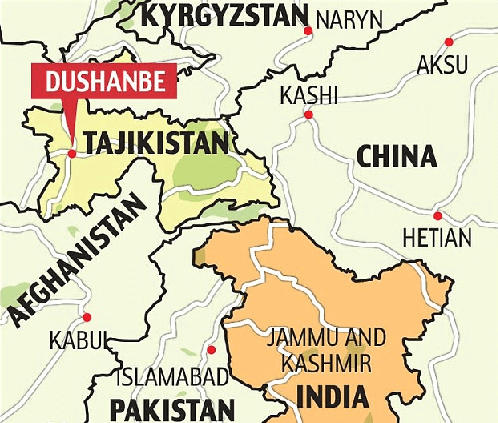
  • India’s exit from the Ayni Airbase in Tajikistan

    Why in the News?

    ​India’s complete pullout from the Ayni Airbase in Tajikistan (in 2022), its sole foreign military post, drew sharp opposition’s criticism.

    India’s exit from the Ayni Airbase in Tajikistan

    About Ayni Airbase:

    • Location: Situated 10 km west of Dushanbe, Tajikistan, near the Afghanistan border via the Wakhan Corridor, and about 20 km from Pakistan-occupied Kashmir (PoK).
    • Also known as: Known as Gissar Air Base or Gissar Military Aerodrome; originally a Soviet-era base later modernised by India.
    • Development by India: Upgraded by India in the early 2000s under a bilateral agreement with Tajikistan; India invested ~USD 100 million to extend the runway (3,200 m), build hangars, depots, and control systems.
    • Operational Role: Hosted IAF helicopters and Su-30MKI fighters, with ~200 Indian personnel managing repair and training operations; also supported humanitarian and evacuation missions, notably during the 2021 Taliban takeover.
    • Predecessor: Replaced Farkhor Airbase (1998–2008), India’s earlier base used for supporting the Northern Alliance in Afghanistan.

    Strategic Significance of the Airbase:

    • Forward Presence: Gave India surveillance and strike reach over Afghanistan and Pakistan’s western front.
    • Regional Leverage: Enhanced India’s defence footprint in Central Asia, countering China’s BRI and Russian influence.
    • Operational Hub: Supported the then anti-Taliban Northern Alliance and India’s broader Connect Central Asia Policy (2012).
    • Evacuation & Logistics Node: Enabled rapid crisis evacuation and regional logistical operations.
    • Geopolitical Symbolism: Marked India’s aspiration for a continental strategic presence; its closure reflects shrinking influence west of the Himalayas amid Russia–China consolidation.

    Reasons for India’s Exit:

    • Lease Expiry: The bilateral lease expired in 2022 and was not renewed by Tajikistan.
    • External Pressures: Russia and China discouraged Tajikistan from extending India’s presence.
    • Strategic Shift: Diminished relevance post-Taliban’s return (2021) and collapse of India’s Afghan network.
    • Operational Constraints: High costs, limited autonomy, and dependence on Russian logistics reduced viability.
    • Reorientation: Strategic focus moved toward the Indo-Pacific and maritime partnerships.
    [UPSC 2022] Consider the following countries :

    1. Azerbaijan 2. Kyrgyzstan 3. Tajikistan 4. Turkmenistan 5. Uzbekistan

    Which of the above have borders with Afghanistan?

    Options: (a) 1, 2 and 5 only (b) 1, 2, 3 and 4 only (c) 3, 4 and 5 only* (d) 1, 2, 3, 4 and 5


  • Turning Tides: Pakistan-Afghanistan Tensions

    Introduction

    When the Taliban recaptured Kabul in August 2021, Pakistan perceived it as a strategic victory after two decades of covert support to the insurgents. However, the celebration was short-lived. Four years later, Pakistan faces an unprecedented internal security crisis, with over 2,400 people killed in militancy-related violence in 2025 alone. The rise of the Tehrik-e-Taliban Pakistan (TTP) and recent Pakistani airstrikes on Kabul (October 2025) signal a dangerous escalation — and a stark reversal of the country’s long-standing policy of using non-state actors as strategic assets.

    Why in the News?

    For the first time, Pakistan bombed Kabul, directly targeting militants across the Afghan border. This marks a major policy shift, as Islamabad traditionally treated the Taliban as an ally and buffer against India. The strikes came while Afghan Foreign Minister Amir Khan Muttaqi was visiting India, adding a symbolic twist to regional alignments. The scale of violence, with over 2,414 deaths this year, underscores the depth of Pakistan’s internal crisis and its failure to control militancy in Khyber Pakhtunkhwa. This development has drawn comparisons to India’s own doctrine of cross-border strikes, raising questions about whether Pakistan is now borrowing from a playbook it once condemned.

    The Illusion of Strategic Depth

    1. Taliban Patronage: Pakistan’s military establishment nurtured the Afghan Taliban for decades, offering refuge and logistical support during their insurgency against the U.S.-backed Afghan government.
    2. Strategic Depth Doctrine: Islamabad’s rationale was to create a friendly regime in Kabul that could serve as a buffer against India and offer “strategic depth” in case of war.
    3. Backfiring Reality: Instead, the Taliban’s rise empowered the TTP, an ideologically aligned but operationally separate entity, turning Pakistan’s proxy into its nemesis.

    How the Taliban’s Return Changed the Equation

    1. End of Patron-Client Relationship: Once in power, the Taliban sought state-to-state relations, not subservience to Pakistan’s military agenda.
    2. Durand Line Dispute: Kabul never recognized the Durand Line, reigniting border tensions that colonial history had left unresolved.
    3. TTP Empowerment: Inspired by the Afghan Taliban’s triumph, the TTP now demands enforcement of strict Islamic law and reversal of the merger of tribal areas with Khyber Pakhtunkhwa.
    4. Refugee Crisis: Pakistan’s decision to deport thousands of Afghan refugees further worsened ties, adding a humanitarian dimension to political hostility.

    Pakistan’s New Doctrine: Borrowing from India?

    1. Airstrikes as Deterrence: By bombing Kabul, Pakistan appears to be testing a new counter-terrorism strategy, directly holding Afghanistan responsible for cross-border militant attacks.
    2. India Parallel: The move is reminiscent of India’s 2016 and 2019 strikes on Pakistani territory after terror attacks in Uri and Pulwama.
    3. Diplomatic Irony: The timing, coinciding with the Afghan FM’s India visit, highlights shifting regional equations where India engages diplomatically, and Pakistan responds militarily.

    The Security Crisis within Pakistan

    1. Rising Violence: The Khyber Pakhtunkhwa province has become the epicenter of TTP-led insurgency.
    2. Contradictory Policy: Pakistan’s dual policy of fighting terrorism while nurturing militants targeting its neighbors has eroded domestic stability.
    3. Blowback Effect: Militancy now threatens Pakistan’s political order, economic recovery, and regional credibility.
    4. Qatar-Brokered Ceasefire: A fragile truce mediated by Qatar hints at the international community’s anxiety over a new South Asian flashpoint.

    Why Pakistan’s Strategy is Self-Defeating

    1. Cycle of Violence: Airstrikes may offer short-term political gains but deepen long-term instability.
    2. Internal vs External Conflict: Pakistan’s greatest threat now emanates from within its borders, not across them.
    3. Loss of Moral Credibility: Its past of backing non-state actors undercuts its legitimacy when accusing others of the same.
    4. Strategic Isolation: Continued conflict risks alienating even traditional allies like China and Gulf states, who seek regional stability.

    Conclusion

    Pakistan’s experiment with militant patronage has collapsed under its own contradictions. The strategic depth doctrine that once defined its Afghan policy has morphed into a strategic liability. Peace in Pakistan cannot be achieved through bombs over Kabul, but through a coherent internal reform of its security, political, and ideological ecosystem. As the editorial aptly concludes, “Pakistan cannot ensure internal security by bombing Afghanistan.”

    PYQ Relevance

    [UPSC 2013] The proposed withdrawal of the International Security Assistance Force (ISAF) from Afghanistan in 2014 is fraught with major security implications for the countries of the region. Examine in light of the fact that India is faced with a plethora of challenges and needs to safeguard its own strategic interests.

    Linkage: The 2013 PYQ and this 2025 editorial both explore the Afghan theatre as a pivot of regional security, then, in anticipation of instability; now, in its full manifestation. Both are invaluable for analysing India’s neighbourhood policy, counter-terror strategy, and regional diplomacy in the post-US Afghanistan order.

  • [18th October 2025] The Hindu Op-ed: Better global governance led by China and India

    PYQ Relevance

    [UPSC 2023] Virus of Conflict is affecting the functioning of the SCO.” In the light of the above statement, point out the role of India in mitigating problems.

    Linkage: This PYQ is important as it tests India’s diplomatic balance within the SCO, amid regional rivalries. The article connects by showing how the Xi–Modi meeting and Global Governance Initiative reflect India’s role in restoring trust and strengthening multilateralism within the SCO framework.

    Mentor’s Comment

    As the world enters a phase of geopolitical churn and institutional fatigue, the call for a reformed, people-centric global governance system grows louder. The 75th anniversary of India-China diplomatic ties and the 80th year of the UN offer a historical moment: two Asian giants, once colonised, now rising powers, can redefine global order. For UPSC aspirants, this theme bridges multilateral diplomacy, global reforms, and India’s evolving foreign policy—key areas across GS Paper 2 and IR essays.

    Introduction

    The year 2025 marks a milestone in both bilateral and global history. India and China, home to over 2.8 billion people, commemorate 75 years of diplomatic relations, even as the United Nations celebrates its 80th anniversary. Against the backdrop of unilateralism and weakening multilateralism, the Global Governance Initiative (GGI) proposed by China, with India’s cooperation, offers a blueprint for a more equitable international order. As Asia’s two leading powers move from rivalry to partnership, their convergence could transform the world’s governance architecture, symbolising a decisive shift toward multipolarity and shared prosperity.

    Why is the India-China cooperation in 2025 a landmark moment?

    1. Historical Context: The two leaders, Xi Jinping and Narendra Modi, have met 18 times since 2014, an unprecedented frequency symbolising sustained engagement despite border tensions.
    2. Symbolic Restoration: The bilateral meeting at the 16th BRICS Summit in Kazan (2024) and now at the 25th SCO Summit in Tianjin (2025) reflects a conscious reset in relations.
    3. Global Expectation: Their 19th meeting during the Tianjin Summit is being seen globally as a moment to restore balance to multilateral decision-making, especially amid Western dominance fatigue.
    4. Public Diplomacy: Both sides emphasise “partners, not rivals,” signaling a shift from competition to cooperation.

    What is changing in the global governance discourse?

    1. Erosion of Trust: The early 21st century witnessed rising unilateralism, protectionism, and hegemonism, eroding faith in international institutions.
    2. UN at 80: The UN system, though foundational, now faces criticism for its limited representation of developing nations and sluggish response to global crises.
    3. Reform Imperative: The question before humanity is not just “who governs” but “how governance is shared.” The article highlights the need for reform without rupture, evolving existing systems rather than replacing them.
    4. Asia’s Moment: The decline of Western dominance and the rise of Asia and Eurasia are redefining the rules of the game, with India and China at the center.

    What is the Global Governance Initiative (GGI)?

    1. New Vision: The GGI, announced by President Xi at the Tianjin SCO Summit, aims to correct the deficit in global governance by promoting a fair, inclusive order.
    • Five Core Principles:
      1. Sovereign Equality: Respect for all nations’ independence and dignity; greater democracy in international relations.
      2. Rule of Law: Equal application of international law and rejection of double standards.
      3. Multilateralism: Strengthening the UN as the core platform for global decision-making.
      4. People-Centric Approach: Governance should prioritise well-being, safety, and fulfillment of citizens globally.
      5. Real Results Orientation: Developed nations must shoulder more responsibility, while developing nations must cooperate for shared solutions.
      6. Essence: The GGI is not about creating parallel institutions but reforming and improving existing ones to respond effectively to modern challenges.

    How can India-China cooperation strengthen multilateralism?

    1. Shared Responsibilities: Both countries, as major developing economies and SCO/BRICS members, bear the responsibility to defend international fairness and justice.
    2. Strategic Coordination: The leaders’ dialogue stresses communication on major international and regional issues to bridge divides in the Global South.

    Complementary Visions:

    1. China’s “community of shared future for mankind
    2. India’s “Vasudhaiva Kutumbakam” (One Earth, One Family, One Future)
    3. Together, they embody the moral and developmental leadership needed for a post-Western global order.
    4. Practical Gains: Resumption of direct flights, maintenance of border stability, and enhanced trade cooperation show concrete steps toward normalisation.

    What challenges lie ahead for India-China collaboration?

    1. Trust Deficit: Lingering border disputes and differing political models may slow strategic trust-building.
    2. Competing Ambitions: While both aspire to leadership in the Global South, perception management and narrative balance will be crucial.
    3. Western Reaction: The West may perceive India-China cooperation as a counterweight to transatlantic power, potentially complicating India’s strategic autonomy.
    4. Need for Institutionalisation: Long-term progress demands institutional mechanisms, track-II dialogues, multilateral coordination cells, and joint UN reform working groups.

    Conclusion

    The India-China partnership in 2025 signals more than a diplomatic milestone, it represents a potential rebalancing of world order. As the UN turns 80, the call for shared leadership between emerging powers grows urgent. If pursued with mutual trust and strategic maturity, the GGI-led collaboration can make the 21st century truly an Asian century rooted in equity, inclusivity, and sustainability. In a fractured world, cooperation, not competition, may be the only path to survival and progress.

  • Complacity not diplomacy-India’s engagement with Taliban

    Introduction

    The exclusion of women journalists from Taliban press conferences in New Delhi was not an accident, it was symbolic of a deeper issue: legitimizing a regime whose ideology is built on the deliberate erasure of women’s existence. As Afghan women face persecution, violence, and disappearance from every public sphere, the silence of democratic nations like India risks validating gender apartheid.

    Why is this issue in the news?

    The controversy erupted when India hosted two Taliban press conferences in New Delhi, where female journalists were initially excluded. The event coincided with a People’s Tribunal on the Women of Afghanistan in Madrid, where survivors testified to the Taliban’s gender-based persecution, recognized as a crime against humanity. The contrast between India’s engagement and the global condemnation of Taliban policies underscores a moral and diplomatic crisis.

    How has the Taliban institutionalized the erasure of women?

    1. Systematic exclusion: Since their 2021 return, the Taliban banned women from most public-sector jobs, secondary schools, and universities.
    2. Legalized oppression: The 2024 Propagation of Virtue and Prevention of Vice Law formally declared women’s voices “forbidden” in public.
    3. Economic silencing: A 2025 Afghanistan Media Support Organisation survey found that 93% of women journalists lost their jobs, with more than 42% leaving journalism altogether.
    4. Violence and fear: Women activists are detained, beaten, and their husbands tortured, part of a deliberate campaign to erase their visibility and livelihood.

    Why is India’s stance seen as complicit rather than diplomatic?

    1. Normalization of misogyny: Hosting Taliban officials while Afghan women pleaded for recognition signals tacit acceptance of their regime.
    2. Moral inconsistency: While democracies like Spain and Canada host tribunals condemning Taliban atrocities, India’s diplomatic outreach stands in stark contrast.
    3. Diplomatic short-sightedness: By engaging the Taliban without human rights conditionalities, India risks legitimizing gender apartheid as a form of governance.

    What does this reveal about the global response to women’s rights?

    1. Erosion of feminist diplomacy: Nations increasingly prioritize geopolitical pragmatism over gender justice.
    2. Media complicity: Even in New Delhi, the Taliban’s media interaction mirrored their exclusionary ethos, showing that patriarchal silencing transcends borders.
    3. Selective outrage: While Western nations condemn the Taliban, many still negotiate covertly for strategic or security reasons, diluting international accountability.

    What lessons does this hold for India’s foreign policy and democracy?

    1. Moral leadership deficit: India’s silence undermines its self-image as the voice of the Global South and defender of democratic rights.
    2. Gender and diplomacy linkage: True diplomacy must integrate gender-sensitive ethics, ensuring no engagement legitimizes systemic violence.
    3. Internal reflection: A democracy’s foreign policy mirrors its domestic respect for women’s agency. India’s global credibility depends on aligning words with action.

    Conclusion 

    India’s engagement with the Taliban marks a dangerous shift from moral diplomacy to moral compromise. As Afghan women’s rights are being erased, India’s silence echoes complicity, not neutrality. True diplomacy must speak truth to power, not share its platform. Democracies cannot afford to normalize gender apartheid; silence here is not strategy, it is surrender.

    PYQ Relevance

    [UPSC 2013] The proposed withdrawal of the International Security Assistance Force (ISAF) from Afghanistan in 2014 is fraught with major security implications for the countries of the region. Examine in light of the fact that India is faced with a plethora of challenges and needs to safeguard its own strategic interests.

    Linkage: India’s current engagement with the Taliban reflects the security vacuum created after the ISAF withdrawal, forcing New Delhi to balance strategic interests with moral responsibility. As the article shows, this has turned India’s Afghan policy from cautious realism into a test of its ethical diplomacy and regional credibility.

  • With new Great Game, India must engage with the Taliban and Kabul

    Introduction

    Afghanistan’s Foreign Minister Amir Khan Muttaqi arrived in New Delhi on an official visit, his first since the Taliban’s return to power in August 2021.

    The visit represents a major recalibration in India’s Afghanistan policy, as New Delhi cautiously engages the Taliban regime without formal recognition. India’s approach blends strategic pragmatism and regional security concerns, focusing on maintaining influence in Afghanistan’s evolving geopolitical environment while avoiding premature diplomatic endorsement.

    India-Taliban Ties: A Quick Recap

    1. India never formally recognized the Taliban regime prior to or after 2021.
    2. Initial contacts date back to the late 1990s (e.g., during the IC-814 hijacking), but India’s engagement remained limited due to Pakistan’s dominance over the Taliban.
    3. Post-2021, India has maintained pragmatic engagement of humanitarian aid, infrastructure projects, and limited diplomatic outreach without providing de jure recognition.

    India’s Post-2021 Approach- Diplomatic Balancing and Western Response:

    1. India adopted a “cautious engagement” policy: restoring a technical mission in Kabul, resuming aid delivery, and holding diplomatic contacts.
    2. In 2025, India announced plans to reopen its embassy in Kabul, initially with a Chargé d’affaires, avoiding formal recognition.
    3. India’s silence on human rights and women’s issues during diplomatic talks reflects strategic restraint, balancing ideological concerns with geopolitical necessity.
    4. The Western response is ambivalent. India’s engagement is scrutinized to ensure it does not inadvertently legitimize the Taliban or dilute India’s democratic credentials.

    Taliban and Its Geopolitical Realignments (2024–2025):

    1. China: First major power to exchange ambassadors with the Taliban (2024); deepening economic, mining, and infrastructure ties.
    2. Russia: Moving to delist Taliban as a terrorist group; promoting counterterror cooperation.
    3. Iran: Accepts Taliban rule pragmatically, balancing internal crises with regional influence.
    4. Pakistan: Relations strained — Taliban criticism of Pakistani interference; cross-border tensions with TTP.
    5. United States: Under Trump 2.0, US policy is transactionally disengaged; leaves India more space to engage diplomatically.

    India’s Strategic Objectives in Engaging the Taliban:

    1. Maintain influence in Afghanistan to protect long-term investments (infrastructure, education, healthcare).
    2. Prevent Afghan territory from being used for anti-India terrorism.
    3. Counter Pakistan–China influence by remaining a relevant actor in Afghan affairs.
    4. Enable connectivity and trade, via Chabahar port and regional transit routes.
    5. Promote soft power through development cooperation, scholarships, and cultural engagement.

    Challenges and Diplomatic Constraints:

    1. Non-recognition dilemma: Engagement without recognition may be seen as de facto endorsement by critics.
    2. Human rights dissonance: Taliban’s restrictions on women’s rights conflict with India’s democratic values.
    3. Visa and mobility barriers: Lack of operational consular services hampers people-to-people ties and educational exchanges.
    4. Aid delivery limitations: Security, monitoring, and distribution bottlenecks constrain effective humanitarian impact.
    5. Geopolitical competition: Pakistan and China retain deeper leverage in Afghan affairs; India must navigate their influence.

    Way Forward:

    1. Engagement without endorsement: Maintain diplomatic contact while tying cooperation to counterterror assurances.
    2. Humanitarian focus: Channel aid for women and children through UN/trusted NGOs to avoid legitimizing Taliban governance.
    3. Regional coalition building: Leverage multilateral forums (SAARC, SCO, QUAD) to strengthen India’s Afghan policy.
    4. Expand economic roles: Prioritize mining, power, and infrastructure projects to anchor Indian presence.
    5. Broaden diplomatic contacts: Engage Afghan civil society, minorities, and regional stakeholders for balanced outreach.

    PYQ Relevance:

    [UPSC 2013] The proposed withdrawal of International Security Assistance Force (ISAF) from Afghanistan in 2014 is fraught with major security implications for the countries of the region. Examine in light of the fact that India is faced with a plethora of challenges and needs to safeguard its own strategic interests.

    Linkage: The instability in Kabul, coupled with the influence of external state and non-state actors, directly impacts India’s internal security landscape, especially concerning terrorism, border security challenges, and the potential linkage between organized crime and drug trafficking. Therefore, questions may assess India’s strategic autonomy, humanitarian diplomacy, connectivity projects (like Chabahar), and counter-terrorism strategies, requiring candidates to demonstrate applied knowledge linking foreign policy decisions with internal stability.


  • [4th October 2025] The Hindu Op-ed: The maritime signalling after Operation Sindoor

    PYQ Relevance

    [UPSC 2022] What are the maritime security challenges in India? Discuss the organizational, technical and procedural initiatives taken to improve the maritime security.

    Linkage: The post-Operation Sindoor naval manoeuvres highlight India’s evolving response to maritime security challenges, reflecting the same organizational, technical, and procedural upgradation, from indigenous fleet expansion (INS Nistar) to enhanced Indo-Pacific coordination, envisaged in this PYQ.

    Mentor’s Comment

    Operation Sindoor may have concluded in the skies, but its echoes now reverberate across the sea. With both India and Pakistan recalibrating their naval postures, the maritime domain has emerged as the new theatre of strategic competition. This article explores how post-Sindoor developments from naval manoeuvres to capability upgrades are reshaping deterrence dynamics, inviting questions about escalation control, external involvement, and evolving doctrines in the Indian Ocean.

    Introduction

    While the standoff with Pakistan in May 2025 ended in the air domain, subsequent developments reveal a strategic shift to the maritime theatre. Both nations are now engaged in assertive naval signalling, deploying assets, testing missiles, and broadcasting intent. India’s Operation Sindoor, initially a demonstration of naval deterrence, has transitioned into a long-term posture recalibration with new vessels, strategic patrols, and sharper rhetoric. Defence Minister Rajnath Singh’s warning on October 2 about a “resounding response” to any Pakistani misadventure in the Sir Creek region, coupled with Pakistan’s launch of the Hangor-class submarine PNS Mangro and missile tests, underline a renewed contest at sea. This is significant — because for decades, the India-Pakistan rivalry was air and land-focused, not maritime. The sea, it seems, is now the new frontier of strategic signalling.

    Why in the News

    The post-Operation Sindoor phase marks the first time in decades that India and Pakistan are simultaneously signalling deterrence through sustained maritime manoeuvres, overlapping missile tests, and forward deployments. India has conducted its first joint patrols with the Philippines in the South China Sea and commissioned the indigenously designed INS Nistar. Pakistan, meanwhile, has expanded naval activity from Karachi to Gwadar, launched new submarines and ballistic missiles, and tested the P282 ship-launched missile. This pattern is unprecedented not just in intensity but in its potential to redefine deterrence stability and crisis escalation in the Indian Ocean.

    Why is the Maritime Theatre Gaining Strategic Centrality?

    1. Shift from air to sea: After Operation Sindoor’s air engagement, both sides are redirecting deterrence signalling to the Arabian Sea, with forward deployments and missile tests.
    2. Recalibration of naval posture: India’s Operation Sindoor emphasised a forward deterrent posture, a readiness to act first if provoked.
    3. Symbolic rhetoric: Defence Minister Rajnath Singh’s statement evoking the 1965 war reinforced the seriousness of India’s deterrent message.

    What Signals Are India and Pakistan Sending at Sea?

    1. India’s assertive posture: Through INS Nistar, stealth frigates, and joint patrols, India projects both self-reliance and Indo-Pacific alignment.
    2. Pakistan’s parallel moves: Launch of PNS Mangro, expansion of infrastructure in Sir Creek, and P282 missile tests signify deterrence-by-denial.
    3. Operational friction: Overlapping NOTAMs and live-fire drills, sometimes just 60 nautical miles apart, indicate heightened tension and risk of miscalculation.

    How Does the Naval Balance of Power Look Now?

    1. India’s advantage but narrowing: Despite a numerical and geographical edge, India’s fleet faces ageing issues, raising modernization concerns.
    2. Pakistan’s modernization: With Chinese-designed submarines and Babur-class corvettes from Türkiye, Pakistan’s Navy now wields improved radar, EW, and anti-surface weaponry.
    3. Emerging parity: The Navy Chief’s acknowledgment of Pakistan’s “surprising growth” underscores a reality where India’s maritime superiority is no longer absolute.

    What Makes Maritime Escalation More Risky?

    1. Harder escalation control: Unlike air skirmishes, naval engagements are slow, continuous, and harder to de-escalate.
    2. Psychological vulnerability: Memories of 1971 naval strikes amplify Pakistan’s sensitivity; even limited Indian action could trigger disproportionate reaction.
    3. Anti-Access/Area Denial (A2/AD): Pakistan’s Gwadar and Karachi hubs serve both operational and psychological roles in denying India unchallenged dominance.
    4. Chinese factor: The PLAN’s presence at Gwadar increases risk of external entanglement in future crises.

    Is There an External and Doctrinal Dimension?

    1. China’s role: Chinese involvement in Gwadar and Karachi raises fears of dual-use support during crises.
    2. Türkiye’s growing linkages: Supply and training cooperation with Pakistan diversify its defence dependencies, complicating India’s strategic calculations.
    3. India’s Indo-Pacific strategy: Joint patrols and multilateral engagement hint at a twofold Indian approach, deterrence towards Pakistan and cooperation across the Indo-Pacific.
    4. Doctrinal drift: Both nations risk anchoring strategy in outdated crisis models, despite new technologies like drones and hypersonic missiles changing escalation ladders.

    Does the Emerging Maritime Pattern Help or Hurt Stability?

    1. Persistent signalling: Continuous naval presence, unlike air sorties, lingers — shaping adversarial perception and intent.
    2. Learning by observation: Regular drills, while risky, can create mutual operational awareness that paradoxically reduces fog of war.
    3. Dual outcome: The same actions that raise tensions might also stabilize future crises through transparency of capability and doctrine.

    Conclusion

    Operation Sindoor may have ended, but its maritime aftermath is redrawing South Asia’s deterrence geography. The Arabian Sea has emerged as a stage for calibrated signalling, doctrinal experimentation, and external power play. India faces a dual challenge to assert deterrence without escalation and prepare for future crises where the sea, not the sky, sets the tone. The Indian Navy’s modernization drive, from indigenously designed vessels to Indo-Pacific collaborations, suggests a conscious shift one that seeks to combine strategic restraint with decisive readiness. The sea, long a silent frontier, is now a theatre of both opportunity and peril.