💥Join UPSC 2027,2028 Mentorship (August Batch) + XFactor Notes & Microthemes PDF

GS Paper: India & Its Neighborhood – Relations

  • Why India is fencing its border with Myanmar — and why that could be a problem

    Free Movement Regime is aiding illegal immigration.

    Central Idea:
    The article discusses the complex situation at the Indian-Myanmar border, particularly in Mizoram, highlighting the influx of Myanmar soldiers seeking refuge and the growing influence of rebel groups. It also examines India’s response to these developments, focusing on the challenges posed by border security, economic interests, and diplomatic considerations.

    Key Highlights:

    • Refugee Crisis: Myanmar soldiers fleeing conflict in Chin State seek refuge in Mizoram, exacerbating tensions at the border.
    • Rebel Advancements: Rebel groups, such as the Chin National Army and the Arakan Army, gain control over significant territories along the border, challenging the authority of the Myanmar government.
    • Indian Response: India grapples with the security implications of the border situation, considering measures like building fences and ending the Free Movement Regime (FMR).
    • Economic Interests: India’s economic interests in Myanmar, particularly in rebel-held areas like Rakhine State, necessitate a cautious approach amid escalating conflict.
    • Diplomatic Dynamics: India’s policies in the region are influenced by considerations of regional stability, cooperation with Myanmar’s government, and competing interests with China.

    Key Challenges:

    • Security Concerns: India faces challenges in maintaining border security amidst escalating conflict and infiltration by armed groups.
    • Economic Implications: Balancing economic interests with security concerns poses a dilemma for Indian policymakers.
    • Diplomatic Complexity: India must navigate diplomatic relations with Myanmar while considering regional dynamics and competition with China.
    • Social Impact: Measures like ending the Free Movement Regime may strain familial and tribal ties across the border, potentially leading to social unrest.

    Main Terms:

    • Rebel Groups
    • Free Movement Regime (FMR)
    • Border Security
    • Refugee Crisis
    • Economic Interests
    • Regional Stability

    Important Phrases:

    • “Liberated zones”
    • “Border fencing”
    • “Neighbourhood First”
    • “Act East”
    • “Arakan Army surged”

    Quotes:

    • “We were surprised by how quickly the army posts fell.”
    • “…the kinship and tribal ties are such that they will not be curbed by the measures.”
    • “Neither China nor India are likely to change their current policies till such a viable process is in place.”

    Useful Statements:

    • “Calls for fencing the border have been strongest from the beleaguered Chief Minister of Manipur.”
    • “India has not retreated from its support to the army dispensation in Myanmar.”
    • “Rebel armed groups, some of which have been fighting the Myanmar army for over 70 years, are unlikely to be able to march on the capital of Naypyidaw.”

    Examples and References:

    • Chin National Army’s control over Chin State.
    • Arakan Army’s campaign in Paletwa.
    • India’s Kaladan Multi-Modal Transit Transport Project in Rakhine State.

    Facts and Data:

    • Chin refugees sheltering in Mizoram after the 2021 coup in Myanmar.
    • India’s eastern border with Myanmar.
    • Proposal to end the Free Movement Regime allowing movement up to 16 km across borders.

    Critical Analysis:

    The article provides a nuanced understanding of the complexities surrounding the Indian-Myanmar border situation, emphasizing the interconnectedness of security, economic, and diplomatic factors. It highlights the challenges faced by India in maintaining stability in the region amidst escalating conflict and competing interests with China.

    Way Forward:

    • India should adopt a balanced approach that prioritizes both security and economic interests.
    • Diplomatic engagement with Myanmar should focus on promoting stability and addressing the root causes of conflict.
    • Efforts to secure the border should be accompanied by measures to mitigate social and economic impacts on border communities.

    Overall, a comprehensive strategy that considers the multifaceted nature of the border situation is essential for India to effectively navigate the challenges and opportunities presented by its eastern frontier with Myanmar.

  • India suspends Free Movement Regime (FMR) with Myanmar

    Free Movement Regime

    Introduction

    About Free Movement Regime

    • Initiated in the 1970s, the FMR allowed people living within 16 km of the India-Myanmar border to travel up to 16 km into the other country without a visa.
    • India shares a 1,643 km-long border with Myanmar, which passes through the States of Arunachal Pradesh (520 km), Nagaland (215 km), Manipur (398 km), and Mizoram (510 km).
    • This regime recognized the deep-rooted familial and ethnic connections between communities on either side of the unfenced border.
    • The FMR was last revised in 2016, aligning with India’s Act East policy. However, it was suspended in Manipur since 2020 due to the COVID-19 pandemic.

    Historical Context of India-Myanmar Relations

    India’s relationship with Myanmar has evolved over time, shaped by historical events and geopolitical shifts:

    • Pre-1937: Deep-rooted cultural and religious ties, marked by ancient Buddhist exchanges.
    • 1937 Separation: Burma’s separation from British India, leading to distinct political trajectories.
    • Post-1962 Coup: Strained relations due to Myanmar’s military rule and alignment with China.
    • 1990s Shift: India’s re-engagement with Myanmar under its Look East Policy, emphasizing economic and strategic cooperation.
    • 2015 Democracy: Improved bilateral ties following Myanmar’s transition to democracy.
    • 2021 Coup: Renewed challenges in relations due to Myanmar’s military takeover and ensuing instability.

    Why is Myanmar important to India?

    [A] Geopolitical Perspective

    • Border sharing: India and Myanmar share a significant land border of over 1600 km and a maritime boundary in the Bay of Bengal, emphasizing the importance of stability in Myanmar for India.
    • Geostrategic Location: Myanmar’s location is pivotal for India’s “Act East” policy and the development of the Northeast region, acting as a vital link between South Asia and Southeast Asia.
    • Multilateral support: Myanmar’s unique position as the only ASEAN nation bordering India makes it crucial for regional cooperation. It is a member of BIMSTEC, SAARC observer, and part of the Mekong Ganga Cooperation, facilitating India’s multilateral engagement.
    • Security Imperatives: Myanmar’s territory serves as a base for insurgent groups like NSCN-K, necessitating collaboration for counter-insurgency efforts. Additionally, addressing the drug trade originating from the Golden Triangle region is a shared security concern.
    • Chinese Influence: India sees Myanmar as a strategic partner to counterbalance China’s expanding influence in the region, emphasizing the need for enhanced bilateral engagement.

    [B] Socioeconomic Perspective

    • Cultural Affinities: Beyond geographical proximity, India and Myanmar share ethnic, religious, and linguistic commonalities, fostering cultural bonds.
    • Indian Diaspora: Myanmar is home to a sizable population of Indian origin, estimated at around 2.5 million, strengthening people-to-people ties between the two nations.
    • Investment in Infrastructure: Infrastructure projects, such as the Kaladan Multi-Modal Transit Transport Project and the Sittwe Port, IMT Highway aim to boost connectivity, trade, and investment.
    • Bilateral Trade: India ranks as Myanmar’s fifth-largest trading partner, registering bilateral trade at USD 1.03 billion in 2021-22.
    • Energy Cooperation: Myanmar holds significance for India’s energy security. With an energy portfolio of over USD 1.2 billion, Myanmar is the largest recipient of India’s investment in the oil and gas sector in Southeast Asia.

    Reasons for the Policy Shift

    • Drug Trafficking and Insurgency: Myanmar’s status as an opium producer fuels drug trafficking and supports insurgent groups in India’s northeastern states.
    • Refugee Influx Post-Coup: Following Myanmar’s military coup in February 2021, over 40,000 refugees entered Mizoram, and around 4,000 entered Manipur, exacerbating security concerns.
    • Local Government Stance: Manipur’s Chief Minister urged the Ministry of Home Affairs to cancel the FMR and complete border fencing, linking ethnic violence in the state to the free movement across the border.

    Way forward

    • Border Fencing: The government plans to fence about 300 km of the border, with a tender expected soon.
    • Regulatory Revisions: Experts suggest refining the FMR to better regulate movement while maintaining cross-border ties.
    • Infrastructure and Trade: Enhancing infrastructure and formalizing trade at designated entry points could mitigate some negative impacts.
    • Community Engagement: Involving border communities in decision-making is crucial for effective and sensitive border management.
  • Fate of Indian Projects in Myanmar

    myanmar

    Introduction

    • The Arakan Army captured Paletwa in the Chin State, near Bangladesh and India. This has cast aspersions about the development of key Indian projects in Myanmar.

    Myanmar Coup: A quick recap

    • Myanmar’s military ousted Aung San Suu Kyi’s elected government in February 2021.
    • The military expected resistance to subside quickly. After three years, opposition to the military regime is growing.

    Conflict Dynamics near Indian Borders

    • Complex Dynamics: The capture of Paletwa has triggered a complex dynamic between the Chin and Arakan ethnic groups.
    • Ethnic Majority: Majority of Paletwa’s residents belong to the Chin ethnic community.
    • Historical Claims: Some in the Rakhine State argue that Paletwa historically belonged to the Arakan Hill Tracts during colonial rule.
    • InterEthnic Solidarity: Inter-ethnic solidarity among EAOs is essential for an effective fight against the military.
    • Challenge of Compromise: Finding an inter-ethnic compromise on settlements like Paletwa is challenging due to its strategic location.

    Impact on India’s Kaladan Project:

    • Significance for Kaladan: The developments in Paletwa have implications for India’s Kaladan Multimodal Transit Transport Project (KMTTP) in Myanmar.
    • Addressing Challenges: The Kaladan project aims to address northeast India’s geo-economic and geo-political challenges.
    • Project Delays: Delays in project implementation were caused by rugged terrain, inadequate coordination, political instability, and security challenges.
    • Local Attitudes: Attitudes of local ethnic organizations must be considered for swift Kaladan project execution.
    • Local Interest: People in Mizoram and Chin State are interested in the project’s completion as it boosts economic activity.

    China Factor in the Region

    • Three Brotherhood Alliance: The Arakan Army is part of the Three Brotherhood alliance, believed to have Chinese support. This alliance aims to safeguard Chinese investments in Myanmar.
    • Reports of Chinese Support: Reports suggest that the Arakan Army receives funding and military equipment from China.
    • Concerns for India: Concerns exist in India about Beijing using armed groups to hinder India’s connectivity projects in Myanmar.
    • China’s Economic Presence: China has increased its economic presence along Myanmar’s Bay of Bengal coast.
    • Infrastructure Initiatives: Operationalized pipelines and agreements for a deep-sea port and special economic zone are part of China’s initiatives in Myanmar.

    Conclusion

    • India, as a liberal democracy, faces scrutiny regarding the impact of its external engagement on sectarian/identity-based violence in the neighborhood.
    • Scaling up humanitarian and development assistance while collaborating with ethnic organizations is essential.
  • Maldives-China Relations: History, Changing Dynamics in the Present

    Introduction

    • Nestled in the vast expanse of the Indian Ocean, the Maldives, with its modest landmass and population, may seem unassuming at first glance.
    • However, this archipelago has become a focal point in the geopolitical landscape, drawing attention from global powers like India, China, and the United States.
    • To understand its current significance, it is crucial to delve into the historical and contemporary dynamics that have shaped the Maldives’ role in the Indian Ocean region.

    British Empire’s Legacy

    • Strategic Role for the British Empire: The Maldives played a significant role for the British Empire in the late nineteenth century, aiding in the expansion of commercial and military influence in the Indian Ocean and beyond.
    • Preeminent Power: Before becoming a modern political flashpoint, the Maldives served as a crucial outpost for the British Empire.

    China-Maldives Ties: A Historical Perspective

    • Ancient Connections: China maintains that its relationship with the Maldives dates back centuries, including interactions during the Tang dynasty (7th century AD) and along the ancient Silk Road.
    • Ming Dynasty Navigator: The famous Chinese navigator, Zheng He, visited the Maldives in the early 15th century, leaving historical traces of this connection.
    • Contemporary Diplomacy: Diplomatic relations between the People’s Republic of China and the Maldives were officially established in 1972, with economic and trade ties initiated in 1981.

    Xi Jinping Era

    • Xi’s Visit: In 2014, under President Xi Jinping’s leadership, China and the Maldives solidified their relationship, with Xi becoming the first Chinese head of state to visit the Maldives.
    • Belt & Road Initiative (BRI): The Maldives was among the first South Asian nations to join the One Belt, One Road initiative, now known as the Belt & Road Initiative (BRI).
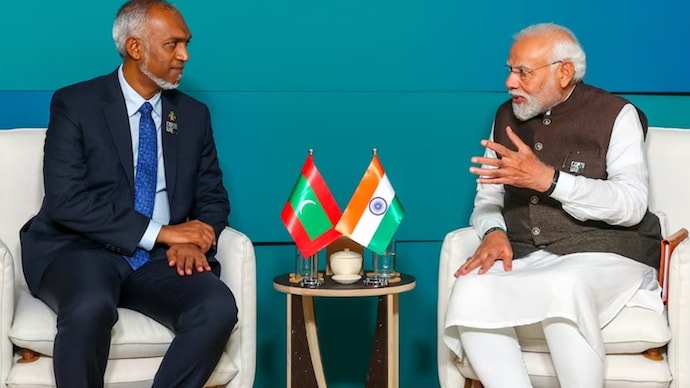
    • President Muizzu’s Visit: President Mohamed Muizzu’s visit to China after taking office marked a milestone. It was seen as a “new beginning” and a departure from previous Maldivian leaders’ foreign policy choices.

    China’s Growing Role and India’s Concerns

    • China’s Expanding Economic Cooperation: China’s economic cooperation with the Maldives has been on the rise, causing unease in India.
    • India’s Concerns: India’s “hegemonic neighborhood first” policy has led to concerns about Beijing’s growing influence in South Asia.
    • Geopolitical Tensions: The India-China rivalry and China’s increasing presence in the Indian Ocean have put the Maldives in the spotlight.
    • US Engagement: The United States, recognizing the Maldives’ geostrategic significance, has intensified its engagement with the archipelago, opening its embassy in 2020.

    China’s Perception of India’s Reaction

    • Bilateral Relations Upgrade: During President Muizzu’s visit, China upgraded its bilateral relationship with the Maldives from a “comprehensive friendly cooperative partnership” to a “comprehensive strategic cooperative partnership.”
    • Maritime Calculations: Observers acknowledge that China’s maritime interests play a significant role in this diplomatic shift.
    • Indian Annoyance: China candidly commented on India’s perceived annoyance with the Maldives’ growing ties with China, suggesting a lack of confidence in India’s bilateral relationship with the Maldives.

    Conclusion

    • The Maldives’ strategic location in the Indian Ocean has thrust it into the spotlight of global power struggles.
    • As India, China, and the United States vie for influence in this crucial region, the Maldives finds itself at the intersection of geopolitical ambitions.
    • Whether this triangular tug of war will reshape historical and strategic equations or lead to a delicate balance remains uncertain, but the Maldives’ significance on the world stage is undeniable.
  • Iran, Pakistan, and the Baloch Militancy

    iran

    Introduction

    • Recent events have thrust the relationship between Iran and Pakistan into the spotlight, with missile strikes, drone attacks, and territorial disputes escalating tensions between the two neighboring nations.
    • In this comprehensive analysis, we examine the historical context, evolving dynamics, and broader implications of the Iran-Pakistan relationship.

    Iran-Pakistan: Historical Background

    [A] Pre-1979: Allies under the Shadow of Superpowers

    • Alliance and CENTO: Before Iran’s Islamic Revolution in 1979, both countries were aligned with the United States and were part of the Baghdad Pact (later CENTO), a military alliance modeled on NATO.
    • Support During Wars: Iran provided material and weapons support to Pakistan during its wars against India in 1965 and 1971.

    [B] Post-1979: A Shift in Alliances

    • Sectarian Divide: After Ayatollah Khomeini’s Shiite regime took power in Iran, Pakistan, a Sunni-majority nation, found itself at odds with Iran due to sectarian differences.
    • Geopolitical Differences: Differences emerged as Iran became a sworn enemy of the United States after 1979, while Pakistan drew closer to the U.S., particularly during the “War on Terror” post-9/11.
    • Focus on Exporting Revolution: Iran’s foreign policy, centred on exporting the Islamic revolution, made its Arab neighbours uneasy, leading to a divergence in regional priorities.
    • Opposite Sides in Afghanistan: Iran backed the Northern Alliance against the Taliban in Afghanistan, a group created with Pakistan’s support, leading to further tensions.

    Attempts at Reconciliation

    • 1995: Benazir Bhutto’s Visit: Prime Minister Benazir Bhutto referred to Iran as “a friend, a neighbor, and a brother in Islam” during her visit to Tehran in 1995, emphasizing cooperation and regretting U.S. sanctions.
    • Zardari’s Era: Asif Ali Zardari’s presidency saw increased cooperation with Iran, particularly in trade and energy, though Sunni-Shiite tensions persisted.
    • Nawaz Sharif’s Shift: Nawaz Sharif, upon becoming Prime Minister in 2013, realigned Pakistan’s stance away from Iran, strengthening ties with Arab allies and leaving the Iran-Pakistan gas pipeline project incomplete.

    The Balochistan Conundrum

    • Shared Ethnicity: The Baloch population, living on both sides of the Iran-Pakistan border, shares deep cultural, ethnic, and linguistic ties.
    • Marginalization and Grievances: Baloch communities in both nations have been marginalized, leading to separatist movements.
    • Cross-Border Insurgency: Baloch insurgents operate across the porous border, targeting military and civilian targets, complicating relations.
    • Differences in Insurgent Groups: Baloch insurgents in Iran often have religious affiliations, while those in Pakistan lean towards secular ethno-nationalism.

    Broader Regional Implications

    • Regional Power Dynamics: The involvement of Arabs, Israelis, and Iranians in the Balochistan issue reflects broader regional power politics.
    • Strategic Significance: Balochistan’s location at the mouth of the Gulf makes it integral to geopolitical strategies, including China’s Belt and Road Initiative.
    • Balancing Act: India’s involvement in Iran and the Chabahar port development, seen as a counter to Pakistan’s Gwadar port, adds to regional complexities.
    • Middle East Policy Shift: India’s economic and security interests in the Middle East are prompting a shift in its traditionally neutral stance towards regional conflicts.

    Conclusion

    • The recent cross-border strikes and tensions between Iran and Pakistan underscore the fragility of their relationship, complicated by historical, sectarian, and geopolitical factors.
    • While both nations are likely to seek de-escalation, the Balochistan issue, regional power dynamics, and India’s evolving role in the Middle East are challenging established assumptions about security in the region.
    • As the Gulf’s conflicts spill into the Baloch frontier, a weakened Pakistan may find itself increasingly entangled in the Middle East’s widening conflict theatre, demanding a reevaluation of India’s regional strategies.
  • India doesn’t need wolf warriors

    Maldives asks India to withdraw its military presence from island nation  amid diplomatic row - India Today

    Central Idea:

    The article delves into recent diplomatic tensions between India and the Maldives, triggered by social media campaigns and statements from Maldivian officials. It emphasizes the challenges India faces in maintaining regional relationships amid a shifting dynamic in the Maldives towards a pro-China stance.

    Key Highlights:

    • Social Media Campaign: Post-Prime Minister Modi’s visit to Lakshadweep, a social media campaign to boycott the Maldives emerged, leading to negative reactions from some Maldivian officials.
    • Pro-China Shift: President Muizzu’s visit to China and his pro-China stand mark a significant departure from his predecessor’s policies. He seeks closer ties with China and challenges existing Indian influence in the region.
    • Diplomatic Fallout: Maldivian officials’ comments on India and Modi resulted in their suspension, with the Maldives clarifying that their views did not represent the government’s official stance.
    • India’s Regional Importance: India’s relationship with the Maldives is crucial due to geographical proximity, shared maritime interests, and historical ties. The Maldives has traditionally supported India in international forums.
    • India’s Foreign Policy Challenges: The article points out India’s diplomatic challenges, citing instances such as its stance on Russia’s invasion of Ukraine and its handling of the Israel-Hamas conflict, impacting its global standing.

    Key Challenges:

    • Shifting Alliances: The Maldives’ pivot towards China challenges India’s influence in the region, posing a diplomatic challenge and potential geopolitical consequences.
    • Domestic Sentiments: The article highlights the impact of populist rhetoric and social media campaigns on India’s foreign policy, especially in dealing with smaller neighbors.
    • Global Perception: India faces a challenge in projecting a harmonious image that aligns with both its national interests and the interests of its neighbors, as opposed to adopting a more confrontational approach seen in social media reactions.

    Key Phrases:

    • China’s wolf-warrior diplomacy:  An assertive and combative approach to foreign relations characterized by aggressive rhetoric and actions, aimed at defending China’s interests and countering perceived challenges or criticisms from the international community.
    • Neighbourhood First Policy: Refers to India’s approach emphasizing prioritizing relationships with its neighboring countries.

    Key Quotes:

    • “His election campaign in 2023 also contained anti-India rhetoric: he promised to remove Indian troops from the Maldives and balance trade relations, which he claimed were heavily tilted in India’s favour.”
    • “India has to make those hard choices and it must make them now.”

    Key Examples and References:

    • Maldivian President’s Visit to China: President Muizzu’s pro-China stance and the elevation of bilateral ties with China.
    • India’s G20 Summit Theme: The use of the theme ‘One Earth, One Family, One Future’ during the G20 summit.

    Key Facts and Data:

    • Maldivian President’s Request: President Muizzu’s request for India to remove its military personnel from the Maldives by March 15.
    • China-Maldives Comprehensive Strategic Cooperative Partnership: An agreement indicating deepening ties between China and the Maldives.

    Critical Analysis:

    The article critically examines India’s foreign policy challenges, emphasizing the need for a balanced approach and the potential repercussions of adopting a confrontational stance, drawing parallels with China’s diplomacy.

    Way Forward:

    The article suggests that India needs to navigate its foreign policy with a globalist perspective, taking into account the complexities of regional relationships, avoiding populist rhetoric, and making strategic decisions that align with its long-term interests.

  • Why are Indian soldiers in Maldives?

    maldives

    Introduction

    • With President Muizzu’s administration insisting on the withdrawal of Indian troops, a high-level core group has been set up to negotiate this process.
    • This situation raises questions about the reasons behind the presence of Indian troops and the factors fueling the ‘India Out’ campaign.

    Overview of the Current Situation

    • Official Statement: Maldives affirmed the policy of President Muizzu’s administration to remove Indian military personnel from the Maldives.
    • Negotiation Group: A core group, including Indian High Commissioner, met in Male to discuss the troop withdrawal, though the Indian government has not yet commented on these reports.

    Indian Military Presence in the Maldives

    • Troop Numbers: Contrary to the rhetoric of the ‘India Out’ campaign, only 88 Indian military personnel are stationed in the Maldives, primarily for training purposes.
    • Historical Context: Indian soldiers have been sent to the Maldives for training in combat, reconnaissance, and rescue-aid operations. The only time Indian troops were involved in active military operations was during the 1988 coup attempt, at the request of then-President Maumoon Abdul Gayoom.

    Factors behind the ‘India Out’ Campaign

    • Controversy over Helicopters: The gifting of two Dhruv Advanced Light Helicopters by India, used for humanitarian purposes, became a point of contention, portrayed as a military presence by certain political factions.
    • Perceived Lack of Transparency: The Solih government’s alleged opacity in dealings with India fueled suspicions.
    • Maritime Security Dependence: The Maldives relies on India for maritime security, collaborating to counter common threats.
    • Police Academy Speculations: The construction of a new police academy with Indian assistance led to rumours about its purpose and scale.
    • UTF Harbour Project Agreement: Speculations about the UTF (Uthuru Thila Falhu- Island) project being turned into an Indian naval base, despite official clarifications to the contrary.

    Conclusion

    • The insistence on the withdrawal of Indian troops from the Maldives and the ensuing ‘India Out’ campaign reflect a complex interplay of historical, political, and security factors.
    • While the Indian military presence has been primarily for training and humanitarian assistance, various internal and external elements have contributed to the current sentiment.
    • Understanding these nuances is crucial for comprehending the evolving relationship between India and the Maldives and the broader geopolitical implications in the region.
  • What happened in Bhutan’s elections?

    Introduction

    • In a significant political development, Tshering Tobgay and the People’s Democratic Party (PDP) emerged victorious in Bhutan’s recent runoff election, marking a pivotal moment in the country’s young democracy.
    • Bhutan’s election not only reflects the evolving political dynamics within but also has broader implications for the region, particularly in terms of Bhutan’s relations with India and China.

    Bhutan’s Democratic Evolution

    • Fair Elections: Unlike some neighbouring countries, Bhutan’s elections have been largely free from tampering or political violence.
    • Monarchy to Democracy: Since transitioning from a monarchy to a parliamentary democracy in 2008, Bhutan has seen its democratic processes evolve, with increased party participation and voter choice.
    • Challenges: Despite progress, concerns about media censorship and discrimination against minorities persist.

    Economic Context of the Elections

    • Economic Challenges: Bhutan faces economic difficulties, including a struggling tourism sector, high youth unemployment, and significant emigration for better opportunities.
    • Tobgay’s Economic Focus: Tobgay’s campaign centred on addressing these economic issues, promising investment and solutions to curb the emigration trend.

    India’s Role and Regional Implications

    • India-Bhutan Relations: India remains Bhutan’s largest donor and ally, playing a crucial role in Bhutan’s economic recovery and infrastructure development.
    • Hydroelectric Potential: Bhutan’s untapped hydroelectric resources present opportunities for energy trade with India.
    • China Factor: Recent years have seen heightened tensions between India and China over Bhutan, especially in the disputed Doklam region.
    • Tobgay’s Pro-India Stance: Tobgay is perceived as pro-India, which aligns with India’s strategic interests in the region. His election has been positively received by Indian Prime Minister Narendra Modi.

     Conclusion

    • Tshering Tobgay’s election victory in Bhutan is a testament to the country’s maturing democracy and its ability to navigate complex economic and geopolitical challenges.
    • As Bhutan continues to balance its relationships with major powers like India and China, Tobgay’s leadership will be pivotal in shaping the nation’s future trajectory, both domestically and in the broader South Asian context.
  • India, Pakistan conduct Annual Exchange of List of Nuclear Installations

    pakistan

    Central Idea

    • India and Pakistan has exchanged a list of their nuclear installations that cannot be attacked in case of an escalation in hostilities.

    Non-Nuclear Aggression Agreement

    • The Non-nuclear aggression agreement is a bilateral and nuclear weapons control treaty between India and Pakistan, on the reduction (or limitation) of nuclear arms.
    • Both pledged not to attack or assist foreign powers to attack on each others nuclear installations and facilities.
    • The treaty was drafted in 1988, and signed by PM Rajiv Gandhi and his counterpart Benazir Bhutto on 21 December 1988; it entered into force on January 1991.
    • The treaty barred its signatories from carrying out a surprise attack (or to assist foreign powers to attack) on each other’s nuclear installations and facilities.
    • Starting in January 1992, India and Pakistan have annually exchanged lists of their respective military and civilian nuclear-related facilities.

    Need for the treaty

    • In 1986-87, the massive exercise, ‘Brasstacks’ was carried out by the Indian Army, raising fears of an Indian attack on Pakistan’s nuclear facilities.
    • Since then, the Foreign ministries of both countries have been negotiating to reach an understanding towards the control of nuclear weapons.

    Significance of the agreement

    • The treaty barred its signatories from carrying out a surprise attack (or to assist foreign powers to attack) on each other’s nuclear installations and facilities.
    • The treaty provides a confidence-building security measure environment.

    Other: Sharing of Prisoners information

    • Both nations simultaneously share the list of prisoners in each other’s custody.
    • These lists are exchanged under the provisions of the Agreement on Consular Access signed in May 2008.
    • Under this pact, the two countries should exchange comprehensive lists on January 1 and July 1 every year (i.e. twice a year).
  • Maldives decides to end Hydrographic Survey Pact with India

    Hydrographic Survey

    Central Idea

    • The Maldives government has chosen not to renew a hydrographic survey agreement with India, marking a significant change in bilateral relations.

    Hydrographic Survey Pact: A Backgrounder

    • Nature of Hydrographic Surveys: These surveys involve mapping water bodies to facilitate safe and efficient maritime transportation.
    • 2019 Agreement: During Prime Minister Modi’s state visit to the Maldives in June 2019, an MoU was signed for cooperation in hydrography between the Indian Navy and the Maldives National Defence Force (MNDF).

    Activities under the Pact

    • Joint Hydrographic Surveys: Three joint surveys were conducted in 2021, 2022, and 2023, involving Indian Naval Ships like INS Darshak and INS Sutlej.
    • Survey Objectives: The surveys aimed to update navigational charts and support sectors like tourism and fisheries. They also involved tidal observations and identifying new shoals.
    • Support to MNDF: India provided hydrographic equipment and training to MNDF personnel, aligning with its policy of supporting the Maldives in establishing hydrographic capabilities.

    India’s Hydrographic Survey Agreements with Other Countries

    • Global Hydrographic Efforts: India has conducted hydrographic surveys in various countries, including Sri Lanka, Myanmar, and Bangladesh.
    • International Cooperation: The National Hydrographic Office highlights the potential for international cooperation in hydrography, especially in regions with limited capabilities.

    Reasons behind Maldives’ Decision   

    • Regime Change: The election of Mohamed Muizzu of the Progressive Party of Maldives (PPM), seen as more pro-China, contrasts with his predecessor President Solih’s India-friendly stance.
    • Geopolitical Dynamics: China’s increasing influence in the Indian Ocean region, particularly through the Belt and Road Initiative (BRI), has impacted India’s traditional sphere of influence in the Maldives.
    • ‘India Out’ Campaign: Allegations of Indian military presence and the new administration’s emphasis on national security and self-reliance in hydrographic capabilities have influenced this decision.

    Possible outcomes

    • Changing Geopolitical Landscape: The Maldives’ decision reflects the shifting geopolitical dynamics in the Indian Ocean, with growing Chinese influence challenging India’s traditional role.
    • Impact on India-Maldives Relations: This development could signify a recalibration of the Maldives’ foreign policy, potentially impacting India’s strategic interests in the region.