đŸ’„Join UPSC 2027,2028 Mentorship (July Batch) + XFactor Notes & Microthemes PDF

GS Paper: GS3-24. Various Security Forces and Agencies and their Mandate.

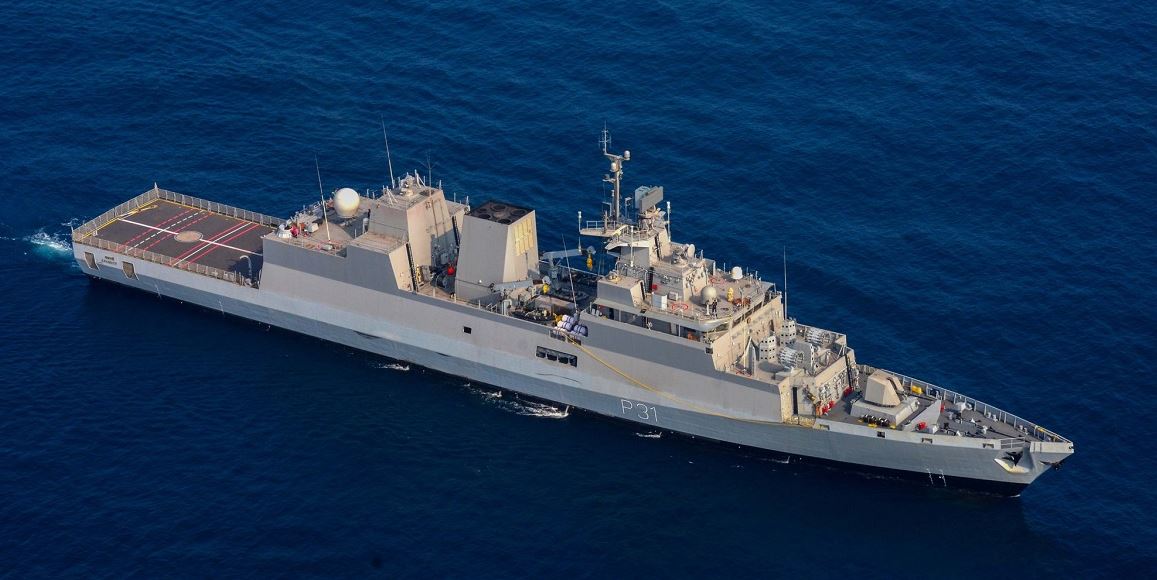
  • Next-Generation Corvettes for Indian Navy

    The Defence Acquisition Council (DAC) has given the Acceptance of Necessity (AoN) for the procurement of next-generation Corvettes for the Indian Navy at an approximate cost of Rs 36,000 crore.

    What is a Corvette?

    • A Corvette is the smallest class of naval ships and it falls below the warship class of a frigate.
    • These are highly agile ships and are categorised as missile boats, anti-submarine ships, coastal patrol crafts and fast attack naval vessels.
    • The word corvette itself is derived from French and Dutch origin.
    • During World War II, the term Corvette was used to describe vessels which had anti-submarine roles assigned to them.
    • Modern Corvettes can go up to 2,000 tons in displacement which helps in keeping them agile.

    What kind of Corvettes does the Indian Navy possess?

    • The Indian Navy at present has the Kamorta Class Corvettes, which are also known as Project 28.
    • These ships have an anti-submarine role and are manufactured at Garden Reach Shipbuilders and Engineers in Kolkata.
    • The four Kamorta Class Corvettes that the Indian Navy possesses are named INS Kamorta, INS Kadmatt, INS Kiltan and INS Kavaratti.
    • The first of these was commissioned in 2014 and the last one in 2020.

    What new capabilities will the new generation Corvettes have?

    • The next-generation Corvettes will be manufactured for various roles like surveillance missions, escort operations, deterrence, surface action group operations, search and attack and coastal defence.
    • It is worth noting that these roles will be in addition to the anti-submarine roles being already performed by the existing Corvettes in the Navy.
    • Corvettes will be constructed based on new in-house design of the Indian Navy using latest technology of ship buildings.
    • They would contribute to further the government’s initiative of Security and Growth for all in the region (SAGAR).


    UPSC 2023 countdown has begun! Get your personal guidance plan now! (Click here)

  • Chief of Defence Staff (CDS)

    Setting the stage for appointment of the next Chief of Defence Staff (CDS), the government has amended Service Rules of the Army, Navy and Air Force.

    The post of CDS has also been lying vacant since the demise of Late. Gen. Bipin Rawat.

    What is the update in rules?

    • The govt has allowed retired Service Chiefs and three-star officers eligible for consideration for the country’s top military post.
    • However, with an age limit that the retired officer should not have attained 62 years on the date of appointment.
    • Retired Service chiefs are largely ruled out, especially so for the present consideration.

    Office of the Chief of Defence Staff (CDS)

    • The CDS is a high military office that oversees and coordinates the working of the three Services, and offers seamless tri-service views and single-point advice to the Executive.
    • On long-term it provides for defence planning and management, including manpower, equipment and strategy, and above all, “joint manship” in operations.
    • In most democracies, the CDS is seen as being above inter-Service rivalries and the immediate operational preoccupations of the individual military chiefs.
    • The role of the CDS becomes critical in times of conflict.

    Duties and Functions of the CDS

    The Ministry of Defence has outlined various functions and duties for the post of CDS:

    • To head the Department of Military Affairs in Ministry of Defence and function as its Secretary.
    • To act as the Principal Military Advisor to Raksha Mantri on all Tri-Service matters.
    • To function as the Permanent Chairman of the Chiefs of Staff Committee
    • To administer the Tri-Service organizations/agencies/commands.
    • To be a member of Defence Acquisition Council chaired by Raksha Mantri.
    • To function as the Military Advisor to the Nuclear Command Authority.
    • To bring about jointness in operation, logistics, transport, training, support services, communications, repairs and maintenance, etc of the three Services.
    • To implement Five-Year Defence Capital Acquisition Plan and Two-Year roll-on Annual Acquisition Plans, as a follow up of Integrated Capability Development Plan.
    • To bring about reforms in the functioning of three Services with the aim to augment combat capabilities of the Armed Forces by reducing wasteful expenditure.

    Why need CDS?

    • Tri-services coordination: The creation of the CDS will eventually lead to the formation of tri-service theatre commands intended to create vertical integration of the three forces.
    • Single-point military advisory: The CDS will be a single-point military adviser to the government and synergise long term planning, procurements, training and logistics of the three Services.
    • Efforts saving: This is expected to save money by avoiding duplication between the Services, at a time of shrinking capital expenditure within the defence budget.
    • Military diplomacy: This is today supporting conventional diplomacy. That can’t be done by different Services.


    UPSC 2023 countdown has begun! Get your personal guidance plan now! (Click here)

  • Astra MK-I Air-to-Air Missile: Features, strategic significance

    The Ministry of Defence has signed a contract with Bharat Dynamics Ltd (BDL) for the supply of the Astra Mark-1for deployment on fighter jets of the Indian Air Force and Indian Navy.

    Astra Missile

    • The Astra Mk-1 is a beyond visual range (BVR), air-to-air missile (AAM).
    • The Astra project was officially launched in the early 2000s with defined parameters and proposed future variants.
    • The missile has been designed and developed by the Defence Research and Development Organisation (DRDO).
    • It will be deployed on fighter jets like Sukhoi-30 MKI and Tejas of the IAF and the Mig-29K of the Navy.
    • BVM missiles are capable of engaging beyond the range of 20 nautical miles or 37 kilometres.

    Range and its Variants

    • While the range for Astra Mk-1 is around 110 km, the Mk-2 with a range over 150 km is under development and Mk-3 version with a longer range is being envisaged.
    • One more version of Astra, with a range smaller than Mk-1 is also under development.

    Strategic significance

    • The missile has been designed based on requirements specified by the IAF for BVR as well as close-combat engagement, reducing the dependency on foreign sources.
    • AAMs with BVR capability provides large stand-off ranges to own fighter aircraft.
    • It can neutralise adversary airborne assets without exposing adversary air defence measures.
    • Stand-off range means the missile is launched at a distance sufficient to allow the attacking side to evade defensive fire from the target.
    • Astra is technologically and economically superior to many such imported missile
    • The missile can travel at speeds more than four times that of sound and can reach a maximum altitude of 20 km, making it extremely flexible for air combat.


    UPSC 2023 countdown has begun! Get your personal guidance plan now! (Click here)

  • Project WARDEC: India’s upcoming AI-powered Wargame Centre

    The Army Training Command signed a memorandum of understanding (MoU) with Gandhinagar-based Rashtriya Raksha University (RRU) to develop a ‘Wargame Research and Development Centre (WARDEC)’ in New Delhi.

    What is Project WARDEC?

    • The project ‘WARDEC’ will be a first-of-its-kind simulation-based training centre in India that will use artificial intelligence (AI) to design virtual reality war-games.
    • The Wargame Research and Development Centre will be used by the Army to train its soldiers and test their strategies through “metaverse-enabled gameplay”.
    • The wargame models will be designed to prepare for wars as well as counter-terror and counter-insurgency operations.

    Where will the centre come up and when?

    • The centre will come up in a military zone in New Delhi, confirmed RRU officials privy to the development.
    • The RRU will join hands with Tech Mahindra to develop the centre in the coming three to four months.
    • The RRU, an institute under the Ministry of Home Affairs (MHA), specialises in national security and policing.
    • Located in Gandhinagar’s Lavad village, it is an “institute of national importance” – a status granted to it by an Act of Parliament.

    How will these simulation exercises play out?

    • Soldiers will test their skills in the metaverse where their surroundings will be simulated using a combination of virtual reality (VR) and augmented reality (AR).
    • In metaverse, the players will get a realistic experience of the actual situation.
    • If a weapon weighing 5 kg drops or the air pressure falls, they will feel it like anyone would in a live situation, real-time.
    • The game would play out player versus player, player versus computer or even computer versus computer.

    How will the centre help the Army?

    • The Army intends to use the war-game centre to train its officers in military strategies.
    • Indian Army will provide data to set the backdrop of the gameplay, so that participants get a realistic experience.
    • In Army, it is often said that the enemy can ambush you from 361 directions, where 360 sides are around the soldier, and one is above in case there is an airdrop.
    • So, wargame simulation helps the Army think of all possible scenarios.

    What promise does AI-based wargame simulation hold?

    • Apart from the armed forces, the BSF, CRPF, CISF, ITBP and SSB can also use the metaverse-enabled simulation exercises for better training.
    • The use of AI can provide a totally immersive training experience as it can simulate a battlefield close to reality and map several eventualities in the probable event of a war.

    How many countries use such wargaming drills?

    • Since the 9/11 attacks, use of information technology-enabled wargaming is preferred by several countries like the US, Israel, the UK to prepare for possibilities in case of terror attacks or war.
    • In March 2014, several world leaders, including former German chancellor Angela Merkel, former US president Barack Obama and Chinese president Xi Jinping had played a war simulation game.
    • It was during the Hague Summit about how to react in case of a nuclear attack.
    • In that case, the target of the nuclear attack was a fictional country named Brinia.


    UPSC 2023 countdown has begun! Get your personal guidance plan now! (Click here)

  • Back in news: Chief of Defence Staff (CDS)

    The Union government is reassessing the concept of the post of Chief of Defence Staff (CDS) and the Department of Military Affairs (DMA) leading to a delay in the appointment to the post.

    The post of CDS has also been lying vacant since the demise of Late. Gen. Bipin Rawat.

    Office of the Chief of Defence Staff (CDS)

    • The CDS is a high military office that oversees and coordinates the working of the three Services, and offers seamless tri-service views and single-point advice to the Executive.
    • On long-term it provides for defence planning and management, including manpower, equipment and strategy, and above all, “joint manship” in operations.
    • In most democracies, the CDS is seen as being above inter-Service rivalries and the immediate operational preoccupations of the individual military chiefs.
    • The role of the CDS becomes critical in times of conflict.

    Duties and Functions of the CDS

    The Ministry of Defence has outlined various functions and duties for the post of CDS:

    • To head the Department of Military Affairs in Ministry of Defence and function as its Secretary.
    • To act as the Principal Military Advisor to Raksha Mantri on all Tri-Service matters.
    • To function as the Permanent Chairman of the Chiefs of Staff Committee
    • To administer the Tri-Service organizations/agencies/commands.
    • To be a member of Defence Acquisition Council chaired by Raksha Mantri.
    • To function as the Military Advisor to the Nuclear Command Authority.
    • To bring about jointness in operation, logistics, transport, training, support services, communications, repairs and maintenance, etc of the three Services.
    • To implement Five-Year Defence Capital Acquisition Plan and Two-Year roll-on Annual Acquisition Plans, as a follow up of Integrated Capability Development Plan.
    • To bring about reforms in the functioning of three Services with the aim to augment combat capabilities of the Armed Forces by reducing wasteful expenditure.

    Why need CDS?

    • Tri-services coordination: The creation of the CDS will eventually lead to the formation of tri-service theatre commands intended to create vertical integration of the three forces.
    • Single-point military advisory: The CDS will be a single-point military adviser to the government and synergise long term planning, procurements, training and logistics of the three Services.
    • Efforts saving: This is expected to save money by avoiding duplication between the Services, at a time of shrinking capital expenditure within the defence budget.
    • Military diplomacy: This is today supporting conventional diplomacy. That can’t be done by different Services.


    UPSC 2023 countdown has begun! Get your personal guidance plan now! (Click here)

  • Plans underway on Creation of Integrated Battle Groups

    The Indian Army is in advanced stages of putting together Integrated Battle Groups (IBGs) by reconfiguring its combat formations.

    What are IBGs?

    • IBGs are brigade-sized, agile, self-sufficient combat formations, which can swiftly launch strikes against an adversary in case of hostilities.
    • Each IBG would be tailor-made based on Threat, Terrain and Task and resources will be allotted based on the three Ts.
    • They need to be light so they will be low on logistics and they will be able to mobilise within 12-48 hrs based on the location.
    • An IBG operating in a desert needs to be constituted differently from an IBG operating in the mountains.
    • The key corps of the Army is likely to be reorganized into 1-3 IBGs.

    Objective of IBG

    • Holistic integration to enhance the operational and functional efficiency, optimize budget expenditure, facilitate force modernization and address aspirations

    Structure of the IBG

    • While a command is the largest static formation of the Army spread across defined geography, a corps is the largest mobile formation.
    • Typically each corps has about three brigades.
    • The idea is to reorganise them into IBGs which are brigade-sized units but have all the essential elements like infantry, armoured, artillery and air defence embedded together based on the three Ts.
    • The IBGs will also be defensive and offensive. While the offensive IBGs would quickly mobilise and make a thrust into enemy territory for strikes, defensive IBGs would hold ground at vulnerable points or where enemy action is expected.

    Why need IBGs?

    • After the terrorist attack on the Parliament, the Indian military undertook massive mobilization but the Army’s formations which deep inside took weeks to mobilise losing the element of surprise.
    • Following this, the Army formulated a proactive doctrine known as ‘Cold Start’ to launch swift offensive but its existence was consistently denied in the past.
    • Its existence was acknowledged for the first time by (Late) Gen Rawat in January 2017.


    UPSC 2023 countdown has begun! Get your personal guidance plan now! (Click here)

  • France pulls out of P-75I Project

    Ahead of PM Modi’s scheduled visit, France has denounced its participation in the P-75 India (P-75I) project under which six conventional submarines are to be built in India for the Indian Navy.

    Why did France pull out?

    • The reason was that the Request for Proposal (RFP) requires that the fuel cell AIP be sea proven, which not the case is for us yet since the French Navy does not use such a propulsion system.
    • AIP refers to Air-Independent Propulsion, a technology for conventional — that is, non-nuclear — submarines.

    Backgrounder: Project 75

    • Project 75 India is a part of India’s thirty-year-old submarine building plan by which all the six submarines which are under the project should already be sailing and it should have been followed by the submarines now for which the RFP has been issued.
    • It is a long-awaited and long-overdue project.
    • This should have happened way back but it got delayed because it was difficult to find a strategic partnership model.

    What is P-75I?

    • The Project 75I-class submarine is a follow-on of the Project 75 Kalvari-class submarine for the Indian Navy.
    • In the late 1990s, around the time of Kargil war, a three-decade plan took shape for indigenous construction of submarines.
    • It was known to have two separate series of submarine building lines – codenamed Project 75 and Project 75I — in collaboration with foreign entities.
    • Under this project, the Indian Navy intends to acquire six diesel-electric submarines, which will also feature advanced air-independent propulsion systems.
    • This is for enabling them to stay submerged for longer duration and substantially increase their operational range.

    What is the status of the project?

    • The navy is slightly behind the curve on P-75I.
    • The project faces choppy waters; the Naval Group has already announced it is pulling out, and sources said the Russian and Spanish companies might also not proceed with their bids.
    • Among the concerns, is the requirement to demonstrate a sea-proven fuel cell AIP.
    • While some manufacturers may have the technology, it may not have been proven at sea yet.
    • Another problem for the OEMs is the transfer of technology, which is built into the process.

    Why does the Navy want AIP subs?

    • Simply put, AIP technology allows a conventional submarine to remain submerged for much longer than ordinary diesel-electric submarines.
    • All conventional submarines have to surface to run their generators that recharge the batteries that allow the boat to function under water.
    • However, the more frequently a submarine surfaces, the higher the chances of it being detected.
    • AIP allows a submarine to remain submerged for more than a fortnight, compared to two to three days for diesel-electric boats.
    • IP has a force multiplier effect on lethality of a diesel electric submarine as it enhances the submerged endurance of the boat several folds.

    What submarines does India have now?

    • India has 16 conventional diesel-electric submarines, which are classified as SSKs.
    • After the last two Kalvari Class subs are commissioned under P-75, this number will go up to 18.
    • India also has two nuclear ballistic submarines, classified SSBN.

    Strategic importance of submarines development

    • Ageing arsenal: Currently, India has less number of submarines than what is required with some more of those from both types being at various stages of construction.
    • Combat roles in near future: The nuclear powered and diesel-electric submarines have their designated roles in the Carrier Battle Groups, which are formations of ships and submarines with Aircraft Carriers at the lead role.
    • Strategic deterrence: As per the basic principles of submarine deployment and the minimum requirement for India to create a strategic deterrence, there is a specific number of submarines of both types that India needs to have in active service.

    Significance of P-75 I

    • ‘Make in India’ Projects: It will serve to facilitate faster and more significant absorption of technology and create a tiered industrial ecosystem for submarine construction in India.
    • Self-Reliance: From a strategic perspective, this will help reduce current dependence on imports and gradually ensure greater self-reliance and dependability of supplies from indigenous sources.
    • Securing Indo-Pacific: China is increasing its presence in the Indian Ocean Region (IOR) and this is creating pressure on the Indian Navy in sprucing up the submarine arm.


    UPSC 2023 countdown has begun! Get your personal guidance plan now! (Click here)

  • Areas under AFSPA regime reduced: Home Ministry

    The Union Home Ministry has considerably reduced the “disturbed areas” under the Armed Forces (Special) Powers Act (AFSPA) in Assam, Manipur and Nagaland.

    AFSPA: A Backgrounder

    • The AFSPA, 1958 came into force in the context of insurgency in the North-eastern States decades ago.
    • It provides “special power” to the Armed Forces applies to the Army, the Air Force and the Central Paramilitary forces etc.
    • It has been long contested debate whether the “special powers” granted under AFSPA gives total immunity to the armed forces for any action taken by them.

    Armed Forces (Special Powers) Act, 1958

    • Armed Forces Special Powers Act, to put it simply, gives armed forces the power to maintain public order in “disturbed areas.”
    • AFSPA gives armed forces the authority use force or even open fire after giving due warning if they feel a person is in contravention of the law.
    • The Act further provides that if “reasonable suspicion exists”, the armed forces can also arrest a person without warrant; enter or search premises without a warrant; and ban the possession of firearms.

    What are the Special Powers?

    The ‘special powers’ which are spelt out under Section 4 provide that:

    (a) Power to use force, including opening fire, even to the extent of causing death if prohibitory orders banning assembly of five or more persons or carrying arms and weapons, etc are in force in the disturbed area;

    (b) Power to destroy structures used as hide-outs, training camps, or as a place from which attacks are or likely to be launched, etc;

    (c) Power to arrest without warrant and to use force for the purpose;

    (d) Power to enter and search premises without a warrant to make arrest or recovery of hostages, arms and ammunition and stolen property etc.

    What are the Disturbed Areas?

    • A disturbed area is one that is declared by notification under Section 3 of the AFSPA.
    • As per Section 3, it can be invoked in places where “the use of armed forces in aid of the civil power is necessary”.

    Who can declare/notify such areas?

    • The Central Government or the Governor of the State or administrator of the Union Territory can declare the whole or part of the State or Union Territory as a disturbed area.
    • A suitable notification would have to be made in the Official Gazette.

    Presently ‘Disturbed Areas’

    • AFSPA is currently in force in Assam, Nagaland, Manipur, 3 districts of Arunachal Pradesh, and areas falling within the jurisdiction of 8 police stations in Arunachal Pradesh bordering Assam.
    • In Jammu and Kashmir, a separate law Armed Forces (Jammu and Kashmir) Special Powers Act, 1990 has been in force.

    AFSPA: Is it a License to Kill?

    While the operation of the Section has been controversial in itself, it has attracted much criticism when actions have resulted in the death of civilians.

    • Power to kill: Section 4 of the Act granted officers the authority to “take any action” even to the extent to cause the death.
    • Protection against prosecution: This power is further bolstered by Section 6 which provides that legal can be instituted against the officer, except with the previous sanction of the Central Government.

    Supreme Court’s Observations over AFSPA

    • These extra-judicial killings became the attention of the Supreme Court in 2016.
    • It clarified that the bar under Section 6 would not grant “total immunity” to the officers against any probe into their alleged excesses.
    • The judgment noted that if any death was unjustified, there is no blanket immunity available to the perpetrator(s) of the offense.
    • The Court further noted that if an offense is committed even by Army personnel, there is no concept of absolute immunity from trial by the criminal court constituted under the CrPC.

    Constitutionality of AFSPA

    • Attempts have been made to examine the constitutionality of the Act on the grounds that it is contravention to the:
    1. Right to Life and Personal Liberty (Article 21) and
    2. Federal structure of the Constitution since law and order is a State subject

    Recommendations to repeal AFSPA

    (1) Justice B.P. Jeevan Reddy Commission

    • The 2004 Committee headed by Justice B.P. Jeevan Reddy, the content of which has never officially been revealed by the Government, recommended that AFSPA be repealed.
    • Additionally, it recommended that appropriate provisions be inserted in the Unlawful Activities Prevention Act, 1967 (UAPA) instead.
    • It also recommended that the UAPA be modified to clearly specify the powers of the armed forces and paramilitary forces and grievance cells should be set up in each district where the armed forces are deployed.

    (2) ARC II

    • The Administrative Reforms Commission in its 5th Report on ‘Public Order’ had also recommended that AFSPA be repealed.
    • It recommended adding a new chapter to be added to the Unlawful Activities Prevention Act, 1967.
    • However, the recommendation was considered first and then rejected.

    Other issues with AFSPA

    (1) Sexual Misconduct by Armed Forces

    • The issue of violation of human rights by actions of armed forces came under the consideration of the Committee on Amendments to Criminal Law (popularly known as Justice Verma Committee) set up in 2012.
    • It observed that- in conflict zones, legal protection for women was neglected.

    (2) Autocracy

    • The reality is that there is no evidence of any action being taken against any officer of the armed forces or paramilitary forces for their excesses.

    Caution given by the Supreme Court

    A July 2016 judgment authored by Justice Madan B. Lokur in Extra Judicial Execution Victim Families Association quoted the “Ten Commandments” issued by the Chief of the Army Staff for operations in disturbed areas:

    1. Definite circumstances: The “power to cause death is relatable to maintenance of public order in a disturbed area and is to be exercised under definite circumstances”.
    2. Declaration preconditions: These preconditions include a declaration by a high-level authority that an area is “disturbed”.
    3. Due warning: The officer concerned decides to use deadly force on the opinion that it is “necessary” to maintain public order. But he has to give “due warning” first.
    4. No arbitrary action: The persons against whom the action was taken by the armed forces should have been “acting in contravention of any law or order for the time being in force in the disturbed area”.
    5. Minimal use of force: The armed forces must use only the “minimal force required for effective action against the person/persons acting in contravention of the prohibitory order.”
    6. Empathy with perpetrators: The court said that: the people you are dealing with are your own countrymen. All your conduct must be dictated by this one significant consideration.
    7. People friendliness: The court underscored how the Commandments insist that “operations must be people-friendly, using minimum force and avoiding collateral damage – restrain must be the key”.
    8. Good intelligence: It added that “good intelligence is the key to success”.
    9. Compassion: It exhorted personnel to “be compassionate, help the people and win their hearts and minds. Employ all resources under your command to improve their living conditions”.
    10. Upholding Dharma (Duty): The judgment ended with the final Commandment to “uphold Dharma and take pride in your country and the Army”.

    Conclusion

    • Despite demands by civil society groups and human rights activities, none of the recommendations have not been implemented to date.


    UPSC 2022 countdown has begun! Get your personal guidance plan now! (Click here)

  • What are Articulated All-Terrain Vehicles?

    The Indian Army has issued a Request For Information (RFI) for the supply of Articulated All-Terrain Vehicles to be deployed in Ladakh and Kutch.

    What are Articulated All-Terrain Vehicles?

    • Articulated ATV is a twin cabin, tracked, amphibious carrier for off road mobility.
    • The special design of this equipment exerts low ground pressure on the soil and a pull-push mode of locomotion between two cabins facilitates mobility over varied terrains like snow, desert and slush.
    • A ballistic protection in the cabin body ensures protection to troops travelling in it from small arms fire.
    • They can reach where wheeled vehicles cannot due to deep snow, slush or marshy terrain and can be very effective for patrolling and rapid deployment in operational situations.

    Utility of these vehicles

    • These vehicles are very useful to move troops or supplies in snow-bound terrains and in marshy/sandy environments.
    • The Indian Army wishes to use these vehicles in the snow-bound areas of Ladakh and in the marshy terrain of the Rann of Kutch.


    UPSC 2022 countdown has begun! Get your personal guidance plan now! (Click here)

  • [pib] Exercise LAMITIYE 2022

    The 9th Joint Military Exercise LAMITIYE-2022 between the Indian Army and Seychelles Defence Forces (SDF) is being conducted at Seychelles Defence Academy (SDA), Seychelles.

    Exercise LAMITIYE

    • Lamitiye, which in Creole means friendship, is a biennial training event being conducted in Seychelles since 2001.
    • This year, it will feature a range of complex military drills, demonstrations and discussions, officials said.
    • The objective of the joint training exercise is to build and promote bilateral military relations in addition to exchanging skills, experiences and good practices between both the armies.
    • Both sides will jointly train, plan and execute a series of well-developed tactical drills for neutralization of likely threats that may be encountered in a semi-urban environment.
    • The exercise will also witness showcasing of new-generation equipment and technology for conducting joint operations.

    Significance of the exercise

    • LAMITIYE is crucial and significant in terms of security challenges faced by both nations in the backdrop of the current global situation and growing security concerns in the Indian Ocean region.

    Tap to read more about:

    Various Defence Exercises in News

    UPSC 2022 countdown has begun! Get your personal guidance plan now! (Click here)