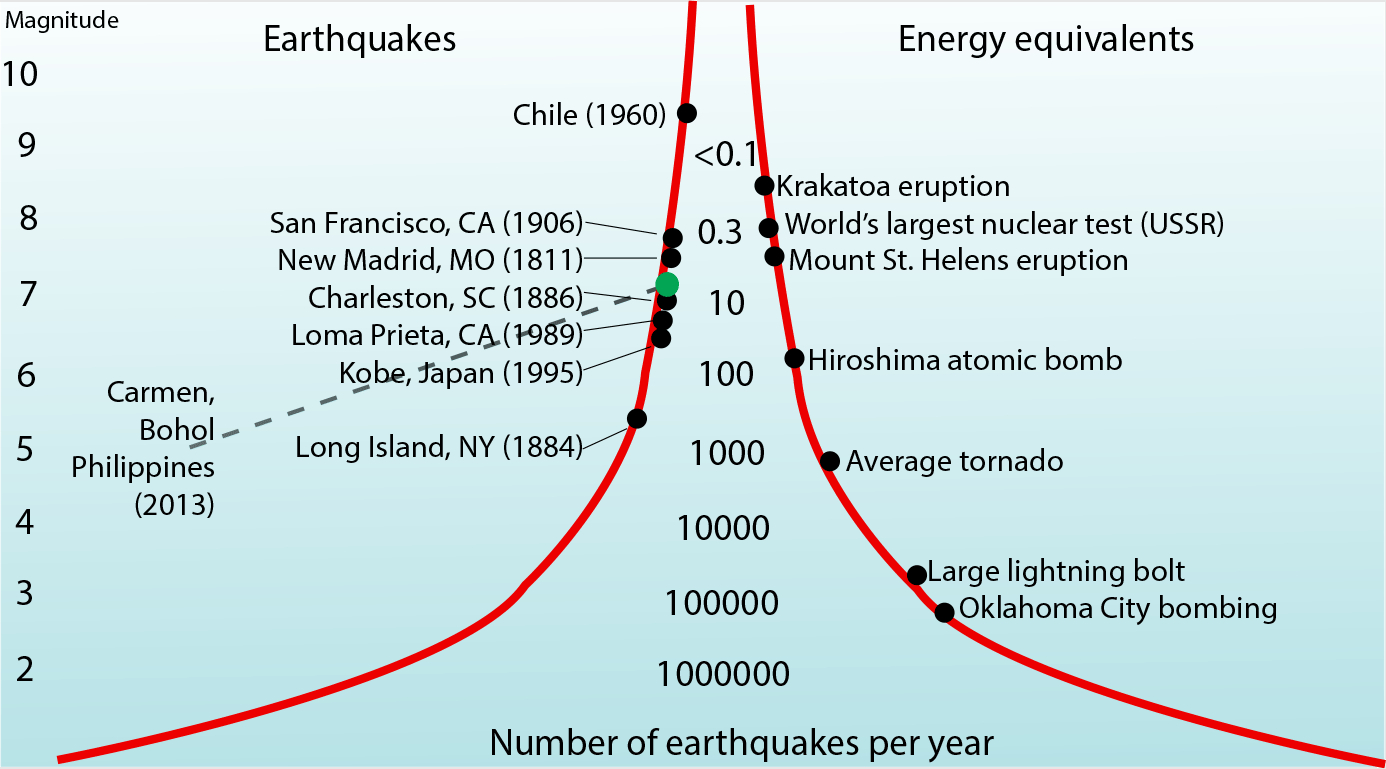
Japanese authorities have warned its citizens of a ‘megaquake’ and large tsunamis along the Nankai Trough.
What is the Nankai Trough?
The Nankai Trough is an extensive subduction zone, nearly 900 km long.
It is the place of collision of the Eurasian Plate over the Philippine Sea Plate.
This trough has a history of producing large earthquakes approximately every 100 to 150 years.
The most recent Nankai Trough quake happened in 1946 with magnitude 8.0 tremor and 6.9 metre tsunami, killing 1,330 people.
Potential for a Megaquake:
Japan’s researchers estimated in January 2022 that there is a roughly 70% chance of a magnitude 8-9 megaquake striking the Nankai Trough within next 30 years.
Such a quake could affect a vast region stretching from central Shizuoka, about 150 km south of Tokyo, to southwestern Miyazaki.
PYQ:
[2014] Explain the formation of thousands of islands in Indonesian and Philippines archipelagos.
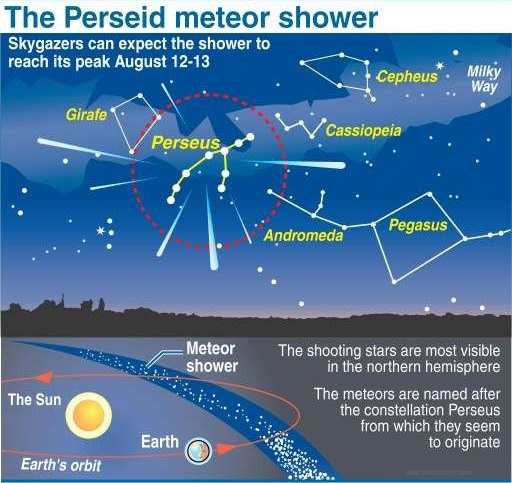
The Perseid meteor shower, which began in July, is currently at its peak activity from August 11 to 13, 2024.
About Perseid Meteor Shower
Details
Origin
Named after the constellation Perseus, from which the meteors appear to originate.
Cause
Caused by debris left behind by Comet Swift-Tuttle as it orbits the Sun.
How It Occurs
Consists of ice, rock, and dust particles shed by Comet Swift-Tuttle.
Earth passes through this debris field annually between mid-July and late August.
Particles enter Earth’s atmosphere at around 214,000 km/h, causing them to heat up and create bright streaks of light.
Discovery
The connection between the Perseid meteor shower and Comet Swift-Tuttle was established in 1862 by Lewis Swift and Horace Tuttle.
Historical Observations
Observed for centuries, with records dating back to ancient Chinese, Japanese, and European civilizations.
Impact of Earth’s Gravity
Earth’s gravity pulls particles from the debris field, causing them to enter the atmosphere.
Larger particles can create fireballs—bright meteors that are more intense and last longer.
Note: In the 1990s, scientists feared comet Swift-Tuttle might hit Earth or the Moon in 2126, but later calculations confirmed safety for two millennia.
PYQ:
[2011] What is the difference between asteroids and comets?
Asteroids are small rocky planetoids, while comets are formed of frozen gases held together by rocky and metallic material.
Asteroids are found mostly between the orbits of Jupiter and Mars, while comets are found mostly between Venus and Mercury.
Comets show a perceptible glowing tail, while asteroids do not.
Which of the statements given above is/are correct?
(a) 1 and 2 only
(b) 1 and 3 only
(c) 3 only
(d) 1, 2 and 3
Union Minister for Commerce and Industry has introduced Diamond Imprest Licence at the 40th edition of the India International Jewellery Show (IIJS) 2024.
The event was organized by the Gem & Jewellery Export Promotion Council (GJEPC).
What is the Diamond Imprest Licence?
The Diamond Imprest Licence is a regulatory framework introduced by the Indian government to facilitate the import of diamonds for exporters, particularly benefiting Micro, Small, and Medium Enterprises (MSMEs) in the diamond industry.
It will allow Indian diamond exporters who meet a certain export turnover threshold to import up to 5% of their average export turnover over the preceding three years.
This policy aims to create a level-playing field for MSME diamond exporters, enabling them to compete more effectively with larger industry peers.
About the Gem & Jewellery Export Promotion Council (GJEPC )
Details
Establishment
Established in 1966 by the Ministry of Commerce and Industry, Government of India.
Granted an autonomous status in 1998.
Headquarters
Mumbai, India
Regional offices in New Delhi, Kolkata, Chennai, Surat, Jaipur
Membership
Represents almost 7,000 exporters from across India.
Role and Functions
Promotes exports of gems and jewellery
Presents industry issues to the government and recommends policy interventions.
Common Facility Centers (CFCs)
Established in Amreli, Visnagar, Palanpur, and Junagadh in Gujarat.
Services include planning, laser sawing, and cutting facilities to process diamonds.
Awards
Organizes premier jewellery design competitions and awards, celebrating creativity and innovation in jewellery design.
Key Events
Hosts the Design Inspirations seminar annually in Mumbai, educating jewellers, designers, and students about upcoming trends in India, Europe, and the US.
Educational Institutes
Operates 7 educational institutes across five cities, including the Indian Institute of Gems & Jewellery (IIGJ) in Mumbai, Jaipur, Delhi, Varanasi, and Udupi.
Gemmological Laboratories
Gemmological Institute of India (GII), Mumbai: Established in 1971, focusing on gemological training, research, and certification.
Gem Testing Laboratory, Jaipur: Specializes in grading and certifying colored gemstones.
Indian Gemological Institute, New Delhi: Provides gem testing and certification services, particularly for the North Indian market.
PYQ:
[2018] Which one of the following foreign travelers elaborately discussed about diamonds and diamond mines of India?
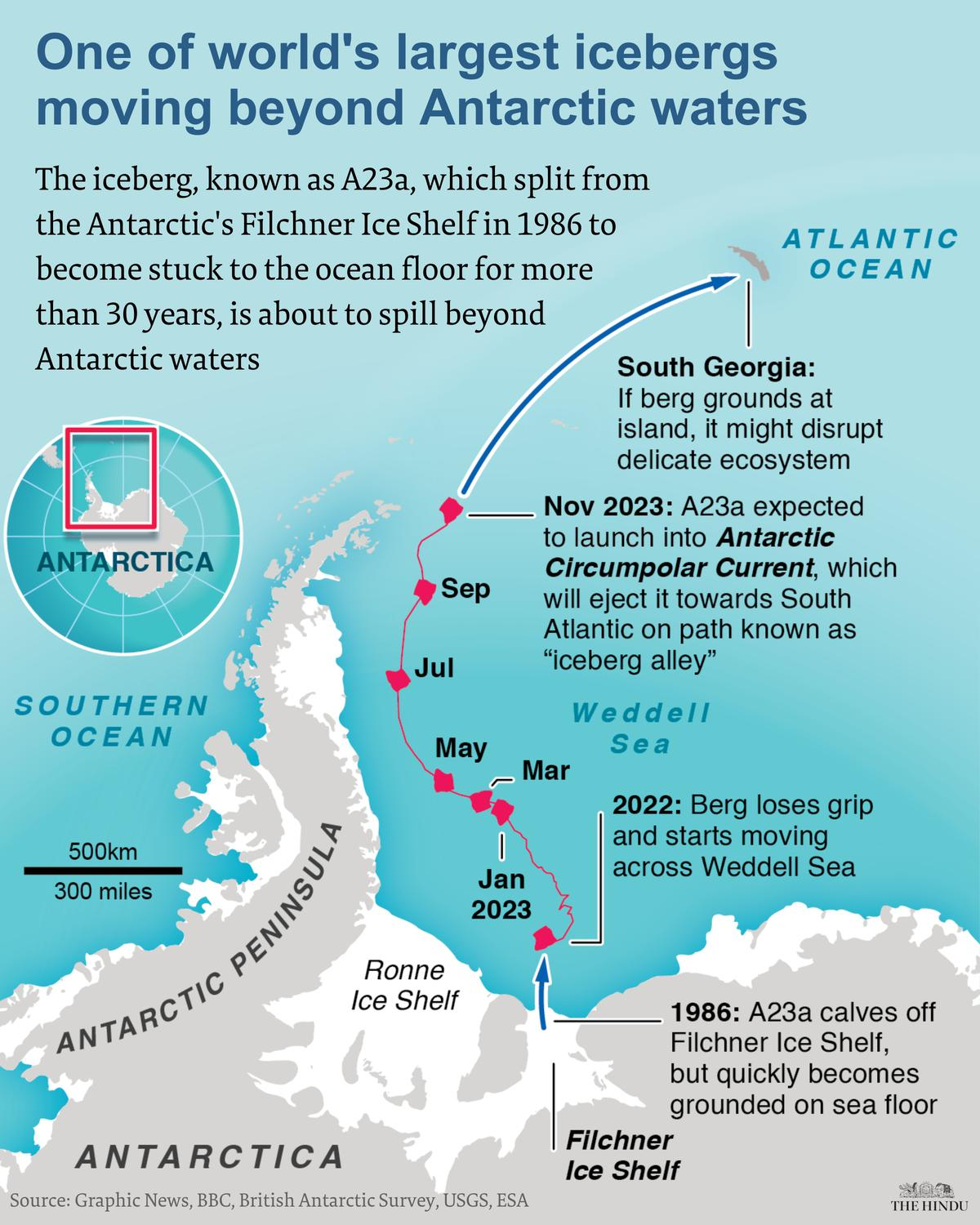
A23a, the world’s largest iceberg, has recently started spinning in place after drifting away from Antarctica in 2020.
Now it is near South Orkney Islands, about northeast of the Antarctic Peninsula.
What is A23a?
A23a is an iceberg, about 3,855 square kilometers in area, which is 5 times the size of New York City.
It was originally part of an even larger iceberg called A23.
It broke off from the Filchner Ice Shelf in Antarctica in 1986.
What is happening with A23a?
It is now trapped over a seamount, and is spinning slowly in place.
It is completing a full spin approximately in 24 days.
Reason behind the spinning: Icebergs spin in Iceberg Alley because they get pulled by the strong Antarctic Circumpolar Current, moving into warmer waters where they melt.
Implications
A23a’s melting does not contributetoglobal sea level rise since it is already floating.
Its extended stay in this vortexcould impact marine life in the area, especially plankton and other organisms in the food chain.
The situation also provides a unique opportunity for scientists to study how such large icebergs behave in the ocean.
PYQ:
[2021] With reference to the water on the planet Earth, consider the following statements:
1. The amount of water in the rivers and lakes is more than the amount of groundwater.
2. The amount of water in polar ice caps and glaciers is more than the amount of groundwater.
Which of the statements given above is/are correct?
(a) 1 only
(b) 2 only
(c) Both 1 and 2
(d) Neither 1 nor 2
[2021] How do the melting of the Arctic ice and glaciers of the Antarctic differently affect the weather patterns and human activities on the Earth? Explain.
The UPSC Civil Services exam does not have a single path to success. People from all walks of life-working professionals, college students, and even homemakers-clear this exam at their own pace.
Rimita Saha, IAS, MTech from IIT Delhi, worked as an Assistant Professor
Register for the UPSC Masterclass by Rimita Saha, IAS 13th August 2024 at 7:00to get yearlong mentorship & study plan for UPSC-CSE
Read what Rimita Saha, IAS 2023 has to say about preparing for a job
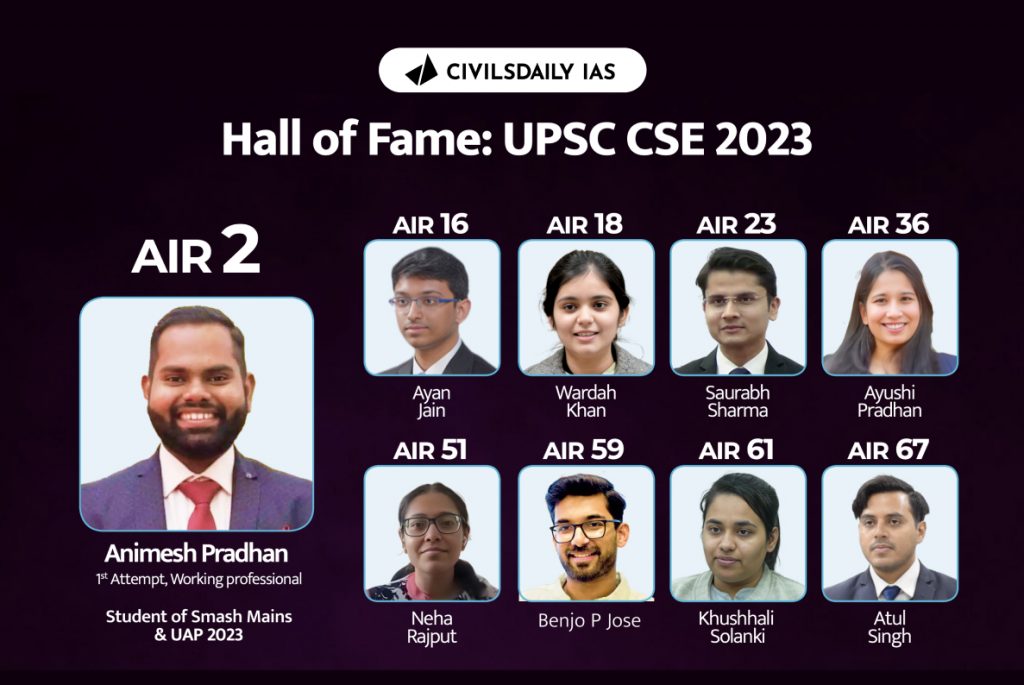
Every year there are more and more candidates who are clearing this exam as a working professional. AIR 2 Animesh was a working professional who cleared this exam on his first attempt and many others.
Even though it’s challenging, it is very much doable. We see working professionals clearing this exam with a top 50 rank every year. Effective time management and consistency in their preparation are the most difficult parts for them. College students who aim to clear this exam right after graduation face similar challenges.
Time Crunch for Working Professionals:
Working professionals face a serious time crunch.
They can typically dedicate only 5-7 hours daily to their preparation.
Despite these limited hours, they must cover the vast UPSC syllabus effectively.
College students aiming to clear the exam right after graduation face similar hurdles in managing time and consistency.
It will be a practical webinar and here’s what we will be discussing:
How should an absolute beginner start his/ her UPSC 2026 prep? What are the high-yielding areas that are quick to conquer and necessary to master
Absolute non-negotiables for every beginner – If you miss mastering these, forget your rank, you will risk even your mental health – so get them right
LIVE UPSC PYQs attempts to show the difference between a beginner vs. a ranker’s attempt to the same question.
It will be a 45-minute webinar, post which we will open up the floor for all kinds of queries that a beginner must have. No questions are taboo.
Here’s what you will be getting after attending the webinar:
Scanned GS Paper PDF Notes of Rimita Saha, IAS
Flash Notes of GS Polity: Ranker approved notes for exam ready revision
Join us for a Zoom session on 13th August 2024 at 7:00 p.m. This session is a must-attend for you If you are attempting UPSC for the first time or have attempted earlier and now preparing for next year, then it is going to be a valuable session for you too.
In the session, we will discuss how mentorship works. Why Mentorship is a must when you attempting for the first time.
We will deal with all the aspects for a comprehensive UPSC Preparation.We’ll talk about starting with the basics, and move to advanced level.
See you in masterclass
Register for UPSC session to get a focussed UPSC preparation strategy
At Civilsdaily, we treat Mentorship as a specialization. Not every Mains or interview candidate can be a mentor. Most such mentors will suggest cosmetic changes and will only help you evolve slowly. It is easy to find comfort in sentences like ‘every topper is different’ and’ they have their own path’. Finding what’s different about you and then figuring out your own path is why Mentorship is essential. We walk the talk by helping you craft your own way of preparation. A method that enhances your probability of qualifying UPSC-CSE in a single attempt. We give you that near-perfect certainty. Delivering this consistently to hundreds of aspirants (now rankers) in the past was challenging. We still stick to it and keep getting better at it with each passing year.
At CD, we understand the science and the art of everything UPSC. If you have a problem, we will sit with you and find a solution. If that doesn’t work, then we try solution 2. Eventually, we will make sure you end up making progress. What’s the point of any content, program, or mentorship without progress? This is precisely why aspirants trust they have the best shot at clearing the exam with Civilsdaily.
We invest a significant amount of time, effort, and energy into creating lectures, notes, and tests, understanding your needs as an aspirant. We take this responsibility seriously because, ultimately, your future depends on it.
The heart of the Civilsdaily platform is the Yearlong Mentorship Program. For years, aspirants have enrolled here because they couldn’t find such depth and passion towards quality content and Mentorship anywhere. Their search inevitably ends at Civilsdaily. Enrollment in these programs and Mentorship also makes us accountable to aspirants for the value they get.
In the past few years, we’ve worked quietly in the background with hundreds of aspirants; many now serve as IAS, IPS, IFS and more. We are very proud of what we’ve achieved. Overwhelmed by quick fixes, content overload, and messy timetables that never work? Join us as we take you through a realistic and relatable roadmap for UPSC 2026 preparation.
(Don’t wait—the next webinar won’t be until September 24)
These masterclasses are packed with value. They are conducted in private with a closed community. We rarely open these webinars for everyone for free. This time we are keeping it for 300 seats only.
Q1 “Refugees should not be turned back to the country where they would face persecution or human right violation”. Examine the statement with reference to ethical dimension being violated by the nation claiming to be democratic with open society. (UPSC IAS/2021)
Q2 Cross-border movement of insurgents is only one of the several security challenges facing the policing of the border in North-East India. Examine the various challenges currently emanating across the India-Myanmar border. Also, discuss the steps to counter the challenges. (UPSC IAS/2019)
Note4Students:
Mains: Conventions and Rights;
Mentor comments: By the end of June 2023, 110 million people worldwide were forcibly displaced due to persecution, conflict, violence, and severe disruptions to public order. This included 36.4 million refugees (30.5 million under UNHCR and 5.94 million Palestine refugees under UNRWA), 62.1 million internally displaced persons, 6.08 million asylum seekers, and 5.6 million Venezuelans needing protection. Additionally, millions of stateless individuals lack nationality and basic rights. In the first half of 2023, 90% of new displacements arose from major crises in Afghanistan, the DRC, Latin America, Myanmar, Somalia, Sudan, and Ukraine.
Let’s learn!
__
Why in the News?
Armed conflict, violence, human rights abuses, and persecution force millions globally to escape their homes and homelands, resulting in their status as ‘displaced people’.
Challenges Faced by Female Refugee
India as a Refugee-Receiving Nation: India has hosted over 200,000 diverse refugee groups since independence. As of January 31, 2022, 46,000 refugees and asylum-seekers were registered with UNHCR India, with 46% being women and girls.
Gendered Responsibilities: Women and girls in refugee populations are disproportionately burdened with caregiving responsibilities for children,the elderly, and family sustenance. They are often the last to flee conflict zones, carrying the additional responsibility of managing family survival.
Impact on Physical and Mental Health: The gendered nature of displacement severely impacts the physical and mental well-being of refugee women. They face numerous stressors, including the loss of partners and children, hardships of camp life, altered family dynamics, and reduced safety.
Increased Risk of Gender-Based Abuse: Refugee women are exposed to heightened risks of gender-based violence, including transactional sex, due to prolonged conflict, disrupted social support systems, and socio-economic challenges.
Psychological and Psychosocial Conditions: Displaced women are particularly susceptible to psychological disorders such as PTSD, anxiety, and depression. They are twice as likely to experience PTSD and four times more likely to suffer from depression compared to male counterparts. For example, a study in Darfur, Sudan, found 72% of displaced women affected by PTSD and distress.
Conventions and Rights
UNCRPD Recognition:
The UN Convention on the Rights of Persons with Disabilities (UNCRPD) recognizes ‘psychosocial disability’ as long-term mental or intellectual impairments that hinder full participation in society.
Article 6 of the UNCRPD mandates protection against multiple discrimination faced by women and girls with disabilities and ensures their full enjoyment of human rights.
India’s Ratification and Legislation:
India ratified the UNCRPD and enacted the Rights of Persons with Disabilities Act, 2016 (RPWDA).
While the term ‘psychosocial disability’ is not explicitly used in Indian law, “mental illness” is recognized and covered under the RPWDA.
The RPWDA guarantees various rights to persons with disabilities, including the right to health care (Section 25) and equal rights for women with disabilities (Section 4).
Absence of Legal Framework: India is not a signatory to the 1951 Refugee Convention and its 1967 Protocol. There is no specific domestic legislation addressing refugees, particularly those with disabilities.
Right to Life and Health: The Supreme Court of India has upheld the right to life under Article 21, which includes the right to health, for refugees.
Way forward:
Enact Comprehensive Legislation: Need to introduce a uniform legal framework that specifically addresses the rights and protections of refugees, with provisions for those with disabilities, aligning with international commitments like the 2030 Agenda.
Inclusive Policy Implementation: The government should integrate refugees with disabilities into existing and new national policies and programs, ensuring accessible services and participation in decision-making processes.
Despite growing concerns, India’s decadal Census has been delayed by over three years. In fact, there is an overwhelming misconception among officials about substituting the Census with alternative ways and means of counting the population.
Significance of Calculating Census
Comprehensive Population Data: The Census provides a detailed population count, which includes locational, familial, and individual information.
For instance, the Census can reveal insights into population density, age distribution, educational attainment, and employment status.
Foundation for Surveys and Indicators: The Census acts as a foundational frame for large-scale surveys like the National Family Health Survey (NFHS) and Periodic Labour Force Survey (PLFS).
Support for SDG Monitoring: In the context of Sustainable Development Goals (SDGs), Census data is crucial for generating accurate indicators, particularly those requiring disaggregated data below the sub-national level.
For instance, to monitor progress on goals related to poverty reduction, gender equality, and health, precise demographic data is necessary to identify disparities and target interventions effectively.
Demographic Transition Insights: The Census is vital for capturing changes in population composition, familial structures, and occupational distribution, especially during periods of rapid demographic transition.
Global Implications: Given India’s significant influence on global population trends, accurate Census data is crucial for global demographic studies and projections.
For example Global Health Security Index and Multidimensional Poverty Indices.
Changes to understand before taking Census Count
Population Dynamics: Since the last Census, significant changes in population count and composition must be understood, including shifts due to migration, fertility, and mortality rates.
For example: In India, the average annual growth rate of the population has slowed from 2.2% in 1971 to 1.1% in 2021, with projections indicating further declines to 0.58% by 2036.
Impact of COVID-19: The pandemic has had a profound impact on health, employment, and livelihoods, which need to be accurately captured in the Census.
For example, The Indian government reported over 500,000 COVID-19 related deaths, which have affected overall mortality statistics and health indicators.
Socio-economic Transformations: Changes in education, occupation, and employment patterns over the last decade are crucial to understanding current societal trends.
For example, The literacy rate in India has improved significantly, rising from 64.8% in 2001 to 77.7% in 2011, with further increases expected.
Infrastructure and Development Changes: The transformation in physical and digital infrastructure, as well as regional development patterns, must be considered to accurately reflect the current state of the nation.
For example, the COVID-19 pandemic accelerated the adoption of digital technologies, with a reported increase in internet users from 560 million in 2019 to over 800 million in 2022. This digital transformation has reshaped how people work and access services.
Demand for Caste Census in India
Political Motivations: The demand for a caste Census is largely driven by political interests, aiming to establish differential entitlements based on perceived representation and deprivation.
For instance, leaders from the Indian National Developmental Inclusive Alliance (INDIA) have emphasized the need for a caste Census
Historical Context: Caste auditing was part of earlier Census exercises but was discontinued for specific reasons.
For example, Caste auditing was part of earlier Census exercises, with the British-era Censuses from 1881 to 1931 enumerating all castes. However, after independence, the Government of India decided not to enumerate castes in the 1951 Census, except for Scheduled Castes (SC) and Scheduled Tribes (ST).
Assessment of Mobility: There is a lack of systematic assessment of social mobility in education and occupation across caste lines, despite decades of affirmative action. A caste Census could potentially address this gap but is viewed with skepticism.
For instance, while reservations exist for OBCs and SCs, the actual impact on social mobility remains unclear due to insufficient data.
Way forward:
Incorporation of Caste Data: Need to amend the Census Act of 1948 to mandate the enumeration of caste data alongside other demographic information. This would provide a legal framework for collecting comprehensive caste-wise data.
Independent Studies and Pilot Surveys: The government should conduct independent studies at district and state levels to gather data on castes and sub-castes.
Mains PYQ:
Q Has caste lost its relevance in understanding the multi-cultural Indian Society? Elaborate your answer with illustrations. (2020)
As many as 50 Opposition MPs have reportedly signed a resolution to bring a no-confidence motion against Vice-President (Rajya Sabha Chairman) Jagdeep Dhankhar.
No-Confidence Motionagainst Vice President of India
Details
Provision
Article 67(b) of the Indian Constitution
Who Can Initiate
Can only be introduced in the Rajya Sabha, not the Lok Sabha.
Notice Requirement
At least 14 days’ advance notice must be given before moving the resolution.
Voting in Rajya Sabha
Requires an effective majority (majority of all members present and voting) in the Rajya Sabha.
Voting in Lok Sabha
Requires a simple majority (more than 50% of members present and voting) in the Lok Sabha.
Grounds for Removal
Constitution does not specify any grounds or justifications for the removal of the Vice President.
Temporary Vacancy
If the Vice President is removed -> Deputy Chairman of the Rajya Sabha assumes the role of Chairman.
Historical Context
No Vice President has ever been removed under this Article in Indian parliamentary history.
PYQ:
[2013] Consider the following statements:
1. The Chairman and the Deputy Chairman of the Rajya Sabha are not the members of that House.
2. While the nominated members of the two Houses of the Parliament have no voting right in the
Presidential election, they have the right to vote in the election of the Vice President.
Which of the statements given above is/are correct?
![[Ranker Webinar] Rimita Saha, IAS on achieving an IAS Rank as a Working Professional or College Student || Join on 13th August 2024 At 7 PM](https://www.civilsdaily.com/wp-content/uploads/2024/08/IAS-Rimita-Final-1568x882.jpg)
![[10th August 2024] The Hindu Op-ed: Refugee rights, the gendered nature of displacement](https://www.civilsdaily.com/wp-content/uploads/2024/08/10-Aug-1568x882.jpg)