💥UPSC 2026, 2027, 2028 UAP Mentorship (March Batch) + Access XFactor Notes & Microthemes PDF

Search results for: “”

  • Recruitment of 10 lakh people in “mission mode

    Context

    The government recently announced that 10 lakh government jobs will be provided over the next 18 months on a “mission mode”.

    Background

    • The government recently announced it would recruit 10 lakh people in “mission mode” over the next one-and-a-half years.
    • The announcement came at a time when the unemployment rate for youth (aged 15-29 years) in urban areas has been hovering at over 20 per cent for the last several quarters.
    • According to the Quarterly Bulletin of Periodic Labour Force Survey (PLFS), the youth unemployment rate, according to current weekly status, stood at 20.8 per cent in urban areas during October-December 2021.
    • The annual PLFS report too shows that the overall youth unemployment rate, according to usual status (ps+ss), was at 12.9 per cent — 18.5 per cent in urban areas and 10.7 per cent in rural areas — during July-June 2020-21.

    Three takeaways from the announcement

    • One, the creation of employment is indeed a problem and can no longer be hidden from the public discourse.
    • Two, the private sector, especially modern sectors such as the service and manufacturing sectors, which are dominated by multinational companies, have not created many jobs.
    • Even if the Information Technology sector or the modern gig economy have created jobs, these are either very high-skilled jobs or low-skilled ones.
    • Three, the government in the Nehruvian scheme of development occupied an important place in the labour market.
    • The government is now forced to step in as persistently rising inflation, unemployment and underemployment threaten to politically affect it.

    Employment data and issues with it

    • Government is at present relying on the Employees’ Provident Fund Organisation/National Pension System/Employees’ State Insurance Scheme registrations and exits as indicators of the formal labour market.
    • This could be misleading as companies may be increasing registrations to cross the threshold to become eligible to fall under any of these.
    • Formalisation: Hence, this might be more a case of formalisation rather than employment generation.
    • Second, media reports show that more than 85% of those aspiring for those 10 lakh jobs could be consumed by existing vacancies in Central government departments (8,72,243).
    • The decline in PSU jobs: Third, 241 central public sector enterprises (CPSEs) have been shedding jobs in recent years.
    • The decline in quality of jobs: Even though the labour force and workforce participation rates have increased marginally, there is a decline in the quality of jobs, viz. there is a rise in the unpaid segment of the self-employed and a rise in the share of the agricultural sector in total employment over the last three Periodic Labour Force Surveys (43% to 47%).

    Role of the private sector

    • The private sector creates jobs in response to market forces and while taking into consideration radically altering technological developments.
    • We cannot avoid placing the government at the centre of employment creation beyond a certain point.
    • Projects in the modern private sector consume a lot of capital to generate very few jobs.
    • For instance, recently, there was a report that the Adani Group has invested ₹70,000 crore (or ₹700 million) in Uttar Pradesh to create merely 30,000 jobs.
    • Foreign Direct Investment, which at any rate is highly capital-intensive, goes mostly into the non-manufacturing sectors.

    Way forward

    • The government’s role in employment generation has entered into popular discourse and discussions on policy formation.
    • The government should play a significant role soon.
    • Government as principal employment generator: The government should re-establish its role as the principal employment generator through jobs in its ministries and CPSEs and through assured employment generation programmes like MGNREGA.

    Conclusion

    Employment is not merely about numbers and growth figures.  We need to concentrate on enabling the creation of decent work and a sustainable labour market to which India is committed as a member of the United Nations and the International Labour Organization.

    UPSC 2023 countdown has begun! Get your personal guidance plan now! (Click here)

  • UPSC 2023-24 Foundation | Great things are build upon a strong Foundation | Offline batches for Mentorship programs launched | Register now

    UPSC 2023-24 Foundation | Great things are build upon a strong Foundation | Offline batches for Mentorship programs launched | Register now

    Civilsdaily Hall Of Fame: UPSC-CSE 2021 Top Rankers

    Hi Guys, You mustn’t wait for the opportunity, you should create it. 

    After making gruesome achievements in UPSC 2021 on the internet, Civilsdaily now started an offline foundation batch to make the next success story in UPSC history. Yes, this is the all-dimensional extension of CD. Whether it is online or offline, It’s a distinction without a difference.

    Acknowledging the need to ensure removing difficulties, the OFFLINE students face, some more seats in our classroom have been offered as per students’ request. So, if you wish to get your name on the 2023 merit list, you have a final call of admission to the much-covetedUPSC-CSE Foundation Program-2023 Offline Classroom Batch led by Serving bureaucrats, toppers & toppers’ mentors.

    CD’s Offline Classroom where Toppers used to enter

    With the focus on overall development, Civilsdaily’s dedicated offline mentor teachers group stands by all UPSC aspirants without a second thought.

    WHAT 2021 TOPPERS HAVE TO SAY ABOUT CIVILSDAILY?

    Mukesh Kumar after his success, with his guru and mentor
    This image has an empty alt attribute; its file name is hall-of-fame.jpg
    The Hindu has solemnly acknowledged Civilsdaily’s high rated mentorship program.

    EMI Facility Available @ No Extra Cost!

    No Cost EMI Facility for Students enrolling in Civilsdaily’s Foundation Course 2023. This is ensure that financial burden has not remain a concern for your preparation.

    Please note that there will be no processing fee involved and no hidden costs when you avail the EMI facility.


    IN 2021, CIVILSDAILY HAD 37 TOPPERS IN TOP 100.

    What Differentiates Our Foundation Course?

    Civilsdaily’s Mentorship is clearly one brand which sets us apart from any other institute in this Domain.

    Civilsdaily mentorship helps you in 6 key components of your preparation-

    1. Direction– Civilsdaily’s mentors are highly qualified, with at least one year of mentorship experience and two UPSC CSE Interviews under their belts. They are well-versed in themany stages of preparation. These mentors will assist you in developing both a comprehensive and micro schedule. They’ll put together a weekly programme for you, complete with mentorship calls. This schedule will be created based on a thorough examination of the importance of subjects as well as the interconnection of topics to make it easier for students to grasp the material.
    2. Discipline– The student will be held accountable to the mentor since he or she will be required to complete a weekly target set by the mentor.
    3. Consistency– Students can retain consistency in their preparation by having their mentor monitor them constantly and giving them regular tests. Furthermore, rational scheduling aids pupils in adopting an integrated approach to preparation..
    4. Value addition– Mentors also assist students with their questions and resources. Students become perplexed as to which resources to follow due to the abundance of content available on the market. Mentors can assist you in locating and referring to the most appropriate materials. This aids students in consolidating their resources and avoiding content overload. Mentors will also offer video assistance.Remember- the mantra to clear UPSC is MINIMUM RESOURCES, MAXIMUM REVISIONS.
    5. Evaluation– The UAP/foundation curriculum also contains a prelims and mains testseries, as well as weekly 10 mains questions from Samachar Manthan (SM). Your mentor will go through each test with you and help you figure out your strengths and shortcomings. So, if you devote yourself to this programme, you will receive one-on-one assistance for more than 40 mains tests (including SM) and more than 30 prelims tests. Furthermore, each test will be examined twice by professional evaluators, with a mentor evaluating the results later.
    6. Motivation– When you’re feeling down or don’t feel like studying, you can reach out to your mentor, have a conversation, get motivated, and restart your studies. Mentor-recommended relaxation techniques can assist you in learning more effectively.

    A name trusted by Rank 1 & 2:


    Key Features about UPSC-CSE Foundation Program 2023 Offline Classroom Batch

    • Integrated Prelims, Mains and Essay Test Series along with Current Affairs and Personalized Mentorship.
    • UAP & Master Classes: Full coverage for GS prelims & mains.
    • Differentiators- Mentorship
    • Watch the lectures unlimited times
    • Combination of offline learning and in depth mentoring which gives students proper guidance throughout the preparation journey.
    • Pre cum mains offline foundation program contains every General Studies subject. Syllabus Wise each and every point will be covered in Prelims as well as in mains. 
    • Post classes support of individual mentor
    • Notes and study materials: all necessary materials of static and current will be provided through hard copies.


    A look at the programs in Our Foundation course

    PRELIMS TS

    • 40 PRELIMS MOCK TESTS (36 PAPER 1, 4 CSAT)
    • DEDICATED MONTHLY CA TEST
    • ALL INDIA RANKINGS
    • DETAILED EXPLANATIONS
    • MONTHLY CA MAGAZINES (NEWS, OP-ED, PIB, GOVT.REPORTS)

    SAMACHAR MANTHAN

    • WEEKLY NEWS ANALYSIS (VIDEO + NOTES)
    • MAINS LEVEL Q&A EVALUATION TO COMPLIMENT THE LECTURES
    • CHECKED COPY DISCUSSION ON PHONE/ IN-PERSON

    MAINS TS

    • 12 SECTIONAL + 12 FLTS
    • MODEL ANSWER SOLUTIONS
    • CHECKED COPY DISCUSSION ON PHONE/ IN-PERSON

    ESSAY TS

    • 14 TESTS (28 ESSAYS) ON 8 BROAD UPSC TRENDS SINCE 2010
    • SAMPLE STRUCTURE, VIEW SOLUTIONS, PERSONALISEDEVALUATIONS
    • SHARING BEST ESSAY COPY (REAL TIME)
    • PERSONALISED IMPROVEMENT TRACKING EXCEL

    DECIMATE PRELIMS

    • 36 PRELIMS MOCK TESTS (32 PAPER 1, 4 CSAT)
    • DEDICATED MONTHLY CA TEST
    • ALL INDIA RANKINGS
    • Tikdam FOR SMART HACKS & INTELLIGENT GUESSTIMATES
    • DETAILED EXPLANATIONS
    • MONTHLY CA MAGAZINES (NEWS, OP-ED, PIB, GOVT.REPORTS)

    Here is a comparison Chart to know how Civilsdaily stands apart


    WHAT 2020 TOPPERS HAVE TO SAY ABOUT CIVILSDAILY?


    About the faculty leading this program:

    Sajal Singh: Sajal sir is known to make Economics and IR as easy as a cakewalk. He scored one of the highest marks in GS in the 2017 UPSC exam. Under his guidance, more than 80 percent of Students qualified for UPSC interview 2020 in Smash mains Program.

    Email: sajal@civilsdaily.com

    Sudhanshu Mishra: Prior to benchmarking himself as Polity teacher at Civilsdaily, Sudhanshu Sir has served in the Defense Ministry for 10 years. He has a keen interest in regional and global geopolitics which do not only substantially reflect in his lectures but also had come in handy in several stages of his UPSC & PSCs exams. 

    He is also an MBA candidate Co’23 from IIM Kozhikode.

    Email: sudhanshu@civilsdaily.com

    Sukanya Rana: Our Civilsdaily Mains Program Head Mrs. Sukanya Rana has been mentoring students across multiple stages from prelims to mains to interview. She is part of Smash Mains as Ethics Mentor ans helped Civilsdaily topper to achieve their dream. Interview in 2016.

    Email: sukanya@civilsdaily.com

    Poornima

    Graduate from Miranda house in Geography and done MA from JNU in Geography. She is also a qualified Net JRF in Geography.

    Other Senior Bureaucrats and toppers will also be joining for various lectures and guest session.

    Shri V.P. Singh Sir, IRPS

    Virendra Pratap Singh did is B.Tech from IIT Kharagpur in 2003. He joined the services with immense experience in the Private Sector working across domains in high profile companies like Tata Steel, Maruti Suzuki India Ltd, and Tata Motors. He has consistently scored very high marks in interviews. His 2009 score of 213/300 was among the toppers.

    Himanshu Arora

    Himanshu sir has a wide experience in the field of both academics and policy-making. He has earlier taught Economics at both under-graduate and Post-Graduate level in Delhi University. Currently, he is working at the Prime Minister economic advisory council. He also writes columns regularly in prestigious newspapers like The Hindu, Indian Express and Millenium post.

    SD Singh

    Dr. S D Singh sir, Retd IFoS, 1988 Batch, Uttarakhand Cadre.
    He is currently employed with MoEF as a senior consultant. He has 33 years of experience in forestry, environment, wildlife and biodiversity conservation.

    Join our inaugural session:

    Date: Will be announced soon

    Address: 1 LGF, Apsara Arcade, Pusa Rd Next to Gate No.7 Karol Bagh, Metro, North Extn Area, Rajinder Nagar, New Delhi, Delhi 110060

    Get In Touch:

    Email: abhishek@civilsdaily.com

    Phone: +91 8882914783

    Finally, Teachers Open The Doors, But You Must Enter By Yourself. Now, both the ways lie before you. If you like learning in a traditional classroom way, we are waiting for you at Rajendra Nagar. And if you prefer learning by staying at your home, we appear on the internet anytime you fit. All the best.

  • UPSC subjects

    According to the UPSC, the IAS subjects cover almost all of the courses that we studied in school under the heading of general studies. Those, as well as others, must be studied.

    The UPSC IAS test syllabus may appear straightforward at first glance, but it necessitates extensive study and comprehension of each essential and optional subject and its components.

    Only an informed individual can make educated decisions as a civil servant, hence the UPSC subjects in civil services are designed to judge you on your understanding of things around you. Most services within the Civil Services require dealing with people and policies, and IAS personnel are policymakers.

    UPSC themes are chosen with a great deal of care.

     Part A—Subjects for Preliminary Examination 

    Paper I – (200 marks)                                                                                                 Duration: Two hours 

    For Part 1, a candidate must read these 7 subjects basis on these topics:

    SubjectsTopics
    HistoryHistory of India
    Indian National Movement
    Indian and World Geography
    GeographyPhysical
    Social
    Economic Geography of India and the World
    Indian Polity and Governance
    Political Science / CivicsConstitution
    Political System
    Panchayati Raj
    Public Policy
    Rights Issues, etc.,
    Economic and Social Development
    Sustainable Development
    EconomicsPoverty
    Inclusion
    Demographics
    General issues on Environmental Ecology
    Environmental ScienceBio-diversity
    Climate Change
    Physics
    General ScienceChemistry
    Biology
    SociologySocial Sector initiatives, etc.,
    • Current events of national and international importance.  
    • Ancient & Medieval History of India and Indian National Movement.  
    • Indian and World Geography-Physical, Social, Economic Geography of India and the World.  
    • Indian Polity and Governance-Constitution, Political System, Panchayati Raj, Public Policy, Rights Issues, etc.  Economic and Social Development-Sustainable Development, Poverty, Inclusion, Demographics, Social Sector Initiatives, etc.  
    • General issues on Environmental ecology, Bio-diversity, and Climate Change – that do not require subject specialization.  
    • General Science & technology.

    Paper-II-(200 marks)                                                                                                 Duration: Two hours  

    • Comprehension;  
    • Interpersonal skills including communication skills;  
    • Logical reasoning and analytical ability;  
    • Decision-making and problem-solving;  
    • General mental ability;  
    • Basic numeracy (numbers and their relations, orders of magnitude, etc.) (Class X level), Data interpretation (charts, graphs, tables, data sufficiency, etc. — Class X level); 

    Note-1: Paper-II of the Civil Services (Preliminary) Examination will be a qualifying paper with minimum qualifying marks fixed at 33%. 

    Note-2: The questions will be of multiple-choice, objective type. 

    Part B—Subjects for Main Examination

    Compulsory PapersOptional Subjects (Choose Any One)
    Social Science     Science           Languages.           Others.

    General Studies
    Essay
    English
    Indian Languages
                          
    EconomicsAgricultureAssameseUrduCommerceGeographyBotanyBengali literatureTeluguManagement
    HistoryChemistryEnglish LiteratureTamilMedical SciencePhilosophyAnthropologyHindi LiteratureSindhiCivil EngineeringPolitical ScienceAnimal Husbandry & Veterinary ScienceBodoSanskritElectrical EngineeringPsychologyMathematicsDogriPunjabiMechanical EngineeringPublic AdministrationStatisticsGujratiOriya
    SociologyPhysicsKannadaNepali
    LawZoologyKashmiri


    AnthropologyKonkani


    GeologyMaithili


    Malayalam


    Manipuri


    QUALIFYING PAPERS ON INDIAN LANGUAGES AND ENGLISH 

    The paper aims to test the candidates’ ability to read and understand serious discursive prose and to express ideas clearly and correctly, in the English and Indian languages concerned. 

    The pattern of questions would be broad as follows: 

    (i) Comprehension of given passages. 

    (ii) Precis Writing. 

    (iii) Usage and Vocabulary. 

    (iv) Short Essays. 

    Indian Languages:— 

    (i) Comprehension of given passages. 

    (ii) Precis Writing. 

    (iii) Usage and Vocabulary. 

    (iv) Short Essays. 

    (v) Translation from English to the Indian Language and vice-versa. 

    Note 1: The papers on Indian Languages and English will be of Matriculation or equivalent standard and will be qualifying only. The marks obtained in these papers will not be counted for ranking. 

    Note 2: The candidates will have to answer the English and Indian Languages papers in English and the respective Indian language (except where the translation is involved).

    PAPER-I Essay: Candidates may be required to write essays on multiple topics. They will be expected to keep close to the subject of the essay to arrange their ideas in an orderly fashion and to write concisely. 

    PAPER-II- (General Studies-I): Indian Heritage and Culture, History, and Geography of the World and Society.  

    PAPER-III- (General Studies- II): Governance, Constitution, Polity, Social Justice and International relations.

    PAPER-IV-(General Studies-III): Technology, Economic Development, Bio diversity, Environment, Security and Disaster Management  

    PAPER-V- (General Studies- IV): Ethics, Integrity, and Aptitude  

    PAPER-VI & PAPER VII (Optional Subject Papers I & II): Candidates have to choose an optional subject from amongst the List of Optional Subjects. He/She has to write 2 different papers on the same subject.

    Subjects for Interview (Personality Test)

    The UPSC Interview/personality test has no prescribed syllabus. The candidates will be interviewed by a Board of competent and unbiased members and will be questioned on matters of general interest and the candidate will be evaluated not only based on their intellectual qualities but also on social traits, interest in current affairs, mental alertness, critical power of adaptation, rational exposition, balance of judgment, variety and depth of interest, ability for social interconnection and leadership, logical and moral uprightness.

    Some Important Facts:

    If any crucial step has to be taken, it’s nothing but choosing the right Optional Subject for UPSC-CSE preparation. It should be kept in mind that a wrong pick not only costs you your rank but also leaves you in a sense of repentance for the rest of your life. So if any greater thought perception is imperative,  it is how to select an Optional Subject prudently!   

    The Main Examination is intended to evaluate the overall intellectual traits and depth of understanding of candidates rather than merely the range of their information and memory. 

    The nature and standard of questions in the General Studies papers (Paper II to Paper V) will be such that a well-educated person will be able to answer them without any specialized study. 

    The questions will be such as to test a candidate’s general awareness of a variety of subjects, which will have relevance for a career in Civil Services. 

    The questions are likely to test the candidate’s basic understanding of all relevant issues, and ability to analyze, and take a view on conflicting socio-economic goals, objectives, and demands. The candidates must give relevant, meaningful, and succinct answers. 

    The scope of the syllabus for optional subject papers (Paper VI and Paper VII) for the examination is broad of the honors degree 1evel i.e. a level higher than the bachelor’s degree and lower than the master’s degree. In the case of Engineering, Medical Science, and law, the level corresponds to the bachelor’s degree. 

    Now, to succeed in UPSC-CSE, only knowing the syllabus is not enough. Understanding twists & overlapping areas are a crucial aspect of preparation. To tell the truth, if anyone can be your true torchbearer throughout your IAS journey, he is your mentor. Never deprive yourself of his priceless guidance.

    The desire to complete the course alone in its entirety is the major cause of most time mismanagement. Many applicants set out to cover the entire syllabus blindly only to discover later that many topics are simply too broad or that very few if any, questions are being asked from certain sections. A lot of time is wasted in this effort because those topics are required to be addressed differently, and the time saved on their coverage could have been better spent on other parts of the syllabus.

  • 21st June 2022| Daily Answer Writing Enhancement(AWE)

    Topics for Today’s questions:

    GS-1        Population and associated issues, poverty and developmental issues

    GS-2         Bilateral, regional and global groupings and agreements involving India and/or affecting  India’s interests.

    GS-3        Indian Economy

    GS-4      Emotional intelligence-concepts, and their utilities and application in administration and governance.

    Question 1)


    Q.1 Discuss the role played by SHGs in rural development in India. Also, mention various measures which have been taken by the government to promote SHGs in India. (15 Marks)


    Question 2)

    Q.2 What is the significance of the Indo-Pacific Economic Framework (IPEF) for the Indo-Pacific region? What are the challenges it may face? (10 Marks)

    Question 3)

    Q.3 How does the dominant role of agriculture and the exchange rate make the Indian economy different from the OECD countries’ economies? What are the implications of this for use of monetary policy to control inflation in India? (15 Marks)

    Question 4)  

    Q.4 Emotional intelligence is about being aware of how emotions affect your communication and even leveraging human emotions to make yourself more persuasive. Explain. (10 Marks)


    HOW TO ATTEMPT ANSWERS IN DAILY ANSWER WRITING ENHANCEMENT(AWE)?

    1. Daily 4 questions from General studies 1, 2, 3, and 4 will be provided to you.

    2. A Mentor’s Comment will be available for all answers. This can be used as a guidance tool but we encourage you to write original answers.

    3. You can write your answer on an A4 sheet and scan/click pictures of the same.

    4.  Upload the scanned answer in the comment section of the same question.

    5. Along with the scanned answer, please share your Razor payment ID, so that paid members are given priority.

    6. If you upload the answer on the same day like the answer of 11th  February is uploaded on 11th February then your answer will be checked within 72 hours. Also, reviews will be in the order of submission- First come first serve basis

    7. If you are writing answers late, for example, 11th February is uploaded on 13th February , then these answers will be evaluated as per the mentor’s schedule.

    8. We encourage you to write answers on the same day. However, if you are uploading an answer late then tag the mentor like @Staff so that the mentor is notified about your answer.

    *In case your answer is not reviewed, reply to your answer saying *NOT CHECKED*. 

    1. For the philosophy of AWE and payment: 

  • How Priya Rani broke all the stereotypes, tackled societal taboos, and cracked UPSC with an AIR 284, UPSC 2021? | CivilsDaily’s Mentorship student | Talk to her mentors

    Priya Rani didn’t just cracked UPSC but literally blew away the patriachal stereotypes with her success. Hailing from Patna, Priya had to deal with rude obnoxious comments on her parents and grandparents just for the fact that they were educating a girl child.

    Maybe, this is what fuelled the fire inside her to succeed and push herself to limits for her goals. In her second attempt, Priya secured AIR 284, in UPSC 2021.

    Priya was a student of CivilsDaily’s mentorship program, mainly Smash Mains program, and was under the personal guidance of Sajal sir.

    In a candid conversation with us, Priya Rani shared her UPSC journey, hardships societal taboos, lessons learned, and her success mantra. Listen to her story.

    Priya has given us inspiration and we wish her all the best. She’s going to be an administrator of great integrity!

    Register for Priya’s mains answer copies and notes.

    Schedule your FREE mentorship session with Priya’s mentors.

    Priya Rani was one of 200 rankers from CivilsDaily’s mentorship programs.

  • EC deletes 111 ‘Non-existent’ Parties from List

    The Election Commission has ordered the deletion of 111 registered unrecognized political parties that it found to be “non-existent” and referred three of the parties to the Department of Revenue for legal action for “serious financial impropriety”.

    What is the news?

    • The Representation of the People Act, 1951 provides ECI to register and de-register the political parties.
    • This was the second such action in the recent past against registered parties that have been found violating the RP Act, 1951.

    Registering a Political Party

    • The registration of all political parties is governed by the provisions of the Representation of the People Act, 1951.
    • According to the Election Commission (EC), any party seeking registration has to submit an application to the Commission within a period of 30 days.
    • This is done as per guidelines prescribed by the EC in exercise of the powers conferred by Article 324 of the Constitution and Section 29A of the RP Act, 1951.

    Note: There is no procedure available for de-registration of dormant political parties.

    Process of registration

    • The applicant is asked to publish a proposed party name in two national daily newspapers and two local daily newspapers, and provide two days for submitting objections, if any.
    • The notice for publication is also displayed on the website of the Election Commission.

    Why registering with the EC is important?

    • It is not mandatory to register with the Election Commission.
    • However, registering as a political party with the EC has its advantage in terms of intending to avail itself of the provisions of the RP Act, 1951.
    • The candidates set up by a political party registered with the EC will get preference in the matter of allotment of free symbols vis-à-vis purely independent candidates.
    • More importantly, these registered political parties, over course of time, can get recognition as a ‘state party’ or a ‘national party’.

    How EC recognizes a political party as a state or national party?

    For recognition as a NATIONAL PARTY, the conditions specified are:

    1. a 6% vote share in the last Assembly polls in each of any four states, as well as four seats in the last Lok Sabha polls; or
    2. 2% of all Lok Sabha seats in the last such election, with MPs elected from at least three states; or
    3. recognition as a state party in at least four states.

    For recognition as a STATE PARTY, any one of five conditions needs to be satisfied:

    1. two seats plus a 6% vote share in the last Assembly election in that state; or
    2. one seat plus a 6% vote share in the last Lok Sabha election from that state; or
    3. 3% of the total Assembly seats or 3 seats, whichever is more; or
    4. one of every 25 Lok Sabha seats (or an equivalent fraction) from a state; or
    5. an 8% state-wide vote share in either the last Lok Sabha or the last Assembly polls.

    Benefits for recognized parties

    • This is subject to the fulfilment of the conditions prescribed by the Commission in the Election Symbols (Reservation and Allotment) Order, 1968.

    (a) Reserved Symbol

    • If a party is recognised as a ‘state party’, it is entitled for exclusive allotment of its reserved symbol to the candidates set up by it in the state in which it is so recognised. If a party is recognised as a ‘national party’ it is entitled for exclusive allotment of its reserved symbol to the candidates set up by it throughout India.

    (b) Proposer for nomination

    • Recognised ‘state’ and ‘national’ parties need only one proposer for filing the nomination.

    (c) Campaigning benefits

    • They are also entitled for two sets of electoral rolls free of cost and broadcast/telecast facilities over state-owned Akashvani/Doordarshan during the general elections.


    UPSC 2023 countdown has begun! Get your personal guidance plan now! (Click here)

  • What is a ‘Black Swan’ Event?

    A study by the Reserve Bank of India (RBI) has spoken about the possibility of capital outflows to the tune of $100 billion (around Rs 7,80,000 crore) from India in case of a major global risk scenario or a “black swan” event.

    What is a ‘black swan’ event?

    • A black swan is a rare, unpredictable event that comes as a surprise and has a significant impact on society or the world.
    • These events are said to have three distinguishing characteristics –
    1. they are extremely rare and outside the realm of regular expectations
    2. they have a severe impact after they hit and
    3. they seem probable in hindsight when plausible explanations appear

    When did the term originate?

    • The black swan theory was put forward by author and investor Nassim Nicholas Taleb in 2001, and later popularised in his 2007 book – The Black Swan: The Impact of the Highly Improbable.
    • It is described as one of the 12 most influential books since World War II.
    • In his book, Taleb does not try to lay out a method to predict such events, but instead stresses on building “robustness” in systems and strategies to deal with black swan occurrences and withstand their impact.

    Behind the metaphorical name

    • The term itself is linked to the discovery of black swans.
    • Europeans believed all swans to be white until 1697, when a Dutch explorer spotted the first black swan in Australia.
    • The metaphor ‘black swan event’ is derived from this unprecedented spotting from the 17th century, and how it upended the West’s understanding of swans.

    When have such events occurred in the past?

    • Interestingly, Taleb’s book predated the 2008 global financial crisis – a black swan event triggered by a sudden crash in the booming housing market in the US.
    • The fall of the Soviet Union, the terrorist attack in the US on September 11, 2001, also fall in the same category.

    Is the Covid-19 pandemic a black swan event?

    • Taleb does not agree with those who believe it to be one.
    • Rather, he called it a “white swan”, arguing that it was predictable, and there was no excuse for companies and governments not to be prepared for something like this.
    • While the outbreak of any pandemic is difficult to individually predict, the possibility of one occurring and having a major impact on systems around the world was known and documented.


    UPSC 2023 countdown has begun! Get your personal guidance plan now! (Click here)

  • single-use plastic

    The Centre has banned the use of ‘single-use plastic’ from July 1.

    What is the news?

    • The Ministry for Environment, Forest and Climate Change had issued a gazette notification last year announcing the ban, and has now defined a list of items that will be banned from next month.
    • The manufacture, import, stocking, distribution, sale and use of suc plastic, including polystyrene and expanded polystyrene, commodities shall be prohibited with effect from the 1st July, 2022.

    What is Single-Use Plastic?

    • As the name suggests, it refers to plastic items that are used once and discarded.
    • Single-use plastic (SUP) has among the highest shares of plastic manufactured and used — from packaging of items, to bottles (shampoo, detergents, cosmetics), polythene bags, face masks, coffee cups, cling film, trash bags, food packaging etc.
    • It accounts for a third of all plastic produced globally, with 98% manufactured from fossil fuels.
    • SUP also accounts for the majority of plastic discarded – 130 million metric tonnes globally in 2019 all of which is burned, buried in landfills or discarded directly into the environment.
    • On the current trajectory of production, it has been projected that single-use plastic could account for 5-10% of greenhouse gas emissions by 2050.

    SUPs in India

    • India features in the top 100 countries of single-use plastic waste generation – at rank 94 (the top three being Singapore, Australia and Oman).
    • With domestic production of 11.8 million metric tonnes annually, and import of 2.9 MMT, India’s net generation of single-use plastic waste is 5.6 MMT, and per capita generation is 4 kg.

    What are the items being banned?

    • According to the Plastic Waste Management Rules, 2016, there is also a complete ban on sachets using plastic material for storing, packing or selling gutkha, tobacco and pan masala.
    • The items on which the Central Pollution Control Board (CPCB) have announced a ban are earbuds; balloon sticks; candy and ice-cream sticks; cutlery items including plates, cups, glasses, forks, spoons, knives, PVC banners measuring under 100 microns among others.
    • The Ministry had already banned polythene bags under 75 microns in September 2021, expanding the limit from the earlier 50 microns.
    • From December, the ban will be extended to polythene bags under 120 microns.
    • The ban is being introduced in phases to give manufacturers time to shift to thicker polythene bags that are easier to recycle.
    • While manufacturers can use the same machine for 50- and 75-micron bags, the machinery will need to be upgraded for 120 microns.

    Why these items?

    • The choice for the first set of SUPs items for the ban was based on difficulty of collection, and therefore recycling.
    • The enemy is not that plastic exists per se, but that plastic exists forever in the environment.
    • When plastic remains in the environment for long periods of time and does not decay, it turns into microplastics – first entering our food sources and then the human body, and this is extremely harmful.
    • These items are difficult to collect, especially since most are either small, or discarded directly into the environment – like ice-cream sticks.
    • It then becomes difficult to collect for recycling, unlike the much larger items.
    • The largest share of SUP is that of packaging – with as much as 95% of single use belong to this category – from toothpaste to shaving cream to frozen foods.
    • The items chosen are of low value and of low turnover and are unlikely to have a big economic impact, which could be a contributing reason.

    How will the ban be enforced?

    • The ban will be monitored by the CPCB from the Centre, and by the State Pollution Control Boards (SPCBs) that will report to the Centre regularly.
    • Directions have been issued at national, state and local levels — for example, to all petrochemical industries — to not supply raw materials to industries engaged in the banned items.
    • Directions have also been issued to SPCBs and Pollution Control Committees to modify or revoke consent to operate issued under the Air/Water Act to industries engaged in SUP items.
    • Last week, the CPCB issued one-time certificates to 200 manufacturers of compostable plastic and the BIS passed standards for biodegradable plastic.

    What if violation occurs?

    • Those found violating the ban can be penalised under the Environment Protection Act 1986 – which allows for imprisonment up to 5 years, or a penalty up to Rs 1 lakh, or both.
    • Violators can also be asked to pay Environmental Damage Compensation by the SPCB.
    • In addition, there are municipal laws on plastic waste, with their own penal codes.

    How are other countries dealing with single-use plastic?

    • Bangladesh became the first country to ban thin plastic bags in 2002.
    • New Zealand became the latest country to ban plastic bags in July 2019.
    • China issued a ban on plastic bags in 2020 with phased implementation.
    • As of July 2019, 68 countries have plastic bag bans with varying degrees of enforcement.
    • Vanuatu and Seychelles have banned plastic straws outright.


    UPSC 2023 countdown has begun! Get your personal guidance plan now! (Click here)

  • Major reforms in Banks Board Bureau (BBB)

    The Union Finance Ministry is working to expand and relaunch the Banks Board Bureau (BBB) by bringing in more representatives from the insurance sector.

    What is Banks Board Bureau (BBB)?

    • Banks Board Bureau (BBB) is an autonomous body to Promote excellence in Corporate Governance in Public Sector Financial Institutions.
    • The BBB works as step towards governance reforms in Public Sector Banks (PSBs) as recommended by J. Nayak Committee.
    • It was formed in 2016 to select executive directors, and managing directors and chief executives of state-run banks.
    • It is tasked to search and select personages for Board of Public Sector Banks, Public Sector Financial Institutions and Public Sector Insurance Companies and recommend measures to improve Corporate Governance in these Institutions.
    • It has been selecting directors and chairmen and managing directors of PSU general insurance companies since 2018.

    Its establishment

    • The Central Government notified the amendment to the Nationalised Banks (Management and Miscellaneous Provisions) Scheme, 1980.
    • It provided the legal framework for composition and functions of the Banks Board Bureau on March 23, 2016.
    • The Bureau accordingly started functioning from April 01, 2016 as an autonomous recommendatory body.

    Functions of BBB

    The mandate of the Bureau is to advise the Central Government on –

    • Selection and appointment of Board of Directors in Nationalised Banks, Financial Institutions and Public Sector Insurance Companies (Whole Time Directors and Chairman)
    • Matters relating to appointments, confirmation or extension of tenure and termination of services of the Directors of mandated institutions
    • Desired management structure of mandated institutions, at the level of Board of Directors and senior management
    • Suitable performance appraisal system for mandated institutions
    • Formulation and enforcement of a code of conduct and ethics for managerial personnel in mandated institutions
    • To build a data bank containing data relating to the performance of mandated institutions and its officers
    • Evolving suitable training and development programs for managerial personnel in mandated institutions
    • To help the banks in terms of developing business strategies and capital raising plan and the like;
    • Any other work assigned by the Government in consultation with RBI

    Why such move?

    • The revamp is, in part, pushed by a Delhi High Court order last year.
    • It observed that the bureau was not a competent body to recommend appointments at PSU general insurers.
    • It held that circulars enabling BBB to select general managers and directors of PSU insurers were not legally valid.

    Reasons behind the revamp

    • FM aims to legally empower the body to recommend candidates for public sector insurers, and accelerate top-level hiring at all state-run financial institutions.
    • The ministry plans to identify new members, restructure the bureau, and refer the new names to the appointments committee of the cabinet (ACC) in a couple of months.
    • The revamped BBB may also get a new name to indicate its remit over a wider set of financial institutions.

    Significance

    • A revamp of the BBB will enable it to recommend full-time appointments at financial institutions where the current executives are given additional charge through interim arrangements.


    UPSC 2023 countdown has begun! Get your personal guidance plan now! (Click here)

  • Explained: Occurrence of Lightning

    At least 70 people died in lightning strikes across Uttar Pradesh, Madhya Pradesh and Rajasthan.

    What is lightning?

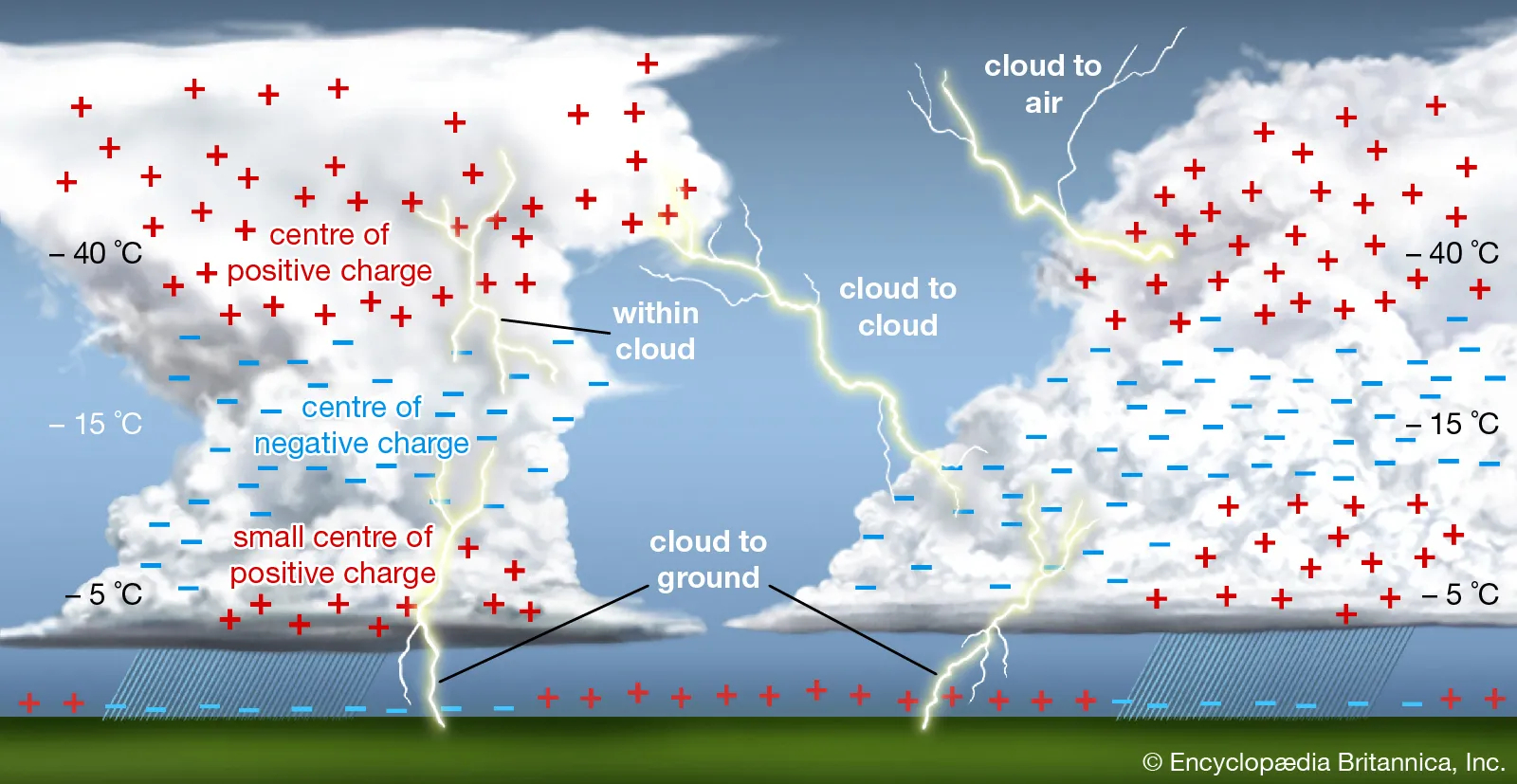
    • Scientifically, lightning is a rapid and massive discharge of electricity in the atmosphere some of which is directed towards earth.
    • The discharges are generated in giant moisture-bearing clouds that are 10-12 km tall.
    • The base of these clouds typically lie within 1-2 km of the Earth’s surface, while the top is 12-13 km away.
    • Temperatures in the top of these clouds are in the range of –35° to –45°C.

    Its formation

    • As water vapour moves upward in the cloud, the falling temperature causes it to condense.
    • As they move to temperatures below 0°C, the water droplets change into small ice crystals.
    • They continue to move up, gathering mass until they are so heavy that they start to fall to Earth.
    • This leads to a system in which, simultaneously, smaller ice crystals are moving up and bigger crystals are coming down.
    • Collisions follow and trigger the release of electrons, a process that is very similar to the generation of sparks of electricity.
    • As the moving free electrons cause more collisions and more electrons, a chain reaction ensues.
    • This process results in a situation in which the top layer of the cloud gets positively charged, while the middle layer is negatively charged.
    • The electrical potential difference between the two layers is huge, of the order of a billion to 10 billion volts.
    • In very little time, a massive current, of the order of 100,000 to a million amperes, starts to flow between the layers.

    Types of lightning

    • Broadly, there are three forms of lightning:
    1. Inter-cloud
    2. Intra-cloud
    3. Cloud-to-ground
    • It is the cloud-to-ground form of lightning that kills humans, as well as animals and livestock, and can substantially damage property.
    • While the Earth is a good conductor of electricity, it is electrically neutral.
    • However, in comparison to the middle layer of the cloud, it becomes positively charged.
    • As a result, about 15%-20% of the current gets directed towards the Earth as well.
    • It is this flow of current that results in damage to life and property on Earth.

    How intensely does it strike?

    • A typical lightning flash is about 300 million volts and 30,000 amps.
    • To put it in perspective, household current is 120 volts and 15 amps.
    • A flash of lightning is enough to light a 100-watt incandescent bulb for about three months.

    Why does lightning kill so many people in India?

    • The reason for the high number of deaths is due to people being caught unawares and more than 70% of fatalities happened due to people standing under isolated tall trees.
    • About 25 per cent of the people were struck in the open.
    • Also, lightning is the direct promulgation of climate change extremities.

    Mitigating lightning incidents

    • Lightning is not classified as a natural disaster in India.
    • But recent efforts have resulted in the setting up of an early warning system that is already saving many lives.
    • More than 96% of lightning deaths happen in rural areas.
    • As such, most of the mitigation and public awareness programmes need to focus on these communities.
    • Lightning protection devices are fairly unsophisticated and low-cost. Yet, their deployment in the rural areas, as of now, is extremely low.
    • States are being encouraged to prepare and implement lightning action plans, on the lines of heat action plans.
    • An international centre for excellence on lightning research to boost detection and early warning systems is also in the process of being set up.


    UPSC 2023 countdown has begun! Get your personal guidance plan now! (Click here)

More posts