Political campaigns highlight inequality in India. Accusations suggest billionaires amass wealth through monopolistic control, dictating prices and suppressing real wages.
Monopoly Power and Economic Dynamics
Monopoly Influence: Billionaires often amass wealth through monopolistic control, enabling them to dictate prices and suppress real wages.
Consumption Conundrum: Higher mark-ups under monopolies lead to reduced real wages and diminished consumption power, hindering economic growth and investment.
Greedflation Impact: The phenomenon of “Greedflation,” where companies raise prices to bolster profit margins amidst multiple demand-and-supply shocks, exacerbates inflationary pressures, particularly observed in developed economies.
So what is Greedflation?
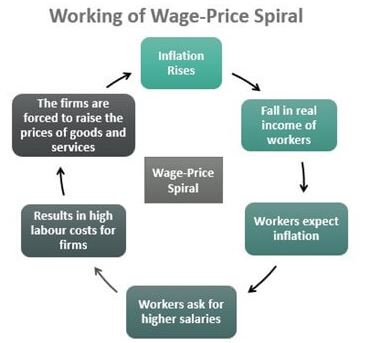
Definition: Greedflation, in essence, signifies that corporate greed is driving inflation, rather than the traditional wage-price spiral, leading to a profit-price spiral.
Corporate Exploitation: Companies exploit inflation by significantly raising prices, surpassing the need to cover increased costs, thereby maximizing profit margins and perpetuating inflation.
Profit-Price Spiral: Unlike the wage-price spiral, it involves companies exploiting inflation by excessively raising prices to maximize profit margins, triggering a cycle of inflation.
Illustrative Scenario
Crisis Dynamics: During crises such as natural disasters or pandemics, businesses often raise prices due to increased input costs.
Exploitative Practices: However, some businesses exploit the situation by engaging in excessive profit-making through significantly inflated price mark-ups.
Impact of Greedflation
Disproportionate Impact: Greedflation disproportionately affects low-income and middle-class individuals, diminishing their consumption and lowering living standards.
Wealth Disparities: While benefiting the wealthy by inflating asset values, it widens the wealth gap and exacerbates income inequality.
Market Instability: Sharp price increases and speculative activities driven by greed can create bubbles and unsustainable market conditions, heightening the risk of financial market crashes and crises.
Global Implications
Divergent Policies: Inflationary pressures from greedflation may lead to divergent policy responses among nations.
Trade and Geopolitical Risks: Conflicting strategies to combat inflation can exacerbate global imbalances, trade tensions, and geopolitical conflicts as countries prioritize their interests and competitiveness.
PYQ:
[2015] Which reference to inflation in India, which of the following statements is correct?
(a) Controlling the inflation in India is the responsibility of the Government of India only.
(b) The Reserve Bank of India has no role in controlling the inflation.
(c) Decreased money circulation helps in controlling the inflation.
(d) Increased money circulation helps in controlling the inflation.
Indian Agricultural Research Institute (IARI) launched India’s inaugural non-GM herbicide-tolerant Basmati rice varieties for commercial farming, ensuring improved weed control, cost-effectiveness, and addressing water scarcity and methane emissions in cultivation.
About the Indian Council of Agricultural Research (ICAR)
ICAR is an autonomous organisation under the Department of Agricultural Research and Education (DARE), Ministry of Agriculture and Farmers Welfare.
It is headquartered in New Delhi.
ICAR was formerly known as the Imperial Council of Agricultural Research.
It was established in 1929 as a registered society under the Societies Registration Act, 1860 on the basis of the report of the Royal Commission on Agriculture.
Functions of ICAR:
Its primary mandate is to coordinate agricultural education and research in India and provide leadership in agriculture and allied sectors.
It is the apex body for coordinating, guiding and managing research and education in agriculture including horticulture, fisheries and animal sciences in the entire country.
Structure and Organization:
ICAR operates under the Department of Agricultural Research and Education (DARE), Ministry of Agriculture and Farmers Welfare, Government of India.
It consists of a network of research institutes, national bureaus, project directorates, and agricultural universities across the country.
The council is governed by a Governing Body and an Executive Committee, which oversee its functioning and activities.
Recognition and Awards:
ICAR confers prestigious awards, such as: the Rafi Ahmed Kidwai Award, the Borlaug Award, and the Hari Om Ashram Trust Award, to recognize excellence in agricultural research and education.
About RobiNOweed
Dubbed as ‘RobiNOweed,’ these varieties are developed by ICAR-IARI and named as:
Pusa Basmati 1979 and
Pusa Basmati 1985
They are tailor-made for farmers employing the direct seeded rice (DSR) method, where weed management is crucial.
Benefits Offered
Effective Weed Management: These new varieties offer an effective solution to weed issues and promote the success of the DSR method, potentially saving up to 33% of the total water requirement.
Water Conservation: DSR significantly reduces water usage compared to traditional flooding methods, addressing concerns of water depletion, especially in northwest India.
Market Impact: With IARI already holding a dominant 95% share in Basmati exports, these new varieties are expected to further boost production and export.
Critical Assessment of Herbicide-Tolerant Varieties
Weed Management Alternatives: Some scientists argue against the necessity of Ht rice, advocating for eco-friendly weed management methods based on climatic factors.
Potential Risks: Concerns arise regarding the limited efficacy of the herbicide, its impact on genetic diversity, and the evolution of herbicide-resistant weeds.
Lessons from Past: Lessons from the Bt Cotton experience highlight the risks associated with overreliance on specific agricultural technologies.
What is the Direct Seeding of Rice (DSR) technique?
Transplantation Method: In the conventional transplantation method, seeds are sown in nurseries, grown into seedlings, and then transplanted into puddled fields.
Direct Seeding: DSR involves directly drilling pre-germinated seeds into the field using tractor-powered machinery.
Simplicity and Efficiency: DSR eliminates the need for nursery preparation and transplantation, simplifying the cultivation process.
Resource Management: DSR offers benefits such as water savings and reduced labor requirements compared to conventional methods.
Higher Requirements: However, DSR requires higher seed quantities and levelled land, posing challenges for adoption.
PYQ:
[2018] With reference to the Genetically Modified mustard (GM mustard) developed in India, consider the following statements:
GM mustard has the genes of a soil bacterium that give the plant the property of pest-resistance to a wide variety of pests.
GM mustard has the genes that allow the plant cross-pollination and hybridization.
GM mustard has been developed jointly by the IARI and Punjab Agricultural University.
Which of the statements given above is/are correct?
Q) Starting from inventing the ‘basic structure’ doctrine, the judiciary has played a highly proactive role in ensuring that India develops into a thriving democracy. In light of the statement, evaluate the role played by judicial activism in achieving the ideals of democracy. (UPSC IAS/2014)
Q) The Supreme Court of India keeps a check on the arbitrary power of the Parliament in amending the Constitution. Discuss critically. (UPSC IAS/2013)
Note4Students:
Prelims: Article 300-A;
Mains: The decision of the Supreme Court in Kolkata Municipal Corporation;
Mentor comments: A frequently cited maxim regarding property rights is that of President John Adams, who stated, “Property is surely a right of mankind as real as liberty.” This notion of property as a fundamental right has undergone significant developments in the post-colonial era, with the right to property being fiercely contested between courts and the legislature.
Let’s learn
—
Why in the News?
The recent Supreme Court decision in “Kolkata Municipal Corporation & Anr. v. Bimal Kumar Shah & Ors” has clarified that Article 300-A of the Indian Constitution, which guarantees that no person shall be deprived of their property except by authority of law, encompasses seven essential procedural sub-rights that must be protected during land acquisition.
Background
Origin: The genesis of the power struggle over the right to property in India dates back to the case of Bela Banerjee, which involved the interpretation of Articles 19(1)(f) and 31(2) of the Constitution before the amendment. The Supreme Court held that the word “compensation” in Article 31(2) implied a just equivalent of what the owner had been deprived of. To undo this interpretation, the Constitution (Fourth) Amendment was passed in 1955, amending Article 31(2) to explicitly state that courts could not question the adequacy of compensation.
Substituting the word “compensation” with “amount,”: they held that although the final compensation was non-justiciable, the principles fixed by the legislature to determine such compensation were open to scrutiny. Parliament realised that the word “compensation” in Article 31(2) was the source of the problem. The Constitution (Twenty-Fifth) Amendment Act, 1971, substituted the word “compensation” with “amount,” effectively keeping the courts from interpreting the adequacy of such “amount” through judicial review.
Supreme Court response: The validity of the Constitution (Twenty-Fifth) Amendment Act, 1971, was upheld in Kesavananda Bharati, but the Supreme Court watered down the intended effect of the amended Article 31(2) through an interpretive process. The majority in Kesavananda Bharati held that though the adequacy of the amount paid was not justiciable, the courts could still examine whether the principles fixed for determining such compensation were relevant, effectively reinstating what Justice Shah had said in the Bank Nationalisation Case. After this decision, Parliament was convinced that the Right to Property remained a thorn in the goal of achieving a socialist state, as it was seen as a citadel of the bourgeoisie.
Major changes:
Constitution (44th Amendment) Act, 1978: The Janata Party, which came to power after the 1977 general election, passed the Constitution (44th Amendment) Act, 1978. This amendment deleted Article 19(1)(f) and Article 31 from Part III of the Constitution and rehabilitated the right to property as a constitutional right under Article 300-A.
Right to property is not absolute: Article 300-A states that “no person shall be deprived of his property save by authority of law.” This provision emphasizes that the property right is not absolute and can be regulated by law.
Impact on the Right to Property: The deletion of Article 19(1)(f) and Article 31 led to a significant change in the Right to Property. The Right to Property was no longer a fundamental right, but a constitutional right that could be regulated by law.
The arguments in the favour of Right to property
Justice K.K. Mathew’s Observation: Justice K.K. Mathew, a dissenting judge in Kesavananda Bharati, believed that the right to own and acquire property was a fundamental right and should not have been excluded from the basic features of the Constitution.
Professor P.K. Tripathi’s Views: Professor P.K. Tripathi argued that the deletion of Article 31 was a mistake and that the Right to Property was still protected by Article 300-A. He believed that “compensation” in Article 300-A meant the market value of the property at the time of acquisition.
Supreme Court Interpretations: The Supreme Court has held that the Right to Property is not only a constitutional right but also a human right. In cases like M.C. Mehta and B.K. Ravichandra, the Court emphasized that laws depriving individuals of their property must be just, fair, and reasonable and that Article 300-A’s guarantee cannot be read down
The recent decision of the Supreme Court in Kolkata Municipal Corporation has fleshed out seven different facets which are protected under Article 300-A-
Seven Facets Protected:
The right to notice
The right to be heard
The right to a reasoned decision
The duty to acquire only for public purpose
The right of restitution or fair compensation
The right to an efficient and expeditious process
The right of conclusion
Right to Restitution or Fair Compensation: The Supreme Court has reiterated that a person deprived of land by the state in the exercise of its power of eminent domain is entitled to be paid compensation which is just and reasonable.
Position in the Bela Banerjee Case: The Court has judicially affirmed the position prevailing when the unamended Article 31 was in force, and the interpretation expounded in the Bela Banerjee case on the aspect of payment of compensation.
Protection of Property: The decision in Kolkata Municipal Corporation vindicates the prophetic words of Prof. P.K. Tripathi, that in enacting the Forty-Fourth Amendment and deleting Articles 19(1)(f) and 31, Parliament has unwittingly given the property of a citizen the kind of protection it has never enjoyed before either in British or in independent India
Way forward:
Ensure that the acquisition process is transparent and follows the prescribed procedures outlined in the Land Acquisition Act, 1894, and the Right to Fair Compensation and Transparency in Land Acquisition, Rehabilitation and Resettlement Act, 2013.
Ensure that the procedures are documented and easily accessible to all stakeholders.
With growing health disparities and inconsistent access to medical services, the need for fair and sustainable healthcare policies has never been more pressing.
Private Healthcare System in India
Private hospitals in India, especially those accredited by the Joint Commission International (JCI) and National Accreditation Board for Hospitals (NABH), are hubs of specialised care and innovation.
These institutions invest heavily in top-tier infrastructure and advanced technologies, significantly enhancing patient outcomes, particularly in complex procedures. Integration of telemedicine and remote care is common, broadening access and building patient trust.
Price Caps, Quality, and Innovation
Affordability vs. Quality: The Supreme Court’s deliberation on standardising medical procedure rates across government and private sectors highlights the tension between affordability and quality. A study indicates a 15% increase in patient dissatisfaction in hospitals under financial pressure from price caps
Impact on Innovation: Price caps could slow the development of new treatments and technologies, particularly in high-investment fields like cancer research and robotic surgery. Value-based pricing, where payments reflect health outcomes rather than service volume, is proposed as a potential solution.
Economic Implications: Properly implemented rate standardisation can alleviate healthcare disparities but must avoid destabilising providers’ economic health. Dynamic pricing models, which adjust based on medical complexity and patient financial status, are recommended. Thailand’s tiered pricing system is cited as a successful example.
Legal and regulatory challenges
No regulation on Rate Fixation: States like Rajasthan and Tamil Nadu have identified significant gaps in the provisions for rate fixation, indicating a need for more robust legal frameworks to ensure fair and standardised pricing across different regions.
Inadequate Laws as per Local Conditions: Current laws may not adequately consider local demographic and economic conditions, necessitating reforms that allow for more customised approaches to healthcare cost management.
Lack in uniform regulation: Moreover,” the Clinical Establishment Act of 2011″, aimed at setting standards for quality, transparency, and accountability, has been adopted by only a few states, and its implementation remains lax. This lack of uniform regulation allows for wide disparities in service costs and quality.
Role of Data in Shaping Policies
Data-Driven Insights: Predictive analytics can foresee the long-term impacts of rate fixation on healthcare innovations, helping policymakers adjust regulations to encourage innovation and accessibility.
Pilot Projects: Implementing pilot projects in select districts can gauge the impact of rate caps on healthcare quality and innovation.
Way Forward
Balanced Pricing Models: Implement value-based pricing where payments are linked to health outcomes rather than the volume of services provided.
Supporting Innovation: Allocate government subsidies and grants for research and development in private hospitals.
Mains PYQ
Q Appropriate local community-level healthcare intervention is a prerequisite to achieve ‘Health for All’ in India. Explain. (UPSC IAS/2018)
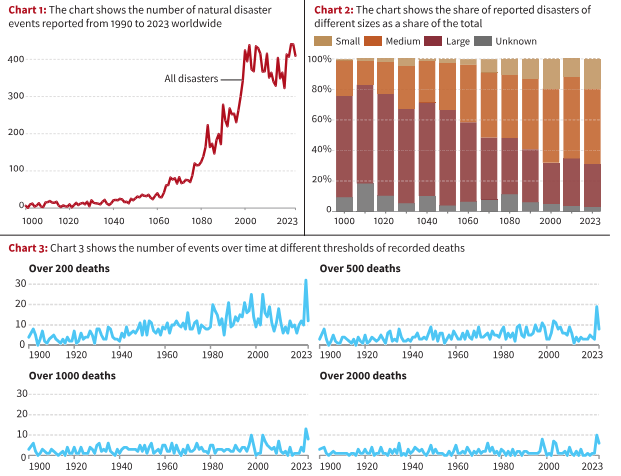
The Food and Agriculture Organization (FAO) of the United Nations noted a rise in global disasters from roughly 100 yearly in the 1970s to about 400 in recent years, influenced partly by reporting biases.
Recent Observations
Increase in Disaster Events: The number of disaster events reported worldwide has risen from 100 events per year in the 1970s to around 400 per year in the last 20 years. Patterns in disaster data reveal factors such as increased resilience, climate change, and improved humanitarian response.
Improved Reporting: Reporting of small events, particularly those with fewer than 200 deaths, has increased significantly since the 1980s and 1990s. Historical data mainly included major events due to limited interest and capacity for data collection in earlier periods.
Missing Data and Limitations of Disaster Databases
Biases and Gaps in Historical Records: Earlier records predominantly captured major disasters, with smaller events often missing. Data coverage is particularly poor in low-income regions such as Sub-Saharan Africa and South Asia, where economic losses from disasters are frequently underreported.
Missing Economic Damage and Insured Losses: More than 40% of disasters between 1990 and 2020 lacked estimates of monetary damages. Insured damages were missing in 88% of disaster reports, and 96% needed records of reconstruction costs.
No coverage of Heat Events and Health Impacts: Reporting of heat events is concentrated in a few countries, suggesting underreporting in other regions. Indirect health effects of extreme temperatures, such as increased cardiovascular disease risk, are challenging to quantify and often underestimated.
Need for Data (Way Forward)
Improving Data Coverage: Enhanced data collection in low-income regions and better integration of smaller events into disaster databases are crucial.
Accurate Health Impact Quantification: Improved methods for estimating indirect health effects of extreme temperatures and other disaster-related conditions are needed. Utilising statistical methods to capture the broader health impacts of disasters can aid in better policy formulation.
Policy and Resilience Planning: Reliable and comprehensive disaster data are essential for effective policy-making and resilience planning. Data-driven insights and predictive analytics can help foresee the long-term impacts of disasters and guide regulatory measures to enhance disaster preparedness and response.
Mains PYQ:
Q Discuss the recent measures initiated in disaster management by the Government of India departing from the earlier reactive approach. (UPSC IAS/2020)
The release of India’s GDP data was eagerly anticipated, especially following the recent upgrade in the “sovereign rating outlook” by S&P. It comes just days before the announcement of the union election results.
Back2Basics: Rating Agency
A rating agency is a company that assesses the financial strength of companies and government entities, especially their ability to meet principal and interest payments on their debts.
Fitch Ratings, Moody’s Investors Service and Standard & Poor’s (S&P) are the big three international credit rating agencies controlling approximately 95% of the global rating business.
In India, six credit rating agencies are registered under the Securities and Exchange Board of India (SEBI): CRISIL, ICRA, CARE, SMERA, Fitch India and Brickwork Ratings.
What does the data say?
India’s GDP growth for 2023-24 is 8.2%, exceeding market expectations and surpassing the previous year’s growth of 7%.
Fourth-quarter growth is particularly robust at 7.8%, with upward revisions in previous quarters contributing to overall growth.
Notable divergence of 1 percentage point between GDP and GVA growth in 2023-24, mainly due to increased net taxes.
Sectoral analysis reveals mixed performance, with manufacturing and construction showing strong growth, while agriculture remains subdued.
Expenditure-side breakdown highlights a slower growth rate in private consumption but healthy growth in investment, led mainly by government spending.
Pillars need to be sustained:
Private Consumption: Ensuring sustained consumer spending, particularly by addressing high inflation and low wage growth, to maintain economic momentum.
Investment: Continuously stimulating both government and private sector investment to drive economic expansion and foster innovation and productivity.
Exports: Maintaining competitiveness in global markets and promoting export-oriented growth to leverage external demand and diversify revenue sources.
How to ensure the benefits of high growth trickle down to the lower-income categories?
Improving Private Consumption: Focus on reviving private consumption, especially among lower-income groups. Address concerns of high inflation and low wage growth affecting consumer confidence.
Enhancing Employment Opportunities: Prioritize improving the employment scenario, particularly in sectors generating significant employment like IT and the unorganized sector. Recognize the importance of employment in sustaining consumption growth and overall economic stability.
Investment in Rural Development: Ensure spatial and temporal distribution of rainfall for rural demand recovery. Moderating food inflation and improving employment conditions crucial for rural consumption revival.
Boosting Private Capex Cycle: Create an environment conducive to private investment, focusing on policy certainty and confidence in economic stability. Encourage private sector investment through favourable policies and supportive regulatory frameworks.
Policy Focus on Inclusive Growth: Direct policy attention towards ensuring that the benefits of high growth extend to lower-income categories. Implement targeted social welfare programs and initiatives to support vulnerable groups and reduce income inequality.
Monitoring Global Developments: Stay vigilant of global economic trends and developments that could impact the Indian economy, such as geopolitical tensions and supply shocks. Adapt policies accordingly to mitigate risks and capitalize on opportunities for sustained economic growth.
Conclusion: The Indian government aims to bolster equitable growth through measures such as stimulating private consumption, enhancing employment prospects, and fostering a conducive investment environment, supported by targeted policies and proactive global monitoring.
Mains PYQ:
Q Explain the difference between the computing methodology of India’s Gross Domestic Product (GDP) before the year 2015 and after the year 2015. (UPSC IAS/2021)
The RBI has repatriated over 100 tonnes of gold from the UK to its domestic vaults, the largest transfer since at least 1991.
What are Gold Reserves?
A gold reserve is the gold held by a country’s central bank, acting as a backup for financial promises and a store of value.
India, like other nations, stores some of its gold reserves in foreign vaults to spread out risk and facilitate international trading.
India’s Gold Reserves:
As of the end of March 2024, the RBI held 822.10 tonnes of gold, with 408.31 tonnes stored domestically.
The share of gold in the total forex of India is around 7-8% as of 2023.
Where does the RBI store its gold?
India’s gold reserves are primarily stored in the Bank of England, which is known for its stringent security protocols.
The RBI also stores a portion of its gold reserves at the:
Bank for International Settlements (BIS) in Basel, Switzerland, and the
Federal Reserve Bank of New York in the United States.
During India’s foreign exchange crisis in 1990-91, the country pledged some of its gold reserves to the Bank of England to secure a $405 million loan, according to reports.
Even though the loan was paid back by November 1991, India decided to keep the gold in the UK for convenience.
Why does the RBI store its gold in foreign banks?
Convenience: Storing gold overseas makes it easier for India to trade, engage in swaps and earn returns.
Averting Risks: There are risks involved, especially during times of geopolitical tensions and war.
The recent freezing of Russian assets by Western nations has raised worries about the safety of assets kept abroad and the RBI decision to shift a portion of the gold reserve to India could be prompted by these concerns.
Stable Prices: Unlike fiat currencies, which can be subject to inflation or devaluation due to various economic factors, the value of gold tends to be relatively stable over time, which makes it an attractive asset for central banks to hold as a reserve.
Benefits Offered by Gold Reserves
Control domestic gold prices: With its big stash of gold, the RBI can help control local gold prices by using some of it in India. Last financial year, the RBI added about 27.47 tonnes of gold to the total reserve, bringing it to 794.63 tonnes.
Security buffer: The increased gold reserve works as a hedge against any financial crisis and to take measures to control inflation as well as currency devaluation.
Why is the recent move significant?
Efficiency and Confidence: Bringing gold back to India reduces storage fees and signals confidence in the stability of the Indian economy.
Logistical Efficiency: Moving gold to India saves on storage fees paid to foreign custodians, such as the Bank of England.
Diversified Storage: Repatriation ensures diversified storage, enhancing security and reducing dependency on foreign storage.
Has the RBI made similar purchases or transfers of gold in the past?
RBI started buying gold in 2018 and had previously bought 200 tonnes during the global financial crisis in 2009.
In the first quarter of 2024, the RBI bought 19 tonnes of gold, surpassing the 16 tonnes purchased throughout 2023.
PYQ:
[2015] The problem of international liquidity is related to the non-availability of:
Hunga Tonga-Hunga Ha’apai (Hunga Tonga) erupted in Tonga, triggering a tsunami and global seismic waves.
About Hunga Tonga Volcano
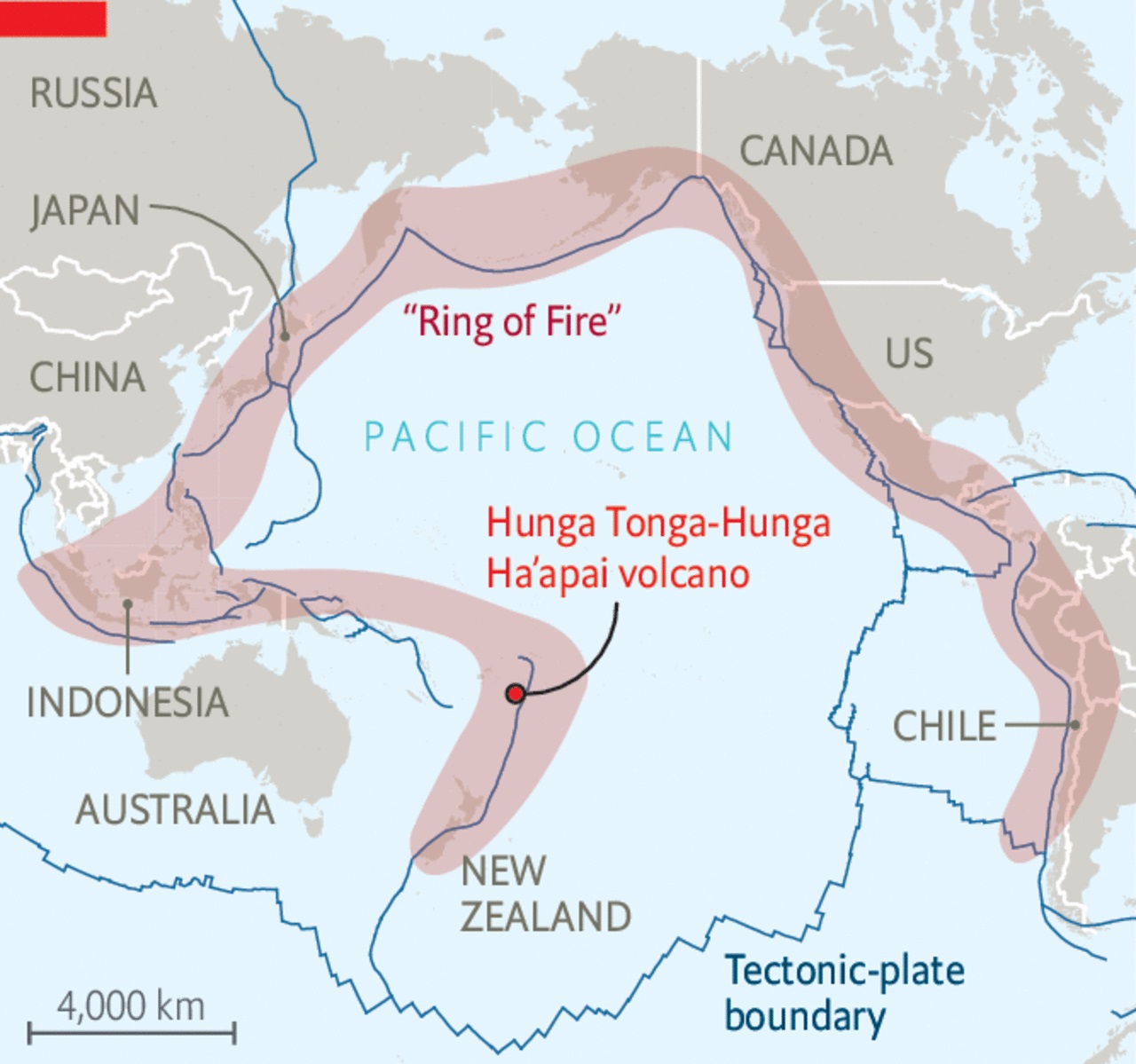
The Hunga Tonga-Hunga Ha’apai volcano is situated in the western South Pacific Ocean, west of the main inhabited islands in the Kingdom of Tonga. It lies on the Pacific Ring of Fire.
It forms part of the Tofua Arc, within the larger Tonga-Kermadec volcanic arc, resulting from the subduction of the Pacific Plate beneath the Indo-Australian Plate.
It comprises two small uninhabited islands, Hunga-Ha’apai and Hunga-Tonga.
Hunga Tonga is one of 12 confirmed submarine volcanoes along the Tofua Arc.
Key Findings on Hunga Tonga Eruption
The Hunga Tonga eruption primarily emitted water vapour, which reached the stratosphere, affecting ozone depletion and acting as a potent greenhouse gas. Minimal smoke was produced.
Impact on Weather
Ozone Hole: The study reveals that Hunga Tonga contributed to the exceptionally large ozone hole in the preceding year and the unexpectedly wet summer of 2024.
Global Mean Temperatures: While the eruption had a negligible effect on global temperatures, it induced lasting regional disruptions in atmospheric wave patterns.
Traditionally, massive volcanic eruptions reduce temperatures by emitting sulfur dioxide, which forms sulphate aerosols reflecting sunlight.
Regional Effects: Anticipated changes include colder and wet winters in northern Australia, warmer winters in North America, and colder winters in Scandinavia until approximately 2029.
Do you know?
Previous volcanic eruptions, such as Tamborain 1815 and Samalasin 1257, have significantly impacted global climate, leading to phenomena like the “year without a summer” and the onset of the Little Ice Age.
PYQ:
[2021] Discuss about the vulnerability of India to earthquake-related hazards. Give examples including the salient features of major disasters caused by earthquakes in different parts of India during the last three decades.
The Indian Space Research Organisation (ISRO) has launched the Computational Fluid Dynamics (CFD) software named Parallel RANS Solver for Aerospace Vehicle Aero-thermo-dynamic Analysis (PraVaHa).
About PraVaHa
PraVaHa was developed at ISRO’s Vikram Sarabhai Space Centre (VSSC), showcasing India’s prowess in aerospace technology.
It can simulate both external and internal flows on various aerospace vehicles, including launch vehicles, and winged, and non-winged re-entry vehicles.
It facilitates initial aerodynamic design studies by evaluating numerous configurations, crucial for optimizing vehicle performance and safety.
Role of Computational Fluid Dynamics (CFD)
CFD predicts aerodynamic and aerothermal loads by solving governing equations. It has matured to offer high accuracy and fast simulations, addressing aerospace challenges like high pressure and intense heat flux.
Integration in Gaganyaan Program
Key Applications: PraVaHa plays a pivotal role in the Gaganyaan program, facilitating aerodynamic analysis of human-rated launch vehicles such as HLVM3, Crew Escape System (CES), and Crew Module (CM).
Scalability and Collaboration: Designed to leverage both CPU and GPU architectures, PraVaHa ensures compatibility with existing and future supercomputing facilities, fostering collaboration with academic and government institutions.
PYQ:
[2010] In the context of space technology, what is “Bhuvan”, recently in the news?
(a) A mini satellite launched by ISRO for promoting the distance education in India.
(b) The name given to the next Moon Impact Probe, for Chandrayaan-II.
(c) A geoportal of ISRO with 3D imaging capabilities of India.
India has become chair of the regional grouping “Colombo Process” for the first time since its inception in 2003.
What isthe Colombo Process?
The Colombo Process, established on March 19, 2003, in Colombo, Sri Lanka, is a regional consultative initiative addressing challenges faced by migrant workers from South and Southeast Asia.
Objective:
Primary Goal: The Colombo Process aims to enhance the management of contractual labour migration from Asian countries.
Focus: It seeks to safeguard the rights and welfare of migrant workers while maximizing the benefits of labour migration for both sending and receiving countries.
The Process is non-binding and decision-making is by consensus.
Membership:
Initial Composition: Initially comprising 11 member countries, including Afghanistan, Bangladesh, China, India, Indonesia, Nepal, Pakistan, the Philippines, Sri Lanka, Thailand, and Vietnam.
Expansion: The Process has since expanded to include additional countries like Cambodia and Myanmar.
Five Thematic Area Working Groups (TAWGs) i.e.
Skills and Qualification Recognition (chaired by Sri Lanka);
Fostering Ethical Recruitment (chaired by Bangladesh);
Pre-Departure Orientation and Empowerment (chaired by the Philippines);
Remittances (chaired by Pakistan) and
Labour Market Analysis (chaired by Thailand).
Key Focus Areas:
Policy Development: Addressing various aspects of labour migration, including policy development, capacity building, data collection, and sharing best practices.
Rights Protection: Ensuring the protection of migrant workers’ rights, skills recognition, ethical recruitment, and combating human trafficking and irregular migration.
Activities and Initiatives:
Dialogue Platforms: Regular meetings, conferences, and workshops serve as platforms for dialogue and cooperation among member countries.
Guidelines and Toolkits: Development of guidelines, toolkits, and policy frameworks to assist member countries in effectively managing labour migration.
Collaboration: Collaboration with international organizations such as the International Labour Organization (ILO) and the International Organization for Migration (IOM) to implement joint initiatives and projects.
PYQ:
[2022] ‘India is an age-old friend of Sri Lanka.’ Discuss India’s role in the recent crisis in Sri Lanka in light of the preceding statement.
![[4th June 2024] The Hindu Op-ed: Property is real, and so should the ‘compensation’](https://www.civilsdaily.com/wp-content/uploads/2024/06/4june-June-1568x882.jpg)