💥Mains Ready By December. Smash Mains & Smash PYQ Admissions Open

Search results for: “”

  • The anti-defection law — political facts, legal fiction

    Context

    The ongoing political crisis in Maharashtra, and many others before it, are grim reminders of what the Tenth Schedule can and cannot do.

    About 10th Schedule

    • In 1985 the Tenth Schedule, popularly known as the anti-defection law, was added to the Constitution.
    • But its enactment was catalyzed by the political instability after the general elections of 1967.
    • This was the time when multiple state governments were toppled after MLAs changed their political loyalties.
    • The purpose of the 1985 Constitution Amendment was to bring stability to governments by deterring MPs and MLAs from changing their political parties on whose ticket they were elected.
    • The penalty for shifting political loyalties is the loss of parliamentary membership and a bar on becoming a minister.

    Provisions of the 10th Schedule

    • Instances of floor crossing have long gone unchecked and unpunished.
    • In part, this can be attributed to the exemption given to mergers between political parties which facilitate bulk defections.
    • Disqualification provision: The second paragraph of the Tenth Schedule allows for disqualification of an elected member of a House if such member belonging to any political party has voluntarily given up membership of their party, or if they vote in the House against such party’s whip.
    • Exceptions: Paragraph 4 creates an exception for mergers between political parties by introducing three crucial concepts — that of the “original political party”, the “legislature party”, and “deemed merger”.
    • What is the legislature party?  It means the group consisting of all elected members of a House for the time being belonging to one political party.
    • Original political party: An “original political party” means the political party to which a member belongs (this can refer to the party generally, outside of the House).
    • Paragraph 4 does not clarify whether the original political party refers to the party at the national level or the regional level.

    How Paragraph 4 of the 10th Schedule deals with mergers?

    • Paragraph 4 is spread across two sub-paragraphs, a conjoint reading of which suggests that a merger can take place only when an original party merges with another political party, and at least two-thirds of the members of the legislature party have agreed to this merger.
    • It is only when these two conditions are satisfied that a group of elected members can claim exemption from disqualification on grounds of merger.
    • The second sub-paragraph (of Paragraph 4) says that a party shall be “deemed” to have merged with another party if, and only if, not less than two-thirds of the members of the legislature party concerned have agreed to such merger.
    • However, in most cases there is no factual merger of original political parties at the national (or even regional) level.
    • Creation of legal fiction: Paragraph 4 seems to be creating a “legal fiction” so as to indicate that a merger of two-third members of a legislature party can be deemed to be a merger of political parties, even if there is no actual merger of the original political party with another party.
    • In statutory interpretation, “deemed” has an established understanding.
    • The word “deemed” may be used in a law to create a legal fiction, and give an artificial construction to a word or a phrase used in a statute.
    • In other cases, it may be used to include what is obvious or what is uncertain.
    • In either of these cases, the intention of the legislature in creating a deeming provision is paramount.

    Merger exception and issues with it

    • The merger exception was created to save instances of the principled coming together of political groups from disqualification under the anti-defection law, and to strike a compromise between the right of dissent and party discipline. 
    • In the absence of mergers of original political parties, the deeming fiction could, presumably, be used as a means to allow mergers of legislature parties.
    • Encouraging defection: Reading Paragraph 4 in this manner would empower legislature parties to solely merge with another party, and thus, practically ease defection.

    What if sub-paragraphs are read conjunctively?

    • For a valid merger then, an original political party has to first merge with another political party, and then two-thirds of the legislature party must support that merger.
    • Given the politics of current times, stark differences in parties’ respective ideologies, and deep-seated historical rivalries, it is unimaginable how a merger between major national or regional parties would materialise.

    Way forward

    • Remove Paragraph 4: In a situation where either reading of Paragraph 4 in its current form yields undesirable results, its deletion from the Tenth Schedule is a possible way forward.
    • The Law Commission in 1999 and the National Commission to Review the Working of the Constitution (NCRWC) in 2002 made similar recommendations.
    • Revisiting by Supreme Court: Till that happens, an academic revisiting of the Tenth Schedule by the Supreme Court, so as to guide future use of the anti-defection law, is timely and should happen soon.

    Conclusion

    Neither of these two interpretations of Paragraph 4complements the ‘mischief’ that the Tenth Schedule was expected to remedy — that of curbing unprincipled defections. Amending it is the need of the hour.

    UPSC 2023 countdown has begun! Get your personal guidance plan now! (Click here)

  • (Zoom link inside) Day-2: UPSC Prelims Bootcamp | Join 1-to-1 LIVE sessions-2 with *Santosh Sir | Bouncing back from Failure to Smashing Prelims, Master strategy for UPSC pre-2023 | Register (FREE) & get special CD Prelims package

    (Zoom link inside) Day-2: UPSC Prelims Bootcamp | Join 1-to-1 LIVE sessions-2 with *Santosh Sir | Bouncing back from Failure to Smashing Prelims, Master strategy for UPSC pre-2023 | Register (FREE) & get special CD Prelims package

    Join Zoom Meeting
    https://us06web.zoom.us/j/86563275502?pwd=WkpEOFQ3d3M0UGFzQkxkZUtraFZwUT09

    Meeting ID: 865 6327 5502
    Passcode: 130993


    Couldn’t clear Prelims 2022? Confused due to the ever-unpredictable UPSC’s pattern? Want to make 2023 your final and successful Prelims?

    This two-day UPSC Prelims Bootcamp is for you.

    UPSC prelims 2022 result was announced a few days back. It shocked many aspirants.

    Facing the same issues as mentioned above, if you encountered failure in UPSC Prelims 2022 in your first or second or even the fifth attempt, this webinar cum UPSC Bootcamp is for you.

    After a thorough analysis of previous year’s papers, their nature, and the way it keeps on mutating/evolving, the prelims guru, Santosh sir, & Sajal Sir, a senior IAS mentor of 200+ successful rankers have devised a special Bootcamp for you, that would help you understand this dynamism and keep pace with it. And you will sail smoothly to the second stage of the examination, i.e. Mains as well as interview. No matter how bad your exam preparation is.

    UPSC Prelims Bootcamp Details: 

    Date: 29th and 30th June (Wednesday and Thursday)
    Do ready what UPSC rankers have to say about Sajal sir.
    Do read what Prelims qualified students have to say about Santosh sir.

    Discussion areas in the UPSC Prelims Bootcamp

    1. How to keep yourself motivated in this exam process whose gestation period is very high?
    2. How to cope with failures in this exam cycle?
    3. How to maintain consistency during preparation?
    4. How to re-start preparation again for the 2023 exam?
    5. Mistakes you should avoid in your next attempt?
    6. Blueprint of your preparation plan. When to start preparation for prelims again?
    7. Smart study-related practical strategies which work on the ground?
    8. 4-2-4 Model of Preparation
    9. Open 1-1 Q&A session with Sajal sir, Santosh sir, and other rankers

    We have prepared a special Prelims Package for you including notes, resources, and community access.

    A Quick Bit About Sajal Sir

    Click and find out what toppers have to say about Sajal sir?

    Sajal Singh sir is the founder and academic director of CivilsDaily IAS. He is an MS in Economics from Gokhale Institute of Politics and Economics, an MS in Financial Economics from Carleton University Canada. NET(JRF) in Economics qualified. He had obtained the highest marks in GS papers in UPSC Mains 2017 and appeared in several UPSC CS interviews. He also heads the Civilsdaily flagship Smash Mains initiative with an over 80% success ratio in the Mains exam. Under Sajal sir’s mentorship, more than 200+ rankers have made it to the list in UPSC 2021 exam.

    About Santosh Gupta

    Santosh Gupta sir has scored above 140 twice in UPSC prelims and always 120 plus in all 6 attempts. He wrote all 6 mains and appeared for Interviews 3 times. He has qualified UPSC EPFO and BPSC 56-59th also. He has been teaching and mentoring UPSC aspirants for the last 5 years.

    This year hundreds of students under Santosh sir cleared UPSC Prelims 2022. Read messages by some of them.

    About Soham Mandhare

    Soham hails from a village in Maharashtra and belongs to a farmer background. A mechanical engineering graduate, Soham took multiple attempts to crack UPSC and secure an AIR 267 in UPSC 2021. His optional was

    While Soham loves watching movies and playing cricket, he also engages himself in native tree plantation drives and assisting his family in agricultural activities.

  • The significance of PM’s visit to the UAE

    Context

    Prime Minister Narendra Modi’s visit to the UAE on June 28 was his fourth, having visited the country earlier in August 2015, in February 2018 and again in August 2019.

    Why do the Gulf and UAE matters to India?

    • The UAE has given crucial support to India in the Islamic world, first by inviting our late External Affairs Minister Sushma Swaraj as a guest of honour at an OIC foreign ministers meeting in Abu Dhabi.
    • The UAE stood with us on Jammu and Kashmir following the abrogation of Article 370.
    • The Gulf is our third-largest trading partner.
    • The Gulf region is our principal source of hydrocarbons.
    • It is also a major source of foreign investment.
    • The region is home to some 8 million Indians who send in over $50 billion annually in remittances.

    Deepening bilateral ties

    • CEPA: In a virtual summit with Sheikh Mohamed in February 2022, both sides signed a Comprehensive Economic Partnership Agreement (CEPA).
    • CEPA is a significant milestone that was negotiated and finalised in just 88 days and promises to increase bilateral trade from $60 billion to $ 100 billion in five years.
    •  It is expected to help Indian exports in areas ranging from gems and jewellery and textiles to footwear and pharmaceuticals, apart from enhanced access for Indian service providers to 11 specific sectors.
    • Vision statement: An ambitious, forward-looking Joint Vision Statement titled, “Advancing the India and UAE Comprehensive Strategic Partnership: New Frontiers, New Milestones” was also issued.
    • The Dubai-based DP World and India’s National Skills Development Council signed an agreement to set up a Skill India Centre in Varanasi to train local youth in logistics, port operations and allied areas so that they can pursue overseas employment.

    New avenues for multilateral cooperation

    • The rapid normalisation of ties between the UAE and Israel following the Abraham Accords of August 2020 has also opened new avenues of trilateral and multilateral cooperation.
    • Technology, capital and scale: Some Israeli tech companies are already establishing a base in Dubai and seeking to marry niche technologies with Emirati capital and Indian scale. 
    • 2I2U: The US has announced that President Joe Biden’s forthcoming visit to West Asia will see a virtual summit of what it calls the 2I2U, a new grouping that brings together India, Israel, the US and UAE.

    Conclusion

    The UAE today is India’s closest partner in the Arab world. Both countries need to expand the areas of cooperation and deepen their engagement.

    UPSC 2023 countdown has begun! Get your personal guidance plan now! (Click here)


    Back2Basics: Abraham Accords

    • The Israel–UAE normalization agreement is officially called the Abraham Accords Peace Agreement.
    • It was initially agreed to in a joint statement by the United States, Israel and the United Arab Emirates (UAE) on August 13, 2020.
    • The UAE thus became the third Arab country, after Egypt in 1979 and Jordan in 1994, to agree to formally normalize its relationship with Israel as well as the first Persian Gulf country to do so.
    • Concurrently, Israel agreed to suspend plans for annexing parts of the West Bank.
    • The agreement normalized what had long been informal but robust foreign relations between the two countries.
  • 30th June 2022| Daily Answer Writing Enhancement(AWE)

    Topics for Today’s questions:

    GS-1        Distribution of key natural resources across the world (including South Asia and the Indian sub-continent)

    GS-2        Bilateral, regional and global groupings and agreements involving India and/or affecting  India’s interests.

    GS-3        Indigenization of technology, applications of S&T in everyday life

    GS-4        Public/Civil Services values and ethics in public administration:  Status and problems;  accountability and ethical governance; strengthening of ethical and moral values in governance; ethical issues in international relations and funding; corporate governance.

    Question 1)


    Q.1 Providing an account of distribution of rainforests across the world, mention their key characteristics. Also highlight the threats that are being faced by tropical rainforests. (15 Marks)


    Question 2)

    Q.2 The UAE today is India’s closest partner in the Arab world and also an important partner for India’s strategic and geopolitical interests. Comment. (10 Marks)

    Question 3)

    Q.3 Optical fibre is the backbone of the digital infrastructure required for the 5G technology. Where does India stand in the optical fibre manufacturing industry? Examine the challenges it faces and suggest the way forward. (10 Marks)

    Question 4)  

    Q.4 In spite of the existence of a Code of Conduct for public servants, its implementation has been tardy and of limited success. Discuss. Further, suggest steps which could be taken to improve the efficacy of the Code of Conduct. What role can Code of Ethics play in reinforcing the Code of Conduct in public life? (10 Marks)


    HOW TO ATTEMPT ANSWERS IN DAILY ANSWER WRITING ENHANCEMENT(AWE)?

    1. Daily 4 questions from General studies 1, 2, 3, and 4 will be provided to you.

    2. A Mentor’s Comment will be available for all answers. This can be used as a guidance tool but we encourage you to write original answers.

    3. You can write your answer on an A4 sheet and scan/click pictures of the same.

    4.  Upload the scanned answer in the comment section of the same question.

    5. Along with the scanned answer, please share your Razor payment ID, so that paid members are given priority.

    6. If you upload the answer on the same day like the answer of 11th  February is uploaded on 11th February then your answer will be checked within 72 hours. Also, reviews will be in the order of submission- First come first serve basis

    7. If you are writing answers late, for example, 11th February is uploaded on 13th February , then these answers will be evaluated as per the mentor’s schedule.

    8. We encourage you to write answers on the same day. However, if you are uploading an answer late then tag the mentor like @Staff so that the mentor is notified about your answer.

    *In case your answer is not reviewed, reply to your answer saying *NOT CHECKED*. 

    1. For the philosophy of AWE and payment: 

  • How is Vice-President of India elected?

    The Election Commission has announced that the election to the post of the Vice-President (VP) will be held on August 6, as M. Venkaiah Naidu’s term was coming to an end on August 10.

    About Vice President of India

    • The VP is the deputy to the head of state of the Republic of India, the President of India.
    • His/her office is the second-highest constitutional office after the president and ranks second in the order of precedence and first in the line of succession to the presidency.
    • The vice president is also a member of the Parliament as the ex officio Chairman of the Rajya Sabha.

    Qualifications

    • As in the case of the president, to be qualified to be elected as vice president, a person must:
    1. Be a citizen of India
    2. Be at least 35 years of age
    3. Not hold any office of profit
    • Unlike in the case of the president, where a person must be qualified for election as a member of the Lok Sabha, the vice president must be qualified for election as a member of the Rajya Sabha.
    • This difference is because the vice president is to act as the ex officio Chairman of the Rajya Sabha.

    Roles and responsibilities

    • When a bill is introduced in the Rajya Sabha, the vice president decides whether it is a money bill or not.
    • If he is of the opinion that a bill introduced in the Rajya Sabha is a money bill, he shall refer it to the Speaker of the Lok Sabha.
    • The vice president also acts as the chancellor of the central universities of India.

    Election procedure

    • Article 66 of the Constitution of India states the manner of election of the vice president.
    • The vice president is elected indirectly by members of an electoral college consisting of the members of both Houses of Parliament and NOT the members of state legislative assembly.
    • The election is held as per the system of proportional representation using single transferable votes.
    • The voting is conducted by Election Commission of India via secret ballot.
    • The Electoral College for the poll will comprise 233 Rajya Sabha members, 12 nominated Rajya Sabha members and 543 Lok Sabha members.
    • The Lok Sabha Secretary-General would be appointed the Returning Officer.
    • Political parties CANNOT issue any whip to their MPs in the matter of voting in the Vice-Presidential election.

    Removal

    • The Constitution states that the vice president can be removed by a resolution of the Rajya Sabha passed by an Effective majority (majority of all the then members) and agreed by the Lok Sabha with a simple majority( Article 67(b)).
    • But no such resolution may be moved unless at least 14 days’ notice in advance has been given.
    • Notably, the Constitution does not list grounds for removal.
    • No Vice President has ever faced removal or the deputy chairman in the Rajya Sabha cannot be challenged in any court of law per Article 122.


    UPSC 2023 countdown has begun! Get your personal guidance plan now! (Click here)

  • What are Primary Agricultural Credit Society (PACS)?

    The Cabinet Committee on Economic Affairs (CCEA) has approved a proposal to digitise around 63,000 primary agricultural credit societies (PACS).

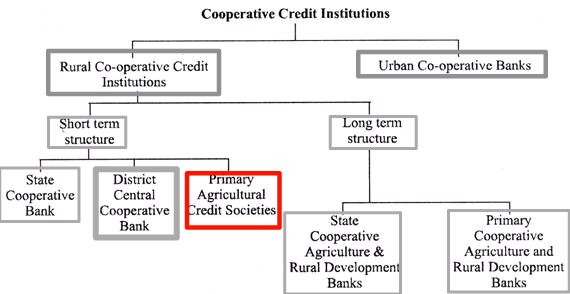
    What are the Primary Agricultural Credit Societies (PACS)?

    • PACS is a basic unit and smallest co-operative credit institutions in India.
    • In 1904 the first Primary Agricultural Credit Society (PACS) was established.
    • It works on the grassroots level (gram panchayat and village level).
    • PACS is the final link between the ultimate borrowers, i.e., rural people, on the one hand, and the higher agencies, i.e., Central cooperative bank, state cooperative bank, and Reserve Bank of India, on the other.

    Who regulates PACS?

    • PACS are registered under the Co-operative Societies Act and also regulated by the RBI.
    • They are governed by the “Banking regulation Act-1949” and Banking Laws (Co-operative societies) Act 1965.

    Various objectives of PACS

    1. To raise capital for the purpose of making loans and supporting members’ essential activities.
    2. To collect deposits from members with the goal of improving their savings habit.
    3. To supply agricultural inputs and services to members at reasonable prices,
    4. To arrange for the supply and development of improved breeds of livestock for members.
    5. To make all necessary arrangements for improving irrigation on land owned by members.
    6. To encourage various income-generating activities through supply of necessary inputs and services.

    Functions of PACS

    • As registered cooperative societies, PACS have been providing credit and other services to their members.
    • PACS typically offer the following services to their members:
    1. Input facilities in the form of a monetary or in-kind component
    2. Agriculture implements for hire
    3. Storage space

    Who can form PACS?

    • A primary agricultural credit society can be formed by a group of ten or more people from a village. The society’s management is overseen by an elected body.
    • The membership fee is low enough that even the poorest agriculturist can join.
    • Members of the society have unlimited liability, which means that each member assumes full responsibility for the society’s entire loss in the event of its failure.

    What capitalizes PACS?

    • The primary credit societies’ working capital is derived from their own funds, deposits, borrowings, and other sources.
    • Share capital, membership fees, and reserve funds are all part of the company’s own funds.
    • Deposits are made by both members and non-members.
    • Borrowings are primarily made from central cooperative banks.

    Why need digitization?

    • PACS account for 41 % (3.01 Cr. farmers) of the KCC loans given by all entities in the country and 95 % of these KCC loans (2.95 Cr. farmers) through PACS are to the small and marginal farmers.
    • The other two tiers viz. State Cooperative Banks (StCBs) and District Central Cooperative Banks (DCCBs) have already been automated by the NABARD and brought on Common Banking Software (CBS).
    • Majority of PACS have so far been not computerized and still functioning manually resulting in inefficiency and trust deficit.

    Significance of digitization

    • Computerization of PACS will increase their transparency, reliability and efficiency, and will also facilitate the accounting of multipurpose PACS.
    • Along with this, it will also help PACS to become a nodal centre for providing services such as direct benefit transfer (DBT), Interest subvention scheme (ISS), crop insurance scheme (PMFBY), and inputs like fertilizers and seeds.

    Try this PYQ from CSP 1999:

    Q.The farmers are provided credit from a number of sources for their short and long term needs. The main sources of credit to the farmers include-

    (a) the Primary Agricultural Cooperative Societies, commercial banks, RRBs and private money lenders

    (b) the NABARD, RBI, commercial banks and private money lenders

    (c) the District Central Cooperative Banks (DCCB), the lead banks, IRDP and JRY

    (d) the Large Scale Multi-purpose Adivasis Programme, DCCB, IFFCO and commercial banks


    [wpdiscuz-feedback id=”l5v0qluiul” question=”Please leave a feedback on this” opened=”1″]Post your answers here.[/wpdiscuz-feedback]


    UPSC 2023 countdown has begun! Get your personal guidance plan now! (Click here)

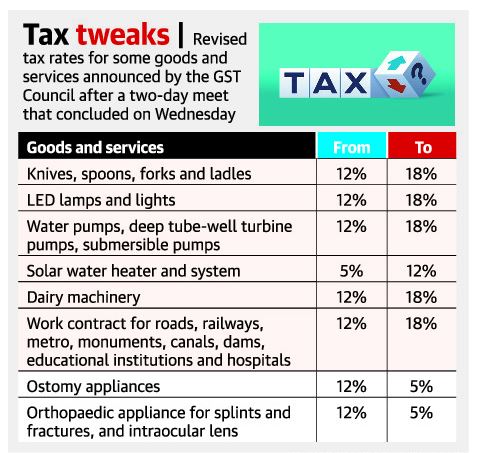
  • Govt. hikes GST for household items

    The Goods and Services Tax (GST) Council has decided to hike and lower GST on certain commodities.

    What is the news?

    • From July 18, tax hikes will kick in for over two dozen goods and services, ranging from unbranded food items, curd and buttermilk to low-cost hotels, cheques and maps.
    • Tax rates will be lowered for about half-a-dozen goods and services, including ropeways and truck rentals where fuel costs are included.
    • It scrapped GST for items imported by private vendors for use by defence forces.

    What is GST?

    • GST launched in India on 1 July 2017 is a comprehensive indirect tax for the entire country.
    • It is charged at the time of supply and depends on the destination of consumption.
    • For instance, if a good is manufactured in state A but consumed in state B, then the revenue generated through GST collection is credited to the state of consumption (state B) and not to the state of production (state A).
    • GST, being a consumption-based tax, resulted in loss of revenue for manufacturing-heavy states.

    What are GST Slabs?

    • In India, almost 500+ services and over 1300 products fall under the 4 major GST slabs.
    • There are five broad tax rates of zero, 5%, 12%, 18% and 28%, plus a cess levied over and above the 28% on some ‘sin’ goods.
    • The GST Council periodically revises the items under each slab rate to adjust them according to industry demands and market trends.
    • The updated structure ensures that the essential items fall under lower tax brackets, while luxury products and services entail higher GST rates.
    • The 28% rate is levied on demerit goods such as tobacco products, automobiles, and aerated drinks, along with an additional GST compensation cess.

    Why rationalize GST slabs?

    • From businesses’ viewpoint, there are just too many tax rate slabs, compounded by aberrations in the duty structure through their supply chains with some inputs are taxed more than the final product.
    • These are far too many rates and do not necessarily constitute a Good and Simple Tax.
    • Multiple rate changes since the introduction of the GST regime in July 2017 have brought the effective GST rate to 11.6% from the original revenue-neutral rate of 15.5%.
    • Merging the 12% and 18% GST rates into any tax rate lower than 18% may result in revenue loss.

    Haven’t GST revenues been hitting new records?

    • Yes, they have – GST revenues have scaled fresh highs in three of the first four months of 2022, going past ₹1.67 lakh crore in April.
    • But there is another key factor — the runaway pace of inflation.
    • Wholesale price inflation, which captures producers’ costs, has been over 10% for over a year and peaked at 15.1% in April.
    • Inflation faced by consumers on the ground has spiked to a near-eight year high of 7.8% in April.
    • The rise in prices was the single most important factor for higher tax inflows along with higher imports.


    UPSC 2023 countdown has begun! Get your personal guidance plan now! (Click here)

  • G-20 summit expected to be in Delhi

    India is expected to host the G-20 summit in Delhi, while a number of States, including Jammu and Kashmir and north-eastern States, have been asked to suggest venues for about 100 “preparatory” meetings.

    Why in news?

    • The clarifications came in response to questions being raised over reports in the media about the possibility of holding the summit itself in Jammu and Kashmir.
    • Pakistan had issued a strong protest last week, sent formal demarches to Foreign Ministries in G-20 member-states, asking them not to attend such meetings.
    • Pakistan (alone) believes J&K is internationally recognised disputed territory.

    Why such move?

    • The participation of the delegates from G-20 countries will be a major boost to the efforts of the Centre to project the situation in J&K as normal.
    • This is especially after J&K’s special constitutional position was ended in 2019.

    What is G-20?

    • Formed in 1999, the G20 is an international forum of the governments and central bank governors from 20 major economies.
    • Collectively, the G20 economies account for around 85 percent of the Gross World Product (GWP), 80 percent of world trade.
    • To tackle the problems or address issues that plague the world, the heads of governments of the G20 nations periodically participate in summits.
    • In addition to it, the group also hosts separate meetings of the finance ministers and foreign ministers.
    • The G20 has no permanent staff of its own and its chairmanship rotates annually between nations divided into regional groupings.

    Aims and objectives

    • The Group was formed with the aim of studying, reviewing, and promoting high-level discussion of policy issues pertaining to the promotion of international financial stability.
    • The forum aims to pre-empt the balance of payments problems and turmoil on financial markets by improved coordination of monetary, fiscal, and financial policies.
    • It seeks to address issues that go beyond the responsibilities of any one organization.

    Members of G20

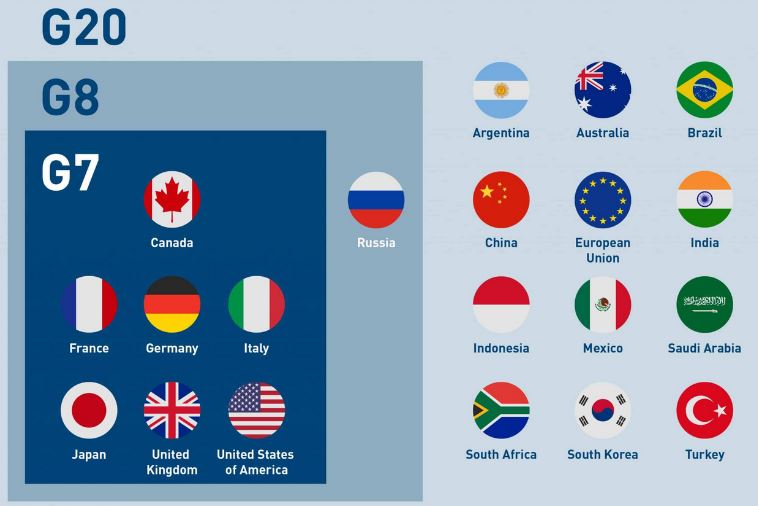
    The members of the G20 consist of 19 individual countries plus the European Union (EU).

    • The 19 member countries of the forum are Argentina, Australia, Brazil, Canada, China, France, Germany, India, Indonesia, Italy, Japan, Mexico, Russia, Saudi Arabia, South Africa, South Korea, Turkey, United Kingdom and the United States.
    • The European Union is represented by the European Commission and by the European Central Bank.

    Its significance

    • G20 is a major international grouping that brings together 19 of the world’s major economies and the European Union.
    • Its members account for more than 80% of global GDP, 75% of trade and 60% of population.

    India and G20

    • India has been a member of the G20 since its inception in 1999.


    UPSC 2023 countdown has begun! Get your personal guidance plan now! (Click here)

  • CAPSTONE: NASA’s satellite, newly launched

    NASA has launched CAPSTONE, a microwave oven-sized CubeSat weighing just 55 pounds (25 kg).

    What is CAPSTONE?

    • CAPSTONE, short for Cislunar Autonomous Positioning System Technology Operations and Navigation Experiment, is designed to test a unique, elliptical lunar orbit.
    • It aims to help reduce risk for future spacecraft by validating innovative navigation technologies, and by verifying the dynamics of the halo-shaped orbit.

    Its launch

    • It is heading toward an orbit intended in the future for Gateway, a Moon-orbiting outpost that is part of NASA’s Artemis program.
    • The orbit is known as a near-rectilinear halo orbit (NRHO).
    • It is significantly elongated, and is located at a precise balance point in the gravities of Earth and the Moon.
    • This offers stability for long-term missions like Gateway, NASA said on its website.

    Mission details

    • CAPSTONE will enter NRHO, where it will fly within 1,600 km of the Moon’s North Pole on its near pass and 70,000 km from the South Pole at its farthest.
    • The spacecraft will repeat the cycle every six-and-a-half days and maintain this orbit for at least six months to study dynamics.


    UPSC 2023 countdown has begun! Get your personal guidance plan now! (Click here)

  • G7

    Context

    The meeting of G7 leaders that concluded in Bavaria was attended by India as an observer.

    About G7

    • The G-7 or ‘Group of Seven’ includes Canada, France, Germany, Italy, Japan, the United Kingdom, and the United States.
    • It is an intergovernmental organisation that was formed in 1975 by the top economies of the time as an informal forum to discuss pressing world issues.
    • Initially, it was formed as an effort by the US and its allies to discuss economic issues.
    • The G-7 forum now discusses several challenges such as oil prices and many pressing issues such as financial crises, terrorism, arms control, and drug trafficking.
    • It does not have a formal constitution or a fixed headquarters. The decisions taken by leaders during annual summits are non-binding.
    • Canada joined the group in 1976, and the European Union began attending in 1977.
    • The G7 is trying hard not to be yesterday’s club.
    • It is still a powerful grouping, with seven of its members in the top 10 economies of the world, three of them permanent members of the UNSC.

    Important outcomes of the G7 meeting

    • Statement on support for Ukraine: A standalone G7 Statement on Support for Ukraine was issued.
    • There was an unconditional commitment that the grouping will provide financial, humanitarian, military and diplomatic support and stand with Ukraine for as long as it takes.
    • Russia was also warned that any use of chemical, biological and nuclear weapons would be met with severe consequences.
    • Further intensification of sanctions against Russia was contemplated.
    • Tough language on China: Significantly, the G7 final communique has tough language on China as well.
    • It says there is no legal basis for China’s expansive maritime claims in the South China Sea, it calls on China to press Russia to withdraw troops from Ukraine and expresses grave concern about the country’s human rights situation.
    • It calls on China to respect universal human rights and fundamental freedoms in both Tibet and Xinjiang, highlighting the issue of forced labour in the latter.

    Significance of India’s observer status

    • The fact is that even the G7 knows its clout has declined compared to, say, 20 years ago.
    • That explains the move to invite key G20 countries as observers to its summits.
    • As for India, its importance lies in the undeniable truth that no global problem can be seriously tackled without New Delhi’s involvement.
    • For India, G7 summits have always been an invaluable opportunity to exchange views not just in a plurilateral format but also in the bilateral meetings on the margins of the main meetings.
    • 2 statements: India has lent its name to two statements issued by the G7. One is titled “Resilient Democracies Statement” and the other is “Joining Forces to Accelerate Clean and Just Transition towards Climate Neutrality”.
    • The first statement talks of democracies as reliable partners seeking to promote a rules-based international order and supporting democracy worldwide including through electoral assistance.
    • The other statement to which India is a signatory is the one on clean and just transition towards carbon neutrality.

    Conclusion

    India’s participation in this meeting as an observer serves to advance its foreign and security policy objectives and will keep it in good stead when it assumes the G20 presidency in December.

    UPSC 2023 countdown has begun! Get your personal guidance plan now! (Click here)