💥UPSC 2027,2028 Mentorship (April Batch) + Access XFactor Notes & Microthemes PDF

Search results for: “”

  • What is an ideal strategy for IAS 2021? | Fill Samanvaya form to talk to us | Link inside

    What is an ideal strategy for IAS 2021? | Fill Samanvaya form to talk to us | Link inside


    Click to fill the form: Samanvaya for IAS 2021 (Talk to our senior mentors)


    IAS exam is designed in such a manner that it should take just one attempt to clear it. Any further attempt, if you’re taking, should only be to improve your rank.

    IAS 2021 dates are out and with less than 9 months left for prelims. This is the time when you should come out with all guns blazing. 

    We’d a discussion with 1700+ students who were not able to clear prelims even in their third attempt. Some were stuck on mains. Yes, you guessed it right, they’d no strategy.

    But what’s an ideal strategy? One that is specifically designed for YOU. One that is based on your learning competencies, your situation in life, the time you have for preparation, your attitude, your aptitude, and a lot of other factors. It requires expertise to make and help you follow one.

    Mind you, just making a workable strategy or covering the syllabus is not enough.

    Broadly, five factors determine your success in cracking this prestigious IAS exam: Planning and strategizing– the first step; Learning – Knowledge and information; Analyzing – making linkages, connections, etc.; Executing and utilizing information; and Constant course correction – because mistakes are inevitable, need to rectify them asap.

    You need to have these factors in your strategy. But how to do that?

    Click to fill the form: Samanvaya for IAS 2021 (Talk to our senior mentors)


    clear upsc ias in first attempt

    Click to fill the form: Samanvaya for IAS 2021 (Talk to our senior mentors)


    Failing to tackle any one of them, feeds into a vicious cycle. Without guidance or mentoring, understanding where the problem lies in and how to rectify it becomes problematic.

    This is where our 3 tier mentoring comes in:

    1. First step starts with this Samanvaya call: Once you fill in the form(click here), our senior mentors get on a 30-40 minute call with you to understand your prep level, working/ study constraints, current strategies, and create a step by step plan for next week, next month and so on.

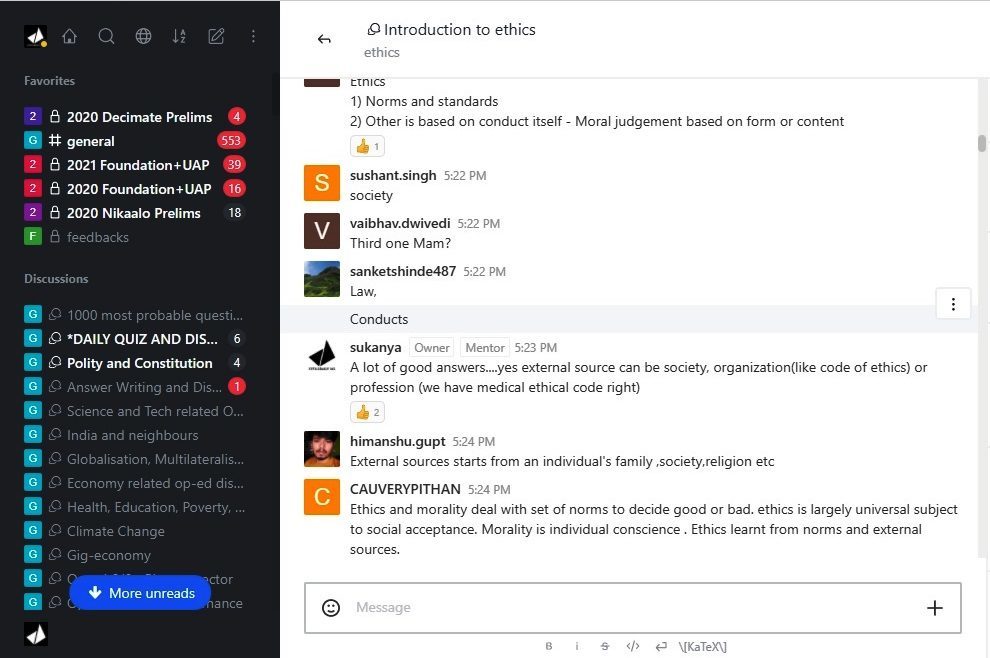
    2. You are given access to our invite-only chat platform, Habitat where you can ask your daily doubts, discuss your test-prep questions and have real-time, live sessions on news and op-eds, and find your optional groups.

    Daily target monitoring.

    3. The third and the most personalized tier is the 1 on 1 mentor allotment who stays with you through the course of your UPSC preparation – always-on chat and on scheduled calls to help you assess, evaluate, and chart the next milestone of your IAS 2021 journey.


    Clear UPSC in first attempt

    Let’s talk. Fill this Samanvaya form (click here)

    (Civilsdaily’s senior mentor will call you within 24 hours.)


    Who are you?

    1. Working Junta? If you are preparing for IAS 2021 and working simultaneously, we can help you strategize and decipher the IAS exam and design a timetable that fits right in your hectic schedule.
    2. First-time prep? If you are in the last year of college or thinking of dropping a year and preparing for IAS 2021 full time, we can help you pick the right books and craft a practical & personal strategy.

    You just have to take 5 minutes out and fill this form: Samanvaya For IAS 2021

    Once done, we will call you within 24 hours or so.


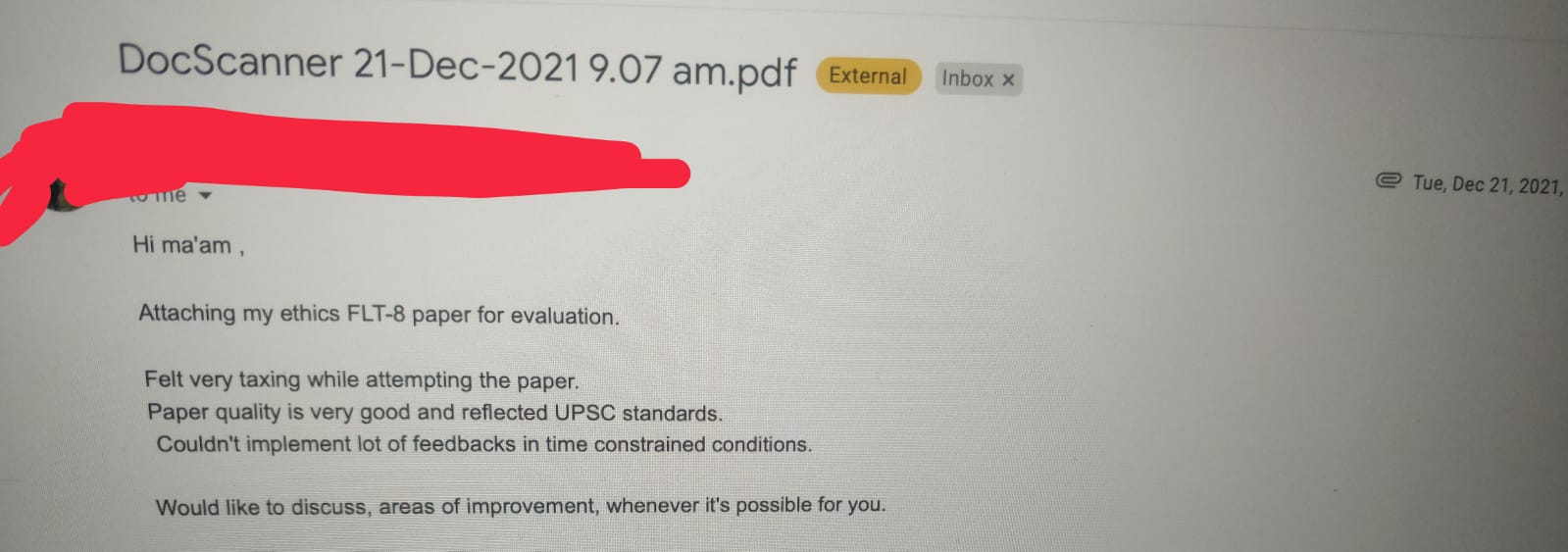
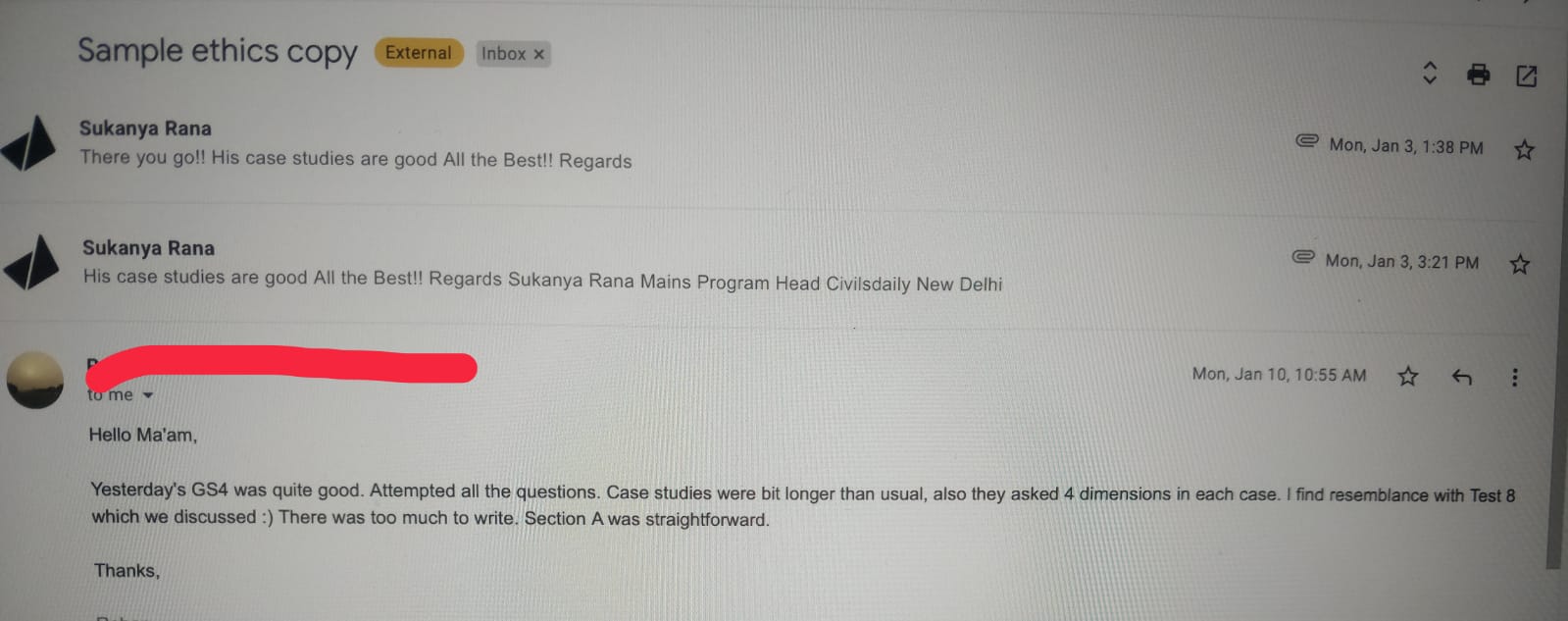
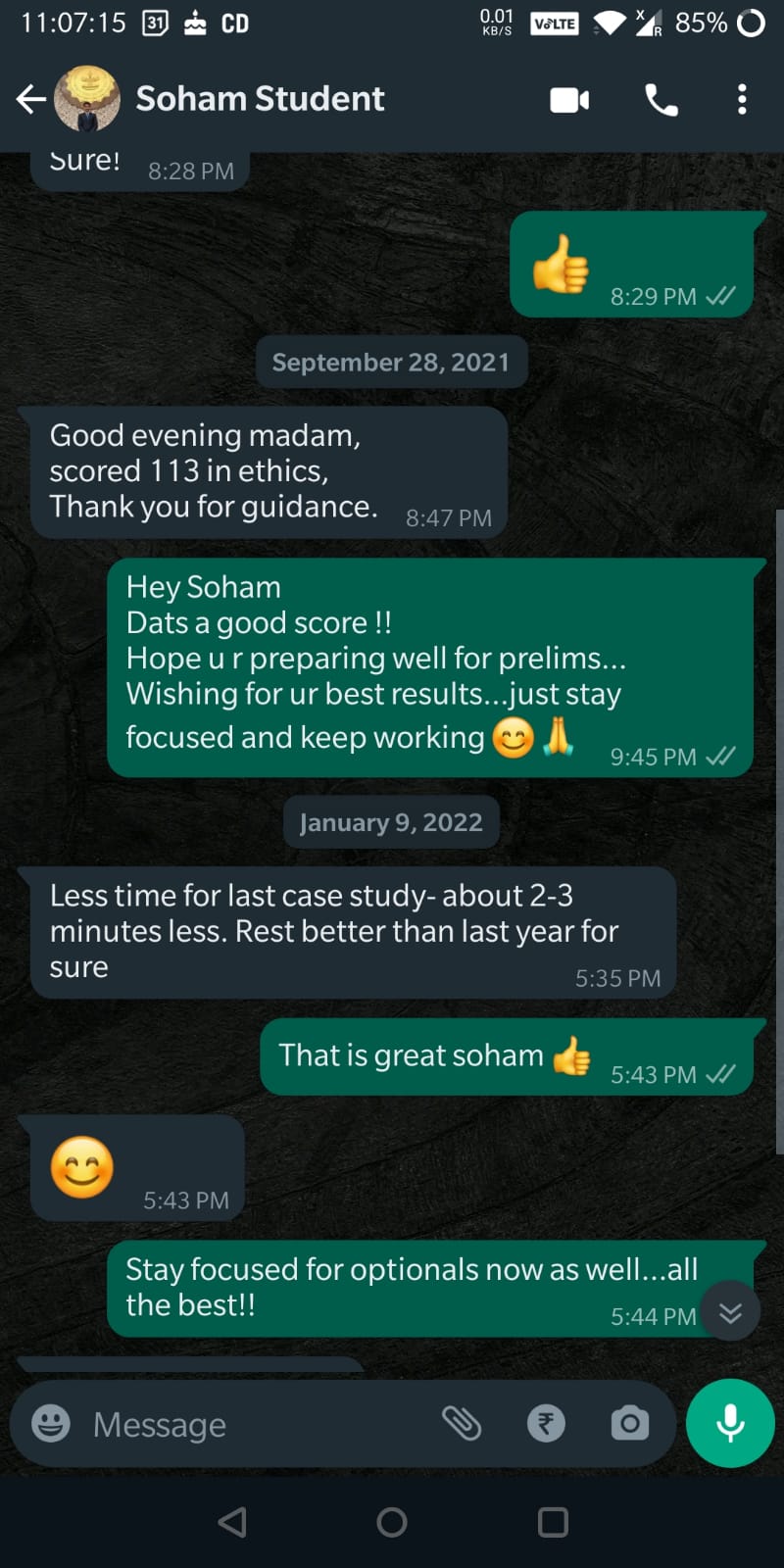
    Here are some testimonials of our students about Samanvaya and our propriety chat interventions:

    upsc 2019 topper civilsdaily ias 2021


    Let us make an ideal strategy for you. Fill Samanvaya form to talk to our senior mentors.

    Click to fill the form: Samanvaya for IAS 2021


  • Financing economic recovery

    The article analyses the issue of socioeconomic disruption caused by the pandemic and response by regionally coordinated response to it.

    Context

    • With continued lockdown measures and restricted borders, countries in Asia and the Pacific have been experiencing sharp drops in foreign exchange inflows due to declines in export earnings, remittances, tourism and FDI.

    Financing 3 key areas by the U.N.

    • The United Nations is contributing through a global initiative, Financing for Development in the Era of COVID-19 and Beyond.
    • The initiative aims at comprehensive financing strategy to safeguard the Sustainable Development Goals.
    • Governments are united to ensure that adequate financial resources are available to steer an inclusive, sustainable and resilient post-COVID-19 recovery.
    • In the Asia-Pacific region, several countries have already adopted financing plans in following three key areas.
    • 1) To address the challenge of diminished fiscal space and debt vulnerability 2) To ensure sustainable recovery, consistent with the ambitions of the Paris Agreement and the 2030 Agenda 3) To harness the potential of regional cooperation in support of financing for development.

    Regional Conversation series by ESCAP

    • The United Nations Economic and Social Commission for Asia and the Pacific (ESCAP) has recently launched its first-ever Regional Conversation Series on Building Back Better.
    • In this series ministers, decision-makers, private sectors and heads of international agencies participate.
    • Their participation results in sharing of collective insights on sharing pathways to resilient recovery from health pandemic and economic collapse.

    Debt Service Suspension initiative

    • To manage high levels of debt distress global initiatives like the Debt Service Suspension initiative is timely.
    • Central banks can continue to keep the balance of supporting the economy and maintaining financial stability.
    • This further involves enhancing tax reforms and improving debt management capacities, while using limited fiscal space to invest in priority sectors.
    • Exploring sustainability-oriented bonds and innovative financing instruments options such as debt swaps for SDG investment should be explored further.
    • Policy paradigm must mainstream affordable, accessible and green infrastructure standards.
    • We should also scale up the use of digital technology and innovative applications.
    • The financing support of micro, small and medium-sized enterprises must go hand in hand with these national job-rich recovery strategies.

    Role of regional cooperation

    • Regionally coordinated financing policies can restart trade, reorganise supply chains and revitalise sustainable tourism in a safe manner.
    • Across Asia and the Pacific, governments must pool financial resources to create regional investment funds.
    • Role of egional cooperation platforms to ensure  all countries receive an equitable number of doses of the vaccine is essential.

    Conclusion

    Through ESCAP, we can scale these efforts across the region, working closely with our member states, the private sector and innovators to build a collective financing response to mobilise the necessary additional resources.

  • Prelims 2020 – Chat live with Zeeshan sir on Habitat | Score Boosting Techniques, Day 2 | Link inside

    Daily, 9:00 pm on Civilsdaily’s Habitat

    Click here for Civilsdaily’s Habitat (instructions below)


    Dear students,

    Are you stuck at a point where your marks are not improving in the prelims mock tests? With less than a month left for prelims 2020, all you need is revision but that is not enough if it is not fetching you marks. What to do now?

    All hail Zeeshan sir. His latest initiative ‘Score Boosting Discussions’ on Habitat where you can have a one-to-one Live chat and discussion with Zeeshan sir.

    Yesterday, he took his first class and it was a blockbuster. We’re sharing some of the screenshots of the discussion.

    Thanking Zeeshan sir for that extra push.

    An eye-opener- Discussions reminded of the exam hall

    Click here for Civilsdaily’s Habitat (instructions below)

    A great brainstorming session

    Really given the flavor

    KBC with Zeeshan sir

    Click here for Civilsdaily’s Habitat (instructions below)

    Soch badal di! Yes, you need to change your perspective.

    Awesome discussion.

    It is time for you to up your game now. Don’t miss out on those extra 30 marks (at the least).


    Click here for Civilsdaily’s Habitat (instructions below)

    Instructions for joining Habitat

    1. Click here for Habitat
    2. Click on ‘Register a new account’ and enter your details.
    3. Choose a username.
    4. That is it. Welcome to Habitat.

    For access through the Mobile app:

    1. Install the Mobile application (click here) from your Appstore.
    2. Use the same email id and password as you used above.

    Should you encounter any issue in this process or you have a query, reach out to us at +91 89299 87787 or hello@civilsdaily.com

  • Hypersonic Technology Demonstrator Vehicle (HSTDV)

    The DRDO has successfully demonstrated the hypersonic air-breathing scramjet technology with the flight test of the Hypersonic Technology Demonstration Vehicle (HSTDV).

    Take note of close dissimilarities between Ramjet and Scramjet engines.

    About HSTDV

    • HSTDV is an unmanned scramjet vehicle with a capability to travel at six times the speed of sound.
    • The scramjets are a variant of a category of jet engines called the air-breathing engines.
    • The ability of engines to handle airflows of speeds in multiples of the speed of sound gives it a capability of operating at those speeds.
    • Hypersonic speeds are those which are five times or more than the speed of sound.
    • The unit tested by the DRDO can achieve upto six times the speed of sound or Mach 6, which is well over 7000 km per hour or around two km per second.

    Its development

    • The DRDO started on the development of the engine in the early 2010s.
    • The ISRO has also worked on the development of the technology and has successfully tested a system in 2016. DRDO too has conducted a test of this system in June 2019.
    • The special project of the DRDO consisted of contributions from its multiple facilities including the Pune headquartered Armament and Combat Engineering Cluster.

    Back2Basics: Ramjet V. Scramjet

    • A ramjet is a form of air-breathing jet engine that uses the vehicle’s forward motion to compress incoming air for combustion without a rotating compressor.
    • Fuel is injected in the combustion chamber where it mixes with the hot compressed air and ignites.
    • A ramjet-powered vehicle requires an assisted take-off like a rocket assist to accelerate it to a speed where it begins to produce thrust.
    • Ramjets work most efficiently at supersonic speeds around Mach 3 (three times the speed of sound) and can operate up to speeds of Mach 6.
    • However, the ramjet efficiency starts to drop when the vehicle reaches hypersonic speeds.
    • A scramjet engine is an improvement over the ramjet engine as it efficiently operates at hypersonic speeds and allows supersonic combustion. Thus it is known as Supersonic Combustion Ramjet or Scramjet.
  • 8th September 2020| Daily Answer Writing Enhancement

    Important Announcement:  Topics to be covered on 9th September-

    GS-1 Population and associated issues, poverty, and developmental issues.

    GS-4 Case studies

    Question 1)

    The reproductive rights of women have major repercussions not only on women health but also on aspects of education, income and safety in India. Critically analyse. 10 marks


    Question 2)

    What are the factors making lasting Naga peace elusive despite various efforts by the government? Suggest the ways to find the lasting solution to the problem. 10 marks


    Question 3)

    Despite the talks of population dividends, there is a lot to do for youth of the country to reap the population dividend. Discuss. 10 marks


    Question 4)  

    A common sight in India at traffic signals, railway stations and urban markets, is that of a destitute woman, begging, with a child in her arms. At times, out of pity or out of fear, from being cursed by God, or out of irritation, we tend to give them some coins or money and drive them away. In this context, bring out the ethical issues associated with beggary. Indicate the socio-economic reasons behind it. Also, discuss the attitudinal aspects of people towards beggars. What feasible steps can be taken to effectively control this serious problem of our country? 10 marks


    Reviews will be provided in a week. (In the order of submission- First come first serve basis). In case the answer is submitted late the review period may get extended to two weeks.

    *In case your answer is not reviewed in a week, reply to your answer saying *NOT CHECKED*. If Parth Sir’s tag is available then tag him.

    For the philosophy of AWE and payment, check  here: Click2Join

  • In news: Malabar Rebellion

    A report submitted to the Indian Council of Historical Research (ICHR) in 2016 has termed the Malabar Rebellion leaders as ‘rioters’.

    Try this question from CSP 2015:

    Q. Which amongst the following provided a common factor for a tribal insurrection in India in the 19th century?

    (a) Introduction of a new system of land revenue and taxation- of tribal products

    (b) Influence of foreign religious missionaries in tribal areas

    (c) Rise of a large number of money lenders, traders and revenue farmers as middlemen in tribal areas

    (d) The complete disruption of the old agrarian order of the tribal communities

    What is the Malabar Rebellion?

    • The Malabar Rebellion in 1921 started as resistance against the British colonial rule and the feudal system in southern Malabar but ended in communal violence between Hindus and Muslims.
    • There were a series of clashes between Mappila peasantry and their landlords, supported by the British, throughout the 19th and early 20th centuries.
    • It began as a reaction against a heavy-handed crackdown on the Khilafat Movement, a campaign in defence of the Ottoman Caliphate by the British authorities in the Eranad and Valluvanad taluks of Malabar.
    • The Mappilas attacked and took control of police stations, British government offices, courts and government treasuries.

    Why is it contentious?

    • It largely took the shape of guerrilla-type attacks on janmis (feudal landlords, who were mostly upper-caste Hindus) and the police and troops.
    • Mappilas had been among the victims of oppressive agrarian relations protected by the British.
    • But the political mobilization in the region in the aftermath of the Khilafat agitation and Gandhi’s non-cooperation struggle served as an opportunity for an extremist section to invoke a religious idiom to express their suffering.
    • There were excesses on both sides — rebels and government troops. Incidents of murder, looting and forced conversion led many to discredit the uprising as a manifestation of religious bigotry.
    • Moderate Khilafat leaders lamented that the rebellion had alienated the Hindu sympathy.
  • Chushul Valley and its Significance

    The Chushul sub-sector has come into focus in the standoff between the Indian and PLA troops.

    Tap to read more about Himalayan River System

    What is the Chushul Valley?

    • The Chushul sub-sector lies south of Pangong Tso in eastern Ladakh.
    • It comprises high, broken mountains and heights of Thatung, Black Top, Helmet Top, Gurung Hill, and Magger Hill besides passes such as Rezang La and Reqin La, the Spanggur Gap, and the Chushul valley.
    • Situated at a height of over 13,000 feet close to the LAC, the Chushul Valley has a vital airstrip that played an important role even during the 1962 War with China.

    What is its strategic importance to India?

    • Chushul is one among the five Border Personnel Meeting points between the Indian Army and the People’s Liberation Army of China.
    • It enjoys tremendous strategic and tactical importance because of its location and terrain, which make it a centre for logistics deployment.
    • This sector has plains that are a couple of km wide, where mechanized forces, including tanks, can be deployed. Its airstrip and connectivity by road to Leh add to its operational advantages.
    • Indian troops have now secured the ridgeline in this sub-sector that allows them to dominate the Chushul bowl on the Indian side, and Moldo sector on the Chinese side.
    • They also have a clear sight of the almost 2-km-wide Spanggur gap, which the Chinese used in the past to launch attacks on this sector in the 1962 War.

    How is Chushul important to China?

    • Simply put, Chushul is the gateway to Leh. If China enters the Chushul, it can launch its operations for Leh.
    • After the initial attacks, including on the Galwan valley by the Chinese in October 1962, the PLA troops prepared to attack Chushul airfield and the valley to get direct access to Leh.
    • However, just before the attacks were launched, the area was reinforced by the 114 Brigade in November 1962, which also had under its command two troops of armour and some artillery.

    What are the challenges in this area?

    • An immediate challenge is of a flare-up as troops of the two countries are deployed within a distance of 800 to 1,000 metres of each other at Black Top and Reqin La.
    • Logistics also pose a major challenge. There is a need to carry water and food to the top which soldiers cannot do.
    • The harsh winter that lasts for eight months of the year poses a big challenge.
    • It is very difficult to dig in and make shelters on the ridgeline. The temperature falls to minus 30 degrees Celsius, and there are frequent snowstorms.
  • [pib] Start-Up Village Entrepreneurship Programme (SVEP)

    The SVEP is propelling enterprises in rural areas and building rural entrepreneurs during this pandemic.

    Try this PYQ 2015:

    How does the National Rural Livelihood Mission seek to improve livelihood options of rural poor?

    1. By setting up a large number of new manufacturing industries and agribusiness centres in rural areas.
    2. By strengthening ‘self-help groups’ and providing skills development
    3. By supplying seeds, fertilizers, diesel pump-set sand micro-irrigation equipment free of cost of farmers.

    Select the correct answer using the codes given below:

    (a) 1 and 2 only

    (b) 2 only

    (c) 1 and 3 only

    (d) 1, 2 and 3

    About SVEP

    • The SVEP is implemented by Deendayal Antyodaya Yojana –National Rural Livelihoods Mission (DAY-NRLM), Ministry of Rural Development, as a sub-scheme since 2016.
    • Its aims are to support the rural poor come out of poverty, supporting them set up enterprises and provide support till the enterprises stabilize.
    • SVEP focuses on providing self-employment opportunities with financial assistance and training in business management and soft skills while creating local community cadres for promotion of enterprises.
    • It addresses three major pillars of rural start-ups namely – finances, incubation and skill ecosystems.

    Key elements of SVEP

    • Create a Block Resource Centre – Enterprise Promotion (BRC-EP); The BRC should act as a nodal centre to implement SVEP. Block Level Federation (BLF) to come up under NRLM could be one of the institutional platforms for BRC.
    • Cluster Level Federation (CLF) /VOs shall hold the entity till BLF comes into existence. BRC should follow a self-sustaining revenue model.
    • BRC to be assisted by CRP-EP and the Bank Coordination System (Bank Mitra). BRC to provide resource and reference material including videos, manuals etc.
    • Help enterprises get bank finance using tablet-based software for making the business feasibility plan, doing credit appraisal and tracking business performance.
    • Use the Community Investment Fund (CIF) to provide seed capital for starting the business until it reaches a size where bank finance is needed.
  • [Burning Issue] India’s GDP Contraction

    India’s GDP for the period April to June 2020 has contracted by 23.9 percent. In other words, the total value of goods and services produced in India in April, May and June this year is 24% less than the total value of goods and services produced in India in the same three months last year.

    What is worse is that, because of the widespread lockdowns, the data quality is sub-optimal and most observers expect this number to worsen when it is revised in due course.

    India’s GDP numbers

    Almost all the major indicators of growth in the economy — be it production of cement or consumption of steel — show deep contraction. Even total telephone subscribers saw a contraction in this quarter.

    Chart 1: India’s GDP story since economic liberalization. Source: McKinsey and Express Research Group.

    Chart 2: Percentage change in key indicators. Source: Ministry of Statistics and Programme Implementation

    What contributes to India’s GDP?

    GDP measures the monetary value of all goods and services produced within the domestic boundaries of a country within a timeframe (generally, a year).

    In any economy, the total demand for goods and services — that is the GDP — is generated from one of the four engines of growth.

    1. The biggest engine is consumption demand from private individuals like us. Let’s call it C, and in the Indian economy, this accounted for 56.4% of all GDP before this quarter.
    2. The second-biggest engine is the demand generated by private sector businesses. Let’s call it I, and this accounted for 32% of all GDP in India.
    3. The third engine is the demand for goods and services generated by the government. Let’s call it G, and it accounted for 11% of India’s GDP.
    4. The last engine is the net demand for GDP after we subtract imports from India’s exports. Let’s call it NX. In India’s case, it is the smallest engine and, since India typically imports more than it exports, its effect is negative on the GDP.

    So total GDP = C + I + G + NX

    Tap to read more about:

    National Income Determination, GDP, GNP, NDP, NNP, Personal Income

    Now, look at Chart 4. It shows what has happened to each of the engines in Q1.

    Chart 4: Engines of growth falter. Source: MoSPI and Express Research Group

    Reasons for GDP contraction

    The biggest engines, which accounted for over 88% of the Indian total GDP saw a massive contraction. They are as follows:

    1. Private consumption — the biggest engine driving the Indian economy — has fallen by 27%.
    2. Investments by businesses: The second biggest engine — investments by businesses — has fallen even harder — it is half of what it was last year same quarter.
    • Net export demand: The NX has turned positive in this Q1 because India’s imports have crashed more than its exports. While on paper, this provides a boost to overall GDP, it also points to an economy where economic activity has plummeted.
    • Govt. Expenditure: Data shows that the government’s expenditure went up by 16% but this was nowhere near enough to compensate for the loss of demand (power) in other sectors (engines) of the economy.

    Issues with govt. expenditure

    • Even before the COVID crisis, government finances were overextended.
    • It was not only borrowing but borrowing more than what it should have. As a result, today it doesn’t have as much money.
    • It will have to think of some innovative solutions to generate resources. Chart 4 by McKinsey Global Institute provides ways in which an additional 3.5 per cent of the GDP can be raised by the government.

    Why can’t the government just spend to revive growth?

    • First, in all likelihood, temporary incomes coupled with job/income uncertainty will induce precautionary savings without any impact on growth.
    • Second, the fiscal situation was weak even before the pandemic. With revenues having cratered, funding of additional expenditure is through higher borrowings.
    • Any incremental debt should be seen in the context of future investments being hampered due to current consumption.

    Implications of GDP decline

    • With GDP contracting by more than what most observers expected, it is now believed that the full-year GDP could also worsen.
    • A fairly conservative estimate would be a contraction of 7% for the full financial year.
    • Chart 1 puts this in perspective. Since economic liberalisation in the early 1990s, Indian economy has clocked an average of 7% GDP growth each year. This year, it is likely to turn turtle and contract by 7%.
    • The worst affected were construction (–50%), trade, hotels and other services (–47%), manufacturing (–39%), and mining (–23%).
    • It is important to note that these are the sectors that create the maximum new jobs in the country.
    • In a scenario where each of these sectors is contracting so sharply — that is, their output and incomes are falling — it would lead to more and more people either losing jobs (decline in employment) or failing to get one (rise in unemployment).

    Impact on Economy

    The impact of an economic contraction on an average individual isn’t always in a direct way, like job losses or salary cuts. There are indirect ways as well. Let’s take a look at this pointwise.

    • Many companies are encouraging their employees to work from home. This has an impact on those working in the surrounding informal sector leading to a loss of economic activity.
    • If people cut down on consumption, it basically means they are spending less than before. This works in various ways. First, businesses, on the whole, see a fall in revenues and a fall in profits. Hence the employees are bound to be impacted.
    • Many businesses, in order to stay afloat, have fired employees. Some have cut salaries. Some others have rescinded on the job offers they made.
    • Even businesses that are on a strong wicket have given only bare-minimum increments to their employees this year.
    • Further, many big businesses have publicly announced that they are putting all their expansion plans on the backburner currently. If businesses don’t expand, then a fresh set of jobs don’t get created and hence expenditure.

    Getting recovered: Way forward

    Thinking beyond stimulus

    To achieve a stipulated economic growth, the government needs to start addressing some of the traditional sore points such as the large infrastructure deficit, the weak financial sector, archaic land and labour laws, and the administrative and judicial hurdles.

    • It is easy to prescribe abandoning fiscal prudence or ‘printing money’ to fund spending. But the risk is high compared to the reward.
    • This sets the base for any kind of “stimulus” — it should be well-targeted and have a large multiplier effect.
    • Instead, they argue, that India needs to broaden its consumer base beyond the top 10- 20 per cent of the population to improve long-term growth prospects.
    • This cannot happen with regular doses of consumption stimulus but through creating steady and well-paid employment for the bottom and middle segments.

    Bumpy road ahead

    • Firstly, in the months to come, private consumption will improve and so will investment as a result. But it will take a while for both consumption and investment to reach pre-COVID-19 levels.
    • With Covid-19 now spreading at the rate of more than 85,000 cases per day, it is no longer just an urban India phenomenon. As it spreads to semi-urban and rural India, it will impact consumption, though not in the same negative way as it did during total lockdowns.
    • To ease the pressure on consumption, banks have cut interest rates in the hope of people and businesses borrowing and spending more. People and businesses borrow and spend more when they are confident about their economic future. Right now, the confidence has to be instilled.
    • The government can reduce the GST burden. What it loses out in taxes per unit of sales, it will make up for in volume. The government, for its part, needs to step in and spend more, in the process create some economic activity.

    Not letting a good crisis go to waste

    • To conclude, it is worth saying that if all problems had solutions, they wouldn’t be called problems in the first place.
    • The government being clearly tied on spending-more front, it can possibly push in more economic reforms at this point of time.
    • One area that clearly needs reform is the GST system, which instead of freeing up the Indian economy has acted in a negative way. Another area that clearly needs reform is India’s public health infrastructure.
    • While these reforms may not lead to immediate benefits they will work well for the economy in the longer-term, something which we shouldn’t miss out on with the current focus on Covid-19.
    • Beyond that, there isn’t much that the government can do. Also, it is worth remembering here that the Indian economy was already in trouble before the pandemic struck.

    Conclusion

    When incomes fall sharply, private individuals cut back consumption. When private consumption falls sharply, businesses stop investing. Since both of these are voluntary decisions, there is no way to force people to spend more and/or force businesses to invest more in the current scenario.

    • For achieving rapid growth at a sustainable rate, India needs the government to invest in raising the productive capacity of the economy. The government will have to strike a combination of the two policy approaches:
    • The first is the process of “Unlocking”. It has been observed that with the economy moving from the stage of a total lockdown to a gradual opening up of the windows has reflected in the macro-economic numbers such as the Index of Industrial Production (IIP).
    • The second factor which will play a role in the economy’s growth prospects in the coming months is the possibility of a revival package from the government. This can be a course changer for the growth trajectory.
    • To boost growth presently, there should ideally be some additional capital expenditure by the government which goes beyond what has been provided in the budget. By increasing capital expenditure, the government can begin a virtuous cycle of creating assets as well as providing employment.


    References:

    https://indianexpress.com/article/explained/gdp-contraction-23-9-the-economics-behind-the-math-6578046/

    https://www.deccanherald.com/business/economy-business/gdp-contraction-no-easy-solutions-but-a-chance-for-deep-economic-reforms-883234.html

    https://www.newslaundry.com/2020/09/04/explained-how-will-indias-gdp-contraction-impact-you

More posts