💥UPSC 2026, 2027, 2028 UAP Mentorship (March Batch) + Access XFactor Notes & Microthemes PDF

Search results for: “”

  • [Static Revision] Chapter 5 | Mauryan Period (400BC – 200BC)

    Areas of Interest : North India


                     NORTH INDIA

    I. Political Background

    The period from sixth to late fourth century BC witnessed the rise of territorial polities (mahajanapadas) in North India. This culminated into the establishment of the Mauryan Empire in about 325 BC. The Mauryan Empire was a pan Indian empire founded by Chandragupta Maurya.

    Ashoka is considered the most significant ruler of the empire.

    II. Literature and Language

    The Mauryan era witnessed very few literary contributions. These contributions were either in Prakrit or Pali or Sanskrit.

    1. Sanskrit

    Work Author Type Theme Patronage
    Arthashastra Chanakya Political text written in Sanskrit Deals with statecraft, polity. Economic policy, military strategy and overall administration of the Mauryan realm. Chandragupta Maurya


    2. Pali and Prakrit

    The religious books of Buddhism and Jainism were written in Pali and Prakrit (language of the masses) respectively. This ensured even common men read and understood religion.

    The earliest Buddhist works were written in Pali. The Buddhist works can be divided into the canonical and the non-canonical.

    The canonical literature is best represented by the “Tripitakas”, that is, three baskets – Vinaya Pitaka, Sutta Pitaka and Abhidhamma Pitaka.

    Work Author Type Theme
    Vinaya Pitaka Upali Buddhist scripture written in Pali. Name meaning basket of discipline. Deals with monastic rules for monks and nuns.
    Abhidhamma Pitaka Buddhist scripture written in Pali Deals with philosophy and metaphysics.
    Sutta Pitaka Ananda Pali collection of Buddhist writings of Thervada Buddhism Deals with dialogues and discourses on morality and
    deals with Dharma.

    The non-canonical literature is best represented by the Jatakas. Jatakas are interesting stories of previous births of Buddha. Each birth story is called a Jataka.

    The Jain texts were written in Prakrit.

    Work Author Type Theme
    Kalpasutra Bhadrabahu Jain scripture written in Prakrit. Deals with the life stories of the last two Jain Tirthankaras, Parshvanath and Mahavira.

    In the eight day long festival of Paryushan by Jain monks Kalpasutra is read for the general Jain people.


    Besides these texts, Megasthenes’ Indica which was written in Greek also sheds light on Mauryan administration.


    III. Religion

    Mauryan rulers were tolerant towards all religions.

    1. Hinduism

    Despite increased popularity of Buddhism and Jainism, Hinduism remained popular too. Hinduism underwent changes during this era. Though Yajanas were performed but animal sacrifices were stopped.

    2. Buddhism

    Buddhism flourished during Ashoka’s realm. He sent his son Mahinda and daughter Sangamitra to Sri Lanka to propagate Buddhism. Ashoka is also credited for construction of 84000 stupas. Ashoka also convened the Third Buddhist Council.

    History of Buddhist Council – These councils were Buddhist meetings held periodically which included Buddhist monks, nuns and religious leaders.


    Buddhist Council Timeline Location Outcome Spiritual Leader (Monk) Patronage
    First Buddhist Council Around 400 BC after Lord Buddha’s death. Sattapanni caves, Rajgriha Led to formulation of Sutta and Vinaya Pitaka. Mahakasyapa Ajatashatru
    Second Buddhist Council Around 383 BC Vaishali The aim was to settle the dispute on practices of Vinaya Pitaka which led to the first schism of Buddhism– Mahasamghikas and Sthaviravadins sects were formed.

    Sthaviravadins followed orthodox norms while Mahasamghikas followed less rigid norms.

    Yasa Kalasoka
    Third Buddhist Council Around 251 BC Pātaliputra Led to formulation of Abhidhamma Pitaka. Moggaliputta Tissa Ashoka
    Fourth Buddhist Council Around 72 AD Kashmir Buddhists further divided into two sects- Mahayana and Hinayana. Vasumitra Kanishka

    Explore more – https://www.youtube.com/watch?v=Cz1413OZGb8


    3. Jainism

    Growing merchant community made religious grants to Jainism which ensured the religion prospered. Chandragupta Maurya became a Jain follower and sent missions to the South to propagate the religion further. The decline in animal sacrifices was a result of increasing influence of Jainism and Buddhism.


    IV. Architecture

    For the first time, we see state-sponsored art and architecture. Architectures prior to this period seem to have been made of wood and hence were not able to survive. A case in point is the 80 pillared hall at Kumrahar which is often considered to be a Mauryan palace.

    A. Stupas (click for more details)

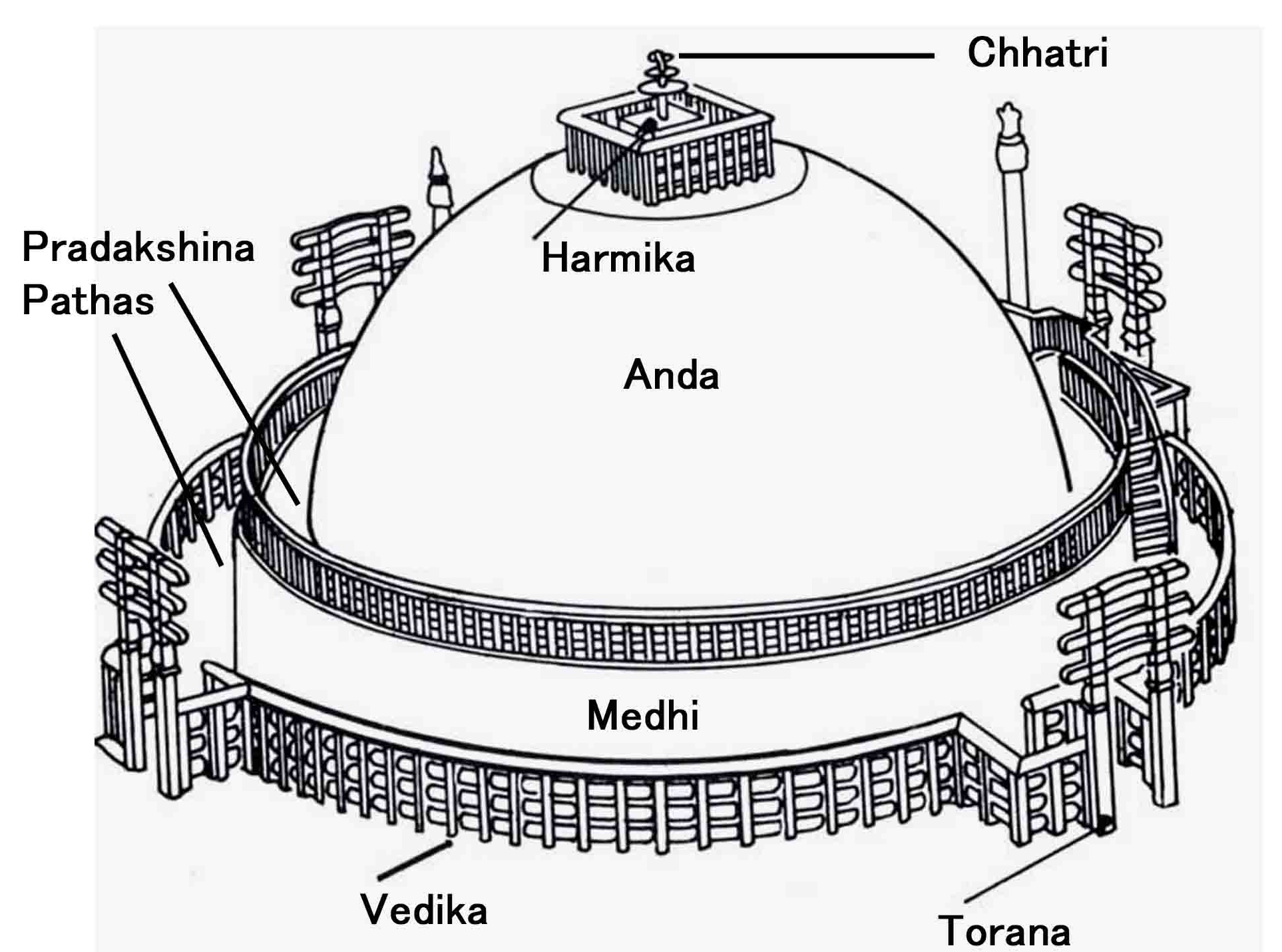
    For the first time, we see the construction of Stupas. These are hemispherical dome structures originally built over the relics of Buddha after his death. There were 8 of them in distributed in places where Buddha seemed to have lived – Rajagraha, Vaishali, Kapilvastu, Allakapa, Ramagrama, Vethadipa, Pava, Kushinagar. Ashoka is credited to have commissioned construction of 84000 stupas.

    The components of a Stupa are shown in the diagram –


    B. Pillars and Capitals (click for more details)

    After the Harappan period stone sculpting had disappeared. Its re-emergence is seen in Ashokan pillar and capitals.

    Summary of sites where capitals have been discovered

    Crowning Animal Site
    Quadruple Lion Sarnath
    Single Lion Basarah – Bakhira, Lauriya – Nandangarh, Rampurva, Vaishali
    Elephant Sankissa
    Bull Rampurva


    1. Sarnath, Uttar Pradesh

    Image result for sarnath pillar

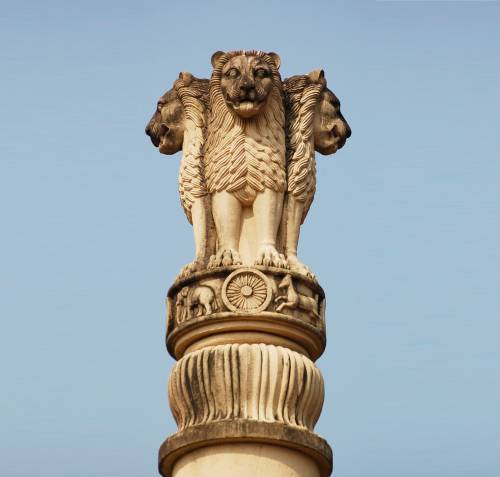
    • Another remarkable sculpture is Sarnath’s lion capital
    • Characterized by four Asiatic lions standing back to back
    • It was adopted as India’s national emblem in 1950.
    • Figures of horse, lion, bull and elephant are sculpted on the abacus.
    • This pillar capital symbolized Dharmachakraparivartana that is the first sermon of Buddha.
    • The abacus has four wheels with 24 spokes each. This wheel with 24 spokes is adopted in the National Flag.


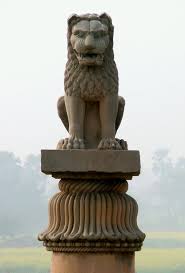
    1. Basarah – Bakhira, Bihar
    Related image

    • Single crowning lion sitting on a square abacus.
    • Compared to other capitals, this sculpture is relatively less ornamented.


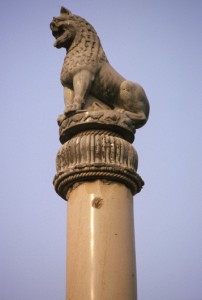
    2. Lauriya – Nandangarh Lion Capital
    Related image

    • In Champaran district of Bihar.
    • The pillar is inscribed with edicts of Ashoka
    • Characterized by round abacus and lion as the crowning animal.


    3. Sankisa Elephant Capital
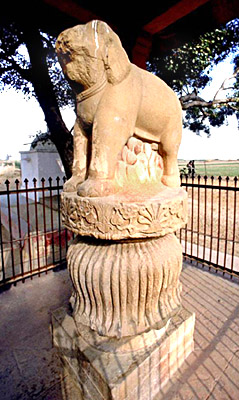
    Image result for Sankisa elephant pillar

    • Located in Uttar Pradesh
    • After Buddha’s death Ashoka installed series of columns in Sankissa among them only the Elephant capital survives.


    4. Rampurva, Bihar
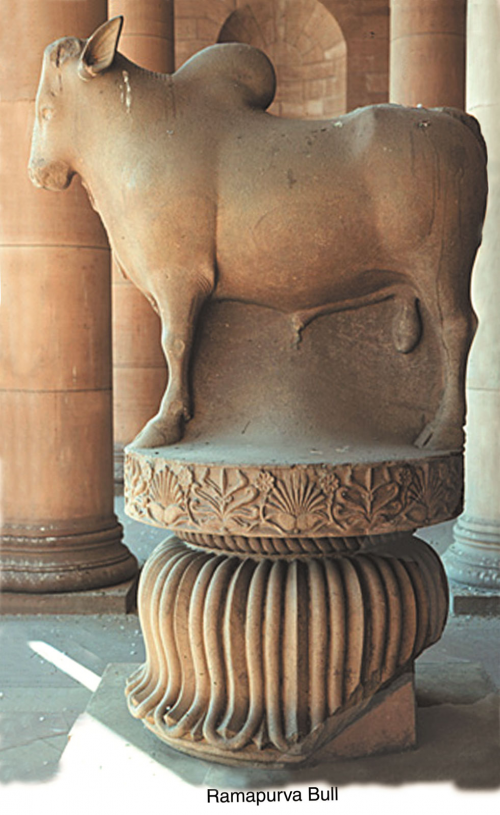
    Image result for rampurva bull pillar

    • Is a hybridization of Persian and Indian elements.
    • The abacus shows Greek influence and has beautiful floral designs.
    • Zebu bull is depicted as the crowning animal.


    C. Temples

    Evidence of the earliest known structural temples has been recovered through excavations at the Bairat District of Jaipur, Rajasthan.
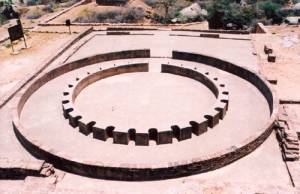


    • This shrine is dated to the 3rd century B.C
    • A circular brick and timber shrine of the Mauryan period
    • Was made of lime-plastered brick work
    • Points to construction of wooden pillars.
    • Surrounded by a seven feet wide ambulatory.


    Temple 40′ at Sanchi, has a similar plan, it was a stone temple on an apsidal plan enclosed by an ambulatory, and raised on a high, rectangular scale, approached by two flights of steps from diagonally opposite sides. The super-structure was possibly built of wood, and has disappeared.


    D. Caves

    Many caves were built during the time of Ashoka. They were mostly Chaityas and Viharas (click to read more)

    1. BARABARA CAVES

    • Oldest surviving rock cut cave in India.
    • These caves are situated in the twin hills of Barabar (four caves) and Nagarjuni (three caves) located in Bihar.
    • These caves were granted to Ajivika sect by Ashoka. Ashokan inscriptions have been found in this cave.
    • Caves are carved out of granite and have a polished surface.
    • Barabar Hill contains four caves, namely, Karan Chaupar, Lomas Rishi, Sudama and Visva Zopri.
    • Among these most important are Sudama and Lomas Rishi Caves as they are the earliest examples of rock-cut architecture in India


    2. LOMAS RISHI CAVE

    • The arch-like shape facade of Lomas Rishi Caves, imitate the contemporary timber architecture


    3. SUDAMA CAVE

    • This cave has better finishing in comparison to Lomas Rishi cave. Inner walls are highly polished.


    V. Independent Art

    In visual art of Mauryan period human figures are conspicuously absent. Salient exceptions to this pattern are the yaksha and yakshi sculptures.

    A. Sculpture

    Yaksha and Yakshi figures – Life size figures have been found in Vidisha, Patna and Mathura.
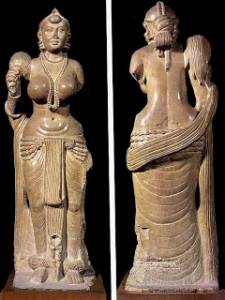
    DIDARGANJ YAKSHI

    • Found from a Didarganj, Patna.
    • A wonderfully modeled life-size standing image of a Yakshini holding a chauri (flywhisk)
    • Characterized by elaborate ornamentations and sensuous appeal depicting Indian sculptural tradition.
    • Highly polished surface made up of sandstone.
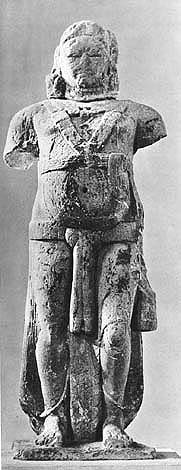
    Image result for yaksha

    PAKHAM, YAKSHA

    • Located in Mathura
    • Made up of sandstone


    Elephant in Dhauli, Orissa
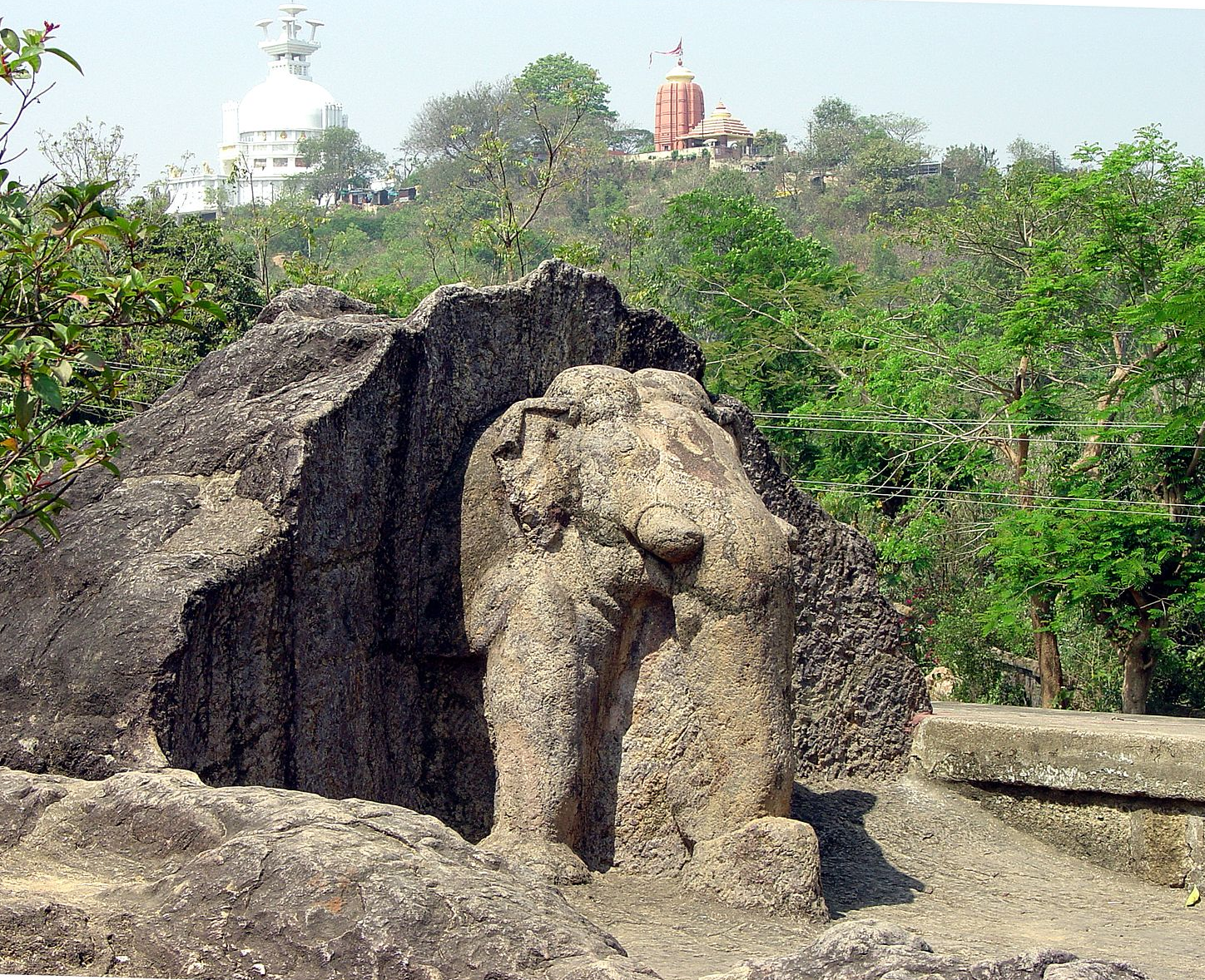
    • Dhauli hills are located on the banks of river Daya south of Bhubaneshwar
    • The oldest Buddhist sculptures in Orissa is the rock-cut elephant above which Ashokan Edicts are spotted.


    Male Torso, Lohanipur
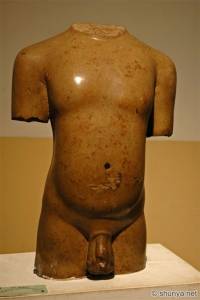
     

    – Highly polished. The nude torso of a Jain Tirthankara or a saviour of the Digambara sect found at Lohanipur


    References and image credits

    1. https://www.asianart.com/articles/jaya/yakspar.html

    2. http://www.mapability.com/travel/p2i/barabar_4.php

    3. https://en.wikipedia.org/wiki/Dhauli

    4. http://www.bl.uk/onlinegallery/onlineex/apac/photocoll/s/019pho000001003u0330b000.html

    5. www.studyblue.com

    6. http://www.art-and-archaeology.com/india/dhauli/re01.html

  • [Prelims Spotlight] Active Pharmaceutical Ingredients (APIs), Swell Waves, RAMSAR Convention on Wetlands

    Here are 2 Back2Basics collections from today’s news items

    B2B #1: From news- India to push for local manufacturing of APIs, reduce dependence on China

    Active Pharmaceutical Ingredients (APIs)

    1. All drugs are made up of two core components: the API, which is the central ingredient, and the excipients, the substances other than the drug that helps deliver the medication to your system
    2. The Active Pharmaceutical Ingredient (API) is the part of any drug that produces its effects
    3. Excipients are chemically inactive substances, such as lactose or mineral oil
    4. The quality of APIs has a significant effect on the efficacy and safety of medications

    B2B #2: From news- Swell waves forecast along India’s coasts

    Swell Waves

    1. ‘Swell waves’ are massive ripples that form on the sea due to winds coming from as far away as Madagascar
    2. Swells are collections of waves produced by storm winds raging hundreds of miles out to sea, rather than the product of local winds along beaches
    3. They are often referred to as surface gravity waves
    4. Swell continues to move under winds and waves that have long since changed direction, it can even head in the opposite direction as the wind and waves
    5. They might appear to be tsunami-like waves but have completely different characteristics
    6. They can have heights between 2 m and 3 m and periods between 17-22 seconds

    As a part of revision for Prelims 2018, Here’s a Factoid to brush up your concepts

    Name : RAMSAR Convention on Wetlands

    Brief Intro : The Convention was adopted in the Iranian city of Ramsar in 1971 and came into force in 1975 after UNESCO, the Convention’s depositary received the instruments of accession from the countries. – The RAMSAR Secretariat is based at the headquarters of the International Union for the Conservation of Nature (IUCN) in Gland, Switzerland. – World Wetlands Day is celebrated on February 2nd.

    Objective :  An intergovernmental treaty that provides the framework for national action and international cooperation for the conservation and wise use of wetlands and their resources.

    Type : Conventions

    Category : E&B

    Year : 1971

    Importance (wr. Prelims) : Medium

    Place : Ramasar

    Key Terms/ Institutions spinoffs : The Montreux Record – a register of wetland sites on the List of Wetlands of International Importance where changes in ecological character are of concern. It is maintained as part of the Ramsar List.

    India specific trivia : India currently has 26 sites designated as Wetlands of International Importance (Ramsar Sites)

  • [Static Revision] Sustainable Development Goals and India

    Sustainable Development Goals and India

    • The Sustainable Development Goals (SDGs), otherwise known as the Global Goals, are a universal call to action to end poverty, protect the planet and ensure that all people enjoy peace and prosperity.
    • The 17 Goals build on the successes of the Millennium Development Goals, while including new areas such as climate change, economic inequality, innovation, sustainable consumption, peace and justice, among other priorities.
    • The goals are interconnected – often the key to success on one will involve tackling issues more commonly associated with another.
    • The SDGs work in the spirit of partnership and pragmatism to make the right choices now to improve life, in a sustainable way, for future generations.
    • They provide clear guidelines and targets for all countries to adopt in accordance with their own priorities and the environmental challenges of the world at large.

    The SDGs are an inclusive agenda. They tackle the root causes of poverty and unite us together to make a positive change for both people and planet. “Poverty eradication is at the heart of the 2030 Agenda, and so is the commitment to leave no-one behind,” UNDP Administrator Achim Steiner said. “The Agenda offers a unique opportunity to put the whole world on a more prosperous and sustainable development path. In many ways, it reflects what UNDP was created for.”

    The Goals

    Goal 1: No Poverty

    Targets

    • By 2030, reduce at least by half the proportion of men, women and children of all ages living in poverty in all its dimensions according to national definitions.
    • Implement nationally appropriate social protection systems and measures for all, including floors, and by 2030 achieve substantial coverage of the poor and the vulnerable.
    • By 2030, ensure that all men and women, in particular the poor and the vulnerable, have equal rights to economic resources, as well as access to basic services, ownership and control over land and other forms of property, inheritance, natural resources, appropriate new technology and financial services, including microfinance.
    • By 2030, build the resilience of the poor and those in vulnerable situations and reduce their exposure and vulnerability to climate-related extreme events and other economic, social and environmental shocks and disasters.
    • Ensure significant mobilization of resources from a variety of sources, including through enhanced development cooperation, in order to provide adequate and predictable means for developing countries, in particular least developed countries, to implement programmes and policies to end poverty in all its dimensions.
    • Create sound policy frameworks at the national, regional and international levels, based on pro-poor and gender-sensitive development strategies, to support accelerated investment in poverty eradication actions.

    Goal 2: Zero Hunger

    Targets

    • By 2030, end hunger and ensure access by all people, in particular the poor and people in vulnerable situations, including infants, to safe, nutritious and sufficient food all year round
    • By 2030, end all forms of malnutrition, including achieving, by 2025, the internationally agreed targets on stunting and wasting in children under 5 years of age, and address the nutritional needs of adolescent girls, pregnant and lactating women and older persons
    • By 2030, double the agricultural productivity and incomes of small-scale food producers, in particular women, indigenous peoples, family farmers, pastoralists and fishers, including through secure and equal access to land, other productive resources and inputs, knowledge, financial services, markets and opportunities for value addition and non-farm employment
    • By 2030, ensure sustainable food production systems and implement resilient agricultural practices that increase productivity and production, that help maintain ecosystems, that strengthen capacity for adaptation to climate change, extreme weather, drought, flooding and other disasters and that progressively improve land and soil quality
    • By 2020, maintain the genetic diversity of seeds, cultivated plants and farmed and domesticated animals and their related wild species, including through soundly managed and diversified seed and plant banks at the national, regional and international levels, and promote access to and fair and equitable sharing of benefits arising from the utilization of genetic resources and associated traditional knowledge, as internationally agreed
    • Increase investment, including through enhanced international cooperation, in rural infrastructure, agricultural research and extension services, technology development and plant and livestock gene banks in order to enhance agricultural productive capacity in developing countries, in particular least developed countries
    • Correct and prevent trade restrictions and distortions in world agricultural markets, including through the parallel elimination of all forms of agricultural export subsidies and all export measures with equivalent effect, in accordance with the mandate of the Doha Development Round
    • Adopt measures to ensure the proper functioning of food commodity markets and their derivatives and facilitate timely access to market information, including on food reserves, in order to help limit extreme food price volatility.

    Goal 3: Good Health and Well Being

    Targets

    • By 2030, reduce the global maternal mortality ratio to less than 70 per 100,000 live births
    • By 2030, end preventable deaths of newborns and children under 5 years of age, with all countries aiming to reduce neonatal mortality to at least as low as 12 per 1,000 live births and under-5 mortality to at least as low as 25 per 1,000 live births
    • By 2030, end the epidemics of AIDS, tuberculosis, malaria and neglected tropical diseases and combat hepatitis, water-borne diseases and other communicable diseases
    • By 2030, reduce by one third premature mortality from non-communicable diseases through prevention and treatment and promote mental health and well-being
    • Strengthen the prevention and treatment of substance abuse, including narcotic drug abuse and harmful use of alcohol
    • By 2020, halve the number of global deaths and injuries from road traffic accidents
    • By 2030, ensure universal access to sexual and reproductive health-care services, including for family planning, information and education, and the integration of reproductive health into national strategies and programmes
    • Achieve universal health coverage, including financial risk protection, access to quality essential health-care services and access to safe, effective, quality and affordable essential medicines and vaccines for all
    • By 2030, substantially reduce the number of deaths and illnesses from hazardous chemicals and air, water and soil pollution and contamination
    • Strengthen the implementation of the World Health Organization Framework Convention on Tobacco Control in all countries, as appropriate
    • Support the research and development of vaccines and medicines for the communicable and noncommunicable diseases that primarily affect developing countries, provide access to affordable essential medicines and vaccines, in accordance with the Doha Declaration on the TRIPS Agreement and Public Health, which affirms the right of developing countries to use to the full the provisions in the Agreement on Trade Related Aspects of Intellectual Property Rights regarding flexibilities to protect public health, and, in particular, provide access to medicines for all
    • Substantially increase health financing and the recruitment, development, training and retention of the health workforce in developing countries, especially in least developed countries and small island developing States
    • Strengthen the capacity of all countries, in particular developing countries, for early warning, risk reduction and management of national and global health risks

    Goal 4: Quality Education

    Targets

    • By 2030, ensure that all girls and boys complete free, equitable and quality primary and secondary education leading to relevant and Goal-4 effective learning outcomes
    • By 2030, ensure that all girls and boys have access to quality early childhood development, care and preprimary education so that they are ready for primary education
    • By 2030, ensure equal access for all women and men to affordable and quality technical, vocational and tertiary education, including university
    • By 2030, substantially increase the number of youth and adults who have relevant skills, including technical and vocational skills, for employment, decent jobs and entrepreneurship
    • By 2030, eliminate gender disparities in education and ensure equal access to all levels of education and vocational training for the vulnerable, including persons with disabilities, indigenous peoples and children in vulnerable situations
    • By 2030, ensure that all youth and a substantial proportion of adults, both men and women, achieve literacy and numeracy
    • By 2030, ensure that all learners acquire the knowledge and skills needed to promote sustainable development, including, among others, through education for sustainable development and sustainable lifestyles, human rights, gender equality, promotion of a culture of peace and non-violence, global citizenship and appreciation of cultural diversity and of culture’s contribution to sustainable development
    • Build and upgrade education facilities that are child, disability and gender sensitive and provide safe, nonviolent, inclusive and effective learning environments for all
    • By 2020, substantially expand globally the number of scholarships available to developing countries, in particular least developed countries, small island developing States and African countries, for enrolment in higher education, including vocational training and information and communications technology, technical, engineering and scientific programmes, in developed countries and other developing countries
    • By 2030, substantially increase the supply of qualified teachers, including through international cooperation for teacher training in developing countries, especially least developed countries and small island developing states

    Goal 5: Gender Equality

    Targets

    • End all forms of discrimination against all women and girls everywhere
    • Eliminate all forms of violence against all women and girls in the public and private spheres, including trafficking and sexual and other types of exploitation
    • Eliminate all harmful practices, such as child, early and forced marriage and female genital mutilation
    • Recognize and value unpaid care and domestic work through the provision of public services, infrastructure and social protection policies and the promotion of shared responsibility within the household and the family as nationally appropriate
    • Ensure women’s full and effective participation and equal opportunities for leadership at all levels of decisionmaking in political, economic and public life
    • Ensure universal access to sexual and reproductive health and reproductive rights as agreed in accordance with the Programme of Action of the International Conference on Population and Development and the Beijing Platform for Action and the outcome documents of their review conferences
    • Undertake reforms to give women equal rights to economic resources, as well as access to ownership and control over land and other forms of property, financial services, inheritance and natural resources, in accordance with national laws
    • Enhance the use of enabling technology, in particular information and communications technology, to promote the empowerment of women
    • Adopt and strengthen sound policies and enforceable legislation for the promotion of gender equality and the empowerment of all women and girls at all levels

    Goal 6: Clean Water and Sanitation

    Targets

    • By 2030, achieve universal and equitable access to safe and affordable drinking water for all
    • By 2030, achieve access to adequate and equitable sanitation and hygiene for all and end open defecation, paying special attention to the needs of women and girls and those in vulnerable situations
    • By 2030, improve water quality by reducing pollution, eliminating dumping and minimizing release of hazardous chemicals and materials, halving the proportion of untreated wastewater and substantially increasing recycling and safe reuse globally
    • By 2030, substantially increase water-use efficiency across all sectors and ensure sustainable withdrawals and supply of freshwater to address water scarcity and substantially reduce the number of people suffering from water scarcity
    • By 2030, implement integrated water resources management at all levels, including through transboundary cooperation as appropriate
    • By 2020, protect and restore water-related ecosystems, including mountains, forests, wetlands, rivers, aquifers and lakes
    • By 2030, expand international cooperation and capacity-building support to developing countries in water- and sanitation-related activities and programmes, including water harvesting, desalination, water efficiency, wastewater treatment, recycling and reuse technologies
    • Support and strengthen the participation of local communities in improving water and sanitation management

    Goal 7: Affordable and Clean Energy

    Target

    • By 2030, ensure universal access to affordable, reliable and modern energy services
    • By 2030, increase substantially the share of renewable energy in the global energy mix
    • By 2030, double the global rate of improvement in energy efficiency
    • By 2030, enhance international cooperation to facilitate access to clean energy research and technology, including renewable energy, energy efficiency and advanced and cleaner fossil-fuel technology, and promote investment in energy infrastructure and clean energy technology
    • By 2030, expand infrastructure and upgrade technology for supplying modern and sustainable energy services for all in developing countries, in particular least developed countries, small island developing States, and land-locked developing countries, in accordance with their respective programmes of support

    Goal 8: Decent Work and Economic Growth

    Targets

    • Sustain per capita economic growth in accordance with national circumstances and, in particular, at least 7 per cent gross domestic product growth per annum in the least developed countries
    • Achieve higher levels of economic productivity through diversification, technological upgrading and innovation, including through a focus on high-value added and labour-intensive sectors
    • Promote development-oriented policies that support productive activities, decent job creation, entrepreneurship, creativity and innovation, and encourage the formalization and growth of micro-, small- and medium-sized enterprises, including through access to financial services
    • Improve progressively, through 2030, global resource efficiency in consumption and production and endeavour to decouple economic growth from environmental degradation, in accordance with the 10-year framework of programmes on sustainable consumption and production, with developed countries taking the lead
    • By 2030, achieve full and productive employment and decent work for all women and men, including for young people and persons with disabilities, and equal pay for work of equal value
    • By 2020, substantially reduce the proportion of youth not in employment, education or training
    • Take immediate and effective measures to eradicate forced labour, end modern slavery and human trafficking and secure the prohibition and elimination of the worst forms of child labour, including recruitment and use of child soldiers, and by 2025 end child labour in all its forms
    • Protect labour rights and promote safe and secure working environments for all workers, including migrant workers, in particular women migrants, and those in precarious employment
    • By 2030, devise and implement policies to promote sustainable tourism that creates jobs and promotes local culture and products
    • Strengthen the capacity of domestic financial institutions to encourage and expand access to banking, insurance and financial services for all
    • Increase Aid for Trade support for developing countries, in particular least developed countries, including through the Enhanced Integrated Framework for Trade-Related Technical Assistance to Least Developed Countries
    • By 2020, develop and operationalize a global strategy for youth employment and implement the Global Jobs Pact of the International Labour Organization

    Goal 9: Industry, Innovation and Infrastructure

    Targets

    • Develop quality, reliable, sustainable and resilient infrastructure, including regional and trans-border infrastructure, to support economic development and human well-being, with a focus on affordable and equitable access for all
    • Promote inclusive and sustainable industrialization and, by 2030, significantly raise industry’s share of employment and gross domestic product, in line with national circumstances, and double its share in least developed countries
    • Increase the access of small-scale industrial and other enterprises, in particular in developing countries, to financial services, including affordable credit, and their integration into value chains and markets
    • By 2030, upgrade infrastructure and retrofit industries to make them sustainable, with increased resource-use efficiency and greater adoption of clean and environmentally sound technologies and industrial processes, with all countries taking action in accordance with their respective capabilities
    • Enhance scientific research, upgrade the technological capabilities of industrial sectors in all countries, in particular developing countries, including, by 2030, encouraging innovation and substantially increasing the number of research and development workers per 1 million people and public and private research and development spending
    • Facilitate sustainable and resilient infrastructure development in developing countries through enhanced financial, technological and technical support to African countries, least developed countries, landlocked developing countries and small island developing States 18
    • Support domestic technology development, research and innovation in developing countries, including by ensuring a conducive policy environment for, inter alia, industrial diversification and value addition to commodities
    • Significantly increase access to information and communications technology and strive to provide universal and affordable access to the Internet in least developed countries by 2020

    Goal 10: Reduce Inequalities

    Targets

    • By 2030, progressively achieve and sustain income growth of the bottom 40 per cent of the population at a rate higher than the national average
    • By 2030, empower and promote the social, economic and political inclusion of all, irrespective of age, sex, disability, race, ethnicity, origin, religion or economic or other status
    • Ensure equal opportunity and reduce inequalities of outcome, including by eliminating discriminatory laws, policies and practices and promoting appropriate legislation, policies and action in this regard
    • Adopt policies, especially fiscal, wage and social protection policies, and progressively achieve greater equality
    • Improve the regulation and monitoring of global financial markets and institutions and strengthen the implementation of such regulations
    • Ensure enhanced representation and voice for developing countries in decision-making in global international economic and financial institutions in order to deliver more effective, credible, accountable and legitimate institutions
    • Facilitate orderly, safe, regular and responsible migration and mobility of people, including through the implementation of planned and well-managed migration policies
    • Implement the principle of special and differential treatment for developing countries, in particular least developed countries, in accordance with World Trade Organization agreements
    • Encourage official development assistance and financial flows, including foreign direct investment, to States where the need is greatest, in particular least developed countries, African countries, small island developing States and landlocked developing countries, in accordance with their national plans and programmes
    • By 2030, reduce to less than 3 per cent the transaction costs of migrant remittances and eliminate remittance corridors with costs higher than 5 per cent

    Goal 11: Sustainable Cities and Communities

    Targets

    • By 2030, ensure access for all to adequate, safe and affordable housing and basic services and upgrade slums
    • By 2030, provide access to safe, affordable, accessible and sustainable transport systems for all, improving road safety, notably by expanding public transport, with special attention to the needs of those in vulnerable situations, women, children, persons with disabilities and older persons
    • By 2030, enhance inclusive and sustainable urbanization and capacity for participatory, integrated and sustainable human settlement planning and management in all countries
    • Strengthen efforts to protect and safeguard the world’s cultural and natural heritage
    • By 2030, significantly reduce the number of deaths and the number of people affected and substantially decrease the direct economic losses relative to global gross domestic product caused by disasters, including water-related disasters, with a focus on protecting the poor and people in vulnerable situations
    • By 2030, reduce the adverse per capita environmental impact of cities, including by paying special attention to air quality and municipal and other waste management
    • By 2030, provide universal access to safe, inclusive and accessible, green and public spaces, in particular for women and children, older persons and persons with disabilities
    • Support positive economic, social and environmental links between urban, peri-urban and rural areas by strengthening national and regional development planning
    • By 2020, substantially increase the number of cities and human settlements adopting and implementing integrated policies and plans towards inclusion, resource efficiency, mitigation and adaptation to climate change, resilience to disasters, and develop and implement, in line with the Sendai Framework for Disaster Risk Reduction 2015-2030, holistic disaster risk management at all levels
    • Support least developed countries, including through financial and technical assistance, in building sustainable and resilient buildings utilizing local materials

    Goal 12: Responsible Production and Consumption

    Targets

    • Implement the 10-year framework of programmes on sustainable consumption and production, all countries taking action, with developed countries taking the lead, taking into account the development and capabilities of developing countries
    • By 2030, achieve the sustainable management and efficient use of natural resources
    • By 2030, halve per capita global food waste at the retail and consumer levels and reduce food losses along production and supply chains, including post-harvest losses
    • By 2020, achieve the environmentally sound management of chemicals and all wastes throughout their life cycle, in accordance with agreed international frameworks, and significantly reduce their release to air, water and soil in order to minimize their adverse impacts on human health and the environment
    • By 2030, substantially reduce waste generation through prevention, reduction, recycling and reuse
    • Encourage companies, especially large and transnational companies, to adopt sustainable practices and to integrate sustainability information into their reporting cycle
    • Promote public procurement practices that are sustainable, in accordance with national policies and priorities
    • By 2030, ensure that people everywhere have the relevant information and awareness for sustainable development and lifestyles in harmony with nature
    • Support developing countries to strengthen their scientific and technological capacity to move towards more sustainable patterns of consumption and production
    • Develop and implement tools to monitor sustainable development impacts for sustainable tourism that creates jobs and promotes local culture and products
    • Rationalize inefficient fossil-fuel subsidies that encourage wasteful consumption by removing market distortions, in accordance with national circumstances, including by restructuring taxation and phasing out those harmful subsidies, where they exist, to reflect their environmental impacts, taking fully into account the specific needs and conditions of developing countries and minimizing the possible adverse impacts on their development in a manner that protects the poor and the affected communities

    Goal 13: Climate Actions

    Targets

    • Strengthen resilience and adaptive capacity to climate-related hazards and natural disasters in all countries
    • Integrate climate change measures into national policies, strategies and planning
    • Improve education, awareness-raising and human and institutional capacity on climate change mitigation, adaptation, impact reduction and early warning
    • Implement the commitment undertaken by developed-country parties to the United Nations Framework Convention on Climate Change to a goal of mobilizing jointly $100 billion annually by 2020 from all sources to address the needs of developing countries in the context of meaningful mitigation actions and transparency on implementation and fully operationalize the Green Climate Fund through its capitalization as soon as possible
    • Promote mechanisms for raising capacity for effective climate change-related planning and management in least developed countries and small island developing States, including focusing on women, youth and local and marginalized communities

    Goal 14: Life Below Water

    Targets

    • By 2025, prevent and significantly reduce marine pollution of all kinds, in particular from land-based activities, including marine debris and nutrient pollution
    • By 2020, sustainably manage and protect marine and coastal ecosystems to avoid significant adverse impacts, including by strengthening their resilience, and take action for their restoration in order to achieve healthy and productive oceans
    • Minimize and address the impacts of ocean acidification, including through enhanced scientific cooperation at all levels
    • By 2020, effectively regulate harvesting and end overfishing, illegal, unreported and unregulated fishing and destructive fishing practices and implement science-based management plans, in order to restore fish stocks in the shortest time feasible, at least to levels that can produce maximum sustainable yield as determined by their biological characteristics
    • By 2020, conserve at least 10 per cent of coastal and marine areas, consistent with national and international law and based on the best available scientific information
    • By 2020, prohibit certain forms of fisheries subsidies which contribute to overcapacity and overfishing, eliminate subsidies that contribute to illegal, unreported and unregulated fishing and refrain from introducing new such subsidies, recognizing that appropriate and effective special and differential treatment for developing and least developed countries should be an integral part of the World Trade Organization fisheries subsidies negotiation
    • By 2030, increase the economic benefits to Small Island developing States and least developed countries from the sustainable use of marine resources, including through sustainable management of fisheries, aquaculture and tourism
    • Increase scientific knowledge, develop research capacity and transfer marine technology, taking into account the Intergovernmental Oceanographic Commission Criteria and Guidelines on the Transfer of Marine Technology, in order to improve ocean health and to enhance the contribution of marine biodiversity to the development of developing countries, in particular small island developing States and least developed countries
    • Provide access for small-scale artisanal fishers to marine resources and markets
    • Enhance the conservation and sustainable use of oceans and their resources by implementing international law as reflected in UNCLOS, which provides the legal framework for the conservation and sustainable use of oceans and their resources, as recalled in paragraph 158 of The Future We Want

    Goal 15: Life on land

    Targets

    • By 2020, ensure the conservation, restoration and sustainable use of terrestrial and inland freshwater ecosystems and their services, in particular forests, wetlands, mountains and drylands, in line with obligations under international agreements
    • By 2020, promote the implementation of sustainable management of all types of forests, halt deforestation, restore degraded forests and substantially increase afforestation and reforestation globally
    • By 2030, combat desertification, restore degraded land and soil, including land affected by desertification, drought and floods, and strive to achieve a land degradation-neutral world
    • By 2030, ensure the conservation of mountain ecosystems, including their biodiversity, in order to enhance their capacity to provide benefits that are essential for sustainable development
    • Take urgent and significant action to reduce the degradation of natural habitats, halt the loss of biodiversity and, by 2020, protect and prevent the extinction of threatened species
    • Promote fair and equitable sharing of the benefits arising from the utilization of genetic resources and promote appropriate access to such resources, as internationally agreed
    • Take urgent action to end poaching and trafficking of protected species of flora and fauna and address both demand and supply of illegal wildlife products
    • By 2020, introduce measures to prevent the introduction and significantly reduce the impact of invasive alien species on land and water ecosystems and control or eradicate the priority species
    • By 2020, integrate ecosystem and biodiversity values into national and local planning, development processes, poverty reduction strategies and accounts
    • Mobilize and significantly increase financial resources from all sources to conserve and sustainably use biodiversity and ecosystems
    • Mobilize significant resources from all sources and at all levels to finance sustainable forest management and provide adequate incentives to developing countries to advance such management, including for conservation and reforestation
    • Enhance global support for efforts to combat poaching and trafficking of protected species, including by increasing the capacity of local communities to pursue sustainable livelihood opportunities

    Goal 16: Peace, Justice and Strong Institutions

    Targets

    • Significantly reduce all forms of violence and related death rates everywhere
    • End abuse, exploitation, trafficking and all forms of violence against and torture of children
    • Promote the rule of law at the national and international levels and ensure equal access to justice for all
    • By 2030, significantly reduce illicit financial and arms flows, strengthen the recovery and return of stolen assets and combat all forms of organized crime
    • Substantially reduce corruption and bribery in all their forms
    • Develop effective, accountable and transparent institutions at all levels
    • Ensure responsive, inclusive, participatory and representative decision-making at all levels
    • Broaden and strengthen the participation of developing countries in the institutions of global governance
    • By 2030, provide legal identity for all, including birth registration
    • Ensure public access to information and protect fundamental freedoms, in accordance with national legislation and international agreements
    • Strengthen relevant national institutions, including through international cooperation, for building capacity at all levels, in particular in developing countries, to prevent violence and combat terrorism and crime
    • Promote and enforce non-discriminatory laws and policies for sustainable development

    Goal 17: Partnership for the Goals

    Targets

    Finance

    • Strengthen domestic resource mobilization, including through international support to developing countries, to improve domestic capacity for tax and other revenue collection
    • Developed countries to implement fully their official development assistance commitments, including the commitment by many developed countries to achieve the target of 0.7 per cent of ODA/GNI to developing countries and 0.15 to 0.20 per cent of ODA/GNI to least developed countries ODA providers are encouraged to consider setting a target to provide at least 0.20 per cent of ODA/GNI to least developed countries
    • Mobilize additional financial resources for developing countries from multiple sources
    • Assist developing countries in attaining long-term debt sustainability through coordinated policies aimed at fostering debt financing, debt relief and debt restructuring, as appropriate, and address the external debt of highly indebted poor countries to reduce debt distress
    • Adopt and implement investment promotion regimes for least developed countries

    Technology

    • Enhance North-South, South-South and triangular regional and international cooperation on and access to science, technology and innovation and enhance knowledge sharing on mutually agreed terms, including through improved coordination among existing mechanisms, in particular at the United Nations level, and through a global technology facilitation mechanism
    • Promote the development, transfer, dissemination and diffusion of environmentally sound technologies to developing countries on favourable terms, including on concessional and preferential terms, as mutually agreed
    • Fully operationalize the technology bank and science, technology and innovation capacity-building mechanism for least developed countries by 2017 and enhance the use of enabling technology, in particular information and communications technology

    Capacity building

    • Enhance international support for implementing effective and targeted capacity-building in developing countries to support national plans to implement all the sustainable development goals, including through North-South, South-South and triangular cooperation

    Trade

    • Promote a universal, rules-based, open, non-discriminatory and equitable multilateral trading system under the World Trade Organization, including through the conclusion of negotiations under its Doha Development Agenda
    • Significantly increase the exports of developing countries, in particular with a view to doubling the least developed countries’ share of global exports by 2020
    • Realize timely implementation of duty-free and quota-free market access on a lasting basis for all least developed countries, consistent with World Trade Organization decisions, including by ensuring that preferential rules of origin applicable to imports from least developed countries are transparent and simple, and contribute to facilitating market access

    Systemic issues

    • Policy and institutional coherence
    • Enhance global macroeconomic stability, including through policy coordination and policy coherence
    • Enhance policy coherence for sustainable development
    • Respect each country’s policy space and leadership to establish and implement policies for poverty eradication and sustainable development
    • Multi-stakeholder partnerships
    • Enhance the global partnership for sustainable development, complemented by multi-stakeholder partnerships that mobilize and share knowledge, expertise, technology and financial resources, to support the achievement of the sustainable development goals in all countries, in particular developing countries
    • Encourage and promote effective public, public-private and civil society partnerships, building on the experience and resourcing strategies of partnerships
    • Data, monitoring and accountability
    • By 2020, enhance capacity-building support to developing countries, including for least developed countries and small island developing States, to increase significantly the availability of high-quality, timely and reliable data disaggregated by income, gender, age, race, ethnicity, migratory status, disability, geographic location and other characteristics relevant in national contexts
    • By 2030, build on existing initiatives to develop measurements of progress on sustainable development that complement gross domestic product, and support statistical capacity-building in developing countries


    By
    Himanshu Arora
    Doctoral Scholar in Economics & Senior Research Fellow, CDS, Jawaharlal Nehru University
  • [open SIP] Test 17 December’17 CA Link + Discussion

    Link for the test: Click2Attempt  (Let us know your score in comments)

    We have started our Open SIP program in conjunction with our PAID program (Click2Know all details of the program)

    We will be running this special FREE initiative on daily basis providing students with revision questions for static subjects as well as current affairs starting from June 2017

    Test 17 as per schedule (Click2View) is December’17 CA


    Liked the test? You can join our FLT program containing more such high-level questions. The module contains 11 FLTs (8 paper 1 TS + 3 CSAT)

    Know all details about the program and join here: Click2Join

    Want to do quick revision for Prelims? Join our SIP Comprehensive or SIP Mini modules giving you Static & Dynamic subjects coverage through video lectures

    SIP Comprehensive- Samanvaya + Lectures + Notes + FLTs + CA Tests: Click2Join

    SIP Mini- Samanvaya + Lectures + Notes: Click2Join

  • [Prelims Spotlight] Law Commission of India, ‘Kayakalp’ initiative, Samiti

    Here are 2 Back2Basics collections from today’s news items

    B2B #1: From news- Reviewing the Contempt of Courts Act

    Law Commission of India

    1. It is an executive body established by an order of the Government of India. First law commission of independent India was established post the Independence in 1955
    2. Composition: Chairman, 1 Permanent Member, 1 Member Secretary, 2 Part-time Members, 2 ex-officio
      members. (21 st Law Commission Chairman: Justice BN Chauhan)
    3. Tenure: 3 Years
    4. Function: Advisory body to the Ministry of Law and Justice for “Legal Reforms in India”
    5. Recommendations: NOT binding
    6. First Law Commission was established during the British Raj in 1834 by the Charter Act of 1833
    7. Chairman: Macaulay
    8. Recommended for the Codifications of the IPC, CrPC etc.


    B2B #2: From news- Health ministry to name hospitals which do not perform under Kayakalp initiative

    ‘Kayakalp’ initiative

    1. ‘Kayakalp’ programme was launched by the health ministry following Prime Minister Narendra Modi’s call to the people of India to realise Mahatma Gandhi’s dream of “Swachh Bharat” (Clean India)
    2. It is an initiative for awarding public health facilities
    3. It aims to incentivise such facilities that show exemplary performance in adhering to standard protocols of cleanliness and infection control as well as inculcate a culture of ongoing assessment and peer review of performance related to hygiene, cleanliness and sanitation
    4. It was launched in May 2015

    As a part of revision for Prelims 2018, Here’s a Factoid to brush up your concepts

    Key words related to History : Samiti

    Dynasty/era : Vedic period

    Meaning : The references to samiti come from the latest books of the Rig-Veda showing that it assumed importance only towards the end of the Rig-Vedic period. Samiti was a folk assembly in which people of the tribe gathered for transacting tribal business. It discussed philosophical issues and was concerned with religious ceremonies and prayers. References suggest that the Rajan was elected and re-elected by the Samiti.

  • [Static Revision] Chapter 4 | Vedic and Later Vedic Period (1500BC – 600BC)

    Note4Students

    It is important to understand the transformations that occur from the vedic to later vedic period as many of them are carried forward. During this time, the class divided society transformed into a caste divided one, polytheistic religion into sacrificial ritual dominated one, condition of women deteriorated and simple tribal polity transformed into monarchy.

    The table will help you visualize the contrast better.


    Vedic(1500BC – 1000BC) Later Vedic(1000BC – 600BC)
    Sources Rig Veda All the other vedas.

    Towards the end, upanishads were compiled. They criticized rituals and emphasized on philosophy.

    Location Northern and western part of Subcontinent. Sapt-Sindhu Region. They didn’t know land beyond Yamuna. Extended to whole of western UP, Ganga-Yamuna doab and also penetrated to the Deccan, Vindhyas & South India.
    Polity No concept of territory. Only Tribes (Jana) – Total members not larger than 100.

    Kings(Rajan) were advised by assemblies like Sabha & Samiti.

    Had no standing armies.

    Wars known as Gavati are fought for cattle and not for territory.

    Chiefs received voluntary offerings called Bali(remember its not sacrifices)

    Concept of territory and territorial administration appear. Janapada-State. Rashtra – Territory.

    Royal power increases many folds. Rituals and sacrifices were performed to strengthen the king’s position – Rajasuya(consecration ceremony), Vajpeya(chariot race) and Asvamedha(horse sacrifice).

    Character of Sabha & Samiti changed. The were dominated by chiefs and rich nobles. Women were no longer permitted.

    Even in the Later Vedic times, king didn’t possess a standing army(as per NCERT).

    Wars were fought not only for cattle but territory.

    Bali which was a voluntary gift became mandatory tax.

    Economy Predominantly pastoral. Cattle based herding economy. Man’s wealth was measured in the number of cows he owned.

    Private land ownership was not yet established.

    Agriculture was known.

    Settled life. Agriculture and crafts.
    Agriculture Mostly barley. Barley continued but rice and wheat became chief crops.
    Family and women Family – Kula. Household – Griha. Family was joint. Patriarchal society with indications of polyandry.

    Women could attend assemblies, they could offer sacrifices along with their husbands. Widow remarriage was allowed. No instances of child marriage and marriageable age in the Rig Veda seems to be 16-17.

    Position of the father increased and women were given lower position. Position of women became deplorable. They couldn’t attend assemblies. Child marriages also came into vogue.

    Institution of gotra appears later vedic period. Marriage within the gotra was not permitted.

    Social Divisions Society was largely egalitarian.

    Varna was the term for color. The indigenous people conquered by Aryans were called Dasas and Dasyus.

    Differentiation based on occupation existed.

    Society divided into 4 varnas. The growing cult of sacrifices added to the power of the Brahmanas.

    4 Ashramas – Brahmachari, grihast, vanprastha, Sanyasi.

    Religion Nature gods. Indra – mentioned in most number of passages. Agni – 2nd highest mentions.

    Soma – sacred drink.

    Sacrifices less important. Mostly Prayers.

    Nature gods are replaced by Prajapati, Rudra & Vishnu,

    Idolatry appears.

    Pushan was regarded as the god of shudras

    Sacrifices became more important than prayers.

    The rise of Buddhism and Jainism was the direct result of this socio-economic problem.

  • [Prelims Spotlight] National Commission for Minority Educational Institutions (NCMEI), Strategic debt restructuring (SDR), Scheme for Sustainable Structuring of Stressed Assets (S4A),  Olive ridley sea turtle, Aditya-L1

    Here are 3 Back2Basics collections from today’s news items

    B2B #1: From news-  Supreme Court rules NCMEI has wide powers

    National Commission for Minority Educational Institutions (NCMEI)

    1. The National Commission for Minority Educational Institutions (NCMEI) was established to protect and safeguard the educational institutions which are established by the minorities in India
    2. The key objective is to ensure that the true amplitude of the educational rights enshrined in Article 30(1) of the Constitution is made available to the members of the notified religious minority communities
    3. This entails, inter alia, addressing all issues that pertain to the denial, deprivation or violation of the constitutional rights of the minorities to establish and administer educational institutions of their choice, including all issues related to the grant of NOC, minority status certificates and affiliation to universities, wherever applicable
    4. The commission is headed by a Chairman who belongs to a minority community and has been a Judge of a High Court
    5. Two members are nominated by Central Government. They too must belong to a minority community and must be “persons of eminence, ability, and integrity”

    B2B #2: From news- No relaxation in new bad loan rules, indicates RBI

     Strategic debt restructuring (SDR) 

    1. Under SDR, banks who have given loans to a corporate borrower gets the right to convert the full or part of their loans into equity shares in the loan taken company
    2. The SDR gives banks more power in the management of the company who has taken the loan and has defaulted
    3. The SDR initiative can be taken by the group of banks or JLF that have given loans to the particular defaulted entity

    Scheme for Sustainable Structuring of Stressed Assets (S4A)

    1. The S4A Scheme aims at a deep financial restructuring of big debted projects by allowing lender (bank) to acquire equity of the stressed project
    2. The scheme makes financial restructuring of large projects at the same time helping the lender’s ability to deal with such stressed assets
    3. It is intended to restore the flow of credit to critical sectors including infrastructure
    4. For an account to be eligible for restructuring under the S4A Scheme, the total loans by all institutional lenders in the account should exceed Rs 500 crore (including rupee loans, foreign currency loans/external commercial borrowings)
    5. Under the S4A Scheme, banks would be to allow existing promoter to continue in the management even while being a minority shareholder. Whereas in the case of SDR, the promoter is delinked and ownership is changed

    B2B #3: From news- Olive Ridleys return for rare mass nesting

     Olive ridley sea turtle

    1. The olive ridley sea turtle (Lepidochelys olivacea), also known as the Pacific ridley sea turtle, are smallest and most abundant of all sea turtles found in the world, species of sea turtle found in warm and tropical waters, primarily in the Pacific and Indian Oceans
    2. They can also be found in warm waters of Atlantic ocean
    3. These turtles, along with their cousin the Kemps ridley turtle, are best known for their unique mass nesting called Arribada, where thousands of females come together on the same beach to lay eggs

    As a part of revision for Prelims 2018, Here’s a Factoid to brush up your concepts

    Name : Aditya-L1

    Details : It is India’s first solar mission. It will study the sun’s outer most layers, the corona and the chromospheres and collect data about coronal mass ejection, which will also yield information for space weather prediction. Significance of the mission: The data from Aditya mission will be immensely helpful in discriminating between different models for the origin of solar storms and also for constraining how the storms evolve and what path they take through the interplanetary space from the Sun to the Earth. Position of the satellite: In order to get the best science from the sun, continuous viewing of the sun is preferred without any occultation/ eclipses and hence, Aditya- L1 satellite will be placed in the halo orbit around the Lagrangian point 1 (L1) of the sun-earth system. What are Lagrangian points and halo orbit? Lagrangian points are the locations in space where the combined gravitational pull of two large masses roughly balance each other. Any small mass placed at that location will remains at constant distances relative to the large masses. There are five such points in Sun-Earth system and they are denoted as L1, L2, L3, L4 and L5. A halo orbit is a periodic three-dimensional orbit near the L1, L2 or L3.

    Year of Launch : 2019

  • [open SIP] Test 16 Polity(Advanced) Link + Discussion

    Link for the test: Click2Attempt  (Let us know your score in comments)

    We have started our Open SIP program in conjunction with our PAID program (Click2Know all details of the program)

    We will be running this special FREE initiative on daily basis providing students with revision questions for static subjects as well as current affairs starting from June 2017

    Test 16 as per schedule (Click2View) is Polity(Advanced)


    Liked the test? You can join our FLT program containing more such high-level questions. The module contains 11 FLTs (8 paper 1 TS + 3 CSAT)

    Know all details about the program and join here: Click2Join

    Want to do quick revision for Prelims? Join our SIP Comprehensive or SIP Mini modules giving you Static & Dynamic subjects coverage through video lectures

    SIP Comprehensive- Samanvaya + Lectures + Notes + FLTs + CA Tests: Click2Join

    SIP Mini- Samanvaya + Lectures + Notes: Click2Join

  • [Static Revision] The Northern and Northeastern Mountains

    The Northern and Northeastern Mountains | Part 1

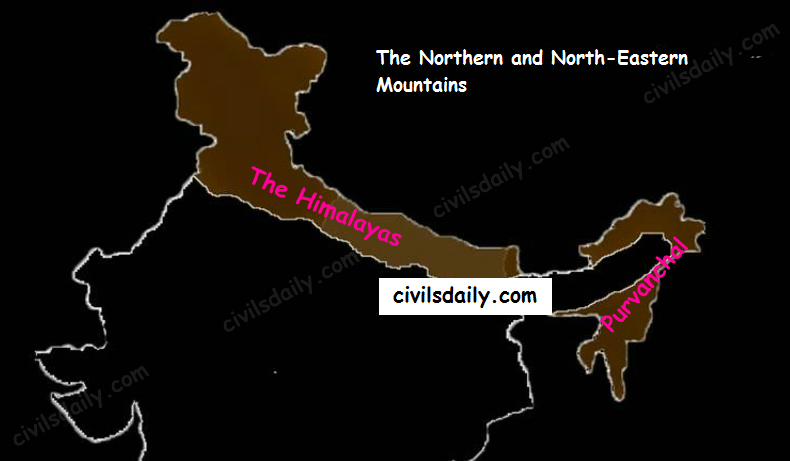
    Let’s begin with the first physiographic division. It consists of:

    • The Himalayas, and
    • The Northeastern hills (Purvanchal).
    The Physiographic Divisions of India | The Northern and Northeastern Mountains

    A) The Himalayas:

    The name “Himalaya” means “the abode or house of snow” in Sanskrit (i.e. hima “snow”, and ālaya “abode or house”). The Himalayas are the highest and longest of all young fold mountains of the world. The Pamir, known as the roof of the world, connects the Himalayas with the high ranges of Central Asia.

    Let’s begin by understanding how the Himalayas came into being:

    Origin and development:

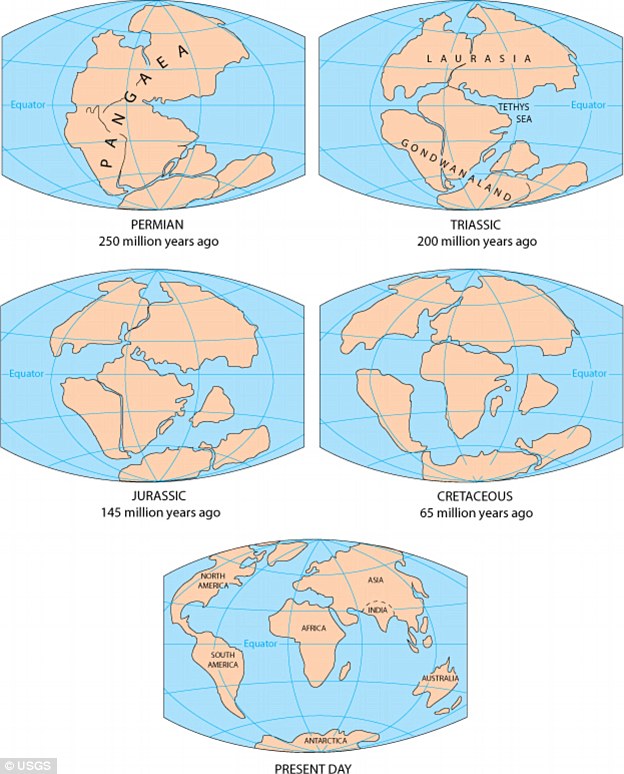
    According to the theory of Continental Drift, the world was made up of a single continent through most of the geologic time. That continent eventually separated and drifted apart; forming the seven continents we have today.

    continental-drift
    Source

    About 200 million years ago: Pangaea broke apart leading to the formation of two landmasses – “Laurasia in North” and “Gondwanaland in South”. Both the landmasses were separated by a shallow sea called “Tethys Sea”. The size of Tethys sea kept on decreasing due to movement of landmasses towards each other

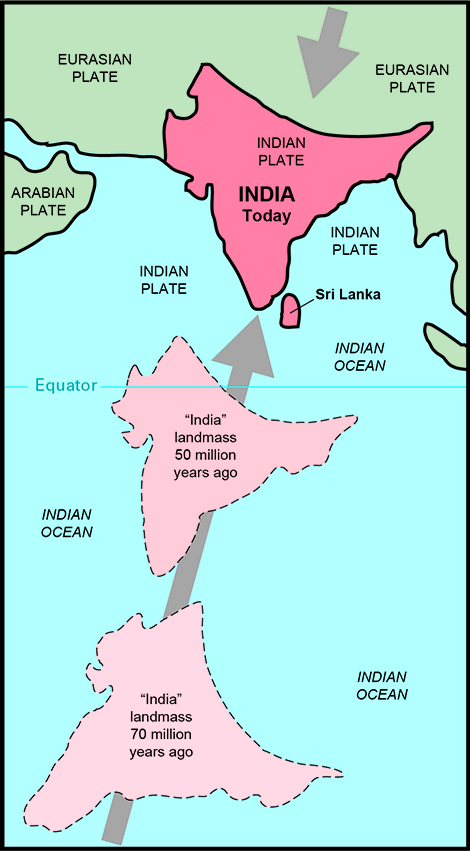
    About 40 to 50 million years ago: The two large landmasses, India and Eurasia, driven by plate movement, collided. As a result, the sediments accumulated in Tethys Sea (brought by rivers) were compressed, squeezed and series of folds were formed, one behind the other, giving birth to folded mountains of the Himalayas.

    India moving copy-2
    Source

    Recent studies show that India is still moving northwards at the rate of 5cm/year and crashing into the rest of Asia, thereby constantly increasing the height of Himalayas.

    Evidence to prove that the Himalayas are still rising:

    1. Fossil formation found in Shivalik hills:

    Similar fossils have also been found in the Tibet Plateau. This indicates that in the past, Tibetan plateau and Shivalik hills shared a common location, similar level and thus similar vegetation, life etc.; then Tibetan plateau got uplifted.

    2. Desiccation of lakes of Tibet:

    In the Tibet plateau, we find deposits which are generally found in lakes. This indicates that lakes once existed in Tibet but because of upliftment the water got discharged and deposits remained.

    3. Frequent Earthquakes

    4. Youthful nature of rivers (High erosion, v-shaped valleys etc.)

    The North-South Division of the Himalayas

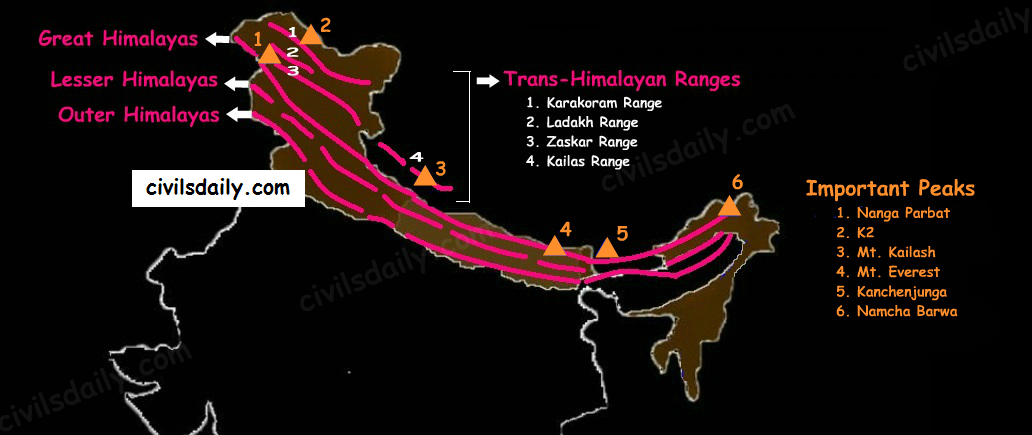
    The Himalayas consist of a series of parallel mountain ranges:

    1. The Greater Himalayan range, which includes:
      • The Great Himalayas(Himadri), and
      • The Trans-Himalayan range
    2. The Lesser Himalayas (or Himachal), and
    3. The Outer Himalayas (or Shiwalik).
    The Himalayan Ranges and Important Peaks
    • Formation of these ranges: The Himadri and Himachal ranges of the Himalayas have been formed much before the formation of Siwalik range. The rivers rising in the Himadri and Himachal ranges brought gravel, sand and mud along with them, which was deposited in the rapidly shrinking Tethys Sea. In course of time, the earth movements caused folding of these relatively fresh deposits of sediments, giving rise to the least consolidated Shiwalik range.
    • Characteristic Features:
      • Notice in the map shown above that the Himalayas form an arcuate curve which is convex to the south. This curved shape of the Himalayas is attributed to the maximum push offered at the two ends on the Indian peninsula during its northward drift. In the north-west, it was done by Aravalis and in the Northeast by the Assam ranges.
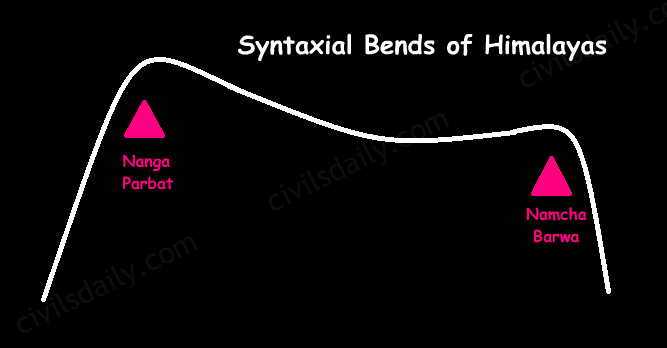
      • Syntaxis/ Syntaxial bends: The gently arching ranges of the Himalayan mountains on their Western and Eastern extremities are sharply bent southward in deep Knee-bend flexures that are called syntaxial bends. On both the ends, the great mountains appear to bend around a pivotal point. The western point is situated south of the Pamir where the Karakoram meets the Hindu Kush. A similar sharp, almost hairpin bend occurs on the eastern limit of Arunachal Pradesh where the strike of the mountain changes sharply from the Easterly to Southerly trend. Besides these two major bends, there are a number of minor syntaxial bends in other parts of Himalayas.

        Syntaxial Bends of Himalayas

      • The Himalayas are wider in the west than in the east. The width varies from 400 km in Kashmir to 150 km in Arunachal Pradesh.The main reason behind this difference is that the compressive force was more in the east than in the west. That is why high mountain peaks like Mount Everest and Kanchenjunga are present in the Eastern Himalayas.
      • The ranges are separated by deep valleys creating a highly dissected topography.
      • The southern slopes of the Himalayas facing India are steeper and those facing the Tibetan side are generally gentler.
    • Let’s take up these Himalayan mountain ranges one by one:

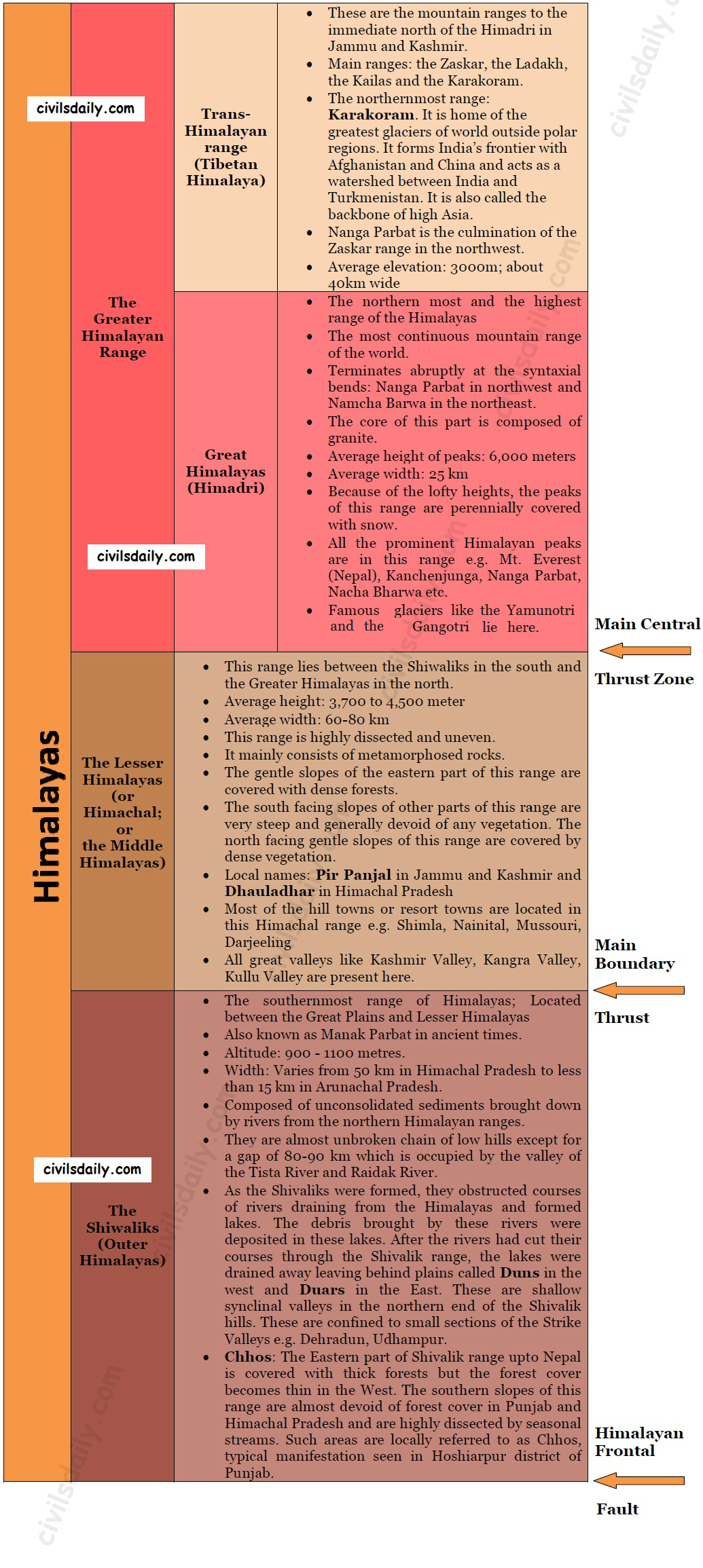
      The Himalayan Ranges | the Greater Himalayan Range, the Lesser Himalayas, the Shivaliks

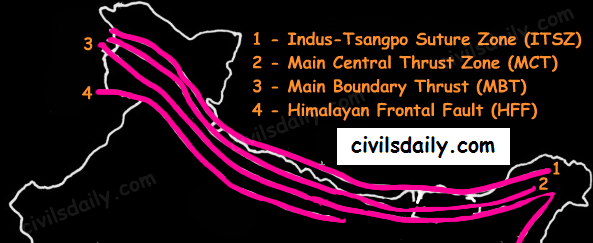
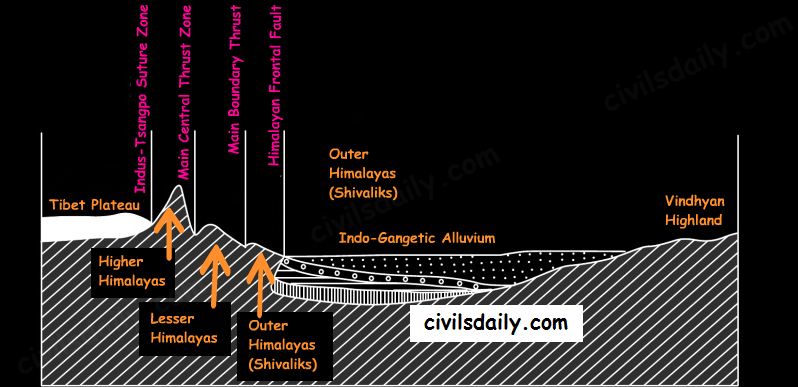
      Indus-Tsangpo Suture Zone: It represents a belt of tectonic compression caused by the underthrusting of the Indian shield/ plate against the Tibetan mass. It marks the boundary between Indian and Eurasian plates. The suture zone stretches from the North Western Himalayan syntaxis bordering the Nanga Parbat to the East as far as the Namche Barwa Mountain. Tha Karakoram range and the Ladakh plateau lie to the north of ITSZ and originally formed a part of the European plate.Main Central Thrust Zone: This separates the Higher Himalayas in the north from lesser Himalayas in the south. It has played an important role in the tectonic history of these mountains.Main Boundary Thrust: It is a reverse fault of great dimensions which extends all the way from Assam to Punjab and serves to separate the outer Himalayas from the lesser Himalayas.Himalayan Frontal Fault: It is a series of reverse faults that demarcates the boundary of the Shivalik from of the Himalayan province from the alluvial expanse of the Indo-Gangetic plains.

    Major Faults of the Himalayas – ITSZ, MCT, MBT, HFF
    The Himalayan Complex: A Cross-sectional View

    That’s it for this part! In the next article, we will East-West division of Himalayas. (Click here for the next part)

    The Northern and Northeastern Mountains | Part 2

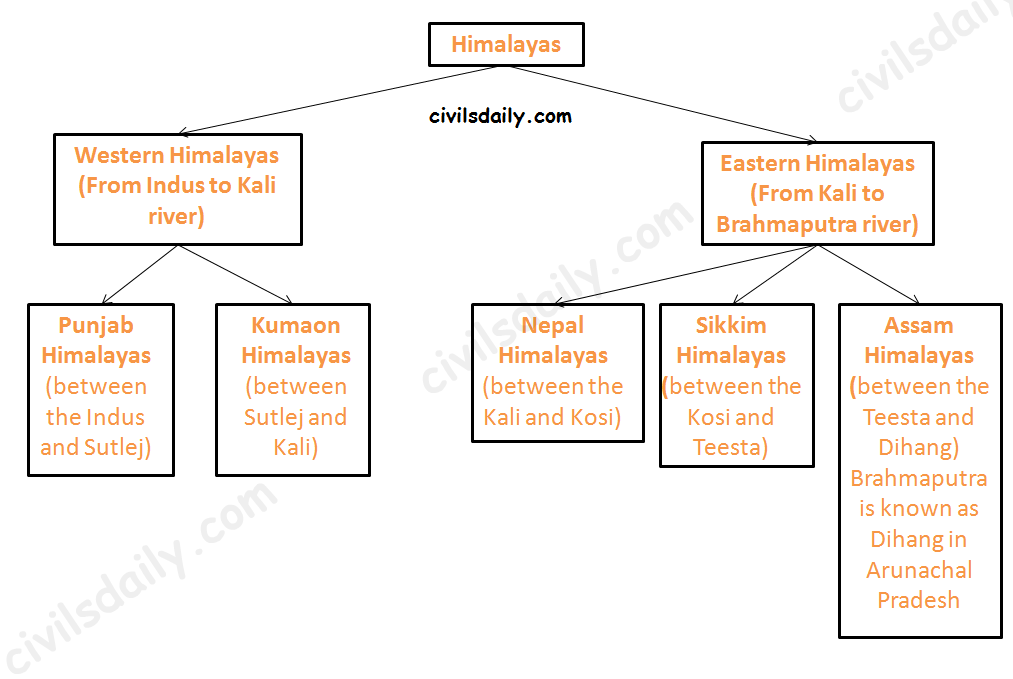
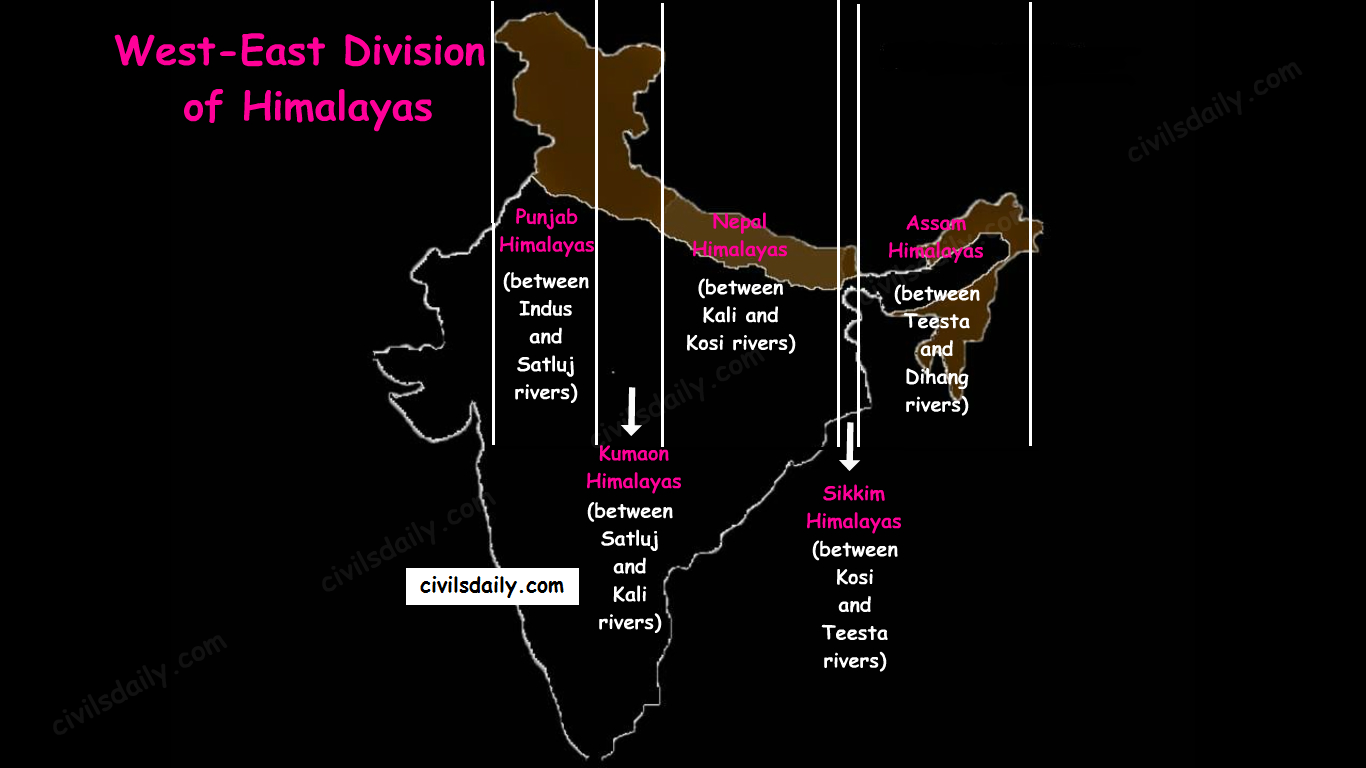
    Besides the longitudinal divisions, the Himalayas have been divided on the basis of regions from west to east:

    These divisions have been demarcated by river valleys:

    The Regional Divisions of Himalayas – the Western and Eastern Himalayas.
    1. Punjab Himalayas:
      • A large portion of Punjab Himalayas is in Jammu and Kashmir and Himachal Pradesh. Hence they are also called the Kashmir and Himachal Himalaya.
      • Major ranges: Karakoram, Ladakh, Pir Panjal, Zaskar and Dhaola Dhar.
      • The general elevation falls westwards.
      • The Kashmir Himalayas are also famous for Karewa formations.
        • ‘Karewas’ in Kashmiri language refer to the lake deposits, found in the flat-topped terraces of the Kashmir valley and on the flanks of the Pir Panjal range.
        • These deposits consist of clays, silts and sands, these deposits also show evidence of glaciation.
        • The occurrence of tilted beds of Karewas at the altitudes of 1500-1800m on the flanks of the Pir Panjal strongly suggests that the Himalayas were in process of uplift as late as Pliocene and Pleistocene (1.8mya to 10kyears ago)
        • Karewas are famous for the cultivation of Zafran, a local variety of saffron.
    2. Kumaon Himalayas
    3. Nepal Himalayas:
      • Tallest section of Himalayas
    4. Sikkim Himalayas:
      • Teesta river originates near Kanchenjunga
      • Jelep la pass- tri-junction of India- China-Bhutan
    5. Assam Himalayas:
      • Himalayas are narrower in this region and Lesser Himalayas lie close to Great Himalayas.
      • Peaks: Namcha Barwa, Kula Kangri
      • Bengal ‘Duars’
      • Diphu pass- tri-junction of India- China-Myanmar
      • The Assam Himalayas show a marked dominance of fluvial erosion due to heavy rainfall.
    The West-East Division of Himalayas

    Glaciers and Snowline:

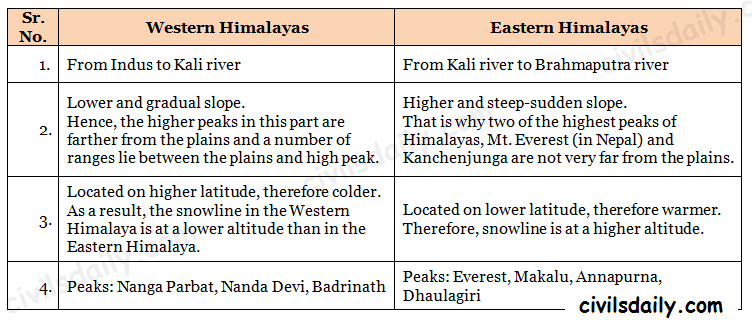
    Snowline: The lower limit of perpetual snow is called the ‘snowline’. The snowline in the Himalayas has different heights in different parts, depending on latitude, altitude, amount of precipitation, moisture, slope and local topography.

    1. The snowline in the Western Himalaya is at a lower altitude than in the Eastern Himalaya. E.g. while the glaciers of the Kanchenjunga in the Sikkim portion hardly move below 4000m, and those of Kumaon and Lahul to 3600m, the glaciers of the Kashmir Himalayas may descend to 2500m above the sea level.

    • It is because of the increase in latitude from 28°N in Kanchenjunga to 36°N in the Karakoram (Lower latitude —> warmer temperatures —> higher snowline).
    • Also, the Eastern Himalayas rise abruptly from the planes without the intervention of High ranges.
    • Though the total precipitation is much less in the western Himalayas, it all takes place in the form of snow.

    2. In the Great Himalayan ranges, the snowline is at a lower elevation on the southern slopes than on the northern slopes. This is because the southern slopes are steeper and receive more precipitation as compared to the northern slopes.

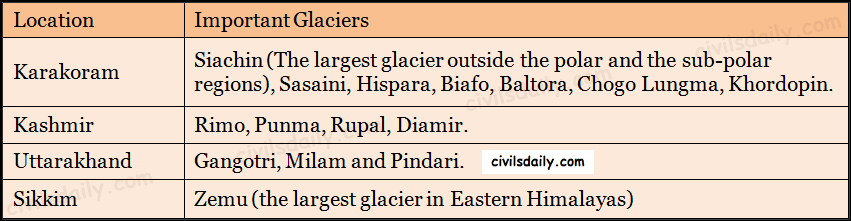
    Glaciers: The main glaciers are found in the Great Himalayas and the Trans-Himalayan ranges (Karakoram, Ladakh and Zaskar). The Lesser Himalayas have small glaciers, though traces of large glaciers are found in the Pir Panjal and Dhauladhar ranges. Some of the important glaciers are:

    Important Glaciers and their Locations

    Key differences between the Eastern and Western Himalayas:

    Key Difference between the Western and Eastern Himalayas.

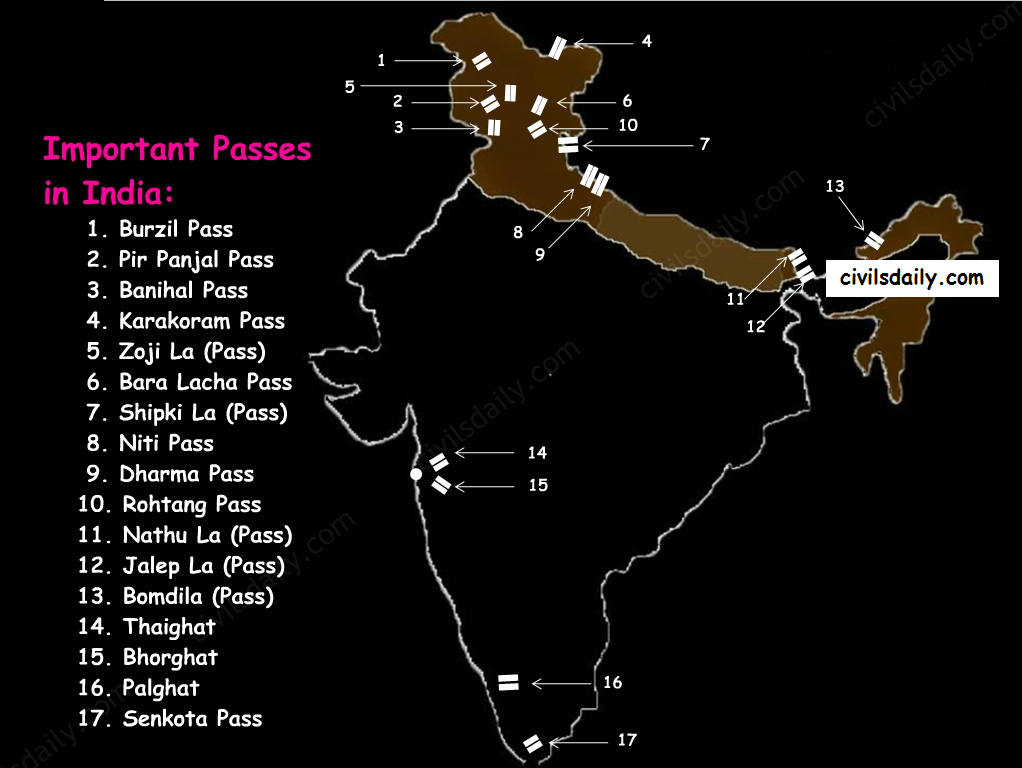
    Important Passes in India:

    A pass is a narrow gap in a mountain range which provides a passageway through the barrier.

    Important Passes in India
    1. Pir Panjal Pass – It provides the shortest and the easiest metal road between Jammu and the Kashmir Valley. But this route had to be closed down as a result of partition of the subcontinent.
    2. Banihal Pass – It is in Jammu and Kashmir. The road from Jammu to Srinagar transversed Banihal Pass until 1956 when Jawahar Tunnel was constructed under the pass. The road now passes through the tunnel and the Banihal Pass is no longer used for road transport.
    3. Zoji La (Pass) – It is in the Zaskar range of Jammu and Kashmir. The land route from Srinagar to Leh goes through this pass.
    4. Shipki La (Pass) – It is in Himachal Pradesh. The road from Shimla to Tibet goes through this pass. The Satluj river flows through this pass.
    5. Bara Lacha Pass – It is also in Himachal Pradesh. It links Mandi and Leh by road.
    6. Rohtang Pass – It is also in Himachal Pradesh. It cuts through the Pir Panjal range. It links Manali and Leh by road.
    7. Niti Pass – It is in Uttarakhand. The road to the Kailash and the Manasarovar passes through it.
    8. Nathu La (Pass) – It is in Sikkim. It gives way to Tibet from Darjeeling and Chumbi valley. The Chumbi river flows through this pass.
    9. Jalep La (Pass) – At the tri-junction of India- China-Bhutan. The Teesta river has created this pass.

    B) The North-Eastern Hills and Mountains

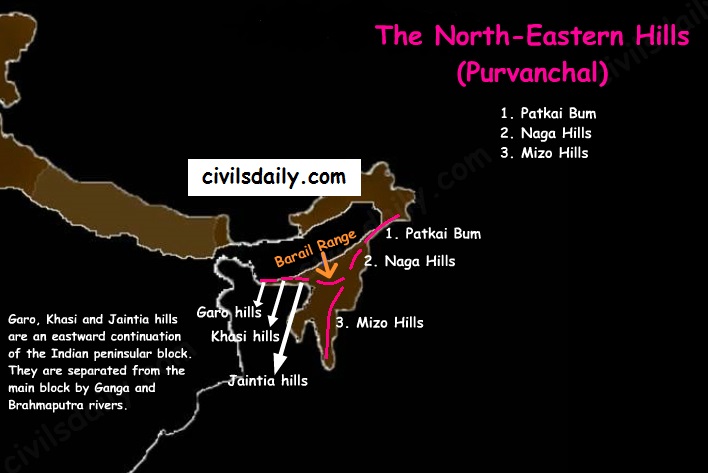
    The North-Eastern Hills (Purvanchal): Patkai Bum, Naga Hills, Mizo Hills

    The Brahmaputra marks the eastern border of Himalayas. Beyond the Dihang gorge, the Himalayas bend sharply towards south and form the Eastern hills or Purvanchal.

    • These hills run through the northeastern states of India.
    • These hills differ in scale and relief but stem from the Himalayan orogeny.
    • They are mostly composed of sandstones (i.e. Sedimentary rocks).
    • These hills are covered with dense forests.
    • Their elevation decreases from north to south. Although comparatively low, these hill ranges are rather forbidding because of the rough terrain, dense forests and swift streams.
    • Purvanchal hills are convex to the west.
    • These hills are composed of:
      • Patkai Bum – Border between Arunachal Pradesh and Myanmar
      • Naga Hills
      • Manipuri Hills – Border between Manipur and Myanmar
      • Mizo Hills.
    • Patkai Bum and Naga Hills form the watershed between India and Myanmar.
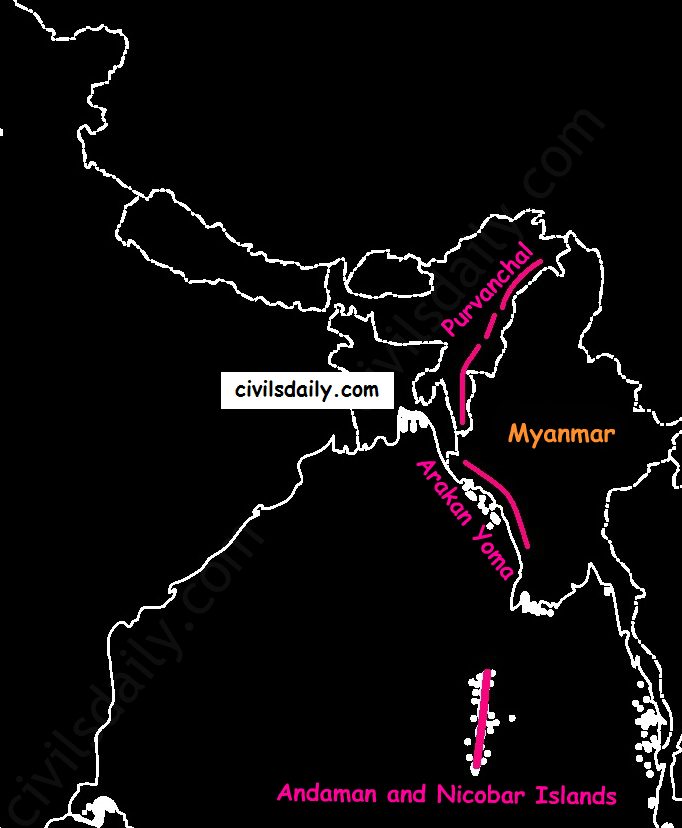
    • Extension of Purvanchal continues in Myanmar as Arakan Yoma –then Andaman and Nicobar Islands.
    Arakan Yoma – An Extension of Purvanchal in Myanmar

    The importance of Himalayan Region:

    1. Climatic Influence – The altitude of the Himalayas, their sprawl and extension intercept the summer monsoon. They also prevent the cold Siberian air masses from entering into India. The climatic influence of the Himalayas will be dealt in detail in the next articles.
    1. Defence
    2. Source of perennial rivers
    3. Source of fertile soils
    4. Generation of hydroelectricity
    5. Forest wealth
    6. Orchards
    7. Minerals – The Himalayan region is rich in minerals e.g. gold, silver, copper, lead etc. are known to occur. Coal is found in Kashmir. But at present level of technological advancement, it is not possible to extract these minerals. Also, it is not economically viable.
    1. Tourism
    2. Pilgrimage

    Now that we are done with this part, let’s try to attempt some questions from the past UPSC examinations:

    Prelims:

    2012:

    Question: When you travel in Himalayas, you will see the following:

    1. Deep gorges
    2. U-turn river courses
    3. Parallel mountain ranges
    4. Steep gradients causing land sliding

    Which of the above can be said to be evidences for Himalayas being young fold mountains?

    1. 1 and 2 only
    2. 1, 2 and 4 only
    3. 3 and 4 only
    4. 1, 2, 3 and 4

    Ans. D


    2003

    Question: Nanda Devi peak forms part of:

    A. Assam Himalayas

    B. Kumaon Himalayas

    C. Nepal Himalayas

    D. Punjab Himalayas

    Ans. B [Nandadevi – Uttarakhand]


    1997

    Question: Examine the map of Jammu and Kashmir given below

    camscanner-new-document-10-830920d00b40f30g00b50t10-002


    The mountain ranges marked 1, 2, 3 and 4 are respectively:

    a) Ladakh, Zaskar, Karakoram and Pir Panjal

    b) Karakoram, Ladakh, Zaskar and Pir Panjal

    c) Karakoram, Zaskar, Pir Panjal and Ladakh

    d) Ladakh, Pir Panjal, Karakoram and Zaskar

    Ans. B


    1995

    Question: The alpine vegetation in western Himalayas is found only upto a height of 3000m while in Eastern Himalayas it is found upto a height of 4000m. The reason for this variation in same mountain range is that:

    A. Eastern Himalayas are higher than western Himalayas

    B. Eastern Himalayas are nearer to equator and sea than Western Himalayas

    C. Eastern Himalayas get more rainfall than western Himalayas

    D. Eastern Himalayan rocks are more fertile than western Himalayas

    Ans. C


    Question: The Indian subcontinent was originally a part of a huge mass called

    A. Jurassic landmass

    B. Aryavarta

    C. Indiana

    D. Gondwana continent

    Ans. D


    Question: Arakan Yoma, the extension of the Himalayas is located in

    A. Baluchistan

    B. Myanmar

    C. Nepal

    D. Kashmir

    Ans. B

    Mains:

    1. Write a short note on Karewas. (2marks 2005)
    2. Bring out the causes for more frequent occurrence of landslides in the Himalayas than in the Western Ghats. (10 marks 2013)
  • [Prelims Spotlight] WTO dispute settlement mechanism, Exchange traded fund (ETF), Law Commission of India, Kavach (KVx) series laser walls

    Here are 3 Back2Basics collections from today’s news items

    B2B #1: From news- India takes US steel tariff issue to WTO’s safeguards committee

    WTO dispute settlement mechanism

    1. Dispute settlement is regarded by the World Trade Organization (WTO) as the central pillar of the multilateral trading system, and as the organization’s “unique contribution to the stability of the global economy
    2. A dispute arises when one member country adopts a trade policy measure or takes some action that one or more fellow members considers to a breach of WTO agreements or to be a failure to live up to obligations
    3. The operation of the WTO dispute settlement process involves the parties and third parties to a case and may also involve the DSB panels, the Appellate Body, the WTO Secretariat, arbitrators, independent experts, and several specialized institutions
    4. The General Council discharges its responsibilities under the DSU through the Dispute Settlement Body (DSB)
    5. Like the General Council, the DSB is composed of representatives of all WTO Members
    6. By joining the WTO, member countries have agreed that if they believe fellow members are in violation of trade rules, they will use the multilateral system of settling disputes instead of taking action unilaterally
    7. This entails abiding by agreed procedures (Dispute Settlement Understanding) and respecting judgments, primarily of the Dispute Settlement Body (DSB), the WTO organ responsible for the adjudication of disputes

    B2B #2: From news:  Bharat-22 ETF offer may worth Rs 10,000 crore

    Exchange traded fund (ETF)

    1. Exchange Traded Funds (ETFs) are mutual funds listed and traded on stock exchanges like shares
    2. The ETF simply copies an index and endeavors to accurately reflect its performance
    3. In an ETF, one can buy and sell units at a prevailing market price on a real-time basis during market hours
    4. There are four types of ETFs already available — Equity ETFs, Debt ETFs, Commodity ETFs and Overseas Equity ETFs
    5. The Bharat 22 ETF to be offered now allows the Government to park its holdings in selected PSUs in an ETF and raise disinvestment money from investors at one go
    6. It tracks the specially made S&P BSE Bharat 22 Index, managed by Asia Index Private Limited
    7. This index is made up of 22 PSU stocks and with a few private sector companies

    B2B #3: From news: Law Commission for simultaneous polls

    Law Commission of India

    1. Law Commission of India is an executive body established by an order of the Government of India
    2. Its major function is to work for legal reform
    3. Its membership primarily comprises legal experts, who are entrusted a mandate by the Government
    4. The Commission is established for a fixed tenure and works as an advisory body to the Ministry of Law and Justice
    5. Justice Balbir Singh Chauhan, a former judge of the Supreme Court was appointed Chairman of the 21st Law Commission on 10 March
    6. This post was lying vacant since September 2015. 66-year old Justice Chauhan is currently heading the Cauvery River Water Disputes Tribunal
    7. One of the key issues pending before the Law Commission is a call on amending the Indian Penal Code (IPC) amid allegations of abuse and arbitrary use of the law

    As a part of revision for Prelims 2018, Here’s a Factoid to brush up your concepts

    Name: Kavach (KVx) series laser walls

    Defence Forces: Army

    Module Type: Tech Misc.

    Brief Intro:

    1.The hi-tech Kavach (KVx) series laser walls immediately alert the nearest outpost about intrusion attempts and triggers action from a Quick Response Tool(QRT), which is IoT device, developed by CRON Systems, a Delhi-based defence IoT company. 2.CRON Systems has developed Kavach laser walls after working with our jawans on ground and thoroughly understanding their needs and challenges.It takes five KVx-series walls, connected with infra-red, to secure a kilometre-long stretch. Each wall is connected with a quick response tool (QRT), an IoT device, to help jawans respond to alerts.

More posts