GS2 (Polity and Governance)
The government in power has been focusing on the idea of cooperative federalism. Critically analyse in the view of the meetings of GST council, if GST will be good for cooperative federalism or not.
GS2 (Polity and Governance)
The government in power has been focusing on the idea of cooperative federalism. Critically analyse in the view of the meetings of GST council, if GST will be good for cooperative federalism or not.
GS1 (Indian society)
Recently certain practices such as triple talaq are being discussed as derogatory to the dignity of women and against the provisions of the constitutions. What other practices are considered derogatory to women and how do they affect society in general?
Dear students,
When you submit your answer, if possible, give some reasoning & more info. along with the ABACAA format. Elaborate on what you know. This helps the whole community to know more and learn more!
Q.1) Consider following statements about ‘New Development Bank (NDB)’
1. This is a multilateral development bank established by the BRICS.
2. The first regional office of the NDB is in Johannesburg, South Africa.
Which of the statements given above is/are correct?
a) 1 only
b) 2 only
c) Both 1 and 2
d) Neither 1 nor 2
Q.2) Consider following statements about ‘Indian Ocean Rim Association (IORA)’
1. It is an international organisation consisting of coastal states bordering the Indian Ocean.
2. The Coordinating Secretariat of IORA is located at Madagascar.
3. India is member state of IORA.
Which of the statements given above is/are correct?
a) 1 and 2 only
b) 3 only
c) 1 and 3 only
d) 1, 2 and 3 only
Q.3) Which of the following countries are members of both SAARC and The Bay of Bengal Initiative for Multi-Sectoral Technical and Economic Cooperation(BIMSTEC) Group.
1. Afghanistan
2. Bhutan
3. Maldives
4. Myanmar
5. Bangladesh
Select the correct answer using the codes given below.
a) 1 and 3 only
b) 2 and 5 only
c) 2 and 4 only
d) 1,2 and 4 only
Q.4) Consider following statements in regard to ‘Ready to Use Therapeutic Food (RUTF)’.
1. It contains therapeutic milk, sugar, oil and peanuts, which contain high vitamins, minerals and nutritious supplements
2. This is nutritious supplement food that saves children suffering from severe malnutrition.
Which of the statements given above is/are incorrect?
a) 1 only
b) 2 only
c) Both 1 and 2
d) Neither 1 nor 2
Q.5) Yemen has been frequently in the news for civil and military wars by Saudi Arabia. Which of the following strait connects Red sea to the Gulf of Aden which adjoins Yemen.
a) Oman strait
b) Yemen strait
c) Bab al Mandab strait
d) Strait of Hormuz
IMPORTANT STUFF:
1. These questions are mostly derived from our daily newscards. Reading daily news from Civilsdaily’s App (click here) or website + solving these questions will help you reinforce the basics.
2. For a comprehensive preparation of IAS Prelims 2017 – consider joining one of the three Prelims Modules by CD – prelims.civilsdaily.com
3. Solutions will be uploaded at 8 p.m. Click here for solutions.
4. For attempting previous Prelims Daily Questions – Click here
Hiii, Sir/ma’am
I didn’t get through this prelims that is a little shocking because I had prepared for it but somewhere it remained down the line.
Hence I want to start again with double energy .my optional is Pub Ad. I wanted a Detailed suggestion about how to start again and specially way to study pub ad in effective manner and GS also Kindly help me out sir ,I don’t want to wait more . Time is really high and failures are knocking me hard :-(.. Please
Thank you
I am going to appear for this mains, regularly following current affairs, but don’t know when to stop it roughly?
Can anybody advice????

At the onset, let me clarify that most of the schemes that we discuss in this series may get altered, may get renamed, may get trashed etc. so the data might become irrelevant for the users studying these blogs after the 12th Five Year Plan ends (2012-2017) but, but – the underlying philosophy and narrative will always remain the same.
I hope while reading through part 1, part 2 and now this – you are able to understand the narrative around Indian Agricultural Economics and are able to appreciate the efforts.
Cool? Good! Let’s start with a question today.
To answer this question, let’s understand the RKVY scheme along with the CAG’s audit report on it. We will get to know the overall scheme of things in a much better way.
In 2007, RKVY was launched to promote decentralised agriculture planning. This is a special Additional Central Assistance (ACA) Scheme introduced to incentivize States:
Natural resources and technology for ensuring more inclusive and integrated development of agriculture and allied sectors.
As per the State of Indian Agriculture, 2011-12, “experience from BRICS (Brazil, Russia, India, China and South Africa) countries indicates that one percent growth in agriculture is at least 2 or 3 times more effective in reducing poverty than the same growth emanating from non-agriculture sectors.”
Do you understand the gravity/ uniqueness of this scheme?
The RKVY funds are provided to the states as 100% grant by the Central Government. But since RKVY is a State Plan Scheme, the amount of assistance would depend upon the amount provided in State Plan Budgets for Agriculture and allied sectors, above a baseline expenditure on these sectors. That’s where state planning becomes crucial.
It is an incentive scheme – allocations are not automatic.
The states are mandatorily required to prepare the District and State Agriculture Plans (SAP and DAP) that comprehensively cover resources and indicate definite action plans.
You are likely not to be quizzed upon the structure and flow of reports and approval for these funds so we will skip that part and come straight to the sub-schemes under RKVY.
#1. Bringing Green Revolution to Eastern Region – This programme was initiated in 2010-11 targeting the improvement in the rice based cropping system of Assam, West Bengal, Orissa, Bihar, Jharkhand, Eastern Uttar Pradesh and Chhattisgarh.
#2. Initiative on Vegetable Clusters – Growing demand for vegetables was proposed to be met by a robust increase in the productivity and market linkage. For the purpose, an efficient supply chain needed to be established, to provide quality vegetables at competitive prices.
#3. National Mission for Protein Supplements – National Mission for Protein Supplements was launched with an allocation of Rs.300 crore during 2011-12 to take up activities to promote animal based protein production through livestock development, dairy farming, piggery, goat rearing and fisheries in selected blocks.
#4. Saffron Mission – The Scheme was initiated in 2010-11 with an overall Government of India budgetary support of Rs.288.06 crore over four years. The mission was meant to bring economic revival of J&K Saffron.
#5. Vidarbha Intensive Irrigation Development Programme – The Scheme was initiated in 2012-13 which seeks to bring in more farming areas under protective irrigation.
#6. Crop Diversification – The original Green Revolution States have the problem of stagnating yields and over-exploitation of water resources. The answer lies in crop diversification.
This info comes straight from this pib article and now we should resume our assessment of RKVY (as per CAG).
That’s all for the third lesson. We move onto next in a few days only if I know that this helped you in some practical way. What are the next natural questions that come to you about Indian Agriculture? This is a unique initiative to make things interesting for you all so give your inputs!
References: Apart from extensive research around news articles, the mainstay of this series is the annual report of the Ministry of Agriculture to the GOI –Click to download a copy
All articles in this series are listed here – First timers to IAS Prep? Prepare Indian Agriculture for GS Mains with me!
Couple of Queries:
1. I have heard that after selection some services do not allow candidates to appear more than once for CSE ?Any info about this.
2. For documents do I have to upload all eight marksheets of graduation or simply degree certificate will do?
3. Any little info abt these or preference order:
Indian Railways Accounts Service
Indian Defence Estate
Indian Defence Accounts
Indian P & T Accounts & Finance
Indian Railway Personal Service
Indian Postal Service
Naxalism has been identified as India’s most serious internal security challenge. In this series we begin by understanding what Naxalism means and how it has evolved in India.
The term ‘Naxal’ derives its name from the village Naxalbari of district Darjeeling in West Bengal, where the movement originated in 1967 under the leadership of Charu Majumdar and Kanu Sanyal.
It refers to the use of violence to destabilize the state through various communist guerrilla groups.
Naxalism in India, like any other leftist movement around the globe draws its ideological basis from the Russian revolution wherein Lenin successfully fought against the Czar through a combination of peasant movement and an armed struggle. The prime intent was to bestow power in the hands of the exploited and marginalized and enforce societal control over governance and nation building.
After the success of the Lenin-led revolution in Russia, the intellectual class in many countries started thinking of ushering in a change in their respective nations. Prominent amongst them were Fidel Castro and Mao Zedong.
In China, Mao Zedong used this philosophy successfully which led to the origin of ‘Maoism’. Maoism is a doctrine that teaches to capture State power through a combination of armed insurgency, mass mobilisation and strategic alliances. Mao called this process, the ‘Protracted People’s War’. ‘Political power grows out of the barrel of a gun’ is the key slogan of the Maoists.
Naxalites are far-left radical communists who derive their political ideology from the teachings of Mao Zedong.
Background (The run-up to the Naxalbari uprising):
Tebhaga movement: It was the first communist movement which started in West Bengal in 1946 with the intention of getting the land revenue reduced from ½ to 1/3rd. This movement turned violent as the farmers started an armed fight against the landlords.
Telangana Movement: Telangana movement which was led by the people of Telangana in the period of 1946-51 against the atrocities of the Nizam rule also acquired radical dimensions as it progressed.
1959: Kisan Sabhas were started by CPI (Communist Party of India) as an informal peasant movement with the intention of finding a political solution to the problems faced by farmers.
1962: When Indo-China war broke out, majority of CPI leaders viewed it as struggle of a socialist country against Capitalist India. Consequently, they supported China’s cause, and faced mass arrests.
1964: Further, there was growing dissent in party for party’s diversion toward democratic state which was contrary to Communist principle of armed struggle to overthrow the state. This finally led to a split in the party in 1964 which resulted in new party called Communist Party of India (Marxist).
1967: CPI (Marxist) participated in polls and formed a coalition United Front government in West Bengal. This leads to schism in the party with younger cadres, including the “visionary” Charu Majumdar, accusing CPM of betraying the revolution.
Naxalbari Uprising (25th May,1967): The rebel cadres led by Charu Majumdar launched a peasants’ uprising at Naxalbari in Darjeeling district of West Bengal.
The CPI (M)-led United Front government cracked down on the uprising and in 72 days of the rebellion, a police sub-inspector and nine tribals were killed. The incident echoed throughout India and naxalism was born.
The spread and growth of Naxalism in India can be broadly divided into three phases or stages as described below:
The first phase of Naxalism:
In response to the crackdown by the Government, revolutionary leaders fled the area and declared armed struggle against state of India. Under the leadership of Charu Majumdar, they formed a new party Communist Party of India (Marxist-Leninist) in 1969 which was motivated and influenced deeply by Communist Party of China.
After Charu Majumdar’s death, the CPI (M-L) was deprived of any credible central leadership and the party withered away to be finally reborn as CPI (M-L) Liberation in 1974.
The movement faced a severe blow during emergency when around 40,000 cadres were imprisoned in 1975.
The Second Phase of Naxalism [Steady growth of the Naxal movement across different parts of the country]:
The movement arose again in a more violent form after the emergency. It continued to widen its base as per the strategy of ‘protracted war’. Their base grew from West Bengal to Bihar to Odisha and also to Andhra Pradesh and Chhattisgarh.
CPI(ML) was converted into People’s War Group (PWG) in 1980 which had its base in Andhra Pradesh and struck heavy casualities among police personnel.
Simultaneously, Maoist Communist Centre of India (MCCI) grew in strength in Bihar and carried out large scale attacks on landlords and other upper caste outfits.
The Third Phase of Naxalism:
2004: Andhra Pradesh’s PWG and Bihar’s MCCI merged to form CPI(Maoist). CPI (Maoist) is the major Left Wing Extremist outfit responsible for most incidents of violence and killing of civilians and security forces. It has been included in the Schedule of Terrorist organisations under the Unlawful Activities Prevention Act, 1967.Over 13 LWE groups are currently operating in the country.
The movement’s capacity to challenge the state has increased enormously considering the incidents of violence and casualities resulting from them. E.g. the 2010 Dantewada ambush in which 76 CRPF armed personnel were killed.
2013: The LWE movement made international headlines when naxalists killed 27 people, including some high level politicians, in Sukma district of Chhattisgarh.
But violence cannot be the only yardstick to measure Maoist expansion. Maoists are also expanding in terms of indoctrination and consolidation. They are also trying to spread their ideology in the Bhil and Gond tribes dominated area, the ‘golden corridor’ stretching from Pune to Ahmedabad.
As of February 2016, 106 districts in 10 States have been identified by the Government of India as Left Wing Extremism (LWE) affected districts in the country. More details regarding the same can be found here.
Estimated to be 40,000 strong, the Naxalites have been a strain on the country’s security forces and a barrier to development in the vast mineral rich region in Eastern India known as the ‘red corridor’. It is a narrow but contiguous strip passing through Jharkhand, Chhattisgarh and Odisha.
July 2016: The Union government plans to reduce the number of Maoist-affected districts by about a fifth. This decision has been taken on the basis of the districts’ violence profile, an assessment of the kind of logistical and other support provided to armed Maoist cadres by their sympathisers and “over ground workers”, and the kind of positive changes brought about by development work that these districts have seen.

Most of the worst affected districts fall in the Dandarkaranya region which includes areas of Chhattisgarh, Odisha, Maharashtra and Andhra Pradesh. Maoists have been running a parallel government and a parallel judiciary in these regions.
The next part in this series will analyse the ideology of Naxalites and the factors responsible for its rise in India (click here for Part 2). This is supposed to be one of the most comprehensive series in Internal Security related Issues. Your feedback is welcome ?
This is the second part of the series on poverty. Read the first part here.
One of the earliest estimations of poverty was done by Dadabhai Naoroji in his book, ‘Poverty and the Un-British Rule in India’. He formulated a poverty line ranging from Rs 16 to Rs 35 per capita per year, based on 1867-68 prices. The poverty line proposed by him was based on the cost of a subsistence diet consisting of rice or flour, dhal, mutton, vegetables, ghee, vegetable oil and salt.
Next, in 1938, the National Planning Committee (NPC) estimated a poverty line ranging from Rs 15 to Rs 20 per capita per month. Like the earlier method, the NPC also formulated its poverty line based on ‘a minimum standard of living perspective in which nutritional requirements are implicit’. In 1944, the authors of the ‘Bombay Plan’ (Thakurdas et al 1944) suggested a poverty line of Rs 75 per capita per year.
1. In 1962, the Planning Commission constituted a working group to estimate poverty nationally, and it formulated separate poverty lines for rural and urban areas – of Rs 20 and Rs 25 per capita per year respectively.
2. VM Dandekar and N Rath made the first systematic assessment of poverty in India in 1971, based on National Sample Survey (NSS) data from 1960-61. They argued that the poverty line must be derived from the expenditure that was adequate to provide 2250 calories per day in both rural and urban areas. This generated debate on minimum calorie consumption norms while estimating poverty and variations in these norms based on age and sex.
3. Alagh Committee (1979): In 1979, a task force constituted by the Planning Commission for the purpose of poverty estimation, chaired by YK Alagh, constructed a poverty line for rural and urban areas on the basis of nutritional requirements. The table below shows the nutritional requirements and related consumption expenditure based on 1973-74 price levels recommended by the task force. Poverty estimates for subsequent years were to be calculated by adjusting the price level for inflation.

Table: Minimum calorie consumption and per capita consumption expenditure as per the 1979 Planning Commission task force on poverty estimation
4. Lakdawala Committee (1993): In 1993, an expert group constituted to review methodology for poverty estimation, chaired by DT Lakdawala, made the following suggestions: (i) consumption expenditure should be calculated based on calorie consumption as earlier; (ii) state specific poverty lines should be constructed and these should be updated using the Consumer Price Index of Industrial Workers (CPI-IW) in urban areas and Consumer Price Index of Agricultural Labour (CPI-AL) in rural areas; and (iii) discontinuation of ‘scaling’ of poverty estimates based on National Accounts Statistics. This assumes that the basket of goods and services used to calculate CPI-IW and CPI-AL reflect the consumption patterns of the poor.
5. Tendulkar Committee (2009): In 2005, another expert group to review methodology for poverty estimation, chaired by Suresh Tendulkar, was constituted by the Planning Commission to address the following three shortcomings of the previous methods:
a) consumption patterns were linked to the 1973-74 poverty line baskets (PLBs) of goods and services, whereas there were significant changes in the consumption patterns of the poor since that time, which were not reflected in the poverty estimates;
b) there were issues with the adjustment of prices for inflation, both spatially (across regions) and temporally (across time);
c) earlier poverty lines assumed that health and education would be provided by the State and formulated poverty lines accordingly.
It recommended four major changes:
a) a shift away from calorie consumption based poverty estimation;
b) a uniform poverty line basket (PLB) across rural and urban India;
c) a change in the price adjustment procedure to correct spatial and temporal issues with price adjustment;
d) incorporation of private expenditure on health and education while estimating poverty.
The Committee recommended using Mixed Reference Period (MRP) based estimates, as opposed to Uniform Reference Period (URP) based estimates that were used in earlier methods for estimating poverty.
It based its calculations on the consumption of the following items: cereal, pulses, milk, edible oil, non-vegetarian items, vegetables, fresh fruits, dry fruits, sugar, salt & spices, other food, intoxicants, fuel, clothing, footwear, education, medical (non-institutional and institutional), entertainment, personal & toilet goods, other goods, other services and durables.
The Committee computed new poverty lines for rural and urban areas of each state. To do this, it used data on value and quantity consumed of the items mentioned above by the population that was classified as poor by the previous urban poverty line. It concluded that the all India poverty line was Rs 446.68 per capita per month in rural areas and Rs 578.80 per capita per month in urban areas in 2004-05. The following table outlines the manner in which the percentage of population below the poverty line changed after the application of the Tendulkar Committee’s methodology.

Table: The percentage of population below poverty line calculated by the Lakdawala Committee and the Tendulkar Committee for the year 2004-05.
The Committee also recommended a new method of updating poverty lines, adjusting for changes in prices and patterns of consumption, using the consumption basket of people close to the poverty line. Thus, the estimates released in 2009-10 and 2011-12 use this method instead of using indices derived from the CPI-AL for rural areas and CPI-IW for urban areas as was done earlier. Table 5 outlines the poverty lines computed using the Tendulkar Committee methodology for the years 2004-05, 2009-10 and 2011-12.

Table: National poverty lines (in Rs per capita per month) for the years 2004-05, 2009-10 and 2011-12
6. Rangarajan Commitee: C Rangarajan Committee Was Set up By Planning commission in 2012 and submitted report in 2014. The Planning commission had set up the five-member expert group under Rangarajan to review the methodology for measurement of poverty. The committee was set up in the backdrop of national outrage over the Planning Commission’s suggested poverty line of Rs 22 a day for rural areas.


Recently World Bank estimation shows that the country’s poverty rate has been reduced from 21.2 per cent to 12.4 per cent for 2011-12. The World bank data shows that India is overestimating while counting the number of poor.
Reasons for discrepancy between World bank data and NSSO data
Questions
1. Though there have been several different estimates of poverty in India, all indicate reduction in poverty levels over time. Do you agree? Critically examine with reference to urban and rural poverty indicators.
2. Compare and analyse poverty estimation made by World Bank for Indian population with that of estimations made by various committees in India.
3. Do you think that the estimation of poverty lines in India has been a futile exercise? In your opinion how should governments make use of poverty line figures? Critically examine.
4. Recently few experts have suggested that the Tendulkar Committee’s report should be accepted for poverty estimation but socio-economic indicators should be used to determine entitlement for benefits. Do you see merit in this suggestion?

Today’s post is going to be mostly factual. You will find important tidbits around vector-borne diseases and some essay/ GS paper worthy stuff.
A country aspiring with 8% GDP growth is buffeted with a troika of vector-borne diseases – Dengue, Chikungunya and Malaria. That’s sad. But for the UPSC aspirants – it gives an opportunity to revisit all the vector-borne diseases (for Prelims) + alarming facts about India’s health care indicators.
Vector-borne diseases account for more than 17% of all infectious diseases, causing more than 1 million deaths annually.
Vectors = Living organisms that can transmit infectious diseases between humans or from animals to humans
Mosquitoes are the best-known disease vector. But there are more – In case UPSC asks you about other vectors – ticks, flies, sandflies, fleas, triatomine bugs and some freshwater aquatic snails are also in the game!
Since mosquitoes are the flavor of this season, let’s study all vector-borne diseases caused by mosquitoes:
Chikungunya –

Dengue fever –
Dengue and Chikungunya are viral diseases with very similar symptoms. Both has patient symptoms such as high fever, headache, eye pain, joint pain, rashes and lethargy. Both viral infections are spread by Aedes mosquito. And it is also possible for a patient to have Dengue and Chikungunya at the same time. Wow, that should scare you! So we will keep the dengue infographic really short –
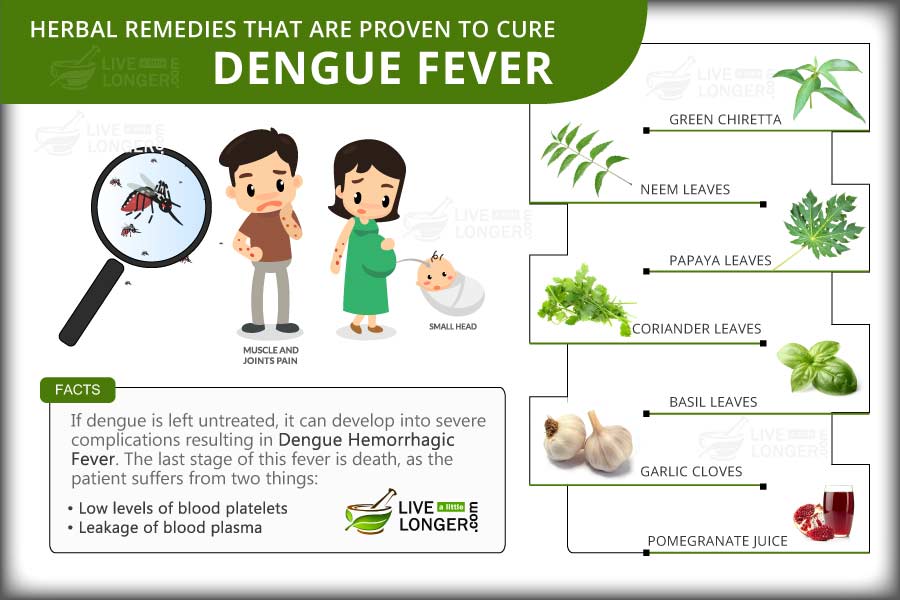
If you want to read more on Dengue –
Rift Valley fever –
Rift Valley fever (RVF) is an acute, fever-causing viral disease most commonly observed in domesticated animals (such as cattle, buffalo, sheep, goats, and camels), with the ability to infect and cause illness in humans. This is also in recent news – it has infected 90 people in Niger’s western region of Tahoua since early August, according to the World Health Organization (WHO)
Yellow fever –
In severe cases yellow fever causes a high fever, bleeding into the skin and the death of cells in the liver and kidneys. Liver damage results in severe jaundice – yellowing of the skin; hence the name “yellow fever”.
Zika –
CD has already written an amazing backgrounder on this. Read this one –
https://www.civilsdaily.com/story/zika-virus-outbreak-who-declares-public-health-emergency/
Malaria – Once an infected mosquito bites a human and transmits the parasites, those parasites multiply in the host’s liver before infecting and destroying red blood cells.
Despite many decades of intense research and development effort, there is no commercially available malaria vaccine at the present time. There is one vaccine close to being licensed for use in Europe and you may credit Bill and Melinda Gates foundation for that once it comes out.
If left untreated, malaria can be fatal. The aim of treatment is to eliminate the Plasmodium parasite from the patient’s bloodstream.
How does malaria cause death?
– One serious condition is called cerebral malaria, caused when malaria parasites stick in the blood vessels in the brain leading to deep coma, seizures, and death. This affects really young kids the most, usually when they are still babies and is a very serious illness.
– Malaria infection causes the destruction of red blood cells in the body and also interferes with the body’s ability to make new red blood cells. So the body becomes starved of oxygen which can lead to death.
– Malaria infection can also damage the lungs, and cause massive breathing difficulties. This is called respiratory distress, and one is the worst signs for malaria patients.
If you want a nice line for an essay on health care, remember this one –
India’s poorer states have health indicators that are worse than many nations in sub-Saharan Africa while the country’s healthcare spending is the lowest among BRICS (Brazil, Russia, India, China, South Africa) nations, as are its health indicators.
Usually, when you express your concern over a country’s health initiatives, you think on these lines –
As per the 12th Five Year Plan document, total public funding for core health is envisaged to increase to 1.87 percent of GDP by the end of the plan.
China spends 3% while the figure for the U.K. is eight percent Even the world’s poorest countries, like Burundi in Africa, for instance, invest around nine percent in public health.
The country remains nearly 500,000 doctors short of reaching the World Health Organization norm of one doctor per 1,000 citizens.
With more than 740,000 active doctors at the end of 2014 — a claimed doctor-patient population ratio of 1:1,674, worse than Vietnam, Algeria, and Pakistan — the shortage of doctors was one of the health-management failures cited by the report of a parliamentary committee on health and family welfare, which presented its findings to both houses of Parliament on March 8, 2016.
So, these are all the alarming health statistics going around which you can easily use in your GS Mains answers. If you have other similar stats/ quotes/ reports – do write them down here.
