💥UPSC 2026, 2027, 2028 UAP Mentorship (March Batch) + Access XFactor Notes & Microthemes PDF

Search results for: “”

  • On Special Category Status for Andhra Pradesh

    Why in the News?

    With the completion of the 2024 Lok Sabha elections, the demand for Special Category Status to Andhra Pradesh is again gaining attention.

    Why is the demand for special status for Andhra Pradesh back in the political limelight?

    • Unfulfilled Promise: Despite assurances by the previous Prime Minister and BJP leaders, the Special Category Status (SCS) promised to Andhra Pradesh post bifurcation remained unfulfilled.
    • Economic Struggles: Andhra Pradesh faces revenue deficits and escalating debts post-bifurcation, hampering its development projects and infrastructure initiatives.
    • Dependency on Central Aid: With the need for funding for critical projects like Amaravati’s development and ongoing revenue deficits, Andhra Pradesh seeks central assistance for its economic stability and growth.

    Five factors stood as the qualifying benchmark for the granting of SCS

    • States that comprise a majority tribal population, low density of population, hilly States and close to international borders, have socio-economic and industrial backwardness and lack adequate State finances.
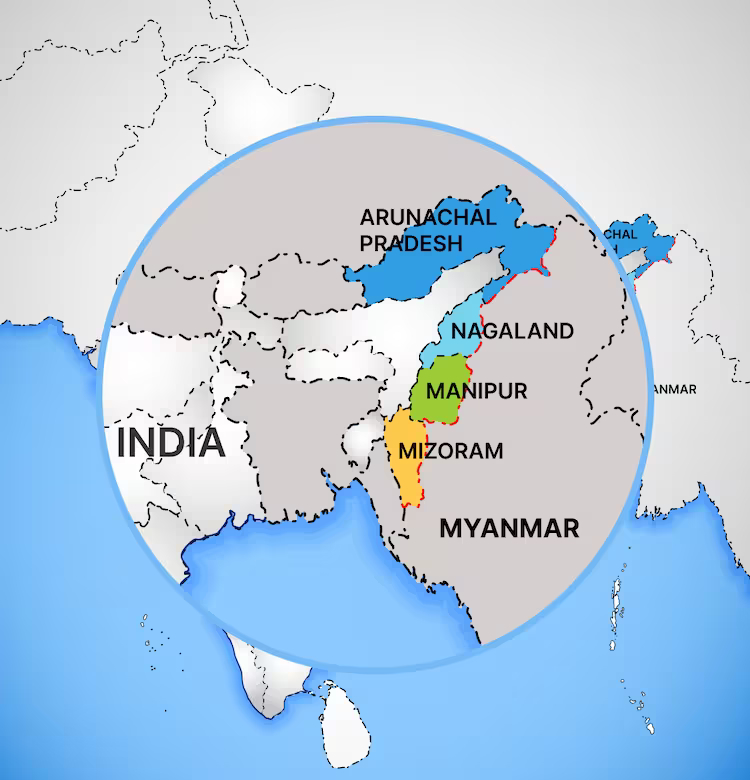
    • At present, the States that have the SCS include Arunachal Pradesh, Assam, Himachal Pradesh, Jammu and Kashmir, Manipur, Meghalaya, Mizoram, Nagaland, Sikkim, Tripura, and Uttarakhand.

    Why did Chandrababu Naidu, back in 2018, settle for a special package?

    • Pressure from Opposition: Facing criticism and a strong opposition campaign over the unmet promise of SCS, Naidu, then allied with the NDA, agreed to a Special Package (SP) as an alternative.
    • Naidu’s decision to accept the SP was influenced by political considerations that included maintaining stability within the NDA alliance and counter-opposition attacks.

    Is the State qualified to be granted Special Status?

    • Debatable Qualification: Andhra Pradesh’s eligibility for SCS is contested, with some arguing it doesn’t meet the criteria outlined for special status, including socio-economic and geographical disadvantages.
    • Previous Annulment: The 14th Finance Commission equated SCS with general category status and annulled it for new states, citing increased tax devolution and revenue deficit grants as alternatives.

    What did the 14th Finance Commission state?

    • On Alternative Grants: Instead of SCS, the commission increased tax devolution to states and introduced revenue deficit grants to address fiscal disparities, providing Andhra Pradesh with financial assistance.
    • Scope for Review: While the 14th Finance Commission did not explicitly rule out SCS, it left the decision to the Union Government, suggesting a potential review by subsequent finance commissions and policy bodies.

    Way forward:

    • Comprehensive Economic Reform: Implement structural reforms to boost economic growth, reduce fiscal deficits, and attract investments, ensuring sustainable development beyond dependency on special status or central aid.
    • Targeted Development Projects: Prioritize funding for infrastructure projects based on critical needs and potential economic returns, focusing on sectors like agriculture, manufacturing, and technology to drive growth and employment.

    Mains PYQ:

    Q The political and administrative reorganization of states and territories has been a continuous ongoing process since the mid-nineteenth century. Discuss with examples. (UPSC IAS/2022)
  • What are the powers of the Speaker, why is the post crucial?

    Why in the News?

    The pivotal role of the Speaker in parliamentary democracy is underscored as both the TDP and JD(U), crucial allies within the NDA, compete for the position, highlighting its significance.

    Constitutional Mandate:

    • Speaker and Deputy Speaker are elected as per Article 93 of the Constitution, with the Speaker chosen by a simple majority.
    • The speaker’s term ends with the House dissolution and no-confidence motion can be moved against the Speaker.
    • No specific qualifications for the Speaker, who is distinct from other members.

    Powers of the Speaker

    • Conducting the House: The Speaker decides House conduct and government business, ensuring adherence to rules, crucial for opposition participation. There are Rules and Procedure for the functioning of the House, but the Speaker has vast powers in ensuring these Rules are followed, and in choosing procedures.
    • Questions & Records: The Speaker holds authority over determining the validity of queries raised by members and overseeing the publication of House proceedings. The Speaker possesses the power to remove, wholly or partially, statements deemed unparliamentary.
    • Voice Votes, Division: The speaker can push bills through by voice vote or division, crucial for the legislative process.
      • As per the Rules of Procedure and Conduct of Business in Lok Sabha, if the Speaker thinks that is “unnecessarily claimed”, simply ask the members who are for ‘Aye’ and those for ‘No’ respectively to rise in their places and decide.
    • No-Confidence Motion: A pivotal moment where the Speaker’s neutrality significantly affects the Opposition is during the presentation of a motion of no-confidence against the government.
      • In 2018, when notices for a no-confidence motion were submitted by the YSRCP and TDP, Speaker Sumitra Mahajan postponed the House multiple times before acknowledging the motion and conducting the vote.
    • Casting Vote: As per Article 100 of the Constitution, pertaining to voting in the Houses, the Chairperson of the Rajya Sabha or the Speaker of the Lok Sabha, or any individual acting in such a capacity, “shall refrain from voting initially but must cast a deciding vote in the event of a tie.”
    • His Removal:
      • Motion: A member of the Lok Sabha gives a written notice for the removal of the Speaker, citing specific grounds such as misconduct or inability to perform duties.
      • Support: The motion needs support from at least 50 members to be admitted for discussion in the House.
      • Resolution: Once admitted, the House discusses the motion. If the majority of members present and voting support the motion, a resolution for the Speaker’s removal is passed.
    Note: During the process of removal of the Lok Sabha Speaker in India, the Speaker typically remains present and presides over the proceedings until the resolution for their removal is passed. The Speaker maintains their role in overseeing the House’s functioning unless and until the majority of members vote in favor of the motion to remove them. Once the resolution is passed and approved by the President, the Speaker ceases to hold office and their duties are formally relinquished.

    Disqualification of Members

    • Power of the Speaker: The Speaker of the House holds the authority to disqualify legislators who defect from their party, as per the provisions of the Tenth Schedule.
    • Introduction of the Anti-Defection Law: The Tenth Schedule, also known as the anti-defection law, was incorporated into the Constitution in 1985 through the Fifty-Second (Amendment) Act.
    • Judicial Review: The Supreme Court, in the landmark case of Kihoto Hollohan versus Zachillhu in 1992, upheld the power vested in the Speaker to decide on defection cases. It ruled that only the final order of the Speaker is subject to judicial review.
    • Impact on Government Stability: Defections can change the numerical strength of political parties in the House, potentially destabilizing governments if members defect in significant numbers. Timely action by the Speaker in disqualifying defective members is crucial to maintaining the integrity of the Tenth Schedule and ensuring that governments retain their majority.
    • Supreme Court Directives: The Supreme Court has issued directives emphasizing the need for Speakers to expedite disqualification proceedings. For instance, in 2020, it ruled that Speakers must decide on disqualification pleas within three months, except in exceptional circumstances.
    • Impact on Government Formation: Delays in deciding disqualification petitions can have significant political ramifications, as seen in cases where governments have collapsed due to prolonged delays in addressing defection issues.
    • Case Example: In 2023, the Supreme Court directed the Maharashtra Assembly Speaker to expedite disqualification proceedings against members of factions within the Shiv Sena party. Prolonged delays in these proceedings contributed to the collapse of the government led by Uddhav Thackeray.

    Conclusion: The Speaker holds significant powers in conducting the House, ensuring adherence to rules, deciding on crucial matters like no-confidence motions, and maintaining political stability through the judicious application of these powers.

    Mains PYQ: 

    Q ‘Once a Speaker, Always a Speaker’! Do you think this practice should be adopted to impart objectivity to the office of the Speaker of Lok Sabha? What could be its implications for the robust functioning of parliamentary business in India? (UPSC IAS/2020)

  • What are Coronal Mass Ejections (CMEs)?

    Why in the News?

    • India’s solar mission Aditya-L1 recently captured images of the Sun and it’s Coronal Mass Ejections (CMEs) during a solar storm in May.
      • The Active region AR13664 on the Sun erupted several X-class and M-class flares, which were associated with Coronal Mass Ejections (CMEs).

    Coronal Mass Ejections (CMEs)

    • CMEs were discovered in 1971 and established their importance in solar-terrestrial relations later in the 1980s.
    • It consists of massive clouds of solar plasma and magnetic field lines.
    • It typically accompanies solar flares and filament eruptions.
    • The frequency of CMEs varies with the 11-year solar cycle, with about one a week observed during solar minimum and an average of two to three CMEs per day observed near solar maximum
    • They travel at thousands of km per hour.
    • They can lead to geomagnetic storms, aurorae, and in extreme cases, damage to electrical power grids.
    • Not all CMEs interact with Earth, but those that do can cause disruptions to satellite communications and power grids.
    • Halo CMEs are Earth-directed CMEs visible as rings in white-light coronagraph observations.

    About Aditya-L1:

    • Aditya-L1 mission is India’s first space mission to observe the Sun.
    • It is ISRO’s 2nd space-based astronomy mission after AstroSat, which was launched in 2015.
    • It was launched on September 2nd 2023 to observe the Sun and the solar corona.
    • The L1 point is a location in space where the gravitational forces of two massive objects, such as the Earth and the Sun, balance each other out, allowing a spacecraft to “hover” in a stable orbit.

    Launch Details: 

    • Polar Satellite Launch Vehicle (PSLV) with 7 payloads (instruments) on board.

    The 7 payloads include: 

      1. Visible Emission Line Coronagraph (VELC): Images of the solar corona in visible light to study its structure and dynamics.
      2. Solar Ultraviolet Imaging Telescope (SUIT): Images the solar chromosphere and transition region in ultraviolet light to understand heating and dynamics.
      3. Solar Low Energy X-ray Spectrometer (SoLEXS): Measures solar X-ray spectrum to study solar flares and coronal mass ejections.
      4. High Energy L1 Orbiting X-ray Spectrometer (HEL1OS): Measures high-energy solar X-rays to understand particle acceleration.
      5. Plasma Analyser Package for Aditya (PAPA): Measures solar wind plasma properties to study its interaction with Earth’s magnetosphere.
      6. Aditya Solar Wind Particle Experiment (ASPEX): Measures energetic particle properties in the solar wind to study their effects on Earth’s atmosphere.
    • Solar Irradiance Monitor (SIM): Measures solar irradiance variations and their impact on Earth’s climate.

    Objectives:

    • Aditya L1 will study the coronal heating, solar wind acceleration, coronal magnetometry, origin and monitoring of near-UV solar radiation and continuously observe the photosphere, chromosphere and corona, solar energetic particles and the magnetic field of the Sun.

    Location:

    • Aditya is placed in L1 Halo orbit which is about 1.5 million km from the Earth. The orbit allows the mission to look at the Sun continuously.
    • L1 refers to Lagrangian/Lagrange Point 1, one of 5 points in the orbital plane of the Earth-Sun system.
    • Lagrange Points are positions in space where the gravitational forces of a two-body system like the Sun and Earth produce enhanced regions of attraction and repulsion.

    PYQ:

    [2017] The terms ‘Event Horizon’, ‘Singularity’, ‘String Theory’ and ‘Standard Model’ are sometimes seen in the news in the context of-

    (a) Observation and understanding of the Universe

    (b) Study of the solar and lunar eclipses

    (c) Placing satellites in the orbit of the Earth

    (d) Origin and evolution of living organisms on the Earth


    https://www.thehindu.com/sci-tech/science/isro-releases-images-of-sun-captured-by-aditya-l1-during-may-solar-storm/article68273124.ece

  • BRICS Foreign Ministers’ Meeting

    Why in the News?

    • India joined a meeting of foreign ministers from the BRICS group, which was held in Russia. This meeting was the first one after BRICS expanded in 2023 to include Egypt, Ethiopia, Iran, Saudi Arabia, and the UAE became as full-time members.

    What is BRICS?

    Details
    Members BRICS (Brazil, Russia, India, China, South Africa)
    Origin Coined by economist Jim O’Neill in 2001 as BRIC, formalized as BRICS in 2010
    Formation First meeting of BRIC Foreign Ministers in 2006
    South Africa’s Inclusion Invited to join BRIC in December 2010
    Global share of BRICS
    • Population: 41%
    • GDP: 24%
    • Global trade: 16%
    Chairmanship Rotated annually among members, following sequence B-R-I-C-S
    India’s Hosting Hosted the 2021 BRICS Summit
    Key Initiatives
    • New Development Bank (NDB) established in 2014: Approved 70 infrastructure and sustainable development projects
    • Contingent Reserve Arrangement signed in 2014: Aims to forestall short-term balance of payments pressures and strengthen financial stability
    • Customs agreements signed for trade facilitation
    • BRICS Remote Sensing Satellite Constellation initiated in 2021: Involves six existing satellites developed by members

    Objective of BRICS

    • The primary objectives of BRICS (Brazil, Russia, India, China, and South Africa) are to promote economic cooperation, development, and influence in world affairs.
    • Key goals include fostering economic growth and cooperation among member nations, creating institutions for development financing, and strengthening political coordination and dialogue on international issues.

    BRICS-11 Expansion

    • BRICS celebrated its 15th summit by adding six new members, growing from five to eleven countries. This move aims to boost its global influence.
    • New members include Egypt, Iran, Saudi Arabia, UAE, Ethiopia, and Argentina, expanding BRICS’ reach across different regions.
    • These countries full membership commenced on January 1, 2024.

    Challenges within BRICS

    • No Unified Vision: BRICS lacks a clear and unified vision for addressing global issues, hindering coordinated action.
    • Bilateral Conflicts: Tensions between member countries, such as China-India border disputes and Russia’s conflicts, undermine cohesion and collaboration within BRICS.
    • Economic Disparities: Economic inequality among member nations, with China dominating the group economically, poses challenges to equitable decision-making and cooperation.
    • Trade Imbalances: Trade imbalances among member states hinder intra-BRICS trade and economic integration efforts.
    • Heterogeneity: Cultural, linguistic, and political diversity among member nations limit the development of common strategies and objectives.
    • Limited Institutional Framework: BRICS lacks robust institutional mechanisms for effective coordination and implementation of collective initiatives.

    PYQ:

    [2014] With reference to a grouping of countries known as BRICS, consider the following statements:

    1. The First Summit of BRICS was held in Rio de Janeiro in 2009.
    2. South Africa was the last to join the BRICS grouping.

    Which of the statements given above is/are correct?

    (a) 1 only

    (b) 2 only

    (c) Both 1 and 2

    (d) Neither 1 nor 2

  • PM-KISAN Scheme: Boosting Farmer Welfare

    Why in the News?

    Prime Minister has approved the 17th instalment of the PM Kisan scheme. This move will benefit 9.3 crore farmers, amounting to a distribution of approximately Rs 20,000 crore.

    About the PM-KISAN Scheme

    • The Pradhan Mantri Kisan Samman Nidhi (PM-KISAN) is a Central Sector Scheme with 100% funding from the Government of India.
    • It is being implemented by the Ministry of Agriculture and Farmer’s Welfare.
    • Launched: In February 2019.
    • Aim: To help procure various inputs to ensure proper crop health and appropriate yields, commensurate with the anticipated farm income at the end of each crop cycle.
    • Objective: To provide eligible farmers with an annual financial assistance of ₹6,000.
      • This assistance is distributed in three equal instalments of ₹2,000 each every 4 months, via Direct Benefit Transfer (DBT) into the bank accounts of beneficiaries.
    • Beneficiaries:
      • Farmer families that hold cultivable land can apply for the benefits of this plan.
      • Small and Marginal Farmers (SMFs) (a farmer who owns cultivable land up to 2 hectares as per land records of the concerned State/UT.).
      • The entire responsibility of identification of beneficiary farmer families rests with the State / UT Governments.

    Significance for Farmers

    • Beneficiaries outreach: Over 11 crore farmers (with more than 3 crore women farmers) across the country have availed of the PM-Kisan scheme, indicating its widespread reach and impact.
    • Financial Support: This financial aid helps farmers meet their agricultural expenses, purchase seeds, fertilizers, and other inputs, and support their families’ livelihoods.
    • Improved Agricultural Practices: This contributes to food security and boosts the agricultural sector’s growth.
    • Poverty Alleviation: The scheme plays a crucial role in alleviating poverty among small and marginal farmers by providing them with a steady source of income just like Universal Basic Income (UBI).
    • Enhanced Livelihoods: PM-Kisan supports farmers’ livelihoods, by providing a safety net during times of agricultural distress or economic uncertainties, ensuring a better quality of life for rural communities.

    PYQ:

    [2020] Under the Kisan Credit Card scheme, short-term credit support is given to farmers for which of the following purposes?

    1. Working capital for maintenance of farm assets.
    2. Purchase of combine harvesters, tractors and mini trucks.
    3. Consumption requirements of farm households.
    4. Post-harvest expenses.
    5. Construction of family house and setting up of village cold storage facility.

    Select the correct answer using the code given below:

    (a) 1, 2 and 5 only

    (b) 1, 3 and 4 only

    (c) 2, 3, 4 and 5 only

    (d) 1, 2, 4 and 5

  • What is happening in the French territory of New Caledonia?

    Why in the News?

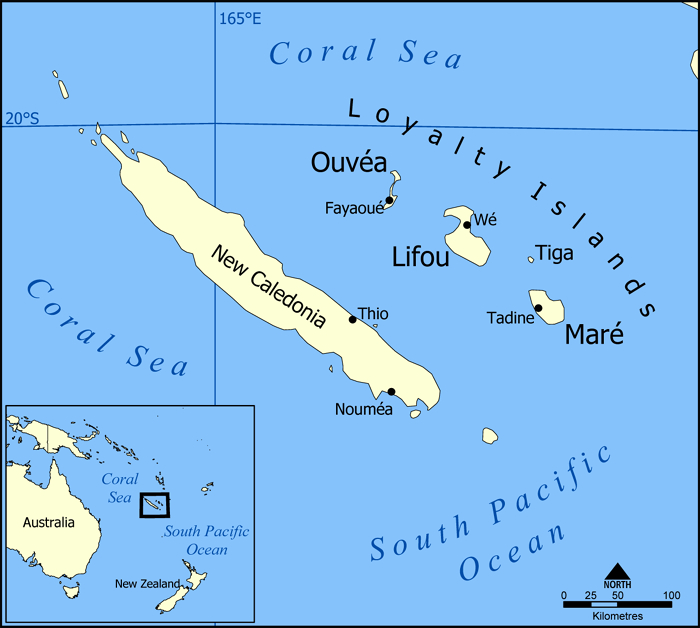
    New Caledonia, France’s Pacific island territory, is under a state of emergency due to deadly riots.

    About New Caledonia 

    • New Caledonia is a French overseas territory in the Pacific.
    • It enjoys a large degree of autonomy but depends heavily on France for matters like defence and education.
    • It includes the island of New Caledonia where the capital, Noumea, is located, the Loyalty Islands; the Belep Islands; and the Ile des Pins.
    • New Caledonia’s lagoons were designated a UNESCO World Heritage site in 2008.

    The Crisis: A Quick Recap

    • New Law: The French government passed a law that has upset people in New Caledonia.
    • Vote Reforms: Now, French citizens who lived on the island for 10 years or more can vote. The government says it’s fairer this way.
    • Resistance from Indigenous people: The locals, especially the Kanak community, feel this gives too much power to French settlers and stops them from gaining independence.

    How did France occupy this territory? 

    • Exploration: British explorer James Cook named the island New Caledonia in 1774 after the Latin name for Scotland.
    • French Annexation: France annexed it in 1853 and New Caledonia became a French overseas territory in 1946.
    • Fewer Locals: France brought in lots of French people. Now, the original Kanak people are only 40% of the population, while others, like the Caldoches and newer French arrivals, make up the rest.

    Why are the people protesting?

    • There were similar fights in the 1990s, leading to promises of more power for locals.
    • In 2018, 2020, and 2021, they voted on whether to be independent from France. But many boycotted the last vote, saying it wasn’t fair because of the pandemic.

    Why is it significant for France?

    • France sees New Caledonia as important for keeping power in the region.
    • It wants to stay strong in the Pacific to stand up to other big powers, like China.

    PYQ:

    [2014] Explain how the foundations of the modern world were laid by the American and French revolutions.

  • IRDAI’s new health insurance rules   

    Why in the news?

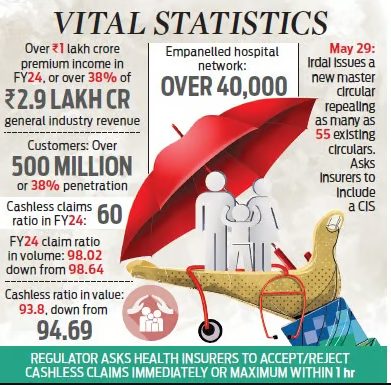
    Recently, the Insurance Regulatory and Development Authority (IRDAI) introduced a set of reforms in the health insurance sector aimed at significantly enhancing service standards for policyholders.

    The recent rules highlighted by IRDAI (Insurance Regulatory and Development Authority of India) include:

    • Cashless processing: Insurers are mandated to accept or reject cashless claims immediately, within one hour, and settle such claims on discharge within three hours. Any delay beyond this period would result in the insurer bearing the additional costs, if any.
    • Claim settlement: Insurers cannot repudiate a claim without the approval of their claims review panel. Documents for claim settlement must be collected from hospitals or third-party administrators, not from the insured.
    • Policyholders with multiple health policies: They can select the policy under which they want to make a claim, with the primary insurer coordinating the settlement of the balance amount from other insurers.
    • Reward for No claims: Policyholders with no claims during the policy period may receive either an increased sum insured or discounted premium amounts.
    • Renewal policies: All individual health policies are renewable and cannot be denied based on previous claims, except in cases of fraud, non-disclosures, or misrepresentation. No fresh underwriting is required for renewal policies unless there is an increase in the sum insured.
    • Portability requests: Stricter timelines are imposed on portability requests via the Insurance Information Bureau of India portal.
    • Customer information sheet: Insurers are required to include a customer information sheet as part of the policy document, explaining all customer-facing details such as policy type, sum assured, coverage details, exclusions, deductibles, and waiting periods.

    Challenges related to health insurance in India 

    • Opaque Policy Details and Claim Processes: Policyholders often struggle to understand the intricacies of insurance contracts, leading to uncertainty about coverage entitlements and reimbursement procedures.
    • Claim Rejections: Policyholders frequently face claim rejections due to inadequate documentation and ambiguous claims processes.
    • Delays in Claim Settlement: Insurance companies often take a long time to process claims, causing inconvenience and financial stress for policyholders

    IRDAI and its composition:

    • The Insurance Regulatory and Development Authority of India (IRDAI) is the regulatory body overseeing the insurance sector in India. It was constituted under the Insurance Regulatory and Development Authority Act, 1999.
    • The composition of IRDAI typically includes a Chairman and members appointed by the Government of India. The authority regulates various aspects of insurance, including licensing, pricing, and policyholder protection, to ensure the stability and growth of the insurance industry while safeguarding the interests of policyholders.

    Conclusion: IRDAI’s recent health insurance reforms aim to improve service standards by mandating timely cashless claim processing, transparent claim settlement, and policyholder rewards for no claims. These changes address challenges like opaque policies and claim rejections, enhancing customer trust. IRDAI plays a vital role in ensuring a fair and efficient insurance sector.

    Mains PYQ:

    Q Public health system has limitation in providing universal health coverage. Do you think that private sector can help in bridging the gap? What other viable alternatives do you suggest? (UPSC IAS/2015)

  • Settling trade disputes through ‘litigotiation’ 

    Why in the News?

    In March, India and the U.S. settled their last lingering WTO poultry dispute, marking the end of seven trade disputes resolved since Prime Minister Modi’s U.S. visit.

    What is ‘Litigotiation’?

    • ‘Litigotiation’ is a blend of “litigation” and “negotiation,” referring to a strategic process where legal disputes are managed through a combination of courtroom litigation and settlement negotiations.
    • This approach recognizes that most legal disputes do not end with a court verdict but rather with a negotiated settlement reached during the litigation process.

    Trade dispute on poultry products between India and USA at the WTO

    • Indian Scenario: India had prohibited the import of various agricultural products from the US because of concerns related to Avian Influenza.
    • U.S. argued: The U.S. challenged India’s import restrictions on poultry products, which were imposed due to concerns about avian influenza (bird flu) potentially transmitting to humans.
    • It argued that India deviated from internationally recognized standards that were set by the World Organization for Animal Health (formerly OIE) and failed to provide scientific justifications for its measures, violating the WTO’s Sanitary and Phytosanitary (SPS) Agreement.
    • The dispute was initiated by the U.S. in 2012 and remained unresolved for over a decade, making it the oldest of the seven trade disputes between India and the U.S. In 2015, India lost a long-pending dispute over poultry imports from the US at the WTO.
    • The recent settlement allowed India to avoid a yearly $450 million claim.
      • In exchange, India agreed to reduce tariffs on select U.S. products such as cranberries, blueberries, frozen turkey, and premium frozen duck meat, marking a significant diplomatic breakthrough.

    What are the standards set by the World Organization for Animal Health?

    • The Terrestrial Animal Health Code
      • First published in 1968, provides standards for the improvement of terrestrial animal health and welfare and veterinary public health worldwide.
      • These standards should be used by Veterinary Services to set up measures for the early detection, reporting, and control of pathogenic agents, including zoonotic agents, and preventing their spread.
    • The Aquatic Animal Health Code
      • Introduced in 1995, provides standards for the improvement of aquatic animal health and welfare worldwide.
      • These standards should be used by Aquatic Animal Health Services to set up measures for the prevention, early detection, reporting, and control of pathogenic agents in aquatic animals (amphibians, crustaceans, fish, and mollusks).
      • Implementation of the recommendations in the Aquatic Code ensures the safety of international trade in aquatic animals and aquatic animal products.

    About WTO:

    The World Trade Organization (WTO) is an intergovernmental organization that regulates and facilitates international trade among its member nations. It was established in 1995 and has 164 member countries, representing over 98% of global trade and global GDP.


    Conclusion: The India-U.S. settlement underscores the power of diplomatic negotiations in resolving complex trade disputes, fostering stronger bilateral ties, and promoting a more stable and cooperative international trade environment.

    Mains PYQ:

    Q WTO is an important international institution where decisions taken affect countries in a profound manner. What is the mandate of WTO and how binding are their decisions? Critically analyse India’s stand on the latest round of talks on Food security. (UPSC IAS/2014)

  • Bonn Climate Conference 2024: 3rd Glasgow dialogue flags need for loss & damage cooperation

    Why in the News?

    This week, the Third Glasgow Dialogue on Loss and Damage occurred during the 60th Session of the Subsidiary Bodies (SB60) to the United Nations Framework Convention on Climate Change (UNFCCC) in Bonn, Germany.

    Key highlights of the Conference:

    • Dialogue on Loss and Damage (L&D): The conference focused on discussions around the mechanisms under the UNFCCC, including the Santiago Network on Loss and Damage (SNLD), the Warsaw International Mechanism (WIM), and the recently operationalized Loss and Damage Fund (LDF).
    The SNLD was established at COP25 in 2019 to catalyze technical assistance for developing countries in implementing approaches for averting, minimizing, and addressing loss and damage

    The WIM was established at COP19 in 2013 to promote approaches for averting, minimizing, and addressing loss and damage associated with climate change impacts

    The LDF was operationalized at COP27 in 2022 to provide financial support to developing countries for averting, minimizing, and addressing loss and damage

    • Progress in Mechanisms: The co-chairs of each mechanism highlighted the progress made in addressing L&D in the UNFCCC negotiations. This includes positive steps taken in forming the Board of the LDF and formalizing its institutional arrangements and additional rules.
    • Global South Concerns: Countries from the Global South, including the African Group of Negotiators (AGN), the Alliance of Small Island States (AOSIS), and the Arab Group, emphasized the growing cases of L&D in developing nations. There were calls for better cooperation and coordination between countries and mechanisms to address L&D more effectively.
    African Group of Negotiators (AGN): It is a coalition of African countries that work together to coordinate their positions and negotiate on various international issues, such as climate change, sustainable development, and human rights.

    Alliance of Small Island States (AOSIS): It is a coalition of small island developing states that work together to address common challenges and promote their interests in international forums.

    Arab Group: It is a coalition of Arab states that work together to promote their collective interests and coordinate their positions on various international issues.

    • Need for Clarity and Coordination: There were calls for a clear relationship between the SNLD, WIM, and LDF, as they each continue to have separate discussions despite having the same goal of addressing L&D. Coordination between these mechanisms would address gaps and improve resource mobilization for developing nations.

    About Article 6 and its structural mandate:

    • Article 6 of the UNFCCC deals with cooperative approaches for the implementation of climate action. It provides a framework for international cooperation in areas such as emissions trading, sustainable development, and the transfer of mitigation outcomes. 
    • The structural mandate of Article 6 aims to facilitate cooperation between countries to enhance climate action and achieve the goals of the Paris Agreement.
    • Article 6.2: Authorisation is the formal approval process where emission reductions (Internationally Transferred Mitigation Outcomes or ITMOs) are sanctioned by the host country for transfer to another country.
    • Article 6.4 of the Paris Agreement focuses on operationalising market mechanisms for emission reduction units (6.4ERs), addressing issues like authorisation, carbon removal activities, and the role of the supervisory body in developing market procedures.

    Key Goals and Objectives:

    • Raised Ambition: International cooperation under Article 6 aims to raise ambition by enabling countries to achieve more ambitious emission reduction targets.
    • Supporting Sustainable Development: The cooperation mechanisms must support sustainable development, addressing not only climate change but also other sustainability issues.
    • Ensuring Environmental Integrity: The mechanisms must ensure environmental integrity by preventing emission reductions from being counted more than once and ensuring that countries do not circumvent their climate action efforts

    Way Forward:

    • Clarity and Coordination: There is a need for clarity on the framework of L&D as a whole, with a defined relationship between its key mechanisms. This would ensure better coordination and cooperation in addressing L&D effectively.
    • Enhanced Technical Interventions: Countries emphasized the importance of technical interventions such as Early Warning Systems and timely provision of finance to improve responses to L&D. Implementing these interventions could minimize the impacts of extreme weather events and facilitate faster recovery.
    • Tailored Responses: Responses to L&D must be tailored to the unique contexts of each country, with individual vulnerability and needs assessments being a priority. This would ensure that assistance and support are provided where they are most needed.
    • Trigger-based Funding Mechanisms: Suggestions were made for trigger-based funding mechanisms or timeline-based provision of funds for countries facing devastating impacts and remaining most vulnerable. Such mechanisms would ensure timely and adequate support for those in need.

    Mains PYQ:

    Q Explain the purpose of the Green Grid Initiative launched at the World Leaders Summit of the COP26 UN Climate Change Conference in Glasgow in November 2021. When was this idea first floated in the International Solar Alliance (ISA)? (UPSC IAS/2021)

  • Is it time for Proportional Representation?     

    Why in the News?

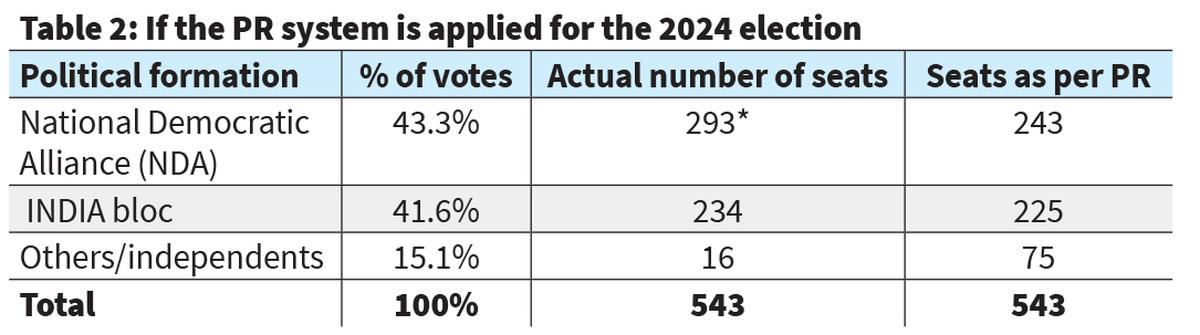
    India should contemplate proportional representation to ensure fairer political outcomes, given NDA’s 293 seats (43.3%) compared to INDIA bloc’s 234 seats (41.6%).

    First Past the Post (FPTP) System

    • First Past the Post (FPTP) is a voting system where the candidate with the most votes in each constituency wins, regardless of whether they achieve an absolute majority.
    • Simple and feasible method used in large democracies like India, the U.S., the U.K., and Canada.
    • Provides stability to the executive as the ruling party/coalition can enjoy a majority in the legislature without obtaining a majority of the votes across constituencies.
    • Criticized for potentially resulting in over or under-representation of political parties compared to their vote share.

    Proportional Representation (PR) System:

    • Ensures representation of all parties based on their vote share. Commonly implemented through party list PR, where voters vote for parties rather than individual candidates. PR system applied at each State/Union Territory (UT) level in federal countries like India.

    Pros and Cons Comparison between FPTP and PR

    First Past the Post (FPTP):

    • Pros: Simple, stable majority governments, clear constituency representation.
    • Cons: Disproportionate representation, underrepresentation of minorities, many wasted votes.

    Proportional Representation (PR):

    • Pros: Fairer representation, inclusivity of smaller parties, fewer wasted votes.
    • Cons: Complex, potential for unstable coalitions, weaker direct constituency representation.

    International Practices:

    • The PR system is used in presidential democracies like Brazil and Argentina, as well as parliamentary democracies like South Africa, the Netherlands, Belgium, and Spain.
    • Mixed Member Proportional Representation (MMPR) system employed in Germany and New Zealand.
    • Germany: Germany uses MMPR for elections to the Bundestag. Half of the seats are filled through FPTP constituencies, and the other half are allocated to ensure proportional representation based on party votes, provided parties receive at least 5% of the vote.
    • New Zealand: New Zealand’s House of Representatives is elected using MMPR, with 60% of seats filled through constituency elections and 40% allocated proportionally based on party votes.
    • The Mixed Member Proportional Representation (MMPR) system is a hybrid electoral system that combines elements of First Past the Post (FPTP) and Proportional Representation (PR) to ensure both local representation and proportionality in election results.

    Way Forward:

    • The Law Commission, in its 170th report titled ‘Reform of the Electoral Laws’ (1999), recommended the experimental introduction of the Mixed Member Proportional Representation (MMPR) system. It suggested that 25% of seats in the Lok Sabha could be filled using a Proportional Representation (PR) system by increasing the total number of seats.
    • Incremental implementation of MMPR system for additional seats during delimitation exercises to address population disparities while ensuring fair representation for all regions.
  • What are Cabinet Committees, and why is the CCS the most important of them all?

    Why in the News?

    After the swearing-in ceremony of PM Modi, he is set to share the four big portfolios of Home, Defence, Finance, and External Affairs with its alliance partners.

    What are the Cabinet Committees?

    • Cabinet committees in India are groups of ministers formed by the Prime Minister to handle specific tasks or issues more efficiently.
    • The PM sets up these committees with selected members of the Cabinet and assigns specific functions to these committees.
    • The PM may change the number of committees, and modify the functions assigned to them.
    • Usually, only Cabinet ministers are members of these committees. However, non-Cabinet ministers are not unheard of to be members or special invitees to committees.
    • If the PM himself is a member of any such committee, he acts as the head of that committee.

    Evolution of Cabinet Committees in India’s Governance

    • Cabinet committees operate under the Government of India Transaction of Business Rules, 1961.
    • These committees are categorized as Standing (Permanent) or Ad-Hoc (Temporary).
    • They are established based on Article 77(3) of the Constitution, allowing the President to make rules for efficient transaction of government business and allocation among ministers.
    • Membership varies from three to eight, predominantly comprising Cabinet ministers, with the Prime Minister often presiding.
    • The number, terminology, and composition may change over time.

    Note: All Cabinet Committees except the Cabinet Committee on Accommodation and the Cabinet Committee on Parliamentary Affairs are headed by the Prime Minister.

    There are 8 Cabinet committees at present — 

    1. Appointments Committee of the Cabinet (composed of the PM (ex-officio Chairman) and the Minister of Home Affairs),
    2. Cabinet Committee on Economic Affairs (headed by the PM himself),
    3. Cabinet Committee on Political Affairs (headed by the PM),
    4. Cabinet Committee on Investment and Growth,
    5. Cabinet Committee on Parliamentary Affairs,
    6. Cabinet Committee on Employment & Skill Development,
    7. Cabinet Committee on Accommodation, and
    8. Cabinet Committee on Security.
    • The Committees on Investment and Employment were innovations introduced in 2019  by the Modi government.

    About Cabinet Committee on Security

    • Head of the Committee: The Prime Minister assumes the role of the committee’s head.
    • Membership: Cabinet ministers of Finance, Defense, Home Affairs, and External Affairs serve as members.
    • Key Responsibilities: The committee addresses issues related to law and order, internal security, and foreign affairs policy with security implications, including matters concerning atomic energy.
    • Economic and Political Considerations: It also examines economic and political issues relevant to national security.
    • Financial Oversight: The CCS reviews cases involving capital defence expenditure exceeding Rs 1,000 crore.
    • Departmental Considerations: Additionally, it evaluates matters concerning the Department of Defence Production, Department of Defence Research and Development, Services Capital Acquisition plans, and procurement of security-related equipment.

    Why is CCS so important?

    • The CCS, led by the Prime Minister, includes key ministers overseeing finance, defence, home affairs, and external affairs, playing a pivotal role in national security discussions and appointments.
    • It makes major decisions regarding significant appointments, national security issues, and defence expenditure, indicating its crucial role in India’s security framework.
    • Apart from defence matters, the CCS addresses law and order, internal security, foreign policy on security issues, and matters related to atomic energy, showcasing its broad spectrum of responsibilities.

    Alliance Partners in the Cabinet Committee on Security (CCS)

    • 1996 Government Transition: A notable instance was during the 1996 H.D. Deve Gowda government, following Atal Bihari Vajpayee’s resignation as Prime Minister. Deve Gowda, then CM  of Karnataka, took office as Prime Minister on June 1. Mulayam Singh Yadav from the Samajwadi Party served as Defence Minister, P. Chidambaram, founder of the Tamil Manila Congress earlier that year, became Finance Minister, and Indrajit Gupta of CPI assumed the role of Home Minister.
    • 2001 Appointment: During Vajpayee’s tenure leading the NDA government in 2001, George Fernandes, founder of the Samata Party, was appointed Defence Minister, holding the position for three years. Notably, during his tenure as Defence Minister in Vajpayee’s second and third ministries (1998–2004), Fernandes oversaw critical events such as the Kargil War and nuclear tests at Pokhran.
    • Party Distribution: However, during the UPA government, the Congress retained all CCS positions, whereas in the Modi government, the BJP held all four positions.

    PYQ:

    [2014] The size of the cabinet should be as big as governmental work justifies and as big as the Prime Minister can manage as a team. How far the efficacy of a government then is inversely related to the size of the cabinet? Discuss.

    [2017] Out of the following statements, choose the one that brings out the principle underlying the Cabinet form of Government:

    (a) An arrangement for minimizing the criticism against the Government whose responsibilities are complex and hard to carry out to the satisfaction of all.

    (b) A mechanism for speeding up the activities of the Government whose responsibilities are increasing day by day.

    (c) A mechanism of parliamentary democracy for ensuring collective responsibility of the Government to the people.

    (d) A device for strengthening the hands of the head of the Government whose hold over the people is in a state of decline.

  • 124th Death Anniversary of Birsa Munda

    Why in the News?

    Jharkhand CM marked the 124th death anniversary of revolutionary tribal leader “Birsa Munda” by paying his tributes.

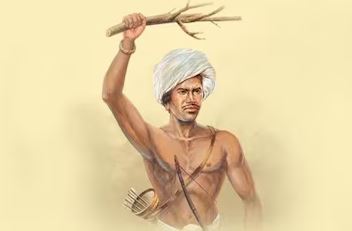
    Who was Birsa Munda (1875-1900)?

    • Birsa Munda was born on November 15, 1875, during a period of significant change for his community, the Mundas, residing in the Chotanagpur region of present-day Jharkhand.
    • Birsa Munda spent his early years travelling with his parents and received primary education under Jaipal Nag.
    • Inspired by the peaceful Sardari agitation against British rule, Birsa became a prominent leader advocating for tribal rights.

    Causes of the Rebellion

    • Impact of Colonial Policies: Colonial policies, including the Permanent Settlement Act (1793), disrupted traditional land ownership systems, leading to displacement and exploitation of indigenous communities.
    • Erosion of Khuntkattidar System: The Mundas’ traditional land rights system, known as khuntkatti, was eroded by jagirdars and thikadars, leading to land alienation.
    • Land Alienation and Exploitation: Non-tribal migration into tribal regions accelerated under British rule, resulting in exploitation through high-interest money lending and forced labour.
    • Missionary Activity: The spread of education through missionary activities led to increased awareness among tribals, deepening social cleavages but also inspiring movements for tribal reconstruction.

    Major Activities:

    1. New faith ‘Birsait’ against religious conversion

    • Having gained awareness of the British colonial ruler and the efforts of the missionaries to convert tribals to Christianity, Birsa started the faith of ‘Birsait’.
    • Soon members of the Munda and Oraon community started joining the Birsait sect and it turned into a challenge to British conversion activities.
    • The Mundas called him Dharati Aaba, the father of earth.

    2. The Birsa Movement: Ulgulan

    • The Munda Rebellion was a tribal rebellion led by Birsa Munda in the region south of Ranchi in 1899-1900.
    • It mainly concentrated in the Munda belt of Khunti, Tamar, Sarwada, and Bandgaon.
    • The revolt sought to establish Munda Raj and independence, known as Ulgulan or ‘Great Tumult’ by Munda tribals.
    • The rebellion ended with the suppression by British forces and the death of Birsa Munda.

    Significant Outcomes

    • Impact: Birsa Munda’s mobilization of tribal communities left a lasting legacy, prompting government reforms such as the repeal of the Begar system and the enactment of the Tenancy Act (1903).
    • His Death: The movement was violently suppressed and Birsa Munda died in jail on 9 June 1900.

    What is Permanent Settlement System?

    • The Permanent Settlement system introduced by Lord Cornwallis in 1793 was a land revenue system implemented in British India, particularly in Bengal, Bihar, and Odisha.
    • Under this system, the land revenue to be paid by the peasants (ryots) was fixed permanently without revision for an extended period (typically 10 years or more).
    • This fixed amount was based on the estimated productive capacity of the land.
    • It established the Zamindari system, where Zamindars (landlords) were recognized as the owners of land.
    • They were responsible for collecting revenue from the peasants and paying it to the British government.
    • In return, they were entitled to keep a portion of the collected revenue as their income, often ranging from 10% to 15%.

    PYQ:

    [2020] With reference to the history of India, “Ulgulan” or the Great Tumult is the description of which of the following events?

    (a) The Revolt of 1857

    (b) The Mappila Rebellion of 1921

    (c) The Indigo Revolt of 1859-60

    (d) Birsa Munda’s Revolt of 1899-1900

  • Hydrogen Line: A Unique Signal

    Why in the News?

    The hydrogen line stands as a pivotal tool in contemporary astronomy, serving various purposes from studying distant stars to questing for extraterrestrial intelligence, should it exist.

    What is a Hydrogen Line?

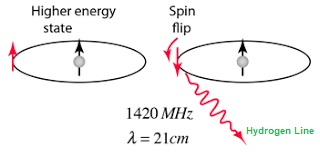
    • The hydrogen line is a special type of light that hydrogen atoms emit.
    • It happens when an electron, a tiny particle that orbits the nucleus of the hydrogen atom, jumps from a higher energy level to a lower one.
    • This jump releases energy in the form of light, specifically with a wavelength of about 21 centimetres. This wavelength is what scientists call the hydrogen line.

    Why is it Important?

    • Hydrogen is everywhere in the universe. It’s the simplest and most abundant element, making up about 75% of the universe’s elemental mass.
      • So, studying the hydrogen line allows us to understand a lot about the composition and distribution of matter in the universe.
    • By observing the hydrogen line’s emission from different regions of space, astronomers can create maps showing where hydrogen gas is located.
    • Secrets about the early Universe: The hydrogen line also holds secrets about the early universe. Shortly after the Big Bang, the universe was filled with hydrogen gas.
      • By studying the hydrogen line from distant parts of the universe, astronomers can learn about its conditions and evolution billions of years ago.

    How Do We Interpret Hydrogen Line?

    • Radio telescope data enables mapping of hydrogen distribution, revealing locations of hydrogen clouds crucial for understanding galaxy and galaxy cluster formation and evolution.
    • Observing hydrogen line emission from different galaxy parts enables studying internal structures and dynamics, like rotation curves, offering insights into mass distribution within galaxies.
    • Observing hydrogen lines from distant galaxies unveils early universe conditions, aiding in understanding cosmic evolution’s initial stages.

    What’s Next?

    • New Discoveries: Scientists are continually developing new technologies and techniques to improve the sensitivity and resolution of radio telescopes.
      • This enables them to detect fainter signals and uncover new insights into the universe’s hydrogen content.
    • Exploring Dark Matter: The hydrogen line observations could also contribute to understanding dark matter, an invisible substance that makes up about 27% of the universe’s total mass-energy content.
      • By studying the hydrogen distribution in relation to the gravitational effects observed in galaxies, scientists hope to shed light on the nature of dark matter.

    PYQ:

    [2012] A team of scientists at Brookhaven National Laboratory including those from India created the heaviest anti-matter (anti-helium nucleus). What is/are the implication/implications of the creation of anti-matter?

    1. It will make mineral prospecting and oil exploration easier and cheaper.
    2. It will help prove the possibility of the existence of stars and galaxies made of anti-matter.
    3. It will help us understand the evolution of the universe.

    Select the correct answer using the codes given below:

    (a) 1 only

    (b) 2 and 3 only

    (c) 3 only

    (d) 1, 2 and 3

  • [pib] Green Ammonia Production under SIGHT Program

    Why in the News?

    • Solar Energy Corporation of India (SECI) has initiated the bidding process for a total capacity of 5.39 lakh Metric Tonnes (MT) per annum of Green Ammonia production.
      • The initiative falls under Mode 2A of the Strategic Interventions for Green Hydrogen Transition (SIGHT) Programme, part of the National Green Hydrogen Mission led by the Ministry of New & Renewable Energy (MNRE).

    What is Green Ammonia?

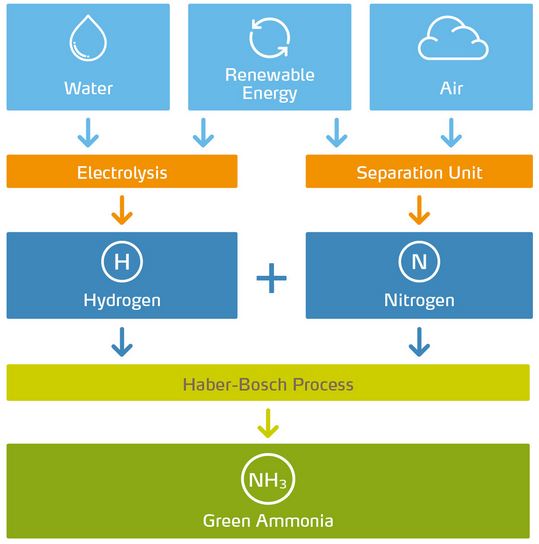
    • Green ammonia, also known as renewable ammonia, is a form of ammonia produced using renewable energy sources, which is proposed as a sustainable, emission-free alternative with a multitude of applications in industry and other sectors.
    • It is produced by combining nitrogen with hydrogen, which is generated through water electrolysis using renewable energy, and then reacting the hydrogen and nitrogen at high temperatures and pressures to form ammonia.

    About the National Green Hydrogen Mission

    • The National Green Hydrogen Mission was launched in January 2023.
      • Objective: To make India a ‘global hub’ for using, producing and exporting green hydrogen.
    • Earlier, the National Hydrogen Mission was launched on August 15, 2021, with a view to cutting down carbon emissions and increasing the use of renewable sources of energy.
    • The Ministry of New and Renewable Energy (MNRE) formulates the scheme guidelines for the implementation of these missions.

    Key features of the NGHM

    • Power capacity: The mission seeks to promote the development of a green hydrogen production capacity of at least 5 MMT per annum with an associated renewable energy capacity addition of about 125 GW in the country by 2030.
    • Job creation: It envisages an investment of over ₹8 lakh crore and creation of over 6 lakh jobs by 2030.
    • Reducing energy import bill: It will also result in a cumulative reduction in fossil fuel imports of over ₹1 lakh crore and abatement of nearly 50 MMT of annual greenhouse gas emissions by 2030.
    • Export promotion: The mission will facilitate demand creation, production, utilisation and export of green hydrogen.
    • Incentivization: Under the Strategic Interventions for Green Hydrogen Transition Programme (SIGHT), distinct financial incentive mechanisms are provided.
    • Green Hydrogen Hubs: Regions capable of supporting large-scale production and/or utilisation of hydrogen will be identified and developed as Green Hydrogen Hubs.

    What is the SIGHT Program?

    • In the initial stage, two distinct financial incentive mechanisms proposed with an outlay of ₹ 17,490 crore up to 2029-30:
    1. Incentive for manufacturing of electrolysers
    2. Incentive for production of green hydrogen.
    • Depending upon the markets and technology development, specific incentive schemes and programmes will continue to evolve as the Mission progresses.

    PYQ:

    [2019] Consider the following statements:

    1. Agricultural soils release nitrogen oxides into the environment.
    2. Cattle release ammonia into the environment.
    3. Poultry industry releases reactive nitrogen compounds into environment.

    Which of the statements given above is/are correct?

    (a) 1 and 3 only

    (b) 2 and 3 only

    (c) 2 only

    (d) 1, 2 and 3

  • [10 June 2024] The Hindu Op-ed: The Bareilly case and a flawed criminal justice system

    [10 June 2024] The Hindu Op-ed: The Bareilly case and a flawed criminal justice system


    PYQ Relevance:

    Prelims:

    Q) Consider the following statements: (UPSC CSE 2023)
    Statement-1: In India, prisons are managed State Governments with their own rules and regulations for the day-to-day administration of prisons.
    Statement-2: In India, prisons are governed by the Prisons Act, 1894 which expressly kept the subject of prisons in the control of Provincial Governments.
    Which one of the following is correct in respect of the above statements?
    (a) Both Statement-I and Statement-2 are correct and Statement-2 is the correct explanation for Statement-1
    (b) Both Statement-1 and Statement-2 are correct and Statement-2 is not the correct explanation for Statement-1
    (c) Statement-1 1s correct but Statement-2 is incorrect
    (d) Statement-1 Is incorrect but Statement-2 is correct

    Q) Consider the following statements: (UPSC CSE 2023)

    1. According to the Constitution of India, the Central Government has a duty to protect States from internal disturbances. 
    2. The Constitution of India exempts the States from providing legal counsel to a person being held for preventive detention. 
    3. According to the Prevention of Terrorism Act, of 2002, confession of the accused before the police cannot be used as evidence. 
    How many of the above statements are correct? 
    (a) Only one 
    (b) Only two 
    (c) All three 
    (d) None 

    Note4Students: 

    Prelims: Preventive Detention; 

    Mains: Criminal Justice System in India; Challenges with Fast Track Courts; 

    Mentor comment: Preventive Detention law was passed in1950 for the first time. The aim of implementing the Preventive detention was not to punish the individual but to prevent that person from doing a wrong and unconstitutional act. According to Finley, “it is not punitive but a precautionary measure”.

    The Indian criminal justice system faces several other challenges too. One of the major challenges is a large backlog of pending cases, which can result in long delays and delays in the delivery of justice. The Indian criminal justice system is also criticized for being slow, inefficient and prone to corruption, that is why, we introduced Fast Track Court system. Investigations are often incomplete or either lack thoroughness, leading to weak cases and wrongful detentions in this type of courts too. One of the live example of this is being highlighted in today’s editorial.

    Let’s learn.

    Why in the News?

    A woman who had filed a rape case was sentenced to imprisonment and fined by a court in Bareilly, Uttar Pradesh, leading to a narrative that perpetuated the stereotype that false rape claims are common

    • However, a closer examination of the trial proceedings highlights systemic shortcomings in law enforcement and social complexities that require urgent attention.
    BACKGROUND STORY:

    About Lack of Spirit or Liveliness in the Investigation process:

    •Initial Complaint: The girl’s mother filed a missing person’s complaint stating that her 15-year-old daughter (medical examination showed her to be 18 years old) was missing and suspected a person kidnapping her. However, the girl appeared a few days later, claiming she was taken to Delhi by the same suspected person and raped by him.
    •Lack of Medical Evidence: The Girl refused to undergo a thorough medical examination, crucial for the prosecution’s case (in fact clothes were not collected for forensic analysis). Hence, the lack of medical evidence due to the negligence of the investigating officer and Pooja’s refusal to undergo a medical examination weakened the prosecution’s case.
    •Administrative Failure: The respective magistrate did not direct further investigation despite glaring gaps. Moreover, the public prosecutor endorsed a weak charge sheet, failing to fulfill their duty to the court and the public.
    Section 173(8) of the CrPC allows a magistrate to direct further investigation in case of a flawed investigation. 
    Further, the magistrate could call for the case diary under Section ○ (172(2) of the CrPC, which may have revealed discrepancies or inadequacies in the investigation.

    The Issue with Undertrial Detention

    • Prolonged Incarceration: One of the tragedies of the Indian prison system is the high proportion of undertrial prisoners (around two-thirds). Undertrial prisoners are kept in prison while awaiting trial or during their trial. The accused boy in this case remained in jail for over four years without accountability for the investigating officers or prosecution.
    • Lack of Accountability: There were no repercussions for those responsible for wrongful detentions, perpetuating a culture of impunity and undermining public confidence in the integrity of judicial processes.
      • His trial dragged on in a fast-track court in Bareilly amidst the disruptive backdrop of the COVID-19 pandemic.
    • Violates the Fundamental Right: Prolonged undertrial detention violates their Rights to Liberty and Fair trial, adversely impacting their lives and livelihood.
      • The trial in this case spanned 1,559 days, in which there were 109 hearings (data from the e-Courts portal).
      • The overuse of undertrial detention effectively ends up punishing people before they are convicted and makes a mockery of their right to be presumed innocent until proven guilty.

    The state of Fast-track courts in India

    • Budgetary Allocation: The centrally sponsored scheme for Fast Track Special Courts (FTSC) has been extended till 2026 with a budgetary allocation of around ₹2,000 crore, despite systemic challenges.
    • Inadequate Infrastructure: Fast-track courts lack dedicated infrastructure and judges, leading to existing courts being designated for these cases, causing judges to manage both regular and expedited cases.
    • Bail Issues: In this case, the accused person’s bail application was rejected due to the serious nature of the offense, and he remained in jail until his acquittal. His family lacked the means to file an appeal. Indifference and poverty prolong undertrial detention.
    • Reforms Needed: The case highlights the need for enhancements in police investigation protocols, prosecutorial autonomy, and judicial supervision to mitigate the risk of wrongful and protracted imprisonments.

    Conclusion: Ultimately, the notoriety surrounding this case is cited to bolster the stereotype of women lodging false accusations against men, which highlights a critical call for reforms within the criminal justice system. This case highlights the necessity for enhancements in police investigation protocols, prosecutorial autonomy, and judicial supervision to mitigate the risk of wrongful and protracted imprisonments. 

  • [UPSC’25 Beginner’s Webinar] On Note-Making using Progressive Summarization & Finding Focus in UPSC Preparation

    [UPSC’25 Beginner’s Webinar] On Note-Making using Progressive Summarization & Finding Focus in UPSC Preparation

    By attending this webinar, you’ll gain access to an advanced note-making technique used by top rankers. This unique approach will not only enhance your focus but also teach you the art of connecting the dots, giving you a competitive edge in the UPSC-CSE exam.

    Join FREE Webinar on 11th June, 7:30 pm

    Let me ask you a simple question today – What is your note-making strategy for UPSC-CSE? 

    Now, I know that you have some idea about it. You have watched the topper’s videos. But again, I am asking you –  what ‘your’ note-making strategy is.

    Copying what toppers do is subjective to them. You can’t just apply that to your preparation and expect similar results. 

    One simple reason for this is that Topper’s notes are contextual to them. There is a lot of hidden information and context in their notes. 

    To you as a viewer, this is 100% invisible. Yet the same notes are super handy and valuable to toppers. 

    What you see is the final version (Layer-5 notes) of the topper. The context and details lie in Layers 1-4. What you need is your own journey from Layer 1 to 5. This is exactly why you must attend this webinar to learn how to make topper-level notes using the same technique used by rankers  – Progressive Summarization.

    Let me give you a sneak peek into webinar content – 

    This is a student’s layer 5 notes on a Polity topic. Check the right balance of context and compression (crisp). It is easily revisable and helps with active recall.  

    This is another example of layer-5 notes using a Mains answer structure for note-making.

    There is another important topic that I am going to cover in this session, i.e. 

    How to find your focus? 

    We live in a world full of distractions. People have self-diagnosed ADHD. Maintaining focus, concentration, and attention is extremely critical. If you are struggling to do so – Do not miss this session. I am going to talk about – ‘A 10-day path to ultimate concentration.’

    We are coming with a Webinar (11th June, 7 PM) where we will show you how to work on your Notes using Progressive Summarization, & finding the focus back in your preparation.

    Register for Prayas Sir’s Webinar

    Outcomes of the Webinar

    Participants will learn the art of effective note-making through the technique of Progressive Summarization, providing them with a structured approach to convert their initial notes into valuable study materials similar to those used by UPSC toppers. This method involves:

    1. Layered Note-Taking: Understanding the five-layer approach to note-making, from initial detailed notes to the final concise version.
    2. Personalized Context: Developing notes that are contextual and personalized, thus enhancing retention and recall during the exams.

    Techniques for Enhanced Focus and Concentration

    The session will provide valuable strategies to improve focus and concentration, essential for cracking the UPSC-CSE amidst a world full of distractions. Key takeaways included:

    1. 10-Day Concentration Path: A step-by-step guide to achieving ultimate concentration over a 10-day period.
    2. Practical Tips: Techniques and practical advice to maintain focus and manage distractions effectively.

    Interactive Learning Experience

    The webinar will offer an interactive learning environment where participants could:

    1. Engage with Examples: Analyze real examples of Layer-5 notes.
    2. Ask Questions: Directly interact with the Prayas Sir to clarify doubts and gain deeper insights into note-making strategies.
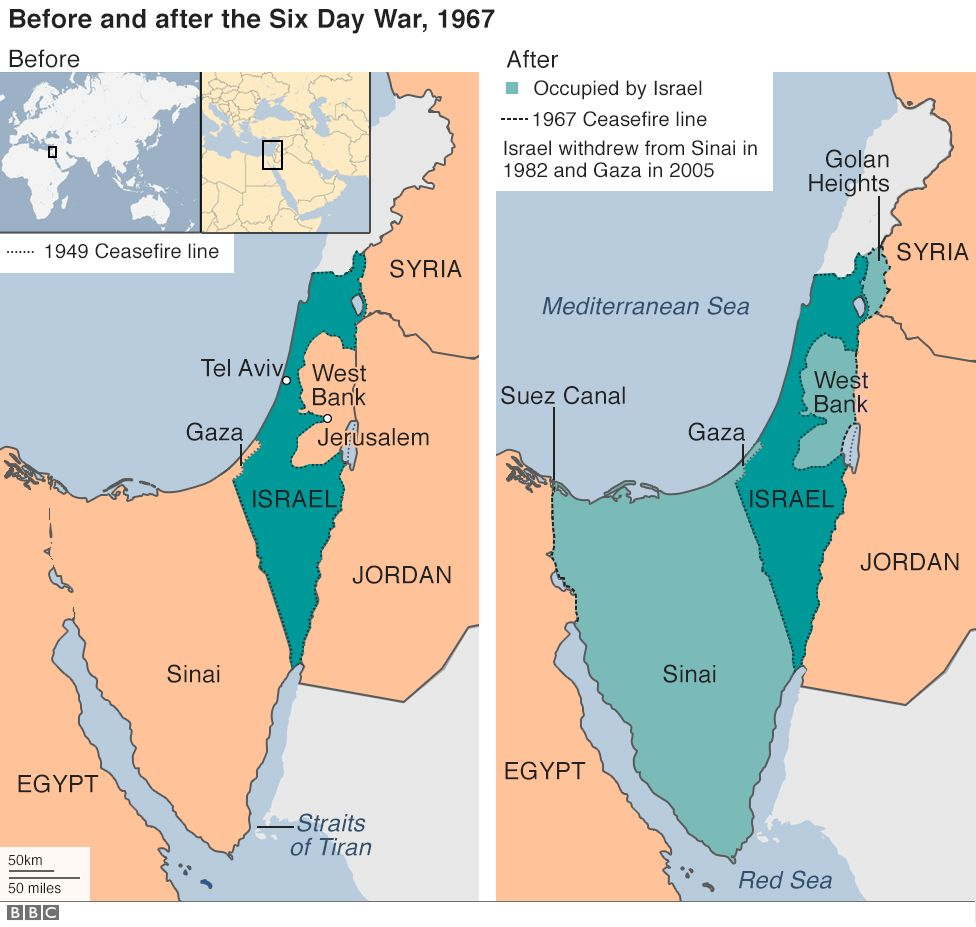
  • How the Six-Day War of 1967 transformed the Middle East?

    Why in the News?

    Fifty-seven years have elapsed since the Six-Day War ( June 5 to June 10, 1967) fought between Israel and its Arab neighbors.

    Causes of the War

    • Historical Tensions: Rooted in the establishment of Israel in 1948, which resulted in the displacement and death of thousands of Palestinian Arabs, creating a massive refugee crisis.
    • Egypt-Israel Relations: Particularly hostile due to territorial and water disputes, exacerbated by Egyptian President Gamal Abdel Nasser’s aggressive stance against Israel.
    • Cold War Influences: Military build-up in Israel and Arab states along Cold War lines, with Israel supported by the US and Arab states by the Soviet Union.
    • Provocations: Egypt’s naval blockade of the Straits of Tiran in May 1967, cutting off Israel’s maritime access to the Red Sea and mobilizing forces in the Sinai Peninsula.

    Outbreak of the War

    • On June 5, 1967, Israel launched a pre-emptive airstrike on Egyptian airfields, swiftly gaining air superiority and neutralising the Egyptian Air Force.
    • Israel’s ground forces advanced into the Sinai Peninsula and Gaza Strip, territories occupied by Egypt.
    • Jordan and Syria entered the war, attacking Israel from the east and north, but were quickly repelled.

    Impacts of the War

    • Territorial Gains for Israel: In less than a week, Israel captured the Sinai Peninsula and Gaza from Egypt, the Golan Heights from Syria, and the West Bank and East Jerusalem from Jordan.
    • Geopolitical Shift: The defeat was a major blow to Arab nations, establishing Israel’s military and geopolitical dominance in the region.
    • Emergence of Palestinian Nationalism: The war spurred the rise of Palestinian nationalism and the Palestine Liberation Organization (PLO) emerged as a significant political entity.
    • Continued Conflict: Ongoing tensions and conflicts in the region, including the 1973 Yom Kippur War, are direct results of the 1967 war and subsequent Israeli occupation of key territories.
    • Unresolved Refugee Crisis: The plight of Palestinian refugees displaced during and after the war remains unresolved, continuing to fuel regional instability.

    Conclusion: The Six-Day War was thus a pivotal event that not only redefined territorial boundaries but also reshaped political dynamics and set the stage for ongoing conflicts in the Middle East.

    Mains PYQ:

    Q “India’s relations with Israel have, of late, acquired a depth and diversity, which cannot be rolled back.” Discuss. (UPSC IAS/2018)

  • Remoulding the Global Plastics Treaty

    Why in the news?

    As discussions for an international legally binding treaty on plastic pollution continue, it is essential to consider how it can support a fair transition for informal waste collectors and recyclers.

    Observations by the OECD Global Plastic Outlook

    • In 2019, global plastic waste production was 353 million tonnes, more than double the amount in 2000. This number is expected to triple by 2060. Only 9% of plastic waste was recycled in 2019.
    • 50% of plastic waste was sent to landfills, 19% incinerated, and 22% disposed of in uncontrolled sites or dumps.

    Challenges due to Plastic Pollution:

    • Soil Pollution: Plastic waste can contaminate soil, reducing its fertility and affecting plant growth.
    • Marine Pollution: Plastic waste in oceans can harm marine life, alter habitats, and disrupt natural processes, making ecosystems less resilient to climate change.
    • Water Pollution: Plastic waste can contaminate groundwater and waterways, affecting human consumption and aquatic life.
    • Health Risks: 
      • Microplastics: Plastic waste can break down into microplastics, which can be ingested by humans and animals, potentially causing health problems.
      • Toxic Chemicals: Plastic products can leach toxic chemicals, such as phthalates and BPA, into food and water, posing health risks

    Significance of Recognizing the Issue

    • Crucial role of recycling workers: Informal recycling workers recycled 85% of the 9% recycled plastic, playing a crucial role in global waste management.
    • Economic and Environmental Contribution: These workers alleviate municipal budgets, promote circular waste management solutions, and help mitigate greenhouse gas emissions. Their efforts significantly reduce plastic in landfills and prevent plastic leakage into the environment.
      • Despite their contributions, informal recycling workers are often overlooked and remain vulnerable. They face risks such as privatization of waste management, waste-to-energy projects, and exclusion from public policy interventions in plastic waste management.

    Global Plastic Treaty Needs Just Transition

    • Need for Intergovernmental Negotiating Committee (INC): Established in 2021, the INC aims to create a legally binding agreement to reduce plastic pollution. The INC has held several meetings, with the final one scheduled in South Korea.
    • Promoting Informal Workers Participation: The International Alliance of Waste Pickers (IAWP) emphasizes the need to support and integrate informal waste pickers into the treaty discussions. Their historical contributions should be acknowledged, their rights protected, and their perspectives included in policy implementation.
    • Building Clarity: There is no universally agreed-upon terminology for a just transition or a formal definition of the informal waste sector. Clarifying these definitions is essential.

    India’s Voice is Important

    • India promotes repair, reuse, refill, and recycling without eliminating the use of plastics. This approach emphasizes country-specific circumstances and capacities.
    • India’s informal waste pickers are indispensable and remain central to the discussion on plastic waste management.
    • Rethinking EPR norms is crucial to integrating the informal worker cohort into the new legal framework.
    • As a key representative from the Global South, India’s perspectives and approaches are vital in shaping the Global Plastics Treaty.

    Conclusion: By incorporating the perspectives of informal waste workers and ensuring their livelihoods are protected, the Global Plastics Treaty can embody social justice and equity principles, contributing to a sustainable future while leaving no one behind.

    Mains PYQ:

    Q What are the impediments in disposing of the huge quantities of discarded solid wastes which are continuously being generated? How do we remove safely the toxic wastes that have been accumulating in our habitable environment?  (UPSC IAS/2018)

  • Why has RBI policy panel kept repo rate unchanged, hiked GDP growth projection?

    Why in the news?

    The RBI’s Monetary Policy Committee kept the repo rate at 6.5% for the eighth consecutive time, due to persistent high retail inflation from sticky food prices.

    Monetary Policy Committee (MPC) 

    • The Monetary Policy Committee (MPC) of India is responsible for setting the benchmark interest rate in the country.
    • The committee consists of six members: the Governor of the Reserve Bank of India (RBI), the Deputy Governor in charge of monetary policy, an Executive Director of the RBI, and three external members nominated by the government.
    • The MPC meets at least four times a year and publishes its decisions after each meeting. The committee’s primary objective is to maintain price stability while considering the goal of economic growth.

    Why did the RBI keep the Rates Unchanged?

    • Inflation Concerns: The Monetary Policy Committee (MPC) kept the repo rate unchanged at 6.5% due to persistent high inflation, with April 2024 retail inflation at 4.83%.
    • Caution on Food Inflation: The policy stance remains cautious due to the risk of rising food inflation from heatwave conditions, which may impact the final journey of disinflation.
    • Flexible Inflation Targeting: Under the regime, the RBI aims to keep inflation within the 2-6% range and achieve a 4% target on a durable basis.
    • Supply Side Disruptions: Persistent supply shocks in cereals, pulses, spices, and vegetables contributed to elevated food inflation, impacting overall inflation management.

    What happens to Lending Rates if the Repo Rate is left steady?

    Lending Rate:

    The lending rate, also known as the bank rate, is the rate at which commercial banks borrow money from the central bank without securities. It is typically higher than the repo rate and is used for longer-term lending. The lending rate is used to assess the long-term monetary goals of a bank and is often used to manage liquidity in the system

    Repo Rate 

    The repo rate, on the other hand, is the rate at which the central bank lends money to commercial banks against government securities as collateral. It is used for short-term lending and is typically lower than the lending rate

    • Relief for Borrowers: With the repo rate steady at 6.5%, external benchmark lending rates (EBLR) linked to the repo rate will not increase, keeping equated monthly installments (EMIs) on home and personal loans unchanged.
    • Potential MCLR Increase: Lenders might raise interest rates on loans linked to the marginal cost of fund-based lending rate (MCLR), as the full transmission of the 250 basis points hike in the repo rate from May 2022 to February 2023 has not yet occurred.

    Why Has MPC Hiked GDP Growth?

    • Improving Demand: The MPC raised the GDP growth forecast for FY25 to 7.2% from 7% due to strengthening rural and urban demand conditions buoyed by favourable monsoon forecasts.
    • Robust Economic Activity: Indicators such as healthy growth in the eight core industries, strong Purchasing Managers Index (PMI) in manufacturing and services, and overall resilient domestic economic activity support the upgraded growth projection.
    • Sectoral Strength: The manufacturing and services sectors continued to exhibit robust performance, with the PMI for services standing at 60.2 in May 2024, indicating strong expansion.

    Conclusion: The RBI’s cautious approach to keeping rates steady while boosting GDP growth projections aims to balance economic growth and inflation control, with a focus on addressing persistent food inflation.

    Mains PYQ:

    Do you agree with the view that steady GDP growth and low inflation have left the Indian economy in good shape? Give reasons in support of your arguments. (UPSC IAS/2019)

  • India issues new advisory against fake job rackets in Myanmar, flags another ‘dangerous’ area


    Why in the news?

    The advisory was shared on social media by the Indian Embassy in Yangon on Monday (June 3 2024), urging caution against job offers in the Pha Lu area, south of Myawaddy town. This region has recently emerged as a hotspot where most Indian victims are being trafficked, often via Thailand.

    Highlights made by the Indian Embassy’s Advisories:

      • The embassy has issued multiple advisories warning against fake job rackets in Myanmar, highlighting the significant and ongoing threat.
      • Declared New Danger Zone: The Pha Lu area, south of Myawaddy town, has been identified as a new hotspot for trafficking, necessitating heightened vigilance. Previous advisories flagged Myawaddy, Yangon, Laukkaing, Lashio, and Tachileik as risky areas.
        • There’s been a rise in Indian nationals falling victim to crime syndicates in the Myawaddy region on the Myanmar-Thailand border.
    • On Security Issues:
      • Broader insecurity: Not just Indian nationals, but individuals from countries like Malaysia and the UAE have also been targeted by these syndicates.
      • Social Media Caution: Emphasis on avoiding job offers made through social media or unverified sources.
      • Security Worsening: The security situation in Myanmar has deteriorated since the February 2021 military coup, exacerbating human trafficking issues.
    • Consultation Urged: Indian nationals are urged to verify job offers and consult respective Indian embassies before accepting employment abroad.

    India-Myanmar Bilateral Relations:

      • India and Myanmar signed a Treaty of Friendship in 1951, and the visit of Prime Minister Rajiv Gandhi in 1987 laid the foundations for a stronger relationship.

    Significance of India-Myanmar Relation:

      • Economic Cooperation: India is Myanmar’s 4th largest export market and 5th largest import partner. The bilateral trade target of $1 billion was achieved by 2017.
      • Strategic Cooperation: India’s engagement with Myanmar is motivated by a desire to counter China’s growing influence in the region and enhance its own influence and standing.
      • Security Ties: India and Myanmar have cooperated on security issues, including combating drug trafficking and insurgent groups operating in the border areas.
      • Recent Developments: India gifted Myanmar its first submarine, and the two countries have carried out joint operations against insurgent camps.

    The relationship faces challenges such as the Rohingya issue, the coup by the military junta, and the exploitation of the porous border by terrorist outfits and insurgent groups

    Way Forward:

    • Need Monitoring and Ground Surveillance: India can collaborate with social media platforms to monitor and remove fraudulent job postings and take legal action against those responsible.
    • Stronger Bilateral Cooperation: Strengthen cooperation with Myanmar and neighboring countries like Thailand, Laos, and Cambodia to crack down on human trafficking networks and facilitate the safe return of victims.

    Mains PYQ:

    Q Cross-border movement of insurgents is only one of the several security challenges facing the policing of the border in North-East India. Examine the various challenges currently emanating across the India-Myanmar border. Also, discuss the steps to counter the challenges. (UPSC IAS/2019)

More posts