💥UPSC 2026, 2027, 2028 UAP Mentorship (March Batch) + Access XFactor Notes & Microthemes PDF

Search results for: “”

  • India to Chair ‘Colombo Process’

    Why in the News?

    India has become chair of the regional grouping “Colombo Process” for the first time since its inception in 2003.

    What is the Colombo Process?

    • The Colombo Process, established on March 19, 2003, in Colombo, Sri Lanka, is a regional consultative initiative addressing challenges faced by migrant workers from South and Southeast Asia.
    • Objective:
      • Primary Goal: The Colombo Process aims to enhance the management of contractual labour migration from Asian countries.
      • Focus: It seeks to safeguard the rights and welfare of migrant workers while maximizing the benefits of labour migration for both sending and receiving countries.
    • The Process is non-binding and decision-making is by consensus.

    Membership:

    • Initial Composition: Initially comprising 11 member countries, including Afghanistan, Bangladesh, China, India, Indonesia, Nepal, Pakistan, the Philippines, Sri Lanka, Thailand, and Vietnam.
    • Expansion: The Process has since expanded to include additional countries like Cambodia and Myanmar.

    Five Thematic Area Working Groups (TAWGs) i.e. 

    1. Skills and Qualification Recognition (chaired by Sri Lanka);
    2. Fostering Ethical Recruitment (chaired by Bangladesh);
    3. Pre-Departure Orientation and Empowerment (chaired by the Philippines);
    4. Remittances (chaired by Pakistan) and
    5. Labour Market Analysis (chaired by Thailand).

    Key Focus Areas:

    • Policy Development: Addressing various aspects of labour migration, including policy development, capacity building, data collection, and sharing best practices.
    • Rights Protection: Ensuring the protection of migrant workers’ rights, skills recognition, ethical recruitment, and combating human trafficking and irregular migration.

    Activities and Initiatives:

    • Dialogue Platforms: Regular meetings, conferences, and workshops serve as platforms for dialogue and cooperation among member countries.
    • Guidelines and Toolkits: Development of guidelines, toolkits, and policy frameworks to assist member countries in effectively managing labour migration.
    • Collaboration: Collaboration with international organizations such as the International Labour Organization (ILO) and the International Organization for Migration (IOM) to implement joint initiatives and projects.

    PYQ:

    [2022] ‘India is an age-old friend of Sri Lanka.’ Discuss India’s role in the recent crisis in Sri Lanka in light of the preceding statement.

  • India and the ‘managed care’ promise

    PYQ Relevance

    Q Public health system has limitations in providing universal health coverage. Do you think that the private sector can help in bridging the gap? What other viable alternatives do you suggest? (UPSC IAS/2015)

    Q The increase in life expectancy in the country has led to newer health challenges in the community. What are those challenges and what steps need to be taken to meet them? (UPSC IAS/2022)

    Mentor Comment: Health insurance, now central to India’s UHC policy, is being enhanced by digital advancements, enabling reforms akin to the U.S. but with cost-effective local adaptations. A South Indian healthcare chain recently integrated insurance and care provision, forming an Indian-style MCO. This prompts reflection on MCOs’ potential to extend universal health care in India significantly.

    Let’s learn_ _ 

    Why in the news?

    Universal healthcare poses a multifaceted challenge, yet managed care organizations may offer a piece of the solution that Indian healthcare requires.

    What is a Managed Care Organization?

    • A Managed Care Organization (MCO) is a health care company or a health plan that is focused on managed care as a model to limit costs, while keeping quality of care high.

    The background of Managed Care Organizations (MCOs) in the United States and India:

    Evolution of MCOs in the United States:

    •  MCOs have their origins in rudimentary prepaid healthcare practices in the 20th century.
    • The mainstreaming of MCOs gained momentum in the 1970s due to concerns over healthcare costs.The economic slowdown post-1970s made high insurance premiums less attractive to purchasers.
    • A shift occurred towards integrating insurance and healthcare provisioning functions. Focus areas included prevention, early management, and cost control, all under a fixed premium paid by enrollees.
    • MCOs have evolved through multiple generations and forms, deeply penetrating the health insurance market. While evidence of their effectiveness in improving health outcomes and prioritizing preventive care is mixed, they have been effective in reducing costly hospitalizations and associated costs.

    Evolution of MCOs in India:

    • The first public commercial health insurance emerged in the 1980s.The focus has primarily been on indemnity insurance and covering hospitalization costs.
    • There is a significant market for outpatient consultations, valued at nearly $26 billion.
    • Health insurance in India has traditionally lagged behind life and general insurance. The sector faces issues such as lack of innovation and high, often unsustainable, operational costs.
    • As per Thomas (2011), Health insurance has played a secondary role to other forms of insurance. The industry’s operational inefficiencies and high costs have been persistent issues.

    Challenges in India:

    • Lack of Natural Incentives for Cost Control: The evolutionary trajectory of Indian health insurance has not incentivized consumer-driven cost control.
    • Target Demographic: Health insurance has mainly targeted a thin, urban, well-off segment, neglecting broader demographics.
    • Informality in Outpatient Practices: There is widespread informality among outpatient practices, complicating efforts to standardize and regulate care.
    • Lack of Clinical Protocols: The absence of widely accepted clinical protocols hampers the quality and consistency of care.
    • Economic Viability: Unprofitable operations and unaffordable premiums pose significant economic challenges, preventing sustainable growth and systemic improvement.
    • Limited Impact on UHC: Private initiatives, despite their potential, are unlikely to significantly contribute to Universal Health Coverage (UHC) without public support.
    • Insufficient Control Over Patient Journeys: Health insurers have little control over the patient’s journey before hospitalization, limiting their ability to manage early interventions and reduce costs through comprehensive outpatient care.

    Prospective Solutions and Remaining Issues:

    • Potential for Big Healthcare Brands: Large healthcare brands with loyal urban patient bases and substantial resources may initiate successful managed care projects.
    • Need for Public Patronage: Exploring managed care with cautious and incremental public patronage could be promising, indicating a need for government involvement to achieve broader impacts.
    • Underutilization of Outpatient Insurance: Given the low share of insurance in outpatient care spending and the average of three consultations per year per person, there is significant potential to reduce healthcare costs through early interventions and comprehensive outpatient care coverage.

     NITI Aayog Report:

    • Outpatient care insurance scheme: In 2021, NITI Aayog released a report advocating for an outpatient care insurance scheme based on a subscription model to enhance savings through improved care integration.
    • Yield significant benefits: A well-functioning managed care system can yield significant benefits, including consolidating practices, streamlining management protocols, and emphasizing preventive care in the private sector.
    • Catering for the beneficiaries of PMJAY: The report highlights the potential of incentives under the Ayushman Bharat Mission to encourage the establishment of hospitals in underserved areas catering to beneficiaries of the Pradhan Mantri Jan Arogya Yojana (PMJAY).

    Conclusion: While Managed Care Organizations are not a perfect solution, they can play a role in addressing the complexities of achieving Universal Health Coverage (UHC) in India by being part of a broader strategy.

  • [Working Junta Webinar] Year-long Current Affairs Strategy for Working Professionals

    [Working Junta Webinar] Year-long Current Affairs Strategy for Working Professionals

    Learn the effective current affairs strategy used by AIR 2 Animesh Pradhan (UPSC 2023) of preparing for UPSC as a working professional

    Join FREE Webinar on 7th June, 7:30 pm

    Get Mentorship & Current Affairs Based Sample Timetable (Only first 50 registrants)

    Being a Working Professional & preparing for the UPSC exam simultaneously is tough.

    You might have got a subscription of both The Hindu & Indian Express, but pressure of work, managing project deadlines, attending meetings – you just cannot dedicate enough hours to the section.

    By the time you reach home, you are already drained, leaving you NO time to go through the newspaper. 

    As a working professional, managing a job with UPSC Preparation can be a tough race against time. It is difficult to even cover the syllabus, let alone managing current affairs. You still somehow manage to cover some part of the news. But then, issue of Current Affairs becomes very specific.

    1. You continuously miss out on important current affairs almost daily.

    2. Interlinking Current Affairs with Static Portion is something you don’t know.

    3. Despite having spent so much time on Editorial Section – you still don’t know how to form an opinion.

    Till the end of the month, you don’t remember what you read in the first week of the same month – ZERO DISPLACEMENT, NO RECALL.

    The enthusiasm slowly withers away, and your pledge to give the exam in 2025, changes to 2026, 2027, 2028…

    When Animesh (Rank 2, 2023 – Our Student of UAP Mentorship) started giving his tests with us, his Static Portions weren’t very clear. Despite that, just out of going through our Samachar Manthan religiously, he was able to write answers on Static topics.

    His journey was, however, not smooth. Look at his 1st Answer Copy which he wrote with us:

    Being a religious Samachar Manthan follower, he had enough content to write an answer. However, he wasn’t addressing the demand of the question.

    Now look at the 50th Test Copy that he wrote:

    Not only was he fulfilling the demand of the question, he was effectively using subheadings (dimensions) and examples through value-addition he could gather from Samachar Manthan.

    This was only possible because he was continuously being mentored by Ranadheer sir, his Mentor in the UAP Program.

    Not only was he evaluating his answer copies and giving feedbacks, he was handholding him through his preparation by drawing insights from his Answers.

    With 1:1 Mentorship Sessions & method of introspection with Ranadheer sir, he was able to nourish his notes in a manner that was covering both his Static & Current Affairs portion.

    He got sharper in his tests, which can be seen from his marks – a whooping 473 in Mains.

    The role of a Mentor now is an important as it can get. In this market where content overload is a major issue, only a Mentor can tell you what you cover and what to skip.

    Join us in our Webinar by Siddhi Ma’am (Core Mentor at Civilsdaily), where we will discuss how we need to craft a neat Year-Long Strategy for Current Affairs, if you are a Working Professional!

    Register for Siddhi Ma’am’s Webinar

    Key outcomes of the Webinar

    1. Optimized Sources for Current Affairs
    2. Efficient Reading Techniques
    3. Critical Analysis and Opinion Building
    4. Integrating Current Affairs with GS Papers
    5. Effective Note-taking Templates
    6. Analytical Tools and Techniques to use for Current Affairs
    7. Weekly planner

    Registration is FREE but MANDATORY!

    Get Mentorship & Current Affairs Based Sample Timetable (Only first 50 registrants)

    Attend this Webinar if

    1. If you are Working Professional & have given up hopes on covering newspapers
    2. If you are desperate to add that Current Affair Example in your Static Questions Answer.
    3. If you are still trying to wrap your heads around patterns, syllabus, and expectations of UPSC with respect to Current Affairs.

    Ready to attend the UPSC Webinar?

    Not sure yet?

    We recommend you register here. It takes less than 10 seconds to register.

    • No spam! Once in a while, we’ll only send you high-quality exam-related content. 
    • We will inform you about the upcoming Masterclasses that might benefit you.
    • You can demand one free mentorship call from verified Civilsdaily mentors. 
    • You can always choose to unsubscribe. 
  • Women often outlive men but in poorer health: what new Lancet study says

    Why in the news?

    Over 30 years, a study examining 20 diseases revealed minimal advancements in narrowing the disparity between genders as per “the Lancet Public Health Journal”.

    What does the New Lancet report say?

    • On Health Disparities: The study highlights that women tend to suffer more from lower back pain, depression, and headaches, while men have shorter life expectancies due to higher rates of road accidents, cardiovascular diseases, and, recently, COVID-19.
    • On Health Burden: Women spend more time in poor health, while men are more likely to die prematurely from severe conditions.
    • Overall Global Analysis: The analysis examines differences in the 20 leading causes of illness and death globally, considering all ages and regions.

    What Causes the Differences in Diseases Between Women and Men? (Observations)

    • Biological Factors:
        • Hormonal Differences: Hormonal fluctuations in women, such as during menstrual cycles, pregnancy, and menopause, can influence susceptibility to certain conditions like migraines, depression, and autoimmune diseases.
        • Genetic Variations: Variations in genes and genetic predispositions may contribute to differences in disease susceptibility and severity between sexes.
        • Anatomical Variances: Physiological differences, such as in skeletal structure and hormonal regulation, can affect the manifestation of certain diseases like lower back pain and reproductive disorders.
    • Societal and Gender Norms:
        • Healthcare-Seeking: Societal norms and gender roles may influence healthcare-seeking behaviors, with men often less likely to seek medical attention for mental health issues due to perceived notions of masculinity.
        • Occupational Hazards: Occupational differences between genders can lead to varying exposures to health risks, with certain professions associated with higher rates of injury or exposure to harmful substances.
        • Socioeconomic Factors: Disparities in socioeconomic status can impact disease prevalence and outcomes differently for women and men.
    • Healthcare System Bias:
        • Diagnostic Bias: Gender biases in healthcare may result in underdiagnosis or misdiagnosis of certain conditions in women, leading to delays in treatment and poorer health outcomes.
        • Treatment Disparities: Differences in treatment approaches and responses may exist between sexes, with women sometimes receiving less aggressive treatment for cardiovascular diseases or being undertreated for pain conditions.
        • Research Bias: Historically, medical research has often focused on male subjects, leading to a lack of understanding of how diseases manifest and progress differently in women.
    • No Improvement in Care for Women Over Time
      • Stable Gender Gap: Despite overall health improvements, the disparity between male and female health conditions remains stable.
      • Conditions Affecting Women: Conditions like lower back pain and depressive disorders have shown little to no decrease over time compared to male-dominated conditions.
      • Reproductive Focus: Global health systems have historically focused on women’s reproductive health, neglecting other significant health issues affecting women.

    What Needs to Be Done (Way Forward)

    • Better Data Collection: Governments should consistently collect and categorize health data by sex and gender to better understand and address health disparities.
    • Targeted Health Interventions: Specific health interventions should be developed and implemented based on detailed sex and gender data.
    • Increased Funding: More financial resources should be allocated to underfunded conditions that disproportionately affect women, such as mental health.
    • Addressing Healthcare Bias: Efforts should be made to eliminate biases in healthcare to ensure women receive appropriate and timely treatment for their conditions.

    Mains PYQ: 

    Q Can the vicious cycle of gender inequality, poverty and malnutrition be broken through microfinancing of women SHGs? Explain with examples. (UPSC IAS/2021)

  • Can domestic MFs invest in their overseas counterparts?

    Why in the news?

    SEBI issued a consultation paper, proposing a framework to enable domestic Mutual Funds (MFs) to invest in their overseas counterparts or Unit Trusts (UTs) that allocate a portion of their assets to Indian securities.

    About the Framework for Facilitating Investments by Domestic Mutual Funds (MFs)

    • Aim: To clarify the process and regulations surrounding such investments to encourage domestic MFs to diversify globally while maintaining limited exposure to Indian securities.

    About the Proposals:

    • On Investment Cap: SEBI proposes that overseas instruments being considered for investment by domestic MFs must not have more than 20% exposure to Indian securities.
      • This cap is intended to balance facilitating global investments while preventing excessive exposure to Indian markets.
    • On Pooling of Contributions: Indian MFs must ensure that all investors of the overseas MF/UT pool their contributions into a single investment vehicle. This ensures fair distribution of gains among investors, proportional to their contributions, without any preferential treatment.
    • On Autonomous Management: Investments must be made autonomously by the manager of the overseas instrument, without influence from investors or undisclosed parties, to avoid conflicts of interest.
    • About Transparency and Disclosure: SEBI requires periodic public disclosures of the portfolios of such overseas MF/UTs for transparency.
    • No Advisory Agreements: SEBI warns against any advisory agreement between the Indian MF and the overseas MF/UT to prevent conflicts of interest and avoid undue advantage.
    • On Observance Period: If an overseas instrument breaches the 20% limit, the Indian MF scheme will enter a six-month observance period for rebalancing the portfolio.
      • Further investments will only be allowed when the exposure is below the limit. If not rebalanced within six months, the MF must liquidate its investment in the overseas instrument.

    Impacts of the Regulation

    • Diversification of Opportunities: The framework provides a structured path for Indian MFs to invest in overseas instruments, enhancing diversification opportunities for Indian investors.
    • Market Transparency: The requirement for periodic public disclosures of portfolios will increase transparency and investor confidence in overseas investments.
    • Risk Management: The 20% exposure cap and autonomous management of investments help mitigate risks associated with excessive exposure to Indian securities and conflicts of interest.
    • Compliance Burden: The need to adhere to strict regulations and rebalance portfolios within specified periods may increase the compliance burden on domestic MFs.
    • Potential for Growth: By facilitating global investments, the framework can potentially attract more investors to Indian mutual funds, contributing to the growth of the mutual fund industry in India.

    What are the concerns associated with this framework?

    • RBI’s Upper Limit: The Reserve Bank of India’s (RBI) upper limit for overseas investment by mutual funds poses a concern. RBI Governor Shaktikanta Das indicated there are no plans to increase this limit, which means the overall industry limit for overseas investments is already exhausted.
    • Practical Impact: As the industry limit for overseas investments is effectively exhausted, the changes to regulations may not have an immediate practical impact, limiting the diversification opportunities for Indian investors.
    • Implementation and Compliance: Ensuring compliance with the 20% exposure cap and other regulations may pose challenges for domestic MFs, requiring careful monitoring and management of their overseas investments.

    Conclusion: Need to establish collaborations with global investment firms to gain insights and best practices in managing overseas investments. Learning from established global players can help Indian mutual funds navigate the complexities of international markets more effectively.

    Mains PYQ:

    Q The product diversification of financial institutions and insurance companies, resulting in overlapping of products and services strengthens the case for the merger of the two regulatory agencies, namely SEBI and IRDA. Justify. (UPSC IAS/2013)

  • Does inequality lead to growth? | Explained

    Why in the news?

    Studies conducted by researchers from “the Paris School of Economics” indicate that inequality in contemporary India surpasses that of colonial times.

    How does Inequality harm Democratic processes?

    • Concentration of Power: Inequality can lead to the concentration of monopoly power among a few capitalists relative to the labor force. This concentration allows dominant business groups to set prices, resulting in lower real wages and reduced purchasing power for the majority.
    • Impact on Consumption and Welfare: High inequality can negatively impact consumption and welfare due to higher mark-ups and lower real wages.
      • Lower real wages mean that workers can afford fewer goods, which reduces overall consumption and welfare.
    • Effect on Democratic Processes: Economic inequality can translate into unequal political power, undermining democratic processes.
      • Those with significant wealth can have disproportionate influence over political decisions, policies, and elections, leading to governance that favours the wealthy over the general populace.

    How Redistribution and Growth Can Work Together

    • Wealth Taxes and Redistribution: Taxing wealth and redistributing it can enhance economic growth by increasing incomes and consumption among the lower and middle classes, who have a higher propensity to consume.
    • Multiplier Effect: Redistribution can strengthen the multiplier effect, where an initial increase in investment leads to a greater overall increase in income and consumption. Higher incomes among workers and goods-sellers lead to more purchases, driving further economic activity and growth.
    • Investment and Profit Expectations: Investment is driven by future profit expectations rather than past wealth. Therefore, taxing wealth does not necessarily reduce investment.
    • Creation of New Entrepreneurs: Redistribution can support the emergence of new entrepreneurs by providing financial resources and reducing dependence on wage employment. This can foster innovation and competition, further contributing to economic growth.
    • Curtailing Monopolies: Reducing monopolistic power through redistribution and other policy measures can lower prices and increase real wages. Higher real wages boost demand, leading to increased investment and economic expansion.

    Conclusion:  Addressing inequality through redistribution can promote inclusive growth, empowering marginalized communities and advancing progress towards a more equitable society, essential for fulfilling SDG Goal 10 (Reduced Inequalities).


    Mains PYQ:

    Q How did land reforms in some parts of the country help to improve the socio-economic conditions of marginal and small farmers? (UPSC IAS/2021)

  • Fewer women are being hired for leadership positions

    Why in the news?

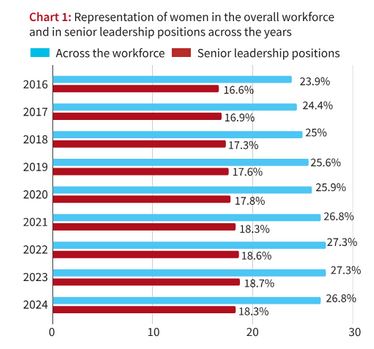
    Although women’s representation in the workforce has grown over the years “LinkedIn’s Economic Graph data”  indicates that progress has stalled since 2022 and declined in 2024.

    What does the data show?

    • Representation of women in the workforce has increased over the years but progress has stalled since 2022 and declined in 2024. The promotion of women to senior and leadership roles has stagnated in recent years.
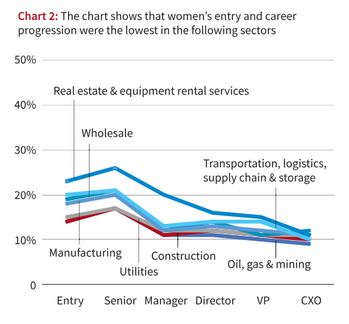
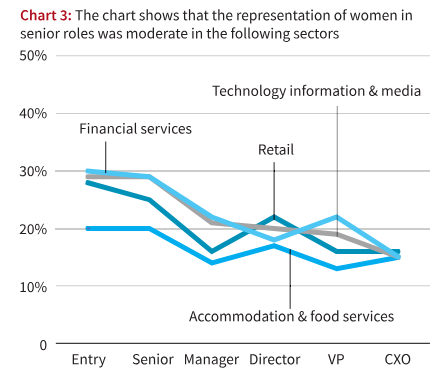
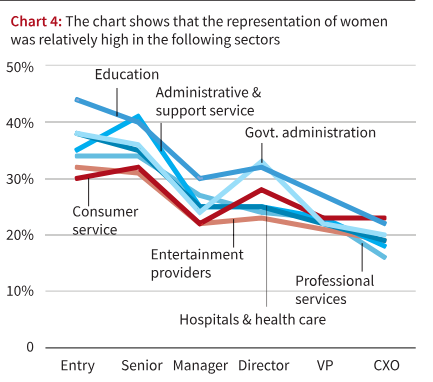
    • Sectors like healthcare, education, administrative, and support services have higher female representation in senior positions, while sectors like manufacturing, construction, oil, and gas have poor representation.

    Representation of women in the overall workforce and in senior positions 

    Entry and career progression of women  


    • Oil, Gas, and Mining: Among the lowest representation of women in leadership roles, at around 11%.
    • Construction: Very few women are represented, especially in senior roles.
    • Utilities: Women face significant barriers in advancing to leadership positions.
    • Wholesale: Low entry and career progression for women.
    • Manufacturing: Poor representation of women across all positions, including senior roles.
    • Transportation: Limited career progression opportunities for women.
    • Real Estate: Few women in leadership positions, with significant entry barriers.

    About the accommodation and other services  

    • Representation of women in senior roles within the accommodation and food services sector falls between 15% and 20%.
    • This sector exhibits a moderate level of female representation compared to other industries.
    • While not the highest, it surpasses sectors like oil, gas, mining, construction, utilities, wholesale, manufacturing, transportation, and real estate, where women hold just 11%-14% of leadership positions.
    • The data suggests there’s still room for improvement in increasing the number of women in leadership roles within the accommodation and food services sector.
    • Efforts to improve gender diversity and inclusion should be continued and perhaps intensified in this sector, aligning with broader industry and societal goals for gender parity in the workforce.

    Administrative and support services:

    • Women hold senior positions in administrative and support services at a rate of 22% to 30%, indicating a moderate level of representation compared to other sectors.
    • This sector demonstrates a higher level of female representation in leadership roles compared to industries like oil, gas, mining, construction, utilities, wholesale, manufacturing, transportation, and real estate, where women’s leadership roles range from 11% to 14%.
    • The education sector boasts the highest representation of women in senior positions at 30%, suggesting that sectors like administrative and support services still have room for improvement.
    • Efforts to promote gender diversity and inclusion within administrative and support services should be sustained, aiming for further increases in the representation of women in leadership roles.
    • Continued focus on addressing biases, societal norms, and structural barriers is essential to achieving greater gender parity and advancement opportunities for women within this sector.

    Way Forward

    • Efforts by policymakers and business leaders are needed to tackle challenges faced by women in reaching leadership roles, focusing on “women-led development”.
    • Stricter enforcement of laws such as the Companies Act, 2013, which mandates women directors on company boards. Between April 2018 and December 2023, 507 companies were fined for non-compliance, with 90% being listed companies.

    Mains PYQ 

    Q Micro-Finance as an anti-poverty vaccine, is aimed at asset creation and income security of the rural poor in India”. Evaluate the role of the Self Help Groups in achieving the twin objectives of empowering women in rural India. (UPSC IAS/2020)

  • [3 June 2024] The Hindu Op-ed: The message from the Andhra Pradesh bifurcation

    [3 June 2024] The Hindu Op-ed: The message from the Andhra Pradesh bifurcation

    PYQ Relevance:

    Mains: 
    Q) The political and administrative reorganization of states and territories has been a continuous ongoing process since the mid-nineteenth century. Discuss with examples. (UPSC CSE 2022)
    Q) In the context of the diversity of India, can it be said that the regions form cultural units rather than the states? Give reasons with examples for your viewpoint. (UPSC CSE 2017)

    Note4Students: 

    Prelims: State Reorganization Acts; 

    Mains: Governance Issues; Regional Disparities; State Reorganization; 

    Mentor comment: In India, the phenomenon of ‘Regional Disparity’ has been a persistent challenge since independence, with some regions experiencing rapid growth while others lag. These disparities manifest in various forms, such as differences in culture and language, per capita income, access to infrastructure development. The same case evolved in 1956 in the form of ‘state reorganization’ on the linguistic lines. Andhra Pradesh was the first state in India after independence to be formed on a linguistic basis. However, after 2014 bifurcation of Andhra Pradesh into – Andhra Pradesh and Telangana created new governance and political doubts in the minds of policy makers. The question is now whether the organization of states should be on a linguistic basis or an administrative basis.

    The bifurcation of Andhra Pradesh which took during 2014 has led to a significant decline in nostalgia (the pain from an old wound) for the shared history of the two regions. People from both sides are now moving on, with little emotional attachment to their past unity.

    Let’s learn.

    Why in the News?

    On June 2, 2024, 10 years will be completed for the bifurcation of Andhra Pradesh and Telangana. At the 10th year, Hyderabad ceases to be the common capital of Andhra Pradesh and Telangana.

    • However, several critical issues related to various corporations and common institutions between residuary Andhra Pradesh and the new state of Telangana still need to be solved.

    About the AP Reorganization Act of 2014:

    • The Andhra Pradesh Reorganisation Bill, 2014 was introduced in Lok Sabha on February 13, 2014, by the Minister for Home Affairs, Mr. Sushil Kumar Shinde.
    • The Bill also proposes consequential amendments to The Representation of the People Act, 1950, the Delimitation of Parliamentary and Assembly Constituencies Order, 2008, and the First and Fourth schedule of the Constitution of India.
    What were the provisions led under the APR Act, of 2014?

    Formation of Telangana: The Bill carves out a separate state called ‘Telangana’ comprising 10 districts of the existing state of ‘Andhra Pradesh’.
    Andhra Pradesh and Telangana will have a common capital, Hyderabad, for 10 years.  After this period, Hyderabad shall be the capital of Telangana only. 

    Role of Governor: The Governor of the existing state of Andhra Pradesh shall be the common Governor for both states for a period determined by the President.  
    As part of the administration, he shall be responsible for (i) security of life, liberty, and property, (ii) law and order, (iii) internal security, (iv) security of vital installations, and (v) management and allocation of government buildings.

    Representation in Parliament: After the bifurcation, Andhra Pradesh will have 11 seats in Rajya Sabha, and Telangana will have 7.  In Lok Sabha, Andhra Pradesh will have 25 seats and Telangana will have 17 seats.

    Representation in the Legislative Assembly and Council: 
    The total number of seats in the Legislative Assembly for Andhra Pradesh will be 175, and for Telangana will be 119.  
    Further, the Governor may nominate one member each, from the
    Anglo-Indian community to the LAs of the successor states.  The Legislative Council (L.C.) of Andhra Pradesh will have a maximum of 50 members, and Telangana, 40 members.

    High Court: The High Court at Hyderabad shall be the common High Court for the successor states for some time.  Following this, it shall become the High Court for the state of Telangana, and Andhra Pradesh shall get a new High Court. 

    Revenue Distribution: The resources allocated by the 13th Finance Commission to the existing state of Andhra Pradesh will be apportioned between the two successor states based on population ratio and other parameters.  

    Treasury and bank balances: The cash and credit balances of the existing state of Andhra Pradesh will be divided between the two successor states based on population ratio by adjusting the credit balances of the two states in the books of the Reserve Bank of India.

    Polavaram Irrigation Project: The central government will execute the irrigation project in consultation with the governments of Andhra Pradesh and Telangana.

    Centre’s assistance for police forces: The central government will assist the two successor states in raising additional police forces.  
    The Greyhound and OCTOPUS forces of the existing state of Andhra Pradesh shall be re-distributed between the two successor states.  

    The Message from the Andhra Pradesh Bifurcation:

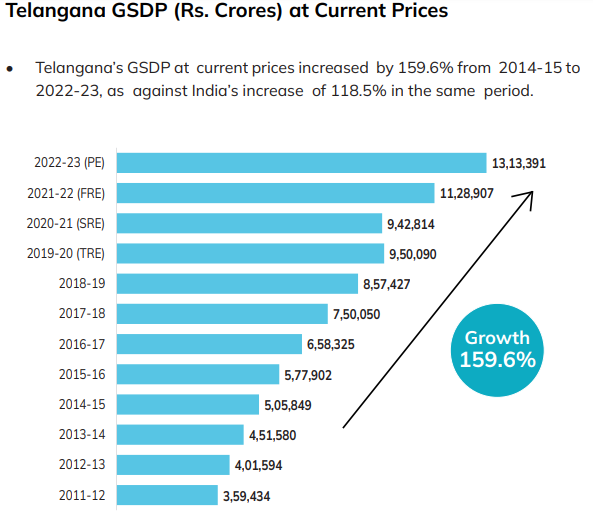
    • Regional Economic Disparities (Economic): The economic disparities between the two regions have not been bridged, with Telangana outperforming Andhra Pradesh in terms of per capita GSDP. This gap has remained relatively constant over the years.
      • Urban centers and their surrounding districts are contributing a larger chunk of state revenues, while the agricultural-based regions’ share is negligible.
      • However, the GCRs (Gini Coefficient Ratio) decreased in sectoral district domestic production for all three sectors (Agriculture, industry, and services). The Gini coefficient is often used to measure income inequality.
    • Question on Regional Fault Lines (Administrative): The bifurcation of Andhra Pradesh has exposed regional fault lines, including political, historical, and lifestyle differences.
      • The two regions were under different political authorities for 150 years. During the late medievals, the Nizam gave away the ‘coastal’ and the ‘ceded’ districts (Rayalaseema district) to the European powers. 
      • They were ruled from Golconda and Hyderabad for a long time. However, after the independence, they were together after 1956 (the creation of the first state on a linguistic basis).
      • Such parting of ways has not yet happened with the Kannada-speaking area of the Nizam’s Hyderabad State, nor did it happen as yet with its Marathi-speaking area. 
      • Therefore, the question arises, of unity based on language being frailer compared to those of the shared visions of Kannada and Marathi elites.

    Challenges around the Federal and Future Scope:

    • Future of Centre-State Relations: The distribution of political power in the central legislature could become a point of friction among states, particularly if there are changes in delimitation that favor certain regions.
      • Andhra Pradesh had 42 Lok Sabha seats and was the largest State in south India. But now, with a mere 25 seats, it is smaller than Tamil Nadu which has 39 seats, and Karnataka which has 28 seats. Telangana, with 17 seats, is smaller than Kerala, thus becoming fifth in the pecking order in the south. 
      • In our federal structure, numbers do matter but grossly unequal sizes among the units can render some regions irrelevant and others more relevant in deciding who holds power at the Centre. This may result in undesirable strains in the federal structure of our Republic.
    • Future of Linguistic States: Andhra Pradesh, in its first five years after the division, got bogged down in its attempt to build for itself as a ‘world-class’ capital, that would overcome the loss of Hyderabad. The next five years were consumed by profligate Direct Benefit Transfer (DBT) welfarism.
      • Therefore, the Indian Republic may need to look for alternative organizing principles, such as size or population.

    Conclusion: The government needs to underscore the importance of federalism in addressing regional disparities and promoting more inclusive governance. The experience of Andhra Pradesh bifurcation offers valuable lessons for policymakers, highlighting the need to address regional disparities and adapt governance structures to changing regional dynamics.

    https://www.thehindu.com/opinion/lead/the-message-from-the-andhra-pradesh-bifurcation/article68243934.ece

    https://oar.icrisat.org/6224/1/Local_Economy_1-13_2012.pdf

    https://prsindia.org/billtrack/the-andhra-pradesh-reorganisation-bill-2014-telangana

  • What Grade of Coal does India Produce?

    Why in the News?

    • A report by the Organized Crime and Corruption Reporting Project suggests Adani Group claimed ‘low grade’ coal imported from Indonesia to be ‘high quality’ coal.
      • They inflated its value and sold it to Tamil Nadu’s power generation company, TANGEDCO (Tamil Nadu Generation and Distribution Company).

    Coal Gradation in India

    • These terms are relative and depend on the coal’s Gross Calorific Value (GCV denoted in kilo-calories per kg), which indicates its energy generation potential. Higher GCV denotes better quality coal.
    1. High-Grade (GCV > 7,000 kcal/kg) to
    2. Low-Grade (GCV 2,200-2,500 kcal/kg).
    • Overall there are 17 grades of coal according to the Coal Ministry‘s classification.

    Characteristics of Indian Coal:

    • Historically, Indian coal is high in ash content and low in calorific value compared to imports.
    • Higher ash content leads to increased emissions of particulate matter and pollutants.

    Clean Coal Technologies:

    • Coal Washing: On-site processes such as coal washing are employed to reduce ash and moisture content, thereby improving energy efficiency and reducing environmental impact.
    • Coal Gasification:
      • Another approach is coal gasification, where coal is converted into syngas through an integrated gasification combined cycle (IGCC).
      • This process enhances efficiency and reduces emissions compared to traditional coal-burning methods.
      • Coal gasification produces a mixture of gases known as syngas, primarily composed of carbon monoxide (CO), hydrogen (H2), and carbon dioxide (CO2).
      • Other gases present in syngas can include methane (CH4) and water vapor (H2O).

    Coal Reserves in India

    • India boasts the fourth-largest coal reserves globally, totaling nearly 319.02 billion tonnes.
    • Geological Distribution: These reserves are primarily located in:
    1. Older Gondwana Formations: in Peninsular India, about 250 million years old.
    2. Younger Tertiary Formations: in the North-Eastern region, 15 to 60 million years old.
    • Gondwana coal constitutes 99% of India’s coal production.
    • The top 5 States in terms of total coal reserves in India are: Jharkhand > Odisha > Chhattisgarh > West Bengal > Madhya Pradesh.
    • Types of Coal found:
      • Anthracite: This highest-grade coal contains 80-95% carbon and is found in smaller quantities in regions of Jammu and Kashmir.
      • Bituminous: A medium-grade coal with 60 to 80% carbon content, it is abundant in Jharkhand, Odisha, West Bengal, Chhattisgarh, and Madhya Pradesh.
      • Lignite: The lowest-grade coal, with 40 to 55% carbon content, is found in regions of Rajasthan, Tamil Nadu, and Jammu & Kashmir.

    Status of Coal in India

    • In the fiscal year 2023-24, India’s coal production peaked at 997 million tonnes, primarily sourced from state-owned Coal India Ltd and its subsidiaries. Coking coal accounted for 58 million tonnes.
    • During the first quarter of 2024, renewable energy constituted 71.5% of India’s unprecedented 13.6 GW power generation capacity addition, signalling a notable departure from reliance on coal.

    Coal Import Trends:

      • Reduction in Share: The share of coal imports in India’s total coal consumption decreased to 21% from April 2023 to January 2024, down from 22.48% in the corresponding period of the previous year.
      • Blending and Power Plant Imports: While there was a significant reduction of 36.69% in coal imports for blending by thermal power plants, imports by coal-based power plants surged by 94.21% during the same period.
    • Reasons for Coal Imports:
      • Quality Constraints: The scarcity of good quality coking coal, essential for steelmaking, necessitates coal imports to meet industrial demands.
      • Rising Energy Demand: Coal remains a vital component of India’s energy mix, prompting the need for imports to fulfil growing energy requirements.
      • Infrastructure Challenges: Challenges such as geological constraints, land acquisition issues, and environmental regulations impede domestic coal production
      • Quality and Cost Considerations: Importing coal can offer cost advantages and access to better-quality coal compared to domestic sources

    PYQ:

    [2020] Consider the following statements:

    1. Coal ash contains arsenic, lead and mercury.
    2. Coal-fired power plants release sulphur dioxide and oxides of nitrogen into the environment
    3. High ash content is observed in Indian coal.

    Which of the statements given above is/ are correct?

    (a) 1 only

    (b) 2 and 3 only

    (c) 3 only

    (d) 1, 2 and 3

  • Protecting Mangroves in Tamil Nadu 

    Why in the News?

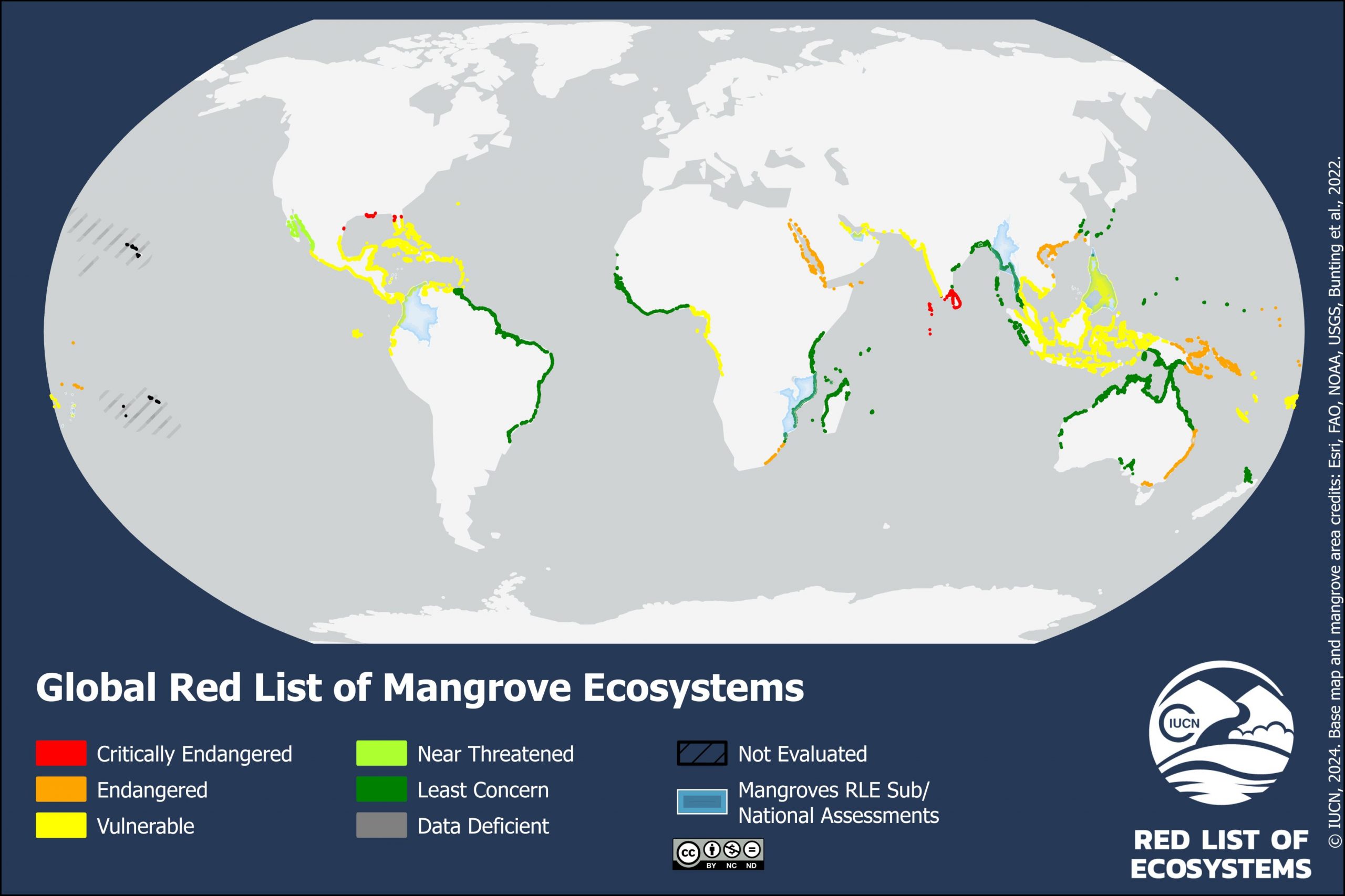
    The International Union for Nature Conservation (IUCN) has listed mangroves in coastal regions spanning Tamil Nadu, Sri Lanka and Maldives as ‘critically endangered’ in its first global assessment of mangrove ecosystems.

    Red List of Mangrove Ecosystems: Study by IUCN

    • Global assessment reveals a 50% risk of mangrove ecosystem collapse. Without further conservation, by 2050, 7,065 sq km more mangroves will be lost, and 23,672 sq km submerged.

    If we let this happen, the world is at risk of losing:  

    • 1.8B tonnes of carbon stored, costing society $336B (based on the social cost of carbon). Protects 2.1M lives and $36B worth of property from coastal flooding..

    Sea-level rise is the main threat affecting mangrove ecosystems. 

    • 25% of the global mangrove area is predicted to be submerged in the next 50 Years.
    • 1/3 of the world’s mangrove ecosystem provinces will be severely affected by sea-level rise.

    Tamil Nadu’s Efforts for Mangroves Conservation

    • The Tamil Nadu Forest Department has doubled mangrove cover from 23 sq km in 2001 to 45 sq km in 2021, as per the Indian State of Forest Report.
    • Mangrove restoration projects have been undertaken across Nagapattinam, Thiruvarur, Cuddalore, Pudukottai, Ramanathapuram, Thiruvallur, and Villupuram districts, with plans for an additional 15 sq km restoration under the Tamil Nadu Coastal Restoration Mission funded by the World Bank.

    TN-SHORE: World Bank-funded Coastal Restoration Mission

    • Tamil Nadu’s TN-SHORE initiative, launched in January 2024, aims to address environmental challenges along the coastline. With Rs 1,675 crore funding, including 70% from the World Bank, it focuses on blue carbon sequestration.

    Back2Basics: Mangroves

    • Mangroves constitute a group of trees and shrubs inhabiting the coastal intertidal zone.
    • They are found globally in tropical and subtropical regions, typically between latitudes 25° N and 25° S.
    • Mangroves are predominantly located in tropical regions due to their intolerance to the extreme cold conditions prevalent in temperate zones.

    Features of Mangroves:

    • Adaptation to waterlogged and anoxic soil: Mangroves possess unique characteristics allowing them to survive in waterlogged and oxygen-deficient environments.
    • Halophytes: Mangrove species have the ability to filter out up to 90% of the salt from seawater as it enters their roots, with some species also excreting salt through glands in their leaves.
    • Water retention capacity: Thick succulent leaves store fresh water, while a waxy coating on some species’ leaves minimizes evaporation.
    • Pneumatophores: Certain mangroves develop pencil-like roots that emerge from the ground to absorb oxygen from the air, aiding in coping with tidal flooding.
    • Prop roots: Many mangrove trees possess dense aerial roots descending from their trunks and branches, which stabilize and support them against waves and tides.
    • Lenticellated bark: Oxygen enters mangroves through lenticels, small breathing pores in the bark and roots, enabling them to adapt to low oxygen conditions.
    • Viviparity: Seed pods germinate while still on the tree, facilitating immediate root growth upon dropping.

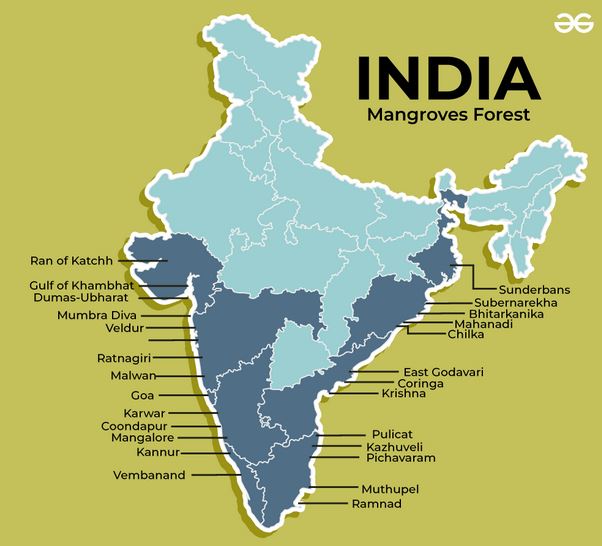
    Mangroves in India:

    • According to the India State of Forest Report 2021, mangrove cover in India comprises 0.15% of the country’s total geographical area.
    • West Bengal has the highest percentage of area under total mangrove cover among states and union territories, followed by Gujarat and the Andaman and Nicobar Islands.
    • The Sundarbans, characterized by the dominant mangrove species sundari (Heritiera fomes), is the largest continuous mangrove forest globally.
    • Various mangrove areas in India are protected within reserves and sanctuaries such as the Sundarbans Tiger Reserve, Bhitarkanika, Coringa, Nelapattu, Point Calimere Wildlife Sanctuaries, Pirotan National Park, among others.


    PYQ:

    [2011] The 2004 Tsunami made people realize that mangroves can serve as a reliable safety hedge against coastal calamities. How do mangroves function as a safety hedge?

    (a) The mangrove swamps separate the human settlements from the sea by a wide zone in which people neither live nor venture out

    (b) The mangroves provide both food and medicines which people are in need of after any natural disaster

    (c) The mangrove trees are tall with dense canopies and serve as an excellent shelter during a cyclone or tsunami

    (d) The mangrove trees do not get uprooted by storms and tides because of their extensive roots.

  • Sundhnuksgigar Volcano erupts in Iceland

    Why in the News?

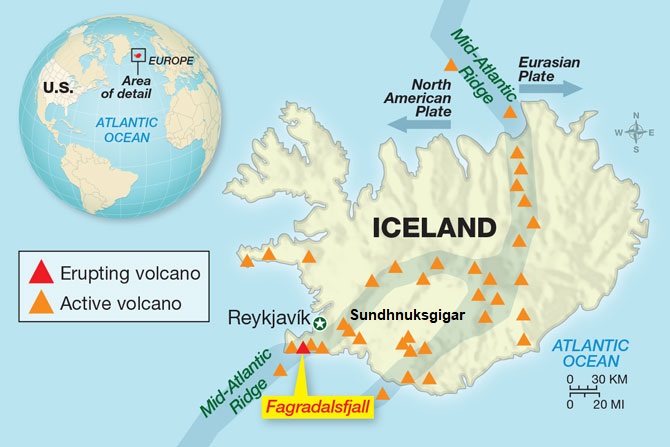
    Southwest Iceland witnessed the eruption of the Sundhnuksgigar volcano, triggering evacuations in the nearby areas.

    About Sundhnuksgigar Volcano 

    • Sundhnuksgigar is a row of craters just outside the town of Grindavik on the Reykjanes peninsula
    • It is situated on the Mid-Atlantic Ridge, a divergent boundary where the Eurasian and North American tectonic plates are moving apart.

    What is a Volcano?

    • A volcano is a fissure or vent in the Earth’s crust through which gases, molten rock materials (lava), ash, steam, sulphur dioxide etc., are expelled during an eruption.
    • These openings occur where the rock layers in the Earth’s crust are relatively weak.
    • Volcanic activity is categorized as an endogenic process, originating from within the Earth.
    • Depending on the explosivity of the volcano, various extrusive and intrusive landforms can be formed.

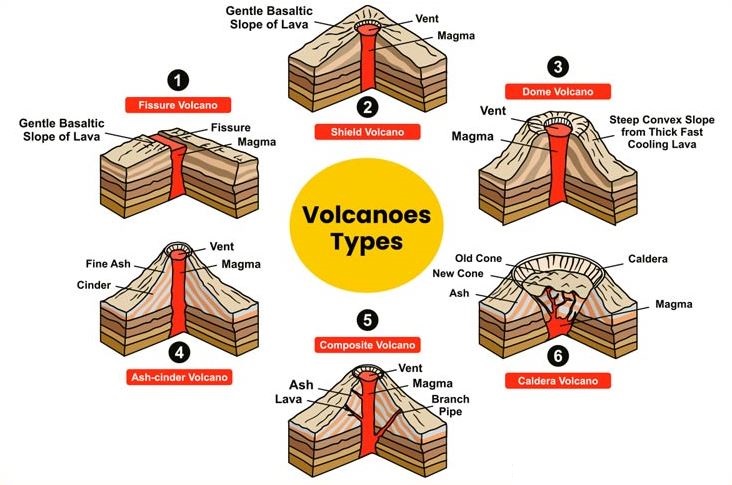
    Different types of volcanoes can be classified based on the frequency of eruption and the nature of the eruption:

    1.   Frequency of eruption:

    • Active volcanoes: Frequent eruptions in Pacific Ring of Fire: New Zealand, Southeast Asia, Japan, western Americas. Linked to plate tectonics, like Kilauea and Santa Maria. High seismicity, volcanic activity.
    • Dormant Volcanoes: These are not currently erupting but have the potential to erupt again in the future. An example is Mount Kilimanjaro in Tanzania, the highest mountain in Africa.
    • Extinct or inactive volcanoes: These have not erupted in the distant geological past. Dhinodhar Hill in Gujarat is an example.

    2.   Nature of Eruption:

    • Shield Volcanoes: Largest and least explosive volcanoes, formed from basalt lava. Often low in explosivity, except when water interacts. Hawaiian volcanoes exemplify this..
    • Composite Volcanoes: Volcanoes with cooler, thicker lava, built up through explosive eruptions. Layer ash, pyroclastic material, and lava flow. Examples: Mayon, Fuji, Rainier.
    • Calderas: The most explosive volcanoes, prone to collapsing inward during eruptions rather than building upwards. The resulting depressions are called calderas.
    • Flood Basalt Provinces: These volcanoes erupt highly fluid lava that travels long distances, covering vast areas with thick basalt flows.

    Reasons for Iceland’s Volcanism

    • Tectonic Activity: Iceland is situated on the Mid-Atlantic Ridge, where the Eurasian and North American plates diverge. This creates volcanic rift zones where magma rises to the surface, leading to eruptions.
    • Hotspots: Additionally, Iceland is positioned over a hotspot, contributing to heightened volcanic activity. Hotspots are areas where magma from the mantle rises towards the surface, fueling eruptions.
    • Subglacial Volcanism: Iceland’s volcanic activity is not limited to the surface; some eruptions occur beneath glaciers, leading to explosive interactions between lava and ice. These subglacial eruptions can produce powerful steam explosions, ash clouds, and catastrophic floods known as jokulhlaup.

    PYQ:

    [2021] Mention the global occurrence of volcanic eruptions in 2021 and their impact on the regional environment.

    [2013] Consider the following:

    1. Electromagnetic radiation
    2. Geothermal energy
    3. Gravitational force
    4. Plate movements
    5. Rotation of the earth
    6. Revolution of the earth

    Which of the above are responsible for bringing dynamic changes on the surface of the earth?

    (a) 1, 2, 3 and 4 only

    (b) 1, 3, 5 and 6 only

    (c) 2, 4, 5 and 6 only

    (d) 1, 2, 3, 4, 5 and 6

  • Galaxy JADES-GS-z14-0: Insights from NASA’s James Webb Space Telescope

    Why in the News? 

    The James Webb Space Telescope (JWST), launched by NASA, has unveiled a groundbreaking find It has captured imagery of the universe’s earliest-known galaxy, revealing unexpected brightness and size given its formation during the universe’s infancy.

    James Webb Space Telescope (JWST)

    • JWST is a joint venture between NASA, the European Space Agency (ESA) and the Canadian Space Agency (CSA) launched in December 2021.
    • It is an orbiting infrared observatory that will complement and extend the discoveries of the Hubble Space Telescope, with longer wavelength coverage and greatly improved sensitivity.
    • Webb was formerly known as the “Next Generation Space Telescope” (NGST) and it was renamed in 2002 after a former NASA administrator, James Webb.
    • It will be a large infrared telescope with an approximately 6.5-meter primary mirror.
    • JWST is positioned at the Earth-Sun L2 Lagrange point, 5 million km away.
    • It consists of a mirror, spanning 6.5 meters in diameter compared to Hubble’s 2.4 meters, as well as its specialized instruments optimized for infrared observations.

    Key Objectives:

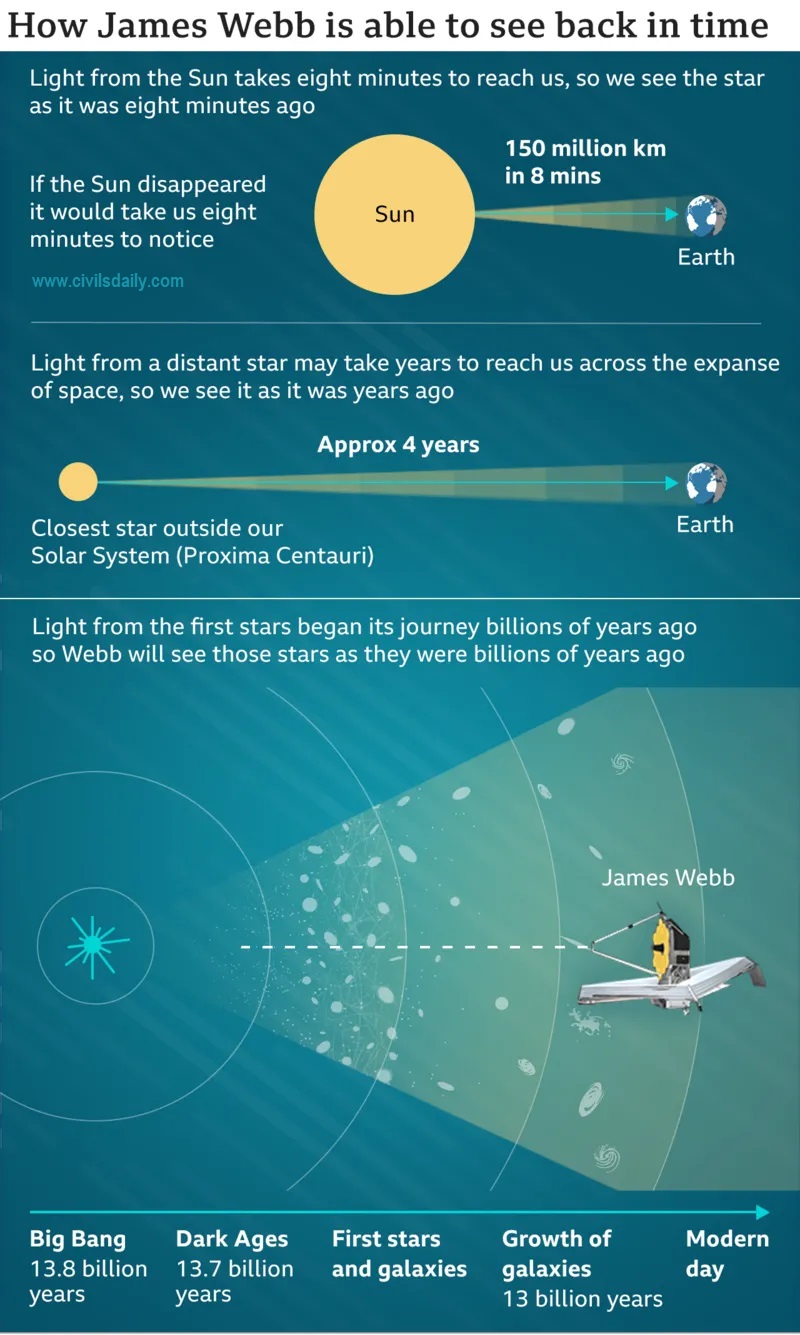
    • JWST observes deeper into the universe than Hubble.
    • Observes celestial objects from earlier epochs.
    • Enables the detection of light from the universe’s earliest stars, dating back over 13.5 billion years.

    About JADES-GS-z14-0 Galaxy 

    • Named JADES-GS-z14-0, this galaxy was formed approximately 290 million years after the Big Bang.
    • Spanning about 1,700 light-years across, it consists of a mass equivalent to 500 million stars akin to our Sun.
    • Despite its ancient age, the galaxy is actively generating stars at a rapid pace, producing around 20 new stars annually.

    Scientific Insights:

    • Historical Context: Previously, the earliest-known galaxy was dated to approximately 320 million years post-Big Bang, indicating the significance of this new discovery.
    • Luminosity Theories: While hypotheses suggest various explanations for the galaxy’s luminosity, including supermassive black holes or unusually bright stars, further research is required to validate these theories.

    PYQ:

    [2012] Which of the following is/are cited by the scientists as evidence/evidence for the continued expansion of the universe?

    1. Detection of microwaves in space
    2. Observation of redshift phenomenon in space
    3. Movement of asteroids in space
    4. Occurrence of supernova explosions in space

    Select the correct answer using the codes given below:

    (a) 1 and 2

    (b) 2 only

    (c) 1, 3 and 4

    (d) None of the above can be cited as evidence

  • PYQ Based Dominate Prelims Open Test 3.0 – Online/Offline

    PYQ Based Dominate Prelims Open Test 3.0 – Online/Offline

    Top 50 will get FREE access to Dominate Prelims Test Series + Discount on Smash Mains Program!

    Register for the Test

    Open Test Date – 8th June (Saturday)

    Test Timings

    • GS 1 – 9:30 – 11:30 AM
    • CSAT – 2:30 – 4:30 PM
    • DISCUSSION – 5:00 – 6:30 PM

    Both Online Mode and Offline Mode (Delhi ORN Centre and Pune Centre)

    Our open tests have the highest hit ratios because we follow 2 simple principles, 5 categories, and 80 themes.

    1. 4 categories of questions

    The actual UPSC prelims paper can be said to follow broadly 5 categories – 1.⁠ ⁠Core, 2.⁠ ⁠Non-core, 3.⁠ ⁠Logical, 4.⁠ ⁠Ultra-hard (Skippable). We are aligning very closely with this distribution. 

    1.⁠ ⁠Core: These questions are from core sources like standard books, monthly magazines, and Atomic Notes. You are expected to answer ALL of these questions correctly.

    [2023] Consider the following organizations/ bodies in India:

    1.⁠ ⁠The National Commission for Backward Classes

    2.  The National Human Rights Commission

    3.  The National Law Commissions

    4.  The National Consumer Disputes Redressal CommissionHow many of the above are constitutional bodies?

    (a) Only one

    (b) Only two

    (c) Only three

    (d) All four

    2.⁠ ⁠Non-core: These questions are 1 level above what is present in core sources. E.g. Political Parties during the freedom movement, Ancient Medieval terms, and terms around Buddhism Jainism.  

    [2023] Consider the following statements:

    1.⁠ ⁠India has more arable area than China.

    2.⁠ ⁠The proportion of irrigated area is more in India as compared to China.

    3.⁠ ⁠The average productivity per hectare in Indian agriculture is higher than that in China.

    How many of the above statements are correct?

    (a) Only one

    (b) Only two

    (c)  All three

    (d) None

    3.⁠ ⁠Logical: Not solvable by knowledge alone but through logical approach. 

    [2023] Consider the following statements:

    1.⁠ ⁠Some mushrooms have medicinal properties.

    2.⁠ ⁠Some mushrooms have psychoactive properties

    3.⁠ ⁠Some mushrooms have insecticidal properties

    4.⁠ ⁠Some mushrooms have bioluminescent properties.

    How many of the above statements are correct?

    (a) Only one

    (b) Only two

    (c) Only three

    (d) All four

    4.⁠ ⁠Ultra-hard (Skippable): Needs to be skipped (if attempted by student, it’s a case of over-attempt. Because knowing what not to attempt is as important as knowing what to attempt. 

    [2023] Consider the following fauna:

    1.⁠ ⁠Lion-tailed Macaque

    2.⁠ ⁠Malabar Civet

    3.⁠ ⁠Sambar Deer

    How many of the above are generally nocturnal or most active after sunset?

    (a)  Only one

    (b) Only two

    (c)  All three

    (d) None

    2. 80 most repeated UPSC themes 

    We are being very precise. We won’t ask you a broad question on Species. 

    When it comes to high-profile species like tigers, elephants, and other critically endangered species, UPSC is asking for conservation efforts or behavioural patterns. We will ask you something similar. We are this detail-oriented. 

    This is true for all subjects. For instance, in Economics, detailed questions on inflation, bonds, differentiated banks, etc. are more difficult. 

    We have 80 detailed themes and our questions will be framed on similar lines. 

    [CSP2017]Q. The term ‘M-STrIPES’ is sometimes seen in the news in the context of

    (a)Captive breeding of Wild Fauna

    (b)Maintenance of Tiger Reserves

    (c)Indigenous Satellite Navigation System

    (d)Security of National Highways

    [CSP2020]Q. Among the following Tiger Reserves, which one has the largest area under “Critical Tiger Habitat”?

    (a) Corbett

    (b) Ranthambore

    (c) Nagarjunsagar-Srisailam

    (d) Sunderbans

    [CSP2021]Q. With reference to Indian elephants, consider the following statements:

    1.The leader of an elephant group is a female.

    2.The maximum gestation period can be 22 months.

    3.An elephant can normally go on calving till the age of 40 years only.

    4.Among the States in India, the highest elephant population is in Kerala.

    Which of the statements given above is/are correct?

    (a) 1 and 2 only

    (b) 2 and 4 only

    (c) 3 only

    (d) 1, 3 and 4 only

    Bonus – Top 50 will get FREE access to Dominate Prelims Test Series + Discount on Smash Mains Program!

    Register for the Test

  • [UPSC Topper Open House ’25/26] Prep Strategy for UPSC 2025 – Prelims till Interview

    [UPSC Topper Open House ’25/26] Prep Strategy for UPSC 2025 – Prelims till Interview

    Begin your UPSC Prep for 2025 by Guidance from Wardah Khan (IFS, AIR 18). It is an Open House event with Wardah as the our special guest to help new UPSC Aspirants with a Complete Preparation Strategy for UPSC 2025 – Prelims till Interview.

    Join FREE Seminar on 3rd June, 2:30 pm

    We are thrilled to have Wardha Khan (AIR 18) at Civilsdaily Delhi HQ.

    She will be taking a session on a Comprehensive UPSC Strategy for 2025 Aspirants (Prelims till Interview).

    About Wardha

    Originally from Prayagraj, Wardha’s educational journey began in her hometown, but later shifted to Noida.

    Despite numerous challenges (including failing the first attempt due to CSAT), she continued her education. She completed her schooling up to Class 10 and then pursued commerce. For her undergraduate studies, Wardha enrolled at Delhi University.

    Initially motivated by a desire to contribute to her family’s financial stability, Wardha took up a corporate job. However, her aspiration to serve the nation through civil services led her to leave her job and fully dedicate herself to UPSC exam preparation.

    Wardha’s journey is a testament to her resilience, determination, and the unwavering support from her mother. Her success story is truly inspiring.

    Read what Wardah has to say about her way of preparation:

    “Hi, I am Wardah Khan, and I have secured AIR 18 this year. The reason why I will be taking this Seminar is I don’t want serious aspirants to commit the same mistakes that I did.

    While I was good in GS Paper (Prelims) in my first attempt, I flunked CSAT. It was tough, but I promised myself that I will come back stronger, and fortune favoured me this time.

    Throughout my preparation journey, I relied heavily on Online Medium for preparation, and used PYQs extensively. This was the X-factor in this attempt, and I am sure that while you may have your way of preparation, preparing through PYQs is something which will act as a differentiator.

    Join me Offline at Civilsdaily Delhi HQ, where I will be sharing a Step-by-Step preparation strategy from Prelims till the Interview, & share methodologies I used to clear this exam.”

    Discuss Notes Making, Answer Writing, & PYQs based preparation with her.

    Join Wardah OFFLINE at our Delhi Centre (3rd June, 2:30 PM)

    Hurry Up! We are allowing only 50 students for the Offline Seminar so you need to book the seats!

    Why Attend?

    1. Tailored for UPSC Prep Beginners: Our strategies are designed to help you with an effective headstart.
    2. Mentor Guidance: Get tips from experienced civil services mentors.
    3. Interactive Session: Ask questions and get real-time answers to your queries.

    Not sure yet?

    We recommend you register here. It takes less than 10 seconds to register.

    • No spam! Once in a while, we’ll only send you high-quality exam-related content. 
    • We will inform you about the upcoming Masterclasses that might benefit you.
    • You can demand one free mentorship call from verified Civilsdaily mentors. 
    • You can always choose to unsubscribe. 
  • Andhra’s Koya tribe faces brewing conflict over sacred Mahua flower

    Why in the news?

    The Koya tribe in Andhra Pradesh is facing a cultural crisis due to stricter liquor regulations enforced by the Special Enforcement Bureau (SEB).

    About Koya tribe 

    • Koya are one of the few multi-racial and multi-lingual tribal communities in India.
    • They live in the forests, plains, and valleys on both sides of the Godavari River which lies in Andhra Pradesh. Many also live in the states of Madhya Pradesh and Orissa.
    • They believe their main deity still resides in a cave in the Bastar region.

    Cultural Crisis (Disruption of Traditions):

    • Mahua liquor is brewed from the flowers of the Mahua tree which is integral to Koya cultural and religious ceremonies including naming ceremonies, weddings, and death anniversaries.
    • Police raids and seizures of Mahua liquor disrupt these traditions causing cultural shocks within the community. For example, recently the naming ceremony of Madakam Janakamma’s child was held without Mahua liquor due to SEB raids.

    Tribal Rights (Legal Challenges and Rights):

    • The Andhra Pradesh Prohibition Act, 1995, does not exempt the Koya tribe from brewing and storing Mahua liquor, despite its cultural significance.
    • The Panchayat (Extension to Scheduled Areas) Act (PESA), 1996 empowers the gram sabha to protect tribal traditions and culture but its implementation is questionable as SEB raids continue unabated.
    • Koya villagers are often coerced into paying bribes to avoid legal charges, highlighting the tension between law enforcement and tribal rights.

    Impact on Collection(Economic Consequences):

    • Many Koya households have ceased Mahua flower collection due to fear of police raids, significantly affecting their primary source of income.
    • Destruction of freshly collected flowers during raids further disincentivizes collection, reducing the supply of Mahua flowers to weekly markets (shandies) where they are exchanged for essential goods.

    Guardians of Culture (Preservation of Heritage):

    • The Koya tribe, especially those not displaced by the Polavaram irrigation project, are seen as custodians of their culture. However, displacement and integration with non-tribal communities threaten their cultural identity.
    • Local leaders and activists argue for the need to empower Koya women with training in producing value-added products from Mahua flowers, rather than undermining their traditional practices and economic activities.

    Legal and Policy Measures

    • Amend the Andhra Pradesh Prohibition Act, 1995: Introduce exemptions or special provisions that recognize and protect the traditional brewing and usage of Mahua liquor for cultural and religious purposes by the Koya tribe.
    • Strengthen Implementation of PESA Act: Ensure that the Panchayat (Extension to Scheduled Areas) Act (PESA), 1996, is fully implemented. Empower Gram Sabhas to have a greater say in protecting tribal traditions, including the brewing of Mahua liquor.

    Conclusion: The enforcement actions by the SEB, while aimed at regulating liquor, pose a significant threat to the Koya tribe’s cultural heritage and economic well-being. Balancing legal regulations with respect for tribal traditions and rights is crucial to preserving the Koya way of life.

    Mains PYQ:

    Q What are the two major legal initiatives by state since Independence, addressing discrimination against Scheduled Tribes (ST) ? (UPSC IAS/2017)

  • 38% Indians consume fried snacks and processed foods, only 28% consume healthy food

    Why in the news?

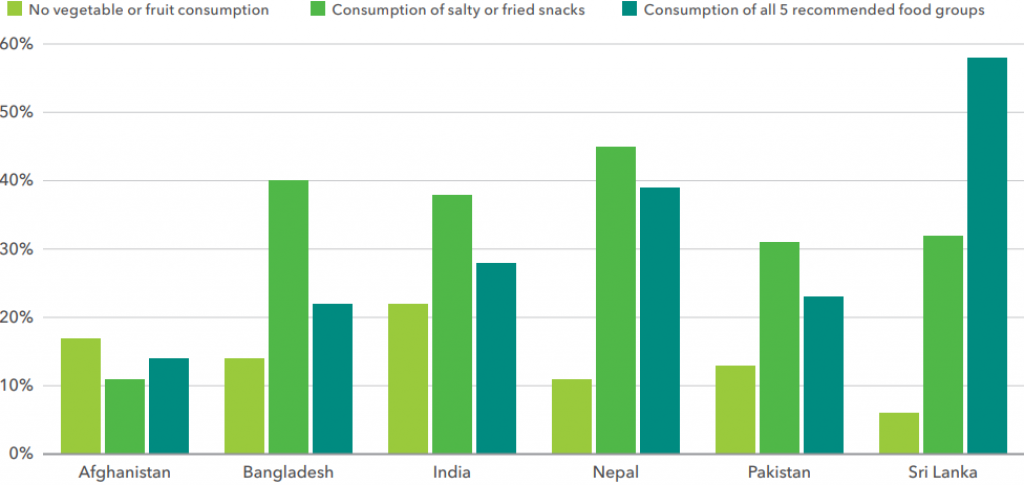
    A global report highlights a significant rise in unhealthy food consumption in India, surpassing intake of vegetables, fruits, and other nutritious foods.

    • Global Food Policy Report 2024: Food Systems for Healthy Diets and Nutrition was released by “the International Food Policy Research Institute (IFPRI)”.

    About CGIAR:

    • CGIAR (formerly the Consultative Group on International Agricultural Research) is a global partnership uniting organizations engaged in research for a food-secure future.
    • Focus: Its mission focuses on reducing poverty, enhancing food and nutrition security, and improving natural resources and ecosystem services.CGIAR conducts research and partners with other organizations to transform global food systems and ensure equitable access to sustainable, healthy diets.

    Emerging Trends in India:


    • Increase in consumption of unhealthy food: There is a significant increase in the consumption of unhealthy foods such as salty or fried snacks compared to nutritious options like vegetables and fruits. About 38% of the population consumes unhealthy foods, while only 28% consume all five recommended food groups.

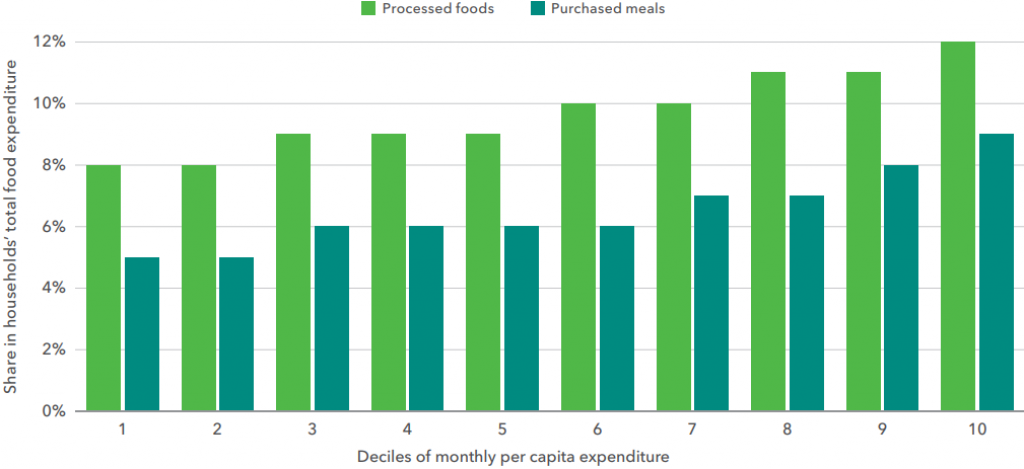
    The consumption of processed foods and ready-made convenience foods is rising. From 2011 to 2021, malnutrition in India increased from 15.4% to 16.6%.The prevalence of overweight adults rose from 12.9% in 2006 to 16.4% in 2016.

    Processed food consumption is on the rise in India 

    South Asian Highlights

    • Processed Food Consumption: Increasing intake of processed foods like chocolates, salty snacks, beverages, and ready-made meals in India and other South Asian countries.
    • Malnutrition Rates: High levels of undernutrition and micronutrient deficiencies coexist with rising rates of overweight, obesity, and diet-related noncommunicable diseases (NCDs).
    • Food Budget Trends: Packaged food spending in India’s household food budgets nearly doubled from 6.5% to 12% between 2015 and 2019.

    Issue of Double Malnutrition:

    • Double malnutrition refers to the coexistence of undernutrition and micronutrient deficiencies with overweight and obesity, or diet-related noncommunicable diseases (NCDs).
    • High levels of undernutrition (stunting and wasting) and micronutrient deficiencies persist even as overweight and obesity rates increase.
    • More than two billion people, especially in Africa and South Asia, cannot afford a healthy diet.

    Dietary Guidelines by ICMR:

    • The Indian Council of Medical Research (ICMR) released 17 dietary guidelines to promote healthy eating.
    • Guidelines emphasize reading food labels to make informed choices and minimizing the consumption of high-fat, sugar, salt, and ultra-processed foods.
    • The guidelines highlight the importance of diverse diets over cereal-centric agriculture and food policies.
    • ICMR advises against the misleading information often presented on packaged foods.

    Way forward:

    • Strengthen Nutritional Policies: Develop and enforce policies that promote the consumption of nutritious foods. Implement taxes on unhealthy foods and subsidies for fruits, vegetables, and other micronutrient-rich foods.
    • Regulate Processed Foods: Implement strict regulations on the marketing of unhealthy foods, especially targeting children.

    Mains PYQ:

    Q How far do you agree with the view that the focus on the lack of availability of food as the main cause of hunger takes the attention away from ineffective human development policies in India? (15) (UPSC IAS/2018)

  • Is climate change behind more frequent and severe turbulence faced by aircraft?

    Why in the news?

    On May 21, severe turbulence over Myanmar caused one death and 70 injuries on a Singapore Airlines flight. Qatar Airways had 12 minor injuries on May 26.

    What is Turbulence?

    • Turbulence, unpredictable air motion caused by eddies and vertical currents, ranges from minor bumps to severe disruptions, often associated with fronts and thunderstorms.

    Flight Turbulence

    Types of Flight Turbulence

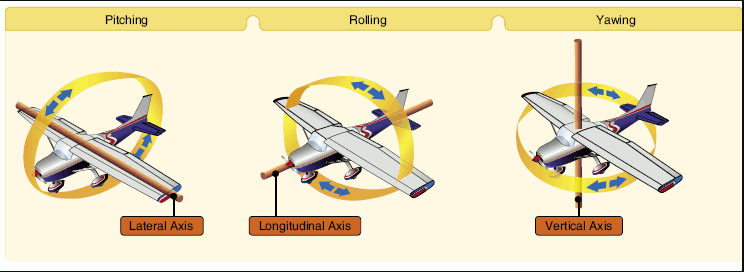
    Note: Attitude is the angular difference measured between an aeroplane’s axis and the line of the Earth’s horizon.

    • Light Turbulence: Slight erratic changes in the aircraft’s orientation.
    • Moderate Turbulence: Notable changes in altitude and attitude, but the aircraft remains under control.
    • Severe Turbulence: Significant and sudden changes of altitude and attitude, momentarily losing control.
    • Extreme Turbulence: The aircraft is violently tossed about and is almost impossible to control.

    Causes of Flight Turbulence

    • Mechanical Turbulence: Caused by friction between the air and the ground, especially over irregular terrain and man-made obstacles. Includes ‘mountain waves’ over mountain ranges.
    • Convective/Thermal Turbulence: Resulting from hot air rising rapidly and cooler air descending, creating convective air currents. Often occurs during the approach.
    • Frontal Turbulence: Created by the lifting of warm air by a sloping frontal surface and friction between opposing air masses, commonly near thunderstorms.
    • Wind Shear: Caused by changes in wind direction and/or speed over specific distances, found in temperature inversion areas, troughs, lows, and around jet streams.
    • Clear Air Turbulence (CAT): Occurs at high altitudes outside of clouds, often near jet streams, and is difficult to predict or see.

    Impact of Climate Change on Flight Turbulence

    • Increased Incidence: Studies indicate a rise in severe turbulence, particularly CAT, with the growth in air traffic and climate change.
    • Jet Stream Intensification: Climate change strengthens jet streams, increasing the frequency and severity of turbulence.
    • Mountain Wave and Near-Cloud Turbulence: Predictions suggest these types of turbulence will also intensify with climate change, leading to more frequent and severe occurrences globally.

    Way forward:

    • Safety Measures: Continuous improvement in aircraft design, weather forecasting, and pilot training helps mitigate the risks associated with turbulence.
    • Passenger Advice: Passengers are advised to keep their seat belts fastened as much as possible to avoid injuries during unexpected turbulence.
    • Regulatory Recommendations: Aviation authorities recommend better communication, real-time information sharing, and enhanced training to prevent turbulence-related incidents.

    Mains PYQ:

    Q Most of the unusual climatic happenings are explained as an outcome of the El-Nino effect. Do you agree? (UPSC IAS/2014)

  • Monsoon Croaks Bioblitz: Protecting Kerala’s Frog Species

    Why in the News?

    The Centre for Citizen Science and Biodiversity Informatics, Kerala Forest Research Institute (KFRI), has organised the event “Monsoon Croaks Bioblitz 2024”.

    About Monsoon Croaks Bioblitz, 2024:

    •  This program aims to document Kerala’s frog species during the monsoon season.
    • Objective: Cultivate scientific curiosity among the public and raise awareness about frog conservation through social media platforms, such as posters and articles.
      • Bioblitz Definition: It’s an intensive survey conducted over time to identify and document as many species as possible within a designated area, a popular participatory survey method globally.

    Project Details:

    • Participation: People of all ages can contribute by uploading frog photographs and sounds via the iNaturalist app.
    • Data Utilization: Scientific observations collected during the bioblits will contribute to the Global Biodiversity Information Facility (GBIF), facilitating biodiversity awareness, habitat conservation, and climate change research.

    Need for such an event

    • Monsoon heralds a festive season for frogs, marking their peak activity and breeding period.
    • However, the survival of frogs, crucial indicators of ecosystem health, faces threats from climate change, habitat loss, and water pollution.
    • As a result, 41% of the world’s frog species are on the IUCN Red List of endangered species, including those in Kerala.

    Results of 2023:

    • In 2023, KFRI conducted the Monsoon Croaks project, witnessing enthusiastic participation from citizens across Kerala.
    • Highlights: Around 200 citizen scientists uploaded 1,223 observations, identifying approximately 80 amphibian species, including those listed on the IUCN Red List.
    • Notable Species:  The top most observed species is the Wayanad Bush Frog (Pseudophilautus wynaadensis).
      • Following closely is the Asian Common Toad (Duttaphrynus melanostictus).
      • Other important amphibian species recorded in the bioblitz include:
      • Critically Endangered Resplendent Shrub frog (Raorchestes resplendens).
      • Endangered Malabar Torrent Toad (Blaira ornata).
      • Small Tree Frog (Rhacophorus lateralis).
      • Vulnerable Anaimalai Flying Frog (Rhacophorus pseudomalabaricus).
      • Near Threatened Purple Frog (Nasikabatrachus sahyadrensis).

    Back2Basics: Global Biodiversity Information Facility (GBIF)

    Details
    Purpose To provide free and open access to biodiversity data for research, conservation, and sustainable development
    Establishment Established in 2001
    Headquarters Copenhagen, Denmark
    Members Over 40 countries and economies, including government agencies, museums, research institutions, and NGOs
    Mission Facilitate the digitisation and mobilization of biodiversity data, making it accessible and usable for scientific research and policy-making
    Core Functions
    • Promote and facilitate collaboration and data sharing among members
    • Develop standards and tools for data mobilisation, quality, and interoperability
    • Provide technical infrastructure for publishing, indexing, and accessing biodiversity data
    Data Availability GBIF provides access to over 2 billion occurrence records of species worldwide, contributed by thousands of data publishers
    Legal Framework GBIF operates under an intergovernmental treaty, the GBIF Agreement, and is governed by its members through an annual Governing Board
    Funding Funding for GBIF comes from member countries and economies, as well as international organizations and private sector partners
    Contributions to Science and Policy
    • Contributes to global assessments such as the Intergovernmental Science-Policy Platform on Biodiversity and Ecosystem Services (IPBES)
    • Supports the Convention on Biological Diversity (CBD) and other international initiatives related to biodiversity conservation


    PYQ:

    [2015] With reference to an organization known as ‘Birdlife International’ which of the following statements is/are correct?

    1. It is a Global Partnership of Conservation Organizations.
    2. The concept of ‘biodiversity hotspots’ originated from this organization.
    3. It identifies the sites known/referred to as ‘Important Bird and Biodiversity Areas’.

    Select the correct answer using the code given below.

    (a) 1 only

    (b) 2 and 3 only

    (c) 1 and 3 only

    (d) 1, 2 and 3

  • 299th Birth Anniversary of Ahilyabai Holkar (1725 –1795)

    Why in the News?

    The 299th birth anniversary of legendary ruler Ahilyabai Holkar was celebrated on 30th May.

    About Ahilyabai Holkar

    Details
    Birth May 31, 1725; Chaundi village, Ahmednagar district, Maharashtra, India
    Family Daughter of Mankoji Shinde, a respected Dhangar family member
    Education Despite societal norms, her father taught her to read and write
    Marriage Married Khande Rao Holkar, son of Malhar Rao Holkar, in 1733
    Rise to Prominence Impressed by her piety and character, Khande Rao married Ahilyabai on the Peshwa’s advice
    Leadership Took control of Malwa after her husband’s death in 1754
    Reign Ruled Malwa from 1767 to 1795
    Capital Maheshwar became the capital of Malwa under her rule
    Administrative Prowess Known for her administrative acumen
    Military Strategies Personally led armies into battle and defended Malwa against intruders
    Cultural Contributions Established Maheshwar as the seat of the Holkar Dynasty
    Temple Restorations Led the reconstruction of Kashi Vishwanath Temple and built Somnath Temple
    Economic Development Promoted the production of Maheshwari Sarees and fostered trade and commerce
    Social Inclusion Advocated for marginalised communities and mainstreamed their inclusion
    Legacy Revered as “The Philosopher Queen” by historians like John Keay


  • Surge in Indian Companies’ External Commercial Borrowings (ECBs)

    Why in the News?

    Indian companies “external commercial borrowings” nearly doubled in FY24, reaching $49.2 billion, according to RBI data.

    Key Statistics:

    • Disbursements: ECB disbursements stood at $38.4 billion in FY24, a significant increase from $23.8 billion in FY23, underscoring the growing reliance on overseas markets for funding.
    • Domestic Pressure: High interest rates in the domestic system have led to increased pressure, prompting companies to explore ECBs as a viable funding alternative.

    External Commercial Borrowing (ECBs) in India:

    Details
    Definition Loans provided by non-resident lenders in foreign currency to Indian borrowers.
    Usage Widely used by Indian corporations and PSUs to access foreign funds.
    Instruments Covered Commercial bank loans, buyers’ credit, suppliers’ credit, securitised instruments (floating rate notes, fixed-rate bonds), credit from official export credit agencies, and commercial borrowings from multilateral financial institutions.
    Regulation Monitored and regulated by the Department of Economic Affairs (DEA) under the Ministry of Finance, Government of India, along with the Reserve Bank of India.
    Contribution Contributed between 20 and 35% of total capital flows into India in 2012.
    Recent Changes RBI raised ECB limit for infrastructure finance companies from 50% to 75% of owned funds.
    Guideline Changes RBI allowed all eligible borrowers to raise ECB up to USD 750 million per financial year under the automatic route (2019).
    Utilisation of Funds 25% of ECB can be used to repay rupee debt; 75% should be allocated for new projects.
    Regulatory Framework Governed by the Foreign Exchange Management Act, 1999.
    Routes for Raising ECBs Automatic Route and Approval Route.

    1. Automatic Route: Cases examined by AD (Authorized Dealer) Category-I Banks.
    2. Approval Route: Borrowers submit requests to RBI through their AD banks for examination.
    Maturity Period ECBs can only be raised for a specific period known as the Minimum Average Maturity Period (MAMP).
    Advantages Offered
    • ECBs offer the opportunity to secure substantial funding.
    • These funds typically come with longer-term repayment options.
    • Interest rates on ECBs are generally lower compared to domestic borrowing rates.
    • ECBs are denominated in foreign currencies, providing corporations with access to foreign currency to fulfil import needs such as machinery procurement.


    PYQ:

    [2019] Consider the following statements :

    1. Most of India’s external debt is owed by governmental entities.
    2. All of India’s external debt is denominated in US dollars.

    Which of the statements given above is/are correct?

    (a) 1 only

    (b) 2 only

    (c) Both 1 and 2

    (d) Neither 1 nor 2

More posts