💥UPSC 2026, 2027, 2028 UAP Mentorship (March Batch) + Access XFactor Notes & Microthemes PDF

Search results for: “”

  • Preserving Rajasthan’s Semal Trees 

    Why in the News?

    Despite its ecological importance, rampant harvesting of Semal Trees for bonfires poses a grave threat to their existence, undermining biodiversity and cultural heritage alike.

    About Semal/ Silk Cotton Trees

    • The Semal tree, scientifically known as Bombax ceiba, is a deciduous tropical tree.
    • It is native to India, South-East Asia, and Northern Australia.
    • It can grow up to 60 meters tall. It has a distinctive straight trunk, often with spiky thorns, and a wide, spreading canopy.
    • It produces vivid red flowers that are large and attractive, making it quite conspicuous when in bloom.
    • The fruit of the Semal tree is a capsule that contains several seeds surrounded by a fibrous, cotton-like substance which is wind-dispersed.

    Commercial Uses

    • The fibers extracted from the fruit, known as kapok, are used for stuffing pillows, mattresses, and life jackets due to their buoyancy and insulating properties.
    • The wood is soft and is often used for making paper, while in rural areas, it is used as fuelwood and for making cheap furniture.

    Ecological Significance

    • Members of tribal communities consume the tree’s reddish root for food during the monsoons.
    • Larvae of the moth Bucculatrix crateracma feed on its leaves.
    • The golden-crowned sparrow weaves the lining of its nests with white cotton from its seeds.

    Felling of a Semal Tree: Which laws are violated?

    1. Rajasthan Forest Act 1953: This act prohibits various activities in reserved forests without prior permission. Specifically, it bars any unauthorized person from felling, uprooting, damaging, or otherwise harming trees. Violating these prohibitions can lead to penalties including imprisonment, fines, or both, depending on the severity of the offence. Semal tree is not recorded in the state’s list of ‘rare, threatened, and endangered’ species. (Trees on this list enjoy priority conservation efforts.) (Indian Kanoon)​
    2. Forest (Conservation) Act 1980: This act is more comprehensive at the national level and was enacted to provide for the conservation of forests and to regulate deforestation. It requires that any non-forest use of forest land must have prior approval from the Central Government. This includes clearances for felling trees, which are only granted under specific conditions that ensure the conservation and sustainable use of forest resources.​ (UNEPLawEnvAssistantPlat)​

    PYQ:

    [2015] In India, in which one of the following types of forests is teak a dominant tree species?

    (a) Tropical moist deciduous forest

    (b) Tropical rainforest

    (c) Tropical thorn scrub forest

    (d) Temperate forest with grasslands

  • India, Iran sign 10-year contract for Chabahar Port Operation

    Why in the news?

    • India and Iran signed a 10-year agreement for the operation of the Chabahar port, marking a significant milestone in their cooperation.

    Back2Basics: Chabahar Port

    • The port is located in southeastern Iran in the Sistan-Baluchistan province, on the Gulf of Oman and at the mouth of the Strait of Hormuz.
    • It is called the “Golden Gate” to Central Asian land-locked countries of Afghanistan, Turkmenistan and Uzbekistan.
    • It serves as Iran’s only oceanic port and consists of two separate ports named Shahid Kalantari and Shahid Beheshti.
    • It is only about 170 km west of the Gwadar port if Pakistan.
      • The development of Chabahar port was initiated by India with a MoU in 2015 and executed in 2016 during PM Narendra Modi’s visit to Iran.

    About the Agreement

    The contract, signed between Indian Ports Global Ltd. (IPGL) and Port and Maritime Organisation (PMO) of Iran, involves substantial investment and development initiatives.

    • IPGL will invest approximately $120 million in equipping the Shahid-Behesti terminal, enhancing the port’s efficiency and capacity.
    • India has extended a credit window of $250 million for mutually identified projects aimed at improving Chabahar-related infrastructure, emphasizing its commitment to regional development.

    Strategic Importance of Chabahar Port to India

    • Chabahar port will boost India’s access to Iran, the key gateway to the International North-South Transport Corridor that has sea, rail and road routes between India, Russia, Iran, Europe and Central Asia.
    • Chabahar port will be beneficial to India in countering Chinese presence in the Arabian Sea which China is trying to ensure by helping Pakistan develop the Gwadar port.
    • India can bypass Pakistan in transporting goods to Afghanistan.

    Economic Significance

    • Chabahar Port is at an important point on the Arabian Sea, with easy access from India’s west coast.
    • Kandla port in Gujarat is the closest port at 550 nautical miles, while the distance between Chabahar and Mumbai is 786 nautical miles.
    • Since 2019, the port has handled more than 80,000 twenty-foot equivalent units (TEUs) of container traffic and more than 8 million tonnes of bulk and general cargo.
    • The port also offers an alternative route from the Strait of Hormuz for cargo traffic between Central Asian countries and Afghanistan.

    PYQ:

    [2017] What is the importance of developing Chabahar Port by India?

    (a) India’s trade with African countries will enormously increase.

    (b) India’s relations with oil-producing Arab countries will be strengthened.

    (c) India will not depend on Pakistan to access Afghanistan and Central Asia.

    (d) Pakistan will facilitate and protect the gas pipeline installation between Iraq and India.

  • [pib] Exercise Shakti

    Why in the news?

    The 7th edition of the India-France Joint Military Exercise SHAKTI begins at Umroi, Meghalaya, signalling the start of a biennial training event aimed at enhancing bilateral military cooperation.

    About Exercise Shakti

    • Shakti Exercise is a joint military exercise between the armies of India and France.
    • It is a biennial training event conducted alternatively in India and France
    • It started in 2011, and since then, the armies of both countries have undertaken it to promote defence cooperation and interoperability.
    • Objectives:
    1. To bolster joint military capabilities for multi-domain operations in a sub-conventional scenario under Chapter VII of the United Nations Mandate.
    2. To operate in semi-urban and mountainous terrain, focusing on achieving a high degree of physical fitness and refining tactical drills.

    Major Defence Exercise between India and France:

    • Garuda: It is the joint air exercise between the Indian Air Force and the French Air and Space Force.
    • Varuna: It is the joint naval exercise between the Indian Navy and the French Navy.
    • Desert Knight-21: It was a bilateral air exercise conducted by the Indian Air Force and the French Air and Space Force at Air Force Station Jodhpur from January 20-24, 2021. It was unique as it involved the fielding of Rafale aircraft by both sides.
    • FRINJEX: It was the maiden joint military exercise between the Indian Army and the French Army conducted at Pangode Military Station, Thiruvananthapuram, Kerala on March 7-8, 2023.


    Tap to read more about:

    Various Defence Exercises in News

  • [pib] Ramcharitmanas, Panchatantra, and Sahrdayaloka-Locana enter ‘UNESCO’s Memory of the World Asia-Pacific regional register’

    Why in the news?

    The Ramcharitmanas, Panchatantra and Sahrdayaloka-Locana have been included in ‘UNESCO’s Memory of the World Asia-Pacific regional register’.

    About UNESCO’s ‘Memory of the World (MOW) Asia-Pacific regional register’

    Details
    History and Establishment Initiated in 1992 by UNESCO.

    Asia-Pacific Regional Committee (MOWCAP) was set up in 1998.

    Parent Organization Overseen by UNESCO (United Nations Educational, Scientific and Cultural Organization).
    Objective To safeguard, preserve, facilitate access to, and increase awareness of documentary heritage. Focuses specifically on the Asia-Pacific region.
    Examples of Inscribed Items Includes items like Japan’s “Sugihara’s Visas for Life”, Australia’s “Mabo Case Manuscripts”, and Vietnam’s “Ba Chuc Massacre Archives”.
    Impact and Outreach Supports preservation, digitization, accessibility of documents; provides grants and organizes workshops, meetings, and exhibitions to promote knowledge sharing.
    Reference

    About the Texts

    • Ramcharitmanas:

    • Written by Tulsidas in the 16th century, the Ramcharitmanas is an epic poem in Awadhi, a dialect of Hindi, and is a retelling of the Sanskrit epic Ramayana.
    • It narrates the life of Lord Rama, his virtues, the ideals of Dharma, and his reign during Ram Rajya.
    • Hanuman Chalisa is a combination of 40 verses from the same epic.
    • Panchatantra:

    • The Panchatantra is a collection of ancient Indian animal fables that dates back to at least the 3rd century BCE. 
    • Originally written in Sanskrit by Vishnu Sharma.
    • Its stories are crafted as simple yet vibrant narratives that aim to impart practical life lessons through the interactions of anthropomorphized animals.
    • Sahrdayaloka-Locana

    • The Sahrdayaloka-Locana is a Sanskrit treatise on poetics written by Jagannatha Paṇḍitaraja in the 17th century.
    • It is considered one of the most important works of Sanskrit literary criticism.
    • The text discusses the concept of “Sahrdaya“, which refers to a sensitive or discerning reader or critic.


    PYQ:

    [2016] With reference to the cultural history of India, the memorising of chronicles, dynastic histories and epic tales was the profession of who among the following?

    (a) Shramana

    (b) Parivraajaka

    (c) Agrahaarika

    (d) Maagadha

  • COMPLETE UPSC 2025 Preparation in FIRST ATTEMPT using Original Content, Rigourous Mentorship & Outcome-Driven Programs

    COMPLETE UPSC 2025 Preparation in FIRST ATTEMPT using Original Content, Rigourous Mentorship & Outcome-Driven Programs

    Between 2021-23, we connected with over 15,000+ IAS aspirants via our Samanvaya (1 on 1 mentoring) outreach program.

    With an average call time of ~40 minutes, we spent ~3.84 lakh minutes (~6,400 hours) understanding you and your preparation strategies.

    The major issue that most aspirants faced was with the right strategy, practical timetable, time management issues, and the lack of a Guide, who could help you sail through the mountainous task of being a part of the coveted list of Rankers.

    But the “market” is flooded with all types of free content, there is a plethora of content for each subject and topic, endless test series, and infinite sources. Still, why is it that an aspirant keeps waiting for his first Prelims – till the time he focuses only on Prelims, clears it in 4th attempt only to realize that the Mains prep wasn’t enough – flunks it, and again enters the cycle? He has to live with the solace of having given at least 1 Mains.

    Here’s the truth – As a UPSC aspirant, you live in a world populated with infinite sources churning out countless content themes endlessly, adding only short-term value to your preparation, if at all. Giving you false hope that your preparation is moving forward. All this is in the name of FREE preparation content. We chose not to play that game.

    Instead, we focus only on highly specific PYQ based themes every week. We believe in content and programs that are original, taking immense research to meet the UPSC level trained by faculties and led by Mentors. This is exactly what is required to clear this Exam.

    Our motto is clear – we believe Mentorship is a specialization – the personalization that you need to be on the right track.

    Each individual is different, as can be seen from the toppers this year. While Benjo (AIR 59, rigorous follower of Civilsdaily Current Affairs) was a trained “Answer Thinker”, Animesh (AIR 2, our UAP Mentorship Student) found content in seeing his test scores – the desire which pushed him to write 50+ Samachar Manthan Tests as a part of UAP.

    We need to identify what’s different about you – and then carve you a path. This is why Mentorship is essential. Once you have a clearly laid out path, you need defined checkposts where your progress can be tracked. A near-perfect certain strategy is what you need to clear this exam in the first attempt. Animesh could do it being a working professional (first attempt), you can do it too.

    Connect with us 1:1 and identify what’s different in you.

    Fill up this Mentorship Form (Free for the next 24 hours) to connect with our mentors.

  • UPSC Mains Topic-Wise PYQs – Freedom Struggle

    UPSC Mains Topic-Wise PYQs – Freedom Struggle

    We will be going through the UPSC Mains Topic-Wise PYQs – Freedom Struggle. The official UPSC Syllabus reads – Freedom Struggle-various stages, important contributors/ contributions from different parts of the country.

    Before starting by yourself for Mains, understand the process. Connect 1:1 with Arvind Sir

    UPSC Mains Topic-Wise PYQs – Freedom Struggle – various stages, important contributors/ contributions from different parts of the country – Questions from 2013-2023

    QuestionSubjectYearMarksSub-theme
    To what extent did the role of the Moderates prepare a base for the wider freedom movement? Comment. (250 words)Freedom Struggle202115Moderates- role in freedom movement and their limitations
    Bring out the constructive programmes of Mahatma Gandhi during Non-Cooperation Movement and Civil Disobedience Movement. (250 words)Freedom Struggle202115Constructive programme of Gandhi- During NCM and CDM
    Since the decade of the 1920s, the national movement acquired various ideological strands and thereby expanded its social base. Discuss.Freedom Struggle202015Ideological strands and their impact on the national movement during 1920s
    Examine the linkages between 19th centuries ‘Indian Renaissance’ and the emergence of national identity.Freedom Struggle201910Emergence of National Identity- Due to Renaissance and other reasons as well
    Many voices had strengthened and enriched the nationalist movement during the Gandhian phase. Elaborate.Freedom Struggle201915Gandhian phase- Various sections and their voices which strengthened national movement
    Assess the role of British imperial power in complicating the process of transfer of power during the 1940s.Freedom Struggle201915Various British Proposals for power transfer in 1940s
    Throw light on the significance of the thoughts of Mahatma Gandhi in the present times.Freedom Struggle201810Present day significance of Gandhi’s thoughts
    Why did the ‘Moderates’ fail to carry conviction with the nation about their proclaimed ideology and political goals by the end of the nineteenth century?Freedom Struggle201710Moderates- their contributions and failures
    Examine how the decline of traditional artisanal industry in colonial India crippled the rural economy.Freedom Struggle201715Reasons for decline in traditional artisanal industry and rural economy
    The women’s questions arose in modern India as a part of the 19th century social reform movement. What were the major issues and debates concerning women in that period?Freedom Struggle201715Women’s issues and debates during social reform movement
    Discuss the role of women in the freedom struggle especially during the Gandhian phase.Freedom Struggle201612.5Women’s role in freedom struggle
    It would have been difficult for the Constituent Assembly to complete its historic task of drafting the Constitution for Independent India in just three years but for the experience gained with the Government of India Act, 1935. Discuss.Freedom Struggle201512.5GoI Act, 1935- Features and Provisions of it adopted in Indian Constitution
    In what ways did the naval mutiny prove to be the last nail in the coffin of British colonial aspirations in India?Freedom Struggle201410Naval Mutiny- Reasons and Impact on British
    In many ways, Lord Dalhousie was the founder of modern India. Elaborate.Freedom Struggle201310Work of Lord Dalhousie in various sector
    UPSC Mains Topic-Wise PYQs – Freedom Struggle 2013-2023

    Read More – Complete UPSC Mains Topic-Wise PYQs (2013-2023)

    Don’t know how to make notes for UPSC Mains? Learn 1:1 from Arvind Sir

  • UPSC Mains Topic-Wise PYQs – Modern History

    UPSC Mains Topic-Wise PYQs – Modern History

    We will be going through the UPSC Mains Topic-Wise PYQs – Modern History. The official UPSC Syllabus reads – Modern Indian History-Mid-18th century – Present (significant events, personalities, issues)

    Before starting by yourself for Mains, understand the process. Connect 1:1 with Arvind Sir

    UPSC Mains Topic-Wise PYQs – Modern Indian History – Mid-18th century – Present (significant events, personalities, issues)

    QuestionSubjectYearMarksSub-theme
    What was the difference between Mahatma Gandhi and Rabindranath Tagore in their approach towards education and nationalism?Modern History202310Gandhi and Tagore- Difference in approach towards education and Nationalism
    How did the colonial rule affect the tribals in India and what was the tribal response to the colonial oppression?Modern History202315Impact of colonial rule on Tribes and tribal response
    Why did the armies of the British East India Company – mostly comprising of Indian soldiers-win consistently against the more numerous and better equipped armies of the then Indian rulers ? Give reasons.Modern History202210Reasons behind the supremacy power of British armies against the Indian rulers
    Why was there a sudden spurt in famines in colonial India since the mid-eighteenth century ? Give reasons.Modern History202210Reasons of famines in colonial India
    Trace the rise and growth of socio-religious reform movements with special reference to Young Bengal and Brahmo Samaj.Modern History202110Socio-religious reform movements- Rise and growth, Young Bengal and Brahmo Samaj
    Evaluate the policies of Lord Curzon and their long term implications on the national movement.Modern History202010Lord Curzon- his policies and long term implication on national movement
    The 1857 Uprising was the culmination the recurrent big and small local rebellions that had occurred in the preceding hundred years of British rule. Elucidate.Modern History201910Major factors and local rebellions that led to the 1857 uprising
    Clarify how mid-eighteenth century India was beset with the spectre of a fragmented polity.Modern History201710Factors that played role in fragmented polity during 1750s
    Highlight the importance of the new objectives that got added to the vision of Indian independence since twenties of the last century.Modern History201715Factors that could be considered to play a potent role in fragmented polity were
    Explain how the Uprising of 1857 constitutes an important watershed in the evolution of British policies towards colonial India.Modern History201612.5Uprising of 1857- Changes in British policies after that
    Highlight the differences in the approach of Subhash Chandra Bose and Mahatma Gandhi in the struggle for freedom.Modern History201612.5Gandhi and Bose- Difference in Approach in freedom struggle
    How different would have been the achievement of Indian independence without Mahatma Gandhi? Discuss.Modern History201512.5Independence without Gandhi
    Mahatma Gandhi and Dr. B.R. Ambedkar, despite having divergent approaches and strategies, had a common goal of amelioration of the downtrodden. Elucidate.Modern History201512.5Gandhi and Ambedkar- Divergent and common approaches
    The third battle of Panipat was fought in 1761. Why were so many empire-shaking battles fought at Panipat?Modern History201410Third battle of Panipat; Reason for battles fought at panipat
    Examine critically the various facets of economic policies of the British in India from mid-eighteenth century till independence.Modern History201410British economic policies in India
    Defying the barriers of age, gender and religion, the Indian women became the torch bearer during the struggle for freedom in India. Discuss.Modern History201310Role of Indian women in freedom struggle
    Several foreigners made India their homeland and participated in various movements. Analyze their role in the Indian struggle for freedom.Modern History201310Foreigners role in Indian freedom struggle
    UPSC Mains Topic-Wise PYQs – Modern History

    Read More – Complete UPSC Mains Topic-Wise PYQs (2013-2023)

    Don’t know how to make notes for UPSC Mains? Learn 1:1 from Arvind Sir

  • UPSC Mains Topic-Wise PYQs – Indian Culture

    UPSC Mains Topic-Wise PYQs – Indian Culture

    We will be going through the UPSC Mains Topic-Wise PYQs – Indian Culture. The official UPSC Syllabus reads – Indian Culture – Salient aspects of Art Forms, Literature and Architecture from ancient to modern times.

    Before starting by yourself for Mains, understand the process. Connect 1:1 with Arvind Sir

    QuestionSubjectYearMarksSub-theme
    Explain the role of geographical factors towards the development of Ancient India.Art and Culture202310Geographical factors in Ancient India development
    What are the main features of Vedic society and religion? Do you think some of the features are still prevailing in Indian society?Art and Culture202315Vedic society and religion- Main features and elements of continuity
    What were the major technological changes introduced during the Sultanate period? How did those technological changes influence the Indian society?Art and Culture202315Sultanate period- Major technological changes and their influence on Indian society
    How will you explain that medieval Indian temple sculptures represent the social life of those days?Art and Culture202210Temple sculptures of medieval India
    Discuss the main contributions of Gupta period and Chola period to Indian heritage and culture.Art and Culture202215Gupta and chola- Contribution to Indian heritage and culture
    Discuss the significance of the lion and bull figures in Indian mythology, art and architecture.Art and Culture202215Lion and bull figures- Significance in mythology, art and architecture
    Evaluate the nature of the Bhakti literature and its contribution to Indian culture. Art and Culture202110Bhakti literature- Nature and contribution to Indian culture
    The rock-cut architecture represents one of the most important sources of our knowledge of early Indian art and history. Discuss. Art and Culture202010Rock-cut architecture- Source of Indian Art and history
    Pala period is the most significant phase in the history of Buddhism in India. Enumerate. Art and Culture202010Pala period- Contribution in promoting Buddhism
    Indian philosophy and tradition played a significant role in conceiving and shaping the monuments and their art in India. Discuss.Art and Culture202015Impact of Indian Philosophy- In Ancient, Medieval and modern India
    Persian literary sources of medieval India reflect the spirit of the age. Comment.Art and Culture202015Persian literary sources of medieval India
    Highlight the Central Asian and Greco -Bactrian elements in Gandhara art.Art and Culture201910Central Asian and Greco -Bactrian elements in Gandhara art
    Do we have cultural pockets of small India all over the nation? Elaborate with examples.(15m,250 words)Art and Culture201915cultural pockets of small India across the nation
    Safeguarding the Indian art heritage is the need of the moment. Discuss.Art and Culture201810Indian art heritage- Need to safeguard and government steps
    Assess the importance of the accounts of the Chinese and Arab travellers in the reconstruction of the history of India.Art and Culture201810Chinese and Arab travellers’ account
    The Bhakti movement received a remarkable re-orientation with the advent of Sri Chaitanya Mahaprabhu. Discuss.Art and Culture201815Sri Chaitanya Mahaprabhu and Bhakti movement
    How do you justify the view that the level of excellence of Gupta numismatic art is not at all noticeable in later times?Art and Culture201710Gupta numismatic art- comparison with later times
    Early Buddhist Stupa-art, while depicting folk motifs and narratives successfully expounds Buddhist ideals. Elucidate.Art and Culture201612.5Early Buddhist Stupa-art
    Krishnadeva Raya, the King of Vijayanagar, was not only an accomplished scholar himself but was also a great patron of learning and literature. Discuss.Art and Culture201612.5Krishnadeva Raya- As Eminent scholar and as great patron of learning and literature
    The ancient civilization in Indian sub-continent differed from those of Egypt, Mesopotamia and Greece in that its culture and traditions have been preserved without a breakdown to the present day. Comment.Art and Culture201512.5Reasons for continuity of elements of culture and traditions of ancient civilization, unlike in Egypt, Mesopotamia and Greece
    Mesolithic rock cut architecture of India not only reflects the cultural life of the times but also a tine aesthetic sense comparable to modern painting. Critically evaluate this comment.Art and Culture201512.5Mesolithic rock cut architecture- Reflecting cultural life of that times and comparable to modern painting
    Gandhara sculpture owed as much to the Romans as to the Greeks. Explain.Art and Culture201410Roman and Greeks element in Gandhara sculpture
    Sufis and medieval mystic saints failed to modify either the religious ideas and practices or the outward structure of Hindu/Muslim societies to any appreciable extent. Comment.Art and Culture201410Challenges faced by Sufis and medieval mystic saints
    Though not very useful from the point of view of a connected political history of South India, the Sangam literature portrays the social and economic conditions of its time with remarkable vividness. Comment.Art and Culture201310(Economic) and (Social) life of south India portrayed by (Sangam literature)
    Chola architecture represents a high watermark in the evolution of temple architecture. Discuss.Art and Culture201310Evolution of temple architecture by Cholas
    Taxila university was one of the oldest universities of the world with which were associated a number of renowned learned personalities of different disciplines. Its strategic location caused its fame to flourish, but unlike Nalanda, it is not considered as a university in the modern sense. Discuss.Art and Culture201410Taxila University- its renowned disciples and comparison with Nalanda
    To what extent has the urban planning and culture of the Indus Valley Civilization provided inputs to the present day urbanization? Discuss.Art and Culture201410Indus valley civilization- Urban planning & culture and element of continuity in present day Urbanization
    Discuss the Tandava dance as recorded in the early Indian inscriptions.Art and Culture201310Tandava dance

    Read More – Complete UPSC Mains Topic-Wise PYQs (2013-2023)

    Don’t know how to make notes for UPSC Mains? Learn 1:1 from Arvind Sir

  • UPSC Mains Topic-Wise PYQs – GS I-IV (2013-2023)

    UPSC Mains Topic-Wise PYQs – GS I-IV (2013-2023)

    A lot of toppers this year talked about the significance of PYQs. Generally, what we go after are PYQ Booklets from the Market, which are either erroneous (wrong questions tagged under wrong syllabus headings), or outdated – only subject-wise (All questions from History, Polity, Internal Security, that too till 2021/22).

    We are providing you not only Topic-Wise, but Sub-theme wise PYQs of UPSC Mains from 2013-2023. This will help you understand the exact sub-themes are having been repeated, and make your preparation more focussed.

    A lot of toppers this year talked about the significance of PYQs. Generally, what we go after are PYQ Booklets from the Market, which are either erroneous (wrong questions tagged under wrong syllabus headings), or outdated – only subject-wise (All questions from History, Polity, Internal Security, that too till 2021/22).

    We are providing you not only Topic-Wise, but Sub-theme wise PYQs of UPSC Mains from 2013-2023. This will help you understand the exact sub-themes are having been repeated, and make your preparation more focussed.

    Before starting by yourself for Mains, understand the process. Connect 1:1 with Arvind Sir

    UPSC Mains Topic-Wise PYQs – GS 1

    1. UPSC Mains Topic-Wise PYQs – Indian Culture-Salient aspects of Art Forms, Literature and Architecture from ancient to modern times.
    2. UPSC Mains Topic-Wise PYQs – Modern Indian History-Mid-18th century – Present (significant events, personalities, issues).
    3. UPSC Mains Topic-Wise PYQs – Freedom Struggle-various stages, important contributors/ contributions from different parts of the country.
    4. UPSC Mains Topic-Wise PYQs – Post-Independence-consolidation and reorganisation within country.
    5. UPSC Mains Topic-Wise PYQs – History of the world will include events from 18th century such as industrial revolution, world wars, redrawal of national boundaries, colonization, decolonization, political philosophies like communism, capitalism, socialism etc.— their forms and effect on the society.
    6. UPSC Mains Topic-Wise PYQs – Salient Features of Indian Society and Diversity of India
    7. UPSC Mains Topic-Wise PYQs – Role of women and women’s organization, population and associated issues, poverty and developmental issues.
    8. UPSC Mains Topic-Wise PYQs – Urbanisation: problems and remedies
    9. UPSC Mains Topic-Wise PYQs – Globalisation and its effects on Indian society
    10. UPSC Mains Topic-Wise PYQs – Social empowerment, communalism, regionalism & secularism
    11. UPSC Mains Topic-Wise PYQs – Salient Features of World Physical Geography
    12. UPSC Mains Topic-Wise PYQs – Distribution of key Natural Resources (world, South Asia and Indian subcontinent)
    13. UPSC Mains Topic-Wise PYQs – Factors responsible for the location of primary, secondary, and tertiary sector industries in various parts of the world (including India)
    14. UPSC Mains Topic-Wise PYQs – Important Geophysical phenomena such as earthquakes, Tsunami, Volcanic activity, cyclone etc.
    15. UPSC Mains Topic-Wise PYQs – Geographical features and their location-changes in critical geographical features (including water-bodies and ice-caps) and in flora and fauna and the effects of such changes.

    Don’t know how to make notes for UPSC Mains? Learn 1:1 from Arvind Sir

    UPSC Mains Topic-Wise PYQs – GS 2

    1. UPSC Mains Topic-Wise PYQs – Indian Constitution-Historical underpinnings & evolution; Features, amendments, significant provisions, basic structure of Constitution
    2. UPSC Mains Topic-Wise PYQs – Functions & responsibilities of the Union and the States; issues and challenges of federal structure
    3. UPSC Mains Topic-Wise PYQs – Separation of Powers between different organs, dispute redressal mechanisms and institutions
    4. UPSC Mains Topic-Wise PYQs – Devolution of powers and finances up to local levels and challenges therein
    5. UPSC Mains Topic-Wise PYQs – Comparison of Indian constitutional scheme with other countries
    6. UPSC Mains Topic-Wise PYQs – Parliament and State Legislatures (structure, functioning, conduct of business, powers & privileges; issues therein)
    7. UPSC Mains Topic-Wise PYQs – Structure, organization and functioning of the Executive and the Judiciary; Ministries and Departments of the Government; pressure groups and formal/informal associations and their role in the Polity
    8. UPSC Mains Topic-Wise PYQs – Salient features of the Representation of People’s Act.
    9. UPSC Mains Topic-Wise PYQs – Appointment to various Constitutional posts; Constitutional Bodies (powers, functions and responsibilities); Statutory, Regulatory and Quasi-judicial bodies
    10. UPSC Mains Topic-Wise PYQs – Appointment to various Constitutional posts; Constitutional Bodies (powers, functions and responsibilities); Statutory, Regulatory and Quasi-judicial bodies
    11. UPSC Mains Topic-Wise PYQs – Government Policies & Interventions for development of various sectors (issues in their design, implementation)
    12. UPSC Mains Topic-Wise PYQs – Development processes and the development industry; the role of NGOs, SHGs, various groups and associations, donors, charities, institutional and other stakeholders.
    13. UPSC Mains Topic-Wise PYQs – Welfare schemes for vulnerable sections of the population by the Centre and States and the performance of these schemes; mechanisms, laws, institutions and Bodies constituted for the protection and betterment of these vulnerable sections.
    14. UPSC Mains Topic-Wise PYQs – Issues relating to development and management of Social Sector/ Services relating to Health, Education, Human Resources.
    15. UPSC Mains Topic-Wise PYQs – Issues relating to poverty and hunger
    16. UPSC Mains Topic-Wise PYQs – Transaparency and accountability (institutional and other measures); Citizens Charter, E-Governance (applications, models, successes, limitations, potential)
    17. UPSC Mains Topic-Wise PYQs – Role of Civil Services in a democracy.
    18. UPSC Mains Topic-Wise PYQs – India and its neighborhood- relations.
    19. UPSC Mains Topic-Wise PYQs – Bilateral, regional and global groupings and agreements involving India and/or affecting India’s interests.
    20. UPSC Mains Topic-Wise PYQs – Effect of policies and politics of developed and developing countries on India’s interests, Indian diaspora.
    21. UPSC Mains Topic-Wise PYQs – Important International institutions, agencies and fora- their structure, mandate.

    Still trying to figure out your Mains Prep Strategy? Talk 1:1 to Arvind Sir

    UPSC Mains Topic-Wise PYQs – GS 3

    1. UPSC Mains Topic-Wise PYQs – Indian Economy (issues re: planning, mobilisation of resources, growth, development, employment);
    2. UPSC Mains Topic-Wise PYQs – Inclusive growth and issues arising from it.
    3. UPSC Mains Topic-Wise PYQs – Government Budgeting
    4. UPSC Mains Topic-Wise PYQs – Major Crops – Cropping patterns in various parts of the country
    5. UPSC Mains Topic-Wise PYQs – Different types of irrigation and irrigation systems
    6. UPSC Mains Topic-Wise PYQs – Storage, transport and marketing of Agricultural produce and issues and related constraints
    7. UPSC Mains Topic-Wise PYQs – E- technology in the aid of farmers
    8. UPSC Mains Topic-Wise PYQs – Issues related to direct and indirect farm subsidies and MSP; PDS (objectives, functioning, limitations, revamping, issues of buffer stocks & food security), Technology Missions
    9. UPSC Mains Topic-Wise PYQs – Economics of Animal-Rearing
    10. UPSC Mains Topic-Wise PYQs – Food processing and related industries in India (scope & significance, location, upstream-downstream requirements, supply chain management);
    11. UPSC Mains Topic-Wise PYQs – Land Reforms in India
    12. UPSC Mains Topic-Wise PYQs – Effects of Liberalisation on the economy; Changes in Industrial policy & their effects on industrial growth
    13. UPSC Mains Topic-Wise PYQs – Infrastructure (energy, ports, roads, airports, railways); Investment models
    14. UPSC Mains Topic-Wise PYQs – Science and Technology- developments and their applications and effects in everyday life
    15. UPSC Mains Topic-Wise PYQs – Achievements of Indians in S&T; Indigenisation of technology & developing new technology
    16. UPSC Mains Topic-Wise PYQs – Awareness in the fields of IT, Space, Computers, robotics, nano-technology, bio-technology and issues relating to intellectual property rights
    17. UPSC Mains Topic-Wise PYQs – Conservation, environmental pollution and degradation, environmental impact assessment
    18. UPSC Mains Topic-Wise PYQs – Disaster and Disaster Management
    19. UPSC Mains Topic-Wise PYQs – Linkages between Development & spread of Extremism
    20. UPSC Mains Topic-Wise PYQs – Role of external state and non-state actors in creating challenges to internal security.
    21. UPSC Mains Topic-Wise PYQs – Challenges to internal security through communication networks, role of media and social networking sites in internal security challenges, basics of cyber security; money-laundering and its prevention.
    22. UPSC Mains Topic-Wise PYQs – Security challenges and their management in border areas – linkages of organized crime with terrorism.
    23. UPSC Mains Topic-Wise PYQs – Various Security forces and agencies and their mandate.

    Examples and Facts are not coming naturally to you? Connect 1:1 with our Mentor

    UPSC Mains Topic-Wise PYQs – GS 4

    1. UPSC Mains Topic-Wise PYQs – Ethics and Human Interface: Essence, Determinants and Consequences of Ethics in Human Actions; Dimensions of Ethics; Ethics – in Private and Public Relationships.
    2. UPSC Mains Topic-Wise PYQs – Human Values: Lessons from the Lives and Teachings of Great Leaders, Reformers and Administrators; Role of family society and educational institutions in inculcating values.
    3. UPSC Mains Topic-Wise PYQs – Attitude: Content, Structure, Function; its Influence and Relation with Thought and Behaviour; Moral and Political Attitudes; Social Influence and Persuasion.
    4. UPSC Mains Topic-Wise PYQs – Emotional intelligence-concepts, and their utilities and application in administration and governance.
    5. UPSC Mains Topic-Wise PYQs – Contributions of Moral Thinkers and Philosophers from India and World.
    6. UPSC Mains Topic-Wise PYQs – Aptitude and Foundational Values for Civil Service, Integrity, Impartiality and Non-partisanship, Objectivity, Dedication to Public Service, Empathy, Tolerance and compassion towards weaker-sections.
    7. UPSC Mains Topic-Wise PYQs – Public/Civil Service Values and Ethics in Public Administration: Status and Problems; Ethical Concerns and Dilemmas in Government and Private Institutions; Laws, Rules, Regulations and Conscience as Sources of Ethical Guidance; Accountability and Ethical Governance; Strengthening of Ethical and Moral Values in Governance; ethical Issues in International Relations and Funding; Corporate Governance.
    8. UPSC Mains Topic-Wise PYQs – Probity in Governance: Concept of Public Service; Philosophical Basis of Governance and Probity; Information Sharing and Transparency in Government, Right to information; Codes of Ethics, Codes of Conduct, Citizen’s Charters, Work Culture, Quality of Service Delivery, utilization of Public Funds, Challenges of Corruption.

    Finding the X-Factor for your Ethics Answer? Learn from our Mentor, Connect 1:1

    Not sure yet?

    We recommend you register here. It takes less than 10 seconds to register.

    • No spam! Once in a while, we’ll only send you high-quality exam-related content. 
    • We will inform you about the upcoming Masterclasses that might benefit you.
    • You can demand one free mentorship call from verified Civilsdaily mentors. 
    • You can always choose to unsubscribe.
  • Number of children has more to do with development than religion

    Why in the News? 

    Once again, the Muslim population has become a point of discussion. Last month, PM Narendra Modi referred Muslims in India, suggesting they have a higher birth rate.

    Trends of Muslim Population as per Data Point (NFHS-5 2019-21) published on April 23:

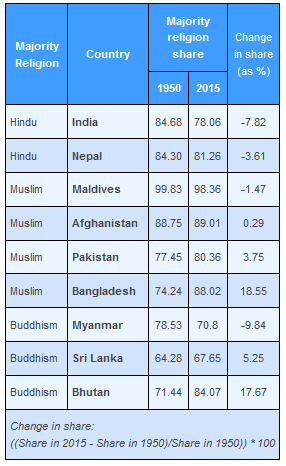
    • Population Trends: The Economic Advisory Council to the Prime Minister noted a Muslims in the total population increased by 43.15% between 1950 and 2015, the share of Hindus decreased by 7.82% between 1950 and 2015.
    • The fertility rate of Muslims was 2.36 in 2019-21, much closer to the replacement level. The fertility rate is the average number of children a woman is expected to have in her lifetime. A rate of 2.1 (the ‘replacement level’) means that the population is stable.

    Factors behind the High Population Growth of Muslims:

    • Socio-economic Factors: Socio-economic factors, rather than religion, significantly influence fertility rates. Educating girls, delaying marriage, promoting family planning awareness, and ensuring access to family planning measures are crucial in reducing fertility levels.
    • Regional Variations: Fertility rates among Muslim women vary regionally, influenced by the social and economic development of states.
    • Early Marriage and Literacy: There’s a positive correlation between higher fertility rates and early marriage among women aged 20-24. Conversely, a negative correlation exists between literacy rates among women and fertility rates.
    • Lack of Awareness: Lack of awareness about family planning remains a concern, with a significant portion of women reporting never hearing or seeing family planning messages.
    • Unmet Demand for Family Planning: Many women, particularly Muslims in certain states, have an unmet demand for family planning due to various factors, including lack of access to contraceptive measures.
    • Government Intervention: Increasing awareness about contraceptives, improving access to family planning measures, educating girls, and preventing child marriages are essential government functions to reduce fertility rates across religious groups.

    Need for Coercive Measures: 

    • Comprehensive Education and Awareness Programs: Implement educational campaigns that promote family planning, gender equality, and reproductive health awareness, targeting both men and women in communities across the country.
    • Access to Family Planning Services: Ensure easy access to a wide range of family planning methods and contraceptives, including in remote and underserved areas, through government health facilities and community outreach programs.

    Mains PYQ:

    Q Critically examine whether growing population is the cause of poverty OR poverty is the mains cause of population increase in India. (UPSC IAS/2015)

  • Supreme Court cautions on ‘history sheets’: All you need to know about the practice

    Why in the News?

    On May 7, a Bench comprising Justices Surya Kant and K V Viswanathan warned against the presence of “unfair, prejudicial, and atrocious mindsets” that perpetuate and validate caste prejudices.

    • It also directed all states and union territories to ensure that the ‘history sheets‘ maintained by their police forces are free from ‘caste biases’.
    • The Bench was adjudicating a petition filed by AAP MLA Amanatullah Khan, contesting a history sheet initiated against him and a proposal to designate him as a ‘bad character’ by registering his name in the surveillance register at Delhi’s Jamia Nagar police station.

    Did you know about the ‘History sheets’?

    • The term “history sheet” first appeared in the Punjab Police Rules of 1934. 
    • These rules authorized the opening of a history sheet against individuals reasonably believed to be habitually addicted to crime or aiding and abetting criminal activities, regardless of whether they have been convicted.

    How was the process of ‘history sheeting’ initiated?

    • The process of opening a history sheet is governed by police rules specific to each state, such as it is applicable in Punjab, Haryana, Himachal Pradesh, Delhi, and Chandigarh.
    • The initiation typically begins when the Station House Officer (SHO), who is the head of the police station, takes notice of an individual proven guilty in multiple cases or found to be consistently engaged in criminal activities.
    • Details included in the history sheet (Acc. Punjab Police Rules, 1934):
      • A history sheet must contain a detailed description of the individual, paying special attention to any peculiarities of appearance that can aid in identification.
      • It mentions the relations and connections of the individual. This provides clues regarding persons with whom the criminal is likely to associate.
      • It holds the details about any property owned by the criminal, as well as their mode of earning a livelihood, should be included.

    About Amanatullah Khan’s plea in the Supreme Court:

    • On May 13, 2022, the Station House Officer (SHO) of Jamia Nagar had submitted a dossier to the Assistant Commissioner of Police (ACP) and Deputy Commissioner of Police (DCP) proposing to open a history sheet and label him as a “Bad Character” in police records.
    • The proposal was accompanied by a list of 18 pending cases against Khan, including offenses such as intimidation, threatening, and riots. Khan claimed that he had been discharged, acquitted, or had the FIRs quashed in 14 of these cases.
    • Legal Battles: 
      • In January 2023, the Delhi HC dismissed Khan’s plea against the opening of the history sheet and the “Bad Character” tag, stating that the Delhi Police had followed due procedure and complied with the Punjab Police Rules, 1934.
      • Khan’s appeal to the SC was rejected, but the SC directed the police to ensure that details of his minor children and wife were not reflected in the history sheet.
      • Khan’s plea focused on protecting the dignity, self-respect, and privacy of his innocent family members, including minor relatives, from being compromised by inclusion in the history sheet.
    • Revisiting Police Procedures: The Delhi Police submitted that they would revisit the format for history sheets to ensure that the details of innocent family members are not compromised.
      • A Standing Order issued by the Delhi Police Commissioner on March 21, 2024, stated that details of minor relatives should not be included in the history sheet.

    BACK2BASICS

    Constitutional and Legal Provisions for accused person in India:

    • Article 20: This right protects against arbitrary and excessive punishment of an accused person, whether a citizen, a foreigner, or a legal person like a company or a corporation, etc.
    • Article 21: This right declares that no person shall be deprived of his life or personal liberty except according to the procedure established by law. This right is available to both citizens and non-citizens.
    • Section 50(1) of the CrPC: As per this section, every arrested person has the right to be treated with dignity and respect during detention.
      • This section ensures that individuals, including the accused, are not subjected to any form of physical or mental abuse while in custody, upholding the basic human rights of the accused.

    Way Forward:

    • Review and Revise Police Procedures: States and Union Territories should conduct a comprehensive review of their police procedures related to maintaining history sheets to ensure they are free from caste biases.
    • Training and Sensitization: Police personnel should undergo regular training and sensitization programs to raise awareness about caste biases and the importance of impartiality in law enforcement.

    Mains PYQ: 

    Q The jurisdiction of the Central Bureau of Investigation (CBI) regarding lodging an FIR and conducting probe within a particular State is being questioned by various States. However, the power of the States to withhold consent to the CBI is not absolute. Explain with special reference to the federal character of India.

  • Explained: Behind the 20-year delay in Nagaland’s Urban Local Body Elections

    Why in the News?

    For the first time (since 2004), Nagaland is scheduled to conduct Urban Local Body elections.

    Context: 

    • The state cabinet approved on April 26 for conducting Urban Local Body polls for Nagaland’s 3 Municipal Councils and 36 Town Councils.
    • Further, the State Election Commission (SEC) released the election schedule, with voting slated for June 26.

    BACK2BASICS: Constitutional Provisions for Urban Local Body Elections:

      • The 74th Constitutional Amendment bars the interference by courts in the electoral matters of municipalities.
        • Article 243U mandates a five-year tenure for urban local governments.
      • The superintendence, direction and control of the preparation of the electoral rolls for, and the conduct of, all elections to the panchayats and municipalities shall be vested in the State Election Commission (SEC).
    • Article 371 (A)- It makes the special provisions for Nagaland in such a way that the Acts of Parliament would not apply to Nagaland unless the State Legislature Assembly so decides especially in terms of the Religious or social practices of the Naga.

    What does the Janaagraha Survey say about the status of Municipal Elections in India?

    • According to the annual survey made by Janaagraha (a non-profit institution), over 1,400 municipalities in India did not have elected councils in place as of September 2021.
    • According to the Comptroller and Auditor-General of India (CAG), between 2015 and 2021, over 1,500 municipalities didn’t have elected councils. Major cities like Chennai, Delhi, Mumbai, and Bengaluru faced delays ranging from months to years in holding elections.

    The story behind the contention surrounding the Urban Local Body polls in Nagaland:

    • The Nagaland Municipal Act of 2001 was amended in 2006 to introduce a 33% reservation for women in local bodies, by constitutional amendments.
      • However, this amendment became a subject of controversy due to opposition from tribal bodies, citing conflicts with Naga customary laws.
      • These laws under Article 371(A) of the Constitution violated Naga customary practices where women have traditionally not been part of decision-making bodies.
    • In 2009, the state government deferred municipal elections scheduled for the following year due to the controversy surrounding the Act.
    • Despite opposition, advocacy groups such as the Naga Mothers’ Association (NMA) fought for the implementation of women’s reservations.
    • In 2011, the NMA petitioned the Gauhati High Court, which directed the Nagaland government to hold local body elections.
    • In 2012, the state assembly passed a resolution rejecting women’s reservations in the polls, leading to further legal battles. The NMA filed a special leave petition in the SC, which in 2017 directed the government to hold the polls.
    • When the government moved to conduct the elections as per the Supreme Court directive, violent protests erupted, resulting in casualties. Under mounting pressure, then Chief Minister T R Zeliang resigned from his position.
    • In November, during a special emergency session, the assembly passed the Nagaland Municipal Bill, 2023.
      • This new legislation retains the 33% reservation for women in urban local bodies, aligning with constitutional amendments, but removes provisions such as reservation for the post of chairperson and taxes on immovable property.

    Conclusion: Nagaland needs to foster community engagement and participation in the electoral process by promoting inclusive governance structures that involve diverse community members, including women, youth, and marginalized groups.


    Mains PYQ: 

    Q Recent directives from Ministry of Petroleum and Natural Gas are perceived by the ‘Nagas’ as a threat to override the exceptional status enjoyed by the State. Discuss in light of Article 371A of the Indian Constitution.(UPSC IAS/2013)

  • Investment lessons from the India-EFTA trade deal

    Why in the News? 

    India needs a clear Free Trade Agreement policy, especially in dealing with International Trade and Foreign Investment Laws.

    About Free Trade Agreement:

      • A Free Trade Agreement between two or more countries aims to reduce or eliminate barriers to trade, such as tariffs, quotas, and other restrictions, to facilitate the flow of goods and services across borders.
      • Its significance for India: It can increase market access for Indian goods and services, boost exports, attract foreign investment, stimulate economic growth, create employment opportunities, and enhance competitiveness through exposure to international markets and technologies.
    • Present status of India’s Involvement in FTA: 
      • India is involved in various free trade arrangements, including the South Asian Free Trade Area (SAFTA), the Association of Southeast Asian Nations (ASEAN) Free Trade Area, the India-Japan Comprehensive Economic Partnership Agreement (CEPA), and negotiations with the European Union for a free trade agreement, among others.
      • Negotiations for India’s FTAs with countries like the United Kingdom and the European Union (EU) appear to have stalled amidst the current parliamentary elections in India.


    Why does India need to rebuild its Free Trade Agreement policy?

    • For Comprehensive Economic Treaties: Combining trade and investment negotiations provides India with clear negotiating leverage to strike beneficial deals.
      • It allows India to leverage concessions in trade for advancements in investment, and vice versa. This approach enhances India’s bargaining power in FTA negotiations.
    • For Scope Expansion: India should expand the scope of investment issues by incorporating provisions for protecting foreign investors under international law, ensuring their confidence in investing in India.
      • It will help India to establish an efficacious dispute settlement mechanism under international law to resolve investment disputes effectively.
      • Providing enforceable legal protection to foreign investors is crucial for boosting their confidence, especially amidst declining foreign direct investment levels in India.
    • For addressing the drop in FDI Levels: The policy should address the decline in foreign direct investment levels in India by instilling confidence among foreign investors through robust legal protection and dispute resolution mechanisms.

    Investment lessons from the India-EFTA Trade deal:

    • The India-EFTA FTA includes a comprehensive investment chapter, which is missing in recent Indian FTAs with countries like Australia, UAE, and Mauritius.
    • The agreement includes provisions wherein EFTA countries commit to making honest endeavors to increase FDI to India and facilitate job generation, codifying an obligation of conduct rather than an obligation of result.
    • Economic theory highlights the close linkage between trade and investment. While earlier Indian FTAs included both binding trade rules and investment protection, recent ones decoupled international trade law from international investment law.
    • The India-EFTA FTA, emphasizes combining trade and investment negotiations in one comprehensive economic treaty, that is ‘FTA 3.0 Approach’, which represents a departure from the decoupling approach seen in recent FTAs.

    Way Forward:

    • Capacity Building: Enhance the capacity of Indian negotiators and policymakers to understand complex trade and investment issues, including legal frameworks, dispute resolution mechanisms, and international best practices.
    • Integrated Negotiation Approach: Adopt an integrated approach to FTA negotiations, wherein trade and investment aspects are negotiated together within a single agreement, ensuring coherence and synergy between the two.

    Mains PYQ:

    Q Quadrilateral Security Dialogue (Quad) is transforming itself into a trade bloc from a military alliance, in present times Discuss.

    https://www.thehindu.com/opinion/op-ed/investment-lessons-from-the-india-efta-trade-deal/article68168582.ece#:~:text=Providing%20enforceable%20legal%20protection%20to,a%20higher%20economic%20growth%20trajectory.

  • [13 May 2024] The Hindu Op-ed: A well-intentioned study and a demographic myth

    PYQ Relevance:

    Mains: 

    Q Analyse the salience of ‘sect’ in Indian society vis-a-vis caste, region, and religion.(UPSC IAS/2022)
    Q Discuss the main objectives of Population Education and point out the measures to achieve them in India in detail. (UPSC IAS/2021)
    Q “Empowering women is the key to controlling the population growth.” Discuss. (UPSC IAS/2019)

    Prelims:
    India is regarded as a country With a “Demographic Dividend” This is due to (UPSC IAS/2011)
    (a) Its high population in the age group below 15 years
    (b) Its high population in the age group of 15-64 years
    (c) Its high population in the age group above 65 years
    (d) Its high total population

    Note4Students: 

    Prelims:  Population Trends; Minorities; 

    Mains: Society; Minorities; Religious demography; Effects of Policies and Programs on Demographics;

    Mentor comment: The recent report ‘Share of Religious Minorities: A Cross-Country Analysis (1950-2015)’ conducted by the Economic Advisory Council analyzes the demographic changes in the religious composition of Indian Society as well as across 167 countries from 1950 to 2015. It focuses on the shifting shares of majority and minority religious groups, highlighting trends such as the decline in the Hindu population and the growth of the Muslim population in India. The study emphasizes the importance of understanding these changes as indicators of relative well-being within a country. We need to study this analysis as it is based on the premise that any change in minority populations is influenced by policies related to defining and treating minorities in our country.

    Let’s learn

    _

    Why in the News? 

    The recent working paper titled ‘Share of Religious Minorities: A Cross-Country Analysis (1950-2015)’ by the Economic Advisory Council to the Prime Minister (EAC-PM), has major observations on Indian religious demographics.

    Key highlights made by EAC-PM Report:

    The paper is based on the baseline year as 1950, because this was the time around when the International Human Rights Framework was introduced under the aegis of the newly created United Nations.
    Considering the global trends of declining majority, India too has witnessed a reduction in the share of the majority religious denomination by 7.82%.
    According to the Report, the Hindu population decreased by 7.82% (1950-2015), while that of Muslims increased by 43.15%, suggesting a conducive environment in the country to foster diversity.
    The share of the Christian population rose from 2.24% to 2.36% — an increase of 5.38% between 1950 and 2015.
    While the share of the Sikh population increased from 1.24% in 1950 to 1.85% in 2015 — a 6.58% rise in their share, the share of the Parsi population in India witnessed a stark 85% decline, reducing from 0.03% share in 1950 to 0.004% in 2015.

    South Asian Trends:

    Within the neighborhood, the share of the majority religious denomination has increased and minority populations have shrunk alarmingly across countries like Bangladesh, Pakistan, Sri Lanka, Bhutan, and Afghanistan. Minority populations from across the neighborhood come to India during times of duress.

    The present controversy over the EAC-PM Report:

    • The PM-EAC report on religious minorities in India has sparked debate due to its timing, outdated data, and selective focus. 
      • For example, firstly, it does not highlight the nearly 1,520% increase in share in the total population of Buddhists, for every one Muslim, five Hindus were born during this period.
      • Secondly, the Hindu population has tripled, and the Total Fertility Rate (TFR) of Muslim women saw a drop of 2.05 against Hindu women’s TFR by 1.36, making it controversial. 
    • Despite concerns raised by some, the demographers do not see that the Hindus are losing their majority status, given the historical context and current demographic patterns.
      • For example, when Hindus could retain their majority status during the 800 years of so-called Mughal rule, they cannot be in danger today.

    Present rhetoric and challenges:

    • Need to have a broader outlook: Focusing solely on Total Fertility Rates to assess a group’s status overlooks broader factors like education and socioeconomic conditions. 
    • Need to survey Public Participation: The representation of a particular religious group in the state’s power structure is a crucial indicator of its well-being.
      • The Finance Minister recently highlighted the growth of the Muslim population as a positive sign, emphasizing that Indian Muslims enjoy more rights compared to minorities in some Muslim-majority countries. 
    • India is set to become the country with the largest Hindu and Muslim populations by 2050, showcasing the diversity and coexistence within the nation.

    What does the Population Data say?

    • Stabilizing of the Minorities: The data on the decline in Muslim women’s fertility rates, as seen in Census data, indicates a positive trend toward stabilization. (according to the United Nations Population Fund)
      • Demographers predict that by the end of the century, Muslims may constitute around 18.8% of India’s population, with Hindus maintaining a significant majority at 74.7%. 
    • Regional Variations: Various states have already achieved fertility rates below replacement levels, signaling a broader trend of population stabilization.
      • While the Population Regulation Bill in 2019 or the Population (Control) Bill in 2021 has been introduced, some demographers generally emphasize the importance of addressing population dynamics through education, healthcare, and socioeconomic development.
    • Lack of Data-evidences: Claims of alarming Muslim population growth in certain regions like Assam lack substantial evidence, with data showing different growth patterns across states.
      • Illegal Muslim infiltration from Bangladesh is generally said to be responsible for the demographic change since the 1970s in Assam.

    Are Coercive Methods Counter-productive?

    • International Norms and the Indian Government stance: Being a signatory to international covenants such as the International Covenant on Civil and Political Rights (ICCPR), India has to abide by the international norms on population control. 
    • The United Nations Human Rights Committee has categorically mandated that state parties to ICCPR cannot adopt policies that are compulsory, coercive, or discriminatory. 
    • Even the National Population Policy, of 2000 focused on more relevant socio-cultural factors such as age at marriage, age at birth, girl education, maternal and child health, and voluntary and informed consent over coercive methods.

    Conclusion: To address concerns about population growth, efforts should concentrate on improving education and economic opportunities for all communities, including Muslims, rather than resorting to coercive measures.

    https://www.thehindu.com/opinion/lead/a-well-intentioned-study-and-a-demographic-myth/article68168538.ece

    https://www.thehindu.com/news/national/hindu-population-falls-1950-2015-eac-pm-paper/article68156830.ece

  • Species in news: Himalayan Magpies 

    Why in the news?

    Blue magpie species are frequently observed from Kashmir to Myanmar.

    About Himalayan Magpies

    • Magpies belong to the Corvidae family, which also includes crows, jays, and ravens.
    • These birds are typically noisy and inquisitive, often featured as omens in folklore around the world.
    • Species Distribution and Habitat:
      • Gold-billed Magpie (Urocissa flavirostris): Also known as the yellow-billed blue magpie, this species inhabits high altitudes between 2,000 and 3,000 meters above sea level, thriving in the high-altitude zones of the Himalayas from Kashmir to Myanmar.
      • Red-billed Magpie: Found at slightly lower altitudes than the gold-billed magpie.
      • Blue Magpie: Occupies lower altitudes and is more likely to be found near human settlements. It builds nests in rhododendron trees.
    • IUCN Status: ‘Least Concerned’

    Observations:

    • The best sightings of yellow and red-billed magpies are along a trekking corridor in Western Sikkim, which spans from tropical forests at lower altitudes to Alpine landscapes.
    • Over 250 species of birds have been documented in this region, with significant bird activity around 2,500 meters.

    PYQ:

    [2014] If you walk through countryside, you are likely to see some birds stalking alongside the cattle to seize the insects, disturbed by their movement through grasses.

    Which of the following is/are such bird/birds?

    1. Painted Stork
    2. Common Myna
    3. Black-necked Crane

    Select the correct answer using the code given below.

    (a) 1 and 2

    (b) 2 only

    (c) 2 and 3

    (d) 3 only

  • What is 3D Printing and How does it Work?

    Why in the news?

    • The Indian Space Research Organisation (ISRO) successfully tested a liquid rocket engine made with the help of additive manufacturing technology — commonly known as 3D printing.

    3D Printed PS4 Engine

    • The technology helped ISRO bring down the number of parts in the engine from 14 to a single piece.
    • ISRO was able to eliminate 19 weld joints and saved 97% of raw material.
    • It also reduced the overall production time by 60%.

    What is 3D printing?

    • 3D printing is a process that uses computer-created design to make three-dimensional objects layer by layer.
    • It is an additive process, in which layers of a material like plastic, composites or bio-materials are built up to construct objects that range in shape, size, rigidity, and colour.
    • Common 3D Printing materials include Acrylonitrile Butadiene Styrene (ABS), Carbon Fiber Filaments, Conductive Filaments, Metal Filaments etc.

    How is 3D printing done?

    • To carry out 3D printing, one needs a personal computer connected to a 3D printer.
    • All they need to do is design a 3D model of the required object on computer-aid design (CAD) software and press ‘print’.
    • The 3D printer does the rest of the job.
    • 3D printers construct the desired object by using a layering method, which is the complete opposite of the subtractive manufacturing processes.

    Benefits offered:

    3D printing offers several key advantages over traditional manufacturing, including:

    • Complexity without Extra Cost: Allows for intricate designs without increasing production costs.
    • Rapid Prototyping: Speeds up the development process by quickly producing prototypes from digital designs.
    • Customization: Ideal for producing customized or bespoke items in small quantities.
    • Reduced Waste: Generates minimal waste compared to traditional subtractive methods, making it more sustainable.
    • Cost-Effective for Low Volumes: Avoids the need for expensive tooling and molds, beneficial for small production runs.

    PYQ:

    [2018] “3D printing” has applications in which of the following?

    1. Preparation of confectionery items
    2. Manufacture of bionic ears
    3. Automotive industry
    4. Reconstructive surgeries
    5. Data processing technologies

    Select the correct answer using the code given below:

    (a) 1, 3 and 4 only

    (b) 2, 3 and 5 only

    (c) 1 and 4 only

    (d) 1, 2, 3, 4 and 5

  • Decoding C. Elegans Worm: A Remarkable Discovery

    Why in the news?

    Researchers at Princeton University found that Caenorhabditis elegans can inherit the ‘knowledge’ to avoid a disease-causing bacterium, Pseudomonas vranovensis, across several generations after initially consuming it.

    C. Elegans: Breakthrough made in Scientific Research

    • C. elegans can inherit the ‘knowledge’ to avoid a disease-causing bacterium, Pseudomonas vranovensis, across several generations after by consuming it.
    • The study revealed that the worms ingested small RNA (sRNA) molecules from P. vranovensis, which then altered their feeding behaviour to avoid the bacteria.
    • This sRNA interacts with the worm’s gene maco-1, affecting its neurological functions.
    • These sRNAs are passed down to at least four subsequent generations, demonstrating a form of transgenerational epigenetic inheritance.


    About C. Elegans Worm

    • C. elegans, or Caenorhabditis elegans, is a small, transparent nematode (roundworm) widely used in scientific research.
    • It is about 1 mm in length, making it easy to study under a microscope.
    • It has a simple body plan, which simplifies many types of biological research.
    • C. elegans was the first multicellular organism to have its entire genome sequenced in 1998.

    Key Features of C. Elegans Worm

    • Short lifespan and quick regeneration: It has a short lifespan of about 2-3 weeks and develops from an egg to an adult in just 3-5 days. This allows for quick generation turnover and facilitates studies on genetics and developmental biology.
    • Transparency:  It allows researchers to easily observe its internal structures and developmental processes in real time.
    • Genetic information: This has provided a wealth of genetic information and made it a powerful tool for genetic studies.
    • Consistent Somatic Cell Count: Adult C. elegans have exactly 959 somatic cells, and their lineage has been fully mapped, providing a consistent model for studying cell development and death.

    PYQ:

    [2021] Consider the following:​

    1. Bacteria​

    2. Fungi​

    3. Virus​

    Which of the above can be cultured in artificial/synthetic medium?​

    (a) 1 and 2 only

    (b) 2 and 3 only

    (c) 1 and 3 only

    (d) 1, 2 and 3

  • Aurora Borealis: What are Northern and Southern lights? Why do they occur?

    Why in the news?

    • In a rare event, the night sky over Hanle village in Ladakh was illuminated by the northern lights or aurora borealis.
      • Concurrently, the southern lights, or aurora australis, were observed in New Zealand and Australia.

    What are Auroras?

    • Auroras are natural light displays that appear as bright, swirling curtains in the night sky.
    • They are typically seen near the Poles but can occasionally be observed at lower latitudes.
    • These lights can display a range of colors, including blue, red, yellow, green, and orange, due to the interaction of solar particles with different gases in the Earth’s atmosphere.
    • The phenomenon is known as:
    1. Aurora borealis in Northern Hemisphere and
    2. Aurora australis in Southern Hemisphere

    What causes Auroras?

    • Interaction with Earth’s Magnetic Field: As the solar wind approaches Earth, it interacts with the planet’s magnetic field, causing some charged particles to enter the atmosphere near the poles.
    • Interaction with Gases: These particles interact with gases in the upper atmosphere, producing colourful flashes of light. Collision with oxygen produces green light, while interaction with nitrogen results in shades of blue and purple.

    Reasons for Aurora in Ladakh:

    • Intense Solar Activity: Auroras can extend to lower latitudes during periods of intense solar activity, such as solar flares and coronal mass ejections (CMEs).
      • The CMEs are from the AR13664 region of the sun that has produced several high-energy solar flares
    • Localized magnetic anomalies: Variations in Earth’s magnetic field could potentially influence the occurrence of auroras in specific areas, including regions at lower latitudes.

    Impact on Tech Infrastructure 

    • Auroras can pose challenges to space-dependent technologies and operations.
    • Disruptions in Global Positioning Systems (GPS), radio communications, flight operations, power grids, and space exploration endeavors may occur during such events.

    PYQ:

    [2022] If a major solar storm (solar flare) reaches the Earth, which of the following are the possible effects on the Earth?

    1. GPS and navigation systems could fail.
    2. Tsunamis could occur at equatorial regions.
    3. Power grids could be damaged.
    4. Intense auroras could occur over much of the Earth.
    5. Forest fires could take place over much of the planet.
    6. Orbits of the satellites could be disturbed.
    7. Shortwave radio communication of the aircraft flying over Polar Regions could be interrupted.

    Select the correct answer using the code given below:

    (a) 1, 2, 4 and 5 only
    (b) 2, 3, 5, 6 and 7 only
    (c) 1, 3, 4, 6 and 7 only
    (d) 1, 2, 3, 4, 5, 6 and 7


  • [11 May 2024] The Hindu Op-ed: Freshwater Quest, the Likely New Gold Hunt

    PYQ Relevance:

    Mains: 
    India is well endowed with fresh water resources. Critically examine why it still suffers from water scarcity. (UPSC IAS/2015)

    Q What are the maritime security challenges in India? Discuss the organizational, technical, and procedural initiatives taken to improve maritime security. (UPSC IAS/2022)

    Q ‘Climate change’ is a global problem. How India will be affected by climate change? How Himalayan and coastal states of India will be affected by climate change? (UPSC IAS/2017)

    Note4Students: 

    Prelims:  Non-renewable sources;

    Mains: Non-renewable sources in India; Non-controversial legislative;

    Mentor comment:  Healthy freshwater environments supply water for drinking, growing crops, manufacturing, energy, and transport. They also help to prevent erosion, dispose of waste, and provide natural protection from flooding. But we’ve been careless with this vital resource. In addition, 10% of the world’s animal species live exclusively in freshwater habitats, many of which are currently threatened with extinction. Now in this Climate changing world, can you imagine that huge volumes of freshwater exist under the saline ocean? And what if this Saline Ocean becomes an opportunity as the ‘largest freshwater resource’?

    Let’s learn

    _

    Why in the News? 

    A team of scientists from Vietnam and other countries have discovered underwater sources of Fresh water in the Oceanic body, previously, a river under the sea was discovered at the bottom of the Black Sea.

    Context:

    • In the 1960s, the U.S. Geological Survey drilled boreholes off the New Jersey coast and unexpectedly struck freshwater.
      • According to the present researchers, this river appears to be 100 feet deep and has a flow rate of about 4 miles per hour; about 22,000 cubic meters of water passes through this channel.
      • It would count as one of the largest rivers in the world when compared to land-based rivers.
    • Freshwater is a depleting resource and countries will begin exploring for and exploiting freshwater from above or under their ocean bed, within their maritime zones. Eventually, they will try to expand their Exclusive Economic Zones (EEZ) as given in Part XI of UNCLOS.
      • India can take the lead in shaping Non-controversial Legislative text that addresses the gaps in the laws of the sea, especially in exploratory activities that concern freshwater extraction
    About UNCLOS (United Nations Convention on the Law of the Sea):

    It is an international treaty adopted in 1982 (in force since 1994) that sets out the legal framework for all marine and maritime activities.
    While UNCLOS is a comprehensive text governing oceans, customary international law remains significant in shaping maritime law.  As of 2024, 168 parties have ratified the treaty.
    Exploration and Exploitation of the “Area”: UNCLOS governs the exploration and exploitation of mineral resources in the Area, which includes solid, liquid, or gaseous mineral resources beneath the seabed. The International Seabed Authority regulates activities in this regard.
    “Minerals”: While UNCLOS defines “resources” as including solid, liquid, or gaseous mineral resources, it’s unclear if this includes freshwater.
    International Seabed Authority (ISA): The ISA administers and controls activities in the “Area” under UNCLOS, ensuring compliance with regulations and procedures. However, it does not have jurisdiction over states’ parties to the Geneva Conventions.

    About Geneva Conventions on the Law of the Sea, 1958: 

    These conventions cover many issues addressed by UNCLOS and are often based on customary international law.
    Article 311 of UNCLOS states that UNCLOS prevails over the Geneva Conventions, among state parties. This means that UNCLOS applies to signatory states over the Geneva Conventions.
    The United States is a signatory to the Geneva Conventions but not UNCLOS, creating complexities in its adherence to maritime law.
    Non-signatory states are not bound by UNCLOS and may not recognize concepts like the Exclusive Economic Zone (EEZ) or the “Area” beyond 200 nautical miles.
    There is ambiguity regarding the regulation of state parties to the Geneva Conventions, especially concerning mining and exploratory activities in the “Area.”

    Challenges for India in the “Zone of Exploration”:

    • Water Scarcity and Conflict: Anticipation that future wars may be fought over water due to its increasing scarcity and value, highlighting the importance of freshwater resources.
    • The potential of the “Area” for Freshwater: With freshwater becoming scarce and expensive, the “Area” could qualify as a potential zone for freshwater exploration and extraction, similar to oil exploration.
    • Lack of Legislation: Currently, there is a lack of specific legislation and terminologies governing the exploration and extraction of resources beyond national jurisdiction, particularly freshwater.
    • Complexities in Governance: The governance of activities beyond national jurisdiction, such as freshwater exploration, is complicated by multiple legislations governing the law of the sea.

    Silver Lining for India:

    • Opportunity for Legislative Development: There is a need for the international community to develop laws of the sea, particularly concerning exploratory activities related to freshwater from the “Area.”
    • Sustainable Development Goals: The effort aligns with the global agenda of SDG 14, emphasizing the importance of sustainable resource management beyond national jurisdictions.
    • Potential Role for India: India is suggested to take a lead role in addressing these legislative challenges and advancing exploration activities in the “Area,” which could benefit mankind significantly.
    • Human Priorities Over Space Exploration: It advocates for prioritizing efforts to secure freshwater resources on Earth over investing in space exploration, highlighting the immediate and pressing need for water security.

    The way for India to shape the “Non-controversial” Legislative text:

    (The Non-controversial legislative text means the laws that are passed without an actual voice or recorded vote but by unanimous consent.)

    • Diplomatic Leadership: India can leverage its diplomatic influence and engagement with other nations to initiate discussions and negotiations on developing new legislative frameworks for freshwater extraction in areas beyond national jurisdiction.
    • International Partnerships: India can forge partnerships with like-minded countries, international organizations, and stakeholders to collaboratively draft and promote legislative proposals addressing gaps in the laws of the sea related to freshwater extraction.
    • Expertise and Research: India can contribute its expertise in marine science, technology, and legal studies to inform the development of non-controversial legislative text. Investing in research and studies on freshwater resources can provide valuable insights for legislative discussions.

    Conclusion: India needs to work towards involvement in amending existing conventions like UNCLOS or drafting new agreements tailored to address the unique challenges of freshwater resource management.

  • Explained: History of India and Nepal’s border issue

    Why in the News? 

    Nepal’s Cabinet last week decided to put a map on its Rs 100 currency note showing certain areas administered by India in Uttarakhand as part of its territory.

    • India’s External Affairs Ministry said that such “unilateral measures” by Kathmandu would not change the reality on the ground.

    Genesis of the issue: 

    Territorial dispute: The territorial dispute is about a 372-sq-km area that includes Limpiadhura, Lipulekh, and Kalapani at the India-Nepal-China trijunction in Uttarakhand’s Pithoragarh district. Nepal has claimed for long that these areas belong to it both historically and evidently.
    • Treaty of Sugauli (1815-16): This treaty marked the end of the Anglo-Nepalese War and resulted in Nepal ceding significant territories to the British East India Company, including lands east of the Kali River. Article 5 of the treaty delineated the boundary along the river, thereby affecting Nepal’s jurisdiction over the area.
    • Historical division: Maps issued by the British Surveyor General of India in the 19th and early 20th centuries depicted the Kali River as originating from Limpiadhura. These maps served as crucial references for defining territorial boundaries between Nepal and British India.
    • Depiction of Kali River: Maps from different periods showed variations in the depiction of the Kali River, with some using the name “Kuti Yangti” and others referring to it as the Kali River. Additionally, discrepancies emerged regarding the river’s exact origin point, with some maps showing different sources.
    • Map issued by Britisher (1947): The last map issued by the British before they left India in 1947 reverted to showing the initial position of the Kali River originating in Limpiadhura, indicating a reaffirmation of the historical boundary according to British cartographic records.

    Argument given by Nepal to claim land:

    • According to Shrestha, villages in this area — Gunji, Nabhi, Kuti, and Kalapani, also known as Tulsi Nyurang and Nabhidang — were covered by the Nepal government census until 1962, and the people paid land revenue to the government in Kathmandu.
      • However, the situation changed after the war between India and China in 1962.
    • Nepal also says that then Indian PM Jawaharlal Nehru approached King Mahendra of Nepal asking for permission to use Kalapani, which was strategically located close to the trijunction, as a base for the Indian Army.
    • Prominent personalities representing Nepal in bilateral talks have claimed that India has made assurances regarding the resolution of border disputes if Nepal could provide evidence for its claims.
    • Despite assurances and agreements to expedite the resolution process, progress has been slow or stalled.

    Frictions in Bilateral Ties:

    • From 2005-2014: The period from 2005 to 2014 saw India mediating Nepal’s transition from a Hindu Kingdom to a secular federal republic.
      • However, tensions arose in 2015 when Nepal’s Maoist Party rejected India’s suggestion to delay the adoption of a new constitution until the concerns of the Terai parties were addressed.
      • The subsequent 134-day blockade by India in September 2015 exacerbated distrust and led Nepal to seek alternative trade routes, including agreements with China.
    • During 2020: Nepal’s inclusion of disputed territories, such as the 372 square kilometres in Uttarakhand, in its new map in 2020 escalated tensions with India. While Nepal aimed to assert sovereignty over these areas, India condemned the move as “cartographic aggression.”
      • Despite India’s stance that the issue should be resolved diplomatically based on evidence, no concrete steps have been taken to address the dispute.
    • During 2024: The decision by Nepal’s cabinet to include the new map on its currency notes in 2024 has reignited tensions between the two countries.

    India-Nepal Border Dispute

    Way Forward:

    • Need for Dialogue: While both India and Nepal agree on the need to resolve territorial disputes through dialogue and evidence-based discussions, there has been no concrete progress in scheduling meetings or setting a timeframe for resolution.
    • Need for Dispute settlement: Nepal has successfully resolved boundary issues with China in the past through bilateral meetings of the boundary commission. However, the unresolved disputes with India highlight the importance of timely and effective diplomatic engagement to prevent future complications and ensure peaceful coexistence between the two neighbours.
    • Joint Border Commission: Establishing a joint border commission comprising representatives from both countries can facilitate a systematic review of historical documents, maps, and evidence related to territorial claims.

    Mains PYQ: 

    Q Border management is a complex task due to difficult terrain and hostile relations with some countries. Elucidate the challenges and strategies for effective border management.

More posts