💥UPSC 2026, 2027, 2028 UAP Mentorship (March Batch) + Access XFactor Notes & Microthemes PDF

Search results for: “”

  • UPSC Prelims Economy Trend Analysis: Part 4

    1. With reference to the institution of Banking Ombudsman in India, which one of the statements is not correct?

    1. The Banking Ombudsman is appointed by the Reserve Bank of India
    2. The Banking Ombudsman can consider complaints from Non-Resident Indians having accounts in India
    3. The orders passed by the Banking Ombudsman, are final and binding on the parties concerned
    4. The service provided by the Banking Ombudsman is free of any fee
    • This was in news around that time.
    • If you don’t know anything, option c and do look suspect as generally there is an appellate mechanism and there can be some fee.
    • And yes there is an appellate mechanism and appellate authority is one of the deputy governor of RBI.

    Learning – salient provisions of banking ombudsman act, Banking regulation act

    2. With reference to India, consider the following:

    1. Nationalization of Banks
    2. Formation of Regional Rural Banks
    3. Adoption of villages by Bank Branches

    Which of the above can be considered as steps taken to achieve the “financial inclusion” in India?

    1. 1 and 2 only
    2. 2 and 3 only
    3. 3 only
    4. 1, 2 and 3
    • See financial inclusion is an oft repeated topic
    • Common sense will tell you, RRB will provide banking to rural areas, so will 3rd option so financial inclusion
    • Nationalisation was done so that credit can be provided to rural areas, low income segments

    3. In order to comply with TRIPS Agreement, India enacted the Geographical Indications of Goods (Registration & Protection) Act, 1999. The difference / differences between a “Trade Mark” and a Geographical Indication is / are:

    1. A Trade Mark is an individual or a company’s right whereas a Geographical Indication is a community’s right.
    2. A Trade Mark can be licensed whereas a Geographical Indication cannot be licensed,
    3. A Trade Mark is assigned to the manufactured goods whereas the Geographical Indication is assigned to the agricultural goods/products and handicrafts only.

    Which of the statements given above is/ are correct?

    1. 1 only
    2. 1 and 2 only
    3. 2 and 3 only
    4. 1, 2 and 3
    • Only in 3rd statement, red flag, pause and think. Obviously GI can also be assigned to manufactured goods, even natural products etc. Eliminate it. Now we only have to look at option 2
    • You know trade mark is a private property so private party can license it to the 3rd party while GI is community property hence can not be licensed to 3rd party.
    • In any case GO is due to particular geography, how can a manufacturer from other geography get GI status

    Learning – TRIPS, TRIPS plus, public health safeguards under TRIPS, parallel imports, compulsory licensing

    4. The SEZ Act, 2005 which came into effect in February 2006 has certain objectives. In this context, consider the following :

    1. Development of infrastructure facilities.
    2. Promotion of investment from foreign sources.
    3. Promotion of exports of services only.

    Which of the above are the objectives of this Act?

    1. 1 and 2 only
    2. 3 only
    3. 2 and 3 only
    4. 1, 2 and 3
    • SEZ act came into force in 2006 but question in prelims in 2009 and in mains this year. Why- act keep getting amended. Always in news for all good and bad reasons
    • Statement 3, only, red flag, pause and think. Obviously wrong. Promotion of services was the only objective. Special services zone would have been the name. Eliminate 3. You get to the answer

    Learning– SEZ act, NIMZ, Make in INDIA, industrial and freight corridors

    5. Which one of the following statements is an appropriate description of deflation?

    1. It is a sudden fall in the value of a currency against other currencies
    2. It is a persistent recession in both the financial and real sectors of economy
    3. It is a persistent fall in the general price level of goods and services
    4. It is a fall in the rate of inflation over a period of time

    Simple. Fall in prices

    Learning – Deflation v/s disinflation, recession v/s depression

    6. With reference to the Non-banking Financial Companies (NBFCs) in India, consider the following statements :

    1. They cannot engage in the acquisition of securities issued by the government.
    2. They cannot accept demand deposits like Savings Account.

    Which of the statements given above is/ are correct?

    1. 1 only
    2. 2 only
    3. Both 1 and 2
    4. Neither 1 nor 2
    • 2nd is what differentiates them from banks
    • Obviously institutions other than banks including FII do acquire govt securities so no bar on nbfc

    Learning – banks v/s NBFC, types of NBFCs, shadow banking

    7. Which one of the following was not stipulated in the Fiscal Responsibility and Budget Management Act, 2003?

    1. Elimination of revenue deficit by the end of the fiscal year 2007-08
    2. Non – borrowing by the central government from Reserve Bank of India except under certain circumstances
    3. Elimination of primary deficit by the end of the fiscal year 2008-09
    4. Fixing government guarantees in any financial year as a percentage of GDP
    • Even if you don’t remember all the details you know zero RD, 3% FD. Nothing about primary. You will reach the answer.
    • FRBM always in news as govt keeps amending the act

    Learning – Revised FRBM targets, statements to be presented under FRBM

    8. In the parlance of financial investments, the term ‘bear’ denotes

    1. An investor who feels that the price of a particular security is going to fall
    2. An investor who expects the price of particular shares to rise
    3. A shareholder or a bondholder who has an interest in a company, financial or otherwise
    4. Any lender whether by making a loan or buying a bond
    • Bear bull easy
    • Bear is bearish, thinks market will go down. Price if shares will fall

    Learning– share market terminology- bear, bull, capitalisation, blue chips, exchange traded funds, short selling

    9. A great deal of Foreign Direct Investment (FDI) to India comes from Mauritius than from many major and mature economies like UK and France. Why?     .

    1. India has preference for certain countries as regards receiving FDI
    2. India has double taxation avoidance agreement with Mauritius
    3. Most citizens of Mauritius have ethnic identity with India and so they feel secure to invest in India
    4. Impending dangers of global climatic change prompt Mauritius to make huge investments in India
    • Simple DATA
    • 1, 3 and 4 are bogus options

    Learning- DTAA and BEPS, round tripping of money, shell companies and Panama papers, SIT on DTAA, India Mauritius DTAA v/s India Singapore DTAA, B/L investment promotion and protection treaty

    10. Consider the following countries:

    1. Brazil
    2. Mexico
    3. South Africa

    According to UNCTAD, which of the above is /are categorized as “Emerging Economies”?

    1. 1 only
    2. 1 and 3 only
    3. 2 and 3 only
    4. 1, 2 and 3

    All are emerging. We hear about them everyday. Even if you don’t know the answer, it’s good to make a guess here

    Learning – definition of LDC, emerging economies, reports of UNCTAD

    11. With reference to the National Investment Fund to which the disinvestment proceeds are routed, consider the following statements :

    1. The assets in the National Investment Fund are managed by the Union Ministry of Finance.
    2. The National Investment Fund is to be maintained within the Consolidated Fund of India.
    3. Certain Asset Management Companies are appointed as the fund managers.
    4. A certain proportion of annual income is used for financing select social sectors.

    Which of the statements given above is/ are correct?

    1. 1 and 2
    2. 2 only
    3. 3 and 4
    4. 3 only
    • 2 is definitely incorrect. It’s kept I’m public accounts. Eliminate it.
    • Look at 4 now. It’s correct.
    • withdrawl of funds from NIF was changed in the wake of financial crisis of 2008, hence the question

    Learning – NIF, consolidated fund of INDIA v/s public accounts of INDIA, Charged v/s non charged expenditure, divestment v/s strategic sale

    12  In India, which of the following is regulated by the Forward Markets Commission?

    1. Currency Futures Trading
    2. Commodities Futures Trading
    3. Equity Futures Trading
    4. Both Commodities Futures and Financial Futures Trading
    • Confusion b/w b and d but think, SEBI will regulate financial futures
    • You can also remember that FMC was under consumer affairs ministry till very recently so how can it regulate financial futures

    Learning- FMC-SEBI merger, forward v/s futures, derivatives, FSLRC salient recommendations, insurance amendment act

    13. In the context of Indian economy, consider the following pairs:

      Term          Most appropriate description

    1. Melt down     Fall in stock prices

    2 Recession     Fall in growth rate

    1. Slowdown     Fall in GDP

    Which of the pairs given above is/are correctly matched?

    1. 1 only
    2. 2 and 3 only
    3. 1 and 3 only
    4. 1,2 and 3

    Recession is negative growth rate that is fall in GDP. so 2 and 3 are interchanged answer 1 only

    Learning – recession v/s depression v/s double dip recession v/s slow down, Disinflation v/s deflation


    14. In India, the tax proceeds of which one of the following as a percentage of gross tax revenue has significantly declined in the last five years?

    1. Service tax
    2. Personal income tax
    3. Excise duty
    4. Corporation tax
    • You know the share. Corporation is maximum followed by income tax.
    • Service tax was introduced very late so it’s share would obviously increase.
    • Answer is obvious now.

    Learning – share of different taxes in ascending- descending order, FC recommendations, cess – surcharge

    15. Inclusive growth as enunciated in the Eleventh Five Year Plan does not include one of the following:

    1. Reduction of poverty
    2. Extension of employment opportunities
    3. Strengthening of capital market
    4. Reduction of gender inequality
    • Many questions from inclusive tax
    • It’s clear strengthening of capital market does not automatically includes everyone.
    • Other 3 options obviously do

    Learning – inclusive growth strategies, schemes for women, children, minorities

    16. Consider the following actions by the Government:

    1. Cutting the tax rates
    2. Increasing the government spending
    3. Abolishing the subsidies

    In the context of economic recession, which of the above actions can be considered a part of the “fiscal stimulus” package?

    1. 1 and 2 only
    2. 2 only
    3. 1 and 3 only
    4. 1, 2 and 3
    • Question again from fiscal stimulus. It’s always in the news consolidation or stimulus
    • Stimulus is slash taxes, increase expenditure
    • 3rd is obviously incorrect.

    Learning – fiscal consolidation, new FRBM targets

    17. When the Reserve Bank of India announces an increase of the Cash Reserve Ratio, what does it mean?

    1. The commercial banks will have less money to lend
    2. The Reserve Bank of India will have less money to lend
    3. The Union Government will have less money to lend
    4. The commercial banks will have more money to lend
    • A nd D contradictory, one has to be true
    • Less to be kept aside as reserve . Banks will have more money to lend.
    • Obviously union govt is not a bank which will do lending business

    18. With reference to BRIC countries, consider the following statements:

    1. At present, China’s GDP is more than the combined GDP of all the three other countries.
    2. China’s population is more than the combined population of any two other countries.

    Which of the statements given above is/are correct?

    1. 1 only
    2. 2 only
    3. Both 1 and 2
    4. Neither 1 nor 2
    • 2 is easily incorrect. China’s population is not more than 200 million more than India. Brazil would be easily more than 200m
    • 1st option is very dicey. This would be GDP at market exchange rate. But think China is some 5 times of INDIA at present . Both Russia and Brazil are behind India. So make your guess
    • No idea about 2010

    Learning – 1st and latest brics summit location, BRICS bank, CRA, AIIB

    19. The International Development Association, a lending agency, is administered by the

    1. International Bank for Reconstruction and Development
    2. International Fund for Agricultural Development
    3. United Nations Development Programme
    4. United Nations Industrial Development Organization

    It’s part of world bank group so IBRD

    learning – parts of WB group, criteria for IDA financing, India and IDA

    20. Consider the following statements:

     In India, taxes on transactions in Stock Exchanges and Futures Markets are

    1. Levied by the Union
    2. Collected by the State .

    Which of the statements given above is/are correct?

    1. 1 only
    2. 2 only  
    3. Both 1 and 2
    4. Neither 1 nor 2

    How can states tax transactions in stock exchanges. How would all 29 states do that.

    Learning – taxes levied by whom, collected by whom, accrue to whom. Learn from Laxmikant, gross tax revenue v/s net tax revenue, tax expenditure

    21. Consider the following statements:

    1. The Union Government fixes the Statutory Minimum Price of sugarcane for each sugar season.
    2. Sugar and sugarcane are essential commodities under the Essential Commodities Act.

    Which of the statements given above is/ are correct?

    1. 1 only
    2. 2 only
    3. Both 1 and 2
    4. Neither 1 nor 2
    • Many questions on minimum prices and ECA.
    • You know the concept of FRP and SAP.
    • Sugar as hell would be an essential commodity. If sugar is so would be the sugarcane

    Learning– MSP, CACP, Essential commodities act, FRP, SAP, CCEA

    22. Which one of the following is not related to United Nations?

    1. Multilateral Investment Guarantee Agency
    2. International Finance Corporation
    3. International Centre for Settlement of Investment Disputes
    4. Bank for International Settlements

    You know the 1st 3 are part of world bank group. Odd one out that is 4th would be the answer

    Learning – World bank group, BIS, Basel accord

    23. As regards the use of international food safety standards as reference point for the dispute settlements, which one of the following does WTO collaborate with?

    1. Codex Alimentarius Commission
    2. International Federation of Standards Users
    3. International Organization for Standardization
    4. World Standards Cooperation

    Food safety, name itself suggest codex alimentarius would be it – alimentarius – elementary canal

    Learning – Sanitary and phyto sanitary measure,SPS,  Technical barriers to trade, TBT, FSSAI, Food safety act

    24. With reference to Indian economy, consider the following statements:

    1. The Gross Domestic Product (GDP) has increased by four times in the last 10 years.
    2. The percentage share of Public Sector in GDP has declined in the last 10 years.

    Which of the statements given above is/ are correct?

    1. 1 only
    2. 2 only
    3. Both 1 and 2
    4. Neither 1 nor 2
    • For GDP to double, country has to grow by 10% for some 7 years. Even then it would take 20 years to grow 4 times. Obviously incorrect
    • 2nd can be correct. 10% is reasonable. Contribution of public sector is constantly going down but you may not be sure. Make a guess. I have no idea. Just google it

    25. In India, the interest rate on savings accounts in all the nationalized commercial banks is fixed by

    1. Union Ministry of Finance
    2. Union Finance Commission
    3. Indian Banks’ Association
    4. None of the above

    Saving rates are deregulated

    Learning – Base rate, benchmark prime lending rate, base rate bases on marginal cost of funding, current account v/s saving account

    26. With reference to India, consider the following statements:

    1. The Wholesale Price Index (WPI) in India is available on a monthly basis only.
    2. As compared to Consumer Price Index – for Industrial Workers CPI (IW), the WPI gives less weight to food articles.

    Which of the statements given above is/ are correct?

    1. 1 only
    2. 2 only
    3. Both 1 and 2
    4. Neither 1 nor 2
    • 2nd is obviously correct
    • Only in 1st, red flag, pause and think. Yes it’s correct. It’s only monthly  why would it be announced monthly as well as weekly. If you announce it weekly, you can calculate monthly from that

    Learning -CPI, WPI maximum weight to particular items?, food product inflation v/s food article inflation, divergence b/w CPI and WPI, different varieties of CPI, monetary anchor in India

    27. In the context of governance, consider the following:

    1. Encouraging Foreign Direct Investment inflows
    2. Privatization of higher educational Institutions
    3. Down-sizing of bureaucracy
    4. Selling/offloading the shares of Public Sector Undertakings

    Which of the above can be used as measures to control the fiscal deficit in India?

    1. 1, 2 and 3
    2. 2, 3 and 4
    3. 1, 2 and 4
    4. 3 and 4 only
    • Fiscal deficit again
    • Reduce expenditure, increase taxes
    • 3 reduces expenditure as less wages, 4th generate capital receipt.
    • B/w b and D,  look at statement 2
    • Privatization of education, cuts subsidy on education , reduces FD

    Learning – latest fiscal, revenue, primary deficit, revised FRBM targets

    28. In the context of India’s Five Year Plans, a shift in the pattern of industrialization, with lower emphasis on heavy industries and more on infrastructure begins in

    1. Fourth Plan
    2. Sixth Plan
    3. Eighth Plan
    4. Tenth Plan
    • 6th plan – infra
    • Do check again though

    Learning–  pointers about every 5 year plan

    29. Which one of the following is not a feature of Limited Liability Partnership firm?

    1. Partners should be less than 20
    2. Partnership and management need not be separate
    3. Internal governance may be decided by mutual agreement among partners
    4. It is corporate body with perpetual succession
    • There is no limit to partners. Minimum is 2.
    • LLP is hybrid of partnership and corporation. B, c and d are characterstics of partnership.

    Learning-:LLP, Joint liability group, private Ltd company v/s public limited company, new companies act

    30.Which of the following terms indicates a mechanism used by commercial banks for providing credit to the government?

    1. Cash Credit Ratio
    2. Debt Service Obligation
    3. Liquidity Adjustment Facility
    4. Statutory Liquidity Ratio

    In SLR, they hold govt securities thus provide credit to govt

    Learning – financial repression, double financial repression, treasury bonds v/s treasury bills, state development loans

    30. In the context of the affairs of which of the following is the phrase “Special Safeguard Mechanisms” mentioned in the news frequently?

    1. United Nations Environment Programme
    2. World Trade Organization
    3. ASEAN – India Free Trade Agreement
    4. G – 20 Summits
    • Terms, agreements
    • SSM – WTO
    • details in the WTO article I wrote

    Learning – SSM, Special products SP, special and differential treatment, S&D, SSM v/s safeguard duties, anti dumping v/s countervailing duty

    P.S. – Analysis of pre 2009 and CAPF 2016 economy will be posted in next article

  • Ask a Question, Answer a Question – Round 3

    We have had two rounds of AQAQ before. We are thrilled to see you guys coming up with mnemonics and answering questions in a balanced ways.

    1. AQAQ Round 1
    2. AQAQ Round 2

    This time we are making it even more interesting. Over this last one year – most of you would have joined one or the other test series. Be it insights, visionias, vajiram and yes of course our own CD Mocks!


    Do one of the following:

    1) Share a question which you find most rewarding/ tricky or simply important and why!

    2) On someone else’s shared question – suggest one more trivia or explanation which adds to that question 

    We are sure you would have been maintaining stock of important questions and this exercise would only help you revisit the important ones and get more information from the audience on them.

    What say?

    By the way – The Mock#10 is running on the portal. Those of you who have attempted it can discuss the attempts here.

    The Full Length Mocks will start on the 11th of July. Do join us in helping you prepare for the last mile. A lot of you have already signed up. Your FREE Civilsdigest copy is available on the “Document” section of the portal.

    Here’s the link to join the FULL LENGTH Mocks.


    PS: Those reading this blog on the app, you won’t be able to comment from there so please open this blog’s link from a mobile/ laptop browser.

  • Seventh Pay Commission: Insights into the developments

    The Cabinet recently accepted the recommendations of 7th Pay commission. Let’s look into the hikes and sighs of what this brings forth. We will start with the basics of a pay commission and then will top it up with analysis, issues and challenges ahead.

    What is a pay commission?

    • The Pay Commission is an administrative system/mechanism that the government of India set up in 1956 to determine the salaries of government employees. The government constitutes the Pay Commission almost every 10 years to revise the pay scale of its employees and often these are adopted by states after some modifications
    • The First Pay Commission was established in 1956, and since then, every decade has seen the birth of a commission that decides the wages of government employees for a particular time-frame.
    • The second Pay Commission was set up in August 1957, third Pay Commission in April 1970.
    • The recommendations of the Fourth Pay Commission covered the period between 1986 and 1996. The Fifth Pay Commission covered the period between 1996 and 2006.
    • The Union Cabinet approved the setting up of the 6th Pay Commission in July 2006.

    Information about 7th Pay commission

    Seventh pay commission was formed by previous UPA Government. The commission, headed by Justice A K Mathur was formed in February 2014. The other members of the commission are Vivek Rae, a retired IAS officer, and Rathin Roy, an economist. Meena Agarwal is Secretary of the Commission. The committee’s recommendations are scheduled to take effect from 1 January, 2016. Nearly 48 lakh central government employees and 55 lakh pensioners will be benefited by the pay commission.

    Key Recommendations of the 7th Pay commission

    • 55 percent overall hike in salaries, allowances and pension involving an additional burden of Rs 1.02 lakh crore or nearly 0.7 percent of the GDP.
    • Average salary hike includes 14.27 percent increase in basic pay, the lowest in 70 years. The previous 6th Pay Commission had recommended a 20 percent hike which the government doubled while implementing it in 2008.
    • Recommendations to be implemented from January 1, 2016
    • Minimum pay fixed at Rs 18,000 per month; maximum pay at Rs 2.25 lakh
    • The rate of annual increment retained at 3 percent
    • 24 percent hike in pensions
    • The Commission recommends abolishing 52 allowances; another 36 allowances subsumed in existing allowances or in newly proposed allowances
    • Recommendations will impact 47 lakh serving govt employees, 52 lakh pensioners, including defence personnel
    • One Rank One Pension proposed for civilian government employees on line of OROP for armed forces
    • Ceiling of gratuity enhanced from Rs 10 lakh to Rs 20 lakh; ceiling on gratuity to be raised by 25 percent whenever DA rises by 50 percent
    • Cabinet Secretary to get Rs 2.5 lakh as against Rs 90,000 per month pay band currently
    • Financial impact of implementing recommendations in toto will be Rs 1.02 lakh crore – Rs 73,650 crore to be borne by Central Budget and Rs 28,450 crore by Railway Budget
    • Total impact of Commission’s recommendation to raise the ratio of expenditure on salary and wages to GDP by 0.65 percentage points to 0.7 percent
    • Military Service Pay (MSP), which is a compensation for the various aspects of military service, will be admissible to the defence forces personnel only
    • MSP for service officers more than doubled to Rs 15,500 per month from Rs 6,000 currently; for nursing officers to Rs 10,800 from Rs 4,200; for JCO/ORs to Rs 5,200 from Rs 2,000 and for non-combatants to Rs 3,600 from Rs 1,000
    • Short service commissioned officers will be allowed to exit the armed forces at any point in time between 7 to 10 years of service.

    Analysis

    Significance of the 7th Pay commissions recommendations

    1) Boost in demand

    When over one crore government employees and pensioners will receive over a 23-per cent hike in salaries and pensions, it will boost the overall demand scenario in the economy, leading to more expenditure, thus benefitting the country’s gross domestic product (GDP).

    2) Increase in Government Revenue

    Both central and state government revenues are expected to get a boost from the implementation of this award, as a sizeable amount of the outgo in the form of pay will get ploughed back to government coffers in the form of income tax. Besides, with more money in their hands, people are going to spend and this increased consumption will directly add to the excise/VAT collections of central and state governments.

    3) A savior amid global market turmoil

    The seventh pay commission has rendered a much-needed relief to the market, concerned over a spate of issues from Britain’s verdict to leave the European Union, the prospects of US Federal raising interest rates, to concerns over FII outflows due to RBI Chief Raghuram Rajan’s disinterest for the second term.

    4) Increase in saving

    The consumption boost to the economy is estimated to be approximately Rs 61,260 crore (0.39 per cent of GDP) and increased household savings are estimated to be another Rs 40,840 crore (0.26 per cent of GDP). This will add to the savings-to-GDP ratio which, after reaching the peak of 36.8 per cent in 2007-08, declined to 30.1 per cent in 2012-13. This is also important from the point of view of the widening gap between savings-to-GDP and investment-to-GDP ratio which was reflected in the higher current account deficit.

    Challenges

    1) Fiscal deficit may widen

    While the Budget for 2016-17 did not provide an explicit provision for implementation of the 7th Pay Commission, the government had said the once-in-a-decade pay hike for government employees has been built in as interim allocation for different ministries.

    The government’s kitty is likely to have an additional burden of Rs 1.02 lakh crore, or nearly 0.7 per cent of GDP, which may make it troublesome for the government to meet its fiscal deficit target for the current financial year.


    2) Inflation risk

    RBI has repeatedly commented that it sees an upside risk to Consumer Price Inflation index (CPI) inflation on the back of 7th pay commission. Now that the reward is out, all eyes will stare at RBI as to how much spike it estimates on the CPI in its monetary policy review scheduled to be out on August 09


    Do you have more to add? Chat it out in the comment box

  • [Solved] Open discussion for Prelims Mocks #10

    Update:

    The solutions for this mock are now available in a downloadable pdf. Download

    What’s this?

    Discussion blog page for those who just attempted prelims mock #10. Discussion is open for any question which you had a doubt about, brainstorming on ways to arrive at a particular answer, any other interesting tit bit that you may share etc.

    Where are the prelims mocks held?

    Go to the link and start attempting the mocks. Click here. 25 questions each.

    When will the detailed explanations be uploaded?

    Every weekend (on sunday). Look out for this blog again and you will find a google drive link from where you can download the explanation pdfs.

  • Sprint this month and Clear Prelims

    In an article one month back I wrote how to approach prelims 2016 where I underlined the importance of solving test papers, previous years questions and making educated informed calculated guesses. We followed that up with test series by UW and analysis of last 6 years polity and economy papers.

    By now, it would be amply clear to all of you that solving the test papers, making intelligent guesses is utmost important to crack prelims examination. You have only one month left now and you have to do what all I prescribed (yes I am a doctor) in the earlier article.

    Most imp. period of your preparation – winners will march ahead

    Many of you would already be feeling defeated and dejected. Negative thoughts – I won’t be able to clear the prelims- come to mind very frequently these days. But remember that this is not the time to feel dejected. This is the most important period of your preparation. In next one month, ranks will shift dramatically. Those who would succumb to pressure will be left behind while those who utilize this time in best possible manner will March ahead.

    Sprint now and win the Prelims marathon

    It’s sprint from now on. Marathon race of prelims has reached the last lane. Now you have to run and run very fast. Every minute is important from now on. Times of parties have long gone now. You can’t afford to waste a minute any more. Your success and failure would depend on the wise utilization of the time you have. You have to have faith in yourself that you can do it. And you will have to do it.

    Discipline is the key

    Make a timetable now. Get organized. Get focused. If you had joined any whatsapp group for current affairs or doubt clearance, this is the best time to leave those groups.

    Get maximum out of everyday – Don’t have any distractions

    To get maximum out of everyday, become very disciplined and follow your time table religiously. Bore yourself to success by following that time table for next 30 days. Do four siting of two and half hours each. And these sittings means reading from the books and notes while your phone is switched off. There should not be any distraction just like in exam. You have to focus for 2 hours in exam, here we take s buffer if half an hour. And just like that, you would clock 10 hours a day every day.

    Revise current affairs backwards

    Start revising your current affairs from June month backwards. Revise your old test papers with special focus on questions you marked incorrect. Double mark those which you mark incorrect once again or just write them down in your notebook. Go back to your standard books and revise that topic again.

    Solve past ten years question papers in next 10 days

    If you haven’t solved last 10 years question papers, solve them in next 10 days. There is simply no excuse if you are unable to answer direct repeat or indirect repeat from the same topic.

    Don’t leave any topic untouched – must correct every easy question from every topic

    If you haven’t touched any particular topic or subject, cover them in next 7 days. You just can’t leave any subject / topic, be it art and culture or temple architecture or ancient history. You don’t have to go in depth. You don’t have to time to study in depth now. Just have superficial knowledge and make sure you mark easy questions from those topics correctly. For instance, you just can’t afford to not mark this question on definition of ecosystem correctly and you would mark that correctly if you had just skimmed through environment and ecology topics. This hold true for every subject.

    Revise, revise and revise

    Once you have done that, your complete focus should be on revision. Read new things for not more than 2 hours a day. Just try to consolidate everything you have already studied. Trust me all of you have read enough. Just revise and consolidate that.

    Simulate exam every day

    Don’t forget to solve at least 25 questions (solving one full length paper everyday won’t harm either) everyday in exam like conditions. Keep solving them till last week of prelims. Make calculated guesses there. See if they benefit you. Analyse your mistakes, improve upon them and you will be the winner.


    The Final Mocks start on the 11th July. Click here to join

  • Geography Mapping.

    Any possible locations for mapping? Last time middle east was asked, maybe this time for africa? due to India Africa Summit.

  • National Apprenticeship Promotion Scheme

    • Outlay: Rs. 10,000 crore
    • Target: 50 lakh apprentices to be trained by 2019-20
    • Implementing Agency: Director General of Training (DGT) under Ministry of Skill Development and Entrepreneurship (MSDE)

    Incentivising employers:

    • It incentivises employers to engage apprentices
    • 25% of the total stipend payable to an apprentice would be shared with employers directly by Government of India
    • It is for the first time a scheme has been designed to offer financial incentives to employers to engage apprentices

    Basic training:

    • It also supports basic training which is an essential component of apprenticeship training
    • 50% of the total expenditure incurred on providing basic training would be supported by Government of India

    Benefits:

    • Will catalyze the entire apprenticeship ecosystem in the country and will offer a win-win situation for all stakeholders
    • It is expected to become one of the most powerful skill-delivery vehicle in the country

    Why Apprentices Training?

    • Apprenticeship Training is considered to be one of the most efficient ways to develop skilled manpower for the country
    • It provides for an industry led, practice oriented, effective and efficient mode of formal training
    • The National Policy of Skill Development and Entrepreneurship, 2015 launched by the Prime Minister focuses on apprenticeship as one of the key components for creating skilled manpower in India.
    • The present scheme also aims to achieve the objective as stated in the National Policy, 2015
    • The policy proposes to work pro-actively with the industry including MSME to facilitate tenfold increase opportunities in the country by 2020-20
  • Some Days, You Just Have Nothing – Part 2

    It was heartening to see that a few of you could connect with my day’s ramblings. Sometime such connections are nice to find and great to cherish.

    Also – the other reader who shared her drawing was simply amazing. Baskin Robbins anyday 🙂 I loved the story that she had crafted on that page.

    We all tell stories. Stories are an amazing way to create a sense of reality for ourselves so that we aspire towards a goal.

    I felt so pumped to start reading a subject in the morning and marked 5 chapters which I will cover before noon. I told a positive story to myself, “I am going to cover the executive polity today and will look up for polity tit bits by Dr. V and that would make me a supremo in this section.” but but as luck would have it, I drifted off midway and switched off to history.

    My story changed to, “This subject is so boring and I need to be a bit more diverse in my choices to keep things lively.”

    And this flip flop kept happening which made me re-think this whole boring issue in detail.

    The truth is studies do get boring. There is no glamour in rattofying Lakshmikanth line by line and switching from one subject to another is just escaping from reality. We think we are going to ace the book today and we see ourselves closing the cover page halfway through a chapter.

    The gap between our realities and expectations remind me of this 😉

    But back to serious stuff – how do I undo the boring aspect of studies? How do I brainwash myself into staying put with a boring subject? Anyone with any good, practical advices?

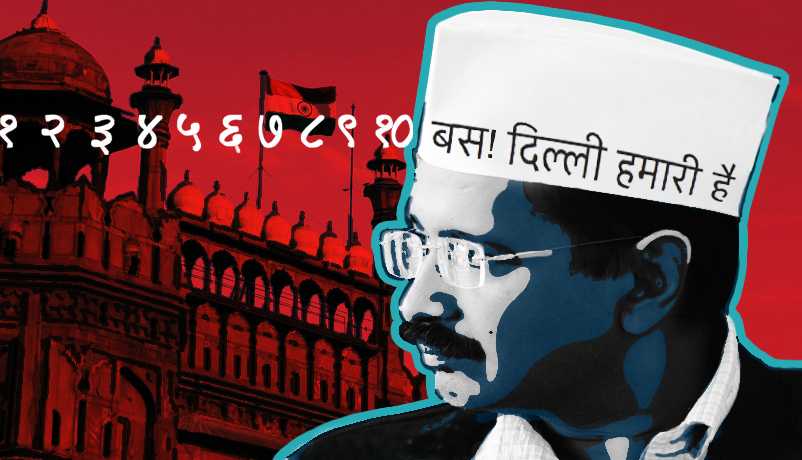
  • Delhi Full Statehood Issue

    source

    Should Delhi be given statehood?

    • Why in news?
    • Background
    • What is the present status of Delhi?
    • Arguments favoring statehood in Delhi
    • Why not to give statehood?
    • The way ahead

    Why in news?

    Recently Supreme Court has sought more clarity on the scope and boundaries of the relationship between the Delhi government and the Centre as at times, both the Centre and Delhi government contest each other’s right to administer and govern the National Capital and demands have been raised to give statehood to Delhi.

    Background

    The elected governments have time and again felt crippled in decision-making as the assembly does not have powers like other state assemblies. All political parties that have been in power in Delhi have lamented this and raised the demand for full statehood for the national capital.

    What is the present status of Delhi?

    • Presently, Delhi enjoys the character of a special Union Territory that has some unique institutions like an elected Legislative Assembly and a High Court.
    • In 1991, the Parliament, through the 69th amendment, introduced Article 239AA (Special Provisions with respect to Delhi) and conferred the right upon the people of the NCT of Delhi to elect their own legislature and government to make laws under certain entries of the state list of the Seventh Schedule of the Constitution and execute these laws respectively.
    • This amendment, however, did not confer full statehood upon Delhi and powers with respect to public order, land and police remained with the Union government.

    Argument favoring statehood to Delhi

    • Two power centres create confusion

    In the current system, power is divided between the chief minister and the Central government through the LG. This dual control creates an inherent tension between the two power centres.

    • Union government exercises immense authority

    Though Delhi Assembly is given the powers to govern and make laws on all but three subjects – public order, police and land but the Union government has been violating this constitutional provision and has been exercising authority on several subjects.

    • Law & order should be the state government’s responsibility

    Delhi Police reports to the Union Home ministry and this ties their hands in ensuring maintenance of law and order in the capital. To avoid the tussle, the Centre can create and deploy a central police force for guarding its buildings and for diplomatic duties. For law and order duties, Delhi’s elected government must be in full command.

    • Delhi’s land cannot be under Centre’s control

    The Delhi government cannot decide on its own the use that the city’s land should be put to. This leads to conflict at times.

    • Delhi does not have its own officers

    Each state of India has its own Public Service Commission that recruits bureaucrats to run the state government’s administrative machinery. Delhi, being a Union territory, does not have a cadre of officers of its own and is part of a common cadre shared with other UTs.

    • It is argued that if Delhi had its own cadre, like all states have, the impasse between the offices of the CM and the LG would not have arisen.
    • National capitals all over the world have sufficient powers
    • Experts say even if some national capitals like Washington DC, London and Paris are not states, all of them have a governance structure that gives the local government legislative, financial and administrative powers. Delhi has none of these.
    • As Delhi expands, clarity over jurisdiction of the local government will become increasingly imperative.
    • Some experts have argued that the assembly should be dissolved and the Centre be given full charge of the national capital. However, the abolition of an assembly once created will mean taking away the democratic rights of the people.

    Why not to give the statehood?

    • Delhi is different than other UTs because as the nation’s capital, it must reflect the best that the country offers. And that is only possible if land-use, zoning plans and building regulations are managed in consonance with the standards expected of a capital city. Parallels cannot be drawn with state capitals like Mumbai, Bangalore or Chennai (although that is constantly being done).
    • Statehood would bring land allocation under the city government, whose concern for the country’s capital would yield to satiating local demands.
    • In the national capital, the protection of dignitaries and the maintenance of public order are the highest priorities. The upkeep of maximum standards of security is how the safety of the capital is judged. An attack on a Union minister or diplomat would guarantee an ‘unsafe’ tag not just for Delhi but the country. So, police cannot be kept solely in the hands of state government.
    • An important point against the grant of statehood to the Delhi is the inability of its city government to bear the cost of police salaries and the pension liabilities of all city government employees, which are today borne entirely by the Centre.
    • It would weaken the case for delegation of authority under various statutes which is feasible and a necessity.

    What’s the way ahead

    • Full statehood will definitely bring better opportunities for the residents of Delhi and financial increments for the government’s budget but not without its own share of responsibilities like provision of top security infrastructure for law & order and internal security
    • From the point of view of the citizens of Delhi, what matters is that systems are transparent and day-to-day work is attended to. This does not need statehood—only good governance

    References:

  • CivilsDigest Ed#7 released – Test Students get a FREE Copy

    Hello,

    It is usually recommended that you be well versed with the current affairs of upto an year back of your Prelims attempt.

    For those appearing for the IAS 2016 Prelims, we advise that you go through with current affairs from August 2015 – July 2016.

    If you have made your current affairs notes, revisit those bullet points. If you haven’t been regular with current affairs, get the back issues of Civilsdigest magazine from our Instamojo store – Click here. 

    We released the CivilsDigest Ed#7 today

    It covers news from May 20 – June19


    If you have joined our Full Length test series which starts on 11th July, you would have received a FREE download link to this latest issue. Please check your email.

    Link to join the test series. The students who join the Full Length TS in the coming days will get their complimentary magazine within 24 hours.


More posts