💥UPSC 2026, 2027, 2028 UAP Mentorship (March Batch) + Access XFactor Notes & Microthemes PDF

Search results for: “”

  • IAS Prelims tit-bits- Current Affairs part 1

    1. Four Export Control Regimes

    • Wassenaar Arrangement – on Export Controls for Conventional Arms and Dual Use Goods and Technologies
    • Australia Group (AG) for control of chemical and biological technology that could be weaponized
    • Missile Technology Control Regime (MTCR) for the control of rockets and other aerial vehicles capable of delivering weapons of mass destruction
    • Nuclear Suppliers Group (NSG), for the control of nuclear related technology

    Discuss – India’s membership to these regimes

    Discuss – Brahmos missile and MTCR relationship

    2. Nuclear Suppliers Group 

    • founded in response to the Indian Nuclear Test in May 1974 <what was the name of that operation? What was the name of 1998 test operation?>
    • 48 member body prevents civilian nuclear trade being used for military purposes
    • Though signing of NPT is not a strict requirement for joining NSG, it has opened it’s doors to only those who have signed NPT or CTBT <notably France joined without being a signatory to NPT>

    Discuss- Difference b/w NPT and CTBT

    Discuss- India’s stand on NPT and CTBT

    3. Scheme for women Scientists 

    • KIRAN – Department of science and technology (DST) has restructured all the women specific programmes under one umbrella known as KIRAN (Knowledge Involvement in Research Advancement through Nurturing)
    • KIRAN is addressing issues related with women scientists (e.g. unemployment, relocation etc.) and provide opportunities in research, technology development/demonstration, and self-employment
    • CURIE – Under this name CURIE (Consolidation of University Research for Innovation and Excellence in Women Universities) KIRAN plans to develop state-of-the-art infrastructure in women universities in order to attract, train and retain promising girls students in S&T domain
    • Mobility Scheme – landmark programme under KIRAN will address relocation issue of women scientists working in regular position in Government Organizations

    Discuss – Similar initiatives for girl education like Digital Gender Atlas

    4. Tale of two Udaans

    • Central Board of Secondary Education (CBSE) launched the UDAAN scheme
    • aimed at promoting girl education and addressing the lowering of girl enrollment rates in engineering colleges in the nation.
    • It will assist the girls to prepare for IIT-JEE examinations to crack through to the best technological institutes in the country from 11th and 12th standard
    • Udaan, the Special Industry Initiative (SII) for J&K is funded by Ministry of Home Affairs and implemented by National Skill Development Corporation (NSDC).
    • special initiative to address the needs of the educated unemployed in J&K.
    • Udaan program is focused on youth of Jammu & Kashmir (J&K) who are graduate, post graduate and three year diploma engineer

    Discuss – STAR scheme, scheme for youth in Maoist areas

    5. AMRIT and AMRUT

    • Affordable Medicines and Reliable Implants for Treatment (AMRIT)
    • Launched by Ministry of Health and family welfare
    • aims to provide drugs for cardiovascular and cancer diseases at highly affordable prices
    • 1st AMRIT outlet opened at AIIMS, New Delhi
    • AMRUT – Atal Mission for Rejuvenation and Urban Transformation

    Discuss -Compare and Contrast Smart City Mission and AMRUT

    Discuss – Jan Aushadhi Store scheme and this year’s budget

  • Why would I buy the magazine when all the news is on the app & web?

    Hello,

    Here’s a valid concern/ legitimate query which we often receive on our mailboxes where the aspirants wonder – if all the news is available for FREE anyway, what’s the point behind buying the Civilsdigest magazine?

    Why even spend 50 bucks for a pdf when I am reading news daily on the FREE app and bookmarking important news to take them offline and revise without any internet access.

    OR

    Even if I do not have an android phone (since the Civilsdaily App is for android only), I can anyday go back on the NEWS tab on the website and read news filtered by calendar dates and that’s also super easy.

    Yes, it is. And you are right. You do not have to buy the magazine if these two amazing products are able to help you save time everyday and keep up with daily news that is focussed and important for your IAS Prep.

    So, buy the magazine only and only if

    #1. You find it convenient to read from a consolidated pdf which gives you a book-like feel and allows you to highlight specific words and points for easy recall

    #2. You value the time when you read things OFFLINE and do not want to be connected to internet and its interruptions while you are in DEEP STUDY mode

    #3. You are not very regular with news (because there is tons of static material to be covered) and love the comfort of a consolidated magazine just in case you miss some important bookmarks

    If you haven’t tried reading from our richly curated and nicely designed monthly magazines, we would invite you to try on one. FOR FREE.

    Click here to download the Edition #0

    It’s a 9 mb file and we would request you to be patient while you do so.

    If you like reading the FREE version… 

    We would request you to go to our Instamojo STORE and buy the rest of the editions for a princely sum of 50 bucks each!

    Click here to go to the instamojo store

  • Prelims tit-bits- Environment and Ecology part 2

    1. Ecotone v/s Ecocline

    • Ecotone describes a variation in species prevalence and is often not strictly dependent on a major physical factor separating an ecosystem from another, with resulting habitat variability
    • Ecocline is a variation of the physicochemical environment dependent of one or two physico-chemical factors of life, and thus presence/absence of certain species

    2. Keystone species and Ecosystem engineer

    Keystone species is a species that has a disproportionately large effect on its environment relative to its abundance <think of keystone of an arch>

    Ecosystem engineer is any organism that creates, significantly modifies, maintains or destroys a habitat.

    Discuss– Flagship and Foundation species

    3. Indicator species 

    • An indicator species is any species that defines a trait or characteristic of the environment.
    • are also known as sentinel organisms, i.e. organisms which are ideal for bio monitoring
    • Eg. Some species of lichens are very sensitive to air pollution. Their presence thus indicates low air pollution

    4. Ecological interaction

    • Mutualism is an interaction between species that is beneficial to both. <+ +> <eg. Flowering plants and pollinators>
    • Commensalism is an interaction in which one species benefits and the other species is unaffected <+ 0> <eh. Epiphytes and host plants>
    • Parasitism relationship is one in which one member of the association benefits while the other is harmed <+ ->
    • Amensalism is the type of relationship that exists where one species is inhibited or completely obliterated and one is unaffected by the other. <- 0> <competition and antibiosis>

    Discuss- What is symbiosis?

    Discuss- Difference b/w competition and antibiosis

    5. biodiversity hotspot 

    • A biogeographic region with significant levels of  that is under threat from humans
    • Norman Myers described the concept

    2 Criterias –

    • it must contain at least 0.5% or 1,500 species of vascular plants as endemics <species richness and endemicity>
    • it has to have lost at least 70% of its primary vegetation <threat perception>

    Discuss- Hotspots of India

  • Theft of Artifacts & Antiquities, Domestic Laws and International Conventions

    Every year INTERPOL issues alert on most-wanted art objects stolen and illicitly traded across the world and invariably Indian artifacts find a mention.

    Theft Of Artifacts: Why Is It Important Issue?

    • Global Financial Integrity (GFI) Report says that Illegal trade of artifacts and antiquities is one of the world’s most Profitable Criminal Enterprises ($6 Billion dollar)
      • GFI is a Washington based non-profit, research, advisory, and advocacy organization, which produces analyses of illicit financial flows. It was founded by Raymond baker.
    • UNESCO recently confirmed that ISIS is trafficking in art and antiquities to finance its operations, and earning approximately $1 million of revenue a day.
    • In 2015, Operation Hidden Idol was launched by USA’s Homeland Securities Investigation Department which to recover and repatriate looted around 2600 Artifacts and Antiquities by Subhash Kapoor worth an estimated 650 Crores ($100 million)
      • A Chola era sculpture of Shiva and Parvati (“Festival Bronze statute”) stolen from Tamil Nadu and smuggled into the US was eventually returned to India.
    • International Art market is a $50 billion market that is almost entirely unregulated

    source

    What does a country stand to lose when its Antiquities are stolen?

    • Double Jeopardy due to illicit removal of cultural objects
    • Irreplaceable: Stolen antiquities are irreplaceabe by themselves
    • Loss of Heritage: Crucial historical information and legacy about the artifact and its period is lost

    What are the Legal Provisions available with India to address such theft?

    • Antiquities And Art Treasures Act 1972
    • Indian Treasure Trove Act 1949
    • National Mission On Monuments And Antiquities– it creates a National Register On Artifacts that are unprotected
    • National Manuscript Mission for Documenting Heritage
    • Bilateral agreements to recover smuggled artifacts
      • For instance- Australia will return Nataraja Idol (Bronze) under its own Protection of Movable Cultural Heritage Act
      • It was originally from Sapthakanni Temple in Sripuranthan (under Chola times)
      • Australia is also a signatory to a UNESCO convention on the illicit import, export and transfer of ownership of cultural property

    source

    International Treaties and Conventions that protect Artifacts and Antiquities:

    source

    #1. Protection under Hague Convention (1954)

    • It provides for protection of Cultural Property in the Event of Armed Conflict
    • Rules to protect cultural goods during armed conflicts such as monuments, art, archaeological sites, scientific collections, manuscripts, books and other objects of artistic, historical or archaeological interest to ensure the cultural legacy doesn’t get affected during war.
    • The Hague Convention was adopted in the wake of the severe cultural destruction that occurred during the Second World War
    • Convention defines a Protective Sign (“Blue Shield”) to facilitate the Identification of protected cultural property during an armed conflict

    #2. Protection under Geneva Convention on War

    • Establishes the standards of international law for the humanitarian treatment of war.
    • Under Article 53 of Protection Of Cultural Objects And Of Places Of Worship in the Event of Armed Conflict– it provides for protection of UNESCO world heritage sites

    #3. Under UNESCO Convention (1970) on the Means of Prohibiting and Preventing the Illicit Import, Export and Transfer of Ownership of Cultural Property

    • Circulation of artifacts are prohibited under this UNESCO treaty
    • India is a signatory to this treaty

    Why have Legal Provisions in India been ineffective?

    1. Indian Treasure Trove Act (1949)
      • This act is too obsolete, was last amended in 1949
      • Because any object worth more than (mere) 10 Rs found hidden in soil is regarded as “Treasure”!
      • Barriers to Good Samaritans: Person who dutifully reports the find is often made to go through Cumbersome procedure
    2. Antiquities And Art Treasures Act
      • Under this act- antiquities in private possession must be registered and person trading in them must get a license.
      • But improper enforcement of law, and lack of punitive action on traders without licences has made a mockery of this law
    3. Archaeological Survey of India (ASI) has been criticized by a 2013 CAG report for failing to even recognize few artifacts set to return for repatriation by USA and Australian authorities
      • That ASI has no policy for management of antiquities. Storage conditions of these antiquities in monuments like Safdarjung’s Tomb and Purana Qila are pathetic.
    4. Our laws inhibit Community Participation
      • Local community is usually the first respondant to path-breaking discoveries
      • Many a cases such as recent Rakhigarhi Excavation (which went on to become largest IVC site) was first reported on Farming land by local workers and farmers
      • In absence of incentives to identify and report such Treasure Troves to authorities, they suffer irreparable damage as people treat them as derelicts

    Solutions: Lessons From Other Countries

    (i) Community Participation

    • Best practices in England and Wales have shown remarkable success in reducing theft of artefacts
    • Portable Antiquities Scheme: Encourages local communities to voluntarily report and registr discovery of artefacts with help of experts
    • Resulting database is placed in the public domain
    • India can learn from such laws and adapt features to suit Indian Conditions

    (ii) Enhanced And Dedicated Policing

    • Dedicated Art Police in Italy (country with highest UNESCO Natural and Cultural Heritage sites)
    • In 2009 itself, they recovered 60,000 pieces of looted antiquities and helped reduce art theft by 15%

    (iii) India should learn from USA’s Operation Hidden Idol

    • India should work on a mission mode to recover theft of its own artifacts by launching a policy for management of Antiquities and make ASI accountable for it.
    • It includes checking catalogues at international auction houses, posting news of such theft on websites, posting information about theft in the International Art Loss Registry, sending photographs of stolen objects electronically to dealers and auction houses and scholars in the field.

    What about Colonial Possessions of artifacts?

    • Yes, some argue that our heritage such as Koh-i-noor diamond and others in Western Museums is nothing but illegal acquisition.
    • Hence, that too comes under the mandate of Convention On The Means Of Prohibiting And Preventing The Illicit Import, Export and Transfer of Ownership of Cultural Property of which India and UK both are signatories

    We shall address topic of Colonial Repatriation in detail in the next blog of this series. Keep checking this collection


    Published with inputs from Amar 
  • Museums of India and Associated Issues

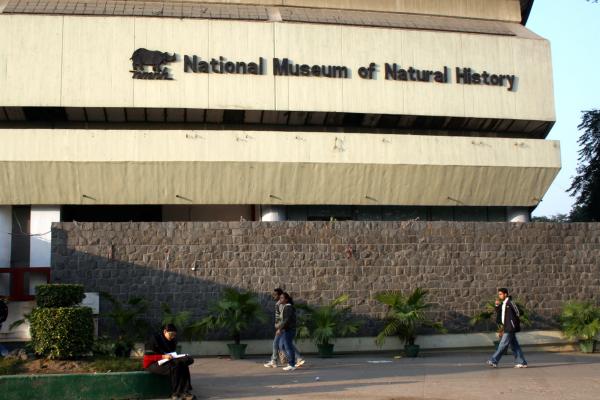
    Recently National Museum of Natural History caught fire due to adequate safeguards. It brought to our attention- the appalling state of our century old museums, and our utter disregard towards it.

    In today’s blog we will discuss at length as to what are the reasons behind it. What could be done to restore their legacy?

    As usual, we’ll start by learning about some notable institutions and harvest some important tid-bits for prelims along the way.

    Notable Museums of India

    1. National Museum, New Delhi (Subordinate Office under Ministry of Culture)

    source

    2. National Gallery of Modern Art, Bengaluru

    source

    3. Victoria Memorial Hall (VMH)

    source
    • Launched by Lord Curzon in 1906

    4. Asiatic Society, Kolkata

    source
    • Founder: British Indologist William Jones
    • Patronized by Warren Hastings (1st Governor of Bengal)
      • Notable: Charles Wilkins under his patronage published first English translation of Bhagvat Gita
    • Most important of the society’s achievements was the decipherment of the Brahmi script by James Prinsep in 1837
    • Successful decipherment inaugurated the study of Indian palaeography
    • First Museum in India was established by the Asiatic Society in 1814 called “Indian Museum” at Kolkata

    5. National Museum of Natural History (NMNH)

    source
    • Initiated in 1972 on the occasion of the 25th anniversary of India’s Independence
      • Although publically launched on 1978, coinciding with World Environment Day
    • Functions under the Ministry of Environment, Forest & Climate Change <and not Ministry of Culture>
    • NMNH has extended its geographical range by establishing Regional Museums of Natural History (Bhopal, Mysuru etc)

    Aims and Objectives of NMNH:

    • Museum of Natural History to depict its flora, fauna and mineral wealth
    • Environmental awareness among the masses (including conservation)
    • Educational programmes, guided tours and Teacher Orientation Workshops

    What are the issues with Indian Museums?

    1. Lack of a comprehensive Museum Policy

    • Salary and Personnel issues
      • Since the government does not assess or rate museums, there is no incentive for anyone to work.
      • Government does not pay professional salaries to personnel involved in restoration and conservation. Neither does it engage productively with Private and Civil Society
    • Revenue and Financial Issues
      • Currently there is no revenue model for museums, and the only source of money for them is from Ticket Sales that are meagre (Rates as low as 5 Rs for ASI renovated Museums)
      • Some revenue does come from increase in merchandise sales but any money a government museum makes- goes into a common kitty and is not spent on well performing museums.
      • Mumbai’s chhatrapati shivaji maharaj vastu sangrahalaya (MCSMVS) runs without government support By a handful of influential Mumbaites under a Board of Trustees
    • Lack of Privatisation
      • Government museums make up 90 per cent of the roughly 1,000 museums in India
      • They are banned from Partnerships with private individuals or organisations, and have to depend on Central funding even for day-to-day operations
    • Multiple ministries holding charges of various Museums <remember that not all museums come under Ministry of Culture, for eg- the recently fire hit NMNH>
    • Lack of autonomy

    2. Appalling state of Museum Management

    • 2011, UNESCO published a scathing report on the appalling conditions at India’s top 8 museums
      • Sub-standard maintenance, Lighting and signage, Archaic policies, no skilled manpower
    • Recently ASI lamented on the damages caused to 2nd BC Yakshi statue and a 3rd BC Mauryan lion, at the oldest museum of India in Kolkata due to careless handling by inadequately trained museum workers
    • Fire Safety Issues in Museums: That many of our museums would fail Fire Safety Audit requirements by NBC (National Building Code)
    • Failure in Mandate of Museums: That they act as mere closed-door guardians of treasures instead of disseminating them

    3. Security Issues

    • CISF is in charge of providing security to National Museum, New Delhi and Indian Museum in Kolkata.
    • But government has not been able to provide barrack accommodation in their campus as per CISF requirements.


    So how do we improve status of our Museums?

    1. Aforementioned UNESCO report and a 14-point museum reforms agenda put together by the Ministry of Culture in 2010-11 served as a wake-up call
    2. Instead of spending money in acquiring new collections, government should focus on launching Museum awareness drives. Relaunch old Museums with renewed vigor by highlighting their contemporary relevance to people.
    3. Increase people’s engagement to History by providing guided tours free of cost
      • For it is people that transform a museum from what is essentially just an archive.
    4. Administration should balance autonomy and accountability. Here we can take a cue from British Museums that are run by a government-appointed Board of Trustees.
    5. Digitization of information can cause the traditional model of museums (i.e. as static bricks-and-mortar) to expand to include virtual exhibits and high-resolution images of their collections that patrons can peruse.
    6. Train museum professionals by International Tie-ups. Organize exchange of Museum professionals as part of Biateral treaties between diplomatic exchanges.
    7. Improve Disaster Management of Museums
      • GIS and national library for ease of tracking and prioritizing evacuation of valuable artifacts
      • Follow NBC guidelines for strengthening museum structures
      • Cases of galleries must be shatter proof and bullet proof
      • In flood prone areas, valuable artifacts must not be stored in basements
    8. Involving Civil Society organizations by incentivising donation of precious artifacts for public viewing and conservation by NGOs like INTACH
    9. Training staff of museums to respond to disasters such as Fire, Earthquakes etc

    And how to reduce Fires in Museums?

    • Use of “plywood” for keeping the exhibits should be minimised
    • Ensure ventilation system in place
    • Ensure Fire Audit for the building has been conducted
    • Sprinkler system and water hydrants in the building, but should be functional- i.e. connected to a water source
    • Post Damage issues:
      • Structural damage due to fire may not keep building safe for long
      • Hence adequate reinforcements may be necessary, because complete collapse can’t be ruled out

    Annex: International Museum Day (IMD)

    • Theme of 2016 IMD: “Museums and Cultural Landscapes
    • Coordinated by the International council of museums (ICOM)
      • ICOM is a NGO maintaining formal relations with UNESCO <but not part of it>
      • ICOM also partners with entities such as the World Intellectual Property Organization, INTERPOL and the World Customs Organization,
    • International public service missions on fighting illicitly traded Artifacts and Ethical standards for Museums

    Published with inputs from Amar 
  • Prelims tit-bits- Environment and Ecology part 1

    1. Global Environment Facility

    It was established in October 1991 as a $1 billion pilot program in the World Bank to assist in the protection of the global environment and to promote sustainable development 

    It serves as financial mechanism for

    1. Convention on Biological Diversity (CBD)
    2. United Nations Framework Convention on Climate Change (UNFCCC)
    3. Stockholm Convention on Persistent Organic Pollutants (POPs)
    4. UN Convention to Combat Desertification (UNCCD)
    5. Minamata Convention on Mercury
    6. although not linked formally to Montreal Protocol on Ozone depleting substances, supports implementation of the Protocol in countries with economies in transition

    Discuss– Green Climate Fund and Green Bnds

    2. Earth summit, 1992 (UNCED)

    United Nations Conference on Environment and Development (UNCED) led to

    • UNFCC
    • CBD
    • UNCCD <combat desertification>

    Note – United Nation Conference on Human environment was held in 1972 at Stockholm

    Discuss-  what happened in Rio+20

    3. IPCC and UNEP

    • United Nations Environment Programme (UNEP) is an agency of United Nations and coordinates its environmental activities.
    • It was founded in 1972
    • It publishes Global Environment Outlook <GEO>
    • Intergovernmental panel on Climate Change (IPCC) was established in 1988 by two UN organization, UNEP and World meteorological Organization (WMO)
    • The IPCC does not carry out its own original research, nor does it do the work of monitoring climate or related phenomena itself. The IPCC bases it’s assessment on published literature.
    • So far 5 assessment reports have been published

    Discuss – who publishes global economic outlook

    Discuss- major findings of 5th assessment report

    Discuss- what is this Brundtland commission report? When was it published?

    4. Convention on Biological Diversity

    3 goals

    1. conservation of biological diversity <cartagena protocol on biosafety, 2003, to protect biodiversity from LMOs>
    2. sustainable use of its components
    3. fair and equitable sharing of benefits arising from genetic resources < Nagoya Protocol on Access to Genetic Resources and the Fair and Equitable Sharing of Benefits Arising from their Utilization, wef 2014>
    4. There are 20 Aichi <place in Japan> Targets for biodiversity under short term strategic plan for biodiversity 2011- 2020
    • COP 13, 2016 will take place in Cancum, Mexico
    • COP 12, 2014 was held in Pyeongchang, ROK and the theme was Biodiversity for Sustainable Development

    Discuss- Imp Aichi targets

    5. Biological Diversity Act, 2002

    enacted to meet the obligations under CBD

    3 tier structure

    • National Biodiversity Authority (NBA)-autonomous body, headquartered in Chennai
    • State Biodiversity Boards (SBB)
    • Biological management committees (for each local body)

    Imp.- foreigner, non-resident Indian or foreign company need to take permission from NBA before obtaining any biological resources or associated knowledge from India for research, survey, commercial utilisation while citizens orIndian companies need to take permission from the concerned State Biodiversity Board

    Result of research using biological resources from India cannot be transferred to a non-citizen or a foreign company without the permission of NBA

    Discuss- Traditional Knowledge Digital Library (TKDL)


  • Prelims tit-bits- Polity part 7

    1. Charged Expenditure

    • Legislature can discuss it but can not vote on it
    • Supreme court, high court, President, VP, Deputy chairperson, Speaker, Deputy Speaker, CAG, UPSC etc have their expenditure charged on CFI or States
    • Election Commission expenditure is not charged on CFI
    • interest and other debt related charges of the Government and any sums required to satisfy any court judgment pertaining to the Government also comes under charged expenditure

    Note– Salary of high court judges is charged on states but pension on CFI

    Discuss – rationale behind charged expenditure

    2. Constitutional and statutory bodies

    Constitutional bodies – mentioned in the constitution, derive their power from constitution . Eg. Supreme court, High court, EC,  FC, CAG, UPSC, AG, NCSC, NCST, INTER STATE COUNCIL

    Statutory bodies – created by an act of parliament. Eg. NHRC, LOKPAL, CVC, CIC, NCPCR,  NCW,  NCM,  NCBC.

    NON STATUTORY OR EXECUTIVE BODIES -created by an executive resolution of Union cabinet . Eg. Erstwhile planning commission and NDC, present NITI Ayog

    Note-  CVC was created as executive body in 1964 after Santhanam committee report and converted into a statutory body in 2003 in pursuant of Supreme Court judgment in Vineet Narayan- Jain Hawala case.

    Discuss – Other imp constitutional bodies

    3. Removal of Imp. constitutional/ statutory functionaries 

    Supreme court, High court, CAG, CEC, SEC

    Ground – proved misbehaviour or incapacity

    Process – resolution to that effect passed by 2/3 present and voting plus absolute majority

    Note– Election  commissioners other than CEC can be removed only on the recommendation of CEC.

    UPSC, State PSC, NHRC,SHRC ,CVC, CIC, SIC

    Ground – misbehaviour

    For limited number of grounds mentioned in the constitution or statute, they can be directly removed without supreme court inquiry. Eg. Insolvent, infirmity of body or mind , paid employment outside etc.

    Process – after an inquiry by supreme court

    Discuss– Can you tell us the whole process of removal of a supreme court judge?

    4. Appointment by high powered committee

    CIC – PM, Leader of Opposition in Lok Sabha, any cabinet minister nominated by PM

    CVC –  PM, Leader of Opposition in Lok Sabha, Home Minister

    Director CBI – PM, Leader of Opposition in Lok Sabha,, Chief justice of India

    NHRC – 6 member committee

    PM, leader of opposition LS , speaker, leader of opposition Rajya Sabha, Deputy Chairperson RS

    Lokpal: 5 member selection committee considers names recommended by 7 member search committee

    PM , Speaker,  Leader Of Opposition LS , chief justice, 1 jurist nominated by 1st 4

    Note– For most of the Constitutional and statutory bodies formed before 1991, appointment is by govt. Eg.- EC, CAG, FC, UPSC, SPSC ,NATIONAL COMMISSION FOR SC

    Discuss- constitutional functionaries who can not be employed in govt service after retirement?

    Discuss – Reforms needed to make Election commission truly independent?

    5. Equivalence of posts

    • CIC = CEC, IC =EC, STATE CIC= EC, SIC = Chief Secretary, CVC= CHAIRPERSON UPSC, VC= MEMBER UPSC ,
    • NITI AYOG Vice Chairperson- rank of cabinet minister
    • Members NITI Ayog- rank of minister of state
    • NSA – rank minister of state
    • CAG SALARY EQUALS THAT OF SUPREME COURT JUDGE

    Discuss – Can you relate this equivalence with order of precedence?

    Discuss– Indian Order of Precedence.

  • [Arts & Heritage Institutions #4] ICCR and ICHR


    So far in Art & Heritage Institution series, we’ve learnt about institutions that preserve our heritage and promote our diverse arts- at the national level. But one of India’s key asset globally is its “soft-power” or Cultural diplomacy which involves the use of cultural influence.

    In this post, we will learn about those Institutions that enable India to exert such influence.

    1. INDIAN COUNCIL FOR CULTURAL RELATIONS (ICCR)

    source

    • ICCR is analogous to the British Council, France’s Alliance Francaise, Germany’s Goethe-Institut and China’s Confucius Institute
    • Founded in 1950 by Maulana Abul Kalam Azad, independent India’s first Education Minister
      • Maulana also helped establish other institutions that we’ve covered previously in this series such as Sahitya Akademi, and Sangeet Natak Akademi. He also founded Lalit Kala Akademi <promotes Visual Arts- Folk and Contemporary>
    • Soft power vision, ‘to promote a communion of cultures and a creative dialogue among nations.’
    • Its broad mandate is to develop relations with:
      • Other countries and peoples (Cultural agreements with 72 countries)
      • National and inter-national organisations in the field of culture

    General assembly

    • Consists of representatives each of the Lalit Kala Akademi, Sahitya Akademi and Sangeet Natak Akademi
    • Eminent artistes from the fields of performing, fine and plastic arts
    • Representatives of universities or of institutions
    • President shall be appointed by the President of India and shall hold office for three years

    Initiatives:

    1. Exhibitions

    • Organizing various Foreign film festivals
    • Sponsors individual performers in dance, music, photography, theatre, and the visual arts. Here it collaborates with Sangeet Natak Akademi, Lalit Kala Akademi and other such institutions.

    2. Academic

    • Council sends visiting professors to collaborate in the teaching and research programmes of foreign universities relating to Indian studies and Indian languages

    3. Scholarships

    • 6252 foreign students are studying in Indian Universities and other Institutions on scholarship provided by ICCR
    • ICCR has 20 Regional Offices (ROs) to look after the welfare of foreign students.
    • India-Africa Relationship: ICCR offered 900 scholarships around 54 countries of Africa in the past decade.

    4. Promotion of Indology

    • ICCR has helped fund programmes on Indology in Russia at the University of Moscow. It is one of the key element of Indo-Russian diplomatic goodwill.
    • Indology is the study of the history and cultures, languages, and literature of the Indian subcontinent, especially Ancient India (Vedic studies et al)

    5. Promoting Hindi <which Article in our Constitution mandates this?>

    • ICCR, carries out various activities to popularize and promote Hindi language in other countries
    • Chairs of hindi language in universities
    • Translating works of World Literature into Hindi and other Indian languages
    • Translation of Sanskrit and Hindi classics into foreign languages
    • Celebration of the ‘‘World Hindi day” on 10th of January every year (across the world along with Ministry of External Affairs)
      • Trap Info: A different occasion- National Hindi Divas is celebrated in India on September 14 every year to mark the day on which the Constituent Assembly adopted Hindi as the “Official” Language of the Union.
    • Bi-monthly Hindi journal – “Gagananchal

    6. Notable Publications

    • Indian Horizons in English
    • Africa Quarterly in English

    Comparison between China’s Confucius Institute (CI) and ICCR:

    • In ICCR’s 64 years of existence it has only 37 overseas centres, while today there are over 480 CIs having started in 2004 only.
    • CIs function inside established universities, colleges and schools world over <ICCR can also follow this strategy to increase penetration>
    • Unlike CI, ICCR is autonomous body
    • India can learn from CI and help promote Yoga through ICCR’s extensive network in over 90 countries.

    2. INDIAN COUNCIL OF HISTORICAL RESEARCH (ICHR)

    source
    • Established by an Executive Order
    • Disburses “funds” for carrying out research to indian and foreign scholars
    • Aid received from the Department of Higher Education in the MoHRD <NOT Ministry of Culture>

    Objective: National direction to an objective and Scientific writing of history

    Composition:

    • Eminent historian nominated by the Government
    • Representative of the UGC
    • Director General of the Archaeological Survey of India <Logo- Sanchi Stupa + Emblem>
    • Director General of the National Archives of India

    Journals:

    1. Indian Historical Review (bi-annually)
    2. Itihas (in Hindi)


    Published with inputs from Amar 
  • Reusable Launch Vehicle (RLV-TD) – Everything that you need to know

    source: NDTV

    First things first, let’s hold your excitement down – these are baby steps towards a fully functional RLV. What ISRO tested few days is a TD HEX-01 (Technology demonstrator) – It is a small, aircraft-like, winged structure.

    Before we go into the details of

    The RLV-TD is a series of technology demonstration missions that has been considered as a first step towards realising a Two Stage To Orbit (TSTO) fully re-usable vehicle.

    Technology demonstration (TD) project by ISRO is to test different parameters related from the launch to landing of a Reusable launch Vehicle viz.

    1. Testing the characterisation of aero-thermo dynamics of hypersonic flight
    2. To test autonomous mission management of hypersonic vehicles 
    3. To test re-entry technology for the vehicle

    Important Points 

    1. RLV-TD-HEX1, a prototype of actual vehicle, successfully launched on 23 May 2016 
    2. Launched From – SDRC, Sriharikota, AP
    3. 2 Stage Process – launching rocket (HS9 Solid state booster) & RLV-TD (atop the rocket)

    1st phase of testing RLV – Launched beyond the atmosphere after which RLV-TD separated & atmospheric reentry began @Ma5 (Hypersonic speed) – Navigation guidance and control system steered it accurately for a controlled descent  – landed in Bay of Bengal, 450km from Sriharikota. 

    RLV will require 5km landing airstrip which is not available as of now. Will be build at SDRC, Sriharikota in near future. 

    Ultimate Aim & Advantages of the RLV would be to send manned missions, including satellites into space and re-enter the Earth’s atmosphere without extreme P and Heat condition (T)

    1. Successful launch of RLV will have a huge impact on launching cost – will slash it down by 80% – RLV aims to achieve a low cost, reliable and on-demand space access 
    2. Future Moon and Mars missions, Inter-Planetary missions 
    3. Make India competitive Space player globally in terms of cheap affordable satellite launched (for LDCs), regular and periodic space missions and various space exercises like building its own Space Station in future similar to ISS, Tiangong-1
    4. India will join select league of nations – Only USA (Columbia, Challenger, Discovery, Endeavour, Atlantis), Russia (Soyuz) & China (Shenzhou) have their own Space flights. After successful induction of RLV, India will also have its own manned spacecraft capability.

    Development Process 

    1. In Jan 2012 – Prototype of RLV-TD was approved to be built & tested 
    2. RLV-TD developed at VSSC, Thiruvananthapuram
    3. Aerodynamic characterisation – done by National Aerospace Laboratories in India

    Thermal tiles does at VSSC, Trivandrum – Critical component during atmospheric reentry of the flight – to prevent the structure damage due to sudden rise in T due to Hypersonic speed (Ma5)

    Total 4 phases of Technology demonstration and assessment

    Technology will be developed and tested in phases through as series of experimental flights 

    1. HEX – Hypersonic Flight Experiment – Done May 23, 2016 
    2. LEX – Landing Experiment 
    3. REX – Return Flight Experiment 
    4. SPEX – Scramjet Propulsion Experiment

    The final version will take 10-15 years to be ready. Still long time to go!! Other agencies involved in building reusable launch vehicles 

    1. SpaceX – Elon Musk 
    2. ESA
    3. JAXA – Japan 
    4. Blue Origin (Jeff Bezos – Amazon) 

    Published with inputs from Gaurav
  • [Arts & Heritage Institutions #3] Sahitya Akademi and Sangeet Natak Akademi

    Continuing the series on Cultural Institutions, today we’ll exclusively focus on Art Institutions. While earlier we learnt about Institutions that preserve Tangible Heritage such as Architecture (ASI and INTACH), following Institutions are noteworthy because they promote Intangible Heritage of our culture; notably- Literature, Music and Dance.

    These are especially important considering recent furore of Sahitya Akademi awardees returning their awards in what was referred to as “Award Wapasi”. We’ll also learn about another Institution and various awards & means through which they promote arts in India. So, let’s get started!

    1. Sahitya Akademi (1954)

    source
    • Its an Autonomous organization fully financed by the Government
    • Also referred to as India’s National Academy of Letters
    • Entrusted with promotion of Literature (“Sahitya” means Literature in Hindi) through following mechanisms:
    1. Literary dialogue, publication and promotion
    2. Undertakes literary activities in Twenty-four Indian languages
      • Trap Info: Note that it goes beyond 22 languages of the 8th Schedule to include English + Rajasthani
    3. Development of Indian literature

    Awards and Fellowships

    1. Sahitya akademi award (Plaque and Cash of 1 lac)
      • Poetry, Novel, Essay, Autobiography, Literary Criticism in 24 languages
    2. Bhasha samman
      • Awards to writers for significant contribution to Indian languages other than the above 24 major ones
      • Contribution to classical & medieval literature
      • Given to writers, scholars, editors, collectors, performers or translators
    3. Premchand fellowships (started in 2005)
      • Given to persons of eminence in the Field of Culture from SAARC countries <thus its scope extends to beyond (i) India and (ii) Literature>
    4. Coomarswamy fellowships
      • Given to scholars from Asian countries <not just SAARC> to spend 3 to 12 months in India to pursue a literary project
    5. Sahitya Akademi fellowship
      • Given to the “immortals of literature
      • Limited to 21 people at a time
      • First recipient was 2nd president of India Dr. Sarvepalli Radhakrishnan
      • Other notable ones: Khushwant Singh, VS Naipaul

    Issues faced by Sahitya Akademi

    • Although Sahitya Akademi awards are notable for its merit based selections it is not untouched by controversies.
    • A jury comprising of Literary Stalwarts selects awardees (as opposed to Prime Minister for Civilian Awards such as Bharat Ranta, Padma Shree etc)
      • This is a good reason why the Sahitya Akademi awardees shouldn’t be returning their awards, as they’ve been conferred on their artistic merit. Returning the award would be demeaning the jury’s decision and the historic institution.
    • Transparency issues regarding nomination of litterateurs for the coveted Sahitya Akademi Award
      • Interference of Bureaucrats in nomination procedure, who aren’t qualified to make any kind of literary selections (they narrow down the pool of nominees for Jury to make final selection from)
    • Due to this reason, past awardees such as Khushwant Singh had criticized the process for ignoring eminent writers and awarding below-par writers and sub-standard literary works.

    2. Sangeet Natak Akademi  (1953)

    source

    Mandate/Objectives:

    • Another Autonomous Institution under Ministry of Culture
    • Promotion of performing arts– Indian music, dance and drama
    • Maintains a Gallery of Musical Instruments
    • Maintenance of standards of training in the performing arts
    • Teaching institutions
      • Kathak Kendra, Delhi (Classical Dance from Uttar Pradesh)
      • Jawaharlal Nehru Manipur Dance Akademi in Imphal
      • Sattriya Centre (Classical Dance from Assam)
      • Centre for Kutiyattam (Age-old Sanskrit theatre of Kerala; Also an Indian Intangible Cultural Heritage as per UNESCO)
      • Chhau Centre (Tribal martial dance in Odisha, Jharkhand and West Bengal)

    Awards:

    1. Sangeet Natak Akademi Award:
      • Highest national recognition conferred on eminent artistes.
    2. Sangeet Natak Akademi Fellowship, Ratna Sadsya
      • To distinguished individuals for their contribution to the field of arts, music, dance and theatre.
    3. Ustad Bismillah Khan Yuva Puruskar:
      • Given to young artists for their talent in the fields of music, dance and drama
      • Notable info about Ustad Bismillah Khan:
        • Known for popularizing the shehnai, a subcontinental wind instrument of the oboe class
        • Awarded India’s highest civilian honour, the Bharat Ratna, in 2001, becoming the Third classical musician after M. S. Subbulakshmi and Ravi Shankar to be accorded this distinction


    Published with inputs from Amar 

More posts