💥UPSC 2026, 2027, 2028 UAP Mentorship (March Batch) + Access XFactor Notes & Microthemes PDF

Search results for: “”

  • India-Australia ties built on Trust: PM

    australia

    Central Idea

    • PM Modi addressed a community event in Sydney, emphasizing the strong foundations of trust and respect between India and Australia.
    • He credited the Indian diaspora for the success of this relationship.
    • The event aimed to strengthen cultural ties and was attended by over 21,000 people, including Australian PM Anthony Albanese.

    India-Australia Relations: A Backgrounder

    • The India-Australia bilateral relationship has undergone evolution in recent years, developing along a positive track, into a friendly partnership.
    • The two nations have much in common, underpinned by shared values of a pluralistic, Westminster-style democracies, Commonwealth traditions, expanding economic engagement etc.
    • Several commonalities include strong, vibrant, secular and multicultural democracies, free press, independent judicial system and English language.

    Historical Perspective

    • Early colonization: The historical ties between India and Australia started immediately following European settlement in Australia from 1788.
    • A penal colony: All trade, to and fro from the penal colony of New South Wales was controlled by the British East India Company through Kolkata.
    • Diplomatic ties: India and Australia established diplomatic relations in the pre-Independence period, with the establishment of India Trade Office in Sydney in 1941.
    • Expansion of ties: The end of the Cold War and simultaneously, India’s decision to launch major economic reforms in 1991 provided the first positive move towards development of bilateral ties.

    Various dimensions of ties

    [A] Political partnership

    • Both countries are members of-
    1. G-20
    2. ASEAN Regional Forum (ARF),
    3. IORA (Indian Ocean Rim Association),
    4. Asia Pacific Partnership on Climate and Clean Development,
    5. East Asia Summit and
    6. The Commonwealth
    7. QUAD (Quadrilateral Security Dialogue)
    • Australia has been extremely supportive of India’s quest for membership of the APEC (Asia Pacific Economic Cooperation).
    • Australia wholeheartedly welcomed India’s joining of the MTCR (Missile Technology Control Regime).

    [B] Trade and Economy

    • 5th largest trade partner: India is the 5th largest trade partner of Australia with trade in goods and services.
    • Huge trade volume: Two-way trade between India and Australia was worth A$ 24.3 billion ($18.3 billion) in 2020, up from just $13.6 billion in 2007, according to the Australian government.
    • Uranium exports: After a series of attempts, in 2016, Australia opened the door for uranium exports to India.
    • R&D: An Australia-India Strategic Research Fund (AISRF) which was established in 2006, supports collaboration between scientists in India and Australia on cutting-edge research.

    [C] Cultural ties

    • P2P ties: There is a longstanding people-to-people ties, ever increasing Indian students coming to Australia for higher education.
    • Bond over cricket and tourism: Growing tourism and sporting links, especially Cricket and Hockey, have played a significant role in further strengthening bilateral relations between the two countries.
    • Skilled workforce: India is one of the top sources of skilled immigrants to Australia.
    • Indian students: The number of Indian students continue to grow with approximately 105,000 students presently studying in Australian universities.
    • Diaspora: After England, India is the second largest migrant group in Australia in 2020.

    [D] Strategic Partnership

    • In 2009, India and Australia established a ‘Strategic Partnership’, including a Joint Declaration on Security Cooperation which has been further elevated to Comprehensive Strategic Partnership in 2020.
    • The Mutual Logistics Support Agreement has been signed during the summit that should enhance defence cooperation and ease the conduct of large-scale joint military exercises.
    • There is a technical Agreement on White Shipping Information Exchange.
    • Both nations conduct bilateral maritime exercise AUSINDEX. In 2018, Indian Air Force participated for the first time in the Exercise Pitch Black in Australia.
    • Foreign and Defence Ministers of both countries agreed to meet in a ‘2+2’ format
    • The first-ever Quad Leaders’ Virtual Summit held on 12 March 2021 saw the participation of Prime Ministers of India, Australia, Japan and President of USA.
    • A Civil Nuclear Cooperation Agreement between the two countries was signed in September 2014 during the visit of then PM Tony Abbott to India.

    Significance of the ties

    • COVID Management: Australia is one of the few countries that has managed to combat COVID-19 so far through “controlled adaptation” by which the coronavirus has been suppressed to very low levels.
    • STEM: From farming practices through food processing, supply and distribution to consumers, the Australian agribusiness sector has the desired R&D capacity, experience and technical knowledge.
    • Natural resources: Australia is rich in natural resources that India’s growing economy needs. It also has huge reservoirs of strength in higher education, scientific and technological research.
    • Alliance with US: The two countries also have increasingly common military platforms as India’s defence purchases from the US continue to grow.
    • Affinity with ASEAN: Australia has deep economic, political and security connections with the ASEAN and a strategic partnership with one of the leading non-aligned nations, Indonesia.
    • Containing China: The Indo-Pacific region has the potential to facilitate connectivity and trade between India and Australia. Both nations can leverage their equation in QUAD to contain China.

    International cooperation

    • Support at UNSC: Australia supports India’s candidature in an expanded UN Security Council.
    • APEC: Australia is an important player in APEC and supports India’s membership of the organisation. In 2008, Australia became an Observer in SAARC.

    Some irritants in ties

    • Trade imbalance: India’s trade deficit with Australia has been increasing since 2001-02 due to India-Australia Free Trade Agreement. It is also a contentious issue in the ongoing RCEP negotiations which India left.
    • High tariff on agri products in India: India has a high tariff for agriculture and dairy products which makes it difficult for Australian exporters to export these items to India.
    • Non-tariff barriers in Australia: At the same time, India faces non-tariff barriers and its skilled professionals in the Australian labour market face discrimination.
    • Visa Policy: India wants greater free movement and relaxed visa norms for its IT professionals, on which Australia is reluctant.
    • Future of QUAD: Australian lobby has sparked speculation over the fate of the Quadrilateral Consultative Dialogue (the ‘Quad) involving India, Australia, Japan and the United States.
    • Nuclear reluctance: Building consensus on non-nuclear proliferation and disarmament has been a major hurdle given India’s status as a nuclear power.
    • Racism against Indians: Increasing Racist attacks on Indians in Australia has been a major issue.

    Way forward

    • Upgradation of 2+2 format: It is prudent too for New Delhi and Canberra to elevate the ‘two plus two’ format for talks from the Secretary level to the level of Foreign and Defence Ministers.
    • Removal of trade barriers: Both nations need to resolve disputes at the WTO with regard to the Australian sector can act as a serious impediment.
    • Balancing China: An ‘engage and balance’ China strategy is the best alternative to the dead end of containment.


    Get an IAS/IPS ranker as your personal mentor for UPSC 2024

  • Delhi Governance New Ordinance

    ordinance

    Central Idea

    • The central government issued an Ordinance on May 19, overturning a unanimous Supreme Court verdict.
    • The Ordinance grants the Lieutenant Governor of Delhi authority over services, challenging the elected government’s control over officials’ transfer and posting.
    • This raises constitutional concerns about the balance of power between the elected government and the Lieutenant Governor.

    Issues with this ordinance

    • The Ordinance bestowed power over services to the Lieutenant Governor of Delhi.
    • It established the “National Capital Civil Service Authority,” consisting of the Chief Minister and two senior IAS officials, to decide matters by majority vote.
    • This provision potentially allows the elected Chief Minister’s viewpoint to be overruled.

    Key issues with the current model of Governance of Delhi

    • Undermining the elected government: The LG, who will be the government, is under no obligation to implement any law passed by the assembly or carry out the directions of the house as he is not responsible to the assembly.
    • Lack of Executive Accountability: The Lieutenant Governor, who is the head of government, is not accountable to the assembly, which undermines the principle of executive accountability.
    • Against the privilege of legislature: Framing the rules to conduct its proceedings is thus a part of the privilege each house of a legislature enjoys.
    • Delay in decision-making: The requirement for LG’s approval for many decisions has led to delays in decision-making, which has impacted the development and governance of the city.
    • Accountability issues: The division of responsibilities between the elected government and the Lieutenant Governor has led to difficulties in fixing responsibility for actions and decisions.
    • Against Co-operative Federalism: The Act not only negates cooperative federalism but also upturns the fundamental principles laid down by the Supreme Court in Government of NCT Delhi vs Union of India case (2018).
    • Control over Services Department: Governance has always been a contentious issue since Delhi is not a full state and the Services department comes under the L-G.

    What is Ordinance?

    • Under Article 123 of the Constitution, the President possesses law-making powers through the issuance of ordinances during the recess of Parliament.
    • Article 213 grants the Governor of a state the authority to issue ordinances when the state legislative assembly or either of the two Houses (in states with bicameral legislatures) is not in session.
    • However, there are limitations to this authority:
    1. Issuance during Recess: The President can only promulgate an ordinance when one or both Houses of Parliament are not in session.
    2. Immediate Action: An ordinance can only be issued when the President deems it necessary for immediate action.
    3. Justiciability: The President’s intentions to issue ordinances can be subject to judicial review if mala fide intentions are proven.

    Features of Ordinances

    Several characteristics and provisions are associated with ordinances:

    • Retrospective Effect: An ordinance can have a retrospective application, meaning it can be enacted prior to its approval.
    • Nullity during Parliamentary Session: An ordinance issued while Parliament is in session is considered null and void.
    • Time Limit for Approval: An ordinance must be approved by Parliament within six weeks of its reassembly. Failure to do so leads to its expiration.
    • Continuation of Acts and Laws: Acts, laws, and events resulting from the ordinance remain in effect until its expiration.
    • Limits on Legislative Authority: Ordinances can only be passed on subjects within the legislative competence of the Indian Parliament.
    • Protection of Fundamental Rights: Ordinances cannot be used to revoke the fundamental rights guaranteed by the Indian Constitution. Their enforcement would render them null and void if both Houses pass a resolution opposing them.

    Issues with the Ordinances

    The use of ordinances has raised concerns regarding their potential misuse and circumvention of democratic processes. Some key concerns are:

    • Bypassing the Legislature: Deliberate bypassing of the legislature to avoid debate and deliberation on contentious legislative proposals undermines democratic principles.
    • Repromulgation of Ordinances: Repromulgation without placing the ordinance before the legislature subverts democratic legislative processes and the separation of powers.
    • Presidential Satisfaction: The satisfaction of the President as a requirement for issuing an ordinance provides scope for potential misuse.
    • Ignoring Supreme Court’s Judgments: Instances of ordinances being promulgated despite Supreme Court judgments highlighting their conditional and exceptional nature raise concerns about adherence to constitutional principles.

    Judicial Safeguards to avoid re-promulgation of ordinances

    1. Supreme Court in RC Cooper vs. Union of India (1970) held that the President’s decision to promulgate ordinance could be challenged on the grounds that ‘immediate action’ was not required, and the ordinance had been issued primarily to bypass debate and discussion in the legislature.
    2. It was argued in DC Wadhwa vs. the State of Bihar (1987) that the legislative power of the executive to promulgate ordinances is to be used in exceptional circumstances and not as a substitute for the law-making power of the legislature.
    3. Supreme Court in Krishna Kumar Singh v. the State of Bihar held that the authority to issue ordinances is not an absolute entrustment, but is “conditional upon satisfaction that circumstances exist rendering it necessary to take immediate action”.

    Way ahead

    • Every ordinance issued must be laid before both the Houses of Parliament or state legislature within six weeks from the reassembly of Parliament or state legislature and it ceases to exist if it is not approved within six weeks of reassembly.
    • 44th Constitutional Amendment has reiterated that the satisfaction of the President to promulgate ordinance could be challenged in case an ‘immediate action’ was not required.
    • Our Constitution has provided for the separation of powers among the legislature, executive and judiciary where enacting laws is the function of the legislature.
    • The executive must show self-restraint and should use ordinance making power only in unforeseen or urgent matters and not to evade legislative scrutiny and debates.

    Conclusion

    • The recent Ordinance and its constitutional implications highlight the need for a balanced distribution of powers between the elected government and the Lieutenant Governor in Delhi.
    • It is essential to uphold democratic principles and ensure that legislative functions are carried out by the appropriate constitutional authorities.
    • A comprehensive review of the governance framework in Delhi may be necessary to address these concerns and ensure effective and harmonious governance in the capital city.


    Get an IAS/IPS ranker as your personal mentor for UPSC 2024

  • Highlights of the proposed Digital India Act, 2023

    Central Idea

    • The Digital India Bill, a comprehensive overhaul of Internet laws, will be unveiled in June 2023. This bill represents a significant update since the Information Technology Act of 2000.

    What is the Digital India Bill?

    • DIA will consist of 4 parts:
    1. Digital Personal Data Protection Bill,
    2. DIA rules,
    3. National Data Governance Policy, and
    4. Indian Penal Code amendments

    Need for such legislation

    • India has 850 million internet users, making it the world’s largest “digitally connected democracy.”
    • The IT Act, created for the pre-digital era, lacks provisions for user rights, trust, safety, and modern cyber threats.
    • Growing cyber crimes, disinformation, and privacy concerns necessitate an updated legislation.

    Goals of the Digital India Bill 

    • Evolvable digital law: Flexible rules adaptable to changing technological trends.
    • Adjudicatory mechanism: Accessible mechanism for resolving online civil and criminal offenses.
    • Principles and rules-based approach: A legislative framework based on overarching governing principles.

    Key components of the DIA

    • Open Internet: Promotes choice, competition, diversity, fair market access, and ease of doing business, preventing the concentration of power.
    • Online Safety and Trust: Safeguards users against cyber threats, revenge porn, defamation, cyberbullying, and moderates fake news. Advocates for digital rights and protects minors.
    • KYC Requirements: Mandates Know Your Customer (KYC) for privacy-invading devices like spy camera glasses.
    • Monetization Rules: Overhauls rules for platform and user-generated content to align with the DIA.

    Key feature: Reconsideration of Safe Harbour

    • The government is reconsidering a key aspect of cyberspace — ‘safe harbour’.
    • Safe harbour is the principle that so-called ‘intermediaries’ on the internet are not responsible for what third parties post on their website.
    • This is the principle that allows social media platforms to avoid liability for posts made by users.
    • Safe harbour has been reined in in recent years by regulations like the Information Technology (Intermediary Guidelines and Digital Media Ethics Code) Rules, 2021, which require platforms to take down posts when ordered to do so by the government, or when required by law.

    Way Forward

    • The detailed timeline is undisclosed, but the government aims to conduct a comparative study of global laws and consult with experts, industry, the public, and relevant forums.
    • The draft Bill will undergo consultation, followed by a draft Cabinet note before the final version is released.


    Get an IAS/IPS ranker as your personal mentor for UPSC 2024

  • Digital Census and Self-enumeration through NPR Update

    Central Idea

    • The article discusses implementation of a digital Census and the option for citizens to self-enumerate through updating their National Population Register (NPR) details online.

    What is the news?

    • Census 2021, the first digital Census, will allow citizens to “self-enumerate” when it is conducted.
    • The government has not announced the date for the Census yet, and a notification from January 2, 2023, indicates that the exercise is postponed until at least September.

    What is National Population Register (NPR)?

    • The NPR is a register that records the usual residents of the country.
    • It is prepared at various levels, including local, sub-district, district, state, and national.
    • The creation of the NPR is governed by the provisions of the Citizenship Act 1955 and the Citizenship (Registration of Citizens and issue of National Identity Cards) Rules, 2003.
    • It is mandatory for every usual resident of India to register in the NPR.
    • A usual resident is defined as a person who has resided in a local area for the past 6 months or more, or a person intending to reside for next 6 months or more.

    Differences between NPR and Census

    • The census involves a detailed questionnaire, collecting information such as age, sex, marital status, occupation, religion, and more.
    • The NPR collects basic demographic data and biometric particulars.
    • The census is governed by the Census Act, 1948, while the NPR operates under a set of rules framed under the Citizenship Act, 1955.

    Stipulated process for self-enumeration

    • Self-enumeration for the Census will be available only to households that have updated their NPR details online.
    • The Office of the Registrar General of India (ORGI), responsible for the Census, has developed a web-based “self-enumeration (SE)” portal, presently available in English.
    • The mobile-friendly portal, yet to be launched, will allow users to register their mobile numbers in the NPR database, self-enumerate, and fill in Houselisting Operations details.
    • During self-enumeration, the collection of Aadhaar or mobile numbers is mandatory.

    How are NPR and NRC related?

    • According to the Citizenship Rules 2003, the NPR is the initial step in compiling the National Register of Indian Citizens (NRIC/NRC).
    • The NPR was updated in 2015, but new questions were added as part of a trial exercise involving 30 lakh respondents in September 2019.
    • The exercise is seen as a step towards the compilation of the National Register of Indian Citizens (NRC) as per the Citizenship Rules, 2003.

    What about data confidentiality?

    • While similar data is collected through the Census, individual data remains confidential under Section 15 of the Census Act, 1948.
    • Only aggregated data is released at administrative levels.
    • Data collected under the NPR are shared with states and used by the Central government for various welfare schemes at the individual level.

    Way forward

    To ensure the success of the digital Census and self-enumeration process, the government should consider the following:

    • Conduct thorough awareness campaigns to educate citizens about the self-enumeration process and its benefits.
    • Provide multi-language support on the self-enumeration portal to accommodate diverse language preferences.
    • Address concerns regarding data privacy and security to build trust among citizens.
    • Establish a robust support system to assist citizens in case of technical issues or questions during self-enumeration.
    • Regularly update and improve the self-enumeration portal based on user feedback to enhance user experience and ease of use.


    Get an IAS/IPS ranker as your personal mentor for UPSC 2024

  • 73% projects completed under Smart Cities Mission

    Smart Cities Mission

    Central Idea

    • The Union Urban Affairs Ministry announced that significant progress has been made under the Smart Cities Mission, with more than 90% of the allocated funds being utilized and 73% of the projects already completed.

    Why discuss this?

    • The projects were supposed to be completed within five years of the selection of the city.
    • However, in 2021 the Ministry changed the deadline for all cities to June 2023, which was earlier the deadline for Shillong alone.

    What is Smart Cities Mission?

    • The Smart Cities Mission is an initiative of the Union Housing and Urban Affairs Ministry that was launched by PM on June 25, 2015.
    • Cities across the country were asked to submit proposals for projects to improve municipal services and to make their jurisdictions more liveable.
    • Between January 2016 and June 2018 (when the last city, Shillong, was chosen), the Ministry selected 100 cities for the Mission over five rounds.

    How does it work?

    • Each smart city has created a Special Purpose Vehicle (SPV) responsible for planning, appraising, approving, releasing funds, implementing, and managing, operating, monitoring, and evaluating development projects.
    • The SPV is led by a full-time CEO and includes nominees from the Central and State governments, as well as the Urban Local Bodies (ULBs) on its Board.

    Monitoring and Reporting

    • The implementation of the SCM is overseen by an Apex Committee, led by the Secretary of the Ministry of Housing and Urban Affairs.
    • The committee utilizes the Real Time Geographical Management Information System (GMIS) to provide regular reports on project progress.

    Features of the mission

    • Smart Infrastructure: Upgrading urban systems, including transportation, water, and waste management.
    • E-Governance: Digital platforms for transparent government services and citizen engagement.
    • Smart Solutions: Integration of IoT and data analytics to optimize urban systems.
    • Sustainability: Green initiatives, renewable energy, and eco-friendly practices.
    • Social and Economic Development: Affordable housing, healthcare, and fostering entrepreneurship.
    • Data-Driven Decision Making: Utilizing data for evidence-based planning and resource allocation.

    Progress status

    (1) Funds Utilization

    • As of May 1, a total of ₹38,400 crore was released for the Smart Cities Mission.
    • Out of this amount, ₹35,261 crore has already been utilized for various projects.
    • The utilization of funds accounts for over 90% of the allocated budget.

    (2) Project Completion

    • The Smart Cities Mission encompasses approximately 7,800 projects, valued at ₹1.8 lakh crore.
    • Among these projects, more than 5,700, valued at ₹1.1 lakh crore, have been completed.
    • The remaining projects are expected to be completed by June 30, 2024.
    • Currently, only 22 out of the 100 designated cities have successfully concluded all projects under the mission.

    Conclusion

    • By emphasizing effective funds utilization and project completion, the government intends to transform cities into smarter, more sustainable, and citizen-centric urban spaces.


    Get an IAS/IPS ranker as your personal mentor for UPSC 2024

  • In news: Krishna Water Dispute

    krishna

    Central Idea

    • The dispute over the water share of the Krishna River between Andhra Pradesh (AP) and Telangana has remained unresolved for nine years since the bifurcation of the combined state.

    About Krishna River

    Explanation
    Origin Mahabaleshwar, Maharashtra
    Length Approximately 1,400 km
    States swept Maharashtra, Karnataka, Telangana, Andhra Pradesh
    Tributaries Tungabhadra, Bhima, Ghataprabha, Malaprabha, Musi
    Significance Irrigation, hydropower, drinking water
    Basin Approximately 2,59,000 sq km
    Dams Srisailam, Nagarjuna Sagar, Almatti, Koyna
    Delta Forms fertile delta in Bay of Bengal


    What is Krishna Water Dispute?

    • The dispute dates back to the formation of AP in November 1956.
    • Before the formation of AP, a Gentlemen’s Agreement was signed in February 1956 by four senior leaders from different regions of Andhra.
    • The agreement aimed to protect Telangana’s interests and ensure equitable distribution of water resources based on global treaties.
    • However, the focus on irrigation facilities favored Andhra, which had existing systems developed by the British at the expense of drought-prone areas in Telangana.

    Resolution achieved till now

    (1) Bachawat tribunal

    • In 1969, the Bachawat Tribunal (KWDT-I) was established to settle the water share dispute among Maharashtra, Karnataka, and AP (before bifurcation).
    • The Tribunal allocated 811 tmcft (thousand million cubic feet) of dependable water to AP.
    • The water was later divided in a 512:299 tmcft ratio between Andhra and Telangana, respectively, based on the command area developed by each region.
    • The Tribunal recommended diverting water from the Tungabhadra Dam to the drought-prone Mahabubnagar area of Telangana, but this recommendation was not implemented, leading to discontent.

    (2) Water-sharing arrangement after bifurcation

    • The AP Reorganisation Act, 2014, did not mention water shares, as the KWDT-I Award was still in force and had not specified region-wise allocations.
    • In 2015, the two states agreed to an ad hoc arrangement of sharing water in a 34:66 ratio (Telangana: Andhra) during a meeting convened by the Ministry of Water Resources.
    • The arrangement was supposed to be reviewed annually.
    • The Act focused on the establishment of the Krishna River Management Board (KRMB) and the Godavari River Management Board (GRMB) for water resource management.

    Claims by each state

    • Telangana argues that it is entitled to a minimum of 70% share in the allocation of the 811 tmcft based on global practices and basin parameters.
    • Telangana highlights how AP diverts around 300 tmcft of water from within the basin, affecting drought-prone areas in Telangana.
    • AP also claims a higher share of water to protect the interests of already developed command areas.

    Centre’s position

    • The Centre convened two meetings of the Apex Council in 2016 and 2020, involving the Union Minister and Chief Ministers of Telangana and AP, but no substantial progress was made.
    • In 2020, following a suggestion by the Ministry of Jal Shakti (MoJS), Telangana withdrew its petition from the Supreme Court with the assurance that the matter would be referred to a Tribunal.
    • However, the Centre has not taken any action on the issue for over two years, while the two states continue to engage in ongoing disputes.

    Way Forward

    Considering the prolonged dispute and the failure to reach a resolution, it is crucial for all stakeholders to take proactive steps. The following measures could be considered:

    • Mediation: Appoint an independent body or mediator to facilitate negotiations between the two states and assist in finding a fair and mutually agreeable solution.
    • Scientific assessment: Conduct a comprehensive scientific assessment of the basin parameters, water requirements, and the impact of existing water utilization practices to inform the allocation of water shares.
    • Public awareness: Raise public awareness about the importance of water conservation, efficient utilization, and sustainable practices to reduce the overall demand for water resources.
    • Implementation of recommendations: Act upon the recommendations of previous tribunals and committees to ensure equitable distribution of water resources and address the grievances of both states.
    • More deliberations: Foster a spirit of cooperation and collaboration between AP and Telangana to jointly manage and sustainably utilize the Krishna River water resources for the benefit of both regions.

    It is crucial for the central government to play an active role in facilitating dialogue, providing necessary support, and expediting the resolution process to ensure a fair and just outcome for all parties involved.


    Get an IAS/IPS ranker as your personal mentor for UPSC 2024

  • How did CD’s mentorship help 250+ UPSC rankers get ranks in 2022? Register for a 1:1 session with CD’s rankers

    How did CD’s mentorship help 250+ UPSC rankers get ranks in 2022? Register for a 1:1 session with CD’s rankers

    Fill up the form and we will connect you 1-1 with Rankers


    The wait is over! UPSC has released the UPSC CSE 2022 Final result cum Merit list. (Name-wise list below)


    Table of Content


    Congratulations! You didn’t wait for the opportunity, you created it!

    Celebrations are in full swing at Civilsdaily IAS as we announce a bumper UPSC 2022 result with 250+ rankers (and counting), including at least 13 in the top 50! We are overwhelmed with pride as this accomplishment stands as a testament to our unwavering belief that cracking the UPSC exam is nearly impossible without the right mentorship.

    Civilsdaily IAS Hall of Fame 2022

    Our success underscores the need to break free from the outdated, traditional methods of UPSC preparation. It’s time to align our strategies with the evolving expectations of UPSC. Either you stumble, self-reflect, and slowly figure things out on your own (an exhausting process) or you can opt to be part of a nurturing ecosystem under the guidance of experienced mentors and IAS/IPS rankers at Civilsdaily.

    CivilsDaily’s Mentorship helps you overcome 26 Critical Gaps in your UPSC Prep

    This magnificent result validates our approach – personalized mentorship, customized strategies, and constant handholding that have enabled our students to reach the pinnacle of success.

    Congratulations to all the successful candidates! This victory is just the beginning, a whole journey of serving the nation awaits you!

    The Journey of Civilsdaily Rankers: Year-to-Year Growth

    Here’s a list of our rankers who were a part of our mentorship program!

    We still have to list down a comprehensive list from other UPSC Programs by Civilsdaily

    Roll No.NameRank
    1019872Uma Harathi N3
    0858695Smriti Mishra4
    3517201Kanika Goyal9
    6017293Shishir Kumar Singh16
    5005936G V S Pavandatta22
    0878394Vaishali23
    0835608Yadav Suryabhan Achchhelal27
    0826762Pourush Sood29
    1500993Aaditya Pandey48
    7815739Sanskriti Somani49
    5404288Aditi Varshney57
    0866165Vaishnavi Paul62
    3513058Pranshu Sharma65
    5412851Chandrakant Bagoria75
    0425416Ayan Jain87
    8701902Jainom Jain103
    1541193Vaibhav Priya104
    3531085Robin Bansal135
    0814861Neepa Manocha144
    1139059Madhav Upadhyay148
    0887428Harshit Goel166
    7811744Ayesha Fathima184
    0810039Herrsh Sharma194
    0334794Saurabh198
    Civilsdaily Rankers UPSC-CSE 2022

    Rankers’ Conversations with CD Mentors

    AIR-16
    AIR-16
    AIR-48
    AIR-48
    Aditya Pandey AIR 48
    Aditya Pandey AIR 48
    AIR-49
    AIR-49
    Chandrakant Bagoria Rank 75
    Chandrakant Bagoria Rank 75
    AIR-104
    AIR-104
    AIR-162
    AIR-162
    AIR-273
    AIR-273
    AIR-336
    AIR-336
    AIR-598
    AIR-598

    We are greatly proud of our mentors and Faculties. Their tireless efforts, step-by-step guidance, experienced mentorship, round-the-clock support, and dedication to working with the students day in and day out helped them become officers today. And this has led to this wonderful occasion where we celebrate the success of our students together!

    Mentors’ and Faculties’ Mentorships


    Fill up the form and we will connect you 1-1 with the Rankers


    Civilsdaily Year-Long Programs that consistently produce Toppers every year: 

    1] Foundation 2024 with Super Mentorship: Pre cum Mains

    Foundation 2024 with Super Mentorship Program is built with keeping all the NECESSITIES in mindNothing more. Nothing less.


    2] Ranker Mains Guidance Program

    Rankers Mains Guidance Program (RMGP) 2024 is your solution to low confidence wrt Mains Answer writing. You shouldn’t procrastinate and instead deliberately start answer writing, learning the skills and techniques right now.

    It is a Mentor guided comprehensive and intensive program for GS Mains papers. The focus is on making students understand the requirement of the Mains Question, and its elements, using information and imparting answer writing skills for that.


    Let us discuss and uncover the issues that you were facing in your preparation.

    UPSC Mains 2022 was unlike the last few years’ Mains. With very few questions focussing on the conceptual-analytical aspect, it was factual and high on GS static topics based. Apparently, it might seem easy but to contain the answer within 2-3 pages was a tough task in the exam hall. UPSC seemingly moved backward to the late 90s Mains era when such static topic-based questions were asked predominantly.

    Fill out the Samanvaya form and get on a 1-to-1 call with Rankers. We will discuss preparation issues like the timetable, strategy, planning, sources, etc, and get them resolved.


    UPSC CSE 2022 Rankers (Final Merit List of 933 Successful Candidates)

    15809986ISHITA KISHORE
    21506175GARIMA LOHIA
    31019872UMA HARATHI N
    40858695SMRITI MISHRA
    50906457MAYUR HAZARIKA
    62409491GAHANA NAVYA JAMES
    71802522WASEEM AHMAD BHAT
    80853004ANIRUDDH YADAV
    93517201KANIKA GOYAL
    100205139RAHUL SRIVASTAVA
    113407299PARSANJEET KOUR
    126302509ABHINAV SIWACH
    132623117VIDUSHI SINGH
    146310372KRITIKA GOYAL
    156802148SWATI SHARMA
    166017293SHISHIR KUMAR SINGH
    170840388AVINASH KUMAR
    180835555SIDDHARTH SHUKLA
    190886301LAGHIMA TIWARI
    207815000ANOUSHKA SHARMA
    216911938SHIVAM YADAV
    225005936G V S PAVANDATTA
    230878394VAISHALI
    240860215SANDEEP KUMAR
    250504073SANKHE KASHMIRA KISHOR
    260400900GUNJITA AGRAWAL
    270835608YADAV SURYABHAN ACHCHHELAL
    283528300ANKITA PUWAR
    290826762POURUSH SOOD
    305409668PREKSHA AGRAWAL
    310824362PRIYANSHA GARG
    325902868NITTIN SINGH
    330853450THARUN PATNAIK MADALA
    342634092ANUBHAV SINGH
    350850467AJMERA SANKETH KUMAR
    361913276ARYA V M
    372605780CHAITANYA AWASTHI
    380844833ANUP DAS
    395407096GARIMA NARULA
    408201151SRI SAI ASHRITH SHAKHAMURI
    415800842SHUBHAM
    420802775PRANITA DASH
    436401503ARCHITA GOYAL
    441521306TUSHAR KUMAR
    450841168NARAYANI BHATIA
    462636058MANAN AGARWAL
    470888259GAURI PRABHAT
    481500993AADITYA PANDEY
    497815739SANSKRITI SOMANI
    507108433MAHENDRA SINGH
    516305922SPARSH YADAV
    520838606PRATIKSHA SINGH
    531419572MUDRA GAIROLA
    541011834RICHA KULKARNI
    550300491H S BHAVANA
    562609091ARNAV MISHRA
    575404288ADITI VARSHNEY
    588500599DIKSHITA JOSHI
    591525581ABHIGYAN MALVIYA
    601027590MALIYE SRI PRANAV
    610805151TANMAI KHANNA
    620866165VAISHNAVI PAUL
    631911836S GAUTHAM RAJ
    640238282ANIRUDHA PANDEY
    653513058PRANSHU SHARMA
    662638851KRITIKA MISHRA
    670711618KASTURI PANDA
    681528201UTKARSH UJJWAL
    690833172L AMBICA JAIN
    703541664AADITYA SHARMA
    715906036DWIJ GOEL
    720838637MUSKAN DAGAR
    730423837PALLAVI MISHRA
    741122806AYUSHI JAIN
    755412851CHANDRAKANT BAGORIA
    766626294DABHOLKAR VASANT PRASAD
    776308236SUNIL
    781043646UTKARSH KUMAR
    793537808ANJALI GARG
    802637553ANUJA TRIVEDI
    811909035MALINI S
    826501470NIRMAL KUMAR
    830855850ARVIND HANGLEM
    841803012NAVEED AHSAN BHAT
    850888919BHARAT JAI PRAKASH MEENA
    862107563ASAD ZUBERI
    870425416AYAN JAIN
    881701299NIDHI
    890852472PRINCE KUMAR
    906317777NITISH MAURIYA
    916810072JATIN JAIN
    927813616SANCHIT SHARMA
    930860978PRATEEK SINGH
    941023430AVULA SAIKRISHNA
    950854801DIVYANSHI SINGLA
    967808746SIMRAN BHARDWAJ
    975904536PRASHANT RAJ
    980840918MUSKAN KHURANA
    990807180ANKIT
    1001105423BHAAVIKA THANVI
    1010805417MANASVI SHARMA
    1020862969KALPANA PANDEY
    1038701902JAIN JAINOM MAHENDRAKUMAR
    1041541193VAIBHAV PRIYA
    1056302488DIVYA
    1060803108SIDDHARTH K MISRA
    1071215136GEE GEE A S
    1080422010AASHIMA VASWANI
    1091009203AKSHANSH YADAV
    1101041014NIDHI PAI
    1110828172RAJAT YADAV
    1120869576JARAD PRATIK ANIL
    1136017453RUPAL SRIVASTAVA
    1141501024MANISH BHARDWAJ
    1155801365ANANYA SAMAIYAR
    1160859462AASHNA CHAUDHARY
    1171200935RAMAKRISHNASAMY R
    1181210281SUBASHKARTHIK S
    1191504897MAYANK MADHAV
    1200830987GAGAN SINGH MEENA
    1212408495P K SIDHARTH RAMKUMAR
    1221533607KUMAR SUSHANT
    1235813250SHREYA TYAGI
    1240865598APARAJITA AGNIHOTRI
    1250881143DEV VRAT JOSHI
    1260848967VISHWAJEET SOURYAN
    1276702786JANHAVI SATHE
    1281500941SANKET KUMAR
    1292616432KRITIKA SHUKLA
    1300829538PREETI KUMARI
    1310238082SHIVAM ASHUTOSH
    1320860428ANUGU SHIVA MARUTHI REDDY
    1331144315AJEY SINGH RATHORE
    1341703565ARUN BALGOTRA
    1353531085ROBIN BANSAL
    1360704723SOUMYA RANJAN DASH
    1370826526ABHINAV DWIVEDI
    1380883890SRISHTI BHATT
    1390856976KHUSHBOO OBEROI
    1400885777SONALI MISHRA
    1416401937MAHIMA KASANA
    1426909673KRISHNA CHANDRA GUPTA
    1430887986HARSH PARASHAR
    1440814861NEEPA MANOCHA
    1450113360ATUL TYAGI
    1460834950KAYANDEPATIL GAURAV GANGADHAR
    1477503500B SARAVANAN
    1481139059MADHAV UPADHYAY
    1495807874KAJOL SINGH
    1502603379DINESH GODARA
    1516309142DEEPIKA AGARWAL
    1520865393SHUBHAM JAIN
    1530233733HARSH BARDHAN
    1540805369AAMIR KHAN
    1550339870MELVYN VARGHESE
    1561413002SURBHI PATHAK
    1570803995RALLAPALLI VASANTH KUMAR
    1588103415CHAITANYA KHEMANI
    1596306005RUHANI
    1601911869MEERA P R
    1610703481MUKUL JAMLOKI
    1620713577DURGA PRASAD ADHIKARY
    1630412627APURVA SINHA
    1640411129AMBIKA RAINA
    1656811934SHRUSTI JAIN
    1660887428HARSHIT GOEL
    1671911925JOEL ABRAHAM
    1681221151AKSHAYA B
    1691216291CHATHRIYA KAVIN DJ
    1700865979POOJA CHOUDHARY
    1710823631AYUSH GOEL
    1721900616MALAVIKA G NAIR
    1731123742ANKIT KUMAR JAIN
    1747802033ROCHIKA GARG
    1750857072NATASHA GOYAL
    1760829845LAXMIPRIYA UPADHYAYA
    1771704443RISHABH RUNWAL
    1780817329MANSI
    1797700129ABHISHEK KUMAR CHATURVEDI
    1805409703AYUSH GUPTA
    1810840462GOLDI GUPTA
    1825815957KUSH MISHRA
    1836625741RUSHIKESH HANMANT SHINDE
    1847811744AYASHA FATIMA
    1850866859ANUNAY ANAND
    1861420514RITIKA AIMA
    1873505119MAYANK MUDGIL
    1886907364AAYUSHI BANSAL
    1896205586SHAIK HABEEBULLA
    1901910707ACHYUTH ASHOK
    1913404895NAMNEET SINGH
    1920823315SHREY SHASHANK
    1930815314ZUFISHAN HAQUE
    1940810039HERRSH SHARMA
    1950870838MOHIT GUPTA
    1961137634YASH KUMAR SHARMA
    1977302123SURAJ D
    1980334794SAURABH A NARENDRA
    1996309536VAGISHA JOSHI
    2000804414MAHESH KUMAR KAMTAM
    2016319165ARANKSHA YADAV
    2021143385NIDHI GOYAL
    2034301710YIMKUM I OZUKUM
    2040884095TARUN BANSAL
    2051532770AAKANSHA ANAND
    2060504678MEHTA KEVAL NILESH
    2072206028ARPIT R PARAKH
    2080834096SONU KUMARI
    2091416863VIBHORE MENDIRATTA
    2100317324AKASH A L
    2110117138GAUTAM VIVEKANANDAN
    2120812089PRIYANKA BHARGAV
    2131107511VEDIKA BIHANI
    2146700617ARPITA ASHOK THUBE
    2150883835ABHIJEET SIROHI
    2160856109SHIVAM KUMAR
    2178200793RAVULA JAYASIMHA REDDY
    2186600306MANDHARE SOHAM SUNIL
    2196308426POOJA YADAV
    2200881463SAKSHI
    2214104794HARSHA PRIYAMVADA
    2221001337P SRAVAN KUMAR
    2235800196YATIN SHARMA
    2240303386RAVIRAJ AWASTHI
    2250834186ROHIT KUMAR
    2266001287GAURAV KUMAR TRIPATHI
    2273515024HARDEEP
    2283406143ARJUN GUPTA
    2291206899ASWINI G
    2306314614SIDDHARTH SINGH DANGI
    2311803446MANAN BHAT
    2321219001ANUGRAHA V
    2331907745NANDAGOPAN M
    2340601382ISHAN SINHA
    2357500672SIVA RANJINI
    2362619924ADITYA SRIVASTAVA
    2370834939SONAM
    2380333533CHALUVARAJU R
    2391121453ANUPRIYA CHOUDHARY
    2400850491SHASHI SHEKHAR
    2410230901AVANISH SINGH
    2420872629ABHISHEK MAJI
    2435105666KASIRAJU PAVANA SAI SAHITHYA
    2444002824KAVYA C
    2452608930PRAPANJ R
    2460827664AMIT GUPTA
    2473600981KUNAL AGGARWAL
    2486409509SUSHREE SUVANGI KHUNTIA
    2490813113AAKRITI SETHI
    2500871760ANKIT KUMAR
    2513534991NAVITA KUMARI
    2520841236RISHABH SHUKLA
    2531904536CIBILU PRADEEP
    2541905434FEBIN JOSE THOMAS
    2556012728DRISHTI JAISWAL
    2560817162MAHIPAL SINGH GURJAR
    2570825668ANKUR KUMAR
    2580825711MANIYA VERMA
    2590851210PRASHANT SHARMA
    2607305235SOURABH K
    2610713628SATYA PRAKASH MISHRA
    2627200504BHEDA DUSHYANT PRAVINKUMAR
    2630424581SHUBHAM KUMAR YADAV
    2640860660BHUVI GUPTA
    2650862883DIVYA ARJUN GUNDE
    2660816806TEJAS AGNIHOTRI
    2674901859AAKASH SHRISHRIMAL
    2681101257AAKIP KHAN
    2697910284RAJIV AGARWAL
    2701027542BOLLAM UMAMAHESWAR REDDY
    2710812226ANJALI BHARDWAJ
    2720800296DIVYA PANT
    2730413479MUKUND SINGH CHAHAR
    2740834104KRITI JOSHI
    2750500625LOVISH GARG
    2760845420AJAY YADAV
    2776620529RAUT AMAR BHIMRAO
    2786616317DUDHAL ABHISHEK DILIP
    2798007784ABHINAV PRAKASH
    2803528307BHAWESH
    2816502635PATADE SHRUTISHA SUBHASH
    2826307056ANIMESH SINGH
    2830806473MANISH
    2847001741SUMER SINGH VIRK
    2850309409CHALLA KALYANI
    2861114579UTKARSH AGRAWAL
    2876610219PAWAR SWAPNIL JAGANNATH
    2881111246HIMANSHU MANGAL
    2891209467HARINI K R
    2904800680PEBIKA LEGO
    2911217174ESHANI ANAND
    2926201843PALUVAI VISHNU VARDHAN REDDY
    2931033059GRANDHE SAIKRISHNA
    2940601553RISHABH SINGH
    2951103092ANIRUDH JAIN
    2965804325MOIN AHAMD
    2976307617SHIVIN CHAUDHARY
    2980904832MOHAMMAD IDUL AHMED
    2996808268SAKSHI MISHRA
    3007906189AISHWARYA DUBEY
    3010840869ADITYA PANDEY
    3022609650SHREYANSEE JAIN
    3037801667KOMAL AGGARWAL
    3040402290BHUMI SHRIVASTAVA
    3055407756SANGI PATERIYA
    3060871999ANSHIKA JAIN
    3070859366SHIVANG RASTOGI
    3081125313HIMANSHU BHASKAR
    3095807260SHIVAM KUMAR
    3100501467HARSH MANDLIK
    3116201252VEERAGANDHAM LAKSHMI SUJITHA
    3126906503SHASHANK GUPTA
    3130862622K N CHANDANA JAHNAVI
    3143406243MANIL BEJOTRA
    3150859048NAUPADA ASHRITA
    3163517442SANDHYA PARTAP
    3176303056ABHIRUCHI
    3180885063PRADHUMN SINGH YADAV
    3190419223LOKESH BARANGE
    3201414587KUNAL GURURANI
    3210865954SHUBHAM NOKHWAL
    3226304227MANNAT AHLAWAT
    3230848468YOGESH SAINI
    3246108489AMRITESH SHUKLA
    3250810210SHUBHAM SINHA
    3266908458ADITYA JAIN
    3273805664AKSHAY PRAMOD SABADRA
    3281910538ASHNI A L
    3292109670AKASH CHAUDHARY
    3300841664NISHANT
    3310866669KAJAL
    3324112073AMAN RANJAN
    3335914868HIMANSHU TYAGI
    3340702165AYUSHI PRADHAN
    3350859480PRANJAL JAIN
    3360239035UTKARSH TRIPATHI
    3375816432SHIVANSH AGARWAL
    3380839657AKASH GARG
    3396902452AAKANKSHA SINGH
    3400867711TUSHAR SHARMA
    3412623244ADITYA PRATAP SINGH
    3420843799SHIVANI MOHAN
    3433537606SUJAWAL JAGGA
    3441602187SWAPNIL BHATTACHARYYA
    3450302292DHAMINI M DAS
    3461036026N CHETANA REDDY
    3476504906DIGVIJAY SINGH
    3481412986HIMANSHU SAMANT
    3496702300ANIKET DNYANESHWAR HIRDE
    3501911282ARSHAD MUHAMMED
    3510833963RIDDHI PAL
    3520838982SANSKRITI TRIVEDY
    3534103481VARSHA KUMARI
    3545805780RASHIDA KHATOON
    3551905494ANJANA KRISHNA VS
    3560852896KUNAL JAIN
    3572610174DIVYANK GUPTA
    3586907708SHUBHRATOSH SHARMA
    3598605603VRUSHTI SANDEEP JAIN
    3602001323VINOTHINI C
    3611214966ARVIND RADHAKRISHNAN
    3623903985SHRUTI YARAGATTI S
    3631126974DIVYA JAIN
    3640409087ROMIL DWIVEDI
    3651913707MADHUSREE
    3664121622KSHITIJ VERMA
    3670840623HARISHANKAR GANESAN
    3680806398DIVYANSHU TIWARI
    3690859919PRIYANKA GOEL
    3706628623GARUD SANKET SUNIL
    3710601515AKANKSHA JHA
    3721138906DEEPAK SINGHANWAL
    3730401202AMITESH RATHI
    3740600317DIKSHA RAI
    3751911550ARJUN UNNIKRISHNAN
    3760810167SONIA KATARIYA
    3771903069ANANTH CHANDRASEKHAR
    3780821354NARAYAN UPADHYAY
    3792637036RAJAT SINGH
    3800824568OMKAR RAJENDRA GUNDAGE
    3811111921MUDITA SHARMA
    3823516975MANNAT LUTHRA
    3830830712DIVYANSHU GOEL
    3841046218EPPALAPALLY SUSMITHA
    3850816536ROUNIT
    3860227423ALKA YADAV
    3874300591VEVOTOLU KEZO
    3881136183JAYANT CHARAN
    3896410609ARCHITA MITTAL
    3907301367POOJA M
    3917810983SHIV MALVIYA
    3920862616VIRUPAKSH VS KACHWAHA
    3930504906DARADE PARMANAND PRAVIN
    3941908163VISHNU SASIKUMAR
    3950878460NISHANT SINGHAL
    3966629299KHILARI MANGESH PARAJI
    3976314183CAPRIL ARORA
    3985802393AIMAN RIZWAN
    3995916492YASH PAL SINGH
    4000838935TANISHA JETLY
    4010236459KRITIKA MISHRA
    4020802773ARUSHI SHARMA
    4032634223ATUL SAGAR
    4040834182ARCHISHA BHATTACHARJEE
    4050702424RASHMI PRADHAN
    4061703617ARSHIA CHAVI THAKUR
    4071047640SIDDHANT SINGH DANGI
    4080803068AKANSHA GUPTA
    4092623636ISHAN AGARWAL
    4101027693DONGRE REVAIAH
    4110884820SNEHA
    4121910520ANJIT A NAYAR
    4130823091SHREYANSH SURANA
    4140881196CHANDRESHKUMAR SHANKHALA
    4156912332AKSHAT JAIN
    4162408654ANJALI JOY
    4176315961SWARNIM BHARDWAJ
    4180853588HARSHVARDHAN SINGH
    4191145499AKASH SHARMA
    4205703970SHIVARAJ SAYBANNA MANAGIRI
    4214126493AKSHITA NIDHI
    4222634794DEWANSH MISHRA
    4234115814KUMAR RAJAT
    4241124825ARCHIT DHOOPAR
    4256301418TANVI SINGHAL
    4261010242CH SHRAVAN KUMAR REDDY
    4271206298VAISHALI R
    4280805498AKSHAT KUMAR SINGH
    4290881617ANKIT YADAV
    4302618033ARNAV PRATAP SINGH
    4311108099RAVI KUMAR MEENA
    4320218014SIDDHARTH SINGH
    4336300154PIYUSH KUMAR
    4341906344ANUPAMA ANAND
    4350807698DAMINI DIWAKAR
    4361214268ARUN
    4372103384NAYAN GAUTAM
    4380828964SAHIL KUMAR
    4390802130SWATI SHEEMAR
    4401115899ABHIJEET SINGH YADAV
    4414008031MOHAMED RISWIN I
    4420714776DINESH KUMAR MEENA
    4430866599PRAVEEN KUMAR NIGAM
    4440871034MEENAKSHI ARYA
    4456609315KHARDE SAGAR YASHWANT
    4463532736SAKSHAMA
    4471225182MADHIVADHANI R
    4480315595BHANU PRAKASH J
    4494500831MRINAL SHRESHTHA
    4504200709ANJALI SHARMA
    4511112210NITIN CHOUDHARY
    4526606951SANGLE PALLAVI SANGRAM
    4530815740SHALOO
    4542605177BAJRANG PRASAD
    4551114759SARJEET KAJLA
    4565608317SWATHIKA R P
    4576302512SHRIKESH KUMAR RAI
    4581021067M SINDHUJA
    4591215036CHANAKYA VUDAYAGIRI
    4601020923PATHIPAKA SAIKIRAN
    4611224914ARUNKUMAR S
    4620879290BOLLIPALLI VINUTNA
    4636627631PATIL ASHISH ASHOK
    4640838407C SAMEER RAJA
    4650310447KAILASH T
    4667813995SHUBHAM SINGH THAKUR
    4676408366POOJA MEENA
    4687808068VIKAS GUPTA
    4695105602BODDU HEMANTH
    4700507427PATIL ABHIJEET TULSHIRAM
    4711122017RAVI MEENA
    4721208293LAKSHMI PRABHA A
    4730849375PARIHAR SHUBHALI LAXMIKANT
    4746316679URVASHI SENGAR
    4750856264YADAV VASUNDHARA FAUREBI
    4763409066MOHD IRFAN
    4771914909RAMSHAD K B
    4785804533MANOJ KUMAR
    4790819354ABHISHEK VASHISHTHA
    4800864366GOPIKRISHNA B
    4815815366MANISH KANSAL
    4826306354VIKASH SENTHIYA
    4830847511BHARTI MEENA
    4841401515SAKSHI BISHT
    4850830039ANUBHAV JAIN
    4861122984PREMSUKH DARIYA
    4871202953C SARAVANAN
    4881205834KARTHIK B
    4891522555ASHUTOSH SANI
    4904101677SWATI SANDEEP
    4911909588AARADHIKA NAIR MB
    4927005925RUSHALI KLER
    4936606302NARVADE SHASHIKANT DATTATRAY
    4946416456RAHUL BALHARA
    4956304769DEEPAK YADAV
    4960843685VINEY KUMAR YADAV
    4970874174RAHUL KANT
    4985810348ANUPAM ANAND KISHORE
    4990427620AKSHAT TIWARI
    5000825697UDHAM PATEL
    5010305115DHANUSH KUMAR B S
    5023600020KUMARI SOMEYA
    5030811783GAURAV YADAV
    5046610622SWAPNIL BAGAL
    5053408626DWARKA GAADHI
    5066408675SHRUTI
    5071127345RAKESH KUMAR MEENA
    5080803846RAHUL
    5091204230ANJALI SU GA
    5101031783BHUVANA PRANITH PAPPULA
    5111106623POOJA MALANI
    5120829948MOHIT KUMAR
    5130885053ANKUR TRIPATHI
    5140808888SHIVIN
    5151111285PANKAJ VERMA
    5160708161TEJASWINI BEHERA
    5172629262ROHIT KARDAM
    5181215664SATHYA PARVATHY R
    5191705316SULEKHA JAGARWAR
    5200835901ADARSH PATEL
    5211400455VIBHAKAR PAL
    5226302749MANISHA
    5231205413EZHILARASAN V
    5241213591DANIEL RAJ C
    5250335499SHRIDEVI B V
    5261120668SIDDHARTH BARWAL
    5270814646PRATIBHA MESHRAM
    5282001868SUSHMITHA R
    5293510090GHAZALPREET KAUR
    5306618012SHUBHANGI SUDARSHAN KEKAN
    5317914253BHANUPRIYA GURJAR
    5326314048SHRUTI KAMBOJ
    5331903142ANJITHA HUBERT
    5346406647NAVODIT SINGH
    5358604581PRASHANT SURESH DAGALE
    5361422572MADHAV BHARADWAJ
    5370871153GOURAV SHARMA
    5380861880SWETOW TYAGI
    5395819968K LALITH
    5400807545TANOO SINGH
    5410807443RITU MEENA
    5420864992ANAMIKA KASHYAP
    5430819270PAVITRA GOYAL
    5440512515CHOUDHARY SHIPRA VIJAYKUMAR
    5454800149TENZIN YANGKI
    5466807080PALLAVI SUNKAR
    5470853261MAYA CHAHAR
    5481028508DAMERA HIMA VAMSHEE
    5495807858ALOK KUMAR
    5500821923REPUDI NAVEEN CHAKRAVARTHY
    5510300388KIRTHICK VIJAY M
    5526308660PATIL LOKESH MANOHAR
    5530885412AKASH SINHA
    5540880516M BHARGAV
    5550875881VIKASH YADAV
    5560828249GAGAN KUMAR
    5572208709ASHISH PUNIYA
    5581020726RUTHWIK SAI KOTTE
    5591048836I E S S D MANOJ
    5606607105KADAM PRATIKSHA SANJAY
    5611106017DINESH KUMAR MUHAL
    5622203508CHANDRA PRAKASH
    5636613376SAKORE MANASI NANABHAU
    5645801891LAXMI NARAYAN VERMA
    5653405903ANJEET SINGH
    5660319482ADINATH PADMANNA TAMADADDI
    5671121839ROSHAN MEENA
    5680402279DEEPESH YADAV
    5690871394JITENDRA PRASAD KEER
    5700512189SAYED MOHAMMED HUSAIN
    5710869885RAJNISH PATEL
    5722616546SAKSHI MOHAN
    5732405447DEVIPRIYA AJITH
    5740881735PIYUSH GATHALA
    5750710820RAKESH KUMAR SAHOO
    5761528742SUDHIR KUMAR
    5771601559S MOHANA PRIYA
    5781205310SIVAPRAKASH S V
    5790508977SOURAV BELANI
    5806809170PARAG SARASWAT
    5810879265UNDIRWADE AMIT CHANDRABHAN
    5821532237RAHUL KUMAR
    5831000983YERRAMSETTI U S L RAMANI
    5846303716SARTHAK SINGH
    5851912876MARINA VICTOR
    5866705760QAZI AYESHA IBRAHIM
    5870405213JAY BARANGE
    5880336606SATISH SHRISHAIL SOMJAL
    5896304333SHIDDALINGAPPA K PUJAR
    5906504183JOSHI VIKRAM NARASINHA
    5916109229SHIVAM
    5926309308ARTI
    5936205074TALIYA HEMANTH
    5947302405VARUN K GOWDA
    5957002342JASKARAN SINGH
    5966313686VARUN YADAV
    5976005555SUDHA CHAUHAN
    5980869062ZENDEN LINGZERPA
    5991904276MUHAMMED AFZEL
    6000870551SHRISHTI DEEP
    6010828619PRADEEP KUMAR BARNWAL
    6020611162PRANAY KUMAR SINGH
    6030841280NAMASHAA KESARIA
    6040821166APURVA RASTOGI
    6050406112JATIN PARASHAR
    6060862343NEHA GOYAL
    6071014246BHAVIRI SANTOSH KUMAR
    6086504214KOKATE SHRUTI SUBHASH
    6090210659SANDHYA SINGH
    6100836616ABHISHEK DAWACHYA
    6111532620MANAV SHRESHTHA
    6121222152S MOHAMMED YAKUB
    6131113927MAINA DEVI
    6141419285RAHUL KUMAR AGRAWAL
    6150881357RISHABH DEV YADAV
    6167004921MANPREET SINGH
    6170336054MEGHANA I N
    6185812854ANSHUL HINDAL
    6191601011V SOILEMTHANG VAIPHEI
    6206629634KACHHAWA ROSHAN KEVALSING
    6211205623SUBBURAJ G
    6220876827DEEPESH GAUR
    6230888282PRATIBHA LOHIYA
    6246621968GHUGE ANURAG PANJABRAO
    6255917398VINAY RAJ CHOUDHARY
    6262207730YASHPAL CHARAN
    6276302426SUMIT PAUL
    6281119121MANOJ KUMAR MAHARIA
    6291214409ACM ABINESH KUMAR
    6301045106S DEEPTHI CHOWHAN
    6310836749SUBHASH CHAND MEENA
    6325902242SHLOK GAUTAM
    6331128826ANUSHRI SACHAN
    6345904961JAY KARAN YADAV
    6356624512NERLE AKSHAY ASHOK
    6366014738RISHI RAJ RAI
    6371501361UTKARSH ROY
    6381310760KORDE PRATIK NANDKUMAR
    6390214934SHREYA SINGH
    6401033494THUMMALA SAIKRISHNA REDDY
    6410409111DHEERAJ YADAV
    6422112650MOHD SHADAB
    6430841377RISHABH YADAV
    6441120071ISHWAR LAL GURJAR
    6451412526AASHISH KUMAR
    6460302095APOORVA MANDA
    6470842511YASH VISHEN
    6480833896KARAN NARENDRA MORE
    6490841609AKSHITA YADAV
    6502636465SIDDHARTH SINGH
    6511123768MANISHA MEENA
    6520808335ADITI VERMA
    6536107796SARVESHWAR YADUVANSHI
    6540851963KANCHAN DIMRI
    6556314734ANMOL KUMAR
    6563538649KAMAL CHAUDHARY
    6571306706BURGHATE SHIVAM SUNIL
    6584902053SHASHI RANJAN SINGH
    6597303714NIMISHAMBA C P
    6600839052PRATEEK GAHLOT
    6612403269AMAL PV
    6626303774MANDEEP KUMAR
    6631313849RAHUL RAMESH ATRAM
    6640825387DIKSHA LANGTHASA
    6651130675GANPAT RAM YADAV
    6667808008BORKAR KETKI NARENDRA
    6670837842RAM BHAJAN KUMHAR
    6680825698ARPIT CHOUDHARY
    6690804115LOKESH CHOUDHARY
    6700705517PRATHAMA PRATEEKSHYA PRADHAN
    6714101836CHANDAN PRASAD
    6722405724VISHNU RAJ
    6730229627ABHISHEK BIND
    6740508856HARISH KUMAR
    6756302640NAMAN JAIN
    6760801667DIKSHA BHORIA
    6770870605PREM KUMAR
    6780809155MANSI BIBYAN
    6790825202ATUL YADAV
    6800702715SUVASNNIGDHA SETHI
    6811904398ARDRA ASOK
    6827002568RASHEEK M P
    6830804532RAHUL KANWARIA
    6840848743ADITYA SINGHARIA
    6852209387PREM KUMAR BHARGAV
    6860326497RAHUL R
    6876608344JADHAO SUMEDH MILIND
    6880868156SHUBHAM MISHRA
    6891123483RAMKRISHNA SARAN
    6907305248THANMY M S
    6916601286DETHE SAGAR SHAMRAO
    6924117963ALOK KUMAR VERMA
    6936624841MORE SHIVHAR CHAKRADHAR
    6946313440PUSULURU RAVI KIRAN
    6951121548MATENDRA KUMAR MEENA
    6967900300RAHUL KUMAR YADAV
    6970870662SANDEEP KUMAR
    6981204065MANIMALA N
    6993510531SANYA
    7006625343BHANGE SIDDHARTH KISHOR
    7011127360ANJU
    7020824580AKANSHA JAIN
    7036405507SHUMAILA CHOUDHARY
    7040900415CHIINZOUKIM TUNGNUNG
    7053523608SAURABH
    7061910039NIHALA K SHEREEF
    7070862292DONGARE SWAPNIL RAJARAM
    7085915714VIPIN DUBEY
    7091509930UTKARSH GAURAV
    7102205028MOHAN DAN
    7110837767MANISH KUMAR JHA
    7120108893JOGANI UTSAV SATISHBHAI
    7131128697VIKAS MEENA
    7141901091AJITH P
    7151705068ABHISHEK
    7165904842SHREY SINGH
    7178603349KATWA DEEPAK GANPATRAO
    7180838265VIVEK YADAV
    7190807485DESHMUKH RAJASHREE SHANTARAM
    7200875296AYUSH KRISHNA
    7210800650MUKUND KUMAR
    7220835797VISHNOI DINESH HAPURAM
    7234301231IMKONGNUKLA AO
    7243509411MOHIT GUPTA
    7256304642SURAJ
    7266909709AKANKSHA GUPTA
    7277813170SHASHANK KUMAR
    7287905846YASHVARDHAN SINGH
    7290842017UMESH MEENA
    7306400320PALLAVI VIJAYWANSHI
    7311209907T VASUMATHI
    7320872481RANVEER SINGH
    7330823533SUSHMA SAGAR
    7340831227MANAV DHANETIYA
    7356205956MUKIRI PRINCE KAMAL TEJA
    7361421405TASKEEN KHAN
    7370828138ATUL NIVRUTTIRAO DHAKNE
    7380119849MANSI R MEENA
    7394301786RITU
    7403526562PRAGATI RANI
    7416408700VINAY K S
    7420836891RAMDENI SAINATH
    7432109222VIBHOR BHARDWAJ
    7440807911SHASHWAT
    7450334667MOHAMMED SIDDIQ SHARIFF
    7460832978AKSHAYKUMAR RAJAGOUDA PATIL
    7474802131AUSTIN TAYENG
    7480866428NIDHI SINGH
    7493409313ABHINANDAN SINGH
    7500806287BHOR MAHARUDRA JAGANNATH
    7516902731PANKAJ RAJPUT
    7520514472AVINASH KUMAR SINGH
    7536910135YASH KUMAR JAIN
    7546300188AYUSHI SONI
    7551126306MUKESH KUMAR DHAKA
    7560810632AMIT KUMAR YADAV
    7571210015PRADEEP P
    7584103903ABHINAV AAKASH
    7591008749G AKSHAY DEEPAK
    7601915102AKHILA B S
    7611214345P ASWIN
    7623801952PATIL ANKIT VIJAYSING
    7631914545ANJALI BHAVANA
    7641208696SANDEEP T
    7650801831KOMAL MEENA
    7662405783RANJITH M S
    7671125414KARTIKEYA VERMA
    7680626591MD BURHAN ZAMAN
    7695808590DIVYANSHI SINGH
    7700411528PRAJWAL CHAURASIA
    7713805009PATIL ADITYA RAJKUMAR
    7721008308POTUPUREDDI BHARGAV
    7730305409RAKESH KUMAR
    7741912009FATHIMA HARIS
    7750504169RAHUL KUMAR
    7765405738GAUTAM RAI
    7770822236DEEPAK MEENA
    7783535801POONAM RANI
    7796008260MANOJ SINGH
    7806318546KUMAR SHANU
    7816307092HEMANT KUMAR MEENA
    7820600894DIA DUTTA
    7831123025SHUBHAM MEENA
    7841225879KARTIK KANSAL
    7851145515ABHINAV KHANDELWAL
    7866613028MANOJ KUMAR
    7876313168ADITYA KUMAR SINGH
    7881528676AMAN SAURABH
    7891121142DHEERENDRA VERMA
    7906910257VIKRAM AHIRWAR
    7910808426SHIVAM TASHI DHAWA
    7926502900SONAWANE VIVEK VISHWANATH
    7932201469NIVEDITA KHOKER
    7940811046RASHI CHOWDHARY
    7953531304NIKHIL RAI
    7960877194SHIVAM
    7970881264DIKSHIKA MEENA
    7980888431RAM SHANKAR MEENA
    7996705447SAINDANE SWAPNILA ANIL
    8003522216SHUBHAM DHIMAN
    8011048843KALLAM SRIKANTH REDDY
    8020621082PRIYANKA MONDAL
    8036909806SAURABH AHIRWAR
    8040823304SHREYA CHAUHAN
    8051001323MANNAM SUJITH SAMPATH
    8061131111POOJA BARWAL
    8071125868DIVYANSH MEENA
    8086319513SATENDER SINGH
    8091100319SHASHANK PANDEY
    8100508792KAMBLE SANKET BHIMRAO
    8113407171NIVRANSHU HANS
    8120107802KARTIKEY KUMAR
    8130302161ABHISHEK K H
    8140108713MEHTA MAUSAM HARSHADBHAI
    8150622940SOURAB DAS
    8166602890KAMBLE NIKHIL ANANT
    8171114577SAHIL MEENA
    8181126886ANURAG MEENA
    8195411748MUKTENDRA KUMAR
    8201123282DHARAM SINGH MEENA
    8216630495PUJA MANORAMA DILIP KHEDKAR
    8227917671AYUSH AGRAWAL
    8238700599PARMAR MAYUR RAMESHBHAI
    8248800344KSHITIZ RANA
    8250852714KORITEPATI SUBHASH
    8260821794MITHLESH KUMARI MEENA
    8276200190DONEPUDI VIJAY BABU
    8280424493GOURAV PRAKASH AHIRWAR
    8293601090DIMPY RAJORA
    8301120773AMAR MEENA
    8316408264PRAGATI CHOUDHARY
    8321125591SARAH SHANKAR
    8336503657SOUVIK
    8340400726ADITYA DOHAR
    8357904079VAIBHAV SINGH
    8366316017SHEETAL BHAGAT
    8370810136BHARGAV RAM KHYATHI
    8380810802PRASHANT KUMAR MEENA
    8396806765ADITYA MAHAR
    8402202142POONAM VERMA
    8410807057HIMANSHU
    8420853581HEMENDRA SINGH
    8430835735ABHISHEK MEENA
    8440329410ABHIJAY PAGARE
    8450867315KSHITIJ GYANRAJ SA
    8461034034BENDUKURI MAURYA TEJ
    8471208975SRINATH T
    8480911073NIVEDITA DAS
    8491223383D KUDIARASU
    8507902829JOVIAL PRABHAT
    8510823585DHANRAJ MEENA
    8523401154IRAM CHOUDHARY
    8531111463HARSHVARDHAN LEKHRA
    8540866077VIRENDER KUMAR DAS
    8550850883SHAILLEY RAJ
    8560805909RAHUL MEENA
    8571211124RAVI MEENA
    8581214293A RAGHUL
    8596700677SHRUTI UTTAM SHROTE
    8603519215GURSIMRAT SINGH
    8616606128PAWAR TUSHAR DEEPAK
    8620827925MEGHA RAJORA
    8636311755BHARAT BHUSHAN
    8640826422HIMANSHU KUMAR
    8650114791AMRANI ADITYA SANJAY
    8660307156NAGULA KRUPAKAR
    8670823740KEYURKUMAR PARGI
    8685921903NIKHIL KUMAR
    8690120810SOLANKI NAYAN JAYANTILAL
    8703516220GURPREET KAUR
    8711113489ANUPRIYA MEENA
    8723505948KIRAN
    8730883763AVDHESH
    8744300497W AOTULA OZUKUM
    8751139158TAPENDRA MEENA
    8760508923SATEESH KUMAR MEENA
    8771121075ANJU MEENA
    8780864494DIMPLE CHOUHAN
    8796806943ANUP KUMAR BAGRI
    8801126720RAJESH GHUNAWAT
    8810905927MANASJYOTI DAS
    8823510211SIDDHARTH ATTRI
    8831103542VIRENDRA KUMAR MEENA
    8841206064RAJESH
    8851002593KOYYADA PRANAY KUMAR
    8862630920VIKAS KUMAR
    8870706017SIDDHANT BESRA
    8883406618AADESH BASNOTRA
    8891139191DINESH KUMAR
    8907301629YALAGURESH ARJUN NAYAK
    8910826027MITUL DABHI
    8925907907MANAS MANU
    8935913755PARUL SINGH
    8940102928MANGERA KAUSHIK BHANUBHAI
    8950854514RHYTHM ANAND
    8961404491SALONI GAUTAM
    8971115995VIKRAM KUMAR
    8981130708AASTHA
    8991109047SHUBHAM SINGH TANWAR
    9000808342JAISH KUMAR
    9010806843SIDDHANT RAJORA
    9020600842TENDOLKAR DAYANAND RAMAKANT
    9033510652CHANDNI CHAUHAN
    9040119547BHAVANABEN VADHER
    9057002904NAVKIRAN KAUR
    9062206637ABHISHEK PARIHAR
    9075910086KSHITIJ KUMAR
    9086614463DHANDE VAISHALI VILAS
    9090851345SUNIL KUMAR
    9101915097KAJAL RAJU
    9111145399MANISH AGRAWAL
    9127801747BHUSHAN SONI
    9135706584SHERIN SHAHANA T K
    9140121926DUDHELA CHINTAN MUKESHBHAI
    9156403555LOUREMBAM NELSON MANGANGCHA
    9166112694NEHA KUMARI
    9170889422SURAJ TIWARI
    9184127634ABHISHEK PRASAD
    9193519503AARAV GARG
    9203541933RITASHA
    9215906247RINKOO SINGH RAHEE
    9226619106KORE NIHAL PRAMOD
    9230340853PADMANABHA H S
    9240803193RAJAT
    9250112936PRANAV GAIROLA
    9263537914NARAYAN SHRI TIWARI
    9270703624ANKIT SINGH
    9285907918SHUBHAM AGARWAL
    9290339130MANOJ H P
    9300866498YASH KUMAR
    9316500028HARE KRISHNA MEHE
    9320851078PREETI BENIWAL
    9335918926SONU SHIV
  • Ensuring Aviation Safety: The Urgent Need for Comprehensive Reforms

    Aviation

    Central idea

    • In 2010, a tragic accident at Mangalore airport claimed the lives of 158 people. Despite prior warnings and PILs filed by the Environment Support Group, the concerned authorities neglected to address safety concerns regarding the airport’s second runway. It highlights the lack of accountability and transparency in the system, the failure to learn from past accidents, and the urgent need for reforms in India’s aviation sector.

    Background

    • In 1997, the Environment Support Group raised concerns about the inadequacy of Mangalore airport’s second runway during emergencies. However, the PIL filed by the NGO was dismissed by the Karnataka High Court.
    • In 2002, another PIL emphasized the potential dangers of the runway, but it faced the same fate. Dissatisfied with the verdict, the group approached the Supreme Court, which ruled that the government must adhere to applicable laws and environmental norms during airport construction
    • Following the Mangalore crash, the Ministry of Civil Aviation established the Civil Aviation Safety Advisory Council (CASAC) to identify deficiencies and propose corrective measures.
    • CASAC pointed out the court of inquiry’s failure to identify critical errors and suggested improvements, particularly at airports like Mangalore and Calicut. However, their warnings were disregarded by the Ministry and the DGCA.
    • The subsequent accident at Calicut on August 7, 2020, claiming 21 lives, further exposed the disregard for safety concerns.
    • The recommendations made by the committee formed after the accident remain unimplemented due to prioritizing commercial interests over safety.

    Lessons ignored

    • Neglecting Compliance with Laws and Norms: Government agencies responsible for airport construction failed to comply with applicable laws and environmental norms, as mandated by the Supreme Court. This negligence resulted in violations that ultimately led to the tragic crash.
    • Dismissing Expert Opinions: The Supreme Court’s dismissal of the PIL that highlighted the violations and safety concerns surrounding Mangalore airport indicates a reluctance to hold government agencies accountable. The judiciary’s unwillingness to intervene despite expert opinions undermined the pursuit of justice and prevention of future accidents.
    • Lack of Accountability: The blame for accidents was often placed solely on pilots, while the systemic deficiencies and regulatory failures were overlooked. The absence of accountability within the aviation sector perpetuated a culture of negligence and hindered efforts to address underlying safety issues.
    • Failure in Accident Investigations: The investigations conducted by the DGCA and AAIB failed to identify the root causes of accidents and provide effective preventive measures. Instead of rectifying systemic shortcomings, investigations often resorted to blaming pilot error, leaving the real issues unresolved.
    • Neglecting Recommendations: The warnings and recommendations put forth by the Civil Aviation Safety Advisory Council (CASAC) were disregarded by the Ministry of Civil Aviation and the DGCA. The failure to implement necessary safety measures, such as Runway End Safety Areas (RESA), despite expert advice, highlights a disregard for passenger safety.
    • Prioritizing Commercial Interests: Commercial interests were given precedence over safety considerations, as implementing certain safety measures would have affected the runway length and payload. This compromise on safety standards underscores the need to prioritize the well-being of passengers over commercial gains.

    Role and responsibilities of Civil Aviation Safety Advisory Council (CASAC)

    • Identify Deficiencies: CASAC is tasked with identifying deficiencies in safety measures, regulations, infrastructure, and operational practices across airports, airlines, and regulatory bodies. It conducts thorough assessments and inspections to pinpoint areas where safety standards may be compromised.
    • Provide Recommendations: Based on its assessments, CASAC formulates recommendations and proposes corrective measures to address the identified deficiencies. These recommendations cover a wide range of aspects, including operational procedures, infrastructure improvements, training programs, safety audits, and regulatory enhancements.
    • Review Reports and Investigations: CASAC reviews accident investigation reports and court of inquiry findings related to aviation accidents and incidents. It examines these reports to determine if proper root cause analysis has been conducted and if adequate preventive measures have been recommended. CASAC ensures that critical errors or safety gaps are identified and addressed in the reports.
    • Advise on Safety Enhancements: CASAC advises the Ministry of Civil Aviation on safety enhancements, both immediate and long-term. It provides guidance on the implementation of best practices, industry standards, and international safety protocols. CASAC’s recommendations aim to improve safety outcomes and minimize risks within the aviation sector.
    • Monitor Compliance: CASAC monitors the compliance of airports, airlines, and regulatory bodies with recommended safety measures and regulations. It reviews progress reports submitted by stakeholders to assess their adherence to the proposed corrective actions. This monitoring function ensures that safety improvements are implemented effectively.
    • Collaborate with Stakeholders: CASAC collaborates with various stakeholders in the aviation industry, including airlines, airports, regulatory bodies, industry experts, and international organizations. It engages in discussions, knowledge-sharing, and cooperative initiatives to promote a collective approach to aviation safety.
    • Continuous Evaluation: CASAC conducts periodic evaluations and reviews of the aviation sector’s safety performance. It assesses the effectiveness of implemented safety measures, identifies emerging safety concerns, and recommends adjustments or additional measures as required.

    Way ahead: The Need for Urgent Action in the aviation sector

    • Regulatory Reforms: Initiate comprehensive regulatory reforms to strengthen oversight and enforcement mechanisms. This includes enhancing the authority, capabilities, and resources of regulatory bodies like the DGCA to effectively monitor compliance with safety regulations.
    • Transparent and Independent Investigations: Establish an independent and transparent accident investigation process that identifies root causes without bias or external influence. This will enable the implementation of effective preventive measures and foster a culture of learning from past incidents.
    • Safety Management Systems: Promote the adoption of Safety Management Systems (SMS) by airlines and airports. An SMS provides a systematic approach to identifying and managing safety risks, ensuring proactive safety measures are in place, and promoting continuous improvement.
    • Robust Training and Human Factors Programs: Enhance training programs for aviation personnel, including pilots, air traffic controllers, and maintenance staff, focusing on areas such as emergency procedures, risk management, and human factors. Emphasize the importance of fatigue management and mental well-being to mitigate human error.
    • Infrastructure Upgrades: Invest in upgrading and modernizing airport infrastructure, including runways, taxiways, and air traffic control systems. Ensure compliance with international safety standards and implement necessary enhancements to address deficiencies.
    • Enhanced Collaboration: Foster collaboration and information sharing among industry stakeholders, including airlines, airports, regulators, and international aviation organizations. Establish platforms for regular communication and exchange of best practices to drive collective efforts towards improved safety.
    • Accountability and Transparency: Strengthen accountability mechanisms to ensure that responsible individuals and entities are held liable for safety lapses. Foster a culture of transparency, where safety-related information is shared openly, and reporting systems protect whistleblowers.
    • Public Awareness and Passenger Education: Increase public awareness about aviation safety and passenger rights through education campaigns. Empower passengers to make informed decisions regarding safety when choosing airlines and demand transparency from regulatory bodies.

    Conclusion

    • The Mangalore airport crash and subsequent incidents have shed light on the critical need for comprehensive reforms in the aviation sector to ensure the safety of passengers and personnel. The establishment of the CASAC was a step in the right direction. However, to achieve a safer aviation environment it requires collective efforts, commitment, and ongoing vigilance to prevent accidents, learn from past incidents, and ensure the well-being of passengers and personnel in the skies.

    Get an IAS/IPS ranker as your personal mentor for UPSC 2024 | Schedule your FREE session and get the Prelims prep Toolkit!

    Also read:

    [Burning Issue] Air India Aircraft Deal and its Significance
  • Alarming Decline in Antarctic Sea Ice: A Harbinger of Global Concerns

    Antarctic

    Central Idea

    • The recent record-breaking drop in Antarctic Sea ice extent on February 19 has raised significant concerns about the impacts of global warming. This worrying trend, accompanied by rising global temperatures, poses a threat to coastal cities and has far-reaching consequences for weather patterns and underwater ecosystems. As sea ice continues to melt and global sea levels rise, urgent action is needed to address the environmental challenges presented by this alarming decline.

    Melting Sea Ice and Rising Sea Levels: A worrying trend

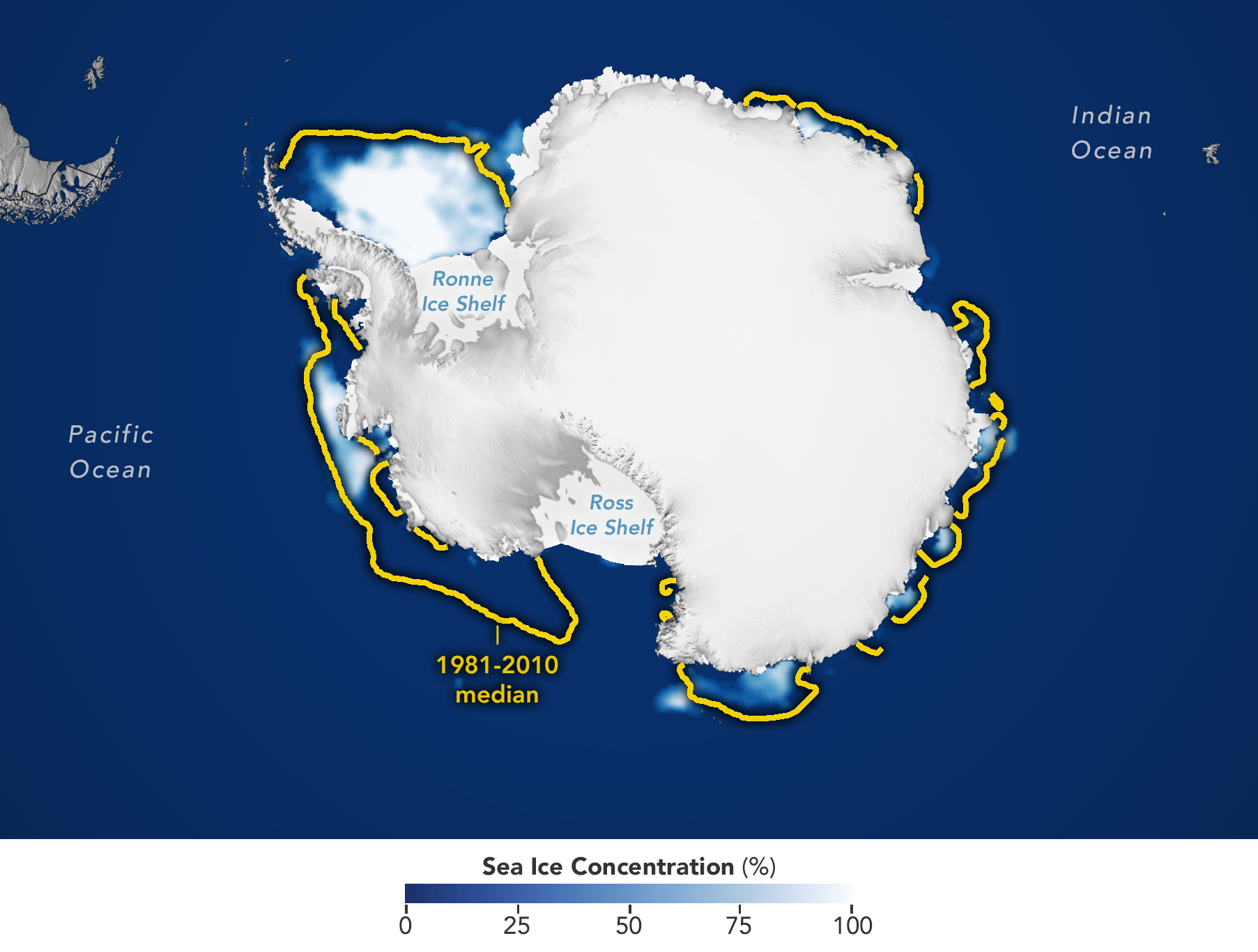
    • Over the past six years, the Antarctic Sea ice cover has witnessed substantial declines, resulting in a rise in global sea levels.
    • NASA reports that meltwater from Antarctic ice accounts for approximately one-third of the global average sea level rise since 1993.
    • The sea ice extent in 2023 has often been notably lower than the levels seen in 2022, which had the second-lowest summer sea ice extent in Antarctica.
    • The Antarctic Sea ice extent as of May 21, 2023, has significantly shrunk compared to the median extent between 1981 and 2010
    • The April temperature in the Antarctic region in 2023 was 0.93°C higher than the 1910-2000 average for that month, marking the second-highest increase in the millennium.

    Antarctic

    Impact decline in Antarctic Sea ice on Global Weather and Ecosystems

    • Weather Pattern Alterations: The Southern Ocean, surrounding Antarctica, plays a crucial role in transferring heat from the atmosphere to the global oceans. Increased melting of Antarctic sea ice introduces cold, fresh water into the ocean, disrupting the circulation patterns of hot, cold, fresh, and salty water globally. This alteration in temperature and density can subsequently affect weather patterns, including wind patterns, precipitation, and storm formation.
    • Oceanic Currents and Nutrient Flows: Changes in water temperature and density due to melting sea ice can disrupt oceanic currents and nutrient flows. These currents are vital for distributing heat, nutrients, and oxygen across the world’s oceans. The disturbance in these flows can have cascading effects on marine ecosystems, impacting the distribution and availability of nutrients for various organisms.
    • Impact on Underwater Ecosystems: Sea ice serves as a critical habitat for various organisms, including algae, krill, and other marine life. Diminishing sea ice reduces the availability of food and alters the feeding patterns and reproductive cycles of species dependent on these ecosystems. This disruption can have significant consequences for the entire Antarctic food chain, affecting species such as whales, seals, penguins, and seabirds.
    • Altered Albedo Effect: The decline in sea ice coverage reduces the Earth’s albedo effect. Albedo refers to the ability of a surface to reflect sunlight back into space. Sea ice has a high albedo, meaning it reflects a significant portion of incoming solar radiation. As sea ice diminishes, darker ocean water absorbs more solar radiation, leading to increased warming and amplifying the overall warming trend.
    • Feedback Loops: The impacts of melting sea ice create feedback loops that exacerbate the effects of climate change. For example, as sea ice melts, more heat is absorbed by the ocean, further accelerating the melting process. These feedback loops contribute to the amplification of warming trends and the intensification of associated environmental changes.

    Facts for prelims

    What is ice-albedo feedback cycle?

    • The ice-albedo feedback cycle, also known as the snow-ice albedo feedback, refers to a positive feedback mechanism that amplifies the effects of global warming. It involves the interaction between ice or snow cover and solar radiation.
    • The albedo of a surface refers to its ability to reflect sunlight. Ice and snow have high albedo values, meaning they reflect a significant portion of incoming solar radiation back into space.
    • This reflection helps to cool the Earth’s surface. However, when ice or snow melts, it reveals darker surfaces beneath, such as dark ocean water or land, which have lower albedo values. These darker surfaces absorb more solar radiation, leading to increased warming
    • The ice-albedo feedback cycle operates in both polar regions, but it is particularly significant in the Arctic and Antarctic regions, where extensive ice and snow cover exist.
    • The reduction in sea ice extent and the melting of glaciers and ice sheets contribute to this feedback mechanism, accelerating the warming trend and exacerbating the impacts of climate change.

    Understand this way: How do the ice-albedo feedback cycle operate?

    • Initial Warming: Due to various factors, including greenhouse gas emissions, the Earth’s temperature increases, leading to the melting of ice and snow cover.
    • Reduced Albedo: As ice and snow melt, the reflective white surface is replaced by darker surfaces with lower albedo values. These surfaces absorb more solar radiation rather than reflecting it back into space.
    • Increased Heating: The absorption of more solar radiation by darker surfaces results in increased heating of the Earth’s surface and atmosphere.
    • Further Melting: The increased heating leads to more melting of ice and snow, further reducing the overall ice and snow cover.
    • Amplification of Warming: With less ice and snow cover, more heat is absorbed, contributing to a positive feedback loop. The amplified warming results in further ice and snow melt, creating a cycle of increasing temperatures.

    Impact of Rising Sea Levels on coastal communities around the worldwide

    • Increased Flooding and Erosion: As sea levels rise, coastal areas are more susceptible to storm surges, high tides, and extreme weather events. This puts low-lying regions, including coastal cities and communities, at greater risk of inundation, property damage, and displacement of residents.
    • Coastal Infrastructure Vulnerability: Increased flooding and erosion can lead to the degradation and loss of critical infrastructure, disrupting transportation, energy supply, and essential services. This vulnerability can have substantial economic, social, and public safety implications.
    • Threat to Freshwater Resources: Rising sea levels can infiltrate freshwater sources and contaminate underground aquifers, particularly in coastal regions where freshwater and saltwater interfaces occur. This intrusion of saltwater can compromise drinking water supplies, agricultural irrigation, and ecosystems dependent on freshwater resources, exacerbating water scarcity issues.
    • Displacement of Communities: As coastal areas become uninhabitable due to sea-level rise and increased flooding, communities may face the prospect of forced relocation. This displacement can result in the loss of homes, cultural heritage, and livelihoods, leading to social disruption, economic challenges, and psychological impacts on affected populations.
    • Ecological Impacts: Coastal ecosystems, including mangroves, coral reefs, and wetlands, provide critical habitats, buffer against storms, and support biodiversity. Rising sea levels can inundate and degrade these ecosystems, leading to the loss of valuable ecological services, increased vulnerability to coastal hazards, and reduced coastal resilience.
    • Economic Consequences: The impacts of sea-level rise and coastal flooding can disrupt tourism, fishing, and shipping industries, leading to economic losses, job displacements, and decreased productivity. Additionally, the costs of coastal protection measures and infrastructure adaptations to rising sea levels can place a significant burden on local economies and governments.

    Way Forward

    • Strengthening International Cooperation: Collaborate at global forums to address climate change and its impact on Antarctica, emphasizing the need for reduced emissions and sustainable practices.
    • Enhanced Monitoring and Research: Invest in further research to understand the dynamics of melting sea ice, its impact on ecosystems, and potential mitigation strategies.
    • Promoting Sustainable Practices: Encourage sustainable practices and responsible tourism in the Antarctic region to minimize human impact on the fragile ecosystem.
    • Climate Resilience Planning: Develop robust climate resilience plans for coastal cities and communities, considering rising sea levels and potential threats posed by diminishing sea ice.
    • Raising Public Awareness: Educate the public about the consequences of melting Antarctic sea ice, fostering a collective sense of responsibility and encouraging individual actions to mitigate climate change.

    Conclusion

    • The alarming decline in Antarctic sea ice poses grave threats to global sea levels, weather patterns, and underwater ecosystems. Urgent action is required to mitigate climate change, reduce greenhouse gas emissions, and promote sustainable practices. Through international collaboration, research, and public awareness, we can strive to protect the Antarctic region and safeguard coastal communities worldwide from the impacts of melting sea ice. The time to act is now, as the consequences of inaction will be felt by future generations.

    Get an IAS/IPS ranker as your personal mentor for UPSC 2024 | Schedule your FREE session and get the Prelims prep Toolkit!

    Must read:

    Oceans absorb 90% of human-induced planet warming: Study
  • Diversifying Our Understanding of Religion and Caste in Contemporary India

    Religion

    Central Idea

    • The recent outcome of the Karnataka elections provides an opportunity to broaden our understanding of religion and caste as categories of identity and belief. It is essential to recognize that these identities go beyond mere labels and hold pan-India significance. Amidst the rapid urbanization of Gurugram, the interplay of technology, finance, infrastructure, and land markets has brought about intriguing effects on traditional aspects of life. Notably, the strengthening of caste and religious identities has occurred alongside the transformation of the local landscape

    Contemporary dynamics of the religion and caste in society

    • Social Media: The emergence and widespread use of social media platforms have significantly influenced the dissemination of information and the expression. Social media platforms have provided individuals with new avenues to express their beliefs, connect with like-minded individuals, and engage in discussions and debates related to religion and caste.
    • Leisure Cultures: Changing patterns of leisure activities and cultural practices have contributed to the reshaping of religious and caste identities. The ways in which people engage with leisure, entertainment, and cultural events often intersect with their religious and caste affiliations. These leisure cultures can reinforce existing identities, foster a sense of community, and contribute to the preservation and celebration of religious and caste traditions.
    • Globalization of Identities: The increased mobility, migration, and transnational interactions have allowed for the transmission and adoption of religious and caste practices, beliefs, and ideologies across different geographical locations. This globalization of identities has influenced how individuals perceive and express their religious and caste affiliations.
    • Emphasis on Heritage: The promotion and celebration of cultural heritage, rituals, and customs have become significant aspects of identity formation and community building. This focus on heritage can reinforce religious and caste affiliations and contribute to the preservation of traditional practices.

    Complexities of contemporary identities

    • Intersectionality: Contemporary identities are often multifaceted and intersectional, encompassing multiple dimensions such as gender, class, religion, caste, and regional affiliations. Individuals’ identities are shaped by the interaction of these diverse factors, leading to complex experiences and perspectives.
    • For example: In the context of Gurugram, caste identities intersect with the effects of urbanization, globalization, and economic transformations, creating intricate social dynamics.
    • Shifting Meanings: The meanings attached to religious and caste identities have evolved over time. Globalization, technology, and changing social norms have influenced the ways in which individuals understand and express their religious and caste affiliations. These shifting meanings challenge traditional understandings and necessitate a deeper exploration of the contemporary dynamics surrounding religion and caste.
    • Hybridity and Adaptation: As individuals navigate the complexities of a rapidly changing world, they might combine elements of their religious and caste backgrounds with new cultural practices, beliefs, and expressions. This hybridity reflects the fluid nature of contemporary identities and the ways in which individuals negotiate their sense of self within evolving social contexts.
    • Global Influences: Increased exposure to diverse cultural and religious influences from around the world can impact individuals’ beliefs, practices, and self-perception. This global exchange of ideas and cultural practices contributes to the complexities of contemporary identities, blurring traditional boundaries and fostering new forms of identity expression.
    • Individual Agency: Contemporary identities are influenced by individual agency, as individuals actively construct and negotiate their own sense of self and belonging. People have the autonomy to choose, reinterpret, or reject religious and caste identities based on their personal experiences, beliefs, and aspirations. This individual agency adds complexity to the understanding of contemporary identities and challenges rigid categorizations.

    Why religious and caste sentiments thrive despite the seemingly impersonal nature of modern relations?

    • Historical Significance: Religion and caste have deep historical roots in India, shaping the social, cultural, and political fabric of the country for centuries. These identities have been intricately woven into people’s lives and community structures, and their significance continues to endure even in the face of modernization. Historical legacies and the sense of identity associated with religion and caste contribute to the persistence of these sentiments.
    • Social Cohesion and Belonging: Religion and caste provide individuals with a sense of belonging and community. They offer a framework for social cohesion, providing a sense of identity, support, and solidarity. In an increasingly fragmented and individualistic society, religious and caste affiliations can offer a sense of belongingness and a support system that individuals seek for social integration and a sense of purpose.
    • Cultural Identity and Tradition: Religion and caste are deeply intertwined with cultural practices, rituals, and traditions which provide individuals with a connection to their cultural heritage and a sense of continuity with their ancestors.
    • Social Networks and Support: Religious and caste communities network foster a sense of mutual aid and communal bonds, creating a support system that individuals rely on in times of need. This social support and network-based assistance further reinforce the importance of religious and caste identities.
    • Political and Power Dynamics: Religion and caste continue to play a significant role in political mobilization, electoral strategies, and the distribution of resources and benefits. Political parties often exploit religious and caste identities for electoral gains, further reinforcing their salience and significance in public discourse.

    Why the newly emerging religious identities sometimes manifest as hostility towards those of different faiths?

    • Identity Assertion: The formation of new religious identities can be driven by a desire to assert and strengthen one’s own religious beliefs and practices. In some cases, this assertion may result in a sense of exclusivity and superiority, leading to hostility towards those who hold different beliefs. Individuals may perceive their newly emerging religious identity as being under threat from other faiths, and this defensive response can contribute to animosity and hostility.
    • Socialization and Group Dynamics: If individuals are surrounded by like-minded individuals who reinforce a particular narrative of their religious identity, it can lead to the development of a group mentality that views other faiths with suspicion or hostility. Group dynamics, such as peer pressure, conformity, and the need for social acceptance, can further amplify negative attitudes towards different faiths.
    • Perceived Threats and Insecurity: When new religious identities emerge, followers may perceive threats to their beliefs, traditions, or cultural practices from other faiths or societal changes. This perceived threat can evoke a defensive response, fueling hostility towards those seen as posing a challenge to their newly formed religious identity.
    • Political Instrumentalization: Political actors may exploit religious sentiments and manipulate the narrative to gain support or advance their agenda. This instrumentalization can create an us versus them mentality, deepening divisions and fostering animosity towards religious groups perceived as adversaries.
    • Economic Competition and Social Hierarchies: Economic disparities and perceived inequalities can fuel resentment towards religious groups seen as benefiting disproportionately or hindering one’s own economic advancement. This can result in the projection of animosity onto religious differences.
    • Lack of Interfaith Dialogue and Understanding: Insufficient opportunities for interfaith dialogue and understanding can contribute to the persistence of hostility between religious communities. Limited interactions and communication between followers of different faiths may perpetuate stereotypes, misunderstandings, and a lack of empathy. Without platforms for open dialogue and mutual respect, tensions can escalate, leading to hostility.

    Way forward: Adopting a forward-looking approach

    • Contextual Understanding: Instead of relying solely on historical perspectives, it is crucial to engage with the complexities of the present. This involves analyzing the influence of social media, new leisure cultures, globalization of caste and religious identities, the politics of heritage, and the rise of consumer culture.
    • Critical Questions: To address the contemporary manifestations of religious and caste identities, we need to ask fundamental questions. For instance, we must explore why religious and caste feelings gather strength despite the apparent prevalence of impersonal relations in a world organized through contracts and other similar mechanisms.
    • Contemporary Relevance: The explanations regarding religious identity and caste should be grounded in the present rather than relying solely on the perspectives of historical figures like Gandhi and Ambedkar. While acknowledging their important contributions, we need to apply their vantage points to analyze and understand the contemporary realities.
    • Interdisciplinary Approach: Addressing the complexities of caste and religious identities requires an interdisciplinary approach that combines insights from sociology, anthropology, history, political science, and cultural studies, among other disciplines. By bringing together diverse perspectives, we can gain a more comprehensive understanding of the multifaceted nature of these identities and their implications for contemporary society.
    • Dialogue and Empathy: Encouraging interfaith dialogue, promoting understanding, and fostering empathy are crucial steps towards mitigating hostility and building bridges between different religious communities. Creating platforms for open and respectful discussions can help dispel stereotypes, bridge gaps in understanding, and promote mutual respect.
    • Evolving Definitions: Given the altered meanings of caste and religion in a rapidly changing society, it is important to continuously reassess and redefine these concepts. By recognizing the shifting dynamics and meanings associated with caste and religion, we can develop more nuanced perspectives that align with the contemporary reality.

    Conclusion

    • As we witness the diversification of religion and caste in contemporary India, it is imperative to embrace a nuanced understanding that moves beyond historical interpretations. Recognizing the multifaceted factors influencing modern identities and the complexities of the present allows for a more comprehensive analysis. By exploring the contemporary dynamics and asking pertinent questions, we can better comprehend the changing meanings of religion and caste in today’s society and address the challenges and opportunities they present.

    Get an IAS/IPS ranker as your personal mentor for UPSC 2024 | Schedule your FREE session and get the Prelims prep Toolkit!

    Also read:

    The Caste Census and Mandal Politics: Analysis
  • Forum for India Pacific Islands Cooperation (FIPIC)

    pacific

    Central Idea: The third summit of Forum for India Pacific Islands Cooperation (FIPIC) was recently held at Port Moresby in Papua New Guinea. It was attended by PM Modi.

    What is FIPIC?

    • The FIPIC is an intergovernmental forum that facilitates cooperation and dialogue between India and the Pacific island countries (PIC).
    • It was established by India in 2014 as a platform to enhance engagement and strengthen ties with the countries of the Pacific region.
    • FIPIC serves as a mechanism for mutual collaboration, addressing shared challenges, and promoting development cooperation between India and its Pacific island partners.

    Members of FIPIC:

    • FIPIC consists of 14 member-countries.
    • They are- Fiji, Cook Islands, Kiribati, Marshall Islands, Micronesia, Nauru, Niue, Palau, Papua New Guinea, Samoa, Solomon Islands, Tonga, Tuvalu, and Vanuatu.

    History of FIPIC

    • The establishment of FIPIC reflects India’s commitment to deepening its engagement with the Pacific island nations.
    • The inaugural FIPIC summit was held in November 2014 in Suva, Fiji, where India and the Pacific island countries came together to discuss bilateral and multilateral cooperation.
    • The summit marked a significant milestone in India’s efforts to strengthen relations with the Pacific island states and promote inclusive development in the region.

    Key highlights of the Summit

    (1) Imbibing perception change

    • During the FIPIC-3 summit held in Port Moresby, PM Modi emphasized the importance of recognizing the small island nations of the Pacific Ocean as “large ocean states.”
    • PM reiterated India’s commitment to supporting the development goals of the Pacific island states.

    (2) Advancing development goals

    • India expressed unwavering dedication to supporting Pacific island states in various ways.
    • Acknowledged challenges such as climate change, natural calamities, and disruptions in food and fuel supply chains.
    • India has been a reliable supplier of essential items, including vaccines, medicines, wheat, and sugar.

    (3) Voices to lead Global South

    • Prime Minister James Marape of Papua New Guinea urged India to serve as an advocate for the Global South.
    • Requested India’s representation in key global forums like the G-7 and G-20.

    Why does India need PIC?

    • Geopolitical Significance: Strengthening ties in Indo-Pacific to bolster regional influence, promote stability, and shape regional dynamics.
    • Maritime Trade Routes: Securing access to vital sea-lanes, ensuring smooth trade flow, and protecting maritime interests.
    • Resources: Expanding access to valuable resources such as minerals, hydrocarbons, and fisheries for economic growth and energy security.
    • Economic Opportunities: Exploring untapped markets, attracting investments, and fostering trade partnerships for mutual economic benefits.
    • Climate Change and Disaster Management: Collaborating on climate resilience strategies, sharing expertise in disaster management, and supporting sustainable development.
    • Diplomatic Relations: Establishing strategic alliances, enhancing multilateral cooperation, and strengthening India’s presence in the Pacific region.
    • Indian Diaspora: Supporting and engaging with the Indian diaspora, promoting cultural ties, and leveraging their contributions for bilateral cooperation and understanding.

    Conclusion

    • The FIPIC-3 summit provided a platform for India and Pacific island nations to deepen cooperation and address shared challenges.
    • India’s commitment to supporting development goals and its role as a reliable supplier underscores its dedication to the Pacific island states.
    • India’s active engagement in global forums and advocacy for the Global South aims to amplify voices and advance interests.
    • The summit signifies a strengthened partnership, fostering mutual growth and shared progress.


    Get an IAS/IPS ranker as your personal mentor for UPSC 2024

  • Study reveals unique Nervous System in Comb Jellies

    comb

    Central Idea

    • Comb jellies, or ctenophores, are marine animals with jelly-like bodies and iridescent combs.
    • They represent an ancient animal lineage and have a distinct nervous system.
    • A recent study published in Science examined the comb jelly nervous system and made surprising discoveries.

    What are Comb Jellies?

    • Comb jellies, also known as ctenophores, are marine animals that belong to the phylum Ctenophora. They are fascinating creatures with a unique and delicate appearance.
    • Despite their name, comb jellies are not actually true jellyfish.
    • They have a gelatinous, transparent body that is often luminescent and adorned with rows of cilia, or comb-like structures, which give them their characteristic shimmering appearance.

    Findings of the new study

    • The researchers aimed to investigate how nerve net neurons in comb jellies connect.
    • Contrary to expectations, synapses (junctions between neurons) were absent in the nerve net.
    • Instead, nerve-net neurons were continuously connected by a single plasma membrane.

    Significance of ctenophores

    • In the 1950s, electron microscopy confirmed the separate-cell nature of neurons connected by synapses.
    • Ctenophores challenge this notion by having a syncytial nerve net, as observed in the new study.
    • Ctenophores attracted attention due to their status as a potential early animal lineage.
    • Whole-genome sequencing studies supported the theory that ctenophores branched off early in animal evolution.

    Evolution of ctenophore nervous systems

    • The evolution of ctenophore nervous systems remains unclear to biologists.
    • Leonid Moroz proposed a controversial theory of independent nervous system evolution in ctenophores and other animals.
    • Ctenophores exhibit a unique nervous system lacking classical neurotransmitter pathways and common neuronal genes.
    • The absence of muscle-based movement and reliance on cilia might have driven the evolution of a different signal conduction system.

    Questions for further research

    • Researchers aim to study the development of nerve net neurons in ctenophores.
    • They seek to determine if adult ctenophores retain syncytial nerve nets or develop synapses.
    • The uniqueness of ctenophore nervous systems provides valuable insights into the evolution of the nervous system.
    • Comparative analyses of unique animal systems like ctenophores aid in understanding neuronal function and treating disorders.

    Conclusion

    • Understanding the functional and evolutionary significance of syncytial nerve net neurons in ctenophores requires further research.
    • This study serves as a crucial foundation for investigating the evolution of nervous systems in animals.
    • Comparative studies on small marine creatures like ctenophores offer insights into the fundamental principles of brain function.

    Key Terminologies

    • Ctenophores: Another term for comb jellies, referring to marine animals belonging to the phylum Ctenophora.
    • Nerve Net: The diffuse nervous system found in comb jellies, composed of interconnected neurons.
    • Synapses: Junctions between neurons that allow for communication and transmission of signals in most animals, including humans.
    • Plasma Membrane: The outer membrane of a cell that separates its internal components from the external environment.
    • Neurotransmitter Pathways: The specific chemical signals used by neurons to communicate with each other in the nervous system.
    • Syncytial Nerve Net Neurons: Neurons within the nerve net of comb jellies that are interconnected without the presence of synapses.
    • Colloblasts: Specialized cells in comb jellies used for capturing prey by producing adhesive substances.

    Get an IAS/IPS ranker as your personal mentor for UPSC 2024

  • Antarctic Sea Ice Cover at Record Low

    antarctic

    Central Idea

    • Sea ice in Antarctica reached its smallest area on record in February for the second consecutive year, continuing a decade-long decline.

    Ice cover decline: Key data

    (1) Square km decline

    • The European Union’s Copernicus Climate Change Service (C3S) provided the figures, highlighting the significant decrease in Antarctic sea ice.
    • On February 16, the ocean surface covered by ice around Antarctica shrank to 2.09 million square kilometers (800,000 square miles), the lowest level since satellite records began.

    (2) Warming trends

    • Both the North and South poles have experienced significant warming, with temperatures rising by approximately 3 degrees Celsius compared to late 19th-century levels, three times the global average.
    • Arctic sea ice has been diminishing by about 3 percent per year since the late 1970s, while sea ice in Antarctica has remained relatively constant with large annual variations.

    (3) Regional variances and vulnerabilities

    • Recent ice cover reduction during the southern hemisphere summer has been most pronounced in West Antarctica, which is more vulnerable to the impacts of global warming compared to East Antarctica.
    • Antarctica witnessed its first recorded heatwave in 2020, with temperatures 9.2 degrees Celsius above the mean maximum. Unusual temperature spikes have been observed in various parts of Antarctica.
    • The Arctic has also experienced significant declines in sea ice, with the record minimum sea ice extent occurring in 2012.

    Impact of declining Ice Cover

    • Global sea level rise: Melting ice in Antarctica contributes to rising sea levels worldwide.
    • Disruption of ecosystems: Declining ice cover disrupts habitats and food sources for ice-dependent species.
    • Increased warming: Less ice reflects sunlight, leading to more heat absorption and further ice melting.
    • Changes in ocean circulation: Declining ice cover can disrupt currents and impact global climate patterns.
    • Release of stored carbon: Melting ice releases trapped carbon, potentially affecting marine ecosystems and contributing to climate change.
    • Amplification of global warming: Reduced ice cover creates a positive feedback loop, exacerbating climate change.
    • Disruption of biodiversity and food chains: Changing ice conditions impact species relying on ice algae and affect the overall Southern Ocean ecosystem.

    Future projections

    • The Intergovernmental Panel on Climate Change (IPCC) predicted with high confidence that the Arctic Ocean would become practically ice-free in September at least once by mid-century.
    • The decreasing trends in both Arctic and Antarctic sea ice highlight the urgent need to address climate change and its impact on the Polar Regions.


    Get an IAS/IPS ranker as your personal mentor for UPSC 2024

  • What is PARAKH Program?

    Central Idea

    • The Ministry of Education has organized a workshop in New Delhi to discuss the unification of 60 school examination boards operating across different states and union territories.
    • The key component of this plan is PARAKH, the National Assessment Centre established under the National Council of Educational Research and Training.

    What is PARAKH?

    • PARAKH stands for Performance Assessment, Review, and Analysis of Knowledge for Holistic Development.
    • It is an organization created to bring school boards from various states and union territories onto a unified platform.
    • It has been launched as part of the implementation of the National Education Policy (NEP)-2020.
    • It acts as a constituent unit of the NCERT.
    • It is tasked with holding periodic learning outcome tests like the National Achievement Survey (NAS) and State Achievement Surveys.
    • It will work on three major assessment areas: large-scale assessments, school-based assessment, and examination reforms.

    Key objectives of PARAKH

    • Uniform Norms & Guidelines: Setting comprehensive norms, standards, and guidelines for student assessment and evaluation in all recognized school boards.
    • Enhance Assessment Pattern: Encouraging school boards to adopt assessment patterns aligned with the skill requirements of the 21st century.
    • Reduce Disparity in Evaluation: Establishing uniformity across state and central boards, which currently employ different evaluation standards, resulting in significant score disparities.
    • Benchmark Assessment: Developing a benchmark assessment framework to move away from rote learning and align with the objectives of the NEP 2020.

    Outcomes of the recent workshop

    (1) Establishing Equivalence of Boards

    • The Centre is planning for the equivalence of boards to facilitate seamless transitions for students across different boards or regions.
    • The objective is to align curriculum standards, grading systems, and evaluation methodologies to enhance the credibility and recognition of certificates and grades obtained across boards.

    (2) Moving away from Rote Examination Culture

    • The workshop highlighted the need to reassess the prevailing rote examination culture in the education system.
    • There is a growing realization that holistic assessments, considering various dimensions of a student’s abilities and potential, are equally important.

    (3) Standardization and Fairness in Assessments

    • The discussion emphasized the importance of well-designed and standardized question papers to ensure fairness and consistency across schools and boards.
    • Striking a balance between formative and summative assessments was identified as a means to reduce the burden of high-stakes examinations while effectively measuring student progress.

    Conclusion

    • PARAKH’s significance lies in its potential to bring about transformative change, facilitating collaboration, and benchmarking assessments.
    • It is an important step towards creating a standardized and equitable assessment system, providing students with a fair platform to demonstrate their abilities and skills.


    Get an IAS/IPS ranker as your personal mentor for UPSC 2024

  • FREE Live Masterclass by AIR 49, Divyansh Singh (IAS): 12-month Phase wise blueprint for UPSC 2024 | Starting from Scratch | Get your personalized study plan and timetable (PDF) | Book Your Seat

    FREE Live Masterclass by AIR 49, Divyansh Singh (IAS): 12-month Phase wise blueprint for UPSC 2024 | Starting from Scratch | Get your personalized study plan and timetable (PDF) | Book Your Seat

    Block Your Sunday (28th May) 2023 for 1-1 Live Masterclass by AIR-49, IAS, Divyansh Sir on a 12-month Phase wise blueprint for UPSC 2024 | We’ll share a personalized PDF study plan and timetable designed with Divyansh sir’s inputs. (click here for more details)


    Aspirants, just 12 months are left for UPSC Prelims 2024. And if you haven’t started yet, even if it is going to be from scratch, today is the best time to start.

    IAS, Divyansh Singh, CD’s mentorship student who secured AIR 49 in 2021, will share with you what his phase-wise prep blueprint and how he strategized his final 12 months before 2021 attempt. 

    According to him starting your preparation before 12 months has several advantages, like giving you more time to revise, take practice tests, develop, polish your knowledge and responses, and move four steps ahead of the competition.

    An ideal prep is divided into five phases and spread across 11-12 months. Divyansh sir, an IAS officer who secured AIR 49 in UPSC 2021, is conducting a special LIVE Masterclass (FREE) on the Only 12 months are left for 2024! Why should you start ASAP?


    Masterclass Details:

    Topic: Only 12 months are left for UPSC 2024! Why should you start ASAP?

    Date: 28th May 2023 (Sunday)

    Time: 7:30 pm Onwards

    Zoom Meeting Link will be sent via your registered email address.


    What you should expect in 1-1 LIVE with Divyansh sir?

    The workshop will cover a 12-month Phase-wise blueprint for UPSC 2024.

    1. First phase – Studying the Core Subjects. How to read every topic in the syllabus from 2-3 sources in the first reading and prepare a 1-2 page note? And in your second reading, stick to only one source while using your notes as reference.

    2. Second phaseStudying Mains Specific Subjects & Optional. How to follow the ritual of reading, writing summaries, and answering topic-wise previous year questions?

    3. Discuss 2-3 Revision Strategies which you can follow. Why should you not go more than 20 days without revision?

    4. Live demonstration of making the perfect notes. How to not copy line-by-line of everything you read & only note down the 5 dimensions of a topic?

    5. Why is the Third phase of preparation the shortest of all? What should you ideally do after completing the Prelims and Mains subjects?

    6. Fourth phase. How to improve your accuracy 3 months before the Prelims exams?

    7. The 5th and Last phase. What must be done 3 months before the Mains exams?


    CivilsDaily’s FREE Masterclass package & Personalized Timetable

    Post-webinar you will get important PDFs, timetable framework, and mentorship session.

    Based on your UPSC prep situation (working aspirant, full-time aspirant), your learning style, previous attempts, and other such factors, we will be preparing and sharing a personalized PDF study plan for you.

    We will be incorporating Divyansh’s (AIR 49, UPSC 2021) inputs in preparing the timetable for you.


    What The Hindu opined about Civilsdaily Mentorship

    Register FREE for 1-1 LIVE UPSC Masterclass by Divyansh (AIR 49), IAS, Super Mentor of Civilsdaily

  • C-20: Preventing the Erosion of Civil Society Independence

    C-20

    Central Idea

    • The civil society process of G-20, known as C-20, which is meant to provide a platform for independent voices and hold governments accountable, has been co-opted by the ruling party in India. Critiques argue that under the guise of civil society representation, C-20 has become a tool to further a politico-religious vision and legitimize neoliberal economic policies. This distortion of C-20 raises concerns about its credibility and ability to serve as a counter-balance to undue business influence.

    What is C-20?

    • C-20 refers to the civil society process of the Group of Twenty (G-20) summit.
    • The C-20 process provides a platform for civil society organizations to engage with G-20 member governments, discuss relevant issues, and advocate for policy changes.
    • It aims to ensure that the voices and concerns of civil society are taken into account in the decision-making processes of G-20.
    • C-20 focuses on economic, social, and cultural issues, and its participants include non-governmental organizations, grassroots movements, and other civil society actors.

    Facts for prelims

    What is U20?

    • A city diplomacy initiative called the “Urban 20” (U20) was launched in December 2017 within G20 ecosystem.
    • It was meant to collectively raise critical urban issues of G20 cities during the G20 negotiations.
    • U20 specifically focuses on climate change, sustainable development, and socio-economic issues in connection with the Sustainable Development Goals.

    What is SAI20?

    • SAI20 stands for Supreme Audit Institutions (SAIs) of G20 countries.
    • It is a forum where SAIs from G20 countries can engage with each other to share their experiences and expertise in auditing public policies and governance practices.
    • The group meets annually to discuss important issues related to public auditing and to develop joint initiatives to promote good governance and accountability in their respective countries.

    What are the concerns about C-20 ‘s credibility?

    • Politicization: The C-20 process in India has been co-opted by the party in power, using it as a platform to further its own politico-religious vision. This raises questions about the independence and neutrality of the civil society process.
    • Lack of diversity: The composition of C-20 has raised concerns about the overwhelming presence of members from a single religion, which goes against the principle of inclusiveness. The dominance of a particular religious group undermines the diversity and representation of civil society voices.
    • Censorship and suppression: There have been instances of censorship and attempts to control the narrative within C-20. Participants have been asked to refrain from making political statements about G-20 and C-20, limiting their ability to critically address policies and actions that may be detrimental to biodiversity and community interests.
    • Limited influence: The C-20 process, along with other engagement forums of G-20, has not been allowed to play an independent role in holding governments accountable or countering undue business influence. The influence of civil society in shaping G-20 decisions and policies remains limited.
    • Lack of transparency: The selection and decision-making processes within C-20 have been criticized for lacking transparency. The way the C-20 architecture is set up, with its Secretariat housed in a civil society organization linked to a particular political ideology, raises concerns about the independence and fairness of the process.

    Impact of using international engagement forums for political gains?

    • Undermining credibility: When international engagement forums, such as the G-20 and its civil society process, are used for political and electoral gains, it undermines their credibility and purpose. These platforms are meant for meaningful dialogue, collaboration, and decision-making on global issues, and politicizing them for short-term domestic interests erodes their legitimacy.
    • Diminishing trust and cooperation: Political exploitation of international engagement forums can lead to a breakdown of trust and cooperation among participating countries and civil society organizations. It creates an atmosphere of suspicion and undermines the spirit of mutual respect and collaboration that these forums are intended to foster.
    • Weakening global governance: The instrumentalization of international engagement forums for political gains can weaken global governance mechanisms. It hampers the ability of these forums to address pressing global challenges effectively and make informed decisions based on the common good, as decisions may be driven by narrow political considerations rather than sound policy-making.
    • Impact on international reputation: The misuse of international engagement forums can have a negative impact on a country’s international reputation. It may be seen as a breach of trust and an attempt to manipulate global platforms for domestic political purposes, damaging the country’s standing in the international community.
    • Impeding progress on global issues: When international engagement forums are exploited for political and electoral gains, the focus shifts from addressing global issues to advancing narrow domestic agendas. This can hinder progress on crucial matters such as climate change, sustainable development, poverty alleviation, and human rights, which require international collaboration and concerted efforts.
    • Alienating civil society: The politicization of international engagement forums can alienate civil society organizations and undermine their trust in the process. When civil society voices are co-opted or marginalized for political gains, it weakens their role as independent actors, reduces their influence, and stifles their ability to contribute meaningfully to global policy discussions.
    • Loss of long-term benefits: Prioritizing short-term political and electoral gains over the long-term benefits of meaningful international engagement can lead to missed opportunities for economic, social, and diplomatic advancements. It undermines the potential for constructive dialogue, knowledge sharing, and collaboration that can yield positive outcomes for the country and the global community.

    Way ahead: Addressing the concerns over C-20

    • Enhance transparency and inclusiveness: There should be greater transparency in the selection processes of C-20 members and the decision-making mechanisms. Efforts should be made to ensure diverse representation from different religions, ideologies, and sectors, fostering inclusivity and avoiding the dominance of any particular group.
    • Safeguard independence: Measures should be taken to ensure the independence of C-20 from government influence. The Secretariat and coordination should be entrusted to neutral and independent organizations or institutions that have a proven track record of upholding the principles of civil society engagement.
    • Strengthen civil society networks: Civil society organizations should strengthen their networks, collaborations, and solidarity to amplify their voices and advocate for meaningful engagement in the C-20 process. This can involve building alliances with other organizations, sharing information and resources, and collectively advocating for the principles of inclusiveness and accountability.
    • Promote critical dialogue: Open and constructive dialogue should be encouraged within C-20, allowing for diverse perspectives and critical analysis of G-20 policies and actions. Participants should have the freedom to raise concerns, offer alternative viewpoints, and contribute to the discourse without fear of censorship or reprisal.
    • Advocate for policy coherence: Civil society organizations should actively engage in advocacy and policy dialogue with both the government and international bodies like the G-20. They should highlight the need for policy coherence that integrates social, environmental, and economic dimensions, ensuring that biodiversity conservation, sustainability, and the rights of marginalized communities are prioritized.
    • Strengthen public awareness: Efforts should be made to increase public awareness about the G-20 and its civil society process, including C-20. This can involve disseminating information, organizing awareness campaigns, and facilitating public participation in discussions and decision-making processes.
    • International solidarity: Civil society organizations in India should foster collaborations and exchanges with international civil society networks and organizations working on similar issues. Sharing experiences, strategies, and best practices can strengthen the collective voice of civil society globally and exert pressure for more accountable and inclusive processes.

    Conclusion

    • The co-optation of C-20 by the ruling party in India has undermined its credibility as an independent civil society platform. Civil society organizations participating in C-20 must reflect on whether they will legitimize this distortion or challenge it, as their decisions will shape the future of this crucial platform for global dialogue and accountability.

    Get an IAS/IPS ranker as your personal mentor for UPSC 2024 | Schedule your FREE session and get the Prelims prep Toolkit!

    Also read:

    G20: India at Urban20 (U20)


  • Strengthening India-Australia Relations: A Dynamic Partnership

    India-Australia

    Central Idea

    • Prime Minister Narendra Modi’s upcoming visit to Australia highlights the significance India attaches to its bilateral relationship with Australia, despite the cancellation of the Quad Summit meeting in Sydney. The transformation of this relationship over the past decade, coupled with its broad bipartisan support in Australia, demonstrates the establishment of a new chapter in India-Australia ties.

    India-Australia Relations: A Backgrounder

    • The India-Australia bilateral relationship has undergone evolution in recent years, developing along a positive track, into a friendly partnership.
    • The two nations have much in common, underpinned by shared values of a pluralistic, Westminster-style democracies, Commonwealth traditions, expanding economic engagement etc.
    • Several commonalities include strong, vibrant, secular and multicultural democracies, free press, independent judicial system and English language.

    Historical Perspective

    • The historical ties between India and Australia started immediately following European settlement in Australia from 1788.
    • All trade, to and fro from the penal colony of New South Wales was controlled by the British East India Company through Kolkata.
    • India and Australia established diplomatic relations in the pre-Independence period, with the establishment of India Trade Office in Sydney in 1941.
    • The end of the Cold War and simultaneously, India’s decision to launch major economic reforms in 1991 provided the first positive move towards development of bilateral ties.

    What is the Significance of this upcoming visit?

    • Strengthening Bilateral Relations: The visit reaffirms the commitment of both India and Australia to further strengthen their bilateral relationship. It provides an opportunity for high-level engagements, discussions, and collaborations on various issues of mutual interest.
    • Enhancing Economic Cooperation: The visit can pave the way for boosting economic cooperation between India and Australia. It provides a platform to explore new avenues for trade, investment, and technological collaboration, benefiting both economies and creating business opportunities.
    • Showcasing Commitment to the Indo-Pacific Region: Prime Minister’s visit to Australia will demonstrates the commitment of both countries to the Indo-Pacific region’s peace, stability, and development. It reinforces the role of India and Australia as significant stakeholders in the region.
    • Collaboration on Strategic and Security Issues: The visit presents an opportunity to discuss and collaborate on strategic and security issues, including maritime security, counterterrorism, cybersecurity, and defense cooperation. This will contribute to regional stability and address common security challenges.
    • Promoting People-to-People Connections: People-to-people interactions and cultural exchanges are crucial for fostering closer ties between nations. Prime Minister Modi’s visit will promote people-to-people connections, strengthen the Indian diaspora’s engagement, and enhance cultural understanding between India and Australia.

    The growing partnership between India and Australia

    • Enhanced Bilateral Engagements: The frequency of high-level visits and interactions between the leaders of India and Australia has increased, showcasing the importance both countries place on their bilateral relationship.
    • Multilateral Collaboration: India and Australia collaborate closely in various multilateral forums such as the Quad, G7, East Asia Summit, G20, and the Indian Ocean Rim Association. They address important regional issues, including maritime domain awareness, supply chain resilience, climate change, and food and energy security.
    • Strategic Cooperation: Both nations recognize the need to build secure and resilient supply chains. They focus on strategic areas such as clean energy, electric vehicles, semiconductors, aerospace, and defense, fostering collaboration and joint initiatives.
    • Space Collaboration: Space cooperation has gained prominence in the India-Australia partnership. Australia participates in India’s Gaganyaan Space Programme, and the International Space Investment grants program encourages collaboration in the space sector.
    • Educational Ties: Australia is a preferred destination for Indian students, with a large number of Indian students studying there. Efforts are being made to address challenges related to student mobility, visa backlogs, and research collaboration, strengthening educational ties between the two countries.
    • People-to-People Linkages: Cultural exchanges, diaspora connectivity, and people-to-people contacts play a crucial role in strengthening the partnership. Initiatives like the opening of a new consulate in Bengaluru and the establishment of a center for Australia-India relations in Sydney contribute to fostering cultural linkages.
    • Economic Cooperation: The focus is on expanding economic ties and trade relations. Efforts are being made to increase the current trading partnership, setting clear targets to elevate it by 2030. Comprehensive Economic Cooperation Trade Agreement discussions are underway to deepen economic cooperation.
    • Regional Stability: India and Australia, along with other Quad members, work together to ensure peace, stability, and prosperity in the Indo-Pacific region. They address regional challenges and maintain a rules-based order.
    • Counterbalance to China: The India-Australia partnership is seen as a counterweight to China’s non-rules-based approach in the region. It provides a strategic balance and promotes a free and open Indo-Pacific.

    The India-Australia partnership: Opportunities for further collaboration and growth

    • Trade and Investment: There is immense potential to expand bilateral trade and investment between India and Australia. Both countries can explore new sectors and avenues for collaboration, including technology, renewable energy, infrastructure, agriculture, healthcare, and manufacturing. Initiatives like the Comprehensive Economic Cooperation Agreement (CECA) can further facilitate trade and investment flows.
    • Innovation and Technology: India’s thriving tech ecosystem and Australia’s advanced research and development capabilities present opportunities for collaboration in innovation and technology-driven sectors. Joint research projects, technology transfer, and startup collaborations can foster mutual growth and innovation.
    • Defense and Security: The defense and security collaboration between India and Australia can be further strengthened. Opportunities exist for joint military exercises, defense equipment co-production, technology-sharing, and intelligence cooperation. Collaborative efforts can contribute to maritime security, counterterrorism, and regional stability.
    • Education and Research: The education sector offers opportunities for deeper collaboration, including student exchanges, joint research programs, and faculty exchanges. Strengthening academic ties can enhance cultural understanding and promote knowledge sharing between institutions in both countries.
    • Sustainable Development and Climate Change: Both India and Australia face significant challenges related to sustainable development and climate change. Collaborative efforts in renewable energy, climate adaptation, and environmental conservation can address common concerns and promote sustainable development practices.
    • Regional Engagement: India and Australia can leverage their partnership to enhance regional engagement and cooperation in the Indo-Pacific. By working together in multilateral forums such as the Quad, ASEAN, and the Indian Ocean Rim Association, they can promote a rules-based order, regional stability, and prosperity.
    • Health and Biotechnology: The COVID-19 pandemic has highlighted the importance of collaboration in health and biotechnology. Joint research on vaccines, healthcare innovations, and disease prevention can strengthen public health systems and contribute to global health security.

    Conclusion

    • India and Australia have transcended past misperceptions and established a promising partnership that holds tremendous potential in the 21st century. As Prime Minister Menzies’ decision in 1955 remains a relic of the past, India and Australia are committed to nurturing a vibrant and enduring partnership, solidifying their place as key actors in the global arena.

    Get an IAS/IPS ranker as your personal mentor for UPSC 2024 | Schedule your FREE session and get the Prelims prep Toolkit!

    Also read:

    What India gains from FTA with Australia?


  • Plight of Single-Teacher Schools: A Call for Urgent Action

    Single-Teacher Schools

    Central Idea

    • The presence of single-teacher schools in India, particularly in Jharkhand, continues to persist despite the Right to Education Act mandating a minimum of two teachers in every school. The prevalence of such schools poses significant challenges, hampering the quality of education and depriving children of their right to a proper education. The alarming situation of single-teacher schools, calls attention to recent findings, and emphasizes the need for urgent action to address this issue.

    Single-Teacher Schools

    Plight of Single-Teacher Schools in India

    • Even after 14 years since the implementation of the Right to Education Act, the proportion of single-teacher schools in India remains high at 14.7%.
    • In Jharkhand alone, nearly one-third of primary schools fall under the single-teacher category, significantly impacting the quality of education.
    • While Jharkhand is a poor performer, a few States had a similar or even higher proportion of single-teacher schools such as Andhra Pradesh (34%), Telangana (30%) and Karnataka (29%).
    • In nine of India’s 21 major States, the share of children studying in single-teacher schools was well above 10%, rising to 25% in Jharkhand.
    • A recent report titled Gloom in the Classroom sheds light on the severity of the situation in Jharkhand.
    Did you know?

    ·       The Right to Education Act states that every school must have at least two teachers.

    Reasons attributed to the presence of Single-Teacher Schools in certain states

    • Low Population Density and Scattered Settlements: In states with low population density and scattered settlements, such as Himachal Pradesh, it becomes challenging to establish multiple schools in close proximity. Limited resources and logistical difficulties make it economically unviable to have multiple teachers in such areas. As a result, single-teacher schools are often the only feasible option to provide education to children in remote locations.
    • Low Fertility Rates: States with low fertility rates, such as Himachal Pradesh and Kerala, may have a smaller number of students in schools. In these cases, single-teacher schools serve as a more efficient and cost-effective arrangement to cater to the relatively smaller student population. With fewer students, consolidating them into larger schools may not be practical or necessary.
    • Viability of Mini-Schools: In some states, single-teacher schools are a result of the viability and historical existence of mini-schools. Mini-schools were established in sparsely populated areas before the Right to Education Act came into force. Some states, like Kerala, have successfully managed to merge mini-schools, while others continue to have single-teacher schools as separate entities.
    • Staffing Challenges and Budget Constraints: State governments facing staffing challenges and budget constraints may opt for under-staffing schools in underprivileged areas, leading to the prevalence of single-teacher schools. Limited resources and difficulties in recruiting and retaining teachers, especially in remote or economically disadvantaged regions, contribute to the staffing issues.
    • Resistance to Remote Postings: Remote areas often lack basic amenities and facilities, making it challenging for teachers to adjust to such environments. Reluctance to accept postings in remote locations can lead to a shortage of teachers, resulting in single-teacher schools as a temporary solution.

    Measures to tackle the challenges associated with single-teacher schools

    • Infrastructure and Resources: Adequate investment in infrastructure, including the establishment of additional classrooms, is crucial to accommodate more teachers and reduce the burden on existing staff. Providing schools with sufficient teaching resources, such as textbooks, learning materials, and technological tools, can enhance the teaching-learning process.
    • Recruitment and Retention: State governments must prioritize the recruitment of qualified teachers, ensuring a sufficient number of professionals in underprivileged areas. Encouraging and incentivizing teachers to accept postings in remote areas can help overcome the resistance to such assignments.
    • Policy Reforms: The Right to Education Act needs to be rigorously implemented, emphasizing the requirement for a minimum of two teachers in each school. State governments should allocate adequate funds to address staffing needs and enforce compliance with the act. Policy reforms should focus on promoting equity and inclusivity, targeting marginalized communities and ensuring access to quality education for all children.
    • Community Engagement: Building awareness among parents and communities about the importance of education and the impact of single-teacher schools is crucial. Encouraging community participation in school management committees and fostering collaboration between schools, parents, and local organizations can drive collective efforts to improve the educational environment.

    Way forward: Revitalizing the Education Movement

    • It is imperative to revive the momentum for the right to education that once echoed across the nation.
    • A renewed movement is necessary to advocate for quality education, raise awareness about the persisting challenges, and hold authorities accountable for ensuring children’s right to education.
    • The recent protests in Jharkhand, which highlighted the unmet demand for quality education, serve as a reminder of the urgent need to address the plight of single-teacher schools.

    Conclusion

    • The prevalence of single-teacher schools in Jharkhand and several other states indicates a systemic failure in fulfilling the right to education. Immediate action is required to improve infrastructure, recruit qualified teachers, implement policy reforms, and foster community engagement. By prioritizing education and addressing the challenges associated with single-teacher schools, we can ensure that every child has access to quality education and the opportunity to thrive.

    Get an IAS/IPS ranker as your personal mentor for UPSC 2024 | Schedule your FREE session and get the Prelims prep Toolkit!

    Also read:

    [Sansad TV] Reforms in Content and School Text Books

More posts