💥UPSC 2026, 2027, 2028 UAP Mentorship (March Batch) + Access XFactor Notes & Microthemes PDF

Search results for: “”

  • Bangladesh offers Chittagong Port to India

    In a major development in India-Bangladesh ties, India has now gained access to the crucial Chittagong Port after it was offered by Bangladeshi PM Sheikh Hasina.

    About Chittagong Port

    • The Chittagong/Chattogram Port is the main seaport of Bangladesh.
    • It is located in the port city of Chittagong and on the banks of the Karnaphuli River,
    • The port handles eighty percent of Bangladesh’s export-import trade, and has been used by India, Nepal and Bhutan for transshipment.
    • According to Lloyd’s, it ranked as the 58th busiest container port in the world in 2019. The port is one of the oldest in the world.
    • Chittagong Port is now being developed and modernized with Chinese investment and help.
    • It was widely believed that China will retain the right to use this port according to its plans and needs.

    Significance of the port

    • The use of Chattogram port was made possible under an agreement that allows the use of Chattogram and Mongla ports as transhipment hubs.
    • The port is significance for north-eastern states for enhancing connectivity between the neighboring countries.
    • This will reduce the distance, time and cost of logistics for transporting goods.
    • Currently, the road route between West Bengal to the northeast covers a distance of over 1,200 km.

    Some of the benefits India hopes from this new and shorter route are:

    • An additional connectivity route that’s economical and environment-friendly
    • States like Tripura, Assam and Meghalaya to get access to a port for transportation of goods
    • Lend a fillip to multi-modal connectivity between India and Bangladesh
    • Ease stress on supply chains that have been disrupted by the pandemic
    • Important bridge for India to reach Southeast Asia, East Asia and beyond

    Benefits for Bangladesh

    • Fresh investment flow in the logistics sector
    • New trade routes are expected to generate employment and give a fillip to transport, finance and insurance.
    • Generate revenue by way of administrative and port-related fees
    • Lead to economic transformation of cities such as Cumilla, Tamabil and Akhaura as well.

    Conclusion

    • India has settled the four-decade-old land boundary issue and also showing positive attitude towards Teesta water sharing issue.
    • At this moment, it is normal that Bangladesh would show some liberality towards use of ports.

    UPSC 2023 countdown has begun! Get your personal guidance plan now! (Click here)

  • Governments ignoring court orders: CJI

    The CJI pointed to how courts had to deal with the new problem of “contempt petitions” triggered by the “deliberate inaction” of governments that chose to ignore judgments and orders.

    What did the CJI say?

    • The contempt petitions are a new category of burden on the courts, which is a direct result of the defiance by the governments.
    • Such actions show sheer defiance of governments towards judicial pronouncements.
    • There is visible inclination to pass off the responsibility of decision-making to courts.
    • The legislature’s work show ambiguity, lack of foresight and public consultation before making laws have led to docket explosion.

    What is Contempt of the Court?

    • Contempt of court is the offense of being disobedient to or disrespectful toward a court of law and its officers in the form of behaviour that opposes or defies the authority, justice, and dignity of the court.
    • There are broadly two categories of contempt: being disrespectful to legal authorities in the courtroom, or wilfully failing to obey a court order.

    How did the concept came into being?

    • The concept of contempt of court is several centuries old.
    • In England, it is a common law principle that seeks to protect the judicial power of the king, initially exercised by him, and later by a panel of judges who acted in his name.
    • Violation of the judges’ orders was considered an affront to the king himself.
    • Over time, any kind of disobedience to judges, or obstruction of the implementation of their directives, or comments and actions that showed disrespect towards them came to be punishable.

    What is the statutory basis for contempt of court?

    • There were pre-Independence laws of contempt in India. Besides the early High Courts, the courts of some princely states also had such laws.
    • When the Constitution was adopted, contempt of court was made one of the restrictions on freedom of speech and expression.
    • Separately, Article 129 of the Constitution conferred on the Supreme Court the power to punish contempt of itself.
    • Article 215 conferred a corresponding power on the High Courts.
    • The Contempt of Courts Act, 1971, gives statutory backing to the idea.

    What are the kinds of contempt of court?

    The law codifying contempt classifies it as civil and criminal.

    • Civil contempt is fairly simple. It is committed when someone wilfully disobeys a court order or wilfully breaches an undertaking given to the court.
    • However, Criminal contempt is more complex.
    • It consists of three forms: (a) words, written or spoken, signs and actions that “scandalise” or “tend to scandalise” or “lower” or “tends to lower” the authority of any court (b) prejudices or interferes with any judicial proceeding and (c) interferes with or obstructs the administration of justice.
    • The rationale for this provision is that courts must be protected from tendentious attacks that lower its authority, defame its public image and make the public lose faith in its impartiality.
    • The punishment for contempt of court is simple imprisonment for a term up to six months and/or a fine of up to ₹. 2,000.

    What does not account to contempt?

    • Fair and accurate reporting of judicial proceedings will not amount to contempt of court.
    • Nor is any fair criticism on the merits of a judicial order after a case is heard and disposed of.

    Is truth a defence against a contempt charge?

    • For many years, the truth was seldom considered a defence against a charge of contempt.
    • There was an impression that the judiciary tended to hide any misconduct among its individual members in the name of protecting the image of the institution.
    • The Act was amended in 2006 to introduce truth as a valid defence if it was in the public interest and was invoked in a bonafide.


    UPSC 2023 countdown has begun! Get your personal guidance plan now! (Click here)

  • Why are Electric Vehicles Catching Fire?

    The Union government has constituted an expert panel to probe the recent series of battery explosions in electric vehicles (EVs).

    Why is the world poised to transition to electric vehicles?

    • The growing concern over climate change has led to global efforts to electrify the transportation sector.
    • In parallel, cost of Li-ion (Lithium-ion) battery technology has decreased by a staggering order of magnitude in the past decade.
    • The convergence of these two factors has resulted in a unique time in our history where we are at the cusp of a dramatic transition in the transportation sector.
    • There are multiple trade-offs in this complex ecosystem: engineering higher safety often results in higher costs and lower driving range.
    • In this competitive landscape where companies are vying for market share, a race to the bottom can compromise safety.

    A race to nowhere

    • The world has taken note of this moment with governments providing incentives to usher in the transition and private industry ramping up plans for capturing the market.
    • There is a worldwide race emerging, with vehicle companies, battery manufacturers, and material suppliers vying with each other for market share.
    • However, Li-ion batteries are complex devices requiring a level of sophistication that can takes years to perfect.
    • Hurrying the development of this complex technology without careful safeguards are leading to increasing safety incidents, as evidenced recently on Indian roads.

    What goes into a Li-ion battery?

    • Every Li-ion battery consists of three active components:
    1. Anode: typically graphite
    2. Cathode: based on a nickel, cobalt, and manganese-based oxide; and
    3. Electrolyte: A salt of lithium in an inorganic solvent
    • Battery cells are assembled into modules and then further assembled into packs.
    • Li-ion batteries require tight control on the state of charge and the temperature of operation to enhance safety and increase usable life, achieved by adding multiple sensors.
    • Packs are designed to ensure uniform temperature profile with minimal thermal variation during operation.

    What is the level of precision involved?

    • Battery manufacturing is a complex operation involving forming sheets of the anode and cathode and assembling them into a sandwich structure held apart by a thin separator.
    • Separators, about 15 microns in thickness — about a fifth of the thickness of the human hair — perform the critical function of preventing the anode and cathode from shorting.
    • Accidental shorting of the electrodes is a known cause of fires in Li-ion cells.
    • It is important that the various layers are assembled with high precision with tight tolerances maintained throughout the manufacturing process.
    • Safety features, such as thermal switches that turn off if the battery overheats, are added as the sandwich is packaged into a battery cell.

    What causes battery fires?

    • Battery fires, like other fires, occur due to the convergence of three parts of the “fire triangle”: heat, oxygen, and fuel.
    • If an adverse event such as a short circuit occurs in the battery, the internal temperature can raise as the anode and cathode release their energy through the short.
    • This, in turn, can lead to a series of reactions from the battery materials, especially the cathode, that release heat in an uncontrolled manner, along with oxygen.
    • Such events also rupture the sealed battery further exposing the components to outside air and the second part of the fire triangle, namely, oxygen.
    • The final component of the triangle is the liquid electrolyte, which is highly flammable and serves as a fuel.
    • The combination leads to a catastrophic failure of the battery resulting in smoke, heat, and fire, released instantaneously and explosively.

    What triggers battery fire?

    • The trigger for such events can be a result of internal shorts (like a manufacturing defect that results in sharp objects penetrating the separator).
    • The external events may be accident leading to puncture of the cell and shorting of the electrodes, overcharging the battery.
    • Any of these triggers may cascade into a significant safety incident.

    Are battery fires inevitable?

    • Over the past three decades, Li-ion batteries have proved to be extremely safe, with the industry increasing controls as safety incidents have surfaced.
    • Safety is a must and is an important consideration that battery and vehicle manufacturers can design for at multiple levels from the choice of battery material to designs at the cell, pack, and vehicle level.
    • Protecting the cell with robust thermal management is critical, especially in India where ambient temperatures are high.
    • Finally, battery packs need to be protected from external penetration.
    • Any large-scale manufacturing process inevitably has a certain percentage of defects; therefore, such steps are needed to minimise the number of adverse events.

    Why battery safety matters?

    • Safety remains a concern for Li-ion manufacturers worldwide especially as cell sizes become larger for applications such as solar-connected storage.
    • There is a need to remove the threat of battery fires as the roll out of mass electrification takes place.


    UPSC 2023 countdown has begun! Get your personal guidance plan now! (Click here)

  • Recent woes of the jute industry in West Bengal

    Member of Parliament (MP) from Barrackpore constituency in West Bengal met the Union Textile about issues concerning jute farmers, workers and the overall jute industry.

    What is the news?

    • The Barrackpore MP had earlier written to West Bengal CM, seeking her intervention into the “arbitrary decision” of capping the price for procuring raw jute from the mills.
    • He was referring to the Office of the Jute Commissioner (JCO)’s September 30 notification mandating that no entity would be allowed to purchase or sell raw jute at a price exceeding ₹6,500 per quintal.

    What is Jute?

    • Jute is the only crop where earnings begin to trickle in way before the final harvest.
    • The seeds are planted between April and May and harvested between July and August.
    • The leaves can be sold in vegetable markets for nearly two months of the four-month jute crop cycle.
    • The tall, hardy grass shoots up to 2.5 metres and each part of it has several uses.
    • The outer layer of the stem produces the fibre that goes into making jute products.
    • But the leaves can be cooked, the inner woody stems can be used to manufacture paper and the roots, which are left in the ground after harvest, improve the yield of subsequent crops.
    • A ‘Golden Fibre Revolution’ has long been called for by various committees, but the jute industry is in dire need of basic reforms.

    Jute production in India

    • India is the world’s biggest producer of jute , followed by Bangladesh.
    • Jute is primarily grown in West Bengal, Odisha, Assam, Meghalaya, Tripura and Andhra Pradesh.
    • The jute industry in India is 150 years old.
    • There are about 70 jute mills in the country, of which about 60 are in West Bengal along both the banks of river Hooghly.
    • Jute production is a labour-intensive industry. It employs about two lakh workers in the West Bengal alone and 4 lakh workers across the country.

    Significance of Jute

    • Compared to rice, jute requires very little water and fertiliser.
    • It is largely pest-resistant, and its rapid growth spurt ensures that weeds don’t stand a chance.
    • Jute is the second most abundant natural fibre in the world.
    • It has high tensile strength, acoustic and thermal insulation, breathability, low extensibility, ease of blending with both synthetic and natural fibres, and antistatic properties.
    • Jute can be used: for insulation (replacing glass wool), geotextiles, activated carbon powder, wall coverings, flooring, garments, rugs, ropes, gunny bags, handicrafts, curtains, carpet backings, paper, sandals, carry bags, and furniture.

    Why in news now?

    • Mills are now procuring raw jute at prices higher than what they are selling them at after processing.
    • The government has a fixed Minimum Support Price (MSP) for raw jute procurement from farmers, which is ₹4,750 per quintal for the 2022-23 season.
    • However, as the executive stated, this reached his mill at ₹7,200 per quintal, that is, ₹700 more than the ₹6,500 per quintal cap for the final product.
    • Though the Union government has come up with several schemes to prevent de-hoarding, the executive believes the mechanism requires a certain “systematic regulation”.

    What happened to supply?

    • What made the situation particularly worrisome recently was the occurrence of Cyclone Amphan in May 2020 and the subsequent rains in major jute producing States.
    • These events led to lower acreage, which in turn led to lower production and yield compared to previous years.
    • Additionally, as the Commission for Agricultural Costs and Prices (CACP) stated in its report, this led to production of a lower quality of jute fibre in 2020-21 as water-logging in large fields resulted in farmers harvesting the crop prematurely.
    • Acreage issues were accompanied by hoarding at all levels – right from the farmers to the traders.

    Where does India stand in comparison to Bangladesh?

    • As per the Food and Agriculture Organisation (FAO), India is the largest producer of jute followed by Bangladesh and China.
    • However, in terms of acreage and trade, Bangladesh takes the lead accounting for three-fourth of the global jute exports in comparison to India’s 7%.
    • This can be attributed to the fact that India lags behind Bangladesh in producing superior quality jute fibre due to infrastructural constraints and varieties suitable for the country’s agro-climate.
    • Further, as the CACP report stated, Bangladesh provides cash subsidies for varied semi-finished and finished jute products.
    • Hence, the competitiveness emerges as a challenge for India to explore export options in order to compensate for the domestic scenario.

    What is at stake?

    • The jute sector provides direct employment to 3.70 lakh workers in the country.
    • It supports the livelihood of around 40 lakh farm families, closure of the mills is a direct blow to workers and indirectly, to the farmers whose production is used in the mills.
    • West Bengal, Bihar and Assam account for almost 99% of India’s total production.


    UPSC 2023 countdown has begun! Get your personal guidance plan now! (Click here)

  • What is the Delhi Dual Governance Conundrum?

    New Delhi has been at the flashpoint of innumerable power struggles these days.

    Why in news?

    • In the absence of statehood for Delhi, there has been a prolonged confrontation on the relative powers of the territorial administration and the Union government.

    Dilemmas of Dual Governance

    • Article 239AA of the Constitution of India granted Special Status to Delhi among Union Territories (UTs) in the year 1991 through the 69th constitutional amendment.
    • It provided a Legislative Assembly and a Council of Ministers responsible to such Assembly with appropriate powers.
    • That’s when Delhi was named as the National Capital Region (NCT) of Delhi.
    • As per this article – Public Order, Police & Land in NCT of Delhi fall within the domain and control of Central Government which shall have the power to make laws on these matters.
    • For remaining matters of State List or Concurrent List, in so far as any such matter is applicable to UTs, the Legislative Assembly shall have the power to make laws for NCT of Delhi

    [a] Centre-State Dispute

    • Delhi was given a fully elected legislative assembly and a responsible government through an amendment in the constitution in 1991.
    • Since 1991, Delhi had been made a UT with an assembly with “limited legislative powers”.
    • Cordial relations have prevailed between the Central and Delhi governments since 1996 and all differences have been resolved through discussions – with a few exceptions.

    [b] Lt. Governor vs the CM

    • The Article 239AA while conferring on the assembly the power to legislate on all matters in the state list as well as the concurrent list except land, police and public order – contained one sore point.
    • It said that in case of a difference between the L-G and the council of ministers, the matter shall be referred to the president by the LG for his decision and pending such decision the LG can take any action on the matter as he thinks fit.
    • It is this issue that the constitution bench of the Supreme Court resolved in 2018, when it said that the government does not have to seek the concurrence of the L-G on its decisions.
    • Any differences between them should be resolved to keep in view the constitutional primacy of representative government and co-operative federalism.

    It is after this judgement, the Centre brought up this Bill.

    [c] NCT of Delhi (Amendment) Bill, 2021

    • Among the major proposed amendments, one makes it explicitly clear that the term “government” in any law made by the Legislative Assembly shall mean the L-G.
    • This, essentially, gives effect to the former L-G 2015 assertion that “Government means the Lieutenant Governor of the NCT of Delhi appointed by the President under Article 239 and designated as such under Article 239 AA of the Constitution”.
    • The Bill adds that the L-G’s opinion shall be obtained before the government takes any executive action based on decisions taken by the Cabinet or any individual minister.


    [d] 

    Delhi Municipal Corporation (Amendment) Bill, 2022


    UPSC 2023 countdown has begun! Get your personal guidance plan now! (Click here)

  • Making the most of the diplomatic attention

    Context

    India has witnessed a flurry of diplomatic activity during the past week with a long line of ministers, senior military officers and diplomats from a number of countries visiting Delhi and engaging with their Indian counterparts.

    Highlights of this year’s Raisina Dialogue

    • The senior-most official and inaugural speaker was Ursula von der Leyen, President of the European Commission.
    • The European presence was prominent.
    • China and Russia were absent from among official delegates, which is a pity.
    • The European presence was prominent. China and Russia were absent from among official delegates.
    • The focus narrowed down to the Ukraine war and, more specifically, India’s posture on Russia’s increasingly brutal assault on the hapless people of Ukraine.
    • It fell to the external affairs minister to deflect the expectations of India on this score.

    What should be India’s approach toward West?

    • India will need the West more than it has in the recent past, whether in building up its deterrent capabilities or accelerating its own economic and technological transformation.
    • India’s Quad partners the US, Japan, Australia, its partners in Europe and several ASEAN countries, see India as an anchor that could help stabilise the international situation.
    • They have a stake in India emerging as an influential power and are willing to contribute to that end.
    • The temptation to indulge in criticising each other should be avoided.

    Why India should recalibrate its ties with Russia?

    • Assumptions about Russia-China ties: A key assumption in India’s Russia policy has been that as a great power, Moscow would be unlikely to accept a junior partnership with China.
    • It was also assumed that in the long run, Russian and Chinese interests would not be aligned and, therefore, India should maintain a close relationship with Moscow.
    • Even if the Ukraine war had not erupted, the February 4 Sino-Russian Joint Declaration should have led India to question the continuing validity of these assumptions.
    • There are valid legacy reasons for maintaining positive ties with Russia just as some European countries have had to do.
    • The reality is that India-Russia relations are not a continuation of the old Indo-Soviet ties.
    • That strategic partnership that helped India cope with the Cold War and the Chinese and Pakistani threats evaporated with the end of that war and the collapse of the Soviet Union.
    • Moscow no longer saw Beijing as its main security challenge but for India, China became a bigger challenge.
    • Marginal economic and trade relations: India’s economic and trade relationship with Russia has become increasingly marginal.
    • Defence relationship diminishing progressively: Even the defence hardware relationship has diminished progressively as India has rightly tried to diversify its sources of supply.
    • The legacy in this respect, too, is of diminishing relevance.
    •  India may have its issues with the existing order but what is envisaged in the Joint Declaration is not the alternative which would enhance India’s interests.

    Way forward for India

    • Remain engaged with Russia and China: In a shifting geopolitical landscape, it is in India’s interest to remain engaged with Russia and China as two leading powers in the world.
    • Such engagement is important to gauge how these powers are themselves adjusting to the changing geopolitical equations across the world.
    • The US has shaken off the taint of its chaotic withdrawal from Afghanistan but its domestic politics is unpredictable and this calls for caution.
    • Europe will likely emerge as a more coherent and cohesive entity, anchored in German power, and playing a role more independent of the US than hitherto.
    • Deepen partnership with Europe: All the more reason why India must deepen its all-round partnership with Europe, build a shared vision of an altered geopolitical landscape and encourage Europe to play a greater role in the Indo-Pacific.

    Conclusion

    The attention being paid to India is substantive. A rare but perishable opportunity has presented itself to significantly advance India’s long-term prospects. It must be grasped with single-minded tenacity.

    UPSC 2023 countdown has begun! Get your personal guidance plan now! (Click here)

  • Loudspeaker Crackdown: Court orders and Govt directives

    Illegal and unauthorized loudspeakers had been taken down across the Uttar Pradesh and their loudness had been capped, under “an existing government order of 2018, and set rules for sound decibel limits and court directions”.

    What is the news?

    • The UP state authorities have taken action since the loudspeaker crackdown began in our country.
    • Notices were served to alleged violators by local police stations citing the order of Allahabad High Court of 2017, and centre’s the Noise Pollution Rules, 2000.
    • The recent UP order asked officials to remove illegal loudspeakers after dialogue and coordination with religious leaders, and to ensure that decibel levels are kept within laid down limits.

    Legal basis of loudspeaker crackdowns

    (a) Orders of 2022, 2018

    • The April 23 order said that two earlier orders passed by the government in 2018 were not being followed, and the situation needed to be rectified.
    • Those earlier orders had been passed to ensure implementation of The Noise Pollution (Regulation and Control) Rules, 2000.
    • However, it had come to knowledge that many religious institutions are violating the standard decibel norms and are using loudspeakers in large numbers.

    (b) The Noise Pollution Rules, 2000

    • The 2000 Rules define “Ambient Air Quality Standards in Respect of Noise”, i.e., Industrial, Commercial, Residential, and Silence Zones.
    • It asked officials to demarcate these areas and to ensure that the correct norms were followed.
    • Each police station has been asked to prepare a list of religious institutions using loudspeakers under their jurisdiction.

    What is noise pollution?

    • Noise is defined as unwanted sound. A sound might be unwanted because it is loud, distracting, or annoying.
    • Noise pollution is manmade sound in the environment that may be harmful to humans or animals.

    Objective of the NPR, 2000: To regulate and control noise producing and generating sources with the objective of maintaining the ambient air quality standards in respect of noise

    Important compliance’s under NPR, 2000

    • What are the restrictions on using loud speaker or musical system at night?
      : A person cannot play a loud speaker, public address system, sound producing instrument, musical instrument or a sound amplifier at night time except in closed premises like auditorium, conference rooms, community halls or banquet halls.
    • What is the noise level for using loudspeakers or the public address?
      : The persons using loudspeakers or public address shall maintain the noise level and restrain it from exceeding 10 dB (A) above the ambient noise standards for the area specified or 75 dB (A) whichever is lower.
    • What is the Noise level for a private sound system?
      : The persons owning a private sound system or a sound producing instrument shall not, exceed the noise above 5 dB (A) the noise standards specified for the area in which it is used.
    • What are the prohibitions on violating the silence zone areas?
      A person shall not do the following acts in silence zone

      1. Playing any music or uses any sound amplifiers,
      2. A drum or tom-tom or blows a horn either musical or pressure, or trumpet or beats or sounds  any instrument, or
      3. Playing any musical or other performance of a to attract crowd
      4. Bursting sound-emitting firecrackers
      5. Using a loudspeaker or a public address system.


    UPSC 2023 countdown has begun! Get your personal guidance plan now! (Click here)

  • Autism Support Network to give Specialised Care in Rural India

    The Centre for Autism and Other Disabilities Rehabilitation Research and Education (CADRRE), a not-for-profit organization will launch “Pay Autention — a different mind is a gifted mind”, India’s first bridgital autism support network.

    Pay ‘Autention’

    • The initiative shall pave the way for small towns and rural India to access specialised care and support and help create an auxiliary network of champions for the differently-abled.
    • This platform shall also enable mentoring, skilling and meaningful livelihoods for people with autism.
    • In the first phase, the initiative will primarily focus on supporting children with autism, and subsequently, in the second stage, it will focus on young adults, empowering them with life skills and career readiness.
    • The content is designed and delivered in collaboration with specialists from CADRRE who have expertise in training children with autism.
    • The project aims to create a network of grassroots champions, enable early identification, first-level care, teach social skills, ways to ease activities of daily living, hold workshops for sensory and motor development.
    • It also focuses on art and craft, dance, music therapy, physical and mental fitness, communication skills and enable support for academics.

    What is Autism?

    • Autism, also called autism spectrum disorder (ASD), is a complicated condition that includes problems with communication and behaviour.
    • It can involve a wide range of symptoms and skills.
    • ASD can be a minor problem or a disability that needs full-time care in a special facility.
    • People with autism have trouble with communication. They have trouble understanding what other people think and feel.
    • This makes it hard for them to express themselves, either with words or through gestures, facial expressions, and touch.
    • People with autism might have problems with learning. Their skills might develop unevenly.
    • For example, they could have trouble communicating but be unusually good at art, music, math, or memory.

    What are the signs of Autism?

    Symptoms of autism usually appear before a child turns 3. Some people show signs from birth. Common symptoms of autism include:

    • A lack of eye contact
    • A narrow range of interests or intense interest in certain topics
    • Doing something over and over, like repeating words or phrases, rocking back and forth, or flipping a lever
    • High sensitivity to sounds, touches, smells, or sights that seem ordinary to other people
    • Not looking at or listening to other people
    • Not looking at things when another person points at them
    • Not wanting to be held or cuddled
    • Problems understanding or using speech, gestures, facial expressions, or tone of voice
    • Talking in a sing-song, flat, or robotic voice
    • Trouble adapting to changes in routine

    What causes Autism?

    • Exactly why autism happens isn’t clear. It could stem from problems in parts of your brain that interpret sensory input and process language.
    • Autism is four times more common in boys than in girls. It can happen in people of any race, ethnicity, or social background.
    • Family income, lifestyle, or educational level doesn’t affect a child’s risk of autism. But there are some risk factors:
    1. Autism runs in families, so certain combinations of genes may increase a child’s risk.
    2. A child with an older parent has a higher risk of autism.
    3. Pregnant women who are exposed to certain drugs or chemicals, like alcohol or anti-seizure medications, are more likely to have autistic children
    4. Other risk factors include maternal metabolic conditions such as diabetes and obesity.

    Prevalence of Autism in India

    • Prevalence and incidence statistics about autism in India is 1 in 500 or 0.20% or more than 2,160,000 people.
    • According to a study, an estimated three million people live with autistic spectrum disorder (ASD) on the Indian subcontinent.


    UPSC 2023 countdown has begun! Get your personal guidance plan now! (Click here)

  • [Sansad TV] Mudda Aapka: Sports as a Fundamental Right

    UPSC 2023 countdown has begun! Get your personal guidance plan now! (Click here)

    Context

    • The Supreme Court has sought the opinion of the Centre and state governments on a suggestion that physical literacy or sports be recognised as a fundamental right.
    • It goes on to say that all education boards be asked to ensure at least 90 minutes of every school day to be dedicated to “free play and games”.

    Sports as a FR: A Backgrounder

    • India is a vibrant country that has always carried a fevered pitch and fervent excitement for sports.
    • The Supreme Court decision in the Bombay Dyeing case (2006) is emblematic of our vision for sport.
    • The Court, in August 2018, had asked for responses of the Centre and state governments in a public interest litigation filed by Kanishka Pandey, a sports researcher.
    • Subsequently, the court had appointed Sankarnarayanan as an amicus in April 2019 to assist it and suggest measures to deal with the issue.

    Key recommendations in recent plea

    • Sports as FR under Article 21A: As part of a plea before the Supreme Court seeking to declare playing sports as a fundamental right, a report has been submitted by amicus curiae. It suggested that the broad term “physical literacy” be adopted instead of sports.
    • 90 minutes of physical activity: Also, all education boards must be asked to ensure at least 90 minutes of every school day be dedicated to “free play and games”.
    • Sports be transferred to concurrent list: The petition also seeks to transfer sports to the concurrent list and to form an independent Ministry of Education, Sports and Youth Empowerment at union and state levels.
    • Sports as a part of education policy: The plea also asks for directions to governments to amend education policies to promote sports and make facilities available to enhance the opportunities to play sports.
    • National Physical Literacy Mission: The report makes a number of suggestions in this regard – from asking the government to establish a National Physical Literacy Mission.

    Another striking feature: National Physical Literacy Mission

    • The report also proposed for all registered and unregistered private and public education institutions to have, publish and disseminate to all parents/guardians a Physical Literacy Policy.
    • The Policy would acknowledge the institution’s legal commitment to integrate physical literacy in all aspects of its curriculum.
    • This is to ensure that physical literacy is a part of the overall curriculum and syllabus for national and state school boards, in particular the National Curricular Framework for School Education 2020-21.

    Why must we consider the fundamental right to physical literacy?

    • Physical activity is fundamental to human beings:  The report states that having a fundamental right to literacy would mean identifying the intrinsic value of physical activity to human living.
    • Part of elementary education: It would mean not seeing physical activity as an end in itself, and the establishment of physical activity/ physical education as a core component of the education curriculum.
    • Supportive to other FRs: A fundamental right to physical literacy would actualise and enhance the enjoyment of other fundamental rights. It would go a long way in enhancing the opportunities and freedom to express oneself.
    • Enhancing life quality: A physically literate individual would have a more fulfilling life of higher quality than one who is not.  Physical literacy, as a building block, would go a long way in the promotion and realisation of the right to health and the right to education.
    • Religion as a barriers: Some sports like swimming and athletics require attire that does not fully cover a woman’s body and are against the laws of some religions. They are often debated in light of modesty of the sportspersons beings violated.
    • Associated social reforms: Many women perceive sports as an opportunity to escape the confines of a highly regulated life. They use it as a tool to show their potential and tackle the patriarchal mindset. Further success of sportspersons like Mary Kom, Saina Nehwal, etc. have played a pivotal role in curbing the problems of child marriage and son meta preference.

    Why need such a policy?

    • Poor performance in competitions: India has the worst population to medals ratio at the Olympics. We find our medal tally at the Olympics to be hopelessly out of sync with our 1.3 billion population.
    • Regressive attitude towards sports: Our attitude towards sport and physical well-being is another debilitating factor. Traditionally, India has not been a sports nation where many deserving candidates are discouraged right at the starting level.
    • Economic divide: It hard reality which we consistently refuse to acknowledge. Athletes are not generated from the comfortable classes, they invariably come often from the middle and lower economic strata.
    • Incentivization: There is more focus on post-success incentivization rather than pre-success support in India. For instance, the Haryana Government announced a 6 crore reward after Neeraj Chopra won the gold medal in Tokyo Olympics 2020.

    Significance of physical education and sports

    • Physical development: Fitness, Health
    • Mental development: It improves decision making and collective action. It also acts as stress buster.
    • Character/ personality development: It instils confidence, team spirit, team coordination, group work)

    Benefits of augmenting sports career

    • Alternative career development: For those for whom opportunities are few, and jobs are scarce, sport becomes a powerful mobility device. A strong sports sector encourages an average/ poor academic student to make a career in sports.   
    • Reaping demographic dividend: India is having a very young population and is soon going to become the world’s youngest country. In such a scenario, a robust sports sector can help in reaping the potential demographic dividend. 
    • Revenue generation: Developing robust sports infrastructure in the country will allow India to host a greater number of international events. Such hosting boosts tourism in the country and results in enhancing the revenue and employment in the region. Ex. IPL
    • Promotes the spirit of Unity in Diversity: People cheer for the Indian athletes and Indian teams at international events. An improvement in sports automatically fosters the spirit of brotherhood amongst the people of diverse nations. For instance, the Pan India support enjoyed by Indian cricket team enhances belongingness between India’s north and south. 

    Reasons for India’s poor performance

    India’s below-par performance in sports can be attributed to the combination of all the factors discussed below:

    • Lack of facilities: We have thousands of education centres all over the country, but there are very few schools and colleges which have adequate facilities for any sport.
    • Regional discrepancies: The spending of money is concentrated in major cities where facilities do exist, but the broad-based structure to tap and develop talent is missing. The facilities wherever they are created are confined to a few popular games like cricket, hockey, football, tennis, etc.
    • Burden of ill-health: Mother and child health is an all-time contested issue in India. This may well be attributed to weather conditions, poor economic condition generally-due to which nutrition is not available to most of our children.
    • Narrow perception: The parents are keen that their kids should do well studies to get a degree and ultimately fetch a good job. Playing for long hours regularly is considered a waste of time.
    • Lesser academia for physical education: There are few Sports Colleges which are genuinely making efforts to produce national-level sportsmen, but their number is so small that no perceptible impact is seen due to their existence.
    • Lack of training: Another reason for our poor performance in sports is the lack of required number of trainers, coaches and psychotherapists. There is also a dearth of quality coaching or the qualified coaches.
    • Non-interest: The west often accuse that Indians lack the killer’s instinct. The zest and enthusiasm necessary to win over the opponent is naturally absent in the Indian psyche.
    • Obsession for few sports: There is no doubt that cricket and hockey plays a major unifying role in India. However, other sports and sportsperson are often discouraged due to such obsessions.
    • Performance anxiety: A high degree of pressure is inflicted upon a sportsperson to perform or else be prepared to live a vulnerable life. This sometimes creates excessive mental stress in them or induces them to resort to unethical means like doping.

    Various initiatives for sports promotion

    The Ministry of Youth Affairs & Sports has formulated the following schemes to promote sports in the country, including in rural, tribal and backward areas:

    1. Khelo India Scheme
    2. Assistance to National Sports Federations
    3. Special Awards to Winners in International sports events and their Coaches
    4. National Sports Awards, Pension to Meritorious Sports Persons
    5. Pandit Deendayal Upadhyay National Sports Welfare Fund
    6. National Sports Development Fund; and
    7. Running Sports Training Centres through Sports Authority of India

    Way forward

    • Sports is a state subject and therefore uniformity in sports specific activities of various states in India is extremely important for providing equal sporting opportunities to all the citizens of the country.
    • We have to take collective action to create a system and a proper environment whereby the young talent is spotted and developed in right earnest.
    • Integration of sports with education to introduce sports culture in India is the need of the hour.
    • The allocation of funds to sport, as a percentage of budget, can be increased for broad-basing sports in this country.
    • There is also a need to develop a culture in whole country by spreading awareness in society by telling benefit of sports in life.
  • Health Star Rating System of FSSAI for Packaged Food

    The “health star rating” system that the Food Safety Standards Authority of India (FSSAI) plans to adopt in order to help consumers reduce their intake of unhealthy foods has been opposed by close to a dozen consumer and health advocacy groups.

    What is the Health Star Rating System?

    • In February, the FSSAI decided to adopt the “health-star rating system”, which gives a product 1/2 a star to 5 stars, in its draft regulations for front of package labelling (FOPL).
    • The HSR format ranks a packaged food item based on salt, sugar, and fat content and the rating will be printed on the front of the package.
    • The underlying premise of the HSR is that positive ingredients such as fruits and nuts can offset negative nutrients such as calories, saturated fat, total sugar, sodium to calculate the number of stars ascribed to a product.
    • The decision was based on the recommendations of a study by the IIM-Ahmedabad the regulator had commissioned in September 2021.
    • In the same meeting, the regulator decided that FOPL implementation could be made voluntary for a period of four years.

    What is FoPL?

    • In India, packaged food has had back-of-package (BOP) nutrient information in detail but no FoPL.
    • Counter to this, FoPL can nudge people towards healthy consumption of packaged food.
    • It can also influence purchasing habits.
    • The study endorsed the HSR format, which speaks about the proportions of salt, sugar, and fat in food that is most suited for consumers.
    • Countries such as the UK, Mexico, Chile, Peru, Hungary, and Australia have implemented FoPL systems.

    What warranted the HSR rating in India?

    • Visual bluff: A lot of Indian consumers do not read the information available at the back of the packaged food item.
    • Burden of NCDs: Also, India has a huge burden of non-communicable diseases that contributes to around 5.87 million (60%) of all deaths in a year.
    • Healthy dietary choices: HSR will encourage people to make healthy choices and could bring a transformational change in the society.
    • Supreme Court order: A PIL seeking direction to the government to frame guidelines on HSR and impact assessment for food items and beverages was filed in the Supreme Court in June 2021.

    Which category of food item will have HSR?

    • All packaged food items or processed food will have the HSR label.
    • These will include chips, biscuits, namkeen, sweets and chocolates, meat nuggets, and cookies.
    • However, milk and its products such as chenna and ghee are EXEMPTED as per the FSSAI draft notified in 2019.

    Will there be pushback from food industry?

    • Negative warning: Some experts opposed the use of the HSR model in India, suggesting that consumers might tend to take this as an affirmation of the health benefits rather than as a negative warning of ill effects.
    • Lack of awareness: This is significant because there is lack of awareness on star ratings related to consumer products in India.
    • Impact on Sale: Certain organisations fear it might affect the sale of certain food products.

    Arguments against health star rating

    • Experts argue that “warning labels” instead have been most effective in various countries.
    • They said the HSR system adopted in countries like Australia and New Zealand has not resulted in any meaningful behavior change.
    • Even after eight years of their implementation, there is still no evidence of HSRs having a significant impact on the nutritional quality of people’s food and beverage purchases.
    • Also, the HSR system “misrepresents nutrition science”.
    • The algorithm of adding and subtracting nutrients does not fit with our understanding of biology.
    • For example, the presence of fruit in a fruit drink juice does not offset the impacts of added sugar in the body.


    UPSC 2022 countdown has begun! Get your personal guidance plan now! (Click here)
  • UPSC Mock Interview 2021: Paneled by former EC, Dy CAG, CEC, and Secretary level bureaucrats | On-demand session: book your slot

    UPSC Mock Interview 2021: Paneled by former EC, Dy CAG, CEC, and Secretary level bureaucrats | On-demand session: book your slot

    Book your slot for UPSC Mock interviews (paneled by ex UPSC members) and get a dedicated mentor, on-call DAF analysis, DAF-based personalized questionnaire, and Situational questionnaire (FREE)

    To give you a real feel of the panel that you will be facing in your real UPSC interview 2021, CD has brought together a mix of the most experienced and valued panelists for your mock interview.

    Panelists for Mock Interviews: 

    1. Shri Shankar Aggarwal, IAS (retd.), former Secretary
    2. Dr. Noor Mohammad, IAS (retd.), former EC
    3. Dr. P.K. Agrawal, IAS (Retd.), former Ch. Secy
    4. Shri T. N. Thakur, IAAS (retd.), former Dy CAG
    5. Shri V. P. Singh, IRPS
    6. Mrs.Aditi Gupta, Corporate Leadership Specialist
    7. Prof. U.M. Amin, Jamia Milia University
    8. Mr. S. D. Singh, IFoS (Retd.)
    9. Mr. Kunal Aggarwal, IRS
    10. Mr. Debraj Das, IPS

    Tentative: Shri S. Y. Quraishi (former CEC), Shri Harsh V. Pant (Observer Research Foundation), Shri SN Tripathi, IAS (Director IIPA), Shri Yogesh Narain (Retd. Defence Secretary), Shri Dipankar Gupta (Indian Sociologist), and others.

    Upcoming Mock interview and session

    This week’s mock interview dates have been fixed.

    • Mock interview this week 2nd May onwards – (Book your slot)   
    • Time: 10 a.m. – 7 p.m.  
    • Mode: Online/Offline 

    Do You Know That Civilsdaily Has a 75% Success Rate In UPSC Interview?

    Interview slots will be allocated on a first-come, first-served basis.

    This image has an empty alt attribute; its file name is WhatsApp-Image-2022-03-15-at-4.15.52-PM.jpeg

    Transcend Interview Guidance 2021: Program inclusion

    1. 2 Mock interviews, detailed analysis + feedback
    2. Most important issues coverage – current and structural
    3. Personalized mentorship
    4. DAF analysis and one-on-one sessions with in-service officers and panelists
    5. DAF based personalized questionnaire
    6. Situational and Roleplay questionnaire

    Do You Know That Civilsdaily Has a 75% Success Rate In UPSC Interviews?

    As a part of Transcend Interview Guidance Program for UPSC 2021 we’ve prepared and compiled a high-quality comprehensive questionnaire.

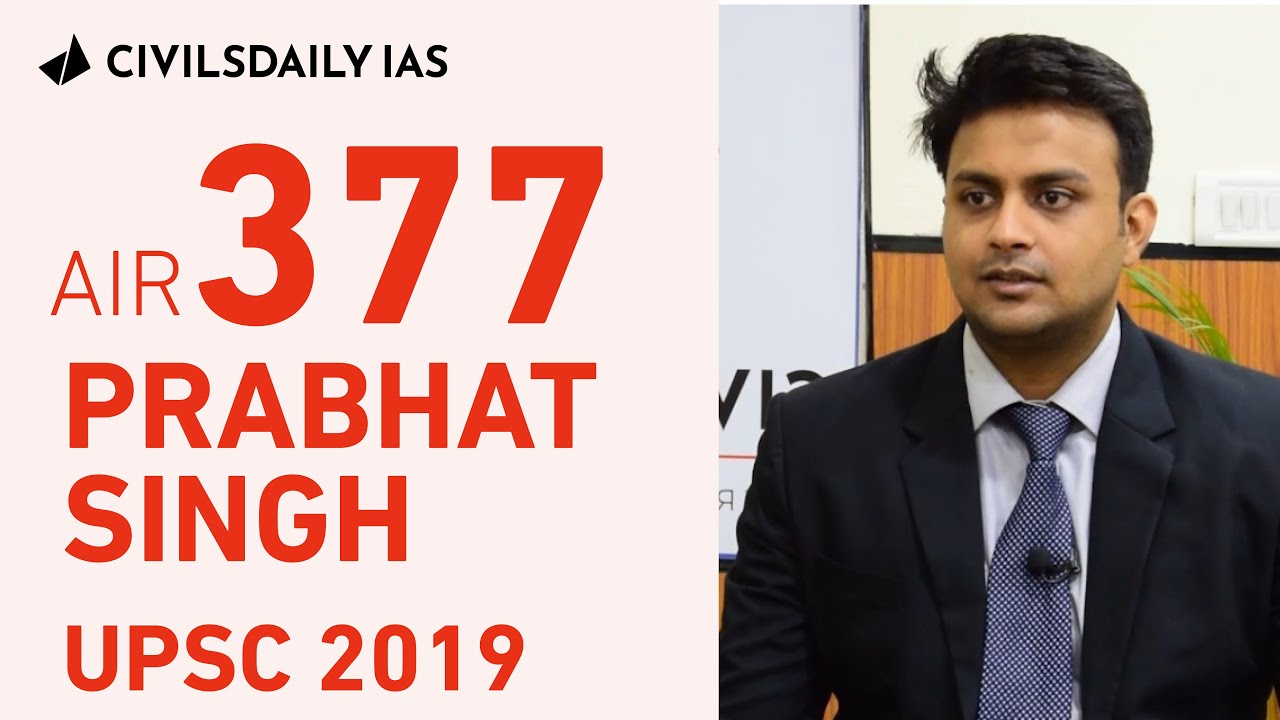
  • Why it took 5 attempts for me and the mistakes you should avoid | WEBINAR by Prabhat Gyanendra Singh, AIR 377, 2020 (JOINING LINK inside)

    Why it took 5 attempts for me and the mistakes you should avoid | WEBINAR by Prabhat Gyanendra Singh, AIR 377, 2020 (JOINING LINK inside)

    Prabhat Singh secured an AIR 377 in his 5th attempt. He’ll be available for a discussion and Ask Me Anything session for UPSC CSE. He will be focussing on choosing Optionals as well.

    Join Zoom Meeting

    https://us06web.zoom.us/j/84167109252?pwd=MWtaVXgxdWJkUk9DNWU2TG8zWTJEZz09

    Webinar Details

    A busy IRPS Officer like PRABHAT GYANENDRA SINGH  is free only on a Sunday. But he loves to dedicate his Sundays to mentoring upcoming civil servants. So join him and give your UPSC preparation a new Edge and direction! This webinar is absolutely free. All aspirants are heartily welcome to attend.

    Date: 1st May 2022 (Sunday)

    Time: 3 to 4 PM

    Join Zoom Meeting

    https://us06web.zoom.us/j/84167109252?pwd=MWtaVXgxdWJkUk9DNWU2TG8zWTJEZz09

    Infallible Tips to Learn in This Free Live Webinar by IRPS PRABHAT GYANENDRA SINGH

    • How can an aspirant’s academic and personal interests guide in choosing one’s optional?
    • How can an aspirant’s academic and personal interests guide in choosing one’s optional?
    • What is the Optional subject’s contribution to the General Studies curriculum?
    • In the recent past, Discussion on performance of various optional subject (past 5 years)
    • Effective Time Management for optional.
    • Various Benefits and Drawbacks of Humanity Optional
    • Why I will not follow the crowd. What are the difficulties it faces?
    • Discussion on Literature (optional) and its ramifications
    • Why should you be cautious before enrolling in Public Administration and Law?
    • Implications of selecting the incorrect optional on your preparation and result.
    UPSC Topper - Singh Prabhat Gyanendra, UPSC 2019, AIR 377 - Mock Interview  with Civilsdaily - YouTube

    About PRABHAT GYANENDRA SINGH 

    PRABHAT GYANENDRA SINGH was a B.sc Statistics from Gujarat University, M.G. Science college.  He completed his LL.B from Campus Law Centre, Delhi University LL.M. – I.P.S. Roorkee, UTU. On a personal level, he pursued further education, especially in public policy. In his attempt of CSE 2019 with Law as an optional secured All India Rank 377.

    Join Zoom Meeting

    https://us06web.zoom.us/j/84167109252?pwd=MWtaVXgxdWJkUk9DNWU2TG8zWTJEZz09

  • (Join webinar using this link)  How to choose an Optional for UPSC-CSE 2023| Webinar by PRABHAT GYANENDRA SINGH, IRPS

    (Join webinar using this link) How to choose an Optional for UPSC-CSE 2023| Webinar by PRABHAT GYANENDRA SINGH, IRPS

    Link: https://us06web.zoom.us/j/84167109252?pwd=MWtaVXgxdWJkUk9DNWU2TG8zWTJEZz09


    There is no dearth of advice floating around on the internet about ‘How to choose an optional subject for UPSC!’. Are those enough for an aspirant to make the right decision and score 350+ out of 500? 

    Some websites suggest ‘Hindi Literature’ for Hindi medium students and ‘Sociology’ for English medium. It’s extremely important to justify what are the exact principles that must be taken under scrutiny while selecting your optional subject. Because you have to choose 1 optional, not randomly and it will decide your rank for IAS.

    Is it only subjective interest that will work for you or should it be helpful to GS & essay papers too or highly scoring itself? 

    Attend the free live webinar conducted by Civilsdaily’s topper PRABHAT GYANENDRA SINGH to understand how to select the optional subject for UPSC to have an edge over the competition.

    Webinar Details

    A busy IRPS Officer like PRABHAT GYANENDRA SINGH  is free only on a Sunday. But he loves to dedicate his Sundays to mentoring upcoming civil servants. So join him and give your UPSC preparation a new Edge and direction! This webinar is absolutely free. All aspirants are heartily welcome to attend.

    Date: 1st May 2022 (Sunday)

    Time: 3 to 4 PM

    Link: https://us06web.zoom.us/j/84167109252?pwd=MWtaVXgxdWJkUk9DNWU2TG8zWTJEZz09

    Infallible Tips to Learn in This Free Live Webinar by IRPS PRABHAT GYANENDRA SINGH

    • How can aspirant’s academic and personal interests guide in choosing one’s optional?
    • What is the Optional subject’s contribution to the General Studies curriculum?
    • In the recent past, Discussion on performance of various optional subject (past 5 years)
    • Effective Time Management for optional.
    • Various Benefits and Drawbacks of Humanity Optional
    • Why I will not follow the crowd. What are the difficulties it faces?
    • Discussion on Literature (optional) and its ramifications
    • Why should you be cautious before enrolling in Public Administration and Law?
    • Implications of selecting the incorrect optional on your preparation and result.
    UPSC Topper - Singh Prabhat Gyanendra, UPSC 2019, AIR 377 - Mock Interview  with Civilsdaily - YouTube

    About PRABHAT GYANENDRA SINGH 

    PRABHAT GYANENDRA SINGH was a B.sc Statistics from Gujarat University, M.G. Science college.  He completed his LL.B from Campus Law Centre, Delhi University LL.M. – I.P.S. Roorkee, UTU. On a personal level, he pursued further education, especially in public policy. In his attempt of CSE 2019 with Law as an optional secured All India Rank 377.

    Link: https://us06web.zoom.us/j/84167109252?pwd=MWtaVXgxdWJkUk9DNWU2TG8zWTJEZz09

  • Death Penalty

    Context

    On April 22, a Bench of the Supreme Court of India, led by Justice U.U. Lalit, decided to critically examine the routine and abrupt way in which trial judges often impose the death penalty on convicts.

    Individualistic approach

    • The challenge before the Court in the instant case of Irfan vs State of Madhya Pradesh was to identify the mitigating circumstances and to ensure a convict-centric approach so that the imposition of capital punishment becomes rarer, fairer, and principled.
    • According to the Court, “a ‘one size fit for all’ approach while considering mitigating factors during sentencing should end”.
    • Mitigation expert: The Bench indicated the need for mitigation experts to assist trial courts in reaching a correct conclusion on whether one should be sent to the gallows or not.
    • The Court seemed to think that an individualistic approach that examines the social, economic, emotional, and genetic components that constituted the offender rather than the offence, would go a long way in evolving a just and judicious sentencing policy.
    • An analysis of the possible reasons to avert the death penalty is reflected in a series of recent verdicts such as Lochan Shrivas vs State of Chhattisgarh (2021) and Bhagchandra vs State of Madhya Pradesh (2021).
    • These reasons might include socio-economic backwardness, mental health, heredity, parenting, socialisation, education, etc.

    Background of the humane and reformist framework

    • The special reason: According to Section 354(3) in the Code of Criminal Procedure, while imposing the capital punishment, the judge should specify “the special reasons” for doing so.
    • It was in Bachan Singh vs State of Punjab (1980) that the Constitution Bench suggested a humane and reformist framework in the matter.
    • Bachan Singh requires the trial courts not only to examine the gravity of the offence but also the condition and the ‘reformability’ of the accused. 
    • Not unconstitutional: The Court, in Bachan Singh, refused to declare the death penalty as unconstitutional. 
    • It abundantly implied that no person is indubitably ‘irreformable’.
    • It had the effect of practically undoing the death penalty provision, if taken in its letter and spirit.
    • Person-centric approach: This person-centric approach, for its materialisation, needs a different judicial acumen that recognises the convict in her multitudes.

    Is the Bachan Singh doctrine followed?

    • The Bachan Singh principle was followed more in its breach than in compliance even by the Supreme Court.
    • In Ravji vs State of Rajasthan (1995), the Supreme Court said that it is the nature of the crime and not the criminal which is germane for deciding the punishment.
    • Several other cases also were decided by ignoring the Bachan Singh doctrine, as noted by the Supreme Court itself in Santhosh Kumar Satishbhushan Bariyar vs State of Maharashtra (2009) and Rajesh Kumar vs State (2011).
    • This egregious judicial error will have to be kept in mind while the Court revisits the issues related to mitigating factors and individual-centered sentencing policy in the Irfan case.
    • Shortcomings of Bachan Sing: Bachan Singh did not, in concrete terms, elaborate on the mitigating factors and the methods to gather them to avert the death penalty.
    • Nor did it explain the issues such as burden of proof and standard of proof in detail.

    Issue of misuse and overuse

    • Misuse of sedition provision: The Indian experience shows that whenever the Court tries to dilute the harshness of penal provisions by a balancing approach, instead of striking down the provision, the instrumentalities of the state (including the police, the prosecution and the court) continue to overuse or misuse the provisions.
    • The Supreme Court endorsed the validity of the sedition law (Section 124A of the Indian Penal Code) with a rider that it could be invoked only when there is an incitement to violence.
    • But the state seldom acts based on interpretation of the law. 
    •  Many were booked for the charge of sedition since then for mere words, innocent tweets or harmless jokes.

    Social implications

    • Disproportionate effect on the poor: In India, as elsewhere, the poor, rather than the rich, are sent to the gallows.
    • Ineffectiveness of legal assistance: In Williams vs Taylor (2000), the U.S. Supreme Court said that failure of the defence lawyer in highlighting the mitigating factors that could lead to avoidance of capital punishment makes the legal assistance ineffective. 
    • Therefore, it infringes constitutionally guaranteed rights.
    • In the Indian scenario, the legal assistance received by the poor facing serious charges is far from satisfactory.
    • Mitigating factors not placed: And in the matter of sentencing too, the mitigating factors are either not placed before the trial court or not persuaded adequately to convince the trial judge to avoid the death penalty.

    Way forward

    • Taking empirical lessons from the fate of Bachan Singh, the Supreme Court may have to now ask the more fundamental question posed and negatived in Bachan Singh — the question of the constitutional validity of death penalty.
    • Comprehensive report: The Court, in the instant case, will have to evolve a legal device for procurement of a comprehensive report dealing with the socio-economic and hereditary backgrounds of the accused from experts in the fields of social work, psychiatry, psychology, anthropology, etc.
    • Violation of Article 21: The Court may have to revisit Bachan Singh itself in so far as it refused to declare the death penalty as violative of the right to life envisaged under Article 21 of the Constitution.
    • Across the world, 108 nations have abolished death penalty in law and 144 countries have done so in law or practice, according to the Amnesty Report of 2021.
    • Judicial errors: In the Indian context, where judgmental error is quite frequent and the quality of adjudication is not ensured, what is required is a judicial abolition of death penalty. 

    Conclusion

    The present matter will have to be referred to a larger Bench, with a view to rectify the foundational omission in Bachan Singh — of not explicitly declaring capital punishment as unconstitutional.

    UPSC 2023 countdown has begun! Get your personal guidance plan now! (Click here)

  • [Burning Issue] China’s Debt Trap Diplomacy

    UPSC 2023 countdown has begun! Get your personal guidance plan now! (Click here)

    Context

    • Sri Lanka continues to grapple with its worst-ever economic crisis as it has defaulted on all of its external debt of about $51 billion – after running out of foreign exchange for imports, calling it the last resort.
    • So while domestic policies are largely being seen as reasons for Sri Lanka’s economic collapse, many also blame China for the unprecedented crisis in the island nation.
    • Defaults over China’s infrastructure loans to Sri Lanka, especially the financing of the Hambantota port are being cited as factors leading to the crisis.

    In this article, we will try and understand China’s lending model and the reasons it is coming under increasing criticism from low & middle-income countries against unsustainable debt.

    American statesman John Adams, who served as president from 1797 to 1801, famously said, “There are two ways to conquer and enslave a country: One is by the sword; the other is by debt.” China, choosing the second path, has embraced colonial-era practices and rapidly emerged as the world’s biggest official creditor.

    What is Debt Trap Diplomacy?

    • Loans to repay loans: The debt trap is a situation where one is forced to over consume loans to repay your existing debts.
    • Political leverage is exploited: Debt-trap diplomacy is a term in IR which describes a creditor country or institution extending debt to a borrowing nation partially, or solely, to increase the lender’s political leverage. The term was coined by an Indian academic Brahma Chellaney.
    • IMF and Chinese tools of coercion: Although the term is most commonly associated with China, it has also been applied to the International Monetary Fund (IMF); both allegations, however, are disputed.

    Features of such diplomacy

    • Lending is initially very indiscriminate
    • Terms of the loans are often not publicized
    • More conditional loans are offered to repay and restructure old debts
    • Such loans benefit the lender by undue exploitation of the borrower
    • Interest rates are hefty and unrealistic
    • It seeks sovereign guarantee and sovereign leases
    • Default leads to geo-strategic overtakes ex. PLA Navy being deployed at Hambantota Port

    Roots of such policy

    • There are many cases of countries in the 19th and early 20th century, the high-water mark of European colonialism and imperialism, using debt-funded infrastructure projects to embark on rapid modernisation.
    • For instance, the French-led design and construction of the Suez Canal.
    • It involved the issuing of £3.3 million’s worth of Egyptian bonds in 1863 on behalf of the Egyptian Khedive.
    • In return Egypt, committed to provide labour and a 99-year operational lease to France (much similar to the terms of Hambantota Port).
    • One of the earliest successes of China’s debt-trap diplomacy was in securing 1,158 square kilometers of strategic Pamir Mountains territory from Tajikistan in 2011 in exchange for debt forgiveness.

    Sri Lankan Case

    • Using its own brand of “strategic investments” China is now forcing smaller states to abide by its dictates.
    • Sri Lanka’s case is a text-book example of the Chinese modus operandi in pursuing its strategic interests.
    • In July 2017, the Sri Lankan government and CMPort (China Merchants Port Holdings Company), a state- owned Chinese company, signed an agreement.
    • It granted China a 99-year lease of the Hambantota harbour and 15,000 acres of land in exchange for $1.2 billion.

    How does China seek to achieve this?

    • Belt and Road Initiative (BRI): The BRI is a trillion-dollar initiative, which makes large-scale loans available to countries seeking to build infrastructure projects.
    • Ignorance to creditworthiness: Instead of first evaluating a borrower country’s creditworthiness, including whether new loans could saddle it with an onerous debt crisis, China is happy to lend.
    • Secrecy of negotiations: The China allegedly keep negotiations very secret and non-competitive pricing of projects.
    • Bidding is closed-door: Contracts go to Chinese state-owned or state-linked companies which charge significantly above-market prices.
    • Bribing of the govt: China also shows up with bribes to senior leaders in countries, in exchange for infrastructure projects.

    Worst outcomes

    • Sri Lanka: It was forced to hand over control of the Hambantota port project to China for 99 years, after it found itself under massive debt owed to Beijing.
    • Pakistan: It is literally sold to into the hands of the China over the development of China Pakistan Economic Corridor (CPEC).
    • Gulf region: Similarly, in exchange for relief, China constructed its first military base in Djibouti.
    • India: SL allowed China control over a key port positioned at the doorstep of its regional rival India, and a strategic foothold along a key commercial and military waterway.

    Chinese prophecy of its policy

    • Anti-China sentiments: Communist Party of China calls it a “meme” which became popular due to “human negativity bias” based on anxiety about the rise of China as a global superpower.
    • Obsession for China over the West: Many nations, Pakistan being the best example finds China as an attractive partner for their development.
    • Success of such loans: Most of the debtor countries voluntarily agreed to the loans and had positive experiences working with China.
    • Already existing debt distress: CCP conforms that Chinese loans are not currently a major contributor to the already existing debt distress in Africa.
    • Debt-Restructure Policy: China restructured or waived loan payments for 51 debtor nations (most of the BRI’s participants) without seizing state assets.
    • Case par excellence: Hambantota is an exception for China’s since the project was proposed by former Sri Lankan president Mahinda Rajapaksa, not Beijing.
    • Its borrowers who seek loans: China’s leverage in debt renegotiation is often exaggerated, and was realistically limited in power.
    • Waivers are considered: Considering the particular case of Pakistan, asset seizures are a very rare occurrence, and debt write-off is the most common outcome.

    Why do countries go for Chinese offers?

    • Distressed under-developed /developing countries: In retrospect, China’s designs might seem obvious. But the decision by many developing countries to accept Chinese loans was, in many ways, understandable.
    • Negligence by World Bank and IMF: Most developed nations got neglected by institutional investors, since they had major unmet infrastructure needs. Countries that don’t want to go the IMF for a bailout when they’re in trouble, they went to China instead.
    • Former colonists turned blind eyes: Most African and Asian countries turned troubled after de-colonization. Their finances were literally sucked up by colonists in post WW2 recovery.
    • China empathized when nobody else did: So when China showed up, promising benevolent investment and easy credit, they were all in.
    • Blaming Beijing is the easier option:  It became clear only later that China’s real objectives were commercial penetration and strategic leverage; by then, it was too late, and countries were trapped in a vicious cycle.

    Do you know?

    The State Bank of Pakistan (SBP), the central bank is no more a sovereign bank unlike the RBI. It has now become a commercial bank!

    Has India taken any loans from China?

    Ans. No. It’s the AIIB Loan.

    • India has not entered into any loan agreement directly with China.
    • However, it has been the top borrower of Asian Infrastructure Investment Bank (AIIB), a multilateral bank wherein China is the largest shareholder (26.6% voting rights) and India is the second (7.6% voting rights). 
    • China’s vote share allows it veto power over decisions requiring super-majority.
    • Loans provided to India could also pave the way for Chinese firms to enter and gain experience in the promising Indian infra market.

    Impact of Chinese policy on India

    • Almost all neighbours got lured: Most of India’s neighbours have fallen prey to China’s debt trap, and ceded to China’s $8 tn project – One Belt One Road Initiative (OBOR).
    • India’s sovereignty concerns disregarded: CPEC requires India to accept that the Kashmir-controlled Pakistan region, is Pakistan, because that’s where some of the projects are.
    • Perception change against traditional partners: China through OBOR can hence increase India’s political cost of dealing with its neighbours. Ex. Bangladesh now cherishes Chinese affinity more than its liberator.

    A critical assessment

    • Of course, extending loans for infrastructure projects is not inherently bad: The projects that China is supporting are often intended not to support the local economy, but to facilitate Chinese access to natural resources, or to open the market for its low-cost exports.
    • Several projects are now bleeding money: In a sense, it is even better for China that the projects don’t do well. After all, the heavier the debt burden on smaller countries, the greater China’s own leverage becomes.
    • Chinese morale are now high enough to prey its small neighbours: China has used its clout to push Cambodia, Laos, Myanmar, and Thailand to block a united ASEAN stand against China’s aggressive pursuit of its territorial claims in the South China Sea.
    • China is establishing its monopoly: In financially risky countries, China now demands majority ownership up front. For example, China clinched a deal with Nepal this month to build another largely Chinese-owned dam there, with its state-run China Three Gorges Corporation taking a 75% stake.
    • Debt for a debt has become crème de la crème: In exchange for rescheduling repayment, China is requiring countries to award it contracts for additional projects, thereby making their debt crises interminable.
    • China is becoming increasingly opportunistic and seizing assets: Countries that are not yet ensnared in China’s debt trap should take note – and take whatever steps they can to avoid it.
    • Deadly obligations are pre-conditions: China does obligate the borrower to exclude the Chinese debt from any multilateral restructuring process, such as the Paris Club of official bilateral creditors, and from any “comparable debt treatment.”
    • China has taken over exclusive development rights:  In small island nations, China has converted big loans into acquisition of entire islets through exclusive development rights. It took over a couple of islets in the Indian Ocean archipelago of the Maldives and one island in the South Pacific nation of the Solomon Islands.
    • Some developing economies are regretting their decision: Protests have erupted over widespread joblessness, purportedly caused by Chinese dumping of goods, which is killing off local manufacturing, and exacerbated by China’s import of workers for its own projects.
    • Rise of neo-imperialism: By integrating its foreign, economic, and security policies, China is advancing its goal of fashioning a hegemonic sphere through security links. If states are burdened with high levels of debt as a result, their financial woes only aid China’s neocolonial designs.

    Do you know?

    Yuan is now the official currency of Zimbabwe!

    Way forward

    • India needs to loop in: Getting ready to challenge China’s profile by enhancing its own regional role as an economic and security actor is the need of the hour for India.
    • Ring-fencing of its neighbours: India also needs to maintain its influence in the region and counter the growing debt-trap initiatives via cooperative strategies and humanitarian aid, a move aimed to ring-fence its strategic interests.
    • Countering China in maritime sphere: At a time when China is strangling India in the north with its attempts to change facts on the ground, it is imperative for India to strategically think of using the maritime sphere to break Beijing’s growing dominance in its periphery.
    • Alternatives for finances: India needs to push these small countries to improve its ties with the US and the West. The so called ‘assistance’ should be as per international standards or as per the interest rate imposed by the World Bank, the Asian Development Bank and others.

    Conclusion

    • Thus it is very much clear that- China often begins as an economic partner of a small, financial weak country and then gradually enlarges its footprint in that state to become its economic and political master. 
    • Atmanirbharta (Self-reliance) is the key to all such miseries.
  • Placing semicon diplomacy at the heart of India’s foreign policy

    Context

    The current decade presents a unique opportunity to India. . India must seize this opportunity and become an attractive alternative destination for semiconductor manufacturing.

    Importance of semiconductors

    • Semiconductor chips are the lifeblood of the modern information age.
    • The semiconductor is the cornerstone of all electronic products.
    • They enable electronic products to compute and control actions that simplify our lives.
    • These semiconductor chips are the drivers for ICT development and one of the key reasons for the current flattening of the world

    Global cooperation driven by semiconductors

    • The manufacturing cycle of a semiconductor chip from sand to a finished product, sees it change hands approximately 70 times across international borders.
    • Concentrated in few geographies: The semiconductor manufacturing capacities are concentrated in a few geographies.
    • Nearly all leading edge (sub 10nm) semiconductor manufacturing capacity is limited to Taiwan and South Korea, with nearly 92 per cent located in the former.
    • Further, 75 per cent of the semiconductor manufacturing capacity is concentrated in East Asia and China.

    Opportunity for India

    • Companies are looking to diversify their supply chain and for alternatives to their bases in China.
    • The chip shortages due to Covid-19 have hit automakers with a revenue loss of $110 bn in 2021.
    • The Russia-Ukraine conflict and its implications for raw material supplies for the semiconductor value chain has also poised chipmakers to invest in strengthening the semicon supply chain.
    • India must seize this opportunity and become an attractive alternative destination for semiconductor manufacturing.
    • The way ahead is conceptualising a semicon diplomacy action plan.
    • Placing semicon diplomacy at the heart of India’s foreign policy is essential both strategically and economically.
    • The multiplier effect on the economy: The establishment of the value chain for semiconductors would ensure a multiplier effect on the entire economy. 
    • National security implications: Semiconductors are used in critical infrastructures such as communication, power transmission etc., that have implications for national security. 
    • Reducing the BoP: Domestic production would be saving forex and reducing the balance of payments, especially vis a vis China.

    Way forward: Leveraging Semicon diplomacy

    • One of the ways of leveraging semicon diplomacy is increasing multilateral and bilateral cooperation.
    • Role of Quad: A key institution with immense potential in this regard is the Quad.
    • Australia, being rich in raw materials required for semiconductors, can be an important supplier to fill in India’s deficits.
    • The US and Japan can be leveraged for capacity building and their advanced semiconductor technology in logic and memory segments.
    • Pivot India’s Act East Policy: Considering that the semiconductor manufacturing and testing bases are heavily concentrated in East Asia, the Act East policy provides an opportunity to connect and strengthen ties with key players in the region.
    • Technological exchanges with ASEAN: Frequent technological exchanges between a regional bloc like ASEAN via tracks in forums like the East Asia Summit and the ASEAN regional forum will be beneficial.
    • Collective growth: Attaining self-sufficiency in semiconductor manufacturing can mean collective growth of the South Asian region.
    • India needs to harness its strengths, such as the strong presence of global EMS players, diaspora, world-class design ecosystem, demographic dividend, and use it as a pedestal for global partnerships and outreach.

    Conclusion

    India’s concept of self-reliance is not an individualistic endeavour but one that encourages growth and prosperity of all, in the spirit of Vasudhaiva Kutumbakam, meaning the entire world is one family. Similarly, we don’t have an option but to be self-reliant in semiconductors.

    UPSC 2023 countdown has begun! Get your personal guidance plan now! (Click here)

More posts