💥UPSC 2026, 2027, 2028 UAP Mentorship (March Batch) + Access XFactor Notes & Microthemes PDF

Search results for: “”

  • Q.4 To educate a person in the mind but not in morals is to educate a menace to society. ― Theodore Roosevelt. Explain. (10 Marks)

    Mentor’s Comments-

    • Briefly write the importance of moral education in one’s life.
    • Explain the meaning of the quote with relevant examples.
    • Conclude accordingly.
  • Q.3 What are the special situation funds (SSFs)? How will SSF’s full participation across the entire spectrum of the secondary market for corporate debt help deal with the issue of bad debt? (10 Marks)

    Mentor’s comment-
  • Q.2 The incident of the accidental firing of a missile by India highlights the issues with the strategic stability regime in South Asia. Discuss the issues and suggest the measures needed? (10 Marks)

    Mentor’s comment-
    • https://www.thehindu.com/opinion/lead/a-misfiring-and-its-trail-of-poor-strategic-stability/article65228306.ece
    • In the intro, mention the accidental firing incident and how Pakistan reacted to it.
    • In the body, mention the issues with strategic stability mechanism such as the absence of cruise missiles from Pre-notification agreements, no meetings on structured meetings on nuclear confidence-building measures (CBMs), refusal of China to engage in strategic stability discussions with India. In the suggestion mention the need for including cruise missiles in Pre-notification agreements, setting up of risk reduction centres (NRRCs) etc.
    • Conclude by mentioning the need to use the risk reduction mechanisms.
  • Q.1 What is an urban forest? Highlight its benefits and steps taken by the government to promote urban forestry in India. (10 Marks)

    Mentor’s Comments-

    • Introduce by giving definition of an urban forest.
    • Discuss in brief the benefits of urban forests.
    • Enlist the initiatives undertaken by the government of India to promote urban forests.
    • Conclude the answer accordingly.
  • Western sanctions on Russia are like none the world has seen

    Context

    Economic measures to cut Russia off from the world’s financial arteries are the most powerful implements a West unwilling to meet a nuclear adversary on the battlefield has dared wield in response to the invasion of Ukraine.

    Use of sanctions

    • The use of sanction has boomed over the past few decades.
    • Since 2000 the number of individuals and entities on America’s sanctions list has risen more than tenfold to 10,000.
    • Ever more governments, keen to punish military aggression or human-rights abuses but reluctant to go to war over them, have embraced the tactic.

    Sanctions against Russia

    •  After debating whether to make it much harder for Russian banks to process international payments by shutting them out of SWIFT—some European countries feared it would hurt their own banks, too—Western allies agreed to try targeting seven of them, though it has steered clear of Sberbank, Russia’s largest by assets, which plays a big role in processing energy payments. 
    • The most potent financial sanctions, though, have been aimed not at Russia’s commercial banks but at its central bank.
    • In the eight years since annexing Crimea made Russia the target of a first wave of sanctions, Russia has built up reserves (they now total $630bn) and shifted their composition away from dollars to help insulate the economy from further punishment.
    • But reserves become moot, whatever the currency in which they are held, if they cannot be used.
    • America, acting with Europe, has banned a range of parties from transactions with Russia’s central bank.
    • The West has also frozen most of the bank’s assets outside Russia.

    How it will affect Russian economy

    • Within hours of the sanctions taking effect, Russia’s central bank raised its main interest rate from 9.5% to 20% in an attempt to shore up the currency.
    •  Export controls will limit the components Russia can buy for its military and high-tech sectors, denying it goodies ranging from cutting-edge machinery to microchips.
    • The measures apply not just to goods made in America, but to those containing American technology that are made in and shipped from third countries, such as China.
    • For now, consumer goods dear to ordinary Russians like smartphones and home appliances are exempted from such measures.
    • But Apple is no longer selling iPhones or other kit in Russia. It is one of a fast-growing number of Western companies getting out.

    Effectiveness of sanctions

    • Measuring sanctions’ success is hard, not least because of the difficulty of disentangling their effects from other economic, and on occasion military, forces, but there have been few outright successes.
    • A recent success was the squeeze on Libya by America and allies in the 1990s and early 2000s.
    • A mix of sanctions and financial inducements persuaded Muammar Qaddafi to end his wmd programme and stop funding terrorism.
    • The apparent failures of sanctions are many.
    • Sometimes this is because they are fundamentally symbolic, or weakened by interest groups in the countries imposing them.
    • Though the point of sanctions is to exploit asymmetries, doing much more harm to the adversary than to yourself, there are always burdens to be borne by some.
    • There is also a loss to the economy as a whole.
    • The cost of compliance with sanctions for banks and companies has rocketed over the past decade.
    • Financial institutions alone spent over $50bn worldwide in 2020 on screening clients for sanctions risks, according to LexisNexis, a data firm.
    • One thing which weakens sanctions is leakiness. Despite America’s maximum-pressure measures, Iran manages to export an estimated 1m barrels of oil per day as middlemen find ways to disguise the origin of shipments.

    Risks associated with sanctions

    • Collateral damage: The more powerful sanctions are, the greater the risk of collateral damage, particularly when targeted regimes are indifferent to the suffering of citizens.
    • Work in favour of regime: Increasing the harm done can work at least in part in the government’s favour.
    • In Venezuela, a significant number of those opposed to President Nicolás Maduro and his henchmen also oppose the American sanctions putatively aimed at dislodging them.
    • Increase the closeness between countries: Sanctions can also push countries they target into each other’s arms.
    • Russia and China—hit with American sanctions over its mistreatment of Uyghurs as well as its suspected tech-spying—are enjoying their friendliest relations for decades.
    • Alternative infrastructure: It encourages those who fear them to develop alternative financial and technological infrastructures.
    • China is pushing hard in that direction.
    • As well as trying to boost its chip-making, it is creating its own version of swift, called cips, which simplifies cross-border payments in yuan, and developing a digital currency.
    • It has a long way to go.
    • Though usage of the yuan as a currency for international payments is at an all-time high, at just over 3% of the total it still pales beside the dollar, at 40%.
    • As the world economy reels from financial crises, nationalism, trade wars and a global pandemic, sanctions are aggravating existing tensions within globalisation.

    Conclusion

    When used in earnest, sanctions can inflict heavy economic costs on both sides on top of the deprivation inflicted in targeted countries. Even then, they do not always work.

    UPSC 2022 countdown has begun! Get your personal guidance plan now! (Click here)

  • A missile misfiring and its trail of poor strategic stability

    Context

    The accidental firing of an Indian missile into Pakistan highlights the sorry state of bilateral mechanisms for crisis management between the two nuclear adversaries where there is a missile flight time of barely a few minutes.

    Balance response from both side

    • The Pakistani response to the accidental firing of the missile was a balanced one.
    • While New Delhi maintained a silence over the issue until it was brought up on March 11, the Indian response was also far from denial.
    • In that sense then, the Indian and Pakistani responses to the missile (mis)firing were the best possible outcome under the circumstances given that there is little bilateral mechanism for crisis management.
    • The two sides do not have high commissioners on the other side, there is no structured bilateral dialogue, and, most importantly, the two sides have not held ‘Expert Level Talks on Nuclear Confidence Building Measures’ or ‘Expert Level Talks on Conventional Confidence Building Measures’ for several years now.

    Lack of strategic stability regime

    Following are the reasons why the strategic stability regime in South Asia is hardly prepared for dealing with accidents such as the one that just happened, or enhancing effective crisis management and deterrence stability.

    1] Pre-notification agreement does not include cruise missiles

    • For one, although India and Pakistan signed a ‘Pre-Notification of Flight Testing of Ballistic Missiles’ agreement in October 2005, it does not include cruise missiles.
    • Notably, the missile that was misfired by the Indian side earlier this month, suspected to be the BrahMos, was a cruise missile (even though it was a misfire, and not a flight test).
    • Way forward: Given the many sophisticated cruise missiles that are now a part of each side’s arsenal, it is important to include them in the pre-notification regime.

    2] No structured meetings on nuclear confidence-building measures (CBMs)

    • The two sides have not held their structured meetings on nuclear confidence building measures (CBMs) and conventional CBMs for several years now.
    • Given the nature of the India-Pakistan relationship — adversarial, nuclear-armed, crisis prone, and suffering from trust deficit — there is an urgent need, especially in the wake of the recent incident, to revive these two dialogue mechanisms.

    3] China has so far refused to engage in strategic stability discussions with India

    • The third state with nuclear weapons in the region, China, has so far refused to engage in strategic stability discussions with India even though China today is involved in the India-Pakistan conflict more than ever before, apart from being in a military standoff with India.

    Way forward: Mechanisms for communicating sensitive information during crisis periods

    • India and Pakistan should consider setting up mechanisms such as nuclear risk reduction centres (NRRCs), established between the U.S. and the Soviet Union during the Cold War.
    • The primary objective of NRRCs, or similar structures that can be set up on either side, is risk reduction by providing a structured mechanism for timely communication of messages and proper implementation of already agreed-upon confidence-building measures.
    • Such a body could routinely exchange messages, provide timely clarifications, and review compliance to agreements, among others.

    Consider the question “The incident of the accidental firing of a missile by India highlights the issues with the strategic stability regime in South Asia. Discuss the issues and suggest the measures needed? 

    Conclusion

    New Delhi should provide assurances to Pakistan that efforts will be made to avoid such mistakes in the future. And both sides should use risk reduction mechanisms.

    UPSC 2022 countdown has begun! Get your personal guidance plan now! (Click here)

  • Why special situation funds are necessary

    Context

    India suffers from a chronic bad debt problem.  To overcome this problem, banks and financial institutions were initially allowed to sell their stressed loans only to ARCs. Now they can sell to SSFs too.

    How bad debt affects the credit supply in economy?

    • Higher bad debt requires higher provisioning, locking up more capital in the banking system.
    • This reduces credit supply and hurts economic growth.
    • To overcome this problem, banks and financial institutions were initially allowed to sell their stressed loans only to ARCs. 
    •  Transfer of stressed loans would release capital locked-up in the banking system and help improve credit supply.

    Two crucial reforms in financial markets

    • Indian financial markets witnessed two crucial reforms earlier this year.
    • 1] SSF: SEBI came out with a dedicated regulatory framework for special situation funds (SSFs).
    • 2] Dual structure bad bank: The RBI approved the new dual-structure bad bank, NARCL-IDRCL.
    • While the bad bank is an upgraded version of the existing asset restructuring companies (ARCs) model, the SSF is a relatively novel concept.

    Understanding AIFs and SSF

    • SEBI has introduced SSFs as a distinct sub-category of Category I Alternative Investment Funds (AIFs). 
    • AIFs manage privately pooled funds raised from sophisticated investors with deep pockets.
    • AIFs in equity market: While AIFs have traditionally played a prominent role in equity markets, their participation in distressed debt markets has been limited.
    • No participation in secondary market for corporate loans: Regulations did not permit AIFs to participate in the secondary market for corporate loans extended by banks and NBFCs.
    • The new regulations now create a special sub-category of AIFs, namely SSFs, which are allowed to participate in the secondary market for loans extended to companies that have defaulted on their debt obligations.

    What is Syndicated lending?

    • Syndicated lending is a financial instrument where a group of lenders, known as a syndicate, work together to provide a large loan to a single borrower.
    • This collaborative approach allows lenders to share the risk of borrower default, making it more manageable for individual lenders.
    • The syndicate typically includes a lead bank or underwriter, which plays a crucial role in assembling the syndicate and managing administrative tasks.

    Why SSFs must be allowed full participation across the entire spectrum of secondary market for corporate debt

    • Default is a lagging indicator of financial stress.
    • Lesser haircut: If lenders and bond investors could offload potentially stressed assets to SSFs before defaulting in the secondary market, they would benefit from a lesser haircut.
    • SSFs would also get adequate time for debt aggregation before default, reducing the collective action problems that may arise after default during insolvency or restructuring.
    • It would improve the liquidity: Allowing SSFs to purchase investment-grade loans would also improve the liquidity in the secondary market for corporate loans.
    • Traditionally, banks originated loans and held them till maturity.
    • Over time, lending moved from involving a single lender to multiple lenders via syndicated lending.
    • As volumes in the primary syndication market increased, demand for secondary trading also developed to allow liquidity, risk and portfolio management.
    • Suggestion by RBI task force: Secondary trading of loans is now institutionalised in international financial markets.
    • The RBI task force on secondary markets for corporate loans, chaired by T N Manoharan, made this suggestion in 2019.
    • These markets are liquid precisely because they are open to a wide variety of non-bank participants including insurance companies, pension funds, hedge funds and private equity funds.
    • SSFs are unlikely to jeopardise financial stability: SSFs cannot borrow funds or engage in any leverage except for temporary funding requirements.
    • Consequently, risks associated with liquidity, credit or maturity transformation and asset-liability mismatches are unlikely to arise.
    • Given their structure, SSFs are likely to acquire sufficient debt in a distressed company to acquire control or to influence its subsequent insolvency or restructuring process to maximise its value through business turnaround or sale.

    Consider the question “What are special situation funds (SSFs)? Suggest the changes needed in the secondary trading of loans in India’s.”

    Conclusion

    Overall, the introduction of SSFs promises to usher in a modern era of distressed debt investing in India. To realise their true potential, SSFs must be allowed full participation across the entire spectrum of secondary market for corporate debt and not just be confined to the post-default stage.

    UPSC 2022 countdown has begun! Get your personal guidance plan now! (Click here)

  • Wearing hijab is not essential part of religion: Karnataka HC

    The Karnataka High Court has upheld the ban on the wearing of hijab (head scarf) by students in schools and colleges in the State.

    [Burning Issue] Freedom of religion and attire

    The Judgment

    • The judgment was delivered by a three-judge bench comprising Chief Justice Ritu Raj Awasthi, Justice Krishna S. Dixit and Justice J.M. Khazi.
    • It rejected all the petitions filed by girl students of pre-university colleges in Udupi district.

    Key takeaways

    • The HC held that wearing hijab is not an essential religious practice in Islam and is not, therefore, protected under by the right to freedom of religion guaranteed by Article 25 of the Constitution.
    • The court said it was a reasonable restriction that was constitutionally permissible.
    • The Bench also upheld the legality of the order prescribing guidelines for uniforms in schools and pre-university colleges under the provisions of the Karnataka Education Act, 1983.
    • The court said that school uniform will cease to be a uniform if hijab is also allowed.

    What else did the court observe?

    • The Bench also spoke about the possibility of some “unseen hands” behind the hijab row to engineer social unrest and disharmony.
    • It expressed dismay over the issue being blown out of proportion by the powers that be.

    Reactions on the Judgment

    • Some factions have said that the order is a blow to right to education for Muslim women.
    • Other see it as an empowerment of women.
    • Feminists says that it’s not about an item of clothing, it’s about the right of a woman to choose how she wants to dress.
    • The Leftists perceived it as a blow against the universal right to education without discrimination, guaranteed by the law and the Constitution of India.


    UPSC 2022 countdown has begun! Get your personal guidance plan now! (Click here)

  • SC averse to ‘Sealed Cover Jurisprudence’

    Two separate Benches of the Supreme Court tore into the “sealed cover jurisprudence” practiced by the government in courts.

    What is the news?

    • The Supreme Court has allowed the Malayalam TV news channel MediaOne to resume broadcast, nearly six weeks after the government revoked its security clearance forcing it to shut down.
    • The channel was given security clearance by the MHA in February 2011 following which it obtained a licence to operate the channel in September 2011.
    • On January 5 this year, the channel was issued notice to revoke permission on the ground of “national security and public order”.
    • In February 2020, the channel’s licence was briefly suspended by MHA following its coverage of the Delhi riots.

    What did the court observe?

    • The court was critical about how the government and its agencies file reports in sealed envelopes directly in court without sharing the contents with the opposite party.
    • Being kept in the dark about the material contained in a sealed cover report, the petitioners are crippled in mounting a defence, not knowing what they are supposed to defend against.
    • At times, their cases, mostly involving fundamental rights such as personal liberty, are dismissed on the basis of the secret contents ensconced in the sealed covers.

    What is Sealed Cover Jurisprudence?

    • It is a practice used by the Supreme Court and sometimes lower courts, of asking for or accepting information from government agencies in sealed envelopes that can only be accessed by judges.
    • A specific law does not define the doctrine of sealed cover.
    • The Supreme Court derives its power to use it from Rule 7 of order XIII of the Supreme Court Rules and Section 123 of the Indian Evidence Act of 1872.

    Nature of the power: Upholding Secrecy

    • If the Chief Justice or court directs certain information to be kept under sealed cover or considers it of confidential nature, no party would be allowed access to the contents of such information.
    • There is an exception to this if the Chief Justice himself orders that the opposite party be allowed to access it.
    • It also mentions that information can be kept confidential if its publication is not considered to be in the interest of the public.
    • As for the Evidence Act, official unpublished documents relating to state affairs are protected and a public officer cannot be compelled to disclose such documents.

    Grounds of such secrecy

    Other instances where information may be sought in secrecy or confidence is when its publication:

    1. Impedes an ongoing investigation
    2. Details which are part of the police’s case diary or
    3. Breaches the privacy of an individual

    Prominent cases of sealed jurisprudence

    Sealed cover jurisprudence has been frequently employed by courts in the recent past.

    (1) Rafale Deal

    • In the case pertaining to the controversial Rafale fighter jet deal, a Bench headed by CJI Ranjan Gogoi in 2018, had asked the Centre to submit details related to deal’s decision making and pricing in a sealed cover.
    • This was done as the Centre had contended that such details were subject to the Official Secrets Act and Secrecy clauses in the deal.

    (2) Bhim Koregaon Case

    • In the Bhima Koregaon case, in which activists were arrested under the Unlawful Activities Prevention Act.
    • The Supreme Court had relied on information submitted by the Maharashtra police in a sealed cover.

    Criticism of such acts

    • Critics of this practice contend that it is not favorable to the principles of transparency and accountability of the Indian justice system.
    • It stands in contrast to the idea of an open court, where decisions can be subjected to public scrutiny.
    • It is also said to enlarge the scope for arbitrariness in court decisions, as judges are supposed to lay down the reasoning for their decisions.
    • Besides, it is argued that not providing access to such documents to the accused parties obstructs their passage to a fair trial and adjudication.

    How has the judiciary responded to this?

    • In the 2019 judgment in the case of P Gopalakrishnan V. The State of Kerala, the Supreme Court had said that disclosure of documents to the accused is constitutionally mandated.
    • This is possible even if the investigation is ongoing and said documents may lead to breakthroughs in the investigation.


    UPSC 2022 countdown has begun! Get your personal guidance plan now! (Click here)

  • Draft National Policy for Medical Devices, 2022

    The government is proposing a new Draft National Policy for Medical Devices, 2022 to reduce India’s dependence on import of high-end medical devices.

    Key features of the policy

    Objectives: Adopting public-private partnerships to reduce the cost of healthcare, drive efficiency, and aid quality improvements in medical devices manufactured in the country

    The key proposals include:

    1. Incentivising the export of medical devices and related technology projects through tax rebates and refunds
    2. Increasing government spending in “high-risk” projects in the medical devices sector
    3. Single-window clearance system for licencing medical devices
    4. Pricing environment with no price control on newly developed innovation in the sector
    5. Allot a dedicated fund for encouraging joint research involving existing industry players, reputed academic institutions and start-ups
    6. Incorporate a framework for a coherent pricing regulation, to make available quality and effective medical devices to all citizens at affordable prices
    7. NPPA (National Pharmaceutical Pricing Authority) shall be strengthened with adequate manpower of suitable expertise to provide effective price regulation balancing patient and industry needs.
    8. Pharmaceuticals Department will also work with industry to implement a Uniform Code for Medical Device Marketing Practices (UCMDMP)

    Need for such policy

    • Policy vacuum: India’s medical devices sector has so far been regulated as per provisions under the Drugs and Cosmetics Act of 1940, and a specific policy on medical devices has been a long standing demand from the industry.
    • Meaningful expense on R&D: The policy also aims to increase India’s per capita spend on medical devices. India has one of the lowest per capita spend on medical devices at $3, compared to the global average of per capita consumption of $47.
    • Reducing import dependence: With the new policy, the government aims to reduce India’s import dependence from 80 per cent to nearly 30 per cent in the next 10 years.
    • Becoming a global hub: It aims to become one of the top five global manufacturing hubs for medical devices by 2047.
    • Domestic manufacturing of high-end products: Indian players in the space have so far typically focussed on low-cost and low-tech products, like consumables and disposables, leading to a higher value share going to foreign companies.

    Earlier attempts for such policy

    • In February 2020, the government notified changes in the Medical Devices Rules, 2017 to regulate medical devices on the same lines as drugs under the Drugs and Cosmetics Act, 1940.
    • This was necessitated after revelations about faulty hip implants marketed by Johnson & Johnson, exposing the lack of regulatory teeth when it came to medical devices.
    • The government said the transition from partial regulation of selected medical services to the complete regulation and licensing of all medical devices is underway.


    UPSC 2022 countdown has begun! Get your personal guidance plan now! (Click here)


  • India is amongst the world’s largest arms importers

    India is amongst the world’s largest arms importers, accounting for 11 per cent of global imports, according to the Stockholm International Peace Research Institute (SIPRI).

    India’s arm imports

    • India’s overall imports decreased by 21% between 2012-16 and 2017-21 but that it was still the world’s biggest importer of military hardware.
    • Russia, France and the US are India’s biggest suppliers of arms, accounting for 46%, 27% and 12% of the country’s imports in the last five years.
    • India’s share of global arms imports stood at 11% during 2017-21 compared to 14% in the previous five-year period.

    Dependence on Russia is declining

    • Russia’s arms exports to India fell 47% between 2012-16 and 2017-21 even though the deliveries of several platforms including air defence systems and warships are pending.
    • Russia was the largest supplier of major weapons and systems to India during the two comparative five-year periods.

    Significance of the report

    • The report has come at a time when India’s dependence on Russian military hardware, ranging from fighter jets to rifles and submarines to shoulder-fired missiles has come into sharp focus.
    • Though India has been procuring US military hardware in growing numbers about 60% of the weapons inventory of the three services continues to be of Russian-origin.
    • It is still unclear how the new sanctions against Russia could play out and the problems they could create for the armed forces in the short and long term.
    • The possible impact of Russia’s unprecedented economic isolation on India’s military preparedness and the serviceability of weapons and equipment is threatened.

    Is it a matter of relief?

    • India has major plans for arms imports because of perceived threats from China and Pakistan, and due to significant delays in indigenous production.
    • The drop in India’s arms imports is, therefore, probably a temporary result of its slow and complex procurement process as well as its shift in suppliers.


    UPSC 2022 countdown has begun! Get your personal guidance plan now! (Click here)

  • What is a Heatwave?

    The Konkan region, including Mumbai, has been experiencing sweltering heat in recent days, with the maximum temperatures touching the 40 degrees mark.

    What is a Heatwave and when is it declared?

    • Heatwaves occur over India between March and June.
    • IMD declares a heatwave event when the maximum (day) temperature for a location in the plains crosses 40 degrees Celsius.
    • Over the hills, the threshold temperature is 30 degrees Celsius.

    Following criteria are used to declare heatwave:

    To declare heatwave, the below criteria should be met at least in 2 stations in a Meteorological subdivision for at least two consecutive days and it will be declared on the second day.

    a) Based on Departure from Normal

    • Heat Wave: Departure from normal is 4.5°C to 6.4°C
    • Severe Heat Wave: Departure from normal is >6.4°C

    b) Based on Actual Maximum Temperature (for plains only)

    • Heat Wave: When actual maximum temperature ≥ 45°C
    • Severe Heat Wave: When actual maximum temperature ≥47°C

    How long can a heatwave spell last?

    • A heatwave spell generally lasts for a minimum of four days. On some occasions, it can extend up to seven or ten days.
    • The longest recorded heatwave spell, in recent years, was between 18 – 31 May 2015.


    UPSC 2022 countdown has begun! Get your personal guidance plan now! (Click here)

  • Prelims Spotlight: Constitutional and Statutory bodies.

    Dear Aspirants,

    This Spotlight is a part of our Mission Nikaalo Prelims-2022.

    You can check the broad timetable of Nikaalo Prelims here

    Session Details

    Morning 12 PM  – Prelims Spotlight Session

    Evening 06 PM  – TIKDAM/MCQs Session

    Evening 08 PM  – Tests on Alternate Days

    Join our Official telegram channel for Study material and Daily Sessions Here


    16th Mar 2022

    Constitutional bodies

      Appointment Tenure Removal Process of removal Eligibility for reappointment w/i govt
    Attorney general (Advocate general) President (governor) Pleasure of President (governor) President (governor) No reason needs to be mentioned Yes
    Election Commission (SEC) President (governor) 6 years/ 65 President CEC and SEC by a special majority


    Other ECs on the recommendation of CEC

    Yes
    Finance commission (SFC) President (governor) Specified by president NA NA Yes
    UPSC (SPSC) President (governor) 6 years/ 65 President After enquiry by supreme court Members can become Chair, state members can become chair or member or chair of UPSC
    CAG President 6 years/ 65 President Special majority No

    Statutory bodies

      Appointment Committee members Other members Tenure Removal
    NHRC (SHRC) President (Governor) 6 (PM + LOP Lok Sabha) Speaker, Deputy CP RS, LOP RS, home minister 3 years*/ 70 President after Supreme Court inquiry
    CIC (SIC) President (Governor) 3 ((PM + LOP Lok Sabha) Cabinet Minister nominated by PM As prescribed by the Central Govt*./ 65 President (governor for SIC) after supreme court inquiry
    CVC President (governor) 3 ((PM + LOP lok sabha) Home minister 4 years/ 65 President after Supreme court inquiry
    Lokpal President 5 (PM + LOP lok sabha Speaker, CJI, eminent jurist 5 years/ 70 Like a Supreme Court judge

    *  After amendments in the respective acts in 2019.

    In the news: 

    1. Amendment to the RTI Act (July 2019)

    • Section 13 of the original Act sets the term of the central Chief Information Commissioner and Information Commissioners at five years (or until the age of 65, whichever is earlier). The amendment was made that the appointment will be “for such term as may be prescribed by the Central Government”.
    • The amendment was made that the salaries, allowances and other terms of service of the Chief Information Commissioner and the Information Commissioners “shall be such as may be prescribed by the Central Government” which was earlier at par with Chief Election Commissioner.

    2. Amendment to Protection of Human Rights Act (July 2019)

    • It reduced the term of the Chairperson and Members of the Commission and the State Commissions from five to three years and shall be eligible for re-appointment.
    • Provision was added which says a person who has been a Judge of the Supreme Court is also eligible to be appointed as Chairperson of the Commission in addition to the person who has been the Chief Justice of India.
    • The amendment made provision that a person who has been a Judge of a High Court is also made eligible to be appointed as Chairperson of the State Commission in addition to the person who has been the Chief Justice of the High Court.
    • It conferred upon State Commissions, the functions relating to human rights being discharged by the Union territories, other than the Union territory of Delhi, which will be dealt with by the Commission.

  • [Yojana Archive] Samagra Shiksha: Skilling Youth for Future

    UPSC 2022 countdown has begun! Get your personal guidance plan now! (Click here)

    February 2022

    Context

    • Historically, vocational education in schools has been accorded high priority since National Policy on Education, 1986, and Centrally Sponsored Scheme (CSS) of Vocationalization of Secondary Education was launched in 1988.
    • Currently, the scheme is being implemented as part of the Centrally Sponsored Scheme ‘Samagra Shiksha’ and has been aligned with the National Skills Qualification Framework (NSQF).
    • The vocational subjects are introduced as an additional subject at the Secondary level and as a compulsory elective subject at Senior Secondary level.

    Need for Vocational Education in India

    • Demographic Dividend: India is a young country with an average age of just 28 years. In fact, more than 60% of the population in the country is in the working age (15-64 years).  
    • Demographic Disaster: However, due to low availability of adequate skill, the energy of youth is not being harnessed properly. Therefore, the youth is venting out their frustration in illegal activities. If the situation continues to persist, the demographic dividend may eventually turn into demographic disaster.
    • Increasing the employability: India is experiencing an enhancement in the literacy levels due to sustained efforts in the last few decades. However, increasing literacy is much more related to disseminating the basic numeracy and knowledge of language. It does not prepare an individual for the employment of the new age. Instead, it is skill upgradation which is critical to ensure the employability of individuals.
    • Demand-Supply Mismatch: The paradoxical problem India faces today is the huge availability of manpower and contradictory shortage of skilled personnel in the industry. Thus, the need of the hour is to update the curriculum as per the needs of the industry so that the imparted skills are useful in finding employment in the current scenario.
    • Decreasing the Pressure on Academic Higher Education: At the same time, it needs to be understood that scant resources are prioritized towards individuals who can use them in a more efficient manner. For e.g., an athlete, who has no interest in theoretical academics, may not be forced to complete a language course out of pure academic necessity.

    Features of Samagra Shiksha

    • The CSS of Vocationalization of Secondary Education was finally integrated as a part of Samagra Shiksha, which is also a Centrally Sponsored Scheme.
    • The scheme has been implemented in government schools and government-aided schools.
    • It provides for an additional subject at the secondary level and a compulsory elective in senior secondary level.
    • The scheme provides for creation of a trade specific laboratory setup within the school which is used to impart hands-on training to the students.

    Underlying principles

    • Age-appropriate education: The scheme seeks to provide age-appropriate education to the students so that they are able to achieve the required outcomes.
    • Informed choice on interests: Students choose their area of interest before secondary and senior secondary levels. However, before offering the choices, it is important that the students are able to out of the available collection.
    • Activity Based Learning: The aim of vocational education is to apply the knowledge gained till today to the real world. Therefore, the course seeks to decrease the distinction between the theoretical knowledge and its applications in the outer world. At the same time, the children will learn a new skill and also, take a conscious decision about their future path.
    • Sense of contribution: It is felt that the society does not perceive manual labour in the same manner as it perceives the high-paying, managerial jobs. Such jobs are looked down upon in the society. The scheme seeks to end this distinction by inculcating a sense of respect for the manual labour at the foundational age of a child.
    • Development of Soft Skills: Again, the scheme teaches the importance of values like teamwork, cooperation, aesthetics, quality consciousness and sustainability in the form of judicious use of raw materials. Such qualities are desirable in a student aspiring to play a bigger role in the society in the later stages of life.
    • Simulated training: Samagra Shiksha is unique in the sense that it provides real life experience to the students in the form of internship/On-the-Job Training. In fact, the State governments have already been advised to treat the vocational subjects taught in Samagra Shiksha at par with other academic subjects.
    • Value Addition: Apart from the knowledge of vocational subject, Samagra Shiksha also provides for imparting other skills like Communication, Entrepreneurship, Green skills, Self-management and IT Skills to the students, so that their employability is enhanced to a higher extent.
    • Career transition: The problem which the students pursuing vocational education face is related to transfer or migration from one place to another in pursuit of better opportunities and facilities. However, the scheme seeks to resolve the issue by providing for a credit-based education.  
    • Credit-based academics: The new system targets a specific number of credits to be achieved in a particular session or semester in a course. It is immaterial whether the credits are accumulated in a single institution or multiple institutions. This will facilitate transfer and movement of students to a new location even in the middle of a semester.
    • Hub and Spoke Model: To fulfil the gap created by lack of adequate infrastructure, hub and spoke model is being used in the country. In this model, schools in surrounding areas provide vocational education by sending their students to a nearby school having the infrastructure. This is being followed till all the schools have not been provided with adequate infrastructure.
    • Technology-based Solutions: It is critical to ensure that all learners benefit from the scheme, without any discrimination based on learning capabilities. Therefore, under the scheme, new technologies like Artificial Intelligence are being used to create curated courses for learners according to their present levels and speed of learning.

    Success of the scheme

    • Already 14.435 schools have been approved to impart education based on the Samagra Shiksha scheme.
    • There are 62 skill courses available in 20 sectors such as Agriculture, Electronics, Healthcare, IT/ITes, Plumbing, Retail, Tourism, Hospitality etc.
    • The scheme covers 1.5 million students currently being trained by trained instructors. The number increases to about 3.5 million, if CBSE schools are included.

    Challenges in implementation

    • Perceived Social Status Hierarchy: In India, vocational education is not looked upon as a career of choice. It is considered something which is taken up due to a lack of alternatives or as a formality to fulfil eligibility conditions for government jobs. This discourages pupils from taking up vocational education courses and creates a gap in availability of technically-trained workers.
    • Lack of Vertical Mobility: At the same time, students coming out of vocational courses are not perceived as good managers. Candidates having a management background are preferred for such high-paying jobs. This leads to a lack of promotional avenues and opportunities for future growth of a child pursuing a career in vocational education.
    • Integration with Mainstream Education: To encourage students to take up vocational education as a preferred career choice, there is a need to integrate vocational education with academics, even at the higher levels. The focus needs to shift towards application-based learning and solving practical real-life issues. This is also helpful in understanding the challenges faced by entry-level workers and coming up with feasible solutions for the same.
    • Rapidly Emerging Trends: The scheme needs frequent updates in the curriculum to make it aligned with the needs of the evolving world. It is also important to understand that technology based sectors need faster revision of curriculum than the other sectors, due to the rapid changes in the sectors. Therefore, a policy of differential updates can also be developed for the different sectors as per their requirement.

    Various supporting initiatives

    The Government of India has prioritized vocational education through various policy initiatives such as:

    • National Policy on Education, 1986: Vocational education was prioritized as a part of the National Policy on Education, 1986.
    • CSS of Vocationalization of Secondary Education, 1988: Vocationalization was launched as a Centrally Sponsored Scheme in the year 1988. The scheme was subsequently revised in 2011 and 2014.
    • National Skill Qualification Framework (NSQF): It is a series of courses, organized in levels to achieve competency in the workforce. NSQF emphasizes on the acquisition of these skills for better employability, as a part of formal training or informal training.

    Conclusion

    • Various predictions suggest that the demographic dividend currently being enjoyed by India will wane by the end of 2050s. After that, the country will face issues related to the care of the elderly as the bulge will shift towards higher age groups.
    • In such a context, it is critical to ensure that India maximizes its growth during the demographic dividend so that it can create better facilities in the future for the needy. The need is to ensure better implementation of the Samagra Shiksha scheme to develop vocational education sector in the country.
  • Register for Free Scholarship Test & Stand a Chance to Get flat 60% off on our UPSC 2023  Smash Foundation Course || Mission Eklavya 2023 Now Live – India’s Best Scholarship program for UPSC Civil Services||  Test on March 13th & 20th, 2022

    Register for Free Scholarship Test & Stand a Chance to Get flat 60% off on our UPSC 2023 Smash Foundation Course || Mission Eklavya 2023 Now Live – India’s Best Scholarship program for UPSC Civil Services|| Test on March 13th & 20th, 2022

    https://youtu.be/aANKfbU0cy4

    Ultimate Assessment Program and Foundation Program includes – 

    • Mentorship (1:1, throughout the preparation till Interview stage)
    • Masterclasses (complete GS syllabus covered, Only provided in Foundation course)
    • Samachar Manthan (Current affairs Programme)
    • Decimate Prelims (Prelims Crash course)
    • Mains Answer Writing Initiative (On a weekly basis)
    • Smash Mains (upon Qualifying prelims 2023)
    • Essay Guidance Program (To score above 120+ in Essay Mains Paper)
    • Interview Guidance Program (more than 1 mock interview will be conducted with a panel)
    • Civilsdaily IAS Community for Peer to Peer Interaction
    Get all the Civilsdaily courses under Smash Foundation Course for 60% off after you attend our scholarship test and score above the cut-off marks!

    Are you a beginner who has no idea about UPSC, but want to check if you have the aptitude for the same? Do you want to assess your performance and interest in UPSC before targetting 2023 preparation?

    Then, we have got the perfect opporunity for you. Presenting, Civilsdaily’s UPSC CS 2023, Free-To-Register National Scholarship on 13th & 20th March 2022 . 

    Last year’s scholarship test by Civilsdaily has seen a phenomenal response and pan India interest for the test. Many toppers have emerged out of the test to be subsequently mentored in the Civilsdaily Foundation Program. So aspirants, ensure you don’t miss out on the benefits of the test.

    Check Unherd, Topper’s Talk Series for Our Foundation Course Toppers

    https://youtu.be/DSwO38weHAA

    How is the Civilsdaily Flagship Foundational Course A One Stop Solution for UPSC Coaching?

    An average aspirant, pays for Prelims Course, Mains Program, Interview Guidance, Test Series & Study Materials all separately. The fees then comes up to 2-3 Lakhs for one attempt alone.

    Identifying this issue, Civilsdaily has designed the Flagship Foundation Course for 2023 aspirants. This course covers the entire 3-stage journey of a UPSC aspirant. From Prelims to Interview -1:1 Mentorship, Weekly Test Series, Classes & Study Materials will be provided.

    Another benefit of the program is that it’s an umbrella course wherein an aspirant can access other paid courses of Civilsdaily for FREE.

    The main objective of the program is to identify and nurture serious aspirants to become future UPSC toppers. And that’s why we have designed a scholarship test.

    Our foundation course will be intensive yet personalised. You will be getting individual coaching on how to conquer the basics, develop analytical skills, inculcate conceptual clarity and acquire the necessary knowledge to face the unpredictable and dynamic UPSC.

    Apart from conducting subject-wise classes that covers all the Prelims-Mains syllabus from scratch, aspirants will follow a customised timetable and will complete their revision on a daily basis to attempt our weekly prelims and mains tests. Once the test is over, they will get a strategy call from a mentor, who will clear their doubts and tell them how to improve their performance from next test onwards.

    Simply put, like Ekalavya you will be getting a unique coaching experience that eludes other UPSC aspirants. Even aspects like Essay, Ethics and CSAT which is ignored in other normal coaching programs, will be covered over here with tests, mentorship, classes and notes.

    If you take the upcoming free UPSC national scholarship test and come out with flying colours, you will get about 60% scholarship on the Civilsdaily Flagship Foundation Course.

    Details of the Civilsdaily Free National Scholarship Test

    Date – 13th March & 20th March, 2022.

    Please Click on Submit after finishing the Test.

    • Mode: Online
    • Registration Fee – Free
    • Language: English
    • Time: 2 Hrs
    • Syllabus: GS Paper 1 (Preliminary exam)
    • No. of Questions: 100
    • Date: 13th March & 20th March
    • Time: 10 AM
    • Result: 27/03/2022

    Why should you take the CD’s Scholarship Test? 

    1. Test your preparation on UPSC-CSE grade questions, at national level.

    2. Chance to compete against the best. See where you stand.

    3. Identify your subjectwise strengths, weak points, and problem areas before you start preparation.

    4. Mentors will provide personalised counselling based on your performance in the scholarship test. 

    5. A detailed discussion will help you navigate through the challenges during the preparation.

    6. Achieve up to 60% scholarship in our exclusive umbrella foundation course.

    As the program is rigorous and involves individual attention, we can take only limited enrollments. Hence, we are conducting a Scholarship Exam to identify serious UPSC aspirants on 13th and 20th of March. Depending on your relative score, you can get up to a 60% scholarship.

    We are looking for

    1. Serious and hardworking aspirants.

    2. Ready to dedicate a minimum of 5-8 hours daily.

    3. Can complete assigned targets and tests without fail.

    4. Only 1 thought in mind and that is – to clear UPSC Civil Services 2023.

    5. Willing to take constructive feedback from mentors after each test.

    Trusted by Rank 1 & 2:

  • A Successful UPSC 2023 Depends on your Preparation Today|| Everyday you Waste is an Opportunity Lost || Fill Samanvaya Free 1-on-1 Mentorship Form to Stay Focused, Consistent & Ahead of Your Competition in UPSC Preparation

    A sneak peek into our 1-1 mentoring session for Prelims

    Civilsdaily helped 100+ aspirants get ranks in UPSC 2020. We helped 30 students secure ranks in the Top 100. After speaking with them personally on our UNHERD platform, we understood that there was one thing that was common between all the rankers!
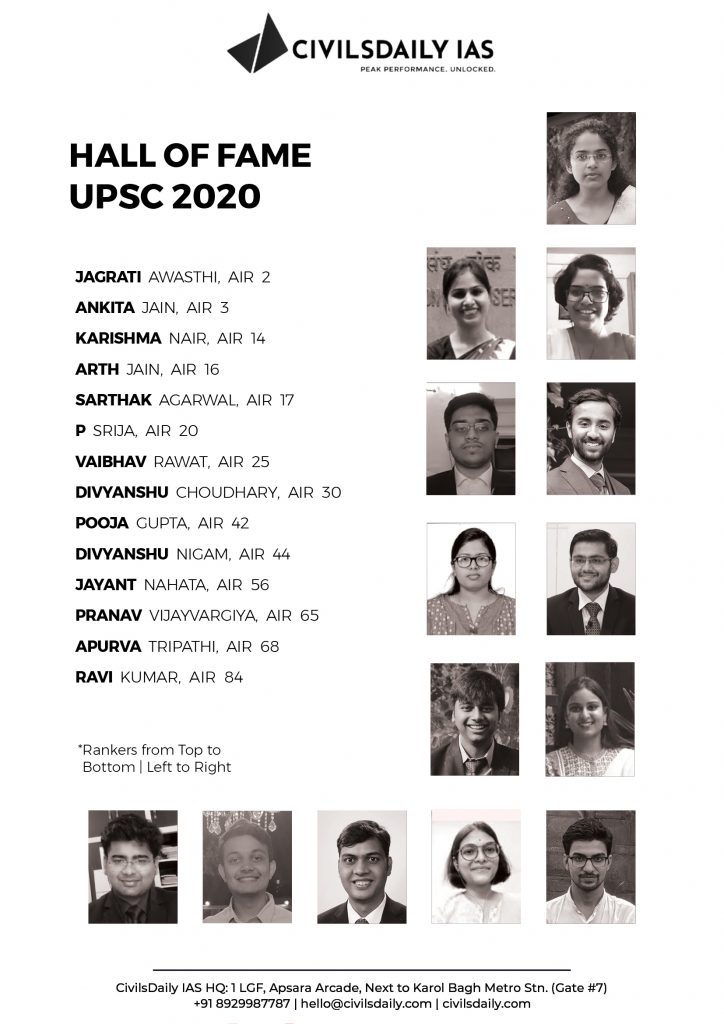
    All the rankers committed themselves and NEVER postponed their preparation. They did not waste a single day but started preparing immediately. We also asked them WHY did they start immediately and did not wait?

    This is what the rankers told us

    You will fall into a vicious cycle – Our toppers said that if aspirants do not start preparing immediately, they often fall into a vicious cycle of doubt and confusion. They wait for the right moment to start preparing but keep delaying it for numerous reasons like work, college, not-ready, etc. The more time they waste, the more confused they get, and the syllabus starts piling up. The toppers told us that the best thing they did was to start immediately and it helped them succeed!

    Lack of self-analysis can cost you 3-4 years – The toppers revealed that self-analysis is one of the most important things for an aspirant. You need to know the syllabus, the previous year questions for every topic, your strengths, your weaknesses, your learning speed, the best time to study, how to plan the study, etc. Most aspirants who fail the exam do not do self-analysis and just keep reading. This does not help as it wastes a lot of their time. In fact, if you are not sure about your strengths and weaknesses, it could easily cost you 3-4 years in preparation. The toppers also told us that they asked mentors for assessments when they felt confused. Self-analysis helped them focus on their weaknesses and improve them. And finally, they were able to crack the exam.

    UPSC is the biggest killer of self-belief – Our toppers told us that the UPSC exam is so tough and vast that it often kills an aspirant’s self-confidence. It becomes extremely difficult for them to remain consistent and motivated for the entire year. The rankers revealed that when they faced inconsistency and lacked self-confidence, they often spoke with their mentors who guided them. They found help in the mentors who understood their concerns and kept them motivated, especially when they felt down and depressed. This helped the rankers become consistent and prepare with the same energy every day!

    Self-study with no guidance doesn’t help – The rankers of 2020 told us that preparing for UPSC is like walking on a desert. You will be lost without a guide. They said that even when they were self-studying, they kept asking for guidance from mentors. What to study, what not to study, how to improve their answers, which areas to focus on, etc. The toppers stayed constantly in touch with mentors who helped them at every step. They did the hard work themselves but it would have been a waste if the hard work was not in the right direction.

    Always overachieve your daily target by 25% – The toppers said that they had a study plan with targets for every day! But that was not all. They always tried to overachieve the targets by at least 25%. Every time they overachieved, it gave them the confidence to do the same every day. And by the end of their preparation, they had a clear advantage over other aspirants because they studied 25% more than everyone, every single day!

    The toppers of 2020 told us that their handwork, right guidance, and smart planning at an early stage helped them succeed. They said that they did not want to postpone their preparation even by a single day as it would cost them ranks. And they were right! They started preparing immediately and are now rank-holders in UPSC!

    While UPSC 2023 may seem like a year away from now, looking at the syllabus one can say it’s just about the right time away. As Prelims 2022 approaches in June, more and more aspirants will realising how close they are to 2023 and begin preparing immediately. But it may just be too late by then!

    If you are reading this today, you are in luck. You have the opportunity to realise the urgency immediately. March has just begun and you can have an advantage of at least siix months over other aspirants if you start preparing today. And even with a year in your hand, it would take a high level of extremely focused study to crack the exam in June 2023. 

    The fact is this: You CANNOT waste a single day in experimenting, hunting for resources, trying to collect reading material, etc. Every day from today is more valuable than anything you can imagine, and this is the time to focus with every bit of concentration you have.

    Given the time constraint and the urgency of the situation, you need to be practical. Speak with our mentors and get your preparation organised. Our mentors can help you streamline your preparation within 24 hours and will help you save precious time. Right now, nothing is more valuable than your time and if you wish to use it effectively, all it would take is a call with our mentors.

    The urgency is real, you can calculate yourself. And every moment you waste is an opportunity wasted. All you need to do is fill this form and our senior mentors will get in touch with you, with a solution designed especially for you! Speak with us, now as it’s a free 1-on-1 mentorship session with 40 minutes dedicated only for you.

    Get Motivated to Maintain Overall Consistency for UPSC

    It’s understandable we are humans and not programmable robots who can maintain the same level of interest everyday. However, maintaining an overall consistency throughout our preparation is neccessary to clear this competitive and vast exam.

    Our philosophy behind MENTORSHIP is to get you out of this Snooze cycle. This ensures that you are the BEST VERSION of yourself in this journey. If you are under the impression that mentorship is weekly calls you attend, then you are mistaken, my friend. Trust us, your mentor will be your ‘FRIEND, PHILOSOPHER AND GUIDE’.

    TO EACH THEIR OWN – Every aspirant is different. Their strengths and weaknesses are different. Their time availability is also different. Identifying this is important so you don’t end up making unrealistic targets and lose momentum. Your mentor will make sure you start slow but remain consistent to build your confidence. Making your schedule structured based on our experience of working with 2500+ students is our first priority. 

    This image has an empty alt attribute; its file name is WhatsApp-Image-2021-05-05-at-10.14.09-AM.jpeg

    TRACK YOUR PROGRESS – When you see yourself grow, it becomes easier to motivate yourself to push boundaries. Tracking your progress can happen in many ways like mentorship calls or chat sessions or by regular tests. The idea is to ensure that you don’t go off track in your preparation, and even if you do, we have your back.

    This image has an empty alt attribute; its file name is WhatsApp-Image-2021-05-05-at-10.14.09-AM-4-576x1024.jpeg

    EVOLUTION – A constant guidance is important to bring consistency to your UPSC preparation. Guidance is not about clearing your doubts or asking you to study when you don’t. It is also about the evolution of your preparation. This is where you and your mentor work as a team. A constant effort to PLAN AND BUILD UP YOUR ABILITY to learn in a faster and more efficient way.

    This image has an empty alt attribute; its file name is WhatsApp-Image-2021-05-05-at-10.14.09-AM-6.jpeg

    TALK IT OUT – The biggest hurdle in achieving your highest level of consistency is the emotional part. Every now and then, you. surround yourself with negative thoughts, you feel scared and depressed. Instead of resolving these emotional issues, you avoid them as it seems like a waste of your precious time. You have to understand that ignoring emotional troubles does not solve them. What your doing is building an emotional time bomb that may burst a week before your mains or prelims! This is where your MENTOR AS A FRIEND comes in. All our mentors have been through this journey. We understand your fears and anxieties. So, TALK IT OUT.

    This image has an empty alt attribute; its file name is WhatsApp-Image-2021-05-05-at-10.14.09-AM-3.jpeg

    Don’t let inconsistency keep you away from your dreams.

    Fill up the SAMANVAYA form given below. Let us know your problems and we will find a solution to it, just like our students say ” TOGETHER WE CAN AND WE WILL”. BOOK YOUR SLOT FOR YOUR FREE 1-0N-1 COUNSELLING SESSION IN THE NEXT 24 HOURS

    How has Civilsdaily Mentorship, helped Aspirants become Toppers?

    The most difficult challenge faced by EVERY candidate is inconsistency. Be it inconsistency in studies, answer-writing practice, covering the syllabus, or revision, every candidate finds it difficult to cope with. But how do successful candidates manage to FIGHT Inconsistency so consistently?

    In UPSC 2020, Civilsdaily helped 80+ students secure ranks in their exams. In the top 100, every 3rd ranker was a Civilsdaily student.

     A very recent success story would be Vishwa Shah, student of Civilsdaily Mentor, Sukanya Ma’am. Vishwa has cleared the GPSC exam to become the Deputy Superintendent of Police in Gujarat. He has penned a thank-you note yesterday. Heartiest Congratulations to Vishwa!

    This image has an empty alt attribute; its file name is WhatsApp-Image-2021-12-27-at-18.49.53-727x1024.jpeg

    One of our other Civilsdaily Student, Shubham Nagargoje cleared the exams in 2020 to become an IPS Officer. Shubham was gracious enough to let us know how he felt about Civilsdaily Samanvaya Guidance under Parth sir.

    This image has an empty alt attribute; its file name is image-1.png
    This image has an empty alt attribute; its file name is WhatsApp-Image-2022-01-11-at-19.37.54-461x1024.jpeg

    To know how all of them cleared the exam with our mentorship, visit the Unherd Podcast.

    Now that results are announced for UPSC 2021 Prelims, out of 15 out of 25 students of Santhosh Gupta sir have been recommended to Mains. One such student, Rahul expresses his gratitude and extends his appreciation.

    Most of our Mentors like Sudhanshu sir, Sajal sir, Santhosh sir, Pravin sir, Parth Verma sir and Sukanya Ma’am were UPSC aspirants themselves and have attended UPSC Mains more than five times and UPSC Interview more than twice. Hence their mentorship is always a blend of the best test series, comprehensive notes and current affairs knowledge.

    This image has an empty alt attribute; its file name is 29d33a91-62aa-45e9-a906-327fbaad5180-1024x814.jpg
    This image has an empty alt attribute; its file name is 50f70a4d-c239-44a5-b49b-9b93617a378f-461x1024.jpg

    All of them dedicate their time weekly to give 1-on-1 mentorship to every student where they discuss last week’s performance and next week’s approach.

    Be it Telegram, Whatsapp or Habitiat channels, they are always available and clear student’s doubts in a turnaround time of 24 Hours.

    This image has an empty alt attribute; its file name is image-9-6.jpg
    This image has an empty alt attribute; its file name is WhatsApp-Image-2021-12-18-at-13.22.45-576x1024.jpeg
    This image has an empty alt attribute; its file name is WhatsApp-Image-2021-12-18-at-13.22.45-1-576x1024.jpeg
    This image has an empty alt attribute; its file name is WhatsApp-Image-2021-12-18-at-13.22.46-576x1024.jpeg
    This image has an empty alt attribute; its file name is WhatsApp-Image-2021-12-18-at-13.22.46-1-576x1024.jpeg
    This image has an empty alt attribute; its file name is WhatsApp-Image-2021-12-18-at-13.22.46-2-576x1024.jpeg
    This image has an empty alt attribute; its file name is WhatsApp-Image-2021-12-18-at-13.22.47-576x1024.jpeg
    This image has an empty alt attribute; its file name is image-9-5.jpg
    This image has an empty alt attribute; its file name is image-8.png

    Why Civilsdaily Mentors are the GPS for Your UPSC-CSE Preparation

    Remember there is always light at the end of the tunnel and if you want to get out of the tunnel you have to follow the direction of the light! Our mentors’ give you direction which is divided into daily modules. All you have to do is study and complete them on time.

    This image has an empty alt attribute; its file name is WhatsApp-Image-2021-11-29-at-21.47.49-1024x527.jpeg
    This image has an empty alt attribute; its file name is IMG-20211030-WA0003-461x1024.jpg
    This image has an empty alt attribute; its file name is IMG-20211029-WA0002-1-461x1024.jpg
    This image has an empty alt attribute; its file name is IMG-20211029-WA0001-1-461x1024.jpg
    This image has an empty alt attribute; its file name is IMG-20211029-WA0019-461x1024.jpg
    This image has an empty alt attribute; its file name is IMG-20211029-WA0018-461x1024.jpg
    This image has an empty alt attribute; its file name is WhatsApp-Image-2021-05-19-at-6.12.52-PM-576x1024.jpeg
    This image has an empty alt attribute; its file name is WhatsApp-Image-2021-05-05-at-10.14.09-AM-3.jpeg
    See the source image
    This image has an empty alt attribute; its file name is WhatsApp-Image-2021-05-19-at-6.12.52-PM-1.jpeg

    As every year passes by, we don’t get confident by the previous years’ performance and become laidback. Instead, we become more hungry to convert all our students into toppers.REGISTER HERE TO SCHEDULE YOUR FIRST FREE SAMANVAYA COUNSELLING SESSION IN NEXT 24 HOURS

    How are Current Civilsdaily Students Gearing up for UPSC-CSE 2022?

    This image has an empty alt attribute; its file name is 5_6161088602806683010.jpg

    Initially, our Civilsdaily student Smriti wasn’t confident about Prelims when she began her preparation. Though she had joined Civilsdaily in 2020, she started studying for UPSC-CSE back in 2019. At that time, Smriti had enrolled in multiple institutes. Though, most of these institutes had promised a personal mentor, she was unable to get in touch with them on a daily basis. Also those mentors never scheduled test-series on a weekly basis. Hence, despite preparing for a year, Smriti had scored only 35 marks out of 200 in her first test series by Civilsdaily.

    She then started writing 20-25 test series over the course of UAP 2021 and in her last test, her scores have drastically improved. She now scores in the range of 130-135 marks in prelims’ and 110+ in mains’ papers.

    In Smriti’s own words she describes her Samanvaya Mentorship Experience to be —

    Our parents provide us financial and emotional support, friends provide us moral support and the right mentor gives you logistic and logical support for UPSC. There are days when I felt I won’t be able to compete against lakhs of aspirants. That’s when my mentor, Ravi sir reminded me of my improvement and encouraged me that I can crack it with the same consistency. We need someone, who tells us we are performing well especially when we cannot see that ourselves. The mentorship at Civilsdaily helped me become mentally stronger as a person. In other institutes, mentors are allotted only for doubt resolution. But at Civilsdaily, I am getting end-to-end mentorship via value added notes, classes, test series and detailed evaluation.”

    Similarly our another Civilsdaily student, Ashish sums up his Samanvaya experience with Civilsdaily mentor, Pravin Sir, “Because of Pravin sir’s support, I am able to understand a topic in lesser time.”

    This image has an empty alt attribute; its file name is ashish-anand-testimonial-1-461x1024.jpg
    This image has an empty alt attribute; its file name is 69f7a70f-c53d-44b4-8e59-f297401650b5-1-461x1024.jpg
    This image has an empty alt attribute; its file name is ashish.jpg

    This is how Pravin sir evaluates Ashish’s Mains Test Series every week. After every test series evaluation, Pravin sir schedules a 1 hour call to discuss how Ashish can improve his marks and the sources he can refer for key topics.

    This image has an empty alt attribute; its file name is test-461x1024.jpg

    It’s Your Turn Get the Free 40 Min Counselling Session By a CD Mentor

    Civilsdaily mentors are so dedicated, consistent and focused for your UPSC goal, that you will eventually become focused into turning your dreams to reality.

    This image has an empty alt attribute; its file name is a2d57403-4c49-462b-8459-b15e690ea928-1-461x1024.jpg

    At the core of Civilsdaily UPSC mentorship, lies the fact that each one of you will have a unique journey while preparing for the exam. Some will get through on the first attempt without much effort while others will take both more time and more effort.

    We want to understand you better to help you optimize your journey so you can focus on the right things and not waste time on the wrong ones. We are asking you to tap into the valuable experiences of mentors who underwent the same grind and realize the pitfalls and understand the shortcuts to make it.

    In the first counselling session, we will understand your weaknesses. We then help you to stick to one plan or strategy throughout your preparation. We will then follow up with you on a daily basis to check if you are right on track. TALK TO OUR MENTORS & CLARIFY YOUR DOUBTS NOW

    This image has an empty alt attribute; its file name is photo1627364370-1024x1024.jpeg
    This image has an empty alt attribute; its file name is AAJ-.jpeg
  • A Successful UPSC 2023 Depends on your Preparation Today|| Everyday you Waste is an Opportunity Lost || Fill Samanvaya Free 1-on-1 Mentorship Form to Stay Focused, Consistent & Ahead of Your Competition in UPSC Preparation

    A sneak peek into our 1-1 mentoring session for Prelims

    Civilsdaily helped 100+ aspirants get ranks in UPSC 2020. We helped 30 students secure ranks in the Top 100. After speaking with them personally on our UNHERD platform, we understood that there was one thing that was common between all the rankers!

    All the rankers committed themselves and NEVER postponed their preparation. They did not waste a single day but started preparing immediately. We also asked them WHY did they start immediately and did not wait?

    This is what the rankers told us

    You will fall into a vicious cycle – Our toppers said that if aspirants do not start preparing immediately, they often fall into a vicious cycle of doubt and confusion. They wait for the right moment to start preparing but keep delaying it for numerous reasons like work, college, not-ready, etc. The more time they waste, the more confused they get, and the syllabus starts piling up. The toppers told us that the best thing they did was to start immediately and it helped them succeed!

    Lack of self-analysis can cost you 3-4 years – The toppers revealed that self-analysis is one of the most important things for an aspirant. You need to know the syllabus, the previous year questions for every topic, your strengths, your weaknesses, your learning speed, the best time to study, how to plan the study, etc. Most aspirants who fail the exam do not do self-analysis and just keep reading. This does not help as it wastes a lot of their time. In fact, if you are not sure about your strengths and weaknesses, it could easily cost you 3-4 years in preparation. The toppers also told us that they asked mentors for assessments when they felt confused. Self-analysis helped them focus on their weaknesses and improve them. And finally, they were able to crack the exam.

    UPSC is the biggest killer of self-belief – Our toppers told us that the UPSC exam is so tough and vast that it often kills an aspirant’s self-confidence. It becomes extremely difficult for them to remain consistent and motivated for the entire year. The rankers revealed that when they faced inconsistency and lacked self-confidence, they often spoke with their mentors who guided them. They found help in the mentors who understood their concerns and kept them motivated, especially when they felt down and depressed. This helped the rankers become consistent and prepare with the same energy every day!

    Self-study with no guidance doesn’t help – The rankers of 2020 told us that preparing for UPSC is like walking on a desert. You will be lost without a guide. They said that even when they were self-studying, they kept asking for guidance from mentors. What to study, what not to study, how to improve their answers, which areas to focus on, etc. The toppers stayed constantly in touch with mentors who helped them at every step. They did the hard work themselves but it would have been a waste if the hard work was not in the right direction.

    Always overachieve your daily target by 25% – The toppers said that they had a study plan with targets for every day! But that was not all. They always tried to overachieve the targets by at least 25%. Every time they overachieved, it gave them the confidence to do the same every day. And by the end of their preparation, they had a clear advantage over other aspirants because they studied 25% more than everyone, every single day!

    The toppers of 2020 told us that their handwork, right guidance, and smart planning at an early stage helped them succeed. They said that they did not want to postpone their preparation even by a single day as it would cost them ranks. And they were right! They started preparing immediately and are now rank-holders in UPSC!

    While UPSC 2023 may seem like a year away from now, looking at the syllabus one can say it’s just about the right time away. As Prelims 2022 approaches in June, more and more aspirants will realising how close they are to 2023 and begin preparing immediately. But it may just be too late by then!

    If you are reading this today, you are in luck. You have the opportunity to realise the urgency immediately. March has just begun and you can have an advantage of at least siix months over other aspirants if you start preparing today. And even with a year in your hand, it would take a high level of extremely focused study to crack the exam in June 2023. 

    The fact is this: You CANNOT waste a single day in experimenting, hunting for resources, trying to collect reading material, etc. Every day from today is more valuable than anything you can imagine, and this is the time to focus with every bit of concentration you have.

    Given the time constraint and the urgency of the situation, you need to be practical. Speak with our mentors and get your preparation organised. Our mentors can help you streamline your preparation within 24 hours and will help you save precious time. Right now, nothing is more valuable than your time and if you wish to use it effectively, all it would take is a call with our mentors.

    The urgency is real, you can calculate yourself. And every moment you waste is an opportunity wasted. All you need to do is fill this form and our senior mentors will get in touch with you, with a solution designed especially for you! Speak with us, now as it’s a free 1-on-1 mentorship session with 40 minutes dedicated only for you.

    Get Motivated to Maintain Overall Consistency for UPSC

    It’s understandable we are humans and not programmable robots who can maintain the same level of interest everyday. However, maintaining an overall consistency throughout our preparation is neccessary to clear this competitive and vast exam.

    Our philosophy behind MENTORSHIP is to get you out of this Snooze cycle. This ensures that you are the BEST VERSION of yourself in this journey. If you are under the impression that mentorship is weekly calls you attend, then you are mistaken, my friend. Trust us, your mentor will be your ‘FRIEND, PHILOSOPHER AND GUIDE’.

    TO EACH THEIR OWN – Every aspirant is different. Their strengths and weaknesses are different. Their time availability is also different. Identifying this is important so you don’t end up making unrealistic targets and lose momentum. Your mentor will make sure you start slow but remain consistent to build your confidence. Making your schedule structured based on our experience of working with 2500+ students is our first priority. 

    This image has an empty alt attribute; its file name is WhatsApp-Image-2021-05-05-at-10.14.09-AM.jpeg

    TRACK YOUR PROGRESS – When you see yourself grow, it becomes easier to motivate yourself to push boundaries. Tracking your progress can happen in many ways like mentorship calls or chat sessions or by regular tests. The idea is to ensure that you don’t go off track in your preparation, and even if you do, we have your back.

    This image has an empty alt attribute; its file name is WhatsApp-Image-2021-05-05-at-10.14.09-AM-4-576x1024.jpeg

    EVOLUTION – A constant guidance is important to bring consistency to your UPSC preparation. Guidance is not about clearing your doubts or asking you to study when you don’t. It is also about the evolution of your preparation. This is where you and your mentor work as a team. A constant effort to PLAN AND BUILD UP YOUR ABILITY to learn in a faster and more efficient way.

    This image has an empty alt attribute; its file name is WhatsApp-Image-2021-05-05-at-10.14.09-AM-6.jpeg

    TALK IT OUT – The biggest hurdle in achieving your highest level of consistency is the emotional part. Every now and then, you. surround yourself with negative thoughts, you feel scared and depressed. Instead of resolving these emotional issues, you avoid them as it seems like a waste of your precious time. You have to understand that ignoring emotional troubles does not solve them. What your doing is building an emotional time bomb that may burst a week before your mains or prelims! This is where your MENTOR AS A FRIEND comes in. All our mentors have been through this journey. We understand your fears and anxieties. So, TALK IT OUT.

    This image has an empty alt attribute; its file name is WhatsApp-Image-2021-05-05-at-10.14.09-AM-3.jpeg

    Don’t let inconsistency keep you away from your dreams.

    Fill up the SAMANVAYA form given below. Let us know your problems and we will find a solution to it, just like our students say ” TOGETHER WE CAN AND WE WILL”. BOOK YOUR SLOT FOR YOUR FREE 1-0N-1 COUNSELLING SESSION IN THE NEXT 24 HOURS

    How has Civilsdaily Mentorship, helped Aspirants become Toppers?

    The most difficult challenge faced by EVERY candidate is inconsistency. Be it inconsistency in studies, answer-writing practice, covering the syllabus, or revision, every candidate finds it difficult to cope with. But how do successful candidates manage to FIGHT Inconsistency so consistently?

    In UPSC 2020, Civilsdaily helped 80+ students secure ranks in their exams. In the top 100, every 3rd ranker was a Civilsdaily student.

     A very recent success story would be Vishwa Shah, student of Civilsdaily Mentor, Sukanya Ma’am. Vishwa has cleared the GPSC exam to become the Deputy Superintendent of Police in Gujarat. He has penned a thank-you note yesterday. Heartiest Congratulations to Vishwa!

    This image has an empty alt attribute; its file name is WhatsApp-Image-2021-12-27-at-18.49.53-727x1024.jpeg

    One of our other Civilsdaily Student, Shubham Nagargoje cleared the exams in 2020 to become an IPS Officer. Shubham was gracious enough to let us know how he felt about Civilsdaily Samanvaya Guidance under Parth sir.

    This image has an empty alt attribute; its file name is image-1.png
    This image has an empty alt attribute; its file name is WhatsApp-Image-2022-01-11-at-19.37.54-461x1024.jpeg

    To know how all of them cleared the exam with our mentorship, visit the Unherd Podcast.

    Now that results are announced for UPSC 2021 Prelims, out of 15 out of 25 students of Santhosh Gupta sir have been recommended to Mains. One such student, Rahul expresses his gratitude and extends his appreciation.

    Most of our Mentors like Sudhanshu sir, Sajal sir, Santhosh sir, Pravin sir, Parth Verma sir and Sukanya Ma’am were UPSC aspirants themselves and have attended UPSC Mains more than five times and UPSC Interview more than twice. Hence their mentorship is always a blend of the best test series, comprehensive notes and current affairs knowledge.

    This image has an empty alt attribute; its file name is 29d33a91-62aa-45e9-a906-327fbaad5180-1024x814.jpg
    This image has an empty alt attribute; its file name is 50f70a4d-c239-44a5-b49b-9b93617a378f-461x1024.jpg

    All of them dedicate their time weekly to give 1-on-1 mentorship to every student where they discuss last week’s performance and next week’s approach.

    Be it Telegram, Whatsapp or Habitiat channels, they are always available and clear student’s doubts in a turnaround time of 24 Hours.

    This image has an empty alt attribute; its file name is image-9-6.jpg
    This image has an empty alt attribute; its file name is WhatsApp-Image-2021-12-18-at-13.22.45-576x1024.jpeg
    This image has an empty alt attribute; its file name is WhatsApp-Image-2021-12-18-at-13.22.45-1-576x1024.jpeg
    This image has an empty alt attribute; its file name is WhatsApp-Image-2021-12-18-at-13.22.46-576x1024.jpeg
    This image has an empty alt attribute; its file name is WhatsApp-Image-2021-12-18-at-13.22.46-1-576x1024.jpeg
    This image has an empty alt attribute; its file name is WhatsApp-Image-2021-12-18-at-13.22.46-2-576x1024.jpeg
    This image has an empty alt attribute; its file name is WhatsApp-Image-2021-12-18-at-13.22.47-576x1024.jpeg
    This image has an empty alt attribute; its file name is image-9-5.jpg
    This image has an empty alt attribute; its file name is image-8.png

    Why Civilsdaily Mentors are the GPS for Your UPSC-CSE Preparation

    Remember there is always light at the end of the tunnel and if you want to get out of the tunnel you have to follow the direction of the light! Our mentors’ give you direction which is divided into daily modules. All you have to do is study and complete them on time.

    This image has an empty alt attribute; its file name is WhatsApp-Image-2021-11-29-at-21.47.49-1024x527.jpeg
    This image has an empty alt attribute; its file name is IMG-20211030-WA0003-461x1024.jpg
    This image has an empty alt attribute; its file name is IMG-20211029-WA0002-1-461x1024.jpg
    This image has an empty alt attribute; its file name is IMG-20211029-WA0001-1-461x1024.jpg
    This image has an empty alt attribute; its file name is IMG-20211029-WA0019-461x1024.jpg
    This image has an empty alt attribute; its file name is IMG-20211029-WA0018-461x1024.jpg
    This image has an empty alt attribute; its file name is WhatsApp-Image-2021-05-19-at-6.12.52-PM-576x1024.jpeg
    This image has an empty alt attribute; its file name is WhatsApp-Image-2021-05-05-at-10.14.09-AM-3.jpeg
    See the source image
    This image has an empty alt attribute; its file name is WhatsApp-Image-2021-05-19-at-6.12.52-PM-1.jpeg

    As every year passes by, we don’t get confident by the previous years’ performance and become laidback. Instead, we become more hungry to convert all our students into toppers.REGISTER HERE TO SCHEDULE YOUR FIRST FREE SAMANVAYA COUNSELLING SESSION IN NEXT 24 HOURS

    How are Current Civilsdaily Students Gearing up for UPSC-CSE 2022?

    This image has an empty alt attribute; its file name is 5_6161088602806683010.jpg

    Initially, our Civilsdaily student Smriti wasn’t confident about Prelims when she began her preparation. Though she had joined Civilsdaily in 2020, she started studying for UPSC-CSE back in 2019. At that time, Smriti had enrolled in multiple institutes. Though, most of these institutes had promised a personal mentor, she was unable to get in touch with them on a daily basis. Also those mentors never scheduled test-series on a weekly basis. Hence, despite preparing for a year, Smriti had scored only 35 marks out of 200 in her first test series by Civilsdaily.

    She then started writing 20-25 test series over the course of UAP 2021 and in her last test, her scores have drastically improved. She now scores in the range of 130-135 marks in prelims’ and 110+ in mains’ papers.

    In Smriti’s own words she describes her Samanvaya Mentorship Experience to be —

    Our parents provide us financial and emotional support, friends provide us moral support and the right mentor gives you logistic and logical support for UPSC. There are days when I felt I won’t be able to compete against lakhs of aspirants. That’s when my mentor, Ravi sir reminded me of my improvement and encouraged me that I can crack it with the same consistency. We need someone, who tells us we are performing well especially when we cannot see that ourselves. The mentorship at Civilsdaily helped me become mentally stronger as a person. In other institutes, mentors are allotted only for doubt resolution. But at Civilsdaily, I am getting end-to-end mentorship via value added notes, classes, test series and detailed evaluation.”

    Similarly our another Civilsdaily student, Ashish sums up his Samanvaya experience with Civilsdaily mentor, Pravin Sir, “Because of Pravin sir’s support, I am able to understand a topic in lesser time.”

    This image has an empty alt attribute; its file name is ashish-anand-testimonial-1-461x1024.jpg
    This image has an empty alt attribute; its file name is 69f7a70f-c53d-44b4-8e59-f297401650b5-1-461x1024.jpg
    This image has an empty alt attribute; its file name is ashish.jpg

    This is how Pravin sir evaluates Ashish’s Mains Test Series every week. After every test series evaluation, Pravin sir schedules a 1 hour call to discuss how Ashish can improve his marks and the sources he can refer for key topics.

    This image has an empty alt attribute; its file name is test-461x1024.jpg

    It’s Your Turn Get the Free 40 Min Counselling Session By a CD Mentor

    Civilsdaily mentors are so dedicated, consistent and focused for your UPSC goal, that you will eventually become focused into turning your dreams to reality.

    This image has an empty alt attribute; its file name is a2d57403-4c49-462b-8459-b15e690ea928-1-461x1024.jpg

    At the core of Civilsdaily UPSC mentorship, lies the fact that each one of you will have a unique journey while preparing for the exam. Some will get through on the first attempt without much effort while others will take both more time and more effort.

    We want to understand you better to help you optimize your journey so you can focus on the right things and not waste time on the wrong ones. We are asking you to tap into the valuable experiences of mentors who underwent the same grind and realize the pitfalls and understand the shortcuts to make it.

    In the first counselling session, we will understand your weaknesses. We then help you to stick to one plan or strategy throughout your preparation. We will then follow up with you on a daily basis to check if you are right on track. TALK TO OUR MENTORS & CLARIFY YOUR DOUBTS NOW

    This image has an empty alt attribute; its file name is photo1627364370-1024x1024.jpeg
    This image has an empty alt attribute; its file name is AAJ-.jpeg
  • Fragmenting world order, untied nations

    Context

    The outcome that should worry us apart from the devastating consequences for the Ukrainian nation, is the impact the Ukraine crisis is having on the global world order, which is fragmenting in every respect of global interconnectedness — in terms of international cooperation, security, military use, economic order, and even cultural ties.

    Implications of war for global order

    1] Question mark on the relevance of the UN and Security Council

    • Russia’s actions in Ukraine may, in terms of refusing to seek an international mandate, seem no different from the war by the United States in Iraq in 2003, Israel’s bombing of Lebanon in 2006 and the Saudi-coalition’s attacks of Yemen in 2015.
    • But Ukraine is in fact a bigger blow to the post-World War order than any other.
    • It run counter to the UN Charter preamble, i.e. “to save succeeding generations from the scourge of war…”, “to practice tolerance and live together in peace with one another as good neighbours”, as well as Articles 1 and 2 of the ‘Purposes and Principles’ of the United Nations (Chapter 1).
    • Meanwhile, in their responses, other P-5 members such as the United States, the United Kingdom and France did not seek to strengthen the global order either, imposing sanctions unilaterally rather than attempting to bring them to the UN.

    2] Declining nuclear safeguards

    • Russian military’s moves to target areas near Chernobyl and shell buildings near the Zaporizhzhia nuclear power plant show an alarming nonchalance towards safeguards in place over several decades.
    • The world must also consider the cost to the nuclear non-proliferation regime’s credibility: Ukraine and Libya that willingly gave up nuclear programmes have been invaded, while regimes such as Iran and North Korea can defy the global order because they have held on to their nuclear deterrents.

    3] Use of non-state actors

    • There are also the covenants agreed upon during the global war on terrorism, which have been degraded, with the use of non-state actors in the Ukraine crisis.
    • For years, pro-Russia armed militia operated in the Donbas regions, challenging the writ of the government in Kyiv.
    • With the arrival of Russian troops, the Ukrainian President, Volodymyr Zelensky, has invited all foreign fighters to support his forces to the country.

    4] Fragmentation of global financial order

    • While analysts have pointed out that the sanctions announced so far do not include some of Russia’s biggest banks in order to avoid the disruption of oil and gas from Russia, the intent to cut Russia out of all monetary and financial systems remains.
    • The arbitrary and unilateral nature of western sanctions rub against the international financial order set up under the World Trade Organization (that replaced the General Agreement on Tariffs and Trade, or GATT).
    • The obvious fallout of this “economic cancel culture” will, without doubt, be a reaction — a pushback from Russia and an exploration of alternative trading arrangements with countries such as China, India and much of the Eastern Hemisphere which continue to trade with Moscow.
    • For the S-400 missile defence deal, for example, New Delhi used a rupee-rouble mechanism and banks that were immunised from the U.S.’s CAATSA sanctions (or Countering America’s Adversaries Through Sanctions Act) for advance payments.

    5] Isolation of Russia

    • While several governments including the U.S., the U.K. and Germany have persistently said that their quarrel is not with Russian citizens but with their leadership, it is clear that most of their actions will hurt the average Russian citizen.
    • Some of this isolation of its citizens will work to the favour of an increasingly authoritarian Kremlin.
    • Mr. Putin’s response to the banning of Russian channels in Europe and its allies has been to use the western media ban as a pretext to ban opposition-friendly Russian channels as well.

    Takeaways for India

    • India’s abstentionist responses and its desire not to be critical of any of the actions taken by the big powers might keep Indians safe in the short term.
    • But in the long term, it is only those nations that move proactively to uphold, strengthen and reinvent the global order that will make the world a safer place.

    Conclusion

    The events over the past two weeks, set in motion by Russia’s declaration of war on Ukraine, have no doubt reversed many of the ideas of 1945 and 1990, fragmenting the international order established with the UN, ushering in an era of deglobalisation and bringing down another Iron Curtain.

    UPSC 2022 countdown has begun! Get your personal guidance plan now! (Click here)
  • Ukraine invasion and the great geopolitical reset

    Context

    Major wars have significant consequences for the internal and international politics of the combatant nations. Wars between great powers are far more consequential.

    Geopolitical changes triggered by Russia’s invasion of Ukraine

    1] New dynamism in great power triangle

    •  Biden hoped to distance Russia from China and focus all of America’s energies on the Indo-Pacific.
    • But Putin chose to align with China and confront the US and Europe with an impossible set of demands including a sphere of influence in Central Europe and turning Ukraine into Moscow’s protectorate.
    • China’s public articulation has underlined “rock-solid” support for Moscow but it is under some pressure to balance between its Russian alliance “without limits” and its deep economic interdependence with the US and Europe.
    • Whichever way this plays out, the current crisis has revealed America’s pole position in the great strategic triangle.

    2] Reinforced US primacy amongst the great powers

    • The US primacy amongst the great powers has been reinforced by the restoration of strategic unity within the West.
    • While many trans-Atlantic differences remain on the nature and extent of sanctions against Russia, the crisis has revealed the enduring sources of Western unity.

    3] Disciplining of Europe

    • Third is the American disciplining of Europe, especially Germany, where illusions of normative soft power and the faith in mercantilism had blinded the continent to geopolitical challenges presented by Russia and China.
    • Europe’s belief that it can enrich itself in the Russian and Chinese markets while expecting Washington to do all the heavy lifting on security is no longer sustainable.
    • The German decision on rearmament announced in the wake of the Russian aggression marks a definitive geopolitical turn in Europe.

    4] EU’s dilemma in energy domain

    • Nowhere is the EU’s Russian dilemma more visible than in the energy domain where Europe is deeply tied to Russian imports of oil, natural gas, and coal.
    • The EU pays $110 billion a year to Moscow for these imports.
    • While stepping up pressure on Europe to drastically reduce energy imports from Russia, Washington is reaching out to Venezuela, Saudi Arabia, and Iran to fill the gap created by the planned blockade of Russian energy supplies.

    5] Asia is adapting to the change

    • Sensing the dangers from a Sino-Russian axis and fearing that Europe could distract America, Japan is rethinking its nuclear abstinence.
    • South Korea’s president-elect, Yoon Suk-Yeol wants to strengthen ties with the US, and explore potential cooperation with the Quad.
    •  While the ASEAN remains torn between the US and China, many in the region are waking up to the dangers of betting that Beijing’s rise is irreversible, and that the Western decline is terminal.

    Lessons for India

    • The first major conflict amongst the great powers in the 21st century has presented India with multiple challenges, including its long-standing reliance on Russian military supplies.
    •  More immediately, the crisis in Ukraine demands that Delhi move on a war-footing towards a rapid modernisation and expansion of its domestic defence industrial base that is so critical for sustaining India’s strategic autonomy.

    Conclusion

    Unless there is an early diplomatic breakthrough, the conflict between Russia and the West is likely to sharpen in the coming days. But this hinge moment in world politics is also an opportunity for Delhi to increase its heft in the changing global balance.

    UPSC 2022 countdown has begun! Get your personal guidance plan now! (Click here)
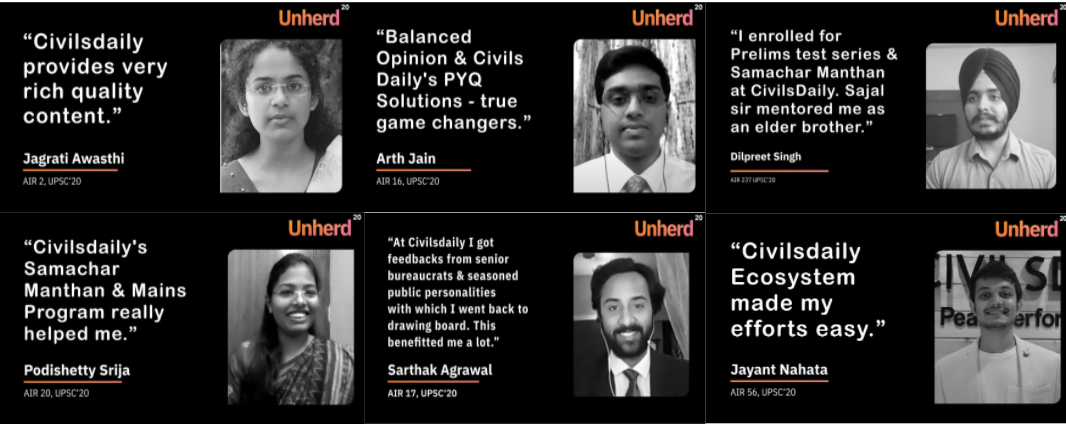
More posts