Mains : This year is special because India holds chair of the BRICS Summit from February to December. Though the exact outcome of all the Conferences, Meeting, MoUs, Declarations leading to the main Summit is not important, the themes being discussed are independently very important.
Prelims : All the declarations(Jaipur, Udaipur, etc), places(Khajuraho) where meetings were held and other keywords(like the BRICS Wellness Index) are important from a prelims perspective.
In News
The 2016 8th Annual BRICS Summit will be held in Panaji, Goa, from 15th to 16th October. The theme this year is Building Responsive, Inclusive and Collective Solutions. It will be attended by the heads of state/government of the five member states Brazil, Russia, India, China and South Africa.
Timeline
September – Events and Outcomes
1 -2 Sept – BRICS Convention on Tourism, Khajuraho
2-6 Sept – BRICS film festival
10-11 Sept – BRICS Wellness Workshop, Bangalore
The Ministry of AYUSH, in collaboration with Research and Information System for Developing Countries (RIS).
14 Sept – BRICS Joint Working Group on Counter Terrorism
16 Sept – BRICS Environment Ministers.
GOA MoU on setting up of JWG environment-related issues
14-16 Sept – 3rd BRICS Urbanisation Forum, Visakhapatnam
17 Sept – MOU on Climate co-operation
August – Events and Outcomes
1-2 Aug – BRICS Workshop on Strengthening Health Surveillance, Bengaluru
22 Aug – BRICS Women Parliamentarians’ Forum, Jaipur
Jaipur Declaration – Enablers for achieving SDG
22-23 Aug – 2nd meeting of the BRICS Ministers of Disaster Management, Udaipur
Udaipur Declaration – to enable Disaster Risk Management
Pulses are important source of protein, high in fibre content and provide ample quantity of vitamins and minerals. India having the largest shares about 25% production, about 33% acreage and about 27% consuming of total pulses of the world.
Although India is the highest producer of pulses in the world, its domestic demand outstrips domestic production. The shortfall is met from imports. In last 1 year prices of pulses have increased sharply which has made pulses unaffordable for the common man.
In this article We will explain why despite India being the largest producer of pulses, the price of pulses have increased so rapidly and we will also discuss steps taken by government in this regard and why those steps have not achieved intended results.
What Factors caused increase in prices of pulses in recent years?
Government steps in recent years to curb pulse prices
Why government steps have failed to reduce prices?
Will creating buffer stock for pulses would be able to curb pulses price?
What factors caused increase in prices of pulses in recent years?
Draught: Successive back to back drought i.e failure of crops in 3 successive seasons biggest reason for current price increase in pulses
Low MSP: Low production of pulses due to Lower MSP prices for pulses in comparison to wheat and rice and even this low target for pulses procurement is not realized by the government, all these factors disincentives farmers towards pulse production.
Grown in only Marginal Land: Since pulses could be grown in marginal land, a trend has developed in India where pulses are only grown in marginal and arid lands and mostly by small farmers, all this has led to low productivity for pulse crop. Only 15% of the 25 million hectares area sown annually for pulses in India is irrigated, compared to 60% for paddy and 90-95% for wheat and sugarcane
Limited option of import: Option of import are limited in case of pulses since its production is restricted to few countries in Africa and Asia and even there due to lack of local demand, the production of pulses are low.
Rise in demand: Rise in rural income due to MNREGA and better functioning of PDS has increased demand for protein rich food including pulses in last few years.
Steps taken by Government in recent years to curb pulse prices
Banned exports and future trade in pulses.
Created buffer stock for pulses
Government has signed agreement with Mozambique under which India will encourage greater production of pulses in Mozambique with an assurance that it will be purchased by India at a mutually-agreed price.
Allowed import of pulses at zero duty.
Government has imported 50000 tonnes of pulses and also subsidized the domestic cost of transport, handling and milling through a price stabilization fund.
Imposing essential commodities act and cracking down on hoarders and black marketer through imposition of stock holding limit.
Government has increased MSP price of 2 pulse crops i.e. Arhar and masur by Rs 250 per quintal.
Inclusion of cluster demonstrations in rice fallows for pulses cultivation in rabi season from 2015-16 under BGREI (Bringing Green Revolution in Eastern India) scheme in order to increase production of pulses in Eastern India in states of Assam, Bihar, Chhattisgarh, Jharkhand, Odisha, Eastern U.P. and West Bengal
A special programme for demonstration of new varieties of pulses through Krishi Vigyan Kendra (KVKs) has been taken up from Rabi 2015-16 in order to increase availability of seeds of new varieties of pulses and promote adoption of new varieties
Why government steps failed to reduce prices?
Firstly steps taken against stockers are discouraging them to further invest in warehouses and cold storage. In the absence of stockiest, market prices of pulses collapse, discouraging farmers from growing them in current season.
Secondly by suspending future and forward market in pulses, the government has simply shot the messenger. Forward and future market give signal about likely future prices and if harnessed they could actually help the government take preventive measures.
Thirdly government imported just 7000 tonnes to tame prices, whereas overall consumption is 3.3 to 4 million tones.
Fourthly the government announced MSP norms in November 2015 , which had a limited impact on Pulse production in 2016, since by that time farmers had already made decision regarding which crop they will sow in rabi season.
Will creating buffer stock for pulses help curb the rising pulses price?
Creation of buffer stock of 150000 tonnes from both domestic production and imports could reduce fluctuations in prices as the accumulated reserve could be released in market whenever price of pulses spikes
It could also increase production of pulses, since The Food Corporation of India, National Agricultural Cooperative Marketing Federation of India, Small Farmers’ Agribusiness Consortium and other agencies would be engaged in purchasing the crop from farmers.
The payment for these purchases would be made from the price stabilisation fund created by the government. This will encourage farmers to take up pulses production on a larger scale and will enable India to help achieve self-sufficiency in pulses in a few years
However buffer stock alone would not be able to curtail price in the long run, alongside this step the government has to take number of other steps which include
Create a crop-neutral incentive structure for farmers, which at present are skewed in favour of rice, wheat & sugarcane. This could be done by rapidly increasing MSP for pulses in next few years.
Greater public investment in providing irrigation facilities in areas under pulse production could increase productivity of pulses
Augment seed availability of pulses
More allocation should be done on scientific research related to pulses varieties so that better varieties of pulses could be developed
1906 – Muslim League founded as forum for Indian Muslim separatism.
1940 – Muslim League endorses idea of separate nation for India’s Muslims.
1947 – Muslim state of East and West Pakistan created out of partition of India at the end of British rule. Hundreds of thousands die in widespread communal violence and millions are made homeless.
1948 – Muhammed Ali Jinnah, founding leader of Pakistan, dies. First war with India over disputed territory of Kashmir.
Military rule
1951 – Jinnah’s successor Liaquat Ali Khan is assassinated.
1956 – Constitution proclaims Pakistan an Islamic republic.
1958 – Martial law declared and General Ayyub Khan takes over.
1960 – General Ayyub Khan becomes president.
War and secession
1965 – Second war with India over Kashmir.
1969 – General Ayyub Khan resigns and General Yahya Khan takes over.
1970 – Victory in general elections in East Pakistan for breakaway Awami League, leading to rising tension with West Pakistan.
1971 – East Pakistan attempts to secede, leading to civil war. India intervenes in support of East Pakistan which eventually breaks away to become Bangladesh.
General Zia’s death in 1988 ended 11-year military rule
1999 April – Benazir Bhutto and husband convicted of corruption and given jail sentences. Ms Bhutto stays out of the country.
1999 May – Kargil conflict: Pakistan-backed forces clash with the Indian military in the icy heights around Kargil in Indian-held Kashmir. More than 1,000 people are killed on both sides.
Musharraf coup
1999 October – General Pervez Musharraf seizes power in coup.
2000 April – Nawaz Sharif sentenced to life imprisonment on hijacking and terrorism charges over his actions to prevent the 1999 coup.
2000 December – Nawaz Sharif goes into exile in Saudi Arabia after being pardoned by military authorities.
2001 June – Gen Pervez Musharraf names himself president while remaining head of the army.
2001 September – Musharraf swings in behind the US in its fight against terrorism and supports attacks on Afghanistan. US lifts some sanctions imposed after Pakistan’s nuclear tests in 1998.
Pakistani soldiers build bunkers at Line of Control separating Pakistani- and Indian-held Kashmir
2001 December – India, Pakistan prompt fears of full-scale war by massing troops along common border amid growing tensions over Kashmir following suicide attack on Indian parliament.
2003 December – Pakistan and India agree to resume direct air links and to allow overflights of each other’s planes from beginning of 2004, after a two-year ban.
2004 February – Leading nuclear scientist Dr Abdul Qadeer Khan admits to having leaked nuclear weapons secrets, reportedly to Libya, North Korea and Iran.
2004 June – Pakistan mounts first military offensive against suspected Al-Qaeda militants and their supporters in tribal areas near Afghan border. US begins using drone strikes to target Al-Qaeda leaders in the area.
2004 April – Parliament approves creation of military-led National Security Council, institutionalising role of armed forces in civilian affairs.
2004 May – Pakistan readmitted to Commonwealth.
2005 April – Bus services, the first in 60 years, operate between Muzaffarabad in Pakistani-administered Kashmir and Srinagar in Indian-controlled Kashmir.
2005 August – Pakistan tests its first nuclear-capable cruise missile.
Kashmir quake
2005 October – Earthquake kills tens of thousands of people in Pakistani-administered Kashmir.
Image copyrightAFP
The 2008 storming of the radical Red Mosque killed more than 100 people.
2006 September – Government signs peace accord to end fighting with pro-Al-Qaeda militants in Waziristan tribal areas near Afghan border.
2007 February – Sixty-eight passengers are killed by bomb blasts and a blaze on a train travelling between the Indian capital New Delhi and the Pakistani city of Lahore.
Pakistan and India sign an agreement aimed at reducing the risk of accidental nuclear war.
Musharraf targets judiciary
2007 March – President Musharraf suspends Chief Justice Iftikhar Mohammed Chaudhry, triggering a wave of protests across the country.
2007 July – Security forces storm the militant-occupied Red Mosque complex in Islamabad following a week-long siege.
Supreme Court reinstates Chief Justice Chaudhry.
Image copyrightAFP
The assassination of former PM Benazir Bhutto shook Pakistani politics
2007 October – Ex-prime minister Benazir Bhutto returns from exile. Dozens of people die in a suicide bomb targeting her homecoming parade in Karachi.
Army launches offensive against militants in North Waziristan. Nearly 200 people die in the fighting.
2007 October-November – Musharraf wins presidential election but is challenged by Supreme Court. He declares emergency rule, dismisses Chief Justice Chaudhry and appoints new Supreme Court, which confirms his re-election.
2007 November – Former PM Nawaz Sharif returns from exile.
Bhutto killed, Musharraf resigns
2007 December – State of emergency lifted.
Benazir Bhutto assassinated at political rally at election campaign rally in Rawalpindi.
2008 February-March – Pakistan People’s Party (PPP) nominee Yusuf Raza Gilani becomes PM at head of coalition with Nawaz Sharif’s Muslim League party following parliamentary elections in February.
2008 August – President Musharraf resigns after the two main governing parties agree to launch impeachment proceedings against him.
Taliban fighters train in South Waziristan tribal area
Taliban militia expanded their influence in Pakistan’s tribal areas in 2008
Who are the Taliban?
Nawaz Sharif pulls his PML-N out of the coalition, accusing the PPP of breaking its promise to reinstate all judges sacked by Mr Musharraf.
2008 September – MPs elect Pakistan People’s Party’s (PPP) Asif Ali Zardari – the widower of assassinated former PM Benazir Bhutto – president.
Suicide bombing on Marriott Hotel in Islamabad kills 53 people. Soon after, government launches major offensive in Bajaur tribal area, killing more than 1,000 militants.
2008 November – The government borrows billions of dollars from the International Monetary Fund to overcome its spiralling debt crisis.
Tribal areas turmoil
2008 December – India blames Mumbai attacks in November on Pakistani-based militants and demands Pakistan take action. Islamabad denies involvement but promises to co-operate with the Indian investigation.
2009 February – Government agrees to implement Sharia law in north-western Swat valley in effort to persuade Islamist militants there to agree to permanent ceasefire.
2009 March – After days of protests, government yields to demands for reinstatement of judges dismissed by former President Musharraf.
2009 April – Swat agreement breaks down after Taliban-linked militants seek to extend their control. Government launches offensive to wrest control of Swat from militants.
A boy makes his way through flood waters in a village south of Muzaffargarh in Punjab, 21 August 2010
The 2010 monsoon floods were the worst in 80 years
At least 1,600 people killed
20 million people affected
4 million lost livelihoods and homes
2009 August – The leader of Pakistan’s Taliban, Baitullah Mehsud, is killed in US drone attack in South Waziristan. He is succeeded by Hakimullah Mehsud.
Suicide bombing in northwestern city of Peshawar kills 120 people.
Reform efforts
2010 April – Parliament approves package of wide-ranging constitutional reforms. Measures include transferring key powers from office of president to prime minister.
2010 August – Worst floods in 80 years kill at least 1,600 people and affect more than 20 million. Government response widely criticised.
Image copyrightBBC
Al-Qaeda leader Osama Bin Laden was found hiding in a suburban compound in Pakistan
2010 October – Rise in targeted political killings, bombings in commercial hub of Karachi.
2011 January – A campaign to reform Pakistan’s blasphemy law leads to the killing of two prominent supporters, Punjab Governor Salman Taseer in January, and Minorities Minister Shahbaz Bhatti in March.
2011 April – The founder of Al-Qaeda, Osama bin Laden, is killed by American special forces in Abbottabad.
2011 November – Pakistan shuts down Nato supply routes after a Nato attack on military outposts kills 25 Pakistani soldiers, boycotts the Bonn Conference on Afghanistan.
“Memogate”
2011 December – Government comes under pressure over a leaked memo alleging senior officials sought US aid against a military coup after the killing of Osama bin Laden in April.
2012 January – Amid growing tension between government and military over “memogate” scandal, army chief Gen Pervez Kayani warns of “unpredictable consequences” after PM Yousuf Raza Gilani criticises army leaders and sacks top defence official.
Supreme Court threatens to prosecute Prime Minister Gilani for contempt of court over government’s refusal to reopen corruption cases against President Asif Ali Zardari and other political figures.
2012 May – A US Senate panel cuts $33m in aid to Pakistan over the jailing of Pakistani doctor Shakil Afridi who helped the CIA find Osama Bin Laden.
Christians protest against Pakistani blasphemy laws, August 2012
2012 June – Supreme Court disqualifies Prime Minister Gilani from holding office after he declines to appeal against a token sentence in President Zardari corruption row. Parliament approves Water and Power Minister Raja Pervez Ashraf as his successor.
2012 July – Pakistan agrees to reopen Nato supply routes to Afghanistan after the US apologises for killing Pakistani soldiers in November.
Sunni extremist violence increases
2012 September – Muslim cleric Khalid Chishti is arrested on suspicion of planting burnt pages of the Koran on a Christian girl briefly detained for blasphemy. Amid widespread condemnation of the case against the girl at home and abroad, a court dropped it November.
2012 October – Taliban gunmen seriously injure 14-year-old campaigner for girls’ rights Malala Yousafzai, whom they accused of “promoting secularism”. The shooting sparked a brief upsurge of anger in Pakistan against the militants.
2012 November – Taliban suicide bomber kills at least 23 people at a Shia Muslim procession in the Rawalpindi.
2013 January – Supreme Court orders the arrest of Prime Minister Raja Pervez Ashraf over corruption allegations dating back to his time as a minister in 2010. He denies wrongdoing.
The government sacks Balochistan chief minister over bomb blasts in the provincial capital Quetta that kill at least 92 Shia Muslims. Sunni extremist group Lashkar-e-Jhangvi claims responsibility.
Populist cleric and anti-corruption campaigner Tahirul Qadri leads a nationwide march on Islamabad. The government responds by agreeing to dissolve parliament early and to consult Mr Qadri over the formation of a caretaker government.
2013 February – Bomb attack targeting Shia Muslims in Quetta kills 89 people. Police detain Lashkar-e-Jhangvi militant group founder Malik Ishaq after the group claims responsibility.
2013 June – Parliament approves Nawaz Sharif as prime minister after his Muslim League-N wins parliamentary elections in May. Taliban conduct systematic campaign of attacks and intimidation, but fail to deter largest turnout of voters since 1970.
2013 September – More than 80 people are killed in a double suicide bombing at a church in Peshawar. It is the deadliest attack so far against Christians in Pakistan. Taliban-linked Islamists claim responsibility.
2014 March – Government and Taliban representatives meet in North Waziristan for peace talks, with a cease-fire top of the agenda.
2014 June – A deadly assault on Karachi’s international airport leaves dozens dead. Uzbek militants fighting with the Pakistani Taliban say they carried out the attack. Peace talks with the Taliban collapse and the army launches a major offensive on Islamist hideouts in north-west Pakistan.
2014 September – Arrests of opposition activists amid days of violent anti-government protests on the streets of Islamabad. Government and opposition figures hold talks but fail to resolve differences.
2014 October – Teenager Malala Yousafzai, who was shot in the head by the Taliban but survived to become a campaigner for girls’ education, becomes the youngest person ever to win the Nobel Peace Prize.
Peshawar school attack
2014 December – Taliban kills nearly 150 people – mostly children – in an attack on a school in Peshawar.
Government responds to the massacre by lifting a moratorium on the death penalty and launching round-up of terror suspects, although critics complain major terror organisers are left alone.
2015 January-February – Taliban attack Shia mosques in Sindh and Peshawar in two incidents, killing nearly 80 people and injuring dozens more.
2015 April – India protests over Pakistan court release on bail of suspected mastermind of 2008 Mumbai terror attacks, Zakiur Rehman Lakhvi. Human rights activist Sabeen Mehmud shot dead in Karachi.
2015 June – Pakistan acknowledges that eight out of ten Taliban members allegedly jailed for the gun attack on teenage education activist and Nobel Prize laureate Malala Yousafzai were secretly acquitted at their trial in April.
2016 January – Islamist extremists attack Bacha Khan University in Charsadda in north-west Pakistan, killing 19 people and injuring 17 others before security forces killed the four suspected assailants.
2016 March – Taliban offshoot Jamaat-ul-Ahrar says it carried out a suicide attack at a popular park in Lahore on Easter Sunday killing 72 people, saying it had targeted Christians.
2016 March – Former president Pervez Musharraf leaves the country for Dubai after the Supreme Court lifts a three-year travel ban. His lawyers say he needs urgent spinal treatment and will return to face treason and murder charges against him.
2016 September – Pakistan’s military acknowledges for the first time the presence of so-called Islamic State militants in the country, but says it has foiled attempts by the group to expand there.
2016 September – Taliban offshoot Jamaat-ul-Ahrar claims suicide attack on a court in the northern city of Mardan in which 12 people are killed and 50 are injured.
Pakistan was born by curving out two geographically far flung areas from the earst-while British India. The basis of this division itself was a pseudo sense of difference in identity, which gave rise to instability in government, inefficiency of political parties and a weak political culture leading to the scenario for a politically and socially unstable state.
The partition of British India led to the creation of two sovereign states ‘The Union of India’ and ‘The Dominion of Pakistan in the August of 1947.
‘Partition’ was not only in respect of the division of the Bengal province of British India into East Pakistan and West Bengal (India) and the similar partition of the Punjab province into Punjab of West Pakistan and Punjab of India but also to the respective divisions of other assets, including the British Indian Army, the Indian Civil Service and other administrative services, the Railways and the central treasury.
Pakistan was virtually divided into two geographically far flung divisions with distinctly separate cultures, never to be assimilated in a single nationhood.
Major Crisis
The relationship between the two umbilical twin states got sour from the very beginning. In fact there had been two full scale wars (1965 & 1971), two limited wars (1947 & 1999) and an ongoing proxy war waged by the Pakistani side with the help of various anti-state and terrorist elements. The causes between this enimity are many, which are briefly discussed below:
The Kashmir Issue
This northern state was populated predominantly by Muslims and was ruled by a Hindu Maharaja. The Maharaja, Hari Singhji, did not take any decision regarding the state’s accession before, or immediately after, August 15, 1947. Pending final decision, the Maharaja concluded a standstill agreement with Pakistan. India did not accept such a temporary arrangement.
In the month of October 1947, an attack took place on Kashmir by the so called tribal elements of North West Frontier region of Pakistan. Immediately before the attack by Pakistan-sponsored tribals on Kashmir began, a senior official of Pakistan Foreign Office visited Kashmir and tried to persuade Hari Singh to agree to join Pakistan. Maharaja refused to take any decision in haste.
Soon thereafter the aggression began. They launched the attack on October 22, 1947 in a number of sectors. They were well-trained and equipped. Within a short period of five days they reached Baramula, just 25 miles away from Srinagar. It was only after the commencement of aggression that a nervous Hari Singh signed the Instrument of Accession in favour of India.
The accession of Jammu and Kashmir to India was finalized by October 27, and the army was airlifted to clear the aggressions. Pakistan refused to accept the accession. The Prime Minister of Pakistan, Liaquat Ali Khan said that, ‘the accession of Kashmir to India is a fraud perpetrated on the people of Kashmir by its cowardly ruler with the aggressive help of the Government of India.’ In this way started the root cause of enimity between the two neighbours.
East Pakistan/Bangladesh
When India was partitioned in 1947, the basis for partition was religion. The Muslim majority areas in the West as well as East constituted the new state of Pakistan. Between the two wings of Pakistan there was about 1200 miles of Indian territory. The majority of Pakistani population lived in the East, but the country’s politics was largely controlled by leadership in the West, particularly Punjab.
The notion that Islam would unite the two parts and that it was one nation proved to be a myth. Languages and cultural traditions in the two parts of Pakistan were different. Rather than bringing about emotional integration, Pakistan’s bureaucratic-military rulers sought to dominate East Bengal. Imposition of Urdu was totally unacceptable to people of East Pakistan.
The immediate cause of conflict was denial of the office of Prime Minister of Pakistan to the leader of Awami League, Sheikh Mujibur Rehman, even when his party had won 160 out of 300 seats in Pakistan National Assembly elections held in December 1970.
Unprecedented violence erupted in East Bengal where Pakistani Security forces let loose a reign of terror. Hundreds of thousands of people were killed and wounded and women in very large numbers were raped. About one crore people arrived in India as refugees.
This brought India into the picture. Indian Prime Minister Mrs. Gandhi established contacts with all major Powers of the world to pressurize Pakistan to stop massacre of people in East Bengal so that Bangla refugees could be sent back to their homes. Mrs. Gandhi’s visits to western capitals were not fruitful.
Finally, India had to intervene to provide humanitarian support to the people coming from East Pakistan. Pakistan used it as a pretext and launched air raid on Indian air bases in the western sector. Thus started the war of 1971, which ultimately ended with the liberation of Bangladesh.
Shimla Accord
After diplomatic level negotiations for several months, India-Pakistan Summit was held at Shimla at the end of June 1972. Mrs. Indira Gandhi and Mr. Z.A. Bhutto, assisted by their high-level delegations, held complex and extensive discussions on various issues arising out of the war, as well as on general bilateral relations.
The issues ranged from the repatriation of prisoners of war, the recognition of Bangladesh by Pakistan, normalization of diplomatic relations between India and Pakistan, resumption of trade and fixation of international line of control in Kashmir.
With these objectives in view Indira Gandhi and Bhutto agreed to (i) seek peaceful solutions to disputes and problems through bilateral negotiations, and neither India nor Pakistan would unilaterally change the existing situation and (ii) not to use force against each other, nor violate the territorial integrity, nor interfere in political freedom of each other.
Terrorism
Terrorism remains our core concern in the relationship with Pakistan and has been repeatedly raised with Pakistan, including at the highest level, whereby India has consistently urged Pakistan to fulfill its repeated assurance given to us not to allow the territory under its control to be used for supporting terrorism directed against us or for any other anti-India activity.
More recently, during the meeting of Indian PM with Pak PM, PM underlined our concerns regarding terrorism and stressed that it was imperative to bring the perpetrators of the Mumbai attack to justice.
The Siachen Issue
It is a military conflict between India and Pakistan over the disputed Siachen Glacier region in Kashmir. The conflict began in 1984 with India’s successful Operation Meghdoot during which it wrested control of the Siachen Glacier from Pakistan and forced the Pakistanis to retreat west of the Saltoro Ridge.
India has established control over all of the 70 kilometres (43 miles) long Siachen Glacier and all of its tributary glaciers, as well as the three main passes of the Saltoro Ridge immediately west of the glacier-Sia La, Bilafond La, and Gyong La.
The conflict in Siachen stems from the incompletely demarcated territory on the map beyond the map coordinate known as NJ9842. The 1949 Karachi Agreement and 1972 Simla Agreement did not clearly mention who controlled the glacier, merely stating that the Cease Fire Line (CFL) terminated at NJ9842. UN officials presumed there would be no dispute between India and Pakistan over such a cold and barren region.
It is not just avalanches; the challenging terrain of the glacier and its surroundings as a whole have been regularly claiming lives.
According to reliable estimates, over 2,000 soldiers from both sides have died on the Siachen glacier since 1984, when India beat Pakistan by a few days to occupy many of the strategic locations on the glacier.
The Siachen Glacier is located in the eastern Karakoram range in the Himalaya Mountains, just northeast of the point NJ9842 where the Line of Control between India and Pakistan ends.
At 76 km long, it is the longest glacier in the Karakoram and second-longest in the world’s non-polar areas.
It is situated at an average altitude of 5,400 meters above sea level.
It lies South of the great watershed that separates Central Asia from the Indian subcontinent, and Pakistan from China in this region. It lies between the Saltoro ridge line to the west and the main Karakoram range to the east.
The entire Siachen Glacier, with all major passes, is currently under the administration of India since 1984, while Pakistan controls the region west of Saltoro Ridge.
Background:
Ever since the two militaries began a costly engagement on the glacier, there have been numerous efforts by both countries to find a way to demilitarise the glacier. In June 1989, they came very close to clinching a final deal.
The two sides had agreed to “work towards a comprehensive settlement, based on redeployment of forces to reduce the chance of conflict, avoidance of the use of force and the determination of future positions on the ground so as to conform with the Shimla Agreement and to ensure durable peace in the Siachen area”.
Ever since then, India and Pakistan have tried diplomatically to find a way to demilitarise the region. However, a lack of political will on both sides has meant that the status quo holds, and soldiers continue to pay a very high price in that remote snowy outpost.
India has in the past suggested delineation of the Line of Control north of NJ 9842, redeployment of troops on both sides to agreed positions after demarcating their existing positions, a zone of disengagement, and a monitoring mechanism to maintain the peace.
Deeply divergent positions held by New Delhi and Islamabad on the dispute is one of the primary reasons why the negotiations on demilitarising the Siachen glacier and the adjoining areas have not progressed much.
Why India doesn’t want to leave this place?
The most obvious reason for India’s continuing presence at Siachen is its strategic importance. Military experts also believe that it drives a wedge between Pakistan-occupied Kashmir and China, and is the only tenuous link India has with Central Asia.
Other fears include the Chinese presence in the vicinity, concerns about a Pakistani incursion and the difficulty in retaking the glacier once gone.
India also insists that the present ground positions on the Saltoro ridge should be demarcated and authenticated on a map before any demilitarisation could be conducted, fearing that once India withdraws from the region, the Pakistan Army could occupy the high ground.
Moreover, India does not want a disagreement on the posts and locations to be vacated by the Indian side. This feeling has further strengthened after the Kargil intrusion by Pakistan.
India has therefore insisted that joint demarcation of the Actual Ground Position Line (AGPL) on the ground as well as the map should be the first step to be followed by a joint verification agreement and redeployment of forces to mutually agreed positions.
Pakistan’s arguments:
Presently, India is the occupying party in Siachen and hence, it should unconditionally withdraw and the pre-1984 status quo should be maintained.
By agreeing to a joint demarcation, Pakistan would be accepting the Indian claims in Siachen, at least theoretically.
Pakistan also feels that if it accepts such demarcation, it would amount to endorsing the Indian occupation of 1984.
Pakistan has therefore proposed that demilitarisation of the region, withdrawal of forces and authentication proceed simultaneously.
What can be done?
One, both countries can agree to a glacier of peace with neither side occupying it. Then there would be no strategic reason for soldiers to serve in such inhospitable terrain.
The second option is mutual withdrawal of forces without delineation and authentication. This is both undesirable and unlikely.
The third option is mutual withdrawal after jointly recording current military positions and exchanging them as part of an annexure without prejudice to each other’s stated positions, pending the final settlement of the Line of Control (LoC) and AGPL. This is perhaps the best option and takes on board India’s demand, and may not meet too much resistance from the Pakistani side given that they had agreed to it in 1992.
It can also be converted into an international destination for glacial research and other scientific experiments. International scientific presence would act as a deterrent against any potential Pakistani attempts at occupying the territory and it could also check the Chinese activities in the greater Karakoram region. This perhaps is the best option under the circumstances.
Way ahead:
Given Prime Minister Narendra Modi’s personal initiative to visit Lahore in December 2015 and to push forward peace with Pakistan, it would only be the next logical step to look at the low-hanging fruits in bilateral issues to build trust.
The demilitarisation of Siachen is definitely doable. This is not only because it is diplomatically possible, but also because there is a critical mass of opinion in both India and Pakistan that neither can sacrifice, or put in harm’s way, so many lives on the inhospitable glacier.
If the initiative is not seized by both sides now, the vagaries of nature will continue to exact a toll on forces deployed in Siachen, even if peace holds.
Conclusion:
It is important to recognise that just because we have militarily and materially invested in the Siachen region over the years or incur lower casualties than Pakistan, it does not provide us with a strategically sound rationale to continue stationing troops there, only to keep losing them year after year.
The February 3 avalanche on the Siachen glacier that buried 10 Indian Army soldiers is a stark reminder to both India and Pakistan about the cost of military deployment in such inhospitable territory.
While we as a nation remain indebted to our brave soldiers who laid down their precious lives on the glacier, there is neither valour nor glory in death due to cerebral edema or hypothermia, guarding a few kilometres of ice whose strategic value is ambiguous at best.
Sir Creek
The resolution to the Sir Creek dispute has been considered a low-hanging fruit for sometime now. The demarcation of the 96 km strip of water in the Rann of Kutch marshlands was one of the factors that contributed to the 1965 India-Pakistan war.
Pertinently, it is tied to the larger issue of delineating maritime boundaries and exclusive economic zones. That the creek has changed its course significantly over the years complicates matters further.
Background:
Sir Creek is a strip of area between Pakistan and India in the Rann of Kutch marshlands. It is situated in south east of Karachi, and divides the Kutch region of the Indian state of Gujarat with Sindh province of Pakistan.
Both countries have many creeks in the delta region such as Kajhar, Kori, Sir and Pir Sanni creek. The significance of Sir Creek is that it lies between the boundary of India and Pakistan. The far ends starts from Border Pillar (BP) 1175 and other end opens up into the Arabian Sea.
A dispute arose on the issue of drawing a dividing line between the two countries. The demarcation becomes significant when the line extends seawards to divide the sea boundary between India and Pakistan. The line then directly affects the division of sea resources including minerals, fish and other marine life between the two countries.
Going over to the history of this dispute, it is worth mentioning that the Bombay Presidency, a British Indian Province established in the 17th century, was divided into four commissionerates and twenty-six districts with Bombay city as its capital. The four divisions were Sindh, Gujarat, Deccan and Karnataka.
In 1908, the commissioner of Sindh brought to the notice of government, an act of encroachment on the part of Kutch State and Kutch Darbar was asked for an explanation by Government of Bombay. During several sessions and series of meetings, both representatives of Sindh and Kutch states were provided ample opportunity to explain their positions before final decision. In 1914, with Kutch Darbar awarding a triangular area to Sindh state in the north and some area to Kutch state in south, resolved the issue.
The boundary demarcation as per 1914 resolution was marked on the map B-44. To demark the boundary on land, 66 pillars were erected vertically and 67 pillars were erected horizontally. Last Border Pillar (BP) 1175 was at the far end of the Sir Creek and a green line was marked on the eastern bank of the Sir Creek.
During recent past history, the question of boundary in the Sir Creek region came up first time for discussion during 1969, when a delegation from the Government of India visited Islamabad for the purpose of actually settling the question of boundary alignment from BP 1175 to Mouth of Sir Creek opening up into the Arabian Sea. Since then twelve rounds of talks and three technical level meetings have been held in this regard but any success could not be met due to Indian evasive attitude.
Significance of this region:
The issue may not have risen, since the creek itself is located in the uninhabited marshlands, has limited military value but holds immense economic gain. The region being rich in oil and gas below the sea bed, control over the creek will add enormously to the energy potential of each nation.
How Convention of the Laws of the Sea has further increased the tension?
Initially territorial waters extended only till 12 nautical miles but since the advent of the 1982 UN Convention on the Law of the Sea, a coastal state can now have control over five sea zones: internal water, territorial sea area (12 nautical miles wide), contiguous zone (12 nautical miles wide), the (EEZ) Exclusive Economic Zone (200 nautical miles wide), the continental shelf (from 200 nautical miles up to maximum 350 nautical miles wide).
The EEZ can thus be exploited commercially both for the undersea energy as well as nutrient sources.
The said Convention gives additional rights to both India and Pakistan over sea resources up to 200 nautical miles in the water column and up to 350 nautical miles in the land beneath the water column.
It also provides principles on the basis of which sea boundaries have to be drawn between the states adjacent to each other with a concave coastline. In short, the land boundary’s general course of direction on the land leading up to the coast can make a difference of hundreds of square nautical miles of sea when stretched into the sea as a divider between the said two states.
With the adaptation of 1982 Law of the Sea Convention by both countries, the governments have suddenly realised the enormous sea resources that can be lost or won on the basis of the land terminal point where the border between India and Pakistan ends. That is why Sir Creek has now become more contentious than ever before.
Besides, both countries are bound to protect their sea-lanes of communications and make efforts for increasing the Exclusive Economic Zone (EEZ) area through claiming Continental Shelf by submitting claim to UN Commission on Limits of Continental Shelf (CLCS).
sir creek
Pakistan’s arguments:
Pakistan claims the entire Sir Creek based on a 1914 agreement signed between the government of Sindh and rulers of Kutch.
India’s arguments:
India contests Pakistan’s claim, stating that the boundary lies mid-channel of the Creek. In its support, it cites the Thalweg Doctrine in International Maritime Law, which states that river boundaries between two states may be divided by the mid-channel if the water-body is navigable.
Who is being affected?
The biggest casualty of not delimiting the Sir Creek is the incarceration of thousands of innocent fishermen from the border region who are routinely arrested and their boats and materials confiscated under the premise of illegal intrusion, even though there is no cognisable territorial and maritime boundary delimitation in the area.
These innocent civilians are deprived of their fundamental human rights. They are denied consular assistance; many are allegedly tortured and languish in jails while being subjected to horrible living conditions and without any meaningful access to judicial process.
Some prisoners go missing and may even be presumed victims of custodial killings. In goodwill gestures, some prisoners are fortunate enough to be freed, often in swaps.
Various studies have also shown that this region has become a safe haven for international drug mafia.
Why deadlock?
One of the chief reasons for the deadlock is that India wants the dispute resolved solely through bilateral dealings in the spirit of the Shimla Agreement of 1972, while Pakistan favours third-party involvement and wants to link the resolution of the dispute to contested territories under Indian occupation.
Options before both the countries:
Designating the non-delineated area — Sir Creek and its approaches — as a zone of disengagement or a jointly administered maritime park. Such a joint administration could see licensed fishermen from both countries fish in the area without fear of incarceration.
Alternatively, given the creek’s ecological sensitivity, both countries could designate the area a maritime sensitive zone. In fact, given the challenges posed by climate change, environment protection offers a significant opportunity for bilateral cooperation.
Another option available is the constitution of an arbitration tribunal under Article 287 (c) of the UN 1982 Convention on the Law of the Sea (Unclos).
The solution to the Sir Creek issue also lies in the adoption of the Bombay Government Resolution of 1914, which demarcated the boundaries between the two territories, included the creek as part of Sindh, thus setting the boundary line known as the “Green Line” or the eastern flank of the creek.
Conclusion:
Both India and Pakistan are passing through a crucial phase that offers huge potential for collaboration. While issues such as terrorism remain, the youthful demography of both countries holds out significant hope. The post-1971 generation in both countries is increasingly stepping into leadership roles. Unburdened by the baggage of history, and tackling issues on the basis of pragmatism, a paradigm shift in bilateral relations is within grasp
Indus Water Treaty
Kashmir and adjoining area is the origin point for many rivers and tributaries of the Indus river basin. They include the Jhelum and Chenab rivers, which primarily flow into Pakistan while other branches-the Ravi, Beas, and the Sutlej- irrigate northern India.
The Boundary Award of 1947 meant that the headwaters of Pakistani irrigation systems were in Indian territory. Pakistan has been apprehensive that in a dire need, India (under whose portion of Kashmir lies the origins and passage of these rivers) would withhold the flow and thus choke the agrarian economy of Pakistan.
The Indus Waters Treaty signed in 1960 resolved most of these disputes over water, calling for mutual cooperation in this regard. But the treaty faced issues raised by Pakistan over the construction of dams on the Indian side which limit water flow to the Pakistani side.
Baglihar Dam
Baglihar Dam, also known as Baglihar Hydroelectric Power Project, is a run-of-the-river power project on the Chenab River in the southern Doda district of the Indian state of Jammu and Kashmir.
This project was conceived in 1992, approved in 1996 and construction began in 1999. Pakistan claimed that design parameters of Baglihar project violated the Indus Water Treaty of 1960.
After failure of talks on January 18, 2005, Pakistan raised six objections to the World Bank, a broker and signatory of Indus Water Treaty.
In April 2005 the World Bank determined the Pakistani claim as a ‘Difference’, a classification between theless serious ‘Question’ and more serious ‘Dispute’, and in May 2005 appointed Professor Raymond Lafitte, a Swiss civil engineer, to adjudicate the difference. Lafitte declared his final verdict on February 12, 2007, in which he upheld some minor objections of Pakistan, declaring that pondage capacity be reduced by 13.5%, height of dam structure be reduced by 1.5 meter and power intake tunnels be raised by 3 meters, thereby limiting some flow control capabilities of the earlier design.
However he rejected Pakistani objections on height and gated control of spillway declaring these conformed to engineering norms of the day. India had already offered Pakistan similar minor adjustments for it to drop its objection.
Kishanganga Project
The Kishanganga Hydroelectric Project is located on the Kishanganga River and was initially being constructed by the state government of Jammu & Kashmir and was subsequently transferred to NHPC for implementation. Pakistan has articulated its objections in the form of six questions; three are related to the design, two on diversion and one on power house.
The diversion tunnel would reduce the flow of water by 27%. Besides Pakistan has a plan to construct 969 MW hydropower project on the river Neelam. In fact, they have already spent 71 million rupees on it. Similarly the Indian side has completed 75% tunnel construction work. On May 17, 2010, Pakistan moved for arbitration against India under the provisions of the Indus Waters Treaty. In February 2013, the International Court of Arbitration (ICA), Hague ruled that India could divert a minimum
of water for their project. In this partial award, the court upheld India’s main contention that it has the right to divert waters of western rivers, in a non-consumptive manner, for optimal generation of power.
Tulbul Project
The Tulbul Project is a ‘navigation lock-cum-control structure’ at the mouth of Wular Lake. There has been an ongoing dispute between India and Pakistan over the Tulbul Project since 1987, when Pakistan objected that it violated the 1960 Indus Water Treaty. India stopped work on the project that year, but has since pressed to restart construction.
The Jhelum River through the Kashmir valley below Wular Lake provides an important means of transport for goods and people. India says suspension of work is harming the interests of people of Jammu and Kashmir and also depriving the people of Pakistan of irrigation and power benefits that may accrue from regulated water releases.
Cease Fire Violation issue
line of control
Introduction
India desires peaceful, cooperative and friendly relations with Pakistan. This requires an environment free from violence and terrorism, which is difficult to attain. Any dialogue between India and Pakistan is quite often followed by a ceasefire violation along the LOC lines.
As a result, bilateral engagement is taking two steps back after taking one step forward. This whole process is not something new, owing to a shared disputed and disturbed border since 1947 between them.
To curb cycle of violence along the 725km long Line of Control (LOC), which divides J&K into two parts, a landmark ceasefire agreement between India and Pakistan was signed in 2003. It included framework of military confidence building∙ measures(CDMs) that kept the artillery pieces at least 20 km away from the LoC non- military CBMs such as a cross-LoC bus service and trade However, the peace didn’t last very long and was hampered by a string of actions by both sides.
This situation leads to loss of lives of not only army jawans but also innocent people. In a written reply to the Rajya Sabha, defence minister Manohar Parrikar said there were 199 ceasefire violations by Pakistan along the border with India till June this year. In 2014, the number of violations was 583, and in 2013, it was 347.
Reasons behind ceasefire violations
The drastic increase in the ceasefire violations can be termed as a show of power.
Both countries vehemently shifts blame on each other for it. Pakistan believes India is taking up border works which in “violation of ceasefire agreement” of 2003.
On other occasions, it simply retaliates to open firing from Indian Territory.∙ A thorough analysis from Indian side proves that Pakistan’s deep state is in not in sync with political leadership.∙ It wants to display its ability to start a proxy war.
Apart from aiding infiltration, currently violations are used as an instrument of diplomacy to send veiled messages.
Pakistan’s internal peace highly depends on proving up India as its external enemy.
Pakistan army’s identity and its ideology will get defeated if ever peace is achieved between the two nations.
Pakistan’s ISI and army may never let the political leadership override their decision.∙ They want to keep the pot boiling by disrupting any peace process between the two nations. The recent∙ 3 Gurdaspur terror attack, which came ahead of the NSA-level talks, is an example of it. Practice is not new, it is only being used more often now for psychological gains.
Impact on villagers living near the border
The borderlands in J&K represent a case of ‘alienated borderlands’. Caught in the hostility between India and Pakistan, the people in border areas of J&K are struck up in the situation of uncertainty.
It refers to those kind of borders which reflect ‘extremely unfavourable conditions’ defined by warfare, political disputes, intense nationalism, ideological animosity, etc. Such conditions while leading to control over people living in the border areas, impact on their quality of life.
While multiple wars (1947–48, 1965, 1971, 1999) created havoc in the border areas, even peacetime did not provide any relief to the people there. The situation during last two and a half decades has been more unstable. With the onset of militancy, the border became more active.
In 2003, a formal ceasefire was declared, which brought the border people some relief. But this ceasefire has often been violated and the uncertainty of the borders has not ended. Continuous volatility of borders has resulted into:
1. Militarization of the borderlands overwhelming presence of security forces – many towns in the border areas almost seem like military towns.
2. Life and livelihood loss
Huge land area are under the control of the army.
It is generally out of bounds for the local residents.
There are various kinds of restrictions including restriction of movement. People have become prey to the communalized violence on both the sides of the border.
What can be described as normal life – the children attending school, the farmers cultivating the land, or even people living in their own homes – can be disrupted at any moment.
The situation is worsen due to inadequate or lack of compensation, the conditions in the relief camps, the conditions of schools, college and other education facilities. Partition is not a settled history, but a living problem for tens of thousands of people living along the LoC. Although for a short duration, any ceasefire agreement between two nations comes as a huge relief to them.
Impact on bilateral ties
Ever since the two countries started the peace process, scepticism about the longevity of bilateral dialogue∙ has been a perennial feature of discourse on India-Pakistan relations.
Crafting a durable Pakistan policy has been a challenge for every Indian Prime Minister since Independence.
Each one of them, from Pandit Jawaharlal Nehru onwards, has tried to put their own individual imprint. Yet, it remains a complex relationship. Even Narendra Modi government, after its initial enthusiasm, couldn’t ensure a lasting breakthrough with Pakistan.
It is widely acknowledged on Indian side that elements in Pakistan’s decision-making circles tries to sustain a∙ hostile relationship with India. As long as these elements remain influential, a normal state to state relationship will be very difficult to achieve. Pakistan’s internal politics will need to change before these elements can be neutralized.
In India, there is consensus on the need to have normal and peaceful relations with Pakistan. There is also a∙ strong sentiment that Pakistan’s support to terrorism against India prevents normalization. Hence, the peace efforts will take a long time to yield conclusive results.
Meanwhile India should continue to expand the range of options in its political tool kit thereby increasing∙ India’s leverage.
How should the government respond?
In a recent interview, India’s foreign secretary has made it clear that any unprovoked firing from the∙ Pakistani side would meet with an effective and forceful response from our forces.
While the Pakistani defence minister has lightly warned India that it does not want convert border tension between two nuclear neighbours into confrontation.
The response by the Indian army will meet the immediate psychological need of the hour. But this rising tension needs to be cooled down. The response has to be on different fronts – military,∙ political and diplomatic and these cannot be stand alone.
The fact remains that both countries have too much at stake in the peace process. For India, it provides an opportunity to rise above the security concern and establish credible relations with Pakistan. For Pakistan, it is a way out of the multiple crises, especially its internal security situation that has worsened over time threatening the stability of the state and the societal structure.
Conclusion
There is no alternative to a dialogue to resolve the issues. It is too utopian to think that peace can prevail only after all opposition to the moves aimed at bringing about the peace between both the countries vanishes completely. There are various ways in which the ceasefire agreement can be implemented as long as there is a will to do so from both sides.
Pakistani Army
Civil Military relationship
Healthy civil military relations contribute a lot to enhance the efficiency of a nation. In open societies civil establishment and military institutes work in hand and gloves with political government; where political government is having the final control on national decisions. Although, in developing democracies incidences of military over step their powers is common.
Ever since its creation, Pakistan has witnessed very dominating military relations with civil government, where the military ‘take over’s were common.
Since independence in 1947, Pakistan has experienced 30 years of military rule (1958 to 1971, 1977 to 1988 and 1999 to 2008); even when not in government the military has constantly sought to centralise and consolidate political power and the military (notably military intelligence, the Inter-Services Intelligence (ISI)) exerts significant overt and covert control over the civilian authorities in both domestic and foreign affairs.
Even presently, since Pakistan’s third, disastrous stint of military rule ended in 2008, the generals have tried hard to be seen to be getting out of politics. Behind the scenes the army still wields immense influence. Yet they have tried hard enough to not being seen to boss around civilian governments.
Army as a driver of foreign policy; especially towards India
In any democratic country, Foreign Policies are designed by the head of government, normally the democratically elected government, with the aim of achieving complex domestic and international agendas but this is not the case with Pakistan.
Assessing the role played by core decision-making bodies in Pakistan’s foreign policy is interesting as the National Security Council (NSC) and the Defence Committee of the Cabinet (DCC) reflect the civil-military problematique that affects nearly every aspect of decision making in the country.
Especially, Indian military superiority, that led to the Pakistani defeat in the 1971 conflict with India, which culminated in the independence of Bangladesh and the Kargil war in 1999, provided more impetus to the overly aggressiverole played by the Army in decision making of the Foreign Policy.
As the above mentioned background highlights, the lack of institutionalisation of the foreign policy decision making process had immediate consequences in the policy outcomes during those crisis. The unending tensions between the Prime Minister and the Chief of Army Staff (COAS) prevented cohesion and coherence in Pakistan’s foreign policy-making.
The apparent democratic renaissance that the country witnessed in 2008 and in the wake of the May 2013 elections provides a few tokens that the decision-making mechanism, includingmthe DCC and Parliamentary committees on foreign policy, is starting to work properly under civilian control.
Current Internal Scenario
Economic Condition
Pakistan happens to be world’s 44th largest economy in terms of nominal GDP. After decades of war and social instability, as of 2013, serious deficiencies in basic services such as railway transportation and electric power generation has developed. The economy is semi-industrialized, with centers of growth along the Indus River. Primary export commodities include textiles, leather goods, sports goods, chemicals, carpets and rugs.
The economy has suffered in the past from internal political disputes, a fast-growing population, mixed levels of foreign investment. Foreign exchange reserves are bolstered by steady worker remittances but a growing current account deficit – driven by a widening trade gap as import growth outstrips export expansion – have draw down reserves and dampened GDP growth in the medium term.
Given the structural inadequacies of the governance, especially confined revenues and savings coupled with rising expenditures have caused situation of persistent fiscal deficit over the years. One war after another and one coup after another has always kept the coffer empty. Plus came the demand of the military establishment for state of the art weaponry and other means of war, which compounded the impact. One has to admit about the economy being in shambles.
Political Unrest
Of late, Pakistan had once again been suffering from another self-induced political crisis. For days, street protests led by opposition politicians Imran Khan and Tahir-ul-Qadri had paralyzed Islamabad and threatened the government of Prime Minister Nawaz Sharif. Although both opposition leaders had been eager to pick fights with the ruling government, they have been equally careful not to clash with the army.
For the time being, the army’s strength and relative unity limited the prospects for a genuinely revolutionary turn in Pakistan’s political order. But this is also the bad news.
The repressive, anti-democratic character of a political order in which the military plays a dominant role staves off revolution, but it also stymies healthy reform and progress. As many of political analysts have concluded, the only ‘winner’ in the recent political crisis has been the military and its associated intelligence service, the ISI.
Pakistani Taliban
The origin of the Pakistani Taliban can be traced to two significant developments after the United States invaded Afghanistan in October 2001. First, thousands of Pakistani Pakthun tribesmen were mobilized for armed action and crossed the Durand Line into Afghanistan to resist both the American and the NATO forces.
The second development was the arrival in the tribal areas of the Afghan Taliban’s and Al-Qaeda’s senior leadership, along with hundreds of Afghan, Arab, Chechen, Uzbek, East Asian, and Sudanese fighters.
Al-Qaeda militants distributed million of dollars among tribal elders in return for shelter. Most of the two groups’ leadership and cadre escaped to South Waziristan, where they were offered protection by the Ahmedzai
Wazir tribe, who, after two decades of engagement, had become sympathetic toward both groups. Al-Qaeda also began leasing compounds from tribesmen to establish training camps and command and control centers, as well as recruiting local tribesmen. This rekindling of old alliances and forging new ones renewed a culture of militancy that had been cultivated during the Soviet-Afghan War.
This insurgency, which was initially limited to North and South Waziristan, spread during the next few years throughout FATA. On December 13, 2007, these militant groups formed the Tehrik-e-Taliban Pakistan to coordinate their activities against the American and NATO forces in Afghanistan and against the Pakistan Army in FATA and Khyber-Pakhtunkhwa.
Impact on India
India should learn from the past record of Pakistan’s military power take over and try to strengthen the whole system. And cope up the political instability in India, so that political instability do not hinder growth and development of India like Pakistan.
If Imran Khan and Tahir-ul-Qadri’s politics of disruption ever becomes successful, Taliban’s becomes powerful and gets the center-stage in Pakistani polity. This time in India, with a single party majority government at centre, this may lead to another crisis like situation between the two countries.
Moreover, in Pakistan, due to political instability, there are less feasibility of inclusive growth and development to take place, which in the long run, will keep on preparing the ground for social-political unrests. Due to lack of proper direction in youth they will be exploited by the terror groups. And this can be used as a strong weapon against India.
There are already incidents like 26/11, Parliament attack etc., in this backdrop the current scenario is truly explosive. These kinds of activities will hamper Indian economy and society in direct or indirect manner. Consequently social unrest, in Pakistan, will have an altar ego effect over India.
ISSUE OF BALOCHISTAN
Balochistan is Pakistan’s largest, but least developed province, which is home to over 13 million people, mostly Balochis.
The roots of the conflict go back to the country’s independence. When Pakistan was born in 1947, the rulers of the Khanate of Kalat, which was a princely state under the British and part of today’s Balochistan, refused to join the new nation.
Pakistan sent troops in March 1948 to annex the territory. Though Yar Khan, the then ruler of Kalat, later signed a treaty of accession, his brothers and followers continued to fight.
Insurgency and human rights violations
There are several separatist groups in the province.
The strongest among them is the Balochistan Liberation Army (BLA), designated as a terrorist group by Pakistan and the U.K.
Islamabad has claimed that India is backing the BLA.
The Pakistani atrocities in the province had attracted international condemnation.
Extra-judicial killings and enforced disappearances are the most common practice.
Lack of socio-economic development
The Balochi nationalists accuse Islamabad of deliberately keeping the mineral-rich province poor, while
Pakistan’s rulers say the pace of development is slow due to insurgency.
Attempts by Pakistan government to change the demography.
Being denied a fair share of the natural gas revenue.
The province remains the most backward of Pakistan.
Big-ticket projects
The province is now holding greater importance in Pakistan’s grand economic and geopolitical strategies.
CPEC passes through Balochistan. China is building Gwadar port in Balochistan.
The Iran-Pakistan gas pipeline is also planned to go through Balochistan.
GILGIT-BALTISTAN
Gilgit-Baltistan is a chunk of high-altitude territory at the northwestern corner of Jammu and Kashmir. The region was a part of the erstwhile princely state of Jammu and Kashmir, but has been under Pakistan’s control since November 4, 1947.
The region was renamed ‘TheNorthern Areas of Pakistan’, and put under the direct control of Islamabad. The Northern Areas were distinct from Pakistan-occupied Kashmir (PoK).
After the Pakistani government enacted the Gilgit-Baltistan Empowerment and Self-Governance Order in August 2009, the ‘Northern Areas’came to be known asGilgit-Baltistan.
What is Gilgit-Baltistan’s current status?
It has an elected Assembly and a Council headed by the Prime Minister of Pakistan. This Council wields all powers, and controls the resources and revenues from the region.
Gilgit-Baltistan or Northern Areas do not find any mention in the Pakistani constitution: it is neither independent, nor does it have provincial status. This helps Pakistan maintain ambiguity about the region, in the way it does with PoK.
What is India’s Stand?
India sees Gilgit-Baltistan as part of Indian territory illegally occupied by Pakistan.
The unanimous parliamentary resolution of 1994 had reaffirmed that the region is a “part of the State of Jammu and Kashmir, which is an integral part of India by virtue of its accession to it in 1947”.
China role
Since the Pakistan-China agreement in 1963 which saw the transfer of the Shaksgam Valley to China, Beijing has been an important player in the region.
China constructed the Karakoram Highway linking Kashghar in Xinjiang with Gilgit.
China-Pakistan Economic Corridor (CPEC) passes through this region.
India has opposed CPEC since it passes through disputed territory of J&K.
PAKISTAN INVITATION FOR TALK ON KASHMIR
Pakistan invited India for talks on Kashmir, saying it is the “international obligation” of both the countries to resolve the issue.
India’s response
India rejected Pakistan offer of talk on Kashmir.
India is prepared to talk to Pakistan only about terrorism issues, including the investigation into the
Pathankot airbase attack in January 2016 and the Mumbai 26/11 attacks in 2008, with the addition of a new demand that Pakistan vacate Pakistan-occupied Kashmir (PoK) immediately.
Pakistan stands on Kashmir unrest
Pakistan sought to escalate tension over Kashmir and called Hizbul Mujahideen militant Burhan Wani, a “Kashmiri leader” and accusing Indian forces of “extrajudicial killings.”
Pakistan Prime Minister Nawaz Sharif had praised Wani and called him a martyr. Besides observing July 19 as a ‘Black Day’ to support the people of Kas/”
{}hmir, Sharif had said Pakistan would “continue to extend moral,political and diplomatic support for Kashmiris”.
URI ATTACK
On September 18, a Jaish-e-Mohammad fidayeen group attacked the administrative station of the Indian Army’s 12 Brigade, killing 19 soldiers. Data on GPS sets seized from the slain terrorists suggested Pakistan links.
Fidayeen militants stormed an Army camp in Uri near the Line of Control (LoC). It was the largest attacks on the Army in Kashmir by militants “belong to Jaish-e-Mohammad tanzeem,’’.
Investigation
The National Investigation Agency (NIA) has started the investigation of the Uri terrorist attack.
The NIA would collect DNA samples of the terrorists and look at the commonalities in the Uri and the Pathankot air base attacks in January.
Vacuum on the intelligence
South Kashmir has been simmering with protests since the killing of Burhan Wani,Hizbul Mujahideen’s commander, in an encounter in July.
The three-month unrest has left a huge vacuum on the intelligence front as several areas were put under curfew, affecting the movement of informers.
The continuing unrest in Kashmir is affecting the Army’s routine movements and operations as well as intelligence gathering.
Spike in infiltration
Not only violent protests, the Valley has also witnessed an unprecedented spike in infiltration bids since the killing of Hizbul Mujahideen commander Burhan Wani
Infiltrating LeT militants were trying to rope in local boys to emerge as the most influential militant group in the Valley, capitalising on the rising anger and desperation among the youth.
India’s response to Uri attack
Diplomatic
In the wake of the Uri attack, Indian government has launched diplomatic offensive to isolate Pakistan internationally and in its neighbourhood.
India has decided to pull out of the SAARC summit in Islamabad this November, with Afghanistan, Bhutan and Bangladesh deciding to follow suit.
India Summons Pak Envoy: India’s foreign secretary summoned Pakistan High Commissioner and shared evidence of Pakistani involvement in the Uri attack, which Islamabad rejected.
India has decided to review Indus Water Treaty (IWT). Officials made it clear that the IWT will hold, at least for the moment. Instead, the Centre drew up a list of measures to optimise use of the Indus waters that India has so far failed to do.
Review of the Most Favoured Nation (MFN) provisions further indicates that government is determined to demonstrate that it is not business as usual.
In her address at the United Nations General Assembly, foreign minister took on Pakistan on the issue of terrorism. She told the world’s nations that all India has got in response for its peace overtures were cross border attacks. She also took up the issue of human rights violations in Balochistan.
Military response
India has carried out surgical strikes targeting “launch pads” for terrorists across the Line of Control (LoC). It is first time India has openly declared that it had carried out surgical strike in side LoC. Similar strike was carried out along Indo-Myanmar border by Indian army against NSCN (K) militants in 2015.
Indian commandos entered three kilometres across the Line of Control and conducted the ‘surgical strikes’in Bhimber, Hotspring, Kel & Lipa sectors. The location was 500 meters-2 Km across LoC
7 terror launch pads were destroyed during the surgical strike .
The strike across the LoC was reportedly carried out by Para Commandos and Ghatak platoons of the Indian Army
Before we go further deep into the news, let us decode surgical strike for you in quick points:
A surgical strike is a military attack which is intended to demolish something specific or specific target to neutralise it.
It is done with an intention to not harm the surroundings.
No damage is intended to any structure, building etc.
An example of surgical strike is precision bombing which is conducted systematically and with much coordination.
These are methodically planned and coordinated on various levels.
Surgical strike also needs Command, Control, Communications, Computers, Intelligence, Surveillance and Reconnaissance (C4ISR) support from the commanders.
What are the wrong lessons to draw from the surgical strike?
It does not show that India has “called Pakistan’s nuclear bluff”.
No serious analyst, scholar, or military officer ever argued that the threat of nuclear use against Indian forces was salient, or even possible, for operations across the LoC.
It is only operations across the international border — and more likely in the desert sector where India’s 21 Corps has a quantitative and manoeuvre advantage over Pakistan’s forces — which present possible targets for tactical nuclear use (such as logistics, bridgeheads, or concentrated armoured forces) where the threat of Pakistani nuclear use becomes salient.
The strike does not mean that India can now conduct operations that significantly attrite the Pakistan military or seize valuable territory across the international border.
The surgical strike does not herald a new era of conventional retaliatory options for India. This was not evidence that India has a proactive strategy (popularly known as Cold Start) option available for deeper punitive strikes — either on the ground or with air and stand-off capabilities.
The Narendra Modi government was very careful not to use helicopters across the LoC, and even the drone that recorded the strike could have easily loitered over Indian territory to do so.
This strike should therefore not be read as evidence that India has advanced its so-called Cold Start options.
The strike in no way suggests that the government has abandoned strategic restraint as a general grand strategy towards Pakistan.
There is a lot of confusion about what strategic restraint means. Most precisely, it means avoiding operations that risk major conventional escalation: attriting the Pakistan military or seizing valuable territory across the international border.
Strategic restraint does not mean “do nothing”. It means responding in a way that does not potentially become strategically costly for India by risking a broader conventional war, which carries with it not only human and economic costs, but also the risk of nuclear use if the war spills across the international border.
So what, then, are the major implications of the surgical strike?
Although the surgical strike demonstrated immense strategic restraint, it suggests that visibly “doing nothing” militarily may no longer be domestically politically tenable.
Although the Indian national security establishment is often given a lot of grief — for one, was there adequate force protection at Uri, and why were the jawans not in fire-retardant tents? — it deserves a lot of credit for how this finely calibrated operation was conceived, planned, executed, and managed.
The surgical strike shows Pakistan that it must now consider potential Indian responses in the future. And the nature of those responses may be unpredictable.
Why Pakistan downplayed this attack?
Pakistan has denied this operation as a surgical strike because they don’t want it to be full blown crisis. They realize that the international opinion understands the justification that India has in order to carry out such a strike.
Pakistan cannot open its nuclear umbrella every time to launch cross border attacks and international opinion needs to understand this. This is a part of overall package of steps that India has taken to examine the premises of its policies towards Pakistan. If Pakistan acknowledges that this was a surgical strike, the army leadership there will be under tremendous pressure to act and it would confirm that Pakistan is a safe haven for terrorists.
On the diplomatic front, this operation was fairly organized by Indian Government in order to stop any blow back that India was aggressive, it violated LoC ceasefire etc. This can be said because Indian DGMO conveyed the details of the strike to its Pakistani counterpart thus differentiating Pakistani military from the terrorists.
There was also a connection between India and US before the strike regarding exchange of information. Earlier also, such strikes have been carried out but in a covert manner. This time it has taken the limelight because of the outrage that was within India after Uri incident.
Was India’s surgical strike across LoC a strategic mistake?
From military point of view, the surgical strike was limited and was carefully calibrated. Pakistani military installations were not targeted.
The operation was against the terror camps and not against Pakistani army. (Director General of Military Operations (DGMO) telephoned his Pakistani counterpart after the operations ended and conveyed the counter-terrorist intent behind the strike).
However, some quarters have criticized India’s post-strike triumphalism, as it had a negative reputational impact on Pakistani army and for the Pakistan government. Also, such strikes, based on the assumption of Pakistani indulgence is rife with multiple challenges:
It would be difficult to fix the degree of complicity of state in an attack within the limited time frame for any retaliatory operation.
The local commanders along the LoC on the Pakistani side could misread the assumption and act differently than expected when attacked.
Indian side could exaggerate the success of the retaliatory strike. Pakistan could, on the other hand, deny the operation altogether. Trying to exploit a fine balance between the two positions may be setting out on a dangerous course of action.
Pakistan’s response: though Pakistan did not acknowledge any strike from Indian side, it is responding by firing on the border and organizing coordinated attacks on Indian Army bases/convoys through its proxies such as the Jaish-e-Mohammed and Lashkar-e-Taiba. The LoC and the IB have become the new battlefield
Vertical military escalation: While border firing might seem less escalatory than cross-border raids, ceasefire violations are a slow killer: as ceasefire violation-related casualties continue to rise, they could lead to political and diplomatic escalation. Such sustained violations could lead to vertical military escalation.
Attacks on army camps: While border firing hurts both parties, low-intensity strikes (for example, Nagrota and Pampore) hurt only India since it loses soldiers in such raids, whereas Pakistan only loses proxies. Some argue that precious lives of soldiers could have been saved if India had not followed an aggressive policy towards Pakistan.
Kashmir uprising: Pakistan may continue to fan the Kashmir uprising with even more vigor. This will keep Kashmir on the boil. Pakistan may internationalize Kashmir issue.
Collateral damage: lives and livelihood of people living across the border is lost. The year-long violations in 2014, for instance, had displaced them for several months. This is a collateral damage that goes unsung and unacknowledged.
Loss of moral high ground: India now enjoys a moral high ground in the international community. Such surgical strikes could hit a blow to this advantageous position.
The strike, however is justified on following grounds:
Failure of talks: the diplomatic channels failed to yield results. NSA level talks, foreign secretary level talks did not lead to any stringent action on part of Pakistan to contain any terror attacks on India and to bring terror suspects to books
National morale: after the Uri attack, morale of the army and the nation in general had fallen. This will create insecurities and is antithetical to national security and development.
China Pakistan Economic corridor
China Pakistan Economic Corridor, popularly known as CPEC, is an ambitious infrastructure development project of Pakistan in partnership with China. It is a part of Chinese One-Belt-One-Road initiative. It includes country-wide rail-road and gas-pipeline network and development of other transit corridor facilities. The project includes development of a port in Gwadar region, known as Gwadar port; construction of power plants which will generate 4500 MW of electric power.
China Pakistan Economic Corridor Finances
China has included CPEC into its 13th Five Year Plan which proves its importance for China. China has invested a huge sum of 46 billion dollars in Pakistan.
The investment is made in the form of highly subsidized interest loan to Pakistan. Out of this, $ 11 billion of this investment will be dedicated to development of countrywide rail-road transit network connecting Chinese Xinjiang city Kashgar to port city Gwadar.
A loan of $33 billion will be provided to private consortium under the aegis of China Pakistan Economic Corridor for development of energy generation capacity in Pakistan.
CPEC China Pakistan Economic Corridor Project
Gwadar Port and Gwadar City
The construction of a deep sea port in Gwadar region of Balochistan province started in 2002 and and initial infrastructure construction finished by 2006. Now upgrade and expansion of Port is going on under CPEC agreement. Apart from port China has also granted $230 billion build Gwadar International Airport. Apart from this China is also going to invest $4.5 billion on roads, power, hotels and other infrastructure for the industrial zone as well as other projects in Gwadar city.
Gwadar port is connecting point of Chinese ambitious One Belt One Road project and Maritime Silk Route Project.
Economic Impact on Pakistan
Pakistan views the economic corridor as a game changer in Pakistani economic development. It will generate huge revenue for government, boast private sector and industry, build world class infrastructure, attract foreign direct investment, minimize electricity deficiency to zero, supply of enough gas and oil through proposed pipe lines, create better opportunities of employment,
Pakistan has a chronic energy shortage issue and it requires 4500 MW of electricity to alleviate this crisis. Even best of its cities suffering from long power cuts. Under CPEC has private consortium will develop 10,400 MW energy generating capacity by 2020. Most of these plants are coal based but
Pakistan is critically dependent on CPEC and cannot afford losing it in any case. All government machinery, state functionaries, special agencies, media and even military all are unanimously supporting and focused on guaranteeing the success of this China Pakistan Economic Corridor.
Employment Opportunities in CPEC
The CPEC is considered to generate 7,00,000 new jobs in Pakistan, which is essential for Pakistan today in order to bring their young generation in mainstream.
String of Pearls Policy of China
Gwadar port is also seen as a part of China’s strategic policy to contain India in Indian Ocean known as String of Pearls Policy. U.S. consulting firm Booz Allen Hamilton was first to mention about this geopolitical theory.
China is building naval bases in the form of various ports in Indian Ocean. China has been denying about any such strategic interest and claiming it as pure economic projects but facts are contrary to Chinese claim.
According to theory, China has been establishing a network of ports, dubbed the 21st Century Maritime Silk Road, extending from their own coastlines through Southeast Asia, the Indian Ocean, the east coast of Africa, and up through the Mediterranean to Greece.
China has been working on building 15 ports from Hong Kong to Sudan including Sittwe in Myanmar, Hambantota in Sri Lanka and a Port in Maldives.
string of pearls china cpec
The security concern of India proved to be true when Chinese navy ships came to its Sri Lankan Port, India registered a strong protest against this activity of China in Indian region. With China already building ports in Sri Lanka, Pakistan, the Maldives, and Myanmar, Bangladesh was the last remaining link on a chain that would leave India completely surrounded.
Indian Concern
India has raised its concern to Chinese authorities over construction in Gilgit-Baltistan region of Pakistan occupied Kashmir which is a disputed area between India and Pakistan. Under the aegis of CPEC the Karakoram Highway will be reconstructed and developed to connect China to Pakistan passes through the disputed region.
India was never against CPEC, until Chinese state media started calling Gilgit-Baltistan a Pakistani territory, which is actually a disputed region between India and Pakistan. India believes that a such development projects may address many problems in Pakistan and may bring stability there which is beneficial for the region.
Balochistan Issue and CPEC
Balochistan is least developed province of Pakistan and epicenter of China Pakistan Economic Corridor. Pakistani government has been ignoring the Baloch region since its incorporation into Pakistan. At the time of independence Balochistan was an independent princely state but later Pakistan annexed it.
Since its annexation the demand and struggle for independence is going on which is being suppressed from time to time by excessive use of force by Pakistani military by killing thousands. As Balochistan’s Gwadar city is crux of CPEC but people are raising voice against this project. Pakistan need to build install confidence in Baloch people instead of killing them.
Aadhaar is an ambitious project that seeks to provide unique identification numbers to each individual in a country, collecting demographic and biometric information in the process. Currently, UIDAI has issued over 98 crore Aadhaar numbers.
Need for Aadhaar: India must use technology in a transformational way to accelerate social and economic justice. It will help in expansion of opportunities for all at scale and speed.
What is the Aadhaar Bill?
Aadhaar (Targeted Delivery of Financial and Other Subsidies, Benefits and Services) Bill, 2016, has been passed by Parliament, to provide for efficient, transparent, and targeted delivery of subsidies, benefits and services.
It will enable the govt. to reset the subsidy regime and deliver state benefits directly to their intended beneficiaries, plugging leakages.
How Aadhar is linked with DBT?
India spends nearly Rs. 4 lakh crore on subsidies, in order to complement the political democracy with socio-economic democracy.
On January 1, 2013, the UPA govt launched the Direct Benefit Transfer scheme under which monetary benefits would be transferred directly to the beneficiaries through an Aadhaar-enabled platform.
The effort to channelize subsidies, benefits and services to through a 12-digit number or to say its biometric alternative can help plug the leakages in the subsidy framework and give a boost to the Jan Dhan Yojna, which remains closely aligned to this scheme.
Do read the Economic Survey chapter on JAM Trinity.
What are the concerns on Privacy front?
There are certain provisions in the Bill, that provide avenues for surveillance of citizens. A person’s Aadhaar number can become a standard data point in all business, banking and legal transactions. Our data systems are not secure and watertight. The people who maintain these systems are vulnerable to pressures and inducements.
The issue of privacy vs. security is a hot subject around the world, evident in the current controversy in Apple Inc.’s refusal to break the encryption on an iPhone as demanded by FBI
Sceptics argue that no other country, and certainly no democratic country, has ever held its own citizens hostage to such a powerful infrastructure of surveillance
Govt. accepts right to privacy as a valuable right, but questions it as a fundamental right
In 1954, a 8-judge bench of SC had ruled that right to privacy cannot be a fundamental right. But, some judgments post-1990 noted that right to privacy can be construed as fundamental right, subject to certain restrictions and circumstances
However, there are other concerns of exclusion, by denying the services to people who didn’t enroll for it or chose not to do it.
Safeguards
According to Nandan Nilekani, the Bill had incorporated several safeguards with regard to privacy as highlighted by the A.P. Shah Committee report, on privacy law.
There are other provisions in this Bill that seem to address the concern:
The unique numbers will not be considered as proof of citizenship
The Aadhar system ensures privacy through design, as it uses a federated architecture. In other words, as banking data is wholly inside the banking system, similarly, the biometric data is never shared by UIDAI
The core bio-metric information cannot be shared with any person even with the consent of the Aadhaar card holder. Even, the general information cannot be unlawfully shared
Only a Court of the District Judge or above has been given the power to order disclosure of information excluding core biometrics
“National Security” is the only ground on which a Competent Authority can share this information. Every decision of the Competent Authority has to be reviewed by a Committee comprising of the Cabinet Secretary, the Law Secretary and the Secretary, Information Technology before it is given effect
What was Supreme Court’s stand on Aadhaar?
In 2013, the Supreme Court ruled that Aadhaar could not be made mandatory to receive benefits. No one should be excluded from social welfare scheme, just because of a requirement of Aadhar.
In 2015, It also prohibited the sharing the Aadhaar information with any agency. The case was referred to a larger bench to decide the question whether Aadhaar infringed the right to privacy.
What is Aadhaar Bill versus Money Bill controversy?
According to experts, the Bill was not a money Bill under Article 110 of the Constitution because it did not “contain ONLY provisions” dealing with the matters enumerated in that Article. Various Constitutional experts have argued that the Speaker’s decision to certify it as a money Bill was also plainly wrong.
Do you want to know about Money Bill?
As per Article 110(1), a bill that contains only provisions dealing with the following qualifies as a money bill:
The imposition, abolition, remission, alteration or regulation of any tax
Regulation of borrowing or the giving of any guarantee by the govt of India, or undertaking financial obligation by the government
The custody of the Consolidated Fund of India or the Contingency Fund of India, the payment of moneys into or withdrawal from them
The appropriation of moneys out of the CFI
Declaring any expenditure as a charged expenditure on the CFI <can you tell us the difference b/w charged expenditure and non charged expenditure? Also can you tell us one prominent constitution body whose expenditure is not charged? Answer in the comments.>
The receipt of money on account of the CFI or the public account of India or the ambit of accounts of the Union or of a state <can you tell us the difference b/w consolidated fund of India and public accounts of India? Answer in the comments>
Any matter incidental to the above issues
A money bill cannot be rejected by the Rajya Sabha, which can only suggest changes, the Lok Sabha is free to reject.
Speaker: Article 110(3) confirms finality on the speaker’s decision on the question of whether a bill is a money bill.
What were the amendments moved by Rajya Sabha?
It wanted to restrict the use of Aadhaar numbers only for targeting of govt benefits or service and not for any other purpose
It wanted to replace the term ‘national security’ with ‘public emergency and public safety’, arguing that the term ‘national security’ is very vague
It wanted an Oversight Committee to review the Competent Authority’s decision, which should also comprise of either the CVC or the CAG
It wanted to delete a section which says that if under any other law the use of Aadhaar number for establishing the identity of an individual is permitted, the same law is not being over-ruled
Conclusion
There is little doubt that India needs to streamline the way it delivers benefits, and to empower citizens with a basic identification document. But this cannot be done without ensuring the strictest protection of privacy.
India and the African countries are in news lately, however the ties between the two regions date back to the ancient civilizations. Along with geographical proximity, there are factors such as the cultural connect, colonial past and development hurdles that are more or less common to both and thus bring each other much closer.
In this context it can be rightly said that through cooperation if the opportunities of these two regions is utilized, then there cannot be anything bigger in the geopolitical world scenario today than this cooperation.
Although triggered by the unfortunate racist attacks, however in this article we would try to learn and focus on the historical ties, how this relationship moved ahead and where do we stand today. This article intends to make the learners aware about the two regions in the most comprehensive manner and build a base for future understanding and correlation with the topic.
Backgrounder:
Once known as the ‘dark continent’ by the colonial exploiters due to inaccessibility into the interiors of the continent
The geographical proximity between the two was an important factor for building up relations during the ancient and the colonial period
Ancient Period
During the ancient period, the Indian merchants were in the constant look out beyond the Arabian Sea towards the west for lucrative markets. Slowly, the increasing people-to-people contacts made them a part of ‘Indian Ocean circuit of trade’
They sailed regularly to the Zenj coast (Zanzibar) for palm oil, gold, copper, spices, ivory, rhino horn etc.
They sold cloth, metal implements, foodstuff like wheat, rice and jaggery, besides porcelain and glassware
Trade developed through the knowledge of favourable sea winds and the development of a suitable marine technology
Periplus of Erythrean Sea, a first century AD merchants’ sailor guide throws light on the thriving trade between India and the Western Indian Ocean region
It also stated that India’s trading contacts were spread from Egypt to coastal to northern Somalia, ancient land of Punt, kingdom of Kush (Sudan) and Axum
Islamic Era
Indian presence in Africa is also seen during the Islamic age. The Venetian traveller Marco Polo mentioned explicitly about the Gujarati and Saurashtrian merchants on Africa’s east coast
The use of Indian system of weights and measures and Cowries as currency, pointed to the fact that Indians were playing a key role in this area
Not only economic benefits, the trade also contributed to the development of internal links in the African continent even before the advent of Europeans
By seventeenth century, the nature of Indian Ocean trade underwent a radical change due to demand for captives who could be sold as slaves.
During the medieval time the Africans came to India and were part of the muslim rule in India
A good example could be of ‘Malik Amber’ and the ‘Siddis’ who are still a part of the Indian population and are settled in parts of Gujarat, Karnataka and Hyderabad
Advent of Colonialism
With the advent of European colonial powers in India and Africa, the trade pattern underwent a significant change as Indo–African relations entered a new era of ‘colonialism’
During the colonialism period, trade continued and also started the slave trade
The Indians who went to Africa as slaves and post abolition of slavery, as the indentured labourers, and the merchant class of Gujarat slowly settled down there
India’s link with the African continent dates back to the anti-apartheid struggle of Mahatma Gandhi with the colonial rulers in South Africa
India has been aggressively putting forward the issue of apartheid on multilateral forums such as UN, NAM And Commonwealth
Post-Colonial Period
The foundations were laid by Mahatma Gandhi. According to him, there will be a “commerce of ideas and services and not of raw materials and goods like imperialist powers”. The present government continues to take this approach as the foundation of India’s Africa Policy. According to Vice President Hamid Ansari, “ India shares Africa’s dreams and India Africa cooperation is genuine 2 way street partnership”
Relations uptill 1960:
Nehru talked about Afro Asian solidarity. African countries provided strength to Nehru’s NAM. The policy in this phase is described as “ideational” and “pragmatic”
2nd phase (1970s – 1990s):
There was neglect of Africa because of India’s attention on South Asia and India’s attention on inward looking foreign policy. Though India in this phase continued to support Africa against Apartheid.
3rd phase (1990s onwards):
This is the phase of reengagement with Africa. However the lead was taken by private sector, rather than government. Private sector of India should be given credit to push attention of GoI towards the region of strategic and economic importance.
Present status of relations:
Since 2008, India and Africa relations have been institutionalized. India has started engagement with African Union (Pan African Platform). So far 3 summits have been organized under the aegis of India Africa Forum Summit. It is to be noted that the approach of GoI is also influenced by China. China has also initiated the Forum for Africa and China cooperation in the year 2000.
Importance of Africa:
Geostrategic
Africa is critical to India’s security, especially the Horn of Africa region, because of its proximity with India. The threat of radicalism, piracy, organized crime emerge from this region
Economic
Africa can help us in diversifying our energy sources, which is one of the stated objective of our Integrated Energy Policy
Africa also contains rich reservoir of valuable minerals, metals including gold and diamond
Africa provides a space for Indian investment
Africa has ample agricultural land which cab address India’s food security. India is looking at leasing land in Africa to overcome the land deficit that we face in terms of arable land
Geopolitical
Support of African countries is important for India’s aim of gaining a permanent seat in UNSC
Africa provides a space for displaying both India’s soft and hard power
India has been actively involved in peace and stability of African countries through UN Peace keeping operations. India is involved in capacity building of African countries. Africa is also the largest beneficiary of India’s ITEC programme
History of India Africa Relations:
Strategies adopted by Indian government:
Pan African level engagement
Partnership with regional organization
Development partnership through IBSA and BRICS
Bilateral engagement with countries
Involving Indian communities and Indian Diaspora
Whether India’s relationship with Africa should be seen through Chinese prism?
While China has been in Africa’s infrastructure, mining, oil and natural gas sectors for many years, India, despite moving late, has worked through training, education and capacity-building programmes — which have been very well-received by the countries.
China is developing series of important ports in Africa on the western and eastern coast right uptill Mediterranean and building rail linkages to connect to those ports
Over the last 15 years, India-Africa trade has gone up 20 times, and reached, according to the government, $ 70 billion.
Indian investment in Africa is between $ 30 billion and $ 35 billion.
India has given concessional credit to the tune of $ 7.4 billion, of which $ 5 billon has been disbursed. The credit lines have helped create 137 projects in 41 countries.
A Pan-African e-Network for education and health is functional in 48 countries.
Since 2008, India has extended 40,000 scholarships to African countries under ITEC programme
Thus it would be wrong to conclude that India’s African outreach is with a view to counter China’s expanding influencing in the region.
Moreover Chinese strategy of exporting Chinese labour as part of its push to create excess capacity abroad to counter unemployment in China is rattling the African population. There have been protests against the discriminatory employment practices of China in matters of employment in Nigeria, Kenya etc.
Challenges India faces from the presence of countries like U.S in Africa
S trade with Africa initially was high because of its strategy to reduce dependence of middle East oil and hence they went for greater purchase from Africa. With shale revolution in USA, trade volume has declined.
USA still involved in infrastructural development, export of commodities (food stuff, refined products), export of equipments, projects for Mineral exploration. All these fields are also what India is interested in. Same is the case with china
USA along with China has also been offering soft loans which are being lapped up by capital starved African nations
Shortcomings of U.S (and other developed countries) involvement
S products are too costly for African customers compared to Indian and Chinese products
Export of raw materials to USA unlikely to grow a lot because of relative stagnation of GDP growth rate of U.S economy compared to India and china
USA’s involvement in building transport infra etc can lead to increased sale of Indian cars etc which are cheaper
Development of African primary industries by these countries can lead to increased exports to India
Shortcomings of India’s involvement in Africa
In terms of cheque book diplomacy, India can not compete with China or U.S. Some of the African countries, even the richer ones like Nigeria, expect India to bear gifts for them under IAFS. However India asserts for joint endeavour for better development
India abrogates its responsibility in terms of mid stream and down stream delivery processes, instead relying on multilateral agencies like African Union. This leads to India losing credit for a project despite the financial, technological backing it gives
India contributed a lot more than other countries in terms of ebola relief but did not highlight it. Indian assistance was largely through multilateral forums and in a piecemeal manner
Impact of IAFS process so far:
India has committed unprecedented level of resources to Africa (in soft loans and grants). $5bn in soft loans, half a billion dollars in grants, institution building and training fellowship to Africa
Earlier in IAFS 1 India had offered DFQF (Duty Free Quota Free) access to LDCs of Africa
Increased people to people contact as observed in the increasing flow of medical tourists, students, trainees and Indian entrepreneurs and experts.
IAFS process has also given a boost to cultural and information contact and mutual awareness
Growth in India’s trade and investment activities has partially slowed down due to the effects of recession.
SWOT analysis
Strength
Indian diaspora in Africa to be leveraged for involvement in building social infra
Similar socio economic challenges and historical linkages
Indian developmental model more in line with Africa’s needs
Private sector involvement in Africa. India’s private sector is involved in 2x more Greenfield projects as compared to Chinese counterparts. Another advantage that India has, in any projects it employs local people thereby generating employment, earning goodwill. China exports Chinese labour.
Weakness
Multiple competing interests present. China and USA are the top 2 trading partners
Chequebook diplomacy can not be done by India
Lack of emphasis on bilateral relationships instead engaging mostly through forums like IAFS
Opportunities
Shift from line of credit approach to private sector involvement which would help in providing loans at cheaper interest rate, risk mitigation
Better organized, more coherent and faster responding mechanism accompanied by an appropriate media campaign required for highlighting India’s contribution
Threats
Bureaucratic hurdle in trade expansion as we interact largely with African Union. We have focus on nations individually to take projects forward
No efforts by India to curb racial discrimination. Several reports in the past have highlighted that the propensity if Indians to discriminate on grounds of race is quiet high. China has undertaken educational projects to bury the African stereotype
A Brief Analysis of the Third India-Africa Forum Summit
‘New Hopes, New Horizons’
The Third India-Africa Forum Summit held recently unveiled a “dynamic and transformative agenda”. This agenda is of mutual empowerment and mutual resurgence between India and the African nations to strengthen the bond even more in the future.
This was the third summit, which was started in 2008, since when two summits had taken place.
However, this is the first time that 54 heads of the states out of a total of 54 in the African continent came to India together for one cause.
There were commemorative coins that were released to mark the event. They were as shown below:
Source: MEA
Development Partnership
The ‘Delhi Declaration’ of 2015 envisages the India-Africa partnership in development. On the same lines, India would be providing a credit of $10 billion to Africa for development projects along with a grant assistance of $600 million.
This grant includes development fund, health fund and scholarship for students in India. The Indian Technical and Economic Cooperation(ITEC) programme has already laid base for knowledge sharing and has acted as a bridge to connect students from both the sides.
The Delhi Declaration is in sync with the ‘Africa’s Vision 2063’ which also focusses on growth, stability and prosperity.
Arc of Prosperity
India-Africa Business Forum was also held as an important segment of the summit. It is noteworthy that the India-Africa trade has exceeded $70 billion!
Along with economic development through public private partnerships, institution building, infrastructure development and development of small and medium enterprises, the focus will also be on poverty alleviation, healthcare, education and sustainable development.
Blue Economy
An agenda was brought out in the summit or the development of blue economy or ocean economy which is aimed at development of marine resources sustainably for the growth and development of countries like India, on the African coast and other littoral states with coastlines.
Commemorative stamps were also issued during the summit:
Source: MEA
Strategic Partnership
India called for partnership with Africa in raising voice for the reform of international institutions such as the United Nations and its security council.
It also stressed for collective action for climate change with the mantra of ‘clean and green’. It includes the invitation given by India to all the African countries to be a part of the Indian initiative and join the ‘Solar Club’ for a partnership in areas of clean energy, sustainable habitats, public transport and climate resilient agriculture.
Partners in Peace
India is a major partner in the UN Peacekeeping missions in the African continent. The major peacekeeping missions in Africa in which India is involved are:
Democratic Republic of Congo
South Sudan
Ivory Coast
Liberia
Till date, India has deployed about 4,500 soldiers on the ground. This includes the only fully formed Indian female police unit in Liberia.
Cultural Bonding
Opportunities for India
Apart from the immense opportunities as can be comprehended from the above analysis of the third India-Africa Forum Summit, some of the rest can be listed as below:
India has the opportunity to benefit from Africa’s rich resources such as coal, oil, and natural gas reserves whereas Africa would gain from India’s world-class downstream capabilities
Indian banks to expand their footprint on the continent for developing Africa’s financial market
The huge market can serve as an alternative to ours
The hydrocarbon from Africa is a source of clean, energy efficient fuel which is of immense importance given India’s ambitious goals for energy production and security
The importance of the ties between India and Africa was realized by our forefathers too for the development of both the land and the people.
The great leader of the world in General and Africa in particular ‘Nelson Mandela’ once remarked:
Taking ahead the culture of civilization tying it with our ancient past, it can be very rightly concluded by Mahatma Gandhi’s views:
Prime Minister’s African nation visit includes Mozambique, South Africa, Tanzania and Kenya. The visit of Prime Minister comes close on the heels of the high level visit earlier by President Pranab Mukherjee and Vice President Hamid Ansari.
kenya-tanzania
Earlier visit of Vice president to Morocco and Tunisia covered North Africa. Later President’s visit to Ghana, Namibia and Ivory Coast covered West Africa. Now the Prime Minister’s visit covers South and East Africa. Through this our three topmost leaders have covered the whole of Africa .
It is projected that by 2020 the collective GDP of all African nations will be $2.6 trillion.
Strategic significance of Prime Minister’s visit
The Prime Minister’s focus of the African tour is on deepening cooperation in areas of hydrocarbons, maritime security, trade and investment, agriculture and food. Mozambique, South Africa, Tanzania and Kenya are very important and all are littoral states. They had very close connection with India.
India-Kenya ties have stood the test of time. Both our nations have had very strong people-to-people ties and both nations have successfully fought colonialism in the previous century.
Mozambique was a Portuguese colony earlier. Till 1750 the country was managed from Goa. There are large numbers of Goans in Mozambique.
Prime Minister addressed the Indian Diaspora at Nairobi. Terrorism and Global Warming are the two major global challenges faced by all the nations. No country is immune to the state of terrorism. Concerted action is required by the global community through UN frame work.
India and Tanzania have agreed to deepen overall defense and security partnership, especially in the maritime domain.
India’s strengths
India had age old cultural, historic and civilization ties with Africa and around 16th century India’s indentured labor had come here and now they have all prospered and helped in the progress of these countries.
India and Africa are neighbors which are connected by Indian Ocean. Maritime security, counter terrorism operation, utilization of the Blue Economy is the important element between India and Africa.
There are opportunities for Indian private companies and Public sector entities to invest in Africa. India is interested in securing energy needs, renewable and non conventional sources of energy where Africa is rich in all these resources.
Energy security is a significant element of our partnership with Africa. 25% of India’s total investment in Africa is in Mozambique that is $8 billion. Around 10% of total investment is in Tanzania that is $3 billion. These investments are in the field of Energy.
India will grow and India will need Energy. Large numbers of countries of Africa are members of International Solar Alliance. Prime Minister also met ‘Solar Mamas’, a group of rural women solar engineers from Africa who have been trained under Government of India-supported programme to fabricate, install, use, repair and maintain solar lanterns and household solar lighting systems in their villages
Difference in India and China approach in Africa
India is different from other large investors in Africa. China is considered to be exploitative in terms of exploitation of Natural resources and there is not much benefit to the local people of Africa.
China has acquired land for agriculture which has got its own work force and this has not benefited Africa.
India wants African nation to get equal benefits from India’s economic development in Africa. India wants a win-win situation for both the countries.
There are concerns that India has been very slow on delivery. It makes promises and commitments, but it doesn’t have the wherewithal. There was a tangential comparison with china where china was able to deliver. India in the last 2 years has demonstrated through certain projects that now India will deliver on its promises.
India is interested in improving the living standards of the common people. Whether it is energy, renewable energy, agriculture, food processing etc. The strength India has in terms of Human Resource Development, capacity building, education, health care and large numbers of African students are in India.
$92 million line of credit that has been agreed to is for water distribution and purification systems. India has long term agreement with Mozambique for the purchase of pulses.


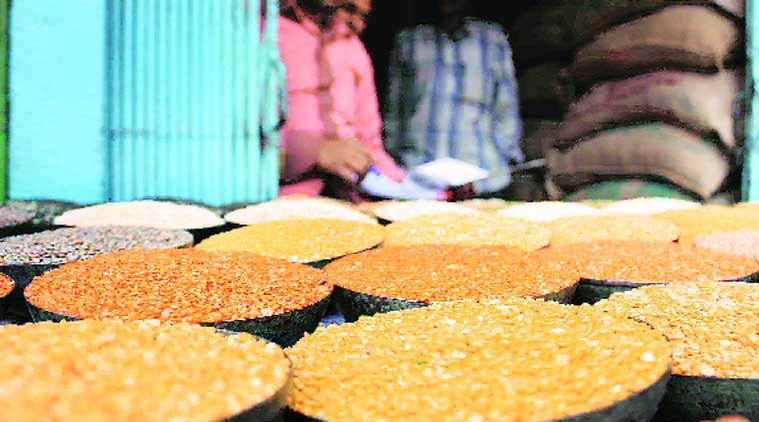


 Image copyrightAFP
 Image copyrightAFP

 Image copyrightBBC