💥Mains Ready By December. Smash Mains & Smash PYQ Admissions Open

Subject: Basic Sciences

  • 129th birth anniversary of Satyendra Nath Bose

    satyendra nath bose

    Born on January 1, 1894, Bose collaborated with Einstein to develop what we now know as the Bose-Einstein statistics. We take a look at the Indian physicist’s illustrious legacy and stellar achievements.

    Satyendra Nath Bose

    • Born on January 1, 1894, Bose grew up and studied in Kolkata, where he solidified his position as an exemplary academician.
    • His father, an accountant in the Executive Engineering Department of the East Indian Railways, gave him an arithmetic problem to solve every day before going to work, encouraging Bose’s interest in mathematics.
    • By the age of 15, he began pursuing a Bachelor of Science degree at the Presidency College, and later finished his MSc in Mixed Mathematics in 1915.

    Career as researchers

    • These were tough times for Indian researchers as World War I had broken out and, European scientific journals came to India quite infrequently.
    • Not only this, most of the research papers weren’t available in English and both Bose and Saha had to learn scientific terms in German and French languages to read published works.
    • However, the new skill came in handy for them in 1919, when they published English translations of Albert Einstein’s special and general relativity papers.
    • Two years later, Bose was appointed to the position of Reader in Physics at the University of Dhaka. It was here that he made his most significant contributions to physics.

    Association with Einstein

    • Bose wrote a letter to Albert Einstein in 1924 about his breakthrough in quantum mechanics.
    • He claimed that he had derived Planck’s law for black body radiation (which refers to the spectrum of light emitted by any hot object) without any reference to classical electrodynamics.
    • Impressed by Bose’s findings, Einstein not only arranged for the publication of the paper but also translated it into German.
    • This recognition catapulted Bose to fame and glory.

    Breakthrough in the invention of Boson

    • He went on to work with Einstein and together they developed what is now known as the Bose-Einstein statistics.
    • Today, in honour of his legacy, any particle that obeys the Bose-Einstein statistics is called a boson.
    • On his 129th birth anniversary, we take a look at the Indian physicist’s illustrious legacy and stellar achievements.


    Click and get your FREE Copy of CURRENT AFFAIRS Micro Notes

    (Click) FREE 1-to-1 on-call Mentorship by IAS-IPS officers | Discuss doubts, strategy, sources, and more

  • Pralay: India’s first tactical quasi-ballistic missile

    pralay

    The Defence Ministry has decided to deploy indigenously developed surface-to-surface ‘Pralay’ ballistic missiles near India’s borders with China and Pakistan.

    What are Tactical Missiles?

    • Generally, short-range missiles are termed tactical while long-range missiles are termed strategic.
    • A missile which is used to destroy tactical targets of enemy like bunkers, mortar position, artillery position etc. is tactical missile.
    • Battlefield missiles are tactical while long-range missiles targeting bigger targets like cities are termed strategic.
    • Features of these missiles include-
    1. Versatile range: Tactical missiles fills the gap between long range rockets and short range ballistic missiles , and have range mainly about 100 to 200 kms .
    2. Very high precision and accuracy: These missiles are highly accurate, and can destroy small steady and moving targets with high accuracy.

    About ‘Pralay’ Missile

    • Pralay is a Hindi word which means “apocalypse” or “to cause great destruction” or “damage”.
    • The Pralay missile project was sanctioned in 2015 and is a derivative of the Prahaar missile programme, which was first tested in 2011.
    • Developed by the DRDO, the ‘Pralay’ ballistic missile is a canisterised tactical, surface-to-surface, and short-range ballistic missile (SRBM) for battlefield use.
    • It can hit targets from a distance of 150 to 500 km and is extremely difficult to intercept by enemy interceptor missiles.
    • Pralay is powered by a solid fuel rocket motor and is a high explosive preformed fragmentation warhead that weighs somewhere between 350 kg to 700 kg.
    • It also accounts for its Penetration-Cum-Blast (PCB) and Runaway Denial Penetration Submunitions (RDPS).

    Unique features of Pralay

    • Precise targeting: The missile is designed to destroy enemy radar, communication installations, command centres and airfields.
    • Quasi Ballistic Trajectory: It means the object takes a low curved path after being shot.
    • Stealth features: Pralay has the ability to evade any anti-ballistic missile (ABM) interceptors by performing mid-air manoeuvres by using a manoeuvrable re-entry vehicle.
    • Destruction capability: When a high-explosive warhead, like the one Pralay missile is equipped with, explodes, its pieces are thrown at a high speed which can inflict heavy damage.

    What makes Pralay lethal?

    • The Indian missile can be compared to China’s Dong Feng 12 and the Russian Iskander missile that has been used in the ongoing war with Ukraine.
    • The US Army is in the process of increasing the range of a similar short-range ballistic missile called the Precision Strike Missile (PrSM).
    • What makes Pralay deadly is that it is a quasi-ballistic weapon, which means that while it has a low trajectory and is largely ballistic, it can manoeuvre in flight.
    • Unlike intercontinental ballistic missiles that exit the Earth’s atmosphere, short-range ballistic missiles stay within it.

    What lies ahead?

    • Pralay, along with the BrahMos supersonic cruise missile, will form the crux of India’s planned Rocket Force — a concept that was envisaged by former Chief of Defence Staff (CDS), the late General Bipin Rawat.
    • Only conventional missiles would come under the planned Rocket Force as and when it’s ready, while nuclear weapons would continue to be under the ambit of the Strategic Forces Command.


    Click and get your FREE Copy of CURRENT AFFAIRS Micro Notes

    (Click) FREE 1-to-1 on-call Mentorship by IAS-IPS officers | Discuss doubts, strategy, sources, and more

  • Why banyan, peepal trees live longer?

    banyan

    Researchers at the Indian Institute of Science Education and Research (IISER) Bhopal have found out the carried out whole genome sequencing of banyan and peepal from leaf tissue samples.

    Science behind long life: Multiple Signs of Adaptive-evolution (MSA)

    • Scientists identified 25,016 coding gene sequences in banyan and 23,929 in peepal.
    • Both trees faced a population bottleneck around 0.8 million years ago and evolved genes with multiple signs of adaptive evolution (MSA).
    • In banyan, the MSA genes are mainly involved in root growth, pollen tube and seed development, leaf formation, cell wall synthesis, metabolism and other developmental processes.

    How MSA prolongs the life?

    • Disease resistance and other stress tolerance gene families showed expansion as well as high expression, contributing to the plants’ long lifespan.
    • The MSA genes of peepal are associated with root cell elongation, cell proliferation, seed and pollen tube growth, lateral organ development, controlling flowering time, metabolism and intracellular transport.
    • The team zeroed in on 17 MSA genes in banyan and 19 MSA genes in peepal that are mainly related to well-developed morphology, and tolerance against drought, oxidative stress and pathogens.
    • Genes involved in growth-regulating auxin signalling and plant senescence-regulating pathways also showed evolutionary signatures.
    • Also, 88% and 89% of the MSA genes in banyan and peepal trees, respectively, are associated with tolerance against biotic and abiotic stress responses.
    • This, in turn, helps these plants to survive when faced with environmental challenges.


    Click and get your FREE Copy of CURRENT AFFAIRS Micro Notes

    (Click) FREE 1-to-1 on-call Mentorship by IAS-IPS officers | Discuss doubts, strategy, sources, and more

  • What is DNA Fingerprinting?

    dna

    Delhi Police has established identity of a victim of brutal murder and mutilation by DNA fingerprinting.

    What is DNA fingerprinting?

    • DNA fingerprinting was first developed in 1984 by Alec Jeffreys in the UK, after Jeffreys discovered that no two people could have the same DNA sequence.
    • Within three years of the discovery, the UK achieved the world’s first conviction based on DNA evidence in a case of rape and murder.

    How is DNA fingerprinting done?

    • Each person’s DNA, except for identical twins, is unique.
    • By analyzing selected DNA sequences (called loci), a crime laboratory can develop a profile to be used in identifying a suspect.
    • DNA can be extracted from many sources, such as hair, bone, teeth, saliva, and blood.
    • Because there is DNA in most cells in the human body, even a minuscule amount of bodily fluid or tissue can yield useful information.
    • Samples may even be extracted from used clothes, linen, combs, or other frequently used items.


    Deoxyribonucleic Acid (DNA)

    • DNA is the hereditary material in humans and almost all other organisms. Nearly every cell in a person’s body has the same DNA.
    • Most DNA is located in the cell nucleus (where it is called nuclear DNA), but a small amount of DNA can also be found in the mitochondria (where it is called mitochondrial DNA or mtDNA).
    • Mitochondria are structures within cells that convert the energy from food into a form that cells can use.
    • The information in DNA is stored as a code made up of four chemical bases: adenine (A), guanine (G), cytosine (C), and thymine (T).
    • Human DNA consists of about 3 billion bases, and more than 99 percent of those bases are the same in all people.
    • The order, or sequence, of these bases determines the information available for building and maintaining an organism, similar to the way in which letters of the alphabet appear in a certain order to form words and sentences.

    How it is used in criminal investigation?

    • DNA evidence is used to solve crimes in two ways:
    1. If a suspect is known, that person’s DNA sample can be compared to biological evidence found at a crime scene to establish whether the suspect was at the crime scene or whether they committed the crime.
    2. If a suspect is not known, biological evidence from the crime scene can be analyzed and compared to offender profiles in existing DNA databases to assist in identifying a suspect.
    • Beyond its accuracy, DNA fingerprinting can also sift through crime scene evidence in different ways, previously unavailable to investigators.
    • For instance, advanced DNA fingerprinting can make separate prints of various individuals even from a sample mixture found at the crime scene — this is of help during gang rape investigations as each perpetrator can be individually identified.

    DNA fingerprinting in India

    • By 1988, Lalji Singh, who had been in the UK from 1974 to 1987 on a Commonwealth Fellowship, developed DNA fingerprinting for crime investigations in Hyderabad.
    • Today, Lalji Singh, who passed away in 2017, is known as “the father of DNA fingerprinting in India.”
    • In 1989, DNA fingerprinting was first used in a case by the Kerala Police.
    • By the early 1990s, the technology had begun to be used for establishing paternity, and to link criminals and identify victims in sensational crimes.
    • From the 2000s onwards, the technology became a staple in rape cases where vaginal swab samples were matched with semen samples from suspects.

    Challenges with DNA fingerprinting in India

    • It is vital to ensure that the DNA of the investigators does not get mixed with that of the victims or the suspects.
    • Thus, picking up samples from a crime scene with sterile tools and storing samples in a proper manner are crucial for the evidence to stand a judicial test.
    • While India has rules and guidelines regarding this, India’s police forces have a lot of catching up to do with counterparts overseas.
    • While central agencies such as CBI have the expertise to ensure that crime scenes are protected and correct procedure is followed, state police forces are inadequately trained or fully equipped.

    Issues with such technology

    • The problem is not limited to the police awareness.
    • The capacity for DNA fingerprinting in the country itself is lacking.
    • DNA fingerprinting is available only at a few places — Maharashtra, West Bengal, Delhi, Hyderabad and Chandigarh.
    • Advanced practices in the technology are limited to the Centre for DNA Fingerprinting and Diagnostics (CDFD) in Hyderabad.


    Click and get your FREE Copy of CURRENT AFFAIRS Micro Notes

    (Click) FREE 1-to-1 on-call Mentorship by IAS-IPS officers | Discuss doubts, strategy, sources, and more

  • US scientists announce breakthrough in Fusion Energy

    fusion

    US announced a “major scientific breakthrough” in the decades-long quest to harness fusion, the energy that powers the sun and stars.

    What is Fusion?

    • Fusion works by pressing hydrogen atoms into each other with such force that they combine into helium, releasing enormous amounts of energy and heat.
    • This process occurs in our Sun and other stars.
    • Creating conditions for fusion on Earth involves generating and sustaining a plasma.
    • Plasmas are gases that are so hot that electrons are freed from atomic nuclei.

    How is it carried out?

    fusion

    • Three conditions must be fulfilled to achieve fusion in a laboratory:
    1. Very high temperature (on the order of 150,000,000° Celsius);
    2. Sufficient plasma particle density (to increase the likelihood that collisions do occur); and
    3. Sufficient confinement time (to hold the plasma, which has a propensity to expand, within a defined volume).
    • At extreme temperatures, electrons are separated from nuclei and a gas becomes a plasma—often referred to as the fourth state of matter.
    • Fusion plasmas provide the environment in which light elements can fuse and yield energy.

    Fusion Energy

    • The process releases energy because the total mass of the resulting single nucleus is less than the mass of the two original nuclei.
    • The leftover mass becomes energy.

    What did the US achieve?

    • The US experiment uses a process called inertial confinement fusion.
    • It involved bombarding a tiny pellet of hydrogen plasma with the world’s biggest laser.

    Why is it perceived as energy of the future?

    • Carbon free: Fusion Reactions could one day produce nearly limitless, carbon-free energy, displacing fossil fuels and other traditional energy sources.
    • Efficient: Net energy gain has been an elusive goal because fusion happens at such high temperatures and pressures that it is incredibly difficult to control.
    • Clean: Unlike other nuclear reactions, it doesn’t create radioactive waste.

    Fusion still far from reality. Why?

    • Significant though the achievement is, it does little to bring the goal of producing electricity from fusion reactions any closer to reality.
    • By all estimates, use of the fusion process for generating electricity at a commercial scale is still two to three decades away.
    • The technology used in the US experiment might take even longer to get deployed.

    India’s progress: ITER project

    • International Thermonuclear Experimental Reactor (ITER) is one of the most ambitious energy projects in the world today.
    • The idea for an international joint experiment in fusion was first launched in 1985.
    • In southern France, 35 nations* are collaborating to build the world’s largest tokamak, a magnetic fusion device that has been designed to prove the feasibility of fusion.
    • ITER is funded and run by seven member parties: China, the European Union, India, Japan, Russia, South Korea and the United States.


    Click and get your FREE Copy of CURRENT AFFAIRS Micro Notes

    (Click) FREE 1-to-1 on-call Mentorship by IAS-IPS officers | Discuss doubts, strategy, sources, and more

  • DigiYatra Initiative for facial recognition technology at Airports

    digiyatra

    The centre has introduced paperless entry at select airports to make air travel hassle-free under the DigiYatra initiative.

    What is DigiYatra?

    • DigiYatra envisages that travellers pass through various checkpoints at the airport through paperless and contactless processing.
    • This means, passengers won’t need to carry their ID card and boarding pass.
    • This would rather use facial features to establish their identity, which would be linked to the boarding pass.
    • With this technology, the entry of passengers would be automatically processed based on the facial recognition system at all checkpoints – including entry into the airport, security check areas, aircraft boarding, etc.

    Implementation strategy

    • In the first phase, the initiative will be launched at seven airports, starting with three — Delhi, Bengaluru, and Varanasi.
    • It will then be followed by four airports namely Hyderabad, Kolkata, Pune, and Vijayawada by March 2023.
    • Subsequently, the technology will be implemented across the country.

    How is it being implemented?

    • The project is being implemented by the DigiYatra Foundation — a joint-venture company whose shareholders are the Airports Authority of India (26% stake) and Bengaluru Airport, Delhi Airport, Hyderabad Airport, Mumbai Airport and Cochin International Airport.
    • These five shareholders equally hold the remaining 74% of the shares.

    How can people avail the DigiYatra facility?

    • For availing the service, a passenger has to register their details on the DigiYatra app using Aadhaar-based validation and a self-image capture.
    • In the next step, the boarding pass has to be scanned, and the credentials are shared with airport authorities.
    • At the airport e-gate, the passenger has to first scan the bar coded boarding pass and the facial recognition system installed at the e-gate will validate the passenger’s identity and travel document.
    • Once this process is done, the passenger can enter the airport through the e-gate.
    • The passenger will have to follow the normal procedure to clear security and board the aircraft.


    Click and get your FREE Copy of CURRENT AFFAIRS Micro Notes

    (Click) FREE1-to-1 on-call Mentorship by IAS-IPS officers | Discuss doubts, strategy, sources, and more

  • Russia offers advanced nuclear fuel for Kudankulam Reactor

    The Russian state-owned nuclear energy corporation Rosatom has offered a more advanced fuel option to India’s largest nuclear power station at Kudankulam, which will allow its reactors to run for an extended 2-year cycle without stopping to load fresh fuel.

    What is the news?

    • Rosatom’s nuclear fuel division, TVEL Fuel Company, is the current supplier of TVS – 2 M fuel for the two VVER 1,000 MWe reactors generating power in the Kudankulam Nuclear Power Project (KKNPP).
    • This fuel has an 18-month fuel cycle, meaning that the reactor has to be stopped for fresh fuel loading every one-and-a-half years.
    • TVEL has now offered the more modern Advanced Technology Fuel (ATF), whose fuel cycle is a whopping 24 months.

    Benefits of the move

    • This fuel will ensure more efficiency and additional power generation due to the prolonged operation of the reactor.
    • It will result in sizable savings of the foreign exchange need to buy fresh fuel assemblies from Russia.

    What is the Nuclear Fuel Cycle?

    • The nuclear fuel cycle consists of front-end steps that prepare uranium for use in nuclear reactors and back-end steps to safely manage, prepare, and dispose of used—or spent—but still highly radioactive spent nuclear fuel.
    • Uranium is the most widely used fuel by nuclear power plants for nuclear fission.
    • Nuclear power plants use a certain type of uranium—U-235—as fuel because its atoms are easily split apart.
    • Although uranium is about 100 times more common than silver, U-235 is relatively rare at just over 0.7% of natural uranium.

    Steps involved in fuel enrichment

    • Uranium concentrate is separated from uranium ore at uranium mills or from a slurry at in-situ leaching facilities.
    • It is then processed in conversion and enrichment facilities, which increases the level of U-235 to 3%–5% for commercial nuclear reactors, and made into reactor fuel pellets and fuel rods in reactor fuel fabrication plants.
    • Nuclear fuel is loaded into reactors and used until the fuel assemblies become highly radioactive and must be removed for temporary storage and eventual disposal.
    • Chemical processing of spent fuel material to recover any remaining product that could undergo fission again in a new fuel assembly is technically feasible.

    Back2Basics: Uranium Enrichment

    • It is a process that is necessary to create an effective nuclear fuel out of mined uranium.
    • It involves increasing the percentage of uranium-235 which undergoes fission with thermal neutrons.
    • Nuclear fuel is mined from naturally occurring uranium ore deposits and then isolated through chemical reactions and separation processes.
    • These chemical processes used to separate the uranium from the ore are not to be confused with the physical and chemical processes used to enrich the uranium.

    Why is enrichment carried out?

    • Uranium found in nature consists largely of two isotopes, U-235 and U-238.
    • Natural uranium contains 0.7% of the U-235 isotope.
    • The remaining 99.3% is mostly the U-238 isotope which does not contribute directly to the fission process (though it does so indirectly by the formation of fissile isotopes of plutonium).
    • The production of energy in nuclear reactors is from the ‘fission’ or splitting of the U-235 atoms since it is the main fissile isotope of uranium.
    • Naturally occurring uranium does not have a high enough concentration of Uranium-235 at only about 0.72% with the remainder being Uranium-238.


    Click and get your FREE Copy of CURRENT AFFAIRS Micro Notes

    (Click) FREE1-to-1 on-call Mentorship by IAS-IPS officers | Discuss doubts, strategy, sources, and more

  • Hwasong-17: North Korea’s new ‘monster missile’

    hwasong

    North Korea said it test-fired its massive new Hwasong-17 intercontinental ballistic missile (ICBM).

    Hwasong-17  

    • The Hwasong-17 is nuclear-armed North Korea’s biggest missile yet, and is the largest road-mobile, liquid-fuelled ICBM in the world.
    • Its diameter is estimated to be between 2.4 and 2.5 metres, and its total mass, when fully fuelled, is likely somewhere between 80,000 and 110,000 kg.
    • Unlike North Korea’s earlier ICBMs, the Hwasong-17 is launched directly from a transporter, erector, and launcher (TEL) vehicle with 11 axles, photos by state media showed.

    How far can it fly?

    • The missile launched on Friday flew nearly 1,000 km (621 miles) for about 69 minutes and reached a maximum altitude of 6,041 km.
    • The weapon could travel as far as 15,000 km (9,320 miles), enough to reach the continental United States.

    What is North Korea trying to demonstrate with the missile launches?

    • North Korea is wary of joint drills between the US and South Korea and believes them to be a rehearsal for invasion and proof of hostile policies.
    • Notably, Pyongyang’s record launches this year began even before military exercises between the allies, one also involving Japan.
    • While it says it is responding to the “provocative” drills, some analysts believe that Kim Jong-un must be setting the stage for something bigger— the resumption of nuclear testing after five years.
    • Pyongyang may also be showcasing its pre-emptive abilities in response to South Korea’s own pre-emptive “kill chain” strategy.

    Failure of diplomacy

    • North Korea pulled out of the Nuclear Non-proliferation Treaty (NPT) in January 2003 and has conducted six nuclear tests so far since 2006.
    • Diplomatic talks have been starting and halting over the past two decades.
    • The Six-Party Talks involving South and North Korea, China, Japan, Russia, and the United States, started in 2003, have since stalled with changing geopolitical dynamics.
    • Former U.S. President Donald Trump met with Kim Jong-un thrice between 2018 and 2019 but talks broke down and resulted in more sanctions from the West and increased testing by Pyongyang.
    • The Joe Biden administration did make attempts to restart talks, and North Korea has not seemed keen either.


    (Click) FREE1-to-1 on-call Mentorship by IAS-IPS officers | Discuss doubts, strategy, sources, and more

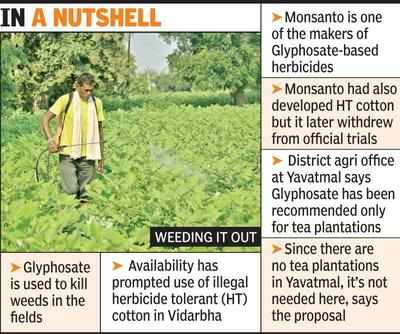
  • Centre restricts use of common weedicide Glyphosate

    Glyphosate

    The Union Ministry of Agriculture and Farmers Welfare has restricted the use of glyphosate, a widely used herbicide, citing health hazards for humans and animals.

    What is Glyphosate?

    • Glyphosate is an herbicide. It is applied to the leaves of plants to kill both broadleaf plants and grasses.
    • The sodium salt form of glyphosate is used to regulate plant growth and ripen specific crops.
    • Glyphosate is one of the most widely used herbicide.
    • In India, glyphosate has been approved for use only in tea plantations and non-plantation areas accompanying the tea crop.
    • Use of the substance anywhere else is illegal.

    How does glyphosate work?

    • Glyphosate is a non-selective herbicide, meaning it will kill most plants.
    • It prevents the plants from making certain proteins that are needed for plant growth.
    • Glyphosate stops a specific enzyme pathway, the shikimic acid
    • The shikimic acid pathway is necessary for plants and some microorganisms.

    What is the recent ban?

    • Only authorized Pest Control Operators are allowed to use it.
    • Earlier, state governments of Maharashtra, Telangana, Punjab and Andhra Pradesh have tried similar steps but failed.
    • The ban notification was based on a 2019 report by the Government of Kerala on prohibiting the distribution, sale and use of glyphosate and its derivatives.

    Is it banned elsewhere?

    • Some 35 countries have banned or restricted the use of glyphosate.
    • These include Sri Lanka, Netherlands, France, Colombia, Canada, Israel and Argentina.

    Hazards of Glyphosate

    • Health impacts of glyphosate range from cancer, and reproductive and developmental toxicity to neurotoxicity and immune toxicity.
    • Symptoms include irritation, swelling, burning of the skin, oral and nasal discomfort, unpleasant taste and blurred vision.


    Click and get your FREE copy of Current Affairs micro notes

  • India’s first indigenous Overhauser Magnetometer

    magnet

    Indian scientists have developed an indigenous Overhauser Magnetometer, one of the most accurate magnetometers extensively used by all magnetic observatories around the world.

    What are Overhauser Magnetometers?

    • A magnetometer is a scientific instrument used to measure the strength and direction of the magnetic field.
    • OVH magnetometers are known for their higher accuracy, higher sensitivity, and efficient power consumption.
    • They find applications in all magnetic observatories worldwide as well as in international space programs.
    • It has so far been imported for such purposes in India.

    Feats achieved

    • The performance of this indigenously made magnetometer is at par with a commercial OVH sensor that is currently installed at the magnetic observatories of IIG.
    • The Indian OVH sensor reproduced the geomagnetic diurnal variations accurately and precisely.
    • It showed the signatures of various space weather events such as geomagnetic storms, sudden impulses, etc.
    • It would also be of potential help to develop a sensitive magnetic resonance imaging (MRI) instrument.

    Benefits of OVH magnetometers

    • OVH magnetometers reduce the cost of sampling and sensing experiments essential for geomagnetic sampling.
    • It can reduce India’s dependence on commercial OVH magnetometers for performing geomagnetic field measurements.


    UPSC 2023 countdown has begun! Get your personal guidance plan now! (Click here)