💥Mains Ready By December. Smash Mains & Smash PYQ Admissions Open

Subject: Basic Sciences

  • Electrolytic splitting of Water

    Scientists from The Centre for Nano and Soft Matter Sciences (CeNS), an autonomous institute of the Department of Science and Technology (DST), have found out a low cost and efficient way to generate hydrogen from water using Molybdenum dioxide as a catalyst.

    Practice question for mains:

    Q. Hydrogen is the future of clean and sustainable energy. Discuss.

    Electrolytic splitting of water

    • Electrolysis of water is the decomposition of water into oxygen and hydrogen gas due to the passage of an electric current.
    • This technique can be used to make hydrogen gas, the main component of hydrogen fuel, and breathable oxygen gas, or can mix the two into oxyhydrogen, which is also usable as fuel, though more volatile and dangerous.
    • It is a promising method to generate hydrogen but requires energy input that can be brought down in the presence of a catalyst.

    Using Molybdenum Catalyst

    • The scientists have shown that Molybdenum dioxide (MoO2) nanomaterials annealed in hydrogen atmosphere can act as efficient catalysts to reduce the energy input to bring about water splitting into Hydrogen.
    • Molybdenum dioxide has the potential to replace the currently employed catalyst platinum, which is expensive and has limited resources.
    • MoO2 is a conducting metal oxide that is one of the low-cost catalysts with good efficiency and stability for hydrogen evolution.
    • The catalyst is highly stable for a longer duration of reaction with sustained hydrogen evolution from water.
    • About 80 % efficient conversion of electrical energy into hydrogen has been achieved using this catalyst.

    Significance

    • Hydrogen is considered as the future of clean and sustainable energy as it can be generated from water and produces water on energy generation without any carbon footprint.
    • Hydrogen can be directly used as a fuel similar to natural gas or as input for fuel cells to generate electricity.
    • It is the future energy for a clean environment and an alternative to fossil fuels, underlining the necessity of low-cost catalysts for its production.
  • What is Superconductivity?

    On a larger scale, electric grids, such as high power lines, lose over 5 per cent of their energy in the process of transmission.

    In India, we often get to hear about the transmission losses in DISCOMS. Such losses can be zeroed with the application of superconducting cables (which is practically impossible unless we find a normal working one). The phenomena, superconductivity, however is not new to us, UPSC may end up asking some tricky statements in the prelims regarding it.

    Heat losses

    Waste heat is all around you. On a small scale, if your phone or laptop feels warm, that’s because some of the energy powering the device is being transformed into unwanted heat.

    Where does this wasted heat come from?

    • These elementary particles of an atom move around and interact with other electrons and atoms.
    • Because they have an electric charge, as they move through a material — like metals, which can easily conduct electricity — they scatter off other atoms and generate heat.

    Understanding Superconductivity

    • A superconductor is a material, such as a pure metal like aluminium or lead, that when cooled to ultra-low temperatures allows electricity to move through it with absolutely zero resistance.
    • Kamerlingh Onnes was the first scientist who figured out exactly how superconductor works in 1911.
    • Simply put, superconductivity occurs when two electrons bind together at low temperatures.
    • They form the building block of superconductors, the Cooper pair.
    • This holds true even for a potential superconductor like lead when it is above a certain temperature.

    What are Superconductors?

    • Superconductors are materials that address this problem by allowing energy to flow efficiently through them without generating unwanted heat.
    • They have great potential and many cost-effective applications.
    • They operate magnetically levitated trains, generate magnetic fields for MRI machines and recently have been used to build quantum computers, though a fully operating one does not yet exist.

    Issues with superconductors

    • They have an essential problem when it comes to other practical applications: They operate at ultra-low temperatures.
    • There are no room-temperature superconductors. That “room-temperature” part is what scientists have been working on for more than a century.
    • The amount of energy needed to cool a material down to its superconducting state is too expensive for daily applications.

    Future scope

    • In a dramatic turn of events, a new kind of superconductor material was discovered in 1987 at IBM in Zurich, Switzerland.
    • The material was a kind of ceramic. These new ceramic superconductors were made of copper and oxygen mixed with other elements such as lanthanum, barium and bismuth.
    • They contradicted everything physicists thought they knew about making superconductors.
    • Since then, curiosity regarding the superconductors has been ever increasing.
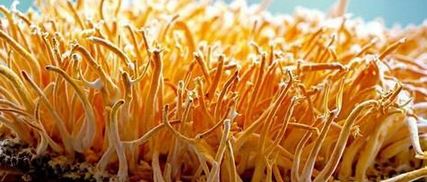
  • Species in news: Super mushroom “Cordyceps militaris”

    A university in Assam has developed a fungal powder to help people boost their immunity to disease.

    Try this question from CSP 2019:

    Q.) Recently, there was a growing awareness in our country about the importance of Himalayan nettle (Girardinia diversifolia) because it is found to be a sustainable source of

    (a) anti-malarial drug

    (b) bio-diesel

    (c) pulp for paper industry

    (d) textile fibre

    A similar question related to Cordyceps militaris can be asked. UPSC may ask whether it is a Fungi, Algae, a Moss or a Lichen.

    Cordyceps militaris

    • The powder is from a parasitic but rare “super mushroom” called Cordyceps militaris.
    • The militaris underwent powdering through lyophilisation or freeze-drying at –80°C.
    • The earth has more than 400 species of Cordyceps, a fungus parasitic on insects as well as other fungi.
    • Often referred to as a super mushroom, Cordyceps known for its anti-ageing, anti-viral, energy and immunity-boosting effect.
    • Natural Cordyceps is hard to get and if dried, costs at least ₹8 lakh per kg.
  • CoAST India (Collaboration/Covid Action Support Group) Platform

    India Observatory has come up with a GIS-enabled dashboard called CoAST India to monitor migrants in India.

    Here, UPSC may create an illusion on:

    India Observatory – open-source database (misleading name): It may be asked in relation to some ISRO project.

    CoAST India – COVID related info (again misleading): UPSC may ask it in context to Cyclone Warning Systems.

    CoAST India

    • The platform is a map reflecting the movement of migrants in real-time on their long journeys, often on foot, along with facilities and relief organisations on their routes.
    • It is a collaboration with Anand-based Forest Ecological Security (FES) as its main nodal point.
    • It draws information from 55 organisations on the ground, mostly in villages, and aims to make such data available so that it would enable governments and small local civil society groups to be of assistance.
    • The map matches time and spatial data, on administrative facilities in the area, transportation and healthcare facilities of an area and summaries, on the fly, in real-time of people passing by.

    Features of the portal

    Four elements are sought to be brought together in this portal:

    • Location of migrants and vulnerable people, their specific needs,
    • Location of key infrastructure on the way which can double up as a rest-centre, or
    • Quarantine space and location of relief and
    • Rehabilitation providing NGOs and civil society organisations

    About India Observatory

    • The Foundation for Ecological Security (FES), an NGO working on conserving natural resources at the grassroots, has brought together a unique ecosystem of tools – open data platform India Observatory – to help understand the status of local-level resources and facilitate the action plans for conserving them.
    • The data made available on India Observatory platform has been pooled from various sources and dates as far back as the 1960s.
    • India Observatory was set up in December 2019, with FES focused on ecological issues about forests, water bodies, conservation, etc. that needed “a bird’s eye view or a satellite’s vision”.
    • It is a research unit at the London School of Economics and Political Science (LSE).
  • What is the ‘Sonic Boom’ that rattled Bengaluru city?

    The ‘loud sound’ heard in Bengaluru a few days back, which puzzled lakhs of city dwellers, was revealed to have emanated from an IAF test flight involving a supersonic profile. The sonic boom was probably heard while the IAF aircraft was decelerating from supersonic to subsonic speed between 36,000 and 40000 feet altitude.

    Note:

    We often get to hear about updates in  India’s missile programme. UPSC may ask a basic physics question asking fundamental differences between various Mach number and its differences.

    What is a ‘sonic boom’?

    • Sound travels in the form of waves which are emitted outwards from its source.
    • In air, the speed of these waves depends on a number of factors, such as the temperature of the air and altitude.
    • When an aircraft travels at supersonic speed – meaning faster than sound (>1225 kmph at sea level) – the field of sound waves moves to the back of the craft.
    • A stationary observer thus hears no sound when a supersonic flight approaches since the sound waves are at the rear of the latter.
    • At such speeds, both newly created as well as old waves, are forced into a region at the aircraft’s rear called a ‘Mach cone’, which extends from the craft and intercepts the Earth in a hyperbola-shaped curve, and leaves a trail called the ‘boom carpet’.
    • The loud sound that is heard on the Earth when this happens is called a ‘sonic boom’ (resembles bomb-blast sound).

    Impacts

    • When such aircraft fly at a low altitude, the sonic boom can become intense enough to cause the glass to crack or cause health hazards.
    • Overland supersonic flights have thus been banned in many countries.

    Supersonic flights

    • In 1947, the American military pilot Chuck Yeager became the first to breach the sound barrier, flying the Bell X-1 aircraft at 1127 kmph.
    • Since then, many supersonic flights have followed, with advanced designs allowing speeds of over Mach 3, or three times the speed of sound.
    • According to the IAF website, India’s fastest jets include the Sukhoi SU-30 MKI (Mach 2.35) and the Mirage-2000 (Mach 2.3).

    Back2Basics: Traverse of sound

    • From a stationary source, such as a television set, sound waves travel outwards in concentric spheres of growing radii.
    • When the source of sound is moving – e.g, a truck– the successive waves in front of the truck get closer together, and the ones behind it spread out.
    • This is also the cause of the Doppler effect– in which bunched waves at the front appear at a higher frequency to a stationary observer, and spread out waves that are behind are observed at a lower frequency.
    • As long as the source of the sound keeps moving slower than the speed of sound itself, this source– say a truck or a plane – remains nested within the sound waves that are travelling in all directions.

    Mach number

    • The ratio of the speed of the aircraft to the speed of sound in the gas determines the magnitude of many of the compressibility effects.
    • Because of the importance of this speed ratio, aerodynamicists have designated it with a special parameter called the Mach number in honour of Ernst Mach, a late 19th-century physicist who studied gas dynamics.
    • Subsonic conditions occur for Mach numbers less than one, M < 1.
    • As the speed of the object approaches the speed of sound, the flight Mach number is nearly equal to one, M = 1, and the flow is said to be transonic.
    • Supersonic conditions occur for Mach numbers greater than one, 1 < M < 3.
    • For speeds greater than five times the speed of sound, M > 5, the flow is said to be hypersonic.
    • The Space Shuttle re-enters the atmosphere at high hypersonic speeds, M ~ 25. Under these conditions, the heated air becomes ionized plasma of gas and the spacecraft must be insulated from the high temperatures.
  • [pib] Certification of ‘Quantum Entanglement’

    Indian scientists have developed a novel protocol to find out whether a pair of electrons are in an entangled state so that they can be safely used as resources for facilitating quantum information processing tasks.

    Trending in news this year is the Quantum Technology, (As it used to be until last year were- the Internet of Things (IoT) CSP 2019, Artificial Intelligence (AI) etc.)

    Must read all this news in a loop:

    National Mission on QC

    Quantum Coin

    Quantum Supremacy

    What is Quantum Entanglement (QE)?

    • QE is the name given to a special connection between pairs or groups of quantum systems, or any objects described by quantum mechanics.
    • It is one of the biggest parts of quantum mechanics that makes it hard to understand in terms of the everyday world.
    • When we look at particles, we usually say that each particle has its own quantum state. Sometimes, two particles can act on one another and become an entangled system.
    • When a pair or group of particles can only be described by the quantum state for the system, and not by individual quantum states, we say the particles are “entangled”.

    Going bit technical here-

    • It is the physical phenomenon that occurs when a pair or group of particles is generated; interact, in a way such that the quantum state of each particle of the pair or group cannot be described independently of the state of the others.
    • Entangled states are key resources to facilitate many quantum information processing tasks and quantum cryptographic protocols.

    Why decode the Entanglement?

    • Entanglement is fragile and is easily lost during the transit of photons through the environment.
    • Hence it is extremely important to know whether a pair of photons are entangled, in order to use them as a resource.
    • Verification of entanglement requires the use of measurement devices, but such devices may be hacked or compromised.

    How to secure QE?

    • Device-independent self-testing (DIST) is a method that can be used in order to overcome such a possibility.
    • This method enables the verification of entanglement in an unknown quantum state of two photons without having direct access to the state, or complete trust in the measurement devices.
    • The theory relies on the application of the quantum uncertainty principle while implementing full device independence is a difficult task.

    Back2Basics: Quantum Mechanics

    • Quantum mechanics (QM) is a fundamental theory in physics which describes nature at the smallest scales of energy levels of atoms and subatomic particles.
    • It is the body of scientific laws that describe the wacky behaviour of photons, electrons and the other particles that make up the universe.
  • [pib] Alternative Dwarfing Genes in Wheat

    Scientists at Pune based Agharkar Research Institute (ARI) an autonomous institute of the Department of Science and Technology has mapped two dwarfing genes Rht14 and Rht18 in wheat that can reduce stubble volume.

    Note: One may wonder why the name of research institution has not been skipped here!

    Q. With reference to the Genetically Modified mustard (GM mustard) developed in India, consider the following statements:

    1. GM mustard has the genes of a soil bacterium that give the plant the property of pest-resistance to a wide variety of pests.
    2. GM mustard has the genes that allow the plant cross-pollination and hybridization.
    3. GM mustard has been developed jointly by the IARI and Punjab Agricultural University.

    Which of the statements given above is/are correct? (CSP 2018)

    (a) 1 and 3 only

    (b) 2 only

    (c) 2 and 3 only

    (d) 1, 2 and 3

    Rht14 and Rht18

    • The researchers have mapped the dwarfing genes on chromosome 6A in durum wheat, and DNA-based markers were developed for a better selection of these genes in wheat breeding lines.
    • These genes are associated with better seedling vigour and longer coleoptiles (sheath protecting the young shoot tip).
    • These DNA based markers are being used at ARI for marker-assisted transfer of these genes in Indian wheat varieties, so as to make them suitable for sowing under rice stubble-retained conditions and dry environments.
    • Wheat lines with these alternative dwarfing genes, apart from reducing crop residue burning, can allow deeper sowing of wheat seeds to avail advantage of residual moisture in the soil under dry environments.
    • Wheat lines with these alternative dwarfing genes, apart from reducing crop residue burning, can allow deeper sowing of wheat seeds to avail advantage of residual moisture in the soil under dry environments.

    Significance

    • In India, close to twenty-three million tonnes of leftover rice residues are annually burnt by farmers to get rid of the straw and prepare their fields for sowing wheat, which is the next crop, resulting in air pollution.
    • Burning of leftover rice crop residue has serious implications for the environment, soil, and human health.
    • Therefore, there is a need to include alternative dwarfing genes in wheat improvement programs.
    • The dwarfing genes Rht14 and Rht18 in wheat conferred a plant height reduction comparable to the Rht1 alleles while retaining early vigour in wheat seedlings, but do not affect coleoptile length and seedling shoot length.
    • These can, therefore, be utilized as an alternative dwarfing gene to Rht1 for deep sowing conditions or in fields with retained stubble.
    • The improved wheat lines which are being developed at ARI will help reducing stubble burning incidences under the rice-wheat cropping system.
    • These lines will also allow deeper sowing of wheat seeds to avail advantage of residual moisture in the soil, therefore, saving valuable water resources and reduce the cost of cultivation to farmers.
  • International Day of Light and its significance

    The UN marks the International Day of Light (IDL) — an annual initiative held globally to raise awareness on the critical role played by light-based technologies in everyday life.

    The IDL as mentioned in the news creates no scope for a possible prelim question, but the purpose behind its celebration does.  i.e. LASER technology. LIDAR is the latest development in the LASER technology. UPSC may puzzle you here by asking the working principle of LIDAR.

    International Day of Light (IDL)

    • The IDL is administered from the International Basic Science Programme (IBSP) of UNESCO, and its Secretariat is located at the Abdus Salam International Centre of Theoretical Physics (ICTP) at Trieste, Italy.
    • The IDL highlights the contribution of such technologies in various avenues such as science, technology, art, and culture, thus helping achieve the UNESCO goals of education, equality, and peace.
    • The day selected, May 16, marks the anniversary of the first successful operation of the LASER in 1960 by physicist and engineer Theodore Maiman.
    • The LASER is a perfect example of how a scientific discovery can yield revolutionary benefits to society in communications, healthcare and many other fields.

    Why is the IDL celebrated?

    • In 2015, to raise global awareness of the achievements of light science and its applications, the UN observed the International Year of Light and Light-based Technologies 2015 (IYL 2015).
    • The event helped establish links and collaborations between decision-makers, industry leaders, scientists, artists, social businesses, NGOs, and the public at large.
    • Following the success of IYL 2015, Ghana, Mexico, New Zealand and Russia placed a resolution before the UNESCO Executive Board supporting the idea of an International Day of Light.
    • It was adopted on September 19, 2016, at the Board’s 200th session at the UNESCO HQ in Paris, France.
    • The Board decision was endorsed by the UNESCO General Conference at its 39th session on November 7, 2017, and the first IDL was held on May 16, 2018.

    Back2Basics: LASER

    • A laser is a device that emits light through a process of optical amplification based on the stimulated emission of electromagnetic radiation.
    • It is an acronym for “light amplification by the stimulated emission of radiation.
    • The laser stimulates atoms or molecules to emit light at particular wavelengths and amplifies that light, typically producing a very narrow beam of radiation.
    • The emission generally covers an extremely limited range of visible, infrared, or ultraviolet wavelengths.
    • Many different types of lasers have been developed, with highly varied characteristics.
    • A laser is widely used in industrial cutting, surgical removal of tissues etc.
    • LIDAR is the most famous application of LASERs.

    LiDAR (Light Detection And Ranging)

    • It is a remote sensing method that uses light in the form of a pulsed laser to measure ranges (variable distances) to the Earth.
    • It bounces pulsed laser light off the ground, revealing contours hidden by dense foliage.
    • These light pulses—combined with other data recorded by the airborne system— generate precise, three-dimensional information about the shape of the Earth and its surface characteristics.
    • LIDAR systems allow scientists and mapping professionals to examine both natural and manmade environments with accuracy, precision, and flexibility.
    • A LIDAR instrument principally consists of a laser, a scanner, and a specialized GPS receiver.
    • Airplanes and helicopters are the most commonly used platforms for acquiring LIDAR data over broad areas.
  • What is ‘Direct Seeding of Rice’ (DSR)?

    Farmers are now being encouraged to adopt ‘direct seeding of rice’ (DSR) in place of conventional transplanting due to lack of labourers, who are stranded due to lockdown.

    Recall the classification of cropping seasons on India based on onset and retreat of Monsoon.

    The kharif crops include rice, maize, sorghum, pearl millet/bajra, finger millet/ragi (cereals), arhar (pulses), soyabean, groundnut (oilseeds), cotton etc. The rabi crops include wheat, barley, oats (cereals), chickpea/gram (pulses), linseed, mustard (oilseeds) etc.  Kindly make a note of this.

    What is ‘Direct Seeding of Rice’ (DSR)?

    • In transplanting, farmers prepare nurseries where the paddy seeds are first sown and raised into young plants.
    • These seedlings are then uprooted and replanted 25-35 days later in the main field.
    • Paddy seedlings are transplanted on fields that are “puddled” or tilled in standing water using tractor-drawn disc harrows.
    • In DSR, there is no nursery preparation or transplantation. The seeds are instead directly drilled into the field by a tractor-powered machine.

    How is the question of herbicides addressed in DSR?

    • Paddy being very much water-intensive is compromised by weeds that compete for nutrition, sunlight and water.
    • Water prevents the growth of weeds by denying them oxygen in the submerged stage, whereas the soft ‘aerenchyma tissues’ in paddy plants allow air to penetrate through their roots.
    • Water, thus, acts as a herbicide for paddy. The threat from weeds recedes once tillering is over; so does the need to flood the fields.
    • In DSR, water is replaced by real chemical herbicides. Farmers have to only level their land and give one pre-sowing irrigation or rauni.
    • Once the field has good soil moisture, they need to do two rounds of ploughing and planking (smoothening of soil surface), which is followed by the sowing of the seeds and spraying of herbicides.

    What are these herbicides?

    • There are two kinds. The first is called pre-emergent, i.e. applied before germination. In this case, the pre-emergent herbicide used is Pendimethalin.
    • The second set of herbicides is post-emergent, sprayed 20-25 days after sowing, depending upon the type of weeds appearing.
    • They include Bispyribac-sodium (Rs 600-700 at 100 ml/acre) and Fenoxaprop-p-ethyl (Rs 700-800 at 400 ml/acre).

    What is the main advantage of DSR?

    • The most obvious one is water savings. The first irrigation (apart from the pre-sowing rauni) under DSR is necessary only 21 days after sowing.
    • This is unlike in transplanted paddy, where watering has to be done practically daily to ensure submerged/flooded conditions in the first three weeks.
    • The second savings, relevant in the present context, is that of labour. About three labourers are required to transplant one acre of paddy at almost Rs 2,400 per acre.
    • As against this, the cost of herbicides under DSR will not exceed Rs 2,000 per acre.

    Limitations of DSR

    • The main issue is the availability of herbicides.
    • The seed requirement for DSR is also higher, at 8-10 kg/acre, compared to 4-5 kg in transplanting.
    • Further, laser land levelling, which costs Rs 1,000/acre, is compulsory in DSR. This is not so in transplanting.
    • The yields are as good as from normal transplanting, but one need to sow by the first fortnight of June. The plants have to come out properly before the monsoon rains arrive.
    • There is no such problem in transplanting, where the saplings have already been raised in the nursery.
  • Spirulina Groundnut Chikki to boost immunity

    The Mysuru-based Central Food Technological Research Institute, CFTRI has developed Spirulina groundnut Chikki that can provide micro-nutrients and boost the immunity of people during this time of the pandemic.

    Beware, the Chikki so mentioned has no GI tag. What makes it significant is the Spirulina, a photosynthetic bacteria, which is suitable for human consumption.

    Spirulina Groundnut Chikki

    • It is a snack that provides good micro-nutrients.
    • It has used Spirulina as well as the tasty, nourishing groundnuts to prepare Chikki that is rich in micro-nutrients such as Vitamin A, Beta Carotene and easily digestible algal proteins.
    • Other nutritious snacks of CFTRI such as Nutri mango fruit bar and cardamom flavoured water is also part of the food items supplied to the migrant labourers.
    • The mango bar is rich with carbohydrates, carotene, Vitamin C and Zinc to improve the immunity.
    • Cardamom flavoured water with traditional herbs to have immune booster qualities.

    What is Spirulina?

    • Spirulina is an organism that grows in both fresh and saltwater.
    • It is a type of cyanobacteria, which is a family of single-celled microbes that are often referred to as blue-green algae.
    • It is used as a dietary supplement or whole food. It is also used as a feed supplement in the aquaculture, aquarium, and poultry industries.
    • Just like plants, cyanobacteria can produce energy from sunlight via a process called photosynthesis.