💥Mains Ready By December. Smash Mains & Smash PYQ Admissions Open

Subject: Basic Sciences

  • Pink Supermoon/ Paschal Moon

    A supermoon is all scheduled to show up in the sky on April 7. It would be the biggest and brightest full moon of 2020.

    Pink Supermoon

    • According to NASA, a supermoon takes place when a full moon is at its closest to the Earth.
    • When the full moon appears at perigee (closest point from the earth) it is slightly brighter and larger than a regular full moon — and that is what we call a “supermoon.”
    • They are called Supermoons because they are 7 per cent bigger and 15 per cent brighter, compared to an average full Moon.
    • The moon will not be originally pink in colour. It got its name from the pink wildflowers – Wild Ground Phlox – that bloom in the spring and are native to North America.
    • It is also called Paschal moon because, in the Christian calendar, this is used to calculate the date for Easter – the first Sunday after the Paschal Moon is Easter Sunday.
  • Man versus microbe

    Context

    The present COVID-19 outbreak has brought to light the old struggle between humans and viruses.

    The constant struggle between humans and viruses

    • Hijacking the cell machinery of the host: Microbes, particularly viruses, have only one goal — to find a suitable host and multiply. Viruses, however, do not multiply by themselves. They need the cell machinery of the host for replication.
    • Around two-thirds of all infections in humans are caused by viruses.
    • The current COVID-19 outbreak caused by a coronavirus, SARS-CoV2, has brought this struggle to light once again.
    • Coronavirus has the upper hand now: The virus seems highly successful because it spreads rapidly from human to human and has a lower rate of mortality.
    • Humans have faced new viruses at regular intervals. These include the Ebola, Zika, HIV, the Flu virus H1N1, the Middle East Respiratory Syndrome (MERS), and Severe Acute Respiratory Syndrome (SARS)the latter two are from the coronavirus family.
    • Animal to humans: These viruses have all appeared in the last few decades, having jumped from their animal reservoirs to humans.
    • Many of these viruses have a much higher mortality rate than the SARS-CoV2 that caused COVID-19.
    • Victory would be at huge costs: Like before, humans will come out of the present crisis as winners but that will happen at a huge cost, in every sense of the word.
    • The loss would include untimely loss of human lives, economic losses and a general loss of confidence in the human ability to deal with a tiny unknown enemy.

    Steps involved in dealing with the virus

    • It involves dealing with any new viral outbreak is to be able to accurately test, detect and track the spread of the virus, and isolate the infected persons to stop further spread.
    • Knowing the genetic makeup of virus matters: In order to implement the first step, it is important to obtain information on the genetic makeup of the virus, which forms the basis of developing highly specific diagnostic tests.
    • Three types of tests are being used which have different advantages associated with them and are based on different technologies. These are described below-

    1. What is the RT-PCR technique?

    • Currently, the most reliable and widely-used test is based on a technique called RT-PCR (Reverse Transcription Time Polymerase Chain Reaction).
    • This test aims to detect the viral RNA, the genetic material of SARS-CoV2.
    • The testing begins with the careful collection of swabs taken from the nose or the back of the throat of the patient and extraction of the viral RNA.
    • However, this extracted viral RNA from the swab is too tiny an amount for direct detection.
    • Amplification: The RT-PCR, through many different reactions that include the conversion of viral RNA to DNA — its amplification and detection — makes it possible to confirm the presence or absence of the virus.
    • The testing kits contain all chemicals and materials required for carrying out the RT-PCR based tests, which are performed by government-approved laboratories such as India’s National Institute of Virology.
    • However, many more testing centres, including those run by private players, have now been allowed to carry out the tests in many countries to bridge the huge demand and supply gap.
    • Why testing matters? It is now clear that countries which were able to scale up the testing of the virus in patients at an early stage were able to control the spread of the disease far better than those which did not.
    • Only viable control measure: Given that there is no cure or vaccine for the control of COVID-19, testing of infected patients much more quickly and tracking their contacts to isolate them till they clear off the virus is currently the only viable control measure.

    2. How CRISPR is proving helpful in scaling up the testing?

    • There is good news of a relatively new but powerful technology called CRISPR (Clustered Regularly Interspaced Short Palindromic Repeats).
    • CRISPR is highly specific in directly detecting viral RNA and confirming the presence or absence of the virus.
    • Interestingly, viruses also attack bacteria and the discovery of CRISPR itself was based on understanding how bacteria cut off the viruses.
    • What are the advantages of CRISPR-based test? The CRISPR-based test is quick and circumvents the need for both expert handling as well as PCR machines and can be done at multiple locations in about half an hour.
    • It can also fend off delays and other logistic problems in collection and transportation of test samples.
    • These tests are being validated and readied for approval.
    • Two companies, separately founded by the two scientists who discovered the CRISPR technique, have also announced that they are ready with their CRISPR-based test for validation and approval.
    • Test in 10 minutes: They have claimed that these tests can be performed within 10 minutes and can be conducted by using a paper strip format.
    • Test in 5 minutes: Another company, Abbott Laboratories, has recently announced the approval of their portable test for coronavirus, which the company claims can provide the results in five minutes.
    • Such a point of care test will not only greatly enhance the speed of large-scale testing but will also relieve the tremendous pressure faced by frontline healthcare providers.

    3. Serological tests to detect the realistic information on the spread of the virus

    • Why we need serological tests? The above described RT-PCR and the newly developed CRISPR based tests are needed for scaling up the testing.
    • But many individuals infected with the virus do not show symptoms of the disease and recover completely.
    • How to test these cases to gather realistic information on the spread of the virus?
    • Such information will be necessary for designing future control strategies.
    • How serological tests work? This is done with serological tests, which are carried out in blood samples collected from a large population and are based on the detection of antibodies that are produced in response to the viral infection.
    • Advantage of the serological tests: These tests are relatively easier to develop and use, less expensive, and also do not need much sophisticated infrastructure or highly trained manpower.
    • Serological tests for COVID-19 have already been developed by many groups and are already in use.
    • India also plans to carry out serological tests to examine the actual spread of the disease in different parts of the country.

    Conclusion

    Lockdowns are essential to control the disease but long-term strategies to deal with the disease would be based on the knowledge of its actual spread. The newly-developed point of care tests should be successfully able to bridge the existing gap in the testing of the virus. This will also assist in gearing up facilities to treat the severely sick as well as relieve and protect frontline health providers. Meanwhile, hopefully, efficient drugs therapies and efficacious vaccines against COVID-19 will also be discovered soon.

  • [pib] Laser Surface Micro-texturing

    International Advanced Centre for Powder Metallurgy & New Materials (ARCI) an autonomous R&D Centre of Dept. of Science and Technology has developed ultrafast laser surface texturing technology, which can improve the fuel efficiency of internal combustion engines.

    Laser surface micro-texturing

    • This technology offers precise control of the size, shape and density of micro-surface texture features. This has gained momentum as a way to control friction and wear.
    • In this technology, a pulsating laser beam creates micro-dimples or grooves on the surface of materials in a very controlled manner.
    • Such textures can trap wear debris when operating under dry sliding conditions and sometimes provide effects like enhancing oil supply (lubricant reservoir) which can lower friction coefficients and may enable reduced wear rate.
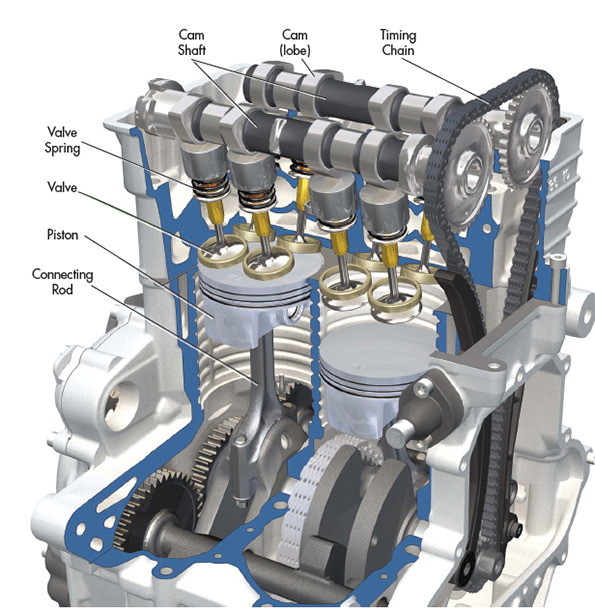
    • The texture surfaces were created on automotive internal combustion engine components, piston rings and cylinder liners using 100 fs pulse duration laser.
    • The micro dimples of 10-20 μm diameter and about 5-10 μm deep which have been created with laser beams had a regular pattern.

    Benefits of micro-texturing

    • The created textures were tested in an engine test rig under different speeds and temperatures of coolant and lubrication oil, and it was observed that there was a 16% reduction in the lube oil consumption with the use of texture on the piston rings.
    • The 10-hour lube oil consumption test shows that the blowby substantially reduced with textured rings.
    • Fabrication of a pattern of micro dimples or grooves on the surface of materials results in a change in surface topography which generates additional hydrodynamic pressure, thereby increasing the load-carrying capacity of the surfaces.
    • Hence these become useful for trapping wear debris when operating under dry sliding conditions and sometimes provide effects like enhancing oil supply (lubricant reservoir) which can lower friction coefficients and may enable reduced wear rate.
  • The race to find a cure for COVID-19

    Context

    The world is dealing with an unprecedented and unimaginably serious crisis. Therefore, the speed of vaccine development is crucial.

    Speeding up the vaccine development

    • Availability of rationale and information: The race for developing an anti-COVID-19 vaccine has begun. Reasonable scientific rationale and the information needed for vaccine development are available to all stakeholders in academia and industry.
    • Vaccine platforms: A large number of candidate vaccines based on different vaccine platforms, including delivering the virus genetic materials (RNA, DNA) or using synthetic biology to produce key viral proteins, have already been developed.
    • Phase-I safety trials of an experimental vaccine, jointly developed by scientists at the National Institute of Health and at Moderna, a biotechnology company, has already been administered to healthy volunteers for its safety and immunogenicity.
    • The speed with which the experimental vaccine has entered safety trials is unprecedented.
    • Another vaccine jointly developed by China’s Academy of Military Medical Sciences and CanSino Biologics has reportedly been cleared for early-stage clinical trials.
    • Development in India: The Serum Institute of India has also recently announced its readiness to start safety trials following animal experiments.
    • According to a World Health Organization (WHO) report, more than 20 vaccine candidates are in advanced stages of development and will be ready for Phase-I safety trials.
    • However, it is also clear that it will not be possible to roll-out any efficacious vaccine for at least another year.

    Questions that need to be answered

    • While these developments are encouraging, several questions will need to be answered for this vaccine development to move further.
    • Triggering immune response safely: Although it is quite evident that humans mount a strong immune response and clear the viral load, the nature of the immune response and how to trigger it safely through vaccination will be key questions to address.
    • Duration of the acquired immunity: How long the acquired immunity in humans will last is another important question to be asked before experimental vaccines move forward.
    • We will need to know this because if the immunity is transient, then humans will be susceptible to reinfections.
    • Ensuring no disease enhancement: Before moving to Phase-II trials in a large number of healthy volunteers, we also have to ensure that the immune response induced by vaccination does not lead to any disease enhancement.

    Repurposing the already available drugs

    • Therapeutic interventions, not only for curing severe cases of the disease but also for protecting all front-line healthcare workers, are urgently needed.
    • Using already approved drugs: Since developing new drugs is a complex and lengthy process, scientists and pharmaceutical companies have rushed to investigate and use drugs that have already been approved by regulatory authorities.
    • Using available molecular and structural biology information on the virus, a group of scientists have analysed all interactions of the viral proteins with human proteins that are crucial for the virus to enter human cells and use the host cell machinery to rapidly reproduce itself.
    • Of the nearly 70 short-listed molecules that may interrupt these key interactions, 24 happen to be already approved drugs which can now be tested in laboratory animal models as well as humans.
    • However, the re-purposing of several drugs, alone or in combinations to treat COVID-19 patients, have already been reported.
    • More confusion than hope: There are many success stories of curing patients of COVID-19 doing the rounds in different parts of the world, but these have managed to create more confusion than hope.
    • Without any appropriate controls, careful dosing and safety concerns, such small experiments can only do more harm than good.

    Controlled randomised trials

    • Given the urgency of finding a cure, it is absolutely necessary to find out unequivocally what works well and what does not. For that conducting carefully controlled randomised trials is the only way to go.
    • In a welcome move, the WHO has announced clinical trials called the ‘Solidarity Project’.
    • Under this project four drugs or drug, combinations will be tested in many countries around the world.
    • These candidates include the anti-Ebola drug, Remdesivir, Chloroquine, anti-HIV drugs, and the Ritonavir/Lopinavir combination, with or without Interferon-beta.
    • The European counterpart of the trial, Discovery, will conduct these trials in countries including France, Spain, Germany and the U.K.
    • The pharma company Roche has also decided to initiate large, randomised Phase-III trials of its arthritis drug Actemra for its safety and efficacy in adult patients with severe COVID-19 pneumonia.
    • It is complex and tedious to conduct randomised, large multi-centric trials.
    • Quickly getting all the stakeholders together is laudable and underscores the notion that everyone needs to fight the deadly virus together. Hopefully, these trials will lead to tangible drug therapies against COVID-19.

    Conclusion

    It is most heartening to see scientists in academia and industrial partners coming together to fight a monumental public health crisis. The battle between pathogens and humans will continue but let us hope that we win the present one sooner than later.

  • [pib] National Supercomputing Mission (NSM)

    The Union Ministry of Science & Technology has informed about the progress of the National Supercomputing Mission.

    National Supercomputing Mission (NSM)

    • NSM is a proposed plan by GoI to create a cluster of seventy supercomputers connecting various academic and research institutions across India.
    • In April 2015 the government approved the NSM with a total outlay of Rs.4500 crore for a period of 7 years.
    • The mission was set up to provide the country with supercomputing infrastructure to meet the increasing computational demands of academia, researchers, MSMEs, and startups by creating the capability design, manufacturing, of supercomputers indigenously in India.
    • Currently there are four supercomputers from India in Top 500 list of supercomputers in the world.

    Aims and objectives

    • The target of the mission was set to establish a network of supercomputers ranging from a few Tera Flops (TF) to Hundreds of Tera Flops (TF) and three systems with greater than or equal to 3 Peta Flops (PF) in academic and research institutions of National importance across the country by 2022.
    • This network of Supercomputers envisaging a total of 15-20 PF was approved in 2015 and was later revised to a total of 45 PF (45000 TFs), a jump of 6 times more compute power within the same cost and capable of solving large and complex computational problems.

    IWhat is a Supercomputer?

    • A supercomputer is a computer with a high level of performance as compared to a general-purpose computer.
    • The performance of a supercomputer is commonly measured in floating-point operations per second (FLOPS) instead of million instructions per second (MIPS).
    • Since 2017, there are supercomputers which can perform over a hundred quadrillion FLOPS (petaFLOPS).
    • Since November 2017, all of the world’s fastest 500 supercomputers run Linux-based operating systems.

    Why do we need supercomputers?

    • Developed and almost-developed countries have begun ensuring high investments in supercomputers to boost their economies and tackle new social problems.
    • These high-performance computers can simulate the real world, by processing massive amounts of data, making cars and planes safer, and more fuel-efficient and environment-friendly.
    • They also aid in the extraction of new sources of oil and gas, development of alternative energy sources, and advancement in medical sciences.
    • Supercomputers have also helped weather forecasters to accurately predict severe storms, enable better mitigation planning and warning systems.
    • They are also used by financial services, manufacturing and internet companies and infrastructure systems like water-supply networks, energy grids, and transportation.
    • Future applications of artificial intelligence (AI) also depend on supercomputing.
    • Due to the potential of this technology, countries like the US, China, France, Germany, Japan, and Russia have created national-level supercomputing strategies and are investing substantially in these programmes.

    When did India initiate its efforts to build supercomputers?

    • India’s supercomputer programme initiated in the late 1980s, when the United States ceased the export of a Cray Supercomputer due to technology embargos.
    • This resulted in India setting up C-DAC in 1988, which in 1991, unveiled the prototype of PARAM 800, benchmarked at 5 Gflops. This supercomputer was the second-fastest in the world at that time.
    • Since June 2018, the USA’s Summit is the fastest supercomputer in the world, taking away this position from China.
    • As of January 2018, Pratyush and Mihir are the fastest supercomputers in India with a maximum speed of Peta Flops.

    What are the phases of the National Supercomputing Mission?

    Phase I:

    • In the first phase of the NSM, parts of the supercomputers are imported and assembled in India.
    • A total of 6 supercomputers are to be installed in this phase.
    • The first supercomputer that was assembled indigenously is called Param Shivay. It was installed in IIT (BHU) located in Varanasi.
    • Similar systems, Param Shakti (IIT Kharagpur) and Param Brahma (IISER, Pune) were also later installed within the country.
    • The rest will be installed at IIT Kanpur, IIT Hyderabad and Jawaharlal Nehru Institute of Advanced Studies (JNIAS).

    Phase II:

    • The supercomputers that are installed so far are about 60% indigenous.
    • The 11 systems that are going to be installed in the next phase will have processors designed by the Centre for Development of Advanced Computing (C-DAC) and will have a cumulative capacity of 10 petaflops.
    • These new systems are to be constructed more cost-effectively than the previous ones.
    • One of the 11 proposed supercomputers will be installed
    • at C-DAC exclusively for small and medium enterprises so that they can train employees as well as work on supercomputers at a very low cost.

    Phase III:

    • The third phase aims to build fully indigenous supercomputers.
    • The government had also approved a project to develop a cryogenic cooling system that rapidly dispels the heat generated by a computing chip. This will be jointly built together by IIT-Bombay and C-DAC.

    What are the advantages of the National Supercomputing Mission?

    • The National Supercomputing Mission can ensure accessibility to supercomputers at an affordable rate to the scientific community and medium and small enterprises.
    • It can exponentially enhance the quality and quantity of R&D and higher education in the areas of science and technology.
    • It can solve the current and future challenges that are plaguing the country.
    • Currently, the world’s top supercomputers are mostly under the control of advanced nations like the US, Japan, China and the European Union. This Mission has the potential to bring India into this select league of such nations.
    • These supercomputers can be used in the areas of climate modelling, weather predictions, computational biology, atomic energy simulations, defence, disaster simulation, astrophysics etc.
    • These computers have played a crucial role in scientific and technological advancements in numerous fields.
    • Unlike other computers, these high-performance machines can crunch the most complex of data at a speed, which is millions of times faster than a desktop PC.
    • This mission, aiming to provide supercomputing facilities to about 60-70 institutions across the nation and thousands of active researchers, academicians, is moving fast towards creating a computer infrastructure within the country.
    • This mission can also enhance the country’s capacity to develop the next generation of supercomputer experts.

    How do other countries make use of supercomputers?

    China:

    • Jiangsu Province has a supercomputer called “Sunway TaihuLight”.
    • This supercomputer performs a wide range of tasks, including climate science, weather forecasting and earth-system modelling to help ships avoid rough seas, improve farmers’ yields and ensure the safety of offshore drilling.
    • TaihuLight has already led to an increase in profits and a reduction in expenses that justify its cost ($270 million).

    United States:

    • In the US, supercomputers are radically transforming the healthcare system.
    • The Centre for Disease Control (CDC) has used supercomputers to create a far more detailed model of the Hepatitis-C virus, a major cause of the liver disease that costs $9 billion in healthcare costs in the US alone.
    • Using supercomputers, the researchers have now developed a model that comprehensively simulates heart down to the cellular level and can lead to a substantial reduction in heart diseases.

    These are some of the very few cases of how supercomputers have enhanced breakthroughs in various fields.

    How do supercomputers help fight coronavirus?

    • Earlier, the US had established COVID-19 High-Performance Computing Consortium that will bring together industry, academic institutions, and federal laboratories to try to identify or create candidate compounds that might prevent or treat coronavirus infection.
    • One of the members of the consortium, the Oak Ridge National Laboratory, aimed to look into compounds that are already available in the market that might combat COVID-19.
    • For this purpose, the world’s fastest supercomputer “Summit” was used.
    • Like other viruses, the novel coronavirus uses a spike protein to inject cells.
    • Using Summit with an algorithm to investigate which drugs could bind to the protein and prevent the virus from doing its duty, the researchers have a list of 77 drugs that show promise.
    • Starting with 8,000 compounds, Summit has shortened the time of the experiment exponentially, ruling out the vast majority of possible medications before settling on 77 drugs, which are ranked based on how effective they are likely to be at halting the virus in the human body.

    Way forward

    • It is evident that supercomputers would become a vital part of our lives as it can provide solutions to the current and future problems and India, one of the most populous nations in the world, must ensure that it also has access to this technology for the welfare of its people.
    • Supercomputers, as they operate at such incredible speeds, will encounter numerous barriers like network and interconnectivity hardware that previous generations of designers did not have to deal with.
    • The cooling system is also one of the major design constraints.
    • Hence, India must give a high emphasis on innovation to tackle these challenges.
    • India must also give high emphasis to the application rather than the technology itself.
    • Supercomputing research also requires fundamental research of the next stages of computing like quantum computing that are still in the theoretical stage.
    • Bureaucratic red-tapism must be circumvented and scientists and researchers must be allowed to take bold and radical steps without fear of reprisal.
    • The government must also invest in necessary physical and digital infrastructure.
    • It must also address the challenges of:
    • Limited funding and delayed release of funds
    • The increasing need for imports for necessary hardware components to build supercomputers

    Conclusion:

    • Supercomputers are strategically important for India as it can help the country to become a knowledge-driven economy.
    • This technology also can support cutting edge research that can benefit the economy, society, businesses, environment, etc.
    • Thus, enhancing investments, improving flexibility for research and providing other necessary infrastructures must be ensured for it to grow.
    • Without this technology, India risks being surpassed on the global stage by other nations and will consequently miss the huge benefits that come from having this strategically important technology at the disposal of the country’s best and brightest minds



  • [pib] Indian Institutes of Information Technology (IIIT) Laws (Amendment) Bill, 2020

    Lok Sabha passed the IIIT Laws (Amendment) Bill, 2020.

    About IIIT Act

    • IIITs are envisaged to promote higher education and research in the field of Information Technology.
    • The IIT Act of 2014 and IIIT (Public-Private Partnership) Act, 2017 are the unique initiatives of the govt. to impart knowledge in the field of IT to provide solutions to the challenges faced by the country.
    • Every Institute shall be open to all persons irrespective of gender, caste, creed, disability, domicile, ethnicity and social or economic background.

    What are the proposed Amendments?

    • Introduction of the Amendment 2020 will amend the principal acts of 2014 and 2017.
    • It will grant statutory status to five IIIT in PPP mode in Gujarat (Surat), Madhya Pradesh (Bhopal), Bihar (Bhagalpur), Tripura (Agartala), and Karnataka (Raichur).
    • It would declare them as Institutions of National Importance along with already existing 15 IIIT under the 2017 Act.
  • [pib] How lipids play critical roles in infectious diseases

    A researcher from IIT Bombay is using biologically active lipid molecules as chemical biology tools to elucidate their biological disease-causing function.

    About the research

    • The research is focused to explore how lipids play critical roles in infectious diseases by intervening in cellular signaling, membrane trafficking, and protein function all of which are intimately involved in host-pathogen interplay.
    • The research works with lipids from Mycobacteria tuberculosis (Mtb), which synthesizes atypical lipids predisposed on its surface to interact with the human host membrane.
    • Using Mtb lipids as tools, the research elucidates a direct correlation between human host lipid membrane modification and modulation of associated signaling pathways by these exogenous Mtb lipids.

    What are Lipids?

    • A lipid is a biomolecule that is soluble in nonpolar solvents.
    • Non-polar solvents are typically hydrocarbons used to dissolve other naturally occurring hydrocarbon lipid molecules that do not (or do not easily) dissolve in water, including fatty acids, waxes, sterols, fat-soluble vitamins (such as vitamins A, D, E, and K), monoglycerides, diglycerides, triglycerides, and phospholipids.
    • The functions of lipids include storing energy, signaling, and acting as structural components of cell membranes.
    • Lipids have applications in the cosmetic and food industries as well as in nanotechnology.

    Role of Lipids

    • Lipids are important components of living cells and are responsible for maintaining the integrity of our cell membrane, which allows nutrients and drugs to pass through the cell.
    • These are commonly breached during infection and in diseases.
    • Lipids play a major role in altering cell membrane properties modulating lipid and protein diffusion and membrane organization.
    • Thus, changes in membrane properties control the proper functioning of cells and are harnessed by pathogens for their survival and infection.
    • Lipids critically dictate the molecular interactions of drugs with membranes influencing drug diffusion, partitioning, and accumulation, thereby underpinning lipid-composition specificity.
  • [pib] Friction-reducing Nanocomposite Coatings

    A group of scientists at the International Advanced Research Centre for Powder Metallurgy & New Materials (ARCI) have developed a process for size-selective deposition of nanocomposite coatings which can reduce friction of these dynamic systems.

    What are Nanocomposites?

    • Nanocomposite coatings are formed by mixing two or more dissimilar materials at nanoscale to improve the physical, chemical and physicochemical properties of the new materials.
    • The scientists have found that nickel tungsten-based coatings with infusion of particular sized Silicon Carbide (SiC) submicron particles using a pulsed electroplating can provide an excellent combination of wear and corrosion resistance.

    Applications

    • Many aerospace, defence, automobile, space devices need to reduce friction, wear, and tear to enhance the life of components.
    • Lubricating these dynamic systems add to the cost, complexity, and weight of these systems.
    • The coating could help in reducing the friction of such devices.
  • [pib] Potential Fishing Zone (PFZ) Advisories

    The Indian National Centre for Ocean Information Services (INCOIS), Hyderabad has reported that Oceansat Satellite data from ISRO are used to prepare the PFZ advisories on the potential rich fishing areas and provide to the sea faring fishermen in all states.

    Potential Fishing Zone (PFZ)

    • This is the first advisory service started by INCOIS. The backbone of this service is the real-time data for ocean color and SST provided by the OCEANSAT and NOAA respectively.
    • This service was started because there was a need to identify the potential fishing zones to help the fishermen to get better catch while they were at the sea.
    • This service was started by the Ministry of Earth Sciences with the help of the Department of Space and several institutions under the Ministry of Agriculture.

    How it works?

    • This service makes use of parameters such as sea surface temperature and chlorophyll content provided by NOAA-AVHRR and Oceancolor satellites.
    • Features such as oceanic fronts, Meandering Patterns, Eddies, Rings, Up Welling areas etc. are identified sites for fish accumulation.
    • These features can easily be identified from Sea Surface Temperature and Chlorophyll data.
    • The availability of Chlorophyll from OCEANSAT and MOdDIS has further enriched these advisories in the recent years.
    • Hence, PFZ advisories have helped the fishing community to locate the fishing zones with accuracy.

    Special advisories for fisherman

    • Another feature of PFZ service is the generation of species-specific advisory to enable the fishermen folk to distinguish between the exploited and under-exploited species in the potential fishing zones.
    • This enables them to have sustainable fishery management by targeting only the under-exploited species in the fishing zones.
    • This approach enables them to avoid fishing the over-exploited species over and over again.
  • Role of Glucose in Regulating Liver Functions

    A study by researchers from the Tata Institute of Fundamental Research, Mumbai (TIFR) has revealed that glucose in the body controls the function of SIRT1 enzymes directly.

    What is SIRT1?

    • SIRT1 is an enzyme that deacetylates (removal of acetyl) proteins which contribute to cellular regulation.
    • A shortage or absence of the control by glucose may lead to a diabetic-like state, while excess feeding and sustained low levels of SIRT1 can lead to obesity and enhanced ageing.
    • This information is expected to tackle lifestyle disorders and ageing-related diseases.

    How do they function?

    • In normal healthy individuals, SIRT1 protein levels are known to increase during fasting and decrease during the feed, which is essential to maintain a balance between glucose and fat metabolism.
    • The glucose controls the functions of a protein SIRT1 which in turn maintains everyday feed-fast cycles and is also associated with longevity.
    • The feed-fast cycle is a basic pattern and the metabolism-related to this is largely taken care of by the liver.
    • Thus, the study shows that both over-activation and under-activation of SIRT1 can lead to diseases.
    • Glucose puts a check on the activity of SIRT1 in the fed state. In the absence of this check, SIRT1 activity increases and results in hyperglycemia in a fasted state, mimicking diabetic state.
    • The constant feeding or high-calorie intake that leads to a sustained reduction in the levels of SIRT1 by glucose which is associated with ageing and obesity.