💥Mains Ready By December. Smash Mains & Smash PYQ Admissions Open

Subject: Basic Sciences

  • How plants dissipate excess sunlight as heat?

    Photosynthesis is a life-sustaining process by which plants store solar energy as sugar molecules. However if sunlight is in excess it can lead to leaves being dehydrated and damaged.

    What is Photosynthesis?

    • Photosynthesis is the process used by plants, algae and certain bacteria to harness energy from sunlight and turn it into chemical energy.
    • There are two types of photosynthetic processes: oxygenic photosynthesis and anoxygenic photosynthesis.
    • The general principles of anoxygenic and oxygenic photosynthesis are very similar, but oxygenic photosynthesis is the most common and is seen in plants, algae and cyanobacteria.
    • During oxygenic photosynthesis, light energy transfers electrons from water (H2O) to carbon dioxide (CO2), to produce carbohydrates.
    • Ultimately, oxygen is produced along with carbohydrates. Oxygenic photosynthesis is written as follows:

    6CO2 + 12H2O + Light Energy → C6H12O6 + 6O2 + 6H2O

    Here, six molecules of carbon dioxide (CO2) combine with 12 molecules of water (H2O) using light energy. The end result is the formation of a single carbohydrate molecule (C6H12O6, or glucose) along with six molecules each of breathable oxygen and water.

    How do plants dissipate heat?

    • To prevent such damage, plants dissipate extra light as heat.
    • While this was known there has been a debate over the past several decades over how plants actually do so.
    • Now for the first time researchers have directly observed one of the possible mechanisms through which plants dissipate extra sunlight.
    • The new research has been able to determine–by using a highly sensitive type of spectroscopy–that excess energy is transferred from the pigment chlorophyll, which gives leaves their green colour, to other pigments called carotenoids.
    • The carotenoids then release the energy as heat. After the carotenoids accept excess energy, most of it is released as heat, thus preventing damage to the cells.

    Why does plant dissipate light?

    • During photosynthesis, light-harvesting complexes play two seemingly contradictory roles.
    • They absorb energy to drive water-splitting and photosynthesis, but at the same time, when there’s too much energy, they have to also be able to get rid of it.
    • Plants quickly adapt to changes in sunlight intensity. Even in very sunny conditions, only 30 per cent available sunlight is converted into sugar, and the rest is released as heat.
    • The excess energy, if not released, leads to the creation of free radicals that can damage proteins and other important cellular molecules.

    Significance of the research

    • So far, it had been difficult to observe the heat dissipation phenomenon, given that it occurs on a very fast time scale, in femtoseconds or quadrillionths of a second.
    • Using the new technique, researchers could observe that chlorophylls absorb red light and carotenoids absorb blue and green light, thus being able to monitor energy transfer.
  • [pib] Quantum coin or ‘qubit’ and Entanglement Theory

    Researchers from Raman Research Institute (RRI), an autonomous institution under the Dept. of Science & Technology, have devised a new test for fairness of quantum coin or ‘qubit’ using entanglement theory. The Qubit is the basic unit of information in a quantum computer.

    Entanglement Theory

    • It is a special type of correlation that exists in the quantum world with no classical counterpart.
    • The researchers from RRI made use of this quantum resource to arrive at a test for fairness of a quantum coin (a qubit).
    • Their strategy, which makes use of entanglement, enables better discrimination between quantum states. Such advantage is valuable in quantum sensors.
    • This work is a significant contribution to the domain of quantum state discrimination, which is an essential aspect of quantum information science.
    • It brings out the crucial role of entanglement in improving our ability to discriminate quantum states.
    • In this work the researchers concretely implemented the theoretical idea on the simulation facility of the IBM quantum computer.

    Quantum coins

    • By repeated trials, one can determine the fairness of a classical coin with a confidence which grows with the number of trials.
    • A quantum coin can be in a superposition of heads and tails.
    • Given a string of qubits representing a series of trials, one can measure them individually and determine the state with a certain confidence.
    • The team has shown that there is an improved strategy which measures the qubits after entangling them, which leads to a greater confidence.

    Significance

    • This is a significant contribution to quantum state discrimination, an essential aspect of quantum information science which is expected to influence quantum sensing.
    • The domain of Quantum Information and Quantum Computing Technology is a growing area of research which is expected to influence Data Processing, which in turn, plays a central role in our lives in this Information Age.
    • For instance, bank transactions, online shopping and so on crucially depend on the efficiency of information transfer.
    • Thus the recent work on quantum state discrimination is expected to be valuable in people’s lives in the current era.
  • [pib] Polymer Electrolyte Membrane Fuel Cells (PEMFC)

    Scientists at International Advanced Research for Powder Metallurgy & New Materials (ARCI), Hyderabad have developed Polymer Electrolyte Membrane fuel cells (PEMFC).

    Polymer Electrolyte Membrane Fuel Cells

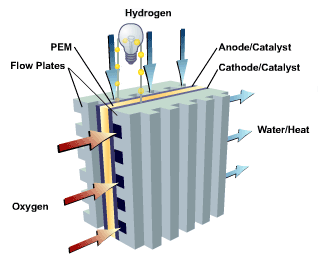
    • Proton-exchange membrane fuel cells, also known as polymer electrolyte membrane (PEM) fuel cells (PEMFC) are a type of fuel cell being developed mainly for transport applications, as well as for stationary fuel-cell applications and portable fuel-cell applications.
    • Their distinguishing features include lower temperature/pressure ranges (50 to 100 °C) and a special proton-conducting polymer electrolyte membrane.
    • PEMFCs generate electricity and operate on the opposite principle to PEM electrolysis, which consumes electricity.
    • They are a leading candidate to replace the aging alkaline fuel-cell technology, which was used in the Space Shuttle.

    Working


    • The PEMFC uses a water-based, acidic polymer membrane as its electrolyte, with platinum-based electrodes.
    • The protons pass through the membrane to the cathode side of the cell while the electrons travel in an external circuit, generating the electrical output of the cell.

    Applications in disaster management

    • Emergency Operation Centres (EOC) backed with 10 kW systems is being planned as a natural disaster management measure.
    • Tamil Nadu is generally affected by five to six cyclones every year, of which two to three are severe and is followed by frequent power cuts.
    • ARCI is now planning to set up a PEMFC system for Tamil Nadu to operate the systems like early warning systems, VHF set, IP phone, BSNL Ethernet and office equipment like scanner, computers, printers, phone, FAX and normal requirements like lighting and fan.
  • Media Access Control (MAC) Binding

    After seven months, the use of social media was allowed in Jammu and Kashmir with an order laying down the latest rules for the use of the Internet in the UT.  Among various conditions, the order says Internet connectivity will be made available “with mac-binding”.

    What is Mac-binding?

    • Every device has a Media Access Control (MAC) address, a hardware identification number that is unique to it. While accessing the Internet, every device is assigned an IP address.
    • Mac-binding essentially means binding together the MAC and IP addresses, so that all requests from that IP address are served only by the computer having that particular MAC address.
    • In effect, it means that if the IP address or the MAC address changes, the device can no longer access the Internet.
    • Also, monitoring authorities can trace the specific system from which a particular online activity was carried out.

    Permitted connections

    • The Internet can be accessed on all postpaid devices, and those using Local Area Networks (LAN).
    • While the postpaid SIM card holders shall continue to be provided access to the Internet, these services shall not be made available on prepaid SIM cards unless verified as per the norms applicable for postpaid connections.
    • Apart from this, special access terminals provided by the government will continue to run.
    • It is further directed that the access/communication facilities provided by the government, viz. e-terminals/Internet kiosks apart from special arrangements for tourists, students, traders etc shall continue.

    Only 2G permitted

    • Internet speed in J&K is still restricted to 2G.
    • This means very slow services — pictures will take a long time to be sent or downloaded, videos will be nearly impossible to share, and there will be a long loading time for most websites.
    • It also means that although in theory, the “whitelist system” — where people could only access some websites pre-approved by the government — has been removed, some sites designed for a 4G Internet experience will hardly work.

    Have curbs been lifted?

    • Not exactly. The latest order is to remain in force till March 17 unless modified earlier.
    • The government has been relaxing Internet and phone usage in the UTs in phases.
  • Unguarded X hypothesis

    Men outnumbered women by 37 million in the 2011 Census of India, but among those over the age of 60, there were more than 1 million more women than men. In general, men live shorter lives than women worldwide. This is due to the chromosomal differences between the two, points’ new study.

    What are Chromosomes?

    • The human body is made up of cells, and in the centre of each cell is the nucleus. Chromosomes, which are located inside the nucleus, are structures that hold the genes.
    • It is the genes that determine the various traits of an individual including eye colour, blood type — and sex.
    • The human cell has 23 pairs of chromosomes. One pair is of the sex chromosomes, named X and Y, which determine whether an individual is male or female.
    • A female has two X chromosomes (XX) while a male has one X and one Y (XY).

    Unguarded X hypothesis

    • This hypothesis suggests that the Y chromosome in XY is less able to to protect an individual from harmful genes expressed on the X chromosome.
    • In a male, as the Y chromosome is smaller than the X chromosome, it is unable to “hide” an X chromosome that carries harmful mutations, which may later expose the individual to health threats.
    • On the other hand, the hypothesis goes, there is no such problem in a pair of X chromosomes (XX) in a female.
    • If one of the X chromosomes has genes that have suffered mutations, then the other X chromosome, which is healthy, can stand in for the first, so that the harmful genes are not expressed.
    • This maximizes the length of life, according to the hypothesis. And this is what the UNSW researchers set out to examine.

    Testing the hypothesis

    • In a statement issued by UNSW, PhD student and study first author Zoe Xirocostas said the
    • Unguarded X hypothesis appears to stack up, after examining the lifespan data available on a wide range of animal species.
    • Researchers studied lifespan data in not just primates but mammals and birds, but also reptiles, fish, amphibians, arachnids, cockroaches, grasshoppers, beetles, butterflies and moths among others.
    • It was found that across that broad range of species, the heterogametic sex (XY in humans) does tend to die earlier than the homogametic sex (XX in humans).
  • [pib] CHITRA Flow Diverter Stents

    The Sree Chitra Thirunal Institute of Medical Science and Tech. Thiruvanthapuram an Institute of National Importance under the Department of Science and Technology has developed an innovative intracranial flow diverter stent for the treatment of aneurysms of the blood  vessels of the brain.

    What is Aneurysms?

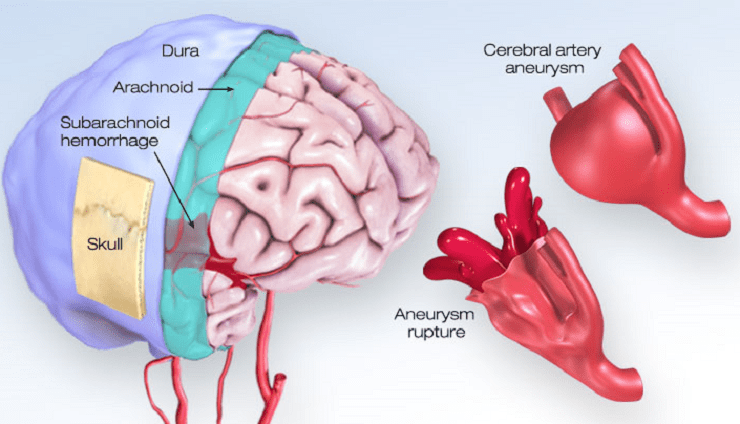
    • Intracranial aneurysm is a localized ballooning, bulging or dilation of arteries in the brain caused by progressive weakening of the inner muscles of the wall of the blood vessels.
    • Spontaneous rupture of the aneurysm can result in bleeding into the space around the brain resulting condition called a subarachnoid hemorrhage (SAH) which can lead to paralysis, coma or death.
    • Most often a ruptured brain aneurysm occurs in the space between the brain and the thin tissues covering the brain.

    How to avert risks of Brain Aneurysms?

    • Flow diverters stents when deployed in the artery in the brain bearing the aneurysms, diverts blood flow away from the aneurysm.
    • This reduces the chances of its rupture from the pressure of blood flow.
    • The Surgical treatment of an aneurysm involves opening the skull and a clip on the neck of aneurysm, so that it is cut off from the path of blood flow.
    • There are three non surgical, minimally invasive endovascular treatments of aneurysms of the brain.
    • In two of these procedures, the aneurismal sacis filled with platinum coils or occluded using high viscosity liquid polymer which solidifies when released into the sac thus sealing the sac.
    • All these techniques have some limitation or the other.

    Why are flow diverter stent preferable?

    • A more attractive third minimally invasive option is deploying a flow diverter stent to bypass the segment of the blood vessel which has the aneurysm.
    • Flow diverters have the advantages of being flexible and adaptable to the shape and course of the vessel.
    • Also flow diverters promote healing of the vessel wall by removing the constant stress of blood flow on it.

    What is CHITRA flow diverter?

    • The Chitra flow diverter is designed to have better grip on the walls of arteries of complex shapes in order to reduce the risk of migration of the device.
    • The unique design is in its weave also makes this stent resistant to kinking or twisting, when it is placed in tortuous arteries and those with complex shapes. Even a 180 degrees bend does not occlude the lumen of the stent.
    • Portion of the wires is made radio opaque for better visibility in X –Rays and fluoroscopy thus aiding accurate delivery of the diverter in the blood vessel.
    • Nitinol, a super elastic alloy with shape memory was acquired from National Aero Space Laboratories, Bengaluru (CSIR-NAL).
    • When the device is deployed at the site, it is released from its crimped locked position and assumes the desired and originally designed shape because of the shape memory property of Nitinol.

    Benefits of CHITRA

    • The imported Flow diverter stents costs Rs 7-8 lakhs and is not manufactured in India.
    • With the availability of the indigenous CHITRA, a well established industry would be able to manufacture and sell at a much lower price.
  • What is the ‘Raman effect’?


    Yesterday, February 28th was celebrated as National Science Day. In 1986, the Govt. of India designated this Day, to commemorate the announcement of the discovery of the “Raman effect”.

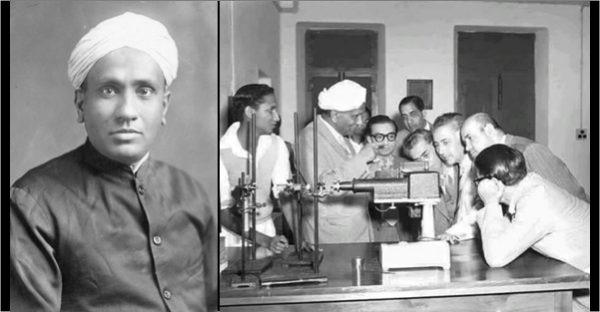
    CV Raman

    • Raman conducted his Nobel-prize winning research at IACS, Calcutta.
    • While he was educated entirely in India, Raman travelled to London for the first time in 1921, where his reputation in the study of optics and acoustics was known to physicists such as JJ Thomson and Lord Rutherford.
    • The Raman Effect won scientist Sir CV Raman the Nobel Prize for physics in 1930.
    • It was also designated as an International Historic Chemical Landmark jointly by the American Chemical Society (ACS) and the Indian Association for the Cultivation of Science (IACS).
    • His speciality was the study of vibrations and sounds of stringed instruments such as the Indian veena and tambura, and Indian percussion instruments such as the tabla and mridangam.

    The Raman Effect

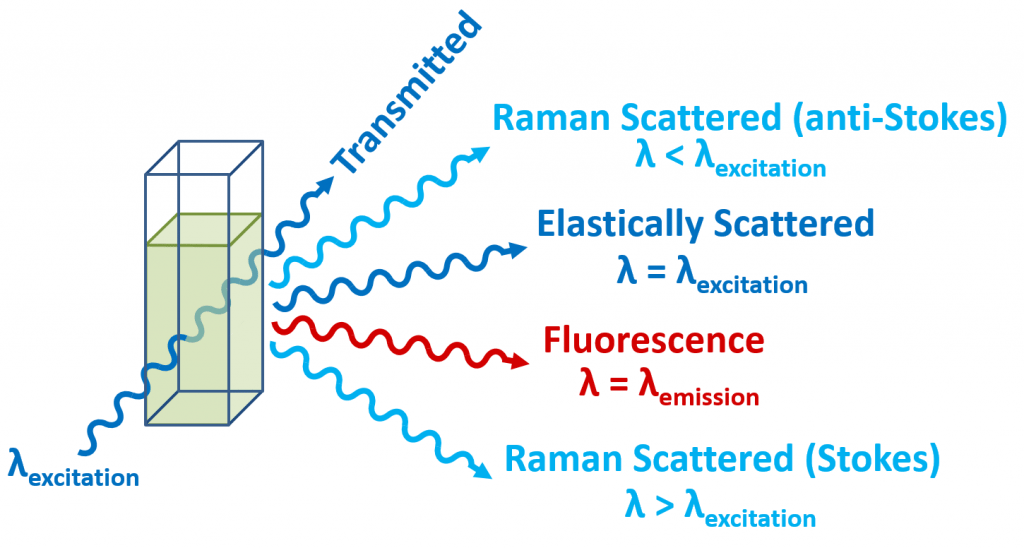
    • In 1928, Raman discovered that when a stream of light passes through a liquid, a fraction of the light scattered by the liquid is of a different colour.
    • While Raman was returning from London in a 15-day voyage, he started thinking about the colour of the deep blue Mediterranean.
    • He wasn’t convinced by the explanation that the colour of the sea was blue due to the reflection of the sky.
    • As the ship docked in Bombay, he sent a letter to the editor of the journal Nature, in which he penned down his thoughts on this.
    • Subsequently, Raman was able to show that the blue colour of the water was due to the scattering of the sunlight by water molecules.
    • By this time he was obsessed with the phenomenon of light scattering.

    Observing the effect

    • The Raman Effect is when the change in the energy of the light is affected by the vibrations of the molecule or material under observation, leading to a change in its wavelength.
    • Significantly, it notes that the Raman effect is “very weak” — this is because when the object in question is small (smaller than a few nanometres), the light will pass through it undisturbed.
    • But a few times in a billion, light waves may interact with the particle. This could also explain why it was not discovered before.
    • In general, when light interacts with an object, it can either be reflected, refracted or transmitted.
    • One of the things that scientists look at when light is scattered is if the particle it interacts with is able to change its energy.

    Applications

    • Raman spectroscopy is used in many varied fields – in fact, any application where non-destructive, microscopic, chemical analysis and imaging is required.
    • Whether the goal is qualitative or quantitative data, Raman analysis can provide key information easily and quickly.
    • It can be used to rapidly characterize the chemical composition and structure of a sample, whether solid, liquid, gas, gel, slurry or powder.
  • [pib] Responsible AI for Social Empowerment (RAISE) 2020


    The Govt. has announced the mega event, RAISE 2020- ‘Responsible AI for Social Empowerment 2020,’ to be held in April in New Delhi.

    RAISE 2020

    • RAISE 2020 is a first of its kind, a global meeting of minds on Artificial Intelligence to drive India’s vision and roadmap for social empowerment, inclusion and transformation through responsible AI.
    • It is India’s first Artificial Intelligence summit to be organized by the Government in partnership with Industry & Academia.
    • The summit will be a global meeting of minds to exchange ideas and charter a course to use AI for social empowerment, inclusion and transformation in key areas like Healthcare, Agriculture, Education and Smart Mobility amongst other sectors.
    • It will facilitate an exchange of ideas to further create a mass awareness about the need to ethically develop and practice AI in the digital era.
  • Species in news: Henneguya Salminicola


    Researchers at Tel Aviv University have discovered a non-oxygen breathing animal, which significantly changes one of science’s assumptions about the animal world — that all animals use aerobic respiration and therefore, oxygen.

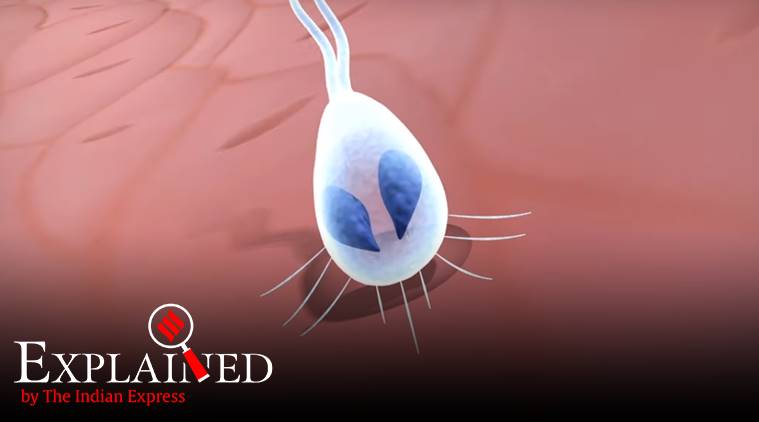
    Henneguya Salminicola

    • The organism is Henneguya salminicola, a fewer-than-10-celled microscopic parasite that lives in salmon muscle.
    • It relies on anaerobic respiration (through which cells extract energy without using oxygen).
    • In the case of this non-oxygen breathing organism, evolution turned it into a simpler organism that shed “unnecessary genes” responsible for aerobic respiration.
    • Other organisms such as fungi and amoebas that are found in anaerobic environments lost the ability to breathe over time.
    • The new study shows that the same can happen in the case of animals, too.

    What is Aerobic respiration?

    • Animals, including humans, need energy to perform the various tasks that are essential for survival.
    • Aerobic respiration is one such chemical reaction through which organisms take in oxygen and release carbon dioxide into the atmosphere.
    • Through this mechanism, energy is transferred to cells, which can use it for multiple purposes — for instance, to burn food.
    • Mitochondria is the “powerhouse” of the cell, which captures oxygen to make energy — its absence in the H. salminicola genome indicates that the parasite does not breathe oxygen.
  • Spontaneous Regression

    Patients sometimes make ‘miraculous’ recoveries from severe ailments. This is called spontaneous healing or spontaneous regression.

    Spontaneous healing/regression

    • A patient improves unexpectedly from a disease that usually progresses, such as cancer, and at times is even cured.
    • Such cases notwithstanding, the medical fraternity is often sceptical and takes “miraculous” recoveries as flukes.
    • A research explores patterns behind healing illnesses such as the deadliest kinds of cancers, and lays out physical and mental principles associated with recovery.
    • These include physically healing diets and immune systems, and mentally healing stress responses and identities.

    How does it occur?

    • The research states that much of our physical reality is created in our minds and perception changes our experiences, sometimes to the point of changing our bodies.
    • Therefore it argues that healing our identities may be a key tool to recovery.