💥Mains Ready By December. Smash Mains & Smash PYQ Admissions Open

Subject: Basic Sciences

  • [pib] National Mission on Quantum Technologies & Applications

    The Finance Minister in budget 2020 has announced a National Mission on Quantum Technologies & Applications (NM-QTA).

    What is Quantum Technology?

    • Quantum Technology is based on the principles of quantum theory, which explains the nature of energy and matter on the atomic and subatomic level.
    • It concerns the control and manipulation of quantum systems, with the goal of achieving information processing beyond the limits of the classical world.
    • Its principles will be used for engineering solutions to extremely complex problems in computing, communications, sensing, chemistry, cryptography, imaging and mechanics.
    • This key ability makes quantum computers extremely powerful compared to conventional computers when solving certain kinds of problems like finding prime factors of large numbers and searching large databases.

    What is Quantum Mechanics?

    • It is a fundamental theory in physics which describes nature at the smallest – including atomic and subatomic – scales.
    • At the scale of atoms and electrons, many of the equations of classical mechanics, which describe how things move at everyday sizes and speeds, cease to be useful.
    • In classical mechanics, objects exist in a specific place at a specific time.
    • However, in quantum mechanics, objects instead exist in a haze of probability; they have a certain chance of being at point A, another chance of being at point B and so on.

    About NM-QTA

    • The mission will function under the Department of Science & Technology (DST).
    • It will be able address the ever increasing technological requirements of the society, and take into account the international technology trends.
    • The mission will help prepare next generation skilled manpower, boost translational research and also encourage entrepreneurship and start-up ecosystem development.

    Why such mission?

    • Quantum technologies are rapidly developing globally with a huge disruptive potential.
    • The range of quantum technologies is expected to be one of the major technology disruptions that will change entire paradigm of computation, communication and encryption.
    • It is perceived that the countries who achieve an edge in this emerging field will have a greater advantage in garnering multifold economic growth and dominant leadership role.
    • It has become imperative both for government and industries to be prepared to develop these emerging and disruptive changes.
    • It will establish standards to be applied to all research and help stimulate a pipeline to support research and applications well into the future.

    Also read: https://www.civilsdaily.com/news/quantum-supremacy/

  • Archimedes Principle

    Recently, Archimedes Principle was used in Jharkhand to rescue baby elephant stuck in a well. The rescue team filled the well with water using motorized pipes, after which the struggling elephant floated to the top and was able to climb out through a ramp placed for it.

    What is the ‘Archimedes Principle’?

    • In physics, the Archimedes Principle refers to the law of buoyancy (the ability or tendency of something to float in water or other fluids).
    • According to the principle, when an object is completely or partially submerged in a fluid, whether gas or liquid, it is acted upon by an upward force (buoyancy) equal to the weight of the fluid it has displaced.
    • The force acting downward on the object is the weight of the object. The upward force is the one given by the Archimedes Principle.
    • The difference between the two forces is the net force acting on the object.
    • If the buoyant force is more than the weight, the object rises; if it is less, the object sinks.
    • If the net force is zero, the object remains in place, and neither rises nor sinks.
  • Polycrack Technology


    Indian Railways has put in place the country’s first Waste to Energy plant in Mancheswar Carriage Repair Workshop which falls under East Coast Railway. It uses a patented technology called POLYCRACK, is first-of-its-kind in Indian Railways and fourth in India.

    Polycrack Technology

    • It is world’s first patented heterogeneous catalytic process which converts multiple feed stocks into hydrocarbon liquid fuels, gas, carbon and water.
    • The process is a closed-loop system and does not emit any hazardous pollutants into the atmosphere.

    Feeders

    • Polycrack Plant can be fed with all types of plastic, petroleum sludge, un-segregated MSW (Municipal Solid Waste) with moisture up to 50%, e–waste, automobile fluff, organic waste including bamboo, garden waste etc., and Jatropha fruit and palm bunch.

    How it works?

    • The process is a closed-loop system and does not emit any hazardous pollutants into the atmosphere.
    • The combustible, non-condensed gases are re-used for providing energy to the entire system and thus, the only emission comes from the combustion of gaseous fuels.
    • The emissions from the combustion are found to be much less than prescribed environmental norms.
    • This process will produce energy in the form of Light Diesel Oil which is used to light furnaces.

    Advantages of Polycrack

    Polycrack has the following advantages over the conventional approach of treating solid waste:

    • Pre-segregation of waste is not required to reform the waste. Waste as collected can be directly fed into Polycrack.
    • It has high tolerance to moisture hence drying of waste is not required.
    • Waste is processed and reformed within 24 hours.
    • It is an enclosed unit hence the working environment is dust free.
    • Excellent air quality surrounding the plant.
    • Biological decomposition is not allowed as the Waste is treated as it is received.
    • The foot print of the plant is small hence the area required for installing the plant is less when compared with conventional method of processing.
    • All constituents are converted into valuable energy thereby making it Zero Discharge Process.
    • Gas generated in the process is re-used to provide energy to the system thereby making it self-reliant and also bring down the operating cost.
    • There is no atmospheric emission during the process unlike other conventional methods except for combustion gases which have pollutants less than the prescribed norms the world over.
    • Operates around 450 degrees, making it a low temperature process when compared with other options.
    • Safe and efficient system with built-in safety features enables even an unskilled user to operate the machine with ease.
    • Low capital cost and low operating cost.
    • Fully automated system requires minimum man power.
  • Species in news: Natrialba Swarupiae

    • Scientists at the National Centre for Microbial Resource — National Centre for Cell Science (NCMR-NCCS) in Pune have reported a new archaeon (a kind of microorganism), which they discovered in Sambhar Salt Lake in Rajasthan.
    • The new archaeon has been named Natrialba swarupiae, after Dr Renu Swarup, secretary, Department of Biotechnology, for her initiative in supporting microbial diversity studies in the country.

    Archaea

    • Archaea (singular archaeon) are a primitive group of microorganisms that thrive in extreme habitats such as hot springs, cold deserts and hypersaline lakes.
    • These slow-growing organisms are also present in the human gut, and have a potential relationship with human health.
    • They are known for producing antimicrobial molecules, and for anti-oxidant activity with applications in eco-friendly waste-water treatment.
    • Archaea are extremely difficult to culture due to challenges in providing natural conditions in a laboratory setting.
    • As archaea are relatively poorly studied, very little is known about how archaea behave in the human body.
    • The organism has potential gene clusters that helps maintain the metabolism of the archaea to survive in extreme harsh conditions.

    Search and discovery

    • Sambhar Lake has been poorly studied for microbial ecology studies.
    • With a salt production of 0.2 million tonnes per annum, it is also a hypersaline ecosystem which provides an opportunity for microbial ecologists to understand organisms that thrive in such concentrations.
  • Vyom Mitra: ISRO’s half-humanoid


    ISRO unveiled its first ‘woman’ astronaut during the event ‘Human Spaceflight and Exploration’.

    Vyom Mitra

    • The AI-based robotic system is being developed at a robotics lab at the VSSC in Thiruvananthapuram.
    • Vyom Mitra will be used for an unmanned flight of ISRO’s GSLV III rocket in December 2020, which, along with a second unmanned flight in July 2021.
    • This will serve as the test of ISRO’s preparedness for its maiden manned space mission, Gaganyaan, being targeted for 2022 to mark 75 years of India’s independence.

    Functions of the humanoid

    • Vyommitra, equipped with a head, two arms and a torso, is built to mimic crew activity inside the crew module of Gaganyaan.
    • Attaining launch and orbital postures, responding to the environment, generating warnings, replacing carbon dioxide canisters, operating switches, monitoring of the crew module, receiving voice commands, responding via speech (bilingual) are among its functions listed.
    • It will have a human-like face, with lips synchronised for movement to mimic speech.
    • Once it is fully developed, Vyommitra will be able to use equipment on board the spacecraft’s crew module, like safety mechanisms and switches, as well as receive and act on commands sent from ground stations.
  • Xenobot

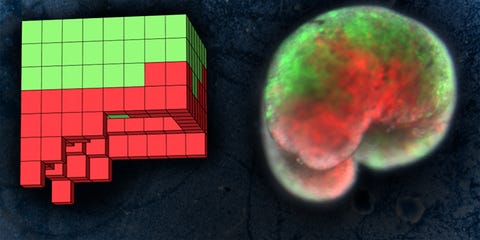
    Scientists in the US have created the world’s first “living machines” — tiny robots built from the cells of the African clawed frog that can move around on their own.

    Xenobot

    • Scientists have developed living robots from frogs stem cells.
    • They have named this millimetre-wide robots “xenobots” — after the species of aquatic frog found across sub-Saharan Africa from Nigeria and Sudan to South Africa, Xenopus laevis.
    • Scientists have repurposed living cells scraped from frog embryos and assembled them into entirely new life-forms.
    • The xenobots can move toward a target, perhaps pick up a payload (like a medicine that needs to be carried to a specific place inside a patient) — and heal themselves after being cut.
  • IVF of White Rhinos

    Researchers had created another embryo — the third — of the nearly extinct northern white rhino. This is seen as a remarkable success in an ongoing global mission to keep the species from going extinct.

    What is IVF?

    • IVF is a type of assisted reproductive technology used for infertility treatment and gestational surrogacy.
    • A fertilised egg may be implanted into a surrogate’s uterus, and the resulting child is genetically unrelated to the surrogate.
    • Some countries have banned or otherwise regulate the availability of IVF treatment, giving rise to fertility tourism.
    • Restrictions on the availability of IVF include costs and age, in order for a woman to carry a healthy pregnancy to term.
    • IVF is generally not used until less invasive or expensive options have failed or been determined unlikely to work.

    IVF process

    • In vitro fertilisation (IVF) is a process of fertilization where an egg is combined with sperm outside the body, in vitro (“in glass”).
    • The process involves monitoring and stimulating a female ovulatory process, removing an ovum or ova (egg or eggs) from the female ovaries and letting sperm fertilise them in a liquid in a laboratory.
    • After the fertilised egg (zygote) undergoes embryo culture for 2–6 days, it is implanted in the same or another female uterus, with the intention of establishing a successful pregnancy.

    Types of Rhinos

    • The northern white is one of the two subspecies of the white (or square-lipped) rhinoceros, which once roamed several African countries south of the Sahara.
    • The other subspecies, the southern white is, by contrast, the most numerous subspecies of rhino, and is found primarily in South Africa.
    • There is also the black (or hook-lipped) rhinoceros in Africa, which too, is fighting for survival, and at least three of whose subspecies are already extinct.
    • The Indian rhinoceros is different from its African cousins, most prominently in that it has only one horn.
    • There is also a Javan rhino, which too, has one horn, and a Sumatran rhino which, like the African rhinos, has two horns.
  • TrueNat

    The WHO has endorsed TrueNat, an Indian indigenous molecular diagnostic tool for tuberculosis (TB) diagnosis.

    TrueNat

    • The TrueNat TB test is a new molecular test that can diagnosis TB in one hour as well as testing for resistance to the drug rifampicin.
    • The TrueNat MTB and MTB Plus assays also show comparable accuracy to the TB-LAMP assay as replacement tests for sputum smear microscopy.
    • The data for TrueNat MTB-Rif shows similar accuracy to WHO-approved commercial line probe assays.
    • It is developed by the Goa-based Molbio Diagnostics.
    • The company was provided with technical assistance and resources by the Foundation for Innovative New Diagnostics (FIND) to help commercialise Truenat.
    • ICMR had assessed and validated the diagnostic tool. It has high diagnostic accuracy as initial test to diagnose TB.
    • It will be used as an initial test thus replacing sputum smear microscopy.
  • Lithium-Sulfur Battery

    Researchers from Australia have claimed that they have developed the world’s most efficient lithium-sulfur (Li-S) battery, capable of powering a smartphone for five continuous days. With this equivalence, an electric car would be able to drive a distance of over 1,000 km in one charge.

    What are Lithium-Sulfur Batteries?

    • Researchers who have developed this new Li-S battery claim it has an “ultra-high capacity” and has better performance and less environmental impact.
    • This means that they may be able to outperform the Li-ion batteries by more than four times.
    • With Li-ion batteries, some disadvantages include their susceptibility to overheating and their being prone to damage at high voltages.
    • Such batteries also start losing their capacity over time — for instance, a laptop battery in use for a few years does not function as well as a new one.

    Construction

    While the materials used in the Li-S batteries are not different from those in Li-ion batteries, the researchers have reconfigured the design of the sulfur cathodes (a type of electrical conductor through which electrons move) to accommodate higher stress without a drop in overall capacity.

    Advantages of the Li-S batteries

    • Li-S batteries are generally considered to be the successors of the Lithium-ion (Li-ion) batteries because of their lower cost of production, energy efficiency and improved safety.
    • Their cost of production is lower because sulfur is abundantly available.
    • Even so, there have been some difficulties when it comes to commercialising these batteries, mainly due to their short life cycle and poor instantaneous power capabilities.

    Why is this development important?

    • As the market share of electric vehicles (EV) is increasing and people are becoming more aware and conscious of global warming and climate change.
    • There is a need for development in terms of the kind of batteries used in these vehicles.
    • The growth of the EV market is linked to the development of batteries that are cost-effective, more efficient and leave a smaller environmental burden.
    • Today, most EV use Li-ion batteries, but are slowly reaching their theoretical limits of being able to provide roughly up to 300-watt hour per kilogram of energy.
    • Thus arises the need for batteries that can store more energy to run these cars, and Li-S batteries are considered to be a good alternative.
  • Drosophila

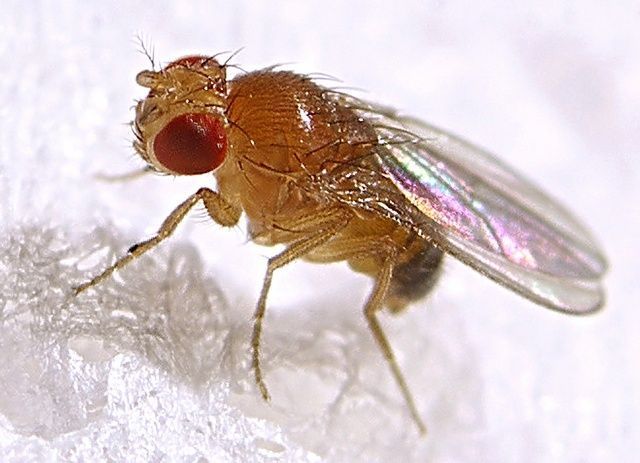
    Pune is set to host the fifth edition of the Asia Pacific Drosophila Research Conference (APDRC5) is being organised in the country for the first time by the Indian Institute of Science Education and Research (IISER).

    Drosophila

    • Drosophila is a genus of two-winged flies commonly known as fruit flies that are used in evolutionary and developmental studies.
    • It is a genus of flies, belonging to the family Drosophilidae, whose members are often called “small fruit flies” or pomace flies, vinegar flies, or wine flies, a reference to the characteristic of many species to linger around overripe or rotting fruit.
    • It is one of the most widely-used and preferred model organisms in biological research across the world for the last 100 years.
    • Several discoveries in biology have been made using this. Its genome is entirely sequenced and there is enormous information available about its biochemistry, physiology and behaviour.