💥Mains Ready By December. Smash Mains & Smash PYQ Admissions Open

Subject: Basic Sciences

  • India’s Scientific Expedition to the Southern Ocean


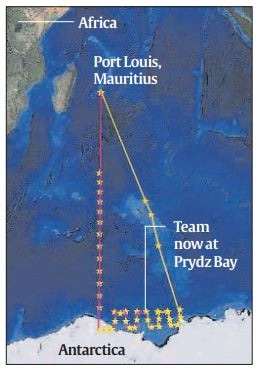
    A South African oceanographic research vessel SA Agulhas set off from Port Louise in Mauritius, on a two-month Indian Scientific Expedition to the Southern Ocean 2020. Recently the vessel was at Prydz Bay, in the coastal waters of “Bharati”, India’s third station in Antarctica.

    India’s polar mission

    • This is the 11th expedition of an Indian mission to the Southern Ocean, or Antarctic Ocean.
    • The first mission took place between January and March 2004.

    About the Southern Ocean expedition

    • The researchers from IITM Pune are collecting air and water samples from around 60 stations along the cruise track.
    • These will give valuable information on the state of the ocean and atmosphere in this remote environment and will help to understand its impacts on the climate.
    • A key objective of the mission is to quantify changes that are occurring and the impact of these changes on large-scale weather phenomenon, like the Indian monsoon, through tele-connection.

    Why study Southern Ocean?

    • We know that carbon dioxide is getting emitted into the atmosphere, and through atmospheric circulation goes to the Antarctic and Polar Regions.
    • Since the temperature is very low there, these gases are getting absorbed and converted into dissolved inorganic carbon or organic carbon, and through water masses and circulation it is coming back to tropical regions.
    • All oceans around the world are connected through the Southern Ocean, which acts as a transport agent for things like heat across all these oceans.
    • The conveyor belt that circulates heat around the world is connected through the Southern Ocean and can have a large impact on how climate is going to change due to anthropogenic forces.

    Core projects of the expedition

    • Study hydrodynamics and biogeochemistry of the Indian Ocean sector of the Southern Ocean; involves sampling seawater at different depths. This will help understand the formation of Antarctic bottom water.
    • Observations of trace gases in the atmosphere, such as halogens and dimethyl sulphur from the ocean to the atmosphere. This will help improve parameterizations that are used in global models.
    • Study of organisms called coccolithophores that have existed in the oceans for several million years; their concentrations in sediments will create a picture of past climate
    • Investigate atmospheric aerosols and their optical and radiative properties. Continuous measurements will quantify the impact on Earth’s climate.
    • Study the Southern Ocean’s impact on Indian monsoons. Look for signs in a sediment core taken from the bottom of the ocean
    • Dynamics of the food web in the Southern Ocean; important for safeguarding catch and planning sustainable fishing
  • In news: Yaravirus

    In a lake in Brazil, researchers have discovered a virus that they find unusual and intriguing.

    Yaravirus

    • The Yaravirus infects amoeba and has genes that have not been described before, something that could challenge how DNA viruses are classified.
    • It has a puzzling origin and phylogeny (evolutionary relationship).
    • Because of the Yaravirus’s small size, it was unlike other viruses that infect amoeba and they named it as a tribute to Yara, the “mother of waters” in the mythological stories of the Tupi-Guarani indigenous tribes.
    • The virus does not infect human cells, according to the researchers.
  • [pib] National List of Intangible Cultural Heritage

    Sangeet Natak Akademi (SNA) is preparing the National List of Intangible Cultural Heritage.

    National List of Intangible Cultural Heritage

    • SNA is an autonomous organization under the Ministry of Culture is the nodal agency for the Scheme for ‘Safeguarding the Intangible Cultural Heritage and Diverse Cultural Traditions of India’.
    • As of now, SNA is collaborating with Zonal Cultural Centers of Ministry, collating and preparing a list of ICH elements for National List of Intangible Cultural Heritage.
    • List of ICH elements is being compiled and at least 100 elements will be documented by March, 2020 and the aim is to document at least 20 new elements in ICH list every year.
    • Along with this establishment of an ‘Indian Institute for Culture’ is at conceptual stage and a mission called National Culture Mapping portal is being conceptualized for aggregating art forms and artists. It is in pilot phase.
  • RO-based water filtration systems

    • The Union Environment Ministry has issued a draft notification that seeks to regulate membrane-based water filtration systems in areas where the source of water meets drinking water norms of the Bureau of Indian Standards.
    • This primarily affects reverse osmosis (RO)-based water filtration systems and the rules, at least in letter, effectively prohibit homes from installing domestic RO systems.

    What is reverse osmosis (RO)?

    • RO was originally a technology devised to desalinate sea water. The idea exploits the principle of osmosis.
    • Take a tube, twist it into a ‘U’-shape and insert a semi-permeable membrane (a material with very small holes that will allow only certain molecules to filter through) at the point where the tube curves.
    • Fill half the tube with salt water and the other with freshwater. Over time, fresh water will cross over into the salty arm until the proportion of salt and water in both arms is the same.
    • This is due to osmotic pressure which dilutes a region with a higher concentration of solute (in this case, the salt).
    • It would need to create some external pressure that will counter the osmotic pressure and suck all the water from the salty arm into the freshwater arm while leaving the salt behind. This is the essential principle of an RO system.
    • To create external pressure, RO relies on a pump and electric motors. It uses “activated carbon” components, such as charcoal and carbon black that can filter out contaminants as well as organic substances such as bacteria.
    • It all depends on the filtering material and the number of filters that incoming tap water must pass through.
    • However, it is possible to deploy a wide array of membranes and multiple stages of filters to filter a wide variety of solutes — arsenic, fluoride, hexavalent chromium, nitrates, bacteria — that come mixed in water.

    What is the problem with RO?

    • In making tap water pass through multiple stages of cleaning, RO systems end up wasting a lot of water.
    • Anywhere between three-five times more water is wasted by them than they produce and given the challenges that cities and government face in providing potable water.
    • It is as part of this legal dispute, which began in March 2019 that led the Environment Ministry to move to regulate RO systems.
    • Another concern with RO is that it filters out calcium, zinc, magnesium, which are essential salts needed by the body; drinking such water over time could be harmful.
    • However, many manufacturers claim to overcome this challenge by “post-treatment”.
    • This increases costs and reduces the incentive for public-funded water distribution systems to supply clean water to the vast majority of the country who can ill-afford such systems.
    • The average RO system only aims to reduce Total Dissolved Solids, ensure water is odourless and has a pH from 6.5-8.5.
    • The National Institute of Virology (NIV) claimed that most filtration methods did not eliminate Hepatitis E virus. A combination of filtration systems can eliminate most contaminants.

    How is the quality of piped water in the country?

    • Under the Jal Jeevan Mission, the Prime Minister has committed to provide tap water to the entire country by 2024. However, studies show that the existing quality of piped water is deficient in much of India.
    • Last year, the Department of Consumer Affairs undertook a study through the Bureau of Indian Standards (BIS) on the quality of piped drinking water being supplied in the country.
    • Most samples drawn from various places did not comply with the BIS’s requirements.
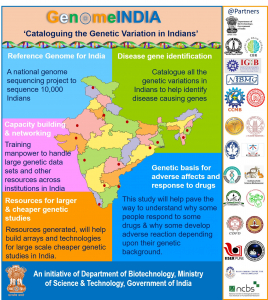
  • Genome India Project


    The Union Govt. has given clearance to an ambitious gene-mapping project, estimated to be worth Rs 238 crore.

    Genome India Project

    • The Genome India Project has been described by those involved as the “first scratching of the surface of the vast genetic diversity of India”.
    • It involves over 20 scientists from institutions including the Indian Institute of Science (IISc) in Bengaluru and a few IITs.
    • One of the most comprehensive genome mapping projects in the world is the Human Genome Project (HGP), which began in 1990 and reached completion in 2003.
    • The international project, which was coordinated by the National Institutes of Health and the US Department of Energy, was undertaken with the aim of sequencing the human genome and identifying the genes that contain it.
    • The project was able to identify the locations of many human genes and provide information about their structure and organisation.

    What is Genome Mapping?

    • According to the Human Genome Project, there are estimated to be over 20,500 human genes.
    • Genome refers to an organism’s complete set of DNA, which includes all its genes and mapping these genes simply means finding out the location of these genes in a chromosome.
    • In humans, each cell consists of 23 pairs of chromosomes for a total of 46 chromosomes, which means that for 23 pairs of chromosomes in each cell, there are roughly 20,500 genes located on them.
    • Some of the genes are lined up in a row on each chromosome, while others are lined up quite close to one another and this arrangement might affect the way they are inherited.
    • For example, if the genes are placed sufficiently close together, there is a probability that they get inherited as a pair.
    • Genome mapping, therefore, essentially means figuring out the location of a specific gene on a particular region of the chromosome and also determining the location of and relative distances between other genes on that chromosome.

    Applications

    • Significantly, genome mapping enables scientists to gather evidence if a disease transmitted from the parent to the child is linked to one or more genes.
    • Furthermore, mapping also helps in determining the particular chromosome which contains that gene and the location of that gene in the chromosome.
    • Genome maps have been used to find out genes that are responsible for relatively rare, single-gene inherited disorders such as cystic fibrosis and Duchene muscular dystrophy.
    • Genetic maps may also point out scientists to the genes that play a role in more common disorders and diseases such as asthma, cancer and heart disease among others.
    • Researchers from several international institutions mapped the handful of genes whose mutation causes several different kinds of cancers.
  • What is Fermentophone?


    Fermentation, the chemical breakdown of a substance by microorganisms such as bacteria or yeasts, results in some of the most delicious foods and beverages, including cheese, chocolate and wine.  Now, research has shown it can result in music, too.

    Fermentophone

    • The chemical processes of fermentation can be used to create spontaneous tunes.
    • Researchers has built multiple art exhibits called Fermentophone to showcase how fermentation can make music.
    • First, different fruits and veggies are placed in glass jars and fermented.
    • As the fermentation kicks off, the yeast — or bacteria — present in the food chows down on the foods’ sugars, which results in the release of carbon dioxide bubbles.
    • The release of these bubbles creates a tiny sound, which is picked up by underwater microphones.
    • A computer processes the sounds and, with the help of algorithms plugged in, electronic music is created.
  • Cancer Gene Mapping


    A series of new papers in the journal Nature has revealed the most comprehensive gene map ever of the genes causing cancer. It shows departures from normal behaviour i.e. mutations trigger a cascade of genetic misbehaviours that eventually lead to cancer.

    What is Mutation?

    • A mutation is a change that occurs in our DNA sequence, either due to mistakes when the DNA is copied or as the result of environmental factors such as UV light and pollution etc.
    • Structural variations mean deletion, amplification or reorganization of genomic segments that range in size from just a few bases to whole chromosomes.
    • Bases are the structural units of genes.
    • Over a lifetime our DNA can undergo changes or ‘mutations’ in the sequence of bases A, C, G and T.

    Why study cancer?

    • Cancer is known to be a disease of uncontrolled growth.
    • The growth process, like all other physiological processes, has genetic controls so that the growth is self-limiting. When one or more genes malfunction, the growth process can go out of hand.
    • Not just cancer, there are many other diseases with a genetic link in varying degrees.
    • Just a handful of “driver” mutations could explain the occurrence of a large number of cancers, the researchers said, raising hopes of a cancer cure being nearer than ever.

    How big is the cancer burden?

    • Cancer is the second most-frequent cause of death worldwide, killing more than 8 million people every year; incidence of cancer is expected to increase by more than 50% over the coming decades.
    • 1 in 10 Indians will develop cancer during their lifetime, and one in 15 Indians will die of cancer, according to the World Cancer Report by WHO.
    • The Northeastern states, UP, Rajasthan, West Bengal, Haryana, Gujarat, Kerala, Karnataka and Madhya Pradesh account for 44% of the cancer burden in India, says a recent analysis, published in The Lancet.

    Is the genetic link to cancer well established?

    • Yes, it is. One such association, for example, is of breast cancer with the BRCA 1 and BRCA 2 genes; the actress Angelina Jolie, who discovered that she carried the former gene, chose to undergo a preventive double mastectomy.
    • This is personalised therapeutics where, instead of traditional toxic medications like chemotherapy, drugs that specifically target the delinquent genetic mutation are already being used.
    • Such therapy, however, remains very expensive.

    What is the new study that has oncologists around the world excited?

    • It is a major international collaboration called the Pan-Cancer Analysis of Whole Genomes (PCAWG), in which researchers has published a series of papers after analysing some whole-cancer genomes and their matching normal tissues across 38 tumor types.
    • They concluded that on average, cancer genomes contained 4-5 driver mutations when combining coding and non-coding genomic elements.
    • This is the largest genome study ever of primary cancer.
    • Various kinds of cancers required to be studied separately because cancers of different parts of the body often behave very differently from one another; so much so that it is often said that cancer is not one disease but many.

    Breakthrough achievement of the study

    • The mutations identified by the team have been catalogued. Identification and cataloguing of the genes is a very crucial step and has taken science’s understanding of cancer and its genesis ahead by several leaps.
    • The catalogue, which is already available online, allows doctors and researchers from all over the world to look things up, consult and find information about the cancer of a given patient.
    • The study has discovered causes of previously unexplained cancers, pinpointed cancer-causing events and zeroed in on mechanisms of development, opening new vistas of personalized cancer treatment to strike at the root of the problem.
    • When it comes to drug development, however, the gene mapping is but a first step.

    The next step

    • The process of drug development will have to now kick in with pharmaceutical companies first identifying the compound(s) that target these gene mutations and then it being subjected to the rigours of clinical trials to prove its safety and efficacy.
    • That could take anything from a few decades to a few years to cover all the mutations identified.
  • [pib] SARAS Initiative

    Coal India’s flagship subsidiary NCL (Northern Coalfields Limited) has set up a centre named SARAS.

    SARAS Initiative

    • SARAS stands for Science and Applied Research Alliance and Support.
    • It aims to promote innovation, R&D and skill development along with improving company’s operational efficiency and utilize resources at optimum level.
    • SARAS will help and enable the company in Integration of Innovation and Research for enhancing coal production, productivity, and safety in mines.
    • Besides, the SARAS would also help establish centres of excellence to ensure technical support to R&D along with thrust on quality skill development and employment to local youths in and around company’s operational area.

    About NCL

    • NCL accounts for 15 per cent of India’s coal production and 10 per cent of thermal power generation of the country is met by the coal produced by this Miniratna Company of Govt. of India.
    • The company produces more than 100 million tonnes of coal every year.
    • It has planned to produce 107 million tonnes of coal in the current fiscal.
  • Euthermia: the anomaly of human body temperature


    Euthermia refers to normal body temperature. The thermometer reading of 98.6°F has been a gold standard for a century and a half, ever since a German doctor laid it down as the “normal” body temperature.  A new research has found that body temperatures have, in fact, been declining over the last two centuries.

    Why we follow 98.6°F?

    • In 1851, Carl Reinhold August Wunderlich pioneered the use of the clinical thermometer.
    • It was a rod a foot long, which he would stick under the armpits of patients at the hospital attached with Leipzig University, and then wait for 15 minutes (some accounts say 20 minutes) for the temperature to register.
    • He took over a million measurements of 25,000 patients, and published his findings in a book in 1868, in which he concluded that the average human body temperature is 98.6°F.
    • Most modern scientists feel Wunderlich’s experiments were flawed, and his equipment inaccurate.
    • Another study concluded that the average human body temperature is closer to 98.2°F, and suggested that the 98.6°F benchmark be discarded.

    The body is cooler

    • The Stanford University the researchers confirmed some known trends — body temperature is higher in younger people, in women, in larger bodies and at later times of the day.
    • Additionally, they found that the bodies of men born in the early to mid-1990s is on average 1.06°F cooler than those of men born in the early 1800s.
    • And the body temperature of women born in the early to mid-1990s is on average 0.58°F lower than that of women born in the 1890s.
    • The calculations from the research correspond to a decrease in body temperature of 0.05°F every decade.

    Why there’s decrease in body temperature?

    • The researchers have proposed that the decrease in body temperature is the result of changes in the environment over the past 200 years, which have in turn driven physiological changes.
    • The decrease in average body temperature in the US, they said, could be explained by a reduction in metabolic rate, or the amount of energy being used.
    • The environment that we’re living in has changed, including the temperature in our homes, our contact with microorganisms and the food that we have access to.
    • Actually the human body is changing physiologically.

    So what’s the normal temperature?

    • The strong influences of age, time of day, and genders determine the healthy body temperature.
  • [pib] Sophisticated Analytical & Technical Help Institutes (SATHI) Scheme

    The Department of Science & Technology has launched a unique scheme called “Sophisticated Analytical & Technical Help Institutes(SATHI)”.

    SATHI 

    • SATHI aims to address the need for building shared, professionally managed and strong S&T infrastructure in the country which is readily accessible to academia, start-ups, manufacturing, industry and R&D labs etc.
    • These Centres are expected to house major analytical instruments to provide common services of high-end analytical testing, thus avoiding duplication and reduced dependency on foreign sources.
    • These would be operated with a transparent, open access policy.
    • DST has already set up three such centres in the country, one each at IIT Kharagpur, IIT Delhi and BHU.

    Objectives of the Scheme

    • SATHI will address the problems of accessibility, maintenance, redundancy and duplication of expensive equipment in the institutions.
    • This will also foster a strong culture of collaboration between institutions and across disciplines to take advantage of developments, innovations and expertise in diverse areas.