💥Join UPSC 2027,2028 Mentorship (August Batch) + XFactor Notes & Microthemes PDF

Subject: Biotech and Medical Sciences

  • Gut molecule in C. Elegans Worms slows fat burning

    Why in the News?

    Researchers have discovered a mechanism in Caenorhabditis elegans (C. elegans) worms that explains why fat loss slows down during fasting.

    Fasting and Fat Metabolism

    • The brain is known to regulate fat production and breakdown in humans, other mammals, and model organisms like C. elegans.
    • In 2017, researchers identified FLP-7 hormone in the brain that triggers fat burning in the gut of C. elegans.
    • However, it was unclear how the gut communicates back to the brain, as C. elegans lacks sensory nerves in their intestines.
    • The study reveals that during fasting, the gut produces a form of insulin called INS-7, which signals the brain to halt fat burning.
    • Unlike traditional insulin, which activates insulin receptors, INS-7 blocks these receptors, leading to a cascade of events that stop the production of the fat-burning hormone FLP-7.

    About Caenorhabditis elegans (C. elegans):

    Details
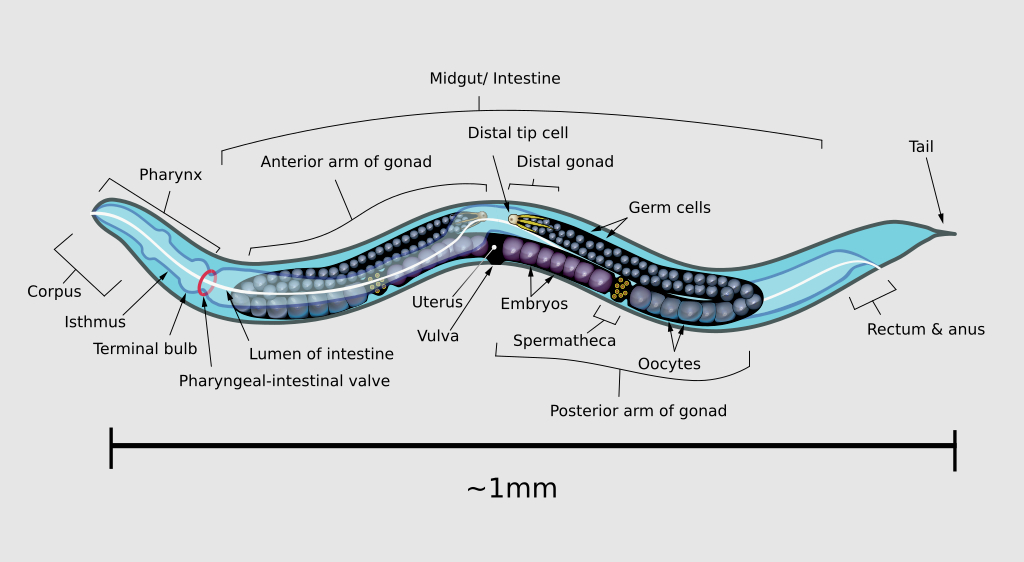
    Overview A small, free-living nematode (roundworm) used as a model organism in biological research.
    Size Approximately 1 millimeter in length.
    Habitat Found in soil environments worldwide.
    Reproduction Primarily self-fertilizing hermaphrodites; males make up a small percentage and can mate with hermaphrodites.
    Genome First multicellular organism to have its genome fully sequenced; about 20,000 genes.
    Chromosomes Six chromosomes (five autosomes, one sex chromosome).
    Body Plan Approximately 1,000 cells in an adult hermaphrodite; transparent body allows for easy microscopic observation.
    Lifespan Around 2 to 3 weeks under laboratory conditions.
    Research Contributions Instrumental in discoveries related to apoptosis, RNA interference, gene regulation, and human diseases.


    PYQ:

    [2013] Improper handling and storage of cereal grains and oilseeds result in the production of toxins known as aflatoxins which are not generally destroyed by normal cooking process. Aflatoxins are produced by:

    (a) Bacteria

    (b) Protozoa

    (c) Moulds

    (d) Viruses

  • Sharpening India’s anti-tuberculosis fight     

    Why in the News?

    In the present context, in India, there are groundbreaking new treatments available, but we need to rethink and update the program to eliminate TB.

    Current status of TB in India: 

    • Incidence Rate: As of 2022, the incidence rate of TB in India was reported at 199 cases per 100,000 population, a decline from 237 per lakh population in 2015. This reflects a 16% decrease in new TB cases since 2015.
    • Prevalence: The estimated prevalence of tuberculosis infection (TBI) among individuals over 15 years of age was around 31% according to a national survey conducted from 2019 to 2021. 
    • Global Contribution: India accounted for approximately 26% of the global incidence of TB cases in 2020. In that year, India also represented 38% of global TB deaths among HIV-negative individuals.
    • Mortality Rate: The mortality rate due to TB decreased from 28 per lakh population in 2015 to 23 per lakh population in 2022, indicating progress in managing the disease.
    • Total Cases: Estimates suggest that the total number of TB cases in India has increased from 2.2 million to 2.6 million in recent years, reflecting ongoing challenges in detection and treatment.

    What were the problems with previous Extended Treatment Regimen?

    • Lengthy and Complex: Traditional TB treatment regimens are long and require patients to take 13 to 14 tablets daily for 9 to 11 months, or 4 to 5 tablets daily for 18 to 24 months.
    • Severe Side Effects: These regimens are physically and psychologically draining, causing side effects like loss of hearing and psychosis.
    • Economic Impact: Prolonged treatment leads to loss of employment and drives many families into poverty due to the need for frequent clinic visits.

    WHO-Recommended Effective Regimen:

    • BPaL/M Regimen: WHO has recommended a shorter, safer, and more effective regimen called BPaL/M for drug-resistant TB patients.
    • Advantages: This regimen requires only 3 to 4 tablets daily for six months, with fewer side effects and higher success rates (89% compared to 68% for traditional treatments).
      • Close to 80 countries have procured the BPaL/M regimen, and 20 high-burden countries are already rolling it out.


    Present TB Elimination Policy in India:

    • The deficiency in the NTP was identified in 1963 and the Revised National TB Control Programme was developed.
    • Presently, India’s National TB Elimination Programme 2023 is leading the effort to meet the goal of eliminating TB by 2025, five years ahead of the SDGs.
    • Ending the TB epidemic by 2030 is among the health targets of the UN’s Sustainable Development Goals.

    How India can make the best use of new treatments?

    • Proactive Screening and Diagnosis: Focus on modernizing health datasets, GIS mapping, and conducting targeted multi-disease screening drives, especially in vulnerable populations (e.g., those with comorbidities, slum dwellers, and prisoners).
    • Advanced Diagnostic Tools: Expand the use of portable X-ray machines with AI-driven tools and rapid molecular tests for faster and more accurate detection and drug resistance profiling.
    • Early Detection and Treatment: Leveraging new technologies and proactive measures will help improve TB detection rates, reduce delays, and enhance treatment outcomes, ultimately aiding in the elimination of TB in India.

    Conclusion: India need to invest in advanced diagnostic tools like AI-driven portable X-ray machines and rapid molecular tests to ensure early and accurate detection of TB, particularly in high-risk and underserved populations, to support timely treatment and reduce TB incidence.

    Mains PYQ:

    Q Can overuse and free availability of antibiotics without Doctor’s prescription, be contributors to the emergence of drug-resistant diseases in India? What are the available mechanisms for monitoring and control? Critically discuss the various issues involved. (UPSC IAS/2014)
  •  Advancing equity, from COVID-19 to Mpox  

    Why in the News?

    The recent declaration of Mpox (formerly monkeypox) as a Public Health Emergency of International Concern (PHEIC) by the WHO highlights several critical lessons learned from the COVID-19 pandemic.

    Major Learnings from the COVID-19 Pandemic

    • Vaccine Manufacturing Capabilities: The COVID-19 pandemic exposed significant gaps in vaccine manufacturing capabilities, particularly in the Global South. This inadequacy was exacerbated by limited technology transfers and a lack of know-how to produce vaccines developed in high-income countries.
      • The current response to the Mpox outbreak reflects similar challenges, emphasizing the need for robust local manufacturing capabilities to ensure equitable access to vaccines.
    • Global Cooperation: The pandemic underscored the necessity of international collaboration in health emergencies. The WHO’s declaration of Mpox as a PHEIC aims to foster this cooperation, encouraging countries and organizations to share information and resources to combat the outbreak.
    • Equity in Health Responses: The recent amendments to the International Health Regulations (IHR) include equity as a core principle, which is crucial for ensuring that all countries, particularly those in lower-middle-income regions, have access to essential medical products during emergencies.

    Recent Initiatives by India’s Drug Regulatory Agency:

    • On August 7, 2024, India’s Central Drugs Standard Control Organization (CDSCO) decided that drugs already approved in developed countries like the U.S. and those in the EU can be used during pandemics in India without needing to go through clinical trials here.
    • This regulatory change is expected to expedite the availability of critical vaccines like MVA-BN (Jynneos) in India, facilitating faster access to vaccines necessary to combat the Mpox outbreak.

    What could be the more improved solution for it?

    • Scaling Up Production: The demand for pox vaccines is anticipated to surge, with estimates by AfricaCDC, suggesting that 10 million doses are needed to control the outbreak. However, only 0.21 million doses are currently available.
      • Indian manufacturers, such as the Serum Institute of India and Bharat Biotech, have the potential to rapidly scale up production of the MVA-BN vaccine using established processes and supply chains.
    • Comprehensive Technology Transfer: Effective technology transfer involves sharing not only the vaccine but also the necessary biological resources, manufacturing know-how, and patents. This is essential to enable lower-middle-income countries to produce vaccines independently, reducing reliance on high-income countries.
    • Collaborative Negotiations: The Indian government, in collaboration with international organizations like WHO and Gavi, should negotiate with Bavarian Nordic for technology transfer to technology transfer for developing the vaccine.

    Way forward: 

    • Strengthen Local Manufacturing: Encourage Indian manufacturers like the Serum Institute of India and Bharat Biotech to rapidly scale up production of the MVA-BN vaccine, ensuring timely and sufficient supply to meet both domestic and global demand during the mpox outbreak.
    • Facilitate Technology Transfer: The Indian government should lead collaborative efforts with international organizations to secure comprehensive technology transfers, enabling domestic production of vaccines and reducing dependency on high-income countries.

    Mains PYQ:

    Q COVID-19 pandemic has caused unprecedented devastation worldwide. However, technological advancements are being availed readily to win over the crisis. Give an account of how technology was sought to aid the management of the pandemic.  (UPSC IAS/2016)

  • What was the Great Moon Hoax of 1835?

    Why in the News?

    The Great Moon Hoax of 1835 is a series of fabricated news reports published by The New York Sun, an American newspaper, claiming that life had been discovered on the moon.

    What is the Great Moon Hoax of 1835?

    • The Great Moon Hoax was a series of newspaper articles falsely claiming that John Herschel, an astronomer, had discovered life on the moon.
    • The hoax was created and published by The New York Sun, a daily newspaper in New York City, starting on August 25, 1835.
    • It described various fantastical creatures, such as bat-winged humanoids (called Vespertilio-homo), unicorns, and upright beavers, along with detailed landscapes and other features of the moon.
    • These reports were entirely fictional and intended as satire.
    • However, they were widely believed by the public and reprinted in other newspapers.

    Why the Hoax was conceived?

    • To Mock Religious Influence on Science: It aimed to satirize the blend of religious beliefs with scientific claims, especially in astronomy.
    • Boost Readership: The hoax was a tactic to increase The New York Sun’s circulation from 8,000 copies a day.
    • Challenge Public Credulity: It highlighted how easily the public could be deceived by sensational stories without verifying their accuracy.
  • Simple Medical Tools of an OPD Visit

    Why in the News?

    • These medical tools—thermometers, stethoscopes, weighing scales, and sphygmomanometers—are essential for diagnosing and monitoring basic health parameters.
      • Each tool has its own function and specific way of operation, which helps healthcare professionals make informed decisions about patient care.

    Here is the list of tools used in a Doctor’s Diagnosis:

    Function Description and Working Principle
    Thermometer Measures body temperature.
    • Mercury Thermometer: Features a mercury-filled bulb and a glass capillary with numerical markings. Temperature changes cause the mercury to expand or contract, moving through the capillary to indicate temperature.
    • Digital Thermometer: Utilizes sensors like infrared or thermistors to detect temperature changes, which are then converted into digital readings.
    Stethoscope Listens to internal body sounds.
    • Acoustic Stethoscope: Comprises a diaphragm for high-frequency sounds and a bell for low-frequency sounds, connected by a tube to earpieces.
    • Electronic Stethoscope (Stethophone): Amplifies body sounds electronically and may include recording capabilities and additional diagnostics such as electrocardiograms. These devices transmit sound data to smartphones or other devices.
    Weighing Scale Measures body weight.
    • Spring Scale: Uses a spring under a plate; weight is measured by the degree of spring compression or extension. Requires calibration to account for local gravity variations.
    • Electronic Scale: Converts the mechanical force of weight into electrical signals using load cells or strain gauges, displayed as weight readings on a digital screen.
    Sphygmomanometer Measures blood pressure.
    • Manual Sphygmomanometer: Includes an inflatable cuff, linked to a mercury or aneroid manometer. Uses a stethoscope to detect blood flow sounds (Korotkov sounds) for determining systolic and diastolic pressures.
    • Electronic Sphygmomanometer: Uses oscillometric technology to sense pressure oscillations caused by arterial blood flow, automating blood pressure measurement. Easier for home use but may have accuracy issues in patients with certain cardiovascular conditions.


    PYQ:

    [2019] In the context of wearable technology, which of the following tasks is/are accomplished by wearable devices?

    1. Location identification of a person
    2. Sleep monitoring of a person
    3. Assisting the hearing-impaired person

    Select the correct answer using the codes given below:

    (a) 1 only

    (b) 2 and 3 only

    (c) 3 only

    (d) 1, 2 and 3

  • Imports weaken Indian pharma

    Why in the News?

    • The government has introduced two import-based initiatives to meet domestic needs, which could potentially dampen the growth of the domestic industry.
    • New medicines are generally under patent protection, preventing Indian companies from producing affordable generics/biosimilars.

    Impact of two initiatives on Domestic Industry:

    • Global Tendering for 120 Medicines: The Department of Expenditure (DoE) allowed the Ministry of Health to buy 120 medicines, including popular anti-diabetes and anti-cancer drugs, through global tenders for government programs. This decision, which specifies certain brands for over 40 of these medicines, could increase the monopoly of foreign companies in India.
    • Customs Duty Removal on Cancer Medicines: The 2024-25 Union Budget proposed removing the 10-12% customs duty on three cancer medicines marketed by AstraZeneca. While intended to reduce prices, this measure is unlikely to significantly lower costs and may instead increase reliance on imports, further disadvantaging domestic producers.

    Status of Indian Pharma

    • India is a leading manufacturer of vaccines, accounting for 60% of global production.
    • India supplies 70% of vaccines used by the WHO.
    • India is a major exporter of generic drugs, accounting for 20% of global exports.
    • The industry is expected to grow to over $130 billion by 2030.

    What are Biosimilar guidelines?

    • Biosimilar guidelines in India are regulatory frameworks established by the Central Drugs Standard Control Organization (CDSCO) and the Department of Biotechnology (DBT) to govern the development, approval, and marketing of biosimilars.
    • Biosimilars are biologic medical products that are highly similar to an already approved original biologic (known as the reference product), with no clinically meaningful differences in terms of safety, purity, and potency.

    Status Biosimilars: 

    • Significant Market Size: The biosimilar market in India is valued at approximately $2.2 billion, and it is projected to reach $40 billion by 2030. This growth is driven by the expiration of patents for several key biologics, which opens the door for biosimilar development.
    • Product Approvals: As of now, over 70 biosimilars have been approved in India, covering a range of therapeutic areas, including oncology, diabetes, and autoimmune diseases. Notable examples include:
      • Adalimumab (for rheumatoid arthritis)
      • Trastuzumab (for breast cancer)
      • Filgrastim (for neutropenia)
      • Insulin glargine (for diabetes)

    Outdated Biosimilar Guidelines in India:

    • Obsolete and Resource-Intensive:
      • India’s biosimilar guidelines are outdated, requiring mandatory animal studies, which are no longer necessary in developed countries like the U.S. and EU with stringent regulatory standards.
      • The guidelines also mandate clinical trials, while WHO and U.K. guidelines treat clinical trials as an exception rather than a rule.
    • Barrier for Domestic Producers:
      • The stringent requirements for animal studies and mandatory clinical trials create significant barriers for Indian producers, making it difficult for them to compete with their global counterparts.
    • Impact on Patient Access:
      • According to the International Generic and Biosimilar Medicines Association, eliminating these duplicative requirements could lead to significant savings in time and resources, ultimately improving patient access to affordable biosimilars.

    Way forward: 

    • Update Regulatory Guidelines: Modernize India’s biosimilar guidelines by removing unnecessary requirements like mandatory animal studies and clinical trials, aligning them with global standards to reduce barriers for domestic producers.
    • Support Local Production: Utilize provisions in the Patents Act to promote domestic manufacturing of affordable medicines, reducing reliance on imports and strengthening the local pharmaceutical industry.
  • What is Tera Hertz Spectrum?

    Why in the News?

    The Telecom Regulatory Authority of India (TRAI) released its recommendations on the Tera Hertz Spectrum.

    About Tera Hertz (THz) Spectrum

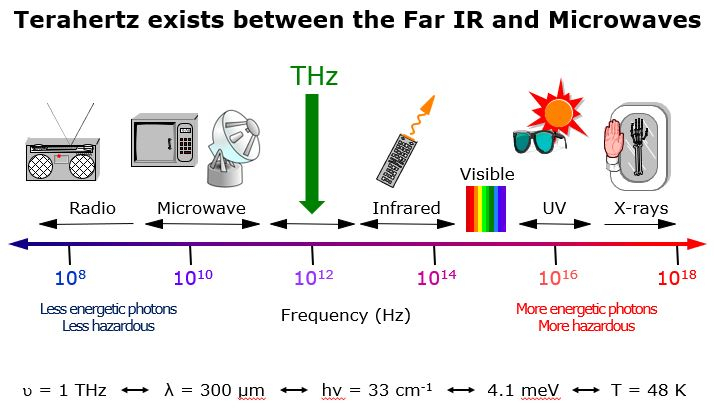
    • The THz Spectrum refers to a range of electromagnetic waves with frequencies between 100 GHz (gigahertz) and 10 THz (terahertz). 
      • This spectrum lies between microwaves and infrared light.
      • It is known as the “THz gap” because it has been less explored compared to other parts of the electromagnetic spectrum.
    • Key Features:
      • Unique Properties: THz waves can pass through many materials like clothing, paper, and wood but are absorbed by water and metals.
      • Applications: Used for advanced technologies like imaging, communications, and spectroscopy.
      • Potential Uses: Security scanning, medical imaging, and high-speed wireless communication.

    Impact of recent recommendation:

    • THEA will encourage innovation in Tera Hertz technologies, supporting the ‘Make in India’ initiative.
    • The opening of specific frequency bands will boost the development and deployment of next-generation wireless technologies and automotive safety systems in India.

    PYQ:

    [2020] With reference to Visible Light Communication (VLC) technology, which of the following statements are correct?

    1. VLC uses electromagnetic spectrum wavelengths 375 to 780 nm.

    2. VLC is known as long-range optical wireless communication.

    3. VLC can transmit large amounts of data faster than Bluetooth.

    4. VLC has no electromagnetic interference.

    Select the correct answer using the code given below:

    (a) 1, 2 and 3 only

    (b) 1, 2 and 4 only

    (c) 1, 3 and 4 only

    (d) 2, 3 and 4 only

  • WHO investigating new Polio strain in Meghalaya

    Why in the News?

    The World Health Organization (WHO) is investigating a suspected new strain of polio in a two-year-old child from Tikrikilla, Meghalaya.

    What is Vaccine-Derived Polio?

    • The Oral Polio Vaccine (OPV) contains a weakened form of the poliovirus that activates an immune response in the body.
    • The vaccine-virus is excreted after vaccination and can circulate in the environment.
    • In rare cases, if the population is under-immunized, the excreted virus can mutate over time and revert to a form capable of causing paralysis.
    • This mutated virus is known as circulating vaccine-derived poliovirus (cVDPV).

    About Polio:

    Details
    Nature of Disease Crippling and potentially deadly viral infectious disease affecting the nervous system.
    Types of Poliovirus WPV1 (Wild Poliovirus type 1)
    WPV2 (Wild Poliovirus type 2, eradicated globally)
    WPV3 (Wild Poliovirus type 3, eradicated globally)
    Current Status WPV1 remains in circulation in Afghanistan and Pakistan.
    Transmission Primarily through the faecal-oral route or contaminated water/food.
    Affected Population Largely affects children under 5 years of age.
    Impact Virus multiplies in the intestine, may invade the nervous system, causing paralysis.
    Prevention No Cure: Preventable through immunization.
    Vaccines:
    OPV: Oral Polio Vaccine given at birth, with doses at 6, 10, 14 weeks, and a booster at 16-24 months.
    IPV: Injectable Polio Vaccine given with the 3rd dose of DPT under UIP.
    India’s Status
    • Pulse Polio Immunization Initiative (1995)
    • Declared polio-free by WHO in 2014, with the last wild poliovirus case reported in 2011.


    PYQ:

    [2016] ‘Mission Indradhanush’ launched by the Government of India pertains to:

    (a) immunization of children and pregnant women

    (b) construction of smart cities across the country

    (c) India’s own search for the Earth-like planets in outer space

    (d) New Educational Policy

  • Can blood tests for cancer save more lives? 

    Why in the News?

    A multi-cancer early detection test can identify circulating tumour DNA or circulating tumour cells at an early stage, allowing for more effective treatment.

    Status of Cancer:

    • Cancer’s Impact in India: Cancer accounts for 18% of deaths from noncommunicable diseases in India, making it the second leading cause of mortality. In 2022, there were approximately 1.46 million new cancer cases, with projections indicating a 12% increase by 2025.
    • Common Cancers as per GLOBOCAN: Among women, the most prevalent cancers are breast, cervical, ovarian, and colorectal.
      • For men, lung, esophageal, colorectal, and stomach cancers are the most common.
    • Survival Rates and Detection: Late detection of cancer significantly reduces survival rates and increases treatment costs. In contrast, early detection through screening improves treatment outcomes and quality of life. 
      • Countries are aligning with the United Nations’ Sustainable Development Goals 3 to enhance early cancer detection.
    • Limited screening: As per NHFS, screening is limited in India which is primarily to cervical, breast, and oral cancers, with only 0.2-2% of the population having undergone any form of screening.

    What is a Multi-Cancer Early Detection (MCED) Test?

    • A multi-cancer early detection (MCED) test is a new type of blood test that can screen for multiple types of cancer simultaneously. These tests look for cancer signals, such as circulating tumor DNA (ctDNA) and circulating tumor cells (CTCs), released by cancerous cells into the bloodstream at early stages.

    Role of Blood-based tests in the detection of cancer:

    • Early Detection of Multiple Cancer Types: Blood tests, particularly multi-cancer early detection (MCED) tests, can identify cancer signals from over 50 different types of cancer, including those that currently lack effective screening methods.
      • For example, a recent study demonstrated that a new blood test could detect 93% of stage 1 cancers in men and 84% in women by analyzing protein biomarkers.
    • Non-Invasive and Accessible Screening: Blood tests are non-invasive and can be performed with a simple blood draw, making them more accessible compared to traditional screening methods like colonoscopies or imaging tests. This ease of use encourages more individuals to participate in screening.

    Limitation of blood test in the detection of Cancer:

    • Lack of Proven Mortality Benefit: It is still unclear whether detecting cancers earlier with MCED tests will actually reduce cancer deaths. More research is needed to determine if earlier treatment based on MCED results improves outcomes compared to waiting for symptoms to develop.
    • Regulatory Challenges: MCED tests are not yet approved by regulatory bodies like the U.S. FDA or India’s CDSCO because of not undergone rigorous premarket review to prove they benefit patients.
    • False Positives: One significant risk is false positive results, where the test indicates cancer when none is present. When multiple tests are used for screening, the false positive rate can be as high as 50%.

    Way forward:

    • Strengthening Screening Infrastructure and Research: India should invest in expanding its cancer screening infrastructure, ensuring that more types of cancer are included beyond cervical, breast, and oral cancers.
    • Public Awareness and Regulatory Preparedness: Increasing public awareness about the importance of early cancer detection is crucial. At the same time, regulatory bodies like CDSCO should establish clear guidelines and frameworks for the evaluation, approval, and monitoring of MCED tests.
  • What is the Hayflick Limit?

    Why in the News?

    Leonard Hayflick, the renowned biomedical researcher who made a discovery about the limits of cell division in somatic cells (Hayflick Limit) has passed away at 98.

    What is the Hayflick Limit?

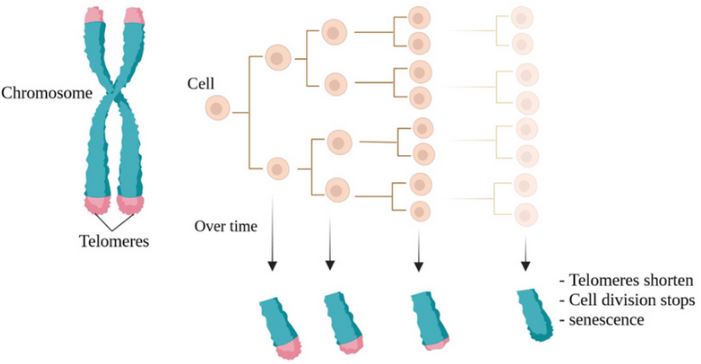
    • In the early 1960s, Hayflick discovered that somatic (non-reproductive) cells have a finite number of divisions, typically between 40-60 times.
    • This phenomenon, the ‘Hayflick limit’ suggests that aging occurs because cells eventually stop dividing.
      • This leads to the accumulation of senescent cells that contribute to the aging process.
    • The “ultimate Hayflick limit” for humans is estimated to be around 125 years.
    • Beyond this, no amount of lifestyle changes or medical interventions can extend the human lifespan.
    • Hayflick’s discovery has been applied to cells from various animals, revealing different Hayflick limits based on species’ lifespans.
    • Ex. Galapagos turtles, have cells that can divide approximately 110 times, whereas laboratory mice have a much lower limit of around 15 divisions.

    Broader Implications and Research

    • Hayflick’s discovery led to the discovery of telomeres in the 1970s.
      • Telomeres are protective DNA sequences at the ends of chromosomes, which shorten with each cell division.
    • When telomeres reach a critical length, cell division stops, which correlates with the Hayflick limit.
    • In the 1980s, scientists discovered telomerase, a protein capable of replenishing telomeres, which is naturally active in cancer cells, allowing them to bypass the Hayflick limit.

    PYQ:

    [2011] Regular intake of fresh fruits and vegetables is recommended in the diet since they are a good source of antioxidants. How do antioxidants help a person maintain health and promote longevity?

    (a) They activate the enzymes necessary for vitamin synthesis in the body and help prevent vitamin deficiency

    (b) They prevent excessive oxidation of carbohydrates, fats and proteins in the body and help avoid unnecessary wastage of energy

    (c) They neutralize the free radicals produced in the body during metabolism

    (d) They activate certain genes in the cells of the body and help delay the ageing process