💥Join UPSC 2027,2028 Mentorship (July Batch) + XFactor Notes & Microthemes PDF

Subject: Conservation & Mitigation

1. Conservation Progs.
2. Worldwide initiatives
3. Mitigation Strategies
4. Conventions and Protocols

  • What are the new rules on chemically contaminated sites?

    [UPSC 2023] Enumerate the National Water Policy of India. Taking river Ganges as an example, discuss the strategies which may be adopted for river water pollution control and management. What are the legal provisions of management and handling of hazardous wastes in India?

    Linkage: The National Water Policy emphasises pollution prevention, water quality monitoring, and restoration of contaminated water bodies. Strategies for river pollution control, such as those for the Ganga, parallel the approach in the Environment Protection (Management of Contaminated Sites) Rules, 2025, which involve identification, assessment, remediation, and polluter accountability. Legal provisions for hazardous waste management include the Environment Protection Act, 1986 and the Hazardous and Other Wastes (Management and Transboundary Movement) Rules, 2016, under which contaminated site rules now operate.

    Introduction

    India has identified 103 contaminated sites across states, caused by historical dumping of hazardous wastes. These sites often lie abandoned, with polluters defunct or unable to pay for clean-up. The newly notified Environment Protection (Management of Contaminated Sites) Rules, 2025 under the Environment Protection Act provide the first legal, institutional, and procedural framework to identify, assess, and remediate such locations, addressing a long-standing regulatory gap.

    What are Contaminated Sites?

    1. Defined by the Central Pollution Control Board (CPCB) as areas where past dumping of hazardous wastes has likely contaminated soil, groundwater, and surface water, posing risks to human health and ecosystems.
    2. Examples: Landfills, waste storage/treatment sites, spill-sites, and abandoned chemical handling facilities.
    3. Out of 103 identified sites, only 7 have begun remediation.

    Background – Why New Rules Were Needed:

    1. 2010 Capacity Building Program for Industrial Pollution Management Project initiated by the Environment Ministry aimed to:
      1. Create an inventory of probable contaminated sites.
      2. Develop guidance for assessment and remediation.
      3. Establish a legal, institutional, and financial framework — the missing final step until 2025.
    2. Previous absence of legal codification led to delays, inconsistent responses, and lack of accountability.

    Key Provisions of the 2025 Rules

    Identification & Assessment Process:

    1. District Administration: Submits half-yearly reports on suspected sites.
    2. State Board/Reference Organisation:
      1. Preliminary assessment within 90 days.
      2. Detailed survey within another 90 days to confirm contamination.
      3. Establish levels of hazardous chemicals (189 listed under Hazardous and Other Wastes Rules, 2016).

    Public Notification & Restrictions

    1. Sites exceeding safe chemical levels are publicly listed.
    2. Access restrictions imposed to safeguard health.

    Remediation Planning

    1. Expert body drafts remediation plan.
    2. Polluters identified within 90 days; responsible parties bear clean-up costs.
    3. If polluters cannot pay, State/Centre funds the remediation.

    Legal Accountability

    1. Criminal liability under Bharatiya Nyaya Sanhita, 2023 if contamination leads to loss of life or damage.

    Exemptions

    1. Radioactive waste
    2. mining waste
    3. marine oil pollution
    4. municipal solid waste dumps; governed by separate legislations.

    Key Gaps & Challenges

    1. No fixed remediation deadline post-identification.
    2. Capacity limitations in expert bodies.
    3. Financial constraints for large-scale clean-ups.
    4. Coordination issues between Centre, States, and Local Bodies.

    Conclusion

    The 2025 Rules mark a significant policy milestone in India’s environmental governance. While they close a crucial legal gap, their success will depend on timely implementation, strong enforcement, and adequate funding. Integrating strict timelines, expanding technical expertise, and ensuring polluter accountability will be essential to safeguard public health and restore ecological balance.


    Value Addition:

    Environment Protection (Management of Contaminated Sites) Rules, 2025 are Applicable on: 

    1. ‘Radioactive waste’ as defined under the Atomic Energy (Safe Disposal of Radioactive Wastes) Rules, 1987
    2. ‘Mining operations’ as defined under the Mines and Minerals (Development and Regulation) Act, 1957
    3.  Pollution of the sea by oil or oily substance as governed by Merchant Shipping Act of 1958 and the Merchant Shipping (Prevention of Pollution of the Sea by Oil) Rules, 1974
    4. ‘Solid waste dump’ as defined under Solid Waste Management Rules, 2016.
    5. In case contamination of a site is due to a contaminant mixed with radioactive waste/ mining operations/ oil spill/ solid waste from dump site, and if the contamination of the site due to the contaminant exceeds the limit of response level specified in these rules, then remediation of the site would be covered under these rules.

    Extra Mile:

    1. Case Linkage: Bhopal Gas Tragedy (1984) – absence of strict site remediation frameworks
    2. Environmental Principles:
      1. Polluter Pays Principle
      2. Precautionary Principle
      3. Sustainable Development
    3. Global Context: Comparable frameworks exist in the USA (Comprehensive Environmental Response, Compensation, and Liability Act – CERCLA), EU’s Environmental Liability Directive.
    4. Policy Linkages: National Environmental Policy 2006, SDG-3 (Health), SDG-6 (Clean Water), SDG-15 (Life on Land).

    Mapping Micro-themes

    GS PAPER I Environmental degradation and public health impacts
    GS PAPER II Centre-State coordination in environmental regulation; constitutional provisions (Art. 21, 48A, 243W)
    GS PAPER III Pollution management, hazardous waste rules, environmental governance, technology in remediation
    GS PAPER IV Corporate ethics, polluter responsibility, environmental stewardship, intergenerational equity


    Practice Mains Question

    Q: The Environment Protection (Management of Contaminated Sites) Rules, 2025, represent a long-awaited legal framework for chemical contamination in India. Discuss their significance, key features, and challenges in the context of sustainable environmental governance. (250 words)
  • India’s Lion Population rises to 891

    Why in the News?

    In 2025, India reported a 32.2% rise in its Asiatic lion population, from 674 in 2020 to 891 in 2025, as per the 16th Lion Population Estimation.

    World Lion Day is observed annually on August 10 to promote awareness and action for the conservation of lions worldwide.

    About Asiatic Lion:

    • Scientific Name: Panthera leo leo — subspecies found only in India.
    • Historical Range: Once across West Asia & Middle East; now extinct outside India.
    • Physical Trait: Slightly smaller than African lions; has a unique belly fold.
    • Current Range: Gir National Park & surrounding Saurashtra areas, Gujarat.
    • Past Range in India: Extended to West Bengal and central India (Rewa, Madhya Pradesh).
    • Conservation Status:
      • IUCN –Vulnerable
      • CITES – Appendix I
      • Wildlife (Protection) Act, 1972 – Schedule I

    2025 Census Highlights:

    • Population: 891 lions (+32.2% from 2020).
    • Decadal Growth: +70.36% since 2015 (from 523 lions).
    • Adult Females: 330 (+26.9% from 2020).
    • Satellite Populations: 497 lions in 9 locations — new groups in Barda WLS, Jetpur, Babra-Jasdan.
    • Corridor Records: 22 lions sighted for the first time.
    • Regional Growth: Mitiyala WLS (+100%), Bhavnagar Mainland (+84%), South Eastern Coast (+40%).
    • Declines: Girnar WLS (-4%), Bhavnagar Coast (-12%).
    [UPSC 2019] Consider the following statements:

    1. Asiatic lion is naturally found In India only.

    2. Double-humped camel is naturally found in India only.

    Which of the statements given above is/are correct?

    Options: (a) 1 only *  (b) 2 only (c) 1 and 3 only (d) 1, 2 and 3


  • How groundwater contamination is fuelling chronic illnesses

    India’s groundwater is increasingly getting contaminated with toxic substances. Over 85% of rural drinking water and 65% of irrigation needs are met through groundwater, yet unregulated extraction, industrial waste, agricultural runoff, and poor sanitation have turned this life source into a silent killer.

    Scale of the Crisis

    The 2024 Annual Groundwater Quality Report by the Central Ground Water Board (CGWB) reported the following:

    1. Nitrates: Found in 20%+ samples (due to chemical fertilisers & septic tank leakage).
    2. Fluoride: Detected in 9%+ samples, leading to skeletal & dental fluorosis.
    3. Arsenic: Found in parts of Punjab, Bihar, Uttar Pradesh causing cancers & neurological damage.
    4. Uranium: Detected in Punjab, Andhra Pradesh, Rajasthan linked to kidney damage.
    5. Heavy metals: Iron, lead, cadmium, chromium, causing developmental & immune system issues.

    Major Contaminants and Health Impacts

    • Fluoride Contamination: 
      1. Affects 230 districts across 20 states.
      2. Health impact: Skeletal fluorosis, stunted growth, joint pain.
      3. Rajasthan, MP, and UP report high prevalence.
      4. Example: Jhabua (MP) – 40% of tribal children affected
    • Arsenic Exposure:
      1. Concentrated in Gangetic belt.
      2. Health impact: Skin lesions, respiratory illness, cancers (skin, liver, kidney, bladder).
      3. Example: Ballia (UP) – Arsenic 200 g/L (20× WHO limit) linked to 10,000+ cancer cases.
    • Nitrate Pollution: 
      1. 56% districts exceed safe limits.
      2. Health impact: Blue Baby Syndrome in infants, gastrointestinal distress.
      3. Driven by fertilisers & poor waste management.
    • Uranium Contamination:
      1. Increasing due to over-extraction & phosphate fertilisers.
      2. Health impact: Nephrotoxicity, chronic organ damage.
      3. Example: Malwa (Punjab) – 66% samples risky for children.
    • Heavy Metal Pollution: 
      1. Sources: Industrial discharge, mining.
      2. Health impact: Neurological issues, anaemia, developmental delays.

    Groundwater Death Zones: Case Studies

    1. Budhpur, Baghpat (UP) – 13 deaths in 2 weeks from kidney failure linked to industrial waste.
    2. Jalaun (UP) – Petroleum-like fluids from hand pumps due to underground fuel leaks.
    3. Paikarapur (Bhubaneswar) – Sewage leakage caused illness in hundreds.

    Why the Crisis Persists: Root Causes and Systemic Failures:

    1. Institutional Fragmentation: Various agencies like the CGWB, the CPCB, the SPCBs, and the Ministry of Jal Shakti operate in silos, leading to a lack of a unified, coordinated approach.
    2. Weak Legal Enforcement: The Water (Prevention and Control of Pollution) Act, 1974, has inadequate provisions for groundwater. This, combined with lax enforcement and regulatory loopholes, emboldens polluters.
    3. Lack of Real-Time Data: Monitoring is infrequent and poorly disseminated. Without early warning systems, contamination is often discovered only after serious health consequences have emerged.
    4. Excessive Groundwater Extraction: Over-pumping lowers water tables and concentrates pollutants, making aquifers more vulnerable to both geogenic toxins and industrial contaminants.
    5. Deficient Waste Management: Inadequate industrial effluent treatment and poor sanitation infrastructure, especially in rural areas, allow pollutants to seep directly into aquifers

    The Way Forward: A Multi-Dimensional Strategy

    Addressing this crisis requires a bold, multi-dimensional strategy that integrates regulation, technology, health, and public participation.

    1. National Framework: Enact a comprehensive National Groundwater Pollution Control Framework with clear legal authority to regulate groundwater use and discharge.
    2. Modern Monitoring Infrastructure: Deploy real-time monitoring systems using sensors and public dashboards to create an early warning network.
    3. Targeted Remediation: Implement targeted interventions for specific contaminants, such as defluoridation plants in high-fluoride zones and arsenic removal technologies in affected regions.
    4. Waste Management Reforms: Enforce strict industrial effluent treatment norms and promote sustainable agricultural practices to reduce the use of chemical fertilizers.
    5. Citizen-Centric Governance: Empower local communities through Jal Gram Sabhas to manage local water resources, conduct community water testing, and raise public awareness.

    Value Addition: Key Concepts:

    • Geogenic Contamination: Naturally occurring pollutants like arsenic and fluoride mobilized by human activity.
    • Anthropogenic Contamination: Human-induced pollution from industries, agriculture, and urban waste.
    • Skeletal Fluorosis: A debilitating condition causing bone deformities.
    • Methemoglobinemia (“Blue Baby Syndrome”): A potentially fatal condition in infants caused by nitrate-laced water.

    Practice UPSC MAINS question:

    “Groundwater pollution in India is no longer about scarcity—it is about safety and survival.” Discuss this statement with recent examples and suggest a multi-pronged approach to tackle this issue.


  • What is the potential of Biochar?

    As India gears up to launch its carbon market in 2026, biochar, a carbon-rich material made from agricultural and organic waste, is gaining attention as a sustainable solution for carbon capture and waste management. Despite its immense potential, biochar remains underutilised due to lack of policy support, market structures and awareness.

    What is the potential of biochar?

    What is Biochar and Why is it Important?

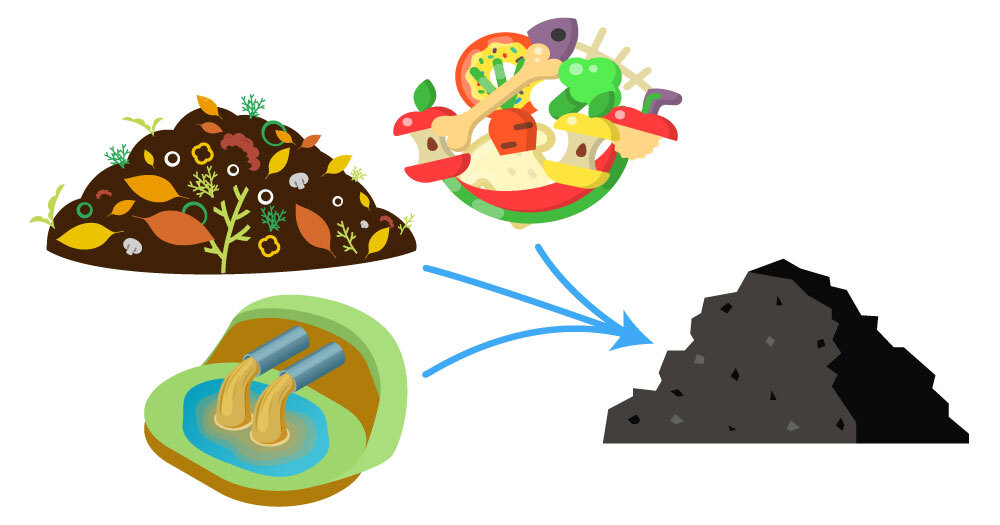
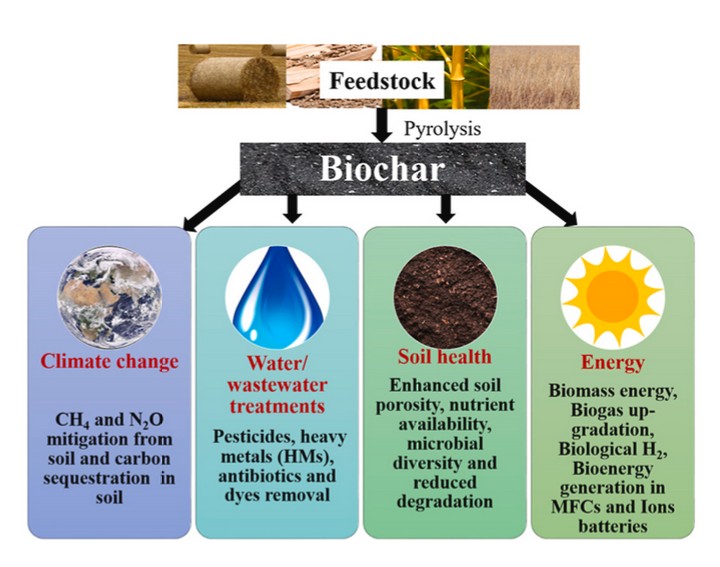
    • Biochar is a type of charcoal/black carbon produced by heating organic waste (like crop residue or solid municipal waste) in a low-oxygen environment.
    • It locks carbon into the soil for hundreds of years, reducing greenhouse gases and improving soil quality.
    • It is an effective long-term carbon sink.

    Biochar Potential in India:

    • India generates over 600 million tonnes of agricultural waste and 60 million tonnes of municipal waste each year, much of which is burned or dumped, contributing to pollution.
    • By converting just 30–50% of this waste into biochar, India could:
      • Produce 15–26 million tonnes of biochar
      • Remove 0.1 gigatonnes of Carbon Dioxide (CO₂) equivalent emissions annually
    • Biochar production also provides with the following:
      • Syngas (20–30 million tonnes) which can generate 8–13 TWh of electricity, replacing about 0.5–0.7 million tonnes of coal
      • Bio-oil (24–40 million tonnes) which can offset 12–19 million tonnes of diesel/kerosene, reducing oil imports and fossil fuel emissions by more than 2%

    Applications of Biochar in Key Sectors:

    1. Agriculture: It improves soil health and water retention, especially in semi-arid and nutrient-poor regions. It can reduce nitrous oxide emissions by 30–50%, which is vital as this gas has 273x more warming potential than CO₂. Its application leads to higher crop yields (10–25%) and reduced fertilizer needs (by 10–20%). Biochar can also enhance soil organic carbon, helping restore degraded soils.
    2. Construction: Adding just 2–5% biochar in concrete improves strength and heat resistance. It helps capture 115 kg of CO₂ per cubic metre of concrete, turning buildings into carbon sinks.
    3. Wastewater Treatment: One kg of biochar can help treat 200–500 litres of wastewater. India’s untreated wastewater (~72%) could use 2.5–6.3 million tonnes of biochar annually.
    4. Carbon Capture: Biochar can be modified to absorb CO₂ from industrial exhausts, though current efficiency is lower than traditional methods.
    5. Circular Economy: Biochar aligns with the circular economy model, waste to wealth.

    Why is Biochar Still Not Widely Adopted?

    1. It remains underrepresented in carbon credit systems due to the absence of standardised feedstock markets and consistent carbon accounting methods, which undermine investor confidence.
    2. Limited policy support, low public awareness, and no coordinated action across sectors.
    3. No strong carbon credit mechanism to reward users and producers.

    Steps that can be undertaken for Large-Scale Adoption of Biochar:

    1. R&D Support: Develop region-specific feedstock guidelines and technologies.
    2. Policy Integration: Link biochar with Crop residue management schemes, Bioenergy programs and State Action Plans on Climate Change
    3. Carbon Market Recognition: Allow biochar to earn carbon credits, giving financial incentives to farmers and investors.
    4. Village-Level Deployment: Establish small-scale biochar units that can create over 5 lakh rural jobs.
    5. Linkage with National Missions: Can be linked with Mission LiFE and the Swachh Bharat Abhiyan.

    Biochar offers a powerful tool for India’s climate smart and sustainable agriculture by enhancing soil health, improving water and nutrient retention, and bolstering climate resilience. Its integration can reduce dependency on synthetic inputs, aligning with organic farming principles. Crucially, biochar provides a significant mechanism for carbon sequestration and mitigating greenhouse gas emissions from agriculture, contributing to India’s climate goals. Leveraging this “black gold” through targeted policy support and research is essential for a greener, more resilient future.

    Practice UPSC Mains Question

    1. Biochar is emerging as a multipurpose tool for sustainable development in India. Discuss its potential across sectors and the challenges in its adoption.
    2. What are the salient features of ‘Waste-to-Energy’ policy of India? Describe the role of waste to energy technologies in achieving energy security in India.
  • Microplastic and marine debris levels

    Microplastic Pollution:

    Microplastics are now a serious environmental and health threat. A recent (Ministry of Earth Sciences) MoES–NCCR survey found alarming levels along India’s east and west coasts, highlighting the urgent need to embed microplastic control within India’s environmental governance framework.

    Key Findings from NCCR Survey (2022–2025):

    1. Major microplastic sources identified:
      1. Riverine inputs (plastic waste transported by rivers)
      2. Abandoned, Lost, and Discarded Fishing Gear (ALDFG), a persistent marine debris source globally
    2. The presence of primary (e.g., microbeads in cosmetics) and secondary microplastics (from the breakdown of plastic waste) was confirmed.

    Microplastics: Nature

    • Definition: Plastic particles ranging between 1 micrometre (µm) and 5 millimetres (mm).
    • Types:
      • Primary Microplastics: Manufactured in small sizes (e.g., microbeads in personal care products).
      • Secondary Microplastics: Result from degradation of larger plastic items due to sunlight, wave action and other environmental factors.

    Environmental Impact of Microplastics:

    Impact on Marine Environments:

    1. Ingestion by Marine Life: Marine organisms, including fish, seabirds, ingest microplastics and can cause physical harm including gut blockages and tissue damage.
    2. Bioaccumulation in Marine Food Webs: Bioaccumulation can lead to higher concentrations of toxins such as Polychlorinated Biphenyls (PCBs) and Polycyclic Aromatic Hydrocarbons (PAHs) in top predators, potentially impacting their health and reproductive success.
    3. Habitat Disruption: Microplastics can accumulate in marine sediments and affect the structure and function of marine ecosystems.
    4. Chemical Leaching: Microplastics can leach harmful chemicals into the surrounding seawater. These chemicals include Bisphenol A (BPA), which is known to cause reproductive defects in some fish species, along with phthalates and brominated flame retardants, all of which can interfere with the endocrine system.

    Impact on Ecological Systems:

    1. Soil Contamination: Microplastics can negatively impact soil structure, microbial activity, and nutrient cycling, affecting plant growth and overall ecosystem health. They can act as carriers for toxins like heavy metals (e.g., Lead (Pb) and Cadmium (Cd)).
    2. Disruption of Food Webs: Microplastics can accumulate in the bodies of various organisms, potentially disrupting food chains and affecting higher trophic levels.
    3. Impact on Soil Biota: Exposure to microplastics can negatively impact soil-dwelling organisms like earthworms and microorganisms, affecting their growth and reproduction. Leaching of plastic additives such as phthalates can disrupt cell membrane function in microbes.
    4. Plant Toxicity: Microplastics can be absorbed by plants, potentially affecting their growth and development, and introducing toxins into the food chain.

    India’s Initiatives on Microplastic Management

    1. Plastic Waste Management Rules, 2016 (Amended 2021–22): Ban on single-use plastics and Emphasis on Extended Producer Responsibility (EPR) for collection and recycling.
    2. Swachh Bharat Mission 2.0: Includes solid waste segregation, treatment, and scientific disposal.
    3. Ecosensitive Coastal Zone Regulation (CRZ): CRZ rules govern development along coastlines and indirectly reduce marine plastic input.
    4. FSSAI Project: Ongoing study to develop standard detection protocols for microplastics in food products.

    International Conventions and Agreements

    • MARPOL (International Convention for the Prevention of Pollution from Ships) Annex V prohibits the discharge of plastics and synthetic fishing gear into the sea.
    • Basel Convention (1989, amended in 2019) regulates transboundary movement of plastic waste. India ratified the amendments concerning plastic waste in 2020.
    • The United Nations Environment Assembly (UNEA) adopted a historic resolution to negotiate a legally binding global treaty on plastic pollution by 2024 (still ongoing).
    • Sustainable Development Goal 14 talks about Preventing and significantly reducing marine pollution of all kinds, particularly from land-based activities.
    • Global Partnership on Marine Litter (GPML): A UN Environment initiative, India is a participating country.

    Way Forward

    1. National Microplastic Monitoring Programme: Expand surveys to include rivers, lakes, groundwater, and terrestrial ecosystems.
    2. Ban on Microbeads: A clear legislative ban on the use of microbeads in personal care products (done in countries like the UK and USA).
    3. Fishing Gear Recovery Programmes: Introduce buy-back schemes or incentives for collection of damaged fishing gear.
    4. Invest in R&D: Support startups and research institutes working on biodegradable alternatives and plastic detection methods.
    5. Public Awareness and Behavioural Change: Use platforms like Eco Clubs, MyGov, Swachh Bharat campaigns for mass education.

    The presence of microplastics disrupts ecosystems by affecting organisms’ behavior and physiology, impacting soil fertility, and altering aquatic food webs. Addressing microplastic pollution requires a multi-faceted approach, including reducing plastic consumption, improving waste management, and developing innovative solutions like biodegradable alternatives and advanced filtration systems.

    Practice UPSC Mains Questions:

    1. What are microplastics and how do they impact human health and the environment? Evaluate India’s current policy response to the problem and suggest a comprehensive mitigation strategy.
    2. Critically discuss the effectiveness of current national and global efforts to combat microplastic pollution, including initiatives like the Single-Use Plastic ban and the ongoing discussions around a legally binding international plastics treaty.
  • In News: Great Barrier Reef

    Why in the News?

    The Great Barrier Reef is facing its sharpest coral decline in 40 years, with the 2024 mass bleaching—driven by climate change, cyclones, and coral predators—severely damaging large reef areas.

    In News: Great Barrier Reef

    About Great Barrier Reef:

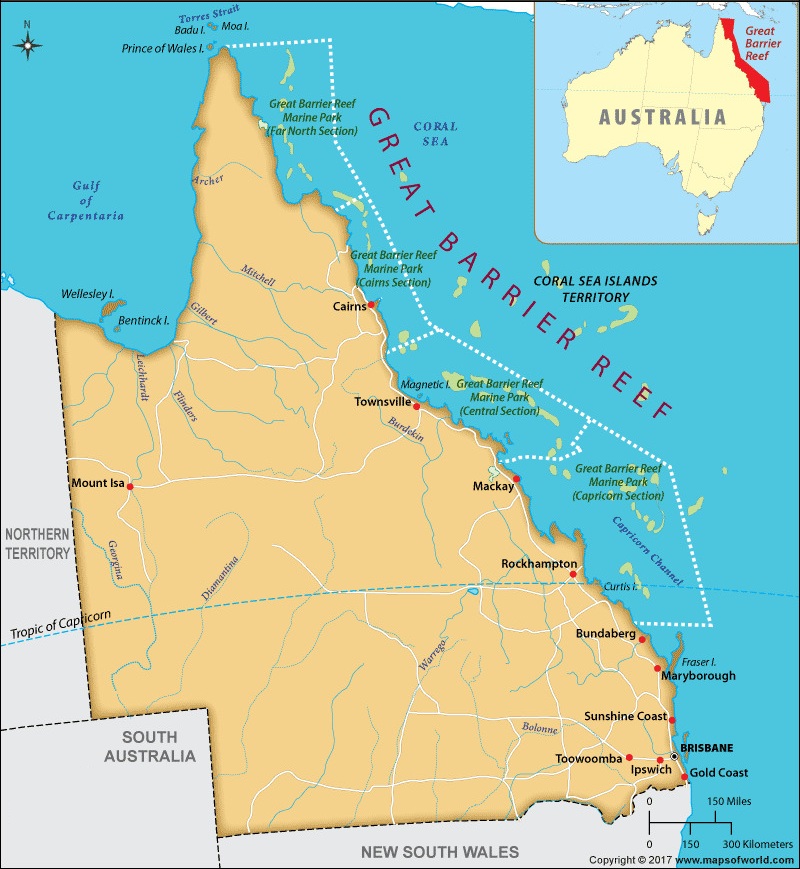
    • Location: Coral Sea, off the northeast coast of Queensland, Australia.
    • Length & Area: Extends ~2,300 km; comprises ~3,000 reefs and 900 islands, covering ~350,000 square kilometers (about 10% of global coral reef ecosystems).
    • Biodiversity:
      • Hosts 400 coral species, 1,500 fish species, and 4,000 mollusk species.
      • Habitat for endangered species like the dugong and green turtle.
    • Reef Types: Includes platform reefs, wall reefs, and fringing reefs.
    • Protection Status:
      • Managed by the Great Barrier Reef Marine Park Authority.
      • Declared a United Nations Educational, Scientific and Cultural Organization (UNESCO) World Heritage Site in 1981.
    • Mass Bleaching Years: Notable events occurred in 1998, 2002, 2016, 2017, 2020, 2022, 2024, and 2025.

    Coral Decline and Bleaching Events:

    • Main Cause: Heat stress due to climate change, particularly during marine heatwaves.
    • 2024 Event: Fifth major bleaching since 2016; had the widest spatial impact recorded in the Australian Institute of Marine Science’s 39-year monitoring program.
    • Additional Damage: Cyclones (e.g., Cyclone Jasper) and flood plumes caused physical damage and freshwater stress.
    • Biological Threats: Crown-of-thorns starfish (COTS) outbreaks intensified coral predation, especially in the Swains sector.
    • 2025 Survey Findings:
      • 48% of 124 surveyed reefs showed coral decline.
      • Only 10% recorded an increase in coral cover.
    • Regional Impact: Southern Great Barrier Reef saw a 30.6% drop in hard coral cover—the sharpest annual decline ever recorded in that zone.
    [UPSC 2014] The scientific view is that the increase in global temperature should not exceed 2 0 C above pre-industrial level. If the global temperature increases beyond 30 C above the pre-industrial level, what can be its possible impact/impacts on the world?

    1. Terrestrial biosphere tends toward a net carbon source. 2. Widespread coral mortality will occur. 3. All the global wetlands will permanently disappear.  4. Cultivation of cereals will not be possible anywhere in the world. Select the correct answer using the code given below:

    Options: (a) 1 only (b) 1 and 2 only* (c) 2, 3 and 4 only (d) 1, 2, 3 and 4 only


  • Status of Ethanol Blended Petrol (EBP) Programme

    Why in the News?

    India met its 20% ethanol blending (E20) target in petrol by March 2025 — five years early. Talks are now on to raise the blending ratio further in the immediate future.

    About Ethanol Blended Petrol (EBP) Programme:

    • Launched in 2003 by the Ministry of Petroleum and Natural Gas.
    • Objective: Promote use of renewable, domestically produced ethanol in petrol.
    • Nationwide rollout (except A&N and Lakshadweep) since April 2019.
    • Feedstock:
      • 1G Ethanol: From sugarcane molasses, maize, rice.
      • 2G Ethanol: From agricultural residues like rice straw, bamboo, bagasse.
    • Blending Progress:
      • 1.6% in 2013–14
      • 11.8% in 2022–23
      • 20% achieved in March 2025 (E20)
    • Future Plans:
      • Discussions on E27 blending target by 2030.
      • Government exploring flex-fuel vehicles (e.g., E85-capable (dual-fuel) cars).

    India’s Achievements:

    • Environmental Gains: 19.2 million tonnes of CO₂ emissions avoided (2014–2021).
    • Economic Impact: ₹26,000 crore saved in foreign exchange via reduced oil imports.
    • Industrial Growth:
      • Distillery capacity scaled up with interest subvention support.
      • Flex-fuel vehicles showcased by major automakers in 2025.
    • Farmer Benefit: Creates demand for sugarcane and grains, increasing farm income.

    Limitations:

    • Technical Challenges
      • Lower mileage with E20 due to reduced energy content.
      • Older vehicles may face engine compatibility issues.
      • Flex-fuel technology adoption still limited.
    • Economic Concerns
      • No drop in fuel prices despite ethanol savings.
      • Consumer hesitation due to lack of visible benefits.
    • Environmental Trade-offs
      • High land and water use for ethanol crops (especially sugarcane).
      • Food security risks from diverting food crops for fuel.
    • Need for Diversification
      • Majority of ethanol still from sugarcane; limited 2G ethanol usage.
      • Need to promote biomass-based ethanol (wood chips, crop residue).
    [UPSC 2025] Consider the following statements:

    Statement I: Of the two major ethanol producers in the world, i.e., Brazil and the United States of America, the former produces more ethanol than the latter.

    Statement II: Unlike in the United States of America where corn is the principal feedstock for ethanol production, sugarcane is the principal feedstock for ethanol production in Brazil.

    Which one of the following is correct in respect of the above statements?

    (a) Both Statement I and Statement II are correct and Statement II explains Statement I

    (b) Both Statement I and Statement II are correct but Statement II does not explain Statement I

    (c) Statement I is correct but Statement II is not correct

    (d) Statement I is not correct but Statement II is correct *


  • Population Census of Nilgiri Tahrs  

    Why in the News?

    A joint population census conducted by Kerala and Tamil Nadu has revealed the presence of 2,668 Nilgiri tahrs in the Western Ghats.

    Population Census of Nilgiri Tahrs  

    About Nilgiri Tahr (Nilgiritragus hylocrius):

    • Endemism: Found only in the Nilgiri Hills and southern Western Ghats of Tamil Nadu and Kerala, India.
    • Ecological Role: Key grazer in the montane grassland ecosystem, influencing plant growth and grassland regeneration.
    • Habitat:
      • Open montane grasslands interspersed with shola forests (South Western Ghats montane rain forests eco-region).
      • Occurs at elevations between 1,200 to 2,600 metres (3,900 to 8,500 feet).
      • Prefers steep rocky slopes, cliff edges, and grassy plateaus — areas with clear visibility to detect predators.
    • Population: Estimated 3,122 individuals in the wild; Locally extinct in about 14% of its historical habitat.
      • In Kerala (1,365): Eravikulam National Park (ENP) – largest single population (~841 individuals); Anamalai Hills landscape.
      • In Tamil Nadu (1303): Mukurthi National Park; Grass Hills National Park; Kalakkad-Mundanthurai Tiger Reserve (lesser presence)
    • Conservation Status:
      • IUCN Red List: Endangered
      • Wildlife (Protection) Act, 1972: Schedule I
    • Cultural Significance:
      • Official state animal of Tamil Nadu.
      • Mentioned in Tamil Sangam literature (~2,000 years ago).
      • Seen in Mesolithic rock art (10,000–4,000 BC), indicating its deep historical importance.
    [UPSC 2018] Consider the following fauna of India:

    1. Gharial 2. Leatherback turtle 3. Swamp deer

    Which of the above is/are endangered?

    Options: (a) 1 and 2 only (b) 3 only (c) 1, 2 and 3 * (d) None


  • Pollution Control can levy Environmental Damages: SC

    Why in the News?

    In a landmark ruling, the Supreme Court has empowered Pollution Control Boards (PCBs) across India with the authority to impose and collect restitutionary and compensatory damages under the Water and Air Acts.

    Key Highlights of Supreme Court Ruling:

    • Key Powers Granted:
      • Impose and collect restitutionary and compensatory damages.
      • Demand bank guarantees in anticipation of environmental harm.
    • Legal Basis:
      • Section 33A, Water Act, 1974: Power to issue directions for closure/regulation of industries and stoppage of utilities to enforce water pollution norms.
      • Section 31A, Air Act, 1981: Similar binding powers to control air pollution; non-compliance is a legal violation.

    About Central Pollution Control Board (CPCB):

    • Established: September 1974 under the Water (Prevention and Control of Pollution) Act, 1974; Also empowered under Air (Prevention and Control of Pollution) Act, 1981.
    • Role: Statutory technical body to promote clean air and water; provides services under the Environment (Protection) Act, 1986.
    • Key Functions:
      • Control and abate water and air pollution; promote stream and well cleanliness.
      • Advise the Central Government on pollution-related issues.
      • Coordinate with and assist State Pollution Control Boards (SPCBs); resolve disputes.
      • Monitor pollution in Union Territories via delegated powers under Water, Air, and Water Cess Acts.
    • Develops and revises:
      • National Ambient Air Quality Standards.
      • Water Quality Criteria from various sources.
      • Emission/Discharge Standards under Environment Protection Rules, 1986.
      • Bio-Medical Waste Incineration Norms.
      • Noise/Emission Limits for diesel, LPG, and CNG generators.
    • Minimal National Standards (MINAS) Issuance:
      • Covers effluent, emission, noise, and solid waste across industries.
      • Mandatory for State adoption as baseline standards.
      • Publishes COINDS (Comprehensive Industry Documents), manuals, and codes for pollution treatment and control systems.

    About State Pollution Control Boards (SPCBs):

    • Constitution: Formed by State Governments under the Water and Air Acts.
    • Functions:
      • Monitor and control local pollution.
      • Inspect industries and enforce compliance.
      • Advise state governments.
      • Conduct awareness campaigns.
      • Implement control programmes and collaborate with CPCB and local bodies.
    [UPSC 2018] How is the National Green Tribunal (NGT) different from the Central Pollution Control Board (CPCB)?

    1. The NGT has been established by an Act whereas the CPCB has been created by an executive order of the Government.

    2. The NGT provides environmental justice and helps reduce the burden of litigation in the higher courts whereas the CPCB promotes cleanliness of streams and wells and aims to improve the quality of air in the country.

    Which of the statements given above is/are correct?

    Options: (a) 1 only (b) 2 only * (c) Both 1 and 2 (d) Neither 1 nor 2


  • Bird Deaths in Thar Desert

    Why in the News?

    A new study by the Wildlife Institute of India (WII) reveals that wind farms in the Thar Desert, Rajasthan, have the highest recorded bird mortality rates globally.

    Bird Deaths in Thar Desert

    Bird Mortality at Wind Farms: Key Findings

    • Study Details: Conducted across 3,000 sq. km in Jaisalmer, Rajasthan, covering 90 wind turbines and 272 bird species, including the critically endangered Great Indian Bustard.
    • Carcass Count: 124 bird carcasses found within 150m radius of turbines.
    • Annual Mortality Estimate: 4,464 birds per 1,000 sq. km, after corrections for detection gaps and scavenger interference.
    • Control Sites: 28 sites (500–2,000m from turbines) found zero carcasses — indicating turbines as the direct cause.
    • Reasons:
      • Policy Gap: Onshore wind projects in India do not require Environmental Impact Assessments (EIAs), which weakens ecological safeguards.

    India’s Wind Energy Growth:

    • Current Status: India added 3.5 GW of wind power in the first half of 2025 — an 82% YoY increase.
    • Total Installed Capacity: Now stands at 51.3 GW.
    • Untapped Potential: Estimated at 1163.9 GW at 150 meters above ground level (National Institute of Wind Energy).

    Comparison with Past Studies:

    • 2019 Studies: Recorded just 0.47 bird deaths per turbine/year in Kutch and Davangere.
    • Thar Desert Rate: 1.24 bird deaths per turbine/month — significantly higher.
    • Contributing Factors:
      • High bird density in Thar.
      • Location along Central Asian Flyway.
      • Collisions with turbine-linked power lines included in this study.

    Proposed Mitigation Measures:

    • Technological:
      • Paint one turbine blade for visibility.
      • Shut down turbines during peak migration or high-risk periods.
    • Planning-Based:
      • Careful Site Selection seen as most critical step.
      • Use of tools like AVISTEP (Avian Sensitivity Tool for Energy Planning), which maps avian sensitivity across India.
      • AVISTEP ranks zones as low to very high sensitivity — intended as a guide for site avoidance.
    [UPSC 2012] Vultures which used to be very common in Indian countryside some years ago are rarely seen nowadays. This is attributed to:

    Options: (a) the destruction of their nesting sites by new invasive species disease among them

    (b) a drug used by cattle owners for treating their diseased cattle persistent and fatal *

    (c) scarcity of food available to them

    (d) a widespread, persistent and fatal disease among them