💥Join UPSC 2027,2028 Mentorship (July Batch) + XFactor Notes & Microthemes PDF

Subject: Conservation & Mitigation

1. Conservation Progs.
2. Worldwide initiatives
3. Mitigation Strategies
4. Conventions and Protocols

  • The issue with India’s tree planting schemes

    Why in the news? 

    India’s tree planting schemes have garnered attention as part of the country’s efforts to combat climate change and restore degraded ecosystems. However, these initiatives face several challenges and criticisms.

    Recent Trends of Special Conservation Drives:

    • Increased Initiatives: There has been a surge in global and national tree planting drives, such as the “One Trillion Project” by the World Economic Forum, Pakistan’s “10 Billion Tree Tsunami,” China’s “Great Green Wall,” and the “Bonn Challenge” to restore degraded landscapes.
    • High Media Attention: These drives often feature catchy slogans and glamorous campaigns that attract substantial media attention and public involvement.
    • Annual Events: India celebrates Van Mahotsava annually in July, aiming to promote tree planting and environmental conservation.

    Issues Associated with These Drives:

    • Limited Community Participation: Many programs lack significant involvement from local communities, affecting their effectiveness and sustainability.
    • Post-Planting Measures: Insufficient focus on post-planting care and monitoring hinders the success of tree planting efforts.
    • Monoculture Risks: Some drives promote monoculture, which can be detrimental to biodiversity and carbon sequestration.
    • Ecological Impact: Inappropriate tree planting in non-deforested areas like grasslands or animal habitats can damage ecosystems, increase wildfire risk, and exacerbate global warming.

    India’s Accountability and Challenges Toward Environmental Goals:

    • Achievements: India claims to have fulfilled its Paris Agreement commitments and achieved an additional carbon sink of 1.97 billion tonnes of CO2 equivalent.
    • Encroachment and Loss: Approximately 10 million hectares of Indian forests are under encroachment, and about 5.7 million hectares have been lost for non-forestry purposes.
    • Dependence on Forests: Nearly 27.5 crore people rely on forests for subsistence, highlighting the importance of sustainable management.
    • Restoration Goals: India aims to restore 26 million hectares of degraded forests by 2030, but faces challenges such as encroachment and the need for effective tree planting strategies.

    Way forward: 

    • Community Involvement: Need to foster local participation in tree planting drives by involving communities in planning, execution, and ongoing maintenance.
    • Monitoring and Maintenance: Try to implement robust post-planting monitoring and care systems to ensure the survival and growth of planted trees.
    • Policy and Strategy Improvements: To address criticism of mass planting drives, India needs to prioritize adequate financing, active community participation, and technical considerations in forestry and restoration strategies.
  • 845 Elephant Deaths recorded in Kerala in eight years

    Why in the News?

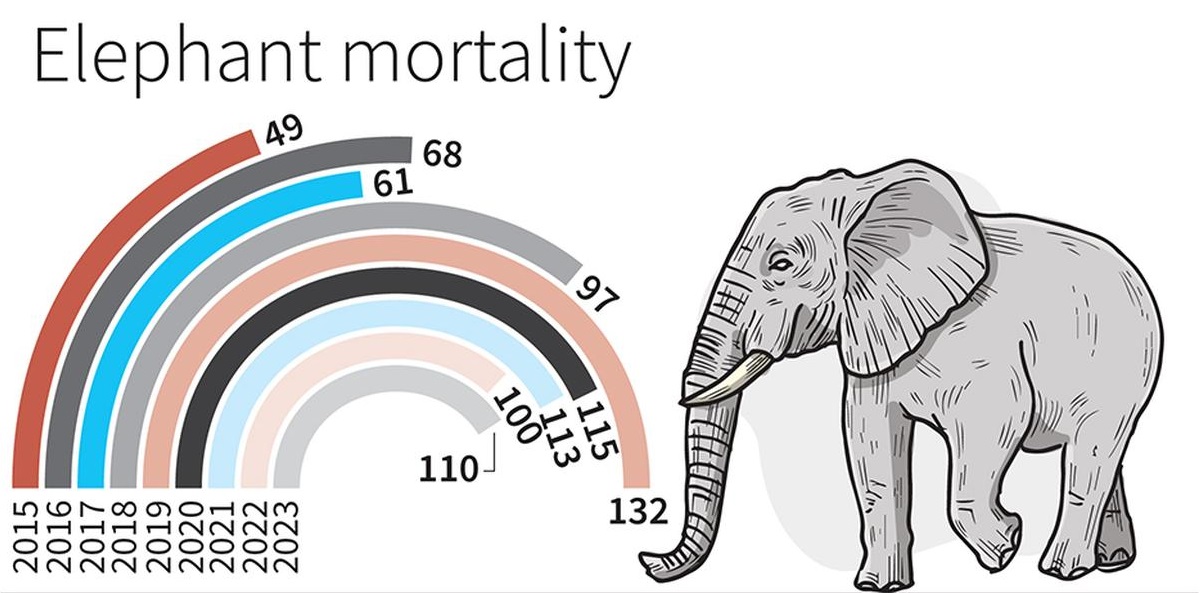
    • Kerala’s forests have recorded 845 elephant deaths between 2015 and 2023.
      • Studies indicate an increasing trend in the death rate over time.

    Habitat and Population Challenges

    • Elephants face increasing vulnerability due to shrinking habitats and rising fragmentation exacerbated by climate change.
    • Factors contributing to their susceptibility include:
    1. Declining population sizes
    2. Sensitivity to high temperatures
    3. Competition from invasive plant species disrupting food sources
    4. Heightened susceptibility to diseases

    Elephant Mortality: Key Trends

    • Younger elephants, particularly those under 10 years of age, face the highest risk of mortality.
    • The mortality rate for calves is approximately 40%.
    • The increase in deaths among calves is primarily due to Elephant Endotheliotropic Herpesviruses – Haemorrhagic Disease (EEHV-HD).

    Influence of Herd Size on Survival:

    • A recent study in Sri Lanka highlights potential mitigating factors against the herpesvirus.
    • Calves in larger herds exhibit better survival rates due to shared immunity.
    • Exposure to various virus strains within larger herds helps calves develop antibodies, improving their chances of survival.

    About Elephants in India

    Details
    Population Estimate
    • India hosts the largest population of wild Asian Elephants (Elephas maximus), with around 29,964 individuals,
    • Approximately 60% of the global population (2017 census).
    Leading States Karnataka holds the highest number of elephants, followed by Assam and Kerala.
    Conservation Status
    • IUCN Red List:  Endangered.
    • CMS: Appendix I.
    • Wildlife (Protection) Act, 1972: Listed under Schedule I,
    • CITES: Appendix I.
    Conservation Initiatives
    • Project Elephant launched in 1992, covering 23 states across India.
    • India is home to more than 60% of all wild Asian elephants.
    • Contributed to the increase in wild elephant population from around 25,000 in 1992 to about 30,000 in 2021.
    • Establishment of Elephant Reserves. Total 33 in numbers covering approximately 80,777 Sq.km.


    PYQ:

    [2020] With reference to Indian elephants, consider the following statements:

    1. The leader of an elephant group is a female.
    2. The maximum gestation period can be 22 months.
    3. An elephant can normally go on calving till the age of 40 years only.
    4. Among the States in India, the highest elephant population is in Kerala.

    Which of the statements given above is/are correct?

    (a) 1 and 2 only

    (b) 2 and 4 only

    (c) 3 only

    (d) 1, 3 and 4 only

  • Squalus hima: A new deep-water Dogfish Shark discovered in Kerala

    Why in the News?

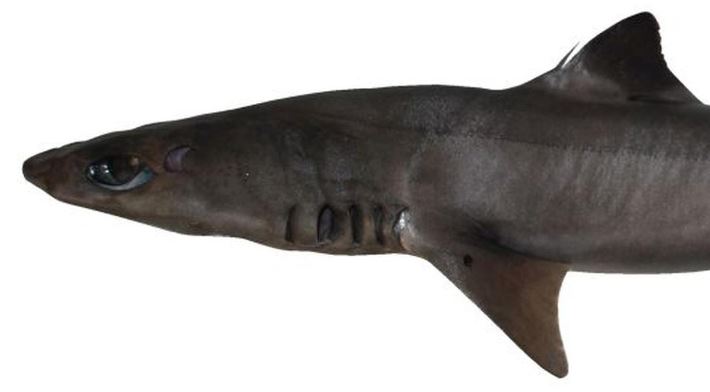
    Scientists from the Zoological Survey of India (ZSI) have discovered a new species of deep-water dogfish shark, Squalus hima, from the Sakthikulangara fishing harbour in Kerala along the Arabian Sea.

    About Squalus hima

    • Squalus is a genus of dogfish sharks in the family Squalidae, commonly known as spurdogs, characterized by smooth dorsal fin spines.
    • The new species, Squalus hima sp. nov., has been misidentified with S. mitsukurii and S. lalannei in the past.
    • Squalus hima differs from other species by the number of precaudal vertebrae, total vertebrae, teeth count, trunk and head heights, fin structure, and fin colour.

    Comparison with Other Species

    • On the Indian coast, two species of Squalus are found from the southwest coast of India.
    • The new species, Squalus hima n.sp., is very similar to Squalus lalannei but differs in many characteristics.
    • Species in the Squalus megalops group are characterized by an angular short snout, a small mouth almost as wide as the snout, the first dorsal fin origin behind the pectoral fins, and a body without any spots.

    Economic and Conservation Implications

    • Sharks in the genus Squalus and Centrophorus are exploited for their liver oil, which contains high levels of squalene, used in high-end cosmetic and anti-cancer products.
    • Fishermen from southern India and the Andaman and Nicobar Islands harvest these sharks for their liver oil, making conservation of these species critical.

    Importance of the Discovery

    • The discovery of Squalus hima is significant for the conservation of shark species exploited for commercial purposes.
    • Dogfish sharks are commercially important for their fins, liver oil, and meat and are sometimes caught as by-catch in fisheries targeting other species.

    PYQ:

    [2019] Consider the following pairs:

    Wildlife Naturally found in
    1. Blue-finned Mahseer Cauvery River
    2. Irrawaddy Dolphin Chambal River
    3. Rusty-spotted Cat Eastern Ghats

    Which of the pairs given correctly matched?

    (a) 1 and 2 only

    (b) 2 and 3 only

    (c) 1 and 3 only

    (d) 1, 2 and 3

  • Species in News

    Description

    Cyrtobagus salvinia

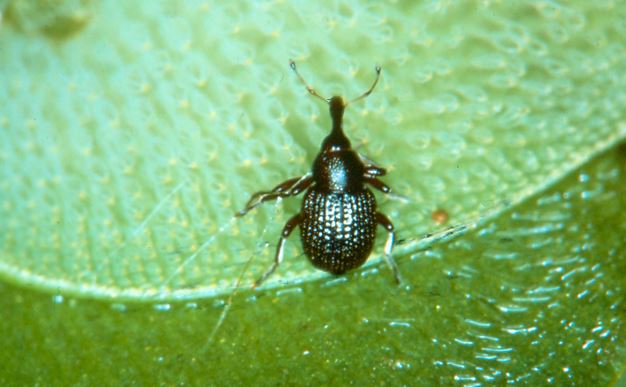
    • Context: Used to eradicate the invasive weed Salvinia molesta from the Sarani reservoir in Betul district, Madhya Pradesh.
    • Biological Details: Exotic beetle from Brazil, targets and eradicates Salvinia molesta, dies naturally post-eradication.
    • Bioremediation: Implemented by ICAR-DWR (Indian Council of Agricultural Research-Directorate of Weed Research), started in April 2022, completed within 15 to 18 months.
    • Economic and Social Impact: Restored livelihoods for fishermen by reviving fish populations; initial challenges included high cost and impracticality of manual removal.
    • Conservation Status: No risk, as the beetle dies naturally after eradicating the weed.

    Squalus hima


    • Context: Newly discovered species of deep-water dogfish shark found in the Arabian Sea off the coast of Kerala.
    • Biological Details: Genus Squalus, family Squalidae, commonly known as spurdogs; differs in vertebrae count, teeth, and fin structure from other species.
    • Discovery: Discovered by Zoological Survey of India (ZSI) at Sakthikulangara fishing harbour, Kerala; significant for new species identification and conservation.
    • Economic and Social Impact: Important for commercial products like liver oil used in cosmetics and anti-cancer products; challenges include high exploitation for liver oil, fins, and meat.
    • Conservation Status: Critical due to high commercial exploitation for liver oil, fins, and meat; important for conservation efforts.


    PYQ:

    [2018] Why is a plant called Prosopis juliflora often mentioned in the news?

    (a) Its extract is widely used in cosmetics.

    (b) It tends to reduce the biodiversity in the area in which it grows.

    (c) Its extract is used in the synthesis of pesticides.

    (d) None of the above.


    [2019] Consider the following pairs:

    Wildlife Naturally found in
    1. Blue-finned Mahseer Cauvery River
    2. Irrawaddy Dolphin Chambal River
    3. Rusty-spotted Cat Eastern Ghats

    Which of the pairs given correctly matched?

    (a) 1 and 2 only

    (b) 2 and 3 only

    (c) 1 and 3 only

    (d) 1, 2 and 3

  • Zoological Survey of India’s Report on Animal Discoveries 2023

    Why in the News?

    A report titled “Animal Discoveries 2023” by the Zoological Survey of India (ZSI) highlights significant new species findings in Maharashtra and across India.

    New Species in Maharashtra:

    • Maharashtra recorded 14 new animal species in 2023, with two species reported for the first time in India.
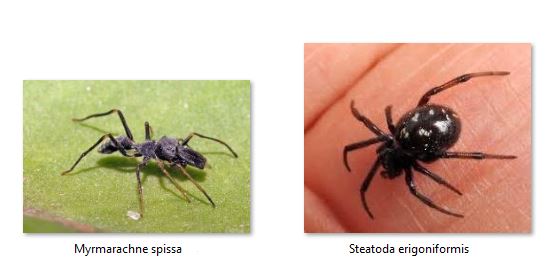
    • Notably, among the 25 Arachnid species reported for the first time in India, two belong to Maharashtra—Steatoda Erigoniformis and Myrmarachne Spissa.
    1. Steatoda Erigoniformis: It is a species of spider known for its resemblance to the more dangerous black widow spiders. They are commonly referred to as “false widow spiders.”
    2. Myrmarachne Spissa: It is part of a group of spiders that mimic ants in appearance and behaviour, a trait known as myrmecomorphy. Previously reported in Sri Lanka, Myrmarachne Spissa’s discovery in Pune marks its first report from India, highlighting the region’s biodiversity significance.

    Key Findings from the ZSI Report:

    • National Discoveries:
      • In 2023, Indian scientists reported a total of 641 new discoveries, including 442 new species and 199 new records for India.
      • This includes the discovery of 19 new genera. As of January 1, 2024, India’s faunal diversity stands at 104,561 species, with the additions in 2023 constituting 6.65% of the global faunal diversity.
    • Categories of Discoveries:
      • Invertebrates accounted for the majority of new discoveries with 564 species, while vertebrates contributed 77 species.
      • Among invertebrates, insects led with 369 new species, while vertebrates were dominated by fish with 47 species, followed by reptiles, amphibians, and mammals.
    • Regional Distribution:
      • Kerala reported the highest number of new discoveries (101), followed by West Bengal (72), Tamil Nadu (64), Arunachal Pradesh (45), Karnataka (45), and the Andaman and Nicobar Islands (36).
      • Southern India consistently reports the highest number of species.


    Back2Basics: Zoological Survey of India

    • The ZSI was set up by British zoologist Thomas Nelson Annandale, in 1916.
    • It is the premier taxonomic research organisation in India based in Kolkata.
    • It was established to promote surveys, exploration and research leading to the advancement of our knowledge of various aspects of the exceptionally rich animal life of India.
    • The ZSI had its genesis as the Zoological Section of the Indian Museum at Calcutta in 1875.
    • Since its inception, the ZSI has been documenting the diversity and distribution of the fauna of India towards carrying out its mandate of conducting exploration-cum-taxonomic-research programmes.
    • The ZSI has published an extremely large amount of information on all animal taxa, from Protozoa to Mammalia.


    PYQ:

    [2020] With reference to India’s Biodiversity, Ceylon frogmouth, Coppersmith barbet, Gray-chinned minivet and White-throated redstart are:

    (a) Birds

    (b) Primates

    (c) Reptiles

    (d) Amphibians

  • Upper Siang Hydropower Project in Arunachal Pradesh

    Why in the News?

    Activists are protesting against the Upper Siang Hydropower Project in Arunachal.

    About Upper Siang Multipurpose Storage Project

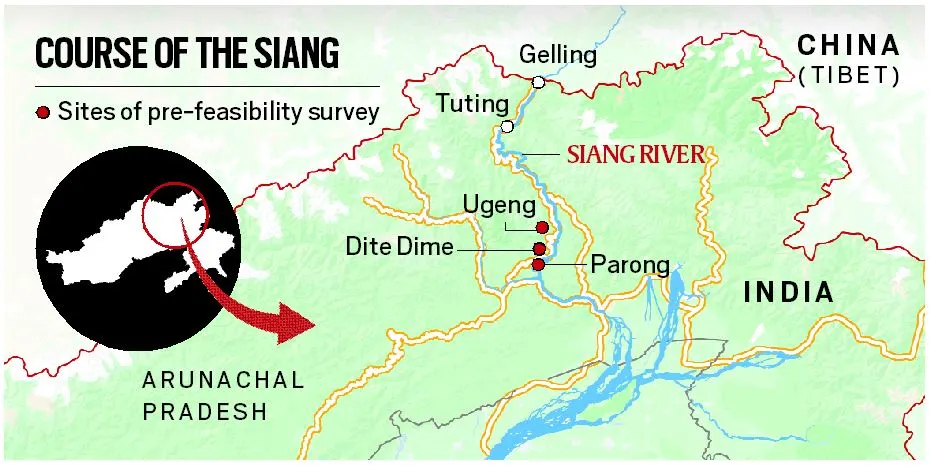
    • The Upper Siang project is a proposed 11,000 MW hydropower project on the Siang River in Arunachal Pradesh.
      • The Siang, originating near Mount Kailash in Tibet (Tsangpo), flows over 1,000 km eastward, enters Arunachal Pradesh as the Siang, and later becomes the Brahmaputra in Assam.
    • Initially proposed as two separate projects, it was consolidated into one larger project in 2017, to be built by the National Hydroelectric Power Corporation (NHPC), featuring a 300-metre high dam.

    Strategic Importance:

    • The Upper Siang project is seen as a strategic move to counter China’s hydel projects on the Tsangpo, particularly a 60,000 MW ‘super dam’ in Tibet’s Medog county.
    • This super dam’s capacity is nearly 3x that of the Three Gorges Dam in China and is intended to divert water to northern China.

    Environmental and Social Concerns

    • Anti-dam organizations express concerns about the project’s environmental and social impact in their memorandum.
    • The memorandum highlights the threat to delicate ecosystems, wildlife habitats, and biodiversity in Arunachal Pradesh, which already hosts numerous dams.
    • The activists are particularly worried about the displacement of communities, as the project could submerge over 300 villages of the Adi tribe, including the district headquarters of Yingkiong.
    • Activists are also wary of the project’s portrayal as a national interest endeavor and are troubled by a provision in the Forest (Conservation) Amendment Act, which exempts strategic projects within 100 km from India’s borders from clearance requirements.

    Back2Basics: Forest (Conservation) Amendment Act, 2023

    Details
    Land Under the Purview of the Act Defines two categories of land under its purview:

    1. Land declared as forest under the Indian Forest Act or any other law, or notified as a forest after 25th October 1980.
    2. Land converted from forest to non-forest use before 12th December 1996.
    Exemptions from the Act Allows exemptions for:

    • Up to 0.10 hectares of forest land for connectivity purposes along roads and railways. 
    • Up to 10 hectares for security-related infrastructure.
    • Up to 5 hectares in Left Wing Extremism Affected Districts for public utility projects.
    • Additionally, strategic projects within 100 km of international borders, LAC, and LoC are also exempted.
    Permitted Activities in Forest Land
    • Includes conservation, management, and development efforts.
    • Activities like zoos, ecotourism facilities, silvi-cultural operations, and specified surveys are exempted from non-forest purposes.
    Assignment/Leasing of Forest Land
    • Extends the prerequisite for obtaining prior approval from the central government for the assignment of forest land to any entity, broadening the scope beyond private entities.
    • It also grants the central government the authority to stipulate the terms and conditions governing such assignments.


    PYQ:

    [2011] The Brahmaputra, Irrawady and Mekong rivers originate in Tibet and flow it through narrow and parallel mountain ranges in their upper reaches. Of these rivers, Brahmaputra makes a “U” turn in its course to flow into India. This “U” turn is due to:

    (a) Uplift of folded Himalayan series

    (b) Syntaxial bending of geologically young Himalayas

    (c) Geo-tectonic disturbance in the tertiary folded mountain chains

    (d) Both (A) and (B) above

  • Central India’s land-use patterns, roads fragmenting gaur & sambar populations, threatening genetic diversity   

    Why in the news? 

    A recent study by the National Centre for Biological Sciences (NCBS) found that land-use alterations and road construction in central India affect the genetic connectivity of two prominent herbivores: the gaur and the sambar.

    What is Genetic diversity?

    • Genetic diversity refers to the variety and variability of genetic material within a species or population, essential for adaptation, resilience to environmental changes, and long-term survival of organisms.

    About National Centre for Biological Sciences (NCBS)   

    • NCBS is a premier research institute located in Bangalore, India that is part of the Tata Institute of Fundamental Research (TIFR) under the Department of Atomic Energy of the Government of India.
    • The mandate of NCBS is to conduct fundamental research in the frontier areas of biology, ranging from the study of single molecules to ecology and evolution.

    Observations made by the National Centre for Biological Sciences (NCBS)   

    • Impact of Habitat Modification: The NCBS study underscores the significant impact of habitat loss and fragmentation on wildlife populations, particularly highlighting how expanding linear infrastructure like highways and railway lines disrupts animal movement and genetic connectivity.
    • Genetic Connectivity of Herbivores: It is the first study in India to investigate the genetic connectivity of large herbivores, specifically the gaur and sambar, at a landscape scale. The research reveals how these species are affected differently by landscape features and human activities, influencing their genetic diversity and ability to adapt to environmental changes.
    • Conservation Urgency: The study emphasizes the urgent need for conservation measures in fragmented habitats, such as Umred Karhandla Wildlife Sanctuary in Maharashtra, where small and genetically isolated populations of herbivores require targeted interventions to ensure their survival and genetic health.
    • Methodological Advances: Using advanced genetic techniques like next-generation sequencing (NGS) and landscape genetics, the NCBS researchers demonstrated how these tools can provide crucial insights into population dynamics, genetic diversity, and the impacts of human-induced changes on wildlife populations.

    Present Issues from Tiger reserves and Wildlife sanctuaries in MP and MH

    • Habitat Fragmentation and Connectivity: Both states face significant challenges related to habitat fragmentation due to expanding linear infrastructure like highways and railway lines. These developments disrupt wildlife corridors essential for the movement of animals, leading to isolated populations and reduced genetic connectivity, as observed in the NCBS study.
    • Human-Wildlife Conflict: Increasing instances of human-wildlife conflict pose a threat to both animals and human communities living near tiger reserves and wildlife sanctuaries. Encroachment of habitat for agriculture and settlements often results in conflicts over resources and occasionally leads to casualties among both wildlife and humans.
    • Poaching and Illegal Wildlife Trade: Despite conservation efforts, tiger reserves and sanctuaries in MP and MH continue to face challenges related to poaching and illegal wildlife trade. Tigers and other endangered species are targeted for their skins, bones, and other body parts, driven by demand in illegal markets.
    • Resource Extraction and Mining: Mining activities and resource extraction near protected areas pose significant environmental threats. These activities not only lead to habitat destruction but also contribute to pollution and disturbance, affecting the overall ecosystem health and biodiversity of these regions.
    • Climate Change Impacts: The effects of climate change, such as erratic weather patterns and changing rainfall regimes, also impact tiger reserves and wildlife sanctuaries in MP and MH. These changes can alter habitat suitability for wildlife species, affecting their distribution, migration patterns, and ability to adapt to new environmental conditions.

    Way forward: 

    • Enhanced Habitat Connectivity and Protection: Implement measures to mitigate habitat fragmentation caused by linear infrastructure. This includes creating wildlife corridors over or under highways and railways to facilitate safe animal movement
    • Integrated Conservation and Community Engagement: Foster collaboration between local communities, conservation organizations, and government agencies to address human-wildlife conflict and illegal activities like poaching.

    Mains PYQ: 

    Q How does biodiversity vary in India? How is the Biological Diversity Act,2002 helpful in the conservation of flora and fauna? (UPSC IAS/2018)

  • Threats to Island Reptiles and Cacti Highlighted by IUCN

    Why in the News?

    The International Union for Conservation of Nature (IUCN) has issued an update on the threats faced by various reptile and cactus species due to invasive species and illegal trade.

    Species highlighted by the IUCN

    Species Status Change Reason for Decline Location Threats
    Ibiza Wall Lizard

    Near Threatened → Endangered 50% population decline since 2010 due to invasive snake Ibiza, Spain Invasive horseshoe whip snake (Haemorrhoids Hippocrepis)
    Gran Canaria Giant Lizard

    Least Concern → Endangered >50% decline since 2014 due to the introduction of California Kingsnake Gran Canaria, Spain California Kingsnake (Lampropeltis California)
    Gran Canaria Skink

    Least Concern → Endangered >50% decline since 2014 due to the introduction of California Kingsnake Gran Canaria, Spain California Kingsnake (Lampropeltis California)
    Copiapoa Cacti

    Critically Endangered 82% critically endangered, up from 55% in 2013 Atacama Desert, Chile Illegal trade for ornamental purposes, climate change impacts


    Back2Basics: IUCN Overview Table

    Details
    Founded 1948
    Headquarters Gland, Switzerland
    Mission To conserve nature and ensure the sustainable and equitable use of natural resources.
    Focus Areas
    • Initially conservation ecology
    • Now includes sustainable development issues
    Influence
    • Influences governments, businesses, and stakeholders
    • Known for the IUCN Red List of Threatened Species
    IUCN Red List
    • Estimates the probability of species’ extinction for animals, fungi, and plants globally
    • Public and universally accessible
    • Provides specific data on species’ attributes, dangers, and protection efforts
    • Assists in conservation decisions and policy-making
    Categories of Extinction Risk
    • Nine categories from NE (Not Evaluated) to EX (Extinct)
    • Threatened categories: Critically Endangered (CR), Endangered (EN), and Vulnerable (VU)
    Global Targets Indicator Serves as a headline indicator for SDGs and Aichi Targets
    IUCN Green Status of Species
    • Assesses the effectiveness of recovery and conservation processes for species’ populations
    • Categories: EW (Extinct in the Wild), CR (Critically Endangered), LR/cd (Least Concern/Conservation Dependent), MOD (Moderately Depleted), SL (Stable), FR (Fluctuating Range), ND (Not Determined), ID (Insufficient Data)


    PYQ:

    [2023] Invasive Species Specialist Group’ (that develops Global Invasive Species Database) belongs to which one of the following organizations?

    (a) The International Union for Conservation of Nature
    (b) The United Nations Environment Programme
    (c) The United Nations World Commission for Environment and Development
    (d) The World Wide Fund for Nature

    [2015] With reference to the International Union for Conservation of Nature and Natural Resources (IUCN) and the Convention on International Trade in Endangered Species of Wild Fauna and Flora (CITES), which of the following statements is/are correct?

    1. IUCN is an organ of the United Nations and CITES is an international agreement between governments
    2. IUCN runs thousands of field projects around the world to better manage natural environments.
    3. CITES is legally binding on the States that have joined it, but this Convention does not take the place of national laws.

    Select the correct using the code given below.
    (a) 1 only
    (b) 2 and 3 only
    (c) 1 and 3 only
    (d) 1, 2 and 3

  • Indian Star Tortoises rescued from Malaysia

    Why in the News?

    Malaysia has seized about 200 smuggled Indian Star Tortoises and Turtles in a major crackdown. The Indian star tortoise is the single most confiscated species of freshwater tortoise in the world, according to wildlife trade watchdog TRAFFIC.

    About Indian Star Tortoises (Geochelone elegans)

    Details
    Habitat
    • Found in Central and Southern India, West Pakistan, and Sri Lanka
    • Typically resides in dry, open habitats such as scrub forests, grasslands, and rocky outcroppings
    Threats
    • Habitat fragmentation due to urbanization and agricultural practices
    • Loss of genetic diversity due to hybridization
    • 90% of trade occurs in the international pet market, according to the Wildlife Crime Control Bureau
    Protection Status
    • IUCN Red List: Vulnerable
    • Wild Life Protection Act 1972: Schedule I
    • CITES: Appendix I


    Back2Basics: TRAFFIC (Trade Records Analysis of Flora and Fauna in Commerce)

    Details
    Founded 1976
    Headquarters Cambridge, United Kingdom
    Mission Ensure that trade in wild plants and animals does not threaten the conservation of nature.
    Founding Partners World Wildlife Fund (WWF) and the International Union for Conservation of Nature (IUCN)
    Focus Areas
    • Biodiversity Conservation
    • Sustainable Development
    Governance
    • TRAFFIC Committee (WWF and IUCN members)
    • Cooperation with the CITES Secretariat
    Staff Expertise Biologists, conservationists, academics, researchers, communicators, investigators
    Global Network Research-driven, action-oriented global network
    Key Functions
    • Evolution of wildlife trade treaties
    • Expertise on urgent species trade issues (tiger parts, elephant ivory, rhino horn)
    • Addressing large-scale commercial trade in timber and fisheries products
    TRAFFIC in India
    • Programme Division of WWF-India since 1991
    • Based in New Delhi
    • Collaborates with national and state governments to curb illegal wildlife trade


    PYQ:

    [2013] Consider the following:

    1. Star tortoise
    2. Monitor lizard
    3. Pygmy hog
    4. Spider monkey

    Which of the above are naturally found in India?

    (a) 1, 2 and 3 only
    (b) 2 and 3 only
    (c) 1 and 4 only
    (d) 1, 2, 3 and 4

  • Delhi Preservation of Trees Act (DPTA), 1994

    Why in the News?

    The Supreme Court and the Delhi government are at loggerheads due to alleged felling of trees in the Asola-Bhati Wildlife Sanctuary under the Delhi Preservation of Trees Act (DPTA), 1994.

    Forest Cover in Delhi: ISFR Report Findings

    • Largest Cover: According to the ‘India State of Forest Report 2021’ (ISFR) published by the Forest Survey of India (FSI), Delhi has the largest forest cover among seven major megacities, with 195 sq. km, followed by Mumbai (110.77 sq. km) and Bengaluru (89.02 sq. km).
      • Delhi’s forest cover constitutes 13.15% of its geographical area, while its tree cover spans 147 sq. km (9.91%).
    • Growth over Time: Despite extensive urban development, the city’s overall green cover (forest and tree cover) has increased from 151 sq. km (10.2%) in 2001 to 342 sq. km (23.6%) in 2021.

    What is the case against the DDA?

    • The Supreme Court is hearing a contempt petition against DDA’s Vice Chairman for the felling of about 1,100 trees, in violation of the SC’s orders, for road expansion in the ridge area, which falls under the eco-sensitive zone around Asola-Bhati Wildlife Sanctuary.
    • On March 4, the DDA submitted an application to the SC seeking permission to cut trees for the construction of the Gaushala Road. The court directed the DDA to re-examine the proposal with the help of field experts.
    • An affidavit from the DDA’s Vice Chairman revealed that tree felling had already begun in February and continued for ten days. By February 26, all intended trees were cut down even before the application reached the SC. This material fact was not disclosed when the court heard the application on March 4.
    • The Bench reprimanded DDA for not providing records of the Delhi LG’s (Chairman of the DDA) February 3 visit to the site, which allegedly led to the tree felling order. The Delhi government was also reprimanded for usurping the Tree Officer’s authority in granting permission.
    • The apex court has halted the DDA’s work and directed a team from the FSI to assess the number of trees cut and the environmental damage.

    Law governing Tree Protection in Delhi:

    Delhi Preservation of Trees Act (DPTA), 1994 provides legal protection to trees in the national capital against actions that could harm their growth or regeneration.

    • The Act defines a tree as “a woody plant that has branches supported by a trunk or a body of at least 5cm diameter and is at least 1 metre high from the ground”.
    • Section 2 (h) of the Act defines “to fell a tree” to include severing the trunk from the roots, uprooting, bulldozing, cutting, girdling, lopping, pollarding, applying arboricides, burning, or any other damaging method.
    • Under Section 8, no tree or forest produce can be removed on any land without prior permission from the ‘Tree Officer’, even on privately owned property. The ‘Tree Officer’ must respond within 60 days after inspection.
      • Violations of this Act may result in imprisonment for up to one year, a fine up to ₹1,000, or both.
    • The Act outlines a ‘Tree Authority’ responsible for conducting tree censuses, managing nurseries, and reviewing government and private construction proposals.
    • Delhi’s Tree Transplantation Policy, 2020 mandates that 80% of identified trees slated for felling must be transplanted. However, an affidavit submitted by the government to the Delhi High Court in 2022 disclosed that only 33.33% of transplanted trees had survived.

    About Asola Bhatti WLS

    Situated in the southern part of Delhi and extends into Faridabad and Gurugram districts of Haryana.

    • Occupies 32.71 sq. km on the Aravalli hill range’s Southern Delhi Ridge, bordering Delhi and Haryana.
    • Forms a part of Rajasthan’s Sariska Tiger Reserve to the Delhi Ridge.
    • Classified under Northern Tropical Thorn Forests.
    • Plant Features plants with xerophytic characteristics like thorns, wax-coated and succulent leaves.
    • Characterized by the presence of the exotic Prosopis juliflora and the native Diospyros montana.
    • Home to species such as Golden Jackals, Striped-Hyenas, Indian Crested-Porcupines, Civets, Jungle Cats, various snakes, Monitor Lizards, and Mongoose.


    Conclusion: The Supreme Court’s directive to enhance Delhi’s green cover is a crucial step towards mitigating the impacts of extreme heat waves and improving the city’s air quality.

    PYQ:

    [2022] “The most significant achievement of modern law in India is the constitutionalization of environmental problems by the Supreme Court.” Discuss this statement with the help of relevant case laws.