💥Join UPSC 2027,2028 Mentorship (July Batch) + XFactor Notes & Microthemes PDF

Subject: Conservation & Mitigation

1. Conservation Progs.
2. Worldwide initiatives
3. Mitigation Strategies
4. Conventions and Protocols

  • A call to action for a sustainable future  

    Why in the news?

    World Environment Day (WED) on June 5th is a global event where people come together to celebrate the importance of environmental conservation and sustainability, emphasizing the urgent need to tackle environmental challenges.

    World Environment Day 2024 Theme

    Theme: “Land Restoration, Desertification, and Drought Resilience”

    • Highlighting Critical Issues: Focuses on the significant threats posed by land degradation and desertification, which impact food security, biodiversity, and climate change. For example, the United Nations estimate that about 30% of land is degraded worldwide
    • The urgency for Action: Emphasizes the need for immediate actions in the face of the triple planetary crisis: Climate Change, Nature and Biodiversity Loss, and Pollution and Waste.
    • Shared Responsibility: Stresses collective action and individual responsibility in restoring ecosystems, urging everyone to contribute to solutions.
    • Empowering Youth: Encourages young people to lead the change towards a sustainable future with the #GenerationRestoration slogan.
    • Alignment with Global Goals: Supports the UN Decade on Ecosystem Restoration (2021-2030) and the Sustainable Development Goals, promoting a comprehensive approach to environmental protection.

    India’s Ambitious Renewable Targets

    • Renewable Energy Goals: India aims to achieve 450 GW of renewable energy capacity by 2030, emphasizing solar and wind energy.
    • Solar Energy Initiatives: Major solar projects, including the world’s largest solar park in Karnataka and the International Solar Alliance (ISA), aim to promote solar energy adoption.
    • Wind Energy: India is one of the world’s largest producers of wind energy, with significant wind farms in Tamil Nadu and Gujarat.
    • Policy Support: The government has introduced various policies and incentives to encourage investment in renewable energy, including subsidies, tax benefits, and easier land acquisition processes.
    • Sustainable Development: These initiatives align with India’s commitments under the Paris Agreement to reduce carbon emissions and promote sustainable development.

    How COVID-19 Shows Us the Way Forward

    • Environmental Awareness: The pandemic has heightened awareness of the interconnectedness between human health and the environment, highlighting the importance of preserving natural habitats to prevent zoonotic diseases.
    • Reduction in Pollution: Lockdowns and reduced industrial activities during the pandemic led to significant decreases in air and water pollution, demonstrating the impact of human activities on the environment.
    • Green Recovery: The concept of building back better suggests incorporating green recovery strategies into post-pandemic economic plans, focusing on sustainable practices and renewable energy investments.
    • Resilient Systems: Emphasizes the need for resilient and adaptive systems that can withstand future shocks, including those caused by climate change and environmental degradation.
    • Global Cooperation: COVID-19 underscored the importance of international cooperation and collective action to tackle global challenges, a principle that is equally applicable to environmental issues.

    Conclusion: By embracing the lessons from the pandemic, setting ambitious renewable energy targets, and focusing on land restoration and resilience, the global community can work towards a sustainable and resilient future. World Environment Day 2024 serves as a pivotal moment to reflect on these goals and renew our commitment to environmental stewardship.

    Mains PYQ:

    Q Access to affordable, reliable, sustainable and modern energy is the sine qua non to achieve Sustainable Development Goals (SDGs)”.Comment on the progress made in India in this regard. (150 Words, 10 Marks) (UPSC IAS/2018)
  • RobiNOweed: ICAR’s Herbicide-Tolerant Basmati Variety

    Why in the News? 

    • Indian Agricultural Research Institute (IARI) launched India’s inaugural non-GM herbicide-tolerant Basmati rice varieties for commercial farming, ensuring improved weed control, cost-effectiveness, and addressing water scarcity and methane emissions in cultivation.

    About the Indian Council of Agricultural Research (ICAR)

    • ICAR is an autonomous organisation under the Department of Agricultural Research and Education (DARE), Ministry of Agriculture and Farmers Welfare.
    • It is headquartered in New Delhi.
    • ICAR was formerly known as the Imperial Council of Agricultural Research.
    • It was established in 1929 as a registered society under the Societies Registration Act, 1860 on the basis of the report of the Royal Commission on Agriculture.

    Functions of ICAR:

    • Its primary mandate is to coordinate agricultural education and research in India and provide leadership in agriculture and allied sectors.
    • It is the apex body for coordinating, guiding and managing research and education in agriculture including horticulture, fisheries and animal sciences in the entire country.

    Structure and Organization:

    • ICAR operates under the Department of Agricultural Research and Education (DARE), Ministry of Agriculture and Farmers Welfare, Government of India.
    • It consists of a network of research institutes, national bureaus, project directorates, and agricultural universities across the country.
    • The council is governed by a Governing Body and an Executive Committee, which oversee its functioning and activities.

    Recognition and Awards:

    • ICAR confers prestigious awards, such as: the Rafi Ahmed Kidwai Award, the Borlaug Award, and the Hari Om Ashram Trust Award, to recognize excellence in agricultural research and education.

    About RobiNOweed

    • Dubbed as ‘RobiNOweed,’ these varieties are developed by ICAR-IARI and named as:
    1. Pusa Basmati 1979 and
    2. Pusa Basmati 1985
    • They are tailor-made for farmers employing the direct seeded rice (DSR) method, where weed management is crucial.

    Benefits Offered

    • Effective Weed Management: These new varieties offer an effective solution to weed issues and promote the success of the DSR method, potentially saving up to 33% of the total water requirement.
    • Water Conservation: DSR significantly reduces water usage compared to traditional flooding methods, addressing concerns of water depletion, especially in northwest India.
    • Market Impact: With IARI already holding a dominant 95% share in Basmati exports, these new varieties are expected to further boost production and export.

    Critical Assessment of Herbicide-Tolerant Varieties

    • Weed Management Alternatives: Some scientists argue against the necessity of Ht rice, advocating for eco-friendly weed management methods based on climatic factors.
    • Potential Risks: Concerns arise regarding the limited efficacy of the herbicide, its impact on genetic diversity, and the evolution of herbicide-resistant weeds.
    • Lessons from Past: Lessons from the Bt Cotton experience highlight the risks associated with overreliance on specific agricultural technologies.

    What is the Direct Seeding of Rice (DSR) technique?

    • Transplantation Method: In the conventional transplantation method, seeds are sown in nurseries, grown into seedlings, and then transplanted into puddled fields.
    • Direct Seeding: DSR involves directly drilling pre-germinated seeds into the field using tractor-powered machinery.
    • Simplicity and Efficiency: DSR eliminates the need for nursery preparation and transplantation, simplifying the cultivation process.
    • Resource Management: DSR offers benefits such as water savings and reduced labor requirements compared to conventional methods.
    • Higher Requirements: However, DSR requires higher seed quantities and levelled land, posing challenges for adoption.


    PYQ:

    [2018] With reference to the Genetically Modified mustard (GM mustard) developed in India, consider the following statements:

    1. GM mustard has the genes of a soil bacterium that give the plant the property of pest-resistance to a wide variety of pests.
    2. GM mustard has the genes that allow the plant cross-pollination and hybridization.
    3. GM mustard has been developed jointly by the IARI and Punjab Agricultural University.

    Which of the statements given above is/are correct?

    (a) 1 and 3 only

    (b) 2 only

    (c) 2 and 3 only

    (d) 1, 2 and 3

  • Protecting Mangroves in Tamil Nadu 

    Why in the News?

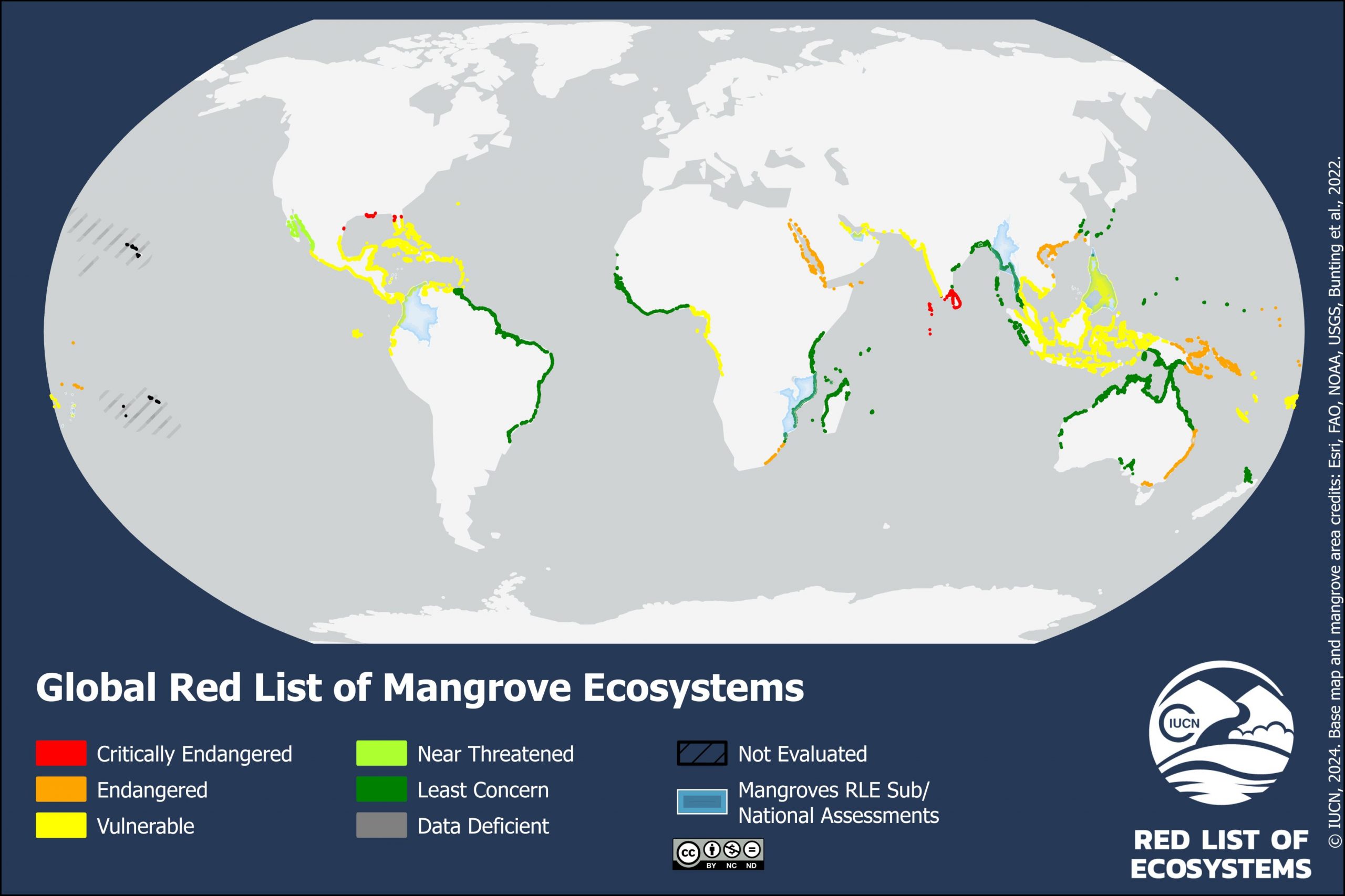
    The International Union for Nature Conservation (IUCN) has listed mangroves in coastal regions spanning Tamil Nadu, Sri Lanka and Maldives as ‘critically endangered’ in its first global assessment of mangrove ecosystems.

    Red List of Mangrove Ecosystems: Study by IUCN

    • Global assessment reveals a 50% risk of mangrove ecosystem collapse. Without further conservation, by 2050, 7,065 sq km more mangroves will be lost, and 23,672 sq km submerged.

    If we let this happen, the world is at risk of losing:  

    • 1.8B tonnes of carbon stored, costing society $336B (based on the social cost of carbon). Protects 2.1M lives and $36B worth of property from coastal flooding..

    Sea-level rise is the main threat affecting mangrove ecosystems. 

    • 25% of the global mangrove area is predicted to be submerged in the next 50 Years.
    • 1/3 of the world’s mangrove ecosystem provinces will be severely affected by sea-level rise.

    Tamil Nadu’s Efforts for Mangroves Conservation

    • The Tamil Nadu Forest Department has doubled mangrove cover from 23 sq km in 2001 to 45 sq km in 2021, as per the Indian State of Forest Report.
    • Mangrove restoration projects have been undertaken across Nagapattinam, Thiruvarur, Cuddalore, Pudukottai, Ramanathapuram, Thiruvallur, and Villupuram districts, with plans for an additional 15 sq km restoration under the Tamil Nadu Coastal Restoration Mission funded by the World Bank.

    TN-SHORE: World Bank-funded Coastal Restoration Mission

    • Tamil Nadu’s TN-SHORE initiative, launched in January 2024, aims to address environmental challenges along the coastline. With Rs 1,675 crore funding, including 70% from the World Bank, it focuses on blue carbon sequestration.

    Back2Basics: Mangroves

    • Mangroves constitute a group of trees and shrubs inhabiting the coastal intertidal zone.
    • They are found globally in tropical and subtropical regions, typically between latitudes 25° N and 25° S.
    • Mangroves are predominantly located in tropical regions due to their intolerance to the extreme cold conditions prevalent in temperate zones.

    Features of Mangroves:

    • Adaptation to waterlogged and anoxic soil: Mangroves possess unique characteristics allowing them to survive in waterlogged and oxygen-deficient environments.
    • Halophytes: Mangrove species have the ability to filter out up to 90% of the salt from seawater as it enters their roots, with some species also excreting salt through glands in their leaves.
    • Water retention capacity: Thick succulent leaves store fresh water, while a waxy coating on some species’ leaves minimizes evaporation.
    • Pneumatophores: Certain mangroves develop pencil-like roots that emerge from the ground to absorb oxygen from the air, aiding in coping with tidal flooding.
    • Prop roots: Many mangrove trees possess dense aerial roots descending from their trunks and branches, which stabilize and support them against waves and tides.
    • Lenticellated bark: Oxygen enters mangroves through lenticels, small breathing pores in the bark and roots, enabling them to adapt to low oxygen conditions.
    • Viviparity: Seed pods germinate while still on the tree, facilitating immediate root growth upon dropping.

    Mangroves in India:

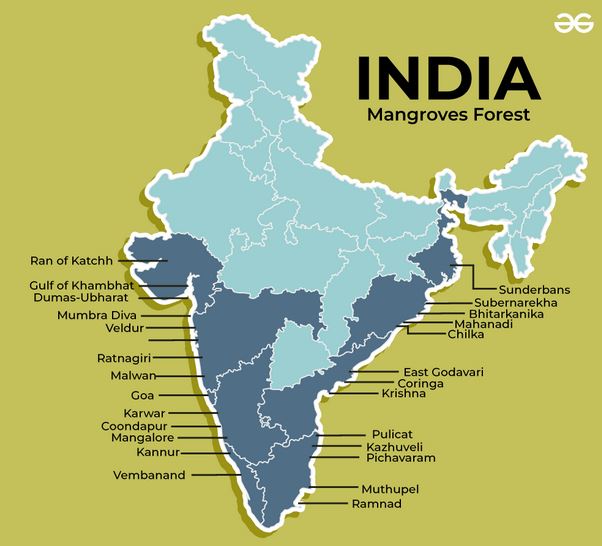
    • According to the India State of Forest Report 2021, mangrove cover in India comprises 0.15% of the country’s total geographical area.
    • West Bengal has the highest percentage of area under total mangrove cover among states and union territories, followed by Gujarat and the Andaman and Nicobar Islands.
    • The Sundarbans, characterized by the dominant mangrove species sundari (Heritiera fomes), is the largest continuous mangrove forest globally.
    • Various mangrove areas in India are protected within reserves and sanctuaries such as the Sundarbans Tiger Reserve, Bhitarkanika, Coringa, Nelapattu, Point Calimere Wildlife Sanctuaries, Pirotan National Park, among others.


    PYQ:

    [2011] The 2004 Tsunami made people realize that mangroves can serve as a reliable safety hedge against coastal calamities. How do mangroves function as a safety hedge?

    (a) The mangrove swamps separate the human settlements from the sea by a wide zone in which people neither live nor venture out

    (b) The mangroves provide both food and medicines which people are in need of after any natural disaster

    (c) The mangrove trees are tall with dense canopies and serve as an excellent shelter during a cyclone or tsunami

    (d) The mangrove trees do not get uprooted by storms and tides because of their extensive roots.

  • Monsoon Croaks Bioblitz: Protecting Kerala’s Frog Species

    Why in the News?

    The Centre for Citizen Science and Biodiversity Informatics, Kerala Forest Research Institute (KFRI), has organised the event “Monsoon Croaks Bioblitz 2024”.

    About Monsoon Croaks Bioblitz, 2024:

    •  This program aims to document Kerala’s frog species during the monsoon season.
    • Objective: Cultivate scientific curiosity among the public and raise awareness about frog conservation through social media platforms, such as posters and articles.
      • Bioblitz Definition: It’s an intensive survey conducted over time to identify and document as many species as possible within a designated area, a popular participatory survey method globally.

    Project Details:

    • Participation: People of all ages can contribute by uploading frog photographs and sounds via the iNaturalist app.
    • Data Utilization: Scientific observations collected during the bioblits will contribute to the Global Biodiversity Information Facility (GBIF), facilitating biodiversity awareness, habitat conservation, and climate change research.

    Need for such an event

    • Monsoon heralds a festive season for frogs, marking their peak activity and breeding period.
    • However, the survival of frogs, crucial indicators of ecosystem health, faces threats from climate change, habitat loss, and water pollution.
    • As a result, 41% of the world’s frog species are on the IUCN Red List of endangered species, including those in Kerala.

    Results of 2023:

    • In 2023, KFRI conducted the Monsoon Croaks project, witnessing enthusiastic participation from citizens across Kerala.
    • Highlights: Around 200 citizen scientists uploaded 1,223 observations, identifying approximately 80 amphibian species, including those listed on the IUCN Red List.
    • Notable Species:  The top most observed species is the Wayanad Bush Frog (Pseudophilautus wynaadensis).
      • Following closely is the Asian Common Toad (Duttaphrynus melanostictus).
      • Other important amphibian species recorded in the bioblitz include:
      • Critically Endangered Resplendent Shrub frog (Raorchestes resplendens).
      • Endangered Malabar Torrent Toad (Blaira ornata).
      • Small Tree Frog (Rhacophorus lateralis).
      • Vulnerable Anaimalai Flying Frog (Rhacophorus pseudomalabaricus).
      • Near Threatened Purple Frog (Nasikabatrachus sahyadrensis).

    Back2Basics: Global Biodiversity Information Facility (GBIF)

    Details
    Purpose To provide free and open access to biodiversity data for research, conservation, and sustainable development
    Establishment Established in 2001
    Headquarters Copenhagen, Denmark
    Members Over 40 countries and economies, including government agencies, museums, research institutions, and NGOs
    Mission Facilitate the digitisation and mobilization of biodiversity data, making it accessible and usable for scientific research and policy-making
    Core Functions
    • Promote and facilitate collaboration and data sharing among members
    • Develop standards and tools for data mobilisation, quality, and interoperability
    • Provide technical infrastructure for publishing, indexing, and accessing biodiversity data
    Data Availability GBIF provides access to over 2 billion occurrence records of species worldwide, contributed by thousands of data publishers
    Legal Framework GBIF operates under an intergovernmental treaty, the GBIF Agreement, and is governed by its members through an annual Governing Board
    Funding Funding for GBIF comes from member countries and economies, as well as international organizations and private sector partners
    Contributions to Science and Policy
    • Contributes to global assessments such as the Intergovernmental Science-Policy Platform on Biodiversity and Ecosystem Services (IPBES)
    • Supports the Convention on Biological Diversity (CBD) and other international initiatives related to biodiversity conservation


    PYQ:

    [2015] With reference to an organization known as ‘Birdlife International’ which of the following statements is/are correct?

    1. It is a Global Partnership of Conservation Organizations.
    2. The concept of ‘biodiversity hotspots’ originated from this organization.
    3. It identifies the sites known/referred to as ‘Important Bird and Biodiversity Areas’.

    Select the correct answer using the code given below.

    (a) 1 only

    (b) 2 and 3 only

    (c) 1 and 3 only

    (d) 1, 2 and 3

  • KAZA Summit 2024: Delegates renew calls to leave CITES

    Why in the news?

    At the KAZA 2024 Summit in Livingstone, Zambia, delegates reiterated the urge for member states to withdraw from CITES because they seek approval to trade their plentiful ivory and wildlife items.

    About the Convention on International Trade in Endangered Species of Wild Fauna and Flora (CITES):

    • It is an international agreement adopted in 1973 (entered into force in 1975) between governments.
    • Aim: To ensure that international trade in wild animals and plants does not threaten their survival.
    • Headquarters: Geneva, Switzerland.
    • Although CITES is legally binding on the Parties – in other words, they have to implement the Convention–it does not take the place of national laws.
    • Representatives of CITES nations meet every two to three years at a Conference of the Parties (COP) to review progress and adjust the lists of protected species, which are grouped into three categories with different levels of protection:
      • Appendix I: Includes the world’s most endangered plants and animals, such as tigers and gorillas. International commercial trade in these species, or even parts of them, is completely banned, except in rare cases such as scientific research.
      • Appendix II: Contains species like corals that are not yet threatened with extinction, but which could become threatened if unlimited trade were allowed. Also included are “look-alike” species that closely resemble those already on the list for conservation reasons. Plants and animals in this category can be traded internationally, but there are strict rules.
      • Appendix III: Species whose trade is only regulated within a specific country can be placed on Appendix III if that country requires cooperation from other nations to help prevent exploitation.

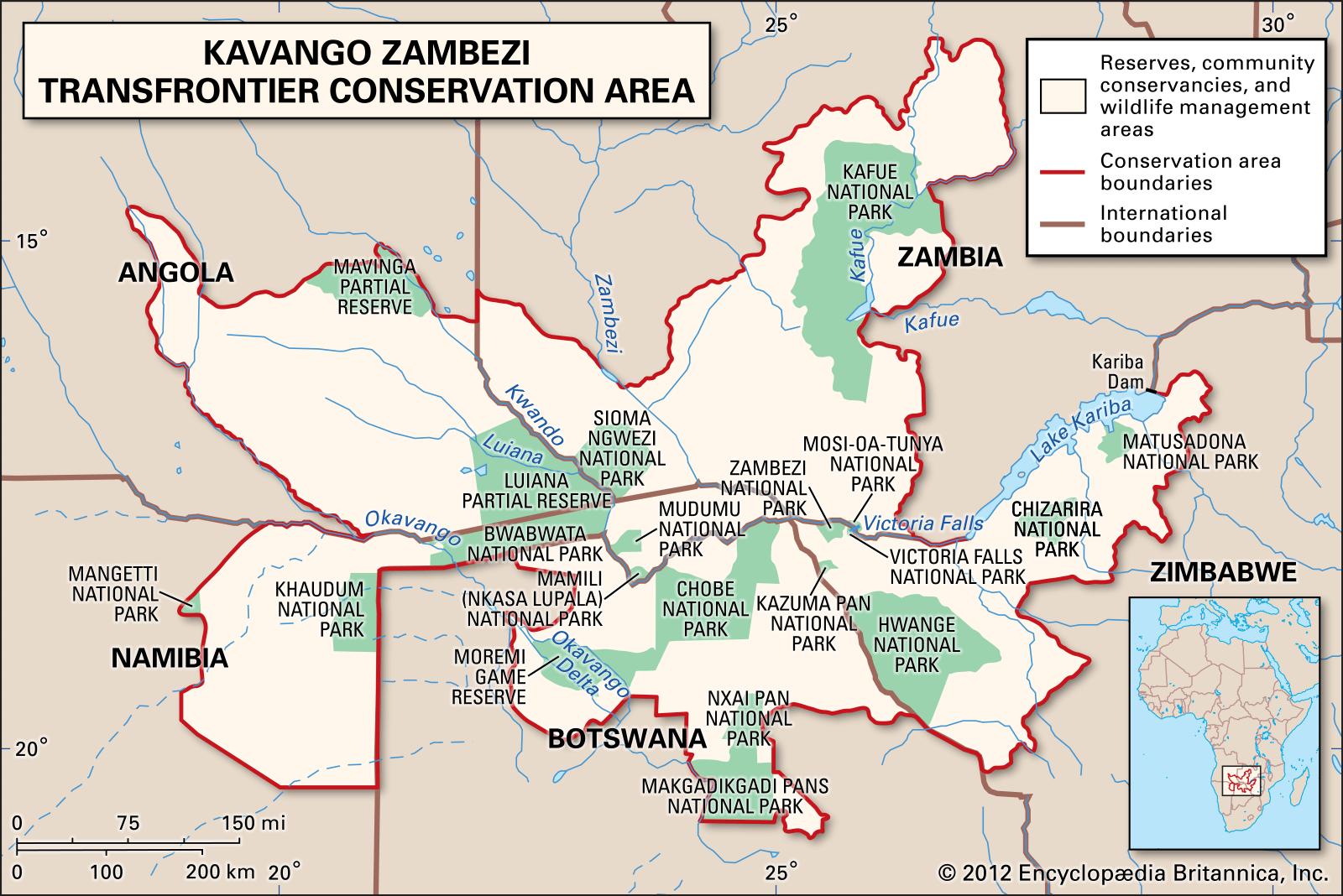
    What is Kavango-Zambezi Trans-Frontier Conservation Area (KAZA-TFCA)?

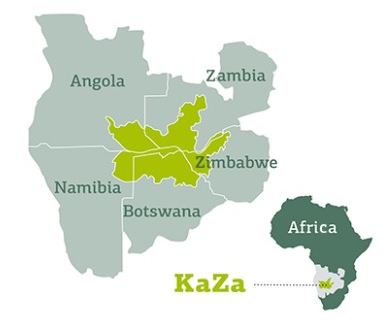
    • The Kavango-Zambezi Trans-Frontier Conservation Area (KAZA-TFCA) spans 520,000 square kilometers. It covers parts of five southern African nations. These nations are Angola, Botswana, Namibia, Zambia, and Zimbabwe.
    • The area is centered around the Okavango and Zambezi river basins. The combined elephant population in these nations represents over two-thirds of Africa’s total, estimated at around 450,000.
    • Botswana has the largest elephant population within the region, with 132,000 elephants. Zimbabwe follows with 100,000 elephants.

    Key Objectives of KAZA 2024 Summit :

    • Conservation: Promote the sustainable management and conservation of wildlife across the five member states: Angola, Botswana, Namibia, Zambia, and Zimbabwe.
    • Economic Benefit: To explore ways to monetize abundant wildlife resources, particularly elephants, to fund conservation efforts and benefit local economies.

    Dominant Issues:

    • At the 19th meeting of the CITES conference in Panama in 2022, KAZA states and five other southern African countries advocated for opening up trade in ivory and elephant products.
    • Southern African countries, including those in the KAZA region, argue that their large elephant populations contribute to habitat loss and human-wildlife conflict.
    • Despite repeated requests, CITES delegates rejected the proposal, leading to frustration among African countries.
    • Ten countries, including KAZA states and others like Eswatini, Lesotho, Mozambique, South Africa, and Tanzania, declared a dispute with CITES. They criticized CITES for straying from its founding principles and adopting ideologies over science-based conservation strategies.

    Way forward:

    • Lobbying for Change: Advocacy for a more equitable and science-based approach to wildlife trade regulations within international frameworks like CITES.
    • Regional Cooperation: Enhance collaboration among member states to develop joint conservation strategies and share best practices for managing human-wildlife conflicts.
    • Diversification of Revenue Streams: Explore alternative sources of funding for conservation efforts, such as ecotourism, carbon credits, and sustainable agriculture.

    Mains PYQ:

    Q How does biodiversity vary in India? How is the Biological Diversity Act, 2002 helpful in the conservation of flora and fauna? (250 Words, 15 Marks) (UPSC IAS/2018)

  • Where animals are dying by a thousand cuts

    Why in the News?

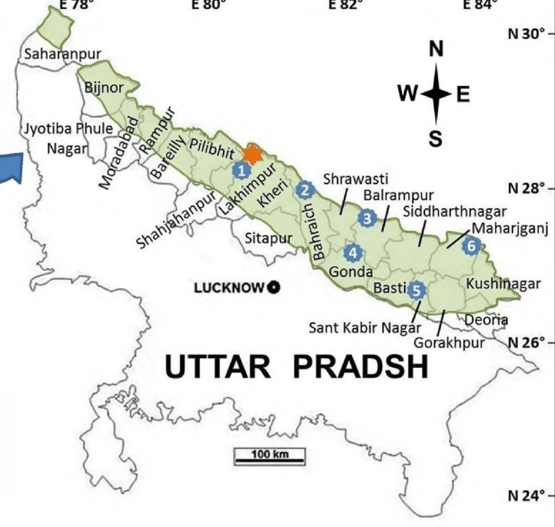
    In the Terai region of Uttar Pradesh, the farmers are using razor wire and electric fencing to defend their farms against stray cattle.

    About the Wildlife Populations in the Biodiverse Terai Areas of Uttar Pradesh

    • The Terai region in the U.P., encompassing districts like Pilibhit, Lakhimpur Kheri, and Bahraich, is known for its rich biodiversity, thriving sugarcane agriculture, and two tiger reserves.
    • This area supports endangered species such as tigers, rhinoceros, swamp deer, and the Bengal florican. The landscape blends forests, grasslands, and agriculture, creating a habitat where people and wildlife coexist.

    What does the Statistics say?

    • During the 2022-23 fiscal year, the livestock industry accounted for 30.1% of India’s Agricultural GDP and 4.35% of the national GDP.
    • India’s farming practices involve a blend of crop farming and livestock rearing. This combined approach offers extra income and job prospects, especially supporting landless workers, small-scale farmers, and women in the workforce.

    Constitutional Provision for the Protection of stray cattle:

    • As per Article 243(W) of the Constitution of India, the local bodies are responsible for cattle pounds and pinjrapole. Therefore, the State may also endow panchayats to establish and run. Cattle Pounds (Kanji Houses)/ Gaushala Shelters (community assets) to keep stray cattle.
    • Many States have established Gaushalas and Shelter houses for stray cattle and provide for feeding of those animals.

    Present Conflicts and Conservation Challenges:

    • Conflicts between humans and wildlife are common, including tiger attacks and crop damage by herbivores.
    • Farmers near protected areas sometimes use lethal methods such as razor wire and high-voltage electric fencing along the farm-forest boundaries. The presence of stray cattle, or “chutta jaanwar,” has intensified conflicts and conservation challenges.
    • Stray cattle disrupt wildlife movement corridors vital for species survival and potentially increase disease transmission risks to wild populations.
    • The Unvaccinated stray cattle can transmit diseases like bovine tuberculosis and lumpy skin disease to wildlife, with cases reported in various Terai districts.
    • The degradation of productive grasslands in protected areas further threatens the habitat of imperilled species.

    Way Forward:

    • Providing safe and comprehensive shelters: Construct adequate cow shelters outside protected areas to house stray cattle, preventing them from impacting wildlife habitats and agricultural fields.
      • Promote and subsidize non-lethal fencing solutions for farmers to protect crops without harming wildlife, such as wildlife-friendly barriers.
      • Invest in habitat restoration projects in the Terai, focusing on expanding and maintaining productive grasslands within protected areas to support wildlife populations.
    • Enhanced monitoring and management: Implement comprehensive vaccination and disease monitoring programs for stray cattle to prevent disease transmission to wildlife.
      • Strengthen enforcement against illegal cattle trade and vigilante activities that disrupt the livestock economy.
      • Provide economic incentives and support for farmers to adopt alternative livelihoods that do not depend heavily on livestock, reducing the need for cattle rearing.
    • Community Engagement and Education: Engage with local communities to educate them on the ecological impact of stray cattle and encourage participatory conservation efforts. Foster collaboration between farmers and wildlife authorities to develop sustainable solutions for coexisting with wildlife.

    Mains PYQ:

    Q Examine the status of forest resources in India and its resultant impact on climate change. (UPSC IAS/2020)

  • The controversy over eucalyptus planting in Kerala | Explained

    Why in the news?

    The Kerala state government permitted Kerala Forest Development Corporation (KFDC) to plant eucalyptus for financial reasons in 2024-2025. Environmentalists objected, citing forest impact and potential human-animal conflicts.

    Reasons for Allowing KFDC to Plant Eucalyptus Trees:

    • Financial Sustenance: KFDC was permitted to plant eucalyptus trees to support its financial viability.
    • Existing Plantations: KFDC manages around 7,000 hectares of plantations, including eucalyptus, which contribute to its revenue generation.
    • Rotation Age: Plantations like eucalyptus have specific rotation ages for harvesting, ensuring a continuous cycle of revenue generation.

    Significance of Eucalyptus

    • Timber and Fuel: Eucalyptus wood is extensively used in Australia as fuel and for building construction, fencing, and other timber applications.
    • Paper and Pulpwood: The bark of many eucalyptus species is used in papermaking and tanning, while the wood is used for pulpwood production.
    • Eucalyptus Oil: The leaves of many eucalyptus species contain aromatic oils, which are used for various purposes such as:
      • Medicinal Uses: Eucalyptus oil is used in expectorants and inhalants to relieve respiratory issues like asthma and bronchitis.
      • Insect Repellent: The oil is used as a natural insect repellent.
      • Antimicrobial Activity: Eucalyptus oil has antimicrobial properties, making it effective against bacteria and fungi

    Why were environmentalists and social activists against the order?

    • Ecological Impact: Environmentalists raised concerns about the adverse effects of eucalyptus plantations on natural forests and ecosystems.
    • Human-Animal Conflicts: The proliferation of invasive species like eucalyptus was linked to increased human-wildlife conflicts, as animals ventured into human habitats in search of food due to habitat depletion.
    • Contravention of Eco-Restoration Policy: Activists argued that permitting eucalyptus plantations contradicted the state’s eco-restoration policy, which aimed to phase out exotic species and replace them with natural forests by 2024.
    • Invasive Species Management: The order was seen as undermining efforts to eradicate invasive species and mitigate their damaging effects on natural habitats and ecosystems.

    Government Initiatives for Plant Conservation:

    • The National Bureau of Plant Genetic Resources (NBPGR) in India operates seed banks to conserve crop diversity and wild plant species.
    • National Afforestation Programme (NAP) has been implemented since 2000 for the afforestation of degraded forest lands. It is being implemented by the MoEFCC.


    Conclusion: The controversy over eucalyptus planting in Kerala reflects the balance between financial sustainability and ecological concerns. While eucalyptus offers economic benefits, it also poses ecological risks and challenges to conservation efforts.

    Mains PYQ: 

    Q Examine the status of forest resources of India and its resultant impact on climate change. (UPSC IAS/2020)

  • Periyar River and Industrial Pollution

    Why in the News?

    • A mass fish kill struck the Periyar River, the ‘Lifeline of Kerala’.
      • The incident, believed to be caused by industrial pollution from the Edayar Industrial Area, has caused immense loss to fish farmers and disrupted the local ecosystem.

    About Periyar River

    Details
    Length Approximately 244 kilometers (151 miles)
    Source of the river Originates in the Sivagiri hills of Sundaramala, Western Ghats, Tamil Nadu
    Mouth of the River Empties into the Arabian Sea at Aluva, near Kochi, Kerala
    Flow Through Flows through Idukki, Ernakulam, and Thrissur districts in Kerala
    Major Tributaries Muthirapuzha, Cheruthoni, Edamalayar
    Key Hydroelectric Projects Idukki Dam (one of Asia’s highest arch dams), other significant dams include Mullaperiyar Dam
    Ecological Conservation Supports diverse ecosystems, passes through Periyar Wildlife Sanctuary (notable for elephants and tigers)
    Cultural Significance The ancient port of Muziris, is believed to have been located near the mouth of the Periyar.
    Environmental Challenges Faces pollution from industrial discharge and urban waste; water management disputes, especially related to the Mullaperiyar Dam’s safety and water sharing between Kerala and Tamil Nadu

    Threats to Periyar River

    • The lower reaches of the Periyar are heavily polluted. Industries in the Eloor industrial zone discharge waste into the river.
    • Greenpeace India describes the lower Periyar as “a cesspool of toxins, which have alarming levels of deadly poisons like DDT, endosulfan, hexa and trivalent chromium, lead, cyanide, BHC”.
    • Illegal sand mining from the Periyar is another major environmental issue.

    PYQ:

    [2011] With reference to the Indus river system, of the following four rivers, three of them pour into one of them which joins the Indus direct. Among the following, which one is such river that joins the Indus direct?​

    (a) Chenab

    (b) Jhelum

    (c) Ravi

    (d) Sutlej

  • What is La Nina, expected to set in later this year, and how it could impact global weather

    Why in the news?

    The India Meteorological Department (IMD) has recently forecasted that La nina will affect the Indian monsoon in August and September.

    What are El nino and La nina?

    • El Nino and La Nina are climate phenomena resulting from ocean-atmosphere interactions in the central and eastern tropical Pacific Ocean, significantly influencing global weather patterns.
    • El Nino (meaning “little boy” in Spanish) occurs when weak trade winds allow warm surface waters to accumulate near South America, reducing the usual upwelling of cold, nutrient-rich water. This leads to warmer-than-average sea surface temperatures.
    • La Nina (meaning “little girl” in Spanish) involves strong trade winds pushing warm water towards Asia, increasing upwelling and resulting in cooler-than-average sea surface temperatures along South America.
    • Together with a neutral phase, they form the El Nino-Southern Oscillation (ENSO) cycle.

    How could the incoming La Nina impact global weather?

    • Temperatures
        • Global temperatures are likely to decrease compared to the recent record-breaking heat during the 2023-2024 El Nino event.
        • However, despite the cooling effect of La Nina, temperatures will still be higher than in previous decades due to the long-term warming trend from greenhouse gas emissions.
    • Rainfall
        • La Nina typically brings drier conditions to parts of Southeast Asia, Australia, and the southern United States.
        • Wetter than normal conditions are expected in parts of South America and eastern Africa.
    • Tropical Storms
        • La Nina is associated with increased tropical storm activity in the Atlantic Ocean and fewer storms in the Pacific.
        • The 2023 Atlantic hurricane season could see more intense storms due to La nina conditions.
    • Economic Impacts
      • Droughts and floods linked to La nina can negatively impact agriculture, food security, and infrastructure in affected regions.
      • Fishing communities in the eastern Pacific may face reduced catches due to cooler ocean temperatures.

    La nina’s impact on India

    • Positive Impact on Monsoons
        • La Nina generally leads to above-average monsoon rainfall in India. Since 1950, out of the 13 droughts India faced, only one was during a La nina year.
        • The extended La Nina event in 2022 led to a change in wind patterns, with winds blowing from north to south instead of the usual northwesterly direction.
        • This caused pollutants from agricultural burning in northern states to bypass Delhi and reach southern regions like Mumbai.
    • Negative Impacts
      • La Nina can sometimes lead to heavy rains and floods in some parts of India, while the Western Ghats may receive average or below-average rainfall.
      • Winter rainfall is less than normal in north India, and snowfall over the Western Himalayas is also lower than usual during La Nina years.
      • Farmers may be at risk of losing their standing Kharif crops if heavy rains occur during this period.

    Is climate change affecting EnSO?

    • El Nino–Southern Oscillation (ENSO) is a global climate phenomenon that emerges from variations in winds and sea surface temperatures over the tropical Pacific Ocean.
      • Climate change is likely impacting the ENSO cycle, potentially altering the frequency and intensity of El Nino and La Nina events.
      • Studies suggest that global warming may change mean oceanic conditions in the Pacific, possibly leading to more frequent or intense El Nino events.
    • The World Meteorological Organization (WMO) has indicated that climate change is expected to influence extreme weather events associated with EnSO, including more severe droughts, floods, and heatwaves.

     Way Forward:

    • Develop more accurate climate models for better prediction of EnSO events and their impacts.
    • Foster international collaboration to share data, resources, and strategies for managing EnSO-related challenges.

    BACK2BASICS

    India Meteorological Department (IMD)

    • The India Meteorological Department (IMD), established in 1875, serves as the national Meteorological Service and is the principal government agency responsible for meteorology and related subjects in India.
    • Operating under the Ministry of Earth Sciences, IMD is headquartered in New Delhi.
    • IMD is one of the six Regional Specialized Meteorological Centres of the World Meteorological Organization.

    Mains PYQ:

    Q Most of the unusual climatic happenings are explained as an outcome of the El-nino effect. Do you agree? (UPSC IAS/2014)

  • Microplastic Pollution in Ashtamudi Lake

    Why in the News?

    • A recent study conducted by the “Department of Aquatic Biology and Fisheries”, University of Kerala, has revealed alarming levels of microplastic pollution in Ashtamudi Lake, a Ramsar wetland in Kollam district.

    Back2Basics: Microplastics

    • Microplastics are small plastic particles that are less than 5 millimetres (0.2 inches) in size.
    • They are a type of plastic pollution that originates from the fragmentation of larger plastic debris, as well as from the direct release of small plastic particles in various products and activities.

    Types of Microplastics:

    About Ashtamudi Lake

    • Ashtamudi Lake is located in the Kollam district of Kerala.
    • The lake is also called the “gateway to the backwaters of Kerala”.
      • Historical Background: The importance of Ashtamudi Kayal dates back to the times of the Romans and Phoenicians in the 14th century.
    • It is a brackish water lake, meaning it contains a mix of freshwater and saltwater. It covers an area of approximately 61 square kilometres (23.5 square miles).
    • Kallada River is a major river discharging into the Ashtamudi Lake.
    • The name “Ashtamudi” translates to “eight coned” in Malayalam, referring to the lakes eight prominent arms or channels.
    • The lake is surrounded by lush vegetation, including mangrove forests, coconut groves, and palm trees.
    • Ashtamudi Lake is an integral part of the Kollam-Kottapuram Waterway, which connects the Kerala backwaters to the Arabian Sea.
      • Notable Islands: Chavara, Munroe

    PYQ:

    [2022] Consider the following pairs:

    Wetland              : Lake Location

    1.    Hokera Wetland  : Punjab

    2.   Renuka Wetland  : Himachal Pradesh

    3.   Rudrasagar Lake  :  Tripura

    4.   Sasthamkotta Lake : Tamil Nadu

    How many pairs given above are correctly matched?

    (a) Only one pair

    (b) Only two pairs

    (c) Only three pairs

    (d) All four pairs

    [2019] Why is there a great concern about the ‘microbeads’ that are released into the environment?

    (a) They are considered harmful to marine ecosystems.

    (b) They are considered to cause skin cancer in children.

    (c) They are small enough to be absorbed by crop plants in irrigated fields.

    (d) They are often found to be used as food adulterants.