💥Join UPSC 2027,2028 Mentorship (July Batch) + XFactor Notes & Microthemes PDF

Subject: Conservation & Mitigation

1. Conservation Progs.
2. Worldwide initiatives
3. Mitigation Strategies
4. Conventions and Protocols

  • What are the findings of the 2024 Hindu Kush Himalayas snow update? | Explained

    Why in the news?

    In 2024, the Hindu Kush Himalaya snow update from the International Centre for Integrated Mountain Development (ICIMOD) reported that the Ganga River basin, India’s largest, experienced its lowest recorded snow persistence.

    What does the report by the International Centre for Integrated Mountain Development highlight?

    • Record Low Snow Persistence: The Ganga River basin, along with the Brahmaputra and Indus basins, reached record low snow persistence in 2024.
    • Significant Declines: The Ganga basin recorded its lowest snow persistence in 22 years, 17% below the long-term historical average. The Brahmaputra basin was 14.6% below normal, and the Indus basin fell 23.3% below normal.
    • Broader Impacts: Similar low snow persistence was recorded in the Amu Darya and Helmand river basins, significantly below normal levels.

    How important is snow persistence?

    • Water Supply: Snow persistence, the fraction of time snow is on the ground, is crucial as its melt provides significant water to streams and ecosystems.
    • Runoff Contribution: Snowmelt contributes 23% of the runoff to the HKH region’s 12 major river basins, supporting nearly one-fourth of the world’s population.
    • Regional Significance: The HKH mountains, known as the “water towers of Asia,” are vital for 10 major river systems, including the Ganga, Brahmaputra, and Indus, which are essential freshwater sources for millions.

    How much of a role does climate change play in river basins receiving low levels of snowmelt this year?

    • Weak Western Disturbances: Lower persistence in 2024 was primarily due to weak Western disturbances, which are low-pressure systems bringing rain and snow to the HKH region.
    • Global Warming Effects: Climate change and global warming destabilize weather patterns, exacerbating prolonged La Niña–El Niño conditions, and influencing the arrival and intensity of western disturbances.
    • High Sea-Surface Temperatures: Persistently high sea-surface temperatures in the regions where western disturbances originate disrupt their formation, leading to reduced snowfall.
    •  Changed the weather system: The pattern of high temperatures and altered weather systems explains both the record low snow persistence in 2024 and similar historical records.

    Way forward:

    • Integrated Water Management: Develop comprehensive water management plans that incorporate predictions of reduced snowmelt. This includes optimising reservoir operations, prioritising water allocation, and implementing efficient irrigation practices to mitigate water scarcity risks.
    • Transboundary Collaboration: Foster regional cooperation among countries sharing river basins affected by declining snow persistence. Develop joint strategies for sustainable water management, disaster risk reduction, and climate change adaptation. This includes sharing hydrological data, coordinating emergency responses, and implementing mutual benefit agreements.
    • Reducing Greenhouse Gas Emissions: Strengthen efforts to mitigate climate change by reducing greenhouse gas emissions at local, national, and international levels. Promote renewable energy sources and sustainable practices to curb global warming, thereby stabilising weather patterns crucial for snowfall.

    Mains PYQ:

    Q Climate change’ is a global problem. How India will be affected by climate change? How Himalayan and coastal states of India will be affected by climate change? (15) (UPSC IAS/2017)

  • In news: Pobitora Wildlife Sanctuary

    Why in the News?

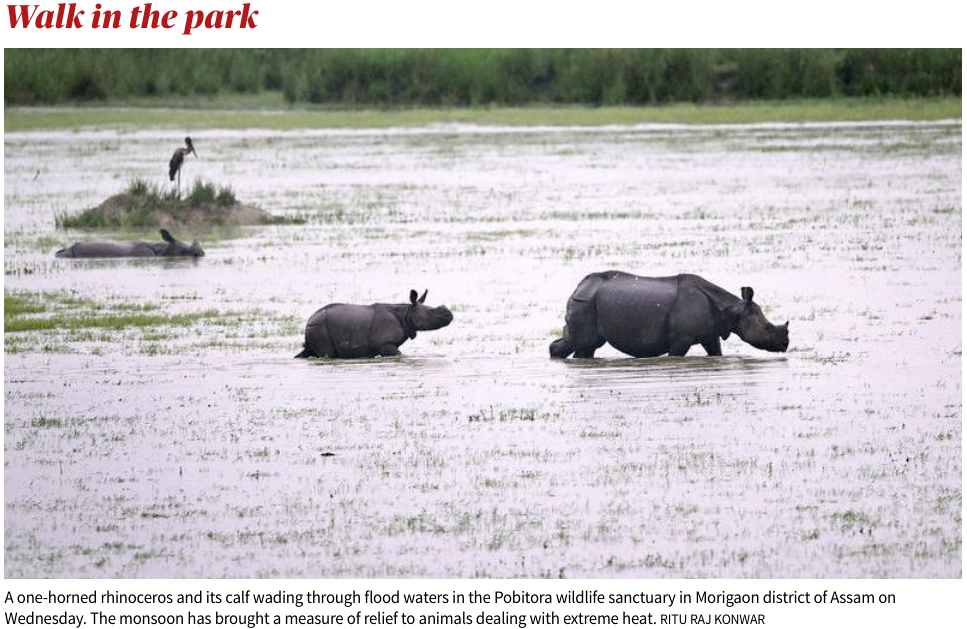
    The monsoon has brought a measure of relief to animals especially the one-horned rhinoceros in Pobitora Wildlife Sanctuary dealing with extreme heat.

    About Pobitora Wildlife Sanctuary 

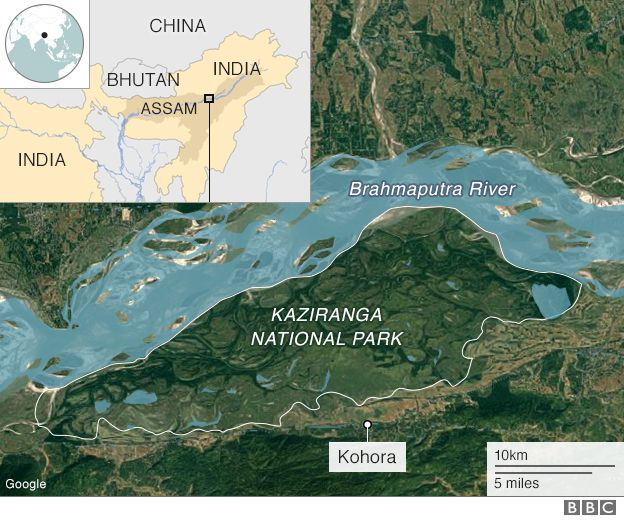
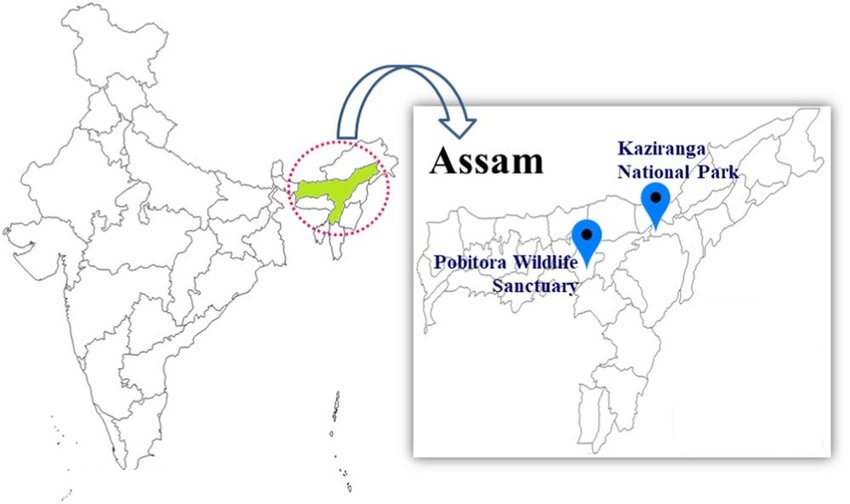
    • Pobitora Wildlife Sanctuary boasts the highest density of one-horned rhinos globally, second only to Kaziranga National Park in Assam.
    • Often dubbed as ‘Mini Kaziranga,’ Pobitora shares a similar landscape and vegetation to its renowned counterpart.
    • The sanctuary shelters various endangered species, including one-horned rhinoceros, leopards, leopard cats, fishing cats, jungle cats, feral buffaloes, wild pigs, and Chinese pangolins.
    • Approximately 72% of Pobitora’s area comprises a wet savannah dominated by Arundo donax and Saccharum grasses, while the rest is covered by water bodies.

    About One-Horned Rhino:

    • IUCN Red List Status: Vulnerable.
    • Habitat– Rhinos are mainly found in Assam, West Bengal and Uttar Pradesh.
      • Assam has an estimated 2,640 rhinos in four protected areas, i.e. Pobitora Wildlife Reserve, Rajiv Gandhi Orang National Park, Kaziranga National Park, and Manas National Park.

    Note: About 2,400 of them are in the Kaziranga National Park and Tiger Reserve (KNPTR).


    PYQ:

    [2019] Consider the following statements:

    1. The Asian lion is naturally found in India only
    2. Double-humped camel is naturally found in India only
    3. One-horned rhinoceros is naturally found in India only

    Which of the statements given above is/are correct?

    (a) 1 only

    (b) 2 only

    (c) 1 and 3 only

    (d) 1, 2 and 3

  • Elephants have names for each other: New study

    Why in the News?

    • Recent studies utilizing Artificial Intelligence (AI) tools have revealed that elephants possess unique names used to address each other, placing them among the select animals with this ability.
      • Unlike animals such as parrots and dolphins, elephants do not imitate the calls of those they address, resembling humans in this communicative trait.

    Naming Behavior in Elephants

    • Unlike humans, elephants do not mimic the calls of the addressee, setting their communication apart from other animals.
    • Published in Nature, the study titled ‘African elephants address one another with individually specific name-like calls’ involved researchers from institutions like Colorado State University and Save The Elephants.

    Study Methodology

    • Communication Methods: Contrary to popular belief, elephants predominantly communicate through low-pitched rumbles rather than trumpets, which are primarily emotional expressions.
    • Data Analysis: Researchers analyzed recordings of wild female African savannah elephants and their offspring’s rumbles across various Kenyan national parks spanning from 1986 to 2022.
    • AI Application: Using AI technology, they scrutinized 469 recorded rumbles to detect patterns indicating specific recipients of the communication.
      • Success Rate: The AI model successfully identified the intended elephant recipient in 27.5% of cases, surpassing chance levels.

    Observations

    • Behavioural Observation: To validate their findings, researchers played back recorded rumbles to 17 elephants and noted heightened reactions when elephants heard their ‘names’, indicating recognition of individual names.
    • Unique Communication: Unlike animals that imitate others’ calls, elephants display no evidence of imitation, suggesting a unique communication strategy.

    Significance of the Study

    • Sophisticated Communication: The study underscores elephants’ advanced communication abilities, challenging previous assumptions about their cognitive prowess.
    • Human-Elephant Parallels: It draws parallels between human and elephant communication, fostering greater admiration for elephants and potentially mitigating human-elephant conflicts crucial for conservation efforts.
    • Future Research: Further investigation is warranted to pinpoint the exact location of elephant names within rumbles and explore whether elephants assign names to objects besides individuals.

    Back2Basics: Elephants in India

    Details
    Population Estimate
    • India hosts the largest population of wild Asian Elephants (Elephas maximus), with around 29,964 individuals,
    • Approximately 60% of the global population (2017 census).
    Leading States Karnataka holds the highest number of elephants, followed by Assam and Kerala.
    Conservation Status
    • IUCN Red List:  Endangered.
    • CMS: Appendix I.
    • Wildlife (Protection) Act, 1972: Listed under Schedule I,
    • CITES: Appendix I.
    Conservation Initiatives
    • ‘Project Elephant’ was launched in 1992, covering 23 states across India.
      • This project contributed to the increase in the wild elephant population from around 25,000 in 1992 to about 30,000 in 2021.
    • Establishment of Elephant Reserves. Total 33 in numbers covering approximately 80,777 Sq.km.


    PYQ:

    [2020] With reference to Indian elephants, consider the following statements:

    1. The leader of an elephant group is a female.
    2. The maximum gestation period can be 22 months.
    3. An elephant can normally go on calving till the age of 40 years only.
    4. Among the States in India, the highest elephant population is in Kerala.

    Which of the statements given above is/are correct?

    (a) 1 and 2 only

    (b) 2 and 4 only

    (c) 3 only

    (d) 1, 3 and 4 only

  • World Crocodile Day 2024: In 50th year of India’s saurian conservation 

    Why in the news?

    The successful Crocodile Conservation Project in Bhitarkanika National Park is escalating the human-crocodile conflicts affecting local communities.

    About the Crocodile Conservation Project

    • Launch and Objective: The Crocodile Conservation Project was launched in 1975 in Bhitarkanika National Park, Odisha. The main objective was to protect the crocodiles’ natural habitat and revive the population through captive breeding due to the low survival rate of hatchlings in nature.
    • Historical Context: Initiated barely three years after the Wild Life (Protection) Act, 1972. The project was launched due to the threat of extinction from indiscriminate killing for commercial purposes and severe habitat loss.
    • Implementation and Success: Centers for breeding and rearing saltwater crocodiles, muggers, and gharials were started in 34 locations across various states in India under the guidance of HR Bustard. The project in Bhitarkanika, started by Sudhakar Kar and HR Bustard, has been the most successful, increasing the population from 95 in 1975 to 1,811 in the latest reptile census.
    • Ongoing Efforts: Sudhakar Kar continues to provide technical expertise and methodology for the annual census of saltwater crocodiles even after retirement. Conservation of crocodiles is described as a lifelong mission by Kar.

    IUCN Status of Crocodiles of India

    • The three crocodiles of India, the Saltwater Crocodile, Mugger Crocodile, and Gharial, are listed as Least Concern, Vulnerable, and Critically Endangered respectively on the IUCN Red List of Threatened Species.

    Bhitarkanika National Park 

    • Bhitarkanika National Park is a 145 km² (56 sq mi) protected area in Odisha, eastern India. It was designated as a national park in 1998 and obtained the status of a Ramsar site in 2002.
    • The park is known for its unique mangrove ecosystem, which is the second largest in India. It is home to a variety of flora and fauna, including the endangered saltwater crocodile, Indian python, king cobra, black ibis, and darters.

    About the Issues Faced by Bhitarkanika

    • Human-Crocodile Conflict: The increasing crocodile population has led to rising human-crocodile conflicts. Sudhakar Kar expressed concern over the conflicts, warning locals to avoid entering rivers, creeks, and waterbodies inhabited by estuarine crocodiles.
    • Impact on Local Communities: Conflicts have led to 50 deaths since 2014. Local villagers have criticized politicians for not addressing the safety issues adequately, affecting political outcomes.
    • Preventive Measures: Forest officials have erected barricades around 120 river ghats in and around Bhitarkanika to prevent crocodile attacks on humans.
    • Political Implications: The human-crocodile conflict has influenced local political dynamics, with villagers expressing dissatisfaction with incumbents over safety concerns related to crocodile attacks.

    Conclusion: Construct and maintain more robust protective barriers around water bodies, such as reinforced barricades and secure river ghats. Additionally, create safe, designated areas for water-related activities to minimize the risk of crocodile attacks.

    Mains PYQ:

    Q How does biodiversity vary in India? How is the Biological Diversity Act,2002 helpful in the conservation of flora and fauna? (UPSC IAS/2018)

  • EU Environmental Council adopts nature restoration law in historic win for continent’s environment

    Why in the news?

    On June 17, 2024, the EU Environmental Council approved the Nature Restoration Law (NRL), marking a significant victory for environmental conservation across the continent.

    Nature Restoration Law (NRL):

    • Objective and Scope: The NRL aims to restore and preserve biodiversity and ecosystem health across Europe. It targets a wide range of habitats including terrestrial, coastal, freshwater, forest, agricultural, and urban areas. Specific ecosystems such as wetlands, grasslands, forests, rivers, lakes, and marine environments like seagrass beds and coral reefs are covered.
    • Targets and Timelines: Member states are required to restore at least 20% of the EU’s land and sea areas by 2030. This includes all ecosystems identified as in need of restoration. The law sets a longer-term goal for the complete restoration of all degraded ecosystems in Europe by 2050.

    About the EU Biodiversity Strategy for 2030

    Objective:

    • The EU Biodiversity Strategy for 2030 aims to halt biodiversity loss and restore ecosystems across Europe. It sets ambitious targets to ensure that biodiversity is conserved, valued, and restored for its intrinsic value and for the benefits it provides to people and the planet.

    Targets and Actions:

    • The strategy includes specific targets for 2030, such as protecting at least 30% of EU land and sea areas, with 10% under strict protection, restoring degraded ecosystems, and integrating biodiversity considerations into agriculture, forestry, fisheries, and urban planning.
    • It emphasizes the importance of promoting green infrastructure, sustainable land use, and enhancing ecosystem services to support biodiversity.

    Policy Instruments and Implementation:

    • The strategy integrates biodiversity considerations into key EU policies and sectors, including agriculture, fisheries, forestry, climate action, and regional development.
    • It encourages the use of innovative financing mechanisms, partnerships with stakeholders, and international cooperation to achieve its goals.

    Monitoring and Review:

    • The EU Biodiversity Strategy for 2030 includes a robust monitoring framework to track progress towards its targets and assess the effectiveness of actions taken.
    • Regular reviews and updates are planned to ensure that the strategy remains relevant and adaptive to new challenges and scientific knowledge..

    Challenges in Nature Restoration Law (NRL)

    • Implementation Complexity: One of the primary challenges is the complexity of implementing the NRL across diverse ecosystems and landscapes within EU member states. Each country may have varying capacities, resources, and existing environmental conditions, making uniform implementation challenging.
    • Cost and Funding Requirements: Restoring 20% of the EU’s land and sea areas by 2030 requires significant financial resources. The NRL involves costs related to restoration projects, monitoring, enforcement, and stakeholder engagement. Securing adequate funding and ensuring sustained financial support over the long term is crucial but challenging.

    Conclusion: Create dedicated funding mechanisms or expand existing EU funds specifically for biodiversity restoration under the NRL. This could include grants, subsidies, and low-interest loans tailored to support restoration projects across member states.

    Mains PYQ:

    Q Environmental Impact Assessment studies are increasingly undertaken before a project is cleared by the Government. Discuss the environmental impacts of coal-fired thermal plants located at coal pitheads. (UPSC IAS/2014)

  • Gandhi Sagar Wildlife Sanctuary: India’s New Cheetah Habitat

    Why in the News?

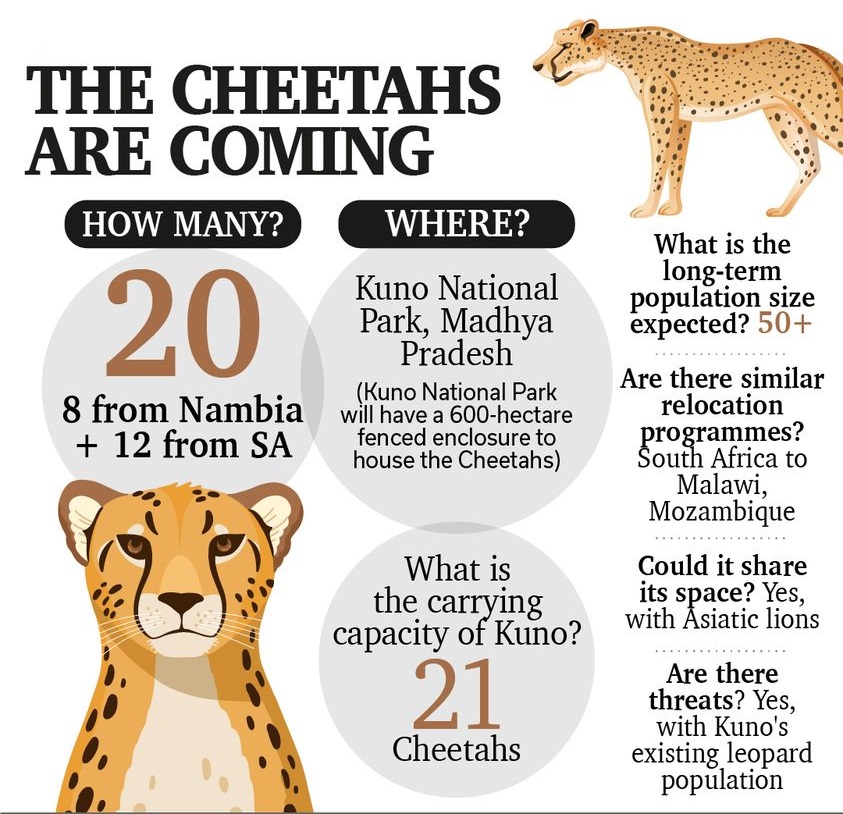
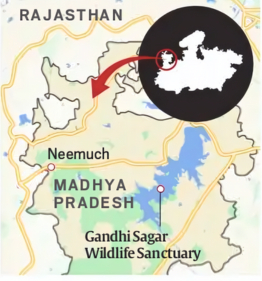
    • Gandhi Sagar Wildlife Sanctuary will become the second home for cheetahs in India, after Kuno National Park. The final decision on importing cheetahs from Namibia and South Africa will be made after the monsoon season to avoid infection risks.

    Cheetah Reintroduction in India:

    • In India, cheetahs disappeared in the early 1950s due to hunting and the loss of their habitat.
    • The ‘Action Plan for Reintroduction of Cheetah in India /Project Cheetah (2022)’ aims to bring cheetahs from African countries to various national parks.
    • It is spearheaded by the National Tiger Conservation Authority (NTCA).
    • Recently, cheetahs from Namibia were reintroduced in Kuno National Park, Madhya Pradesh.

    About Cheetah:

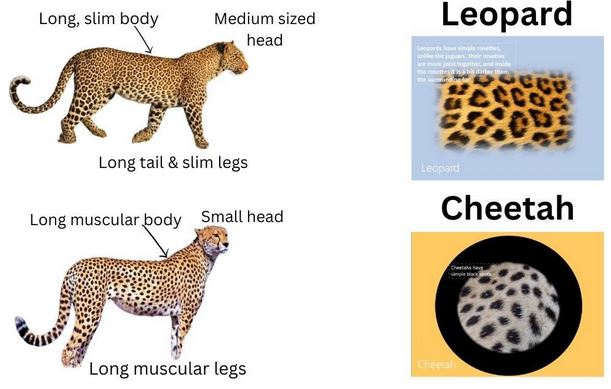
    • The cheetah is a fast-running big cat native to Africa and central Iran, capable of speeds up to 80 to 128 km/h.
    • They live in various habitats like savannahs, arid mountains, and hilly deserts.
    • Cheetahs live in three main groups: females with cubs, male coalitions, and solitary males.
    • They hunt during the day, preferring dawn and dusk.
    • The global cheetah population was 6,500 mature individuals, according to the most recent IUCN assessment in 2021.
    • They are listed as VULNERABLE by the IUCN.
    • The Asiatic Cheetah is one of the five subspecies of cheetah, critically endangered and found only in Iran.


    About Gandhi Sagar Wildlife Sanctuary

    • Located in western Madhya Pradesh, Gandhi Sagar Wildlife Sanctuary covers an area of 368.62 sq km.
    • It spans the Mandsaur (187.12 sq km) and Neemuch (181.5 sq km) districts, bordering Rajasthan.
    • Situated on a flat rocky plateau characterized by shallow topsoil and exposed sheetrock.
    • It is divided by the Chambal River, with the Gandhi Sagar dam and reservoir within its boundaries.
    • Flora and Fauna:
      • Flora: The sanctuary features a savannah ecosystem with open grasslands interspersed with dry deciduous trees. Riverine valleys within the sanctuary support evergreen vegetation.
      • Fauna: The sanctuary is home to a diverse range of wildlife, including species like leopards, sloth bears, striped hyenas, grey wolves, golden jackals, jungle cats, Indian foxes, and marsh crocodiles.

    Habitat Suitability for Cheetahs

    • Officials cite Gandhi Sagar as having an ideal habitat parallel to Maasai Mara (a National Park) in Kenya, suitable for cheetahs.
    • Plans include expanding the cheetah habitat to around 2,000 sq km, contingent upon cooperation with Rajasthan’s Bhainsrodgarh sanctuary.

    PYQ:

    [2024]  Consider the following statements:

    1. Lions do not have a particular breeding season.

    2. Unlike most other big cats, cheetahs do not roar.

    3. Unlike male lions, male leopards do not proclaim their territory by scent marking.

    Which of the statements given above are correct?

    (a) 1 and 2 only

    (b) 2 and 3 only

    (c) 1 and 3 only

    (d) 1, 2 and 3

    [2012]  Consider the following: (2012)

    1. Black-necked crane
    2. Cheetah
    3. Flying squirrel
    4. Snow leopard

    Which of the above are naturally found in India?

    (a) 1, 2 and 3 only
    (b) 1, 3 and 4 only
    (c) 2 and 4 only
    (d) 1, 2, 3 and 4

  • In news: Nagarhole Tiger Reserve

    Why in the News?

    • Ashwatthama, a 38-year-old elephant, died of electrocution near Karnataka’s Nagarahole Tiger Reserve.
      • The High Court of Karnataka suo motu initiated a PIL petition to inquire about this incident attributed to a lack of care and diligence by concerned authorities.

    Nagarahole Tiger Reserve

    • Located in the Western Ghats in Karnataka; Spans over 643 square kilometers.
    • Declared a wildlife sanctuary in 1955 and a tiger reserve in 1999.
    • Part of the Nilgiri Biosphere Reserve is recognised as an Important Bird Area (IBA) and a Project Tiger, Project Elephant reserve.
    • Managed by the Karnataka Forest Department with efforts focused on conservation, ecotourism, and community engagement.
    • The reserve is crisscrossed by several rivers such as the Kabini River, Lakshmana Tirtha River, and Moyar River.
      • Flora and Fauna: Known for its diverse ecosystem, including tropical and moist deciduous forests, home to a variety of wildlife such as tigers, leopards, elephants, gaur, and several species of deer and birds.

    Protective Measures: Project Elephant

    • It was launched in the year 1992 as a Centrally Sponsored Scheme with the following objectives:
      • To protect elephants, their habitat & corridors
      • To address issues of man-animal conflict
      • The welfare of captive elephants
    • It covers 23 states across India.
    • The Ministry of Environment, Forest and Climate Change provides financial and technical support to major elephant range states in the country through the project.
    • It contributed to the increase in the wild elephant population from around 25,000 in 1992 to about 30,000 in 2021.

    Status of Elephant Conservation in India

    Details
    Population Estimate
    • India hosts the largest population of wild Asian Elephants (Elephas maximus), with around 29,964 individuals,
    • Approximately 60% of the global population (2017 census).
    Leading States Karnataka holds the highest number of elephants, followed by Assam and Kerala.
    Conservation Status
    • IUCN Red List:  Endangered.
    • CMS: Appendix I.
    • Wildlife (Protection) Act, 1972: Listed under Schedule I,
    • CITES: Appendix I.


    PYQ:

    [2020] With reference to Indian elephants, consider the following statements:

    1. The leader of an elephant group is a female.
    2. The maximum gestation period can be 22 months.
    3. An elephant can normally go on calving till the age of 40 years only.
    4. Among the States in India, the highest elephant population is in Kerala.

    Which of the statements given above is/are correct?

    (a) 1 and 2 only

    (b) 2 and 4 only

    (c) 3 only

    (d) 1, 3 and 4 only

  • India is the World’s Second Largest emitter of Nitrous Oxide

    Why in the News?

    • India ranks as the world’s second-largest contributor (after China) to nitrous oxide (N2O), a potent greenhouse gas (GHG), accounting for approximately 11% of global man-made emissions in 2020 as per data published in the journal Earth System Science Data.
      • The top five country emitters by volume of anthropogenic N2O emissions in 2020 were China (16.7%), India (10.9%), the United States (5.7%), Brazil (5.3%), and Russia (4.6%).

    About Nitrous Oxide

    • Nitrous oxide (N2O), a colourless and odourless gas, is a potent greenhouse gas, 300 times more powerful than CO2. Despite its small atmospheric fraction, it ranks third in concentration after CO2 and methane (CH4). It’s a crucial target for environmental research and efforts to mitigate climate change impacts.

    Sources of Emission:

    1. Natural Sources: N2O is naturally produced in processes such as microbial nitrogen cycling in soil and water bodies, volcanic activity, and biomass burning.
    2. Anthropogenic Activities: Human activities significantly contribute to N2O emissions, with the primary sources being:
    • Agricultural practices, including the use of nitrogen-based fertilizers and animal manure.
    • Industrial processes such as combustion of fossil fuels and wastewater treatment.
    • Combustion of biomass and waste.
    • Use of nitrous oxide in medical and dental procedures (as a sedative) and in food packaging.

    Impact on Climate Change:

    • Greenhouse Gas: N2O is a potent greenhouse gas with a global warming potential (GWP) much higher than that of carbon dioxide (CO2).
    • Ozone Depletion: In addition to its role in climate change, N2O also contributes to ozone depletion in the stratosphere, further exacerbating environmental concerns.

    Environmental and Health Effects:

    • Environmental Pollution: N2O emissions can lead to pollution of soil, water bodies, and air, affecting ecosystems and human health.
    • Health Risks: While N2O is relatively non-toxic at ambient levels, prolonged exposure or high concentrations can pose health risks, including respiratory issues and neurological effects.

    Global Nitrous Oxide Emissions

    • Atmospheric Concentration: The concentration of atmospheric N2O reached 336 parts per billion in 2022, about 25% above pre-industrial levels.
    • Next to Carbon Emissions: In comparison, the concentration of carbon dioxide was 417 parts per million in 2022.
    • Persistent Lifespan: Once emitted, N2O stays in the atmosphere for longer than the average human lifespan (117 years), making its climate and ozone impacts long-lived.
    • Contribution to Climate Change: These emissions are responsible for 6.4% of the effective radiative forcing of greenhouse gases and have added about 0.1°C to current global warming.
    • Impact of Nitrogen Fertilizers: N2O emissions from human activities have increased by 40% in the past four decades, with agricultural production using nitrogen fertilizers and animal manure contributing 74% of total anthropogenic N2O emissions in the last decade.

    Call for Action and Future Outlook

    • Scientists warn that anthropogenic N2O emissions must decline by at least 20% relative to 2019 levels by 2050 to align with net-zero emission pathways consistent with the Paris Agreement.
    • Nitrogen fertilizers, which are heavily subsidized in India, contribute significantly to N2O emissions. Urgent reforms are needed to promote alternative production systems and mitigate emissions.

    India’s Policy Initiatives to Curb Nitrogen Pollution

    • Nutrient-Based Subsidy (NBS) (2010): This policy encourages the adoption of controlled-release fertilizers to enhance nutrient management efficiency.
    • Soil Health Cards (2015): Provided to farmers, these cards offer insights into soil nutrient levels and tailored fertilizer recommendations, promoting balanced nutrient application.
    • Bharat Stage (BS VI) Emission Standards (2016): These stringent regulations for vehicles and industries aim to reduce the emission of nitrogen oxides and particulate matter, thereby mitigating air and water pollution.
    • Nano Urea (2021): Marketed by the Indian Farmers Fertiliser Cooperative Limited (IFFCO), Nano Urea is a patented fertilizer approved for commercial use, designed to curb excessive and indiscriminate conventional urea use while boosting crop yields.

    PYQ:

    [2016] Why does the Government of India promote the use of ‘Neem-coated Urea’ in agriculture?

    (a) Release of Neem oil in the soil increases nitrogen fixation by the soil microorganisms

    (b) Neem coating slows down the rate of dissolution of urea in the soil

    (c) Nitrous oxide, which is a greenhouse gas, is not at all released into the atmosphere by crop fields

    (d) It is a combination of a weedicide and a fertilizer for particular crops

  • Remoulding the Global Plastics Treaty

    Why in the news?

    As discussions for an international legally binding treaty on plastic pollution continue, it is essential to consider how it can support a fair transition for informal waste collectors and recyclers.

    Observations by the OECD Global Plastic Outlook

    • In 2019, global plastic waste production was 353 million tonnes, more than double the amount in 2000. This number is expected to triple by 2060. Only 9% of plastic waste was recycled in 2019.
    • 50% of plastic waste was sent to landfills, 19% incinerated, and 22% disposed of in uncontrolled sites or dumps.

    Challenges due to Plastic Pollution:

    • Soil Pollution: Plastic waste can contaminate soil, reducing its fertility and affecting plant growth.
    • Marine Pollution: Plastic waste in oceans can harm marine life, alter habitats, and disrupt natural processes, making ecosystems less resilient to climate change.
    • Water Pollution: Plastic waste can contaminate groundwater and waterways, affecting human consumption and aquatic life.
    • Health Risks: 
      • Microplastics: Plastic waste can break down into microplastics, which can be ingested by humans and animals, potentially causing health problems.
      • Toxic Chemicals: Plastic products can leach toxic chemicals, such as phthalates and BPA, into food and water, posing health risks

    Significance of Recognizing the Issue

    • Crucial role of recycling workers: Informal recycling workers recycled 85% of the 9% recycled plastic, playing a crucial role in global waste management.
    • Economic and Environmental Contribution: These workers alleviate municipal budgets, promote circular waste management solutions, and help mitigate greenhouse gas emissions. Their efforts significantly reduce plastic in landfills and prevent plastic leakage into the environment.
      • Despite their contributions, informal recycling workers are often overlooked and remain vulnerable. They face risks such as privatization of waste management, waste-to-energy projects, and exclusion from public policy interventions in plastic waste management.

    Global Plastic Treaty Needs Just Transition

    • Need for Intergovernmental Negotiating Committee (INC): Established in 2021, the INC aims to create a legally binding agreement to reduce plastic pollution. The INC has held several meetings, with the final one scheduled in South Korea.
    • Promoting Informal Workers Participation: The International Alliance of Waste Pickers (IAWP) emphasizes the need to support and integrate informal waste pickers into the treaty discussions. Their historical contributions should be acknowledged, their rights protected, and their perspectives included in policy implementation.
    • Building Clarity: There is no universally agreed-upon terminology for a just transition or a formal definition of the informal waste sector. Clarifying these definitions is essential.

    India’s Voice is Important

    • India promotes repair, reuse, refill, and recycling without eliminating the use of plastics. This approach emphasizes country-specific circumstances and capacities.
    • India’s informal waste pickers are indispensable and remain central to the discussion on plastic waste management.
    • Rethinking EPR norms is crucial to integrating the informal worker cohort into the new legal framework.
    • As a key representative from the Global South, India’s perspectives and approaches are vital in shaping the Global Plastics Treaty.

    Conclusion: By incorporating the perspectives of informal waste workers and ensuring their livelihoods are protected, the Global Plastics Treaty can embody social justice and equity principles, contributing to a sustainable future while leaving no one behind.

    Mains PYQ:

    Q What are the impediments in disposing of the huge quantities of discarded solid wastes which are continuously being generated? How do we remove safely the toxic wastes that have been accumulating in our habitable environment?  (UPSC IAS/2018)

  • Two bird sanctuaries of Bihar added to Ramsar List

    Why in the News?

    Two wetlands in Bihar, Nagi and Nakti bird sanctuaries, have been added to the global list of wetlands of international importance under the “Ramsar Convention”, bringing India’s total Ramsar sites to 82.

    Do you know?

    • Currently, the highest number of such sites is in the UK (175) followed by Mexico (144).
    • The number of Indian sites on the list has increased from 26 to 82 in the last ten years, of which 40 have been added in the last three years.

    About Nagi-Nakti Wetland

    • These wetlands, situated in Bihar’s Jamui district within the Jhajha forest range, are man-made reservoirs nestled amid dry deciduous forests and hills.
    • Both sanctuaries were developed as man-made reservoirs, primarily for irrigation purposes, through the construction of dams.
    • These wetlands host a diverse range of flora and fauna, including over 150 species of birds, mammals, fish, aquatic plants, reptiles, and amphibians.

    Nakti Bird Sanctuary:

    • It was developed primarily for irrigation through the construction of the Nakti dam.
    • In 1984, the wetland was designated as a bird sanctuary, highlighting its importance as a wintering habitat for several migratory species, with over 20,000 birds congregating during winter months.
    • This includes one of the largest congregations of red-crested pochard in the Indo-Gangetic plain.

    Nagi Bird Sanctuary:

    • It was, on the other hand, created by the damming of the Nagi River, which enabled the gradual formation of water bodies with clear water and aquatic vegetation.
    • Overall, the wetland and its fringes provide habitat for over 75 bird species, 33 fish, and 12 aquatic plants.
    • Notably, the site hosts one of the largest congregations of bar-headed geese in the Indo-Gangetic plain.

    Ecological Significance

    • Migratory Bird Haven: The sanctuaries serve as critical wintering habitats for numerous migratory bird species, attracting over 20,000 birds during the winter months.
    • Species Diversity: Nagi and Nakti sanctuaries support a rich biodiversity, including over 75 bird species, 33 fish species, and 12 aquatic plant species.
    • Bar-headed Geese Congregation: Notably, the wetlands host one of the largest gatherings of bar-headed geese on the Indo-Gangetic plain, highlighting their importance as migratory bird habitats.

    Back2Basics: Ramsar Convention

    Explanation
    Purpose International treaty aimed at conserving and promoting the sustainable use of wetlands.
    Establishment Established on February 2, 1971, in Ramsar, Iran.
    Key Components
    • Identifying and designating wetlands of international importance.
    • Ensuring their effective management.
    • Promoting international cooperation for wetland conservation and sustainable use.
    9 Criteria for Sites Declaration
    1. A site should contain representative, rare, or unique wetland types.
    2. It should support vulnerable, endangered, or endemic species.
    3. It should be a habitat for waterfowl.
    4. It should have significant ecological, botanical, zoological, limnological, or hydrological features.
    5. It should support scientific research and biodiversity conservation.
    6. It should provide essential services such as flood control, water purification, and groundwater recharge.
    7. It should have cultural, recreational, or spiritual value for local communities.
    8. It should support sustainable livelihoods for human communities.
    9. It should be at risk or face human-induced threats that require international cooperation for conservation.
    Participating Countries 171 contracting parties (countries) as of September 2021.
    India and Ramsar Convention  The first Ramsar Site in India, the Chilika Lake in Odisha, was designated in 1981.
    Ramsar Secretariat The convention is administered by the Ramsar Secretariat, based in Gland, Switzerland.
    World Wetlands Day
    • February 2nd of each year.
    • To raise awareness about the importance of wetlands and commemorate the adoption of the Ramsar Convention.
    Montreux Record Register of wetland sites on the List of Wetlands of International Importance under the Ramsar Convention that require special attention.


    PYQ:

    [2014] If a wetland of international importance is brought under the ‘Montreux Record’, what does it imply?

    (a) Changes in ecological character have occurred, are occurring or are likely to occur in the wetland as a result of human interference.

    (b) The country in which the wetland is located should enact a law to prohibit any human activity within five kilometres of the edge of the wetland

    (c) The survival of the wetland depends on the cultural practices and traditions of certain communities living in its vicinity and therefore the cultural diversity therein should not be destroyed

    (d) It is given the status of ‘World Heritage Site’

    [2019] Consider the following statements:

    1. Under Ramsar Convention, it is mandatory on the part of the Government of India to protect and conserve all the wetlands in the territory of India.
    2. The Wetlands (Conservation and Management) Rules, 2010 were framed by the Government of India based on the recommendations of the Ramsar Convention.
    3. The Wetlands (Conservation and Management) Rules, 2010 also encompass the drainage area or catchment regions of the wetlands as determined by the authority.

    Which of the statements given above is/are correct?

    (a) 1 and 2 only

    (b) 2 and 3 only

    (c) 3 only

    (d) 1, 3 and 3