đŸ’„Join UPSC 2027,2028 Mentorship (July Batch) + XFactor Notes & Microthemes PDF

Subject: Conservation & Mitigation

1. Conservation Progs.
2. Worldwide initiatives
3. Mitigation Strategies
4. Conventions and Protocols

  • Rhino horns are shrinking

    rhino

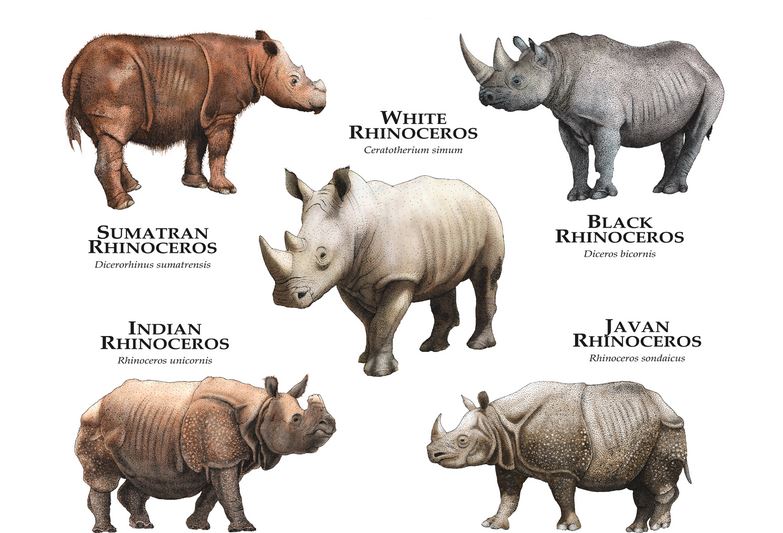
    The horns of rhinoceroses may have become smaller over time from the impact of hunting, according to a recent study spanning more than five centuries.

    About Indian Rhino

    • The Indian rhinoceros also called the greater one-horned rhinoceros and great Indian rhinoceros is a rhinoceros native to the Indian subcontinent.
    • It is listed as Vulnerable on the IUCN Red List and Schedule I animal in the Wildlife Protection Act, 1972.
    • It once ranged across the entire northern part of the Indian Subcontinent, along the Indus, Ganges and Brahmaputra River basins, from Pakistan to the Indian-Myanmar border.
    • Poaching for rhinoceros horn became the single most important reason for the decline of the Indian rhino.

    Why are Rhinos poached for horns?

    • Ground rhino horn is used in traditional Chinese medicine to cure a range of ailments, from cancer to hangovers, and also as an aphrodisiac.
    • In Vietnam, possessing a rhino horn is considered a status symbol.
    • Due to demand in these countries, poaching pressure on rhinos is ever persistent against which one cannot let the guard down.


    Click and get your FREE copy of Current Affairs micro notes

  • State Pollution Control Boards (SPCBs)

    pollution

    Context

    • In the fight against air pollution in the Indo Gangetic Plain, there are several important protagonists, none more so than India’s frontline environmental regulators, the State Pollution Control Boards (SPCBs), and the Pollution Control Committees (PCCs) in the Union Territories. There is no future with clean air in which the SPCB’s do not perform at the highest level possible.

    know about State Pollution Control Boards (SPCB)

    • Constituted under Water (Prevention and Control of Pollution) Act, 1974: The SPCBs were initially constituted under the Water (Prevention and Control of Pollution) Act, 1974. Under the Air (Prevention and Control of Pollution) Act, 1981, the SPCB mandate was expanded to include air quality management.
    • New responsibility without capacity: Subsequently, several new environmental regulations added to their roles and functions. Unfortunately, this enhanced mandate has not been matched with increased capacity and capability in the Boards. As environmental indicators such as air quality and water quality worsen in many parts of the country, the Boards are evidently failing to effectively discharge their statutory mandate.

    Analyzing the performance of SPCB’s

    • Poor performance of SPCBs: Over the years, several reports that have been published, including those by the parliamentary standing committee and government committees, have identified reasons for the poor performance of the SPCBs.
    • Experts are excluded from composition: The composition of SPCBs is a matter of serious concern as important stakeholders and those with crucial expertise are missing in most States. Boards are multimember bodies headed by a chairperson and a member secretary. Their decisions and policies guide the day-to-day functioning of the organisation.
    • Conflict of interest: Over 50% of the Board members across the 10 SPCBs and PCC studied represent potential polluters: local authorities, industries, and public sector corporations. They are subject to the SPCB’s regulatory measures, and their overwhelming presence raises fundamental questions around conflicts of interest.
    • SPCBs Does not meet the statutory requirement: At the same time, scientists, medical practitioners, and academics constitute only 7% of the Board members. What is even more worrying is that most Boards do not meet the statutory requirement of having at least two Board members who have knowledge of, and experience in, air quality management.
    • SPCB’s leadership and uncertain tenure: The chairperson and the member secretary do not enjoy a long, stable, and fulltime tenure. In many States, persons in these two posts hold an additional charge in other government departments. Data also show that several chairpersons and member secretaries have held their posts for less than a year. For example, the shortest tenure for a chairperson has been 18 days (Chhattisgarh) and 15 days for a member secretary (Haryana and Uttar Pradesh).
    • Short tenure with multiple roles: With the focus of the leadership of SPCB spread thin across multiple roles and their tenures being short, often they do not even have the time to understand their mandate fully before they are moved out. In such a scenario, long term policy planning, strategic interventions and effective execution aimed at reducing air pollution substantially are extremely difficult.
    • Problem of Understaffing: The SPCBs are critically understaffed. At least 40% of all sanctioned posts are vacant across nine SPCBs/PCCs for which there is data. Vacancy levels in technical positions are as high as 84% in Jharkhand, and over 75% in Bihar and Haryana. An inadequate staff strength forces the Boards to recast their priorities among their various functions.
    • Less regulatory scrutiny: Less staff strength also means weaker regulatory scrutiny and poor impact assessment. For example, given their workload, engineers in Bihar, Jharkhand, Punjab and Uttar Pradesh have less than a day to inspect, evaluate and decide on each consent application. With Board staff running on empty, this is clearly an unsustainable situation.

    pollution

    What are the recommendations for effective SPCBs?

    • Addressing Leadership and human resource needs: Strengthening manpower at the SPCBs will not only require hiring new resources, but also training existing staff by leveraging institutions such as the Indian Institutes of Technology, NEERI, and others. These in-service training programs would also serve as an incentive for staff both new and existing.
    • Better Pay structures: The Pay structure need to be revised to align with sectoral norms to ensure that SPCBs are not regularly losing trained manpower to industry and other sectors.
    • Modern infrastructure: The infrastructure of PCBs also needs to be improved along with manpower i.e., facilities such as adequate computers, improved lab facility etc. The instruments used for monitoring are not maintained properly or outdated. Sometimes labs are also not equipped enough to do the necessary analysis.
    • Expert should lead the SPCBs: It is imperative for their effective functioning that States should nominate to leadership positions, individuals of technical expertise and distinguished service such that effective decision making can be carried out.
    • Providing the fixed tenure: They should be appointed for a fixed tenure and in full-time roles, with the sword of removal or termination not hanging over their heads.
    • Reduction is composition for effective functioning: The size of the boards themselves may also be reduced to aid in effective functioning, with preference in membership given to technical experts, as is the international best practice. These moves would ensure that the Boards function effectively as independent agencies, as envisioned in their foundational legislation.

    pollution

    Read the basics-Air pollution

    • Air pollution is contamination of the indoor or outdoor environment by any chemical, physical or biological agent that modifies the natural characteristics of the atmosphere.
    • Household combustion devices, motor vehicles, industrial facilities and forest fires are common sources of air pollution. Pollutants of major public health concern include particulate matter, carbon monoxide, ozone, nitrogen dioxide and sulfur dioxide. Outdoor and indoor air pollution cause respiratory and other diseases and are important sources of morbidity and mortality.

    Conclusion

    • Given the scale and causes of air pollution in India, multidisciplinary expertise is needed to tackle it; there must also be an explicit focus on health while designing air pollution policy. The lack of expertise and skewed representation of stakeholders on the Boards can only be a hindrance to effective policy making.
  • Species in news: Amur Falcon

    falcon

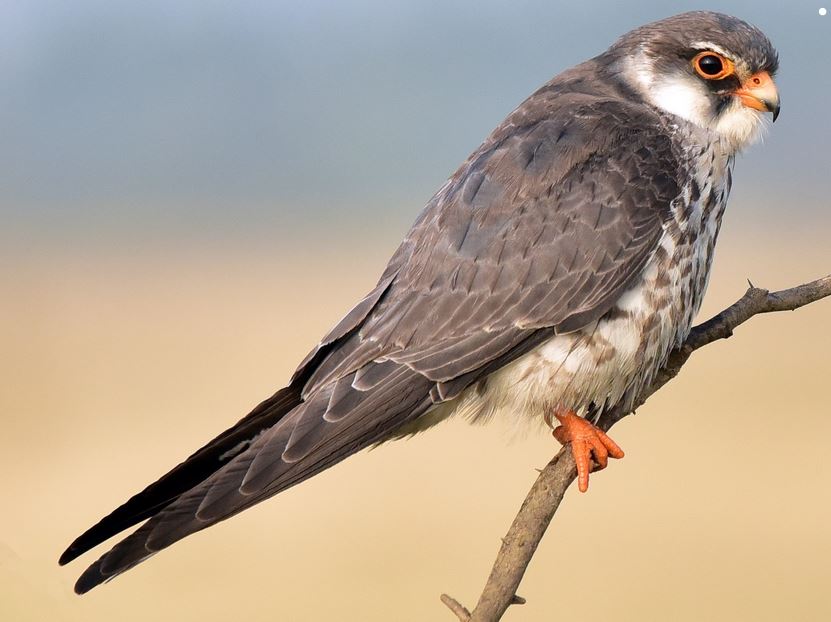
    The Amur falcons have begun to arrive in Manipur after travelling over 20,000 km.

    Amur Falcon

    • The Amur falcon (Falco amurensis) is a small raptor of the falcon family.
    • It breeds in south-eastern Siberia and Northern China before migrating in large flocks across India and over the Arabian Sea to winter in Southern and East Africa.

    How it migrates?

    • Locally known as Akhuipuina, the bird arrives mainly in Manipur and Nagaland on its southbound migration from breeding grounds in North China, Eastern Mongolia and far-east Russia.
    • They travel to Manipur en-route to its wintering grounds in South Africa.
    • The one-way journey via India is about 20,000 km long and the birds do this twice a year.
    • They spend three-four weeks in many parts of Manipur to build fat reserves by preying on termites that emerge around this time.

    Conservation status

    • It is protected under the Wildlife Protection Act 1972 and included under its Schedule IV.
    • It is listed in the IUCN Red list as Least Concern.
    • Hunting of the birds or possessing its meat is punishable with imprisonment up to three years or a fine up to Rs 5,000.
    • In 2018, the forest department started a conservation programme by radio-tagging the birds to study their migratory route.

    Click and get your FREE copy of Current Affairs micro notes

  • Dolphins return to the Ganga

    dolphin

    Dolphins have started coming back to the Ganga with improvement in the quality of the river water made possible by the Namami Gange Programme.

    About Gangetic Dolphin

    • The Gangetic river system is home to a vast variety of aquatic life, including the Gangetic dolphin (Platanista gangetica).
    • It is one of five species of river dolphin found around the world.
    • It is found mainly in the Indian subcontinent, particularly in Ganga-Brahmaputra-Meghna and Karnaphuli-Sangu river systems.
    • An adult dolphin could weigh between 70 kg and 90 kg. The breeding season of the Gangetic dolphin extends from January to June.
    • They feed on several species of fishes, invertebrates etc.

    Threats to Gangetic dolphins

    • The construction of dams and barrages and increasing pollution has led to a decline in the population of aquatic animals in the rivers in general and of dolphins in particular.
    • Aquatic life is an indicator of the health of river ecosystems.
    • As the Gangetic dolphin is at the top of the food chain, protecting the species and its habitat will ensure

    How are they conserved?

    • Although efforts to save them were started in the mid-1980s, the estimates suggest the numbers have not risen as a result.
    • The Gangetic dolphin remains listed as Endangered by the IUCN.
    • After the launch of Ganga Action Plan in 1985, the government on November 24, 1986, included Gangetic dolphins in the First Schedule of the Indian Wildlife (Protection), Act 1972.
    • This was aimed at checking hunting and providing conservation facilities such as wildlife sanctuaries.
    • For instance, Vikramshila Ganges Dolphin Sanctuary was established in Bihar under this Act.
    • It has been recognized as National Aquatic Animal of India.

    Policy moves for conservation

    • The government had prepared The Conservation Action Plan for the Ganges River Dolphin 2010-2020.
    • The National Mission for Clean Ganga celebrates October 5 as National Ganga River Dolphin Day.
    • There is also Project Dolphin on the lines of Project Tiger, which has helped increase the tiger population.


    Try this PYQ:

    Which one of the following is the national aquatic animal of India?

    (a) Saltwater crocodile

    (b) Olive ridley turtle

    (c) Gangetic dolphin

    (d) Gharial


    [wpdiscuz-feedback id=”9od7g7vh4h” question=”Please leave a feedback on this” opened=”1″]Post your answers here.[/wpdiscuz-feedback]


    Click and Get your FREE copy of Current Affairs Micro notes

  • What is Air Quality Index (AQI)?


    air


    Air Quality Index (AQI)

    • AQI measures how safe the air around you is for breathing. Organizations that report AQI measure the density of various pollutants in the air (such as PM2.5, PM10, nitrogen dioxide, ozone, etc) at different monitoring stations.
    • The widely-used National Air Quality Index (NAQI) given by the Central Pollution Control Board is a 24-hour average.
    • Its unit is micrograms per cubic meter.
    • A particular amount of one pollutant may not be as harmful as the same amount of another pollutant.
    • So, each pollutant’s quantity in the air is adjusted to a common scale (say, 0 to 500) that works for all pollutants.
    • Finally, the pollutant with the worst sub-index determines the AQI for that time and location.

    What are NAAQ standards?

    • The mandate provided to the Central Pollution Control Board (CPCB) under the Air (Prevention and Control of Pollution) Act empowers it to set standards for the quality of air.
    • Hence the current National Ambient Air Quality Standards were notified in November 2009 by the CPCB.
    • Prior to this, India had set Air Quality standards in 1994, and this was later revised in 1998.
    • The 2009 standards further lowered the maximum permissible limits for pollutants and made the standards uniform across the nation.
    • Earlier, less stringent standards were prescribed for industrial zones as compared to residential areas.

    Pollutants covered:

    • Sulphur Dioxide (SO2)
    • Nitrogen Dioxide (NO2),
    • Particulate Matter (size less than 10 ”m) or PM 10
    • Particulate Matter (size less than 2.5 ”m) or PM2.5
    • Ozone (O3)
    • Carbon Monoxide (CO)
    • Ammonia (NH3)

    (Air Pollutants that most of us NEVER heard of)

    • Lead
    • Benzene (C6H6)
    • Benzo(a)Pyrene (BaP)
    • Arsenic(As)
    • Nickel (Ni)

    What are Initiatives taken by India for Controlling Air Pollution?

    • System of Air Quality and Weather Forecasting and Research (SAFAR) Portal
    • Air Quality Index: AQI has been developed for eight pollutants viz. PM2.5, PM10, Ammonia, Lead, nitrogen oxides, sulphur dioxide, ozone, and carbon monoxide.
    • Graded Response Action Plan
    • For Reducing Vehicular Pollution: BS-VI Vehicles, Push for Electric Vehicles (EVs),Odd-Even Policy as an emergency measure
    • New Commission for Air Quality Management
    • Subsidy to farmers for buying Turbo Happy Seeder (THS) Machine


    UPSC 2023 countdown has begun! Get your personal guidance plan now! (Click here)

  • Climate Crisis, India’s Solution – Mission LiFE

    Mission LiFE

    Context

    • Prime Minister Narendra Modi on October 20 unveiled the action plan for Mission LiFE (Lifestyle for Environment), an India-led global mass movement that will nudge individuals and communities for action to protect and preserve the environment.

    What is LiFE?

    • Importance of individual efforts: Mission LiFE makes environmental protection and conservation a participative process and recognizes the importance of each effort no matter how small or big to save the environment both at the level of the individual and at the level of the community.
    • Chaning utilization attitude: The idea promotes an environmentally conscious lifestyle that focuses on ‘mindful and deliberate utilization’ instead of ‘mindless and wasteful consumption’.
    • Creating social networks: The LIFE Movement aims to utilize the power of collective action and nudge individuals across the world to undertake simple climate-friendly actions in their daily lives. The LIFE movement, additionally, also seeks to leverage the strength of social networks to influence social norms surrounding climate.
    • Creating Pro-planet people: The Mission plans to create and nurture a global network of individuals, namely ‘Pro-Planet People’ (P3), who will have a shared commitment to adopt and promote environmentally friendly lifestyles.
    • Seeks to behavioral change and individual actions: Through the P3 community, the Mission seeks to create an ecosystem that will reinforce and enable environmentally friendly behaviors to be self-sustainable. LIFE recognizes that small individual actions can tip the balance in the planet’s favour.

    Do you know pro-planet initiatives worldwide?

    • Denmark:  Denmark promotes the use of bicycles by limiting parking within the city Centre and providing exclusive bike lanes.
    • Japan: Japan has its unique “walk-to-school” mandate, which has been in practice since the early 1950s.

    Mission LiFE

    Why is the need for such movement?

    • Wrong perception about conservation: Environment protection, has for far too long been perceived as a policy issue by the general masses. There has been a perception that only national governments and international organizations can do something to protect the Earth and environment.

    How mission LiFE will be helpful?

    • Mindless consumption of resources: The human race is plundering Planet Earth at a pace that far outstrips its capacity and ability to support life. A recent study says that if the current rate of consumption were to continue, by 2050, humans would need two more planets, in addition to the Earth, to continue to exist.
    • Declining natural resources and beauty: This means that we could be staring at major climatic crises in the years to come and our future generations may never get to experience the beauty of nature, the glaciers, the oceans, the snow and the rivers, that we have been fortunate to see and experience.
    • Unsustainable consumption pattern: What threatens our existence more than anything else is the pace at which we are producing and consuming. The consumption pattern of the world is mindless and pays scant regard to the environment.
    • Attitude change through mission LiFE: Mission LiFE tries to remind the world that the mindset of “use and throw” must immediately be replaced by “reduce, reuse and recycle” so that our scarce resources are not overexploited, and the world doesn’t crumble under the weight of all the waste that it is generating by the second.
    • Small efforts big Impact: Mission LiFE is a philosophy which shows how this can be made possible. It shows the power of small efforts to make big impacts. It believes in the individual’s capacity to change the world. It is the mantra to reverse historical and cultural wrongs wrecked upon the environment. Mission LiFE is the call to action for citizens and governments to save the planet.

    Mission LiFE

    What are India’s efforts for LiFE?

    • Environment friendly culture: In India, the cultural ethos of limiting needs and treating the environment and its resources with reverence has produced very visible results. India constitutes 17 per cent of the world’s population, but our contribution to global carbon emissions is only four per cent.
    • Less carbon footprint per head: Against the developed world’s carbon footprint of four tonnes per head, the carbon footprint of an average Indian counts to only 1.5 tonnes.
    • Multiple global initiatives: Despite not being part of the problem, with numerous global initiatives such as the International Solar Alliance, the One Sun One World One Grid initiative, and the Coalition for Disaster Resilient Infrastructure, India has taken the lead in presenting and building solutions for the world by bringing the global community together.
    • Focus on collective actions of world community: The need to build these global alliances to fight climate change stems from the understanding that only collective action can save the world from the vagaries of climate change that are increasingly becoming a reality and are rising in ferocity.
    • Mindful utilization of resources: India offering knowledge from its religious and cultural ethos to the world, Mission LiFE aims to pull the world away from a “mindless and destructive” consumerist approach towards a “mindful and deliberate utilization” of resources. It is also, at the same time, an effort to prevent India from heading that way.
    • Shift towards sustainable policies: India is already working towards building a circular economy and moving towards a stage where all our energy requirements are met through the use of renewables. Our policies are all aligned towards ensuring sustainable development, where nature is not disregarded for development but where the most marginalized are not left to their destiny by denying them development.

    Mission LiFE

    Conclusion

    • Actions against climate change is not just a fervent hope but an emergent necessity. Through mission LiFE India is trying to portray climate crisis from individual perspective. Mission LiFE has a potential to transform climate change movement into the mass movement.

    Mains Question

    How Mission LiFE will help in conservation of Environment? Critically analyze the India’s efforts to make LiFE a successful mission?

    UPSC 2023 countdown has begun! Get your personal guidance plan now! (Click here)

  • Two Lakshadweep beaches get Blue Flag Certification

    blue

    The globally recognised and coveted international eco-label ‘Blue Flag’ has been accorded to two new Indian beaches — Minicoy Thundi Beach and Kadmat Beach, both in Lakshadweep.

    What is Blue Flag?

    • The Blue Flag is an exclusive eco-label or certification that is given to coastal locations around the world as a badge of environmental honour.
    • The programme is run by the Copenhagen, Denmark-headquartered Foundation for Environmental Education (FEE), a non-profit organization.
    • It seeks to contribute to the Sustainable Development Goals (SDGs) of the United Nations.
    • It started in France in 1985 and has been implemented in Europe since 1987, and in areas outside Europe since 2001 when South Africa joined.
    • Certification is awarded annually. A total 5,042 beaches, marinas, and tourism boats in 48 countries have been awarded the label so far.

    Criteria for certification

    It has 33 stringent criteria under four major heads for the beaches, that is-

    1. Environmental Education and Information
    2. Bathing Water Quality
    3. Environment Management and Conservation and
    4. Safety and Services

    Total blue beaches in India

    India now has 12 blue beaches. The other 10 Indian beaches on the list, according to the FEE site, are-

    1. Shivrajpur in Gujarat’s Devbhumi Dwarka district
    2. Ghogla beach in Diu
    3. Kasarkod (Uttara Kannada) and
    4. Padubidri (Udupi) in Karnataka;
    5. Kappad (Kozhikode) in Kerala
    6. Eden beach in Puducherry
    7. Kovalam (Chennai) in Tamil Nadu
    8. Rushikonda (Visakhapatnam) in Andhra Pradesh
    9. Golden beach in Puri, Odisha; and
    10. Radhanagar Swarajdeep in Andaman and Nicobar

    About the Foundation for Environmental Education (FEE)

    • The FEE is headquartered in Copenhagen, Denmark.
    • It was founded in 1981 as the Foundation for Environmental Education in Europe (FEEE).
    • Currently, it has 77 member countries.

    Its other programmes include:

    • Green Key
    • Eco Schools
    • Young Reporters for the Environment
    • Learning about Forests
    • Global Forest Fund


    UPSC 2023 countdown has begun! Get your personal guidance plan now! (Click here)

  • Places in news: Khangkhui Mangsor

    khangkui

    A colony of bats was evicted from a Khangkhui Mangsor cave system in Manipur with a Palaeolithic past to make it tourist-friendly.

    Khangkhui Mangsor

    • The Khangkhui, locally called Khangkhui Mangsor, is a natural limestone cave about 15 km from Ukhrul, the headquarters of Ukhrul district.
    • Excavations carried out by Manipur’s archaeologists had revealed the cave was home to Stone Age communities.
    • The cave was also used as a shelter by the local people during the Second World War after the Japanese forces advanced to Manipur and the adjoining Nagaland.

    Why in news?

    • The cave housed large roosting populations of bats belonging to the Rhinolophidae and Hipposideridae families.
    • They were however killed and evicted from the Khangkhui cave after 2016-17 purportedly to make it more tourist-friendly.

    Do you know?

    The longest is Krem Liat Prah in the Jaintia Hills, which is 30.957 km long. The word “Krem” means cave in the local Khasi language


    UPSC 2023 countdown has begun! Get your personal guidance plan now! (Click here)

  • In news: Sukapaika River

    sukapaika

    Sukapaika, a small river that stopped flowing 70 years ago in Odisha’s Cuttack district is set to be rejuvenated.

    Sukapaika River

    • The Suka-paika (the dead) River originated from another river, the Mahanadi, near Ayatpur village.
    • It flowed 27.5 km before meeting the Mahanadi again at Bankala.
    • In the 1950s, the State’s water resource engineers had in their wisdom closed the Sukapaika river mouth enabling development of the Taladanda Canal System, a major canal of the State.
    • This led to the river mostly drying up.
    • The process was aggravated by agricultural encroachments that had sprung up on the riverbanks.


    UPSC 2023 countdown has begun! Get your personal guidance plan now! (Click here)

  • Species in news: Great Indian Bustards

    bustard

    The recent sighting of three Great Indian Bustards (GIBs) deep in Pakistan’s Cholistan desert has given rise to speculation that the endangered birds might have flown across the international border from India.

    Great Indian Bustards

    • GIBs are the largest among the four bustard species found in India, the other three being MacQueen’s bustard, lesser florican, and the Bengal florican.
    • GIBs’ historic range included much of the Indian sub-continent but it has now shrunken to just 10 percent of it. Among the heaviest birds with flight, GIBs prefer grasslands as their habitats.
    • GIBs are considered the flagship bird species of grassland.

    Protection accorded

    • Birdlife International: uplisted from Endangered to Critically Endangered (2011)
    • Protection under CITES: Appendix I
    • IUCN status: Critically Endangered
    • Protection under Wildlife (Protection) Act: Schedule I

    Threats

    • Overhead power transmission: This has resulted in the electrocution of the bustards.
    • Poor vision: Due to their poor frontal vision, can’t detect powerlines in time and their weight makes in-flight quick maneuvers difficult.
    • Windmills: Coincidentally, Kutch and Thar desert are the places that have witnessed the creation of huge renewable energy infrastructure.
    • Noise pollution: Noise affects the mating and courtship practices of the GIB.
    • Changes in the landscape: by way of farmers cultivating their land, which otherwise used to remain fallow due to frequent droughts in Kutch.
    • Cultivation changes: Cultivation of cotton and wheat instead of pulses and fodder are also cited as reasons for falling GIB numbers.

    Try this PYQ:

    Q.Consider the following pairs:

    Protected Area: Well-known for

    1. Bhitarkanika, Odisha — Salt Water Crocodile
    2. Desert National Park, Rajasthan — Great Indian Bustard
    3. Eravikulam, Kerala — Hoolock Gibbon

    Which of the pairs given above is/are correctly matched? (CSP 2014)

    (a) 1 only

    (b) 1 and 2

    (c) 2 only

    (d) 1, 2 and 3


    [wpdiscuz-feedback id=”zlw3ng0hyj” question=”Please leave a feedback on this” opened=”1″]Post your answers here.[/wpdiscuz-feedback]


    UPSC 2023 countdown has begun! Get your personal guidance plan now! (Click here)