đŸ’„Join UPSC 2027,2028 Mentorship (July Batch) + XFactor Notes & Microthemes PDF

Subject: Environment

  • Why climate action needs women?

    climate

    Context

    • Women have historically been underrepresented at the UN’s global conference on climate change, and this year’s COP 27 congregation in Egypt, was no exception. A photo of the heads of state and government representatives participating in the event which went viral across social media, at the beginning of the summit, in fact, showcased the presence of only seven women leaders among the grand total of 110 attendees.

    Women participation in climate negotiations

    • Analysis by BBC percentage of women is very less: As per an analysis conducted by the BBC, women accounted for a mere 34 percent of the committee members in negotiations rooms with some country teams having more than 90 percent men.
    • Participation women at recent COP27 was one of the lowest: According to the Women’s Environment and Development Organisation (WEDO), which tracks women’s participation in climate forum, the recent COP27 numbers represented one of the lowest concentrations of women seen at the UN climate summit.
    • Despite of collective pledge to increase women participation, number fallen: These number have in fact, fallen from a peak of 40 percent women’s participation during COP24 in 2018 and despite the countries collective pledge to increase female representation at these talks as early as 2011.
    • Skewed gender ration in negotiations on key climate issues: This skewed gender ratio, however, reflected the broader trend across delegation teams, which participated in negotiations on key climate issues such as funding, limiting the use of fossil fuels, carbon emissions, etc.

    Click and get your FREE Copy of CURRENT AFFAIRS Micro Notes

    climate

    Why climate action needs women?

    • Women are most disproportionately affected by disasters: Females are in fact, most disproportionately affected when disasters hit as they suffer greater economic repercussions, bear an additional burden of unpaid care and domestic work, have lesser access to resources, and are pushed to drop out of school or marry early to help manage the family’s financial stress.
    • Domestic household responsibilities become more worse in disasters: Their responsibility to secure water, food, and fuel for their families becomes much more difficult during floods, droughts, or other climate-related crises, forcing them to travel to longer distances, putting their own health at risk.
    • Climate change also increases women’s vulnerability: As per new research published by ActionAid, climate change also increases women’s vulnerability to gender-based violence, further bringing about damaging consequences for their reproductive as well as psychological health.
    • Sustainable development and gender equality are intrinsically linked: The goal of pursuing sustainable development and bringing about gender equality are intrinsically linked, and one cannot be achieved without the attainment of the other.
    • Considering the various roles women play in the management of natural resources: Women just like any other member impact the overall management of natural resources through the various roles that they play including in the economy, in households, and the society. Their inclusion in climate negotiations is thus, crucial to ensure the development and implementation of a balanced approach to the diverse dimensions of sustainable development such as the economic, social and environmental.
    • Women have been at the forefront on environment related movements: Women and girls in all their diversity for centuries have played a transformative role in climate change adaptation as well as mitigation, and have been at the forefront of movements related to environmental and climate justice, putting forth some of the most creative and effective approaches for the promotion of sustainable energy transitions that help in the protection of local systems and are based on indigenous knowledge.
    • Gender diverse corporate boardrooms resulted in the adoption of more climate-friendly policies: There exists a growing body of evidence that shows the association between women’s participation and leadership in climate action, and better resource governance, conversation outcomes, and disaster readiness. This stands true, even for the private sector, where diversifying corporate boardrooms on the basis of gender have resulted in the adoption of more climate-friendly policies. For instance, according to a working paper series by the European Central Bank, “a 1 percent increase in the share of female firm managers leads to a 0.5 percent decrease in CO2 emissions
    • Comprise nearly half of the world’s population: The question, which therefore needs to be raised, is whether climate change mitigation, disaster reduction, and adaptation strategies can really be holistically developed without the inclusion of women who comprise of nearly half of the world’s population.
    • Women with their strong body of knowledge and expertise should, thus, be recognised as co-owners and agenda-settlers of the climate process with their skills, knowledge and experience being utilised to improve climate governance outcomes at the local and national levels as well as in multilateral climate forums and the private sector.

    climate

    What can be done to increase women participation in climate change negotiations?

    • Quotas can be provided not only to increase participation but also to address inequalities: To begin with, measures, including quotas can be put in place to not only increase women’s meaningful participation and leadership at all levels of climate action decision-making but also to address persisting inequalities including in terms of their access and control of resources such as land, technology, and finance.
    • Integrating a gender perspective across spectrums: Secondly, a conscious effort needs to be made by the policy makers to integrate a gender perspective across spectrums, ranging from design, monitoring and evaluation, implementation and funding of all national climate policies, plans and actions to ensure that the needs and concerns of women are being adequately addressed.
    • Expanding gender responsive finance and services: The member states must expand gender-responsive finance as well as gender-responsive public services, healthcare systems, universal social protections, combining measures both to eliminate gender-based violence in climate policies and to promote a care economy, thereby, guaranteeing the provision and access to justice for women.
    • Implementing the ways to multiply gender equality, thereby empowering women to harness their skills: Heads of states must identify and implement ways to multiply gender equality, empowering women and young girls. To put it simply, global investments, especially for women and girls belonging to marginalise communities must be focused on directly amplifying and fostering their skills, resilience and knowledge, thereby, removing critical barriers that hinder their participation in decision-making positions.

    climate

    Way ahead

    • There remains no doubt that climate change inevitably results in the exacerbation of gender inequalities.
    • The world leaders, therefore, need to pay attention to the voices of women who continue to bear a differential impact with mitigations strategies and negations being specifically tailored to the gender issues that women are confronted with during a climate-related crisis.

    Conclusion

    • Climate change is a complex global phenomenon, which requires comprehensive global action that includes each and every individual. The UN Climate Change Conference, one of the biggest summits instead of excluding women, should therefore, serve as an opportunity to recognise and augment the innovative climate actions that are being brought by women. It should also provide a platform for understanding how existing structures prevent women’s engagement and subsequently, develop response mechanisms with policy measures that take into account the immediate as well as long-term gendered impacts of environmental calamities.

    Mains Question

    Q. Women have historically been underrepresented at the UN’s global conference on climate change and COP 27 have been no exception. Why climate action needs women? What can be done? Discuss.

    (Click) FREE1-to-1 on-call Mentorship by IAS-IPS officers | Discuss doubts, strategy, sources, and more


  • RS clears Wildlife (Protection) Amendment Bill, 2022

    wild

    The Rajya Sabha has passed the Wildlife (Protection) Amendment Bill, 2022.

    Wildlife (Protection) Amendment Bill, 2022

    • The Bill amends the Wild Life (Protection) Act, 1972 by increasing the species protected under the law.
    • There are 50 amendments to the Act proposed in the Bill.
    • Substituting the definition of ‘Tiger and other Endangered Species’ to ‘Wild Life’, this Bill includes flora, fauna and aqua under its protection.
    • The Bill also regulates wild life trade as per the Convention on International Trade in Endangered Species of Wild Fauna and Flora (CITES).

    Key propositions

    (1) Implementing CITES

    • The Bill aims to implement CITES — which was signed in Washington D.C. on March 3, 1973, and later amended in 1979 — to trade plant and animal specimens with other governments.
    • Regulating the possession of specimens, the Bill defines ‘specimen’ as any animal or plant (dead or alive).
    • It also constitutes a Management authority which will issue permits for the trade of scheduled specimens in accordance with CITES.
    • The Centre can designate a management authority to grant export or import permits for the trade of specimens and a scientific authority to give advice on the trade impact on the survival of the specimens, as per the Bill.

    (2) Classification of specimens

    • Classifying animals into two specially protected schedules, the Bill prohibits their trade by anyone, barring certain exceptions.
    • The Bill removes the present schedule for vermin species and inserts a new schedule for specimens listed for extinction under CITES.
    • The Bill also lists 131 mammals, 112 birds, 43 birds, 26 fishes, 63 insects, 388 corals under schedule I and 41 mammals, 864 birds, 12 reptiles, 58 insects, molluscs, and sponges under schedule II.
    • A separate schedule for plants is also listed.

    (3) Prohibitions

    • The Bill seeks to empower the Centre to regulate or prohibit the import, trade, possession or proliferation of plant or animal species not native to India – invasive alien species.
    • Apart from states, the Centre too can notify a conservation reserve — an area adjacent to national parks and sanctuaries.
    • Any person can voluntarily surrender any captive animals or animal products to the Chief Wild Life Warden (an appointee of state governments).
    • However, no compensation will be paid to the person for it and the surrendered items become the property of the state government.
    • Under the Bill, the fine for General violation is up to Rs 1,00,000 and for specially protected animals is at least Rs 25,000.

    Concerns raised

    (1) Elephants transportation

    • The amendment has given huge discretion for the transportation of live elephants and expressed concern on protecting the animal.
    • The elephant is a national heritage animal for India.
    • The Standing Committee accepted the religious significance of the elephant, but the Minister has also included the words ‘any other purpose’

    (2) Vermins

    • The damage to the national economy due to crop depredation by wild animals has never been computed.
    • Since 1972, the WLPA has identified a few species — fruit bats, common crows and rats — as vermin.
    • Killing animals outside this list was allowed under two circumstances:
    1. Under Section 62 of WLPA, given sufficient reasons, any species other than those accorded the highest legal protection (such as tigers and elephants but not wild boars or nilgais) can be declared vermin at a certain place for a certain time.
    2. Under Section 11 of WLPA, the chief wildlife warden of a state can allow the killing of an animal, irrespective of its status in the Schedules, if it becomes “dangerous to human life”.
    • The issue of the declaration of Vermins has since entered the realm of centre-state politics.

    Back2Basics:  Wildlife (Protection) Act, 1972

    • WPA provides for the protection of the country’s wild animals, birds and plant species, in order to ensure environmental and ecological security.
    • It provides for the protection of a listed species of animals, birds and plants, and also for the establishment of a network of ecologically-important protected areas in the country.
    • It provides for various types of protected areas such as Wildlife Sanctuaries, National Parks etc.

    There are six schedules provided in the WPA for the protection of wildlife species which can be concisely summarized as under:

    Schedule I: These species need rigorous protection and therefore, the harshest penalties for violation of the law are for species under this Schedule.
    Schedule II: Animals under this list are accorded high protection. They cannot be hunted except under threat to human life.
    Schedule III & IV: This list is for species that are not endangered. This includes protected species but the penalty for any violation is less compared to the first two schedules.
    Schedule V: This schedule contains animals which can be hunted.
    Schedule VI: This list contains plants that are forbidden from cultivation.


    Click and get your FREE Copy of CURRENT AFFAIRS Micro Notes

    (Click) FREE 1-to-1 on-call Mentorship by IAS-IPS officers | Discuss doubts, strategy, sources, and more

  • What is missing in Delhi’s breathing

    Delhi

    Context

    • Every year around Deepavali, and like clockwork, Delhi’s air quality makes it to the headlines. As firefighters we are doing well, but as planners doing very little. While nature will not change, emissions can be reduced. While a lot has been written and said about Delhi’s air quality, the question that still has to be answered is this: why is nothing changing after all these years?

    Air pollution and its impact

    • Air pollution a health crisis in making: Increasingly polluted air is a hazard and a health crisis in the making, in fact, it is already one.
    • Air pollution related death in India: India now reports 2.5 million air pollution-related deaths annually.
    • Air pollution not confined to external hazard: Pollution not only makes our throats and eyes burn but is much more insidious.
    • Pollutants can enter bloodstreams: Some pollutants are so small that they are able to enter the bloodstream with ease, impacting almost every organ in the body and leading to the onset of health issues such as stroke, heart diseases, respiratory diseases and cancer, to name just a few serious health problems.

    Click and get your FREE Copy of CURRENT AFFAIRS Micro Notes

    Delhi

    Critique: Why is nothing changing after all these years?

    • Applying same approach without through evaluation: A principal reason is that year after year, we are doing the same things to try and address the problem without actually trying to evaluate why those measures are not effective.
    • Inefficiency of Commission for Air Quality Management: The Government formed the Commission for Air Quality Management, which, unfortunately, did not offer anything new. This body essentially issued the same orders the Ministry and the Environment Pollution (Prevention and Control) Authority used to, with just a slight change in the language used.
    • Same advisory every year than the preventive measures: Every year schools are closed, people are advised to to stay indoors, or carpool and work from home, bans on firecrackers are reinforced, construction stopped, trucks and cars not allowed to enter the city, and industries running on fuel shut. These measures, and several others, are akin to dressing a bullet wound with band-aid.

    Analysis: Is it only stubble burning is the culprit behind Delhi’s air pollution?

    • Delhi’s bad air when stubble is not being burnt: Stubble burning in the neighbouring States being identified as the main culprit. However, the reality is that Delhi’s air is bad even when stubble is not being burnt.
    • Burning of biomass in and around Delhi: The burning of biomass in and around Delhi, if audited properly, would be the same as stubble burning in other States. Unfortunately, none of the bodies, be it the municipal body or the government’s Public Works Department, is willing to take responsibility for this or address and find a solution to the problem.
    • Less compliance on construction activities: Delhi chokes on its own dust and industrial activities. No clarity on how and who is ensuring compliance with the rules relating to the handling of construction and demolition waste.
    • Heavy reliance on private Vehicles which is another major source of pollution: Vehicles are another source of pollution in the city. Despite an expanding fleet of public transport, citizens who primarily use two-wheelers have not moved to using the public transport system, buses and the metro. Reasons for this may include last-mile connectivity, the problem of crowding in buses and metros, and the inability to reach and navigate narrow lanes that two-wheelers can. The state of maintenance of buses could be another reason as well.

    Delhi

    What needs to be done?

    • Look beyond the measures that have already been tried: We have to be creative and look beyond the measures that have already been tried and proved they are at best a short-term solution to a recurring, long-term problem.
    • Making efficient and coordinated governance mechanism: Core issue that needs to be addressed is the governance system. There needs to be a single entity that takes responsibility for air quality management. We cannot operate in silos where one system of governance is responsible for thinking, a second issues orders and a third is responsible for implementation. There need to be an efficient system that works in a coordinated way.
    • Acknowledge the reality and not just taking the actions in the time of crisis: The reality also is that Delhi is not the sole offender. There are many other cities in India where safe levels of air quality are breached regularly. We need to take more comprehensive, long-term measures throughout the year and not just in the days and weeks when it begins to make news.

    Conclusion

    • This is not to say that stubble burning is not a problem. Some solutions have been tried out over the years, but with little success. Unless farmers are adequately compensated, the problem is unlikely to go away. What is required is a fundamental shift in agricultural patterns, and a strong political will to take bold decisions.

    Mains question

    Q. Do you agree with the statement that only stubble burning is the culprit behind Delhi’s air pollution?

  • Shortcomings in the climate justice negotiations

    climate

    Context

    • In the climate negotiations, areas of interest to developing countries are not covered or sparsely covered, while other areas are over-regulated. Equitable sustainable development is not even discussed. At COP27, the policy debate was no longer legitimized by science.

    Click and get your FREE Copy of CURRENT AFFAIRS Micro Notes

    Problems with the current negotiating process

    • Developed countries’ national emissions of C02 from consumption: citizens in developed countries are not even aware that two-thirds of their national emissions of carbon dioxide come from their diet, transport, and residential and commercial sectors, which together constitute the major share of their GDP; the consumption sectors are not independent silos but reflect their urban lifestyles.
    • Ignores urbanization and requirement of fossil fuels for developing countries: the process ignores that global well-being will also follow urbanisation of the developing country’s population, requiring fossil fuels for infrastructure and energy to achieve comparable levels.
    • Requirement of Infrastructure development in developing countries: the need for vast quantities of cement and steel in developing countries for infrastructure, constituting essential emissions, as they urbanise, is not being considered.

    climate

    Discussion missing on developing countries to pace up decarbonization

    • Late urbanization: As late urbanisers, developing countries account for more than half the annual emissions and most emissions growth.
    • Cannot afford new technologies: They cannot affordably access many of the new technologies to decarbonise quickly.
    • Not having a comparable level playing field: The result is a shrinking of their policy space and human rights, endangering efforts to achieve comparable levels of well-being with those who developed earlier without any constraints.

    Why the foundation of the Climate Treaty in international environmental law is questionable?

    • US interpretation in Stockholm Conference on the Environment (1972):  In the run-up to the Stockholm Conference, the United States Secretary of States stated that “urbanization has changed the nation with seventy five percent of its people living in the urban area. we must see ourselves not only as victims of environmental degradation but as environmental aggressors and change our patterns of consumption and production accordingly”.
    • Conclusion by scientific committee set up by the US: A scientific committee concluded that “long range planning to cope with global environmental problems must take account of the total ecological burden, controlling that burden by systematic reduction in per-capita production of goods and services would be politically unacceptable. A concerted effort is needed to orient technology toward making human demands upon the environment less severe”.
    • Power play on risk management but not on the technology transfer: Power play framed natural resource use around risk management rather than technology transfer and the well-being of all within ecological limits.

    climate

    Why climate negotiations are seen as Differentiated common responsibility?

    • Missing the objective: The objective of the Climate Treaty is to avoid a concentration of cumulative emissions of carbon dioxide, prevent dangerous anthropogenic interference with the climate system and enable sustainable economic development.
    • Climate agreements and initiatives: The Paris Agreement (2015) agreed to a 1.5°C global temperature goal. The Intergovernmental Panel on Climate Change (IPCC) in 2018 recommended that net emissions needed to zero out around 2050. In Glasgow, in 2021, negotiators zeroed in on coal to reduce future emissions.
    • Ignored the key findings of the IPCC report: This initiative was not based on science and it ignored the key finding of the IPCC on the centrality of the carbon budget, i.e., cumulative emissions associated with a specific amount of global warming that scientifically links the temperature goal to national action.
    • Carbon budget and the developing countries: Carbon budgets are robust as they can be estimated accurately from climate models. And, they are the most useful for policy as they couple the climate to the economy consistent with the science of both. The IPCC, in 2018, estimated the budget for a 50% chance of avoiding more than 1.5°C of warming to be 2,890 billion tonnes of carbon dioxide (now, it is less than 400bn tonnes), raising the question on how late developers will attain comparable levels of wellbeing.

    Shortcomings in Climate justice

    • Climate injustice flows from the negotiations and not from the text of the Climate Treaty.
    • Rejected historical responsibility and shifted the burden: The process adopted the structure of international law in a manner that rejected historical responsibility for a continuing problem, and steadily shifted the burden to China and India.
    • The flaw in set agenda: The agenda was set around globalised material flows described as global warming (the symptom), and not wasteful use of energy.
    • Public finance is not materialised for actual objective: Public finance is used as a means to secure a political objective, and not to solve the problem itself. The $100 billion promised at Paris along with pre-2020 commitments constituting the incentive for developing countries to agree to a global temperature goal has not materialised. And, new funding for ‘Loss and Damage’ will be from a “mosaic of solutions”, constituting a breach of trust.
    • Longer term trend has been ignored: With one-sixth of the global population, the developed country share in 2035 will still be 30%. Asia’s emissions with half the world’s population will rise to 40% remaining within its carbon budget. Pressures to further reduce emissions displace their human rights.

    Conclusion

    • India’s thrust on LiFE (or “Lifestyle for Environment”), with the individual shifting from wasteful consumption of natural resources goes back to the original science. Consumption-based framing challenges the ‘universalism’ that has dominated the negotiations and its common path of reductions based on single models. The carbon budget formalizes a ‘diversity’ of solutions. For example, in developed countries, exchanging overconsumption of red meat for poultry can meet half the global emissions reduction required by the end of the century.

    (Click) FREE1-to-1 on-call Mentorship by IAS-IPS officers | Discuss doubts, strategy, sources, and more


  • India’s Soil conservation strategy

    conservation

    Context

    • As soil is the basis of food systems, it is no surprise that soil health is critical for healthy food production. World Soil Day (WSD) 2022, annually observed on December 5, aligns with this.

    Click and get your FREE Copy of CURRENT AFFAIRS Micro Notes

    conservation

    Theme of the World soil day

    • WSD 2022, with its guiding theme, ‘Soils: Where food begins’, is a means to raise awareness on the importance of maintaining healthy soils, ecosystems and human well-being by addressing the growing challenges in soil management, encouraging societies to improve soil health, and advocating the sustainable management of soil.

    What is soil?

    • Soil is the loose material of the earth’s surface in which the terrestrial plants grow. It is usually formed from weathered rock or regolith changed by chemical, physical and biological process.

    Back to basics: Composition of soils

    • Mineral matter: It includes all minerals inherited from the parent material as well as those formed by recombination from substances in the soil solution.
    • Organic matter: It is derived mostly from decaying plant material broken down and decomposed by the actions of animals and microorganisms living in the soil. It is this organic portion that differentiates soil from geological material occurring below the earth’s surface which otherwise may have many of the properties of a soil. (Note: The end product of breakdown of dead organic material is called humus.)
    • Air and water: Normally, both air and water fill the voids in soil. Air and water in the soil have a reciprocal relationship since both compete for the same pore spaces. For example, after a rain or if the soil is poorly drained, the pores are filled with water and air is excluded. Conversely, as water moves out of a moist soil, the pore space is filled with air. Thus the relationship between air and water in soils is continually changing.

    conservation

    Why is soil so important?

    • Healthy soils are essential for our survival: They support healthy plant growth, habitat for many insects and other organisms, It enhance both our nutrition and water percolation to maintain groundwater levels, act as a filtration system for surface water.
    • Second largest carbon sink after ocean: Soils help to regulate the planet’s climate by storing carbon and are the second largest carbon sink after the oceans. They help maintain a landscape that is more resilient to the impacts of droughts and floods.
    • Contribute to the economies: They also support buildings and highways and contribute to the economies of our cities. For instance, the rich, deep fertile soils of the Ganga plain especially its delta and the coastal plains of Kerala support a high density of population through agricultural prosperity.

    Soil degradation and its consequences

    • Main drivers of soil degradation: The main drivers contributing to soil degradation are industrial activities, mining, waste treatment, agriculture, fossil fuel extraction and processing and transport emissions. Further, excessive use of fertilizers and pesticides, and irrigation with contaminated wastewater are also polluting soils.
    • Reasons behind the nutrient loss: The reasons behind soil nutrient loss range from soil erosion, runoff, leaching and the burning of crop residues.
    • Increasing soil pollution undermines food security: Today, nutrient loss and pollution significantly threaten soils, and thereby undermine nutrition and food security globally.
    • Soil degradation affects around 29% of India’s total land area: Soil degradation in some form or another affects around 29% of India’s total land area. This in turn threatens agricultural productivity, in-situ biodiversity conservation, water quality and the socio-economic well-being of land dependent communities. Nearly 3.7 million hectares suffer from nutrient loss in soil (depletion of soil organic matter, or SOM).
    • Irreparable consequences: Impacts of soil degradation are far reaching and can have irreparable consequences on human and ecosystem health.

    Conservation

    India’s Soil conservation strategy

    • Five- pronged strategy: The Government of India is implementing a five-pronged strategy for soil conservation. This includes making soil chemical-free, saving soil biodiversity, enhancing SOM, maintaining soil moisture, mitigating soil degradation and preventing soil erosion.
    • Soil Health Card (SHC) scheme: Earlier, farmers lacked information relating to soil type, soil deficiency and soil moisture content. To address these issues, the Government of India launched the Soil Health Card (SHC) scheme in 2015. The SHC is used to assess the current status of soil health, and when used over time, to determine changes in soil health. The SHC displays soil health indicators and associated descriptive terms, which guide farmers to make necessary soil amendments.
    • Pradhan Mantri Krishi Sinchayee Yojana: Other pertinent initiatives include the Pradhan Mantri Krishi Sinchayee Yojana, to prevent soil erosion, regeneration of natural vegetation, rainwater harvesting and recharging of the groundwater table.
    • Promoting organic farming practices under National Mission for Sustainable Agriculture (NMSA): In addition, NMSA has schemes promoting traditional indigenous practices such as organic farming and natural farming, thereby reducing dependency on chemicals and other agri-inputs, and decreasing the monetary burden on smallholder farmers.
    • FAO’s various initiatives to support government efforts in soil conservation: The Food and Agriculture Organization of the United Nations (FAO) undertakes multiple activities to support the Government of India’s efforts in soil conservation towards fostering sustainable agrifood systems.
    • FAO’s collaboration on developing data analytics and forecasting tools: The FAO is collaborating with the National Rainfed Area Authority and the Ministry of Agriculture and Farmers’ Welfare (MoA&FW) to develop forecasting tools using data analytics that will aid vulnerable farmers in making informed decisions on crop choices, particularly in rainfed areas.

    FAO working with target States

    • To increase capacities of farmers to farm livelihood: The FAO, in association with the Ministry of Rural Development, supports the Deen Dayal Antyodaya Yojana-National Rural Livelihoods Mission’s (DAY-NRLM) Community Resource Persons to increase their capacities towards supporting on-farm livelihoods for the adoption of sustainable and resilient practices, organic certification and agri-nutri-gardens.
    • Target states: The FAO works in eight target States, namely, Madhya Pradesh, Mizoram, Odisha, Rajasthan, Uttarakhand, Chhattisgarh, Haryana and Punjab, for boosting crop diversification and landscape-level planning. In Andhra Pradesh, the FAO is partnering with the State government and the Indian Council of Agricultural Research (ICAR) to support farmers in sustainable transitions to agro-ecological approaches and organic farming.

    conservation

    Way ahead

    • There is a need to strengthen communication channels between academia, policymakers and society for the identification, management and restoration of degraded soils, as well as in the adoption of anticipatory measures.
    • These will facilitate the dissemination of timely and evidence-based information to all relevant stakeholders.
    • Greater cooperation and partnerships are central to ensure the availability of knowledge, sharing of successful practices, and universal access to clean and sustainable technologies, leaving no one behind.

    Conclusion

    • A key component of sustainable food production is healthy soil as nearly 95 percent of global food production depends on soil. The current state of soil health is alarming and unprecedented soil degradation is a major challenge for sustainable food production. India is on track to restore 26 million hectares of degraded land by 2030.

    Mains Question

    Q. Soil is the basis of the food system, its degradation and nutrient depletion in recent years is alarming. Discuss the soil conservation strategy of India.

    (Click) FREE1-to-1 on-call Mentorship by IAS-IPS officers | Discuss doubts, strategy, sources, and more

  • Places in news: Great Barrier Reef

    A joint report by the International Union for Conservation of Nature (IUCN) and UNESCO’s World Heritage Centre (WHC) expressed concern about the status of the Great Barrier Reef (GBR) in Australia, recommending that it “be inscribed on the List of World Heritage in Danger.”

    About Great Barrier Reef

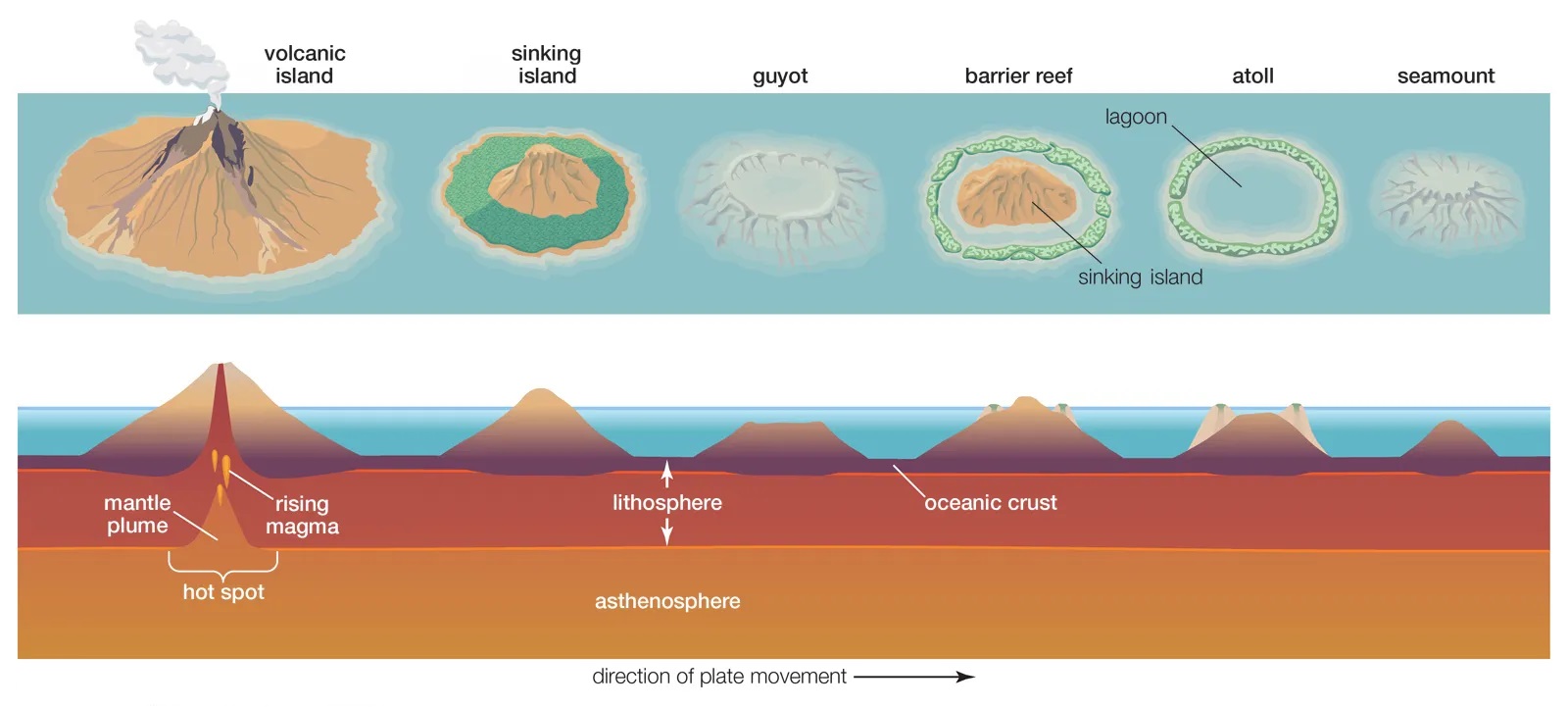
    • Australia’s Great Barrier Reef is the world’s largest reef system stretching across 2,300 km and having nearly 3,000 individual reefs.
    • It hosts 400 different types of coral, gives shelter to 1,500 species of fish and 4,000 types of mollusc.
    • Coral reefs support over 25% of marine biodiversity even as they take up only 1% of the seafloor.
    • The marine life supported by reefs further fuels global fishing industries.
    • Besides, coral reef systems generate $2.7 trillion in annual economic value through goods and service trade and tourism.
    • In Australia, the Barrier Reef, in pre-COVID times, generated $4.6 billion annually through tourism and employed over 60,000 people including divers and guides.

    What does the new report say?

    • The current report surveyed 87 reefs in the GBR between August 2021 and May 2022.
    • Coral cover is measured by determining the increase in the cover of hard corals.
    • The hard coral cover in northern GBR had reached 36% while that in the central region had reached 33%.
    • Meanwhile, coral cover levels declined in the southern region from 38% in 2021 to 34% in 2022.
    • The record levels of recovery, the report showed, were fuelled largely by increases in the fast-growing Acropora corals, which are a dominant type in the GBR.

    Threats found

    • Acropora corals are also the most susceptible to environmental pressures such as rising temperatures, cyclones, pollution, crown-of-thorn starfish (COTs) attacks which prey on hard corals and so on.

    Does this mean the reef is out of the woods?

    • Behind the recent recovery in parts of the reef, are the low levels of acute stressors in the past 12 months — no tropical cyclones, lesser heat stress in 2020 and 2022 as opposed to earlier.
    • Besides predatory attacks and tropical cyclones, scientists say that the biggest threat to the health of the reef is climate change-induced heat stress, resulting in coral bleaching.
    • The concern is that in the past decade, mass bleaching events have become more closely spaced in time.
    • The first mass bleaching event occurred in 1998 when the El Niño weather pattern caused sea surfaces to heat, causing 8% of the world’s coral to die.
    • The second event took place in 2002.
    • But the longest and most damaging bleaching event took place from 2014 to 2017. Mass bleaching then occurred again in 2020, followed by earlier this year.

    Back2Basics: Coral Reefs

    • Corals are marine invertebrates or animals which do not possess a spine.
    • They are the largest living structures on the planet.
    • Each coral is called a polyp and thousands of such polyps live together to form a colony, which grow when polyps multiply to make copies of themselves.
    • Corals are of two types — hard corals and soft corals.
    1. Hard corals extract calcium carbonate from seawater to build hard, white coral exoskeletons. Hard corals are in a way the engineers of reef ecosystems and measuring the extent of hard coral is a widely-accepted metric for measuring the condition of coral reefs.
    2. Soft corals attach themselves to such skeletons and older skeletons built by their ancestors. Soft corals also add their own skeletons to the hard structure over the years. These growing multiplying structures gradually form coral reefs.

    How do corals bleach?

    • Corals share a symbiotic relationship with single-celled algae called zooxanthellae.
    • The algae prepares food for corals through photosynthesis and also gives them their vibrant colouration.
    • When exposed to conditions like heat stress, pollution, or high levels of ocean acidity, the zooxanthellae start producing reactive oxygen species not beneficial to the corals.
    • So, the corals kick out the colour-giving algae from their polyps, exposing their pale white exoskeleton and leading to coral starvation as corals cannot produce their own food.
    • Bleached corals can survive depending on the levels of bleaching and the recovery of sea temperatures to normal levels.
    • Severe bleaching and prolonged stress in the external environment can lead to coral death.

    Try this PYQ:

    Consider the following statements:

    1. Most of the world’s coral reefs are in tropical waters.
    2. More than one third of the world’s coral reefs are located in the territories of Australia, Indonesia and Philippines.
    3. Coral reefs host far more number of animal phyla than those hosted by tropical rainforests.

    Which of the above statements is/are correct?

    (a) 1 and 2 only

    (b) 3 only

    (c) 1 and 3 only

    (d) 1 and 3 only


    [wpdiscuz-feedback id=”hqty7xqwlv” question=”Please leave a feedback on this” opened=”1″]Post your answers here.[/wpdiscuz-feedback]


    UPSC 2023 countdown has begun! Get your personal guidance plan now! (Click here)

  • Supreme Court seeks government’s response on evolving ‘Project Great Indian Bustard’

    bustard

    The Supreme Court sought the government’s response about evolving a ‘Project Great Indian Bustard’ conservation program like the ‘Project Tiger’ to bring attention to the peril faced by the critically endangered bird species.

    Great Indian Bustards

    • GIBs are the largest among the four bustard species found in India, the other three being MacQueen’s bustard, lesser florican, and the Bengal florican.
    • GIBs’ historic range included much of the Indian sub-continent but it has now shrunken to just 10 percent of it. Among the heaviest birds with flight, GIBs prefer grasslands as their habitats.
    • GIBs are considered the flagship bird species of grassland.

    On the brink of extinction

    • The GIB population in India had fallen to just 150.
    • Pakistan is also believed to host a few GIBs and yet openly supports their hunting.

    Protection accorded

    • Birdlife International: uplisted from Endangered to Critically Endangered (2011)
    • Protection under CITES: Appendix I
    • IUCN status: Critically Endangered
    • Protection under Wildlife (Protection) Act: Schedule I

    Threats

    • Overhead power transmission
    • Poor vision: Due to their poor frontal vision, can’t detect powerlines in time and their weight makes in-flight quick maneuvers difficult.
    • Windmills: Coincidentally, Kutch and Thar desert are the places that have witnessed the creation of huge renewable energy infrastructure.
    • Noise pollution: Noise affects the mating and courtship practices of the GIB.
    • Changes in the landscape: by way of farmers cultivating their land, which otherwise used to remain fallow due to frequent droughts in Kutch.
    • Cultivation changes: Cultivation of cotton and wheat instead of pulses and fodder are also cited as reasons for falling GIB numbers.

    Supreme Court’s intervention

    • The Supreme Court has ordered that all overhead power transmission lines in core and potential GIB habitats in Rajasthan and Gujarat should be undergrounded.
    • The SC also formed a three-member committee to help power companies comply with the order.

    Conservation measures

    • In 2015, the Central government launched the GIB species recovery program.
    • Under the program, the WII and Rajasthan Forest departments have jointly set up conservation breeding centers where GIB eggs are harvested from the wild.
    • They have been incubated artificially and hatchlings raised in a controlled environment.


    Click and get your FREE Copy of CURRENT AFFAIRS Micro Notes

    (Click) FREE1-to-1 on-call Mentorship by IAS-IPS officers | Discuss doubts, strategy, sources, and more

  • Municipal Solid Waste (MSW) in India

    Solid Waste

    Click and get your FREE Copy of CURRENT AFFAIRS Micro Notes

    Context

    • A recent report titled ‘EnviStats India 2022’, published by the Ministry of Statistics and Programme Implementation, has highlighted the herculean challenge of disposing of the solid waste generated by the States without harming the environment.

    What is the report all about?

    • Source and destination of solid waste: By taking Delhi as an example, the report has calculated the “physical supply and use tables” to capture the source and destination of all types of solid waste in the capital city.
    • Data from government sources: Data were collected from all the five Urban Local Bodies and the Delhi Pollution Control Committee pertaining to 2020-21.

    Case study of Delhi

    • Over 40 lakh tonnes of Municipal Solid Waste (MSW): Municipal solid waste includes garbage (highly decomposable material such as food), trash (bulky items such as tree branches or old appliances), and rubbish (slowly decomposing items such as paper, glass, or metal).
    • Households are largest contributors: According to the report, about 85% of MSW in Delhi was generated by households and 15% by shops and restaurants.
    • High C & D waste: That year, over 13 lakh tonnes of construction and demolition waste were also generated in the city along with over 5.4 lakh tonnes of plastic waste, about 11 thousand tonnes of bio-medical waste, and 610 tonnes of e-waste.
    • Hazardous waste: Delhi also generated 3,239 tonnes of hazardous waste. Hazardous waste is typically sludge from factories, industrial manufacturing process wastes and batteries.

    How the waste is disposed-off?

    • Largest part went to landfills: Half the municipal solid waste went to landfills and the other half was recycled and reused.
    • Incineration: About 35% of bio-medical waste was incinerated, while the entire share of construction and demolition waste was recycled. While bio-medical waste is incinerated, the ash generated after the process is sent to the landfills.
    • No information on E-waste: It is not known how e-waste is disposed of as there is no treatment and disposal facility available in Delhi for e-waste.
    • Plastic into energy: According to the report, of the 610 tonnes of e-waste generated in 2020-21, refurbish collector collected 28.6 tonnes and bulk consumers collected the rest. Notably, about 22% of plastic waste is converted into energy, while 37% is taken to landfills.

    Solid Waste

    How Municipal solid waste is taken care in others states of India?

    • Amount of waste processed: Across India, 68% of the MSW generated is processed. Himachal Pradesh leads the list with 98% of MSW getting processed, followed by Chhattisgarh at 93%.
    • West Bengal poor performer: In contrast, West Bengal processed only 9%. These data were of November 2020. In 2018-19, an average of 2.5 tonnes of plastic was generated per 1,000 population in India.
    • How biomedical waste is treated: Across India, 87% of biomedical waste was treated. Seventeen States and five Union Territories have already achieved 100% bio-medical waste treatment, while in Bihar and Chhattisgarh just 29% of it got treated, respectively. Close to 614 tonnes of biomedical waste was generated per day in India in 2018.
    • Hazardous waste is poorly treated: Across India, only 45% of the hazardous waste generated was recycled/utilised. Most States lag in this indicator. Of the 30 States analysed, in 13, less than 50% was recycled/utilised; and in 22 of them, less than 75% was recycled/utilised. These data pertain to the 2018-19 period. The hazardous waste generated in the country per 1,000 population was 8.09 metric tonnes in 2018.

    Solid Waste

    Municipal solid waste management rules 2016

    • Segregation at source: The new rules have mandated the source segregation of waste in order to channelize the waste to wealth by recovery, reuse and recycle. Waste generators would now have to now segregate waste into three streams- Biodegradables, Dry (Plastic, Paper, metal, Wood, etc.) and Domestic Hazardous waste (diapers, napkins, mosquito repellents, cleaning agents etc.) before handing it over to the collector.
    • Collection and disposal of sanitary waste: The manufacturers or brand owners of sanitary napkins are responsible for awareness for proper disposal of such waste by the generator and shall provide a pouch or wrapper for disposal of each napkin or diapers along with the packet of their sanitary products.
    • Collect Back scheme for packaging waste: As per the rules, brand owners who sale or market their products in packaging material which are non‐biodegradable, should put in place a system to collect back the packaging waste generated due to their production.
    • User fees for collection: The new rules have given power to the local bodies across India to decide the user fees. Municipal authorities will levy user fees for collection, disposal and processing from bulk generators.
    • Waste processing and treatment: It has been advised that the bio-degradable waste should be processed, treated and disposed of through composting or bio-methanation within the premises as far as possible and the residual waste shall be given to the waste collectors or agency as directed by the local authority.

    Conclusion

    • EnviStats India 2022 report highlights the positive progress by India in solid waste management. However, challenges still persist, hazardous and e- waste, Landfills and incineration need to be reduced significantly which are causing the pollution.

    Mains Question

    Q. Briefly discuss the solid waste management rule 2016. Analyse the performance of various state on SWM based on ‘EnviStats India 2022’ report.

    (Click) FREE1-to-1 on-call Mentorship by IAS-IPS officers | Discuss doubts, strategy, sources, and more


  • ‘Loss and Damages’ Fund Launched at the onset of COP28

    loss and damage

    On the first day of the COP28 climate conference in Dubai, a fund dedicated to assisting vulnerable nations in dealing with the effects of climate change was formally inaugurated.

    Loss and Damage: The climate change context

    • Climate change causes costly damage, including from climate-related natural disasters, such as tropical cyclones, and more gradual changes, such as desertification and rising sea levels.
    • Currently, because climate change is caused by greenhouse gases already in the atmosphere, rich industrialised countries are responsible for most of the emissions causing these phenomena.

     ‘Loss and Damages’ Fund: Inception of the idea

    • The idea of a “loss and damage” fund (LDF) was first floated in 1991.
    • Vanuatu, a low-lying island nation in the Pacific, suggested the creation of an insurance scheme, under the auspices of the UN, to help pay for the consequences of rising sea levels.
    • For thirty years such demands were left ignored at the UN.
    • But twelve months ago in Scotland, that country’s first minister promised ÂŁ2m ($2.4m) to the cause.

    Why need LDF?

    • Poor countries often feel the effects first being the most vulnerable and incapable of self-mitigation.
    • They also include not only economic damage to property but also loss of livelihoods, and the destruction of biodiversity and sites that have cultural importance.
    • This broadens the scope for affected nations to claim compensation.
    • Hence loss and damage is sometimes called the “third pillar” of climate politicking, after mitigation (tackling the root cause of the problem by reducing emissions) and adaptation (preparing for current and future impacts).

    Immediate triggers for such action

    Ans. Pakistan Floods

    • Unusually heavy monsoon rains caused more than $30bn of damage and financial losses in Pakistan, equivalent to nearly 9% of the country’s GDP.
    • Natural climatic variations, notably an ocean-cooling phenomenon known as “La Niña,” were partly responsible.
    • But the rains were also made heavier by the effects of greenhouse gases.

    When will LDF be operational?

    • Further decisions have been left to a “transitional committee” that will make recommendations to enable the actual adoption of the fund at the next year COP to be held in UAE.

    Realistic picture of LDF

    • Some critical questions remain unaddressed –
    1. Who will manage this fund?
    2. Whether contributions are expected from large developing countries?
    3. What the fair share of contributors will be?

    Status of global consensus over LDF

    • During COP27, financial pledges for LDF came from multiple countries, including Austria, Belgium, Canada, France, Germany, and New Zealand, joining Denmark and Scotland, which had made pledges previously.

    How much fund is necessary?

    • The expected monetary compensation from the L&D fund is estimated to be nearly $500 billion and rising by $200 billion annually.
    • A global transformation to a low-carbon economy is expected to require investments of at least $4-6 trillion a year.
    • The global stocktake refers to a five-year appraisal by countries of the impact of their actions to curb climate change.

    How realistic is the establishment of LDF?

    • To some extent, all this is immaterial.
    • Few believe that an UN-sponsored “loss and damage” fund will ever transfer the hundreds of billions that would be needed to offset the damage done by climate change.
    • COP27 itself dropped several hints that money for loss and damage could be found in what is called a “mosaic” of sources in existing global, regional and national financial institutions.

    Way forward

    • Mitigation, adaptation and loss and damage are inextricably linked.
    • Faster, more ambitious decarbonization will reduce the bill for adaptation.
    • Better mitigation and adaptation will mean that less money has to be spent rebuilding after disasters.

    Conclusion

    • LDF is largely a first concrete step towards the institutionalization of climate finance.
    • Delivering such funding will require a swift and comprehensive transformation of the financial system.
  • NITI Aayog launches CCUS policy framework

    niti

    The NITI Aayog has prepared a report on the policy framework for Carbon Capture Utilisation and Storage (CCUS).

    What is Carbon capture, utilization, and storage (CCUS)?

    • It is the process of capturing carbon dioxide emissions and either using them to make things such as building materials (utilization) or permanently storing those thousands of feet below the surface (storage).
    • Capturing carbon dioxide from industrial operations before it has a chance to enter the atmosphere helps reduce emissions, as does removing it directly from the air.
    • The carbon dioxide is then reused or sent through an injection well deep underground where it is locked away safely and permanently.
    • It’s a straightforward concept that takes infrastructure and policy considerations to implement, and Chevron is committed to making it work.

    Steps involved in CCUS

    • Capturing the carbon dioxide for storage: The CO2 is separated from other gases produced in industrial processes, such as those at coal and natural-gas-fired power generation plants or steel or cement factories.
    • Transport: The CO2 is then compressed and transported via pipelines, road transport or ships to a site for storage.
    • Storage: Finally, the CO2 is injected into rock formations deep underground for permanent storage.

    What has NITI Aayog identified?

    • CCUS has a critical role to play for the country to halve CO2 emissions by 2050.
    • Key challenge would be to reduce the cost of the mechanisms to implement the technology.
    • CCUS could enable the production of clean products while utilising rich endowments of coal, reducing imports and thus leading to a self-reliant India economy.
    • It has an important role to play in enabling sunrise sectors such as coal gasification and the nascent hydrogen economy in India.

    Key sectors identified for carbon utilization

    • Green urea: Green urea can be produced from the captured CO 2 and cost-competitive green hydrogen, from renewable energy-based electrolysis of water. Green urea can replace/complement the traditional LNG/NG-based production and import of ammonia and urea.
    • F&B applications: CO2 is utilized in F&B applications such as carbonated drinks, dry ice, and modified atmosphere packing; however, the scales are much lower compared to green urea.
    • Building materials (concrete and aggregates): There is a large market for aggregates and concrete in a developing country like India, providing a pathway for utilizing CO2 for producing building materials through concrete curing and aggregate formation. In these applications, CO2 is injected in a liquid state without any conversion, thus reducing the energy requirements.
    • Chemicals (methanol and ethanol): Conversion of CO2 to methanol and ethanol from CO2 is proven at a commercial scale in different parts of the world.

    Why such move?

    • India’s per capita CO2 emissions were about 1.9 tonnes per annum, which was less than 40% of the global average and about one-fourth of that of China.
    • India needs a sustainable solution for the decarbonization of sectors that contribute to 70% of emission.

    Why CCUS is important?

    • CCUS helps reduce the carbon intensity of industrial operations and is a critical component of meeting the global net-zero ambitions of the Paris Agreement.
    • In fact, the Intergovernmental Panel on Climate Change notes in its Global Warming of 1.5 °C report that achieving net-zero emissions by 2050 isn’t possible without ambitious mitigation action.


    Click and get your FREE Copy of CURRENT AFFAIRS Micro Notes

    (Click) FREE1-to-1 on-call Mentorship by IAS-IPS officers | Discuss doubts, strategy, sources, and more