💥Mains Ready By December. Smash Mains & Smash PYQ Admissions Open

Subject: Global Groupings and Conventions

Important International institutions, agencies and fora- their structure, mandate.

  • Rohingya Deportation case

    The article highlights the issues with the order passed by the Supreme Court allowing the deportation of Rohingya refugees.

    Context

    • Recently, in its order in Mohammad Salimullah v. Union of India, the Supreme Court rejected an application to stay the deportation of Rohingya refugees to Myanmar.

    Principle of non-refoulement

    • The Supreme Court noted the petitioners’ reliance on a judgment of the International Court of Justice (ICJ) dated January 23, 2020, which recorded the genocidal conditions that resulted in 7.75 lakh Rohingyas being forced to take refuge in Bangladesh and India.
    • The Supreme Court relied on the word of the government that the principle of non-refoulement, or forcible repatriation to a place where the refugee’s life is in danger, applies only to signatories to the UN’s Refugee Convention of 1951 or its 1967 Protocol.
    • It must be stated that a UN Special Rapporteur was not heard, as the Court felt that serious objections had been raised to her intervention.
    • The Supreme Court accepted that the right not to be deported flows not from the right to life and liberty under Article 21, which applies to all human beings, but from the right to reside and settle in India under Article 19(1)(g), which applies to citizens alone.

    Why the judgement needs reconsideration

    1) India has recognised genocide as an international crime

    • India is a signatory to the Convention for the Prevention and Punishment of the Crime of Genocide (the Genocide Convention, 1948),
    • Acceding to the Convention in 1959, India has recognised genocide as an international crime, and that the principles of the Convention are “therefore already part of common law of India”.
    •  India has also ratified the International Convention on the Elimination of All Forms of Racial Discrimination (ICERD), the International Covenant on Civil and Political Rights (ICCPR) have a bearing on non-refoulement.
    • Article 6(1) of the ICCPR, which mirrors Article 21 of our Constitution.
    • A number of other UN conventions particularly those dealing with the rights of women (CEDAW) and children (CRC) also have a non-refoulment element in it and both of which have been declared by the Supreme Court to be part of our domestic legal framework.

    2) Prevention of genocide

    • The leitmotif of the Genocide Convention is prevention.
    • Prevention is also central to Article I, under which the contracting parties confirm that genocide is a crime under international law, “which they undertake to prevent and to punish”.

    3) Preemptory norm

    • It is increasingly accepted in public international law, that non-refoulement and other protections emanating from the Genocide Convention, are peremptory norms that apply to state parties as well as non-parties.
    • That non-refoulement is jus cogens, a norm from which there can be no derogation whatsoever. I
    • At least three high courts (Gujarat in 1998, Delhi in 2015, and Calcutta in 2019) have held that non-refoulement is part of the right to life and liberty protected by Article 21 of our Constitution.

    What should the Supreme Court do

    • There are two possible solutions.
    • The first is that in its interim order, the Court specifies that the Rohingya refugees may not be deported unless “the procedure prescribed for such deportation is followed”.
    • It is a long-held principle of Indian jurisprudence that the word “procedure” means “due process”, or a procedure that is just, fair, and reasonable.
    • The Supreme Court can, thus, suo motu clarify that due process requires that they not be deported as long as there exists a reasonable threat of persecution in Myanmar.
    • Alternately, since the order in question is an interim order, the Supreme Court could swiftly hear the main petition on its merits, and clarify the law on non-refoulement and Article 21. 

    Conclusion

    The order on the deportation of Rohingya refugees needs reconsideration by the Supreme Court considering the India’s treaty obligations on the genocide.
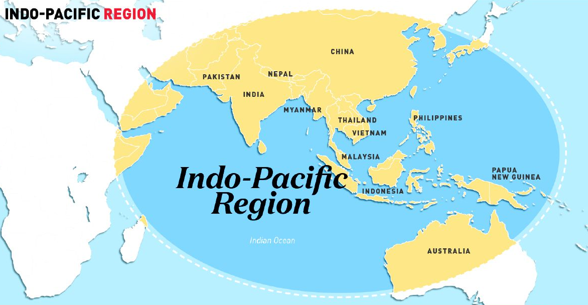
  • EU’s Indo-Pacific strategy

    The Council of the European Union approved conclusions on a European Union strategy for cooperation in the Indo-Pacific.

    Aim:

    • To reinforce its strategic focus, presence and actions in the Indo-Pacific region.
    • To contribute to regional stability, security, prosperity and sustainable development at the time of “rising challenges and tensions in the region.”

    Rationale:

    • The current dynamics in the Indo-Pacific have given rise to:
      • Intense geopolitical competition
      • Increasing tensions on trade and supply chains
      • Challenges in technological, political and security areas
      • Issues related to Human rights
    • As per the EU, these developments threaten the stability and security of the region and beyond, directly impacting on its interests.

    Strategy by European Union:

    • Increased cooperation in the Indo-Pacific
    • Commitment to uphold democracy, human rights, the rule of law and respect for international law.
    • Promote effective rules-based multilateralism
    • Support for ASEAN (Association of South East Asian Nations)
    • Work to mitigate economic and human effects of the COVID-19 pandemic
    • Support open and fair environment for trade and investment
    • Tackling climate change and supporting connectivity with the EU
    • Conclude free trade agreements with Australia, Indonesia and New Zealand
    • Take steps towards the Comprehensive Agreement on Investment with China
    • Deepen economic relations with India
    • Develop partnerships in the areas of security and defence
    • Address maritime security, malicious cyber activities, disinformation, emerging technologies, terrorism, and organised crime
    • Extend the geographic scope of its CRIMARIO (Critical Maritime Routes) IIactivities from the Indian Ocean into South and Southeast Asia to contribute to safer sea lanes of communication with the EU.
  • Navigation with permission

    The explains the issues involved in the recent incident in which US position on freedom of navigation under UNCLOS differed from India’s.

    Different positions

    • On April 7, the U.S.’s 7th Fleet Destroyer conducted a ‘Freedom of Navigation Operation’ inside India’s Exclusive Economic Zone (EEZ).
    • This exercise was conducted without requesting India’s consent.
    • Moreover, the U.S. 7th Fleet noted in its press release that India’s requirement of prior consent is “inconsistent with international law”.
    • However, India asserted that the UN Convention on the Law of the Sea (UNCLOS) “does not authorize other States to carry out in the Exclusive Economic Zone and on the continental shelf, military exercises or manoeuvres, in particular those involving the use of weapons or explosives, without the consent of the coastal state”. 
    • The question is, can countries carry out military exercises in another country’s EEZ and if yes, subject to what conditions?

    UNCLOS Provisions for EEZ

    • UN Convention on the Law of the Sea (UNCLOS) binds all its signatories and customary international law binds all states, subject to exceptions like the doctrine of persistent objector.
    • As per the UNCLOS, EEZ is an area adjacent to the territorial waters of a coastal state.
    • Under UNCLOS, a sovereign coastal state has rights and duties relating to management of natural resources; establishment and use of artificial islands, installations and structures; marine scientific research; and protection of the marine environment.
    • India is a party to the UNCLOS while the U.S. is not.
    • Article 87 provides for freedom of the high seas under which all states have the freedom of navigation. 
    • Apart from that, states enjoy the freedom of overflight and of the laying of submarine cables and pipelines as well as other internationally lawful uses of the sea.
    •  However, the freedom of navigation is subject to the conditions laid down under the UNCLOS and other rules of international law.
    • In addition to it, Article 58 (3) stipulates another qualification: “In exercising their rights and performing their duties under this Convention in the exclusive economic zone, States shall have due regard to the rights and duties of the coastal State and shall comply with the laws and regulations adopted by the coastal State…”.

    So, what laws and regulation are adopted by India under Article 58 (3) of UNCLOS

    • The relevant Indian law in this regard is the Territorial Waters, Continental Shelf, Exclusive Economic Zone and Other Maritime Zones of India Act, 1976.
    • Section 7 sub-section 9 of this Act recognises the freedom of navigation of the ships of all States but makes them subject to the exercise of rights by India within the zone.
    • Article 310 of the UNCLOS does permit states to make declarations in order to explain the relationship between the Convention and their own laws.
    • The declaration by India in 1995 also states that India “understands that the provisions of the Convention do not authorize other States to carry out in the exclusive economic zone and on the continental shelf military exercises or manoeuvres.

    Way forward

    • Non-consensual military activities that hinder the lawful enjoyment of rights of coastal states need not be permissible.
    • Also, a coastal state is naturally concerned about military exercises and manoeuvres posing a risk to its coastal communities, its installations or artificial islands, as well as the marine environment.
    • Thus, any state which wishes to conduct such exercises must do so only in consultation with the coastal state since the coastal state is the best judge of its EEZ.
    • Both India and the U.S. should negotiate such concerns for the maintenance of international peace and security.

    Consider the question “What are the rights of coastal state on its Exclusive Economic Zone under UNCLOS? “

    Conclusion

    On a conjoint reading of Articles 58, 87 and 310, it can be argued that freedom of navigation cannot be read in an absolute and isolated manner.

  • 7th Fleet’s patrol in India’s EEZ was an act of impropriety

    The explains the implications of a recent incident in which the US 7th fleet asserted navigation freedom and rights inside India’s Exclusive Economic Zone.

    Freedom of navigation operation in India’s EEZ

    • The US 7th fleet recently declared that on 7th April, 2021 USS John Paul Jones asserted navigational rights and freedom inside India’s EEZ, without requesting India’s prior consent.
    • The statement also said that  “India requires prior consent for military exercises or manoeuvres in its EEZ, a claim inconsistent with international law.

    Which international law the statement referred to

    • The “international law” being cited by Commander 7th Fleet is a UN Convention which resulted from the third UN Conference on Law of the Seas (UNCLOS 1982).
    • India has ratified the Convention, which came into force in 1994.
    • However, amongst the 168 nations who have either acceded to or ratified UNCLOS 1982, the US is conspicuous by its absence.

    Background of the UNCLOS

    • In 1945, the US unilaterally declared its jurisdiction over all natural resources on that nation’s continental shelf. 
    • Taking cue from the US, some states extended their sovereign rights to 200 miles, while others declared territorial limits as they pleased.
    • To bring order to a confusing situation, conferences for codifying laws of the seas were convened by the UN.
    • After negotiations, an agreement was obtained on a set of laws that formalised the following maritime zones:
    • (a) A 12-mile limit on territorial sea;
    • (b) A 24-mile contiguous zone.
    • (c) Amnewly conceived “exclusive economic zone” (EEZ) extending up to 200 miles within which the state would have sole rights over natural resources.
    • The EEZ was said to be unique in that it was neither high seas nor territorial waters.

    Issues with the UNCLOS 1982

    • The signatories UNCLOS 1982 have chosen to remain silent on controversial issues with military or security implications and mandated no process for resolution of ambiguities.
    • Resort to the International Tribunal for the Law of the Sea or a Court of Arbitration are amongst the options available.
    • However, many states have expressed a preference for “negotiating in good faith”.
    • The time has, perhaps, come for signatories of UNCLOS 1982 to convene another conference to review laws and resolve issues of contention.

    Why US refused to ratify UNCLOS

    • It was accepted that the seabed beyond the limits of national jurisdiction was not subject to national sovereignty but would be “the common heritage of mankind” .
    • This seems to have been at the root of the US opposition to UNCLOS.
    • It was felt in the US that this concept favoured the under-developed countries thereby denying America the fruits of its technological superiority.
    • The US Senate, therefore, refused to ratify UNCLOS.
    • Amongst the areas of major contention or sharp divergence in the interpretation of rules are:
    • 1) Applicability of the EEZ concept to rocks and islets.
    • 2) The right of innocent passage for foreign warships through territorial seas.
    • 3) Conduct of naval activities in the EEZ and the pursuit of marine scientific research in territorial waters and EEZ.

    Containing China

    • China has insulated itself against US intervention, through the progressive development of its “anti-access, area-denial” or A2AD capability.
    • China has accelerated its campaign to achieve control of the South China Sea (SCS).
    • In 2013, China commenced on an intense campaign to build artificial islands in the SCS on top of reefs in the Spratly and Paracel groups.
    • In 2016, China disdainfully rejected the verdict of the UN Court of Arbitration in its dispute with the Philippines.
    • So far, none of the US initiatives including Obama’s abortive US Pivot/Re-balance to Asia, Trump’s Indo-Pacific Strategy and Asia Reassurance Initiative Act, seem to have had the slightest impact on China’s aggressive intent
    • Therefore, it seems pointless for the US Navy to frighten the Maldives or friendly India and it needs to focus on China instead.

    Consider the question “What are the different types of maritime zones under the United Nations Convention for the Law of the Sea 1982? What are the flaws in the convention?

    Conclusion

    In this fraught environment, the ever-expanding, worldwide FONOP campaign needs a careful reappraisal by US policy-makers for effectiveness — lest it alienates friends instead of deterring adversaries.

  • Ukraine urges NATO to speed up membership

    Ukrainian President has urged NATO to speed up his country’s membership in the alliance, saying it was the only way to end fighting with pro-Russia separatists.

    North Atlantic Treaty Organization (NATO)

    • The NATO, also called the North Atlantic Alliance, is an intergovernmental military alliance between 30 European and North American countries.
    • The organization implements the North Atlantic Treaty that was signed on 4 April 1949.
    • NATO constitutes a system of collective defence whereby its independent member states agree to mutual defence in response to an attack by any external party.
    • NATO’s Headquarters are located in Haren, Brussels, Belgium, while the headquarters of Allied Command Operations is near Mons, Belgium.

    Its members

    • Since its founding, the admission of new member states has increased the alliance from the original 12 countries to 30.
    • The most recent member state to be added to NATO was North Macedonia on 27 March 2020.
    • NATO currently recognizes Bosnia and Herzegovina, Georgia, and Ukraine as aspiring members.
    • An additional 20 countries participate in NATO’s Partnership for Peace program, with 15 other countries involved in institutionalized dialogue programs.

    Why NATO matters?

    • The combined military spending of all NATO members constitutes over 70% of the global nominal total.
    • Members agreed that their aim is to reach or maintain the target defence spending of at least 2% of their GDP by 2024.

    Also read:

    India & NATO

  • E9 Initiative for Digital Learning

    Nine countries including India, China and Brazil will explore the possibility of co-creating and scaling up digital learning to achieve the UN sustainable goal on quality education under the E9 initiative.

    The E9 is the first of its kind global collaboration for digital learning. Note the participating countries.

    E9 Initiative

    • It is the first of a three-phased process to co-create an initiative on digital learning and skills, targeting marginalised children and youth, especially girls.
    • The initiative aims to accelerate recovery and advance the Sustainable Development Goal 4 agenda by driving rapid change in education systems.
    • It is spearheaded by the UN, the E9 countries – Bangladesh, Brazil, China, Egypt, India, Indonesia, Mexico, Nigeria and Pakistan.
    • It will have the opportunity to benefit from this global initiative and accelerate progress on digital learning, according to UNESCO.

    Various functions

    • The initiative will discuss the co-creation of the Digital Learning initiative by the nine countries.
    • This Consultation will highlight progress, share lessons and explore opportunities for collaboration and scale-up to expand digital learning and skills.
    • In addition, a Marketplace segment, for public-private partnership will focus on promising local and global solutions and opportunities for digital learning to strengthen local ecosystems.
  • UK turns to Indo-Pacific  

    Britain wants to expand its influence among countries in the Indo-Pacific region to try to moderate China’s global dominance.

    Seems like QUAD is getting attention from other democratic nations for the big-brother role!

    What is the news?

    • A document laying out post-Brexit has highlighted foreign defence policy priorities of the UK.

    Britain’s post BREXIT plan

    • This document is Britain’s biggest foreign and defence policy review since the end of the Cold War.
    • It sets out a planned increase to Britain’s nuclear arsenal to weigh against evolving global security threats and underlines the importance of strong ties with the US while naming Russia as the top regional threat.
    • It sets out how PM Boris Johnson wants to be at the forefront of a reinvigorated, rules-based international order based on cooperation and free trade.

    Focus on Indo-pacific

    • China and the U.K. both benefit from bilateral trade and investment, but China also presents the biggest state-based threat to the U.K.’s economic security, the report said.
    • Calling the Indo-Pacific increasingly the geopolitical centre of the world, the government highlighted a planned British aircraft carrier deployment to the region.
    • Britain, the world’s sixth-largest economy, is dwarfed economically and militarily by China.
    • The UK believes, through soft power and strategic alliances, it can help persuade Beijing to play by the rules of a new, more dynamic international system.

    Content over Hong Kong

    • The Sino-British ties have tensed since over issues including Beijing’s security crackdown on former British colony Hong Kong.

    UK needs India for this juncture

    • UK PM Boris Johnson has called ”India is an increasingly indispensable partner for the United Kingdom.”
    • India’s skilled labour, technological assistance and the vibrant market will open a lot of avenues for Britain which has recently parted ways with the European Union.
    • India is not the world’s largest telecom market; it is also the fastest-growing.
    • According to a study on India’s telecom sector, an increase in telecom subscriptions often touches 20 million a month.
    • India also offers the cheapest data compared at current market exchange rates. As per cable.co.uk, the price per GB data in India to be $0.09.
    • Along with the world, India is now steering towards 5G. The UK will need India’s help to marginalize China in the telecom market.

    What else?

    • The report categorised India as “an international actor of growing importance”
    • Earlier the British government has approached Washington about a “D10” club of democratic partners, based on G7 plus Australia, South Korea and India.
  • India seeks TRIPS waiver for Vaccines

    India and South Africa have jointly moved a proposal at the WTO’s Trade-Related Aspects of Intellectual Property Rights (TRIPS) council for a waiver to help more countries get access to medicines and vaccines during the pandemic.

    Q.WTO and multilateralism is dying in the face of a greater reliance on plurilateral and bilateral trade pacts. Discuss. (250W)

    What is the TRIPS Agreement?

    • The TRIPS is an international legal agreement between all the member nations of the World Trade Organization (WTO).
    • It establishes minimum standards for the regulation by national governments of different forms of intellectual property (IP) as applied to nationals of other WTO member nations.
    • Its agreement was negotiated at the end of the Uruguay Round of the General Agreement on Tariffs and Trade (GATT) between 1989 and 1990 and is administered by the WTO.
    • The TRIPS agreement introduced intellectual property law into the multilateral trading system for the first time and remains the most comprehensive multilateral agreement on intellectual property to date.

    Why did India move such a proposal?

    • TRIPS waiver would deal with the question of equity along with global growth and livelihoods.
    • It is not only that we are coming in the way of life but it is very simple economics, asserted India’s ambassador.
    • For a commercial business of $30-40 billion of annual vaccine output of a few companies, we are coming in the way of $6-7 trillion of global GDP output in one year.

    Premise behind it

    • In 2001, developing countries, concerned that developed countries were insisting on an overly narrow reading of TRIPS, initiated a round of talks that resulted in the Doha Declaration.
    • The Doha declaration is a WTO statement that clarifies the scope of TRIPS, stating for example that TRIPS can and should be interpreted in light of the goal “to promote access to medicines for all.”

    Global response for the move

    • Fifty-seven WTO members have backed the proposal brought out by India.
    • But the EU, U.S., Japan and Canada have opposed the idea stressing the importance of intellectual property for innovation.
  • [pib] International Commission on Large Dams (ICOLD)

    The International Commission on Large Dams (ICOLD) Symposium was inaugurated by the Minister for Jal Shakti.

    What is the news?

    • ICOLD in collaboration with Central Water Commission (CWC) has organised a Symposium on “Sustainable Development of Dams and River Basins”.
    • The symposium is being organised to provide an excellent opportunity to Indian Dam Engineering Professionals and Agencies to share their experiences, ideas and latest developments.

    Try this PYQ:

    Q.Which one of the following pairs is not correctly matched?

    Dam: Lake River

    (a) Govind Sagar: Satluj

    (b) Kolleru Lake: Krishna

    (c) Ukai Reservoir: Tapi

    (d) Wular Lake: Jhelum

    About ICOLD

    • The ICOLD is an international non-governmental organization dedicated to the sharing of professional information and knowledge of the design, construction, maintenance, and impact of large dams.
    • It was founded in 1928 and has its central office in Paris, France.
    • It consists of 100 member national committees which have a total membership of about 10,000 individuals.
    • The official languages of the commission are English and French.

    Key initiatives: World Register of Dams

    For the purpose of inclusion in the World Register of Dams, a large dam is defined as any dam above 15 metres in height OR any dam between 10 and 15 metres in height that meets at least one of the following conditions:

    • the crest length is not less than 500 metres
    • the capacity of the reservoir formed by the dam is not less than one million cubic metres
    • the maximum flood discharge dealt with by the dam is not less than 2 000 cubic metres per second
    • the dam had especially difficult foundation problems
    • the dam is of unusual design
  • New York Convention

    Cairn Energy has filed a case in a U.S. district court to enforce a $1.2 billion arbitration award it won in a tax dispute against India. Cairn aims to enforce the award under international arbitration rules, commonly called the New York Convention.

    New York Convention

    • The Convention on the Recognition and Enforcement of Foreign Arbitral Awards is commonly known as the New York Convention.
    • It was adopted by a UN diplomatic conference on 10 June 1958 and entered into force on 7 June 1959.
    • It requires courts of contracting states to give effect to private agreements to arbitrate and to recognize and enforce arbitration awards made in other contracting states.
    • Widely considered the foundational instrument for international arbitration, it applies to arbitrations that are not considered domestic awards in the state where recognition and enforcement are sought.

    What was the case?

    • The Indian government has lost an international arbitration case to energy giant Cairn Plc over the retrospective levy of taxes and has been asked to pay damages worth $1.2 billion to the UK firm.
    • The Permanent Court of Arbitration at The Hague has maintained that the Cairn tax issue is not a tax dispute but a tax-related investment dispute and, hence, it falls under its jurisdiction.
    • India’s demand in past taxes, it said, was in breach of fair treatment under the UK-India Bilateral Investment Treaty.