💥Join UPSC 2027,2028 Mentorship (July Batch) + XFactor Notes & Microthemes PDF

Subject: History

  • Qissa Khwani Bazaar massacre and the Khudai Khidmatgars

    • Qissa Khwani Bazaar is a renowned market place in the city of Peshawar.
    • Before the Partition, the marketplace was also the site of a massacre perpetrated by British soldiers against non-violent protesters of the Khudai Khidmatgar movement on April 23, 1930.

    We can expect a possible mains question inspired from this newscard. The question could be like- “Discuss the role of Abdul Ghaffar Khan and his Khudai Khidmatgar in infusing the Gandhian principle of non-violence in the Frontiers of India “.

    The Red Shirts:  Khudai Khidmatgars

    • The Khudai Khidmatgar was a non-violent movement against the British occupation of the Indian subcontinent led by Abdul Ghaffar Khan, a Pashtuns freedom fighter, in the North-West Frontier Province.
    • Over time, the movement acquired a more political colour, leading to the British taking notice of its growing prominence in the region.
    • Following the arrest of Khan and other leaders in 1929, the movement formally joined the Indian National Congress after they failed to receive support from the All-India Muslim League.
    • Members of the Khudai Khidmatgar were organised and the men stood out because of the bright red shirts they wore as uniforms, while the women wore black garments.

    Why did the massacre happen?

    • Abdul Ghaffar Khan and other leaders of the Khudai Khidmatgar were arrested on April 23, 1930 by British police after he gave a speech at a gathering in the town of Utmanzai in the North-West Frontier Province.
    • A respected leader well-known for his non-violent ways, Khan’s arrest spurred protests in neighbouring towns, including Peshawar.
    • Protests spilled into the Qissa Khwani Bazaar in Peshawar on the day of Khan’s arrest. British soldiers entered the market area to disperse crowds that had refused to leave.
    • In response, British army vehicles drove into the crowds, killing several protesters and bystanders. British soldiers then opened fire on unarmed protestors, killing even more people.
    • Historical records suggest the British attempted to deploy the Garhwal Regiment against the civilians in the marketplace, but two platoons of this respected regiment refused to shoot at unarmed protesters.
    • In retaliation, British officials court-martialled the platoon members with upto eight years of imprisonment.

    Aftermath of the massacre

    • The British ramped up the crackdown on Khudai Khidmatgar leaders and members following the Qissa Khwani Bazaar massacre.
    • In response, the movement began involving young women in its struggle against the British, a decision in line with tactics adopted by revolutionaries across undivided India.
    • Women were able to move undetected with more ease than men.
    • According to accounts by Khudai Khidmatgar activists, the British subjected members of the movement to harassment, abuse and coercive tactics adopted elsewhere in the subcontinent.
    • This included physical violence and religious persecution. Following the recruitment of women in the movement, the British also engaged in violence, brutality and abuse of women members.

    Khudai Khidmatgars  gets wasted into history

    • British adopted their tactic of sowing divisions on religious grounds in the North-West Frontier Province as well, in an attempt to weaken the Khudai Khidmatgar.
    • In a move that surprised the British government, in August 1931, the Khudai Khidmatgar aligned themselves with the Congress party, forcing the British to reduce the violence they were perpetrated on the movement.
    • The Khudai Khidtmatgar opposed Partition, a stance that many interpreted as the movement not being in favour of the creation of the independent nation of Pakistan.
    • Post 1947, the Khudai Khidmatgar slowly found their political influence decreasing to such an extent that the movement and the massacre 90 years ago in the Bazaar has been wiped out from collective memory (of Pakistan).
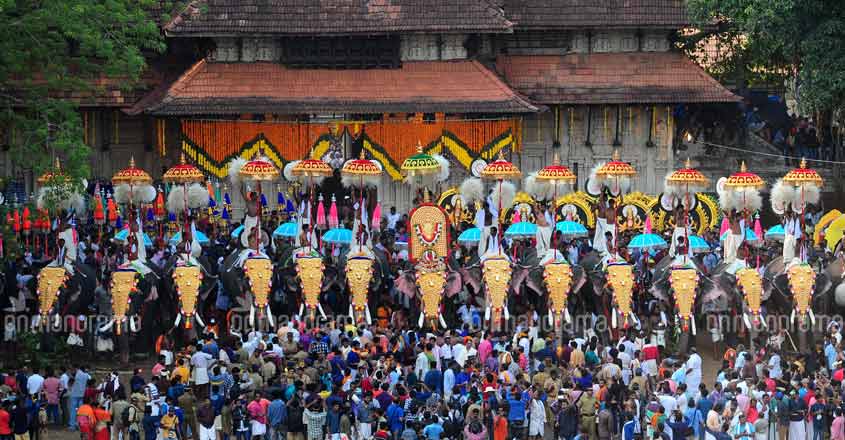
  • Festivals in news: Ambubachi Mela

    The Ambubachi Mela at Guwahati’s Kamakhya Temple has been cancelled this year due to COVID-19.

    Many festivals this year have been cancelled for the first time in their recorded history. Few of them were – Thrisur Pooram Festival, Pandharpur Jatara and now, the Ambubachi Mela. Do read about the Medaram Jatara (held in February) as well. Take note of each of them and their speciality along with the respective state of celebration.

    Ambubachi Mela

    • Ambubachi Mela, a four-day fair to mark the annual menstruation of the goddess at Kamakhya temple in Guwahati has begun.
    • Legends say the temple atop the Nilachal Hills, whose northern face slopes down to the Brahmaputra River, was built by the demon king Narakasura.
    • But records are available only from 1565 when Koch king Naranarayana had the temple rebuilt.
    • Kamakhya is one of 51 shaktipeeths or holy sites for the followers of the Shakti cult, each representing a body part of the Sati, Lord Shiva’s companion.
    • The temple’s sanctum sanctorum houses the yoni – female genital – symbolised by a rock.

    Significance

    • Temple priests said the ritualistic fair celebrating the Goddess’ period is one of the reasons why taboo associated with menstruation is less in Assam compared to other parts of India.
    • The attainment of womanhood of girls in Assam is celebrated with a ritual called Tuloni Biya, meaning small wedding.

    Similar place

    • A similar custom is followed at the Devi Temple at Chengannur town in Alleppey district of Kerala.
    • The temple is shut for the days the Goddess there is believed to undergo her period.
  • Festival in news: Thrissur Pooram

    For the first time since its inception, Thrissur Pooram, considered as mother of all poorams in Kerala, has been cancelled earlier this month.

    Note the cultural terms in the newscard. As the name itself suggests the state of celebration, it very unlikely to be asked in the ‘fest-state’ format.  Rather UPSC can ask – “The  terms X, Y, Z …. are associated with which of the following reknown festival?”

    Thrissur Pooram

    • Thrissur Pooram is an annual Hindu festival held in Kerala.
    • It is held at the Vadakkunnathan Temple in Thrissur every year on the Pooram day – the day when the moon rises with the Pooram star in the Malayalam Calendar month of Medam.
    • It is the largest and most famous of all poorams.
    • Thrissur Pooram was the brainchild of Raja Rama Varma, famously known as Sakthan Thampuran, the Maharaja of Cochin (1790–1805).

    Actual course of the festival

    • The Pooram is centred on the Vadakkunnathan Temple, with all these temples sending their processions to pay obeisance to the Shiva, the presiding deity.
    • The Pooram officially begins with a flag hoisting ceremony (Kodiyettam).
    • All the participating temples of Thrissur Pooram are present for the ceremony, and there is a light firework to announce the commencement of the festival.
    • The seventh day of the pooram is the last day. It is also known as “Pakal Pooram”.
  • [pib] National List of Intangible Cultural Heritage (ICH)

    The Union Ministry for Culture has launched the National List of Intangible Cultural Heritage (ICH) of India.

    Various art forms (either tangible or intangible) are hotspots for Prelims. We can expect a direct description based question. For example, a question based on Manipuri Sankirtana was asked in CSP 2017.

    National List of ICH

    Following UNESCO’s 2003 Convention for Safeguarding of Intangible Cultural Heritage, this list has been classified into five broad domains in which intangible cultural heritage is manifested:

    • Oral traditions and expressions, including language as a vehicle of the intangible cultural heritage
    • Performing arts
    • Social practices, rituals and festive events
    • Knowledge and practices concerning nature and the universe
    • Traditional craftsmanship

    Why need such a list?

    • India houses a repository of unique ICH traditions, 13 of which have also been recognized by UNESCO as Intangible Cultural Heritage of Humanity.
    • The National ICH List is an attempt to recognize the diversity of Indian culture embedded in its intangible heritage.
    • The list aims to raise awareness about the various intangible cultural heritage elements from different states of India at the national and international level and ensure their protection.
    • This initiative is also a part of the Vision 2024 of the Ministry of Culture.

    Pls go through this link for complete details of  13 ICH : https://www.indiaculture.nic.in/national-list-intangible-cultural-heritage-ich

  • Ambedkar and the Poona Pact

    Yesterday was the birth anniversary of Dr B.R. Ambedkar, the chief architect of our constitution. On that occasion, author of the news (originally published in TH) highlights the significance of Poona Pact in the formation of our Constitution.

    The Poona Pact of 1932 is a landmark event in India’s struggle for independence. It marked the start of social justice movement in the country under the leadership of Dr. Ambedkar.

    What is Poona Pact?

    • In late September 1932, B.R. Ambedkar negotiated the Poona Pact with Mahatma Gandhi.
    • The background to the Poona Pact was the Communal Award of August 1932, which, among other things, reserved 71 seats in the central legislature for the depressed classes.
    • The Award was made by then British PM Ramsay MacDonald on 16 August 1932 to extended separate electorate.
    • It aimed to grant separate electorates in British India for the Forward Caste, Lower Caste, Muslims, Buddhists, Sikhs, Indian Christians, Anglo-Indians, Europeans and then Untouchables.
    • Gandhi, who was opposed to the Communal Award, saw it as a British attempt to split Hindus, and began a fast unto death to have it repealed.

    How Poona Pact defeated the Communal Award?

    • Reserved seats: In a settlement negotiated with Gandhi, Ambedkar agreed for depressed class candidates to be elected by a joint electorate.
    • More representation: On his insistence, slightly over twice as many seats (147) were reserved for the depressed classes in the legislature than what had been allotted under the Communal Award.
    • Doors opened for Public Services: In addition, the Poona Pact assured a fair representation of the depressed classes in the public services while earmarking a portion of the educational grant for their uplift.
    • Social acceptance: The Poona Pact was an emphatic acceptance by upper-class Hindus that the depressed classes constituted the most discriminated sections of Hindu society.
    • Increased political say: It was also conceded that something concrete had to be done to give them a political voice as well as a leg-up to lift them from backwardness they could not otherwise overcome.

    Significance of the pact

    • The concessions agreed to in the Poona Pact were precursors to the world’s largest affirmative programme launched much later in independent India.
    • It would also not have been lost on him that Muhammad Ali Jinnah, with the separatist tendencies strongly backing him, was watching and waiting to take advantage of the evolving situation.
    • A slew of measures was initiated later to uplift Scheduled Castes and Scheduled Tribes.

    Major outcomes

    • The Poona Pact emphatically sealed Ambedkar’s leadership of the depressed classes across India.
    • He made the entire country, and not just the Congress Party, morally responsible for the uplift of the depressed classes.
    • Most of all he succeeded in making the depressed classes a formidable political force for the first time in history.
  • Who are the Nihangs?

    The Patiala incident in which a group of Nihangs attacked a Punjab police officer has put the spotlight on the Nihangs.

    This newscard focuses on Nihang cult of Sikhism. Though in news for a different purpose, it is significant for prelims.

    Who is a Nihang?

    • Nihang is an order of Sikh warriors, characterized by blue robes, antiquated arms such as swords and spears, and decorated turbans surmounted by steel quoits.
    • Etymologically the word Nihang stems more from the Sanskrit word nihshank which means without fear, unblemished, pure, carefree and indifferent to worldly gains and comfort.
    • The word Nihang also occurs in a hymn in the Guru Granth Sahib, where it alludes to a fearless and unrestrained person.

    When was the order formed?

    • Formation of Nihang order can be traced back to the creation of the Khalsa by Guru Gobind Singh in 1699.

    How were Nihangs different from other Sikhs, and other Sikh warriors?

    • As per an account by the East India Company’s Colonel James Skinner (1778-1841), Khalsa Sikhs were divided into two groups.
    • Those who put on blue attire which Guru Gobind Singh used to wear at the time of battle and those who do not follow any restrictions on the colour of their dress.
    • Both of them follow the profession of soldiery and are brave without peer in the art of musketry and chakarbazi, and the use of quoits.
    • Nihangs observe the Khalsa code of conduct in its strictest sense.
    • They do not profess any allegiance to an earthly master. Instead of saffron they hoist a blue Nishan Sahib (flag) atop their shrines.

    What is their role in history?

    • Nihangs had a major role in defending the Sikh panth after the fall of the first Sikh rule (1710-15) when Mughal governors were killing Sikhs, and during the onslaught of Afghan invader Ahmed Shah Durrani (1748-65).
    • Nihangs also took control of the religious affairs of the Sikhs at Akal Takht in Amritsar.
    • They did not consider themselves subordinate to any Sikh chief and thus maintained their independent existence.
    • At Akal Takht, they held the grand council (Sarbat Khalsa) of Sikhs and pronounced the resolution (Gurmata) passed.
    • During Operation Bluestar in June 1984, some Nihangs, namely Ajit Singh Poohla, collaborated with the Punjab police to eliminate militants.
  • Meru Jatra Festival

    Odisha’s Ganjam district administration has banned the Meru Jatra festival and congregations related to it at temples on the occasion of Mahavishub Sankranti.

    Festive fairs in India are known for their age-old traditions and some historic background.  Meru Jatra is one of such fairs. We can expect a match the pairs question on such fairs.

    Meru Jatra

    • In Southern Odisha, the Meru Yatra festival is celebrated as the end of the month-long Danda nata dance festival.
    • Thousands of devotees gather at the Shakti Pitha shrine in the Taratarini Temple because it is one of the auspicious days during the Chaitra Yatra.
    • People from all over the state eat festive chhatua and drink Bel Pana to mark the occasion.

    What is Danda nata?

    • Danda as the name implies, is self-inflicted pain, which the danduas (people who participate in the festival) undergo to pay their obeisance to the lord Kali.
    • It is also a form of worshipping the lord Shiva and his consort Parvati.
    • The origin of the festival is generally traced to 8th and 9th AD after the decadence of Buddhism in Orissa.
  • [pib] Diverse names of harvesting festival

    The nation today celebrates the festival of harvest, Vaishakhi under diverse names. Vaisakhi celebrates the solar new year, based on the Hindu Vikram Samvat calendar.

    Vaishakhi

    • Vaisakhi also known as Baisakhi is a historical and religious festival in Sikhism.
    • It is usually celebrated on 13 or 14 April every year which commemorates the formation of Khalsa panth of warriors under Guru Gobind Singh in 1699.
    • In Sikhism, Vaisakhi marks the start of the Khalsa in 1699 by Guru Gobind Singh.

    Other names

    • Maha Bishuba Pana Sankranti (Odisha)
    • Bikhu or Bikhauti (Kumaon region of Uttarakhand)
    • Bisu (Tulu region of Karnataka)
    • Bohag Bihu (Assam)
    • Puthandu (Tamil Nadu)
    • Vishu (Kerala)

    Note: Harvest festivals are significant events. Do try to remember their names as one can expect a match the pair question.

  • Assamese Gamosa 

    The COVID-19 pandemic has made the Assamese gamosa, a decorative cotton towel, evolve from memento to mask.

    Gamosa

    • The Gamosa is an article of significance for the people of Assam.
    • It is generally a white rectangular piece of cloth with primarily a red border on three sides and red woven motifs on the fourth (in addition to red, other colors are also used).
    • Although cotton yarn is the most common material for making/weaving gamosas, there are special occasion ones made from Pat silk.

    Types

    • Assam has traditionally had two types of gamosas the uka and the phulam.
    • The uka or plain kind is used to wipe sweat or dry the body after a bath.
    • The phulam is decorated with floral motifs to be gifted as a memento or during festivals such as Bihu.

    Significance

    • Cultural historians say the gamosa came to symbolise Assamese nationalism in 1916 when the Asom Chatra Sanmilan, a students’ organisation was formed, followed by the Assam Sahitya Sabha, a literary body.
    • Wearing the phulam gamosa around the neck became a standard for cultural identity.
    • Thegamosa’s graph as a symbol of protest rose during the anti-foreigners Assam Agitation from 1979 to 1985.
    • The gamosa staged a comeback as a political statement with the protests against the Citizenship (Amendment) Act from mid-December 2019.
  • What is Windrush Scandal?


    The British government has apologised for its treatment of Britons of Caribbean origin, which were wrongly detained or deported for being illegal immigrants, after the publication of a devastating official report.

    What is the scandal?

    • The Windrush scandal is a 2018 British political scandal concerning people who were wrongly detained, denied legal rights, threatened with deportation, and, in at least 83 cases wrongly deported from the UK.
    • Many of those affected had been born British subjects and had arrived in the UK before 1973, particularly from Caribbean countries as members of the “Windrush generation”.
    • As well as those who were wrongly deported, an unknown number were wrongly detained, lost their jobs or homes, or were denied benefits or medical care to which they were entitled.
    • A number of long-term UK residents were wrongly refused re-entry to the UK, and a larger number were threatened with immediate deportation by the Home Office.
    • The scandal also prompted a wider debate about British immigration policy and Home Office practice.

    Windrush Generation

    • The Windrush generation is named after one of the many vessels that ferried some half a million people from the Caribbean islands to the U.K. in the late 1940s.
    • The “Empire Windrush” ship had brought one of the first groups of West Indian migrants to the UK in 1948.
    • The generation refers to migrants from the Caribbean Commonwealth who had come to the U.K. at a time when they had the right to remain indefinitely in Britain but had had their rights questioned under a toughened immigration regime.