💥Join UPSC 2027,2028 Mentorship (July Batch) + XFactor Notes & Microthemes PDF

Subject: History

  • Places in news: Konark Sun Temple

    The Archaeological Survey of India is working on a preliminary roadmap to safely remove sand from the interiors of Odisha’s Sun Temple, which was filled up by the British 118 years ago to prevent it from collapsing.

    Konark Sun Temple

    • Konark Sun Temple is a 13th-century CE Sun temple at Konark about 36 kilometres northeast from Puri on the coastline of Odisha, India.
    • The temple is attributed to king Narasinga Deva I of the Eastern Ganga Dynasty about 1250 CE.
    • Declared a UNESCO world heritage site in 1984 it remains a major pilgrimage site for Hindus, who gather here every year for the Chandrabhaga Mela around the month of February.

    Its architecture

    • Dedicated to the Hindu Sun God Surya, what remains of the temple complex has the appearance of a 100-foot (30 m) high chariot with immense wheels and horses, all carved from stone.
    • Its architecture has all the defining elements of the Kalinga architecture – it includes Shikhara (crown), Jagmohana (audience hall), Natmandir (dance hall), and Vimana (tower).
    • Also called the Surya Devalaya, it is a classic illustration of the Odisha style of Architecture or Kalinga Architecture.
    • Once over 200 feet (61 m) high, much of the temple is now in ruins, in particular the large shikara tower over the sanctuary; at one time this rose much higher than the mandapa that remains.
    • The structures and elements that have survived are famed for their intricate artwork, iconography, and themes, including erotic kama and mithuna scenes.
    • The Jagamohan is the only structure that is fully intact now.

    Earlier restoration efforts

    • It had been filled with sand and sealed by the British authorities in 1903 in order to stabilize the structure, a/c to ASI.
    • The sand filled in over 100 years ago had settled, leading to a gap of about 17 feet.
    • However, the structure was found to be stable.


    UPSC 2022 countdown has begun! Get your personal guidance plan now! (Click here)

  • Who was Archbishop Desmond Tutu?

    Archbishop Desmond Tutu, Nobel Peace Prize laureate and veteran of South Africa’s struggle against white minority rule has died on December 26 at the age of 90.

    Try this question from CS Mains 2016:


    Q. The anti-colonial struggles in West Africa were led by the new elite of Western-educated Africans. Examine.

    Desmond Tutu (1931- 2021)

    • Tutu was a South African Anglican cleric who in 1984 received the Nobel Prize for Peace for his role in the opposition to apartheid in South Africa.
    • A decade later, he witnessed the ends of that regime and he chaired a Truth and Reconciliation Commission, set up to unearth atrocities committed during those dark days.
    • He was considered the nation’s conscience by both, the black majority and the white minority, an enduring testament to his faith and spirit of reconciliation in a divided nation.

    His notable works

    • During South Africa’s moves toward democracy in the early 1990s, Tutu propagated the idea of South Africa as “the Rainbow Nation”.
    • The term was intended to encapsulate the unity of multi-culturalism and the coming together of people of many different nations, in a country once identified with the strict division of white and black under the Apartheid regime.
    • In 1995 South African Pres. Nelson Mandela appointed Tutu head of the Truth and Reconciliation Commission, which investigated allegations of human rights abuses during the apartheid era.


    UPSC 2022 countdown has begun! Get your personal guidance plan now! (Click here)

  • In news: Tai Khamti Rebellion

    The Arunachal Pradesh Deputy CM urged the Centre to recognize the Tai Khamti-British war as India’s first for independence.

    Tai Khamti Rebellion

    • The Tai Khamti Rebellion is the first such war took place in 1839 between the Tai Khamti people and the British.
    • The theatre of this war was some 2,400 km east of Meerut in Uttar Pradesh where the mutiny began.
    • Tai Khamtis resisted colonization by the British. Some 80 British soldiers, including Col. Adam White, were killed in the resultant conflict.

    Who are the Tai Khamti people?

    • The Tai Khamti people, who follow Theravada Buddhism, number a little more than 1,00,000 today and live in areas straddling Arunachal Pradesh and Assam.

    Other revolts in Arunachal

    • Arunachal Deputy CM also batted for recognition of battles between other communities of Arunachal Pradesh and the British.
    • They include a series of Anglo-Abor wars from 1858 to 1911 and the Wancho-British war in Tirap district’s Ninu in 1875.
    • The Abors, now called Adis, inhabit central Arunachal Pradesh, while the Wanchos live in the southern part of the State.


    UPSC 2022 countdown has begun! Get your personal guidance plan now! (Click here)

  • Who was P.N. Panicker?

    The President of India has recently unveiled the statue of Shri P.N. Panicker at Poojappura, Thiruvananthapuram.

    P.N. Panicker (1909-1995)

    • Puthuvayil Narayana Panicker is known as the Father of the Library Movement of Kerala.
    • June 19, his death anniversary, has been observed in Kerala as Vayanadinam (Reading Day) since 1996.
    • In 2017, PM has declared June 19, Kerala’s Reading Day, as National Reading Day in India.
    • The following month is also observed as National Reading Month in India

    Contributions

    • Panicker led the formation of Thiruvithaamkoor Granthasala Sangham (Travancore Library Association) in 1945 with 47 rural libraries.
    • The slogan of the organization was ‘Read and Grow’.
    • Later on, with the formation of Kerala State in 1956, it became Kerala Granthasala Sangham (KGS).
    • He traveled to the villages of Kerala proclaiming the value of reading.
    • Grandhasala Sangham won the ‘Krupsakaya Award’ from UNESCO in 1975.
    • It became the Kerala State Library Council, with an in-built democratic structure and funding.


    UPSC 2022 countdown has begun! Get your personal guidance plan now! (Click here)

  • ‘Chillai Kalan’ begins in Kashmir

    Kashmir is in a deep freeze as the 40-day harshest spell of winter, locally called ‘chillai kalan’ has started with the minimum temperature already sub-zero in the entire Valley.

    Chillai Kalan

    • Chillai Kalan is the coldest 40-day period of harsh winter of winter in the Jammu and Kashmir region.
    • It is traditionally defined as a seasonal period of harsh winter accompanied by a change in increase in both frequency and quantity of precipitation usually snow.
    • It begins from December 21 and ends on January 31 next year.
    • It is followed by a 20-day long Chillai-Khurd (small cold) that occurs between January 31 and February 19 and a 10-day long Chillai-Bachha (baby cold).
    • According to Persian tradition, the night of 21st December is celebrated as Shab-e Yalda-“Night of Birth”, or Shab-e Chelleh “Night of Forty”.

    Its’ celebration

    • In the Persian tradition, the night of December 21, the longest of the year, is celebrated as Shab-e-Yalda (night of birth) or Shab-e-Chelleh.
    • Dozens of netizens from Kashmir named it the ‘Pheran Day’, after the long woollen gown worn during the winters in Kashmir.
    • Use of a traditional firing pot called Kangri increases.
    • Tap water pipelines partially freeze during this period. The Dal Lake also freezes.
    • The famous tourist resort of Gulmarg receives heavy snow which attracts skier’s from every part of the world.


    UPSC 2022 countdown has begun! Get your personal guidance plan now! (Click here)

  • 60th Goa Liberation Day

    Goa hosts PM for the celebration of its 60th liberation day.

    Goan Liberation

    • An important port for trade and military operations, Goa was ruled by the Portuguese for more than 450 years.
    • Historically, revolts against Portuguese rulers and their policies were recorded in the 18th and 19th century too.
    • On June 18, 1946, the movement of Goa’s liberation gathered momentum after socialist leader Dr Ram Manohar Lohia plunged himself into the freedom movement with many young Goans.
    • The day is now observed as Goa Revolution Day.

    Freeing from Portuguese Rule

    • Even as India became independent on August 15, 1947, Goa continued to be under Portuguese rule 14 years after that.
    • After independence, the calls for Goa’s Liberation again gathered steam.
    • After multiple agitations by freedom fighters, India made peaceful attempts for Goa’s liberation through diplomatic channels.
    • However, as a last resort, the Indian government then led by PM Nehru, sent in its armed forces to the coastal state after which the Portuguese surrendered and Goa was liberated on December 19, 1961.
    • This moment also marked the exit of the Portuguese (the first-comers), the last of the European colonizers to leave India.

    Contribution of T.B. Cunha

    • Cunha (1891-1958) was a prominent Indian nationalist and anti-colonial activist from Goa.
    • He is popularly known as the “Father of Goan nationalism”, and was the organiser of the first movement to end Portuguese rule in Goa

    What was ‘Operation Vijay’?

    • Perhaps the first tri-service operation of the Indian armed forces, Operation Vijay was about the liberation of the Portuguese territories of Goa, Daman and Diu.
    • It was a 36-hour military operation that started on December 18, 1961 and concluded on December 19, 1961.
    • While the army advanced into Goa from the North and the East, the Indian Air Force bombed the Portuguese airbase at Dabolim.
    • The Indian Navy was tasked with preventing hostile action by Portuguese warships, securing access to the Mormugao harbour, and securing the Anjadip island off Karwar.
    • By the evening of December 19, 1961, Portuguese Governor General Vassalo De Silva had signed the document of surrender after Indian armed forces.

    What happened after the liberation of Goa?

    • Goa was annexed into the Indian Union and was the Union Territory of Goa, Daman and Diu.
    • In 1967, however, the question of whether the state should merge with Maharashtra or not was answered through a plebiscite in which the majority of the Goan people voted against a merger.
    • It continued to remain a Union Territory until 1987 when it was accorded statehood.
    • Goa became India’s 25th state even as Daman and Diu continue to be UTs.


    UPSC 2022 countdown has begun! Get your personal guidance plan now! (Click here)

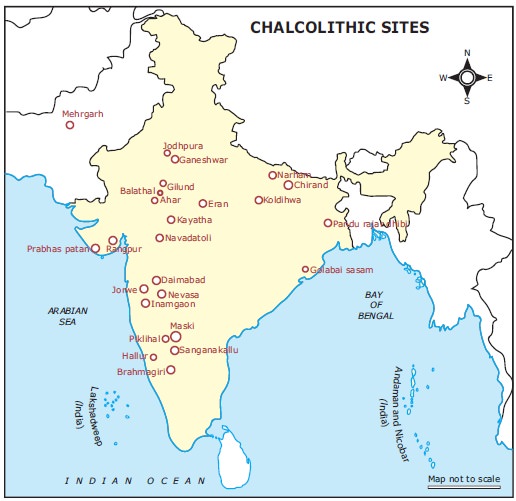
  • [pib] Chalcolithic sites in news: Eran and Tewar

    The Chalcolithic cultures of Central India are adequately investigated and studied informed the Ministry of Culture in particular reference to the sites of Eran and Tewar.

    Major sites in Central India

    [1] Eran (Dist. Sagar, MP )

    • Eran (ancient Airikina) is situated on the left bank of the Bina (ancient Venva) river and surrounded by it on three sides.
    • The recent excavation has unearthed a variety of antiquities including a copper coin, an iron arrowhead, terracotta bead, stone beads along with copper coins, stone celt, beads of steatite and jasper, etc.
    • The occurrence of few specimens of plain, thin grey ware is noteworthy.
    • The use of iron was evidenced by few metallic objects at the site.

    [2] Tewar (Dist. Jabalpur, MP)

    • Tewar (Tripuri) village is located 12 km west of Jabalpur district on Jabalpur – Bhopal highway.
    • This excavation did not reach the natural soil and revealed four folds of cultural sequences i.e. Kushana, Shunga, Satvahana, and Kalachuri.
    • Antiquarian remains in this excavation include viz remains of sculptures, hopscotch, terracotta balls, Iron nails, copper coins, terracotta beads, implements of Iron and terracotta figurine, ceramics red ware etc.
    • It also revealed structural remains consist of brick wall and structure of sandstone columns.

    Back2Basics: Chalcolithic Culture in India

    • A completely different kind of culture known as Chalcolithic Culture was developed in central India and Deccan region by the end of the Neolithic period.
    • It is characterized by the use of both stone and bronze implements.

    Major Chalcolithic complexes in India

    1. Ahar culture c. 2,800-1,500 B.C.
    2. Kayatha culture c. 2,450-700 B.C.
    3. Malwa culture c. 1,900-1,400 B.C.
    4. Savalda culture c. 2,300-2,000 B.C.
    5. Jorwe culture c. 1,500 -900 B.C.
    6. Prabhas culture c. 2,000-1,400 B.C.
    7. Rangpur culture c. 1,700-1,400 B.C.

    Important features

    • The people of Chalcolithic culture had used unique painted earthenware usually black-on-red.
    • The use of copper and bronze tools also evidenced on a limited scale.
    • The economy was largely based on subsistence agriculture, stock-raising, hunting, and fishing.
    • They, however, never reached the level of urbanization in spite they were using metal.
    • They were contemporary of the Harappan culture, but some other were of later Harappan age.

    Their locations

    • The centers of Chalcolithic cultures flourished in semi-arid regions of Rajasthan, Madhya Pradesh, Gujarat, and Maharashtra.
    • The settlements of Kayatha culture were mostly located on the Chambal River and its tributaries.
    • The settlements of Malwa culture are mostly located on the Narmada and its tributaries.
    • The three best known settlements of Malwa culture are at Navdatoli, Eran, and Nagada.
    • Navdatoli was one of the largest Chalcolithic settlements in the country spread in almost 10 hectares.
    • The settlements of Rangpur culture are located mostly on Ghelo and Kalubhar rivers in Gujarat.
    • More than 200 settlements of Jorwe culture are known. Greater numbers of these settlements are found in Maharashtra.
    • The best known settlements of Jorwe culture are Prakash, Daimabad, and Inamgaon. Daimabad was the largest one that measured almost 20 hectares.

    Development of Agriculture

    • They cultivated both Kharif and Rabi crops in rotation and also raised cattle with it.
    • They cultivated wheat and barley in Malwa region. Rice was cultivated in Inamgaon and Ahar.
    • They also cultivated jowar, bajra, kulth, ragi, green peas, lentil, and green and black grams.
    • Largely, the Chalcolithic cultures flourished in the black cotton soil zone.

    Trade and Commerce

    • The Chalcolithic communities traded and exchanged materials with other contemporary communities.
    • A large settlement serves as the major centers of trade and exchange.
    • Some of them were Ahar, Gilund, Nagada, Navdatoli, Eran, Prabhas, Rangpur, Prakash, Daimabad, and Inamgaon.
    • The Ahar people settled close to the copper source and were used to supply copper tools and objects to other contemporary communities in Malwa and Gujarat.
    • Identical marks embedded on most of the copper axes found in Malwa, Jorwe, and Prabhas cultures that might indicate that it may be the trademarks of the smiths who made them.
    • It is found that Conch shell for bangles was traded from the Saurashtra coast to various other parts of the Chalcolithic regions.
    • Gold and ivory come to Jorwe people from Tekkalkotta in Karnataka and semiprecious stones may have been traded to various parts from Rajpipla in Gujarat.
    • Wheeled bullock carts were used for long distance trade, besides the river transport. The drawings of wheeled bullock carts have been found on pots.

    Try this PYQ from CSP 2019. It is dicey, but you cannot escape such questions.

    Q. Which one of the following is not a Harappan site?

    (a) Chanhudaro

    (b) Kot Diji

    (c) Sohgaura

    (d) Desalpur


    [wpdiscuz-feedback id=”meqr233gpf” question=”Please leave a feedback on this” opened=”1″]Post your answers here.[/wpdiscuz-feedback]


    UPSC 2022 countdown has begun! Get your personal guidance plan now! (Click here)

  • Historical episodes that PM spoke about in Kashi

    In his speech at Kashi, PM has referred to several historical episodes including the battle between Salar Masud and Raja Suhaldev and the conflict between Governor-general Warren Hastings and Raja Chait Singh.

    He also mentioned the contributions of historical figures like Rani Bhabani from Bengal.

    Note: UPSC is known to ask contemporaries.

    [1] Salar Masud and Raja Suhaldev

    • The story of Salar Masud, also known as Ghazi Mian, and Suhaldev is a mix of history and myth.
    • Ghazi Mian is believed to have acquired popularity as a warrior in the 12th century.
    • He was the nephew of the 11th-century Turkik invader, Mahmud of Ghazni, whose invasion of India is known as the moment when Islam entered large parts of the subcontinent.
    • Interestingly, his tomb at Bahraich in Uttar Pradesh stands as a place of pilgrimage for a large number of Muslims as well as Hindus.
    • The most comprehensive source of information about Ghazi Mian is the Mirat-e-Masaud (Mirror of Masaud), a 17th-century Persian hagiography written by Abdur Rahman Chisti, a Sufi saint.
    • He asserted that Masud was the disciple of Sheikh Moinuddin Chisti, the founder of the Chistiya order of Sunni mysticism.

    His conquest and Suheldev

    • Masud arrived in Multan as a 17-year old head of the Afghan army and after having subjugated it made for Delhi where he spent almost half a year.
    • Advancing his aggressive campaigns, Masud on the way destroyed several temples and converted many to Islam.
    • It was at Bahraich, where in the course of a battle in 1034 CE between Masud and a local king by the name Suhaldev that the former was wounded by an arrow and succumbed.
    • Suheldev is believed to have been the eldest son of the king of the Bhar community, from which emerged the Pasi community, a Dalit caste group of the region.

    [2] Warren Hastings and Maharaja Chait Singh

    • Another historical episode cited by Modi in his Kashi speech was about the first governor-general of Bengal Warren Hastings fleeing the city in 1781.
    • By the late 18th century, Benaras had declared independence from the Nawab of Awadh.
    • In 1771, Maharaja Chait Singh succeeded to the throne of Banaras with the help of British authorities.
    • Two years later, the Maharaja transferred the domain to the East India Company under the control of Hastings.

    Issues over Mysore war

    • When faced with the need for resources to fight the Mysore War against Hyder Ali, Hastings pressed Maharaja Chait Singh to make additional revenue payments and supply troops in 1778 and 1779.
    • When Singh failed to comply, Hastings marched to Benaras with his troops to confront the king.
    • A skirmish erupted between the British troops on the one hand and the Raja’s forces and his large number of supporters on the other.
    • As they fought, the Raja managed to escape from the fort through a window facing the Ganges.

    An embarrassing defeat for Hastings

    • Several of Hastings’ men were killed in the conflict and, left with no other option, the governor-general was forced to retreat.
    • Popular narrative goes that he left hurriedly at night for the nearby Chunar Fort riding an elephant.
    • The incident is believed to have given rise to the popular saying in Banaras: “Ghode par haudah, hathi par jeen, Kashi se bhaga Warren Hastings”.

    [3] Rani Bhabani

    • Bhabani was married to Raja Ramkanta Ray, the zamindar of the Natore estate in Rajshahi (present day Bangladesh).
    • After the death of her husband in 1748, the zamindari passed on to the hands of Bhabani, making her one among the very few women zamindars of the time.
    • For the next four decades, Bhabani is said to have managed the estate of Natore with utmost efficiency.
    • Bhabani is remembered most for her philanthropic efforts. She is known to have built several schools across Rajshahi district and offered a number of scholarships.
    • She is also known to have built the Durga Kund Mandir in Varanasi.
    • She also desired to build a Kashi in Bengal and, consequently in 1755 a complex consisting of a dozen temples was built in Baronagar in Murshidabad by her.


    UPSC 2022 countdown has begun! Get your personal guidance plan now! (Click here)

  • [pib] Durga Puja gets UNESCO Intangible Cultural Heritage tag

    UNESCO has inscribed ‘Durga Puja in Kolkata’ on the Representative List of Intangible Cultural Heritage of Humanity.

    What is Intangible Cultural Heritage (ICH)?

    • ICH means the practices, representations, expressions, knowledge, skills – as well as the instruments, objects, artefacts and cultural spaces associated with them that communities, groups and, in some cases, individuals recognize as a part of their cultural heritage.
    • Furthermore, its importance is not in the cultural manifestation itself, but in the wealth of knowledge, know-how and skills that are transmitted from one generation to the next.

    About Durga Puja

    • Durga Puja, also known as Durgotsava or Sharodotsava, is an annual Hindu festival that reveres and pays homage to the goddess Durga.
    • It is an important festival in the Shaktism tradition of Hinduism.
    • It is celebrated because of Durga’s victory over Mahishasur.
    • It is particularly popular and traditionally celebrated in the Indian states of West Bengal, Bihar, Jharkhand, and Odisha among other states.
    • It is a ten-day festival, of which the last five are of the most significance.

    Citation for the UNESCO tag

    • The UNESCO Committee commended its initiatives to involve marginalized groups, and individuals as well as women in their participation in safeguarding the element.
    • The festival is also marked by scripture recitations, performance arts, revelry, gift-giving, family visits, feasting, and public processions.
    • Durga Puja not only is a celebration of the feminine divinity but is a consummate expression of dance, music, crafts, rituals, practices culinary and cultural aspects.
    • The festival transcends the boundaries of caste, creed and economic classes and joins the people together in its celebration.

    Also read: National List for Intangible Cultural Heritage (ICH)

    Other ICH in India

    • With the inscription of Durga Puja in Kolkata, India now has 14 intangible cultural heritage elements on the prestigious UNESCO Representative List of ICH of Humanity.
    • In recent years, the ICH elements that saw inscriptions are Kumbh Mela (inscribed 2017), Yoga (inscribed 2016) among others.
    • Also, India is a SIGNATORY of the 2003 UNESCO Convention which aims for the Safeguarding of the Intangible Heritage along with traditions and living expression.


    UPSC 2022 countdown has begun! Get your personal guidance plan now! (Click here)

  • Significance of Raigad Fort in Maratha History


    President Ram Nath Kovind is commencing his visit to Maharashtra by visiting the Raigad Fort where he will pay tribute to Chhatrapati Shivaji Maharaj.

    Where is Raigad fort located?

    • Raigad is a hill fort situated about 25 km from Mahad in the Raigad district and stands 2,851 feet above sea level.
    • The British Gazette states the fort was known to early Europeans as the Gibraltar of the East.
    • Its decisive feature is a mile and a half flat top which has adequate room for buildings.
    • In its prime, the fort had 300 stone houses and a garrison of 2,000 men.

    When was it built?

    • The fort, which was earlier called Rairi, was the seat of the Maratha clan Shirke in the 12th century.
    • The fort changed hands a number of times from the dynasty of Bahaminis to the Nizamshahis and then the Adilshahis.
    • In 1656, Chhatrapati Shivaji captured it from the More’s of Javli who were under the suzerainty of the Adilshahi Sultanate.
    • The fort not only helped Shivaji challenge the supremacy of the Adilshahi dynasty but also opened up the routes towards Konkan for the extension of his power.

    Significance of the fort in Shivaji’s life

    • In 1662, Shivaji formally changed the fort’s name to Raigad and added a number of structures to it.
    • By 1664, the fort had emerged as the seat of Shivaji’s government.
    • As the Marathas under the leadership of Shivaji gained strength in their struggle against the Mughals, the announcement of a sovereign, independent state was made.
    • On June 6, 1674, Shivaji was coronated at Raigad by Gagabhatt where he took on the title of Chhatrapati.
    • Six years later, Shivaji passed away in Raigad in 1680 and has been cremated at the fort.

    Importance of Raigad Fort in Maharashtra’s polity

    • Chhatrapati Shivaji is the tallest and the most revered icon in Maharashtra and there is a constant attempt by political parties of all hues to appropriate his legacy.
    • Due to the significance of Raigad in his life, many political leaders make it a point to visit the fort.
    • Maharashtra has already announced a mid-sea memorial in the Arabian Sea for the Maratha warrior king.


    UPSC 2022 countdown has begun! Get your personal guidance plan now! (Click here)