A recent report by the International Labour Organization (ILO) and the Institute for Human Development (IHD) revealed that two out of every three unemployed individuals were young graduates.
Unemployment across Indian States:
Highest Unemployment Rate: At almost 10%, Goa’s unemployment rate is more than three times the national average of 3.17%.
Four of the top five states with high unemployment rates (Goa, Kerala, Haryana, and Punjab) are comparatively richer states.
Lower Unemployment Rates: Maharashtra and Gujarat, which are rich states in western India, experience unemployment rates far less than the national average.
Unemployment in Northern and Southern states: All northern states (Jammu and Kashmir, Punjab, Haryana, Uttarakhand, and Himachal Pradesh) and most southern states have unemployment rates higher than the national average, except Karnataka.
Unemployment below the National Average: Out of the 27 states considered, 12 states have unemployment rates less than the national average.
Lower unemployment rates in poorer states: Except for Maharashtra and Gujarat, most states with unemployment rates lower than the national average also have per capita incomes lesser than the national average.
What is the Relationship between Urbanisation and Unemployment? (ILO observations)
Relationship between Self-employment and Unemployment: The trend line shows a downward slope, indicating a negative relationship between self-employment and unemployment.
Informal self-employment mainly in Agriculture and Rural Economy: A significant portion of informal self-employment is in agriculture and the rural sector.
Relationship between Labor Force and Unemployment: Figure 3 illustrates a positive relationship between the urban share of the labor force and the unemployment rate. Highly urbanized states tend to have higher unemployment rates (Positive relationship).
High Unemployment and Urbanized states: States like Goa and Kerala, which are highly urbanized, experience high unemployment rates. This is attributed to the limited scope for informal jobs in urban settings compared to rural agriculture, which acts as a reserve for absorbing surplus labor.
Limited Informal Sectors: Although informal sectors exist and thrive in urban settings, they have limited capacity to absorb job-seekers compared to rural agriculture.
Exceptions states: Gujarat and Maharashtra, despite being highly urbanized, have lower unemployment rates compared to states like Uttar Pradesh and Madhya Pradesh.
Nexus between Education and Employment:
Highly educated labor force and unemployment: Kerala, with a highly educated labor force (30% of graduates), faces high unemployment.
In contrast, Gujarat and Maharashtra have lower proportions of graduates in their labor force (14% and 20% respectively) and experience lower unemployment rates despite being richer and urbanized.
High unemployment among graduates: Graduates may lack the skills required for the growing modern sector, highlighting the need for improved teaching infrastructure and standards.
Graduates aspire to high-wage jobs that match their skills, leading to unemployment if the modern sector doesn’t expand enough to absorb them.
Conclusion: Addressing youth unemployment necessitates improving education quality to match job market demands, fostering skill development for the modern sector, promoting entrepreneurship, and enhancing rural employment opportunities. Policy interventions should target these areas for inclusive growth and employment generation.
In the past, we have seen that there is interdependence between humans, animals, and the environment has been made increasingly evident with the emergence of pandemics such as COVID-19.
It is not just humans who are affected by pandemics but also livestock — an example being the outbreak of lumpy skin disease that has spread across countries.
Why an integrated idea like the ‘One Health’ Mission is needed?
One Health is an interdisciplinary approach that recognizes the interconnectedness of human health, animal health, and environmental health. It emphasizes collaboration across various sectors, including medicine, veterinary science, ecology, and public health, to address health challenges comprehensively.
Key features of National One Health Mission:
Intersectoral Collaboration: The mission aims to coordinate, support, and integrate all existing One Health initiatives in the country, including the Ministries of Health and Family Welfare, Fisheries, Animal Husbandry and Dairying, Environment, and Science and Technology
Integrated Disease Surveillance: The mission implements integrated disease surveillance within and across human, animal, and environmental sectors to address communicable diseases, including zoonotic diseases, and improve overall pandemic preparedness and integrated disease control.
Consolidation of data: The mission creates an integrated, science-based environment where researchers from various disciplines can use laboratories as necessary and generate requisite inputs for One Health Science, including databases and models with a consolidated approach of ecologists, field biologists, epidemiologists, and other scientists.
Challenges in National One Health Mission
Limited Database: There have been limited efforts to develop databases and models with a consolidated approach of ecologists, field biologists, epidemiologists, and other scientists to understand and respond to the drivers that threaten health and optimize the effectiveness of public health systems in achieving these goals within each sector.
Lack of Awareness and Understanding: The lack of awareness and understanding of the One Health concept among stakeholders hinders collaborative efforts required to address complex public health issues
Funding Constraints: Funding constraints are a significant barrier to implementing One Health interventions, especially in low- and middle-income countries that may need more resources to invest in One Health initiatives
Conclusion: To address challenges in the National One Health Mission, efforts must focus on enhancing data collection, raising awareness among the stakeholders, and securing adequate funding. These measures are essential for effective implementation and holistic health management.
On the eve of World Health Day (7th April), many countries aim to implement UHC (Universal Health Coverage) in the same way as India introduced its National Health Policy, in 2017. However, there exist challenges in India too for implementing it.
Background:
On December 12, 2012, the UN General Assembly unanimously endorsed a resolution urging countries to accelerate progress towards UHC.
In India, the high-level expert group report, submitted to the Planning Commission in 2011, outlined a government intent to increase public financing for health to 2.5% of India’s GDP during the 12th Plan (2012-17).
BACK2BASICS:
About National Health Policy, 2017:
It aims to achieve Universal Health Coverage and deliver quality healthcare services to all at an affordable cost. It focuses on improving health status through preventive, promotive, curative, palliative, and rehabilitative services with an emphasis on quality.
What are the challenges in the Implementation of UHC in India?
Federal Issue: Health is a state subject in India, but UHC policy is envisaged at the national level. This can lead to challenges in coordination between the central government and state governments.
While the Directive Principles of State Policy provide a basis for the right to health, the absence of a specific constitutional guarantee may create challenges in ensuring consistent and enforceable healthcare rights.
Migrant Population and Urban Slums: Due to issues such as overcrowding, poor sanitation, and limited infrastructure, a significant portion of the population living in urban slums face issues with the availability and accessibility of Primary Health Services is hard to provide.
Lack of Finance: Implementing UHC requires significant financial resources. Reducing out-of-pocket expenditure and strengthening primary healthcare services necessitate substantial investments, which may strain government budgets and require innovative financing mechanisms to ensure sustainability.
Lack of Healthcare Infrastructure and Human Resources: India faces shortages in both infrastructure and human resources, particularly in rural and underserved areas, which hinders efforts to improve healthcare accessibility and quality.
The vicious cycle of poverty: The vicious cycle of poverty and poor health perpetuates inequality in various spheres of life which eventually leads to the accessibility of health services.
Suggestive Measures:
Addressing Urban Migrants’ Health Needs: Establishing mobile healthcare units or clinics that can reach migrant communities in urban and peri-urban areas, providing essential primary healthcare services.
Reducing Out-of-Pocket Expenditure: Simplifying the reimbursement process by digitizing healthcare payment systems and integrating them with government identification or mobile banking platforms to facilitate easy reimbursement for medical expenses.
Creating Inclusive Health Systems: Introducing multilingual and culturally sensitive health information materials and services to bridge language barriers and ensure accessibility for diverse urban populations.
Implementing Community-Based Primary Healthcare: Establishing community health centers or clinics in urban and peri-urban areas staffed by trained community health workers who can provide basic healthcare services and referrals.
Conclusion: Building Constitutional backing, enhancing coordination, and federal with fiscal consensus with adequate infrastructure in addressing urban health needs can improve the reach of the Universal Health Program in India.
Mains PYQ
Q Public health system has limitation in providing universal health coverage. Do you think that private sector can help in bridging the gap? What other viable alternatives do you suggest? (UPSC IAS/2015)
Mains: Q) Public health system has limitation in providing universal health coverage. Do you think that private sector can help in bridging the gap? What other viable alternatives do you suggest? (UPSC CSE 2015) Q) The increase in life expectancy in the country has led to newer health challenges in the community. What are those challenges and what steps need to be taken to meet them? (UPSC CSE 2022)
Prelims: With reference to National Rural Health Mission, which of the following are the jobs of Asha, a trained community health worker? (UPSC CSE 2012) 1) Accompanying women to the health facility for antenatal care checkups 2) Using pregnancy test kits for early detection of pregnancy 3) Providing information on nutrition and immunization 4) Conducting the delivery of babySelect the correct answer using the codes given below: (a) 1, 2 and 3 only (b) 2 and 4 only (c) 1 and 3 only (d) 1, 2, 3 and 4
Note4Students:
Prelims: National Health Policy; Ayushman Bharat;
Mains: Health Issues in India; Universal Health Coverage;
Mentor comments: Indian Health Policies since Independence have neglected diverse perspectives critical for public health systems at the local level. This diversity impacts the nature of policies made, “because we are looking only from a certain lens”. Recently, with the passage of World Health Day 2024, WHO promoted the idea that ‘Health Equity’ is a source of optimism for millions of people, going beyond social justice or legislative change. Now the issue is with the theme of World Health Day ‘my health – my right’. How should access to health be envisaged? Given that health is a state subject (Seventh Schedule) and the ‘Universal Health Coverage’ policy is envisaged at the National level, there is a need for discourses on implementation.
Let’s learn.
—
Why in the News?
The World Health Organization (WHO) has declared health to be a fundamental human right.
India’s ‘Health Equity’ issues require a comprehensive approach that goes beyond improvements in healthcare facilities.
About World Health Day 2024:
World Health Day (April 7) unites every country around ‘Health Equity’, an essential topic at the heart of global health and justice.
Theme for 2024: “My Health, My Right”.Although over 140 nations recognize health as a Constitutional right, the WHO Council on the ‘Economics of Health for All’ reported that more than half the world’s population needs complete access to essential health services.
There is an alarming gap in Indian health-care access, which was highlighted especially during the COVID-19 epidemic, environmental crises, and growing socio-economic gaps.
What is meant by Health Equity?
‘Health Equity’ ensures that every person has an equal opportunity to achieve their highest health potential, no matter what their circumstances.
WHO’s idea behind Health Equity – Ensuring Everyone’s Right to Health:
Aim: To eliminate unfair and preventable health disparities among different social and economic categories.
Significance:
Builds Equality: True health equity addresses the root causes of health inequities, such as poverty, discrimination, and limited access to resources.
Universal Coverage: Pandemics, climate change, and sociopolitical unrest exacerbate health inequities, particularly in diverse countries like India.
What does the Indian Statistics say?
1) 2011 Census:
Infectious diseases, such as tuberculosis, are 1.5 times more common in slums due to overcrowding and poor sanitation as compared to non-slum areas, according to the Indian Council of Medical Research. Disparities across caste and gender are profound.
2)National Family Health Survey (NFHS)-5 (2019-21)
Minorities: SCs and STs experience higher child mortality and lower immunization rates. 59% of women in the lowest wealth quintile suffer from anemia, demonstrating the intersection of caste, gender, and economic status in health outcomes.Non-communicable diseases (NCDs) account for more than 60% of all fatalities in India. The economic effect of NCDs could surpass $6 trillion by 2030.
3)Public Health Foundation of India: Shortage of Doctors: The WHO data indicates that there are only 0.8 doctors per 1,000 people, which is below the advised ratio. Even though over 75% of Health-care professionals work in metropolitan regions, which only account for 27% of the population, the shortage is particularly severe in rural areas.
Limitations in India:
Diversity: The road to health equity is fraught with difficulties, ranging from deeply ingrained social injustices to global systemic health concerns, particularly in multicultural countries such as India.
Comprehensive Planning: Achieving health equity requires a comprehensive approach beyond legislative reform, addressing socioeconomic determinants of health.
Collaboration and Coordination: Realizing health potential demands collective effort by governments, communities, and individuals to remove barriers.
Accessibility: Health equity includes targeting marginalized and vulnerable groups, climate change disproportionately impacting low-income and vulnerable people, and conflicts disrupting healthcare provision.
Initiatives Taken by Government:
Ayushman Bharat Initiative: This initiative provides free health coverage to the bottom 40% economically, demonstrating a commitment to reducing health disparities.
National Health Mission (NHM): It includes both the National Rural Health Mission (NRHM) and the National Urban Health Mission (NUHM), thus reducing the healthcare gap between rural and urban India. It expands its access by strengthening infrastructure and providing essential services to vulnerable populations.
Way Forward:
Requires a Comprehensive Approach: To move India towards Universal Health Coverage and a more equitable future, the government, civil society, healthcare providers, and communities need to work together.
Tap Organizations Together: Organizations (Non-Governmental organizations and Civic Societies) with a strong local presence are essential for health equity. They actively participate in every phase, from planning to evaluation, to guarantee the relevance and effectiveness of health programs.
Successful collaborations: Need for open communication, respect for one another, and common goals because this can strongly emphasize empowering communities, sharing knowledge, and building capacity. For Example, WHO, the Global Fund and Gavi support health initiatives.
Building R&D: Research institutes and academic institutions offer crucial insights into health inequalities and the efficacy of interventions, assisting in creating evidence-based practices and policies supported by scientific studies.
It is a 14-digit id employed to uniquely identify individuals, verify their identity, and connect their health records (with their consent) across various systems and stakeholders.
Features of ABHA
Cashless Transactions: ABHA enables cashless transactions for eligible beneficiaries, reducing the financial burden during medical emergencies.
Electronic Health Records (EHR): It integrates electronic health records, facilitating storage, and retrieval of patient information for streamlined healthcare delivery.
Portability: ABHA accounts are portable across various healthcare providers under the Ayushman Bharat scheme, ensuring seamless access to services.
Real-time Monitoring: Incorporating real-time monitoring mechanisms to track fund utilization, ABHA ensures efficient allocation and prevents misuse.
Various Components
Beneficiary Identification: ABHA involves the identification and registration of eligible beneficiaries under the Ayushman Bharat scheme, assigning a unique health identification number (UHID).
Funds Management: It manages the allocation and disbursement of funds for healthcare services, ensuring prompt and secure transfers.
Claim Settlement: ABHA processes and settles claims submitted by healthcare providers, verifying authenticity, and disbursing payments.
Audit and Oversight: Incorporating audit mechanisms to monitor fund utilization, ABHA ensures compliance with regulations and maintains system integrity.
Back2Basics: Ayushman Bharat Pradhan Mantri Jan Arogya Yojana (AB-PMJAY)
Details
Umbrella Scheme
Ayushman Bharat
Incepted in National Health Policy 2017, to achieve the vision of Universal Health Coverage (UHC)
Launch Year
2018
Components
Health and Wellness Centres (HWCs)
Pradhan Mantri Jan Arogya Yojana (PM-JAY)
Pradhan Mantri Jan Arogya Yojana (PM-JAY)
Offers a sum insured of Rs. 5 lakh per family for secondary and tertiary care
Provides cashless and paperless access to services at any empanelled hospital across India
Portable scheme, allowing beneficiaries to avail treatment at any PM-JAY empanelled hospital
Coverage
3 days pre-hospitalisation and 15 days post-hospitalisation
Includes diagnostic care and expenses on medicines
No restriction on family size, age, or gender
Covers all pre-existing conditions from day one
Beneficiaries
Identified through Socio-Economic Caste Census (SECC) data
Funding
Shared funding: 60:40 for states and UTs with legislature, 90:10 in Northeast states and J&K,
Himachal Pradesh, and Uttarakhand, 100% central funding for UTs without legislature
Nodal Agency
National Health Authority (NHA)
Autonomous entity under the Society Registration Act, 1860
Responsible for effective implementation of PM-JAY in alliance with state governments
State Health Agency (SHA)
Apex body of the State Government responsible for the implementation of AB PM-JAY in the State
PYQ:
2021:
“Besides being a moral imperative of a Welfare State, primary health structure is a necessary precondition for sustainable development.” Analyse.
Practice MCQ:
Consider the following statements about the Ayushman Bharat Pradhan Mantri Jan Arogya Yojana (AB-PMJAY):
1. 3 days pre-hospitalisation and 15 days post-hospitalisation.
2. Includes diagnostic care and expenses on medicines.
3. No restriction on family size, age, or gender.
4. Beneficiaries are identified from national family health survey.
How many of the above discussed features is/are correct?
The study released by IIT Madras highlights the concerns related to high rates of C-section deliveries among women in Tamil Nadu, particularly in private hospitals.
This indicates the necessity for corrective measures to address the situation.
What is a Caesarean section?
It is also known as C-section or cesarean delivery, which is the surgical procedure by which one or more babies are delivered through an incision in the mother’s abdomen.
It is often performed because vaginal delivery would put the mother or child at risk.
Changes in the share of births delivered by C-sections in public and private sector hospitals in India, Tamil Nadu, and Chhattisgarh between 2015-16 and 2019-21.
High C-section Rate in Public Hospitals: In public sector hospitals in Tamil Nadu, nearly 40% of women underwent C-sections during 2019-21.
High C-section Rate in Private Hospitals: Close to 64% of women underwent C-sections in private sector hospitals in Tamil Nadu during 2019-21, which is significantly higher than both the national average of around 50% and Chhattisgarh’s rate of 59%.
Higher than the National Average: The rate of C-section deliveries in Tamil Nadu’s public sector hospitals is substantially higher than the national average, which is approximately 16%. Additionally, it surpasses the rate in Chhattisgarh, where it stands at 10%.
Reasons behind the increase in C-section rates despite a decrease in pregnancy complications:
Regional Disparities: In Chhattisgarh, the likelihood of a woman undergoing a C-section in a private hospital is ten times higher than in a public hospital. This suggests potential disparities in access to high-quality healthcare services between public and private sectors, with implications for maternal health outcomes.
Socioeconomic Factors: The study assumes that poorer households opt for public hospitals while richer households prefer private ones for deliveries. This socioeconomic divide may contribute to inequitable access to healthcare services at the national level.
Higher Likelihood in Private Health Facilities: Women delivering in private health facilities are more likely to undergo C-sections compared to those in public facilities, with a notable disparity observed in Chhattisgarh.
Maternal Age and Weight Status: Factors such as maternal age (35-49) and overweight status increase the likelihood of C-section delivery.
High gap between Poor and Rich: In India, the gap in C-section prevalence between the poor and non-poor narrowed in private facilities, but Tamil Nadu exhibited a concerning trend where a higher percentage of the poor underwent C-sections compared to the non-poor.
Recommendations by the World Health Organization (WHO): Cesarean delivery rates should ideally not exceed 10-15% to achieve the lowest maternal and neonatal mortality rates. When C-section rates go beyond 10%, there is no significant decrease in maternal mortality. In 2021, global C-section rates surpassed 20%, and they are projected to increase to 30% by 2030.
Conclusion: Access to C-sections in Tamil Nadu shows disparities, with high rates in both public and private hospitals. Addressing regional, and socioeconomic factors and adhering to WHO recommendations are crucial for equitable maternal healthcare.
PYQ Mains
Q Appropriate local community level healthcare intervention is a prerequisite to achieve ‘Health for All’ in India. Explain. (UPSC IAS/2018)
The Supreme Court reiterated that to constitute an offence under Section 153A of the Indian Penal Code (IPC), the essential ingredient is to create a sense of enmity and disharmony amongst two or more groups or communities.
Quite often, politicians are arrested under section 153 A of IPC for alleged hate speech.
Section 153A of the Indian Penal Code (IPC)
Section 153A of the IPC deals with the offence of promoting enmity between different groups on grounds of religion, race, place of birth, residence, language, etc.
The primary is to prevent the promotion of disharmony or feelings of enmity, hatred, or ill-will between different groups in society.
It was enacted in 1898 and was not in the original penal code.
Prohibited Acts:
The section prohibits several acts:
Engaging in activities that promote or attempt to promote feelings of enmity or hatred between different religious, racial, linguistic, or regional groups.
Committing acts prejudicial to the maintenance of harmony between different groups or communities.
Doing anything that disturbs or disrupts public tranquillity or creates unrest among various groups.
Essential Elements:
To constitute an offence under Section 153A, the following essential elements must be established:
Promotion of enmity or hatred between different groups.
Such promotion must be based on religion, race, place of birth, residence, language, etc.
The intention behind the act must be to disrupt public tranquillity or to create disharmony among groups.
Punishment:
Jail Term: Any individual found guilty of committing an offence under Section 153A may be punished with imprisonment for a term which may extend to 3 years, or with a fine, or with both.
Cognizable and Non-Bailable: The offence is a cognizable offence and the punishment for the same may extend to three years, or with fine, or with both. Further, the offence is non-bailable in nature, wherein the accused is tried by the magistrate of the first class.
Burden of Proof: It lies with the prosecution to demonstrate that the accused’s words, actions, or conduct were aimed at promoting enmity or hatred between different groups based on the specified grounds.
PYQ:
2014: What do understand by the concept “freedom of speech and expression”? Does it cover hate speech also? Why do the films in India stand on a slightly different plane from other forms of expression? Discuss.
2022: With reference to India, consider the following statements:
When a prisoner makes out a sufficient case, parole cannot be denied to such prisoner because it becomes a matter of his/her right.
State Governments have their own Prisoners Release on Parole Rules.
Which of the statements given above is/are correct?
1 only
2 only
Both 1 and 2
Neither 1 nor 2
Practice MCQ:
Q.The Section 153A of the Indian Penal Code (IPC) essentially deals with:
The Supreme Court issued a cautionary directive to judges regarding court-ordered counselling for LGBTQ+ individuals, emphasizing the need to respect their identity and sexual orientation.
Context
Petition: The verdict stemmed from a habeas corpus petition filed by a Kerala-based woman seeking the whereabouts of her same-sex partner, highlighting the challenges faced by LGBTQ+ individuals in asserting their rights.
Coercion Concerns: Concerns were raised about court-ordered counselling potentially being used to coerce individuals against their sexual orientation or chosen partners, prompting the Supreme Court to address these apprehensions.
Counselling to LGBTQ+ Persons:
[A] Guidelines and Observations
Avoiding Identity Suppression: Judges were cautioned against using counselling as a tool to coerce individuals into rejecting their LGBTQ+ identity or relationships, particularly when they are in distress or facing familial separation.
Upholding Constitutional Values: CJI underscored the importance of upholding constitutional values, urging judges to refrain from imposing their personal biases or societal prejudices during legal proceedings.
Empathy and Compassion: The verdict emphasized that judges must demonstrate sincere empathy and compassion towards LGBTQ+ individuals, ensuring that the principles of justice and equality guide legal decisions.
[B] Guidelines for Courts
Embracing Diversity: Courts were directed to eschew social morality influenced by homophobic or transphobic views, prioritizing the protection of individual rights and freedoms.
Respecting Chosen Families: Acknowledging the significance of chosen families for LGBTQ+ individuals, the court highlighted the need to recognize and respect these relationships, especially in cases involving familial rejection or violence.
LGBTQ+ Persons (Sexual Minority) Rights in India: An Overview
Decriminalization of Homosexuality: A watershed moment occurred on September 6, 2018, when the Supreme Court of India partially struck down Section 377 of the Indian Penal Code, which criminalized consensual same-sex relationships. This historic decision marked a crucial step towards recognizing the dignity and autonomy of LGBTQ+ individuals.
Recognition of Transgender Rights: In 2014, the Supreme Court recognized transgender individuals as the third gender and affirmed their fundamental rights under the Constitution in the landmark case of National Legal Services Authority v. Union of India (2014). This judgment laid the foundation for legal recognition and protection of transgender rights in India.
Several key legal cases and judgments have shaped the evolution of LGBTQ rights in India:
Naz Foundation Govt. v. NCT of Delhi (2009): The Delhi High Court ruled that Section 377 of the IPC violated fundamental rights guaranteedunder the Indian Constitution, including privacy and equality. This judgment was a crucial step forward in recognizing the rights of LGBTQ individuals.
Suresh Kumar Koushal vs Naz Foundation (2013): The Supreme Court overturned the Delhi High Court’s judgment, recriminalizing homosexuality. This decision was met with widespread criticism and sparked renewed activism for LGBTQ rights in India.
National Legal Services Authority v. Union of India (2014): This landmark judgment recognized transgender individuals as the third gender and affirmed their fundamental rights under the Constitution. It laid the groundwork for ensuring equality and non-discrimination for the transgender community.
K.S. Puttaswamy v Union of India (2017): This case affirmed the right to privacy as a fundamental right under the Indian Constitution. The judgment recognized that discrimination based on sexual orientation is unconstitutional and emphasized the dignity and autonomy of individuals.
Navtej Singh Johar v. Union of India (2018): The Supreme Court decriminalized homosexuality and struck down Section 377 of the IPC. The court recognized the rights of LGBTQ individuals to intimacy, autonomy, and identity, setting a precedent for equality and non-discrimination.
Future Prospects
[A] Extension of ART (Assisted Reproductive Technology) Rights
The Assisted Reproductive Technology (ART) Rights bill, as currently formulated, does not adequately extend to LGBTQ+ persons due to several factors:
Definition of Commissioning Couple: It restricts access to ART services to “infertile married couples,” excluding same-sex couples and individuals in same-sex relationships.
Requirement of Legal Marriage: Since same-sex marriage isn’t recognized in India, LGBTQ+ couples are automatically excluded from accessing ART services.
Narrow Definition of Infertility: The bill’s definition overlooks the unique reproductive challenges faced by LGBTQ+ individuals and couples.
Gender-Binary Language and Restrictions: Gender-binary language and restrictions exclude transgender and gender non-conforming individuals from accessing ART services.
Lack of Recognition of Diverse Identities: The bill fails to accommodate the diverse identities within the LGBTQ+ community, neglecting their specific needs and concerns regarding assisted reproduction.
[B] Child Adoption
National Commission for Protection of Child Rights (NCPCR): It had opposed the adoption rights of same-sex couples.
Juvenile Justice (Care and Protection of Children) Act, 2015 (JJ Act): It allows heterosexual married couples, and single and divorced persons to adopt.
Hindu Adoption and Maintenance Act, 1956 (HAMA): It permits any male or female Hindu of sound mind to adopt, and for couples to adopt with the consent of their spouse.
Central Adoption Resource Authority (CARA): It permits applications from adoptive parents in live-in relationships, which it examines on a case-to-case basis.
However, in October 2023 the Supreme Court ruled that Regulation 5(3) of the CARA Regulations, insofar as it prohibited unmarried and queer couples from adopting, violated Article 15 of the Constitution.
While India’s Supreme Court declined to legalise same-sex marriage and did not explicitly grant gay couples adoption rights.
PYQ:
2020: Customs and traditions suppress reason leading to obscurantism. Do you agree?
Practice MCQ:
Section 377 of the Indian Penal Code which sought to decriminalize homosexuality was struck down in the landmark case of-
Q) The public health system has limitations in providing universal health coverage. Do you think that the private sector can help in bridging the gap? What other viable alternatives do you suggest? (2015)
Q) The increase in life expectancy in the country has led to newer health challenges in the community. What are those challenges and what steps need to be taken to meet them? (2022)
Prelims:
Which of the following are the reasons for the occurrence of multi-drug resistance in microbial pathogens in India? (2019) 1. Genetic predisposition of some people 2. Taking incorrect doses of antibiotics to cure diseases 3. Using antibiotics in livestock farming 4. Multiple chronic diseases in some people
Select the correct answer using the codes given below: a) 1 and 2 only b) 2 and 3 only c) 1, 3 and 4 d) 2, 3 and 4
Note4Students:
Mains: Health Care System in India and Major Challenges;
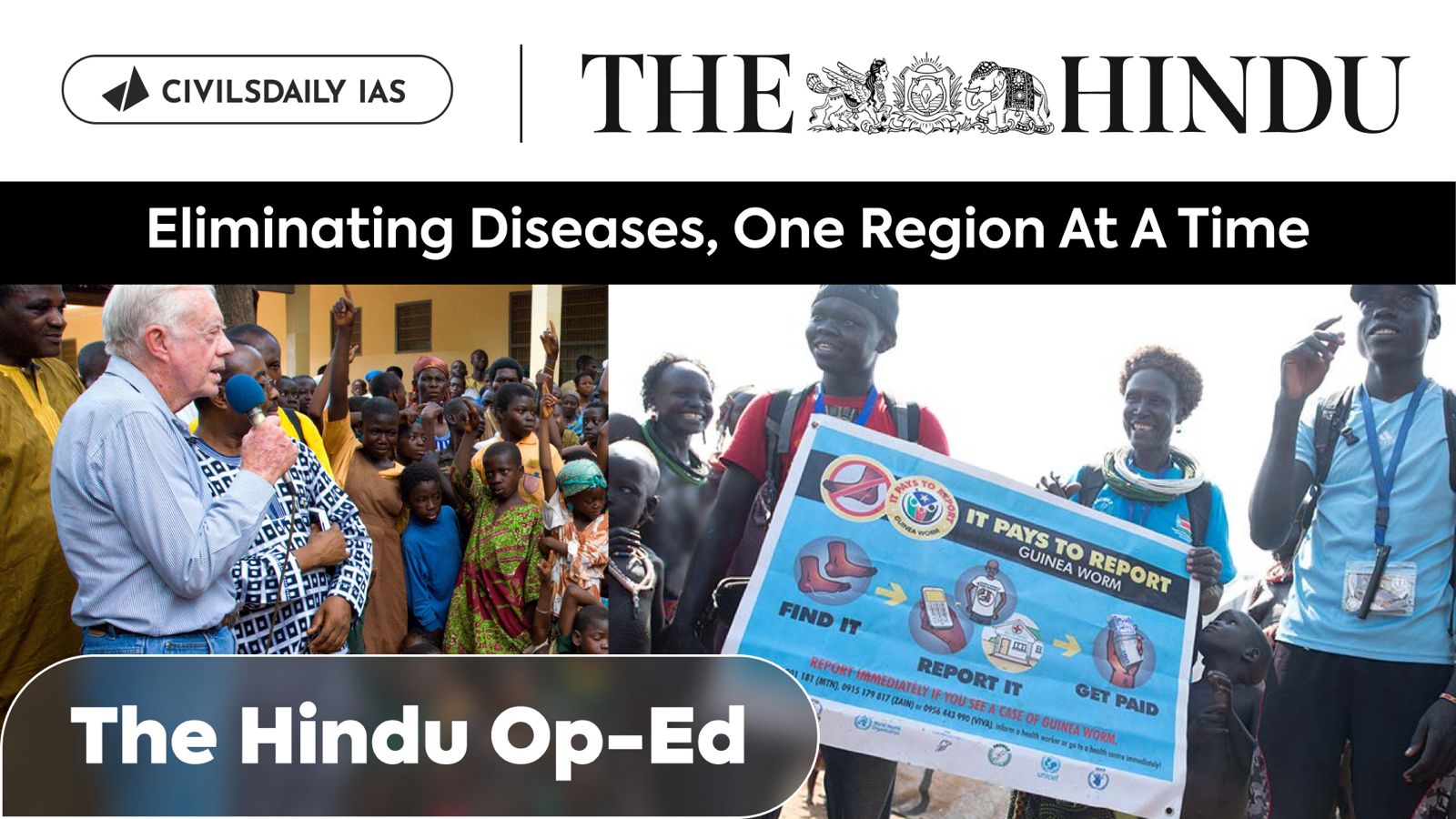
Mentor comments: “United we stand divided we Fall”. Recently, there has a significant progress made in eradicating guinea worm disease, with a reduction from 3.5 million cases in 1986 to just 13 cases in five countries by 2023. This success underscores the importance of focusing on disease elimination as a crucial step towards eradication, aligning with the Sustainable Development Goals of ending epidemics like malaria, tuberculosis, and Neglected Tropical Diseases by 2030. There is a need for adopting effective solutions at the local level is more effective for disease elimination.
Let’s learn.
—
Why in the News?
Multisectoral collaboration, encouraging innovation and adopting locally effective solutions that facilitate disease elimination, is more effective at the regional level.
Context:
The Carter Center, a leader in the global elimination and eradication of diseases, recently reported that guinea worm disease was close to eradication.
From 3.5 million cases a year in 21 countries in 1986, the number had come down to 13 in five countries in 2023, a reduction of 99.99%. This would be the second disease after smallpox to be eradicated and the first one with no known medicines or vaccines.
This has created increased attention to disease elimination, the first step in eradication. Ending the epidemics of malaria, tuberculosis, and Neglected Tropical Diseases by 2030 is one of the Sustainable Development Goals set by the United Nations.
What are the Current requirements for the Public Health System?
1) Collaborative efforts:
Rigorous Certification Requirements: International agencies impose stringent criteria for certification, necessitating thorough preparation. Preparation for certification drives improvements in primary healthcare, diagnostics, and surveillance systems.
Increased Involvement of Field Staff and Community Health Workers: The pursuit of certification encourages greater engagement from field staff and community health workers, motivated by the clearly defined goal.
Attraction of International Support: Certification efforts attract international support, bolstering resources and expertise.
Political and Bureaucratic Commitment: The pursuit of certification fosters high levels of commitment from political and bureaucratic entities.
2) Feasibility of Elimination in India:
Strategic Focus: Recommend focusing on pathogens with high population impact and low enough numbers to make elimination possible.
Gradual Approach: The initial aim should be to reduce disease numbers to a practical level through disease control before pursuing elimination.
Understanding Processes and Costs: Reduction in disease numbers enables understanding of elimination processes and associated costs.
Strengthening Health Systems: Provides an opportunity to strengthen existing health systems to effectively implement elimination strategies.
3) Need for surveillance systems
Comprehensive Data Collection: Surveillance systems are crucial for capturing every instance of the disease within a population, providing accurate and real-time data for decision-making.
Monitoring Progress: Surveillance systems allow for monitoring the progress of disease elimination efforts, assessing the effectiveness of interventions, and identifying areas that require additional support or resources.
Confirmation and Diagnosis: Strengthening laboratories for screening and confirmation ensures accurate diagnosis of cases, facilitating appropriate treatment and management.
Ensuring Availability of Resources: Surveillance helps in identifying gaps in resources such as medicines and consumables, enabling authorities to ensure their availability to support elimination efforts.
Training and Capacity Building: Surveillance systems facilitate training of healthcare workers on the requirements of elimination strategies, ensuring a skilled workforce capable of implementing surveillance protocols effectively.
What are the Challenges of the Healthcare System?
Resource Strain: Eliminating the transmission of diseases is difficult and requires significant resources. The process places a heavy burden on the healthcare system, potentially diverting attention from other essential health functions.
Potential Neglect of Health Functions: Focusing on disease elimination may divert attention and resources away from other critical health priorities, especially in weaker health systems.
High Prevalence of Diseases: Diseases with high prevalence and significant impact on populations pose greater challenges for elimination, requiring comprehensive strategies and interventions.
Cost-Benefit Analysis: Careful analysis of the costs and benefits is crucial to ensure that the resources invested in disease elimination yield optimal outcomes and minimize adverse impacts on healthcare systems and communities.
Measures that need to be taken at Regional level (Way Forward)
Regional Effectiveness: Multisectoral collaboration and innovation are more effective at the regional level for disease elimination. Smaller units allow for better resource management without neglecting essential tasks.
Ownership by Governments: While elimination efforts can proceed regionally, both national and state governments must take ownership of the process.
Phased Approach: Regional elimination efforts should be phased to culminate at the national level. Planning from a national perspective is essential to ensure coordinated progress across the country.
Technical and Material Support: Regional implementation requires technical and material support. Progress in regional elimination efforts needs to be closely monitored.
National Control: The Union government plays a crucial role in dealing with diseases spreading across states and at ports of entry to prevent reintroduction.
Conclusion: Enhancing surveillance systems, fostering multisectoral collaboration, and adopting a phased regional approach under government ownership is crucial for successful disease elimination. Scaling up efforts gradually across India is imperative for national elimination goals.
In 2022, 22.6% of the national income went to the top 1% of Indians. Cut to 1951, their share in the income was only 11.5% and even lower in the 1980s just before India opened-up its economy at 6%.
Context: India’s top 1% income and wealth shares (22.6% and 40.1%) are at their highest historical levels in 2022-’23 and the country’s top 1% income share is among the very highest in the world as per World Inequality Lab.
Key findings from the ‘Income and Wealth Inequality in India’ report by the World Inequality Lab
Increase in Share of Top 10%: The share of the top 10% of Indians in national income rose from 36.7% in 1951 to 57.7% in 2022.
Decline in Share of Bottom 50%: The bottom 50% of Indians earned only 15% of the national income in 2022, compared to 20.6% in 1951, indicating a decrease in their share.
Decrease in Share of Middle 40%: The middle 40% of Indians experienced a significant decline in their share of income from 42.8% to 27.3% over the period.
Rapid Widening of Income Gap: The gap between the rich and the poor has widened rapidly in the last two decades.
Historic Peak for Wealthiest 1%: In 2022, the share of national income that went to the wealthiest 1% of Indians reached a historic peak, surpassing levels observed in developed countries such as the United States and the United Kingdom.
Income group-wise share in national income, and the adult population in each bracket as of 2022-23
Distribution Across Income Percentiles: Approximately one crore adults were in the top 1%, ten crore in the top 10%, 36 crore in the middle 40%, and 46 crore were in the bottom 50% of the income pyramid.
Concentration of Wealth at the Top: The top 0.001% of the income pyramid, comprising about 10,000 richest Indians, earned 2.1% of the national income, highlighting extreme wealth concentration.
High Shares of National Income: The top 0.01% and top 0.1% of income earners earned disproportionately high shares of the national income, accounting for 4.3% and 9.6%, respectively. This reflects significant income inequality, with a small segment capturing a large portion of the country’s wealth.
The year wise share of national income for the top 10%, bottom 50% and that middle 40% of the population:
1950s-60s: Negligible income gap between the top 10% and the middle 40% of earners.
1980s: Bottom 50% saw a slight increase in their share of national income, contributing to narrowing the gap.
1990s Onwards (Post-liberalization): The income share of the top 10% surged dramatically, while shares of the other two groups steadily declined. This trend persisted into the 2000s and early 2010s, stabilizing thereafter.
In 2022: the top 1% of earners had a higher share of national income than the richest 1% during colonial rule.
Income Disparities: The average annual income of the top 1% was ₹53 lakh, 23 times more than the average Indian’s income of ₹2.3 lakh in 2022-23. The average income of the bottom 50% and middle 40% stood at ₹71,000 and ₹1.65 lakh, respectively, during the same period.
Richest 1% of Indians’ share in the national income
Pre-Independence (1930s): The top 1% of earners had a significant share of national income, surpassing the 20% mark.
Post-Independence: After independence and the merger of princely states with Independent India, the share of the top 1% steadily declined, reaching close to 6% in the 1980s.
Post-liberalization: Following liberalization reforms, the income share of the top 1% surged again, presently hovering around the 22.5% mark.
Comparison with British Rule: The current income share of the top 1% is much higher than their share under British rule, highlighting a return to historical levels of income concentration.
The income share of India’s top 10% and top 1%, compared with select countries in 2022-23
India’s Income Growth: India’s income levels are not growing as rapidly as other comparable economies.
High Share of Top 1%: Despite slower overall income growth, the top 1% of earners in India have a disproportionately high share of national income.
Comparison with Advanced Countries: In 2022-23, the income shares of India’s top 1% were higher than those recorded in advanced countries like the United States, China, France, the United Kingdom, and Brazil.
China and Vietnam’s average incomes grew at a much faster pace than India’s
Economic Policies: China and Vietnam implemented economic policies that focused on export-oriented growth, attracting foreign investment, and promoting industrialization. These policies contributed to rapid economic expansion and increased average incomes in both countries.
Liberalization and Reforms: Both China and Vietnam underwent significant economic liberalization and reforms, allowing for greater market integration, privatization of state-owned enterprises, and relaxation of trade barriers. These reforms stimulated economic growth and led to higher average incomes.
Investment in Infrastructure: China and Vietnam invested heavily in infrastructure development, including transportation networks, energy systems, and telecommunications. This infrastructure investment facilitated economic development and improved productivity, leading to higher average incomes
Income inequality in India can be attributed to various factors:
Historical Factors: Historical disparities in wealth distribution, exacerbated by colonial rule and feudal systems, have contributed to persistent income inequality.
Economic Growth Patterns: India’s economic growth needs to be more inclusive, with benefits disproportionately accruing to certain segments of society, particularly urban and educated populations. This uneven growth exacerbates income inequality.
Structural Issues: Structural factors such as unequal access to education, healthcare, and employment opportunities perpetuate income disparities. Marginalized groups such as Dalits, Adivasis, and women often face barriers to accessing quality education and formal employment, limiting their income-earning potential.
Land Ownership and Agriculture: Unequal distribution of land ownership and disparities in agricultural productivity contribute to income inequality, particularly in rural areas where agriculture remains a primary source of livelihood.
Labor Market Dynamics: Informal employment, low wages, and lack of job security in the informal sector contribute to income inequality. Additionally, skill mismatches and technological advancements may widen the income gap by favoring skilled workers over unskilled laborers.
Lack of Financial Inclusion: Limited access to formal financial services and lack of asset ownership, such as land or property, among marginalized communities further perpetuate income inequality.
Corruption and Cronyism: Corruption, crony capitalism, and unequal access to resources and opportunities exacerbate income inequality by favoring vested interests and hindering equitable wealth distribution.
Conclusion: India witnesses unprecedented income inequality with the top 1% accruing a higher share of national income than under British rule. Structural factors, uneven economic growth, and limited access to resources perpetuate income disparities, requiring comprehensive policy interventions for equitable growth.
Mains PYQ
Q. It is argued that the strategy of inclusive growth is intended to meet the objective of inclusiveness and sustainability together. Comment on this statement. ( UPSC IAS/2019)


![[8 April 2024] The Hindu Op-ed: Shaping India’s path to inclusive Health Care](https://d18x2uyjeekruj.cloudfront.net/wp-content/uploads/2024/04/WhatsApp-Image-2024-04-09-at-6.33.17-PM-1568x882.jpeg)